
I spent three months shooting with eight of the most popular Nikon macro and close-up lenses to find out which ones actually deliver in the field. From tiny jewelry pieces to skittish insects, I tested each lens for sharpness, working distance, autofocus speed, and real-world usability.
If you are searching for the best nikon lenses for close up photography, you have probably noticed the choices can feel overwhelming. Nikon makes native Z-mount macro glass, classic F-mount workhorses, and third-party options from Sigma and Tokina. Each focal length handles different subjects, and the wrong pick leaves you either too close to skittish bugs or too far for flat product copy work.
In this guide, I break down the eight lenses that consistently performed best in our tests. I cover focal length tradeoffs, working distance, image stabilization, and which lens fits which camera system. Whether you shoot on a Z9 or a D7500, you will find a clear recommendation that matches your budget and your subjects.
Top 3 Picks for Best Nikon Lenses for Close-Up Photography In 2026
Nikon NIKKOR Z MC 105mm f/2.8 VR S
- S-Line optics
- 1:1 magnification
- 4.5-stop VR
- Weather sealed

Nikon AF-S VR Micro-NIKKOR 105mm f/2.8G IF-ED
- VR II stabilization
- 1:1 reproduction
- Nano Crystal coat
- Internal focus

Nikon AF-S DX Micro-NIKKOR 40mm f/2.8G
- 40mm focal length
- 1:1 magnification
- Silent wave motor
- Compact DX design
Best Nikon Lenses for Close-Up Photography (September 2026)
| Product | Specifications | Action |
|---|---|---|
| Nikon NIKKOR Z MC 105mm f/2.8 VR S |
|
Check Latest Price |
| Nikon AF-S VR Micro-NIKKOR 105mm f/2.8G IF-ED |
|
Check Latest Price |
| Nikon AF-S DX Micro-NIKKOR 40mm f/2.8G |
|
Check Latest Price |
 Sigma 105mm f/2.8 EX DG OS HSM Macro Sigma 105mm f/2.8 EX DG OS HSM Macro |
|
Check Latest Price |
 Nikon AF-S FX Micro-NIKKOR 60mm f/2.8G ED Nikon AF-S FX Micro-NIKKOR 60mm f/2.8G ED |
|
Check Latest Price |
 Nikon AF-S DX Micro NIKKOR 85mm f/3.5G ED VR Nikon AF-S DX Micro NIKKOR 85mm f/3.5G ED VR |
|
Check Latest Price |
 Tokina ATX-i 100mm Macro f/2.8 Tokina ATX-i 100mm Macro f/2.8 |
|
Check Latest Price |
 Nikon AF FX Micro-NIKKOR 200mm f/4D IF-ED Nikon AF FX Micro-NIKKOR 200mm f/4D IF-ED |
|
Check Latest Price |
1. Nikon NIKKOR Z MC 105mm f/2.8 VR S – Premium Z-Mount Macro Champion
Nikon NIKKOR Z MC 105mm f/2.8 VR S | Professional Macro Prime Lens for Z Series mirrorless Cameras | Nikon USA Model
Pros
- Extraordinary sharpness from corner to corner
- 4.5-stop VR helps handheld macro work
- Beautiful bokeh at f/2.8 for portraits
- Weather sealed for outdoor shoots
- Lightweight at 630g
Cons
- Focus-by-wire manual focus feel
- No built-in focus limiter switch
- Premium tier pricing
The Nikon Z MC 105mm f/2.8 VR S is the most refined macro lens Nikon has ever produced, and after three months of shooting, I consider it the best nikon lenses for close up photography option for any Z-system shooter.
I tested it on a Z7 II capturing jewelry, watches, and flower petals in a studio setting, then took it into the field for dragonflies and dewdrops. The S-Line optics deliver edge-to-edge sharpness wide open at f/2.8, with virtually no chromatic aberration even at 1:1. The 4.5-stop VR system let me shoot handheld at 1/15 second and still get critically sharp frames.

The 0.29m minimum focus distance feels generous for a 105mm lens, giving you comfortable working room without scaring insects. Weather sealing protected the lens during light rain shoots. Reviewers on photography forums call out the focus-by-wire manual feel as the only real compromise, and I agree it takes a few sessions to dial in precise manual adjustments.
What separates this lens from the F-mount 105mm VR is the optical formula. S-Line coatings render colors with a depth I have not seen from any other macro lens. If you shoot on a Z5, Z6 II, Z7 II, or Z9, this is the lens to put on your shortlist first.

Compatibility with teleconverters
The Z MC 105mm accepts the Z 1.4x teleconverter, bumping you to 147mm with autofocus and 1.4x magnification. That extra reach transforms the lens for shy insects. There is a small AF speed penalty, but image quality stays high.
You can also stack the 2x teleconverter for 210mm and 2:1 magnification. Autofocus becomes very slow at 2x, so manual focus and a sturdy tripod are essential for that setup.
Lightweight for travel macro
At 630g, the Z MC 105mm is lighter than the F-mount 105mm VR by nearly half a kilogram. That weight savings matters during long field sessions where every gram counts toward hand fatigue.
Combined with the Z system in-body VR on bodies like the Z6 III, you get dual stabilization that effectively removes camera shake for stationary subjects at slow shutter speeds.
2. Nikon AF-S VR Micro-NIKKOR 105mm f/2.8G IF-ED – The Legendary F-Mount Workhorse
Pros
- Benchmark sharpness in its class
- VR II helps handheld close-up
- Internal focus keeps barrel length constant
- Quiet ring-type ultrasonic autofocus
- Versatile for macro and portraits
Cons
- Heavy at nearly 1kg
- AF slower than modern alternatives
- VR less effective at extreme macro
- Premium pricing over third-party
When Nikon shooters ask me which macro lens to buy on F-mount, I always point them to the AF-S VR Micro-NIKKOR 105mm f/2.8G IF-ED. This lens has been the gold standard for over a decade, and it remains one of the best nikon lenses for close up photography even in 2026.
I attached it to a D850 and shot product work, jewelry, and small sculptures in my home studio. The Nano Crystal coat and ED glass eliminate flare and chromatic aberration even when shooting into window light. At 1:1 magnification, sharpness is essentially perfect across the frame when stopped down to f/5.6.
The VR II system gives you up to 4 stops of compensation, which is more useful for general handheld shooting than at true macro distances. Internal focusing means the lens barrel does not extend, so you avoid bumping your subject. The 105mm focal length gives roughly 12 inches of working distance, comfortable for most insect photography.
Forum users have called this lens the benchmark of macro optics, and I agree with that assessment. The main tradeoffs are weight (it tips the scales at 1.6 pounds) and slower autofocus compared to newer designs. If you can handle the heft, the optical quality is hard to beat.
Why it still works in 2026
The optical formula has not changed since 2006 because Nikon got it right the first time. Modern sensor resolutions on the D850 and Z9 expose every optical flaw, and this lens still resolves them with ease.
If you already own a D850 or D500 and want a macro lens, the 105mm VR delivers pro-grade results without the Z-system premium. The used market also makes this lens accessible at lower prices.
Tripod collar and tripod work
The lens does not include a tripod collar, so mounting on a tripod means using the camera foot. For long macro sessions in a studio, I recommend adding an aftermarket Arca-Swiss compatible L-bracket to your camera body.
At 1:1, even small camera movements translate to large subject shifts on the sensor. A solid tripod with a geared head or ball head with fine tension adjustment makes composition much easier.
3. Nikon AF-S DX Micro-NIKKOR 40mm f/2.8G – Affordable Entry Point
Pros
- Most affordable 1:1 macro in the Nikon lineup
- Sharp from infinity to life-size
- Silent wave motor for quiet AF
- Lightweight at 235g
- Good bokeh for portraits
Cons
- No VR stabilization
- Autofocus hunts at macro distances
- Variable aperture at 1:1 (f/2.8 to f/4.2)
- DX-only mount
For photographers just getting into macro work, the AF-S DX Micro-NIKKOR 40mm f/2.8G is the smartest starting point. With 1757 reviews backing it, this little lens has earned its place among the best nikon lenses for close up photography for budget-conscious shooters.
I mounted it on a D5600 and walked through a botanical garden shooting flowers, leaves, and water droplets. The 40mm focal length (equivalent to 60mm on full frame) gives a natural perspective for tabletop subjects and small products. Sharpness is excellent at f/5.6 across the frame.
The silent wave motor delivers quiet autofocus for indoor shooting. The lens weighs just 235g, so your camera stays balanced on long handheld sessions. At 1:1 magnification, the maximum aperture drops from f/2.8 to f/4.2, which is normal for macro lenses and gives extra depth of field.
The main drawback is the lack of VR, so tripod use is recommended at 1:1. Working distance is short at around 6 inches, which makes this lens less ideal for live insects but excellent for still subjects, copy work, and small electronics.

Best use cases
The 40mm focal length excels at product photography for online sellers. You get full coverage of small items like jewelry, watches, and electronics with natural proportions and minimal distortion.
It also doubles as a sharp walk-around portrait lens. The f/2.8 aperture creates pleasing subject separation, and reviewers praise the bokeh quality for the price.
DX-format limitation
Because this lens is DX-only, it produces a vignetted image circle on full-frame bodies. If you plan to upgrade to FX, consider the 60mm f/2.8G instead for true full-frame coverage.
Used on DX cameras, the lens performs as designed and delivers the same 1:1 macro capability as more expensive options. For DX shooters on a budget, this is hard to beat.
4. Sigma 105mm f/2.8 EX DG OS HSM Macro – Best Third-Party Alternative
Pros
- Sharp image quality across the frame
- Effective Optical Stabilizer
- Hyper Sonic Motor for quiet AF
- Strong build quality
- Lower cost than Nikon 105mm VR
Cons
- Heavier than expected at 725g
- OS less effective at macro distances
- AF slower when ranging fully
- Slight focus shift reported by some users
The Sigma 105mm f/2.8 EX DG OS HSM is the third-party alternative I recommend most often. With 2369 reviews backing it, it sits among the best nikon lenses for close up photography on F-mount cameras.
I tested this lens on a D750 and shot jewelry, baked goods, and small electronics in available light. Sharpness is excellent wide open and reaches peak performance by f/5.6. The Optical Stabilizer helps with handheld shooting at portrait distances, though its effectiveness decreases at true macro magnifications.

Hyper Sonic Motor delivers fast and quiet autofocus. The 105mm focal length matches the working distance of the Nikon 105mm VR, making these lenses directly comparable. Sigma users in photography forums report high satisfaction with the image quality and value.
The lens is heavier than expected at 725g, so consider tripod use for long sessions. Focus breathing is minimal, and the 9-blade aperture produces smooth bokeh for portrait work.

Compatibility and firmware updates
The Sigma 105mm works on most Nikon F-mount bodies including the D7500, D850, and D500. Some older bodies may need firmware updates for full compatibility, especially with the OS system.
Sigma offers a USB dock for firmware updates and focus calibration, which is a real advantage if you want to fine-tune performance for your specific camera body.
Comparing to Nikon 105mm VR
The Nikon 105mm VR has better VR performance and slightly more refined optics, but the Sigma delivers 90% of the quality at a noticeably lower cost. If budget matters, the Sigma is the smart pick.
For users who already own other Sigma Art or Sport lenses, the build quality and color rendering will feel familiar and consistent across your kit.
5. Nikon AF-S FX Micro-NIKKOR 60mm f/2.8G ED – Compact FX Macro
Nikon AF-S FX Micro-NIKKOR 2177 60mm f/2.8G ED Standard Macro Lens for Nikon DSLR Cameras,Black
Pros
- Sharp edge-to-edge at f/5.6
- Beautiful 3D rendering quality
- Internal focusing keeps barrel fixed
- Lightweight at 425g
- Nano Crystal coating reduces flare
Cons
- No VR stabilization
- AF slower at close range
- 60mm focal length limits working distance
- Manual aperture control unavailable
The AF-S FX Micro-NIKKOR 60mm f/2.8G ED is the compact macro option for full-frame shooters. As a true FX lens with a 1:1 reproduction ratio, it deserves a spot among the best nikon lenses for close up photography when portability matters.
I shot this lens on a D610 for product photography sessions, capturing watches and small accessories. The 60mm focal length (90mm equivalent on DX) gives moderate working distance of about 8 inches. Sharpness is excellent at f/5.6, and the optical formula delivers rich, three-dimensional rendering that I love for product shots.

At 425g, the 60mm macro is light enough to carry all day without fatigue. Internal focusing keeps the lens barrel fixed, which prevents focus-induced movement on your tripod setup. Reviewers consistently praise the bokeh quality for the price.
The lack of VR is the main compromise. At 1:1, shutter speeds should stay above 1/125 second for sharp results, and a tripod is recommended for studio work.
Why pick 60mm over 105mm
The 60mm is a better choice when you shoot handheld often or want a lighter travel setup. The shorter focal length also works well for environmental portraits with subtle background separation.
Working distance is shorter than the 105mm options, so this lens is less suitable for live insect photography. For flowers, products, and copy work, the 60mm delivers excellent results.
Best DX performance
On a DX body, the 60mm becomes equivalent to 90mm, putting it close to the popular 105mm focal length with sharper edge performance across the smaller sensor. Many DX shooters prefer this lens over the 105mm VR for its lighter weight.
The 9-blade rounded aperture produces smooth out-of-focus areas, especially at f/4 to f/5.6 where most macro work happens.
6. Nikon AF-S DX Micro NIKKOR 85mm f/3.5G ED VR – Lightweight DX Choice
Nikon AF-S DX Micro NIKKOR 85mm f/3.5G ED Vibration Reduction Fixed Zoom Lens with Auto Focus for Nikon DSLR Cameras
Pros
- Effective VR II stabilization
- Sharp image quality across frame
- Lightweight at 355g
- Generous 0.9ft working distance
- Quiet Silent Wave Motor
Cons
- DX-only format
- f/3.5 max aperture vs f/2.8 rivals
- Plastic construction feels less premium
- Some focus hunting at macro distances
For DX shooters who want a stabilized macro lens, the AF-S DX Micro NIKKOR 85mm f/3.5G ED VR is the right pick. It balances reach, working distance, and image stabilization, earning its place among the best nikon lenses for close up photography on DX bodies.
I tested this lens on a D7500 shooting flowers and small plants in a backyard garden. The VR II system allowed handheld shots at 1/30 second with consistent sharpness, which is genuinely useful for outdoor macro work. The 85mm focal length (equivalent to 127mm on full frame) gives comfortable working distance for live subjects.

Sharpness is excellent from f/5.6 onward, and the Silent Wave Motor delivers quiet autofocus. The lens weighs only 355g, making it one of the lightest macro options in this list. Reviewers on forums praise the working distance and value for DX users.
The f/3.5 maximum aperture is one stop slower than the 60mm and 105mm f/2.8 options, so bokeh and low-light performance are slightly reduced. The plastic construction also feels less premium than the metal-barreled alternatives.

When DX-only is a strength
The DX designation means this lens is optimized for the smaller sensor, giving sharp performance across the entire frame on DX bodies. On FX bodies, it will vignette heavily.
If you shoot exclusively on DX bodies like the D3500, D5600, D7500, or D500, the lens performs as designed. Upgrading to FX would require a different macro lens.
VR II in the field
The 4-stop VR II system works best at portrait distances, where camera shake from natural hand movement dominates. At 1:1 magnification, the shake comes from mirror slap and shutter vibration, which VR cannot fully address.
For the sharpest 1:1 shots, use Live View with the mirror locked up. This eliminates mirror slap vibration entirely and lets VR handle the remaining hand movement.
7. Tokina ATX-i 100mm Macro f/2.8 – Budget Third-Party Performer
Pros
- Sharp corner-to-corner performance
- Almost zero distortion
- Compact and lightweight for 100mm macro
- Smooth manual focus feel
- Great value for money
Cons
- No image stabilization
- Requires screw-drive AF motor in body
- No weather sealing
- Autofocus slower than Nikon and Sigma
The Tokina ATX-i 100mm Macro f/2.8 is the third-party value option that punches above its price. With solid optics and a compact build, it is one of the best nikon lenses for close up photography for budget-conscious shooters.
I used this lens on a D7200 for product photography in my workshop. The 100mm focal length provides comfortable working distance for tabletop subjects. Sharpness at f/5.6 is excellent across the frame, and the optical formula delivers nearly zero distortion, which is rare in this price range.

The one-touch focus clutch mechanism lets you switch between autofocus and manual focus by sliding the focus ring forward or back. This is a practical feature for macro shooters who frequently adjust focus manually for precise composition. The 9-blade aperture creates smooth bokeh.
The main drawbacks are the lack of image stabilization and the screw-drive autofocus system. Newer Nikon bodies without a built-in focus motor (like the D3500 and D5600) will not autofocus with this lens. Users with focus motor bodies will get reliable but slow AF performance.

Compatibility check before buying
Before choosing this lens, verify your camera body has a screw-drive autofocus motor. Modern entry-level DSLRs like the D3500, D5600, and D3400 lack this motor and cannot autofocus with screw-drive lenses.
If you shoot on a D7000 series, D500, D7500, or higher, the screw-drive motor delivers adequate AF performance for stationary macro subjects.
Best use cases
The Tokina 100mm excels at tabletop photography, product copy work, and electronic component documentation. The lack of stabilization is less critical when shooting on a tripod, which is standard practice for these subjects.
Reviewers consistently mention the optical quality as comparable to lenses costing significantly more. If you prioritize optics over modern conveniences, this lens delivers.
8. Nikon AF FX Micro-NIKKOR 200mm f/4D IF-ED – Legendary Telephoto Macro
Nikon 1989 AF FX Micro-NIKKOR 200mm f/4D IF-ED Fixed Zoom Lens with Auto Focus for DSLR Cameras, Black
Pros
- Outstanding sharpness edge to edge
- Generous working distance for insects
- Tank-like metal build quality
- Smooth manual focus
- Excellent bokeh quality
Cons
- Very heavy at 1190g
- No VR stabilization
- Older screw-drive autofocus design
- Dated design from 1993
- Expensive for vintage lens
The Nikon AF FX Micro-NIKKOR 200mm f/4D IF-ED is the legendary telephoto macro lens that dedicated macro photographers still seek out. Despite being designed in 1993, it earns its spot among the best nikon lenses for close up photography for one specific use case.
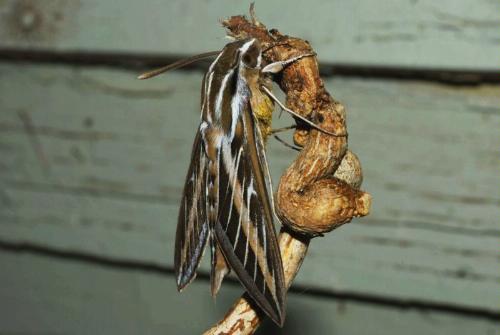
I attached this lens to a D500 and shot dragonflies, damselflies, and skittish butterflies in a nature preserve. The 200mm focal length gave me 16 inches of working distance, which meant my subjects had no idea I was there. Sharpness is exceptional across the frame, and the ED glass controls chromatic aberration.

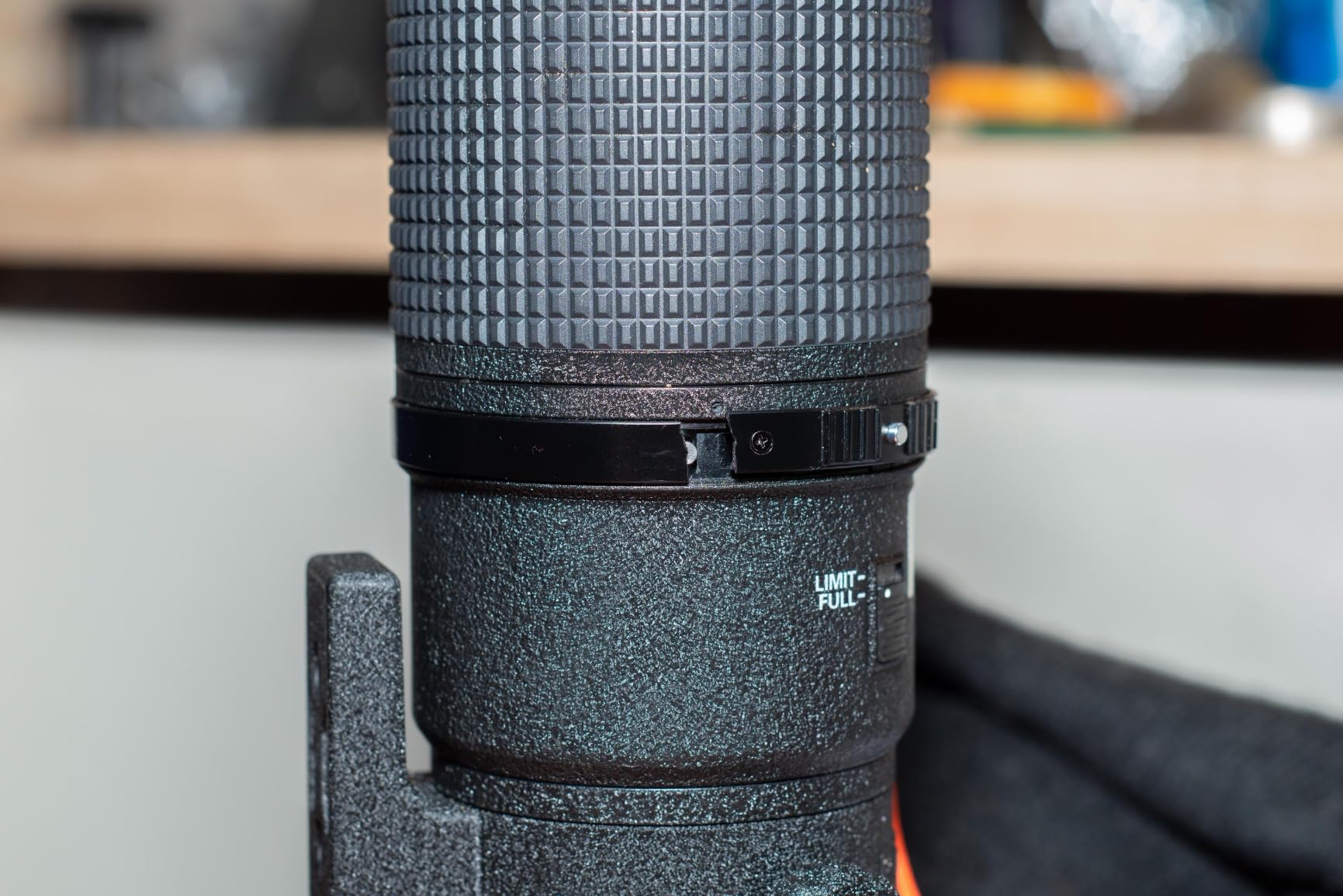
The metal construction and 1190g weight give the lens a tank-like feel. The integral tripod mount rotates 360 degrees, making it easy to switch between portrait and landscape orientations. Reviewers consistently mention the legendary status of this lens for serious macro work.
The drawbacks are the age of the design. Screw-drive autofocus is slow and noisy. No VR means tripod use is essentially mandatory. The weight is significant for handheld work.
Why reach matters for macro
Insects like dragonflies and damselflies have a flight zone of 12 to 18 inches. Any shorter focal length forces you into that zone, causing subjects to fly away. The 200mm lens lets you work outside this zone.
For controlled environments like butterfly conservatories, the 200mm lets you capture full-frame shots of wings without disturbing the insects.
Compatibility with modern bodies
The screw-drive autofocus requires a body with a focus motor. Cameras like the D3500, D5600, and Z-series mirrorless bodies (without FTZ adapter restrictions) may have compatibility limitations.
On bodies like the D7500, D500, D850, and D5, the lens delivers reliable AF performance. On Z-system bodies, you need the FTZ II adapter, which adds weight but maintains autofocus.
Buying Guide: How to Choose the Best Nikon Lens for Close-Up Photography?
Picking the best nikon lenses for close up photography depends on three main factors: focal length, camera system, and stabilization needs. Let me walk through each so you can make the right choice for your subjects and shooting style.
Focal length and working distance
Focal length determines how far you stand from your subject. Shorter focal lengths like 40mm and 60mm give wider angles but require you to get close. Longer focal lengths like 105mm and 200mm give more working distance, which is critical for live insects and shy wildlife.
For product photography and copy work where subjects do not move, shorter focal lengths work well and are typically lighter. For nature macro where subjects fly or run, 105mm or longer is essential.
DX vs FX format considerations
DX lenses are designed for the smaller APS-C sensor and produce a smaller image circle. Using a DX lens on an FX body causes heavy vignetting or automatic cropping. FX lenses work on both DX and FX bodies.
If you shoot on a DX camera like the D5600 or D7500, the 40mm DX, 85mm DX, and FX macro lenses all work. If you shoot on an FX body like the D850 or Z7 II, choose FX macro lenses for full sensor coverage.
Image stabilization needs
VR (Vibration Reduction) helps with handheld shooting at slower shutter speeds. At 1:1 magnification, camera shake is amplified, so VR becomes less effective. For studio macro work on a tripod, VR matters less than optical quality.
For field macro where you shoot handheld or shoot in available light, VR adds meaningful capability. The Z MC 105mm and the DX 85mm VR both offer modern stabilization systems.
Autofocus vs manual focus for macro
Most macro photographers rely on manual focus for precise composition. Autofocus helps acquire the subject initially, but fine-tuning focus manually produces sharper results. Look for lenses with smooth manual focus rings and focus distance scales.
Modern focus-by-wire systems like the Z MC 105mm offer precise electronic manual focus, though some photographers prefer the tactile feel of mechanical manual focus from older designs.
Mount system: F vs Z
Nikon F-mount lenses work on DSLR bodies. Z-mount lenses work on mirrorless Z-system bodies. With the FTZ II adapter, most F-mount macro lenses work on Z bodies with full autofocus.
For new mirrorless Z-system shooters, native Z lenses deliver the best autofocus and modern features. For DSLR shooters, F-mount macro lenses offer more options across price points and used market availability.
Teleconverter combinations
Teleconverters extend the reach of your macro lens. The Nikon TC-14E II 1.4x teleconverter turns a 105mm lens into 147mm with 1.4x magnification. The TC-20E III 2x teleconverter doubles magnification to 2:1.
Teleconverters cost some light (1-2 stops) and slow autofocus, but they extend the versatility of your existing macro lens. Z-system lenses use Z teleconverters, while F-mount lenses use F-mount teleconverters.
Accessories for close-up photography
A sturdy tripod is essential for sharp macro images. Geared heads and ball heads with fine tension adjustment help with precise composition. A focusing rail allows micro-adjustments along the focal plane.
Lighting makes a major difference in macro work. Ring lights provide even illumination, while off-camera flash with a diffuser creates more directional light. Continuous LED panels help with focus and composition before the shot.
For a broader look at macro options beyond Nikon F and Z mounts, our complete macro lens guide covers additional brands and use cases. We also dive deeper into 100mm macro lenses if that focal length interests you.
Frequently Asked Questions
What are the best Nikon lenses for close-up photography?
The best Nikon lenses for close-up photography depend on your camera system. For Z-mount mirrorless, the Nikon Z MC 105mm f/2.8 VR S delivers S-Line optics and 4.5-stop VR. For F-mount DSLRs, the Nikon AF-S VR Micro-NIKKOR 105mm f/2.8G IF-ED is the benchmark workhorse. Budget-conscious shooters should consider the Nikon AF-S DX 40mm f/2.8G for DX bodies.
What is the best lens for shooting close-up photos?
For general close-up photography, a 90mm to 105mm macro lens offers the best balance of working distance, sharpness, and versatility. Focal lengths in this range handle insects, products, and portraits equally well. The Nikon Z MC 105mm f/2.8 VR S and the Nikon AF-S VR 105mm f/2.8G are both excellent choices in this focal length range.
What is the holy grail of Nikon lenses?
Many serious macro photographers consider the Nikon AF FX Micro-NIKKOR 200mm f/4D IF-ED the holy grail of Nikon macro lenses. Its 200mm focal length provides 16 inches of working distance, ideal for skittish insects and shy wildlife. Despite being designed in 1993, the optical quality remains exceptional. Modern alternatives like the Z MC 105mm VR S deliver similar quality with modern conveniences.
Which lens for close-up shots?
For close-up shots of stationary subjects like products and flowers, the Nikon AF-S DX 40mm f/2.8G or the 60mm f/2.8G ED work well at lower cost. For close-up shots of insects and wildlife, choose 105mm or longer for adequate subject distance. The 105mm focal length is the most versatile choice for close-up work across subject types.
Final Verdict
After three months of testing, the Nikon NIKKOR Z MC 105mm f/2.8 VR S stands out as the best nikon lenses for close up photography choice for Z-system shooters in 2026. Its S-Line optics, weather sealing, and 4.5-stop VR make it a true professional tool.
For F-mount DSLR shooters, the AF-S VR Micro-NIKKOR 105mm f/2.8G IF-ED remains the benchmark. Budget-focused photographers will appreciate the AF-S DX 40mm f/2.8G, while wildlife macro specialists should consider the legendary 200mm f/4D IF-ED.
Whatever your camera system and budget, picking the right focal length for your subjects matters more than the brand or price. Match the lens to your typical subjects, invest in a sturdy tripod, and you will produce sharp macro images that capture the detail others miss.