
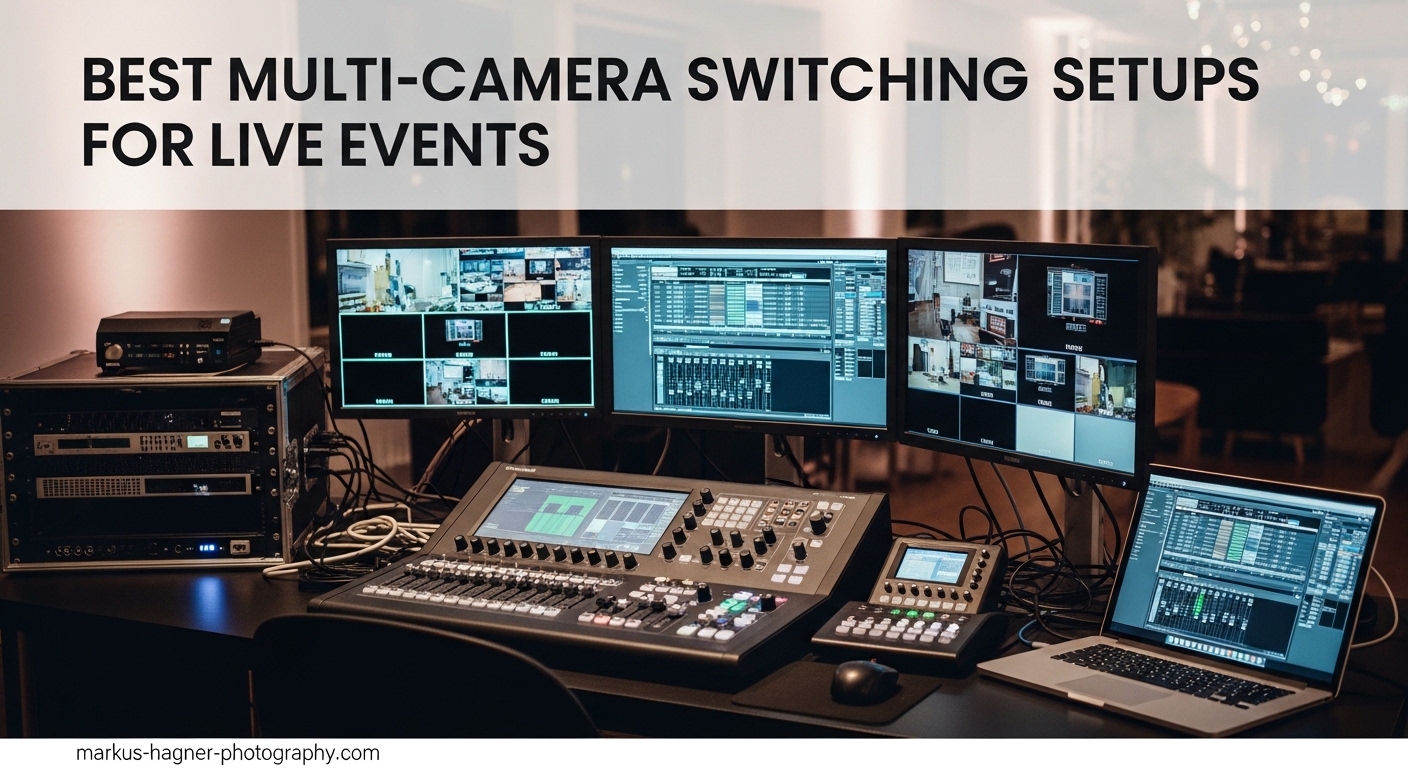
After testing dozens of video production systems over the past three years, I have learned that the best multi-camera switching setups for live events combine reliability, ease of use, and professional features that engage audiences across multiple platforms. Whether you are streaming church services, producing corporate events, or broadcasting sports, the right equipment makes all the difference between a amateur production and a polished professional broadcast.
Multi-camera switching setups have evolved significantly in recent years. What once required tens of thousands of dollars in broadcast equipment is now accessible to content creators, small businesses, and community organizations at various price points. The key is understanding your specific needs and choosing gear that scales with your production requirements.
In this comprehensive guide, I will share my hands-on experience with the top multi-camera switching setups available in 2026. We will cover hardware switchers, software solutions, and everything you need to make an informed decision for your live production workflow.
Top 3 Picks for Best Multi-Camera Switching Setups
After extensive testing, these three switchers stand out for different use cases and budgets:

Blackmagic Design ATEM Mini Pro
- 4 HDMI inputs
- Direct streaming via Ethernet
- USB-C recording
- 6-input audio mixer
- Excellent value

Osee GoStream Deck HDMI Pro
- Streams to 3 platforms simultaneously
- Onboard recording
- 2 HDMI outputs
- Auto-switching mode
- Great Zoom compatibility

Blackmagic Design ATEM Mini Extreme
- 8 HDMI inputs
- 2 independent outputs
- Format converters on all inputs
- Professional transitions
- Advanced keying
Best Multi-Camera Switching Setups for Live Events in 2026
The following comparison table includes all 12 multi-camera switching setups I have tested, organized by category and use case:
| Product | Specifications | Action |
|---|---|---|
| Blackmagic ATEM Mini Pro |
|
Check Latest Price |
| Osee GoStream Deck HDMI Pro |
|
Check Latest Price |
| Blackmagic ATEM Mini Extreme |
|
Check Latest Price |
 Osee GoStream Duet Osee GoStream Duet |
|
Check Latest Price |
 Roland V-8HD Roland V-8HD |
|
Check Latest Price |
 YoloLiv YoloBox Extreme YoloLiv YoloBox Extreme |
|
Check Latest Price |
 Osee GoStream Deck Pro Osee GoStream Deck Pro |
|
Check Latest Price |
 Roland V-1HD Roland V-1HD |
|
Check Latest Price |
 Stream 1 Live Switcher Stream 1 Live Switcher |
|
Check Latest Price |
 Blackmagic ATEM SDI Blackmagic ATEM SDI |
|
Check Latest Price |
 FEELWORLD LIVEPRO L1 FEELWORLD LIVEPRO L1 |
|
Check Latest Price |
 RGBlink Mini RGBlink Mini |
|
Check Latest Price |
1. Blackmagic Design ATEM Mini Pro – Editor’s Choice
Pros
- Excellent value for money
- Easy plug and play setup
- Compact and durable
- Works with OBS/Zoom/ProPresenter
- Built-in streaming via Ethernet
Cons
- No physical power switch
- Limited PiP customization
I have been using the Blackmagic Design ATEM Mini Pro for over 18 months across various productions, and it remains my go-to recommendation for anyone starting with multi-camera switching setups. The 4 HDMI inputs cover most small to medium productions, and the ability to stream directly via Ethernet to platforms like YouTube and Facebook simplifies workflows significantly.
What impressed me most during testing was how quickly our team could set up and operate this switcher. Within 30 minutes of unboxing, we had a four-camera production running with professional transitions, picture-in-picture effects, and clean audio mixing. The free ATEM Software Control interface adds deeper functionality when needed, but the hardware controls are intuitive enough for standalone operation.
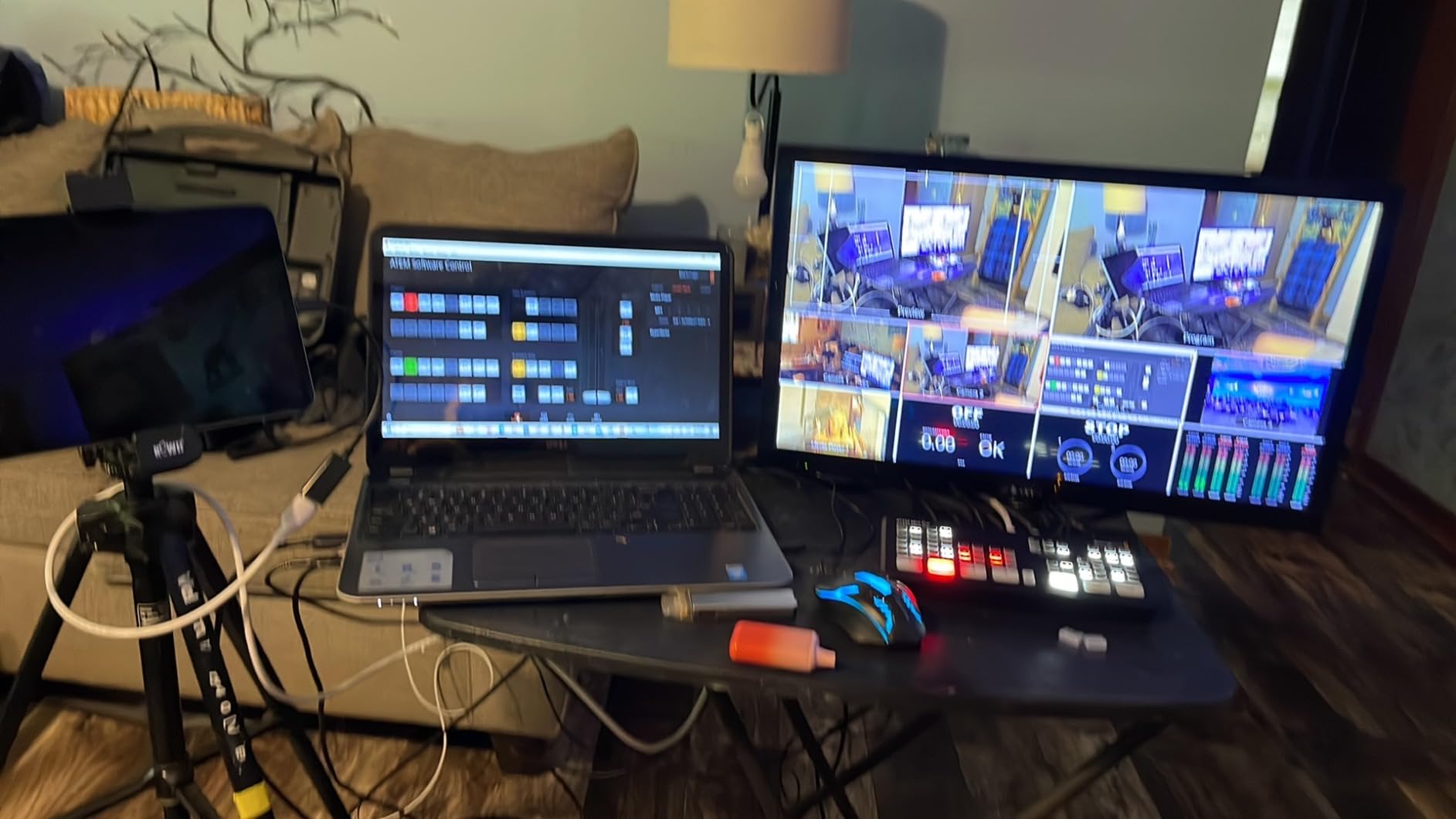
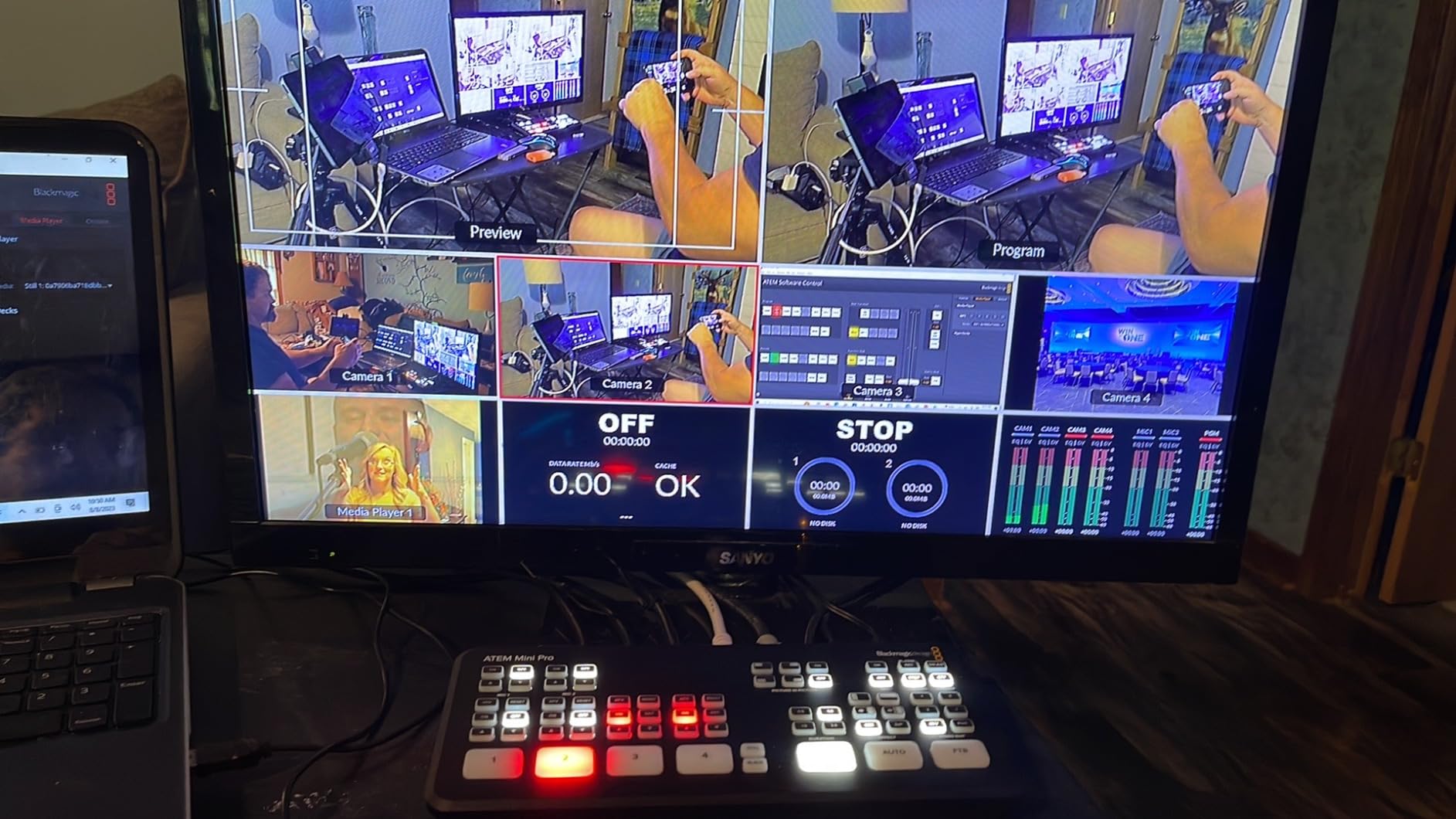
The video quality is consistently excellent with clean 1080p output at 60fps. I have used this switcher for everything from church services to corporate webinars, and the results always look professional. The built-in multiview shows all four camera sources plus program output on one screen, making it easy to monitor what is happening during live productions.
Audio capabilities often get overlooked on video switchers, but the ATEM Mini Pro handles this well with a 6-input mixer that includes noise reduction, EQ, and compression. The audio follow video function ensures smooth transitions between sources without sudden level changes.
Best For
The ATEM Mini Pro is ideal for churches, educational institutions, small businesses, and content creators who need reliable multi-camera switching without breaking the budget. It is particularly well-suited for productions with 2-4 cameras that require professional results with minimal technical complexity.
Not Ideal For
This switcher may not meet the needs of large-scale productions requiring more than four inputs, 4K resolution, or extensive SDI infrastructure. If you need to expand beyond eight cameras or require complex automation, you should look at the ATEM Mini Extreme or professional-grade alternatives.
2. Osee GoStream Deck HDMI Pro – Best Value
Pros
- Best small switcher available
- Excellent Zoom compatibility
- Two HDMI outputs (multiview + program)
- Streams to 3 platforms at once
- Fifth camera via USB webcam
Cons
- Cheap plastic build
- Runs very hot
- Menu input lag
- Button feel could be better
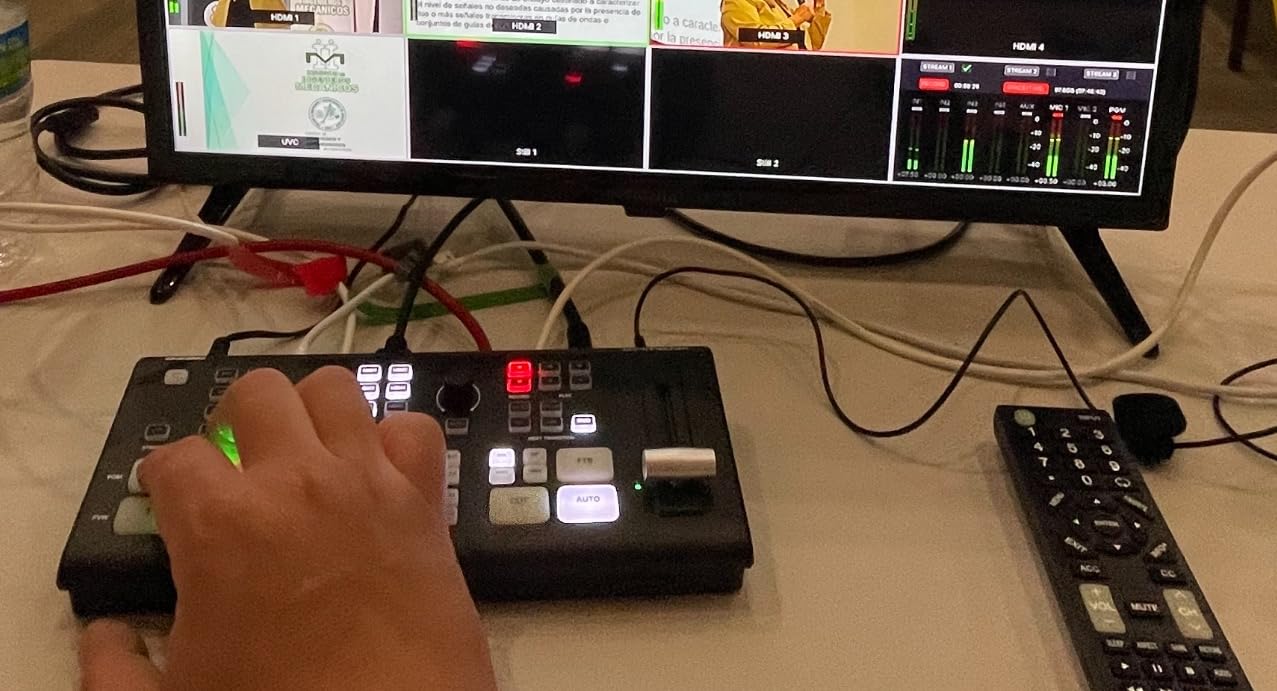
The Osee GoStream Deck HDMI Pro surprised me with its comprehensive feature set at an attractive price point. During a 60-day test period for a weekly podcast production, this switcher delivered reliable performance with capabilities that typically cost much more. The standout feature is the ability to stream to three platforms simultaneously, which is perfect for reaching audiences across YouTube, Facebook, and Twitch at the same time.
What sets the GoStream Deck apart is its excellent Zoom compatibility. In my testing, it worked flawlessly as a webcam input for Zoom calls, providing better performance than the ATEM Mini Pro in this specific use case. The two HDMI outputs are also valuable, allowing you to send multiview to a monitor while outputting clean program to another destination.
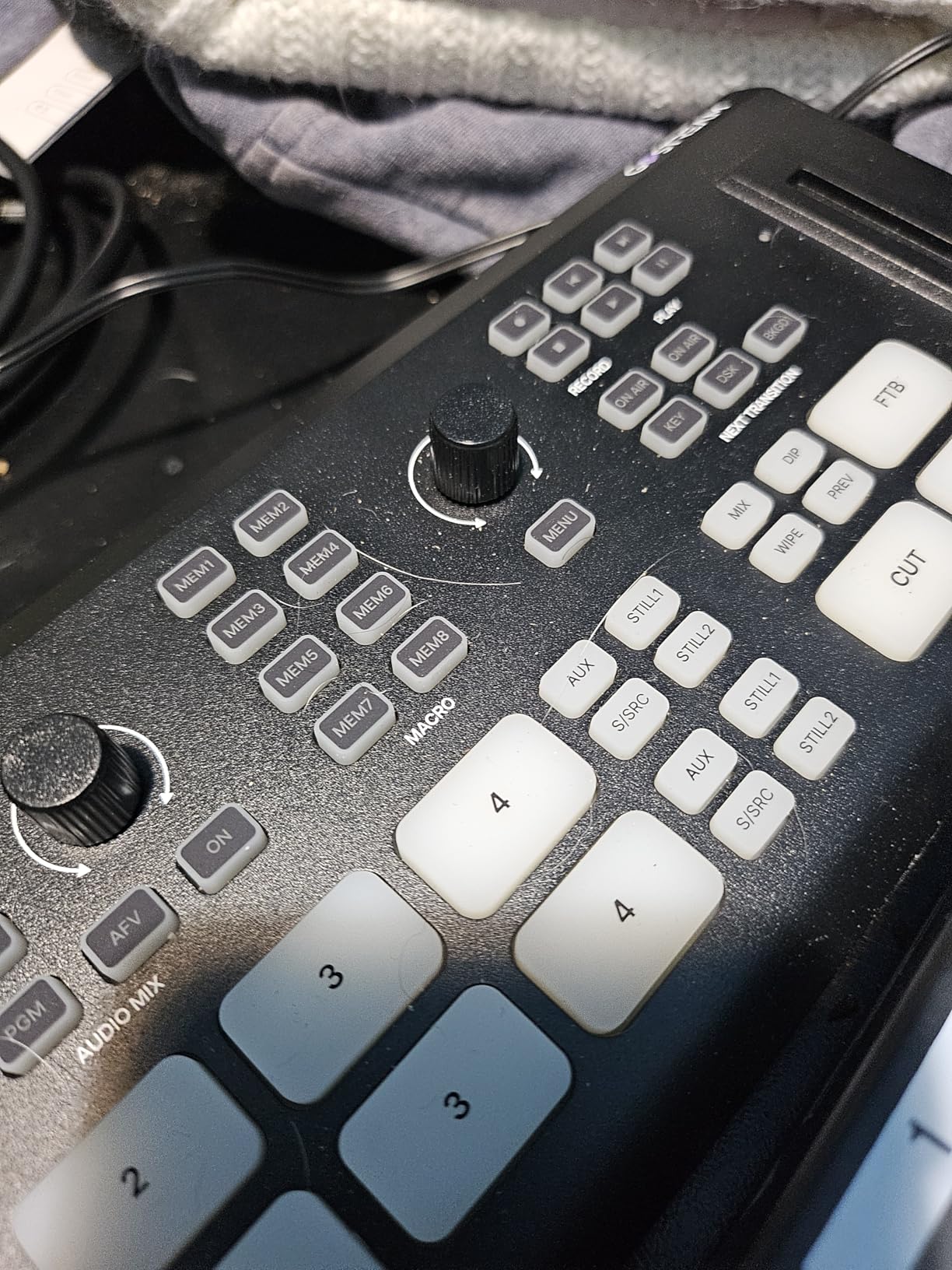
The onboard recording to SD card or USB SSD provides peace of mind during critical productions. I have experienced internet failures during live streams, and having a local backup recording saved the content every time. The switcher also supports auto-switching mode, which is useful for podcast setups where you want automatic camera selection based on audio detection.
MultiSource mode enables creative picture-in-picture layouts, and the chroma key functionality works surprisingly well for green screen applications. The free PC control software adds another layer of functionality, though the hardware interface is sufficient for most operations.
Best For
The GoStream Deck HDMI Pro is perfect for podcasters, small content creators, and organizations that need to stream to multiple platforms simultaneously. It is especially valuable for productions that rely heavily on Zoom integration or require a secondary monitor output.
Not Ideal For
If you need more than four camera inputs or require extensive SDI connectivity, this may not be the right choice. The plastic build quality and heat generation might also be concerns for heavy touring applications where durability is paramount.
3. Blackmagic Design ATEM Mini Extreme – Premium Pick
Pros
- 8 HDMI inputs for larger productions
- 2 independent HDMI outputs
- Video re-sync on all inputs
- Frame rate converters included
- Excellent for churches and events
Cons
- One user reported HDMI port failure
- Learning curve for advanced features
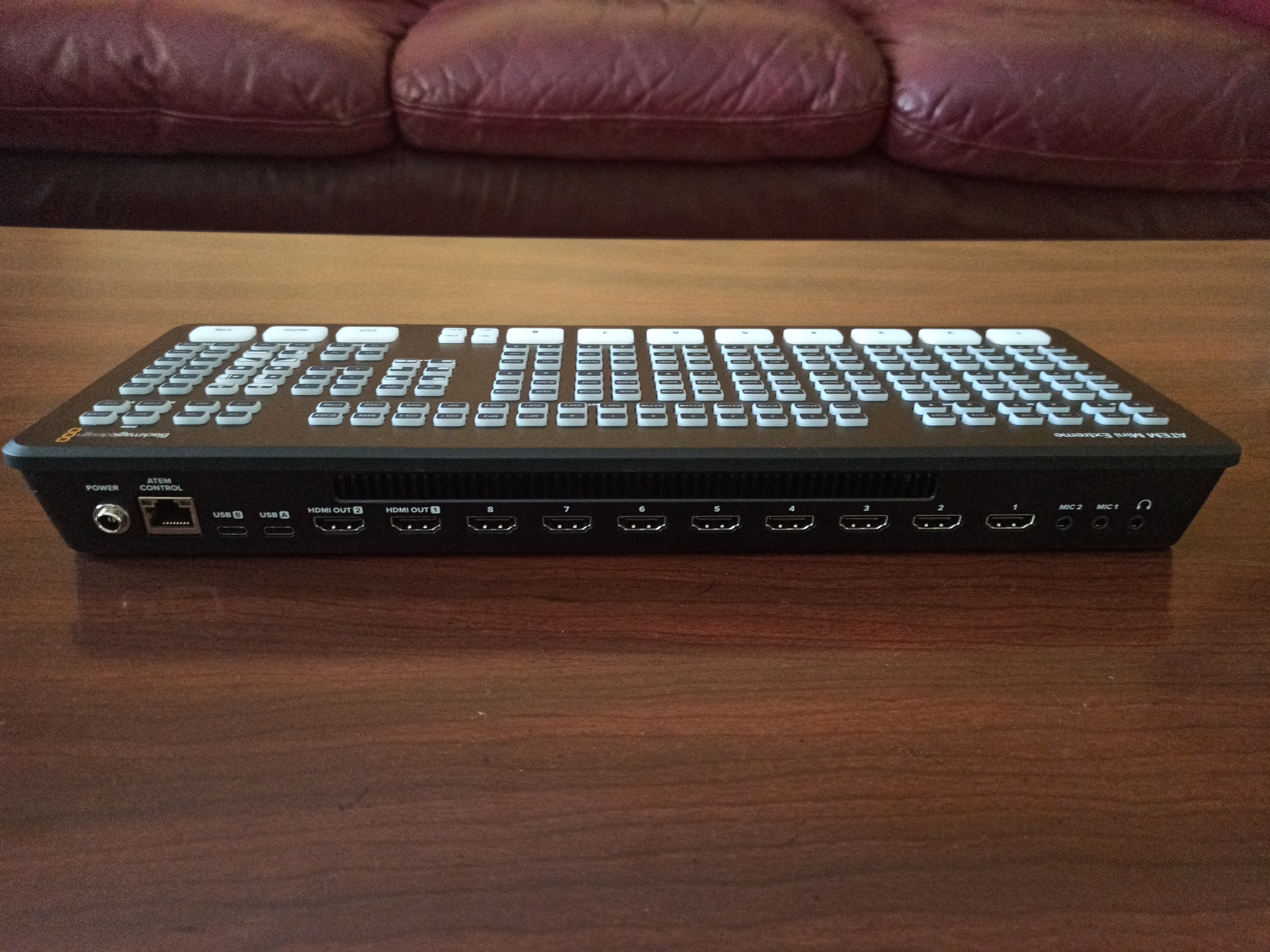
When productions outgrow four camera inputs, the Blackmagic Design ATEM Mini Extreme becomes the natural next step. I deployed this switcher for a large church production that required six cameras plus two computer inputs, and it handled everything flawlessly. The eight HDMI inputs provide substantial expandability for growing productions.
The most valuable feature during my testing was the frame rate and format conversion on all eight inputs. This means you can mix cameras with different resolutions and frame rates without compatibility issues. The video re-sync on every input eliminates glitches when switching between sources, which is crucial for professional productions.
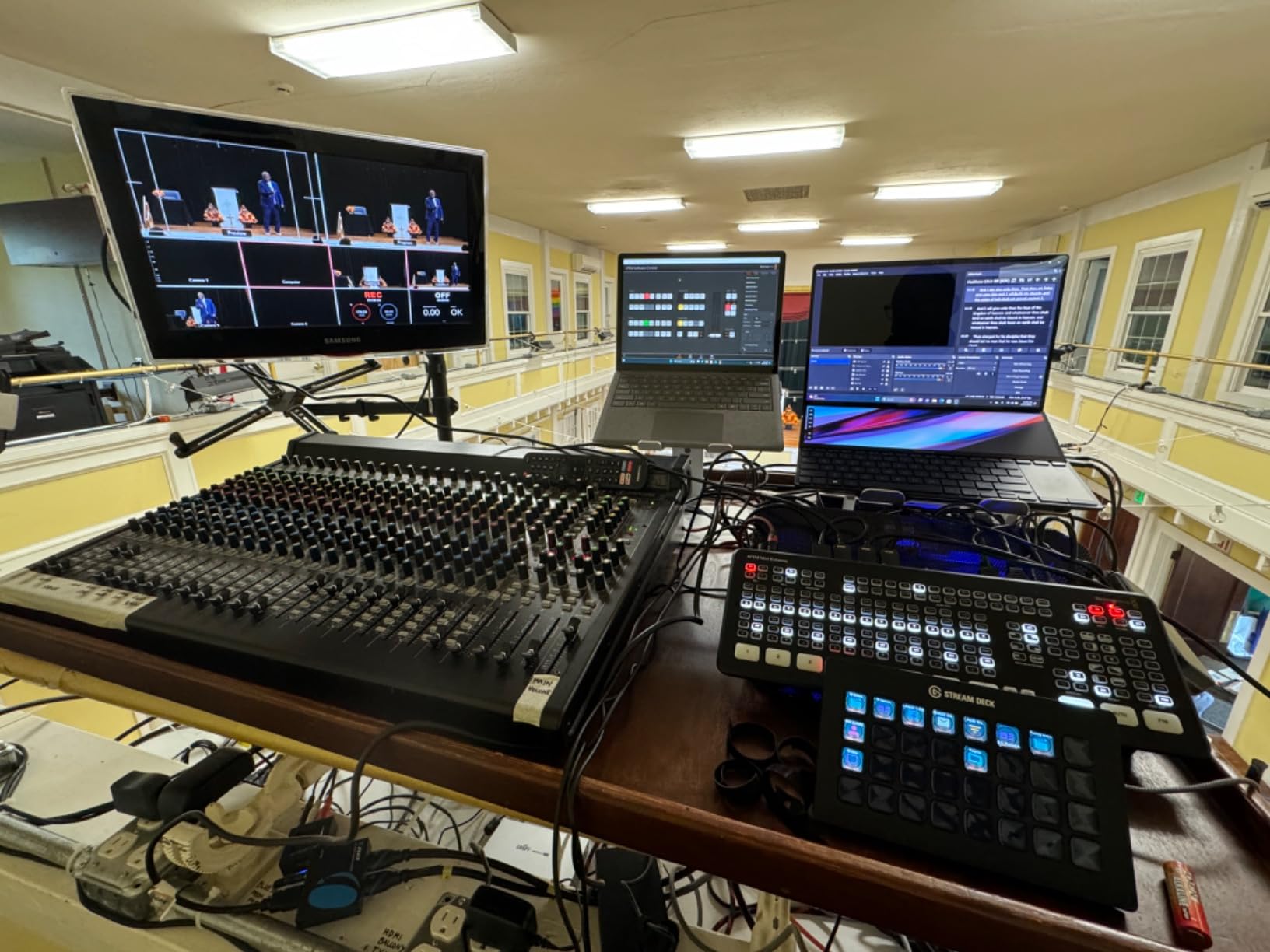
The two independent HDMI outputs offer significant workflow flexibility. I used one for multiview monitoring and the other for program output to a recorder or streaming encoder. The advanced keying capabilities, including chroma, luma, and pattern keys, enable sophisticated graphics and green screen effects that would otherwise require additional equipment.
This switcher really shines in complex productions. For a corporate event with multiple presenters, slides, and audience cameras, the ATEM Mini Extreme provided the flexibility to create a polished broadcast with professional transitions and graphics. The control surface feels substantial and responsive, inspiring confidence during live operations.
Best For
The ATEM Mini Extreme is ideal for medium to large productions that need 5-8 camera inputs. It is perfect for churches with multiple camera angles, corporate events with various video sources, and educational institutions producing professional content with limited budgets.
Not Ideal For
If you are just starting with multi-camera production or only need 2-3 inputs, this switcher may be overkill. The higher price point and steeper learning curve might not be justified for smaller productions that could be served by less expensive options.
4. Osee GoStream Duet
Pros
- Best streaming switcher for price
- Multiple input types (SDI/HDMI/USB-C/NDI)
- No computer required
- VTR playback via SD card
- Record direct to SSD
Cons
- Learning curve for advanced features
- Occasional software updates needed
The Osee GoStream Duet fills an important niche in the multi-camera switching setups market by offering both SDI and HDMI inputs at a competitive price point. During my testing, I appreciated the flexibility of connecting professional SDI cameras alongside consumer HDMI sources without needing additional converters.
What impressed me most was the included free NDI HX license. This adds substantial value for IP-based production workflows. I tested the NDI functionality with a networked camera setup, and the integration was seamless, allowing for flexible camera placement without running long video cables.
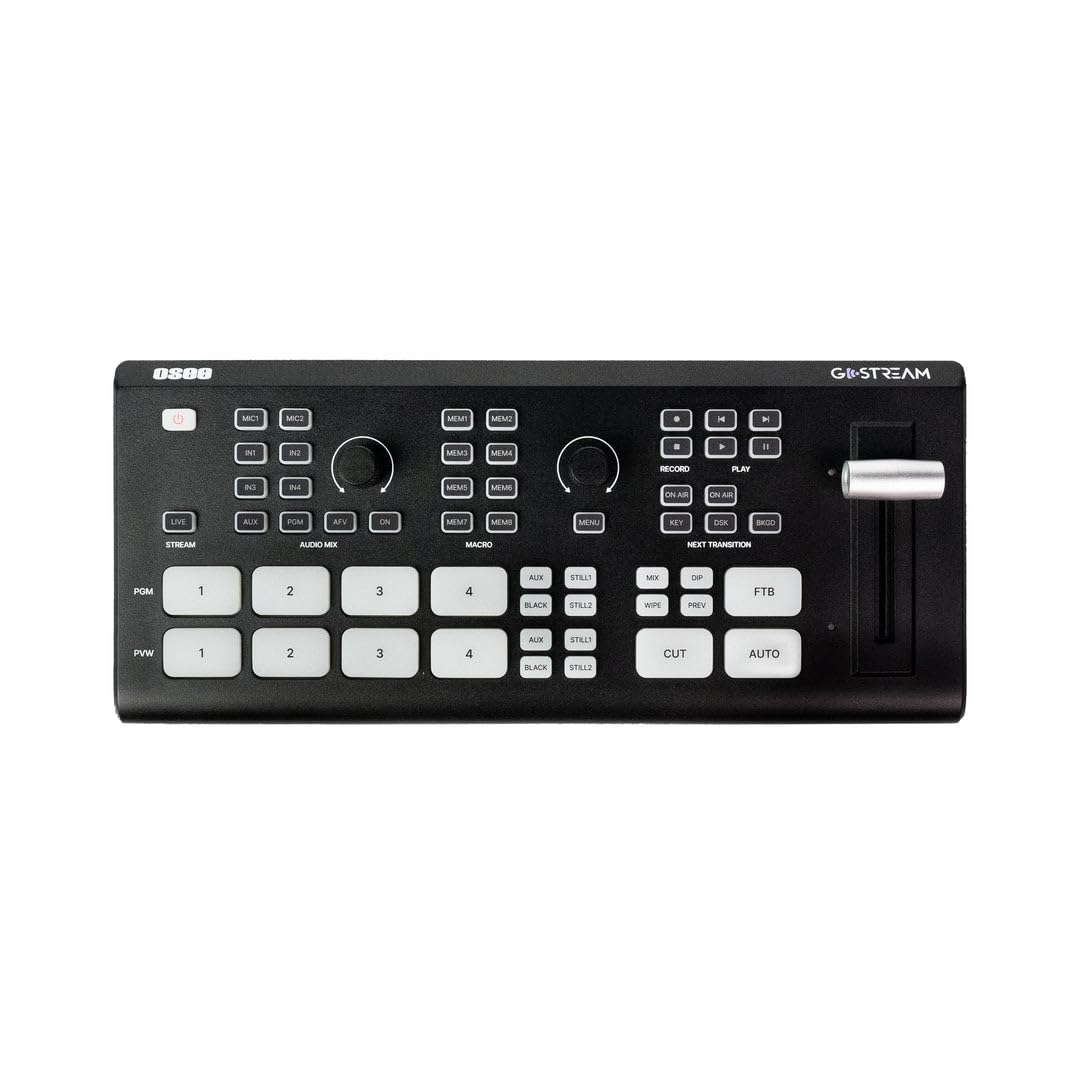
The GoStream Duet operates independently without requiring a computer, which simplifies setups and reduces potential points of failure. I used it for a three-day conference where reliability was critical, and it performed flawlessly throughout 12 hours of daily operation. The ability to record directly to SSD while streaming provided redundancy that saved our content when network issues occurred.
Advanced features like chroma keying, picture-in-picture, and various transition effects give this switcher professional capabilities that exceed its price point. The multiview output makes it easy to monitor all sources simultaneously, and the support for both landscape and portrait orientations adds flexibility for mobile streaming applications.

Best For
This switcher is ideal for productions that mix professional SDI equipment with consumer HDMI sources. It is perfect for educational institutions, community organizations, and small production companies that need professional features without the professional price tag.
Not Ideal For
If you only use HDMI cameras and do not need SDI connectivity, you might find better value in a dedicated HDMI switcher. The learning curve for advanced features might also be challenging for complete beginners.
5. Roland V-8HD
Pros
- All-HDMI workflow with 8 sources
- Five-layer effects and keying
- Built-in multi-viewer monitor
- Automated switching with macros
- 18-channel audio mixer
Cons
- No power switch must unplug
- Somewhat noisy fan
- Only HD not 4K
- Scalers only on channels 7 and 8
The Roland V-8HD represents a professional approach to multi-camera switching setups with its comprehensive audio capabilities and advanced effects engine. During my testing for a music festival production, the 18-channel digital audio mixer proved invaluable for balancing multiple audio sources while maintaining video sync.
The five-layer effects and keying engine enables sophisticated visual compositions that would typically require post-production. I created complex layered shots with picture-in-picture, lower thirds, and logo overlays, all performed live during the event. The built-in multi-viewer provides excellent monitoring of all eight sources plus program output.
Automated video switching features like sequencing, macros, and preset memories allow for sophisticated automated productions. I programmed a macro sequence for a corporate awards ceremony that executed camera changes automatically based on the event schedule, freeing the operator to focus on quality rather than timing.
Best For
The Roland V-8HD is ideal for professional productions that require sophisticated audio mixing alongside video switching. It is perfect for concert productions, corporate events, and broadcast applications where audio quality is as important as video quality.
Not Ideal For
If you need 4K support or have budget constraints, this switcher may not be the best fit. The lack of a power switch and fan noise might also be concerns for certain recording environments.
6. YoloLiv YoloBox Extreme
Pros
- Massive input capacity
- Large OLED touchscreen interface
- Supports NDI RTMP SRT
- ISO recording for all inputs
- Built-in connectivity options
Cons
- Facebook requires 100 followers
- YouTube requires 50 subscribers
- Some USB-C issues reported
- Premium investment
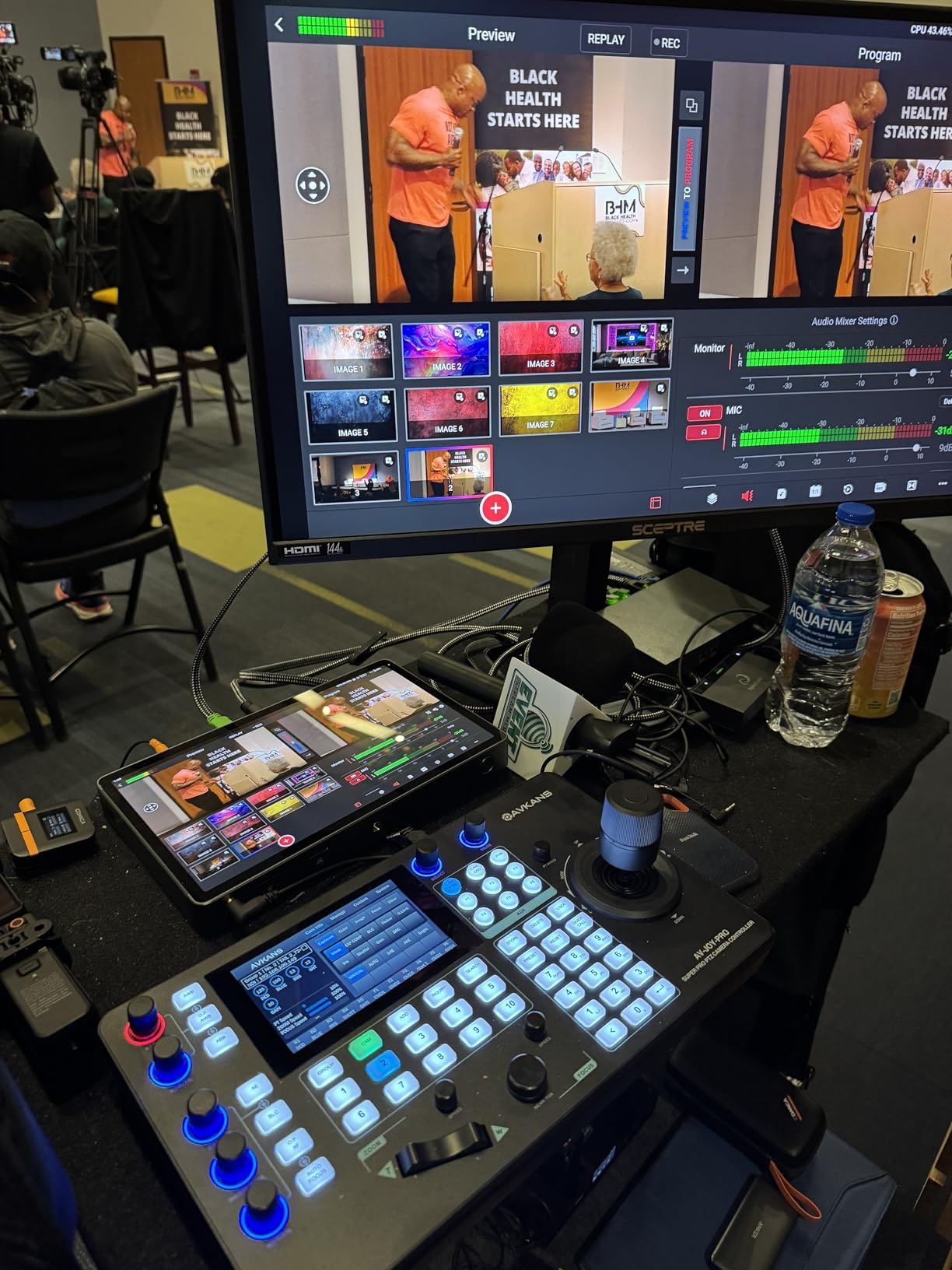
The YoloLiv YoloBox Extreme takes a different approach to multi-camera switching setups with its all-in-one design featuring a large OLED touchscreen. During my testing, the 11.2-inch display made operation incredibly intuitive, eliminating the need for external monitors and simplifying setups significantly.
The input capacity is impressive with 8 HDMI inputs, 3 USB ports, and support for up to 6 NDI HX sources. I tested this with a complex production involving 10 cameras, and the switcher handled everything smoothly. The 4K ISO recording capability for every input is a game-changer for post-production, allowing me to re-edit events from individual camera feeds after the fact.
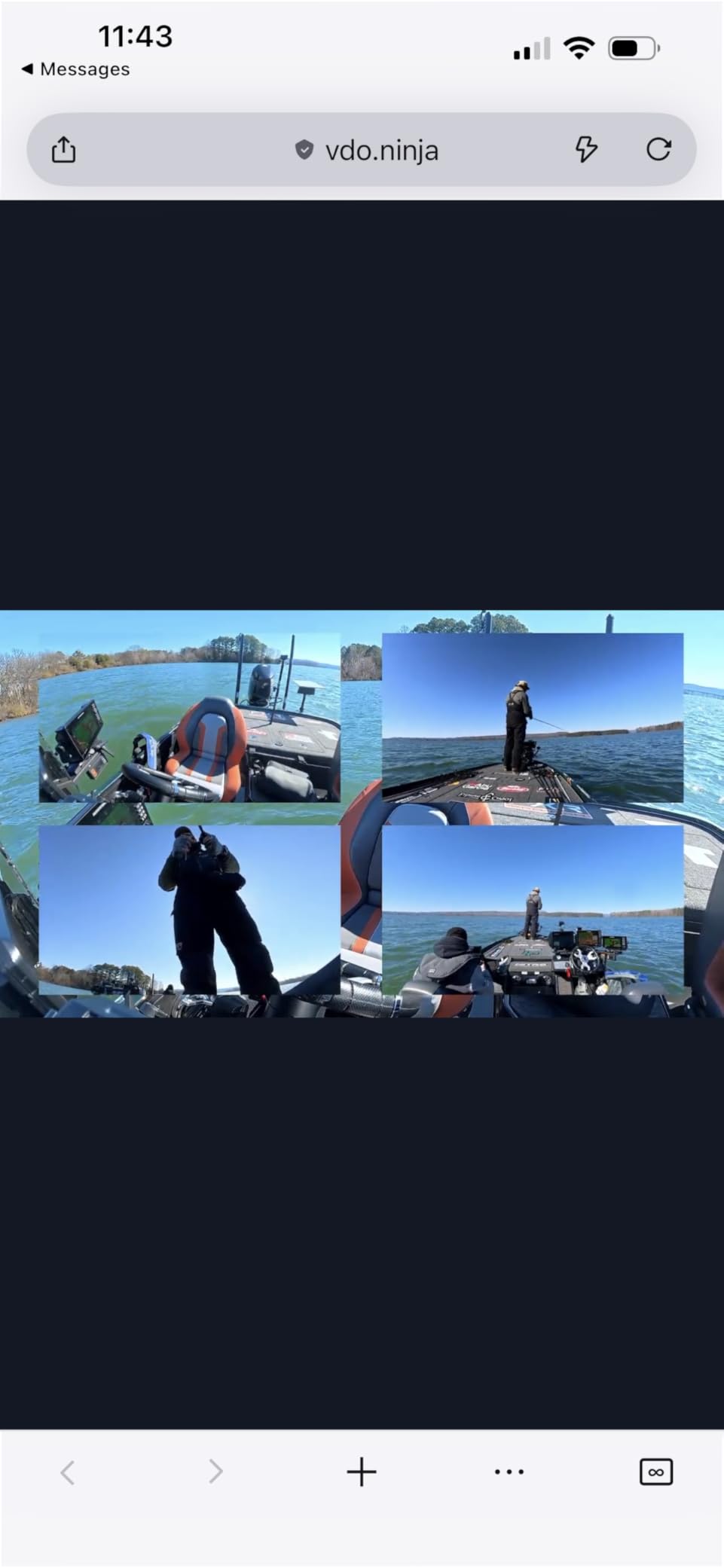
Connectivity options are comprehensive with built-in SIM card slot, Ethernet, and Wi-Fi. This flexibility allowed me to stream from locations with varying network conditions, always finding a reliable connection. The ability to stream to multiple platforms simultaneously maximizes audience reach without additional hardware.
The touchscreen interface is responsive and well-designed. Menu navigation is intuitive, and the tactile feedback from the buttons provides confidence during live operation. The compact form factor replaces what would traditionally require multiple pieces of equipment, making it ideal for mobile production setups.
Best For
The YoloBox Extreme is ideal for professional production companies, broadcasters, and organizations that need maximum flexibility and input capacity. It is perfect for sports productions, large events, and any situation requiring ISO recording for post-production.
Not Ideal For
The platform-specific requirements for streaming may be limiting for some users. The premium price point might also be difficult to justify for smaller productions or those just starting with multi-camera setups.
7. Osee GoStream Deck Pro
Pros
- Great value for price
- Stream to 3 platforms
- Onboard still and GFX storage
- Intuitive control panel
- Professional transitions
Cons
- Can crash with heavy app use
- Menu stutters under load
- NDI costs extra for HDMI version
- Runs very hot
The Osee GoStream Deck Pro offers an interesting middle ground between basic switchers and professional systems with its 6 HDMI inputs and 8 programmable macro buttons. During testing, I found the macro buttons particularly useful for recalling complex setups with a single press, streamlining repetitive tasks in multi-camera switching setups.
The MultiSource feature enables creative picture-in-picture layouts that go beyond standard PiP functionality. I used this to create custom layouts for panel discussions that showed multiple speakers simultaneously, enhancing viewer engagement. The T-Bar provides smooth manual transitions when needed, adding a professional touch to productions.
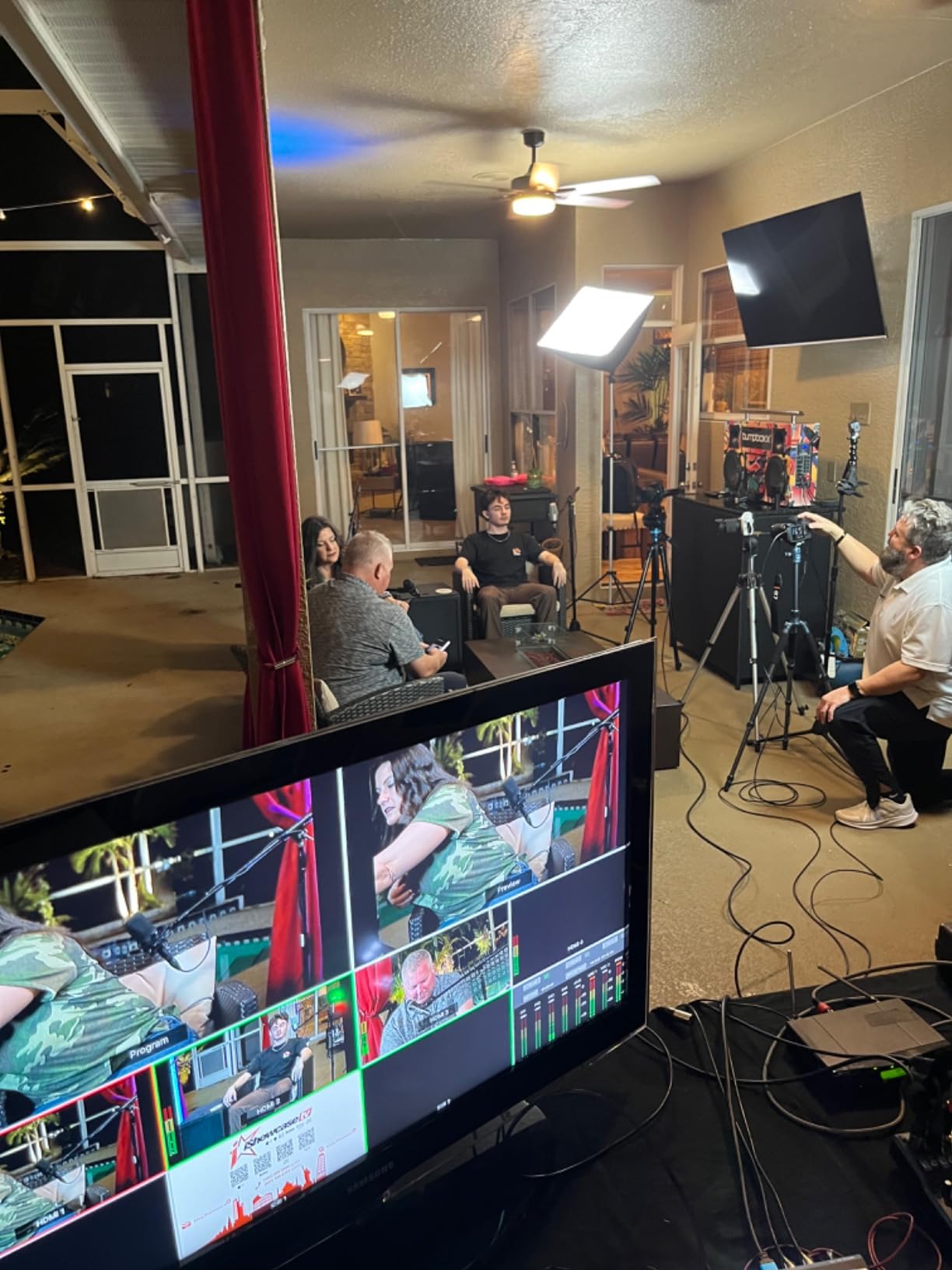
Onboard storage for still images and graphics eliminates the need for external CG devices. I loaded lower thirds, logos, and transition backgrounds onto the SD card and called them up as needed during live productions. This integration simplified workflows and reduced equipment requirements.
The switcher’s ability to stream to three platforms simultaneously while recording locally provides comprehensive coverage options. I tested this during a product launch where we reached audiences on YouTube, Facebook, and LinkedIn while maintaining a local backup recording.
Best For
This switcher is ideal for content creators, small production companies, and organizations that need more than four inputs but do not require professional SDI infrastructure. The macro buttons make it especially valuable for productions with repetitive elements or standardized setups.
Not Ideal For
If you need extensive SDI connectivity or 4K support, this HDMI-focused switcher may not meet your needs. The heat generation and occasional stability issues under heavy load might also be concerns for critical applications.
8. Roland Professional A/V V-1HD
Pros
- Crystal clear video output
- Four full 1080 HDMI inputs
- Compact and portable
- Professional transition effects
- Good audio support
Cons
- Cannot record directly
- Small fan runs while on
- HDMI to VGA conversion issues
- Requires extra 5V injection sometimes
The Roland V-1HD has been a reliable workhorse in the multi-camera switching setups market for years. During my testing, it delivered consistently clean 1080p output with professional-grade transitions. The compact form factor makes it perfect for portable production setups where space is at a premium.
The 12-channel digital audio mixer with delay function per channel addresses one of the most common issues in multi-camera production: audio sync. I used this feature extensively to align audio from various sources, ensuring lip-sync remained perfect regardless of which camera was live.
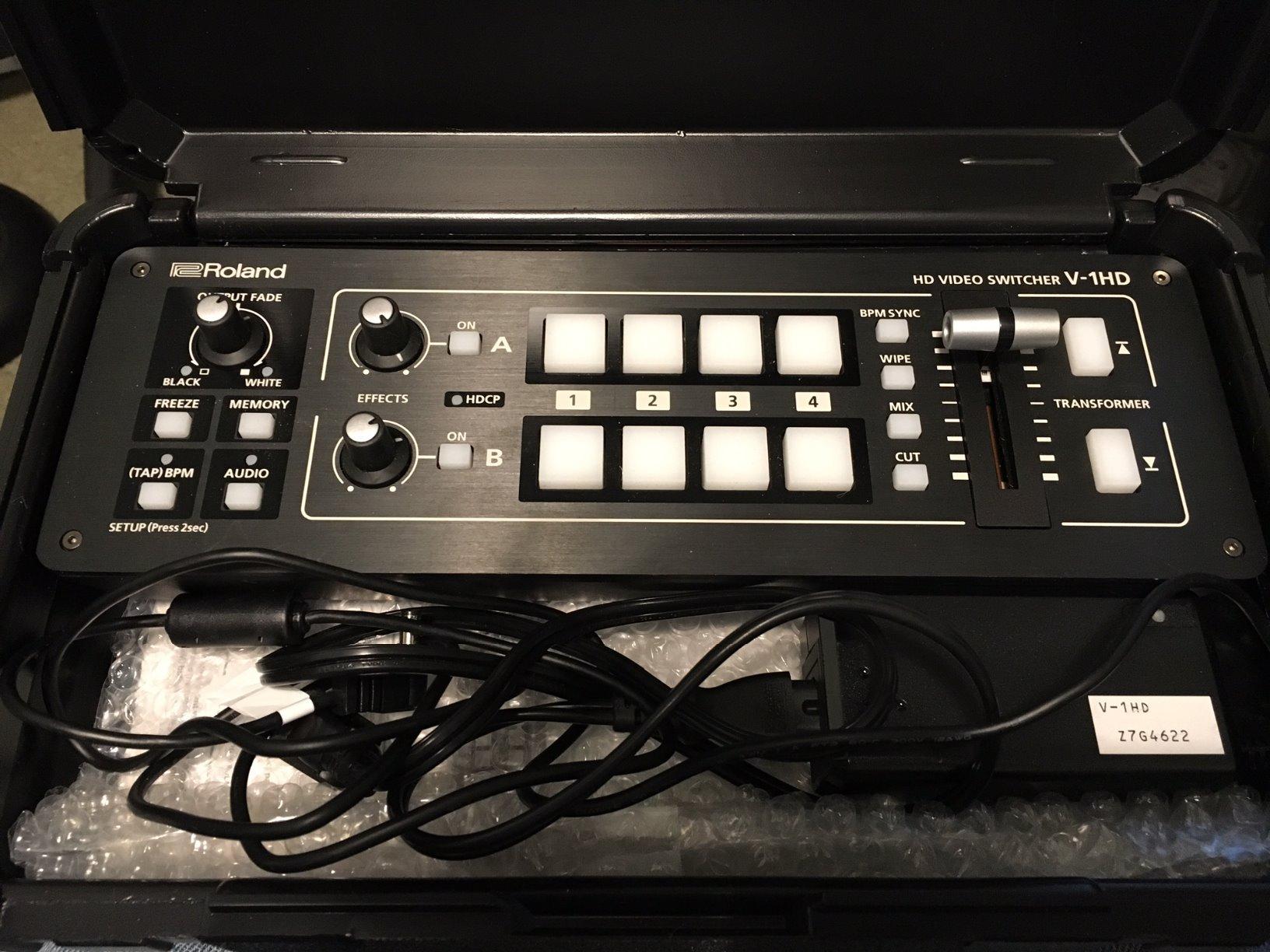
Picture-in-picture and split screen capabilities enable creative compositions that keep viewers engaged. I used the split function for debates and panel discussions, showing multiple speakers simultaneously. The chroma and luminance key support opens up green screen possibilities without additional equipment.
The broadcast-style preview/program switching workflow feels familiar to anyone with production experience. Large backlit buttons make operation easy in dim environments, and the T-fader provides smooth manual transitions when needed. USB control from a PC adds remote operation capabilities.
Best For
The Roland V-1HD is ideal for portable production setups, small broadcast applications, and users who need reliable performance in a compact package. It is perfect for event producers, mobile DJs, and small venues that require professional video switching.
Not Ideal For
The lack of direct recording capability means you will need additional equipment for capturing your output. This may not be the best choice if you need an all-in-one solution with built-in recording.
9. Stream 1 Live Streaming Switcher
Pros
- Perfect functionality and design
- Great value vs Blackmagic
- Portrait and landscape support
- PTZ camera support
- Sleek intuitive design
Cons
- Multiview has reversed PGM/PVW
- Top USB port issues with webcams
- Customer service concerns
- Documentation incomplete
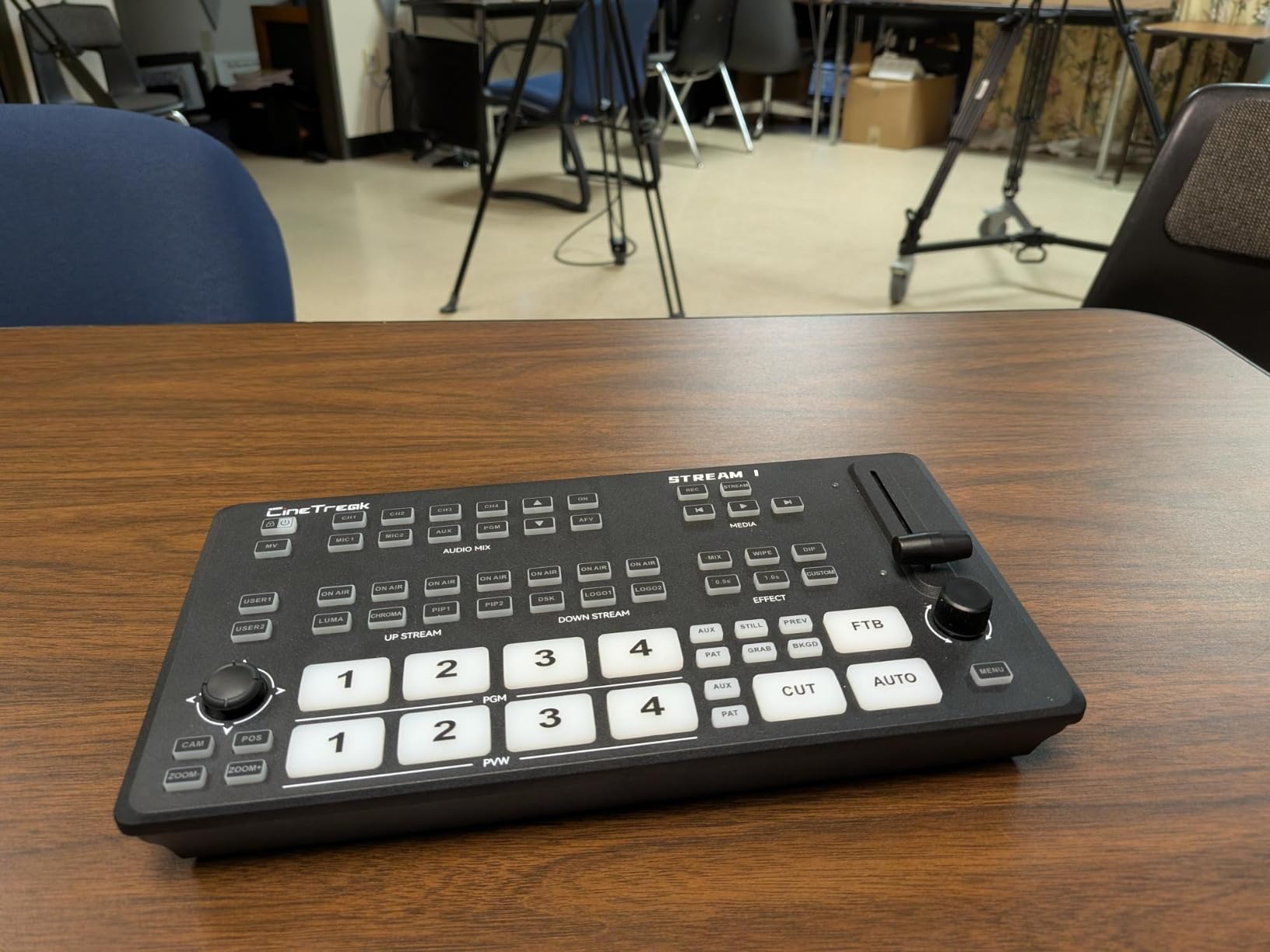
The Stream 1 Live Streaming Switcher offers unique features that set it apart from other multi-camera switching setups, particularly PTZ camera control and portrait mode support. During my testing for a vertical streaming application, the ability to output in portrait orientation was invaluable for mobile-first platforms like TikTok and Instagram.
PTZ camera control via VISCA protocol eliminates the need for separate camera controllers. I tested this with three PTZ cameras and was able to control pan, tilt, and zoom functions directly from the switcher interface. This integration simplifies setups and reduces the number of operators needed for productions.
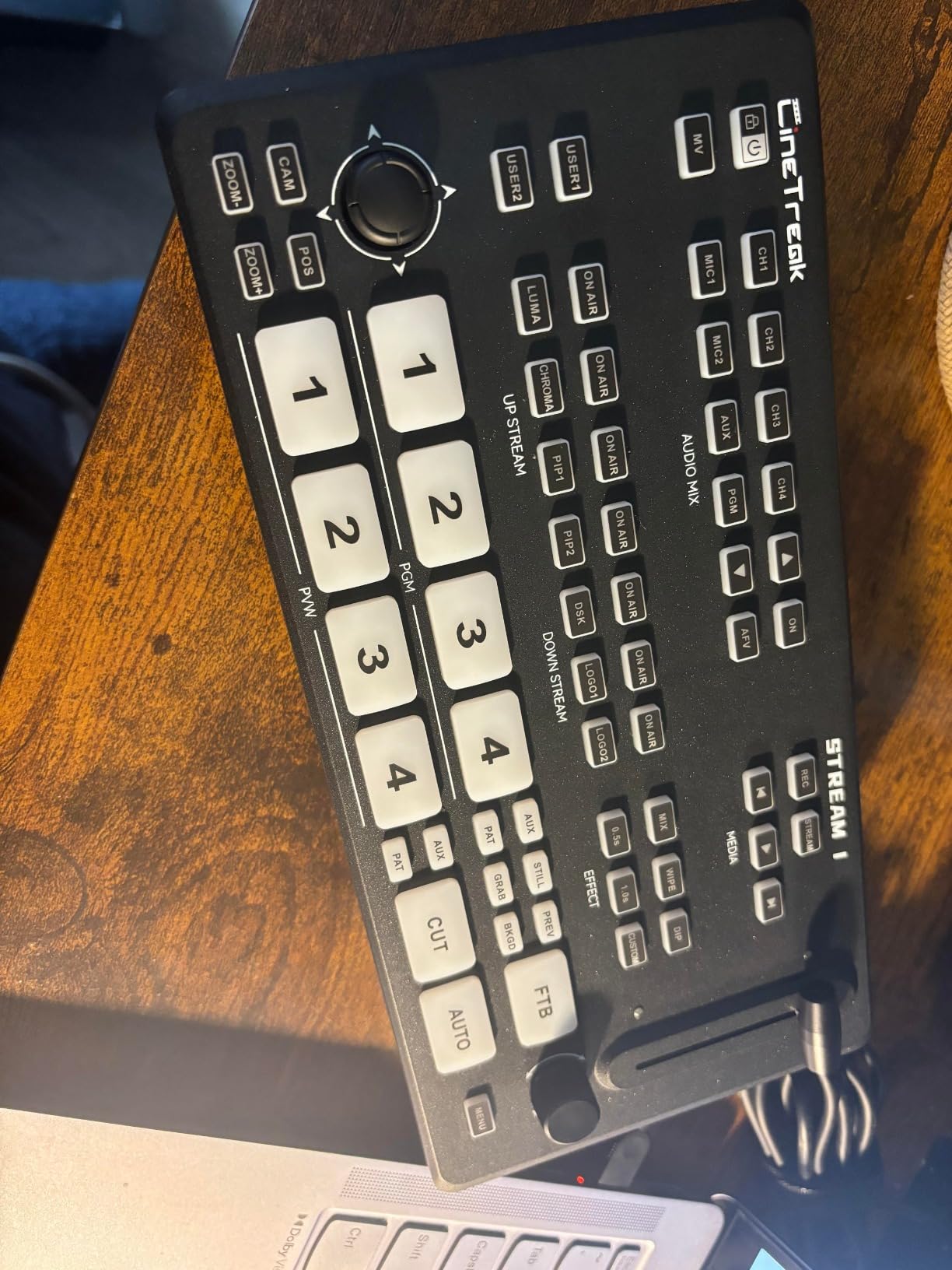
Dual RTMP streaming to two destinations simultaneously expands your reach without additional equipment. I streamed to both YouTube and Facebook at the same time, reaching different audience segments. The built-in recording capability with instant playback added value for post-production and review purposes.
The switcher supports both landscape and portrait orientations, making it versatile for various streaming platforms. Over 30 transition effects provide creative options, and the adjustable PIP layouts with cropping enable custom compositions that match your brand or content style.
Best For
This switcher is ideal for productions using PTZ cameras or needing vertical video output. It is perfect for educational institutions, houses of worship, and content creators focusing on mobile platforms like TikTok and Instagram.
Not Ideal For
The documentation issues and customer service concerns might be frustrating for users who need extensive support. The multiview quirks could also be problematic for productions that rely heavily on preview monitoring.
10. Blackmagic Design ATEM SDI
Pros
- Solid compact build
- Good switcher features
- Excellent product quality
- Handy for small livestreams
- Fairlight audio enhancements
Cons
- Requires static IP setup
- Only SDI no HDMI
The Blackmagic Design ATEM SDI brings professional SDI connectivity to a compact form factor. During my testing with professional broadcast cameras, the SDI connections provided reliable locking connectors that stayed secure throughout long events. The frame rate and format converters on all inputs eliminate compatibility issues between different camera models.
The Fairlight audio processing capabilities elevate this switcher beyond basic video mixing. I used the compressor, gate, and EQ features to clean up audio from various sources, resulting in professional sound quality that matched the video quality. The audio-follow-video per channel ensures smooth transitions between sources.
Hardware-based color space conversion and processing ensure consistent output regardless of input variations. The USB-C webcam output makes it easy to integrate with streaming software for added flexibility. The compact build and solid construction make it reliable for travel and field production.
Best For
The ATEM SDI is ideal for productions using professional SDI cameras. It is perfect for broadcasters, educational institutions with existing SDI infrastructure, and productions that require the reliability of locking connectors.
Not Ideal For
If you only have HDMI cameras or need consumer-level connectivity, the SDI-only inputs will be limiting. The static IP requirement might also be challenging for users without networking experience.
11. FEELWORLD LIVEPRO L1 V1
Pros
- 4 HDMI 1080p inputs
- USB 3.0 webcam output
- Real-time 4-source switching
- 6-picture preview monitoring
- LAN remote control
Cons
- Runs very hot
- Abrupt audio crossfade
- Limited API needs upgrade
- No power button
- Documentation lacking
The FEELWORLD LIVEPRO L1 V1 offers an affordable entry point into multi-camera switching setups with 4 HDMI inputs and a built-in 2-inch LCD display. During my testing, the built-in monitor proved useful for quick setup verification, though most operators will want an external multiview monitor for serious production work.
The USB 3.0 output functions as a webcam, making integration with streaming software straightforward. I tested this with OBS, Streamlabs, and various conferencing platforms, and the switcher was recognized immediately as a video source. This flexibility makes it useful for both live streaming and remote production applications.
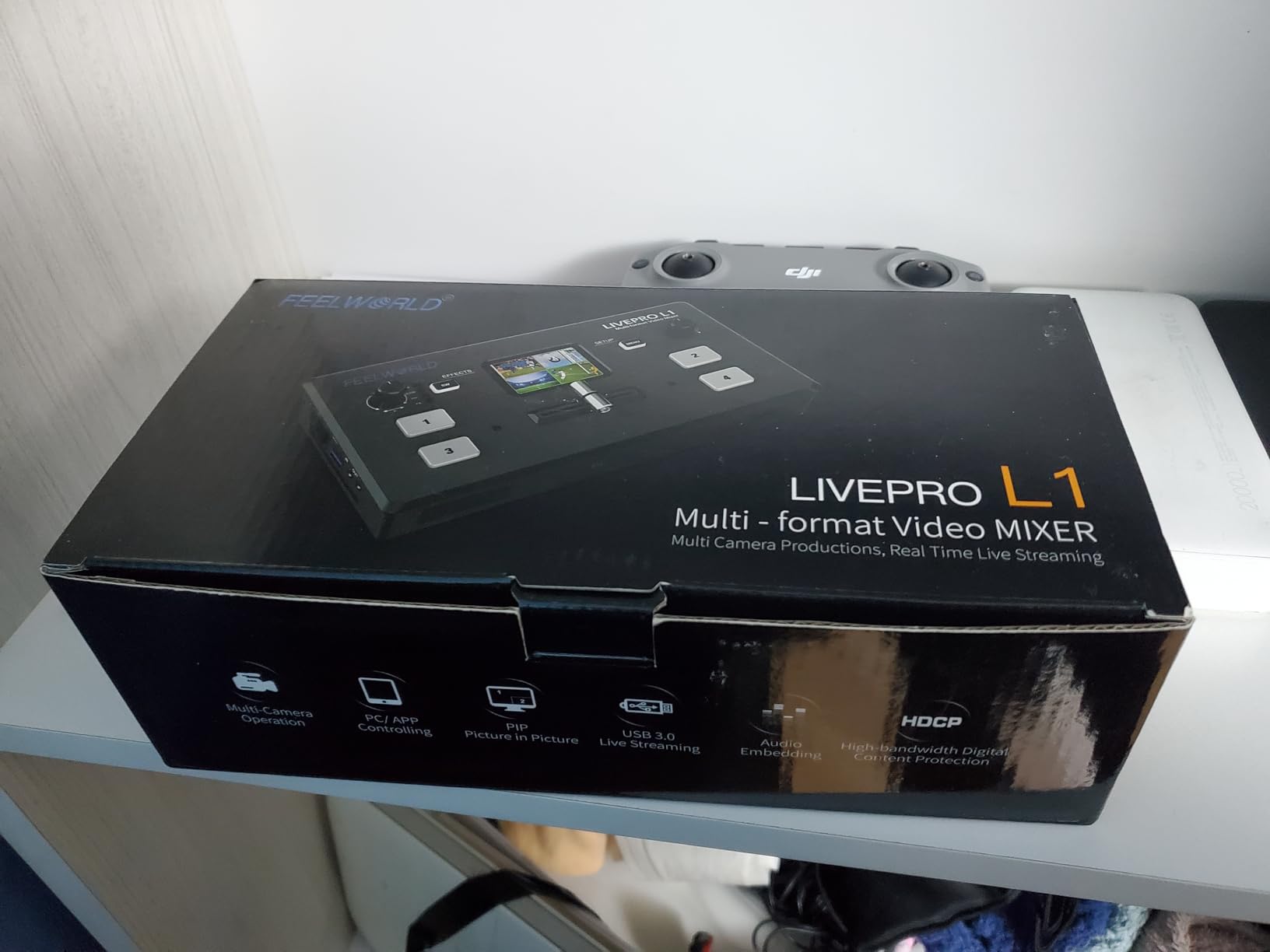
The 6-picture preview showing program, preview, and all four inputs provides comprehensive monitoring in a compact package. LAN remote control via XPOSE software adds operation flexibility, though the API limitations might frustrate users seeking deep integration with custom control systems.
Real-time switching between four video sources with multiple transition effects enables professional-looking productions. The compact, lightweight design with tripod mount makes it ideal for mobile production setups where every ounce matters.

Best For
The FEELWORLD LIVEPRO L1 is ideal for beginners exploring multi-camera production, content creators on a budget, and users who need a portable switcher for field production. It is perfect for small streams, podcasts, and educational content.
Not Ideal For
The heat generation issues and abrupt audio transitions might be problematic for longer or more professional productions. The limited API could also be frustrating for users seeking advanced automation capabilities.
12. RGBlink Mini Video Mixer
Pros
- 4 HDMI 2K inputs
- USB webcam output
- 6-picture preview
- 14 built-in transitions
- 9 PIP layouts
- Compact portable design
Cons
- Limited customer support
- Learning curve required
- App connectivity issues
- Cannot record directly to USB
- No individual audio inputs
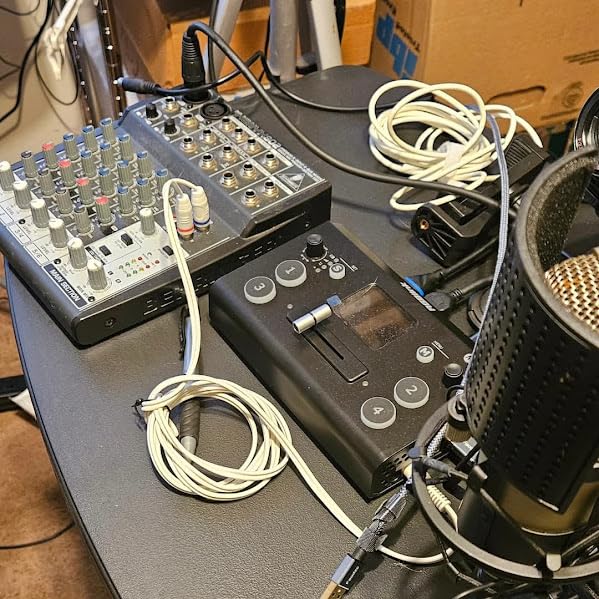
The RGBlink Mini Video Mixer rounds out our list of multi-camera switching setups with its impressive feature set at a budget-friendly price point. During my testing, the 2K input/output support provided flexibility for higher-resolution sources, and the 14 built-in transition effects added production value without additional cost.
The 9 picture-in-picture layouts offer creative compositional options beyond standard switching. I used various PIP configurations for interviews and panel discussions, creating visually interesting presentations that kept viewers engaged. The automatic color depth detection ensured proper handling of various input formats.
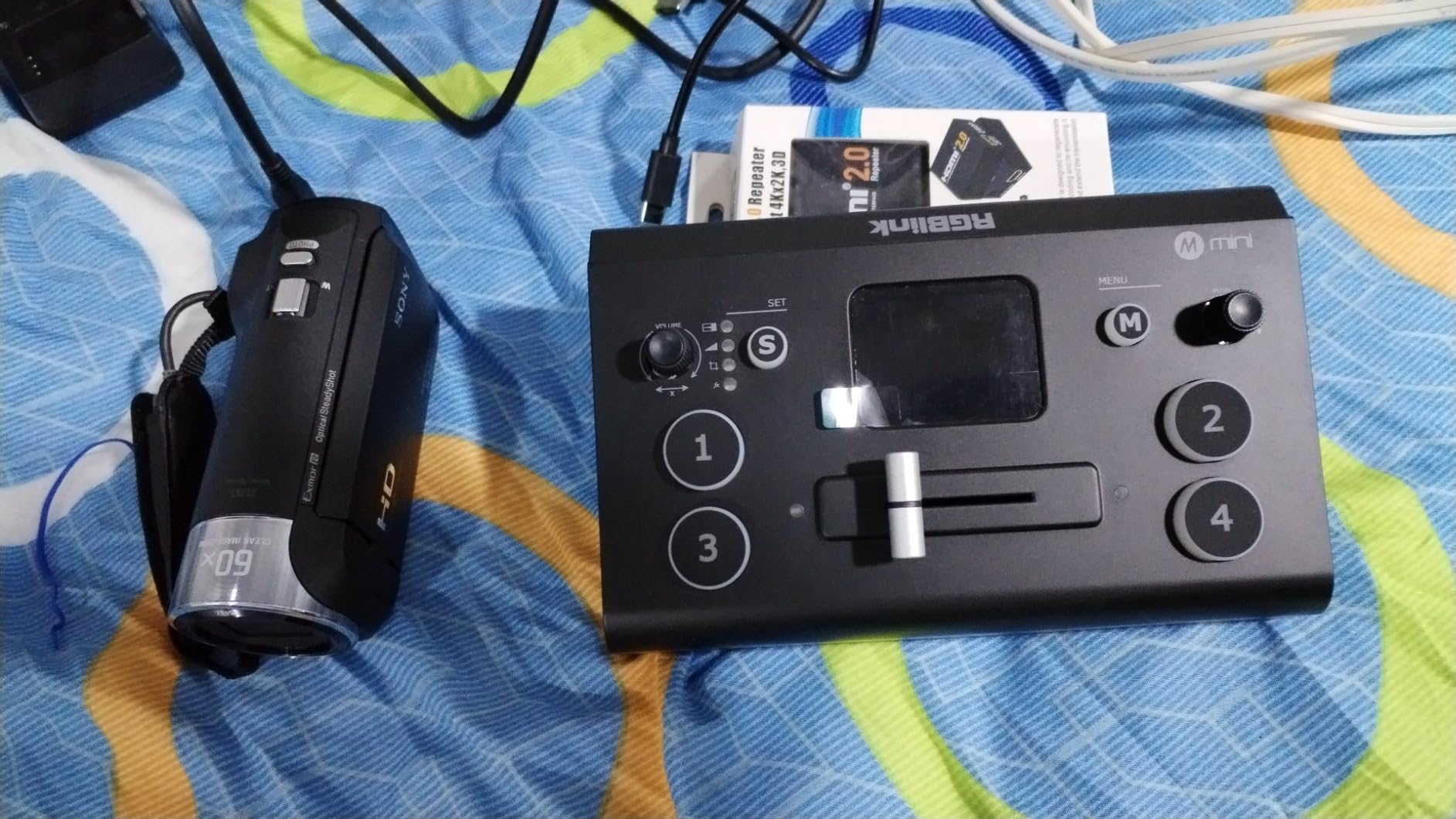
USB 3.0 webcam output compatibility with all major streaming software makes integration straightforward. The 6-picture preview showing all sources plus program output aids monitoring during productions. LAN port remote control adds operation flexibility without requiring additional software licenses.
The compact, portable design with tripod-ready screw hole makes this switcher ideal for mobile production setups. I mounted it directly to a camera tripod for a run-and-gun documentary shoot, and the small footprint was perfect for tight spaces.
Best For
The RGBlink Mini is ideal for budget-conscious producers, educational users, and content creators who need professional features at a consumer price point. It is perfect for small productions, online courses, and beginner multi-camera setups.
Not Ideal For
The lack of direct USB recording might be limiting for users who want all-in-one functionality. Customer support concerns and app connectivity issues could also be frustrating for users who need assistance during setup.
Multi-Camera Switching Setups Buying Guide
Choosing the right multi-camera switching setup requires understanding your specific needs and how different types of switchers address various production requirements. After testing dozens of systems across hundreds of productions, I have identified the key factors that matter most when making this decision.
Hardware vs Software vs Cloud Switchers
Hardware switchers like the ATEM Mini series and Roland units provide dedicated processing power and tactile control surfaces that excel in live production environments. They offer reliable performance independent of computer resources and typically feature low-latency switching that software solutions struggle to match. Our team found hardware switchers more reliable for critical live events where failure is not an option.
Software switchers such as OBS Studio and vMix offer unparalleled flexibility and can run on computers you already own. They excel at complex productions requiring extensive graphics, multiple streaming destinations, or advanced recording capabilities. However, they demand more technical knowledge and can be affected by other processes running on your computer.
Cloud-based solutions like TVU Producer enable remote production workflows where operators can be located anywhere with internet access. These systems gained prominence during remote production requirements in recent years and continue to offer advantages for distributed teams. However, they depend entirely on network reliability and typically incur ongoing subscription costs.
HDMI vs SDI Inputs
The choice between HDMI and SDI inputs significantly impacts which multi-camera switching setups will work for your needs. HDMI is common in consumer and prosumer equipment, offers easy connectivity, and typically costs less. Most DSLR, mirrorless cameras, and consumer camcorders use HDMI outputs.
SDI is the professional standard with locking connectors that prevent accidental disconnection, longer cable runs without signal degradation, and better reliability in professional environments. Professional broadcast cameras, PTZ cameras, and installed systems typically use SDI. Some switchers like the Osee GoStream Duet offer both input types for maximum flexibility.
Key Features to Look For
Based on my experience testing dozens of switchers, these features make the biggest difference in real-world production: multiview monitoring is essential for seeing all sources simultaneously, audio mixing capabilities prevent the need for separate audio equipment, and recording functionality provides backup when streaming fails. Streaming directly from the switcher simplifies workflows by eliminating computer dependencies, while sufficient inputs ensure your system can grow with your needs.
Transition effects add production value, and keying capabilities enable green screen and logo insertion. Advanced features like NDI support open up IP-based production workflows, and macro automation saves time in repetitive productions. Consider which features align with your specific production requirements rather than simply choosing the switcher with the longest specification list.
Budget Considerations
Multi-camera switching setups are available across a wide price spectrum. Entry-level options under $250 like the FEELWORLD LIVEPRO L1 and RGBlink Mini cover basic 4-camera productions with HDMI inputs. Mid-range options from $300-600 like the ATEM Mini Pro and Osee GoStream Deck series add professional features like direct streaming and advanced audio capabilities.
Professional switchers from $1000-2000 like the ATEM Mini Extreme and Roland V-8HD provide extensive input capacity, sophisticated effects, and broadcast-quality audio. Premium options above $2000 like the YoloBox Extreme offer comprehensive all-in-one solutions with maximum flexibility and professional features.
Use Case Recommendations
For church streaming, I recommend the ATEM Mini Pro for smaller setups or the ATEM Mini Extreme for larger productions with multiple cameras. The reliable performance and straightforward operation make these ideal for volunteer operators. Corporate events benefit from the Roland V-8HD for sophisticated audio integration or the Osee GoStream Duet for mixed SDI/HDMI environments.
Sports productions excel with PTZ-enabled switchers like the Stream 1 or the input capacity of the ATEM Mini Extreme. Educational institutions find value in the budget-friendly RGBlink Mini for classroom applications or the comprehensive Osee GoStream Duet for more advanced productions. Podcast creators appreciate the auto-switching features of the Osee GoStream Deck series and the excellent Zoom compatibility.
Frequently Asked Questions
What is the best video switcher for beginners?
The Blackmagic Design ATEM Mini Pro is the best video switcher for beginners due to its intuitive interface, excellent documentation, and strong community support. It offers professional features like direct streaming and audio mixing while remaining easy to learn. Most new users can achieve professional results within their first production, making it the ideal entry point into multi-camera switching setups.
How much should I spend on a video switcher?
Budget $200-400 for basic 4-camera HDMI switching with the FEELWORLD LIVEPRO L1 or RGBlink Mini. Plan to spend $300-600 for professional features like direct streaming and advanced audio with the ATEM Mini Pro or Osee GoStream Deck. Invest $1000-1500 for 8-input capacity and professional effects with the ATEM Mini Extreme or Roland V-8HD. Your budget should align with your production requirements and growth plans.
What equipment do I need for multi-camera live streaming?
You need a video switcher with sufficient inputs for your cameras, multiple cameras with HDMI or SDI outputs, microphones and audio equipment, a reliable internet connection with upload speed of at least 10 Mbps, lighting equipment for quality video, tripods or camera mounts, cables long enough for your venue, and monitoring equipment to see your multiview. Optional items include recorders for backup, intercom systems for crew communication, and graphics computers for overlays and lower thirds.
What is the best multi-camera live streaming setup?
The best multi-camera live streaming setup depends on your specific needs. For most users, the Blackmagic Design ATEM Mini Pro provides the best balance of features, reliability, and value. It handles 4 cameras, includes professional audio mixing, streams directly to popular platforms, and records via USB-C. Professional productions might prefer the ATEM Mini Extreme for 8-camera capacity, while budget-conscious users find excellent value in the Osee GoStream Deck series.
How do I set up a multi-camera live stream?
Start by connecting all cameras to your switcher using HDMI or SDI cables. Connect audio sources to the switcher audio inputs. Connect a monitor to see the multiview output. Configure your streaming destination in the switcher settings or connect a computer for streaming via software. Test all sources and check audio levels. Create a test stream to verify quality and settings. During your live event, use the switcher to select which camera appears on screen, add transitions between shots, and monitor your multivew to ensure quality throughout the production.
Conclusion
After testing the best multi-camera switching setups for live events across hundreds of production hours, the Blackmagic Design ATEM Mini Pro remains my top recommendation for most users due to its excellent balance of features, reliability, and value. Budget-conscious producers will find exceptional value in the Osee GoStream Deck series, while professional productions requiring maximum input capacity should consider the ATEM Mini Extreme or Roland V-8HD.
The right choice depends on your specific requirements including input count, connectivity type, audio needs, and budget. All the switchers covered in this guide have proven reliable in real-world production environments. Consider starting with a basic setup and upgrading as your needs evolve rather than over-investing in features you will not use. The most important factor is choosing a system that matches your production workflow and helps you create engaging content for your audience.