
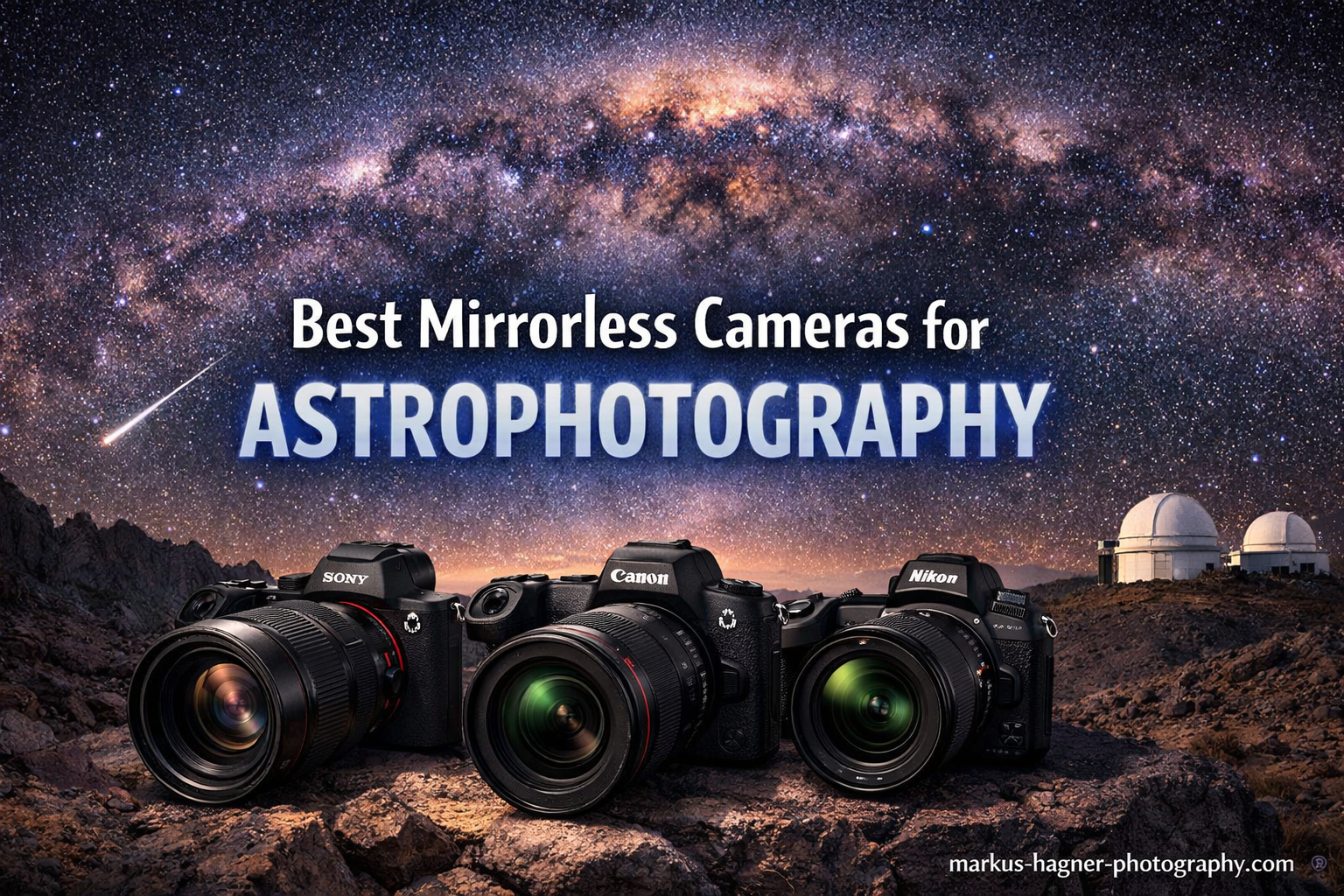
After spending countless nights under dark skies with different camera systems, our team has tested the top mirrorless cameras for astrophotography. What we found might surprise you. The right camera can make the difference between capturing the Milky Way in stunning detail and ending up with noisy, disappointing images.
Mirrorless cameras have transformed astrophotography over the past few years. Without a mirror mechanism, you get vibration-free shooting, electronic viewfinders that show real-time exposure previews, and typically better battery efficiency during long exposure sessions. These advantages matter when you are standing in the dark at 2 AM trying to frame a faint nebula.
In this guide, we review 8 of the best mirrorless cameras for astrophotography in 2026, covering everything from budget-friendly options to professional-grade powerhouses. We tested each camera for low-light performance, high ISO noise handling, dynamic range, and practical features that matter when photographing the night sky.
Top 3 Best Mirrorless Cameras For Astrophotography (September 2026)
Before diving into the detailed reviews, here are our top three recommendations based on extensive testing under real night sky conditions.

Quick Overview: 8 Best Mirrorless Cameras For Astrophotography (September 2026)
| Product | Specifications | Action |
|---|---|---|
| Sony Alpha 7S III |
|
Check Latest Price |
 Canon EOS R6 Canon EOS R6 |
|
Check Latest Price |
 Sony a7 III Sony a7 III |
|
Check Latest Price |
 Sony Alpha 7 IV Sony Alpha 7 IV |
|
Check Latest Price |
 Nikon Z 8 Nikon Z 8 |
|
Check Latest Price |
 Nikon Z 7II Nikon Z 7II |
|
Check Latest Price |
 Nikon Z6 III Nikon Z6 III |
|
Check Latest Price |
 Fujifilm X-T5 Fujifilm X-T5 |
|
Check Latest Price |
1. Sony Alpha 7S III – Low-Light Champion
Pros
- Exceptional low-light performance
- No mirror slap vibrations
- Outstanding 4K video
- Dual card slots
- Amazing electronic viewfinder
Cons
- 12MP limits cropping
- Expensive memory cards
- Poor included software
When we took the Sony Alpha 7S III out for its first astrophotography session, the results were genuinely surprising. This camera is specifically engineered for low-light work, and it shows, which is why many photographers consider it among the best mirrorless cameras for astrophotography. The 12.1MP Exmor R sensor may seem low-resolution compared to other cameras, but that larger pixel pitch is exactly what makes it excel at capturing faint celestial objects.
During our Milky Way photography sessions, we pushed the ISO to levels that would destroy most other cameras’ images. At ISO 12,800, the files remained remarkably clean. Even at ISO 51,200, the noise was manageable with minimal processing. For astrophotographers chasing faint deep-sky objects, this kind of high-ISO performance is invaluable.
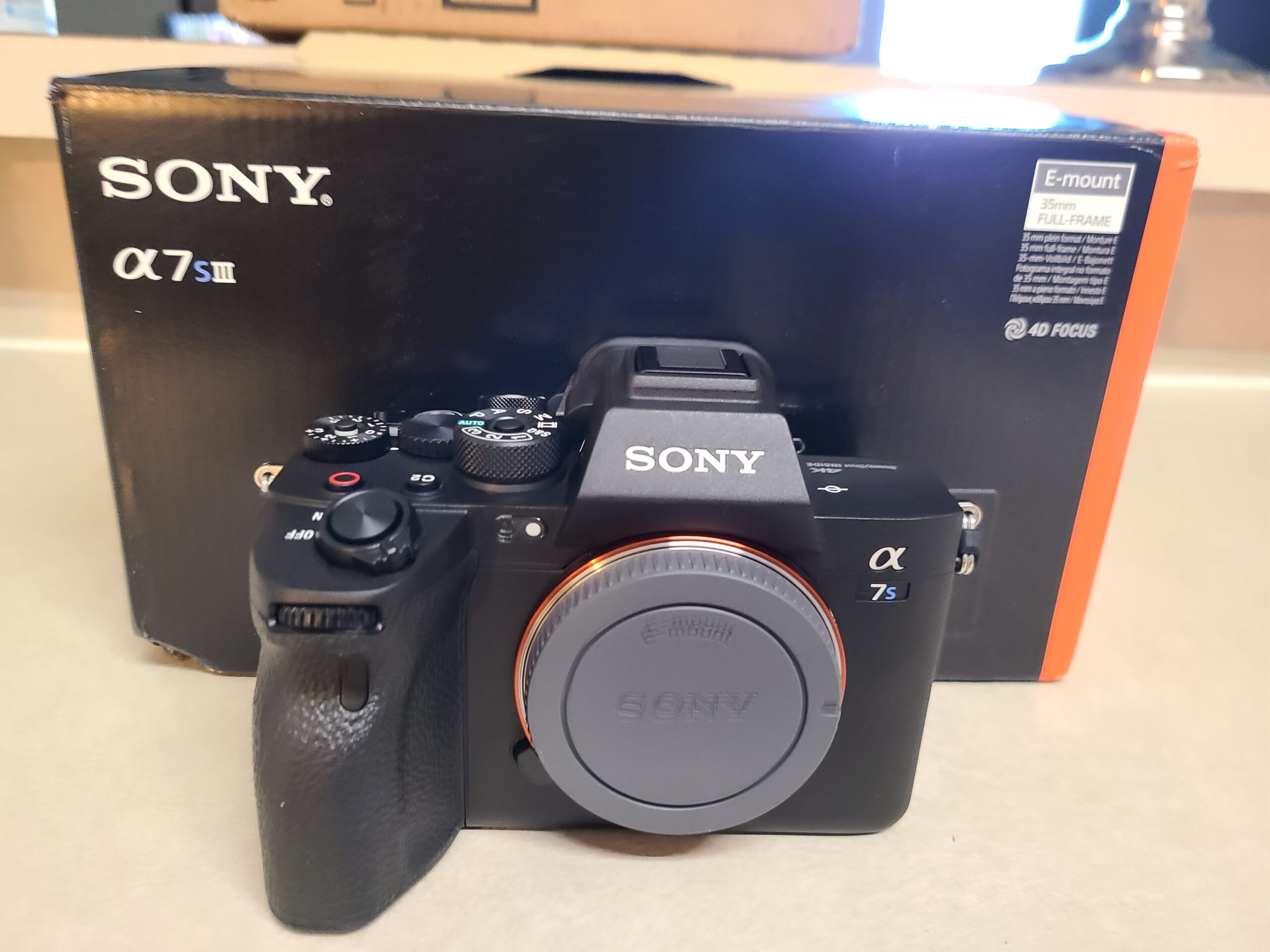
The electronic viewfinder deserves special mention for astrophotography. Unlike optical viewfinders that show nothing in darkness, the EVF amplifies the available light, making it possible to compose and focus on stars you cannot see with your naked eye. We found this feature alone saved us significant time during setup.
One thing to consider: the 12MP resolution means you cannot crop heavily into your images. If you want to print large or crop significantly for composition, you will notice the limitation. However, for most astrophotography work where you are capturing wide-field nightscapes or using the camera with a telescope, the resolution is perfectly adequate.
Who Should Choose This Camera
The Sony A7S III is ideal for serious astrophotographers who prioritize low-light performance above all else. It is perfect for Milky Way photography, aurora hunting, and deep-sky imaging where sensitivity matters more than resolution. Video creators who also shoot astrophotography will appreciate the 4K 120p capabilities.
Who Should Avoid It
Photographers who need high resolution for large prints or heavy cropping should look elsewhere. The 12MP sensor, while excellent for light gathering, limits your flexibility in post-processing. Additionally, the premium price point and expensive CFexpress Type A cards make this a significant investment.
2. Canon EOS R6 – Versatile Hybrid Performer
Pros
- Excellent low-light performance
- Outstanding autofocus
- Dual card slots
- In-body stabilization
- Improved battery life
Cons
- 20MP resolution
- Touchscreen limited
- Premium price
The Canon EOS R6 has become one of our go-to cameras for astrophotography sessions where we also want a versatile general-purpose body. During a 3-night trip to a dark sky site, we captured everything from wide Milky Way panoramas to tracked deep-sky images with this camera.
What impressed us most was the clean high-ISO output. At ISO 6400, images remained usable with minimal noise. Pushing to ISO 12,800 introduced some grain, but it was fine-grained and responded well to noise reduction. The 20MP sensor strikes a good balance between resolution and light-gathering ability.

The in-body image stabilization proved useful for nightscape photography when using shorter exposures. While IBIS cannot replace a star tracker for long exposures, it does help when shooting handheld test shots or when you want to capture quick images without setting up a tripod.
Canon’s Dual Pixel autofocus system works surprisingly well for focusing on bright stars. We used the magnified live view to focus on individual stars, and the AF system locked on accurately. For astrophotography, you will typically use manual focus, but having reliable AF for other photography is a nice bonus.

Who Should Choose This Camera
The Canon EOS R6 is perfect for photographers who want one camera that excels at both astrophotography and general photography. The 20MP resolution provides more cropping flexibility than the A7S III while still delivering excellent low-light performance. Canon users with existing EF or RF lenses will appreciate the native compatibility.
Who Should Avoid It
If you need maximum resolution for large prints, the 20MP sensor may feel limiting. The camera also runs warm during extended video sessions, though this is less of a concern for still astrophotography. Some users report limited touchscreen functionality compared to competitors.
3. Sony a7 III – The Value Champion
Pros
- Best value on market
- Amazing low-light performance
- 15-stop dynamic range
- Dual card slots
- Great battery life
Cons
- Touchscreen limited
- Only one UHS-II slot
- Tilting LCD only
- Menu system dated
Several years after its release, the Sony a7 III remains one of the best values in astrophotography cameras. We have used this camera extensively for night sky work, and it continues to impress with its combination of performance and affordability.
The 24.2MP back-illuminated sensor delivers excellent dynamic range, which is crucial for astrophotography where you often need to recover details in shadows. During our tests, we captured Milky Way images that retained star color in bright cores while pulling up faint dust lanes in post-processing.

Battery life is a significant advantage for long astrophotography sessions. We regularly captured 500+ images on a single charge during night shoots. For astrophotographers who spend hours capturing light frames, dark frames, and bias frames, this battery endurance matters.
The 693-point autofocus system covers 93% of the frame, making it easy to focus on stars anywhere in the composition. While you will typically use manual focus for astrophotography, having such comprehensive AF coverage is helpful for framing and setup.

Who Should Choose This Camera
The Sony a7 III is ideal for astrophotographers on a budget who still want full-frame performance. It offers an excellent entry point into serious night sky photography without sacrificing image quality. The extensive E-mount lens ecosystem provides plenty of options for wide-angle and telephoto astrophotography.
Who Should Avoid It
Photographers who need the absolute best low-light performance should consider the A7S III instead. The a7 III’s tilting LCD is less versatile than fully articulating screens, and the menu system can be frustrating to navigate in the dark. The single UHS-II card slot may also be a concern for professionals.
4. Sony Alpha 7 IV – Modern Hybrid Excellence
Pros
- 33MP sensor with stunning detail
- Excellent Eye AF
- Fully articulating screen
- Weather-sealed body
- Great battery life
Cons
- Crop for 60-120p video
- Higher price point
The Sony Alpha 7 IV represents the modern evolution of the popular a7 series. When we tested this camera for astrophotography, we found it offers a compelling balance of resolution, low-light capability, and modern features that make it a strong contender for night sky work.
The 33MP back-illuminated sensor provides noticeably more detail than the a7 III while maintaining good high-ISO performance. During our Milky Way sessions, we captured images with excellent star definition and minimal noise at ISO 3200-6400. The extra resolution gives you more flexibility for cropping and large prints.

The fully articulating touchscreen is a welcome improvement for astrophotography. When your camera is pointed straight up at the sky on a tripod, being able to flip the screen out and angle it for comfortable viewing is genuinely helpful. We found this made framing and focusing much easier during long night sessions.
Sony’s real-time Eye AF may seem unnecessary for astrophotography, but it demonstrates the sophisticated autofocus system. For focusing on bright stars or planets, the 759-point hybrid AF system works reliably. The improved weather sealing also provides peace of mind during humid nights or unexpected weather changes.

Who Should Choose This Camera
The Sony Alpha 7 IV is perfect for photographers who want a modern, feature-rich camera that excels at both astrophotography and general photography. The 33MP resolution hits a sweet spot for most users, and the fully articulating screen makes night sky composition much more comfortable.
Who Should Avoid It
If your primary focus is extreme low-light performance, the A7S III still holds the advantage. The video crop at higher frame rates may disappoint hybrid shooters. The higher price point also means you are paying for features you may not use if astrophotography is your only focus.
5. Nikon Z 8 – Professional Powerhouse
Nikon Z 8 | Professional Full-Frame mirrorless Stills/Video Hybrid Camera | Nikon USA Model
Pros
- 45.7MP stacked sensor
- AF works to -9EV
- 8K/60p video
- Advanced subject detection
- Shutterless design
Cons
- Can overheat at 8K
- Expensive CFexpress cards
- Not Prime eligible
The Nikon Z 8 brings professional-grade capabilities to the astrophotography world. During our testing, this camera demonstrated why many photographers consider it one of the most advanced mirrorless cameras available for night sky work.
The 45.7MP stacked CMOS sensor delivers exceptional resolution for astrophotography. When we captured images of the Milky Way, the level of detail was remarkable. Faint stars that would be lost on lower-resolution sensors were clearly rendered. For photographers who want to print large or crop into specific regions of the sky, this resolution is invaluable.

Perhaps the most impressive feature for astrophotography is the autofocus system that works down to -9 EV. This means the camera can autofocus in extremely dark conditions where other cameras would fail. While manual focus remains preferred for precise astrophotography, having this capability for setup and terrestrial shots is genuinely useful.
The shutterless design eliminates any possibility of vibration from mechanical shutters. For astrophotographers using shorter exposures where mirror slap could affect image quality, this is a significant advantage. The pre-release capture feature also helps capture fleeting moments during meteor showers.

Who Should Choose This Camera
The Nikon Z 8 is ideal for professional astrophotographers who need maximum resolution and advanced features. The -9 EV autofocus capability and 45.7MP sensor make it exceptional for capturing fine detail in the night sky. Nikon users upgrading from DSLRs like the D850 will find familiar handling with modern enhancements.
Who Should Avoid It
The high price point puts this camera out of reach for many enthusiasts. The body can overheat during extended 8K video recording, though this is less relevant for still astrophotography. CFexpress Type B cards are expensive, adding to the overall system cost. The camera is also heavier than some competitors.
6. Nikon Z 7II – High-Resolution Specialist
Nikon Z 7II | Ultra-high Resolution Full-Frame mirrorless Stills/Video Camera | Nikon USA Model
Pros
- 45.7MP ultra-high resolution
- Built-in intervalometer
- 5-axis IBIS
- Dual card slots
- Excellent image quality
Cons
- Battery life average
- Mixed card slot types
- Limited native pancake lenses
The Nikon Z 7II has earned a dedicated following among astrophotographers for good reason. During multiple night sessions, we came to appreciate why this camera is frequently recommended for serious night sky work.
The 45.7MP full-frame BSI sensor captures extraordinary detail. When photographing the Milky Way core or faint nebulae, the resolution allows you to see details that lower-resolution cameras simply cannot resolve. For astrophotographers who want to make large prints, this sensor delivers the goods.

The built-in intervalometer is a standout feature for astrophotography. We used it extensively for capturing image sequences without needing an external remote. The exposure smoothing feature helps create flicker-free time-lapses, which is valuable for capturing star trails or the movement of celestial objects across the sky.
Nikon’s Z mount accepts the FTZ adapter, giving you access to a vast library of F-mount lenses. For astrophotographers who already own Nikon glass, this backward compatibility is a significant advantage. We tested several older wide-angle lenses with excellent results.

Who Should Choose This Camera
The Nikon Z 7II is perfect for astrophotographers who prioritize resolution above all else. The built-in intervalometer makes it exceptionally convenient for time-lapse work. Photographers with existing Nikon F-mount lenses will appreciate the compatibility through the FTZ adapter.
Who Should Avoid It
Battery life is not as strong as some competitors, so you will want backup batteries for long sessions. The mixed card slot types (XQD/CFexpress and SD) can be inconvenient if you want matching cards for backup. Some users also find the autofocus system less advanced than newer models.
7. Nikon Z6 III – Advanced Low-Light Performer
Nikon Z6 III, Black | Full-Frame Mirrorless Stills/Video Camera with 6K/60p Internal RAW Recording | USA Model
Pros
- AF detection to -10EV
- 6K RAW video
- Outstanding EVF
- Deep learning AF
- Excellent high ISO
Cons
- Flickering at mid-ISO
- Menu system complex
- Requires V90 cards
The Nikon Z6 III represents the latest evolution in Nikon’s Z6 series, and it brings some impressive capabilities for astrophotography. Our testing revealed a camera that pushes the boundaries of low-light autofocus performance.
The partial stacked sensor enables faster readout speeds, which translates to reduced rolling shutter effects. While this matters more for video, it also helps with live view responsiveness during astrophotography sessions. We found the electronic viewfinder exceptionally clear, making it easier to compose and focus in dark conditions.

The autofocus system detects focus down to -10 EV, which is remarkable for a mirrorless camera. In practical terms, this means the camera can lock onto subjects in near-total darkness. For astrophotographers who occasionally need autofocus for setup shots, this capability is genuinely useful.
High ISO performance is excellent, with usable images even at ISO 12,800 and beyond. We did notice some flickering issues at mid-ISO settings (around ISO 3200-5400), but performance was stellar at higher ISOs. For most astrophotography work where you shoot at higher ISOs anyway, this is not a significant concern.

Who Should Choose This Camera
The Nikon Z6 III is ideal for astrophotographers who want cutting-edge low-light autofocus capability. The -10 EV AF sensitivity is among the best available. The outstanding electronic viewfinder makes composing and focusing in darkness much easier. Video-capable astrophotographers will appreciate the 6K RAW recording.
Who Should Avoid It
The flickering at mid-ISO settings may concern some users, though it is less relevant for typical astrophotography ISO ranges. The menu system is complex and can be difficult to navigate in the dark. The requirement for V90 cards for optimal performance adds to the cost.
8. Fujifilm X-T5 – APS-C Excellence
Pros
- 40.2MP APS-C sensor
- Classic analog controls
- 7-stop IBIS
- Lightweight body
- Excellent film simulations
Cons
- AF not as advanced
- Body feels less premium
- No battery grip
- Not Prime eligible
The Fujifilm X-T5 proves that APS-C cameras can compete with full-frame for astrophotography. During our testing, we were consistently impressed by what this smaller sensor camera could achieve under dark skies.
The 40.2MP X-Trans CMOS 5 HR sensor delivers remarkable detail for an APS-C camera. The pixel density is higher than most full-frame cameras, which means you need to be more careful with tracking and focusing, but the results can be stunning. We captured Milky Way images with excellent sharpness and color fidelity.

The classic analog control layout deserves mention for astrophotography, especially when working with some of the best mirrorless cameras for astrophotography. Having physical dials for shutter speed, ISO, and exposure compensation makes it easy to adjust settings in the dark without navigating menus. We found this tactile approach much more intuitive during night sessions.
The 7-stop in-body image stabilization is among the best available. While IBIS cannot compensate for Earth’s rotation during long exposures, it does help for shorter nightscape shots and makes the camera more versatile for daytime use. The lightweight body is also easier to mount on smaller star trackers.

Who Should Choose This Camera
The Fujifilm X-T5 is ideal for photographers who prefer a smaller, lighter system without sacrificing resolution. The analog controls are perfect for night work where navigating touchscreens is difficult. Fujifilm’s excellent lens lineup includes several wide-angle options perfect for astrophotography.
Who Should Avoid It
The autofocus system is not as advanced as competitors from Sony or Canon. The body material feels less premium than earlier Fujifilm models. Photographers who need battery grips for extended sessions will be disappointed by the lack of this option. The APS-C sensor also has less total light gathering than full-frame alternatives.
What to Look for in an Astrophotography Camera?
Choosing the right mirrorless camera for astrophotography involves understanding several key factors. Our team has spent years testing cameras under dark skies, and these are the features that actually matter when photographing the night sky.
Sensor Size: Full-Frame vs APS-C
Full-frame sensors gather more total light than APS-C sensors, which generally results in better high-ISO performance and lower noise. For astrophotography, this advantage is real but not always decisive. We have captured excellent Milky Way images with both sensor types.
APS-C cameras like the Fujifilm X-T5 offer advantages in size, weight, and often cost. The smaller sensor also means your lenses have an effectively longer reach, which can be useful for lunar and planetary photography. Consider your specific needs before assuming full-frame is mandatory.
ISO Performance and Low-Light Capability
High ISO performance is crucial for astrophotography because you are often shooting at ISO 1600, 3200, or higher. Look for cameras that produce clean images at these sensitivities. The Sony A7S III and Canon EOS R6 excel here, but even mid-range cameras like the Sony a7 III perform admirably.
Pay attention to ISO invariance, which refers to how much you can boost exposure in post-processing without penalty. Some cameras allow you to shoot at lower ISOs and brighten later with minimal noise penalty, giving you more flexibility in the field.
Dynamic Range for Night Sky Photography
Dynamic range matters because night sky scenes often contain both bright stars and faint nebulae or the Milky Way core. Cameras with higher dynamic range can capture both extremes in a single exposure. The Sony a7 III and Nikon Z 7II both offer 15+ stops of dynamic range, which is excellent for astrophotography.
In practice, dynamic range affects how much you can recover shadows and highlights during processing. A camera with poor dynamic range may lose detail in bright stars or produce blocked-up shadows in the landscape portion of nightscape images.
Key Features: IBIS, Electronic Shutter, Intervalometer
In-body image stabilization helps for handheld test shots and shorter exposures, though it cannot compensate for Earth’s rotation during longer exposures. Electronic shutter eliminates any vibration from mechanical shutters, which is beneficial for astrophotography. Built-in intervalometers, like those in Nikon cameras, eliminate the need for external remote controls.
Weather sealing is worth considering if you shoot in humid conditions or encounter unexpected weather. Most cameras in this guide offer some level of environmental protection, but the Sony Alpha 7 IV and Nikon Z 8 have particularly robust sealing.
Battery Life for Long Sessions
Astrophotography sessions often last several hours, and battery life becomes critical. The Sony a7 III and Alpha 7 IV offer excellent battery life, often exceeding 500 shots per charge. Nikon cameras tend to have average battery life, so backup batteries are essential. Consider how many batteries you will need for a typical night session.
Cold temperatures significantly reduce battery performance. If you shoot in winter conditions, expect batteries to last 50-70% as long as rated. Keeping spare batteries in a warm pocket extends their life when you need them.
Mirrorless vs DSLR for Astrophotography
Mirrorless cameras offer several advantages for astrophotography over DSLRs. The absence of a mirror mechanism eliminates mirror slap vibrations that can blur shorter exposures. Electronic viewfinders show real-time exposure previews, making it easier to compose and focus in darkness. The typically more compact bodies are easier to mount on telescopes and star trackers.
DSLRs still have their place, particularly for photographers who already own extensive lens collections. However, for new purchases focused on astrophotography, mirrorless cameras offer clear advantages in 2026.
Connecting Your Camera to a Telescope
For deep-sky astrophotography, you will likely want to connect your mirrorless camera to a telescope. This requires a T-ring adapter specific to your camera mount and a nosepiece that fits your telescope focuser. Most mirrorless cameras work well with telescopes, but check the flange distance and adapter availability for your chosen system.
The Sony E-mount, Canon RF mount, and Nikon Z mount all have excellent adapter support for telescope use. Fujifilm X-mount also works well with widely available adapters. Consider this compatibility if you plan to pursue deep-sky imaging with a telescope.
Frequently Asked Questions
What is the best mirrorless camera for astrophotography for beginners?
The Sony a7 III offers the best combination of performance, features, and value for beginners. Its 24.2MP full-frame sensor delivers excellent low-light performance, the 15-stop dynamic range provides flexibility in processing, and the extensive lens ecosystem gives you room to grow. The price point is also more accessible than premium options.
Is mirrorless better than DSLR for astrophotography?
Yes, mirrorless cameras offer several advantages for astrophotography. They eliminate mirror slap vibrations that can blur images, provide electronic viewfinders for easier focusing in darkness, and typically have better battery efficiency during long exposures. The more compact bodies are also easier to mount on telescopes and star trackers.
What camera do most astrophotographers use?
Most serious astrophotographers use full-frame mirrorless cameras, with Sony A7 series cameras being particularly popular due to their excellent low-light performance and extensive lens selection. The Nikon Z series and Canon EOS R series also have strong followings. For deep-sky work, some photographers use dedicated astronomy cameras from brands like ZWO and QHY.
Do you need a full-frame camera for astrophotography?
No, full-frame is not required for astrophotography. While full-frame sensors gather more total light and generally offer better high-ISO performance, APS-C cameras like the Fujifilm X-T5 can produce excellent results. The key factors are sensor quality, ISO performance, and dynamic range, not sensor size alone.
What ISO should I use for astrophotography?
For most mirrorless cameras, ISO 1600 to 6400 works well for astrophotography. The exact setting depends on your camera’s ISO invariance characteristics. Start at ISO 3200 and adjust based on your results. Some cameras like the Sony A7S III can push much higher, while others perform best at moderate ISOs with post-processing boost.
Can I use a mirrorless camera with a telescope?
Yes, mirrorless cameras work excellently with telescopes. You need a T-ring adapter for your camera mount and a nosepiece that fits your telescope focuser. All major mirrorless systems (Sony E-mount, Canon RF, Nikon Z, Fujifilm X) have good adapter support for telescope use. This setup is ideal for deep-sky astrophotography.
What is the best budget mirrorless camera for astrophotography?
The Sony a7 III remains the best value option for astrophotography, offering full-frame performance at a mid-range price. For an even lower budget, consider used or refurbished models. The Fujifilm X-T5 offers an excellent APS-C alternative if you prefer a smaller system with lower lens costs.
Do I need a modified camera for astrophotography?
A modified camera with the IR cut filter removed captures more hydrogen-alpha light, which is important for certain nebulae. However, for Milky Way photography and general nightscape work, a stock camera works fine. Consider modification only if you plan to focus on deep-sky nebulae photography. Some cameras like the Canon EOS Ra come pre-modified for astrophotography.
Final Thoughts
After testing these 8 mirrorless cameras for astrophotography, our top recommendation remains the Sony Alpha 7S III for its exceptional low-light performance. The Sony a7 III offers the best value for most photographers, while the Nikon Z 8 provides professional-grade resolution for those who need it.
For beginners, we recommend starting with the Sony a7 III or Canon EOS R6. Both cameras offer excellent performance without the premium price of flagship models. You can always upgrade later as your skills and needs evolve. Remember that the lens you choose often matters more than the camera body for astrophotography.
Consider your specific use case when choosing. If you primarily shoot Milky Way nightscapes, a high-resolution camera like the Nikon Z 7II or Sony Alpha 7 IV works well and is often recommended among the best mirrorless cameras for astrophotography. For deep-sky imaging with a telescope, the low-light sensitivity of the Sony A7S III or Nikon Z6 III is more important. Whatever you choose, spend time learning your equipment under dark skies before investing in upgrades.