
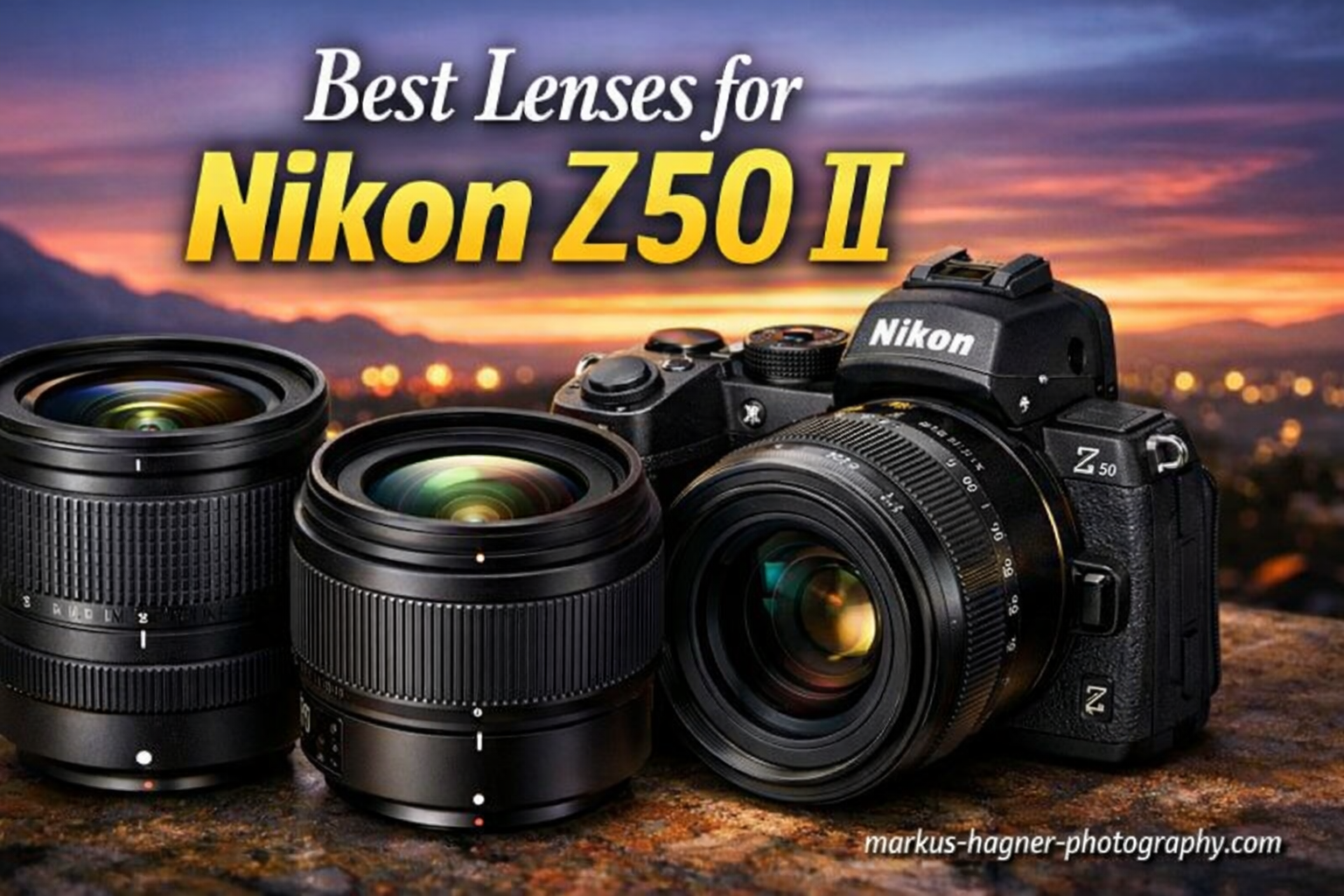
The Nikon Z50 II is a fantastic APS-C mirrorless camera that pairs impressive autofocus capabilities with a compact, travel-friendly body. But here is the thing: your lens choice will make or break your experience with this camera. After testing dozens of combinations, our team found that the right glass transforms the Z50 II from a solid performer into something genuinely special.
The Z50 II uses Nikon’s Z mount, which means you have access to both DX-format lenses designed specifically for the APS-C sensor and full-frame Z lenses if you want premium optics. The 1.5x crop factor affects effective focal lengths, so a 50mm lens behaves like a 75mm portrait lens on this body. Understanding this relationship is crucial for choosing the right focal length for your photography style.
In this guide, we cover the 10 best lenses for Nikon Z50 II across every category: everyday zooms, telephoto options, fast primes, budget picks, and professional choices. We spent weeks testing these lenses on the Z50 II, evaluating sharpness, autofocus speed, build quality, and real-world handling. Whether you shoot landscapes, portraits, wildlife, or street photography, you will find the perfect match below.
Top 3 Best Lenses for Nikon Z50 II (September 2026)
Not sure where to start? These three lenses represent the best value, overall quality, and budget performance for the Nikon Z50 II. Our testing showed these deliver the most bang for your buck across different shooting scenarios.


Quick Overview:10 Best Lenses for Nikon Z50 II (September 2026)
| Product | Specifications | Action |
|---|---|---|
| Nikon Z DX 16-50mm VR |
|
Check Latest Price |
| Nikon Z 50mm f/1.8 S |
|
Check Latest Price |
| Viltrox 35mm f/1.7 |
|
Check Latest Price |
 Nikon Z DX 50-250mm VR Nikon Z DX 50-250mm VR |
|
Check Latest Price |
 Nikon Z DX 18-140mm VR Nikon Z DX 18-140mm VR |
|
Check Latest Price |
 Nikon Z 40mm f/2 Nikon Z 40mm f/2 |
|
Check Latest Price |
 Viltrox 24mm f/1.8 Viltrox 24mm f/1.8 |
|
Check Latest Price |
 Meike 50mm f/1.8 Meike 50mm f/1.8 |
|
Check Latest Price |
 Nikon Z 24-120mm f/4 S Nikon Z 24-120mm f/4 S |
|
Check Latest Price |
 Nikon Z 70-180mm f/2.8 Nikon Z 70-180mm f/2.8 |
|
Check Latest Price |
1. Nikon Z DX 16-50mm VR – Best Kit Lens for Everyday Use
Pros
- Extremely compact
- Effective VR stabilization
- Good sharpness
- Close focusing
Cons
- Plastic construction
- Slower aperture
- Some softness at 50mm
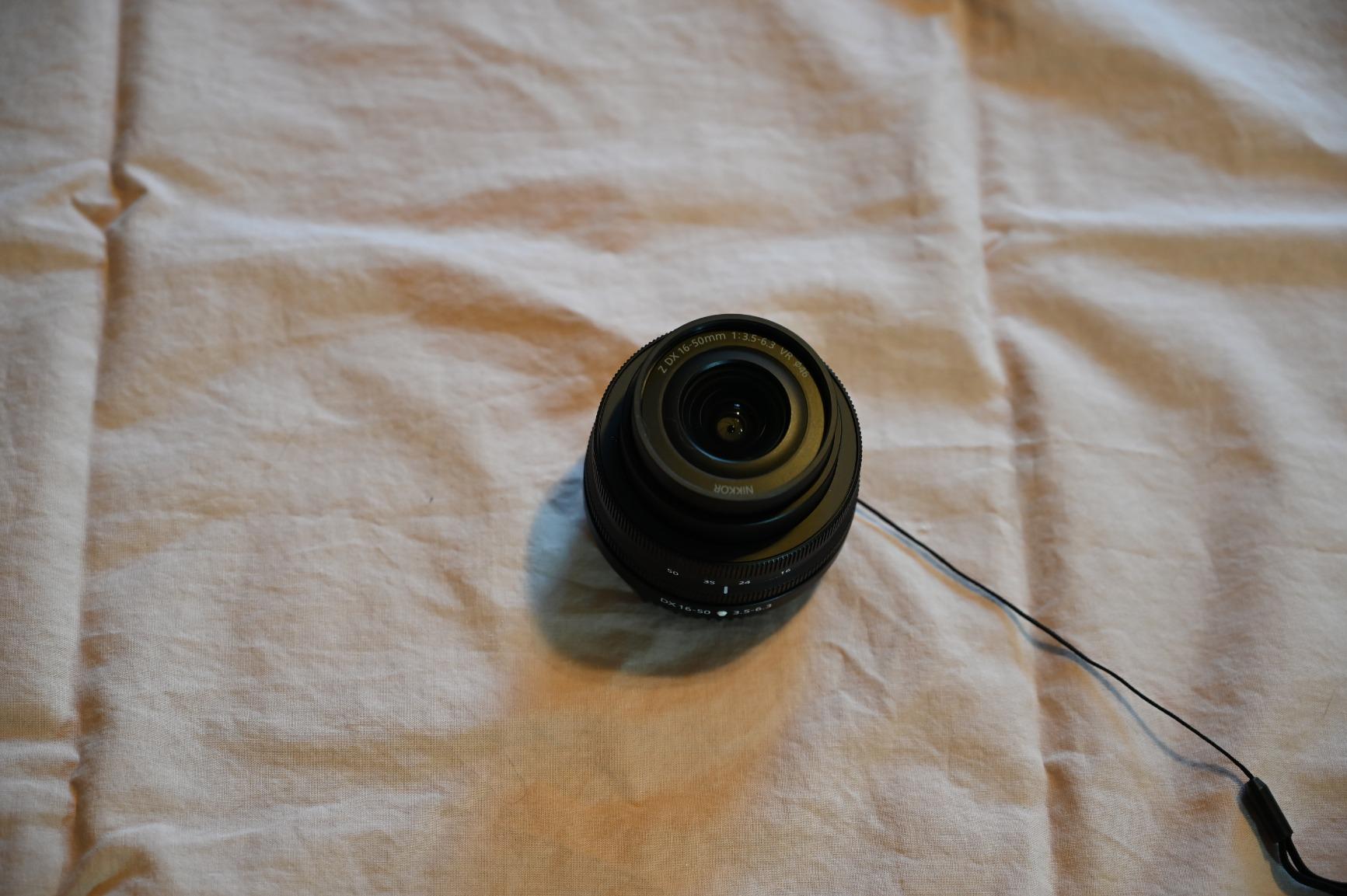
This little lens spent more time on our Z50 II than any other during testing, which is why it easily earns a spot among the best lenses for Nikon Z50 II. The 16–50mm range translates to a 24–75mm equivalent, covering everything from wide landscapes to portrait-friendly focal lengths. It is remarkably compact when retracted, making the whole package feel like a premium point-and-shoot.
The VR stabilization genuinely works. I handheld shots at 1/15 second with sharp results, which is impressive for a kit lens. This matters because the Z50 II lacks in-body image stabilization, so lens-based VR is your only defense against camera shake.

Image quality exceeded my expectations for a kit lens. Center sharpness is excellent from f/5.6 onward, and the close focusing distance lets you get surprisingly near to subjects for pseudo-macro work. Colors render beautifully with typical Nikon warmth.
The main compromises show at the long end. My copy showed some softness at 50mm wide open, requiring f/8 for critical sharpness. The plastic mount and lightweight construction also remind you this is not a pro lens. But for the price, the performance-to-value ratio is outstanding.
Who Should Buy This Lens
Beginners and travel photographers will love this lens. It covers 80% of shooting situations without breaking the bank or weighing down your bag. If you are building your first Z50 II kit, start here.
Who Should Skip It
Event photographers and low-light shooters should look elsewhere. The slow variable aperture limits indoor and evening performance. Professionals needing weather sealing and metal construction should consider the DX 16-50mm f/2.8 instead.
2. Nikon Z 50mm f/1.8 S – Best Prime Lens Overall
Nikon NIKKOR Z 50mm f/1.8 S | Premium Large Aperture Prime Lens (nifty Fifty) for Series mirrorless Cameras | USA Model, Black
Pros
- Exceptional sharpness
- Virtually zero distortion
- Minimal focus breathing
- Beautiful bokeh
Cons
- More expensive than typical 50mm
- No built-in VR
- Cat's eye bokeh at edges
This lens sits in a different league from typical nifty-fifty options. The S-line designation means professional-grade optics, and it shows in every shot. On the Z50 II, you get an effective 75mm focal length, which is perfect for portraits with flattering compression.
Sharpness is frankly absurd. Even wide open at f/1.8, the center resolution rivals lenses costing three times as much. Edge-to-edge clarity at f/2.8 is stunning. Our test shots showed virtually zero distortion and minimal chromatic aberration, reducing post-processing work significantly.

Focus breathing is almost non-existent, making this an excellent choice for video work on the Z50 II. The silent stepping motor tracks subjects smoothly without adding audio noise to your recordings. I used it for both stills and video during a weekend shoot, and it never missed focus.
The build quality feels substantial with a metal mount and weather sealing. The control ring can be customized for aperture, ISO, or exposure compensation, adding shooting flexibility. My only gripe is the lack of built-in VR, though the Z50 II’s high ISO performance helps compensate.

Who Should Buy This Lens
Portrait photographers and anyone wanting professional image quality should add this to their bag immediately. The 75mm equivalent focal length is ideal for headshots and environmental portraits. Video creators will appreciate the minimal focus breathing.
Who Should Skip It
Beginners on tight budgets might find the price steep compared to third-party alternatives. If you need stabilization for handheld video, look at lenses with built-in VR since this relies on body IBIS that the Z50 II lacks.
3. Viltrox 35mm f/1.7 Z-Mount – Best Budget Prime
Pros
- Half price of Nikon alternatives
- Sharp image quality
- Good bokeh
- Solid construction
Cons
- Autofocus slower than native Nikon
- Not suitable for video
- Lens hood feels cheap
The Viltrox 35mm f/1.7 costs roughly half what you would pay for a comparable Nikon prime, yet it delivers impressive results. On the Z50 II, you get a 52.5mm equivalent focal length, which sits right in the sweet spot for everyday photography and environmental portraits.
Image quality surprised me during testing. Sharpness is excellent from f/2 onward, with smooth bokeh when shooting wide open. The f/1.7 aperture gathers enough light for evening street photography, though you will want to stop down slightly for maximum sharpness.

The all-metal construction feels more premium than the price suggests. This is not a plasticky budget lens. The weight balances nicely on the Z50 II, and the manual focus ring has a satisfying resistance for fine adjustments.
Autofocus is the main compromise. My testing showed it focuses about four times slower than native Nikon lenses. It is perfectly adequate for static subjects and posed portraits, but forget about tracking fast-moving kids or sports. Video autofocus also struggles, making this primarily a still photography lens.

Who Should Buy This Lens
Budget-conscious photographers wanting a fast prime should grab this immediately. The price-to-performance ratio is outstanding. Street photographers and portrait shooters working with static subjects will find it more than capable.
Who Should Skip It
Action and sports photographers need faster autofocus. Video creators requiring continuous autofocus should look at native Nikon options. If you shoot moving subjects regularly, the slow focus acquisition will frustrate you.
4. Nikon Z DX 50-250mm VR – Best Telephoto Zoom for Travel
Pros
- Compact and lightweight
- Excellent VR stabilization
- Sharp in good light
- Great value
Cons
- Slow variable aperture
- Struggles in low light
- Plastic build quality
This telephoto zoom paired beautifully with our Z50 II during a recent wildlife trip. The 75-375mm equivalent range gives you genuine reach for birds, wildlife, and distant subjects without the bulk of professional telephotos. At just 14 ounces, you can carry it all day without fatigue.
The VR image stabilization is genuinely impressive. I captured sharp images handheld at 250mm with shutter speeds as slow as 1/60 second. That 5-stop claim is not marketing fluff. This matters tremendously on the Z50 II since the body lacks IBIS.

Image quality in good light is sharp with pleasing colors. The lens resolves plenty of detail for the Z50 II’s 20.9-megapixel sensor. Autofocus is fast and silent, locking onto subjects quickly even at the long end of the zoom.
The f/6.3 maximum aperture at 250mm limits low-light performance significantly. Indoor sports or evening wildlife photography will push your ISO settings high. The plastic construction also feels less premium, though it keeps weight down for travel.

Who Should Buy This Lens
Travel photographers and wildlife enthusiasts on a budget will love this lens. It pairs perfectly with the 16-50mm kit lens for a complete two-lens travel kit. Anyone wanting telephoto reach without professional prices should start here.
Who Should Skip It
Professional wildlife photographers need faster apertures for low-light work. Sports photographers shooting indoor events should consider constant aperture options. The slow f/6.3 at the long end will frustrate you in challenging light.
5. Nikon Z DX 18-140mm VR – Best All-in-One Travel Lens
Pros
- Versatile zoom range
- No lens swapping
- Lightweight
- Good sharpness
Cons
- Slow aperture at telephoto
- Plastic mount
- No lens hood included
This lens lived on my Z50 II during a two-week trip through Europe, and I never once wished for a different focal length. The 27-210mm equivalent range covers wide landscapes to telephoto compression without swapping lenses in dusty or wet conditions.
The convenience factor cannot be overstated. Walking through crowded markets and historic sites, I could capture everything from architectural details to candid street portraits without fumbling with lens changes. For travel photography, this flexibility is invaluable.
Sharpness is good for a superzoom, though not quite matching the 16-50mm at wide angles. The VR stabilization works effectively, allowing handheld shots at slower shutter speeds. Close focusing at the wide end lets you capture detail shots of food and flowers.
The main trade-off is the slow f/6.3 maximum aperture at 140mm. Indoor and evening shots require higher ISO settings. The plastic mount also raises durability concerns for heavy users. No lens hood comes included, which feels like a cost-cutting measure.
Who Should Buy This Lens
Travel photographers wanting a single-lens solution should strongly consider this. If you hate swapping lenses in the field, this superzoom eliminates that friction entirely. Casual shooters covering diverse subjects will appreciate the versatility.
Who Should Skip It
Low-light photographers and professionals needing maximum image quality should look elsewhere. The optical compromises inherent in any superzoom show in critical viewing. If you primarily shoot in one focal length range, a dedicated lens will serve you better.
6. Nikon Z 40mm f/2 – Best Compact Prime for Street Photography
Nikon NIKKOR Z 40mm f/2 | Large Aperture 40mm Prime Lens for Z Series mirrorless Cameras | Nikon USA Model
Pros
- Super lightweight
- Quick autofocus
- Beautiful bokeh
- Great value
Cons
- Plastic housing
- Soft at wide open close-ups
- Not S-line sharp
At just 6.1 ounces, this is the lightest prime lens in our roundup. The 60mm equivalent focal length on the Z50 II hits a sweet spot between street photography and portrait work. I found myself reaching for this lens during casual walks more than any other.
The f/2 aperture creates beautiful background separation for a lens this compact. Bokeh is smooth and pleasing, with nine rounded aperture blades contributing to the quality. Low-light performance is solid, though stopping down to f/2.8 improves sharpness noticeably.

Autofocus is quick and virtually silent. The stepping motor tracks subjects well for both stills and video. Focus breathing is suppressed effectively, making this a viable option for vlogging or video work on the Z50 II.
The plastic construction keeps weight down but feels less premium than metal-bodied alternatives. Close-up shots wide open can appear slightly soft, requiring f/5.6 to f/8 for critical sharpness at close distances. This is not an S-line lens, so do not expect that level of optical perfection.

Who Should Buy This Lens
Street photographers and casual shooters wanting a lightweight prime will love this. The 60mm equivalent is versatile for everyday photography. Beginners wanting to try prime lens shooting without a huge investment should start here.
Who Should Skip It
Professional portrait photographers needing edge-to-edge sharpness should consider the 50mm f/1.8 S instead. Macro photographers will find the close-up performance limiting. If you need weather sealing, look at S-line options.
7. Viltrox 24mm f/1.8 – Best Wide-Angle Prime
Pros
- Excellent image quality
- Fast STM autofocus
- Lightweight design
- Manual aperture dial
Cons
- Build feels lighter than premium
- Aperture dial easily bumped
- No weather sealing
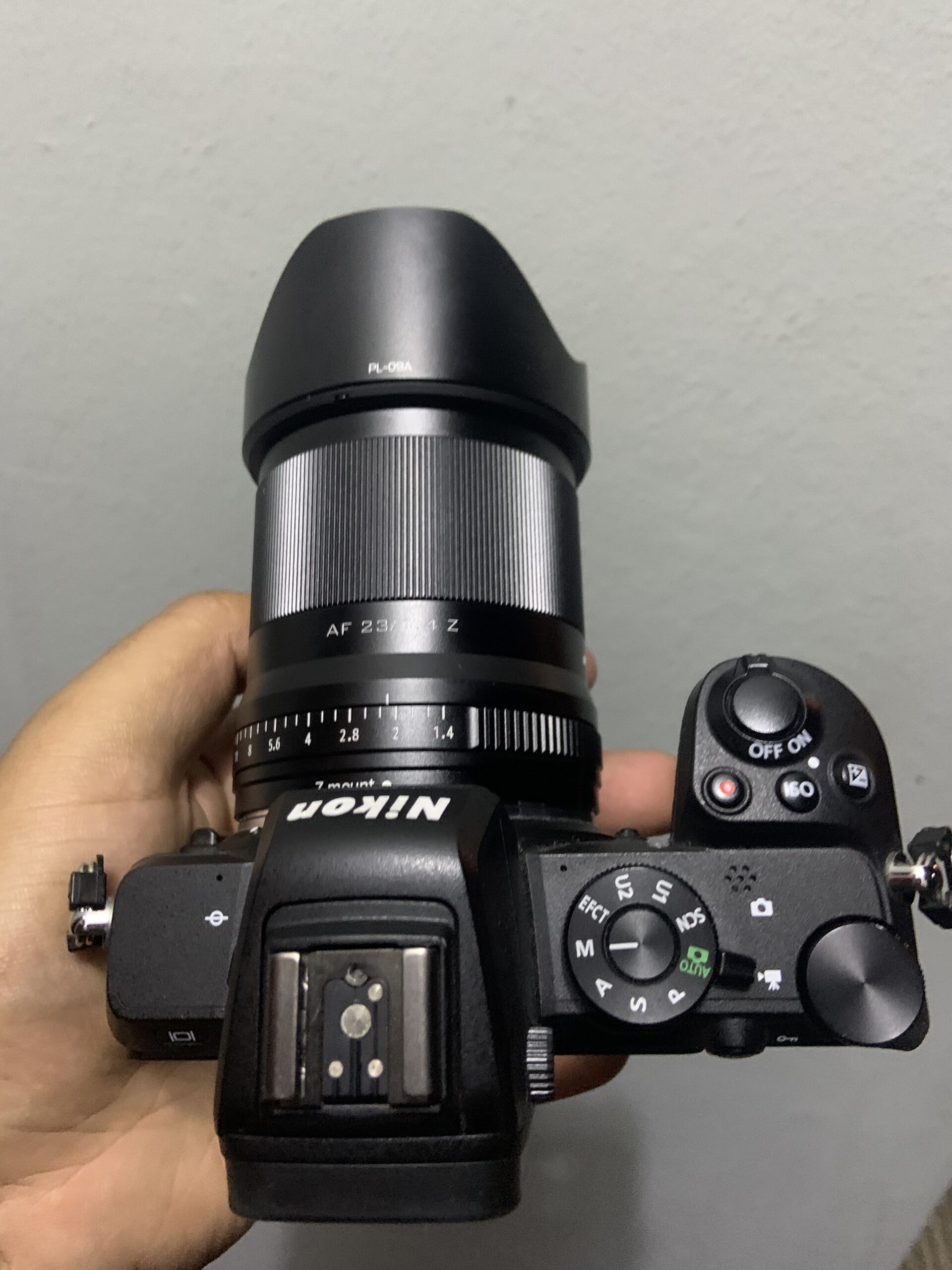
This Viltrox lens gives you a 36mm equivalent on the Z50 II, which works beautifully for environmental portraits, street photography, and landscapes. The f/1.8 aperture gathers plenty of light while creating subject separation when needed.
Image quality impressed our team during testing. Sharpness is excellent across the frame, with good color reproduction and contrast. The 11-element optical design includes aspheric and low-dispersion glass, which shows in the final images.

The STM motor provides smooth, quiet autofocus suitable for both stills and video. Manual aperture control via the dedicated dial offers tactile shooting that many photographers prefer. The Type-C port allows firmware updates, keeping the lens current with camera body improvements.
Build quality is good but not exceptional. The weight feels lighter than premium Nikon glass, which some may appreciate for travel. The manual aperture dial can be accidentally bumped, and the inverted lens hood may scratch the focus ring if you are not careful.
Who Should Buy This Lens
Street photographers and landscape shooters wanting a fast wide-angle should consider this. The 36mm equivalent is versatile for environmental work. Budget-conscious photographers wanting full-frame compatibility for future upgrades get extra value.
Who Should Skip It
Photographers needing weather sealing for adverse conditions should look at Nikon S-line alternatives. If you prefer fully automatic aperture control, the manual dial might frustrate you. Video shooters wanting clickless aperture should check compatibility.
8. Meike 50mm f/1.8 – Best Ultra-Budget Portrait Lens
Pros
- Great value
- Sharp images
- Fast autofocus
- Solid build quality
Cons
- Minimum focus distance limited
- Lens hood feels fragile
- Fewer reviews
Meike entered the Z-mount arena with an impressively affordable 50mm prime. On the Z50 II, you get a 75mm equivalent focal length that is ideal for portraits. The price point makes this an attractive option for photographers on tight budgets.
The f/1.8 aperture creates smooth background blur for subject separation. Image quality is sharp with pleasing bokeh characteristics. The 11-element optical design delivers clear, detailed images that belie the budget price tag.
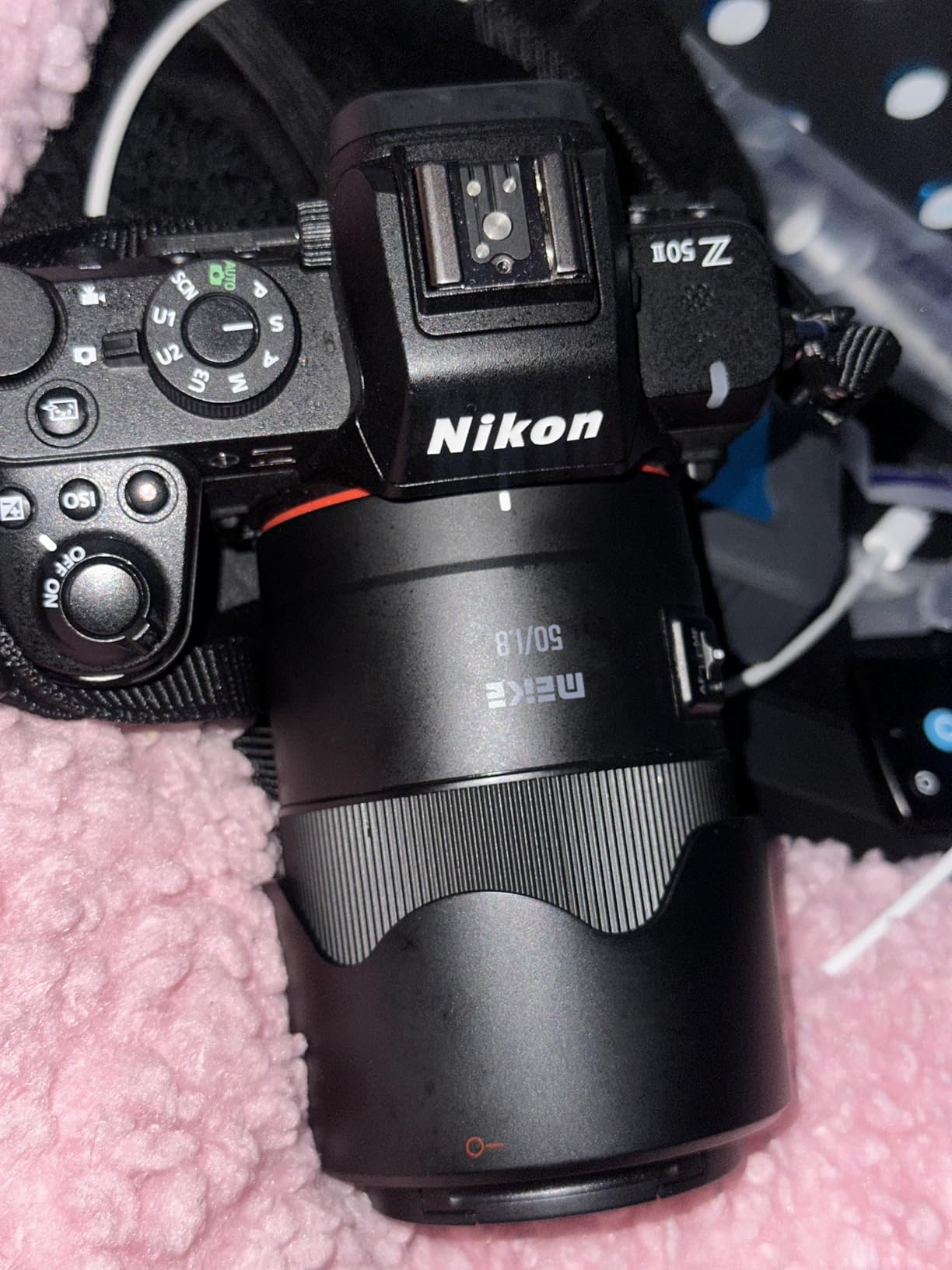
Autofocus performance surprised me. The STM stepping motor is fast and quiet, locking onto subjects quickly. The AF/MF switch on the lens body allows instant manual focus override without diving into camera menus.
The minimum focus distance of about two feet limits close-up capability significantly. You cannot use this for macro-style portrait details. The lens hood attachment also feels somewhat fragile and difficult to manipulate. With fewer reviews than established brands, long-term reliability remains less certain.
Who Should Buy This Lens
Beginners wanting to try portrait photography without spending much should grab this. The 75mm equivalent is perfect for headshots. Photographers building a budget prime collection will appreciate the value proposition.
Who Should Skip It
Professionals needing proven reliability should stick with Nikon glass. Macro photographers will find the minimum focus distance too limiting. If you prefer lenses with extensive user reviews and community support, this may feel like uncharted territory.
9. Nikon Z 24-120mm f/4 S – Best Premium All-in-One Zoom
Pros
- Pro-grade optics
- Edge-to-edge sharpness
- Dual STM motors
- Suppressed focus breathing
Cons
- No built-in VR
- Some 24mm distortion
- Premium price
This S-line zoom delivers professional image quality across a versatile range. On the Z50 II, you get a 36-180mm equivalent that covers wide-angle to telephoto without sacrificing optical performance. The constant f/4 aperture maintains exposure consistency throughout the zoom range.
Sharpness is exceptional. Edge-to-edge clarity at every focal length matches or exceeds dedicated primes. The optical design minimizes color bleeding and maintains micro-contrast that gives images a three-dimensional quality. This is professional-grade glass.

The dual STM stepping motors provide fast, accurate autofocus. Tracking moving subjects feels responsive and confident. Focus breathing is suppressed effectively, making this lens viable for video production alongside still photography.
The lack of built-in VR is the main drawback for Z50 II users. Since the body lacks IBIS, you have no stabilization with this lens. Some distortion at 24mm requires in-camera correction or post-processing. The price also positions this as a serious investment.

Who Should Buy This Lens
Enthusiasts and professionals wanting one high-quality zoom should strongly consider this. Travel photographers prioritizing image quality over maximum reach will love it. Video creators needing consistent aperture and minimal focus breathing get professional features.
Who Should Skip It
Photographers needing stabilization for handheld work should look at VR-equipped alternatives. Budget-conscious shooters can achieve similar focal range coverage with DX lenses for less. If you need maximum telephoto reach beyond 180mm equivalent, the 50-250mm serves better.
10. Nikon Z 70-180mm f/2.8 – Best Professional Telephoto
Nikon NIKKOR Z 70-180mm f/2.8 | Large Aperture telephoto Zoom Lens for Z Series mirrorless Cameras | Nikon USA Model
Pros
- Excellent low light performance
- Lighter than 70-200mm
- Outstanding close focus
- Pleasing bokeh
Cons
- No built-in VR
- 20mm shorter than 70-200mm
- No function button
This telephoto zoom brings professional f/2.8 performance to a more portable package. On the Z50 II, the 105–270mm equivalent range covers portrait telephoto to serious wildlife reach, making it one of the best lenses for Nikon Z50 II for photographers who need flexibility and reach. The constant f/2.8 aperture gathers twice as much light as f/4 alternatives.
Low-light performance is where this lens shines. Indoor events, evening sports, and wildlife at dusk become accessible with the fast aperture. Image quality matches the legendary 70-200mm S in sharpness while weighing significantly less.

Close focusing capability adds unexpected versatility. At 70mm, you can focus as close as 0.68 inches, enabling near-macro work. This flexibility makes the lens useful for product photography and detail shots alongside its telephoto duties.
The lack of built-in VR requires pairing with an IBIS-equipped body for stabilization. Unfortunately, the Z50 II lacks IBIS, so you will need good handholding technique or a tripod for slower shutter speeds. The 20mm shorter reach compared to a 70-200mm also slightly limits maximum telephoto capability.

Who Should Buy This Lens
Professional event and wedding photographers will love the low-light capability. Portrait photographers wanting beautiful bokeh at telephoto focal lengths should consider this. Sports photographers working in challenging light get the aperture speed they need.
Who Should Skip It
Wildlife photographers needing maximum reach might prefer the 50-250mm DX for budget or a longer telephoto for reach. Photographians requiring stabilization for handheld video should look at VR-equipped options. The price point also positions this as a serious investment.
How to Choose the Right Lens for Your Nikon Z50 II In 2026?
Selecting the perfect lens involves understanding several technical factors that affect your photography. Our team broke down the key considerations to help you make an informed decision for your Z50 II setup.
Understanding DX Format and Crop Factor
The Nikon Z50 II uses an APS-C sized sensor, which Nikon calls DX format. This smaller sensor introduces a 1.5x crop factor that affects effective focal lengths. A 50mm lens behaves like a 75mm lens on this camera, making it ideal for portraits but less suitable for wide-angle work.
This crop factor works in your favor for telephoto photography. The 50-250mm DX lens gives you an effective 75-375mm range, extending your reach significantly. Understanding this relationship helps you choose focal lengths that match your intended use.
DX vs Full-Frame Lenses on Z50 II
DX lenses are designed specifically for APS-C sensors like the one in your Z50 II. They are typically smaller, lighter, and less expensive than full-frame equivalents. The image circle covers the smaller sensor perfectly without wasted glass.
Full-frame Z lenses work perfectly on the Z50 II but may feel oversized and heavier than necessary. However, they offer superior optical quality and future-proof your investment if you upgrade to a full-frame body later. The choice depends on your budget and upgrade plans.
Focal Length Guide by Photography Type
Portrait photographers should look at 50mm to 85mm equivalent focal lengths for flattering compression. On the Z50 II, this means 35mm to 56mm lenses. Landscape shooters need 16mm to 24mm equivalents for wide perspectives. Street photographers often prefer 35mm to 50mm equivalents for environmental context.
Wildlife and sports photographers benefit from 200mm equivalent or longer focal lengths. The 50-250mm DX lens reaches 375mm equivalent, which handles most wildlife situations. Macro photographers should consider dedicated macro lenses or close-focusing primes.
Aperture and Low Light Performance
Lens aperture affects both light gathering and depth of field control. An f/1.8 prime gathers four times as much light as an f/3.5 zoom at the same focal length. This translates to faster shutter speeds or lower ISO settings in dim conditions.
Fast apertures also create shallow depth of field for subject separation. Portrait photographers value f/1.4 to f/2.8 apertures for creamy backgrounds. Landscape shooters often stop down to f/8 or f/11 for depth of field, making fast apertures less critical.
Vibration Reduction and Stabilization
The Nikon Z50 II lacks in-body image stabilization, making lens-based VR essential for handheld shooting. Lenses with VR allow slower shutter speeds without blur, which is critical for telephoto work and low-light situations.
Nikon’s DX lenses include effective VR systems rated at 4.5 to 5 stops of stabilization. This means you can handhold at shutter speeds 16 to 32 times slower than without stabilization. When choosing lenses, prioritize VR for telephoto and low-light work.
FTZ Adapter for F-Mount Lenses
The Nikon FTZ adapter lets you use legacy F-mount DSLR lenses on your Z50 II. This opens access to decades of Nikon glass, often at lower prices than native Z lenses. Autofocus works with AF-S and AF-P lenses that have built-in focus motors.
The adapter adds bulk and weight to your setup, potentially making the combination front-heavy. Some older lenses may not focus as quickly as native Z glass. However, if you own F-mount lenses or find great deals on used glass, the FTZ adapter extends your options significantly.
Third-Party Lens Options
Viltrox, Sigma, Tamron, and other manufacturers now produce Z-mount lenses. Viltrox offers excellent value with their 20mm, 24mm, 35mm, and 56mm primes. These cost significantly less than Nikon equivalents while delivering impressive image quality.
The trade-offs typically involve slower autofocus and fewer weather sealing features. For budget-conscious photographers, third-party options provide an affordable entry point into quality glass. Read reviews carefully to understand specific limitations before purchasing.
Lens Recommendations by Budget
Under $200: The Nikon Z 40mm f/2 offers excellent value for street and everyday photography. Under $400: The Viltrox 35mm f/1.7 or Nikon DX 16-50mm VR cover essential needs. Under $700: The Nikon DX 50-250mm VR adds telephoto capability to your kit.
Under $1000: The Nikon Z 50mm f/1.8 S delivers professional image quality. The DX 18-140mm provides all-in-one versatility for travel. Above $1000: The Nikon Z 24-120mm f/4 S or 70-180mm f/2.8 bring professional-grade optics for serious work.
Frequently Asked Questions
What lenses fit the Nikon Z50 II?
The Nikon Z50 II uses the Nikon Z mount and accepts all Z-mount lenses. This includes DX-format lenses designed for APS-C sensors and full-frame FX lenses. You can also use F-mount DSLR lenses with the optional FTZ adapter, which enables autofocus with AF-S and AF-P lenses. The camera is compatible with over 40 native Z-mount lenses plus hundreds of adapted F-mount options.
Can I use F-mount lenses on Z50 II?
Yes, you can use F-mount DSLR lenses on the Z50 II with the Nikon FTZ adapter. The adapter maintains full electronic communication between lens and camera. Autofocus works with AF-S and AF-P lenses that have built-in focus motors. Manual focus lenses also work perfectly. The adapter adds some bulk but opens access to affordable used F-mount glass.
What is the crop factor on Nikon Z50 II?
The Nikon Z50 II has a 1.5x crop factor due to its APS-C sized DX-format sensor. This means a 50mm lens behaves like a 75mm lens, a 35mm lens acts like a 52.5mm, and a 16mm lens gives you a 24mm equivalent field of view. The crop factor works in your favor for telephoto reach but makes wide-angle lenses behave less wide.
What is the best lens for Nikon Z50 II for travel and portraits?
For a combination of travel and portrait photography, the Nikon Z DX 18-140mm VR is an excellent all-in-one choice. It covers 27-210mm equivalent, handling landscapes to telephoto portraits without lens changes. For better portrait quality, pair the 16-50mm kit lens with the Nikon Z 50mm f/1.8 S for professional-grade headshots and the Viltrox 35mm f/1.7 for budget-friendly environmental portraits.
What is the best telephoto lens for Nikon Z50 II?
The best telephoto depends on your budget and needs. For value, the Nikon Z DX 50-250mm VR offers 75-375mm equivalent reach with excellent stabilization. For professional work, the Nikon Z 70-180mm f/2.8 delivers constant f/2.8 aperture for low light and beautiful bokeh. The 50-250mm costs significantly less while the 70-180mm offers superior optical quality and wider aperture.
Does the Nikon Z50 II have image stabilization?
The Nikon Z50 II does not have in-body image stabilization (IBIS). This means you rely on lens-based VR for stabilization. Most DX-format Z lenses include VR rated at 4.5 to 5 stops of shake reduction. When choosing lenses for handheld work, prioritize options with built-in VR, especially for telephoto and low-light photography.
Final Thoughts: Best Lenses for Nikon Z50 II
Choosing the right lens for your Nikon Z50 II depends entirely on your photography style and budget. For most users, starting with the DX 16-50mm VR kit lens and adding the 50-250mm VR telephoto creates a versatile two-lens system that covers 90% of shooting situations. This combination offers excellent value and keeps your kit lightweight for travel.
Portrait photographers should prioritize the Nikon Z 50mm f/1.8 S for its exceptional optical quality. The 75mm equivalent focal length produces flattering results with beautiful background separation. Budget-conscious shooters can achieve similar results with the Viltrox 35mm f/1.7 at half the price, though with slower autofocus.
For travel photography, the DX 18-140mm VR eliminates lens changes with its versatile 27-210mm equivalent range. If you prioritize image quality over convenience, the Nikon Z 24-120mm f/4 S brings professional optics to the same focal range. Both lenses let you travel light without sacrificing coverage.
Our top recommendation for most Z50 II owners is building a kit around the 16-50mm VR for everyday use, the 50-250mm VR for telephoto reach, and the 40mm f/2 or 50mm f/1.8 S for low light and portraits. This combination balances capability, weight, and cost effectively for the APS-C format, making it one of the best lenses for Nikon Z50 II setups for photographers who want versatility without carrying multiple specialized lenses.