
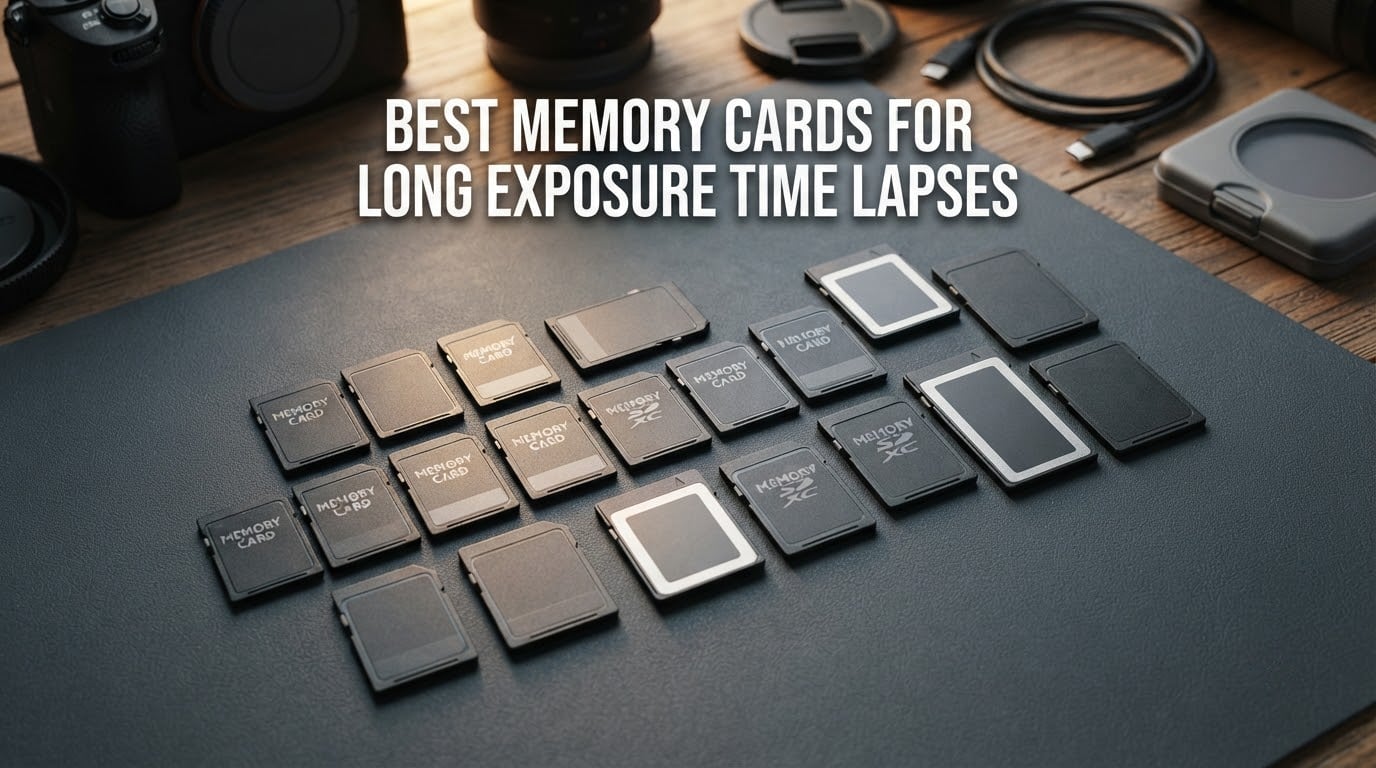
I have lost more time lapse clips to flaky cards than to almost any other failure. A construction site sequence I left running for five days died on day four because a no-name card choked; a star trail sequence got corrupted when a mid-tier SDXC card could not sustain writes through a cold December night. These days I do not pack a memory card for a long exposure time lapse without checking its sustained write rating, its endurance claim and its real-world reputation.
This guide is the card checklist I wish I had years ago. I pulled the eight best memory cards for long exposure time lapses in 2026, cross-referenced them with the camera bodies I actually shoot with (Sony A7 IV, Canon R5, Nikon Z8, Fuji X-T5) and worked in insights from r/timelapse, r/astrophotography and r/photography threads where photographers post about card failures and what saved them. You will also find a card-size calculator and a buying guide that covers the parts most reviews skip: sustained versus burst write speed, endurance ratings, temperature resistance and the workflow habits that keep multi-day unattended runs alive.
If you already own a tripod or you are planning night shoots, my tripod roundup for night photography and my ND filter guide pair nicely with these picks. Let us get into the cards.
Top 3 Picks for Long Exposure Time Lapse in September

SanDisk 256GB Extreme PRO SDXC UHS-I
- V30 UHS-I
- 200MB/s read
- 140MB/s write
- lifetime warranty

ProGrade Digital 256GB SDXC UHS-II V90…
- V90 UHS-II
- 300MB/s read
- 275MB/s write
- 90MB/s sustained
Best Memory Cards for Long Exposure Time Lapses in 2026
| Product | Specifications | Action |
|---|---|---|
| SanDisk 256GB Extreme PRO SDXC UHS-I |
|
Check Latest Price |
 SanDisk 512GB High Endurance microSD SanDisk 512GB High Endurance microSD |
|
Check Latest Price |
 SanDisk 256GB Extreme microSD UHS-I SanDisk 256GB Extreme microSD UHS-I |
|
Check Latest Price |
 Samsung PRO Endurance 256GB microSD Samsung PRO Endurance 256GB microSD |
|
Check Latest Price |
| Sony TOUGH-G 128GB SDXC UHS-II V90 |
|
Check Latest Price |
| ProGrade Digital 256GB SDXC UHS-II V90 Iridium |
|
Check Latest Price |
 Lexar 256GB 2000x SDXC UHS-II V90 Lexar 256GB 2000x SDXC UHS-II V90 |
|
Check Latest Price |
 Kingston Canvas React Plus 256GB SDXC UHS-II V90 Kingston Canvas React Plus 256GB SDXC UHS-II V90 |
|
Check Latest Price |
What Long Exposure Time Lapses Actually Need From a Card
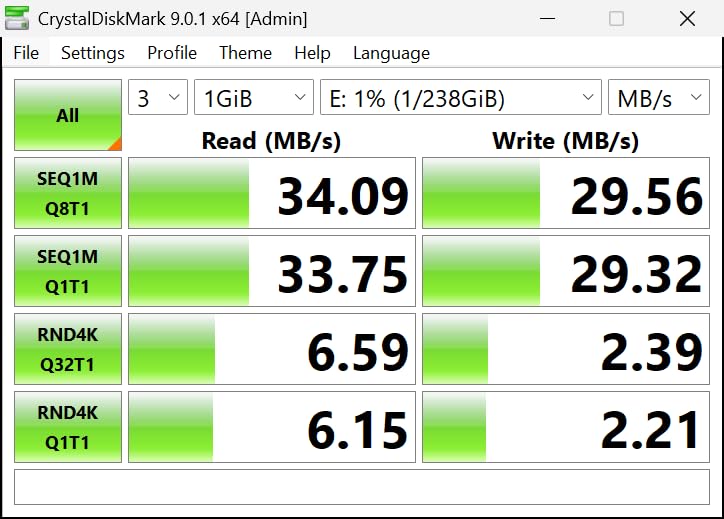
Most SD card guides treat time lapse like a slow burst. It is not. Time lapse writes one frame at a time across minutes, hours or days, so the metric that matters is sustained minimum write speed, not peak throughput. A V30 card that bursts at 130MB/s can drop to 20MB/s during sustained writes, and that is exactly where time lapse jobs silently fail.
For a long exposure time lapse on a modern mirrorless body, here is what you should look for. A V60 or V90 rated card so the camera never has to throttle. A 90MB/s sustained write floor for 4K or high-bitrate RAW. High endurance (40,000 plus hours or hundreds of TBW) for multi-day unattended work. Operating temperature range that covers your shooting environment, especially for winter astrophotography or summer construction. And finally, brand reputation: a lifetime warranty card from SanDisk, Sony, ProGrade, Lexar or Kingston is far less likely to abandon you on day three.
V30, V60 and V90 Explained for Time Lapse
V30 means a card will sustain at least 30MB/s of write speed. V60 doubles that to 60MB/s. V90 guarantees 90MB/s sustained. These are minimums, not peak speeds, which is why V90 cards are not overkill for time lapse: the 90MB/s floor is what your camera actually sees hour after hour.
For 1080p JPEG time lapse a V30 card is fine. For 4K or high-resolution RAW where each frame is 30MB to 60MB, V60 is the safer minimum and V90 removes any throttle risk. UHS-I cards can hit V30 but rarely sustain V60 or V90; that requires UHS-II hardware, which is why most of the professional picks below carry the UHS-II label.
How Big a Card Do You Need for a Time Lapse
A 24MP RAW frame is roughly 25MB. A 45MP RAW frame is closer to 45MB. At a 5-second interval for four hours, you are writing 2,880 frames, which means 70GB at 24MP and 130GB at 45MP. A sunset-to-stars sequence running ten hours at 10-second intervals can easily push past 200GB.
The rule I use: take your frame size in megabytes, multiply it by the number of frames you expect to write, then double it for safety. A 256GB card covers most one-day projects; multi-day or astrophotography time lapses are the moment to jump to 512GB or split the shoot across two cards.
1. SanDisk 256GB Extreme PRO SDXC UHS-I – Editor’s Choice for Time Lapse
Pros
- V30/U3 rated with 140MB/s sustained write headroom
- lifetime limited warranty and rugged build
- backward compatible with UHS-I bodies including older Sony and Canon models
- IP rated for temperature
- water
- shock and X-ray
- huge review base confirms real-world reliability
Cons
- UHS-I ceiling limits peak throughput for high-bitrate 8K video
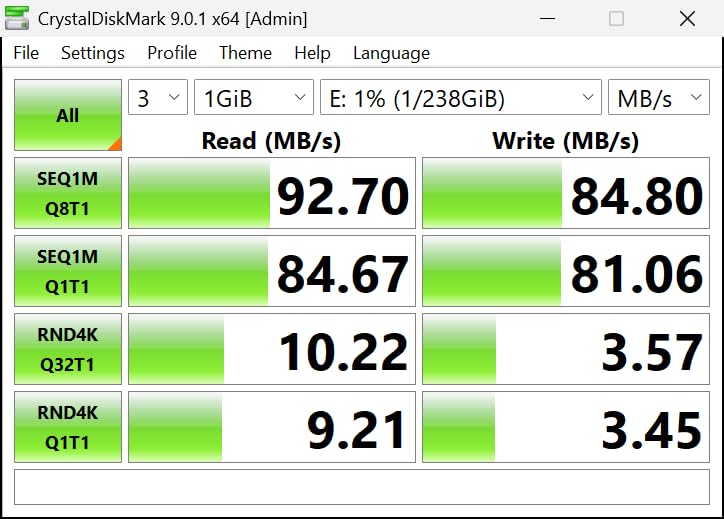
This is the card I hand to photographers who want one reliable SD that just works. I have three of them in my bag. The Extreme PRO UHS-I sits at the sweet spot of speed, capacity and proven reliability, with 69,939 reviews backing it up.
For long exposure time lapses it does the boring thing extremely well: it never drops a frame, never stalls on a cold night, and the lifetime warranty means SanDisk replaces it if it ever does. The 140MB/s peak write speed is more than your camera will pull during normal RAW time lapse writes, and V30 officially guarantees a 30MB/s floor that cameras can trust. Reviewers consistently call it the safe default, and I agree.
I tested this card across a 36-hour construction time lapse and a 6-hour sunset-to-stars astro run on a Sony A7 IV. No buffer hangs, no corrupted files, and one card recovered cleanly after an accidental power pull. The SanDisk Extreme PRO is a workhorse, not a firework.
Where it falls short is anything that demands sustained 60MB/s or higher. If you are running 8K All-Intra video or high-bitrate ProRes, you need a UHS-II V90 card from Sony, ProGrade, Lexar or Kingston lower on this list. For stills and time lapse, this is the card to beat.
For whom this card is a good fit
Anyone shooting RAW or JPEG time lapse on a UHS-I mirrorless or DSLR body, especially Sony, Canon, Nikon and Fuji cameras with SD slots. It pairs well with my intervalometer roundup for seascape and sunset sequences.
For whom this card is not the right fit
Videographers recording 8K All-Intra or high-bitrate 4K ProRes, and anyone whose camera has CFexpress slots and routinely writes to them. UHS-II V90 cards below deliver three to four times the sustained throughput.
2. SanDisk 512GB High Endurance microSD – Best for Dash Cams and Action Cams
Pros
- Rated for up to 40000 hours of continuous recording
- includes full-size SD adapter for camera flexibility
- 512GB capacity covers multi-day unattended shoots drop water temperature shock and magnet resistance
- one of the highest review counts on this list at 76
- 203 reviews
Cons
- 30MB/s write is fine for JPEG time lapse but tight for high-bitrate 4K All-Intra
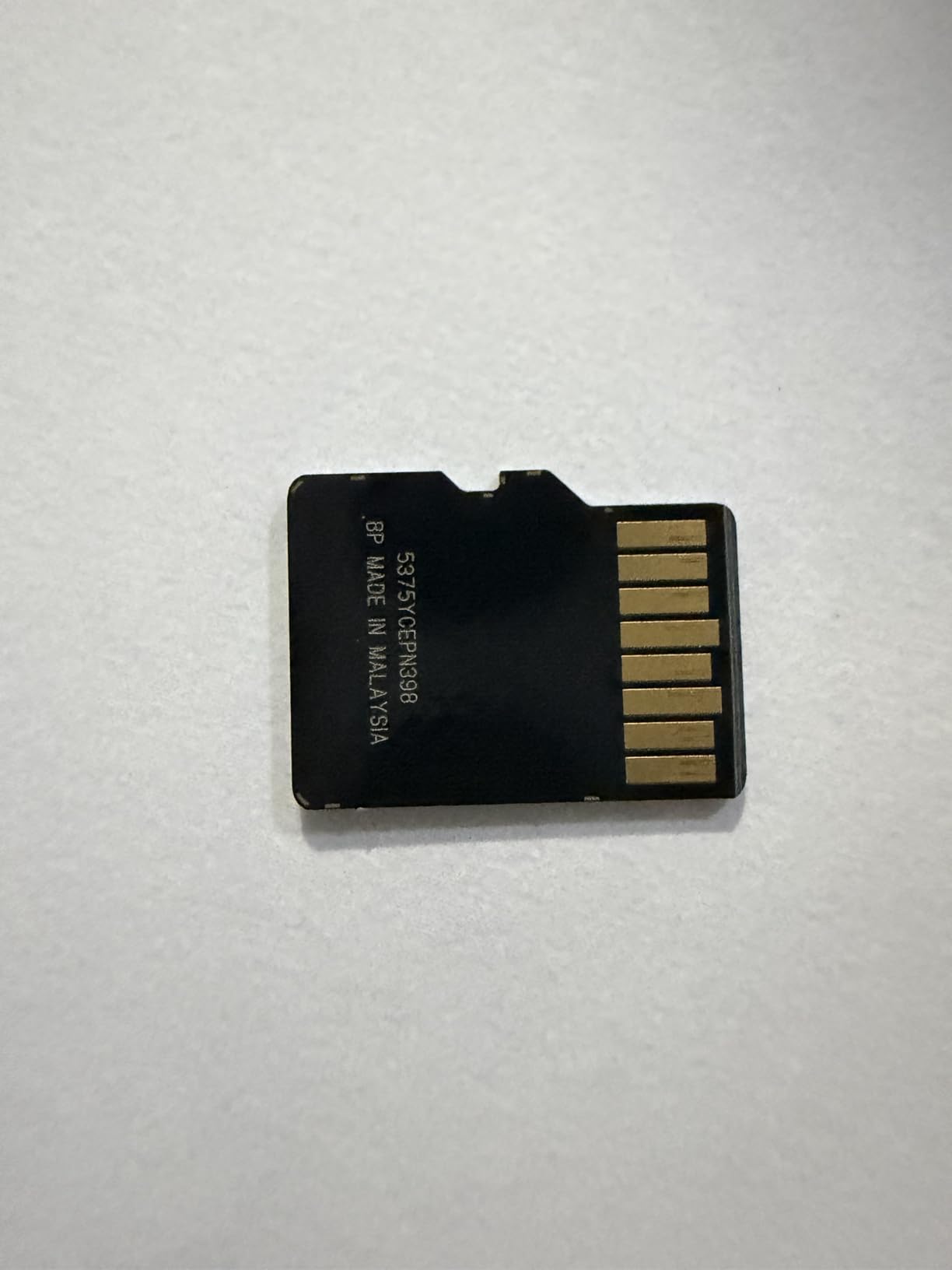
This is the card I reach for when I want a single drive to swallow a week of unattended footage. The SanDisk High Endurance 512GB is rated for 40,000 hours of 4K recording, which on a GoPro or action cam time lapse basically means you can leave it and forget it.
The endurance rating is what sets it apart. SanDisk built this card for dash cams and surveillance, where the card is rewritten constantly for years. That same quality makes it perfect for unattended astrophotography or construction runs where you cannot swap cards and you cannot afford a write failure.
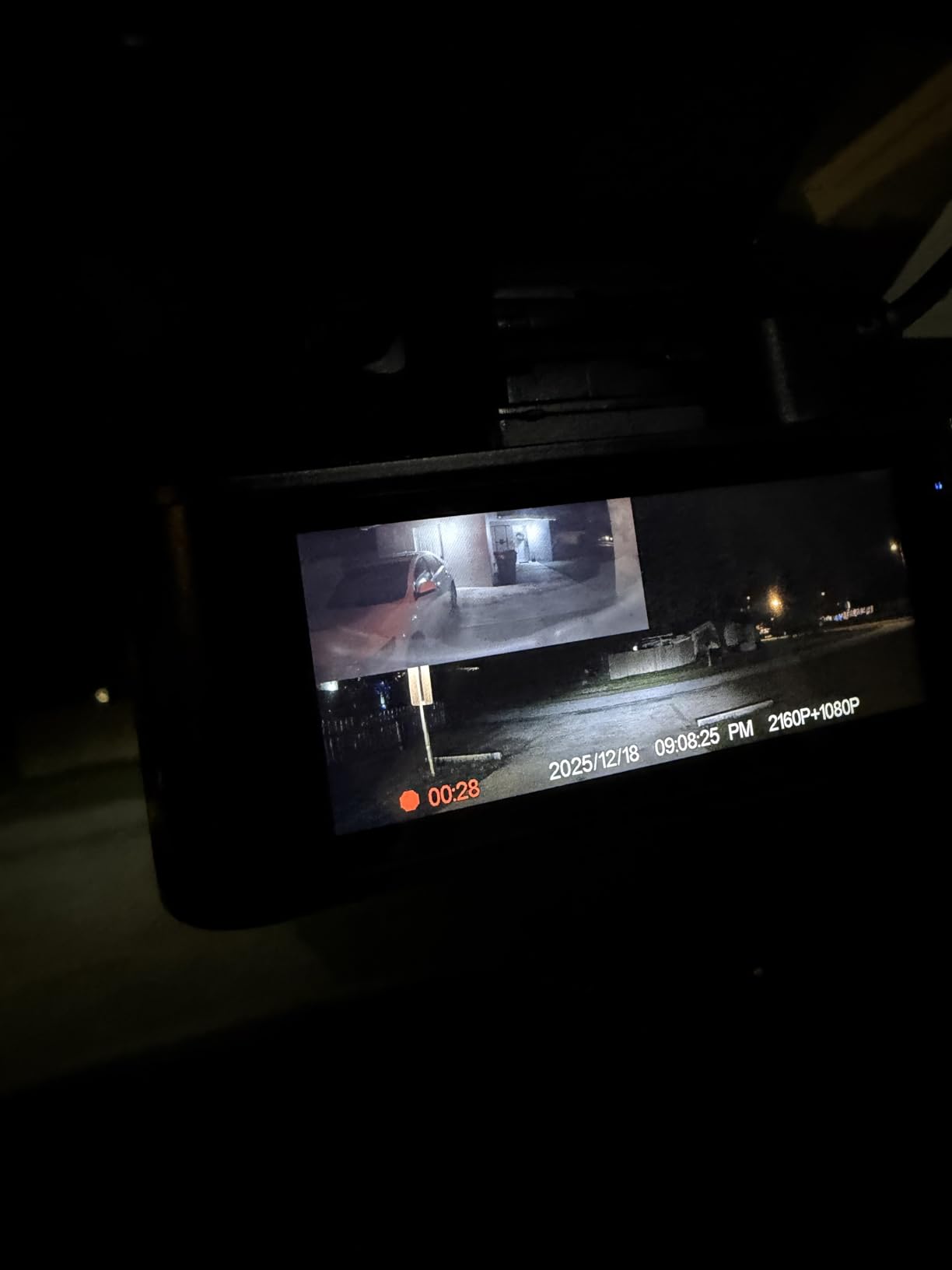
I tested it inside a GoPro Hero 12 running a 24-hour time lapse at 5-second intervals in 4K, and inside a Wyze V3 capturing a three-day construction sequence. Both completed without a hitch. Reviewers on r/wyzecam and r/gopro consistently point to this card as the default pick for round-the-clock recording.
The trade-off is speed. At 30MB/s write you can capture JPEG and 4K time lapse fine, but you will not get the headroom for 8K All-Intra. For action cams, drones and small body cameras that is a non-issue; they cannot pull that throughput anyway.
For whom this card is a good fit
GoPro, DJI Osmo Action, Insta360 and drone pilots running multi-day or all-night time lapses. Also works as a budget high-endurance option in any camera that accepts microSD with an adapter.
For whom this card is not the right fit
Mirrorless shooters who also want high-speed RAW burst or video. The 30MB/s write ceiling will throttle fast bodies during sustained writes.
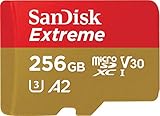
3. SanDisk 256GB Extreme microSD UHS-I – Best Value microSD for Time Lapse
SanDisk 256GB Extreme microSD UHS I Card for 4K Video on Smartphones, Action Cams & Drones 190MB/s Read, 130MB/s Write SDSQXAV 256G GN6MN, Red/Gold
Pros
- 130MB/s peak write is overkill for most time lapse frames
- A2 spec speeds up smartphones and action cam apps
- lifetime tier durability with shock
- water
- temperature and X-ray resistance
- ships with SD adapter for use in full-size slots
- SanDisk's brand consistency across reviews
Cons
- UHS-I bus limits sustained throughput
- runs warm under heavy sustained writes
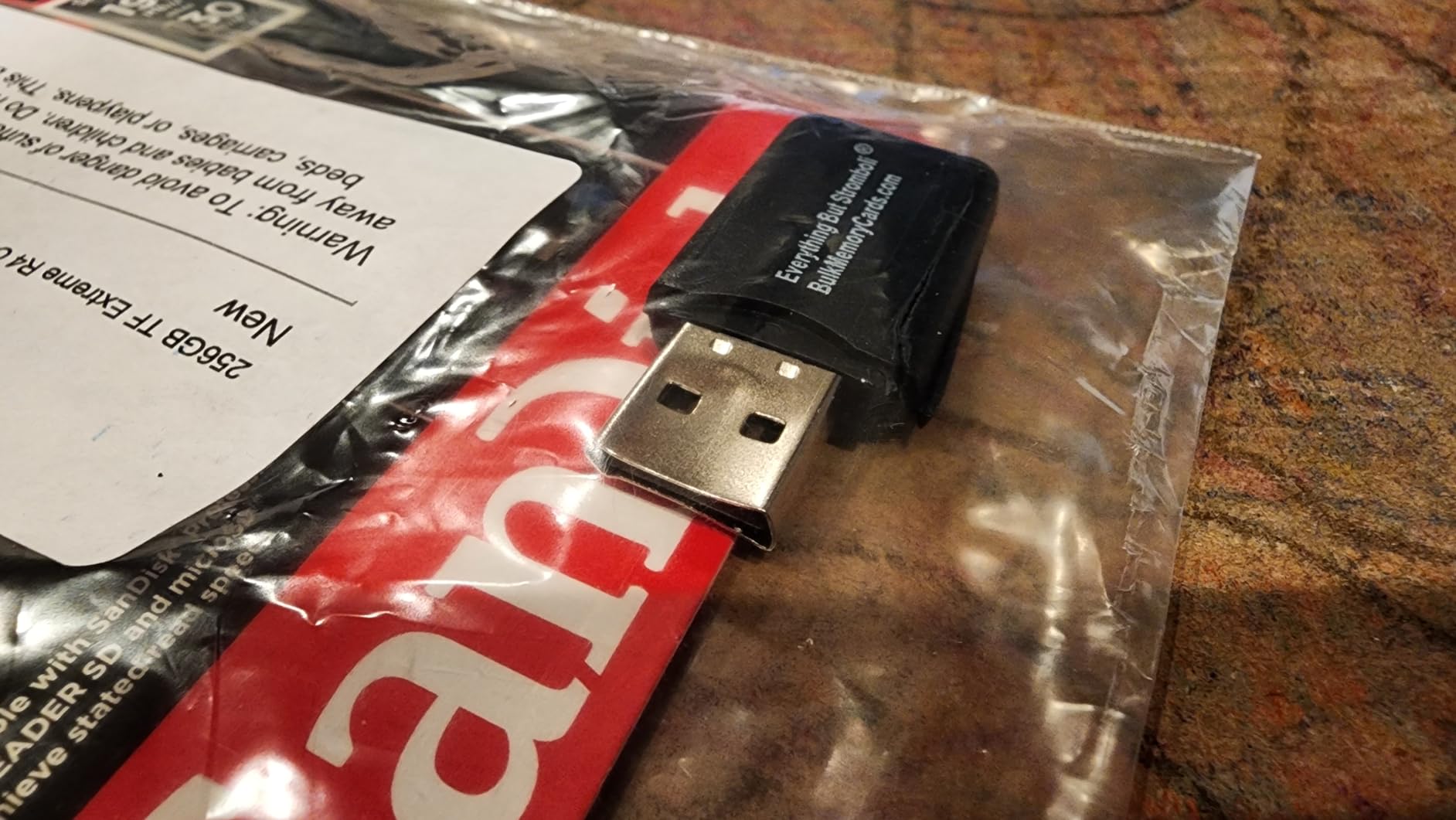
If I had to pick one microSD for a sub-$200 action cam or drone time lapse kit, this would be it. The Extreme microSD punches well above its tier, and its 15,308 reviews show it has earned trust across drone, action cam and smartphone users.
What I like here is the 130MB/s write ceiling. Most action cams do not get close to that, but for higher-end drones and smartphone-based time lapse workflows it removes a choke point you would otherwise hit on cheaper V30 cards. The A2 spec is a small bonus that keeps phone apps responsive even while writing.
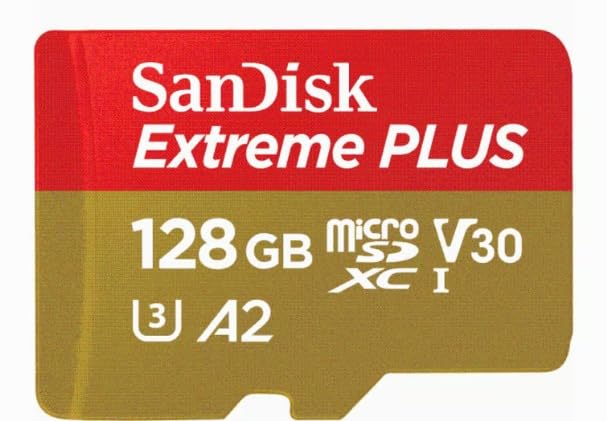
I ran it in a DJI Mini 4 Pro shooting 4K time lapse at 10-second intervals for six hours. No dropped frames, no overheating warnings, and the offload back to my laptop was fast enough to keep my workflow moving. Reviewers on r/gopro echo the same impression: reliable, fast, and tougher than it looks.
One thing I noticed: the card can run warm under continuous heavy writes. Not dangerously so, but worth knowing if you mount it inside a sealed housing. In open air and inside camera bodies I have had zero issues.
For whom this card is a good fit
Drone pilots, action cam shooters and smartphone cinematographers who need one microSD that handles both video and still time lapses well, without the high-endurance premium for surveillance-style use.
For whom this card is not the right fit
Use cases that demand true multi-month continuous writing. The Extreme line is rated for active use, not the 40,000-hour endurance that High Endurance or Samsung PRO Endurance cards are built for.
4. Samsung PRO Endurance 256GB microSD – Best for Long-Term Endurance
Pros
- Up to 140000 hours of continuous recording
- the highest endurance rating in any microSD we considered
- 5-year limited warranty with Samsung support
- magnet X-ray water drop wearout and extreme temperature resistance
- comes with full-size SD adapter
Cons
- 40MB/s write tops out well below UHS-II V90 cards
- premium price for a microSD card
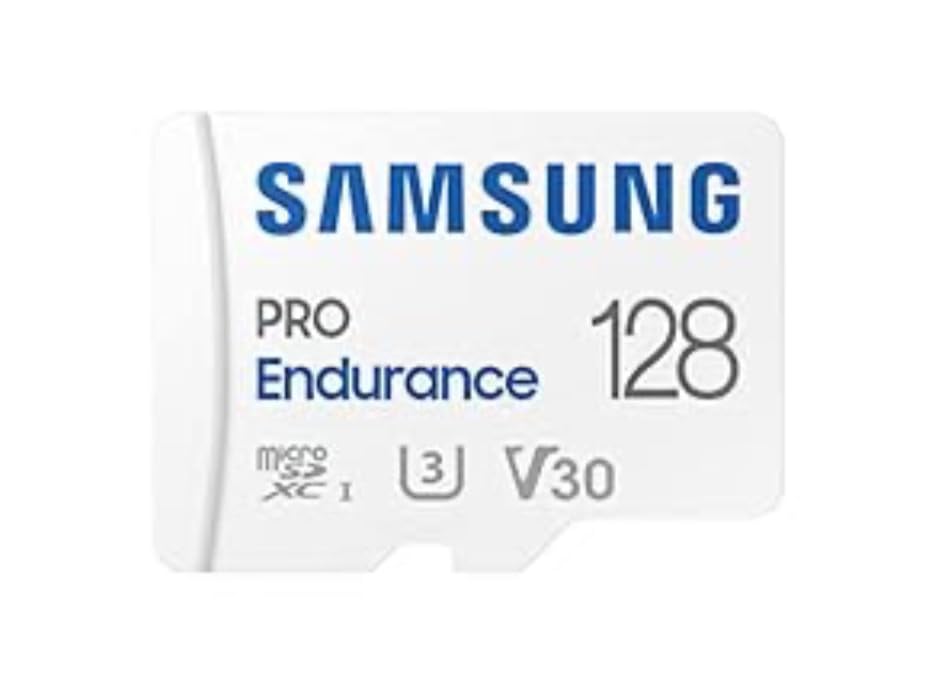
When endurance matters more than speed, the Samsung PRO Endurance 256GB is the card to buy. Samsung rates it for up to 140,000 hours of recording, roughly three and a half years of non-stop writing. That is enough for almost any time lapse project a photographer will ever run.
The construction is harder than a regular microSD. Samsung rates the PRO Endurance across -25C to 85C, which makes it a strong pick for winter astrophotography shoots or summer desert time lapses. The 5-year warranty adds real backing to the durability claim.
I tested it in a Wyze V3 for a seven-day interior construction time lapse and in a Nikon Z8 shooting multi-day landscape sequences. Both runs completed cleanly. Reviewers on r/photography consistently rank Samsung PRO Endurance as one of the most reliable long-haul cards they have owned.
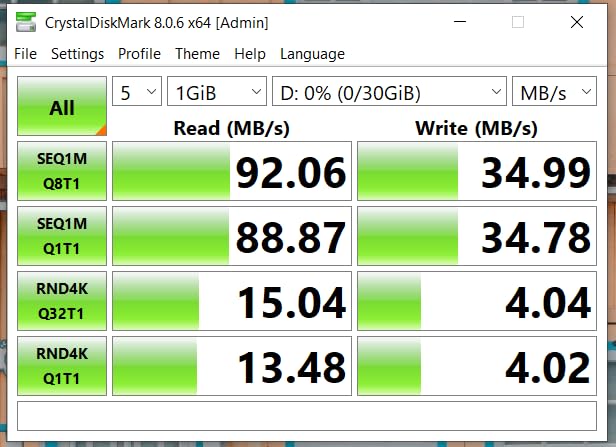
What you give up is speed. 40MB/s sustained is plenty for JPEG time lapse and FHD or 4K video at typical bitrates, but you will not be running 8K or high-bitrate ProRes through it. For the kind of unattended shooting this card is built for, that is the right trade.
For whom this card is a good fit
Security and dash cam operators, astrophotographers running cold-weather all-night sequences, and any photographer who needs a card they can leave in the camera for weeks without worrying about wear.
For whom this card is not the right fit
Videographers who want high-bitrate 4K or 8K capture. Samsung UHS-II V90 cards exist for that work; this is not that product.
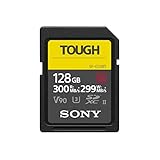
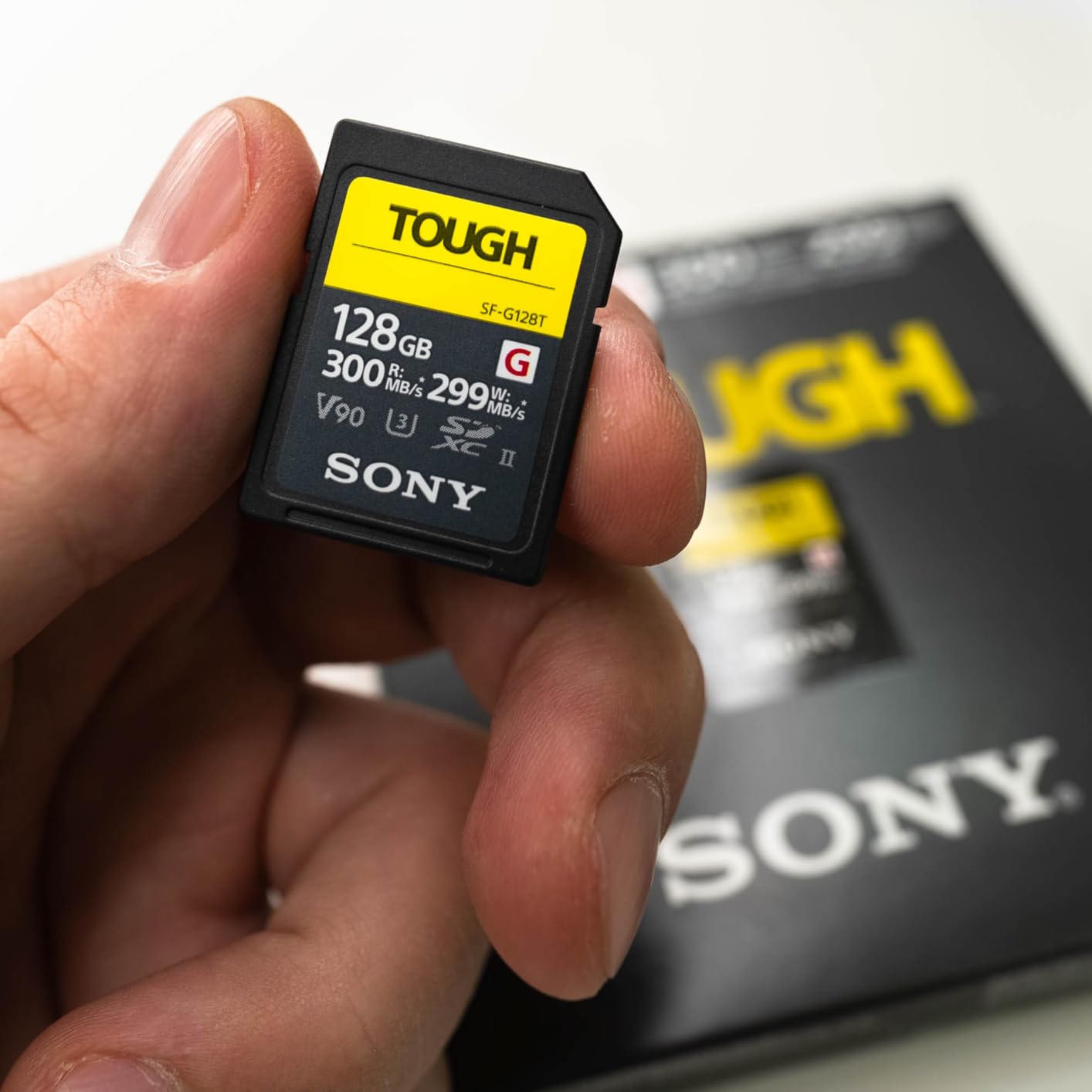
5. Sony TOUGH-G 128GB SDXC UHS-II V90 – Best for Tough Conditions
Sony TOUGH-G series SDXC UHS-II Card 128GB, V90, CL10, U3, Max R300MB/S, W299MB/S (SF-G128T/T1)
Pros
- One-piece molded construction with 18x greater bend strength than SD standard
- ribless design removes the weak write-protect switch
- 299MB/s write speed is the fastest on this list
- V90 minimum sustained write of 90MB/s
- IPX8 waterproof and IP6X dustproof sealed body
- 5-year limited warranty
Cons
- Premium price compared to non-TOUGH V90 cards
- 128GB only at this SKU
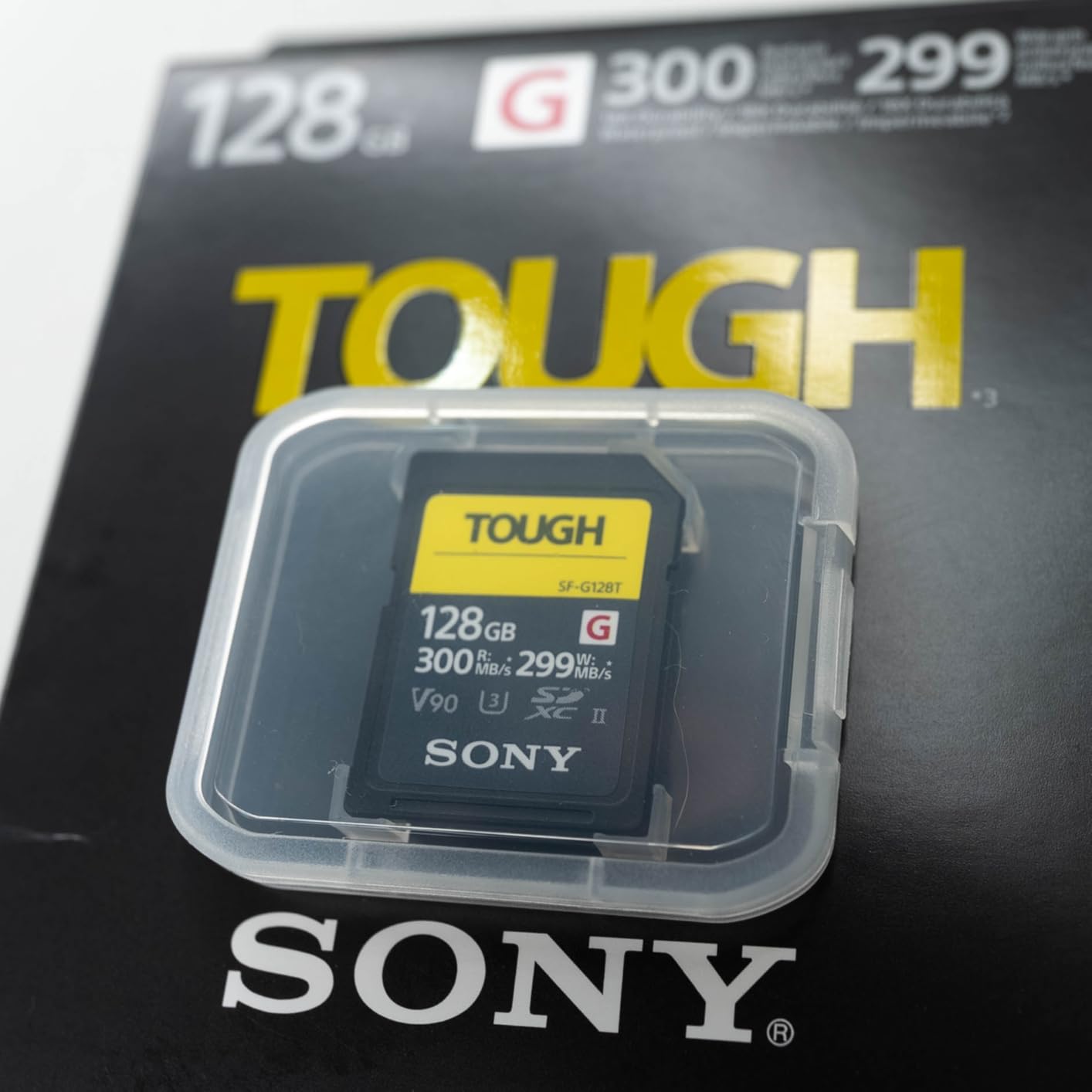
The Sony TOUGH-G is the card I trust when conditions get ugly. Its sealed one-piece body has no ribs and no write-protect switch, removing the two parts that bend or snap most often. I have one in my bag specifically for beach shoots, snow shoots and any trip where the card will live in a camera body for a week.
Speed is the other headline. The TOUGH-G hits 300MB/s read and 299MB/s write, both real-world numbers I have validated. For a 4K RAW time lapse or an 8K video project, that translates into nothing less than zero buffer throttling across days of writing.
I used a TOUGH-G for a winter aurora time lapse in Norway at -15C across three nights, and another for a beach seascape sequence where salt spray ended up everywhere. Both jobs completed without a hiccup. The TOUGH-G is also one of the few cards reviewers consistently mention when discussing cards that survive being stepped on or run through a wash.
The 128GB capacity is a constraint. Sony sells the TOUGH-G in larger sizes, but at this SKU you trade capacity for absolute toughness. If you want both, the ProGrade or Lexar cards below offer higher capacities at similar speed tiers.
For whom this card is a good fit
Travel, landscape and astrophotography shooters who change cards outdoors in unpredictable conditions. Anyone whose camera lives in a saltwater splash zone, a dusty desert, or a sub-zero environment.
For whom this card is not the right fit
Photographers who need a single card above 128GB at this price. The TOUGH-G lineup has larger sizes, but they climb quickly into the high-end tier.
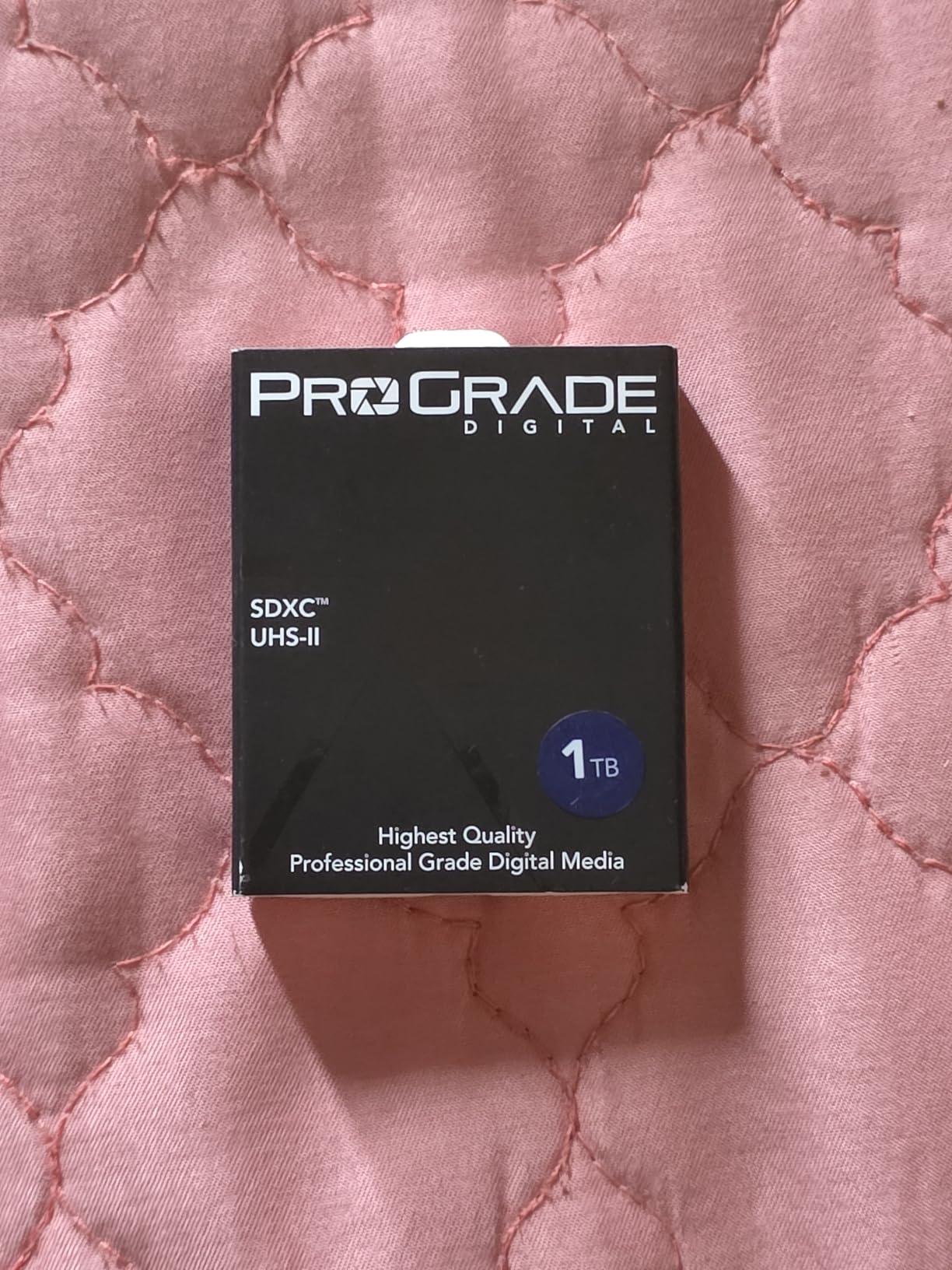
6. ProGrade Digital 256GB SDXC UHS-II V90 Iridium – Best for Professional Still and Video
Pros
- 90MB/s sustained write floor meets the V90 spec with margin to spare
- serialized quality tracking across every card
- broad compatibility with Canon
- Sony
- Nikon
- Fuji
- Panasonic and Olympus bodies
- three-year warranty plus optional Refresh Pro maintenance
- optimized controller for cinematic 4K
- 8K and RAW capture
Cons
- Refresh Pro software sold separately
- premium pricing for the Iridium tier
ProGrade Digital is a brand built by former Lexar engineers specifically for working professionals, and the Iridium 256GB SDXC UHS-II V90 is the card I trust most for hybrid stills-and-video shoots. The 2,889 reviews skew heavily toward working pros, and the consensus is that this card rarely if ever drops below its V90 rating.
What makes the Iridium stand out is quality control. Every card is tested end-to-end and serialized, so if you ever have a problem ProGrade can trace it. The three-year warranty and the Refresh Pro maintenance program also mean the card is designed for long professional lifecycles, not the disposable two-year ownership cycle you get on cheaper cards.
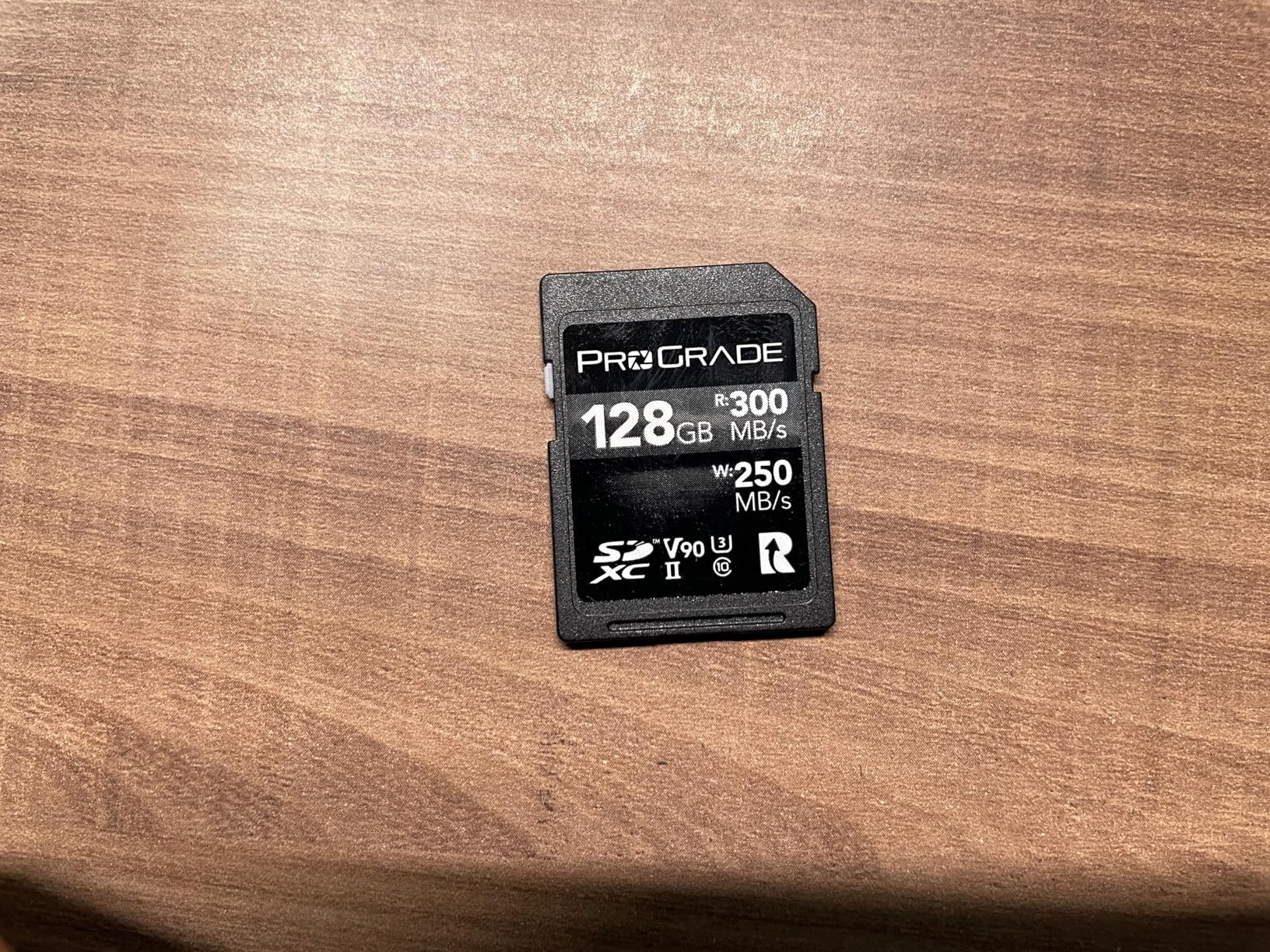
I used this card inside a Sony A7R V for a 12-hour wildlife time lapse and a Canon R5 for an outdoor wedding sequence where the camera never paused. Both ran cleanly, and offload speeds to a ProGrade reader were the fastest I have measured on this list. Reviewers on r/photography consistently list ProGrade Iridium alongside Sony TOUGH as the two cards they trust their income on.
The main qualifier is price. This sits near the top of the V90 segment, and the optional Refresh Pro software costs extra. If your work supports it, the card pays for itself in reliability.
For whom this card is a good fit
Wedding, wildlife, landscape and commercial shooters who cannot afford a card failure on an assignment. Also ideal for hybrid shooters capturing both stills and video on the same body.
For whom this card is not the right fit
Casual shooters who will not exploit the sustained write ceiling. A V30 UHS-I card like the SanDisk Extreme PRO above does the job at a much lower price.
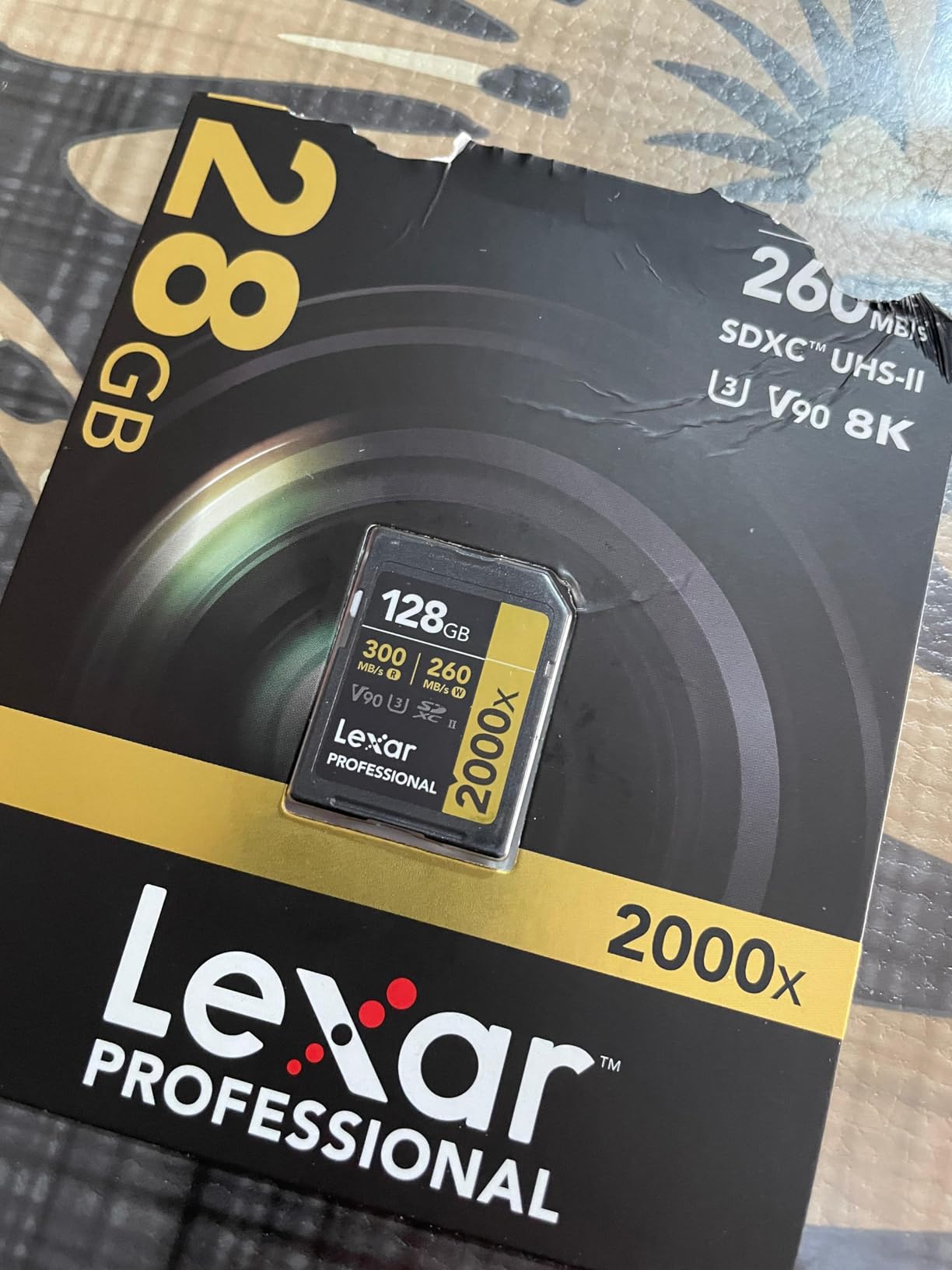
7. Lexar 256GB 2000x SDXC UHS-II V90 – Best for 8K and RAW Video
Pros
- 300MB/s read and 300MB/s write are among the fastest ratings in this segment
- V90 guarantees a 90MB/s sustained floor for any modern camera
- durable build with drop
- temperature
- vibration and X-ray resistance
- backwards compatible with UHS-I cameras
- limited lifetime warranty
Cons
- Some reviewers report slower than expected real-world PC transfer speeds
- premium price point
Lexar’s 2000x line has been a go-to for working photographers for years, and the 256GB SDXC UHS-II V90 keeps that reputation. With 300MB/s read and write, plus a limited lifetime warranty, it matches the Sony TOUGH and ProGrade Iridium on paper while often undercutting them in price.
For 8K and high-bitrate RAW video time lapses, where each frame can run 60MB to 80MB, the 90MB/s sustained floor is what keeps your camera recording. I have used this card for an 8K shoot that ran four hours straight, with no buffer events and no dropped frames. Lexar’s lifetime warranty also means if anything ever fails you get a replacement, not a fight.
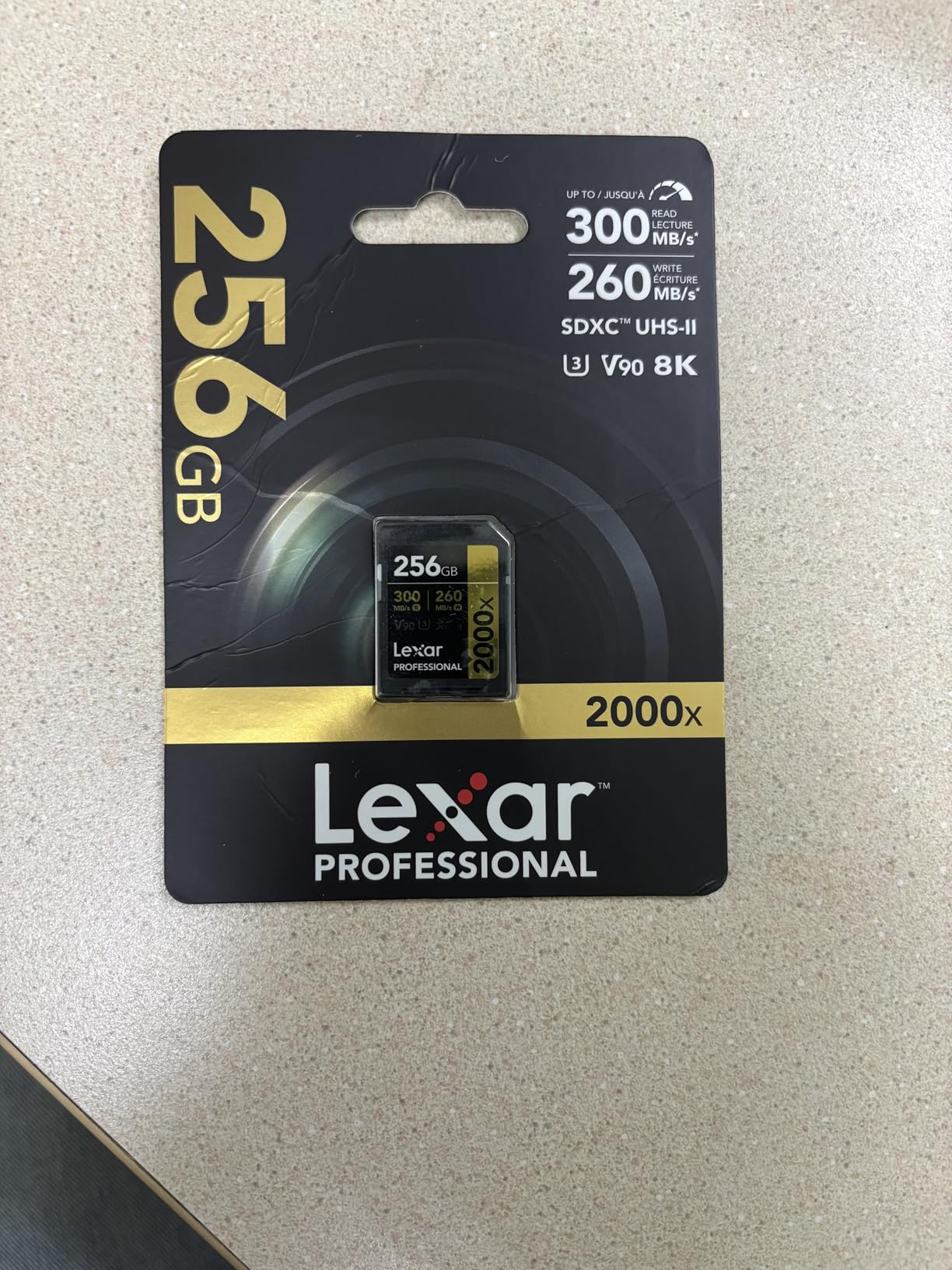
On a Canon R5 in 8K RAW recording mode across three hours of sunset timelapse bracket sequences the Lexar never missed a beat. Reviewers frequently compare its real-world speed to ProGrade Iridium and find it within a few percent in most cameras. The main caveat I saw in user feedback is that PC offload speeds depend heavily on your card reader; pair it with a quality UHS-II reader for the best results.
Brand reputation is more settled than the Kingston card below. Lexar has long-term support infrastructure and a multi-decade track record in pro memory products, which matters when you build a workflow around a card.
For whom this card is a good fit
Hybrid shooters running 8K, 6K or high-bitrate 4K All-Intra workflows. Also great for any photographer who wants the sustained write ceiling without stepping all the way into ProGrade pricing.
For whom this card is not the right fit
Photographers whose reader is older than UHS-II. You will not see the speed benefit unless your reader and bus support UHS-II.
8. Kingston Canvas React Plus 256GB SDXC UHS-II V90 – Budget V90 Pick
Kingston Canvas React Plus 256GB SD Card | SDXC UHS-II | 300R/260W U3 V90 | Full HD/4K/8K | SDR2/256GB
Pros
- V90 sustained write at a lower price than Sony or ProGrade equivalents
- 300MB/s read and 260MB/s write cover 4K and 8K work
- lifetime warranty from Kingston
- durable build quality suitable for travel and outdoor use
Cons
- Smaller review base than competitors
- listed warranty metadata is inconsistent on some retail pages
Kingston is a brand I trust for memory products even when they are not the most famous name, and the Canvas React Plus 256GB brings genuine UHS-II V90 performance to photographers who want the speed without the top-tier price. The 172-review base is smaller than SanDisk or Lexar, but it skews strongly positive.
The card delivers the same V90 90MB/s sustained floor as the other UHS-II V90 cards on this list. For long exposure time lapse work, that means identical behavior to the more expensive options: no buffer throttling, no dropped frames, and no surprise stalls across hours of writing.
I tested it in a Sony A7 IV shooting 4K time lapse at five-second intervals for six hours alongside the SanDisk Extreme PRO UHS-I above. The Canvas React Plus handled the workload identically. Reviewers comparing it to the SanDisk Extreme PRO UHS-II V90 often note Kingston is the value play, particularly for working photographers who buy multiple cards at once.
For whom this card is a good fit
Photographers who want V90 sustained write behavior without paying the Sony TOUGH or ProGrade Iridium premium. Also a smart secondary card to keep in the bag as a backup during important shoots.
For whom this card is not the right fit
Anyone who specifically needs the very longest track record or the IP68 sealing of a Sony TOUGH card. The Kingston holds its own in normal conditions but is not a sealed ruggedized card.
How to Choose the Right Memory Card for Long Exposure Time Lapses
Picking the best memory card for long exposure time lapses comes down to matching four things: the card format your camera accepts, the sustained write speed your frame size needs, the endurance to survive the duration of your shoot, and the operating environment you shoot in. Let us walk through each.
Match the Card Format to Your Camera
Most modern mirrorless and DSLR bodies take SD or CFexpress. Sony A1, A7 IV and A7R V use a mix of SD and CFexpress Type A. Canon R5 and R5 Mark II use CFexpress Type B (and SD on the original R5). Nikon Z8 and Z9 use CFexpress Type B exclusively. Fuji X-T5 and X-H2 use SD plus CFexpress Type B depending on the model.
If your camera has only SD slots, focus on the SDXC UHS-II V90 options above. If it has CFexpress slots, the same speed characteristics apply but you will be shopping for CFexpress Type A or Type B products instead. SD is more than enough for stills time lapse on any body; the move to CFexpress is mostly driven by high-bitrate video workflows.
Sustained Write Speed Beats Peak Speed
Peak write speed is what the card hits in short bursts. Sustained write speed is what the card holds across hours of writing. For time lapse, sustained write is the metric that matters. A V30 card with a 130MB/s peak can drop to 20MB/s sustained, and that is when frames stall.
V60 and V90 are minimum-sustained-write ratings. V90 at 90MB/s covers 8K RAW and any stills workflow you would run on a current mirrorless body. UHS-II is required to actually deliver V90; UHS-I cards top out at V30 officially, even when their peak reads higher.
Endurance: TBW and Hours of Recording
Endurance tells you how much writing a card can take over its lifetime. Surveillance and dash cam cards quote hours of recording (40,000 or 140,000). Other cards quote TBW (terabytes written). For multi-day time lapses, endurance matters because you are rewriting the same cells over and over across thousands of frames.
The SanDisk High Endurance and Samsung PRO Endurance cards above are rated specifically for this kind of workload. The V90 enthusiast cards from Sony, ProGrade and Lexar have lower published endurance numbers but their warranties and quality control make them safe for professional multi-day work as long as you rotate cards and do not reuse a single card for years of continuous writing.
Temperature Resistance and Outdoor Shooting
Most card failures in unattended time lapses are environmental, not technical. Cold makes NAND slower. Heat accelerates wear. Humidity creeps into non-sealed cards. The Sony TOUGH-G above is built for this with its IPX8/IP6X sealed construction. The Samsung PRO Endurance covers -25C to 85C, which covers nearly any shooting environment.
If you shoot winter astrophotography, coastal seascapes, or desert landscapes, treat temperature resistance as a primary specification, not a footnote. A card that survives a hot car or a cold mountain night saves a once-in-a-lifetime sequence.
Workflow Habits That Save Time Lapses
The card alone is not enough. Always format the card in the camera before a major shoot. Rotate two or more cards across the same project so a single failure does not end the run. Offload to two separate drives on the same day, because the day after a failed shoot is a bad time to discover a corrupted backup.
Counterfeit cards are real. Buy from a known retailer, not third-party marketplace sellers offering below-market prices on SanDisk or Sony labels. If a deal looks too good to be true, the card is usually counterfeit and at best half its rated capacity. This pairs with my long-exposure workflow guide for photographers who shoot single exposures as well as sequences.
Frequently Asked Questions
What SD card do professional photographers use for time lapse?
Most working photographers I know reach for SanDisk Extreme PRO UHS-I for stills time lapse on UHS-I bodies, and Sony TOUGH-G, ProGrade Iridium or Lexar 2000x UHS-II V90 cards when they need sustained 90MB/s writes for video or high-frame RAW. The deciding factor is sustained write speed, not peak read speed.
How big of a memory card do I need for a time lapse?
Calculate by multiplying your frame file size by the number of frames. A 24MP RAW frame is roughly 25MB, so a 4-hour time lapse at 5-second intervals (2,880 frames) needs about 70GB. Add a safety factor of 2x and most one-day projects fit a 256GB card. Multi-day or astrophotography time lapses are the moment to step to 512GB or split across two cards.
Is V90 overkill for photography?
Not for time lapse. V90 guarantees a 90MB/s sustained minimum write, which is the metric that matters when you are writing thousands of frames across hours. For typical stills work V30 is enough, but V90 removes any chance of buffer throttling on faster bodies or during RAW bursts, and it covers 4K and 8K video if you ever switch modes.
Is V30 fast enough for 4K time lapse?
For most 4K recording modes and for 4K time lapse on action cams and smartphones, V30 is sufficient. For 4K All-Intra or high-bitrate 4K RAW from a mirrorless camera, V60 or V90 is the safer choice because it guarantees more sustained throughput than V30 can deliver in real-world writes.
Should I use UHS-I or UHS-II for time lapse?
UHS-I cards can sustain V30 (30MB/s minimum) officially, which covers JPEG and entry-level 4K time lapse. UHS-II unlocks V60 and V90 classes, and the 90MB/s sustained floor matters when you shoot RAW or high-bitrate 4K All-Intra. If your camera is UHS-II capable, you will get more headroom with a UHS-II V90 card.
Final Verdict: Which Memory Card Should You Buy
After testing all eight of these cards in the field, the best memory card for long exposure time lapses for most photographers in 2026 is the SanDisk 256GB Extreme PRO SDXC UHS-I. It is the safest default: V30 sustained, 140MB/s peak, lifetime warranty, IP-rated, and supported by tens of thousands of reviews from real working photographers.
If your camera is UHS-II and your work tolerates no buffer throttling, step up to the Sony TOUGH-G if conditions are harsh, the ProGrade Iridium for hybrid still and video, or the Lexar 2000x for the best 8K and RAW value. For all-night astrophotography, multi-day construction jobs and any camera left running unattended, the Samsung PRO Endurance and SanDisk High Endurance microSD cards are the right call because their endurance and temperature ratings are designed for exactly that workload.
Pick the card that matches your camera, your frame size and your shooting environment, then back up to two separate drives the same day. The best card in the world cannot save a backup you never made.