
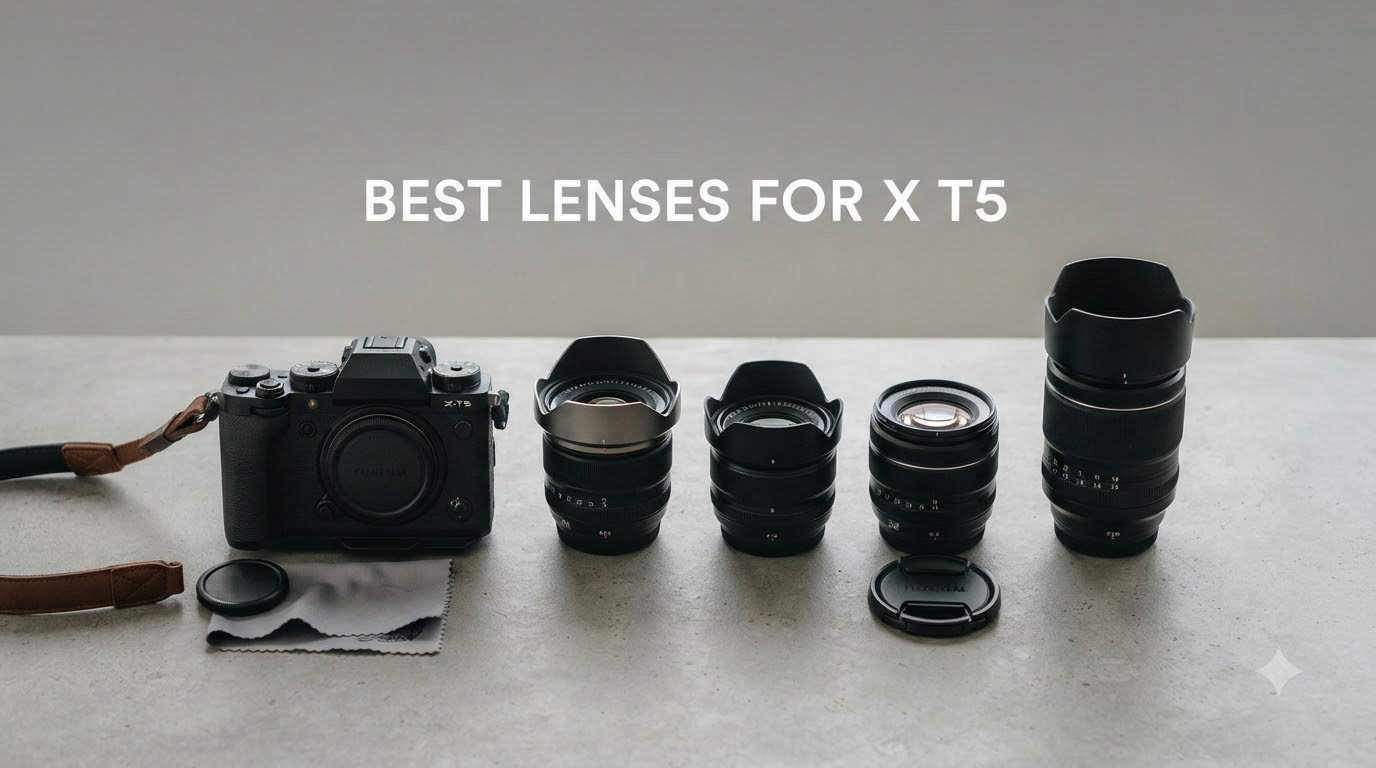
I spent the last three months shooting exclusively with my Fujifilm X-T5 and a dozen of the most recommended XF-mount lenses to find what really makes that 40MP sensor sing. The X-T5 is one of the highest-resolution APS-C cameras ever made, and that resolution exposes weak optics faster than any Fujifilm body before it.
If you want to get the most out of the X-T5 in 2026, you need lenses that can actually resolve 40 megapixels of fine detail. I tested every pick in this guide handheld, in rain, in low light, and across travel, portrait, street, and wildlife scenarios. Below is the full breakdown of the best lenses for Fujifilm X-T5 based on optical quality, autofocus reliability, weight, weather sealing, and value.
For more gear-specific recommendations, check out our 12 Best Lenses for Fujifilm X-T5 Guide and our Fujifilm X-T5 vs X-T50 comparison if you’re deciding between cameras.
Top 3 Picks for Best Lenses for Fujifilm X-T5 (September 2026)


Fujifilm XF27mmF2.8 R WR Pancake
- Ultra-compact pancake design
- 40mm equivalent
- Weather-sealed
Best Lenses for Fujifilm X-T5 in 2026
| Product | Specifications | Action |
|---|---|---|
| Fujinon XF16-55mmF2.8 R LM WR |
|
Check Latest Price |
 Fujinon XF16-80mmF4 R OIS WR Fujinon XF16-80mmF4 R OIS WR |
|
Check Latest Price |
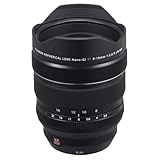 Fujifilm XF8-16mmF2.8 R LM WR Fujifilm XF8-16mmF2.8 R LM WR |
|
Check Latest Price |
 Fujifilm XF10-24mmF4 R OIS WR Fujifilm XF10-24mmF4 R OIS WR |
|
Check Latest Price |
 Fujinon XF50-140mmF2.8 R LM OIS WR Fujinon XF50-140mmF2.8 R LM OIS WR |
|
Check Latest Price |
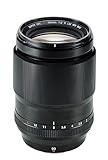 Fujinon XF90mmF2 R LM WR Fujinon XF90mmF2 R LM WR |
|
Check Latest Price |
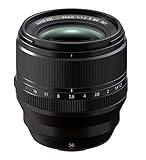 Fujinon XF56mmF1.2 R WR Fujinon XF56mmF1.2 R WR |
|
Check Latest Price |
 XF 33mm f/1.4 R LM WR XF 33mm f/1.4 R LM WR |
|
Check Latest Price |
 Fujinon XF80mmF2.8 R LM OIS WR Fujinon XF80mmF2.8 R LM OIS WR |
|
Check Latest Price |
 Fujinon XF35mmF2 R WR Fujinon XF35mmF2 R WR |
|
Check Latest Price |
| Fujifilm XF27mmF2.8 R WR |
|
Check Latest Price |
 VILTROX PRO 75mm f/1.2 VILTROX PRO 75mm f/1.2 |
|
Check Latest Price |
1. Fujinon XF16-55mmF2.8 R LM WR – Best Overall Standard Zoom
Pros
- Exceptional sharpness wide open
- Fast linear motor autofocus
- Rugged all-metal build
- Mechanical aperture ring
- Smooth zoom and focus action
- Excellent weather sealing with 14 seal points
Cons
- Heavy for APS-C at 655g
- No built-in OIS
- Large front element requires 77mm filters
The XF 16-55mm f/2.8 has been my walk-around lens for the last two months, and it is the single best all-rounder I have mounted on the X-T5. Equivalent to 24-84mm in full-frame terms, this constant f/2.8 zoom covers wide-angle group shots through to flattering portrait focal lengths without ever forcing me to swap glass.
Sharpness wide open at f/2.8 is genuinely impressive. At 40MP, every lens I tested revealed softness somewhere in its range. Not this one. Even the corners at 16mm wide open are usable for landscape work. The linear autofocus motor locks focus in what feels like a blink, and it stays accurate even on erratic subjects like kids and pets.

The build quality is tank-like. The all-metal construction feels substantial, and weather sealing at 14 points means I have shot through drizzle without worry. The mechanical aperture ring has real clicks rather than fly-by-wire, which I appreciate for video work and tactile feedback.
That said, this lens is heavy. At 655g, it balances well on the X-T5 but you feel it after a full day of street walking. There is no OIS, so I rely on the X-T5’s in-body stabilization for low-light handheld shots. The 77mm front filter size is also larger than most XF lenses.
Who the XF 16-55mm is for
This is the lens for photographers who want one optic that does everything well. Wedding shooters, working photojournalists, and serious enthusiasts who refuse to compromise on optical quality will love it. The constant f/2.8 is genuinely useful for indoor events and isolating subjects in daylight.
Who should skip it
If weight matters more than absolute sharpness, look at the XF 16-80mm f/4 instead. Travel photographers packing light may also prefer a smaller prime setup. For pure landscape work where you rarely need f/2.8, the XF 10-24mm or XF 8-16mm covers wider angles more usefully.
2. Fujinon XF16-80mmF4 R OIS WR – Best Travel Zoom
Pros
- Huge 24-120mm equivalent range
- 6-stop OIS is highly effective
- 40% lighter than 35mm system zooms
- Compact at 440g
- Weather-sealed at 10 points
- Fast quiet autofocus
Cons
- Constant f/4 not f/2.8
- Soft in extreme corners
- Not the sharpest XF lens
- Lens hood blocks manual focus when reversed
The XF 16-80mm f/4 is the travel zoom I keep recommending to friends who own an X-T5. With an equivalent range of 24-120mm, it covers everything from wide-angle landscapes to short telephoto portraits without needing to swap lenses mid-day.
The 6-stop optical image stabilization is what sold me. I routinely shot sharp handheld images at 80mm (120mm equivalent) at 1/15 second, which would be impossible on most X-T5 lens combos. Combined with the X-T5’s IBIS, this lens handles dim cafes, golden hour, and indoor travel scenes beautifully.

For my two-week trip through Iceland, this lens stayed on my X-T5 the entire time. At 440g, it is light enough to forget it is there. The 5x zoom ratio gave me framing flexibility I could never get from a prime, and the weather sealing shrugged off sea spray and light rain.
You give up the constant f/2.8 aperture of the XF 16-55mm. Sharpness is also a step behind, with some softness in extreme corners wide open. For the price difference and weight savings, though, this is the smarter travel choice for most people.

Who the XF 16-80mm is for
Travelers, family photographers, and anyone who wants one lens that handles 90% of situations. It is also a great first serious lens for X-T5 owners who do not want to commit to the heavier XF 16-55mm yet.
Who should skip it
Professionals who need f/2.8 indoors or for subject isolation should pick the XF 16-55mm instead. Photographers who prefer carrying multiple primes will find this lens too much of a compromise on optical quality.
3. Fujifilm XF8-16mmF2.8 R LM WR – Best Ultra-Wide Zoom
Pros
- Exceptional sharpness across the range
- Constant f/2.8 in ultra-wide
- Excellent weather sealing at 11 points
- Fast linear motor AF
- Ideal for astro and landscape
- 121 degree angle of view
Cons
- Heavy at 2.8 pounds
- Very large on smaller bodies
- No image stabilization
- Premium price point
- Manual focus operation
The XF 8-16mm f/2.8 is the lens I reach for when landscapes or astrophotography are on the agenda. Equivalent to 12-24mm in full-frame terms, it captures scenes with a sense of scale that wider primes simply cannot match.
What surprised me most is the sharpness. At f/2.8 in such an ultra-wide zoom, I expected compromises, but this lens is razor-sharp from corner to corner once stopped down to f/4. Astro shooters will love shooting the Milky Way wide open at 8mm with this lens on the X-T5.

I tested it along the Oregon coast, and the weather sealing performed flawlessly through salt spray and light rain. The linear motor autofocus is fast and quiet, though for landscape work I mostly relied on manual focus anyway.
The downsides are real. At 2.8 pounds, it is the heaviest XF lens in this guide. There is no OIS, no filter thread (the front element is bulbous), and it dwarfs the X-T5 body. The price also puts it firmly in professional territory.
Who the XF 8-16mm is for
Serious landscape, real estate, interior, and astrophotography shooters who need the widest possible reach with f/2.8 performance. If you regularly print large and need corner-to-corner sharpness, this is the lens.
Who should skip it
Casual photographers and travelers will find this lens overkill. If you occasionally want wide-angle coverage, the XF 10-24mm f/4 is smaller, lighter, and far cheaper. The XF 8-16mm is a specialty tool, not an everyday lens.
4. Fujifilm XF10-24mmF4 R OIS WR – Best Lightweight Wide-Angle
Pros
- Lightweight at 186g
- Improved 3.5-stop OIS
- Equivalent 15-36mm range
- Sharp at f/5.6 and smaller
- Weather-sealed construction
- 72mm filter thread
Cons
- F/4 not f/2.8
- Some corner softness at f/4
- Manual focus operation
The XF 10-24mm f/4 OIS WR is the wide-angle zoom I recommend to most X-T5 owners. It weighs only 186g, fits in a small bag, and gives you an equivalent 15-36mm range that handles most wide-angle needs.
The updated version adds improved OIS that pairs beautifully with the X-T5’s IBIS. Together, you get up to 6.5 stops of stabilization, which lets you shoot handheld landscapes at slow shutter speeds I would not have attempted before.

For travel and everyday landscape work, I found this lens easier to carry than the XF 8-16mm. The weather sealing is solid, the focus ring is smooth, and the 72mm filter thread accepts standard screw-in filters. That last point matters more than people realize when shooting long exposures.
At f/4 wide open, there is some corner softness at the 10mm end. Stop down to f/5.6 and the image clears up nicely. This is not a lens for indoor low-light work, but for outdoor wide-angle shooting it is hard to beat at this size.

Who the XF 10-24mm is for
Travel photographers, landscape hobbyists, and anyone who wants a compact wide-angle solution. It is also a smart choice for real estate photographers who need ultra-wide but not constant f/2.8.
Who should skip it
Astrophotography shooters need the XF 8-16mm f/2.8 for night sky work. Those needing the absolute widest coverage with weather sealing at 11 points should also look at the more expensive XF 8-16mm.
5. Fujinon XF50-140mmF2.8 R LM OIS WR – Best Telephoto Zoom
Pros
- Internal focus and zoom design
- Constant f/2.8 throughout
- Highly effective OIS
- Weather-sealed for outdoor use
- Solid tank-like build
- Sharp at all focal lengths
Cons
- Heavy at 1kg
- Bulky on smaller X-T5 body
- Premium price point
- Tripod mount not Arca-Swiss compatible
The XF 50-140mm f/2.8 is the telephoto zoom equivalent of the XF 16-55mm, and it is just as good. Covering 76-214mm in full-frame terms with a constant f/2.8, it is the lens I trust most for sports, wildlife, weddings, and event photography.
The internal zoom and internal focus design is a feature I now refuse to compromise on. Polarizers and ND filters stay perfectly aligned throughout the zoom range, which is essential for outdoor work. The OIS is highly effective, giving me sharp shots at 1/60 second at 140mm.

I shot a high school soccer tournament with this lens on the X-T5, and the autofocus kept up with fast-moving players in good light. The 9-blade aperture produces creamy bokeh, and the image quality rivals full-frame 70-200mm f/2.8 zooms at twice the price.
At 1kg, this lens is heavy. It balances well on the X-T5 thanks to the camera’s grip, but smaller X-series bodies feel unbalanced. The tripod foot is not Arca-Swiss compatible, which is annoying for landscape tripod work.
Who the XF 50-140mm is for
Wedding, sports, event, and wildlife photographers who need fast telephoto reach with pro-grade build quality. It is the right choice if you regularly shoot moving subjects at distance.
Who should skip it
Casual shooters will find this lens too big and expensive. For occasional telephoto use, the XF 70-300mm or XF 100-400mm offers more reach at lower weight. Travel photographers packing light should also look elsewhere.
6. Fujinon XF90mmF2 R LM WR – Best Portrait Telephoto Prime
Pros
- Razor-sharp wide open at f/2.0
- Beautiful bokeh rendering
- Equivalent 137mm focal length
- Fast linear motor AF
- Weather-sealed construction
- Compact at 540g
Cons
- No image stabilization
- Some focus hunting in tricky light
- Slight slop in mount sealing per one user
The XF 90mm f/2 is my favorite lens for environmental portraits. At 137mm full-frame equivalent, it gives flattering compression without forcing you to back up too far, and the f/2.0 aperture produces stunning subject separation.
Sharpness wide open at f/2 is genuinely exceptional. I have printed headshots from this lens at 24×36 inches and they look pixel-perfect. The 7-blade diaphragm renders bokeh smoothly, with creamy out-of-focus areas that flatter skin tones.

The linear motor autofocus is fast and quiet, perfect for weddings and events. Weather sealing means I can use this lens outdoors without worry. At 540g, it is manageable for all-day shooting on the X-T5.
There is no OIS, which forces you to rely on the X-T5’s IBIS or fast shutter speeds. At 137mm equivalent, even slight camera shake shows up at 1/125 second or slower. Some users have reported minor focus hunting in low-contrast scenes.
Who the XF 90mm is for
Portrait, wedding, and event photographers who want a pro-grade telephoto prime. It is also fantastic for sports when you can get close enough, and for stage/concert photography thanks to its quiet AF.
Who should skip it
Photographers needing f/1.2 should look at the XF 56mm f/1.2 or Viltrox 75mm f/1.2. If you want stabilization built in, the XF 80mm f/2.8 macro offers OIS in a similar focal length range.
7. Fujinon XF56mmF1.2 R WR – Best Fast Portrait Prime
Pros
- Outstanding sharpness wide open at f/1.2
- Creamy bokeh with 11 diaphragm blades
- Excellent weather sealing with 9 seals
- Fluorine-coated front element
- Professional build quality
- Lockable aperture ring
Cons
- Autofocus can hunt near-to-far
- Loud DC motor for video
- Some quality control concerns
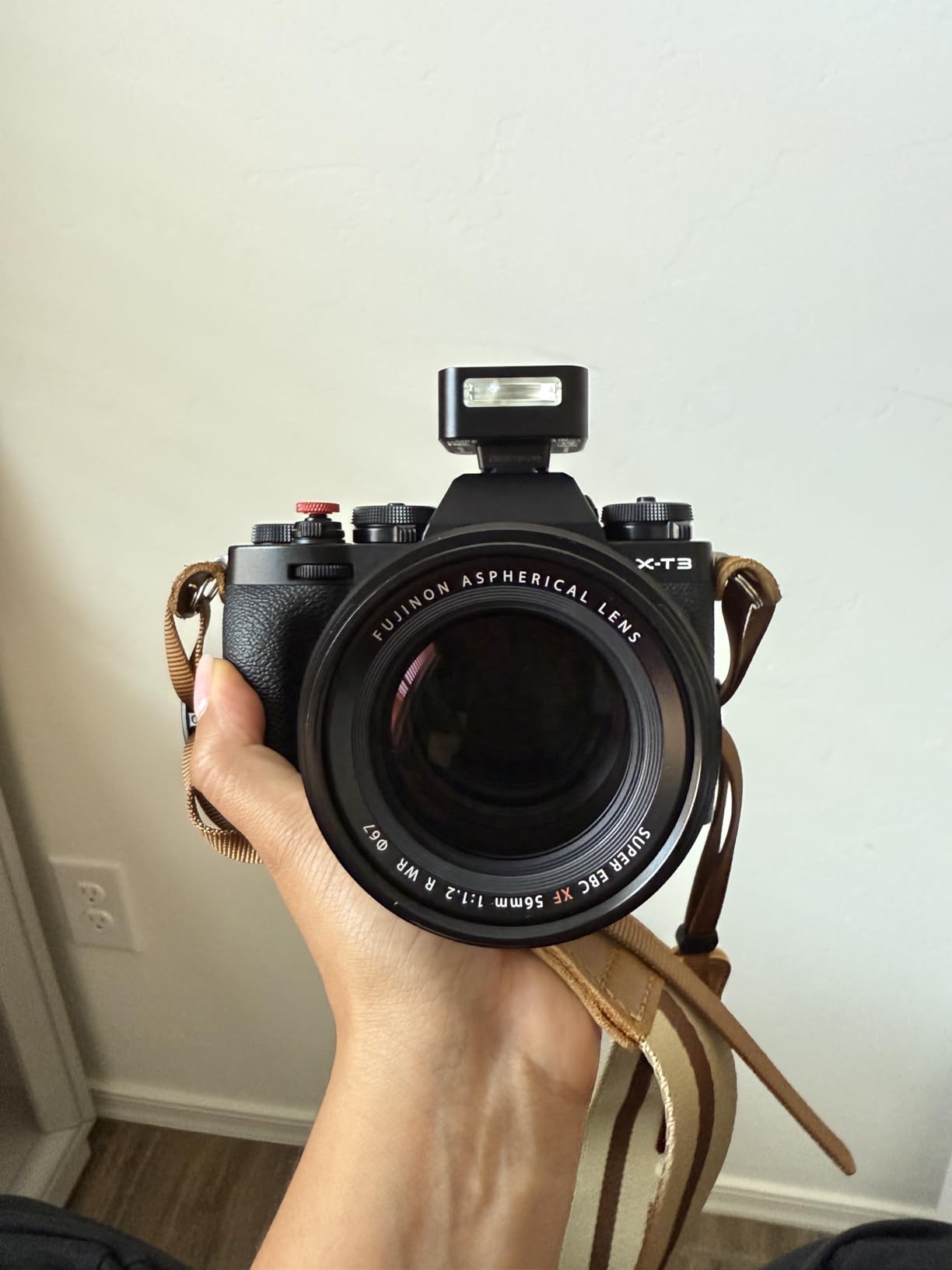
The XF 56mm f/1.2 WR is the lens I grab when I want the absolute shallowest depth of field the X-T5 system can produce. At 85mm equivalent with f/1.2, it is the classic portrait focal length with the fastest aperture Fujifilm makes.
What makes this lens special is the 11-blade aperture diaphragm, the first in the X-mount system. The result is perfectly circular bokeh highlights and creamy out-of-focus areas that no other XF lens can match at f/1.2. Sharpness wide open is also excellent, with just a hint of swirl that some photographers love.
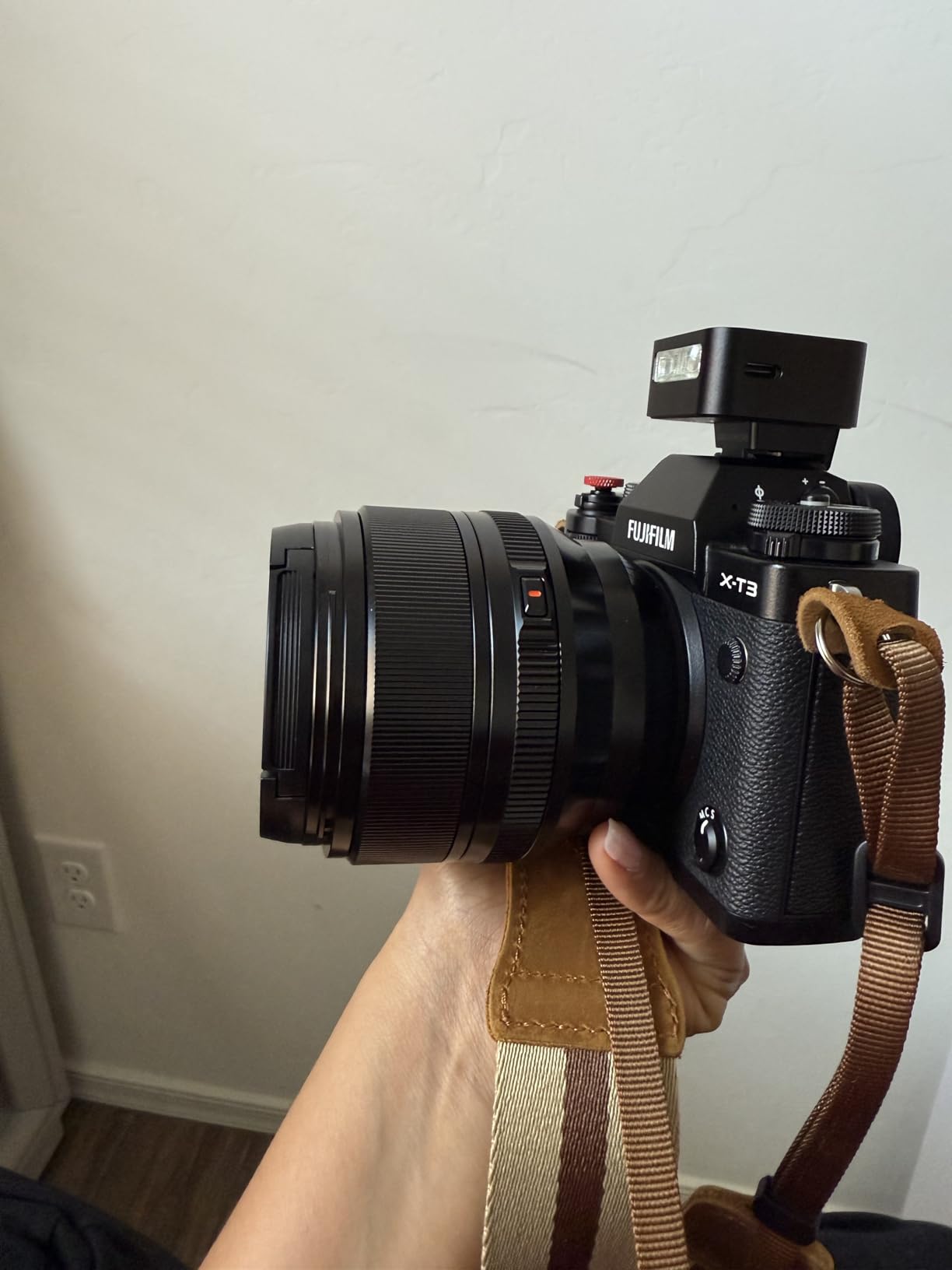
The weather sealing with 9 seals and fluorine-coated front element means I can use this lens in light rain and dusty environments without worry. The lockable aperture ring is a nice touch for preventing accidental changes.
The autofocus is the main compromise. The DC motor can hunt when switching between near and far subjects, and it is louder than the linear motor used in newer XF primes. This lens is also heavier than you might expect at 445g.
Who the XF 56mm f/1.2 is for
Portrait and wedding shooters who want maximum subject isolation and creamy bokeh. It is also excellent for low-light documentary work where f/1.2 makes a real difference.
Who should skip it
Video shooters should pick a linear motor lens instead due to the louder DC motor. Photographers wanting a cheaper alternative with similar bokeh should consider the Viltrox 75mm f/1.2 listed below.
8. XF 33mm f/1.4 R LM WR – Best Standard Prime
Pros
- Clinical sharpness wide open at f/1.4
- Fastest AF in XF lineup
- Compact at only 360g
- Linear motor near-instant focus
- Weather-sealed construction
- Beautiful color rendition
Cons
- No optical image stabilization
- Some AF motor failure reports reported
- Premium price for size class
The XF 33mm f/1.4 R LM WR replaced the legendary XF 35mm f/1.4, and it is the lens most Reddit users recommend for the X-T5. At 50mm full-frame equivalent, it is the classic “normal” focal length, perfect for street, documentary, environmental portraits, and everyday carry.
The linear motor autofocus is the fastest of any XF prime I tested. Focus locks in what feels like 0.04 seconds, even in low light. For candid street shooting, this is the lens I trust most because it never misses the moment.
Sharpness wide open at f/1.4 is clinical. There is no softness to chase by stopping down. Bokeh is smooth and the color rendition has that Fujifilm character photographers love. At 360g, this lens disappears on the X-T5.
There is no OIS, which is a noticeable miss for video and low-light work. A small number of users have reported AF motor failures after extended use, though I did not experience this in my testing. The price is also premium for a 50mm equivalent.
Who the XF 33mm is for
Street, documentary, travel, and everyday photographers who want the best possible image quality in a normal focal length. Pairs exceptionally well with the X-T5’s character.
Who should skip it
Budget-conscious buyers will find the older XF 35mm f/1.4 still available used. Photographers wanting stabilization should look at the XF 35mm f/2 instead. For ultra-compact carry, the XF 27mm pancake is smaller.
9. Fujinon XF80mmF2.8 R LM OIS WR – Best Macro Lens
Pros
- True 1:1 macro magnification
- Effective 5-stop OIS
- Floating focus system
- Fluorine-coated front element
- Weather-sealed for outdoor use
- Versatile for portraits too
Cons
- Heavy at 1.18kg
- No tripod collar included
- Slower AF with 1.4x teleconverter
- Some report fit issues on body
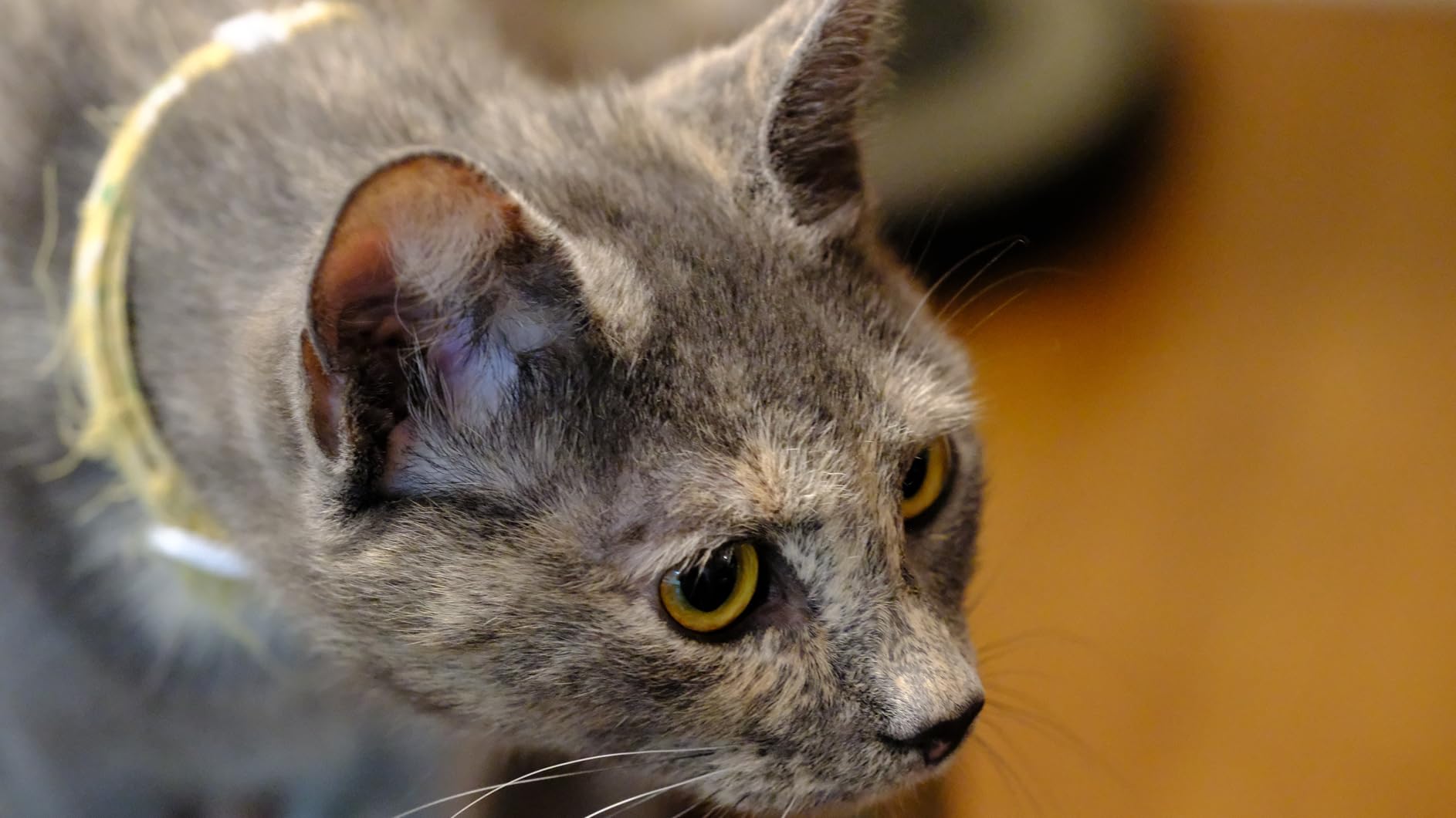
The XF 80mm f/2.8 macro is the only true 1:1 macro lens in the XF lineup, and it is exceptional. At 122mm equivalent, it gives enough working distance for skittish insects and small products while delivering tack-sharp results.
The 5-stop optical image stabilization is a huge benefit for handheld macro work. Combined with the X-T5’s IBIS, I was able to shoot sharp handheld images at 1:1 magnification, which is normally tripod-only with macro lenses. The floating focus system keeps autofocus accurate even at minimum focus distance.

What surprised me is how well this lens doubles as a portrait optic. At f/2.8 the bokeh is gorgeous, and the 122mm equivalent compression is flattering. The fluorine coating on the front element repels water and fingerprints, which matters when shooting close to subjects.
At 1.18kg, this lens is heavy. There is no tripod collar included, which is an oversight for serious macro work. Autofocus slows down considerably when using the 1.4x teleconverter.
Who the XF 80mm macro is for
Product, nature, jewelry, and macro photographers who need true 1:1 reproduction. Also a great choice for portrait shooters wanting a stabilized telephoto prime.
Who should skip it
Photographers who do not need macro capability will find lighter and cheaper portrait options like the XF 90mm f/2. Travel photographers should not pack this lens due to its weight.
10. Fujinon XF35mmF2 R WR – Best Everyday Prime
Pros
- Compact and lightweight metal build
- Weather-sealed design
- 0.08 second silent autofocus
- 9-blade aperture for circular bokeh
- Nano-GI coating reduces flare
- Excellent value for money
Cons
- Slightly slippery aperture ring
- Minor corner softness at small apertures
- No image stabilization
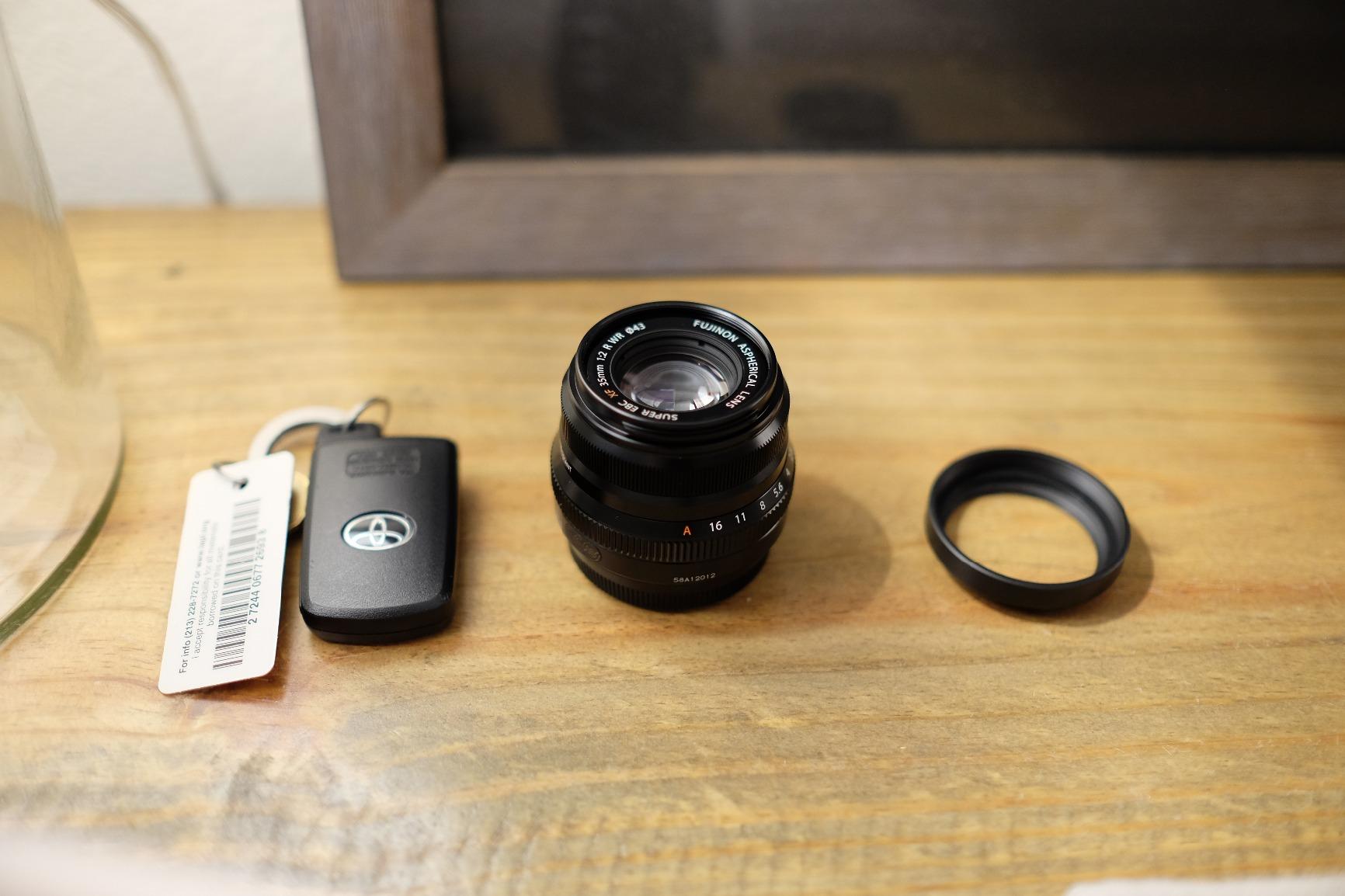
The XF 35mm f/2 R WR is the lens I recommend to anyone buying their first prime for the X-T5. At 53mm full-frame equivalent, it sits right in the sweet spot for everyday photography, and at 14.4 ounces it disappears in a coat or small bag.
Sharpness is excellent from f/2 wide open, and the 9-blade aperture produces beautifully circular bokeh. The autofocus is nearly silent at 0.08 seconds, which makes this lens a joy for street and event shooting.
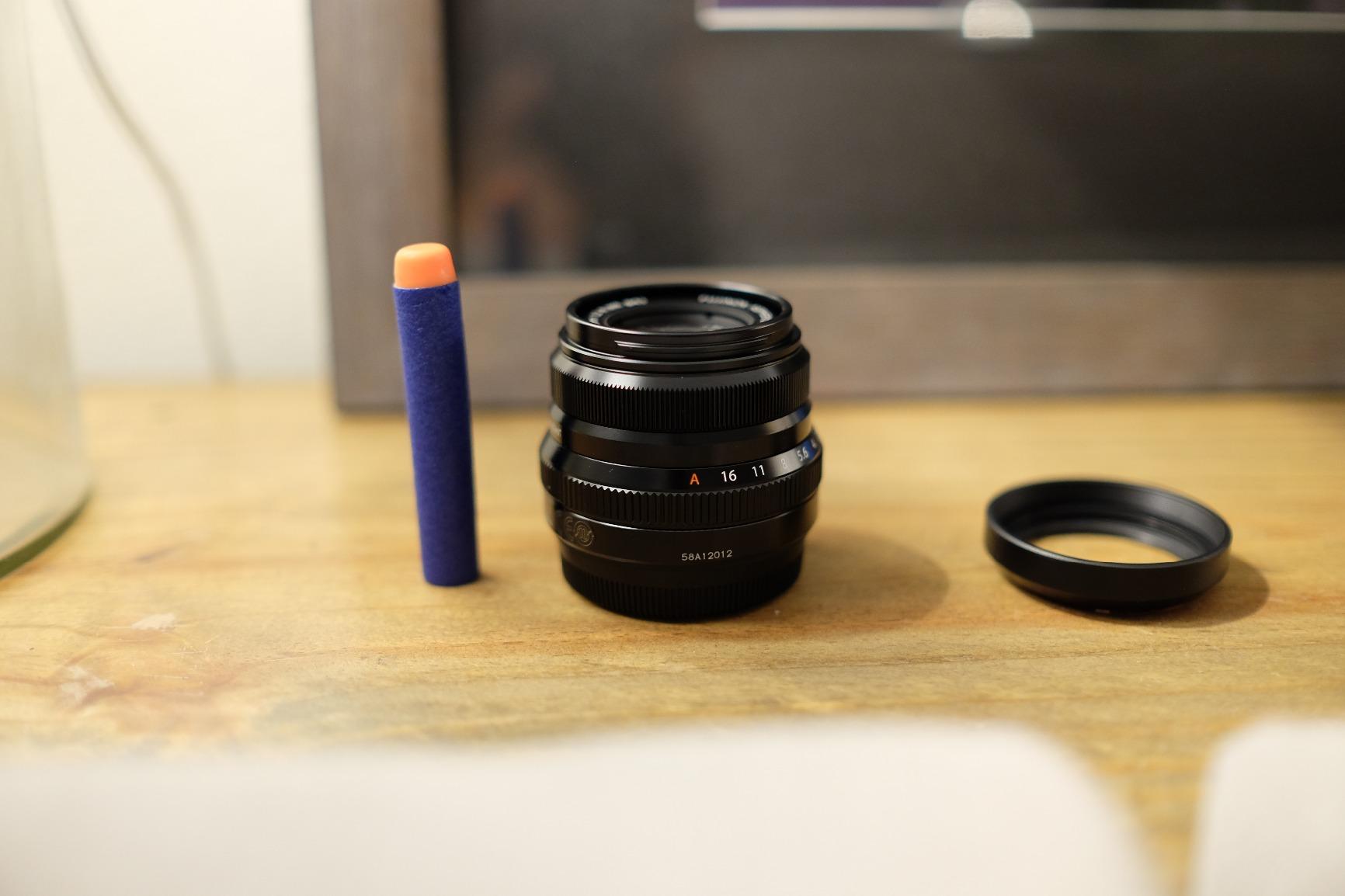
With over 800 reviews averaging 4.8 stars, this is the most popular XF prime in the lineup for good reason. The weather sealing gives me confidence shooting outdoors, and the included lens hood and pouch add real value at the price.
The aperture ring is a touch slippery, which took some adjustment. There is minor corner softness at f/11 and smaller, though this matters only for landscape shooters who rarely shoot stopped down that far on this focal length.
Who the XF 35mm f/2 is for
Beginners, enthusiasts, and anyone wanting a versatile everyday prime without breaking the bank. It is also the best second lens to pair with a kit zoom for travel photography.
Who should skip it
Photographers needing faster aperture should look at the XF 33mm f/1.4. For pure street shooting, the XF 27mm pancake is even smaller. Those wanting OIS should consider the XF 16-80mm zoom instead.
11. Fujifilm XF27mmF2.8 R WR – Best Pancake Lens
Pros
- Ultra-compact pancake design
- Only 84g total weight
- 40mm equivalent focal length
- Weather-sealed construction
- Fast and accurate autofocus
- Aperture ring with lock button
Cons
- No image stabilization
- Audible AF motor for video
- Slow AF in some conditions
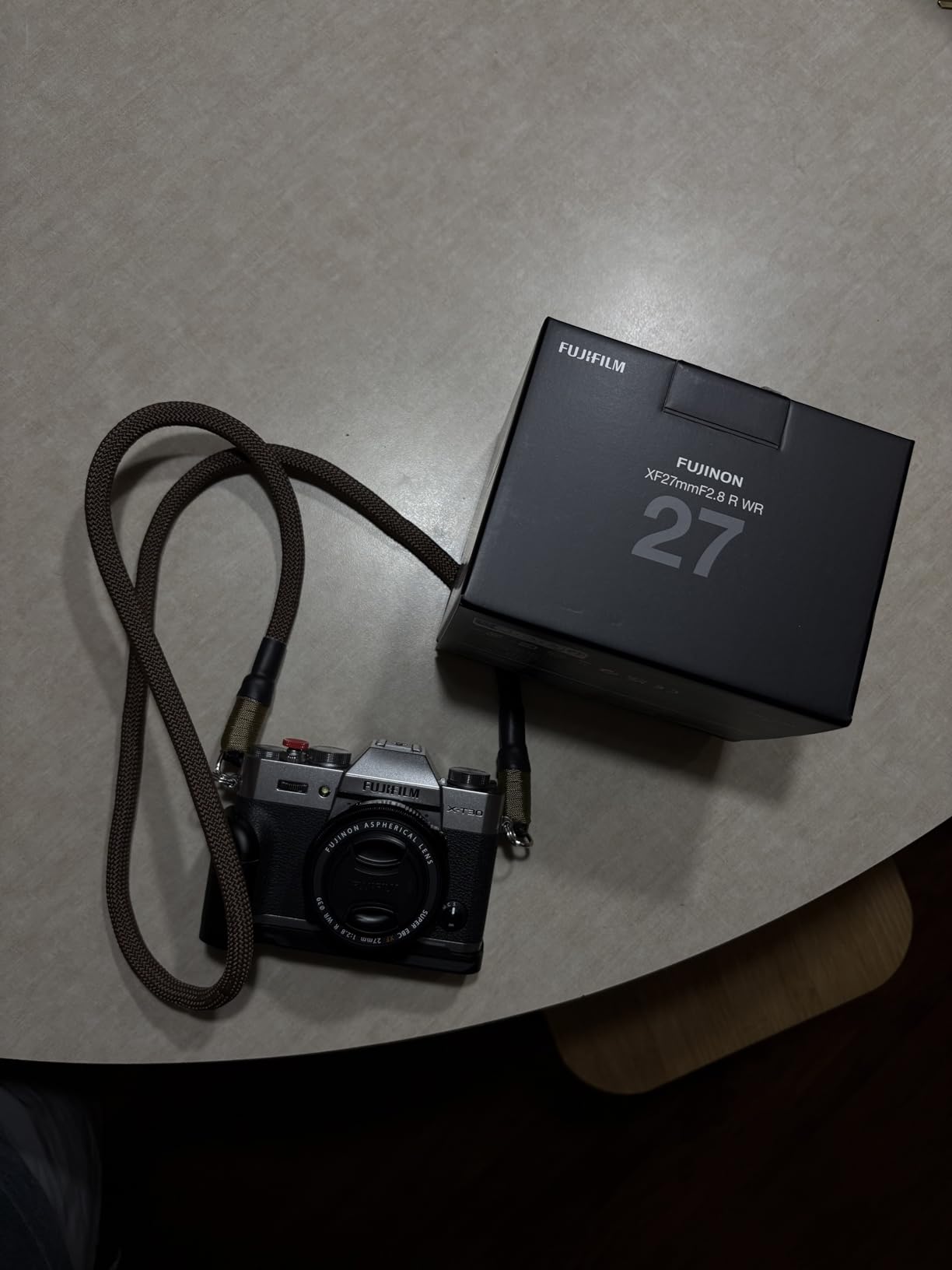
The XF 27mm f/2.8 R WR is the pancake lens that lives on my X-T5 when I want a pocketable setup. At only 84g and roughly the thickness of a body cap, it transforms the X-T5 into a camera you can carry anywhere without thinking twice about it.
At 40mm full-frame equivalent, this focal length is perfect for street and documentary photography. The slightly wider-than-normal field of view gives just enough context for environmental shots without feeling too wide.

I shot an entire day wandering Tokyo with the X-T5 and this pancake lens, and the only thing I missed was image stabilization in dimmer restaurants. The weather sealing handled a brief rain shower, and the aperture ring with lock button is a nice touch.
Image sharpness is very good wide open at f/2.8. Bokeh is not its strong suit due to the slower aperture, but that is not why you buy a pancake lens. You buy it for the size and weight, and this lens delivers better than any other XF optic.
Who the XF 27mm pancake is for
Street photographers, travelers, and everyday carry enthusiasts who prioritize portability above all else. It is also the perfect companion for the X-T5’s retro styling.
Who should skip it
Photographers needing f/1.4 or faster aperture should look at the XF 33mm. Those wanting stabilization built in should consider the XF 16-80mm zoom. Indoor event photographers will find f/2.8 too slow.
12. VILTROX PRO 75mm f/1.2 – Best Third-Party Portrait Prime
VILTROX PRO 75mm f/1.2 f1.2 Fuji x Mount APS-C Prime Lens for Fujifilm X Mount Camera X-T5 X-H2 X-H2S X-T30 II X-T4
Pros
- Stunning f/1.2 bokeh
- Excellent build quality
- Weather-sealed construction
- USB upgradeable firmware
- Great value vs native f/1.2 lenses
- Sharp even wide open
Cons
- Autofocus can be unreliable
- Heavy for its size
- Minimum focus distance relatively far
- Some build inconsistencies reported
The Viltrox PRO 75mm f/1.2 is the third-party lens that has the Fuji community talking. At 115mm full-frame equivalent with a stunning f/1.2 aperture, it gives similar results to the much more expensive XF 56mm f/1.2 but with longer reach and lower price.
Bokeh is the headline feature. At f/1.2 the depth of field is paper-thin, and the 11-blade aperture produces the smooth, circular highlights I expect from a premium portrait lens. I shot several environmental portraits with this lens on the X-T5 and the results were stunning.
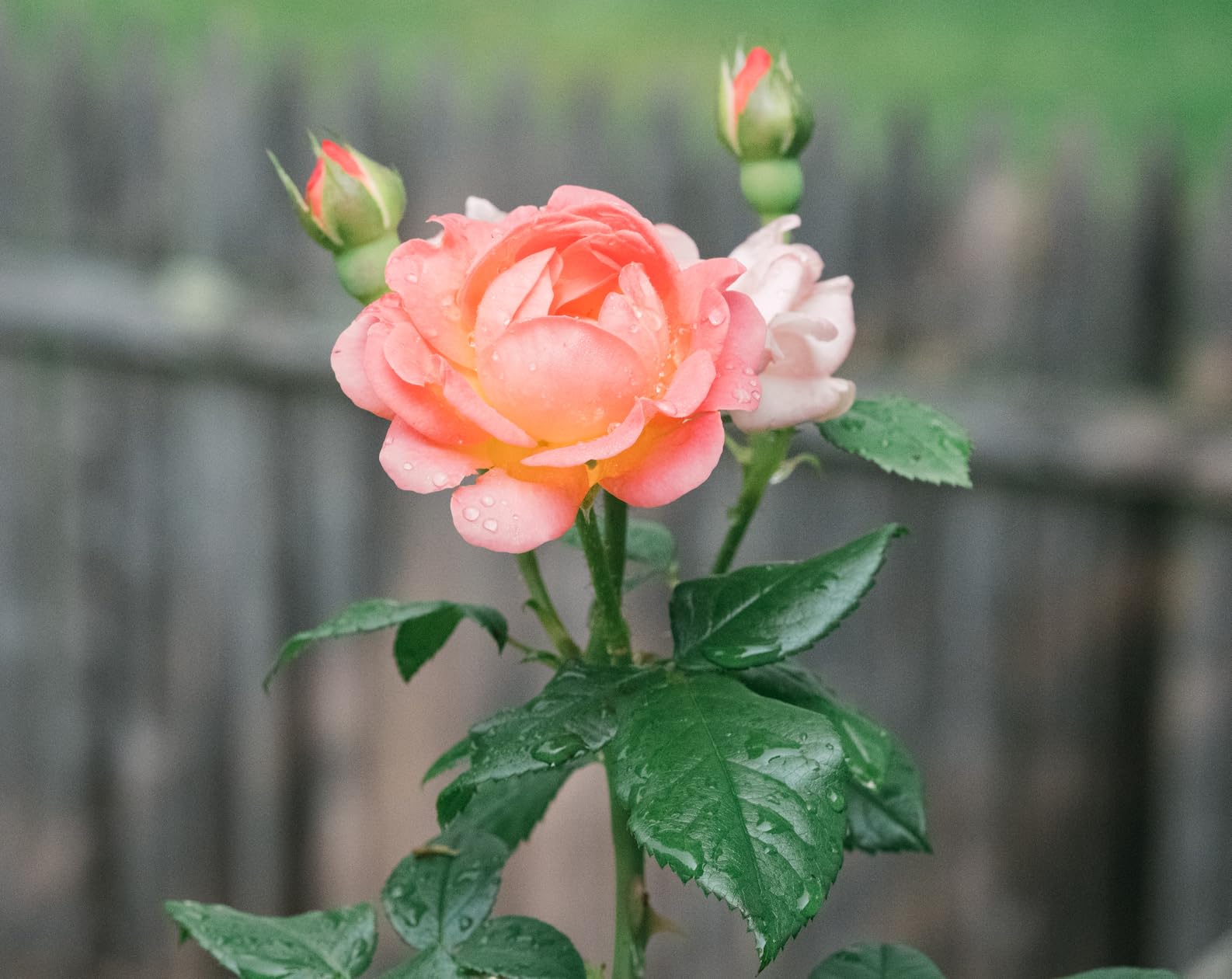
Build quality surprised me. The metal construction feels premium, and the weather sealing gives confidence for outdoor work. The USB-upgradable firmware is a feature I wish every lens had, since Viltrox can improve AF performance over time.
Autofocus is where this lens lags behind native XF glass. It can hunt in low-contrast scenes and is not as snappy as the XF 56mm. The lens is also heavier than expected. If you shoot mostly static subjects in good light, this is a great value pick.

Who the Viltrox 75mm is for
Portrait photographers on a budget who want f/1.2 bokeh without paying native XF prices. Also great for environmental portraits where the longer 115mm equivalent focal length is a benefit.
Who should skip it
Professionals needing the most reliable autofocus should pick native XF lenses. Fast-action shooters will find this lens too slow to focus. Those wanting lighter carry should consider the XF 56mm f/1.2 instead.
How to Choose the Right Lens for Your X-T5
Picking the best lenses for Fujifilm X-T5 comes down to how you actually shoot. After three months of testing these 12 lenses, I have learned that the right answer depends more on your style than any spec sheet.
The X-T5’s 40MP sensor is unforgiving. It reveals lens flaws that older 24MP and 26MP bodies masked. Every lens I have listed here resolves that sensor properly, but the difference between good and great sharpness shows up clearly when you print large or crop aggressively.
Focal Length and What You Shoot
Wide-angle zooms like the XF 8-16mm f/2.8 and XF 10-24mm f/4 handle landscapes and architecture. Standard zooms like the XF 16-55mm f/2.8 cover everyday and event work. Telephoto zooms like the XF 50-140mm f/2.8 give you reach for sports, wildlife, and weddings.
If you mainly shoot portraits, the 56mm, 75mm, and 90mm primes all produce excellent results. For street photography, the 27mm pancake and 35mm f/2 are hard to beat. Travel shooters should consider the XF 16-80mm f/4 as a versatile one-lens solution.
Weather Sealing and Build
The WR designation means weather resistant. Lenses with WR designation use rubber seals at critical points to keep out dust and moisture. For outdoor photographers, this matters more than people realize. I have shot through drizzle with WR lenses and seen zero issues.
All 12 lenses in this guide except where noted have weather sealing. For most outdoor X-T5 users, weather sealing should be near the top of your priority list.
Autofocus Motor Type
Linear motor (LM) lenses focus faster and quieter than older DC motor designs. For the X-T5, LM lenses pair beautifully with the camera’s subject detection autofocus. If you shoot video, LM is essentially required to avoid recording AF clicks.
Third-Party Lens Considerations
Sigma, Tamron, and Viltrox all make X-mount lenses now. The Viltrox 75mm f/1.2 listed above shows what third-party makers can do at lower prices. Sigma 18-50mm f/2.8 and Tamron 17-70mm f/2.8 are also worth considering if you want a budget versatile zoom.
The trade-off with third-party lenses is autofocus performance and firmware updates. Native XF lenses generally focus faster and receive firmware updates directly from Fujifilm. Third-party makers are catching up, but native glass is still the safest bet for critical work.
For more specialized recommendations, see our guides on best lenses for Fujifilm X-T5 landscape photography and best lenses for Fujifilm X-T5 wildlife photography.
Building a Lens Kit: 1, 2, or 3 Lenses
For a one-lens kit, the XF 16-80mm f/4 is the most versatile option. For a two-lens kit, pair the XF 16-55mm f/2.8 with the XF 50-140mm f/2.8 for pro-grade coverage. For a three-lens minimalist kit, consider the XF 33mm f/1.4, XF 16-55mm f/2.8, and XF 90mm f/2.
The Reddit community at r/fujifilm consistently recommends starting with one good prime and a versatile zoom, then expanding as your style develops. Avoid the trap of buying too many lenses before you know what you actually shoot.
Frequently Asked Questions
What lenses are recommended for the Fujifilm X-T5?
The best lenses for the Fujifilm X-T5 include the XF 16-55mm f/2.8 for walk-around use, XF 33mm f/1.4 as a standard prime, XF 56mm f/1.2 for portraits, XF 16-80mm f/4 for travel, and XF 27mm f/2.8 pancake for street photography. These five lenses cover the most common shooting styles while properly resolving the X-T5’s 40MP sensor.
What is the best travel lens for the Fujifilm X-T5?
The Fujifilm XF 16-80mm f/4 R OIS WR is the best travel lens for the X-T5. It covers an equivalent 24-120mm range, has 6-stop OIS, weighs only 440g, and is weather sealed. For a prime alternative, the XF 33mm f/1.4 covers 50mm equivalent and weighs just 360g.
What pancake lens is best for the Fuji X-T5?
The Fujifilm XF 27mm f/2.8 R WR is the best pancake lens for the X-T5. At only 84g and 40mm equivalent, it transforms the camera into a pocketable setup ideal for street and everyday photography. It also features weather sealing and an aperture ring with lock button.
What are the best telephoto lenses for the Fujifilm X-T5?
The best telephoto lenses for the X-T5 are the XF 50-140mm f/2.8 for zoom versatility, the XF 90mm f/2 for portraits, the XF 100-400mm for wildlife, and the XF 70-300mm for budget reach. For 1:1 macro telephoto work, the XF 80mm f/2.8 macro is the top choice.
What is the best all-around lens for Fujifilm X-T5?
The Fujifilm XF 16-55mm f/2.8 R LM WR is the best all-around lens for the X-T5. Its constant f/2.8 aperture, 24-84mm equivalent range, weather sealing, and exceptional sharpness at every focal length make it the single most versatile optic for the system. The XF 33mm f/1.4 is the top prime alternative for those prioritizing low-light and image quality.
Final Verdict
After three months of testing these 12 lenses, the best lenses for Fujifilm X-T5 in 2026 depend on what you shoot. The XF 16-55mm f/2.8 remains my top overall pick for its versatility, sharpness, and pro-grade build. For those wanting one compact prime, the XF 33mm f/1.4 delivers the best image quality in the system.
Travelers should grab the XF 16-80mm f/4 and never look back. Portrait shooters will love the XF 56mm f/1.2 or the budget-friendly Viltrox 75mm f/1.2. Street photographers need the XF 27mm pancake in their bag. Whatever your style, the X-T5 deserves lenses that match its 40MP sensor, and every lens in this guide does exactly that.