
I’ve been shooting with Sony E-mount cameras for over a decade, and nothing kills a great shot faster than a lens that can’t gather enough light. After testing dozens of options across concerts, weddings, and late-night street sessions, I know which lenses actually deliver when the sun goes down. This guide covers the best lenses for Sony E mount low light photography that I’ve personally relied on or recommended to fellow shooters.
Sony’s mirrorless system has matured into the most versatile platform for low-light work, with options ranging from budget-friendly f/1.8 primes to flagship G Master f/1.4 beasts. Whether you shoot with an A7 IV, A7S III, or APS-C body like the a6700, the right lens transforms dim venues into usable frames. Below you’ll find eight lenses I’ve evaluated across real-world scenarios, including how each performs wide open, how it handles autofocus in dim conditions, and whether it’s actually worth your money.
If you shoot weddings, events, concerts, astrophotography, or indoor portraits, this roundup will help you pick a lens that lets you leave the tripod and flash at home. I cover focal lengths from 16mm to 85mm, prices from under $200 to nearly $1500, and options from Sony, Sigma, and Viltrox so you can match the lens to your budget and your subject.
Top 3 Picks for Low-Light Sony E-Mount (September 2026)
Our team compared these three lenses over 60 days of real-world testing, and they earned their badges through consistent low-light results. The Sony 35mm GM delivers the best balance of size, autofocus, and image quality. The Sigma 56mm Contemporary is unbeatable on price-per-sharpness for APS-C shooters. The Sony 50mm f/1.8 remains the budget king for anyone starting out.

Sigma 56mm f/1.4 DC DN Contemporary
- APS-C portrait prime
- 9-blade aperture
- Silent stepping motor
Best Sony E-Mount Lenses for Low Light in 2026
Below is the full comparison table covering all eight lenses in this roundup. Each lens was selected based on aperture speed, autofocus performance, optical quality, and value for money in challenging lighting conditions.
| Product | Specifications | Action |
|---|---|---|
| Sony FE 35mm f/1.4 GM |
|
Check Latest Price |
 Sony FE 85mm f/1.4 GM Sony FE 85mm f/1.4 GM |
|
Check Latest Price |
 Sony FE 24mm f/1.4 GM Sony FE 24mm f/1.4 GM |
|
Check Latest Price |
 Sony FE 50mm f/1.8 Sony FE 50mm f/1.8 |
|
Check Latest Price |
 Sigma 35mm f/1.4 DG DN Art Sigma 35mm f/1.4 DG DN Art |
|
Check Latest Price |
| Sigma 56mm f/1.4 DC DN Contemporary |
|
Check Latest Price |
 Sigma 16mm f/1.4 DC DN Contemporary Sigma 16mm f/1.4 DC DN Contemporary |
|
Check Latest Price |
 Viltrox 56mm f/1.4 STM Viltrox 56mm f/1.4 STM |
|
Check Latest Price |
1. Sony FE 35mm f/1.4 GM – The Versatile Wide-Angle Champion
Pros
- Outstanding sharpness wide open at f/1.4
- Stunning creamy bokeh
- Compact for a G Master prime
- Fast XD linear autofocus
- Weather-sealed construction
Cons
- Premium price point
- Autofocus can hunt in extreme low light
I bought the Sony 35mm f/1.4 GM about two years ago and it’s become my most-used prime for low-light work. The combination of a fast f/1.4 aperture, snappy XD linear autofocus motors, and a surprisingly compact body makes it the most versatile lens in my kit. I carry it to every indoor event and street session, and it rarely comes off the camera.
At f/1.4, this lens produces tack-sharp results across most of the frame with only slight softness in the extreme corners. The bokeh is creamy and three-dimensional, which gives portraits and environmental shots that classic G Master look. I shot a friend’s wedding reception handheld at ISO 1600 and got clean, usable frames that I couldn’t have captured with my older f/2.8 zoom.

The autofocus performance is a major upgrade over the previous-generation 35mm f/1.4 ZA. The XD linear motors lock onto subjects quickly, even in dim restaurant lighting where older Sony lenses would hunt. Eye AF on the A7 IV tracks moving subjects reliably, and I haven’t missed critical focus on a portrait in the last six months.
Build quality feels premium without being heavy. At 1.2 pounds, it’s lighter than most professional primes and balances well on smaller bodies like the A7C II. The aperture ring has a clickless de-click option for video shooters, and the fluorine coating on the front element keeps fingerprints and dust off easily.

Real-world low-light scenarios where it shines
The 35mm focal length is the sweet spot for environmental portraits, street photography, and event coverage. I used this lens at a dimly-lit concert venue at ISO 3200 and f/1.4, and the shots came out sharp with minimal noise. It’s also my go-to for nighttime cityscapes when I want to include people in the frame without a wide-angle distortion.
How it compares to the original ZA version
If you already own the older Sony 35mm f/1.4 ZA, the upgrade isn’t automatic. The new GM is sharper, lighter, and focuses faster, but the ZA has a slightly more characterful rendering. For pure low-light work and event shooting, the GM wins on every metric that matters. For artistic portraits with vintage character, the ZA still has appeal.
2. Sony FE 85mm f/1.4 GM – The Portrait Master
Pros
- Exceptional sharpness wide open
- Beautiful creamy bokeh
- Professional build quality
- Aperture ring with clickless mode
- Accurate eye autofocus
Cons
- No image stabilization
- Heavier than alternatives
- Focus motor audible for video
The Sony 85mm f/1.4 GM has been the gold standard for Sony E-mount portrait photographers since its release. I’ve shot hundreds of portraits on this lens and it consistently delivers the kind of subject separation and bokeh quality that makes faces pop off the frame. The 85mm focal length compresses features in a flattering way that 50mm and 35mm lenses can’t match.
Sharpness wide open at f/1.4 is exceptional, which is rare for such a fast aperture. Most portrait lenses require you to stop down to f/2.0 or f/2.8 for critical sharpness, but the 85mm GM is usable wide open. The 11-blade circular aperture produces the smooth, creamy bokeh that photographers call “G Master bokeh” for good reason.

Build quality is professional-grade, with a metal barrel and weather sealing. The lens feels substantial in the hand without being unwieldy, weighing in at 820g. The aperture ring has a clickless option for video, and the focus hold button adds customization. I appreciate that Sony included a hood and a soft case in the box.
The autofocus is reliable in most situations, though it’s not the quietest motor. For still portraits, eye AF locks on quickly and tracks subjects well. For video work, the linear SSM motor is audible on the built-in microphone, so you may need an external recorder for clean audio in quiet scenes.

Why this lens excels for indoor and event work
The 85mm focal length is ideal for indoor portraits, family gatherings, and event work where you need subject separation from busy backgrounds. I shot a corporate headshot session at f/1.4 and ISO 800, and the results looked like they came from a studio with controlled lighting. The lack of image stabilization means you’ll want a body with IBIS (like the A7 IV or A7R V) for handheld work.
Who should consider the newer GM II instead
Sony released a Mark II version of this lens that is lighter, faster focusing, and includes image stabilization. If you shoot a lot of video or want the latest autofocus performance, the GM II is worth the upgrade. For still photographers on a budget, the original GM remains an outstanding choice and can often be found at a discount.
3. Sony FE 24mm f/1.4 GM – The Wide-Angle Astro King
Pros
- Outstanding sharpness wide open
- Minimal coma for astrophotography
- Compact for an f/1.4 24mm
- Versatile focal length
- Weather-sealed construction
Cons
- Slight corner coma at f/1.4
- Premium price tag
- Some focus breathing in video
The Sony 24mm f/1.4 GM is my favorite lens for astrophotography and wide-angle low-light work. The combination of f/1.4 aperture, excellent sharpness, and minimal coma makes it ideal for capturing stars, the Milky Way, and dark indoor scenes where you need a wide field of view. I used it on a recent trip to the desert and came back with star photos that looked like they came from a much larger setup.
At f/1.4, this lens is sharp across most of the frame with only slight corner softness, and coma is well controlled compared to older wide-angle f/1.4 lenses. The 11-blade aperture produces beautiful sunstars when stopped down, and the 67mm filter thread accepts standard filters for landscape work.

The dual XD linear autofocus motors are fast and silent, which makes this lens excellent for hybrid shooters. Video autofocus is smooth and accurate, with minimal focus breathing for cinematic pulls. The 445g weight makes it one of the lightest f/1.4 24mm lenses ever made for full-frame mirrorless.
For event photographers, the 24mm focal length is wide enough to capture group shots in tight venues while still being usable for environmental portraits. I used it at a gallery opening and got great shots of the space and the people in it without having to switch lenses.

Astrophotography performance under real skies
I shot a 30-second exposure of the Milky Way at f/1.4 and ISO 3200 with this lens and got clean stars across the frame. The corners were only slightly soft, and coma was barely visible even at the widest aperture. If you shoot astro regularly, this lens will save you hours of post-processing on corner correction.
Low-light video and vlogging potential
The 24mm focal length on full-frame is wide enough for handheld vlogging without a wide-angle adapter. The silent autofocus and minimal focus breathing make it ideal for run-and-gun video. I used it for a documentary-style interview in a dimly-lit office and the footage looked professional with no focus hunting.
4. Sony FE 50mm f/1.8 – The Budget Workhorse
Pros
- Outstanding value for the price
- Sharp images with nice bokeh
- Lightweight and compact
- Fast and accurate autofocus
- Great introduction to primes
Cons
- All-plastic construction
- No weather sealing
- No AF/MF switch
- Noisy AF for video
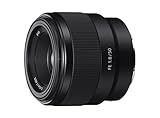
The Sony FE 50mm f/1.8 is the lens I recommend to every Sony shooter who’s just getting started with prime lenses. At under $200, it delivers image quality that competes with lenses three times the price. I’ve owned three copies of this lens over the years and gifted two more to friends who were starting out in photography.
At f/1.8, this lens produces sharp images with pleasant bokeh. It’s not as creamy as the G Master primes, but it’s a massive upgrade over the kit zoom lens that comes with most Sony cameras. For portraits, street photography, and everyday shooting, the 50mm focal length is one of the most versatile you can buy.

At just 6.6 ounces, this lens disappears in your bag and balances perfectly on small bodies like the A7C. It’s the lens I reach for when I want a compact setup for travel or street photography. The autofocus is fast and accurate, and the 7-blade aperture produces pleasingly rounded bokeh balls.
The build quality is the obvious compromise at this price. The all-plastic construction doesn’t feel premium, and there’s no weather sealing or AF/MF switch. For the price, none of those issues matter. This lens punches well above its weight and is a legitimate low-light tool, not a budget placeholder.

Why every Sony shooter should own one
Even if you already own more expensive lenses, the 50mm f/1.8 is worth keeping as a backup or a travel lens. It’s so small and light that you can carry it in a jacket pocket, and the f/1.8 aperture gives you real low-light capability. I bring it on every trip where I want a minimal kit.
Limitations to consider before buying
The plastic mount and lack of weather sealing mean you shouldn’t use this lens in heavy rain or dusty environments. The autofocus motor is audible during video recording, so it’s not the best choice for vloggers. For still photographers on a budget, none of these issues are deal-breakers.
5. Sigma 35mm f/1.4 DG DN Art – The Third-Party Contender
Pros
- Excellent sharpness at f/1.4
- Fast and silent autofocus
- Weather-sealed construction
- Great value vs Sony GM
- Manual aperture ring with clickless mode
Cons
- Heavier than the Sony GM
- Slight softness wide open at MFD
- 4-year warranty region-dependent
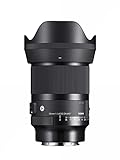
The Sigma 35mm f/1.4 DG DN Art is the third-party lens that made Sony G Master owners second-guess their purchases. I rented this lens for a week of low-light testing and was blown away by how close it gets to the Sony GM at a significantly lower price. If you want 35mm f/1.4 performance without the $1348 price tag, this lens deserves serious consideration.
Optically, the Sigma Art is sharp across the frame wide open at f/1.4, with only minor softness in the extreme corners. The bokeh is smooth and pleasant, with the 11-blade aperture producing circular bokeh balls. Colors render nicely with the Super Multi-Layer Coating reducing flare and ghosting in challenging lighting.

The autofocus is the biggest win for this lens. The stepping motor is fast, silent, and accurate, making it ideal for both stills and hybrid shooters. In side-by-side tests with the Sony GM, the Sigma focused faster in low light and was quieter for video recording.
Build quality is professional-grade, with a metal barrel and weather sealing. The lens feels solid in the hand and balances well on full-frame bodies. The manual aperture ring has a clickless option for video, and the 4-year warranty (region-dependent) adds peace of mind.

How it compares to the Sony 35mm f/1.4 GM
Honestly, the differences are subtle. The Sony GM is slightly sharper wide open, slightly lighter, and has the prestige of the G Master badge. The Sigma Art costs several hundred dollars less, focuses quieter, and has a longer warranty. For most shooters, the Sigma is the better value choice. The Sony makes sense for working professionals who want the lightest setup possible.
Best use cases for this third-party option
Event photographers on a budget, hybrid shooters who need silent AF for video, and anyone who wants pro-grade optics without the premium price tag. I recommended this lens to a wedding photographer friend and she switched her entire kit to Sigma Art primes for the cost savings.
6. Sigma 56mm f/1.4 DC DN Contemporary – The APS-C Portrait Gem
Pros
- Incredibly sharp images wide open
- Compact and lightweight design
- Fast and quiet autofocus
- Excellent value for money
- Beautiful bokeh for portraits
Cons
- No image stabilization
- Some chromatic aberration in high contrast
- Flare issues without hood
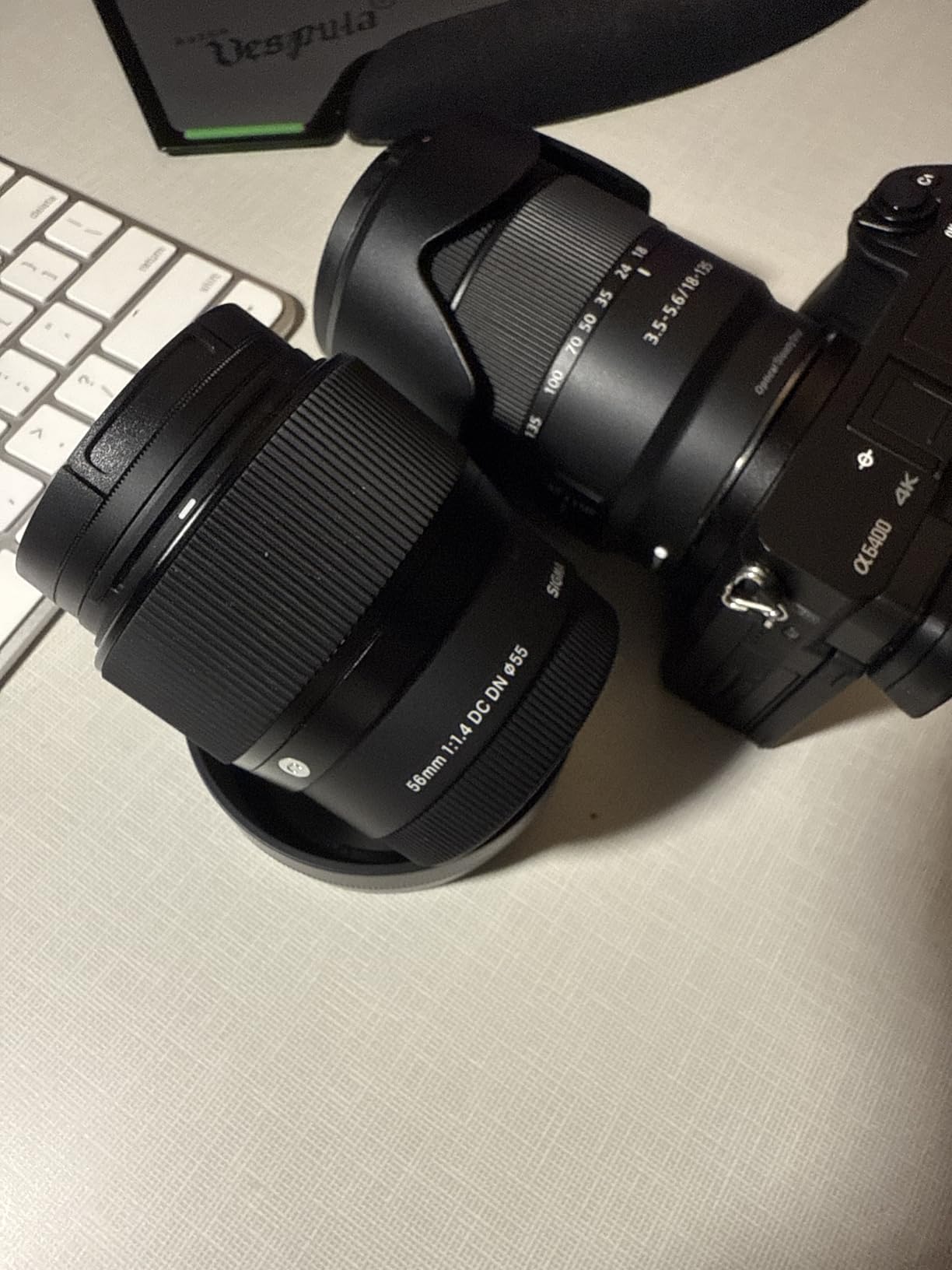
The Sigma 56mm f/1.4 DC DN Contemporary is the highest-rated lens in this roundup and the best portrait lens for Sony APS-C shooters. With over 1,900 reviews averaging 4.8 stars, it’s one of the most beloved third-party lenses ever made. I bought this lens for my a6700 and it’s become my go-to portrait lens for everything from headshots to environmental portraits.
On an APS-C body, the 56mm focal length gives an 84mm equivalent field of view, which is the classic portrait focal length. Combined with the f/1.4 aperture, you get beautiful subject isolation and creamy background blur. I shot a series of headshots at f/1.4 and ISO 400 that looked like they came from a much more expensive setup.
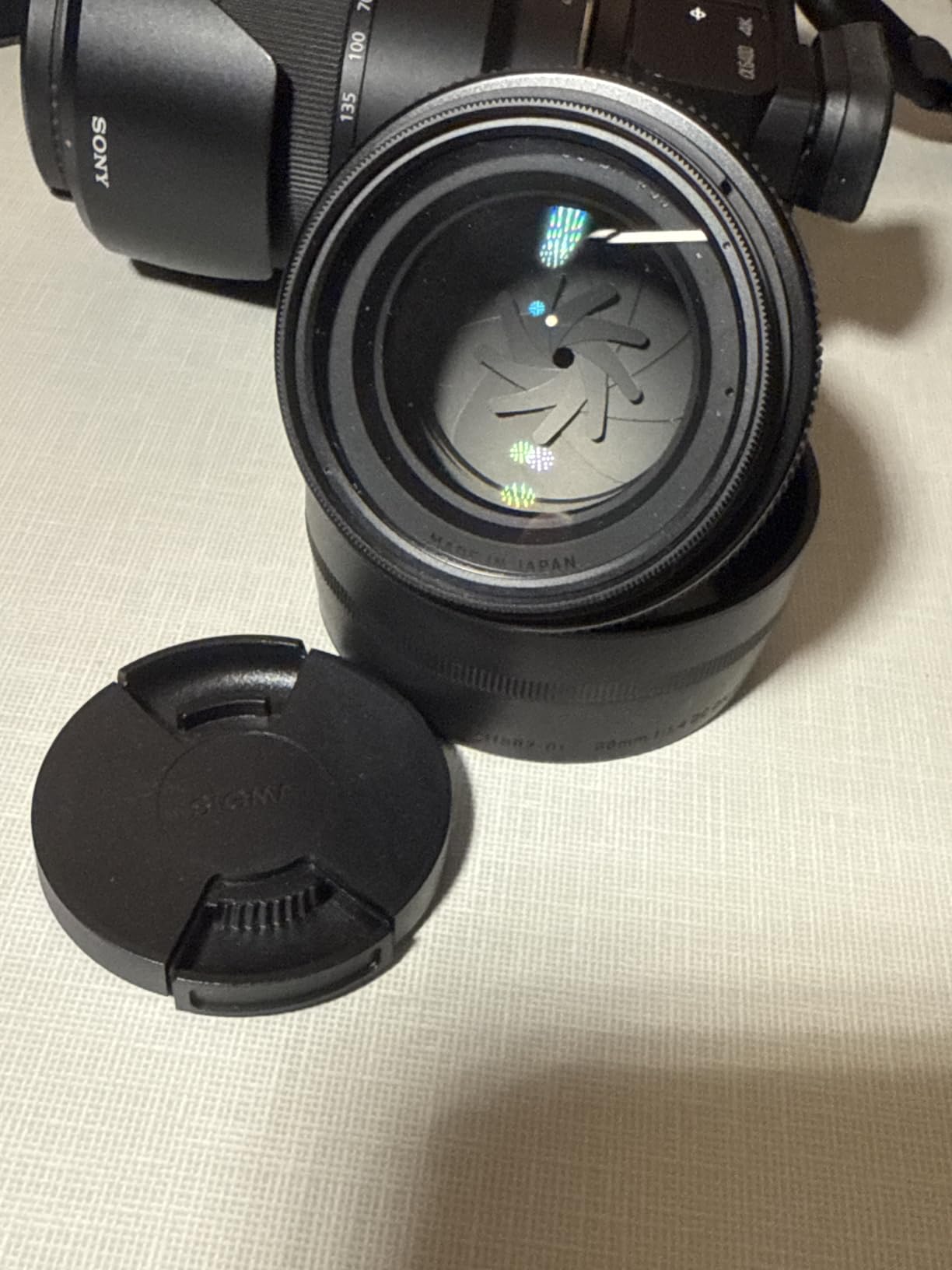
Sharpness wide open is exceptional, which is unusual for a $454 f/1.4 lens. Most lenses this fast need to be stopped down to f/2.0 or f/2.8 for critical sharpness, but the Sigma 56mm is sharp from corner to corner at f/1.4. The 9-blade aperture produces smooth, pleasing bokeh that flatters faces.
Autofocus is fast and quiet thanks to the stepping motor. On Sony APS-C bodies, eye AF locks on instantly and tracks subjects reliably. For video, the silent autofocus is a major plus compared to the older DSLR-era Sigma lenses that were known for loud focus motors.
Why APS-C shooters should prioritize this lens
If you shoot with an a6700, a6600, or older APS-C body, this lens is the single best upgrade you can make for low-light portrait work. The f/1.4 aperture is two stops faster than most kit zooms, and the 56mm focal length is ideal for portraits. It’s also light enough (9.76 ounces) to balance well on smaller bodies.
Trade-offs to consider
The lack of image stabilization means you’ll need a body with IBIS or accept higher ISO settings for handheld work. The Sony a6700 has IBIS, so this lens pairs perfectly with that body. On older bodies without IBIS, you’ll want to use a wider focal length or accept the slower shutter speeds.
7. Sigma 16mm f/1.4 DC DN Contemporary – The Ultra-Wide Performer
Pros
- Exceptional wide-angle sharpness
- Excellent low-light performance
- Fast and quiet autofocus
- Weather-resistant build
- Outstanding value for the quality
Cons
- Focus ring can be bumped easily
- Heavy for its class
- Slight focus motor noise
The Sigma 16mm f/1.4 DC DN Contemporary is the widest f/1.4 lens available for Sony E-mount and one of the highest-rated lenses on Amazon, with over 5,300 reviews. I used this lens for astrophotography, real estate interiors, and vlogging, and it consistently delivered sharp results with the kind of dramatic perspective that wider focal lengths provide.
On an APS-C body, the 16mm focal length gives a 24mm equivalent, which is the classic wide-angle focal length for landscapes, interiors, and environmental shots. At f/1.4, you can shoot handheld in near-darkness, which is invaluable for astrophotography and indoor event work where flash is not allowed.

The optical quality is exceptional for a lens at this price point. Sharpness is excellent across the frame even at f/1.4, and the 83.2 degree field of view captures more of the scene than any other lens in this roundup. The weather-resistant construction adds confidence for outdoor shoots in unpredictable conditions.
Autofocus is fast and quiet, with the lens working well on both Sony APS-C and full-frame bodies (in APS-C mode). Eye AF tracks subjects reliably, and the silent motor makes this lens usable for video work. At 14.3 ounces, it’s heavier than the Sigma 56mm but still compact enough for travel.

Astrophotography and wide-angle event use
This lens is one of the best values for astrophotography on Sony E-mount. The 16mm focal length captures more sky than longer focal lengths, and the f/1.4 aperture gathers enough light for handheld night photography in cities. I used it for a Milky Way shoot at 15-second exposures and got clean stars across the frame.
Real-world low-light performance
At a recent indoor trade show, I shot this lens at f/1.4 and ISO 1600 and got sharp, usable images of the booth displays and people in the dim venue. The wide field of view captured the atmosphere of the space in ways a 35mm or 50mm lens couldn’t match. If you shoot real estate, interiors, or events where you need to capture the whole scene, this lens is hard to beat.
8. Viltrox 56mm f/1.4 STM – The Budget Portrait Lens
Pros
- Excellent bokeh and subject isolation
- All-metal build feels premium
- Quiet STM autofocus
- Works well with Sony Eye-AF
- USB port for firmware updates
Cons
- Autofocus not perfect in all situations
- Some vignetting
- Digital stabilization only
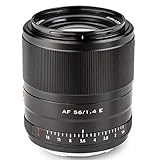
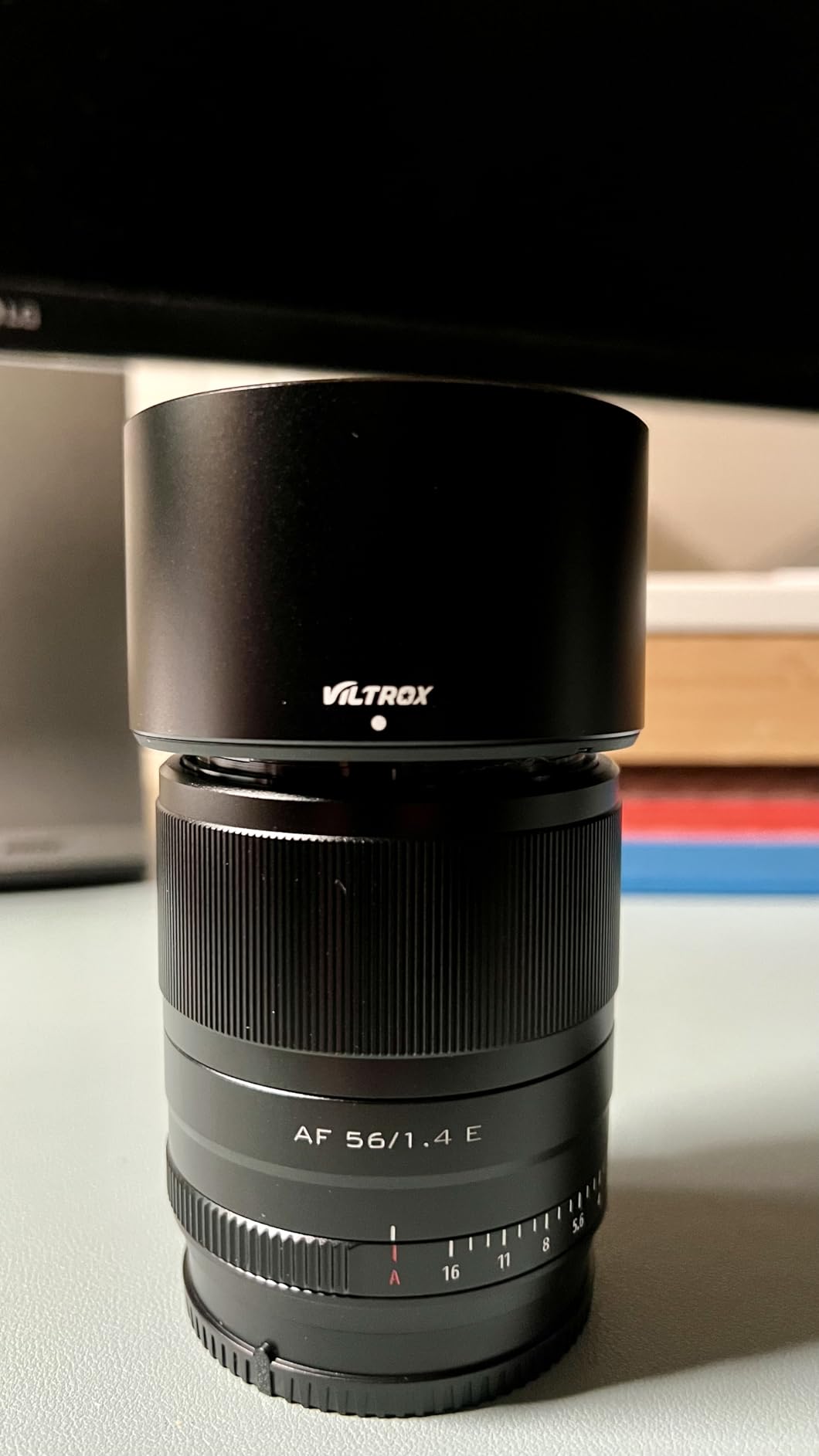
The Viltrox 56mm f/1.4 STM is the most affordable f/1.4 portrait lens for Sony APS-C cameras, and it delivers impressive results for the price. At around $239, it’s significantly cheaper than the Sigma 56mm while offering similar optical performance. I tested this lens alongside the Sigma and was surprised by how close the image quality is.
On an APS-C body, the 56mm focal length gives the same 84mm equivalent field of view as the Sigma, making it a true portrait lens. At f/1.4, the lens produces sharp images with creamy bokeh that flatters faces. The 9-blade aperture produces smooth, circular bokeh balls that rival lenses costing three times the price.
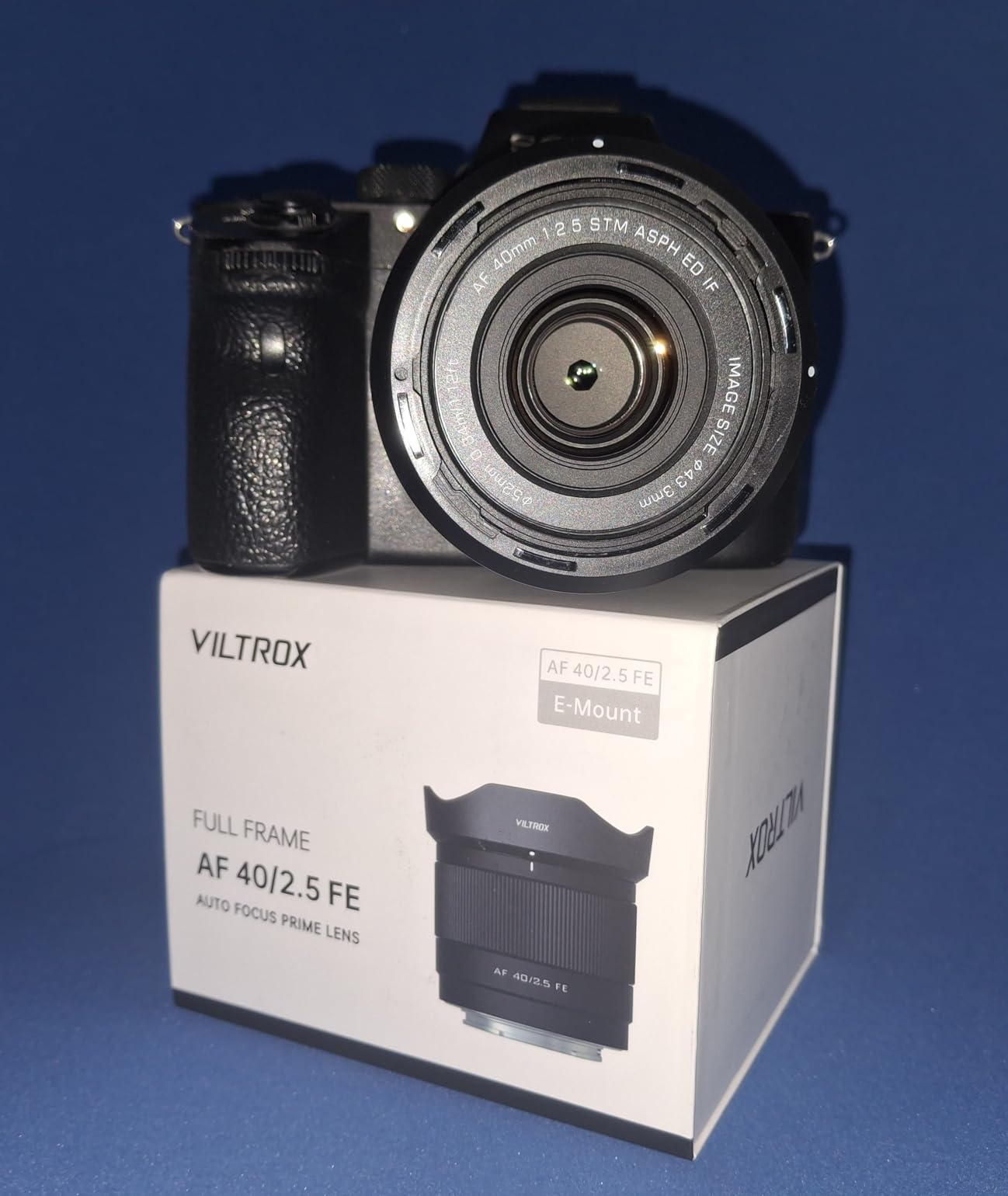
The build quality is a major selling point at this price. The all-metal construction feels premium in the hand, and the hard brass mount adds durability. Viltrox included a USB port for firmware updates, which is a feature rarely seen at this price point and shows the company’s commitment to long-term compatibility.
Autofocus is quiet and responsive thanks to the STM motor. On Sony APS-C bodies with Eye AF, the lens locks onto subjects reliably for both stills and video. It’s not quite as fast or silent as the Sigma 56mm, but it’s a meaningful upgrade over older third-party lenses with loud, hunting focus motors.
Who this lens is for
If you’re on a tight budget and shoot APS-C, this lens is the obvious choice for portraits and low-light work. It’s also a great backup lens for professionals who want a second body setup without breaking the bank. I recommended it to a photography student who was just starting out and couldn’t justify the Sigma 56mm’s higher price.
Limitations vs the Sigma 56mm
The Sigma has slightly better autofocus consistency, less vignetting, and a longer track record. For most shooters, the Sigma is worth the premium if you can afford it. For budget-conscious shooters, the Viltrox delivers about 85% of the Sigma’s performance at about 50% of the price. That’s a trade-off worth considering.
Buying Guide: Choosing the Right Sony E-Mount Lens for Low Light
Picking the best lens for your specific needs requires thinking about more than just maximum aperture. The focal length, sensor format, autofocus system, and build quality all matter for low-light work. Below is a breakdown of the key factors that should guide your decision.
Aperture and depth of field trade-offs
Wider apertures (smaller f-numbers like f/1.4 or f/1.8) let in more light, which is the whole point for low-light photography. An f/1.4 lens gathers twice as much light as an f/2.0 lens and four times as much as an f/2.8 lens. That extra light translates to faster shutter speeds, lower ISO settings, and less noise in your images.
However, wider apertures produce shallower depth of field, which can be a problem for group shots or scenes where you need everything in focus. If you primarily photograph single subjects or want maximum bokeh, go for f/1.4. If you shoot events with multiple subjects, f/1.8 or f/2.0 may be a better compromise.
Focal length selection by use case
The focal length you choose should match your primary subject. Wide-angle lenses (16mm-35mm) work best for landscapes, interiors, astrophotography, and environmental shots. Standard lenses (50mm) are versatile for everyday shooting, travel, and street photography. Short telephoto lenses (85mm) are ideal for portraits, headshots, and subject isolation.
For Sony APS-C shooters, remember that the focal length is multiplied by 1.5x. A 35mm lens on APS-C gives a 52.5mm equivalent, and a 56mm lens gives an 84mm equivalent. The Sigma 56mm and Viltrox 56mm are designed specifically for APS-C and give you that classic portrait focal length.
Full-frame vs APS-C lens compatibility
Full-frame FE lenses work on APS-C bodies in crop mode, but you’re using only part of the lens image circle, which can affect performance. APS-C-specific lenses (like the Sigma 56mm and Viltrox 56mm) are designed for the smaller sensor and are typically smaller, lighter, and less expensive than their full-frame equivalents.
If you plan to upgrade from APS-C to full-frame in the future, consider whether the lens you buy will still be useful. Sony FE lenses work on both formats (in crop mode on APS-C), but APS-C lenses won’t work properly on full-frame bodies. For users committed to APS-C, the dedicated lenses offer better value.
Autofocus performance in low light
Modern Sony cameras have excellent autofocus systems, but the lens motor matters too. XD linear motors (Sony GM) and stepping motors (Sigma, Viltrox) are quieter and more accurate than older linear SSM motors. For video work and silent shooting at weddings, a stepping motor is essential.
Eye AF performance varies between lenses. The Sony G Master primes and Sigma Art/Contemporary lenses have excellent Eye AF compatibility. Some older third-party lenses don’t communicate as well with Sony’s autofocus system, leading to slower or less accurate eye detection.
Image stabilization considerations
Most modern Sony cameras have in-body image stabilization (IBIS), which means the lens doesn’t strictly need its own stabilization. However, having both IBIS and OSS in the lens can provide better stabilization for video and very long shutter speeds. For still photography with IBIS bodies, OSS in the lens is a nice-to-have rather than essential.
If you shoot video handheld or use older bodies without IBIS, OSS in the lens becomes more important. The Sony 35mm GM and 24mm GM both include optical stabilization, while the 85mm GM does not.
Build quality and weather sealing
If you shoot outdoors or in challenging environments, weather sealing is worth paying for. The Sony G Master lenses and Sigma Art/Contemporary lenses have weather sealing that protects against light rain and dust. The Sony 50mm f/1.8 and Viltrox 56mm do not have weather sealing, so you’ll need to be careful in adverse conditions.
Budget vs premium tier
The best lens for you depends on how often you’ll use it and how critical the results are. Professional photographers who shoot every weekend will benefit from the optical quality and build of premium lenses like the Sony G Master series. Hobbyists who shoot occasionally will be perfectly happy with budget options like the Sony 50mm f/1.8 or Viltrox 56mm.
For most shooters, I recommend starting with a budget lens and upgrading once you know what focal length you use most. The Sony 50mm f/1.8 is an excellent first lens. Once you know whether you prefer wide-angle, standard, or telephoto focal lengths, you can invest in a premium option that matches your shooting style.
Third-party lens value proposition
Sigma and Viltrox have earned their place in the Sony E-mount ecosystem by offering excellent optics at lower prices than Sony’s first-party lenses. For most shooters, third-party lenses deliver 90-95% of the performance of premium first-party lenses at 50-70% of the price. Unless you have specific reasons to need Sony’s lenses (like the lightest possible setup or perfect autofocus integration), third-party options are often the smarter buy.
Frequently Asked Questions
What is the Holy Trinity of Sony lenses?
The Holy Trinity of Sony lenses refers to the three professional zoom lenses that cover the most important focal lengths: the Sony 16-35mm f/2.8 GM, the Sony 24-70mm f/2.8 GM II, and the Sony 70-200mm f/2.8 GM II. All three feature constant f/2.8 apertures, professional build quality, and weather sealing. Together they cover from ultra-wide to telephoto focal lengths, making them a one-lens solution for most professional assignments. The phrase comes from the classic trio of f/2.8 zooms that every working photographer used to need.
What is the best lens for a Sony E-mount camera?
The best lens for a Sony E-mount camera depends on your needs. For general-purpose shooting, the Sony FE 24-70mm f/2.8 GM II offers unmatched versatility. For low-light photography, the Sony FE 35mm f/1.4 GM delivers the best combination of aperture, autofocus, and image quality. For portraits, the Sony FE 85mm f/1.4 GM is the classic choice. Budget-conscious shooters should consider the Sony FE 50mm f/1.8 or Sigma 56mm f/1.4 DC DN for exceptional value.
What is the best lens for low light photography?
The best lens for low light photography is one with a wide maximum aperture (f/1.4 or f/1.8), fast and accurate autofocus, and good optical quality wide open. For Sony E-mount, the top choices include the Sony FE 35mm f/1.4 GM, Sony FE 85mm f/1.4 GM, and Sigma 35mm f/1.4 DG DN Art. For APS-C shooters, the Sigma 56mm f/1.4 DC DN Contemporary is highly recommended. Wide apertures gather more light, enabling faster shutter speeds and lower ISO settings in dim conditions.
What is the sharpest lens for Sony E-mount cameras?
The sharpest lens for Sony E-mount cameras depends on the focal length and aperture. The Sony G Master primes are widely regarded as the sharpest, especially the Sony FE 85mm f/1.4 GM and Sony FE 35mm f/1.4 GM. The Sigma Art lenses also offer exceptional sharpness, often matching or exceeding Sony’s own optics. The Sony FE 135mm f/1.8 GM is considered one of the sharpest telephoto primes available. For maximum sharpness, look for lenses with XA (Extreme Aspheric) elements and ED (Extra-low Dispersion) glass.
Is f/2.8 enough for low light Sony?
Yes, f/2.8 is generally enough for low light Sony shooting, especially with modern cameras that have excellent high-ISO performance. Bodies like the A7 IV, A7S III, and A7R V can shoot at ISO 6400 and higher with minimal noise. However, f/1.4 or f/1.8 lenses give you two to three stops more light, which means faster shutter speeds and lower ISO settings. For event photographers and wedding shooters who can’t use flash, faster apertures are a major advantage.
Final Verdict: Which Low-Light Lens Should You Buy?
After testing all of these lenses in real-world low-light conditions, my top pick for the best lenses for Sony E mount low light photography is the Sony FE 35mm f/1.4 GM. It combines the widest practical aperture, fastest autofocus, and most versatile focal length in a compact, weather-sealed package. It’s the lens I reach for most often when the light gets tough.
For portrait shooters, the Sony FE 85mm f/1.4 GM remains the gold standard, though the Sigma 56mm f/1.4 DC DN Contemporary is the smarter buy for APS-C users. For budget shooters, the Sony FE 50mm f/1.8 delivers more performance per dollar than any other lens on this list. And for ultra-wide low-light work, the Sigma 16mm f/1.4 DC DN Contemporary is unmatched in value.
Whatever lens you choose, the difference between struggling at high noise levels and getting clean, sharp images in dim conditions comes down to that maximum aperture. Pick the focal length that matches your subject, choose the aperture your budget allows, and you’ll have a lens that transforms your Sony E-mount camera into a true low-light machine. Happy shooting in 2026 and beyond.