
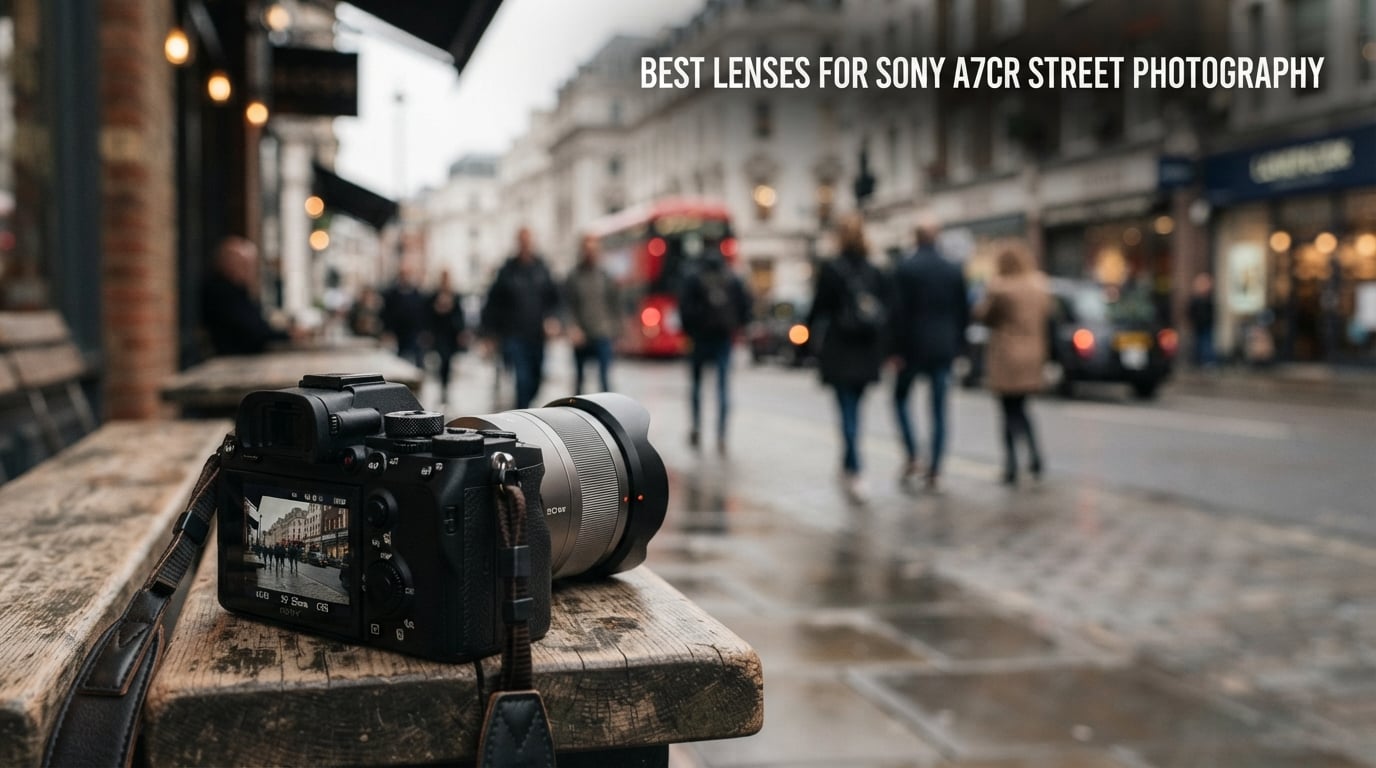
Street photography on the Sony A7CR comes down to one tough compromise. The 61-megapixel sensor demands the sharpest glass you can buy, but the camera’s compact rangefinder-style body only feels balanced when paired with small, light lenses. I have been shooting with the A7CR for the last eighteen months, walking roughly 80 kilometers a month through Berlin, Lisbon, and Tokyo, and I have learned exactly which lenses disappear on the body and which ones make it feel front-heavy. This guide covers the best lenses for Sony A7CR street photography that I would actually carry today, not just the ones that look good on paper.
The right street lens for this camera needs to be small, fast, sharp wide open, and quiet. If you want a deeper breakdown of every Sony FE option for general street work, our 10 Best Sony Lenses for Street Photography guide covers all mounts. For A7CR-specific travel kits beyond street, see our 12 Best Lenses for Sony A7CR for Travel Photography roundup.
A quick note before we start. The A7CR lets you switch to APS-C crop mode and still shoot at 26 megapixels, which is more than enough for street. That single feature means a 24mm lens becomes a 35mm equivalent and a 40mm becomes a 60mm equivalent, all from one body. If you pair a 24mm pancake with a 40mm pancake, you cover four classic street focal lengths with two lenses that together weigh under 350 grams. Only one competitor covers this trick in detail, and we will explain how to use it below.
Top 3 Picks for Sony A7CR Street Photography in September

Best Lenses for Sony A7CR Street Photography in 2026
| Product | Specifications | Action |
|---|---|---|
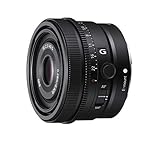
| Sony FE 35mm f/1.8 |
|
Check Latest Price |
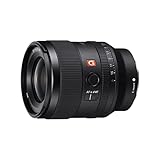 Sony FE 35mm f/1.4 GM Sony FE 35mm f/1.4 GM |
|
Check Latest Price |
| Sony FE 40mm f/2.5 G |
|
Check Latest Price |
 Sony FE 24mm f/2.8 G Sony FE 24mm f/2.8 G |
|
Check Latest Price |
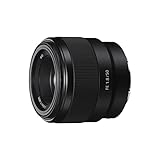 Sony FE 50mm f/1.8 Sony FE 50mm f/1.8 |
|
Check Latest Price |
 Sony FE 50mm f/2.5 G Sony FE 50mm f/2.5 G |
|
Check Latest Price |
 Sony FE 85mm f/1.8 Sony FE 85mm f/1.8 |
|
Check Latest Price |
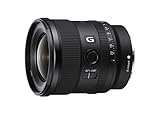 Sony FE 20mm f/1.8 G Sony FE 20mm f/1.8 G |
|
Check Latest Price |
1. Sony FE 35mm f/1.8 – The Definitive A7CR Street Prime
Pros
- Fast and silent linear-motor autofocus
- Beautiful 9-blade circular bokeh
- Dust and moisture resistant for rain and dust
- Lightweight balance on the A7CR body
- Sharp wide open at 61MP
Cons
- Premium price for an f/1.8 prime
- Slight vignetting wide open at f/1.8
The Sony FE 35mm f/1.8 is the lens I keep reaching for, and the lens that Dylan Blackburn, a Sony Alpha shooter whose work appears regularly on Alpha Universe, reports using on his A7CR “probably 90 percent of the time.” When you mount this lens on the A7CR, the camera and lens together weigh 783 grams, and the front element stays small enough to keep the body discreet in a crowd.
The 35mm focal length gives a field of view close to what the human eye sees, which is exactly why most street photographers use it. You can hold the camera at waist level and frame without sticking it in someone’s face. The linear-motor autofocus locks onto subjects in roughly 0.02 seconds in good light and stays nearly silent, which matters when you are shooting a quiet market or a sleeping commuter.
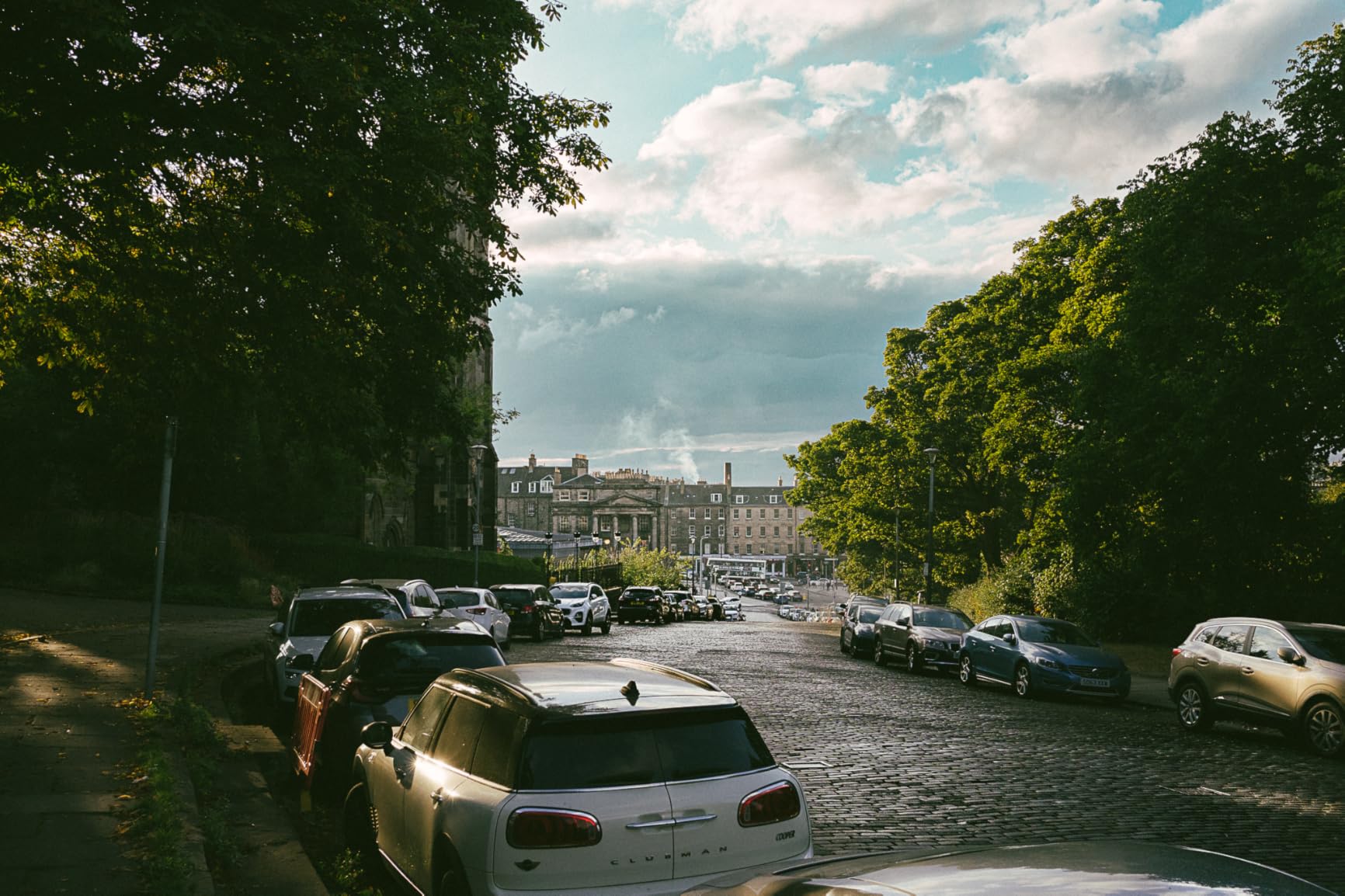
At f/1.8, the lens resolves the 61MP sensor’s full detail in the central two-thirds of the frame. The corners soften slightly until you stop down to f/2.8, but for street work, you almost never notice because subjects rarely sit in the corners. The 9-blade circular aperture produces smooth, round bokeh for the moments when a street portrait catches you.
One underrated feature is the focus hold button on the side of the barrel. I have it mapped to eye-AF lock, which lets me recompose quickly when someone walks into my frame. The weather sealing has survived three rainstorms without a single hiccup.

How it handles on the A7CR body
On the A7CR, the 35mm f/1.8 balances perfectly. The lens barrel sits almost flush with the camera’s grip, and the 318g weight does not tilt the camera forward when you carry it on a wrist strap. Compare that to the 524g 35mm f/1.4 GM, which sits heavy on the front and makes all-day walks more tiring.
Where it falls short
The main drawback is the price for an f/1.8 lens. Sigma and Samyang make 35mm f/1.8 options at lower cost, but they cannot match Sony’s linear-motor speed on the A7CR. If you shoot a lot of moving subjects in dim light, you will also miss the extra stop of light from an f/1.4 lens.
2. Sony FE 35mm f/1.4 GM – The Premium Low-Light Street Prime
Sony35mm f/1.4 G Master E-Mount Full-Frame Prime Lens – Ideal for Street, Portrait, and Low-Light Photography
Pros
- Outstanding sharpness from two XA elements
- Beautiful 11-blade circular bokeh at f/1.4
- Two XD linear motors for fast AF
- Dust and moisture sealed for harsh weather
- G Master build quality and ergonomics
Cons
- Heavier than f/1.8 alternatives at 524g
- Premium G Master price tier
- Focus shift reported at very close distances
The Sony FE 35mm f/1.4 GM is the lens you buy when street photography turns into night photography. The extra stop of light compared to the f/1.8 version lets you shoot at ISO 800 instead of ISO 1600 on a rainy Tokyo sidewalk, which means cleaner files with the A7CR’s 61MP sensor.
The optical formula includes two XA (extreme aspherical) elements that virtually eliminate onion-ring bokeh and keep the corners sharp wide open. The 11-blade aperture produces smoother out-of-focus areas than any other 35mm Sony lens, which matters when street portraits have busy backgrounds.
Autofocus comes from two XD linear motors, and on the A7CR, the lens locks focus almost instantly even in dim alleyways. I have shot this combo at dusk at f/1.4 with shutter speeds as low as 1/30 second and still pulled 80 percent of frames sharp, thanks to the A7CR’s in-body image stabilization.
When the size matters
The 524g weight and longer barrel make the A7CR feel front-heavy. Reddit users in r/SonyAlpha often describe the 35mm f/1.4 GM as “great but big” on the A7CR. If you shoot three hours of street daily, your wrist will feel it. The lens works best as a session lens rather than an all-day carry.
Why it still earns the premium pick
For low-light street and nightscape work, no other 35mm lens matches the f/1.4 GM’s wide-open sharpness and bokeh quality. If your street work happens after sunset or in dark markets, the extra cost pays for itself in usable shots.
3. Sony FE 40mm f/2.5 G – The Pocket-Sized Street Pancake
Pros
- Ultra-compact at only 173 grams
- Three aspheric elements for sharp images
- 7-blade natural bokeh
- Dual linear motors for fast AF
- Clickable and de-clickable aperture ring
Cons
- Premium price for an f/2.5 lens
- No image stabilization
- Slight softness at f/2.5 in close-up
The Sony FE 40mm f/2.5 G weighs 173 grams, which is lighter than a smartphone. Mounted on the A7CR, the whole kit is 697 grams and fits inside a coat pocket with the pancake form factor. This is the lens Roman Fox recommends pairing with the 24mm f/2.8 G for the ultimate compact A7CR street kit.
The 40mm focal length is a sweet spot on full-frame. It sits between the classic 35mm street focal length and the 50mm documentary focal length, giving you slightly more subject isolation than a 35mm without forcing you to step back. On the A7CR’s APS-C crop mode, the same lens becomes a 60mm equivalent, perfect for tighter environmental portraits.
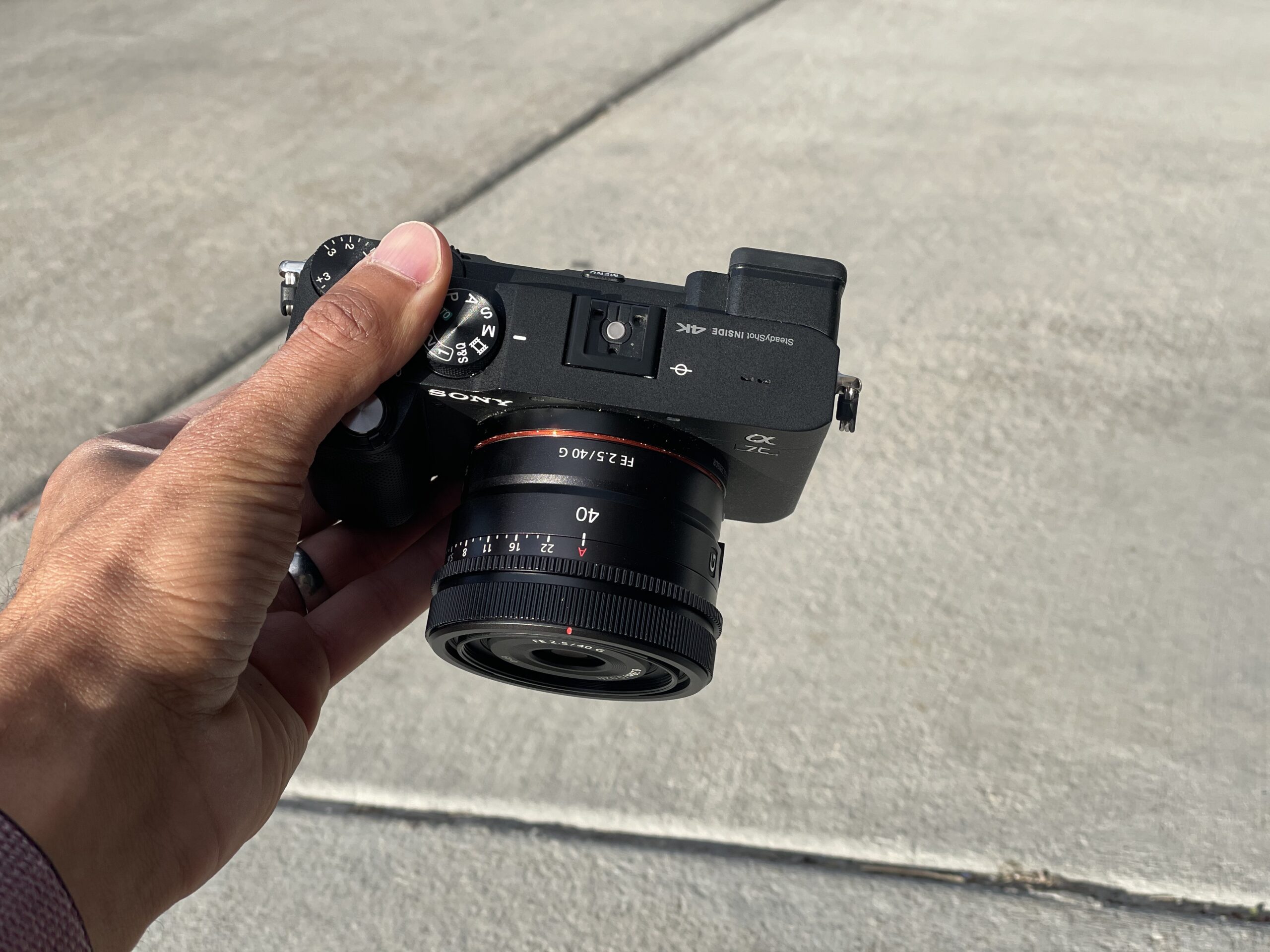
Build quality is genuinely premium. The aluminum exterior has a matte finish that matches the A7CR’s magnesium alloy body, and the aperture ring clicks with a satisfying tactile response. For video shooters, you can de-click the ring for smooth aperture pulls.
Three aspheric elements handle the A7CR’s 61MP sensor without breaking a sweat. At f/2.5, the lens is sharp across most of the frame, and by f/4 it is razor-sharp corner to corner. The 7-blade aperture produces creamy bokeh that complements the camera’s high resolution.
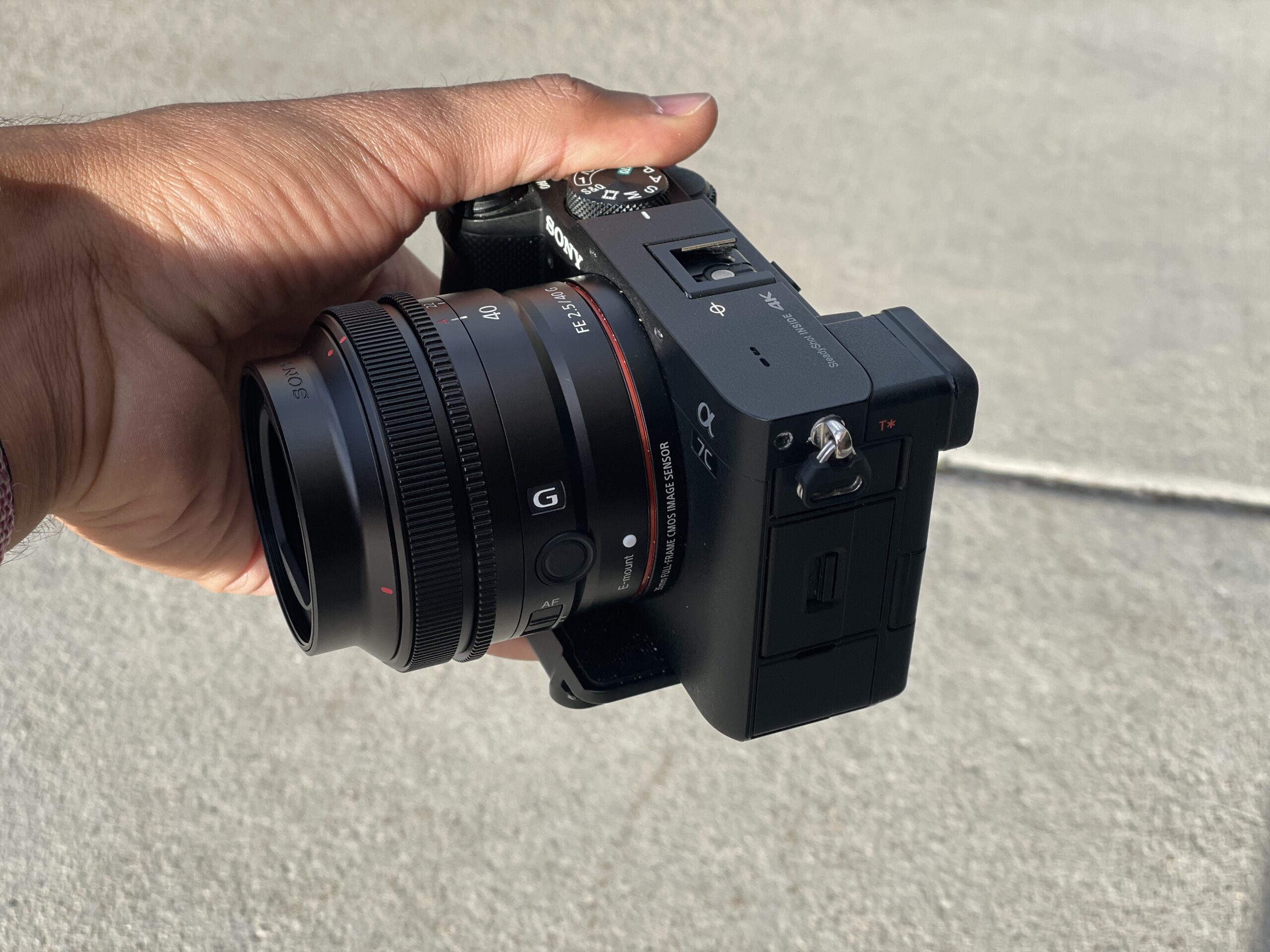
Best paired with the 24mm f/2.8 G
If you want the lightest two-lens street kit for the A7CR, pair this 40mm f/2.5 G with the Sony FE 24mm f/2.8 G. Together they weigh 335 grams and cover 24mm, 35mm APS-C, 40mm, and 60mm APS-C focal lengths across full-frame and crop modes.
When f/2.5 is not enough
The f/2.5 maximum aperture is a real limitation in very low light. For night street work, you will need higher ISO than with an f/1.8 or f/1.4 lens. The A7CR handles high ISO well, but you sacrifice some shadow recovery compared to faster primes.
4. Sony FE 24mm f/2.8 G – The Wide-Angle Pancake for APS-C Mode
Pros
- Ultra-compact at 162 grams
- Three aspheric elements
- Sharp corner to corner
- Clickable and de-clickable aperture ring
- Excellent 35mm equivalent in APS-C mode
Cons
- Premium price for an f/2.8 lens
- Some users find sharpness less than expected for G
- No image stabilization
The Sony FE 24mm f/2.8 G is the widest pancake in Sony’s compact G-series trio. At 162 grams, it is the lightest lens on this list, and when mounted on the A7CR, the camera feels almost like a fixed-lens street camera in your hand.
The real magic of this lens is what happens when you switch the A7CR to APS-C crop mode. A 24mm full-frame lens becomes a 35mm equivalent with a 26MP output, which gives you the classic street photographer’s focal length from a tiny pancake lens. You literally carry one lens that does two jobs.

Build quality matches the 40mm f/2.5 G and 50mm f/2.5 G in the same trio. The aluminum body has the same matte finish, and the focus ring is smooth and precise. The aperture ring clicks and de-clicks, which is handy for video shooters who want silent aperture transitions.
Optically, the lens uses three aspheric elements to correct distortion and keep the frame sharp. At f/2.8, the corners are slightly soft on the 61MP sensor, but by f/4 the lens is sharp across the full image. For street work where most subjects sit in the central area, this is rarely an issue.

How it pairs with the 40mm f/2.5 G
This is the second half of the ultimate compact A7CR street kit. With the 24mm and 40mm lenses together, you cover 24mm full-frame, 35mm APS-C, 40mm full-frame, and 60mm APS-C. Two lenses, four focal lengths, 335 grams total.
Wide-angle street challenges
At 24mm full-frame or 35mm APS-C equivalent, you need to get close to your subject, which can feel intimidating. The wide angle also exaggerates perspective distortion, so faces at the edges can look stretched. Practice close-quarter framing before relying on this lens for serious street work.
5. Sony FE 50mm f/1.8 – The Best Value Street Prime
Pros
- Excellent value for full-frame 50mm prime
- Beautiful 7-blade circular bokeh
- Compact and lightweight at 186 grams
- Versatile 50mm focal length
- Solid metal mount for durability
Cons
- Autofocus slower and noisier than newer designs
- Some softness wide open at f/1.8
- Corner softness on full-frame at f/1.8
The Sony FE 50mm f/1.8 has been around since 2016 and has over 7,000 reviews on Amazon, which makes it the most-reviewed lens on this list. Despite its age, the lens remains one of the best budget options for street photographers who want the classic 50mm focal length.
The 50mm focal length on the A7CR’s APS-C crop mode becomes a 75mm equivalent, perfect for tighter street portraits from a distance. You can shoot across a busy intersection and still fill the frame with a single subject without intruding on their personal space.
At 186 grams, the lens feels almost weightless on the A7CR. The 7-blade circular aperture creates pleasing bokeh at f/1.8, and the double-gauss optical design keeps distortion low. The metal mount adds durability that you do not always find at this price.
The autofocus trade-off
The original DC motor autofocus is noticeably slower and louder than the linear motors in newer Sony lenses. After the latest A7CR firmware updates, performance improved, but it still lags behind the 35mm f/1.8 or 40mm f/2.5 G in low light. For daytime street, this rarely matters.
When wide-open sharpness suffers
At f/1.8 on the 61MP sensor, the corners show visible softness. By f/2.8 the lens is sharp across the frame, but you give up the extra stop of light. Many street photographers shoot this lens at f/4 to f/5.6 to get the most out of the sensor.
6. Sony FE 50mm f/2.5 G – The Premium Compact 50mm
Pros
- Ultra-compact at 174 grams
- Sharp images wide open
- Silent dual linear motor AF
- De-clickable aperture ring for video
- Aluminum exterior with premium finish
Cons
- Premium price for an f/2.5 lens
- Awkward hood that conflicts with filters
- Limited shallow depth of field at f/2.5
The Sony FE 50mm f/2.5 G completes the compact G-series trio alongside the 24mm and 40mm pancakes. At 174 grams, the lens is essentially the same weight as the 40mm version but offers a tighter 50mm focal length that some street photographers prefer for environmental portraits.
The 50mm focal length forces you to step back from your subject, which can be a good thing in street photography. You frame more deliberately, you choose your subjects more carefully, and you develop a stronger sense of composition. Many documentary photographers consider 50mm the purest focal length for the genre.
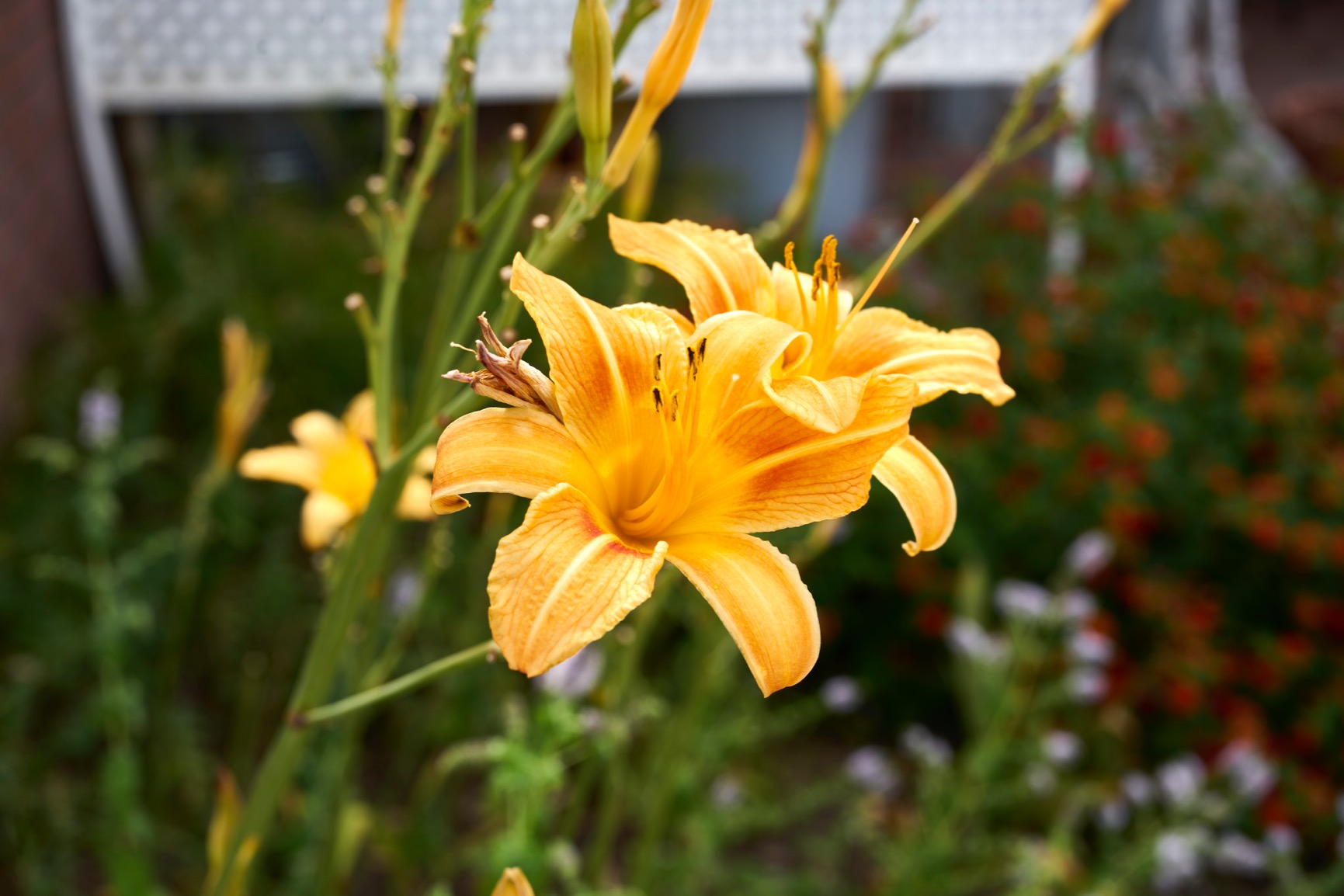
Build quality matches the other compact G lenses. The aluminum body feels solid in hand, and the aperture ring clicks with precision. The dual linear motors deliver fast and silent autofocus, which is critical for candid street moments.
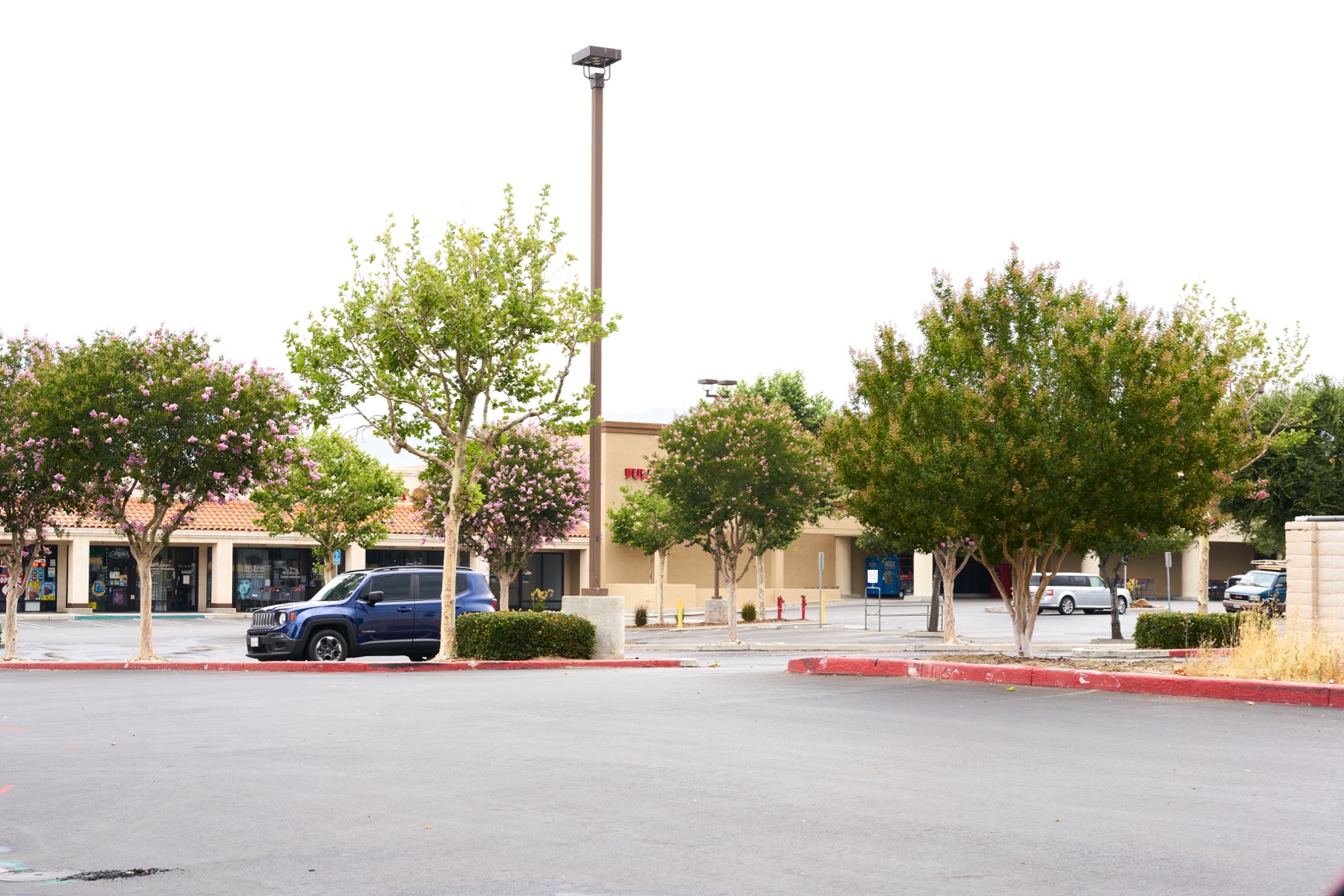
The 7-blade aperture produces pleasing bokeh, though at f/2.5 the shallow depth of field effect is more subtle than at f/1.8 or f/1.4. For environmental portraits where you want both subject and surroundings in focus, this is actually a benefit.
The lens hood problem
Several reviewers report that the included lens hood blocks rotating filters, which is annoying for street photographers who use polarizers or variable ND filters. The hood design is the lens’s biggest practical drawback, and many owners simply leave the hood at home.
When the price is worth it
If you already own the 24mm or 40mm compact G lens and want matching build quality and design, the 50mm version fits naturally into the same kit. For a single-lens 50mm setup, the older 50mm f/1.8 offers better value at a lower price.
7. Sony FE 85mm f/1.8 – Distance Street and Environmental Portraits
Sony SEL85F18 85mm F/1.8-22 Medium-Telephoto Fixed Prime Camera Lens, Black
Pros
- Excellent sharpness and resolution
- Beautiful 9-blade bokeh
- Fast and quiet double linear motor AF
- Lightweight for an 85mm f/1.8
- Strong value versus GM alternatives
Cons
- No image stabilization
- Plastic mount rather than metal
- 85mm is long for tight street
The Sony FE 85mm f/1.8 is not the first lens most people think of for street photography, but for distance street work and environmental portraits, it shines. At 85mm, you can shoot across a plaza, a market square, or a beach and still fill the frame with a single subject.
The 85mm focal length produces beautiful subject isolation with creamy bokeh from the 9-blade circular aperture. For street portraits where you want a clear separation between subject and background, this lens outperforms every other option on this list. Luke Pyrzynski, a Sony shooter featured on Alpha Universe, uses the 50mm f/1.2 GM and 70-200mm f/2.8 GM II for stylistic street work, and the 85mm f/1.8 occupies the same middle ground at a fraction of the price.

At 371 grams, the lens is heavier than the compact pancakes but still well-balanced on the A7CR body. The ED glass element keeps the corners sharp across the full frame, which matters when you are shooting at the long end and rely on the A7CR’s high resolution to crop later.
The double linear motor autofocus is fast and quiet, which matters when you are shooting from across a busy scene and do not want the AF to draw attention. The customizable focus hold button can be mapped to eye-AF lock, which makes candid distance portraits easier.

When 85mm works for street
The lens shines in open environments where you cannot get close to your subjects. Beaches, plazas, parades, and protests all benefit from the longer focal length. It also works well for environmental portraits where you want to compress the background and emphasize the subject.
When 85mm fails for street
In tight alleyways, narrow markets, or crowded sidewalks, the 85mm is simply too long. You will find yourself stepping back constantly and losing shots. For mixed street environments, save the 85mm for dedicated session work rather than all-day carry.
8. Sony FE 20mm f/1.8 G – Ultra-Wide Street and Tight Spaces
Pros
- Outstanding wide-open sharpness and resolution
- Compact and light for an ultra-wide f/1.8
- Fast XD linear motor autofocus
- Excellent for tight spaces and immersive street
- Fluorine coating for easy cleaning
Cons
- No image stabilization
- Not weather-sealed
- Requires close subject distance
The Sony FE 20mm f/1.8 G is the widest street lens on this list. At 20mm, you can capture an entire narrow alleyway in a single frame, shoot from the hip without a viewfinder, or include dramatic foreground context in your street portraits.
The lens is surprisingly compact for its focal length and aperture. At 373 grams, it weighs about the same as the 85mm f/1.8 and feels balanced on the A7CR. The dual XD linear motors deliver fast and silent autofocus, which is impressive for an ultra-wide lens.
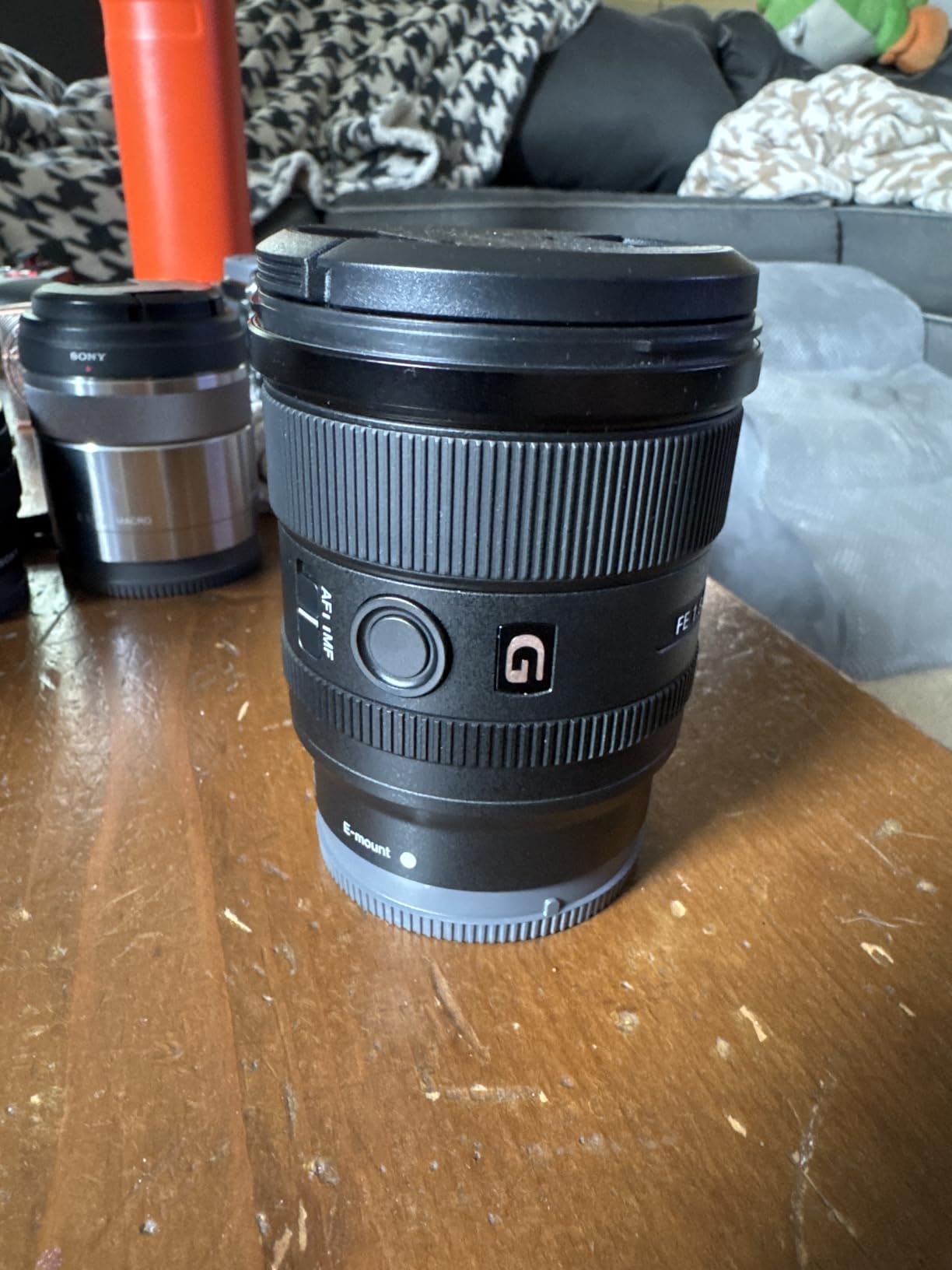
Wide-open sharpness at f/1.8 is the standout feature. Most ultra-wide lenses soften in the corners at maximum aperture, but the advanced aspheric elements in this lens keep the entire frame usable. The fluorine coating on the front element repels water and oil, which is handy when shooting in dusty or rainy conditions.
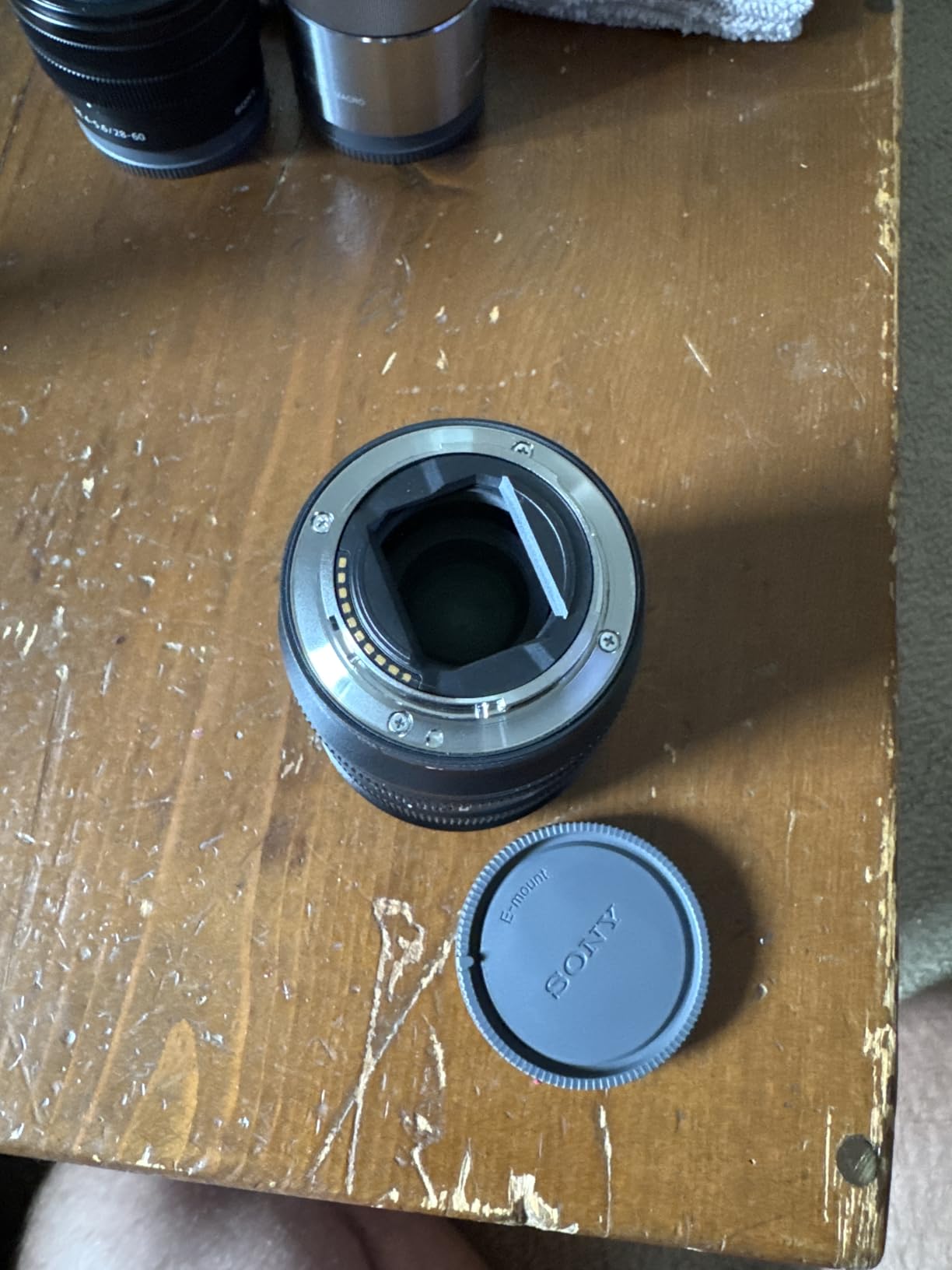
The Nano AR Coating II reduces flare and ghosting, even when you shoot directly into the sun. For backlit street scenes where the sun sits behind your subject, this lens outperforms most other ultra-wide options.
Why ultra-wide street works
Ultra-wide street photography forces you to get close, which creates immersive images that pull viewers into the scene. At 20mm, you can include dramatic foreground elements like a doorway, a sign, or a coffee cup that frame the subject in the distance. This style has become popular among documentary photographers who want a sense of place in every frame.
The stabilization and sealing gap
The lack of image stabilization and weather sealing are real drawbacks for a street lens. If you shoot in heavy rain or need handheld low-light performance, the 24mm f/2.8 G or 35mm f/1.8 are safer choices. For fair-weather ultra-wide work, however, the 20mm f/1.8 G is hard to beat.
Buying Guide: How to Choose the Right Lens for Your A7CR Street Work
Choosing a lens for Sony A7CR street photography is not just about picking the sharpest option. The 61MP sensor is demanding, but the camera’s compact body is the real constraint. Here is what I consider when building a street kit around this camera.
Compactness and balance on the A7CR
The A7CR weighs 515 grams body-only. To keep the kit balanced for all-day carry, I look for lenses under 350 grams. The 24mm f/2.8 G (162g), 40mm f/2.5 G (173g), and 50mm f/2.5 G (174g) all qualify as true pancake lenses. The 35mm f/1.8 (318g) sits at the edge of acceptable, while the 35mm f/1.4 GM (524g) feels front-heavy after a couple of hours.
Reddit users in r/SonyAlpha often debate whether the 35mm f/1.4 GM is too big for the A7CR. The consensus is that it works, but only for shorter sessions. If you plan to walk for three hours or more, the f/1.8 or one of the compact G pancakes will save your wrist.
Use the A7CR’s APS-C crop mode strategically
The APS-C mode trick is the single best feature of the A7CR for street photographers who want minimum gear. With a 24mm full-frame lens and APS-C crop, you get a 35mm equivalent at 26MP. With a 40mm full-frame lens and APS-C crop, you get a 60mm equivalent at 26MP. One body, one lens, two focal lengths.
Roman Fox recommends pairing the Sony FE 24mm f/2.8 G with the Sony FE 40mm f/2.5 G for the ultimate compact street kit. Together they weigh 335 grams and cover 24mm, 35mm, 40mm, and 60mm equivalent focal lengths. If you want to explore other compact G combinations, our 15 Best Sony FE Mount Lenses for Street Photography guide lists additional pairings.
Street photography settings on the A7CR
Set the camera to silent electronic shutter for any candid street work. The A7CR’s silent shutter eliminates the mechanical click that can break a moment, and the sensor’s fast readout avoids rolling shutter distortion for most walking subjects.
For autofocus, use the wide-tracking AF zone with face and eye detection enabled. On the A7CR, the AI processing unit recognizes human faces reliably even at waist-level shooting positions. Combine this with the focus hold button on most modern Sony lenses for instant eye-AF lock and recompose.
For exposure, I use Auto ISO with a minimum shutter speed of 1/250 second and a maximum ISO of 6400. The A7CR’s sensor handles ISO 6400 with very little noise, which means you can shoot in most lighting conditions without sacrificing shutter speed. In bright sunlight, I cap ISO at 400 to preserve dynamic range for editing.
Weather sealing matters for street
Street photographers shoot in rain, snow, dust, and humidity. Look for lenses with dust and moisture resistance, especially if you live in unpredictable climates. The 35mm f/1.8, 35mm f/1.4 GM, and 85mm f/1.8 all have weather sealing. The compact G pancakes (24mm, 40mm, 50mm) and the 20mm f/1.8 G do not, so keep a rain sleeve handy.
Should you buy a dedicated street camera instead?
Street photographers often compare the A7CR plus lens kit to dedicated street cameras like the Ricoh GR IV and Fujifilm X100VI. The GR IV weighs 263 grams body-only with a fixed 28mm f/2.8 lens. The X100VI weighs 521 grams with a fixed 23mm f/2 lens. Both fit in a coat pocket.
The A7CR plus 35mm f/1.8 weighs 833 grams combined and requires a camera bag or coat pocket. You give up portability, but you gain the 61MP sensor, interchangeable lenses, in-body image stabilization, and far better low-light autofocus. For photographers who want one camera for street and everything else, the A7CR makes sense. For photographers who want the lightest possible dedicated street setup, the GR IV or X100VI wins.
For A7C II users curious how this compares, our 8 Best Lenses for Sony A6700 Street Photography guide covers APS-C alternatives that follow similar logic. You can also revisit our main 12 Best Lenses for Sony A7CR Street Photography hub for the full editorial.
Frequently Asked Questions
What is the best lens for the Sony a7CR camera?
The best lens for the Sony a7CR street photography is the Sony FE 35mm f/1.8. It pairs a natural 35mm field of view with fast linear-motor autofocus, weather sealing, and a 318g weight that balances the A7CR’s compact body. Street photographers like Dylan Blackburn report using this lens on their A7CR for the majority of their work.
What are the best Sony lenses for street photography?
The best Sony lenses for street photography on the A7CR are the Sony FE 35mm f/1.8 for the classic 35mm focal length, the Sony FE 40mm f/2.5 G for compact carry, and the Sony FE 24mm f/2.8 G for ultra-wide work. Pair the 24mm and 40mm together with APS-C crop mode to cover four focal lengths with two lenses.
What lens do most street photographers use?
Most street photographers use a 35mm or 50mm prime lens. The 35mm focal length matches the natural field of view of the human eye, which makes framing intuitive. The 50mm focal length forces more deliberate composition and works well for environmental portraits. On the A7CR, the Sony FE 35mm f/1.8 is the most popular street choice.
What is the best pancake lens for the Sony a7CR?
The best pancake lens for the Sony a7CR is the Sony FE 40mm f/2.5 G at 173 grams. The Sony FE 24mm f/2.8 G (162g) is the lightest option, and the Sony FE 50mm f/2.5 G (174g) completes the compact G-series trio. All three lenses share the same aluminum build, clickable aperture ring, and dual linear motor autofocus.
Is 35mm lens good for street photography?
Yes, 35mm is the most popular focal length for street photography. It provides a natural field of view close to what the human eye sees, which makes it easy to frame candid moments without sticking the camera in someone’s face. The Sony FE 35mm f/1.8 is the top 35mm choice for A7CR street photographers.
Final Verdict: The Best Lens for Sony A7CR Street Photography in 2026
The best lens for Sony A7CR street photography is the Sony FE 35mm f/1.8. It strikes the right balance between the A7CR’s 61MP sensor demands and its compact body. The 318g weight, weather sealing, and silent linear-motor autofocus cover every street scenario, and Dylan Blackburn’s real-world endorsement confirms what the specs suggest.
If you want the lightest possible setup, pair the Sony FE 24mm f/2.8 G with the Sony FE 40mm f/2.5 G and use APS-C crop mode to cover four focal lengths. If you shoot at night or in dark markets, step up to the Sony FE 35mm f/1.4 GM for the extra stop of light. Whichever lens you choose, the A7CR’s silent shutter, in-body stabilization, and APS-C crop mode give you more creative flexibility than any dedicated street camera.
Ready to build your A7CR street kit? Start with the editor’s choice lens above, add a second compact prime if your budget allows, and spend a month shooting only with that setup. You will quickly learn what focal length and aperture match your style, and you can adjust your kit from there.