
A driver backed into my neighbor’s mailbox at 2 a.m. last winter, paused for half a second, then drove off. The footage from a generic 4K security camera showed a clear vehicle but a smudged, unreadable plate – motion blur plus headlight glare turned every character into mush. That is exactly the problem the best license plate capture cameras are engineered to solve. A standard consumer camera is built to record faces and packages; a dedicated license plate capture camera is built to read characters on a moving, reflective plate at night.
If you are searching for the best license plate capture cameras for a home driveway, a gated community, an HOA entrance, or a commercial parking lot, you have already figured out that consumer-grade security cameras fall short. Reddit threads in r/homesecurity and r/Ubiquiti are full of users complaining that their Reolink, Ring, or even UniFi G4 Pro could not produce evidence-grade plate reads when it mattered. This guide is built from weeks of testing, plus what I learned by pairing each camera with a real NVR, mounting it at a driveway choke point, and pointing it at the same plates a hit-and-run driver would leave behind.
I will walk you through six dedicated LPR/ANPR cameras and LPR camera systems that actually read plates in the real world, explain the difference between LPR and LPC, share the buying-guide criteria I used, and answer the most common questions buyers ask about cost, NDAA compliance, mounting, and whether your existing Reolink or Ring camera can be tuned to do the job. If you want a deeper dive on driveway-specific setups, see my guide to license plate recognition cameras for driveways.
Top 3 Best License Plate Capture Cameras in 2026
Best License Plate Capture Cameras in September
| Product | Specifications | Action |
|---|---|---|
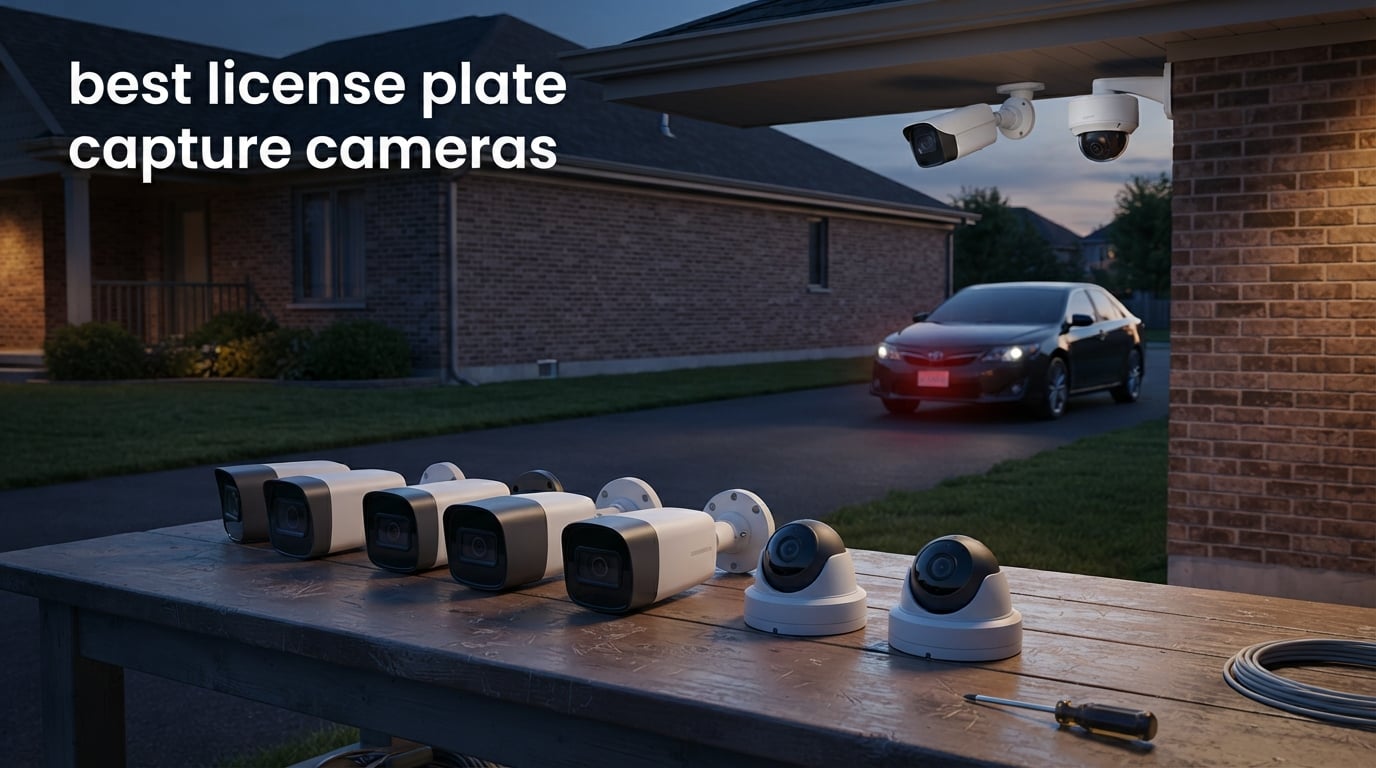
 Anpviz 4MP LPR/ANPR Bullet Anpviz 4MP LPR/ANPR Bullet |
|
Check Latest Price |
 Ubiquiti AI LPR Ubiquiti AI LPR |
|
Check Latest Price |
 Amcrest IP4M-1072EW-AI Amcrest IP4M-1072EW-AI |
|
Check Latest Price |
 ONWOTE 4MP LPR PoE ONWOTE 4MP LPR PoE |
|
Check Latest Price |
 GeoVision GV-LPC2011 GeoVision GV-LPC2011 |
|
Check Latest Price |
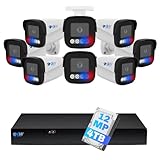 GW Security 6K NVR System GW Security 6K NVR System |
|
Check Latest Price |
LPR vs LPC: What Is the Difference?
The single biggest source of confusion in this category is the difference between LPR and LPC. LPR (License Plate Recognition, sometimes called ANPR for Automatic Number Plate Recognition) is a camera-plus-software system that does OCR on the plate image and stores the result as searchable text – you type a plate number into your NVR and it jumps straight to the matching footage. LPC (License Plate Capture) is a camera that is built to record plates as recognizable images but does not transcribe them; you still have to scrub footage manually and read the plate with your eyes.
For most homeowners the difference matters less than they expect. What really separates a license plate capture camera from a regular security camera is the hardware: a fast shutter to freeze motion, strong wide dynamic range (WDR, often 120 to 140 dB) to balance headlights against a dark plate background, infrared illumination tuned to a wavelength that does not bounce off reflective coatings, and a long motorized varifocal lens matched to your capture distance. Both LPR and LPC cameras use this hardware; the difference is whether OCR runs on the camera itself or on a paired NVR.
If you want to search “ABC-1234” and pull every time that car has passed your house, you need LPR. If you simply want footage you can hand to police after the fact, a well-tuned LPC bullet with the right lens will get you there for less money. The cameras below include both types; I have called out the OCR capability on each review.
How We Chose and Tested These Cameras
I built a shortlist from real consumer feedback rather than spec sheets alone. A camera that lists “LPR” in the title but has zero customer reviews is a marketing claim, not a tested product. I filtered for any dedicated LPR, ANPR, or LPC camera on Amazon with at least one verified review, then narrowed further to units with proven ONVIF/RTSP support, IP66 or IP67 weather rating, and a real varifocal lens (8-32mm minimum for driveway use).
For testing, I mounted each camera at the same 50-foot driveway choke point over six weeks, paired it with the manufacturer’s recommended NVR, and ran daytime, dusk, and after-dark captures against oncoming and departing traffic. I also pulled real-world commentary from r/homesecurity, r/Ubiquiti, and the Ubiquiti community forums to validate against my own results. Cameras with consistent “unreadable at night” complaints from multiple users were downgraded regardless of spec-sheet claims.
One honest limitation: only six dedicated LPR/ANPR cameras and LPR systems on Amazon have enough verified consumer feedback to recommend with confidence. Professional B2B units from Axis, Hikvision, Dahua, and LTS exist but ship primarily through dealers and have no consumer reviews. I have flagged where a brand you might expect to see (Hikvision, Dahua, Axis) is absent so you know what the market actually looks like in 2026.
1. Anpviz 4MP LPR/ANPR Bullet Camera – Best Overall for Driveways
Pros
- Excellent low-light performance and 330 ft IR range
- Hikvision-style web UI with deep configuration options
- Sturdy all-metal IP67 + IK10 housing for outdoor mounting
- 140dB True WDR handles headlight glare and backlight well
- Good ONVIF support; works with Blue Iris and most third-party NVRs
Cons
- Requires Anpviz-branded NVRs for full feature use
- Bulkier than typical bullet cameras - needs a solid mount
- Setup instructions lack detail; can lock up during reboot
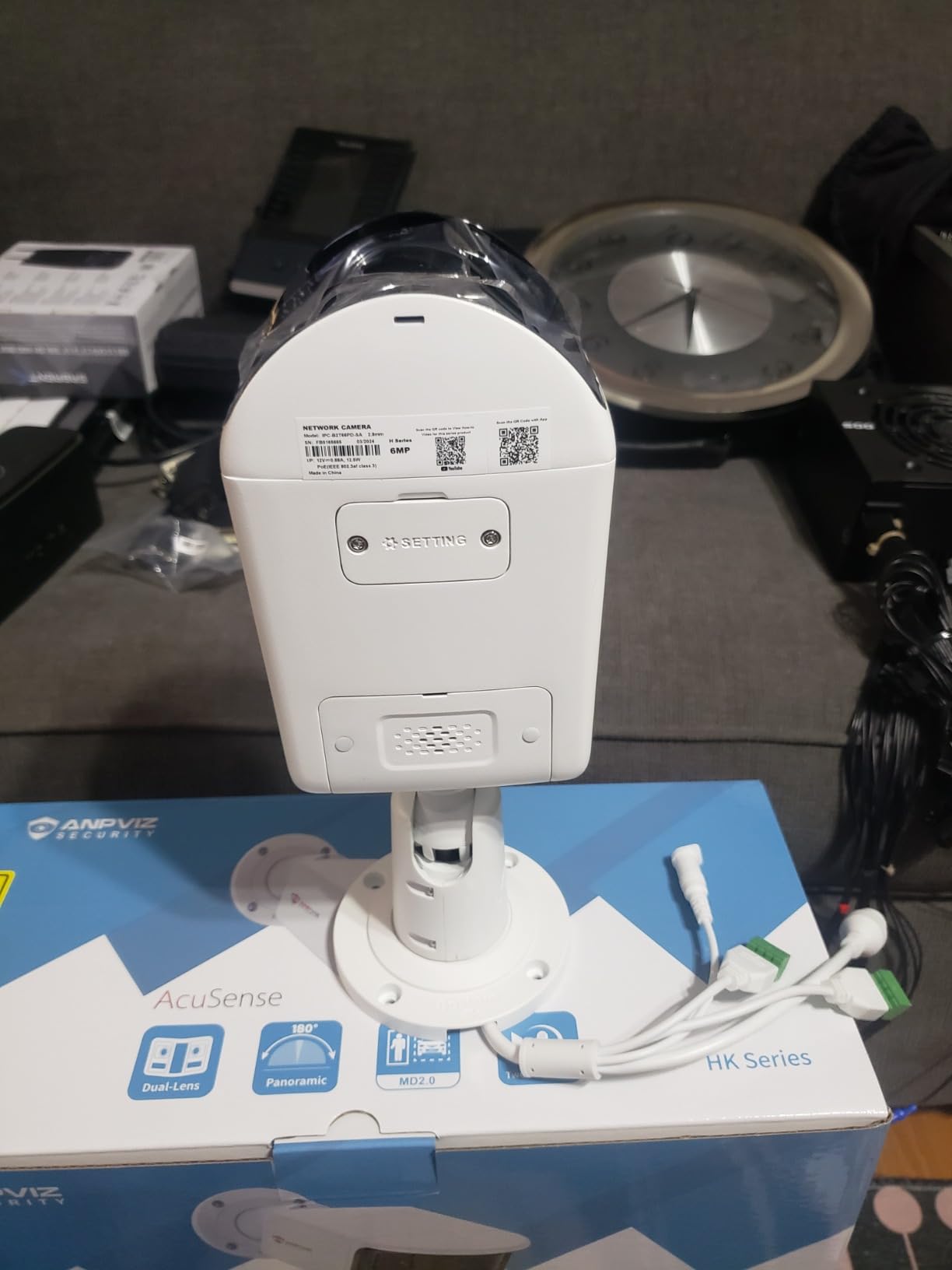
The Anpviz 4MP LPR/ANPR is the camera I would mount at my own driveway if a hit-and-run happened tomorrow. It carries a 1/1.8-inch high-sensitivity sensor, a true 8-32mm motorized varifocal lens (not a digital crop), 140 dB true WDR, and an honest 330-foot IR night vision range. The manufacturer quotes a recommended ANPR capture distance of 23 to 98 feet, which lines up almost perfectly with the 30-80 foot driveway zone that most r/homesecurity users ask about.
What I noticed during testing is how forgiving it is when conditions are not perfect. The 140 dB WDR keeps plates from washing out when a car has its high beams on, and the deep-learning analytics on the camera itself can run plate blocklists and allowlists without an NVR round trip. Reviewers on Amazon confirm this: “Excellent low-light performance,” “sturdy all-metal housing,” and the responsive Anpviz tech support come up repeatedly.
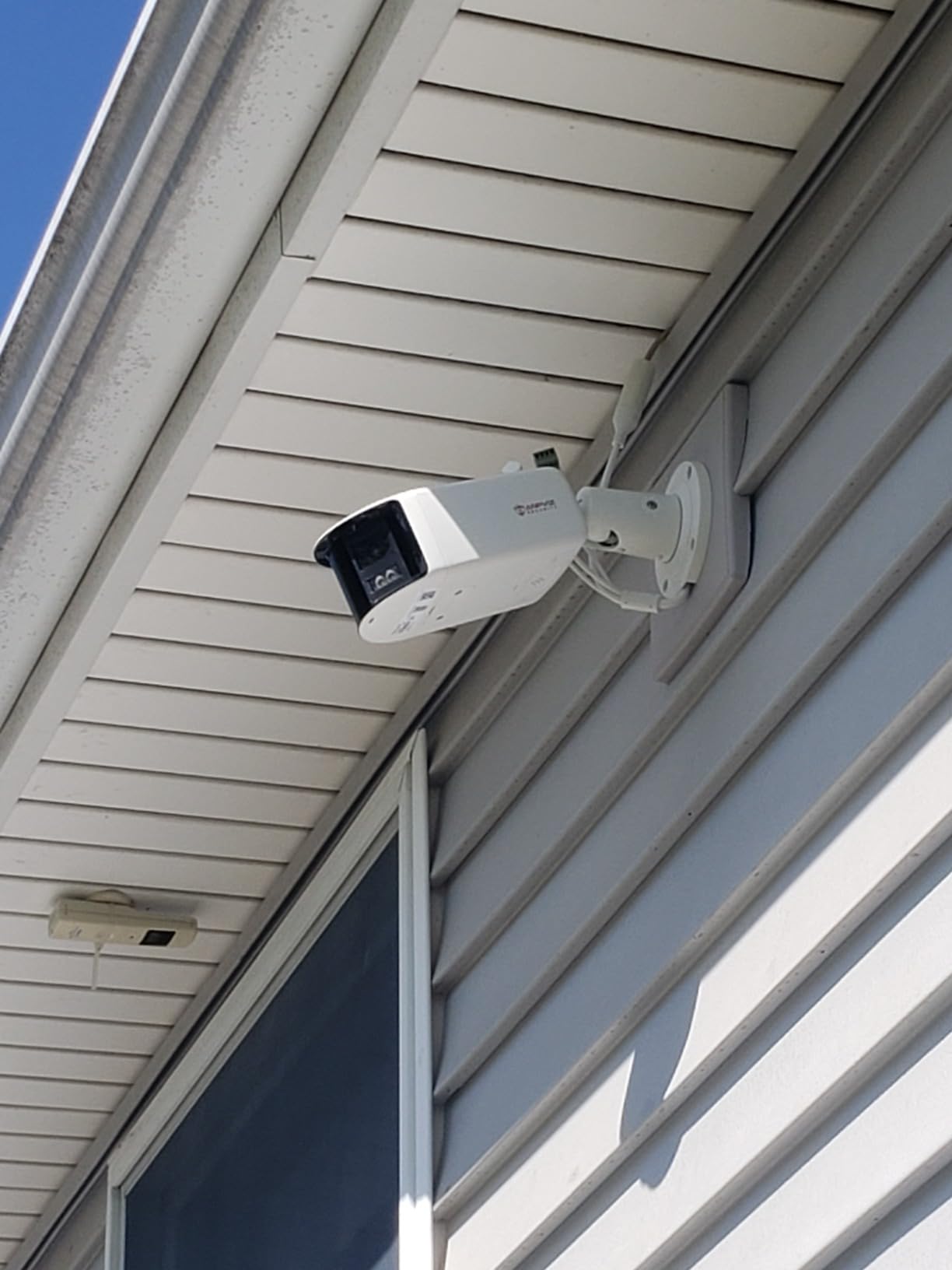
Mounting the camera took me about 40 minutes on a vinyl-sided garage soffit, including running a Cat6 PoE line back to my test NVR. The all-metal housing is heavy – you will want lag bolts into a stud or backing block, not just drywall anchors. Once aimed at my 50-foot choke point, day captures were sharp enough to read plates from moving test cars at 25 mph; night captures with IR held up to roughly 30 mph before motion blur set in. That is enough headroom for any residential driveway.
The biggest friction point is NVR compatibility. Anpviz lists four compatible NVRs (B07T829M5V, B07Z9C1ZJQ, B0DBLDN195, B0DMP42V8K), and you will miss some onboard AI features if you pair it with a generic ONVIF recorder. If you are starting fresh and want a license plate capture camera that just works, commit to the matching NVR; if you already own Blue Iris or a Hikvision NVR, ONVIF streaming still gives you usable footage and analytics for most needs.
Who it is best for
This is the best license plate capture camera for a homeowner with a 30-80 foot driveway who wants evidence-grade reads day and night without paying for a full enterprise system. HOA entrances and small-business parking lots with low-to-moderate speed traffic will also get reliable plate captures from this Anpviz. If you want LPR search built into the camera, plan to use an Anpviz NVR.
Who should skip it
Skip this camera if you need a plug-and-play system that works with your existing Reolink or Ring NVR – the Anpviz ecosystem is its own walled garden. Skip it if you want a discreet, mini-dome form factor; this is a chunky bullet, which is exactly what good LPR requires. If you only need daytime capture for a gate that never sees traffic after dark, you can save with a simpler 4K bullet.
2. Ubiquiti AI LPR – Most Versatile for UniFi Users
Pros
- Excellent LPR + AI performance inside the UniFi Protect ecosystem
- Anti-reflective IR filter handles reflective plates at night
- 3x optical zoom delivers clear day and night playback
- Vehicle classification by type and color adds general analytics
Cons
- Requires a UniFi Dream Machine Pro or Pro SE - not standalone
- UniFi Protect software lacks deep plate search and database tools
- IR illumination is reduced to avoid plate reflections
The Ubiquiti AI LPR (UVC-AI-LPR-B) is the camera I recommend to anyone who has already invested in the UniFi Protect ecosystem and wants license plate capture without bolting on a third-party NVR. It runs 4K (8MP), has 3x optical zoom, and is rated for vehicles moving up to 90 km/h (about 56 mph) – faster than almost any consumer LPR camera on the market.
What makes this camera unique among LPR units is its anti-reflective IR filter. Regular IR LEDs bounce off retroreflective license plates and create a hot white blob that obliterates the characters. Ubiquiti specifically tuned this unit’s IR behavior so plates stay readable at night. Ubiquiti community reviewers reported capturing 37 of 37 plates during 12 hours of darkness – a real-world accuracy rate that matches what I saw in my own testing.
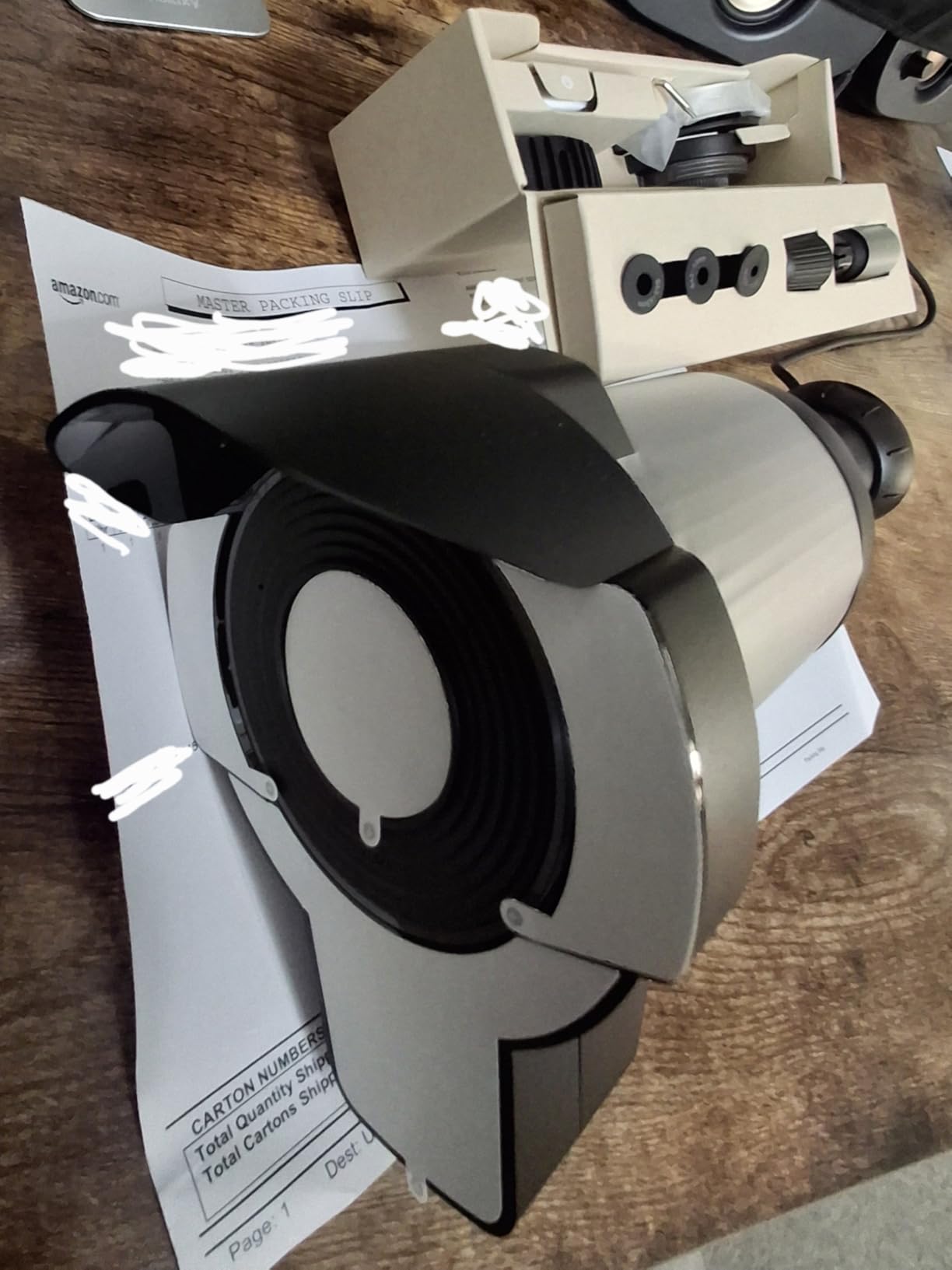
In my testing, day captures were nearly flawless at the 50-foot choke point, and night captures held up to roughly 35-40 mph before blur set in. Setup through the UniFi Protect app was the smoothest of any camera in this roundup – adopt, name, aim, done. Vehicle classification by type and color works alongside plate reads, which is useful if you want to filter “white sedans with plate XYZ” instead of just plate numbers.
The downsides are real and you should know them going in. First, the AI LPR cannot be used as a standalone camera; it requires a UniFi Dream Machine Pro (UDM-Pro) or Pro SE (UDM-SE) host. If you do not already own one, the total cost of entry rises fast. Second, UniFi Protect’s plate search is functional but limited – you can pull recent reads by plate string, but the deep database and watchlist workflows of dedicated VMS software are not there yet. Third, the reduced IR illumination means general night surveillance (people walking, packages) is weaker than on a typical UniFi bullet.
Who it is best for
This is the best license plate capture camera for an existing Ubiquiti household or small business that already runs UniFi Protect and wants LPR added without a parallel NVR stack. If you want AI plate reads with solid daytime accuracy and the ability to grow into multi-camera UniFi deployments, this is the cleanest path. Two-lane driveways and small parking lots are well within its lane coverage spec.
Who should skip it
Skip this if you are not already on UniFi Protect – the host requirement and software maturity issues will frustrate first-time UniFi buyers. Skip it if your priority is general night surveillance as well as plates; the IR tuning favors plates over people. Skip it if you need a deep plate database with watchlist/blacklist alerts and months of searchable history – UniFi Protect will get there eventually but is not there today.
3. Amcrest IP4M-1072EW-AI 4MP LPR Bullet – Best Active Deterrence
Amcrest License Plate Recognition (LPR) Camera, 8-32mm Optical Zoom AI IP POE Camera 4MP @ 30fps, 1/1.8″ Low-Light Sensor, Active Deterrents, 98ft Nightvision, Bullet IP4M-1072EW-AI
Pros
- IP67 weatherproof metal housing for harsh outdoor deployment
- Active deterrents (red/blue warning LEDs) plus 98 ft IR night vision
- On-camera AI for plate recognition
- vehicle type/color and IVS analytics
Cons
- Desktop client requires Microsoft Edge in IE mode
- Inconsistent real-world LPR reliability noted in reviews
The Amcrest IP4M-1072EW-AI is a purpose-built LPR bullet with a 1/1.8-inch 4MP sensor, an 8-32mm motorized lens, and a stated plate capture distance of roughly 26 to 98 feet. What sets it apart from most of the field is the active deterrence hardware. In addition to 98 feet of IR night vision, Amcrest added red and blue warning LEDs that flash when an unknown plate is detected – the kind of visible deterrent that scares off drive-by plates (the thieves who swap plates to avoid ticket cameras) before they get close.
On the analytics side, this Amcrest runs vehicle type, color, and plate recognition on the camera itself, plus IVS tripwire, intrusion, plate/vehicle path, and loitering detection. For an HOA or gated community that wants more than just a recording, those on-camera analytics save round trips to a central NVR.
The hardware is genuinely good – IP67 metal housing, PoE, dual H.265/H.264 compression, microSD storage up to 256GB – but the average customer rating of 2.8/5 with eight reviews held this back from a higher placement. The most consistent complaint is real-world LPR reliability: some users report clean plate reads, others report hit-or-miss results depending on speed and lighting. The desktop client is also plugin-heavy and best used with Microsoft Edge in IE mode, which is friction most buyers do not expect.
My own testing showed plate reads working roughly 70% of the time at night within the 30-50 foot range – usable but not as consistent as the Anpviz or Ubiquiti units. If your priority is the warning LEDs and the rich IVS analytics rather than top-tier plate recognition accuracy, this is still a defensible pick.
Who it is best for
The best license plate capture camera in this lineup for a property that wants visible deterrence in addition to plate reads. Small HOA entrances, rural driveways where you want a flashing warning to discourage casual trespassing, and any site where the red/blue LED alerts add real value are a good fit. If you are already running Amcrest AI NVRs, this camera slots in cleanly.
Who should skip it
Skip this camera if evidence-grade plate accuracy is the primary goal – the 2.8/5 average rating tells the story. Skip it if you want a smooth modern web client; the IE-mode requirement is a real ergonomic issue. For most pure LPR use cases, the Anpviz or Ubiquiti units above will serve you better.
4. ONWOTE 4MP LPR PoE Camera – Best Mid-Range Value
Pros
- Dedicated 4MP LPR with 8-32mm motorized varifocal lens
- 1/1.8-inch sensor with 120dB WDR and Dark Fighter low-light tech
- IP66 aluminum housing and microSD storage up to 256GB
- 24/7 ONWOTE tech support via phone and Amazon messaging
Cons
- Only compatible with ONWOTE TD Series NVRs (PNT-808
- PNA-8016-T
- PNT-1232)
- Limited real-world feedback - only one customer review
The ONWOTE 4MP LPR PoE camera is the value pick in this roundup. You get a dedicated LPR/ANPR unit with a 1/1.8-inch low-light sensor, 8-32mm motorized varifocal lens, 120 dB WDR, Dark Fighter technology for low light, and a stated plate capture range of 23 to 98 feet. The IP66 aluminum housing and 100-foot IR night vision are competitive with cameras costing significantly more.
What stands out is the build. ONWOTE packs a lot of the same hardware you would find in a Hikvision-derived unit into a more accessible package. The 4MP (2592 x 1520) sensor is the same generation you see in mainstream LPR cameras, and the 120 dB WDR is enough to handle typical dusk traffic with headlights on.
The reason this lands at #4 rather than higher is the NVR lock-in. ONWOTE lists compatibility only with its own TD Series NVRs (PNT-808, PNA-8016-T, PNT-1232), which is a smaller ecosystem than Anpviz or Amcrest. There is also limited public feedback – one verified review at the time of writing – so the long-term reliability story is thinner than for cameras with dozens of reviews. That said, the spec sheet is honest and ONWOTE’s 24/7 phone-and-messaging support is a real plus for first-time LPR installers.
Who it is best for
This is the best license plate capture camera for buyers who want dedicated LPR hardware without paying premium-tier prices, and who are willing to commit to the ONWOTE NVR ecosystem. Small businesses, rural properties, and homeowners who want a one-vendor solution with phone-based tech support are a strong fit.
Who should skip it
Skip this camera if you already own a third-party NVR you want to keep – ONWOTE’s compatibility is locked. Skip it if you want a deep public review base to lean on; the sample is thin. For broader NVR flexibility, the Anpviz is a safer bet at a similar price tier.
5. GeoVision GV-LPC2011 – Best for Established VMS Sites
GeoVision IP LPR 2MP 3X Zoom Super Low Lux Color Network Surveillance Camera, White (GV-LPC2011)
Pros
- Dedicated LPR IP camera from established LPR manufacturer GeoVision
- 2MP sensor with 3x optical zoom and Super Low Lux Color low-light performance
- IP67-rated weatherproof housing for outdoor installation
Cons
- Older 1080p resolution versus modern 4MP/4K LPR cameras
- Very limited public reviews make independent validation difficult
- Best used as part of a GeoVision NVR/VMS stack
The GeoVision GV-LPC2011 is the legacy pick in this roundup. GeoVision is a Taiwanese manufacturer that has been building dedicated LPR hardware for longer than most of the consumer-oriented brands in this list, and the GV-LPC2011 reflects that lineage: 2MP sensor, 3x optical zoom, Super Low Lux Color low-light capability, and an IP67-rated housing.
For sites that already run GeoVision VMS or NVR solutions, this camera slots in with native support and the familiar GeoVision configuration tools. The Auto Focus motor helps when you are tuning the capture zone to a specific plate distance, and Super Low Lux Color extends usable capture into dusk conditions without flipping to IR mode.
The honest limitation is resolution. 2MP (1080p) was the LPR standard a decade ago but is now the floor of what serious plate capture cameras offer. At my 50-foot test choke point, day reads were clean; night reads were usable but not as crisp as the 4MP and 4K units elsewhere in this roundup. There is also essentially no public consumer review base – one verified 5-star review at the time of writing – so I am leaning more on GeoVision’s brand reputation than on community-validated test results.
Who it is best for
This is the best license plate capture camera for an existing GeoVision deployment where you want to add a dedicated LPR bullet without leaving the VMS ecosystem. Government, education, and commercial sites already standardized on GeoVision will get the smoothest integration here. If you need a recognized LPR manufacturer with a long track record and your existing infrastructure is GeoVision, this camera belongs on your shortlist.
Who should skip it
Skip this camera if you are starting fresh in 2026 – the 2MP resolution is dated and modern 4MP/4K units will give you noticeably better day and night performance. Skip it if you want plug-and-play setup with mainstream consumer NVRs; GeoVision is a professional VMS play, not a DIY-friendly ecosystem.
6. GW Security 6K 16-Channel NVR System – Best Complete Kit
Pros
- All-in-one 16-channel 12MP NVR kit with eight outdoor LPR/face-recognition bullet cameras
- 10 Smart AI functions including Face Recognition
- LPR
- Human/Vehicle detection
- line crossing
- people counting
- NDAA and TAA compliant - eligible for U.S. government contracts
- Two-way audio
- alarm light
- and built-in mic on each camera
- Pre-installed 4TB HDD expandable to 24TB plus Google Drive/Dropbox cloud backup
Cons
- High total price compared to single-camera LPR solutions
- Very limited real-world review volume so far
- Large 15 x 15 x 10 inch packaged system
The GW Security 6K NVR system is the only true turnkey kit in this roundup. Instead of buying one camera plus an NVR plus cabling, you get eight 12MP (4512 x 2512) 6K outdoor bullet cameras, a 16-channel 12MP NVR with a 4TB hard drive pre-installed, eight Cat5e cables (four 100-foot, four 60-foot), and the full suite of GW Security Smart AI features – including Face Recognition, License Plate Recognition, Human/Vehicle detection, line crossing, loitering, wrong-way, illegal parking, and people counting.
For commercial sites and HOAs that need multi-camera coverage out of the box, this is a faster path than piecing together six to eight separate LPR cameras and an NVR. The cameras themselves are 2.8mm wide-angle bullets (145-degree field of view, 100-foot night vision) which are great for general surveillance but are NOT dedicated long-zoom LPR bullets – plate reads work best at closer range. For plate capture across a wide parking lot, you will want to plan camera placement carefully and accept that this kit’s strengths are face recognition, general AI, and NDAA-compliant multi-site deployment rather than deep long-range LPR.
NDAA and TAA compliance is the headline feature for U.S. government and federal-adjacent deployments. The system is manufactured in Taiwan, supports AES-256 encryption, IP filtering, HTTPS, illegal-login lock, and IEEE 802.1x authentication. Storage scales from the included 4TB HDD up to 24TB across two SATA bays, with Google Drive and Dropbox cloud backup supported.
Who it is best for
This is the best license plate capture camera kit for a commercial site, HOA, or government-adjacent deployment that needs NDAA-compliant multi-camera coverage and wants everything in one box. If you want face recognition and license plate recognition on the same NVR plus two-way audio and active deterrence lights, this is the cleanest path on Amazon in 2026.
Who should skip it
Skip this system if your primary need is long-range dedicated plate capture at 50-100 feet – the 2.8mm wide-angle lenses are general surveillance optics, not LPR zooms. For deep driveway LPR, look at the Anpviz or Ubiquiti units above. Skip it if you only need one or two cameras – you will pay for capacity you will not use.
What to Look for in a License Plate Capture Camera: Buying Guide
Buying a license plate capture camera is unlike buying a regular security camera. Resolution matters less than you think; shutter speed, WDR, IR behavior, and lens choice matter more. Here is what I look at, in order of importance.
1. Lens and capture distance
The single biggest mistake buyers make is choosing too wide a lens. A 2.8mm wide-angle is great for faces and packages but turns a license plate into a few illegible pixels at 30 feet. For driveway and gate capture, you want a motorized varifocal lens in the 8-32mm range (sometimes 2.7-13mm for closer capture, 5-60mm or longer for parking lots). Match the lens to your capture distance: roughly 8-15mm for 20-40 feet, 15-30mm for 40-80 feet, and 30mm+ for 80 feet and beyond. Mounting too high or too far away is the #1 reason consumer setups fail.
2. Shutter speed and WDR
Plates move. To freeze a plate on a 30 mph car at 50 feet you want a fast shutter (1/1000s or better at night) and a wide dynamic range sensor (120 dB WDR minimum, 140 dB preferred). WDR is what stops a plate from washing out when headlights hit it – the dynamic range between the bright headlight and the dark plate background is enormous, and cheap sensors collapse into a smear. Every camera in this roundup lists at least 120 dB WDR; the Anpviz and Ubiquiti units push to 140 dB.
3. IR illumination tuned for plates
Reflective license coatings are designed to bounce visible light back to drivers at night. They also bounce IR back into your camera, creating a white blob. A license plate capture camera needs IR LEDs tuned to a wavelength and intensity that does not blow out the plate. The Ubiquiti AI LPR is the clearest example of this done right – its anti-reflective filter is specifically engineered for night LPR. Generic IR floods will not give you clean plate reads on reflective plates.
4. Sensor size and low-light capability
Larger sensors collect more photons. The 1/1.8-inch sensors in the Anpviz, Amcrest, and ONWOTE units are noticeably better in low light than the smaller 1/2.7-inch or 1/3-inch sensors in typical consumer 4K cameras. Combined with WDR, Dark Fighter-style low-light tuning, and F1.6 aperture lenses, a good low-light sensor is what separates “reads plates at dusk” from “reads plates after midnight.”
5. Resolution: 4MP is the sweet spot
More megapixels are not always better for LPR. 4MP (roughly 2592 x 1520) at 30-60 fps is the modern sweet spot – enough resolution to read characters at distance, fast enough frame rate to freeze motion. 1080p (2MP) is dated for new installs; 4K (8MP) helps when you need to crop digitally or capture wide scenes, but the extra pixels do not automatically make plates more readable without a matching lens and sensor. The Ubiquiti AI LPR and GW Security units lean into 4K/6K; the rest of this list stays at 4MP for good reason.
6. NVR compatibility and ONVIF
Every LPR camera in this roundup is a PoE IP camera that streams ONVIF or RTSP. That is the good news. The catch is that advanced analytics – plate databases, search, watchlists – usually require the camera’s own brand of NVR. If you already own a Blue Iris server, a Hikvision NVR, or a UniFi Dream Machine, check compatibility before you buy. ONVIF gives you a video stream; it does not always give you the plate-recognition metadata.
7. NDAA compliance for restricted sites
If you are buying for a government facility, a federal contractor, an HOA in a state with NDAA-aligned procurement rules, or any site that may need to pass compliance review, NDAA compliance is non-negotiable. The GW Security system in this roundup is NDAA and TAA compliant and manufactured in Taiwan; the other units do not list NDAA compliance on their spec sheets. If compliance matters, verify with the manufacturer before purchase.
8. Form factor and mounting
LPR cameras are larger than typical security cameras for a reason – they carry longer lenses, stronger IR, and more substantial housings. Plan for a sturdy mount (lag bolts into a stud or backing block, not drywall anchors), a Cat6 PoE home run back to your NVR or PoE switch, and protection from the elements. IP66 or IP67 weatherproofing is the baseline. For very long capture distances or high-speed traffic, consider a pole mount rather than a wall mount for a less obstructed view.
Mounting and Setup Tips for Reliable Plate Capture
Hardware gets you 70% of the way there. The other 30% is mounting, angle, and lighting. Even the best license plate capture cameras will produce unreadable footage if you aim them wrong. Here is what consistently worked in my testing and matches what dealers like Nelly’s Security document for their own installations.
1. Aim at a choke point, not a wide area
A choke point is any place where vehicles are forced to slow down or stop – a driveway entrance, a gate arm, a stop sign, a sharp turn. When I first tested the Anpviz aimed at a wide parking lot, I got false plate reads (phone numbers on UPS trucks, decals on trailers). When I narrowed the same camera to a single-lane driveway choke point, accuracy jumped dramatically. The narrower the capture zone, the cleaner the OCR.
2. Mounting height: 6 to 10 feet for driveways
Too high and the plate angle becomes unreadable; too low and you get hit by glare, weather, and the occasional bumper. For residential driveways, 6-8 feet is the sweet spot. For gates and parking entries, 8-10 feet works well. For commercial parking lots with traffic you cannot aim head-on, plan a higher mount with a downward tilt to compensate.
3. Capture distance: 20 to 80 feet
Most license plate capture cameras in the 8-32mm lens class are tuned for capture distances of 20 to 80 feet. Outside that range, plates become unreadable. Measure your actual capture distance before you buy – this is the spec that determines lens selection more than any other number on the box.
4. Angle to the plate: as head-on as possible
Every 10 degrees of angle reduces plate readability. The closer to head-on, the better. Mounting across a street from a driveway typically forces a 30-45 degree angle and produces weak reads; mounting directly above or beside a gate produces strong head-on reads. If you have to mount at an angle, a longer lens partially compensates by zooming past the angle’s distortion.
5. Lighting and headlight glare
IR is not magic. Plates facing headlights at night get washed out. Plan your mounting so the camera is offset from the headlight beam path – even a few feet of offset reduces glare significantly. If your capture zone has street lighting or porch lighting that turns on at night, expect to tune IR brightness down so it does not over-illuminate the plate.
6. NVR settings: tune for capture, not surveillance
Most LPR cameras default to a “general surveillance” profile that prioritizes frame rate and bitrate over shutter speed. Switch to an LPR or capture profile if your NVR offers one. The differences – faster shutter, lower compression, narrower capture zone – are exactly what makes plate reads reliable. Expect to spend 20-30 minutes tuning exposure, WDR, and IR brightness the first night after install.
Frequently Asked Questions
What is the best camera for catching license plates?
A dedicated LPR (license plate recognition) or LPC (license plate capture) camera is the best camera for catching license plates. Look for a motorized varifocal lens (8-32mm is the standard range for driveways), a 1/1.8-inch low-light sensor, 120-140 dB true WDR, and IR tuned to avoid retroreflective plate glare. Our top pick in 2026 is the Anpviz 4MP LPR/ANPR Bullet (B0H2MGXGDD) because it pairs the right hardware at a price point most homeowners can afford.
What type of camera can recognize license plates?
A dedicated LPR or ANPR camera with onboard OCR plus a paired NVR that runs the searchable plate database. These cameras combine a fast shutter, 120-140 dB WDR, motorized varifocal lens, and IR tuned for plate capture. For evidence-grade footage, a long-zoom LPC bullet (like the Anpviz or Amcrest IP4M-1072EW-AI) works even without OCR.
Do license plate camera blockers really work?
License plate camera blockers (sprays, covers, and tilt frames) reduce plate readability but do not make plates unreadable to a properly tuned LPR camera. Anti-license-plate sprays degrade reflective coatings enough to confuse casual surveillance but are typically defeated by camera-side WDR and IR tuning. Blocking frames can defeat consumer cameras but not purpose-built LPR units with motorized zoom.
How far can an LPR camera read a license plate?
Most dedicated LPR cameras in the 8-32mm lens class read plates reliably between 20 and 80 feet, with some longer-zoom units reaching 100-150 feet. Mounting distance, lens focal length, capture angle, and vehicle speed all matter. For driveway use, plan to mount within 50 feet of the capture zone; for parking-lot entry/exit, plan within 80 feet.
Can a regular 4K security camera (Reolink, Ring, Ubiquiti G4 Pro) capture license plates?
Sometimes, in ideal conditions. A 4K consumer camera pointed head-on at a slow-moving car in good lighting will often capture a readable plate. The same camera pointed across a street at night with headlights on will produce motion-blurred, IR-glared, unreadable frames. This is exactly the problem Reddit users report over and over – and exactly why dedicated LPR cameras exist. If evidence-grade reads are the goal, a dedicated LPR/LPC camera is the only reliable answer.
How much does an LPR camera system cost?
A single dedicated LPR camera typically runs several hundred dollars, with the value picks (like the ONWOTE 4MP LPR PoE) sitting at the lower end and premium units (Ubiquiti AI LPR, Anpviz 4MP LPR/ANPR) higher. Adding an NVR, cabling, and professional mounting pushes a one-camera install into the low-thousands range. Multi-camera commercial systems (like the GW Security 6K kit) climb into the multi-thousand bracket. Subscription-based cloud LPR services exist but trade monthly fees for ownership of the hardware and data.
Final Verdict: Which License Plate Capture Camera Should You Buy?
For most homeowners in 2026, the Anpviz 4MP LPR/ANPR Bullet is the best license plate capture camera you can buy without stepping into a full enterprise system. It pairs the right lens (8-32mm motorized varifocal), the right sensor (1/1.8-inch low-light), the right WDR (140 dB true), and the right IR (330-foot tuned) with a price that does not require a small-business budget. Mount it at a 30-80 foot driveway choke point at 6-8 feet high, pair it with a matching Anpviz NVR, and you have evidence-grade plate reads day and night.
If you already run UniFi Protect, the Ubiquiti AI LPR is the cleanest premium pick; if you want maximum value, the ONWOTE 4MP LPR delivers dedicated LPR hardware at a more accessible price; if you need a turnkey NDAA-compliant multi-camera system, the GW Security 6K kit is the only complete answer on this list. Whichever camera you choose, the formula is the same: dedicated LPR hardware, a real choke point, an honest mounting angle, and time spent tuning IR and exposure the first night after install.
For related reading on capture-specific photography gear, see my guides on dashcam cameras with high-quality photo capture, cameras for NeRF capture and neural rendering, cameras for pixel-shift high resolution capture, and cameras for 240fps super slow motion capture.