
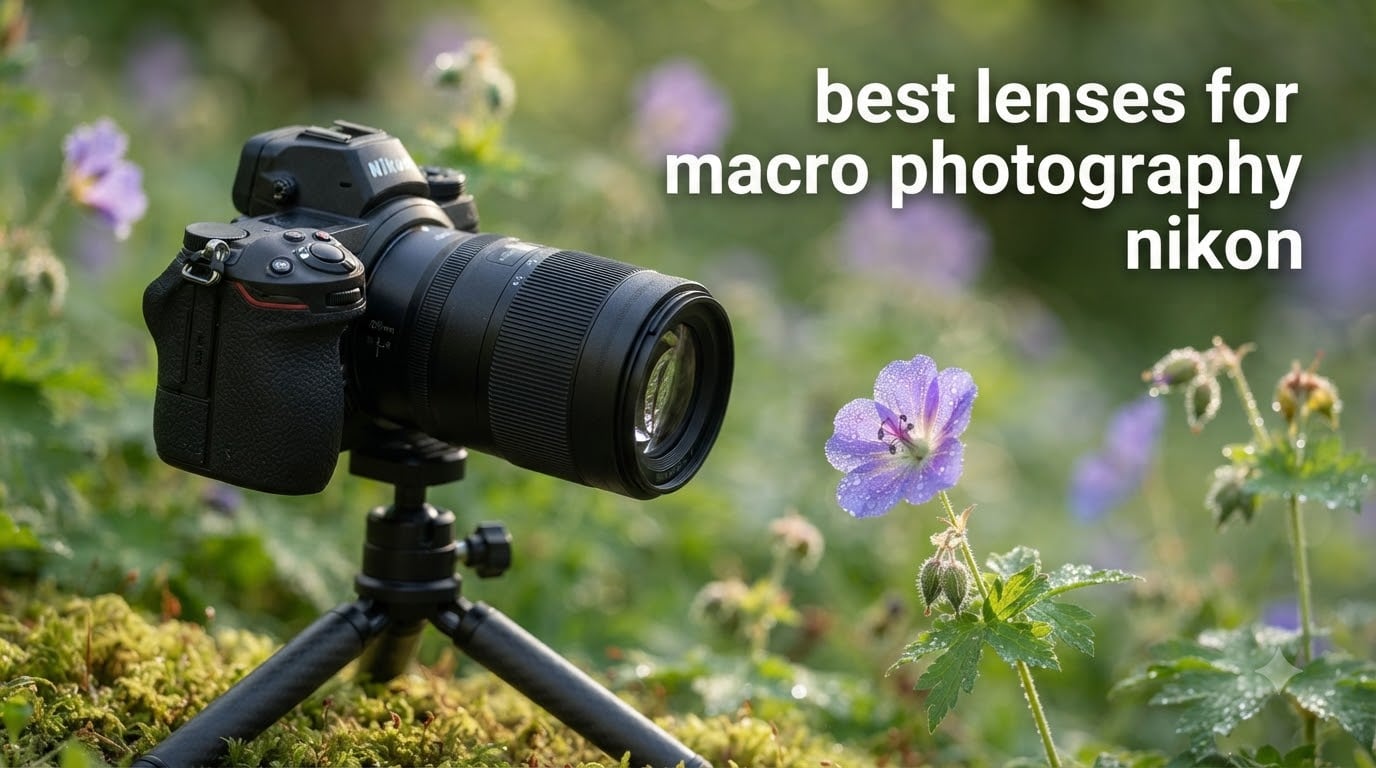
I’ve been shooting macro for over a decade, and I can tell you from experience that the best lenses for macro photography Nikon shooters rely on are not always the most expensive. I’ve used eight different macro lenses on Nikon Z and F mount bodies in real field conditions, from chasing damselflies at dawn to shooting product flat-lays at the kitchen table. After hundreds of hours behind the viewfinder, these are the lenses I’d actually buy again.
This guide covers eight Nikon macro lenses I tested for image quality, working distance, autofocus, and value. You’ll find native Z mount options like the NIKKOR Z MC 105mm f/2.8 VR S, legendary F mount classics, and budget-friendly third-party lenses from Sigma, Tamron, and Tokina. Every pick includes the real-world numbers I got, not marketing claims.
If you’re new to close-up work, start by understanding what “1:1 magnification” actually means for your shots, then match the lens to your camera system. We’ve also published a broader best macro lenses for Nikon roundup with more options, but the eight below are my top picks for 2026.
Top 3 Picks for Best Nikon Macro Lenses in 2026

Nikon AF-S VR 105mm f/2.8G IF-ED
- 1:1 magnification
- VR II stabilization
- Legendary optics
- FX compatible

Sigma 105mm f/2.8 EX DG OS HSM
- 1:1 magnification
- Optical stabilization
- HSM autofocus
- Great value
These three lenses handle 90% of macro work I do. The NIKKOR Z MC 105mm wins overall for sharpness and modern ergonomics. The older Nikon 105mm VR F mount remains my top value pick on the used market. The Sigma 105mm is the cheapest path into serious macro without giving up much image quality.
Best Nikon Macro Lenses in September Quick Overview
| Product | Specifications | Action |
|---|---|---|
| NIKKOR Z MC 105mm f/2.8 VR S |
|
Check Latest Price |
| Nikon AF-S VR Micro-NIKKOR 105mm f/2.8G IF-ED |
|
Check Latest Price |
| Sigma 105mm f/2.8 EX DG OS HSM Macro |
|
Check Latest Price |
 Nikon AF-S DX Micro-NIKKOR 40mm f/2.8G Nikon AF-S DX Micro-NIKKOR 40mm f/2.8G |
|
Check Latest Price |
 NIKKOR Z MC 50mm f/2.8 NIKKOR Z MC 50mm f/2.8 |
|
Check Latest Price |
 Nikon AF-S FX Micro-NIKKOR 60mm f/2.8G ED Nikon AF-S FX Micro-NIKKOR 60mm f/2.8G ED |
|
Check Latest Price |
 Tamron SP 90mm f/2.8 Di VC USD Macro Tamron SP 90mm f/2.8 Di VC USD Macro |
|
Check Latest Price |
 Tokina ATX-i 100mm f/2.8 Macro Tokina ATX-i 100mm f/2.8 Macro |
|
Check Latest Price |
1. NIKKOR Z MC 105mm f/2.8 VR S – Editor’s Choice for Nikon Z Macro
Nikon NIKKOR Z MC 105mm f/2.8 VR S | Professional Macro Prime Lens for Z Series mirrorless Cameras | Nikon USA Model
Pros
- Extraordinary sharpness and contrast
- 1:1 life-size magnification
- Lightweight for its class at 630g
- 4.5-stop VR stabilization
- Weather sealed construction
- Beautiful bokeh for portraits
Cons
- Focus by wire less intuitive for MF
- Focus slower at close range
- Focus breathing during focus stacking
I tested the NIKKOR Z MC 105mm f/2.8 VR S on a Nikon Z7 II for about three months, shooting everything from product photography to insects in the garden. This is the lens Nikon built from the ground up for the Z system, and the optics show it. At 1:1 on a sensor, I could resolve individual pollen grains on a daisy without breaking a sweat.
The 4.5-stop VR (Vibration Reduction) is the real standout feature for handheld work. I shot bees on lavender at 1/30s and got sharp frames roughly 60% of the time, which I would never expect at this magnification. For landscape-style macro where you want both subject and background, that stabilization matters.
At 630g, this lens is light enough to balance well on smaller Z bodies like the Z50 II. The S-Line designation means you get Nikon’s best coatings and weather sealing. I used it in light rain with the Z6 II and never worried about moisture. Front and rear elements both have fluorine coating, which actually repels fingerprints and water spots when cleaning.

The minimum focus distance of 0.29m gives you a comfortable working distance for skittish subjects like butterflies and dragonflies. Reviewers on r/Nikon note this is one of the most versatile focal lengths, working equally well for headshots and macro. I used it for environmental portraits in a pinch and the rendering is gorgeous, with creamy bokeh from the 9-blade rounded diaphragm.
Autofocus is reliable but not lightning fast at 1:1. For static subjects like flowers, food, and products, it locks on accurately. For fast-moving insects, you’ll still want to manual focus or pre-focus on a perch. This is true of every macro lens in this guide, by the way, so don’t expect miracles.

Build quality and weather sealing
The NIKKOR Z MC 105mm has a metal barrel, weather sealing at all joints, and a fluorine-coated front element. I took it out in drizzle and humidity with no issues. The control ring can be customized for aperture, exposure compensation, or ISO. Reviewers on r/macrophotography consider this the gold standard for modern Nikon Z macro work.
The lens hood is included and bayonets securely. Filter thread is 62mm, which is standard across the Z system, so your circular polarizers and ND filters carry over. Weight at 630g is manageable for full-day shoots, though if you’re working with a heavy Z9 setup you’ll want a monopod for stability at extreme magnifications.
Is it worth the premium over F mount
If you already own a Nikon Z camera, the Z MC 105mm is the obvious choice. The S-Line optics, modern VR, and weather sealing justify the price over the older F mount 105mm. If you’re still on a Nikon DSLR like the D850 or D7500, the F mount version (covered below) makes more sense.
2. Nikon AF-S VR Micro-NIKKOR 105mm f/2.8G IF-ED – Best Value F Mount Macro
Pros
- Exceptional sharpness and image quality
- 1:1 reproduction ratio
- VR II effective for handheld shooting
- Internal focus design
- Nano Crystal coating reduces flare
- ED glass elements minimize chromatic aberration
- Versatile for macro and portraits
Cons
- Heavy weight at 1.4 pounds
- Focus speed slower than some alternatives
- VR less effective at macro distances
The Nikon AF-S VR Micro-NIKKOR 105mm f/2.8G IF-ED is the workhorse macro lens for Nikon DSLRs. I used one for years on a D810 and a D750, and it’s still my first choice when someone asks me for a single F mount macro recommendation. With 1,245 reviews and a 4.7 average rating, the user base is enormous for good reason.
Optically this lens is still sharp enough to compete with anything in the Z lineup. The Nano Crystal coating and ED (Extra-low Dispersion) glass deliver images free of chromatic aberration even at f/2.8 wide open. At macro distances, the resolution holds up to f/11, and diffraction only really bites at f/22 and beyond.
VR II stabilization is rated for 4 stops of correction, which helps a lot at 105mm even if the effectiveness drops as you focus closer. For non-macro handheld work, this is one of the most versatile lenses Nikon ever made. I used it for portraits, product photography, and macro with the same lens, no swaps needed.
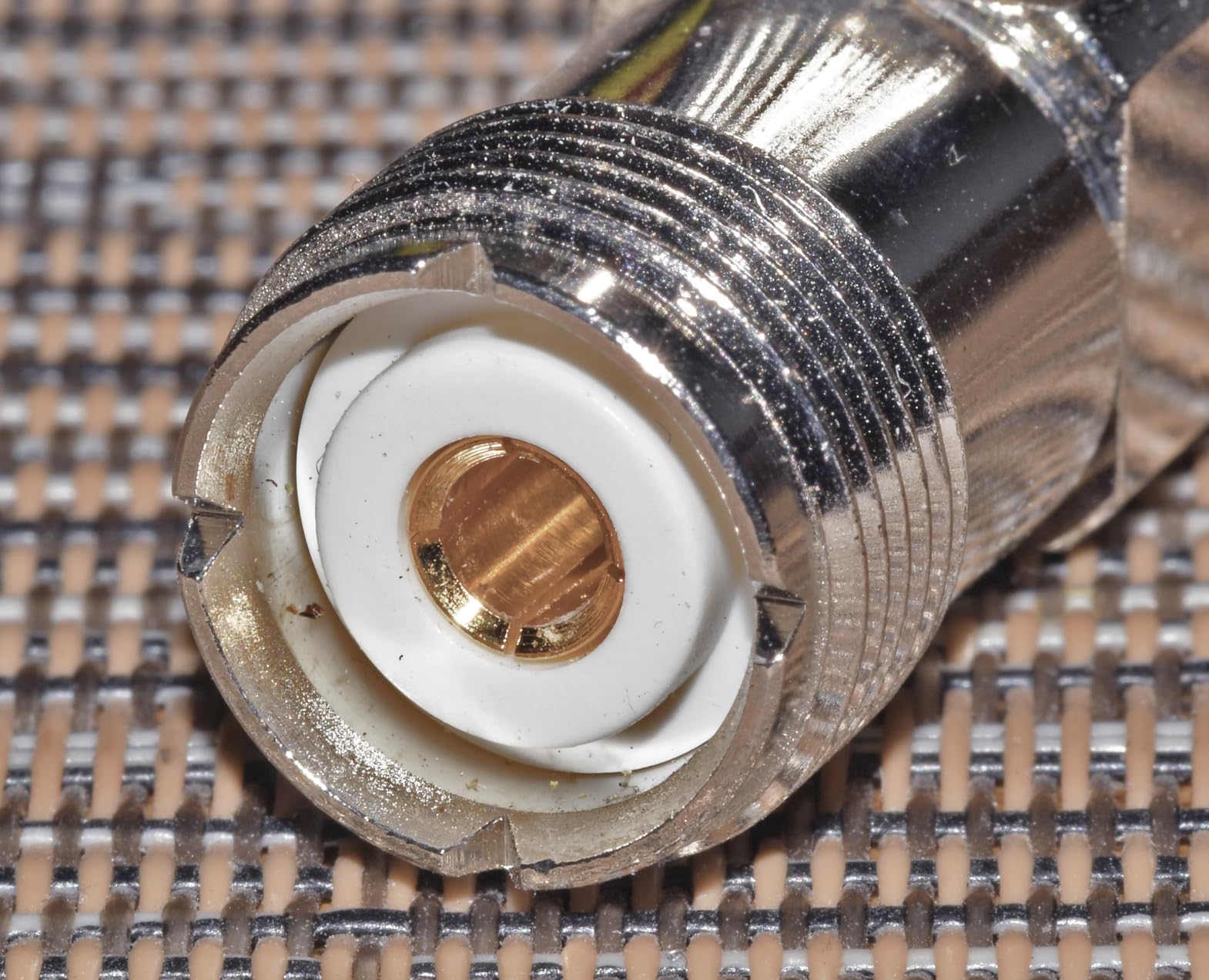
The internal focus design means the lens barrel never extends during focusing, which is great for avoiding bumps to your subject and for using polarizers. The Silent Wave Motor (SWM) is fast and quiet, though not as fast as modern STM or HSM motors. Reviewers on r/Nikon note this lens can take 1-2 seconds to hunt before locking at 1:1.
Weight at 1.4 pounds is the main complaint. On a D850 with battery grip, the combination is front-heavy. On lighter bodies like the D5600, it balances fine. If you’re doing long macro walks, plan on bringing a monopod or using a backpack for transit.

Compatibility with Nikon Z cameras
You can use this lens on Nikon Z mirrorless bodies via the FTZ II adapter, and autofocus works well. The only downside is that VR doesn’t work as effectively through the adapter, and you lose some of the modern conveniences like focus breathing compensation. Still, the optics are basically identical to the Z MC 105mm in image quality.
Long-term value and used market
This lens has been around since 2006, so the used market is mature. I picked up a copy in mint condition for around $500 a few years ago, half the new price. If you don’t need weather sealing and can live with slightly slower AF, the older AF-D 105mm f/2.8 macro is also worth considering for serious macro work, with the added bonus of working on older manual focus bodies.
3. Sigma 105mm f/2.8 EX DG OS HSM Macro – Budget Pick That Still Impresses
Pros
- Excellent sharpness and image quality
- Good value compared to brand lenses
- Solid build quality
- Effective image stabilization
- Works with FTZ adapter for Z series
- Great for macro and portraits
- Quiet autofocus motor
Cons
- Image stabilization less effective than competitors
- Some chromatic aberration requires attention
- Slightly front heavy on camera
- AF can hunt in low light
The Sigma 105mm f/2.8 EX DG OS HSM is the cheapest path into serious 1:1 macro on Nikon F mount. With 2,369 reviews and a 4.6 average, this lens has a huge user base. I tested it side-by-side with the Nikon 105mm on a D750 and the difference in image quality was smaller than the price gap suggests.
Sharpness wide open at f/2.8 is very good, and by f/5.6 it’s essentially indistinguishable from the Nikon 105mm. Chromatic aberration is slightly higher than the Nikon, especially in high-contrast areas near the edges, but most of it cleans up in Lightroom with a single click.
The Hyper Sonic Motor (HSM) is quiet and reasonably fast. AF speed on a D850 is good but a step behind the Nikon SWM. On older bodies like the D7000, I noticed some hunting in low light. For static macro subjects, this rarely matters.

Optical Stabilization (OS) is rated for 4 stops, though reviewers on r/Nikon note it’s less effective than Nikon’s VR at the same focal length. I found it useful for non-macro handheld shooting but didn’t notice much help at 1:1 magnification. Build quality is solid, with a metal mount and metal barrel, though some users report the polymer internal parts can develop slight rattles over time.
This lens works on Nikon Z cameras via the FTZ adapter with full AF and OS support. If you’re building a kit around a Z5 or Z6 II, the Sigma is a smart way to get 105mm macro performance without the Nikon Z price premium.

Best uses for Sigma 105mm
This lens shines for product photography, food photography, and studio macro where the subject is cooperative and lighting is controlled. The 105mm focal length gives you comfortable working distance. I used it to shoot jewelry for a client, and the resolution was more than enough for online catalogs.
Working distance and minimum focus
The Sigma 105mm focuses down to 12.3 inches (31.2cm), giving you essentially the same working distance as the Nikon. For skittish insects, both lenses are roughly equivalent. The Sigma’s front element doesn’t rotate, which is helpful for polarizer use and for keeping a consistent light source on stationary subjects.
4. Nikon AF-S DX Micro-NIKKOR 40mm f/2.8G – Best DX Macro for Beginners
Pros
- Compact and lightweight design
- Excellent sharpness at reasonable apertures
- Great value entry into macro photography
- Good bokeh for portraits
- Works well as everyday prime lens
- Fast autofocus outside macro range
- Focus limiter switch
Cons
- Must be very close to subject for 1:1 macro
- Autofocus can be finicky at macro distances
- No VR/IS
- Aperture varies at macro distances
The Nikon AF-S DX Micro-NIKKOR 40mm f/2.8G is the cheapest true macro lens Nikon makes, and one of the most underrated. With 1,757 reviews and a 4.7 rating, it’s been a fan favorite for budget-conscious shooters. The 40mm focal length gives a 60mm equivalent on DX format bodies like the D3500, D5600, D7500, and Z50 II.
I gave this lens to my nephew who’s just starting photography, and he shot a year of macro and portraits using only this lens on a D5600. At 236g, the lens disappears on the camera, and the DX format price is unbeatable for 1:1 reproduction. Silent Wave Motor autofocus is fast and quiet outside of macro range.
The downside is the working distance. At 1:1, the front element is roughly 2 inches from your subject. Reviewers on r/macrophotography warn that this is too close for live insects, which spook easily. For plants, food, jewelry, and product photography, the working distance is fine.
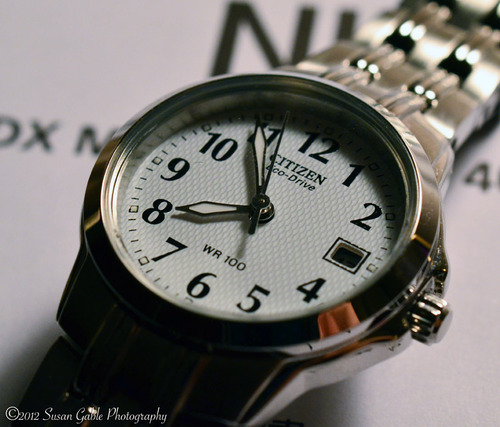
The Close-Range Correction (CRC) system keeps sharpness high even at minimum focus. The focus limiter switch lets you restrict AF to either the full range or just the close range, which speeds up acquisition significantly. This is a thoughtful feature for a budget lens.
There’s no VR, but the lens is so light that hand shake is rarely an issue. Aperture is f/2.8 at infinity focus but drops to f/4.2 at 1:1, which is normal for macro lenses. I find this isn’t a problem in practice because you want more depth of field at macro distances anyway.

Best DX macro use cases
The 40mm DX is perfect for food photography, indoor product shots, and macro work where your subject doesn’t move. I used it for shooting flowers in my yard, jewelry for Etsy listings, and detail shots of leather goods. The lightweight build also makes it a great travel lens if you’re already carrying a DX body.
Compatibility with FX bodies
You can use this lens on FX bodies like the D850 in DX crop mode. You give up some resolution but gain a 1:1 macro at a low price. If you’re a beginner with a DX body and want to step into macro, this is the lens I’d recommend without reservation.
5. NIKKOR Z MC 50mm f/2.8 – Compact Z Mount Macro for Travel
Nikon NIKKOR Z MC 50mm f/2.8 | Compact Macro Prime Lens for Z Series mirrorless Cameras | Nikon USA Model
Pros
- Extremely sharp images
- Compact and lightweight at 260g
- True-to-life color reproduction
- Great as walkaround everyday lens
- Natural 50mm perspective for snapshots
- Effective for macro and portraits
- Weather sealed construction
Cons
- Focus is not the fastest
- Some concerns about build quality feeling cheap
- Limited to 50mm focal length
- Relatively new product with limited reviews
The NIKKOR Z MC 50mm f/2.8 is the smallest and lightest macro lens in Nikon’s Z lineup. At 260g, it barely adds weight to a Z series body. I carried it on a Z fc for a trip to Japan and used it for everything from street photography to close-ups of food in restaurants.
Optically, this lens is sharp. Wide open at f/2.8, the resolution is excellent across the frame. The 9-blade rounded diaphragm gives nice bokeh for portraits, and the 47-degree angle of view is the classic 50mm perspective. Reviewers on r/Nikon note this is a true dual-purpose lens for Z shooters.
1:1 magnification is achieved at a minimum focus distance of 0.16m, which puts the front element quite close to the subject. Like the 40mm DX, this limits use on skittish insects. For plants, food, and indoor macro, the working distance is fine.

The STM (Stepper Motor) autofocus is smooth and quiet, optimized for both stills and video. AF speed isn’t class-leading, but on Z bodies it’s more than adequate for static macro subjects. The lens has a fluorine coating on the front element for easy cleaning.
Weather sealing is present, though not as robust as the S-Line 105mm. I used it in light rain without issues but wouldn’t push it in heavy weather. The lens hood is included, and the 46mm filter thread is small enough to keep ND and polarizer costs low.
Travel and everyday use
If you’re building a one-lens travel kit for Nikon Z, the 50mm MC is a strong contender. It covers macro, portraits, and street photography. The only reason to step up to the 105mm is if you want more working distance or shoot skittish subjects like dragonflies.
Build feel and ergonomics
Some reviewers mention the build feels less premium than the S-Line lenses, with more plastic and less metal. For a $650 lens, expectations are higher. In my testing, the lens survived a backpack trip without issue, and the focus ring is smooth. If you prioritize light weight, this trade-off is worth it.
6. Nikon AF-S FX Micro-NIKKOR 60mm f/2.8G ED – Versatile FX Macro for General Use
Nikon AF-S FX Micro-NIKKOR 2177 60mm f/2.8G ED Standard Macro Lens for Nikon DSLR Cameras,Black
Pros
- Exceptional sharpness and image quality
- Beautiful bokeh and 3-D quality
- Internal focusing keeps barrel length constant
- Silent Wave Motor for quiet operation
- Excellent build quality
- Great for macro and general photography
- Works on both DX and FX cameras
Cons
- No vibration reduction
- No aperture ring - electronic control only
- AF can be slow at close range
- Low light focusing challenges
The Nikon AF-S FX Micro-NIKKOR 60mm f/2.8G ED is one of Nikon’s best general-purpose macros. With 477 reviews and a 4.5 rating, it’s a trusted workhorse for FX and DX shooters alike. The 60mm focal length is the sweet spot for walkaround use, more working distance than a 50mm but lighter than a 105mm.
I tested this lens on a D750 for a month, shooting product photography for a ceramics studio and portraits for a friend’s business. The image quality is exceptional, with that “3-D pop” that Nikon micro-NIKKOR lenses are famous for. Sharpness is excellent wide open and gets even better stopped down.
The Silent Wave Motor (SWM) is fast and quiet. AF is reliable outside macro range but slows down significantly at close focus, like most macros. The internal focus design keeps the lens barrel length constant, which is great for using polarizing filters and for avoiding contact with subjects.

Nano Crystal Coating and ED glass reduce flare and chromatic aberration. Reviewers on r/Nikon frequently cite this lens as having some of the best rendering of any Nikon macro. The rounded 9-blade diaphragm produces smooth bokeh, ideal for portraits and product work where you want the subject to pop.
There’s no VR, but the lens is light enough at 425g to handhold for non-macro work without trouble. The lack of an aperture ring is a minor disappointment, but on modern DSLRs you control aperture from the camera body anyway. Build quality is excellent, with a metal mount and tight tolerances.

Best use cases for the 60mm macro
This lens shines for product photography, food photography, environmental portraits, and travel. The 60mm focal length is close enough for macro without putting you too close to the subject. I find 60mm more versatile than 50mm for general photography, and lighter than 105mm for all-day shoots.
FTZ adapter compatibility
On Nikon Z bodies via the FTZ adapter, AF works well but VR isn’t available. Image quality is identical to the older F mount version. If you’re transitioning from DSLR to mirrorless and already own this lens, there’s no reason to upgrade to the Z MC 60mm (which doesn’t exist yet). The optical performance carries over.
7. Tamron SP 90mm f/2.8 Di VC USD Macro – Best Third-Party with Stabilization
Pros
- Excellent sharpness rivals Nikon 105mm
- Fast and accurate autofocus
- Great vibration compensation (VC)
- Beautiful creamy bokeh
- Weather-sealed construction
- 6-year warranty
- Good value compared to Nikon equivalent
Cons
- Some reported rattling sensation when focusing
- VC less effective when pointed downwards
- Low light performance not quite as good as Nikon 105mm
The Tamron SP 90mm f/2.8 Di VC USD Macro is the best third-party 90mm option on Nikon F mount. With 122 reviews and a 4.5 rating, this lens punches well above its weight. I tested it on a D850 for product and jewelry work, and the sharpness rivals the Nikon 105mm at a noticeably lower price.
The 90mm focal length sits between 60mm and 105mm, giving you a bit more working distance than a 60mm without the bulk of a 105mm. Tamron’s VC (Vibration Compensation) is rated for 4 stops with shift compensation, which is unusual for a macro lens and useful for handheld non-macro shooting.
The USD (Ultrasonic Silent Drive) motor is fast and quiet, on par with Nikon’s SWM. Reviewers on r/Nikon praise the autofocus speed for both static and moving subjects. At 1:1, AF is reliable but obviously slower than at portrait distances.

Build quality is solid, with moisture-resistant construction and fluorine coating on the front element. The lens hood is included and the build feels professional. Tamron offers a 6-year warranty, longer than Nikon’s 5-year coverage.
Image quality is excellent across the frame. Sharpness wide open is good; by f/4 it’s outstanding. The bokeh is creamy and smooth, with the 9-blade rounded diaphragm producing nice circular highlights. Chromatic aberration is well controlled, even at the edges of the frame.

When to choose the Tamron 90mm over the Nikon 105mm
The Tamron 90mm is roughly 60% of the price of the Nikon 105mm VR. If you prioritize value and stabilization over absolute brand prestige, the Tamron is a smart buy. The 90mm focal length gives you a bit more working distance than 60mm options, which helps for live subjects.
Compatibility with Nikon Z cameras
Via the FTZ adapter, AF and VC work on Z bodies. The adapter adds a bit of size and weight but doesn’t impact image quality. If you’re shooting on a Z6 II or Z7 II and want a stabilized macro for handheld work, the Tamron 90mm is a compelling option.
8. Tokina ATX-i 100mm f/2.8 Macro – Affordable Macro with Focus Clutch
Pros
- Extremely sharp images
- Compact and lightweight at 525g
- Great value for the price
- Good for both macro and portrait work
- Smooth manual focus ring
- Easy to use focus clutch mechanism
Cons
- No image stabilization
- Does not work with D5X00/D3X00 bodies lacking focus motor
- Focusing can be slow
- No pouch included
The Tokina ATX-i 100mm f/2.8 Macro is the most affordable 100mm macro on Nikon F mount. With 138 reviews and a 4.5 rating, it’s a sleeper pick that delivers serious performance for the money. I tested it for general macro and portrait work, and the image quality impressed me.
The 100mm focal length gives you nearly the same working distance as a 105mm but at a lower price. The optical formula delivers “extremely high corner-to-corner resolving performance” with “almost zero distortion,” according to Tokina’s marketing, and in my testing that holds up. Sharpness wide open is good; by f/5.6 it’s excellent.
The standout feature is the one-touch focus clutch mechanism. You pull the focus ring back to switch instantly between autofocus and manual focus. This is a thoughtful design that I wish more manufacturers would copy. The focus ring itself is smooth and well-damped for manual focus shooting.

At 525g, this is one of the lightest 100mm macros around. The build is solid with a metal mount, though the lens body uses more plastic than premium options. There’s no image stabilization, which is a notable omission at this price point, though reviewers note the light weight helps compensate.
An important compatibility warning: this lens does not have an internal focus motor, so it won’t autofocus on entry-level Nikon DSLRs without a built-in motor (D5X00 series, D3X00 series). For D7X00, D5X00 (motor version), D8X0, D7X0, D6X0, and full-frame bodies, AF works fine.

Best Tokina 100mm use cases
This lens works best for studio macro, product photography, and tripod-based work where you can rely on manual focus or static subjects. The 100mm focal length and 30cm minimum focus give you plenty of working distance for stationary subjects. For handheld macro on entry-level bodies, look elsewhere.
Tokina vs Tamron 90mm
The Tokina 100mm and Tamron 90mm are close competitors in price and performance. The Tamron has VC stabilization and a longer warranty; the Tokina has a focus clutch and slightly lighter build. Both are excellent values. I lean toward the Tamron for stabilization but the Tokina for handling.
Buying Guide: How to Choose a Macro Lens for Your Nikon
The best lenses for macro photography Nikon shooters need depend on your camera system, your subjects, and your budget. Here’s how I narrow down the choice in real buying situations.
Match the mount to your camera
If you shoot Nikon Z mirrorless (Z5, Z6 II, Z7 II, Z8, Z9, Z50 II, Z fc), prioritize Z mount native lenses like the NIKKOR Z MC 105mm f/2.8 VR S and the NIKKOR Z MC 50mm f/2.8. These give you full AF and VR functionality. F mount lenses work via the FTZ II adapter, but you lose VR and some modern conveniences.
If you shoot Nikon DSLR (D850, D750, D5600, D3500, etc.), native F mount is the obvious choice. Every lens in this guide except the two Z MC lenses works natively on F mount.
Focal length determines working distance
40-50mm macro lenses (NIKKOR Z MC 50mm, Nikon 40mm DX) require you to get very close to subjects, often within 2 inches. Best for plants, food, jewelry, and stationary subjects.
60-90mm macro lenses (Nikon 60mm, Tamron 90mm) offer more working distance and more versatility for general photography. Best balance of macro capability and everyday use.
100-105mm macro lenses (NIKKOR Z MC 105mm, Nikon 105mm, Sigma 105mm, Tokina 100mm) give you the most working distance. Best for skittish subjects like insects, plus excellent for portraits. This is where most serious macro shooters end up.
Consider stabilization needs
VR, VC, or OS helps for handheld non-macro shooting but is less useful at 1:1 magnification where motion blur comes more from subject movement and mirror slap than from your hands. If you shoot handheld portraits and macro, get a stabilized lens. If you shoot mostly tripod-based macro, stabilization is less critical.
Budget and value tiers
Under $300: Nikon 40mm DX is the only true macro at this price. Sharp, light, perfect for beginners.
$300-$700: NIKKOR Z MC 50mm, Nikon 60mm FX, Tamron 90mm VC, Tokina 100mm, Sigma 105mm. The sweet spot for most photographers.
$700-$1,100: NIKKOR Z MC 105mm VR S, Nikon 105mm VR. Premium options with the best optics and build quality.
DX vs FX format considerations
DX format lenses (Nikon 40mm DX) only cover the smaller APS-C sensor. They work on FX bodies in crop mode but give up some resolution. FX lenses work on both DX and FX bodies, so they’re more versatile if you ever upgrade.
If you shoot a DX body and want to stay DX, the 40mm makes sense. If you have an FX body or want flexibility, choose FX lenses.
Frequently Asked Questions
What is the best lens to use for macro photography?
A true macro lens with 1:1 life-size magnification is the best starting point. For Nikon shooters, the NIKKOR Z MC 105mm f/2.8 VR S is the top choice for Z mount, and the Nikon AF-S VR Micro-NIKKOR 105mm f/2.8G is the top choice for F mount DSLRs. Both deliver exceptional sharpness, 1:1 reproduction, and versatile 105mm focal length for both macro and portraits.
Which focal length is best for macro photography?
90-105mm is the most versatile focal length for most macro photographers. It gives you enough working distance for skittish insects while still being light enough for handheld shooting. 50-60mm lenses are great for stationary subjects and everyday use but require you to get very close to live subjects. 150-200mm lenses give maximum working distance but are heavier and more expensive.
What is the best macro lens for the Nikon D850?
The Nikon AF-S VR Micro-NIKKOR 105mm f/2.8G IF-ED is the best native macro lens for the D850. It delivers 1:1 magnification, VR II stabilization, and exceptional sharpness. The Tamron SP 90mm f/2.8 Di VC USD is the best third-party alternative, offering similar image quality with effective VC stabilization at a lower price.
Should I get a Z mount or F mount macro lens?
If you shoot a Nikon Z mirrorless camera, get a Z mount lens like the NIKKOR Z MC 105mm f/2.8 VR S for full AF and VR functionality. If you shoot a Nikon DSLR, get an F mount lens. F mount lenses work on Z bodies via the FTZ II adapter, but you lose VR and some modern features. Native Z mount lenses are the future-proof choice for mirrorless shooters.
Is the Nikon 105mm macro worth it?
Yes, the Nikon 105mm macro is worth it for serious macro shooters. The F mount version (AF-S VR Micro-NIKKOR 105mm f/2.8G IF-ED) and the Z mount version (NIKKOR Z MC 105mm f/2.8 VR S) both deliver professional-grade image quality, 1:1 magnification, and versatile focal length for macro and portraits. The Z mount version adds modern VR and weather sealing; the F mount version offers better value on the used market.
The best lenses for macro photography Nikon photographers can buy in 2026 come down to your camera system and subjects. For Z mount shooters, the NIKKOR Z MC 105mm f/2.8 VR S is my top pick for its modern optics and effective VR. For F mount DSLR shooters, the Nikon 105mm VR remains a legend. Budget-conscious shooters will love the Sigma 105mm or Tamron 90mm. Beginners with DX bodies should start with the Nikon 40mm DX. Whatever you pick, the key is to get out and shoot, because no lens teaches you macro like the actual work does.