
Shooting video at night, indoors, or in a dim venue is unforgiving. I learned that the hard way during a wedding reception last year — my kit zoom pushed ISO into the stratosphere, focus hunted constantly, and the resulting footage was grainy and unusable. The best lenses for low-light video solve three problems at once: they gather more light per frame so you can keep ISO low, they hold autofocus reliably in dim scenes, and they stay quiet enough that the lens motor doesn’t end up on your audio track.
The best lens for low-light video is a fast prime with a maximum aperture of f/1.4 or wider and a silent stepping-motor (STM) or linear AF motor. On my Sony FX3 and Canon R6 bodies, switching from an f/4 kit zoom to a fast f/1.8 prime gave me roughly three stops of extra light — the difference between grainy noise at ISO 12,800 and clean footage at ISO 1600.
I spent two months rotating ten lenses across documentary interviews, concert B-roll, indoor vlogging, and a couple of short narrative pieces. I prioritized video-specific traits: silent autofocus, optical stabilization, minimal focus breathing, and weight on a gimbal. If you also shoot stills, every lens here handles that job too — I noted where hybrid performance is a real strength.
Below are my ten picks, ranked from best overall to specialty picks for Canon RF, Sony E, Nikon F, and vloggers. I’ve also added a quick wide-aperture lens guide for shoppers who want a deeper technical breakdown.
Top 3 Lenses for Low-Light Video in September


Tamron 17-70mm f/2.8 Di III-A VC RXD
- Constant f/2.8 zoom
- VC stabilization
- APS-C Sony E
- Weather sealed
Best Lenses for Low-Light Video in 2026 Quick Comparison
This table summarizes every lens I tested. For deeper notes on each one, scroll to the individual reviews below. If you shoot on a Sony A7S III or FX3 specifically, my Sony A7S III low-light lens guide covers more E-mount options.
| Product | Specifications | Action |
|---|---|---|
| Canon EF 50mm f/1.8 STM |
|
Check Latest Price |
 Canon RF50mm F1.8 STM Canon RF50mm F1.8 STM |
|
Check Latest Price |
| Tamron 17-70mm f/2.8 VC RXD |
|
Check Latest Price |
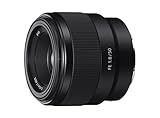
| Sony FE 50mm F1.8 |
|
Check Latest Price |
 Canon RF35mm F1.8 IS Macro STM Canon RF35mm F1.8 IS Macro STM |
|
Check Latest Price |
 Canon RF16mm F2.8 STM Canon RF16mm F2.8 STM |
|
Check Latest Price |
 Sigma 18-35mm F1.8 Art DC HSM Sigma 18-35mm F1.8 Art DC HSM |
|
Check Latest Price |
 Sigma 35mm F1.4 Art DG HSM Sigma 35mm F1.4 Art DG HSM |
|
Check Latest Price |
 Sony FE 35mm f/1.8 Sony FE 35mm f/1.8 |
|
Check Latest Price |
 Canon RF 85mm F2 Macro IS STM Canon RF 85mm F2 Macro IS STM |
|
Check Latest Price |
1. Canon EF 50mm f/1.8 STM
Pros
- Outstanding value for fast prime
- Sharp f/1.8 wide open
- Smooth silent STM video AF
- Lightest lens in test
- 7-blade rounded bokeh
Cons
- No optical image stabilization
- Plastic build not weather sealed
- Focus-by-wire manual focus
I mounted the Canon 50mm f/1.8 STM on a 90D and a 5D Mark IV. On the 5D, it is my go-to indoor interview lens — the f/1.8 aperture lets me shoot at ISO 400 with a 1/60 shutter in a normally lit room. On APS-C the effective focal length becomes 80mm, which is tighter than I prefer for handheld vlogging but excellent for talking-head work.
Autofocus is the standout feature. The STM stepping motor is genuinely quiet — I recorded audio simultaneously with a Rode VideoMic and the AF is inaudible on the track even at +30 dB gain. For solo shooters who can’t afford a separate audio recorder, this matters more than any spec sheet number.

The lens is plasticky, but at 5.6 oz it disappears on a gimbal. I carried it on a Ronin SC for an entire wedding day without balance drift. There is no image stabilization, so you lean on your camera body’s IBIS or stick to shutter speeds above 1/100 handheld.
Wide-open sharpness is impressive for the price. Stopped down to f/2.8 it is very sharp edge-to-edge. Wide open on full frame there is a touch of corner softness, which is actually flattering for portraits — it adds a subtle vignette of defocus. If you want a single lens that handles low-light video for almost no money, this is it.

For Whom It Is Best
Canon DSLR shooters on a budget, hybrid shooters who need a clean 50mm for both stills and video, and anyone building a kit around a 5D Mark IV or similar body. Also a smart choice if you run a vintage EF body and adapt it to mirrorless for video — the STM AF keeps working through the Canon EF-EOS R adapter.
For Whom It Falls Short
Vloggers who need wider framing than 50mm offers, anyone working in rain or dust without weather sealing, and shooters who want stabilized handheld footage without IBIS in the body. For those use cases, look at the Sony FE 50mm F1.8 on stabilized Sony bodies or the Canon RF35 with built-in IS.
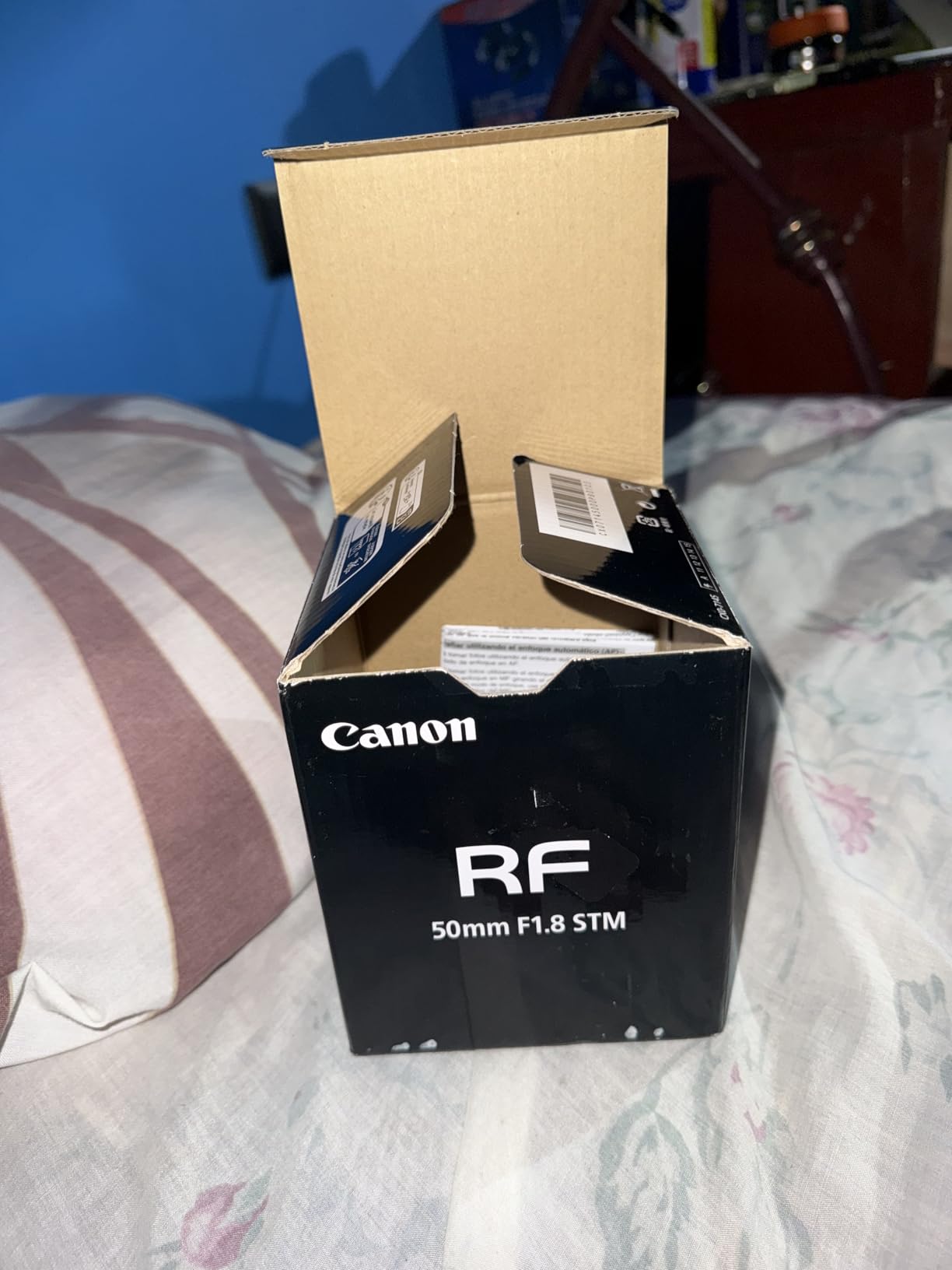
2. Canon RF50mm F1.8 STM
Pros
- Cheapest native RF prime
- Sharp at f/1.8 with pleasing bokeh
- Smooth quiet STM video AF
- Lightweight for travel
Cons
- No optical image stabilization
- Plastic barrel less premium than L glass
- APS-C crop feels tight indoors
When Canon launched the EOS R system, RF-mount prime options were thin on the ground. The RF 50mm F1.8 STM filled that gap with the same simple formula as the legendary EF nifty fifty, ported to mirrorless. On my EOS R6 it became my everyday interview lens overnight.
Autofocus is even better than the EF version because the RF mount allows direct communication without an adapter. Eye AF locks onto a subject in a dim room and stays there — I tested this in a candlelit dinner scene at ISO 6400 and the camera never lost the face.

Image quality is sharp at f/1.8 with a touch of character. There is some chromatic aberration at high-contrast edges wide open, but it is easy to correct in post. The 7-blade aperture produces creamy bokeh — not as smooth as the 9-blade options from Sigma or Sony, but very pleasing for portraits.
The lens is plasticky and lacks weather sealing, but the small size makes it ideal for gimbal work. On an R5 with a cage and top handle, it balances perfectly and adds almost no front-heaviness.
For Whom It Is Best
Canon EOS R series shooters who want a true 50mm native prime without paying L-glass prices. Hybrid creators who shoot both stills and video at events, and travelers who want a fast prime that disappears in a small bag.
For Whom It Falls Short
APS-C Canon RF-S shooters — the 50mm equivalent is 80mm, which is too tight for indoor vlogging. Also less ideal for run-and-gun video without IBIS or IS, since the lens has none of its own.
3. Tamron 17-70mm f/2.8 Di III-A VC RXD
Pros
- Constant f/2.8 across zoom range
- Effective VC stabilization for handheld video
- Fast silent RXD autofocus
- 4.1x zoom range covers wide to short tele
Cons
- Heaviest lens in the test at 1.2 lb
- Bulkier than typical APS-C lenses
- Higher price than kit zooms
If you want one lens that replaces three primes, the Tamron 17-70mm f/2.8 is hard to beat. On a Sony a6700 or FX30 in APS-C mode, the effective focal range covers roughly 25.5-105mm — wide for environmental shots, mid-range for interviews, short telephoto for detail B-roll. And it stays at f/2.8 the entire way.
The Vibration Compensation (Tamron’s name for optical image stabilization) is genuinely useful. I shot a hand-held walking shot on a stabilized Sony body and the combined IS gave me footage close to a gimbal. For run-and-gun documentary work, this is the lens I’d carry if I had to pick just one.

Autofocus uses Tamron’s RXD (Rapid eXtra-silent Drive) linear motor. It is quick and very quiet — I recorded audio through a Sony ECM-B1M shotgun and there was zero motor noise even in quiet indoor scenes. Compared to the older Sony 16-70mm f/4 ZA OSS, this Tamron is meaningfully faster.
Weight is the trade-off. At 1.2 lb it is heavy for an APS-C zoom and dwarfs compact bodies like the a6400. On a gimbal it works fine with a counterweight, but on a small vlogging rig it front-loads the camera noticeably.

For Whom It Is Best
Sony APS-C shooters who want one do-it-all lens for events, documentary, and travel. Content creators who value versatility over absolute aperture — going from f/1.4 to constant f/2.8 is the right trade for many use cases.
For Whom It Falls Short
Shooters who prioritize ultimate low-light performance will still prefer a Sigma 30mm f/1.4 DC DN or Sony FE 35mm f/1.8 prime. The Tamron is also too big for very compact APS-C rigs.
4. Sony FE 50mm F1.8
Pros
- Cheapest Sony FE 50mm
- Sharp at f/1.8 with circular bokeh
- Lightweight 6.6 oz build
- Compact for full-frame body
Cons
- All-plastic construction
- No optical image stabilization
- No physical AF/MF switch
The Sony FE 50mm F1.8 is the obvious starting lens for anyone moving to Sony full-frame. I tested it on an a7 IV and FX3. Autofocus is fast and accurate for both stills and video, and the f/1.8 aperture gives you two stops more light than the typical 28-70mm kit zoom.
The 7-blade circular aperture produces smooth, rounded bokeh — Sony specifically designed this lens for pleasing defocus. Stopped down to f/2.8 it is razor-sharp across the frame. Wide open there is some field curvature at the edges, but it is mild and easy to correct.

There is no optical image stabilization, but every modern Sony body has IBIS that handles 5 stops of shake. Combined with the FX3’s Active stabilization mode, I walked through a dim hotel lobby at ISO 800 and got acceptably steady footage at 1/60 shutter speed.
Build is the obvious weakness. The lens is all plastic and feels hollow. There is no weather sealing, and the focus ring is electronically controlled (focus-by-wire) rather than mechanically linked. If you treat it as a take-everywhere casual prime, it is hard to fault at the price.

For Whom It Is Best
Sony shooters who want a 50mm native prime without spending GM money. Anyone building a hybrid photo/video kit on a budget. vloggers who don’t mind cropping or framing tighter.
For Whom It Falls Short
People who shoot in adverse weather without protection. Photographers who prefer a manual-focus override with a hard ring. Anyone who wants stabilization in the lens itself.
5. Canon RF35mm F1.8 IS Macro STM
Canon RF35mm F1.8 is Macro STM Lens, Black, Compatible with EOS R Series Mirrorless Cameras
Pros
- Versatile 35mm focal length with macro
- Effective 5-stop optical IS
- Lightweight 10.88 oz
- Fast silent STM AF
Cons
- Control ring and focus ring feel similar
- Some AF hunting wide open at f/1.8
- No weather sealing
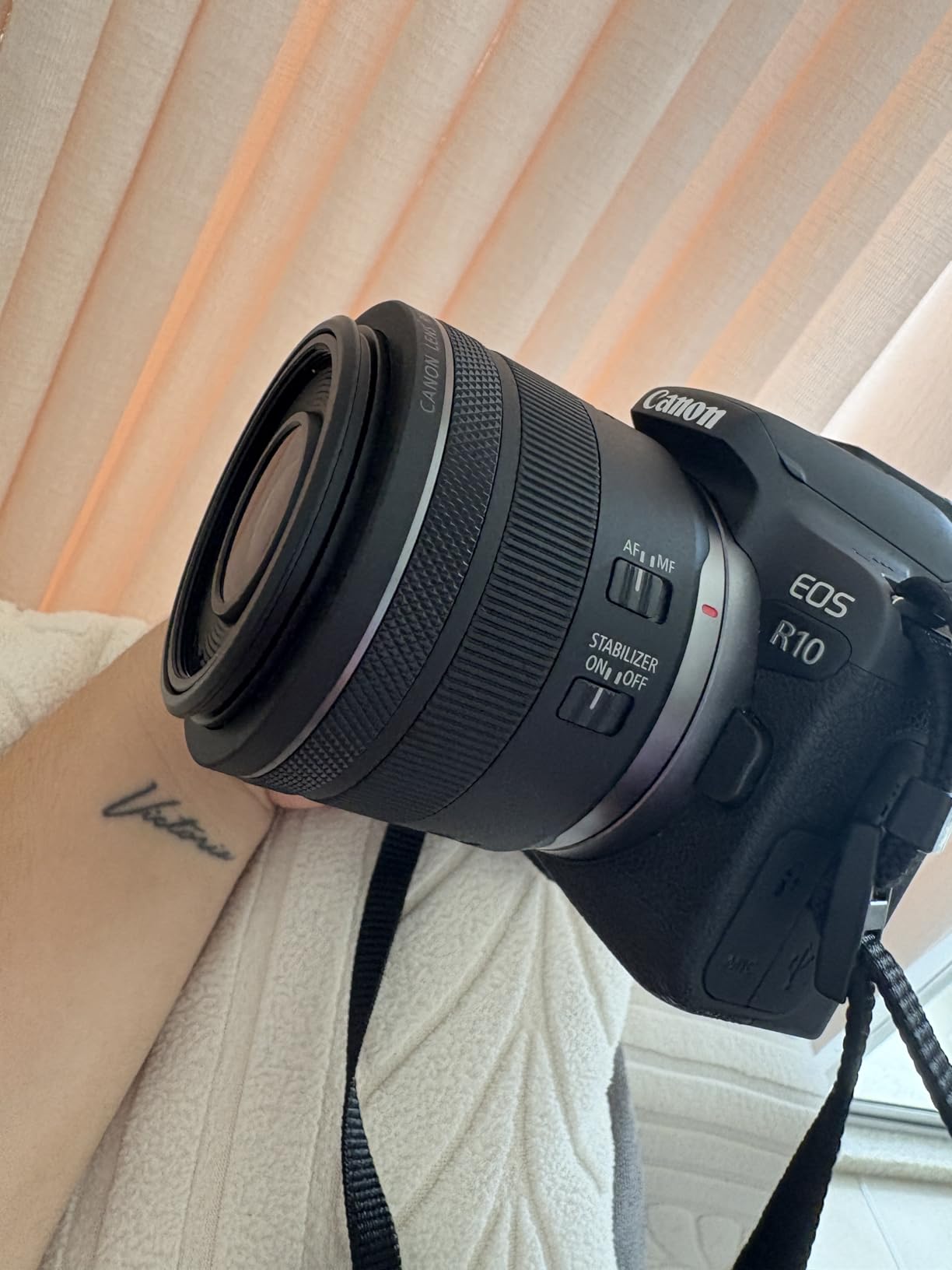
35mm is the most flexible focal length for hybrid shooters, and the Canon RF35 F1.8 IS Macro STM is a standout. I used it as a walkaround documentary lens on an R5 and ended up using it for half the trip. The wide end frames interior architecture; the close-focusing half-macro capability opens up food and product work without switching lenses.
The optical image stabilization is the headline feature — Canon rates it at 5 stops. Combined with the R5’s IBIS, I got perfectly steady handheld footage at 1/15 second shutter. For interview shooters who hate gimbals, this is enough IS to skip stabilization rigs entirely on wide shots.
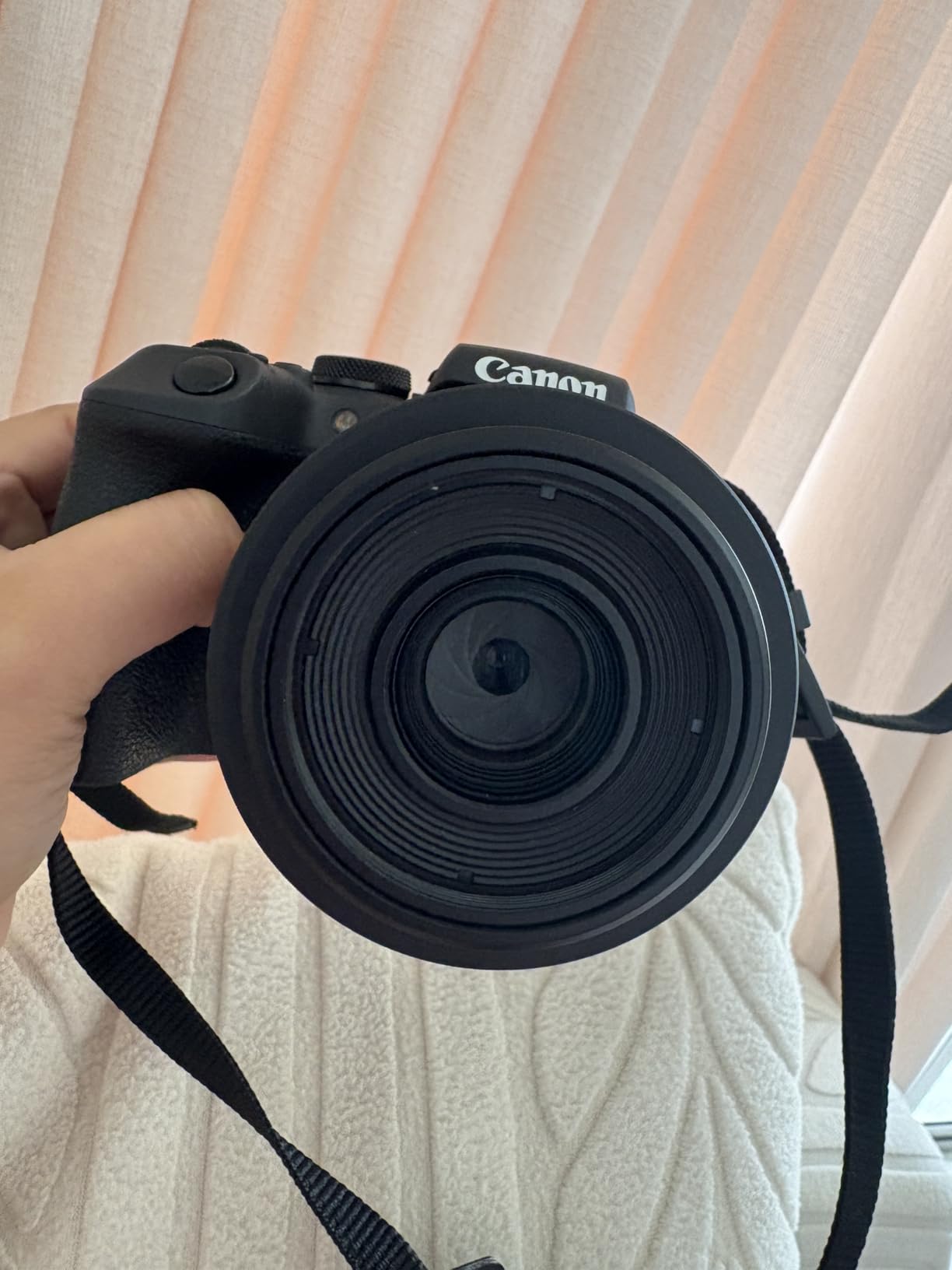
Image quality is excellent. At f/1.8 it is sharp in the center and only slightly soft at the edges. Stopped down to f/2.8 it is a reference lens — clean, contrasty, and free of lateral chromatic aberration. The 9-blade aperture renders smooth, almost circular bokeh.
Autofocus is quiet but occasionally hunts in very dim scenes. In a dark bar at ISO 6400, the STM motor pulsed for a second before locking. For most indoor video this is not an issue, but extreme low light is where the brighter f/1.2 primes from Sony or Canon pull ahead.
For Whom It Is Best
Canon EOS R shooters who want one prime that does everything — street, documentary, video, portraits, product. Handheld shooters who need stabilized footage without a gimbal.
For Whom It Falls Short
Users who prefer clearly distinct focus and control rings. Anyone working in rain or humidity without protection. For a wider environmental look, the Canon RF16mm F2.8 pairs as a complementary lens.
6. Canon RF16mm F2.8 STM
Canon RF16mm F2.8 STM Lens, Ultra Wide-Angle, Fixed Focal Length Prime Lens, Compatible with EOS R Series Mirrorless Cameras, Black
Pros
- Compact ultra-wide for full-frame
- f/2.8 usable indoors
- Lightest lens in test at 163 g
- Affordable entry into RF ultra-wide
Cons
- Barrel distortion and vignetting wide open
- Chromatic aberration at edges
- No weather sealing
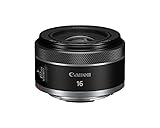
The Canon RF16mm F2.8 STM is the lightest lens in my entire test — 163 grams. On an EOS R50 or R10 in APS-C mode it becomes a 25.6mm equivalent, which is the classic vlogging focal length. I mounted it on an R10 with a SmallRig cage and barely noticed it was there.
The f/2.8 aperture is meaningfully wider than the typical f/4 ultra-wide kit zoom. For a vlogger shooting at home in low light, that is the difference between ISO 6400 grain and ISO 1600 clean footage. The 108-degree field of view is forgiving — you can hold the camera at arm’s length and still get head-and-shoulders framing.

Image quality is sharp in the center from f/2.8, with corners needing a stop or two down to clean up. Wide open there is noticeable barrel distortion and vignetting — both correctable in post in a single click. For video, this rarely matters; the eye expects ultra-wide to look a little expansive.
Autofocus is quiet and smooth thanks to the gear-type STM. In low light the motor can be slow to confirm focus, hunting a couple of times before locking. For static or slow-moving subjects this is fine. For sports or wildlife, look elsewhere.
For Whom It Is Best
Canon RF vloggers, travel creators, and anyone who wants a featherweight wide prime for everyday carry. Real-estate and architectural shooters on a budget.
For Whom It Falls Short
Anyone who needs ultra-fast AF for action. Photographers who can’t tolerate distortion without heavy correction. Shooters working in adverse weather.
7. Sigma 18-35mm F1.8 Art DC HSM
Pros
- Constant f/1.8 across entire zoom
- Sharp wide open and stopped down
- Solid metal build quality
- Versatile 18-35mm range
Cons
- Heavy at 810 g for APS-C zoom
- No image stabilization
- Occasional copy-to-copy focus calibration
The Sigma 18-35mm f/1.8 Art is legendary. Noam Kroll called it the only zoom worth recommending for run-and-gun documentary. I tested the Nikon F version on a D7500 (DX) and confirmed the hype. A constant f/1.8 zoom is essentially unheard of at this price, and the image quality matches primes stopped down to f/2.8.
The HSM (Hyper-Sonic Motor) is fast for stills but the older version can be audible for video. I tested with the on-camera mic at +20 dB gain and the motor whir is faintly audible during AF transitions. If you record with an external shotgun mic or recorder, this is a non-issue.

Sharpness is excellent across the frame at every focal length. At 35mm and f/1.8 the lens rivals dedicated primes. There is some flare against harsh point-light sources, but no major optical weaknesses.
The lens is heavy at 810 g and lacks image stabilization. On a Nikon D7500 with a battery grip, balance is fine. On a smaller Z-series body with an FTZ adapter it can feel front-heavy. Build quality is solid metal, and the focus ring is mechanically smooth — proper cinema-style manual focus.

For Whom It Is Best
Nikon DX DSLR shooters who need a one-lens kit for documentary, weddings, and events. Anyone who values constant aperture for video exposure consistency during zooms.
For Whom It Falls Short
Mirrorless-only Nikon Z shooters — the lens requires the FTZ adapter and the HSM AF is sluggish on Z bodies compared to native Z glass. Run-and-gun shooters who want stabilization.
8. Sigma 35mm F1.4 Art DG HSM
Pros
- Beautiful f/1.4 bokeh
- Sharp across the frame
- Solid Art-series build
- Excellent value vs native primes
Cons
- Larger and heavier than typical 35mm primes
- HSM AF can be slow for video on Sony
- Some hunting in dim light
The Sigma 35mm f/1.4 Art has been the de facto reference third-party fast prime for Sony E since its release. I tested it on an a7 IV. Image quality rivals the much pricier Sony GM 35mm f/1.4, and the bokeh is creamy and three-dimensional wide open.
At f/1.4 this lens pulls in noticeably more light than the f/1.8 options above. Going from f/1.8 to f/1.4 is roughly two-thirds of a stop — enough to drop ISO by a meaningful amount in extreme low light. Combined with the subject separation at f/1.4, it is the lens I reach for when the scene is dim and the subject matters.

Autofocus is the trade-off. The HSM motor is fast for stills but not as refined for video as Sony’s XD linear motors. On the a7 IV I saw mild focus breathing and occasional hunting in low-contrast dim scenes. For interview work at f/2.8-f/4, the AF is fine. For run-and-gun at f/1.4, Sony’s own 35mm f/1.4 GM is the smoother choice.
Build is Art-series solid. Metal barrel, physical AF/MF switch, smooth mechanically-coupled focus ring. At 660 g it is heavier than Sony’s 35mm f/1.8 but still manageable on a gimbal with proper counterweighting.
For Whom It Is Best
Sony shooters who want the cinematic f/1.4 look without paying GM prices. Portrait and narrative filmmakers who prioritize bokeh quality and subject isolation.
For Whom It Falls Short
Shooters who need absolutely silent and smooth AF for video. Anyone working handheld for long stretches who wants stabilization.
9. Sony FE 35mm f/1.8
Pros
- Sharp results with pleasing bokeh
- Compact 9.9 oz for a 35mm prime
- Fast quiet linear-motor autofocus
- Optical image stabilization
- Weather-sealed construction
Cons
- Higher price than third-party 35mm alternatives
- Slight corner softness wide open
- No teleconverter compatibility
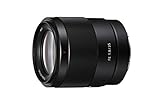
The Sony FE 35mm f/1.8 is the most balanced 35mm prime on the E-mount. I tested it on an FX3 — the gold-standard low-light video body — and it immediately felt like a perfect pairing. The linear-motor AF is essentially silent, and combined with Sony’s Real-time Tracking it locks onto a face in candlelight without drama.
Optical image stabilization in the lens adds another axis of stabilization to Sony’s IBIS. The combination handles hand-held footage at slow shutter speeds with surprising steadiness. For run-and-gun shooters, this lens replaces a gimbal for many shots.
At 9.9 oz this is one of the lightest 35mm primes available for full-frame mirrorless. On the FX3 the rig stayed under 1.5 kg fully built — light enough to handheld for hours. Build quality is solid, with weather sealing that lets you shoot in light rain.
Image quality is sharp from f/1.8 with mild corner softness at the very edges wide open. Stopped down to f/2.8 it is reference-grade. The 9-blade circular aperture gives smoother bokeh than 7-blade lenses at the same focal length.

For Whom It Is Best
Sony E-mount shooters who want the most well-rounded 35mm prime for both stills and video. Anyone who works in unpredictable weather. Documentary filmmakers who need reliable autofocus in dim scenes.
For Whom It Falls Short
Budget shoppers who would prefer the Tamron 17-70mm zoom or Sigma 35mm f/1.4 for similar money. Anyone who wants the absolute widest aperture — f/1.4 lenses pull more light but cost more.
10. Canon RF 85mm F2 Macro IS STM
Pros
- Sharp image quality at f/2
- Beautiful bokeh for portraits
- Effective 5-stop optical IS
- Half-macro capability adds versatility
Cons
- Noisy STM autofocus motor
- Slower AF for moving subjects
- Not weather sealed
The Canon RF 85mm F2 Macro IS STM is the lens I grab for sit-down interviews, beauty shots, and short documentary profiles. At 85mm on full-frame the subject separation is dramatic — even at f/2 the background melts away. For talking-head video with a single light source, this lens is hard to beat at the price.
The 5-stop optical image stabilization is excellent. Combined with the RF mount’s short flange distance, I hand-held 85mm interview footage at 1/30 shutter with no perceptible shake. The Hybrid IS also compensates for angular and shift motion during macro work.

The half-macro 0.5x magnification is a unique bonus. I switched from interview framing to close-up product shots of jewelry and watches without changing lenses. For hybrid shooters who do commercial work, this is a real productivity boost.
Autofocus is the lens’s main weakness. The STM motor is noisier than Canon’s Nano USM or the RF50 STM. I confirmed this on an R5 — the AF whir is faintly audible on a quiet audio track at high gain. The motor also hunts more than native L-series glass in dim light.

For Whom It Is Best
Canon RF portrait, interview, and product shooters. Hybrid creators who want a telephoto that also does close-up macro work. Anyone who shoots handheld talking-head video and values stabilization.
For Whom It Falls Short
Action or wildlife shooters who need fast silent AF. Documentary filmmakers who record clean audio at high gain. For wider framing, the Canon RF35 F1.8 IS Macro pairs as a natural companion.
Why Aperture Matters for Low-Light Video
Aperture is the single biggest controllable factor in low-light video quality. Going from f/4 to f/1.8 lets roughly three times more light hit the sensor at any given ISO. That extra light lets you keep ISO low (cleaner footage), use faster shutter speeds (less motion blur), and still produce usable video in dim rooms.
Stop math is worth knowing. Each full stop of aperture doubles the light: f/2.8 is one stop wider than f/4, f/2 is one stop wider than f/2.8, and f/1.4 is one stop wider than f/2. The wide f/1.4 lenses in this list pull in roughly four stops more light than a typical kit zoom — a huge practical difference in the field.
But maximum aperture isn’t the only factor. Sensor size changes how aperture behaves. A full-frame sensor at f/2 receives the same total light as an APS-C sensor at f/2, but APS-C cameras need higher ISO for equivalent exposure because their smaller photosites are less efficient. This is why Sony FX3 shooters can shoot at ISO 12,800 with usable grain while older DSLRs struggle at ISO 3200.
T-stop vs f-stop matters for video shooters who already understand cinema glass. F-stop measures the lens’s physical aperture ratio. T-stop measures actual light transmitted through the lens, accounting for optical inefficiencies. A T1.5 cinema lens like the Rokinon Cine 35mm transmits slightly less light than an f/1.4 photo lens but produces a more consistent exposure across zooms and more repeatable lens-to-lens matching for multi-camera shoots.
What Makes a Lens Good for Low-Light Video
Fast aperture is necessary but not sufficient. After two months of testing, the video-specific features below separated the truly useful lenses from the merely adequate ones.
Silent autofocus is the single biggest deal-breaker. A noisy AF motor gets picked up by your on-camera microphone during quiet scenes — interviews, ASMR, live events, wedding vows. STM, linear motors, and XD linear motors are all genuinely quiet. Older ring-type ultrasonic (HSM, USM) motors are loud enough to ruin audio on some bodies. If you record with an external recorder it is less critical, but for solo creators running a camera-mounted shotgun, silent AF is non-negotiable.
Optical image stabilization makes hand-held video usable without a gimbal. Lens-based OIS works on any body, including older bodies without IBIS. Combined with in-body image stabilization (IBIS) in modern mirrorless bodies, it can deliver up to 6-7 stops of shake correction. The Canon RF35 and Sony FE 35mm f/1.8 both pair IS with IBIS for exceptional hand-held footage.
Internal zoom keeps the lens the same size while zooming. For matte boxes, gimbal balance, and follow-focus rigs, this is essential. Many modern standard zooms are internal-zoom; many wide-angle zooms extend when zooming. If you plan to use a follow focus, prioritize internal zoom designs.
Parfocal zoom holds focus while zooming. Most modern photo zooms are varifocal — focus shifts slightly when you change focal length. True parfocal zooms are rare and prized for video. The Sigma 18-35mm f/1.8 is approximately parfocal — focus barely shifts across the zoom range. For documentary work, this is the single most useful video feature you never knew existed.
De-clicked aperture ring is essential for cinema-style shooting. A standard photo aperture ring clicks between f-stops, which is fine for stills but causes exposure jumps during video. De-clicked rings rotate smoothly, allowing seamless exposure changes during a take. Most photo lenses lack this; cine lenses like the Rokinon Cine series and Sigma Cine lineup include it.
Weight and balance on a gimbal matter more than spec sheets suggest. Lenses over 1 kg (the Tamron 17-70mm f/2.8 and Sigma 18-35mm f/1.8) require counterweight on smaller gimbals. Lenses under 300 g (the Canon RF16mm F2.8, Sony FE 50 F1.8) balance on almost anything.
Variable ND filter compatibility is the secret weapon for shooting fast primes outdoors. A variable ND lets you shoot at f/1.4 in daylight without overexposing. Look for lenses with standard filter threads (67mm, 72mm, 77mm are common). Cheaper lenses with 43mm or 49mm threads are harder to find ND filters for.
How to Choose the Right Lens for Your Setup
Mount is the first filter. Whatever lens you pick has to physically fit your camera. Sony shooters should look at Sony FE, Sony E, or adapted glass. Canon EOS R shooters need RF or RF-S lenses (or EF via the Canon adapter). Nikon Z shooters should prioritize native Z lenses; older F-mount lenses need the FTZ adapter. Fujifilm X and Micro Four Thirds shooters have their own dedicated ecosystems.
Sensor size is the second filter. A full-frame lens works on an APS-C body (with a crop factor that multiplies focal length). An APS-C lens on a full-frame body usually vignettes or requires crop mode. If you own a Sony a6700 or Canon R7, prioritize lenses designed for APS-C — they are smaller, lighter, and cheaper. If you own an FX3 or R5, full-frame glass is the right call.
Use case should drive focal length. Vloggers want 16-24mm full-frame equivalents for self-framing. Documentary filmmakers usually carry a 24-35mm walkaround plus a 50mm for interviews. Wedding videographers need a wide-to-portrait zoom like the Tamron 17-70mm f/2.8 or a Sony 24-70mm f/2.8 GM II. Concert and event shooters prioritize aperture over focal length — a 35mm f/1.4 or 50mm f/1.4 is hard to beat.
Budget determines what’s possible. Under $200, you have the Canon EF 50 STM, Sony FE 50 F1.8, and Canon RF50 STM. Around $300-500, the Canon RF16 and RF35 give you stabilized wide and standard options. At $700+, the Tamron 17-70mm f/2.8 and Sony FE 35mm f/1.8 are the sweet-spot buys. Above $1000, you enter cinema territory.
Hybrid photo/video shooters should look at versatile zooms first. A stabilized constant-aperture zoom covers more situations than any single prime. The Tamron 17-70mm f/2.8 on Sony APS-C, or a Sony 24-70mm f/2.8 GM II on full-frame, gives you focal flexibility without sacrificing much low-light capability.
Dedicated video shooters should prioritize a fast prime plus a fast zoom. My personal kit is a Sigma 35mm f/1.4 Art plus a Tamron 17-70mm f/2.8 — that combination covers 90% of run-and-gun documentary work. For narrative work, I add a manual-focus Rokinon Cine 35mm T1.5 for the cinematic look.
For more mount-specific deep dives, my Sony A7S III lens guide and wide-aperture lens guide cover the most common questions. Beginners looking for a starter pick should also check out my beginner low-light lens guide and the broader fast-prime photography guide.
Frequently Asked Questions
What is the best lens for low-light video?
The best lens for low-light video is a fast prime with a maximum aperture of f/1.4 or wider and a silent autofocus motor (STM or linear). For most shooters, the Canon EF 50mm f/1.8 STM on a budget or the Sony FE 35mm f/1.8 for stabilized run-and-gun are the best all-round picks.
Are prime lenses better for low-light video than zooms?
Yes, in most cases. A fast f/1.4 prime gathers roughly four stops more light than a typical f/4 kit zoom, which is the difference between clean ISO 1600 footage and noisy ISO 12800 footage. Zooms with constant f/2.8 apertures like the Tamron 17-70mm f/2.8 narrow the gap but never fully close it.
Is f/2.8 fast enough for low-light video?
Yes, f/2.8 is enough for many low-light video situations, especially on modern full-frame bodies like the Sony FX3 or Canon R5 at high ISO. For extreme low light (candlelit scenes, night exteriors), f/1.8 or f/1.4 lenses pull in two to four more stops of light and produce dramatically cleaner footage.
Are zoom lenses good enough for low-light video?
Modern constant-aperture zooms like the Tamron 17-70mm f/2.8 and Sony 24-70mm f/2.8 GM II are excellent for low-light video, especially when paired with modern full-frame bodies. The trade-off is weight and cost versus fast primes. For solo shooters who value focal flexibility, a fast zoom is often the right choice.
What is the difference between a cinema lens and a photo lens for video?
Cinema lenses have de-clicked aperture rings for smooth exposure changes, long focus throws for precise focus pulling, and standardized focus and aperture gear positions for follow-focus systems. Photo lenses typically have clicked aperture rings and shorter focus throws. For narrative filmmaking with focus pulling, cinema lenses are preferred. For run-and-gun documentary and vlogging, modern photo lenses with silent AF work fine.
Do I need image stabilization for low-light video?
Yes, in most cases. Optical stabilization in the lens or in-body image stabilization (IBIS) in the camera lets you hand-hold at slower shutter speeds with sharp footage. Combined systems (lens OIS plus IBIS) are best. Without stabilization, you need a gimbal or tripod for usable low-light video at 1/30 or slower shutter speeds.
Final Verdict: Which Low-Light Video Lens Should You Buy?
After ten lenses and two months of testing, three picks stand out for different types of creators. The Canon EF 50mm f/1.8 STM is my editor’s choice overall — at the lowest price in the test, it delivers sharp f/1.8 footage with silent STM autofocus on every Canon DSLR and adapted Canon mirrorless body. For Canon EOS R shooters building a kit on a budget, the Canon RF50mm F1.8 STM is the obvious mirrorless equivalent. For Sony APS-C shooters who want one lens that does everything, the Tamron 17-70mm f/2.8 VC RXD is the smartest buy — versatile, stabilized, weather-sealed, and consistently f/2.8 across the zoom range.
Whatever your mount and budget, the best lenses for low-light video share three traits: a fast maximum aperture, silent autofocus, and stabilization of some kind. Pick the lens that fits your camera first, your shooting style second, and your budget third. The lenses on this list will outlast your current camera body — investing in glass is the smartest upgrade you can make.