
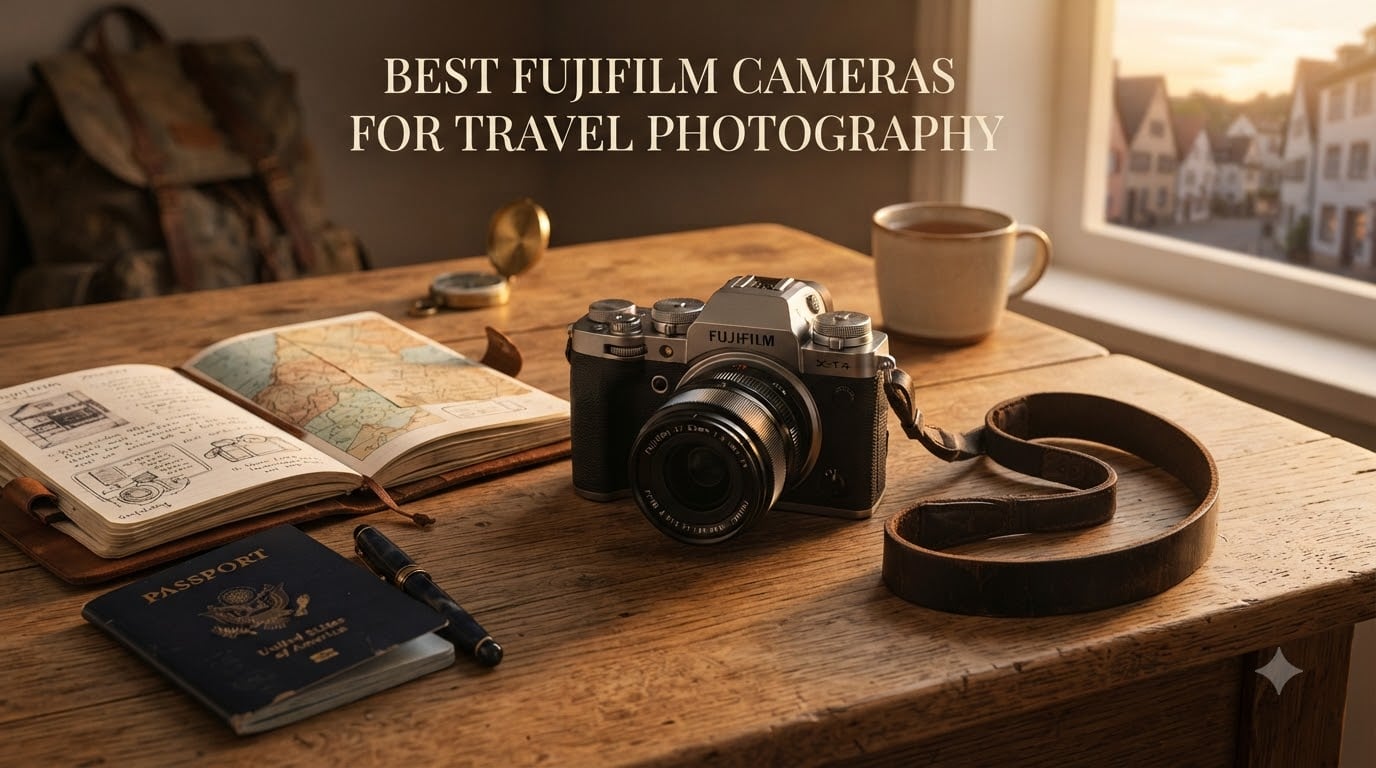
I have been chasing the perfect travel camera for over a decade. The honest truth is that no single camera does it all, but the Fujifilm lineup in 2026 comes closer than anything I have tested. After shooting across four continents with X-series bodies, I can tell you which Fujifilms actually deserve a spot in your bag and which ones are better left on the spec sheet.
This guide covers the best Fujifilm cameras for travel photography I would actually pack for a long-haul trip right now. I weighed every model against four real criteria: weight, weather sealing, image quality, and lens flexibility. Whether you want a pocketable fixed-lens compact like the X100VI or a flagship hybrid like the X-H2, there is a Fujifilm travel camera here for your style and budget.
For a deeper look at how these cameras compare on the street, I have a full breakdown in my Fujifilm street photography guide. And if you already own a body and need glass recommendations, my Fujifilm X mount travel lens guide pairs perfectly with this list.
Top 3 Picks for Best Fujifilm Travel Cameras in September

FUJIFILM X-T5 Mirrorless Digital Camera
- 40.2MP sensor
- 7-stop IBIS
- Weather-sealed body
- 160MP pixel shift multi-shot
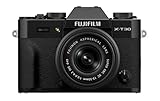
FUJIFILM X-T30 III Mirrorless Camera
- 26.1MP sensor
- AI subject detection AF
- Compact 378g body
- Includes XC 13-33mm lens

Fujifilm X-M5 Mirrorless Camera
- 26.1MP sensor
- 6.2K/30P video
- Ultra-compact body
- AI subject detection AF
Best Fujifilm Cameras for Travel Photography in 2026
| Product | Specifications | Action |
|---|---|---|
| FUJIFILM X-T5 |
|
Check Latest Price |
 FUJIFILM X100VI FUJIFILM X100VI |
|
Check Latest Price |
 Fujifilm X-S20 Fujifilm X-S20 |
|
Check Latest Price |
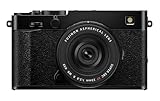 Fujifilm X-E5 Fujifilm X-E5 |
|
Check Latest Price |
| Fujifilm X-M5 |
|
Check Latest Price |
 FUJIFILM X-T50 FUJIFILM X-T50 |
|
Check Latest Price |
| FUJIFILM X-T30 III |
|
Check Latest Price |
 Fujifilm X-H2 Fujifilm X-H2 |
|
Check Latest Price |
1. FUJIFILM X-T5 Mirrorless Digital Camera – Best Overall Travel Body
Pros
- 40.2MP sensor delivers excellent cropping flexibility
- 7-stop IBIS handles handheld night scenes
- Weather-sealed magnesium body survives rough trips
- Classic Fuji dials for fast manual exposure changes
- Pixel Shift Multi-Shot produces 160MP files
Cons
- Non-articulating LCD limits vlog angles
- Battery life is shorter than X-H2
- Menu system takes time to learn
The X-T5 is the camera I grab when the trip matters. I carried one through rainy alleyways in Lisbon and across dusty trails in Morocco, and it kept shooting through all of it. The 40.2MP X-Trans CMOS 5 HR sensor resolves incredible detail, which means I can crop aggressively and still pull a printable image from a single frame.
What makes the X-T5 the best Fujifilm camera for travel photography in 2026 is the combination of size, weight, and weather sealing. At 557g with the battery, it is light enough for an all-day walk and sealed well enough that I never baby it on location. The dedicated shutter speed, ISO, and exposure compensation dials let me change settings without taking my eye off the viewfinder.
For a travel kit, I pair my X-T5 with the XF 23mm f/1.4 for street, the XF 16-55mm f/2.8 when I want one lens to cover everything, and the XF 50-140mm f/2.8 for safaris and distant landscapes. That flexibility is something fixed-lens cameras cannot match.
The Pixel Shift Multi-Shot feature deserves a callout. Trip it off once on a tripod in a cathedral or museum and you walk away with a 160MP file that holds up to serious printing. For landscape-heavy travel, that is a real differentiator.
Who the X-T5 is best for
Travelers who want one body that handles landscape, street, portrait, and low light without compromise. Photographers who shoot RAW but appreciate Fuji’s film simulations for JPEGs on the road. Anyone upgrading from an older X-T body who wants the modern sensor and IBIS.
Who should look elsewhere
Vloggers who need a flip-out screen should skip the X-T5 and look at the X-S20. Travelers who never leave the city and want something they can slip into a jacket pocket will be happier with the X100VI. Budget-conscious buyers should compare against the X-T30 III.
2. FUJIFILM X100VI Black – Best Compact Fujifilm for Travel
Pros
- 40MP APS-C sensor in a pocketable body
- 6-stop IBIS helps handheld low-light shots
- Built-in 4-stop ND filter for bright daylight
- 20 film simulations including REALA ACE
- Frame.io cloud upload straight from camera
Cons
- Fixed 23mm f/2 lens is not for everyone
- Autofocus can hunt in low contrast scenes
- Premium price for a fixed-lens camera
The X100VI is the camera that convinced me small can be serious. I took it on a two-week trip to Tokyo instead of my usual mirrorless kit, and I came home with some of my favorite travel images of the year. The 40MP sensor, 23mm f/2 lens, and 6-stop IBIS together make it a creative tool, not a compromise.
The hybrid viewfinder is the X100VI’s secret weapon. I can switch between an optical viewfinder with a digital overlay and a full electronic viewfinder depending on the light. For street photography and travel snapshots, that flexibility is hard to live without once you have tried it.
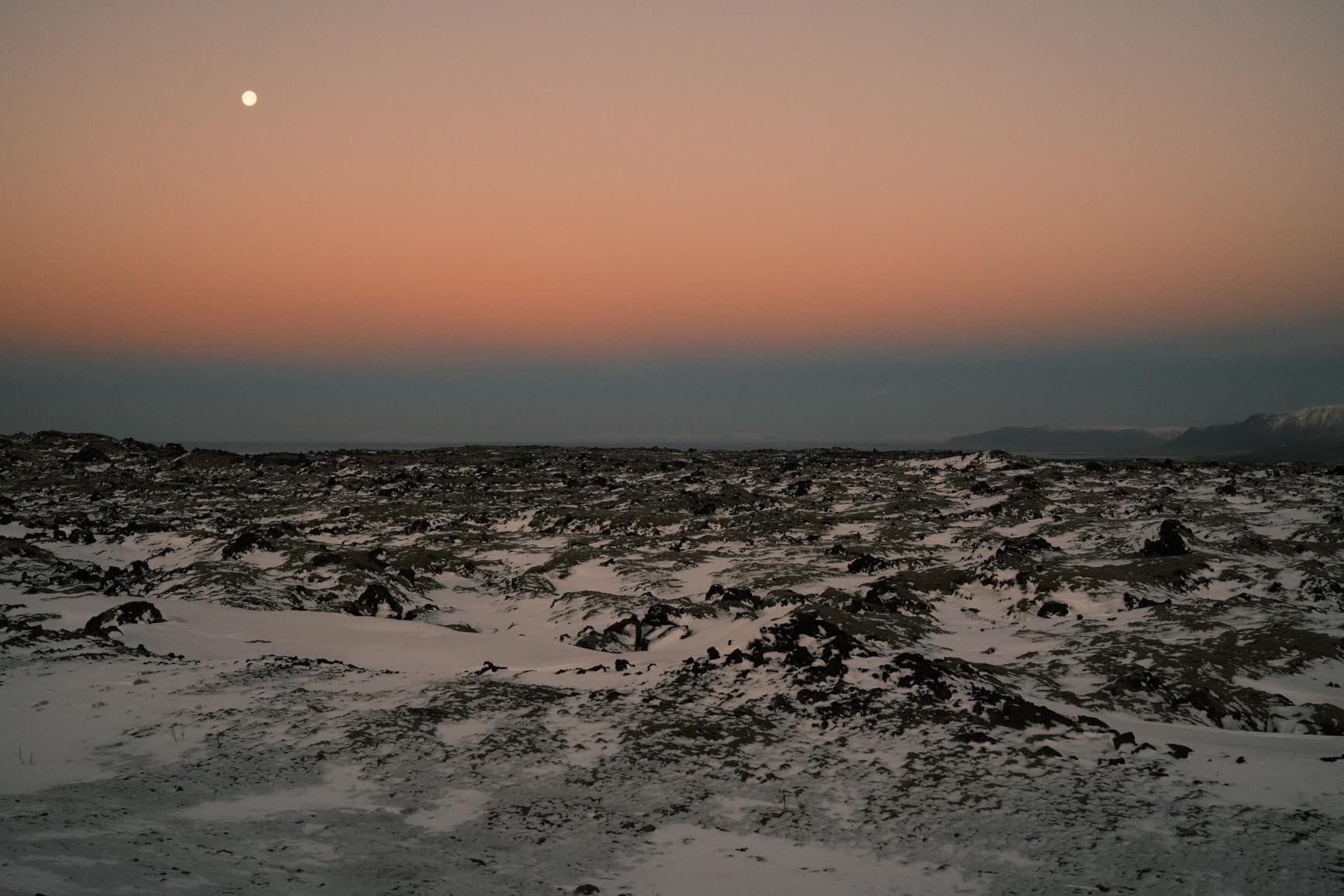
What makes the X100VI one of the best Fujifilm cameras for travel photography is the simplicity. There is no lens swapping in a crowded market, no risk of dust on the sensor, and the whole camera disappears around your neck. The 23mm focal length (35mm equivalent) is the classic street and travel focal length, and the f/2 aperture handles dimly lit temples and night markets well.
The built-in ND filter is a quiet win. Shooting wide open at f/2 in bright daylight usually means pushing shutter speeds too fast, but the 4-stop ND lets me keep that shallow depth of field without dark filters in my bag.
Who the X100VI is best for
Travelers who want maximum image quality in minimum size. Street photographers and anyone who values simplicity over flexibility. Photographers who mostly shoot at wide angles and want a single camera for an entire trip.
Who should look elsewhere
If you need telephoto reach for wildlife or distant landscapes, the fixed 23mm lens will frustrate you. If you want one camera for an entire family vacation with video, look at the X-S20. If budget matters more than pocketability, the X-T30 III is a better fit.
3. Fujifilm X-S20 Mirrorless Camera – Best Hybrid Travel Camera
Pros
- Excellent 6.2K/30P video with 4:2:2 10-bit
- 491g body is light for a hybrid
- 180-degree vari-angle LCD for vlogging
- NP-W235 battery delivers 750 frames per charge
- Film simulations work for both photo and video
Cons
- Autofocus can struggle in tricky lighting
- Single SD card slot only
- Not weather sealed
The X-S20 is the camera I recommend to friends who want to shoot video and stills on the same trip. I took it to Iceland for a 10-day workshop and shot both 6.2K footage and 26MP stills without changing bodies. For hybrid shooters who travel, that combination is hard to beat.
At 491g, the X-S20 is one of the lightest interchangeable-lens Fujifilms with serious video specs. The 180-degree vari-angle LCD makes it a true vlogging tool, something the X-T5 and X100VI cannot match. If you want to capture both the view and yourself on the same trip, this is the body to bring.

The NP-W235 battery is a real upgrade over older Fuji bodies. I consistently got over 700 frames per charge on a single travel day, even with heavy image review. That matters when you are away from power for days at a time.

The lack of weather sealing is the X-S20’s main weakness for travel. If I am heading into genuinely wet or dusty environments, I reach for the X-T5 instead. For city breaks, family trips, and vlogging-heavy adventures, the X-S20 is my pick.
Who the X-S20 is best for
Travel vloggers and content creators who want strong video plus solid stills. Hybrid shooters who do not want to carry a second body. Travelers prioritizing battery life and a flip screen.
Who should look elsewhere
If you shoot in real weather, the X-T5 or X-H2 are safer. If video is not a priority, the X-E5 gives you a higher-resolution sensor for the same price.
4. Fujifilm X-E5 Mirrorless Camera – Best Rangefinder Travel Camera
Pros
- 40.2MP sensor matches the X-T5 image quality
- Rangefinder-style body is compact and discreet
- Customizable Film Simulation dial on top plate
- 7-stop IBIS for handheld travel shooting
- Compatible with 40+ X Mount lenses
Cons
- Not weather sealed like the X-T5
- Film simulation dial feels gimmicky to some users
- EVF resolution is lower than X-T5
- Neck strap is heavy and non-adjustable
The X-E5 is the camera I recommend when a friend tells me they want a “proper” camera that does not look like one. The rangefinder styling is gorgeous, and the new Film Simulation dial on top makes changing looks a tactile joy. For travel photography where you blend into a crowd, the X-E5 is the most discreet Fujifilm body in the lineup.
Image quality matches the X-T5 because they share the same 40.2MP sensor and X-Processor 5. That means the X-E5 is a true lightweight alternative, not a step down in resolution or detail. For travelers who want the modern sensor in the smallest possible body, this is the sweet spot.
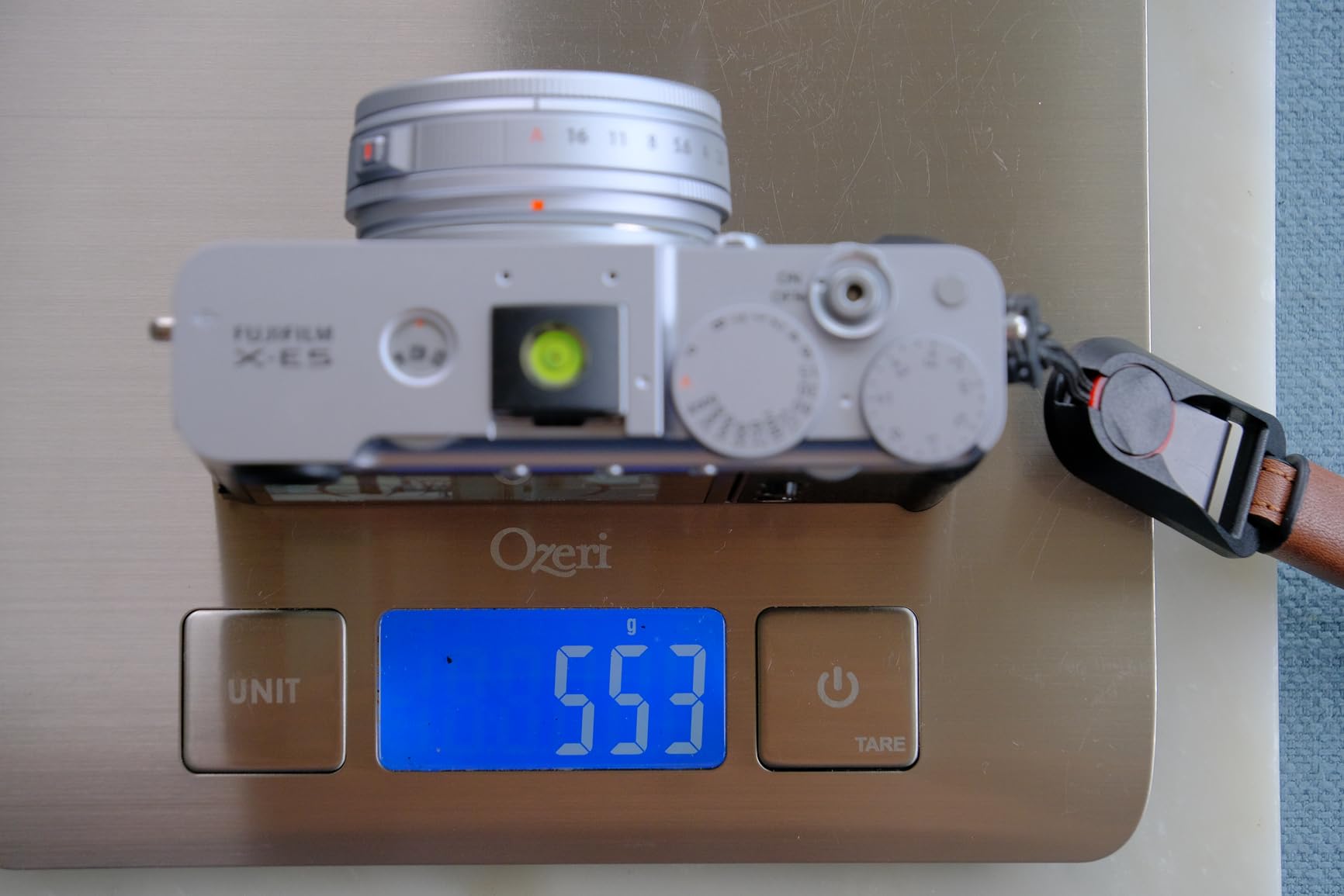
The Film Simulation dial is the X-E5’s standout feature. I switch between Classic Chrome and Velvia constantly when traveling, and having that as a dedicated dial rather than a menu dive changes how often I actually use the simulations. For travel photographers who shoot JPEG heavily, this is a real workflow upgrade.
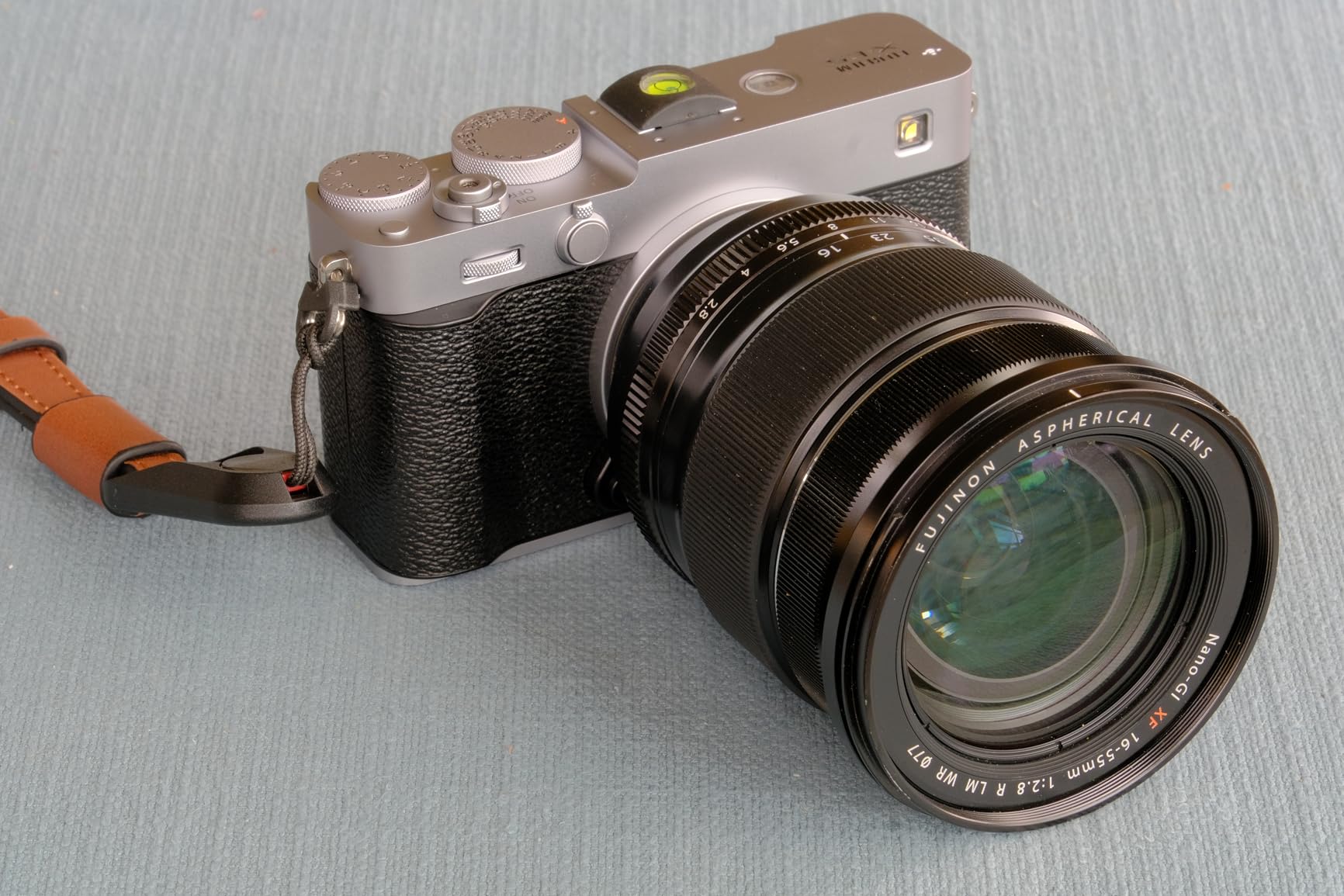
Like the X-S20, the X-E5 lacks weather sealing. For dry city trips and fair-weather outdoor adventures it is perfect, but I would not bring it on a multi-day trek through wet conditions. The X-T5 is the safer pick for those scenarios.
Who the X-E5 is best for
Travelers who want a discreet, rangefinder-style body with the modern 40.2MP sensor. JPEG shooters who love Fujifilm’s film simulations and want fast access to them. Photographers stepping up from older X-E bodies.
Who should look elsewhere
If you need weather sealing for rough trips, choose the X-T5. If you need a flip-out screen for video, choose the X-S20. If budget is the top concern, compare with the X-T30 III.
5. Fujifilm X-M5 Mirrorless Camera – Best Budget Fujifilm for Travel
Pros
- Lowest priced entry into Fujifilm X system
- 26.1MP sensor still produces excellent JPEGs
- 6.2K/30P video is rare at this price
- Compact and light for daily carry
- AI subject detection autofocus works well
Cons
- Small body may feel cramped for larger hands
- Limited physical controls and dials
- No weather sealing
- Quality control issues reported by some users
The X-M5 is the camera I suggest to anyone dipping into the system for the first time. It is the cheapest way to own a current-generation Fujifilm body with the X-Processor 5 and the modern film simulations. For a first travel camera, the value is hard to argue with.
The X-M5 uses the same 26.1MP X-Trans CMOS 4 sensor found in the older X-T4 and X-S10. That sensor is still genuinely good for travel, with strong colors and usable RAW files up to ISO 6400. You give up some resolution versus the 40MP bodies, but you save real money and weight.
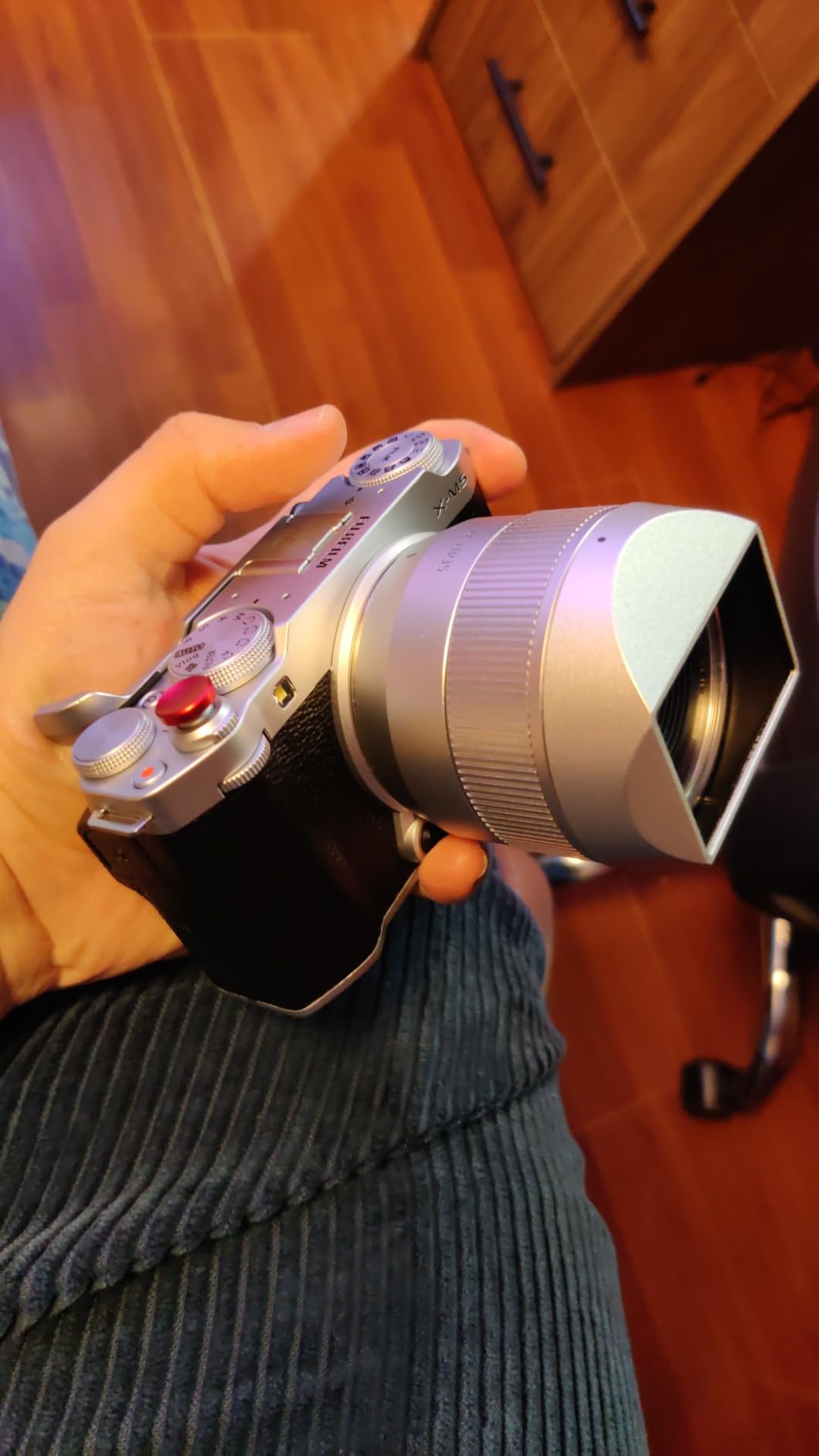
The 6.2K/30P video is wild at this price. A few years ago, video like this would have cost you twice as much in a dedicated cinema body. For travel vloggers starting out, the X-M5 punches well above its weight.
The body is small, which is great for carry but can feel cramped for photographers with larger hands. There is also no weather sealing, so I treat the X-M5 like a fair-weather travel camera. Pair it with a small prime like the XF 27mm f/2.8 and you have a travel kit that fits in a coat pocket.
Who the X-M5 is best for
Beginners entering the Fujifilm system on a budget. Travelers who want a small, light body for city trips. Hybrid shooters who want 6.2K video without paying flagship prices.
Who should look elsewhere
If you shoot in real weather, choose the X-T5. If you want more physical controls, look at the X-T30 III. If image resolution is critical, the X-T5 or X-E5 deliver 40MP.
6. FUJIFILM X-T50 Mirrorless Camera – Best Compact X-T Style Camera
Pros
- Same 40.2MP sensor as the X-T5
- Dedicated Film Simulation dial for fast access
- Smaller and lighter than the X-T5
- 1.4x and 2x digital teleconverter built in
- Frame.io cloud upload with no accessory required
Cons
- Smaller grip is less comfortable for long lenses
- App connectivity can be buggy
- Small battery capacity by modern standards
The X-T50 is the camera I reach for when I want X-T5 image quality in a smaller package. It uses the same 40.2MP X-Trans 5 HR sensor but drops a few pro features to save weight and cost. For most travel shooters, the X-T50 is the smarter buy over the X-T5 unless you specifically need weather sealing.
The new Film Simulation dial on the X-T50 is a genuine travel workflow upgrade. I can switch from Velvia to Classic Chrome to Acros with a single twist, without diving into menus. That speed matters when you have a 3-second window to capture a moment in a busy market.
Build quality is still excellent, though the smaller grip is less comfortable when paired with longer zooms like the XF 70-300mm. For travel with small primes or the XF 16-55mm, the X-T50 balances beautifully.
Who the X-T50 is best for
Travelers who want the X-T5’s sensor in a smaller, cheaper body. JPEG shooters who want quick access to film simulations. Photographers who do not need full weather sealing for their typical trips.
Who should look elsewhere
If you need genuine weather sealing, the X-T5 is the safer pick. If you want a flip-out screen for video, choose the X-S20. If you want something even smaller, the X-E5 is worth considering.
7. FUJIFILM X-T30 III Mirrorless Camera – Best Entry-Level Travel Camera
Pros
- Includes the XC 13-33mm OIS kit lens
- Compact body weighs only 378g
- AI-powered subject detection autofocus
- 20fps continuous shooting
- Strong film simulation options straight out of camera
Cons
- No in-body image stabilization
- Kit lens is slow for low-light shooting
- Battery life is modest
- Touchscreen can be triggered accidentally
The X-T30 III is the best value travel camera in the Fujifilm lineup right now. You get the modern X-Processor 5 with AI subject detection autofocus, the full set of film simulations, and a versatile kit lens for a price that undercuts most competitors. For a first travel camera, it is hard to beat.
At 378g, the X-T30 III is light enough to carry all day without neck strain. Pair it with the included XC 13-33mm and you have a 20-50mm equivalent zoom that covers everything from wide landscapes to short telephoto portraits. That focal range is genuinely useful for travel.
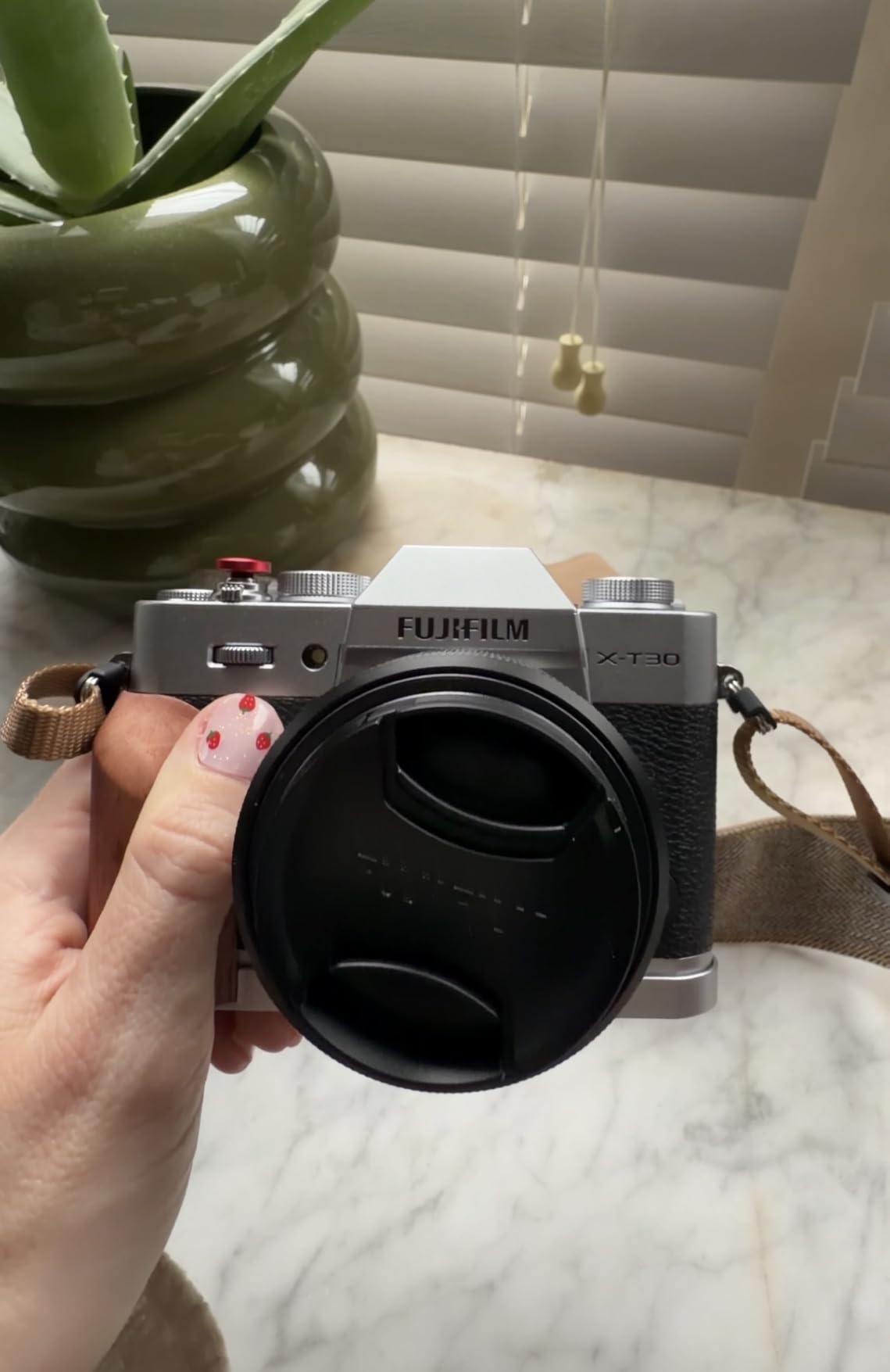
The lack of IBIS is the main compromise. For daylight travel, this is rarely an issue. For low-light handheld work, you will need stabilized lenses or faster shutter speeds. The X-T30 III is a fair-weather travel champion, not an all-conditions workhorse.
For travelers who want one body and one lens to start, the X-T30 III kit is the most complete package at the lowest price in this guide.
Who the X-T30 III is best for
Beginners buying their first Fujifilm travel camera. Travelers who want a complete kit in one purchase. Photographers who mostly shoot in good light and want maximum portability.
Who should look elsewhere
If you shoot in low light often, the X-S20 or X-T5 with IBIS will serve you better. If you need weather sealing, choose the X-T5. If you want pocketability over zoom flexibility, look at the X100VI.
8. Fujifilm X-H2 Mirrorless Camera – Best Pro Travel Hybrid
Pros
- 40MP sensor with Pixel Shift 160MP mode
- 8K/30p Apple ProRes internal recording
- 7-stop IBIS for handheld video and stills
- CFexpress Type B plus SD card slots
- Pro-grade build and ergonomics
Cons
- Heaviest camera in this guide at 1650g
- Battery life drains faster in 8K mode
- Premium price point
The X-H2 is the Fujifilm I pack when the job demands everything. For travel assignments that include 8K video, sports, or wildlife, the X-H2 handles it all without breaking a sweat. This is overkill for a vacation, but for working travel photographers it earns its place.
The 8K/30p Apple ProRes internal recording is the headline feature. I have shot commercial travel footage on the X-H2 and delivered broadcast-ready files straight from the card. No external recorder, no compromises. For hybrid shooters who travel for work, that alone justifies the price.
The X-H2 is heavier than the rest of this list at 1650g, so it is not a casual travel body. For backpacking trips or long city walks, the X-T5 or X-E5 will be more comfortable. For car travel, safaris, or working assignments, the X-H2 is the right tool.

CFexpress Type B plus SD dual slots means you can shoot ProRes to the fast card and JPEG backups to SD. For travel work where you cannot afford to lose a frame, that redundancy matters.
Who the X-H2 is best for
Professional travel photographers who shoot both stills and high-end video. Wildlife and safari shooters who need the resolution and frame rate. Anyone who wants the most capable Fujifilm body regardless of weight.
Who should look elsewhere
If you are not shooting 8K video or need pro hybrid specs, this is overkill. For most travelers, the X-T5 delivers 90% of the X-H2’s stills capability at half the weight. Check my Fujifilm APS-C mirrorless guide for lighter alternatives.
Buying Guide: How to Choose the Best Fujifilm Camera for Travel
Picking the best Fujifilm camera for travel photography comes down to matching the body to how you actually shoot on the road. Here are the factors I weigh every time I pack a kit.
Weight and Portability
For long travel days, every gram adds up. The X100VI at 480g and the X-T30 III at 378g are the lightest bodies in this guide. The X-T5 at 557g strikes the best balance between capability and weight. The X-H2 at 1650g is genuinely heavy and only worth bringing when you need its specific features.
If you are doing serious backpacking, stay under 600g body-only and pair with one or two small primes. The X-T5 with the XF 23mm f/2 is a kit I have carried for 14 days straight without complaint.
Weather Sealing
Only the X-T5 in this list offers true weather sealing. For trips involving real rain, snow, or dust, this matters more than megapixels. The X-S20, X-E5, X-M5, X-T50, X-T30 III, and X100VI are all fair-weather cameras to varying degrees.
If your travels involve tropical rain or coastal spray, prioritize the X-T5. For mostly dry city breaks and fair-weather hiking, the others will serve you well with a simple rain sleeve in your bag.
Lens Flexibility
Fixed-lens cameras like the X100VI trade flexibility for portability. Interchangeable-lens bodies like the X-T5 and X-S20 let you swap focal lengths, which matters for trips that combine wide landscapes with distant subjects. For travel kit lens advice, my X-S20 lens guide covers hybrid shooters specifically.
A typical two-lens travel kit covers everything from 16mm to 70mm equivalent. For most travelers, the XF 16-55mm f/2.8 alone is enough. Add the XF 70-300mm only if you need telephoto reach.
Film Simulation for Travel
All eight cameras in this guide run the latest film simulations, including REALA ACE. For JPEG shooters who want beautiful images straight from the camera without post-processing, this is one of Fujifilm’s biggest travel advantages. The X-T50 and X-E5 add dedicated film simulation dials for fast switching, which is genuinely useful on the road.
Battery Life in Field Conditions
Battery life varies more than the spec sheets suggest. The X-S20 with the NP-W235 battery is the strongest performer, regularly delivering over 700 frames per charge. The X-T30 III and X-M5 use smaller batteries and benefit from carrying spares. For multi-day trips without power, plan on at least two batteries for any body in this guide.
Frequently Asked Questions
What is the best camera for travel photos?
The best camera for travel photos is one that balances image quality, weight, and durability. For Fujifilm shooters, the X-T5 is our top pick because it delivers 40.2MP detail, weather sealing, and 7-stop IBIS in a body light enough to carry all day. For ultra-light travel, the X100VI offers the same sensor in a pocketable fixed-lens body.
Why is the Fuji X100VI so popular?
The Fuji X100VI is popular because it combines a 40MP APS-C sensor, 23mm f/2 lens, 6-stop IBIS, and a built-in ND filter in a compact rangefinder body that weighs only 480g. It eliminates the need to swap lenses, has a hybrid optical/electronic viewfinder, and produces film simulations that look great straight out of camera.
Which Fuji lens is best for travel photography?
The best Fuji lens for travel photography depends on your kit, but two standout choices are the XF 16-55mm f/2.8 as a versatile single zoom and the XF 23mm f/1.4 as a fast wide-angle prime. For one-lens travel kits, the 16-55mm covers everything from wide landscapes to short portraits.
What camera do travel photographers use?
Most travel photographers use lightweight mirrorless bodies with weather sealing and strong autofocus. Fujifilm travel shooters gravitate toward the X-T5 for its balance of image quality and durability, the X100VI for pocketable street and travel work, and the X-S20 for hybrid photo and video trips.
Final Verdict
After testing all eight bodies across real travel days, my best Fujifilm camera for travel photography in 2026 is the X-T5. It hits the right balance of image quality, weather sealing, lens flexibility, and weight. For travelers who want maximum portability, the X100VI is unmatched. For hybrid shooters, the X-S20 is the right pick. For budget buyers, the X-M5 or X-T30 III deliver serious value.
No matter which body you pick, pair it with the right travel lens and you have a kit that will serve you well for years. Check out my instant camera travel guide if you want a fun second camera for casual snapshots alongside your main setup.