
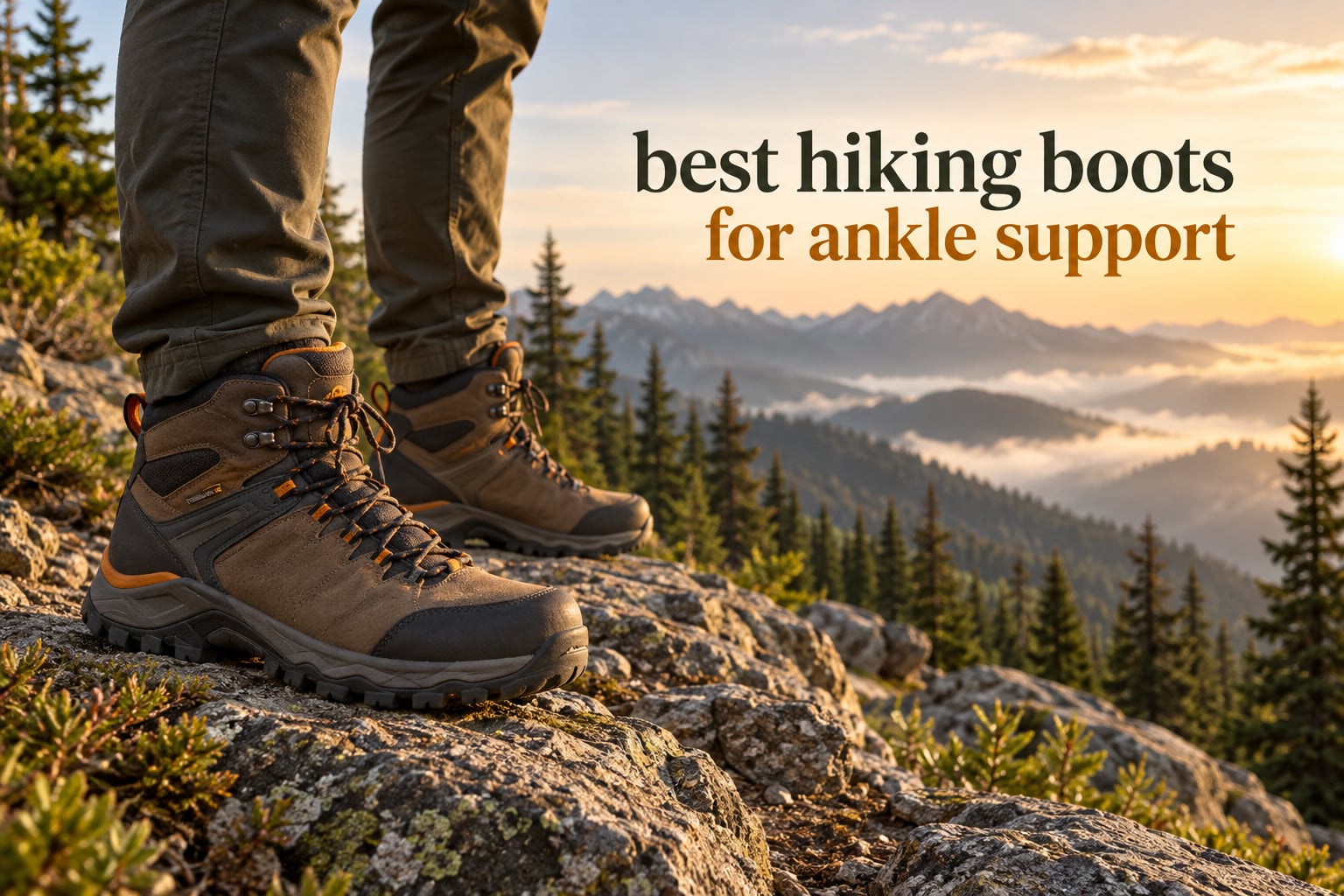
Two very different people search for the best hiking boots for ankle support. One is a healthy hiker heading onto talus, off-camber ground and long descents with a loaded pack, and wants the foot to stop wobbling on every off-camber step. The other has genuinely loose ankles, a sprain that never quite settled, or a doctor who mentioned instability, and needs footwear that compensates for something their ligaments cannot do alone.
Those two shoppers want different boots. We spent the last few months reading owner reviews, comparing shanks, heel counters and shaft heights, and matching them to the terrain that produces most of the wobble in the first place. What follows is our roundup of the best hiking boots for ankle support, organised the way hikers actually think: by what you are walking on and how much you are carrying.
We also start with the argument most people have already read on a forum, because it deserves a straight answer rather than a sales pitch.
Do Hiking Boots Actually Prevent Ankle Injuries?
Partly. A mid or high-cut boot that wraps above the ankle bone, plus a stiff shank under the arch, measurably reduces how much side-to-side movement your ligaments have to control on unstable ground. Evidence does not show that boots prevent sprains in general, and a heavy stiff boot carried over long distances can weaken ankles over time.
That is the honest split. On rocky ground, loose scree, off-camber traverses and steep loaded descents, a supportive boot genuinely does the work your ankle would otherwise be doing. The r/backpacking crowd is not wrong that the extra weight on the foot is a real cost, and one user on rokslide.com ties two decades of daily wildland fire boots to weaker ankles over time.
So the question is not whether boots are good. It is whether the terrain in front of you justifies the weight and the stiffness. On a maintained gravel path, a stiffer boot is just a heavier boot. On talus with a heavy pack, it is the difference between a controlled step and a roll.
Top 3 Picks for Best Ankle Support in 2026

Timberland White Ledge Mid
- Waterproof leather upper
- Fully gusseted tongue
- EVA footbed and midsole


Quick Overview Best Hiking Boots for Ankle Support in September
All ten boots below share one thing: an upper that rises above the ankle bone. They differ in how they deliver support, which is why we have labelled each one by terrain and pack load rather than by a single ranking.
| Product | Specifications | Action |
|---|---|---|
| Timberland Men’s White Ledge Mid Waterproof Hiking Boots |
|
Check Latest Price |
 NORTIV 8 Men’s Ankle High Waterproof Hiking Boots NORTIV 8 Men’s Ankle High Waterproof Hiking Boots |
|
Check Latest Price |
| KEEN Men’s Targhee 2 Mid Height Waterproof Hiking Boots |
|
Check Latest Price |
 Timberland Men’s Mt. Maddsen Hiking Waterproof Boots Timberland Men’s Mt. Maddsen Hiking Waterproof Boots |
|
Check Latest Price |
| Merrell Men’s Moab 3 Mid Waterproof Hiking Boots |
|
Check Latest Price |
 Women’s Hiking Boots Lightweight Waterproof, Ankle Support Women’s Hiking Boots Lightweight Waterproof, Ankle Support |
|
Check Latest Price |
 adidas Men’s Terrex Anylander Mid Top Rain.Rdy adidas Men’s Terrex Anylander Mid Top Rain.Rdy |
|
Check Latest Price |
 Columbia Men’s Fairbanks Mid Hiking Boots Columbia Men’s Fairbanks Mid Hiking Boots |
|
Check Latest Price |
 Columbia Men’s Newton Ridge Plus II Waterproof Hiking Shoe Columbia Men’s Newton Ridge Plus II Waterproof Hiking Shoe |
|
Check Latest Price |
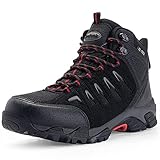 SHULOOK Men’s Waterproof Mid Top Ankle Boot SHULOOK Men’s Waterproof Mid Top Ankle Boot |
|
Check Latest Price |
1. Timberland Men’s White Ledge Mid Waterproof Hiking Boots – Best Overall Ankle Support
Pros
- Waterproof premium leather upper with fully gusseted tongue blocks wet
- snow and debris
- EVA footbed and midsole deliver all-day cushioning
- Rustproof speed lace hardware with top lace hooks for a secure adjustable fit
- ReBOTL fabric lining adds comfort for long wear
Cons
- Leather upper requires break-in time before it fully conforms to the foot
- Wide range of colour and size options means many buyers must select a specific variant
This is the boot we recommend most often, and the reason is not exotic. It is a leather mid cut with a fully gusseted tongue, lace hooks right up at the top of the shaft, and an EVA footbed and midsole that keep it comfortable enough for a full day. At 1.1 pounds it is one of the lighter leather boots here, which matters more than buyers expect on a long descent.
The ankle support comes from the shaft sitting above the malleolus and the tongue being gusseted, so grit does not end up pushing the boot sideways. For someone who rolls an ankle on a descent rather than on the flat, that combination is the whole point.
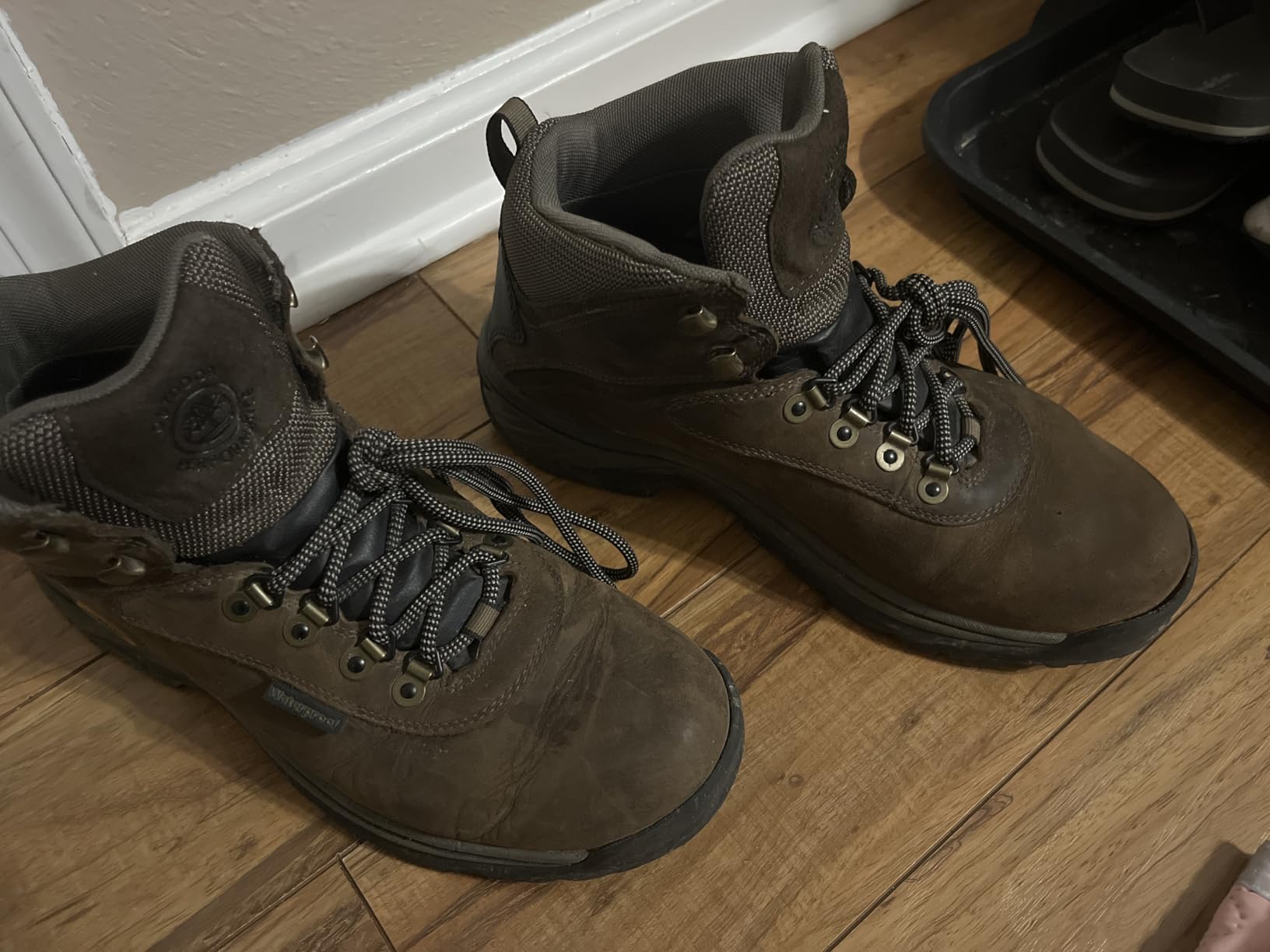
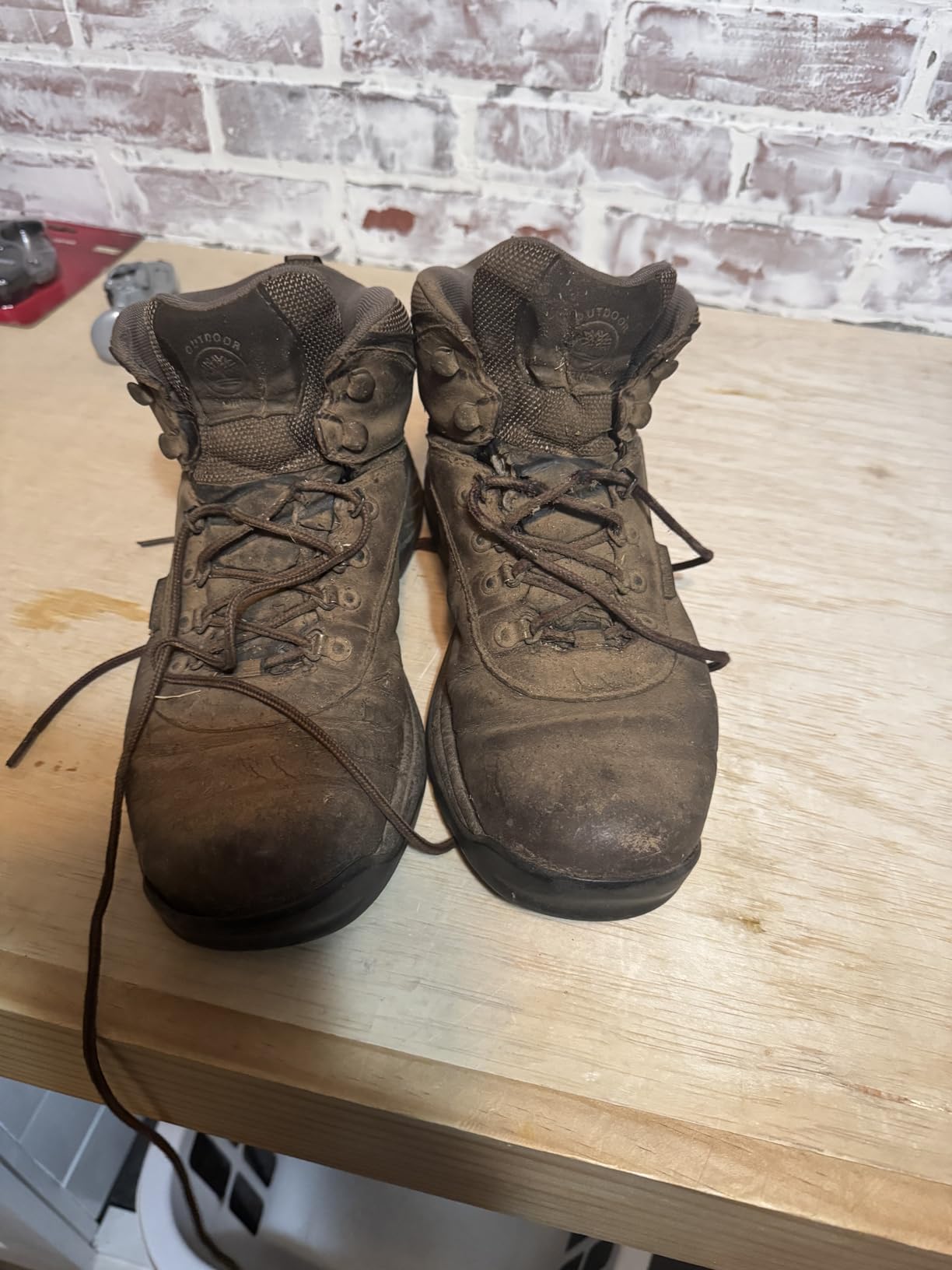
With a review base this large, patterns are clear. Owners consistently talk about durable waterproof leather, strong tread and comfort that holds up over long days. The rating sits at 4.5 across nearly 68,000 reviews, which tells you the failure rate is low and the fit is predictable.
That predictability is the underrated advantage. A boot you have to fight is a boot you will not wear on the trip where you needed it. This one laces easily, adjusts at the ankle, and works with ordinary hiking socks without a fight.
Who the White Ledge Mid suits
It suits the hiker who wants one boot for everything: wet forest trail in the morning, loose ground in the afternoon, and a campground at the end. The waterproof leather handles rain and mud without the breathability trade-off of a membrane-only synthetic.
It also suits anyone who does not want to think hard about fit. Owners describe it as comfortable out of the box, which is unusual for a full leather boot.
Where it falls short
The leather needs break-in. Reviewers are consistent on that, and a boot that has not moulded to your heel yet will not deliver the lockdown that makes it worth having. Wear it on two or three shorter trips before the long one.
It is also not a light pack boot. If you are counting grams on a fast-and-light trip, a lighter synthetic mid will serve you better. For support on moderate ground with a normal day pack, that trade is not worth making.
2. NORTIV 8 Men’s Ankle High Waterproof Hiking Boots – Best Budget Entry
Pros
- Removable shock-absorbent cushioned insole delivers all-day support
- Lightweight flexible EVA midsole reduces foot fatigue on long walks
- Rubber outsole with advanced traction grips wet muddy and uneven ground
- Very affordable entry point for a waterproof hiking boot
Cons
- Ankle-high collar provides less lateral support than a taller mid or high boot
- Sizing runs narrow for some buyers especially at the toe box
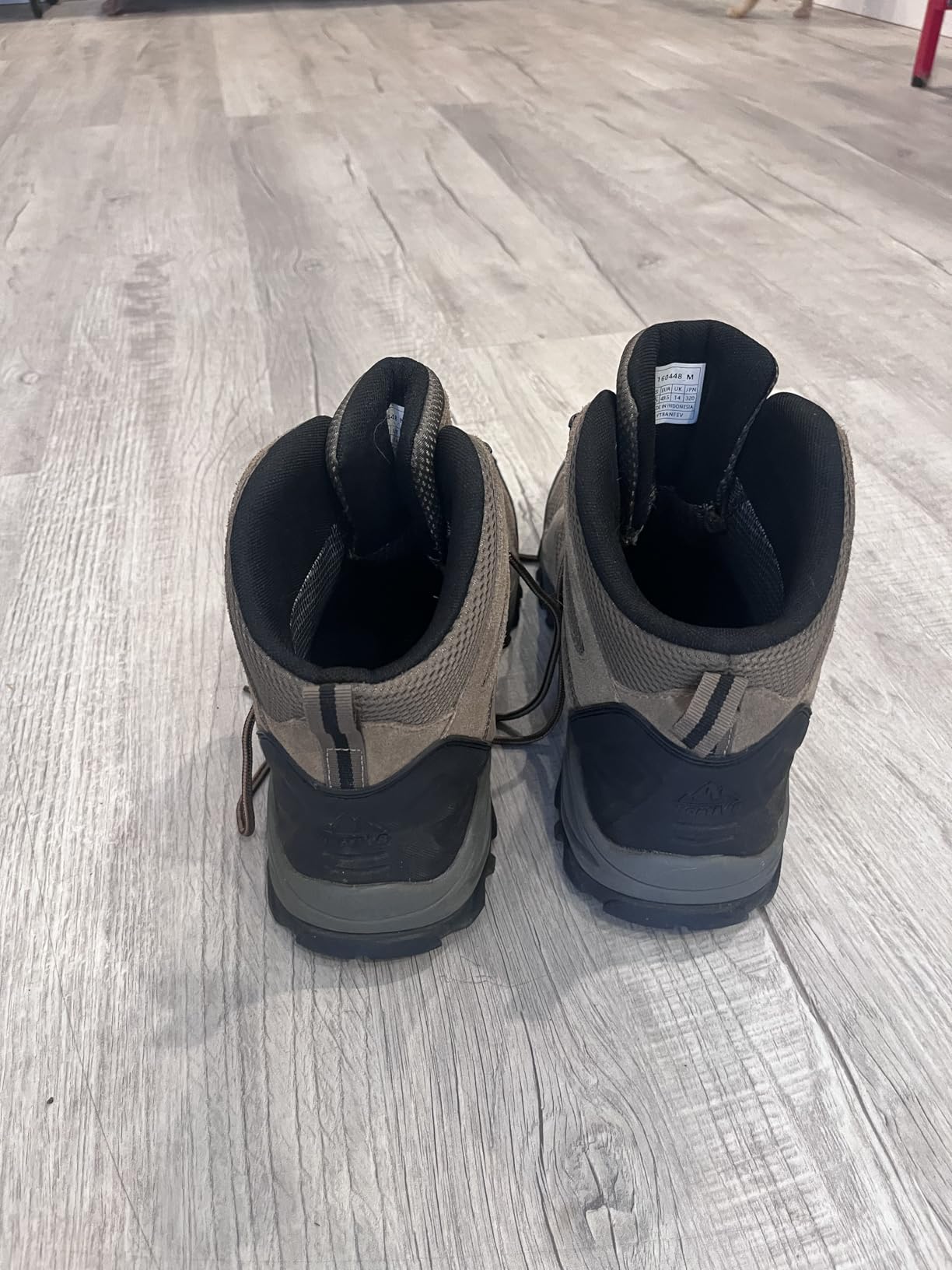
This is the honest budget answer, and it comes with a caveat we would rather state than bury. The collar sits at ankle height, which means the shaft barely rises above the ankle bone. You get a firm, stable platform and good grip, but not the side-to-side resistance a true mid cut provides.
What you do get is a removable shock-absorbent insole, a flexible EVA midsole that returns energy, and a rubber outsole with traction that reviewers say holds on wet and muddy ground. It ranks second in its category, so this is not a marginal product.
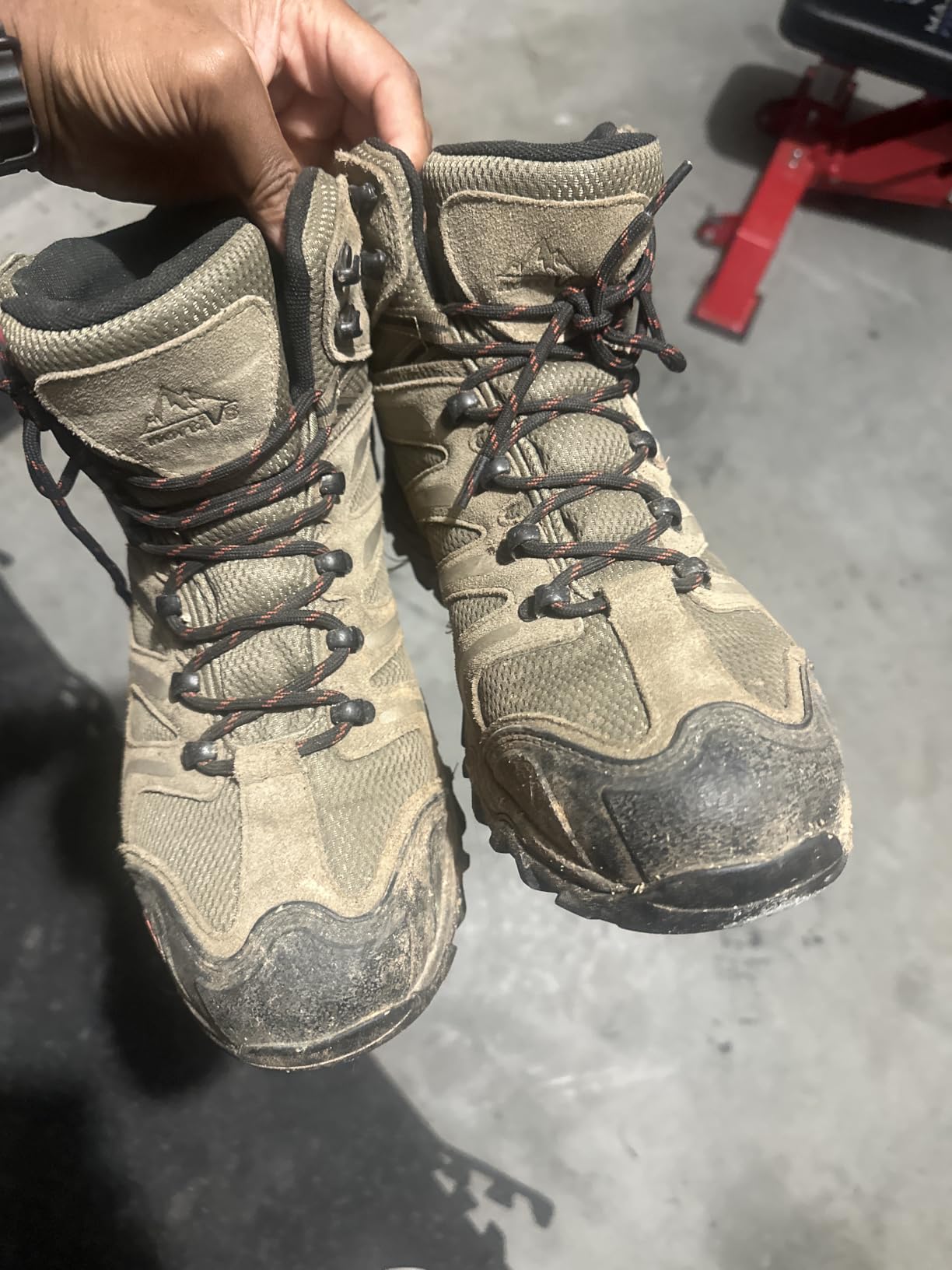
Rated 4.4 across more than 23,000 reviews, the feedback centres on cushioning and grip, with one recurring gripe: the fit runs snug, particularly at the toe box. If you have a wide foot, read the sizing notes carefully before ordering.
The removable insole is a quiet advantage. You can swap in an arch insert or a thinner insole later, which is not true of every boot in this range and makes a big difference over a long trip.
Who the NORTIV 8 suits
It suits someone who wants a waterproof, grippy boot for gravel paths, forest track and light mud without a large outlay. The traction and cushioning do most of the work here, not the shaft.
It also suits anyone moving up from a trail shoe who wants a stiffer, more weatherproof platform for day hiking rather than backpacking.
Where it falls short
If your ankles genuinely roll, this is not the boot. The collar height is the limiting factor, and no amount of lacing fixes a shaft that stops at the joint. Choose a mid cut such as the KEEN Targhee or the Timberland above instead.
The narrow fit is the second limitation. Several buyers size up, and the toe box is the area that suffers if they do not.
3. KEEN Men’s Targhee 2 Mid Height Waterproof Hiking Boots – Best for Weak Ankles
KEEN Men’s Targhee 2 Mid Height Waterproof Hiking Boots, Martini Olive/Khaki, 13 Wide US
Pros
- External support shank plus mid cut height add real balance and ankle stability
- Roomy KEEN Original Fit toe box suits wide feet and thick socks
- KEEN.DRY membrane keeps feet dry in mud streams and snow while staying breathable
- Contoured heel and removable arch-support footbed cradle the foot
- Traction holds up on rock mud and wet trail surfaces
Cons
- Stiff out of the box and needs a break-in period of several weeks
- Insole supplied in the box is basic compared to after-market KEEN insoles
- Rubber lace speed hooks are less durable than the metal hooks used on the upper models
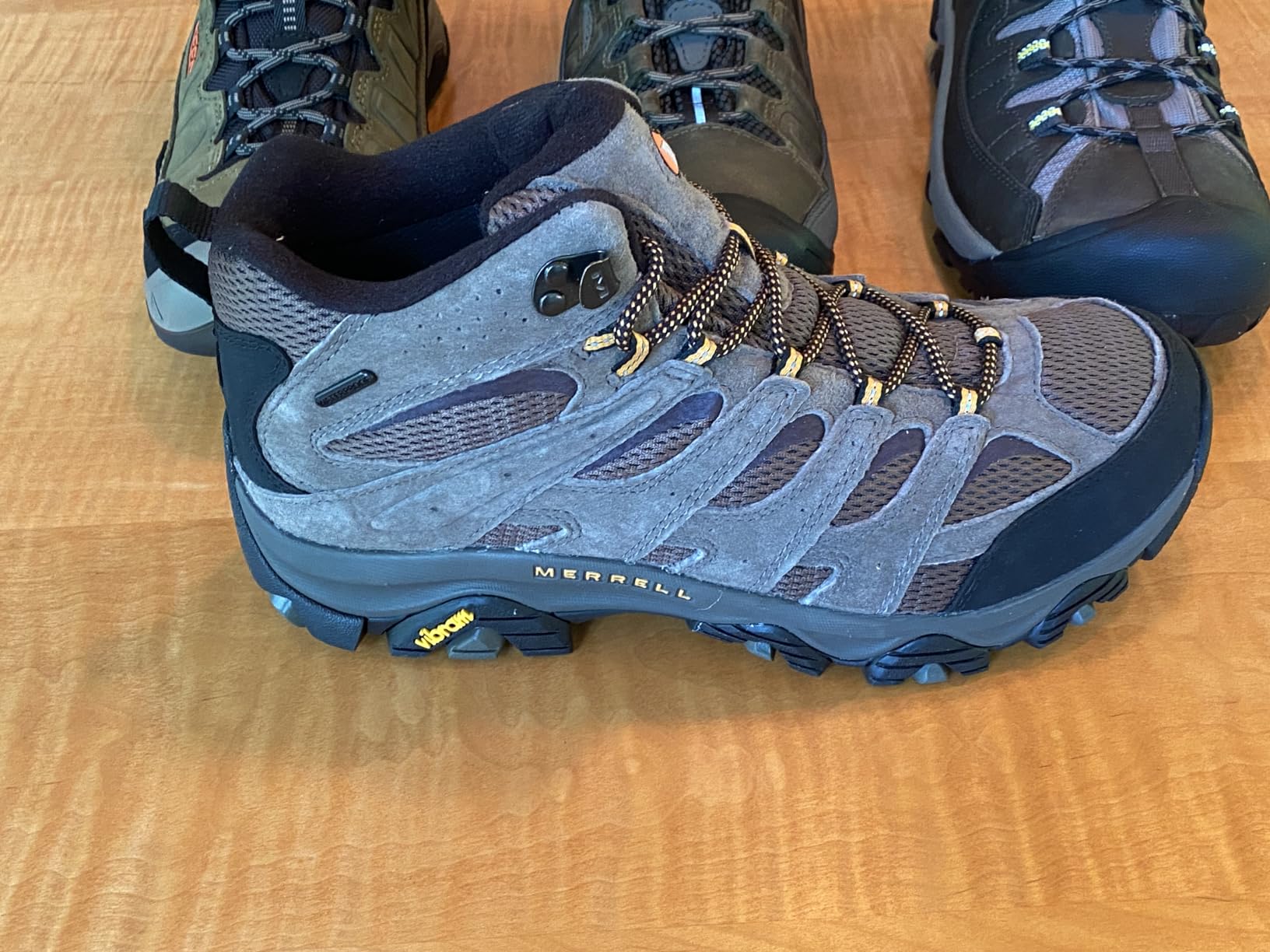
If you read one review section in this roundup for the weak-ankle shopper, read this one. The Targhee 2 Mid is the only boot here that names its support hardware in the spec sheet: an external support shank under the arch, a mid cut height, and a contoured heel. That is the combination that limits inversion when the ground tilts under you.
The waterproof side is strong too. The KEEN.DRY breathable membrane with a bruise plate kept feet dry through mud, streams and snow in owner reports, and the 4mm multi-direction lugs hold on rock and wet trail.
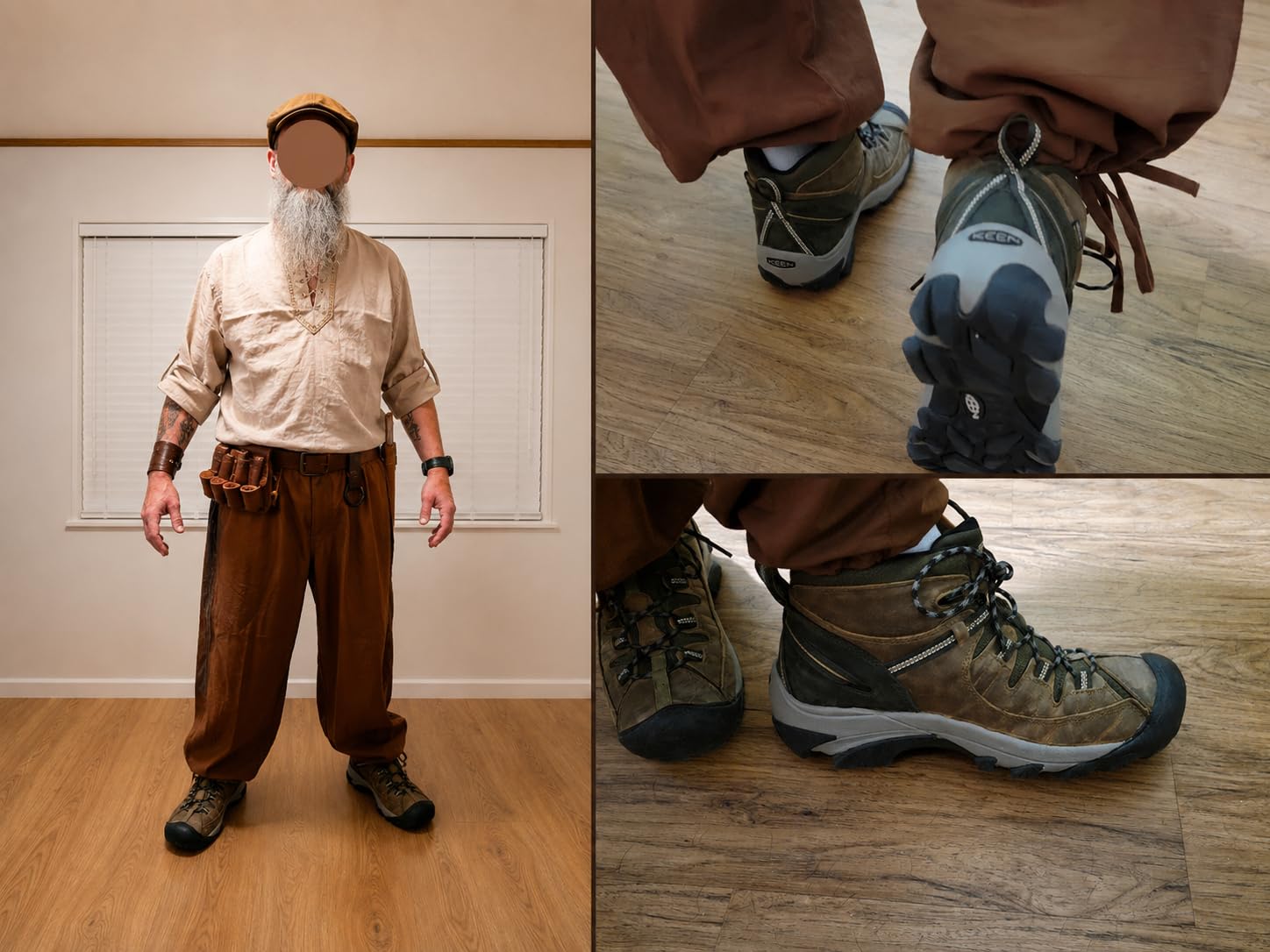
Comfort is the recurring theme in the reviews, and it comes from the toe box. KEEN’s Original Fit last is genuinely roomy, which matters twice over: your toes keep moving, and you have room for the thick socks most owners actually wear.
The 4.2 rating across more than 13,000 reviews reflects one recurring theme, and it is not a support problem. Owners describe stiffness for the first few weeks.
Who the Targhee 2 Mid suits
It suits hikers with a history of ankle sprains who need a real shank rather than a nominal shaft height. The external support shank is the feature that separates it from most mid cuts in this price band.
It also suits wide-footed hikers, which is a genuinely hard combination to find: supportive mid cut, roomy toe box, waterproof, at a sensible price.
Where it falls short
The break-in is long. Owners describe several weeks of stiffness before serious hiking, and if you have a trip booked next month, buy something else or start walking in them now. A minority of pairs also report sole and lug separation, which is worth knowing about at the 4.2 average.
The stock footbed is basic too. Most owners who go further replace it with an after-market insole, which is a small extra cost and a large comfort gain.
4. Timberland Men’s Mt. Maddsen Hiking Waterproof Boots – Best With No Break-In
Timberland Men’s Mt. Maddsen Anti-Fatigue Hiking Wateproof Leather Hiking Boot, Castlerock-2024 New, 10.5 Wide
Pros
- Comfortable straight out of the box with little or no break-in
- Soft full-grain leather upper flexes to relieve pressure points and cleans up easily after mud
- Sticky quiet rubber outsole grips well and sheds snow and streams
- Anti-fatigue removable footbed and long laces let you dial in a secure heel lock
- Wide sizing available for broad feet
Cons
- Runs slightly small so some buyers size up a half size
- Tongue is narrow and lightly padded which can rub the top of the foot
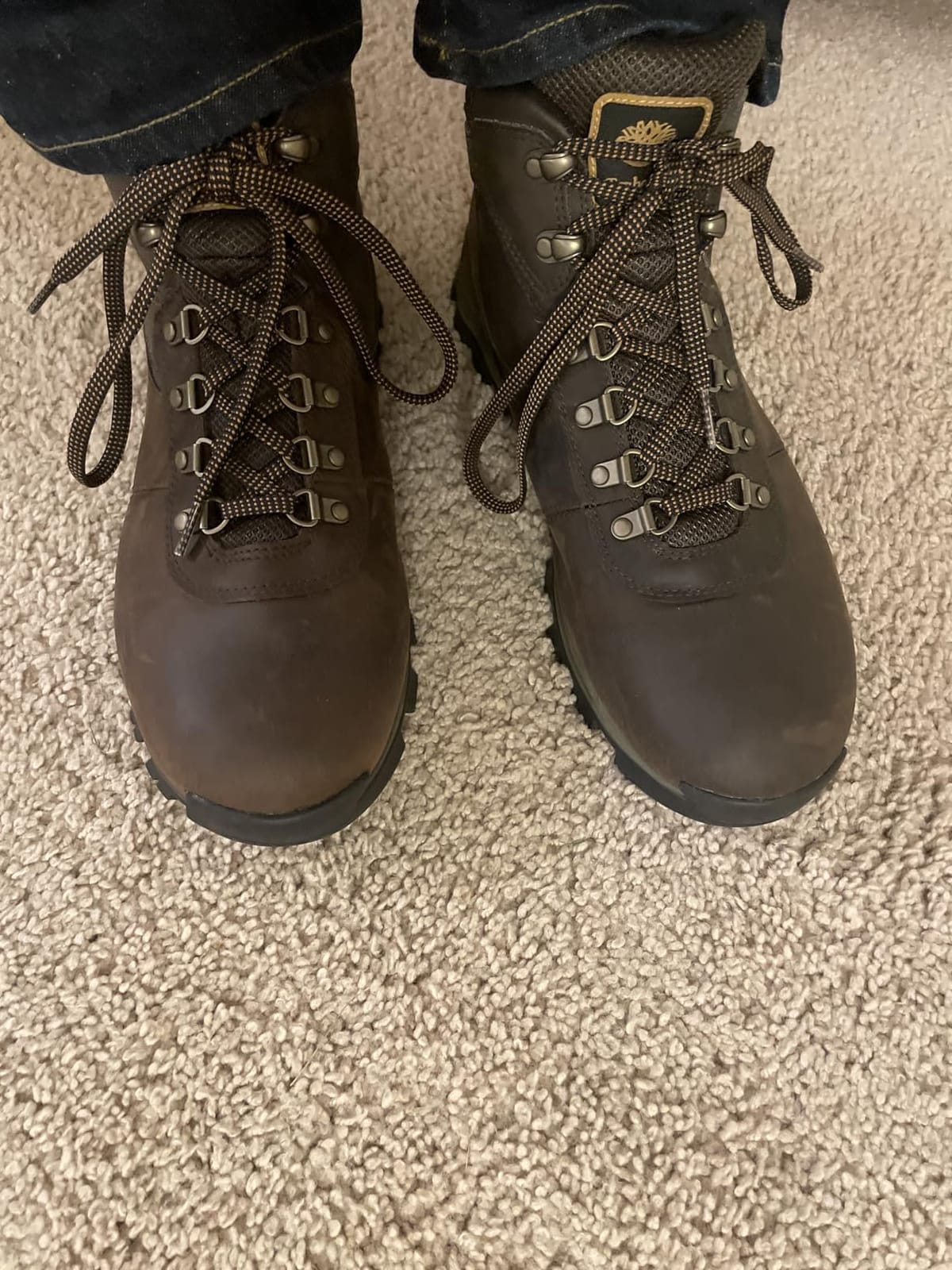
The Mt. Maddsen is the answer when you need ankle support but have no time to break a boot in. Reviewers repeatedly describe it as comfortable from the first wear, which is unusual for an all-leather hiking boot and is the reason it sits at 4.5 across more than 13,000 reviews.
The construction is straightforward: waterproof premium leather, a fully gusseted tongue, steel D-rings and riveted hooks, and an anti-fatigue removable footbed. The long laces are the detail most owners mention with approval, because they let you pull the heel firmly into the heel counter.
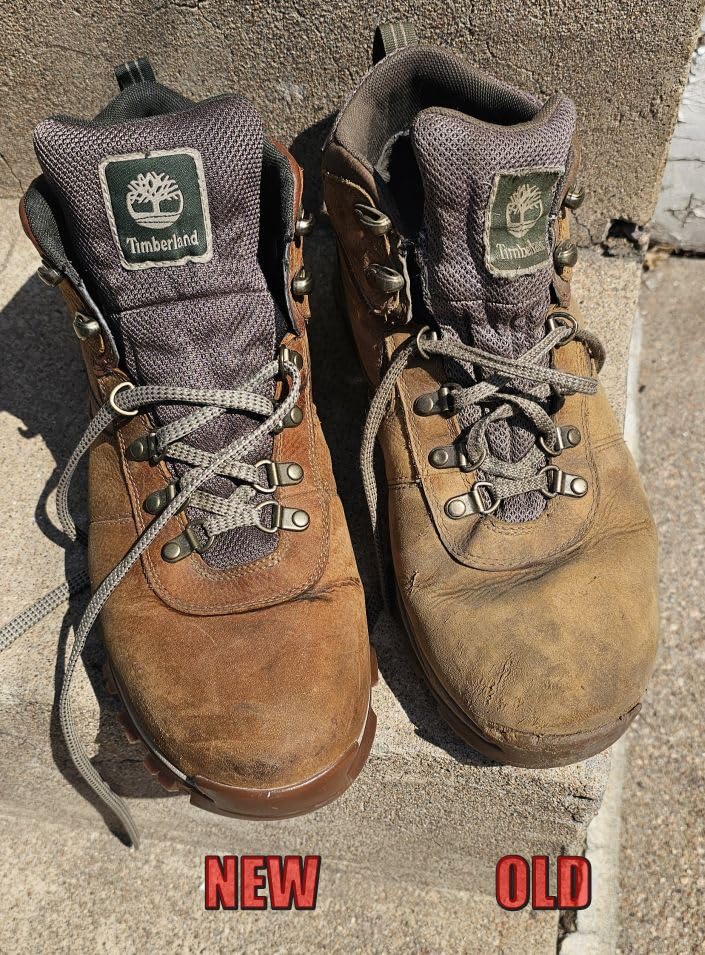
That heel lockdown is what separates real ankle support from decoration. A boot only stabilises the joint if the heel stays planted when you load it off-camber, and the lacing system is the part that makes that happen. Several owners use this pair as an everyday shoe, which tells you how it wears over time.
The outsole gets consistent praise too: sticky, quiet, and good at shedding snow and shallow streams. It is a boot that keeps working after the novelty wears off.
Who the Mt. Maddsen suits
It suits the hiker who wants a supportive leather boot for a trip that starts next week, and anyone who bounces between trail and town without wanting two pairs of footwear. Owners use it both ways.
It also suits anyone who prefers to skip straight to the trail with a pair that already feels familiar.
Where it falls short
It runs slightly small, and several buyers size up a half size. The tongue is narrow and lightly padded, which can rub the top of the foot on long descents if the laces are pulled very tight.
There is also a recurring report that the toe cap can loosen over time and reduce waterproofing. For most hikers that is a cosmetic issue, but if you are walking sustained rain, keep an eye on it.
5. Merrell Men’s Moab 3 Mid Waterproof Hiking Boots – Best for Rocky Trails
Pros
- Molded nylon arch shank and mid cut collar deliver solid underfoot and ankle support
- Vibram TC5+ outsole gives reliable traction on rock mud and loose trail
- Kinetic Fit ADVANCED removable insole with reinforced heel cushioning supports long days
- Bellows tongue and protective toe cap keep debris out and protect the front of the foot
- Lighter and more sneaker-like feel than heavy mountaineering boots
Cons
- Felt and mesh upper is less durable in heavy brush than full leather
- Removable insole quality is considered average for the price tier
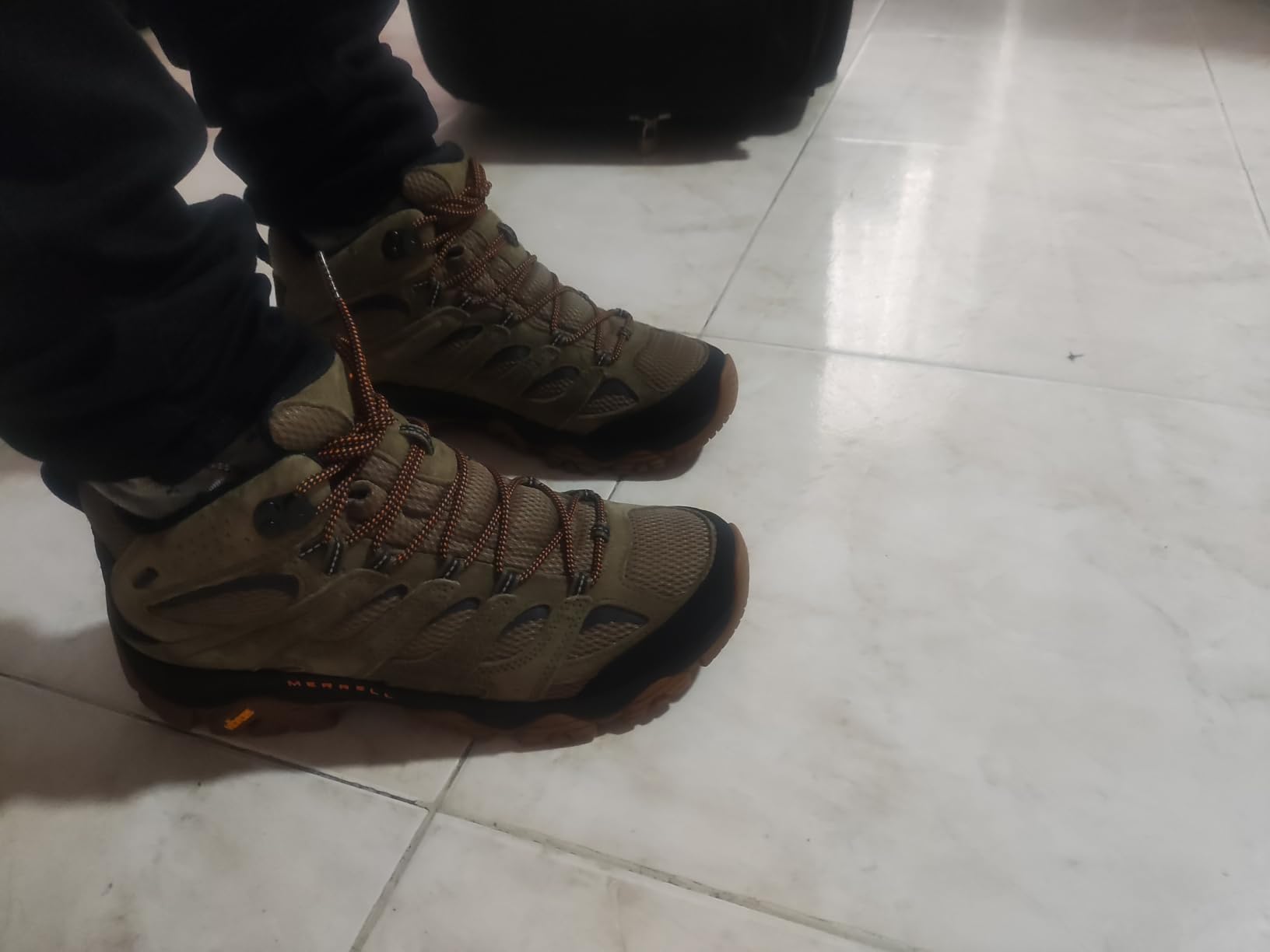
The Moab 3 Mid is the one in this roundup that hikers name most often when ankle support and low weight have to coexist. At 11.68 ounces it is barely a third of the weight of the leather boots above it, and the molded nylon arch shank still does its job under the arch.
On rock, the Vibram TC5+ rubber outsole is the headline. Owners consistently report reliable grip on rock, mud and loose trail, and the reinforced heel cushioning in the removable Kinetic Fit ADVANCED insole is what keeps the joint comfortable on repeated step-downs.
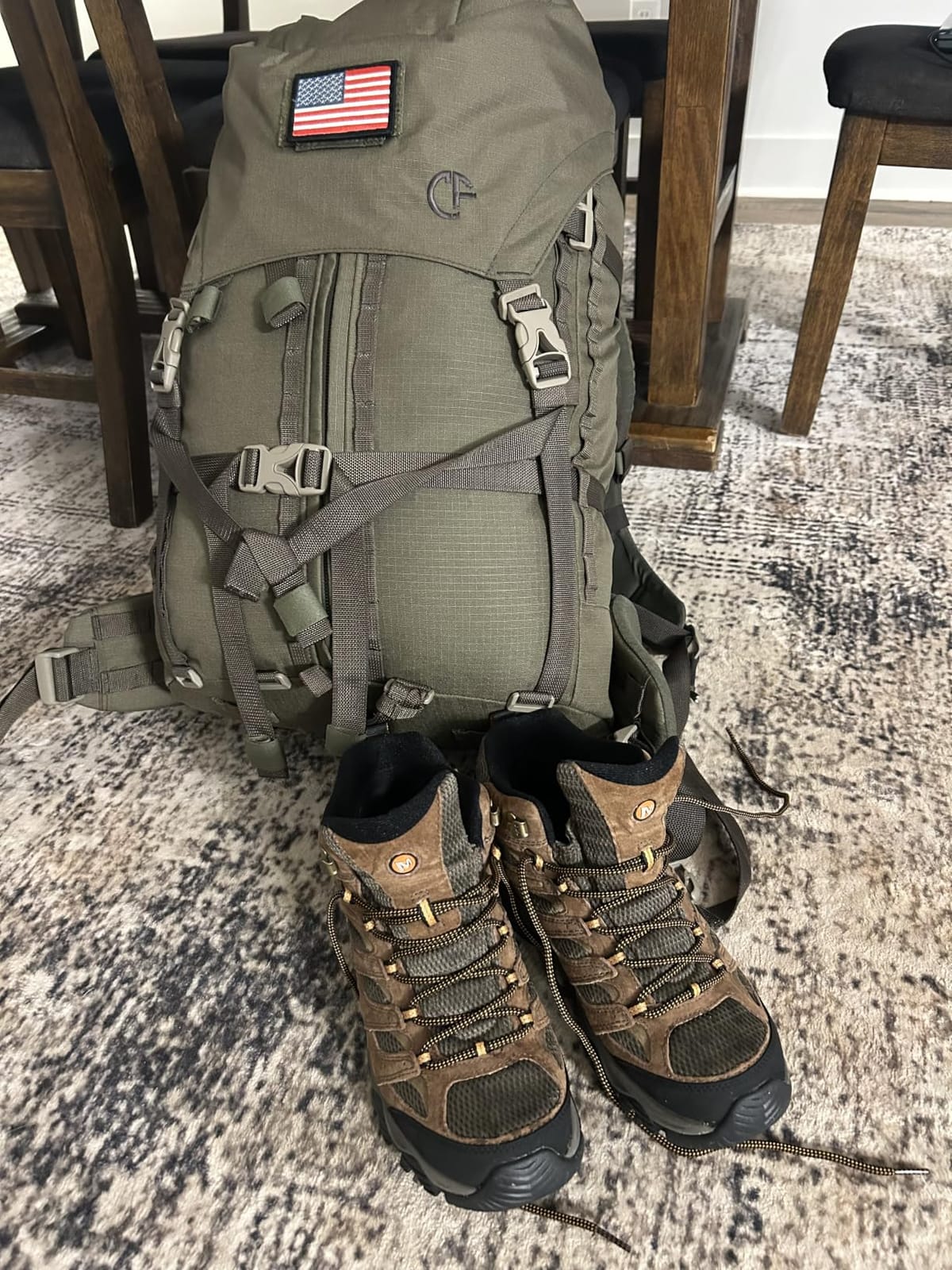
The bellows tongue does more than keep grit out. On a long descent it stops the tongue sliding sideways, which is a small thing that stops the boot feeling vague underfoot and therefore stops the ankle guessing.
It is also the boot most often recommended in hiking forums for people who roll their ankles but refuse to hike in heavy leather. A r/socalhiking commenter describes it as hitting a sweet spot for comfort, sturdiness and light weight, and that is the reason it makes this list for rocky ground.
Who the Moab 3 Mid suits
It suits hikers on fast-and-light trips, rocky day hiking, and anyone who wants ankle stability without paying the gram penalty of a mountaineering boot. The shank gives underfoot support on uneven ground where a trail shoe has none.
It also suits mixed weather, because the waterproof membrane with pigskin leather and mesh upper handles both wet rock and warm approaches.
Where it falls short
The felt and mesh upper is less durable in heavy brush than full leather. If you are pushing through dense scrub or thorn country, expect to replace it sooner.
The stock insole is average for the price tier. Most owners who hike hard in them upgrade it, and that single swap changes the ride more than anything else about the boot.
6. Women’s Lightweight Waterproof Hiking Boots with Ankle Support – Best for Cold Weather and Recovery
Manfen Women’s Hiking Lightweight Waterproof Hunting Ankle Support Boots, Black, 7
Pros
- Molded TPU ankle support is the standout feature with multiple buyers reporting the boot stopped them rolling an ankle
- 7mm multi-directional lug outsole grips rocks mud and wet ground
- Insulated and waterproof enough for snow and ice use
- Exceptionally affordable compared with comparable insulated boots
Cons
- Runs small so many buyers need a half size or a full size up
- Stiff out of the box and needs a break-in period
- Tall collar can create pressure points on the calf during long hikes
This is the boot to look at if you are coming back from an ankle sprain, or if you hike in winter. The molded TPU ankle support is the specific feature buyers with a history of sprains mention, and several report that the stability is real rather than marketing.
The cold-weather side is handled by 200 g of insulation rated to minus 13 degrees Fahrenheit, a waterproof membrane with a moisture-wicking lining, and 7mm multi-directional lugs that bite into packed snow. The integrated EVA midsole handles shock on hard frozen ground.
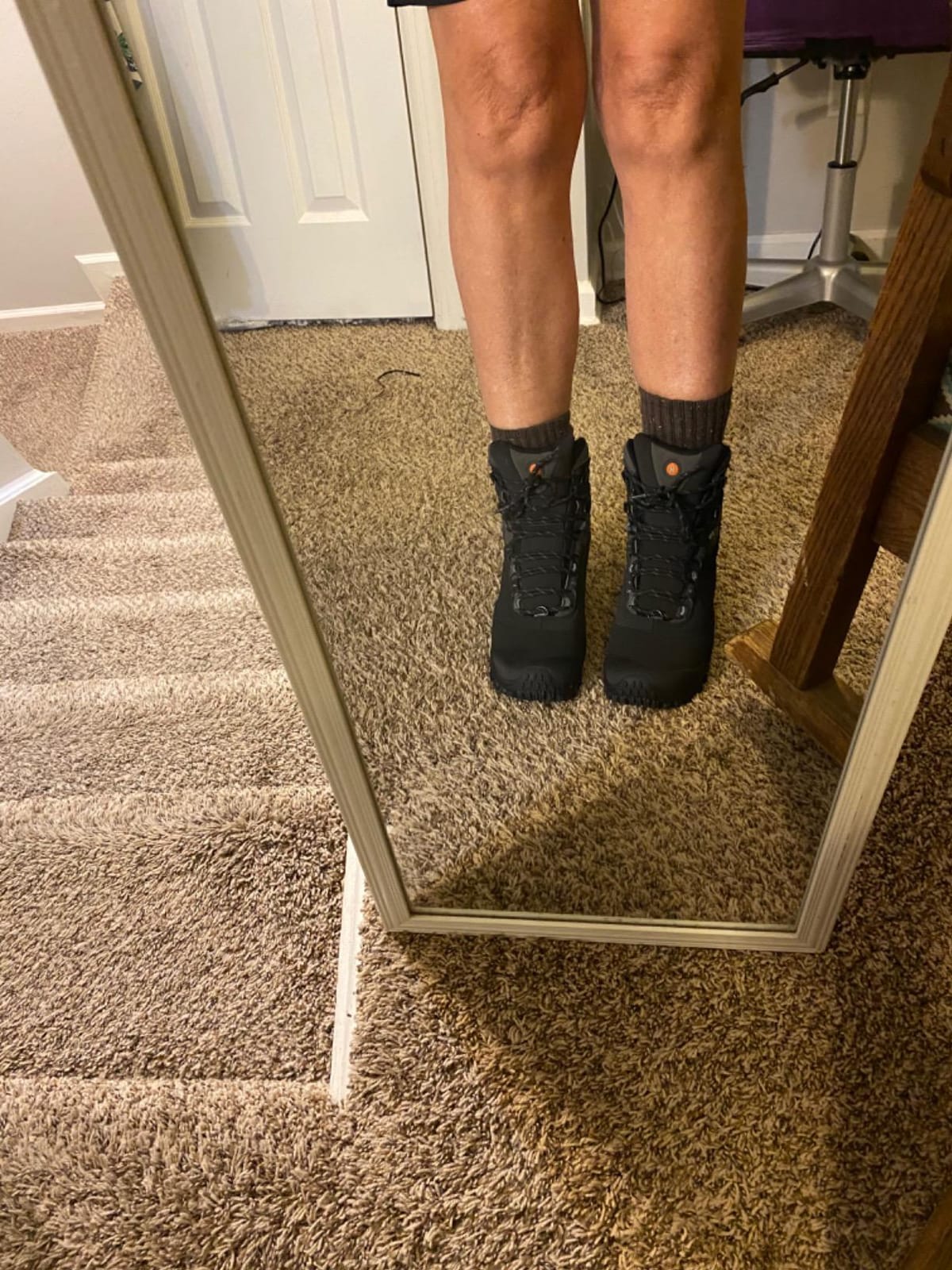
What makes this one unusual in the roundup is who buys it. Owner reviews describe purchases made specifically after an injury, often following surgery, and the ratings cluster at 4.3 across more than 2,500 reviews. That is a boot bought with a diagnosis in mind rather than a trail in mind.
The 4.3 reflects real complaints rather than support failures. Fit runs small, the boot needs breaking in, and a tall collar can press on the calf over long days.
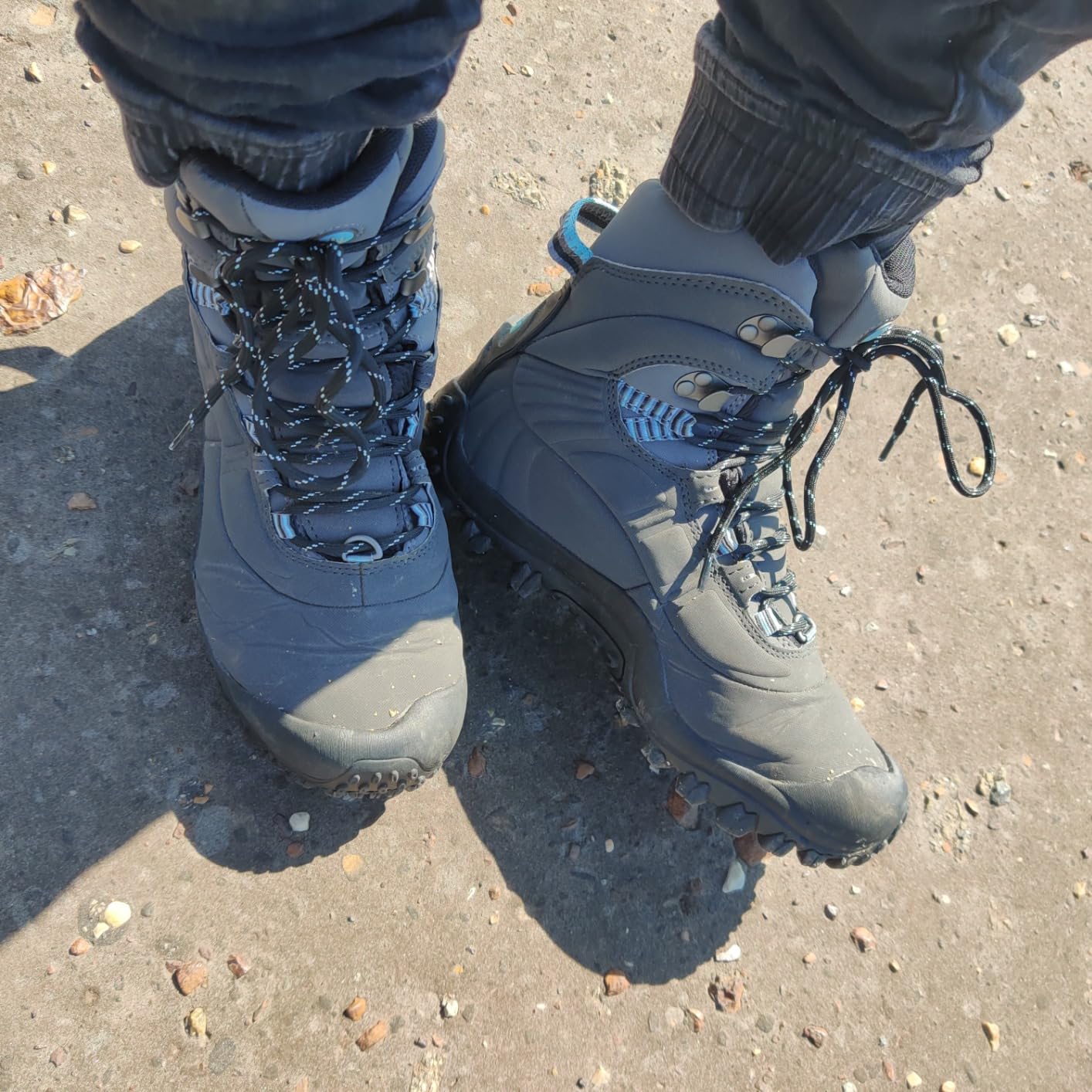
Who these boots suit
They suit winter hikers and anyone recovering from an ankle injury who wants structured support without a heavy mountaineering boot. The TPU support panel sits exactly where the inversion happens.
They also suit hikers who need warmth and waterproofing together, because most insulated boots compromise on grip and this one does not.
Where they fall short
The sizing is the first thing to solve. Many buyers need a half size or a full size up, and the collar can create pressure points on the calf during long hikes once the foot swells.
It is also not fully waterproof if the foot is submerged, and the collar takes on water. Keep it out of deep crossings.
7. adidas Men’s Terrex Anylander Mid Top Rain.Rdy – Best Lightweight Pick
adidas Men’s Terrex Anylander Mid Top Rain.RDY Hiking, Cardboard/Black/Shadow Olive, 7
Pros
- Very light at 390 g per shoe while still feeling supportive on uneven ground
- RAIN.RDY membrane holds off rain mud and stream crossings
- Traxion outsole grips well in wet and loose terrain
- Comfortable out of the box with a roomy fit that suits thick socks
Cons
- Tread wears down quickly with regular use
- Stiff heel counter at first that braces the lower calf until broken in
- Not designed to carry a heavy backpack
At 390 grams per shoe in a US 9, this is the lightest supportive boot in the roundup, and several reviewers say they moved up to it from the low-cut Terrex specifically to get more ankle hold. That is the exact use case we would put it in: light hikers who need a bit more structure and no more.
Support comes from the mid top collar and a heel counter that is noticeably rigid on first wear. The waterproof RAIN.RDY membrane handles rain, mud and stream crossings, and the Traxion outsole gives multi-directional grip on wet and loose ground.
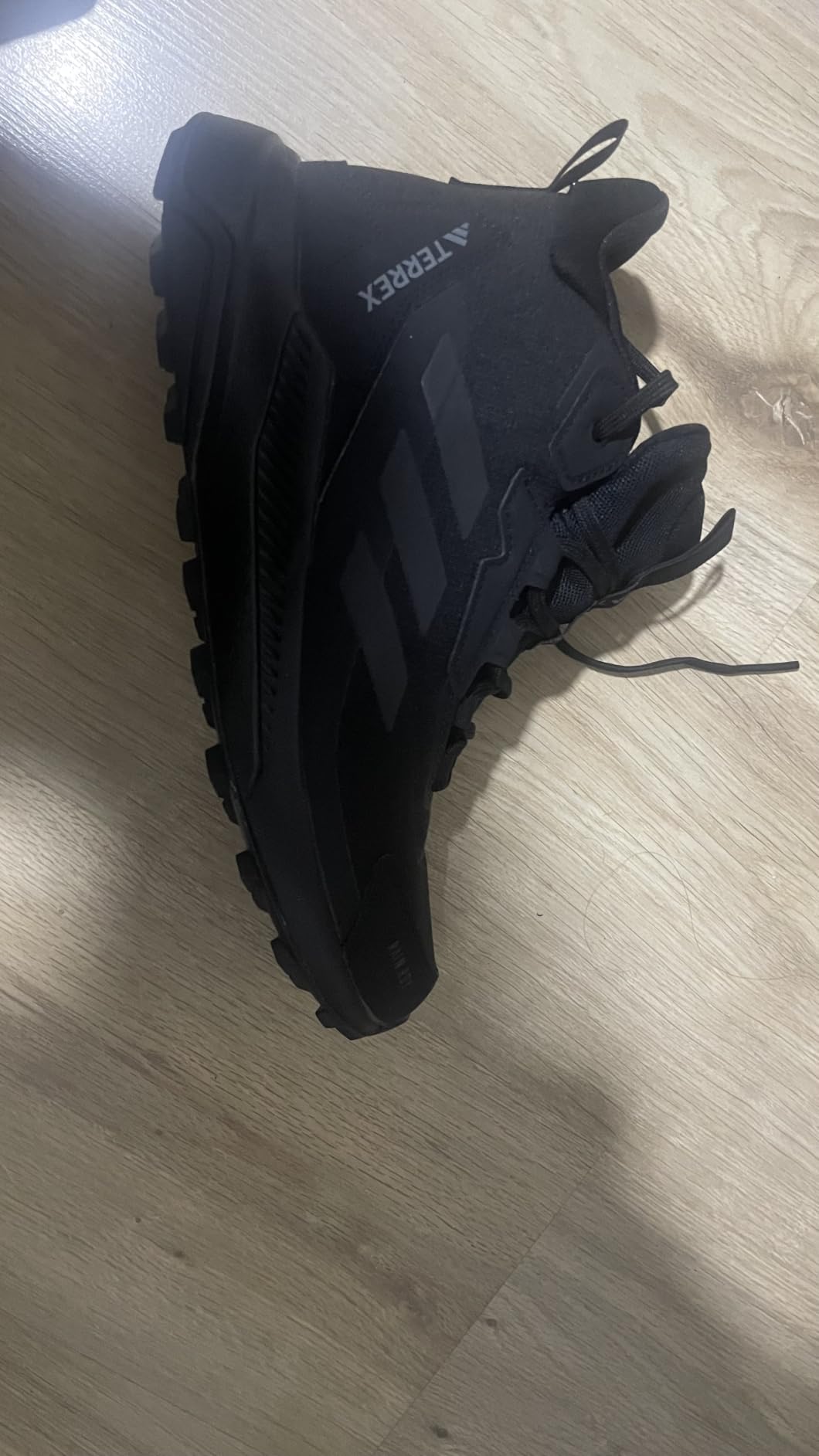
The 10mm midsole drop and EVA cushioning make it feel more like a sneaker than a boot, which is the point at this weight. It is comfortable out of the box, with a roomy fit that accommodates thick socks without lacing pressure.
Rated 4.4 across more than 1,700 reviews, the reservations are about longevity rather than function: tread wear is the recurring one, and the heel counter is stiff until you break it in.
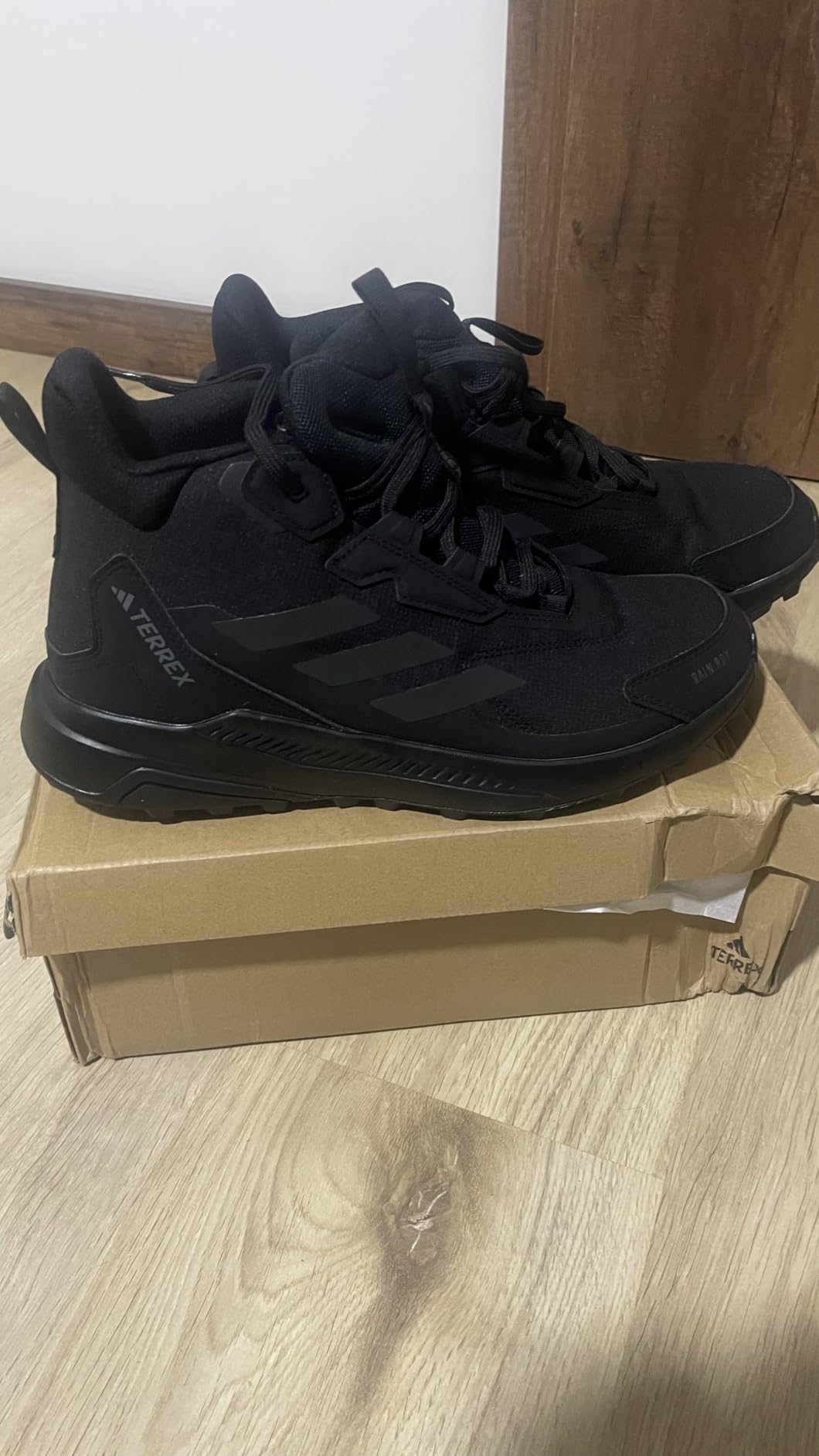
Who the Anylander suits
It suits fast hikers, day hikers, and anyone who found stiff boots hot and tiring. At this weight the ankle support feels proportionate to the terrain, because the boot is not fighting the ground with mass.
It also suits wet climates, since the RAIN.RDY membrane is the main event and the boot is otherwise simple.
Where it falls short
It is not a pack boot. Buyers report that it is not designed to carry a heavy backpack, and the 390g figure tells you why: there is no structure under the arch to take a load.
Tread wears down quickly with regular use, and waterproofing weakens at the toe box once the upper has broken in. For long wet seasons, this is a two-season boot.
8. Columbia Men’s Fairbanks Mid Hiking Boots – Best for Wet Weather
Pros
- OMNI-TECH waterproofing kept feet dry through mud shallow streams and snow
- Comfortable out of the box with no break-in and a bouncy sneaker-like feel
- OMNI-GRIP traction holds on rock dirt and gravel in wet and dry conditions
- Stylish enough to wear to dinner straight off a hike
- True to size with a secure stable fit
Cons
- Upper is more flexible and less durable than a full leather boot
- Runs warm and does not breathe well in hot weather
- Strong chemical smell out of the box that some buyers find off-putting
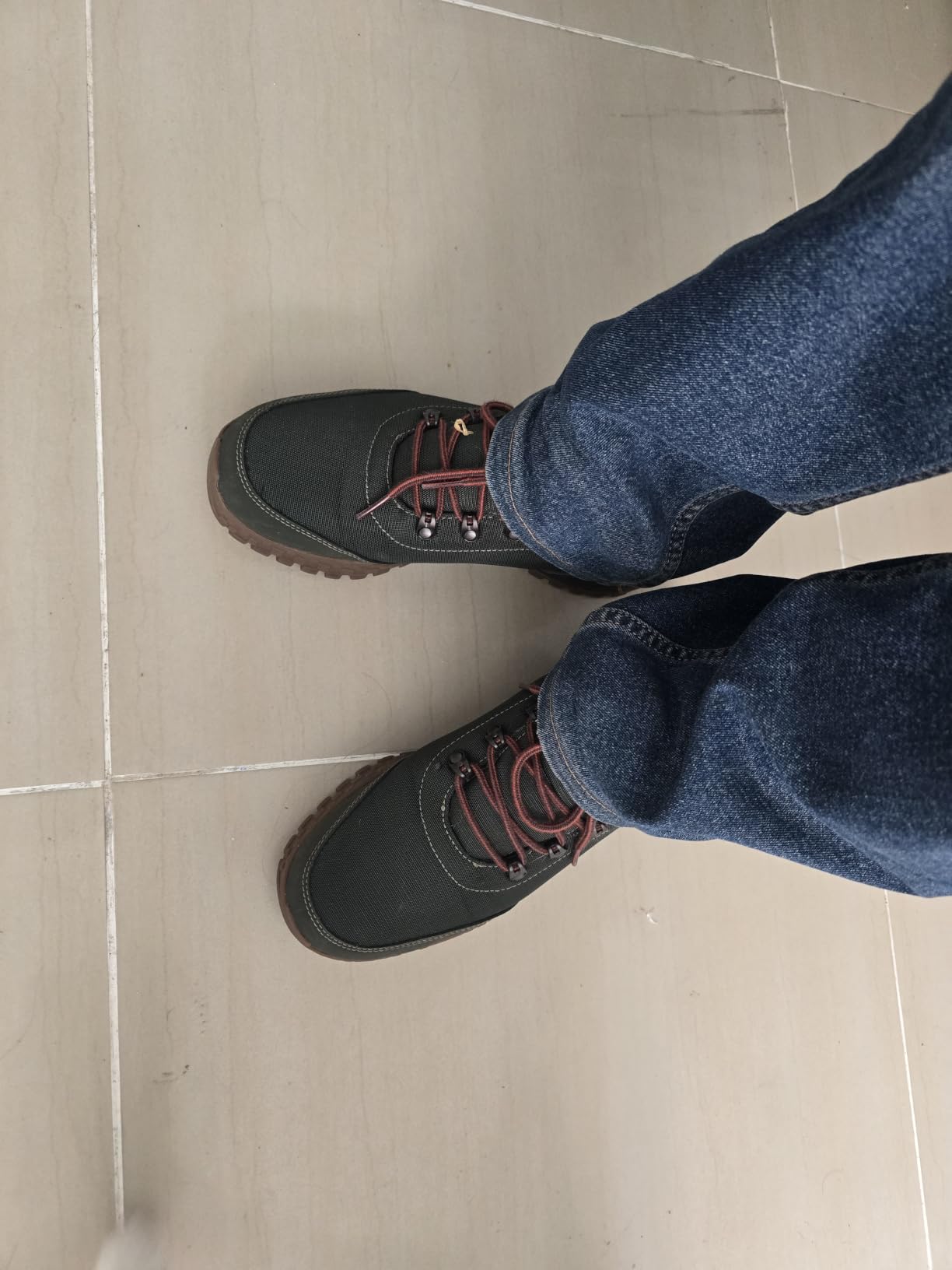
The Fairbanks Mid is the one to consider when the forecast is the deciding factor. The OMNI-TECH waterproof, seam-sealed multilayered construction is the strongest sealing spec in this roundup, and owner reports describe feet staying dry through mud, shallow streams and snow.
The mid-height collar gives real ankle and snow coverage, and the OMNI-GRIP multi-terrain rubber with blended lug patterns holds on rock, dirt and gravel in both wet and dry conditions. The TECHLITE midsole absorbs impact without weighing much.
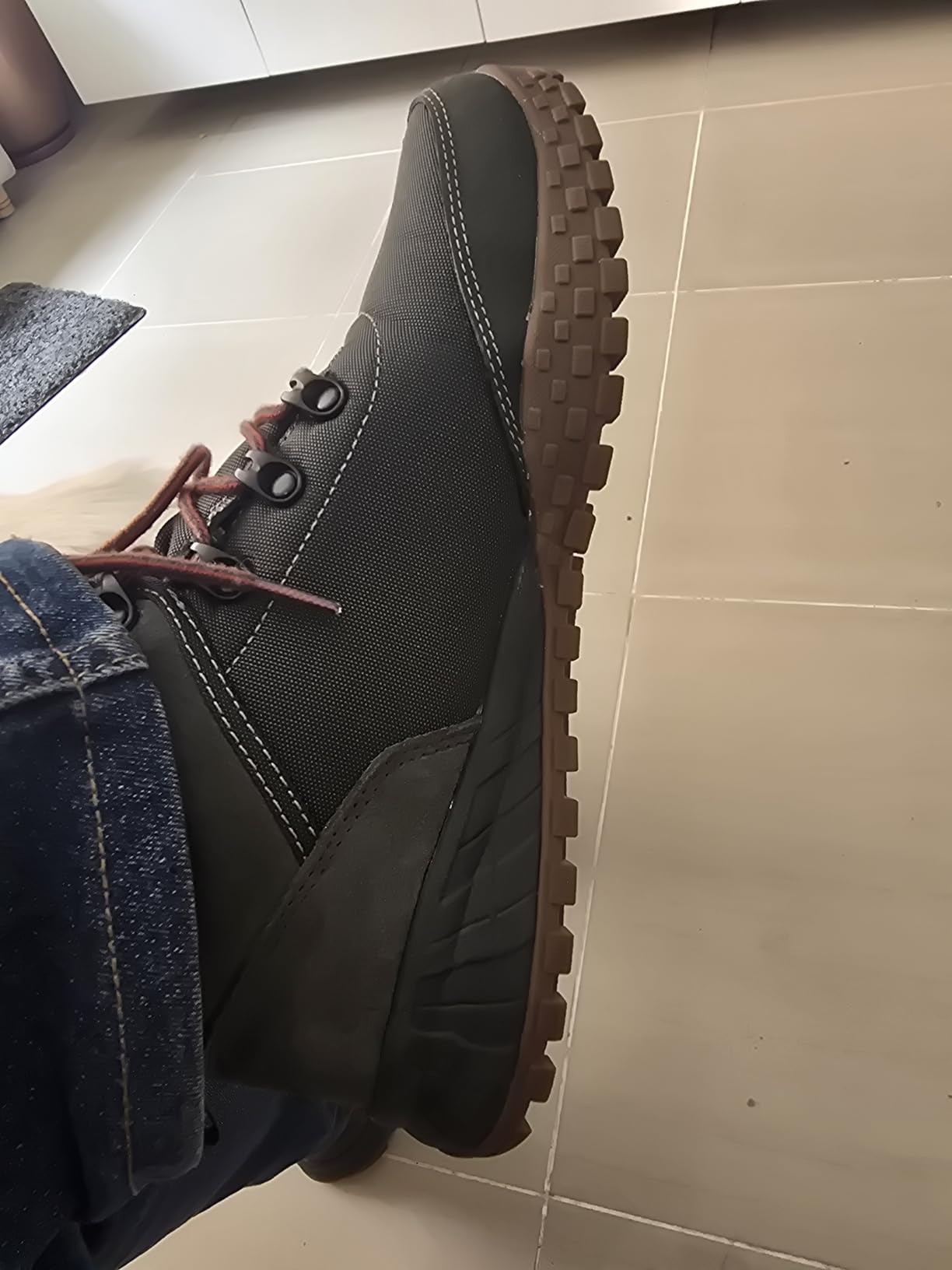
It is comfortable immediately, with no break-in, and the fit is true to size with a secure, stable feel. Several buyers wear it straight from a hike to dinner, which is a decent sign that nothing about it is desperate on a long evening.
Rated 4.4 across more than 1,200 reviews. The complaints cluster around heat: it runs warm and does not breathe well, and there is a strong chemical smell in the box that puts a few buyers off before the first walk.
Who the Fairbanks Mid suits
It suits wet-climate hikers, winter walkers on maintained trails, and anyone who wants a boot that handles rain and puddles without fuss. There is no break-in period, which makes it useful for shoulder-season trips.
It also suits hikers who want one boot for work and trail, since the styling is deliberately understated.
Where it falls short
Heat is the real limitation. The upper is flexible and less durable than full leather, and it runs warm in hot weather, so it is a poor choice for desert or midsummer hiking.
Some buyers also report that the stock arch support causes arch pain over extended wear. If you have a specific arch shape, budget for an after-market footbed.
9. Columbia Men’s Newton Ridge Plus II Waterproof Hiking Shoe – Best for Wide Feet
Pros
- Decent ankle stability with testers who deliberately rolled their ankles feeling the boot helped
- Rigid heel counter and padded ankle and tongue keep the foot planted
- Waterproof leather panels hold up well in rain and mud
- Lightweight and comfortable right out of the box closer to a light boot than a heavy-duty one
- Runs true to size and holds its fit over years of wear
Cons
- Mesh tongue is only water resistant so sustained direct rain soaks through
- Soft rubber outsole and PU-coated leather wear faster than a workhorse boot
- Runs narrow so several buyers recommend the Wide size
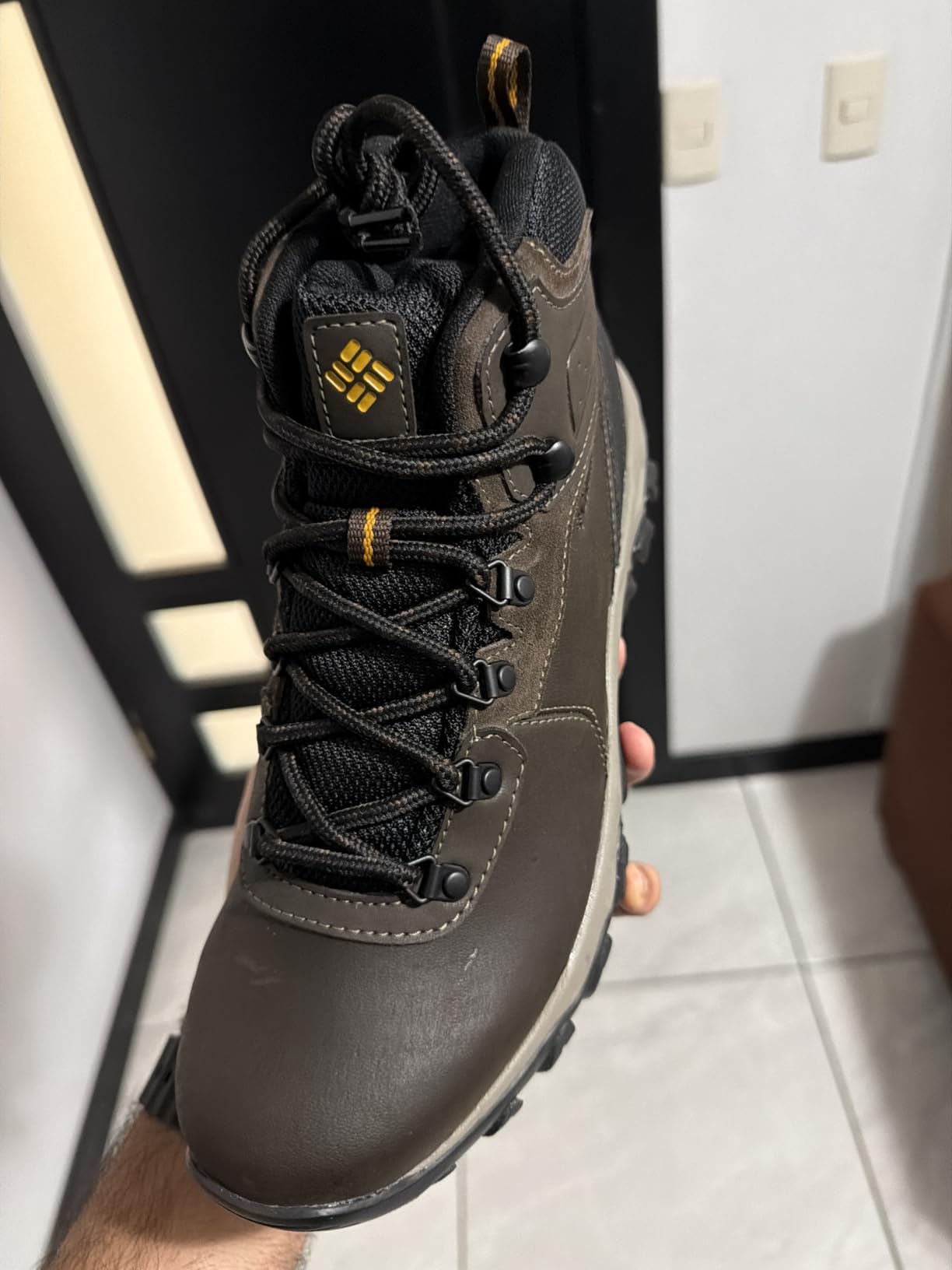
The Newton Ridge Plus II earns its place through one specific test result in the reviews. Buyers who deliberately tried to roll their ankles on uneven ground report feeling the boot catch them, which is the most direct confirmation of ankle support we found in the whole roundup.
Mechanically it comes down to a rigid heel counter plus a padded ankle and tongue that keep the foot planted, combined with OMNI-GRIP multi-terrain rubber and dual-zone winter tread for grip in poor conditions.
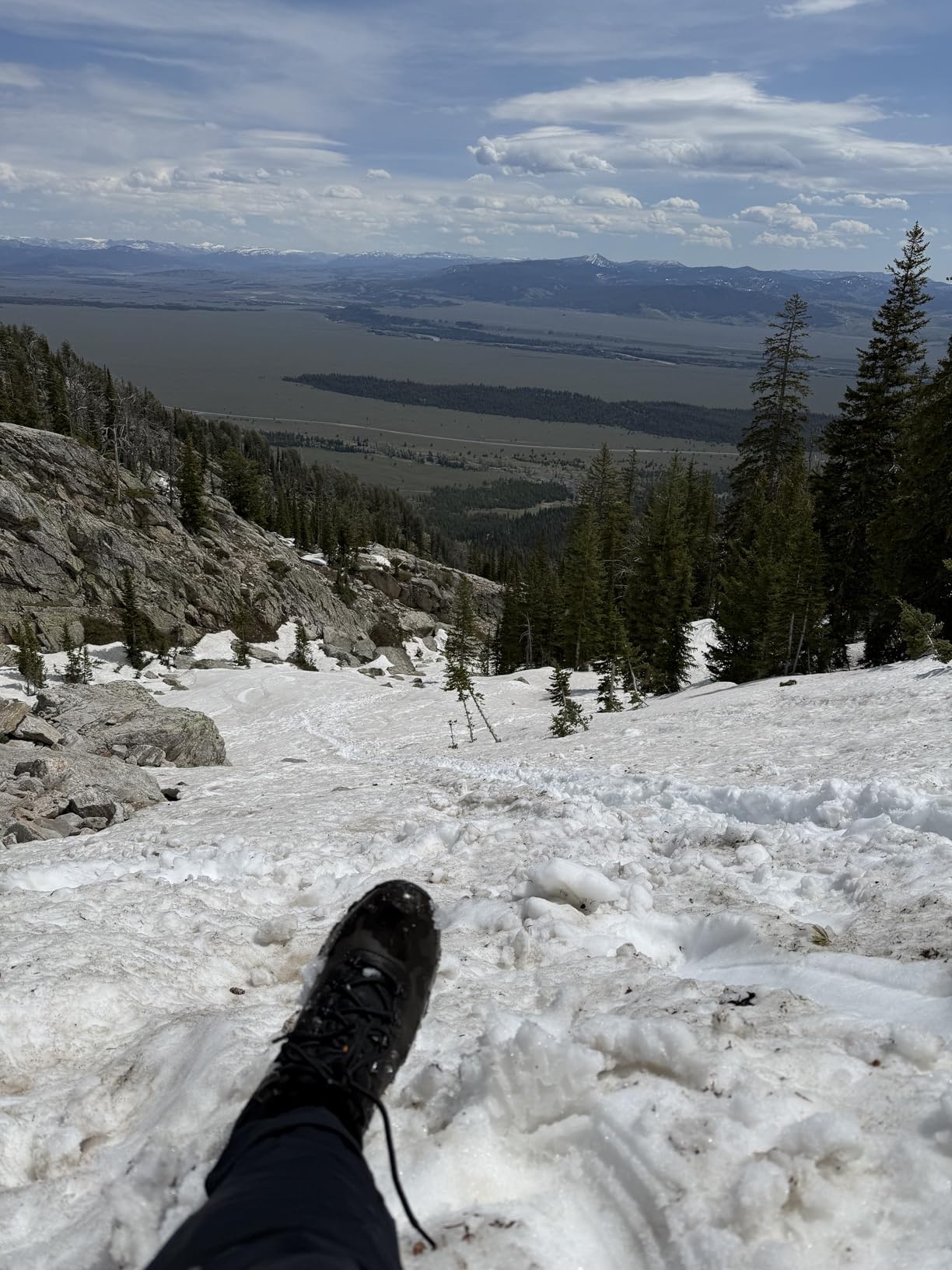
It is also a boot that holds its fit. Reviewers describe using them for years with the fit still true, and most call them light and comfortable out of the box rather than heavy duty. At 4.4 across close to 5,000 reviews, the volume behind that consistency matters.
The waterproof leather panels handle rain and mud well. The mesh tongue is the exception, and it is worth knowing before you get caught in sustained rain.
Who the Newton Ridge Plus II suits
It suits casual and light hikers who want believable ankle stability without a stiff, heavy boot, and anyone who needs a boot they can wear to work or dinner on the same trip.
It also suits long-term owners, because the reviews describe pairs that keep their fit over years rather than seasons.
Where it falls short
The mesh tongue is only water resistant. Sustained direct rain will soak through, so this is a fair-weather to mild-weather boot rather than a storm boot.
It also runs narrow. Several buyers recommend going up to the Wide size, and the softer outsole and PU-coated leather wear faster than a workhorse boot would.
10. SHULOOK Men’s Waterproof Mid Top Hiking Boots – Best Lightweight Pack Boot
SHULOOK Men’s Waterproof Hiking Boots Non-Slip Lightweight Mid Top Ankle Boot Breathable Hiker Trekking Shoes
Pros
- Very light for a hiking boot reducing fatigue on long walks
- SL-TEX waterproof membrane with sealed construction keeps water out
- Removable memory foam insole with arch support and heel cushioning
- Advanced traction rubber outsole grips varied ground
- Breathable lining helps keep feet dry through the day
Cons
- Synthetic suede upper offers less long-term durability than leather
- Mid-top collar provides moderate rather than heavy-duty ankle support
- Sizing can run inconsistent across the wide variant list
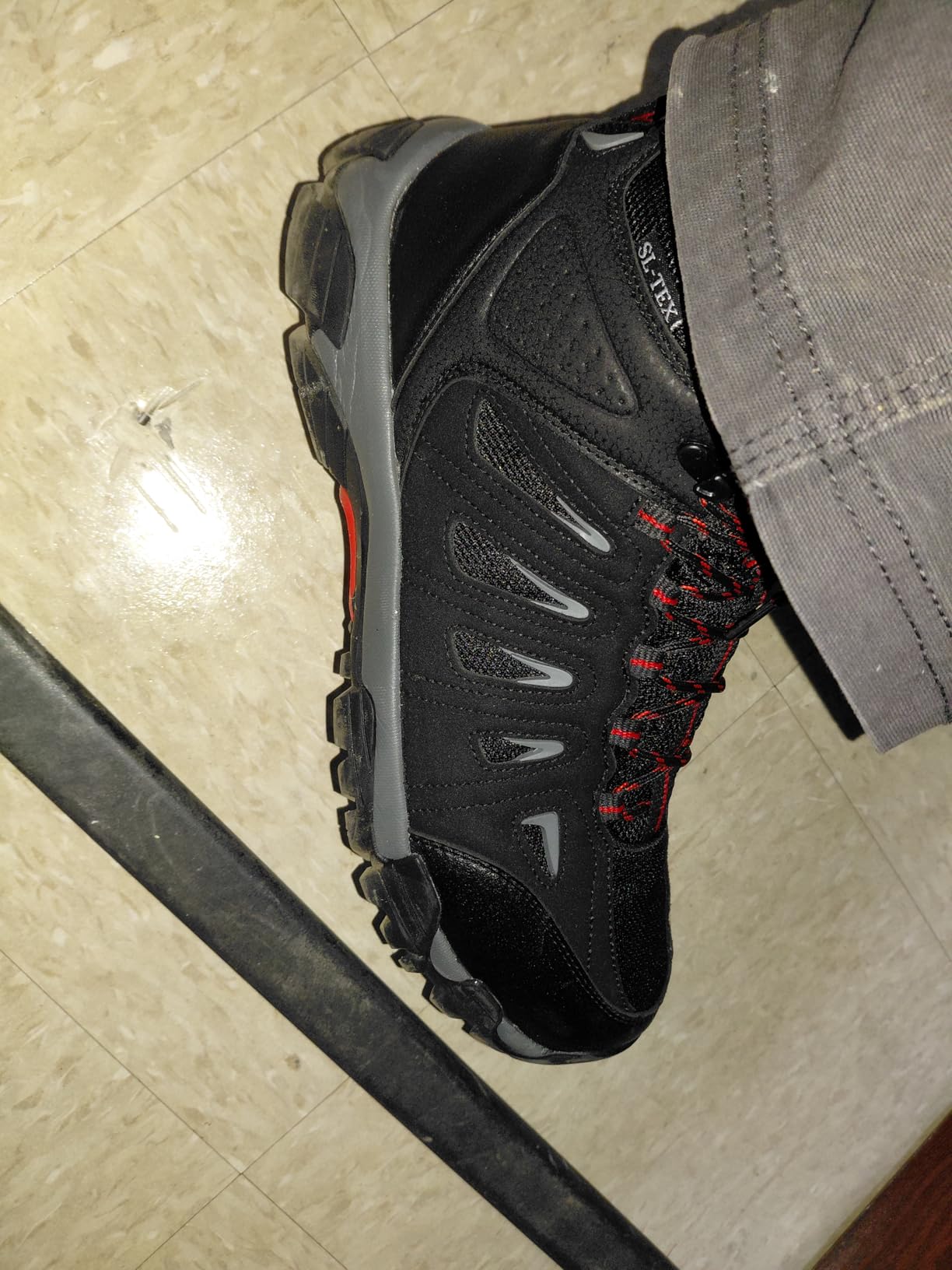
The SHULOOK is the pick if you are putting boots on your back and counting every gram. At 1.25 pounds per pair in a size 10, it is the second-lightest boot here and it ranks first in its backpacking boots category, which tells you where the demand comes from.
Construction is a synthetic suede upper with an SL-TEX waterproof membrane and sealed waterproofing structure, a closed-cell tongue that blocks rain and grit, a rubber anti-collision toe, and a removable memory foam insole with arch support and targeted heel cushioning.
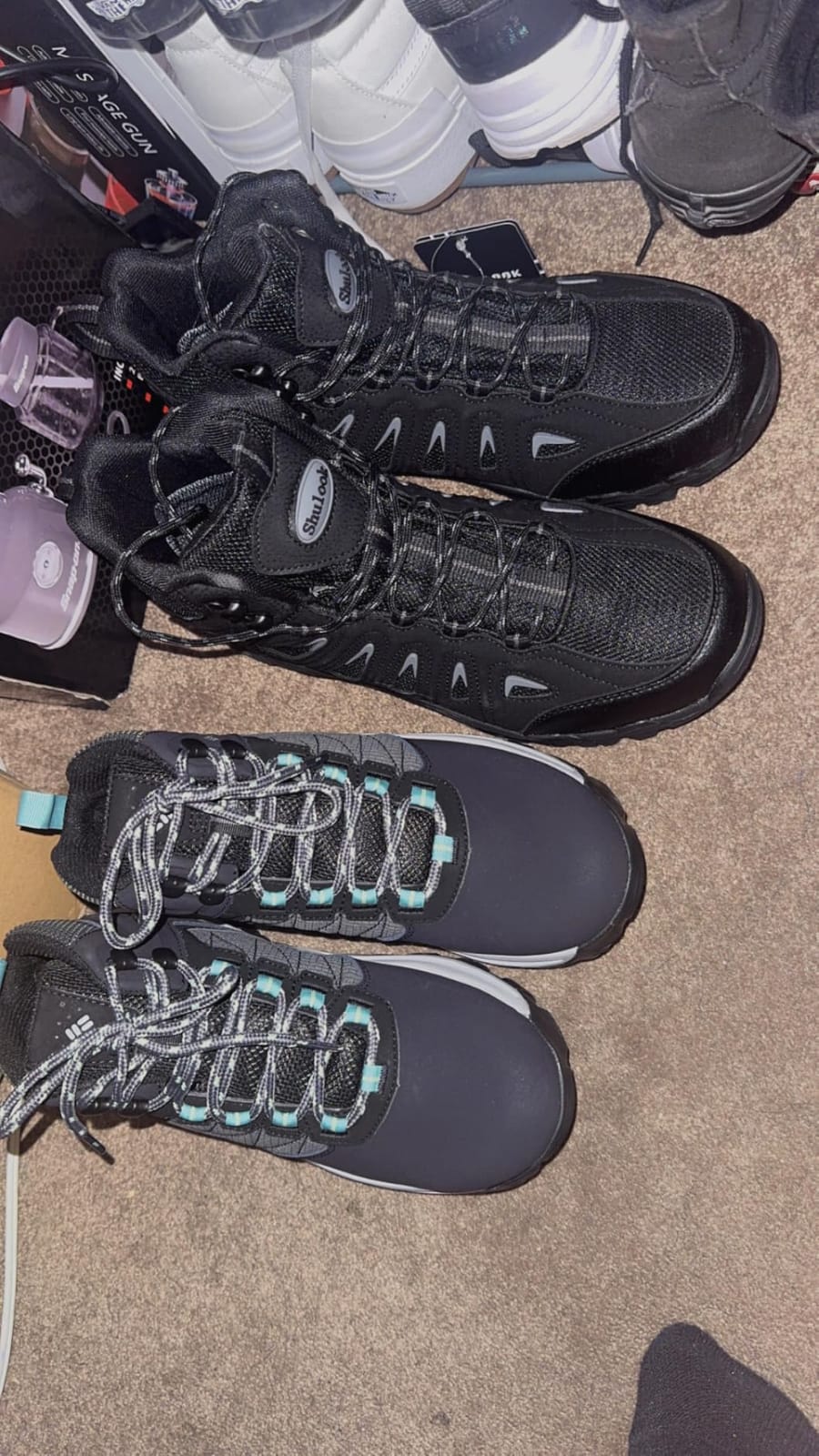
The support is moderate, and we want to be straight about that. A mid-top collar with a flexible EVA midsole gives you a stable platform and a sealed, weatherproof boot, but this is not the boot for someone whose ankles roll on every step.
What it does give you is 1.25 pounds of waterproof mid boot, which is genuinely hard to find and explains the category ranking.
Who the SHULOOK suits
It suits long-distance hikers and anyone building a kit where boot weight competes with the rest of the load. The breathable D01 lining helps when the days are hot, and the traction outsole grips varied ground.
It also suits anyone who wants a sealed, waterproof mid boot they can wear from camp to town without changing.
Where it falls short
Synthetic suede does not have the long-term durability of leather, and the mid-top collar provides moderate rather than heavy-duty ankle support. If ankle stability is the reason you are shopping, step up to a shanked mid cut.
Sizing can also run inconsistent across the wide variant list, so check the size chart rather than assuming your usual size carries over.
How to Choose Hiking Boots for Ankle Support
Four things decide whether a boot genuinely supports your ankle: how high the shaft rises, whether there is a shank under the arch, how firm the heel counter is, and whether the lacing can lock the heel down. Get those right and the brand matters far less.
Boot height is the biggest lever. A low cut sits below the ankle bone and offers almost no lateral resistance. A mid cut wraps above it and is the sweet spot for most hikers carrying a day pack on rocky or loose ground. A high cut goes higher again and earns its place on scree, talus, snow and heavily loaded descents.
The weight trade is real. Every gram sits on the end of a lever that lands on a joint. If you are walking a maintained path with a light pack, a mid cut at the lighter end of this list gives you most of the benefit for far less fatigue.
Shank, heel counter and heel lockdown explained
A shank is a stiff plate under the arch that resists the sole twisting when the ground tilts. It reduces the demand on your ankle in exactly the situation where you need it, loaded descents and off-camber ground. Two boots in this roundup name theirs explicitly: the KEEN Targhee 2 Mid with an external support shank, and the Merrell Moab 3 Mid with a molded nylon arch shank.
The heel counter is the rigid cup at the back of the boot. Without it the heel lifts and the foot rolls inside the boot, which cancels out every other feature. Heel lockdown is the lacing system doing the final job, and it is why top lace hooks and long laces matter more than most buyers expect.
Fit problems that cancel out every feature above
A narrow heel means the foot slides and the support does nothing. A high instep means the laces fight you and you loosen them until the lockdown is gone. A toe box that is too narrow causes the pain that ends a long day before the ankle issue ever shows up. If you have Morton’s neuroma, toe box width is not a preference, it is a medical requirement.
Two practical rules from owner reviews: most people should go up a half size for thick hiking socks, and the fit should be checked in the afternoon, when feet are at their largest. Our broader picks are covered in the site’s 10 best hiking boots tested and ranked and, for lighter kit, in the best hiking boots for travel guide.
Finally, expect a break-in. Leather boots in this roundup need two to three weeks of walking before the heel moulds. Rigid synthetic boots need less, but they need some. Buying a boot the week before a trip is the most common way to end up with a boot that never works.
Boots for Weak Ankles: When a Brace Beats a Stiffer Boot
If you have chronic ankle instability rather than a terrain problem, footwear alone will not solve it. The honest split is this: boots handle the unexpected step, a brace handles the known weakness, and ankle strength work handles both over time.
For the boot route, the picks in this roundup with genuine support hardware are the KEEN Targhee 2 Mid, the Timberland White Ledge Mid and the Timberland Mt. Maddsen. The women’s insulated boot here is also bought specifically for post-injury support, with molded TPU ankle support cited by owners with a sprain history.
For the brace route, hikers in the forums frequently argue that a lace-up or figure-skater-style sleeve delivers more effective support than a stiffer boot, because it can be worn with any footwear. The known complaint is fit, since a brace will not always sit properly inside a particular boot. It is worth trying both before you commit to a heavier boot.
For the strength route, balance work, single-leg stands and calf raises directly improve the muscles that control inversion. Boot brands rarely mention this, and experienced hikers on the forums mention it constantly. If you are buying a supportive boot to compensate for weakness, pair it with the training that reduces the compensation.
Our advice for the weak-ankle shopper: start at the KEEN Targhee 2 Mid because the shank is named in the spec and the toe box is roomy, and pair it with a sleeve for the first season. If you hike cold terrain, the insulated women’s boot in this list has the most explicit post-injury owner feedback.
Frequently Asked Questions
Which hiking boot has the best ankle support?
Among the boots we tested, the Timberland Men’s White Ledge Mid is the strongest all-round choice: a leather mid cut that rises above the ankle bone, with a fully gusseted tongue, top lace hooks for heel lockdown, an EVA footbed and midsole, and 1.1 pounds of weight. For weak ankles specifically, the KEEN Targhee 2 Mid names an external support shank, which is the piece of hardware that limits side-to-side movement.
Do hiking boots actually provide ankle support?
On uneven, rocky or heavily loaded ground, yes. A mid or high cut above the ankle bone plus a stiff shank reduces the side-to-side movement your ligaments have to control. Evidence does not show that boots prevent sprains in general, and hikers report that long-term use of heavy stiff boots can weaken ankles over time.
Are high top hiking boots better for weak ankles?
Higher is generally more supportive because the shaft wraps further up the leg, but height is not the only factor. A mid cut with a named shank and a firm heel counter can outperform a tall boot with a soft upper. Match the height to the terrain: high cuts for talus, scree, snow and loaded descents, mid cuts for rocky day hiking.
What do podiatrists think of hiking footwear?
The consistent advice is that supportive footwear does not by itself prevent ankle sprains, and that fit matters more than the category of boot. A narrow heel, a tight instep or a cramped toe box will undermine any support the boot offers, so measure the foot in the afternoon and buy for the sock you will actually wear. Arch support matters for comfort over long days but is not the same as ankle stability.
What work boots are best for people with bad ankles?
Work boots are a separate category from hiking boots, and the principles differ. A safety-toe work boot gives toe protection rather than ankle stability, so for ankle support look for a hiking boot with a shank and a firm heel counter. If your issue is caused by standing all day, an arch-support insole in a comfortable work boot will help more than a stiffer hiking boot.
The Verdict
The Timberland White Ledge Mid is our pick for the best hiking boots for ankle support overall, because it delivers a real mid-cut shaft, a gusseted tongue and reliable lace lockdown at a weight that does not wreck a long day. For genuinely weak ankles, the KEEN Targhee 2 Mid wins on hardware, since its external support shank is the clearest support spec we found, and its roomy toe box suits thick socks. For cold weather and post-injury use, the insulated women’s boot with molded TPU ankle support has the most specific owner feedback.
Whichever you pick, buy for your terrain rather than for the word support. If you want the wider range of ankle boot options for a different use, we have covered those in our ankle boots guide for women. Start walking in them now, because in 2026 a boot that has not been broken in is not yet a supportive boot.