
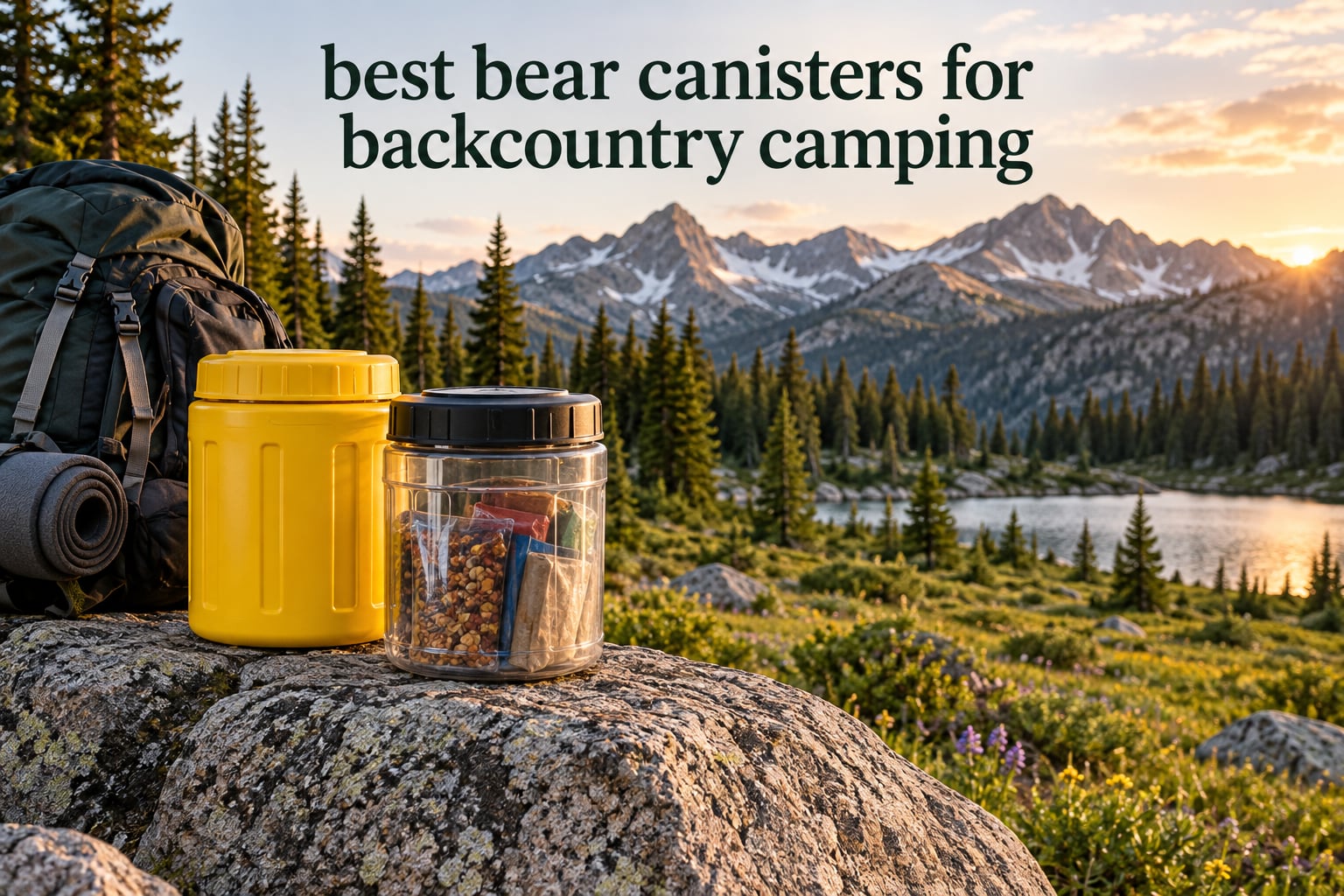
The best bear canisters for backcountry camping are the ones your destination actually accepts, so start with the rules, not the marketing. Every national park zone in the Sierra Nevada, Olympic, the Adirondacks high-use zones, and most Forest Service and BLM backcountry requires a certified bear-resistant container, and several of them publish a named list of approved models rather than accepting anything with a certification sticker.
A bear canister is a lockable container for food, trash, toiletries, and anything scented. A bear-resistant food container has to stay closed and functional through 60 minutes of continuous crushing, clawing, and chewing by a captive bear, which is a much lower bar than being bear-proof. Bears do not chew through these. They chew through anything left in a pack, a tent pocket, or a food bag, and one successful break-in trains bears to raid camps across a whole drainage.
I have carried hard canisters on multi-day routes in grizzly country, in the Sierra, and on shorter two-nighters where the same canister was honestly more food than I needed. What changed my mind about which one to buy was not weight or price but three unglamorous details: whether the lid opens at 6 AM with numb fingers, whether the volume shrinks as the food runs out, and whether the model appears on the specific list printed in my permit packet. If you are still assembling the rest of your kit, our best cameras for camping trips and best camping chairs for comfort guides cover the rest of the camp kit.
Below I compare six hard-sided canisters that passed the sourcing filter: four BearVault and UDAP models, the park-issued Garcia-style Cache, and the Counter Assault Bear Keg. I weight the comparison toward measured specifications, owner-reported friction points, and real trip-day capacity rather than brochure claims.
Top 3 Bear Canister Picks in September

BearVault 4-Size Family
- IGBC approved
- Screw-on tool-free lid
- Clear polycarbonate
- 4 sizes from Sprint to Journey


The BearVault family takes the top spot because it is the only group here that lets you pick a volume instead of accepting one, and because 2272 owner reviews make it the best-documented canister in the category. The Cache wins on pack shape and on being the loaner unit many parks hand out, and the UDAP BRC is the value pick when you want 8 liters of certified capacity at 2.4 lb.
Bear Canisters at a Glance in 2026
| Product | Specifications | Action |
|---|---|---|
| BearVault 4-Size Family (BV425 to BV500) |
|
Check Latest Price |
| Backpackers’ Cache Bear Proof Container |
|
Check Latest Price |
| UDAP BRC No-Fed-Bear |
|
Check Latest Price |
 Counter Assault Bear Keg Counter Assault Bear Keg |
|
Check Latest Price |
 UDAP BRC with Carry Case UDAP BRC with Carry Case |
|
Check Latest Price |
 BearVault BV ONE BearVault BV ONE |
|
Check Latest Price |
Two things stand out before you read a single review. First, every canister here that matters legally is opaque or transparent but certified, and certification matters more than brand name. Second, the weight spread runs from 1.8 lb on the smallest BearVault variant to 3.5 lb on the Bear Keg, which is roughly a full day of calories of difference before you count the food inside.
1. BearVault 4-Size Family – The Canister You Can Size to Your Trip
Pros
- Four sizes from BV425 Sprint to BV500 Journey
- Tool-free screw-on opening
- IGBC grizzly tested and approved
- Clear walls let you identify contents without opening
- Doubles as a camp stool or wash bucket
Cons
- Screw lid can be fiddly on the smallest size in cold weather
- A plastic card or slider key often helps break the seal
- Fixed volume does not shrink as food runs out
- Heavier than bare-canister ultralight expectations
The reason I keep recommending BearVault is the range, not any single model. The family runs from the BV425 Sprint up through the BV450 Jaunt, BV475 Trek, and BV500 Journey, and the listed variant here is the Sprint at 1.8 lb with a 9 by 9 by 7 inch footprint. That means a weekend hiker who wants one certified canister for a decade of trips and a PCT thru-hiker carrying ten days of food can both buy from the same family and get a volume that roughly matches the food carry.
In practice the Sprint is sized for one to two days of food for a regular packer, or four to five days if you are running a genuinely light load, and owners report packing a full four-day ration for themselves and a dog at about 5 lb total once the food is in. That is the number that matters on the trail, not the empty weight on the spec sheet.
The opening is the part I test hardest. It is a tool-free screw-on closure with a ridged grip zone, and because the walls are clear you can see what is inside without cracking the seal and digging. Several owners describe getting it open one-handed in low 40s temperatures, which is a colder start than most of my trips. Others report that on the smallest size the plastic stiffens and a plastic card or a commercial slider key helps break the seal. That is a small annoyance, not a dealbreaker, and it is fixable.
Hikers on r/AppalachianTrail gravitate to BearVault as an affordable, light option, and some of them post photos of damage, so it is not undefeated. Hikers on r/Ultralight most often name the BV500 as one of the broadest-acceptance choices, and on rokslide.com owners have reported BearVault units not holding up to a real bear beating. Those reports exist because a captive test and a hungry 400-pound black bear with a crowbar are not the same thing. Treat the certification as a strong deterrent, not a guarantee.
One more practical note: canisters are not odor-proof. Every item in this category needs an odor-proof liner bag if you want to avoid the smell migration problem when the lid is open at camp, and the shape of the round BearVault body also means it will not use a rectangular pack compartment as efficiently as a box-shaped canister will.
When the size range is the deciding factor
If your trip length changes from year to year, or if you split group food between two people, the four-size family is the strongest argument in the category. You are not stuck with one volume, and a trip where two people each carry a BV425 gives you two independent certified containers instead of one large one that splits awkwardly.
The wide opening also pays off on a daily basis. You can reach in and pull one item out instead of tipping the whole canister into your lap and sorting through everything, and the lid doubles as a camp stool or a bucket for washing clothes, which quietly replaces a second piece of gear.
When a different canister suits you better
Pick something else if your food carry is a fixed 8 liters or more, because the family tops out and you would be splitting load across two canisters. Pick something else if you are buying for a destination with a printed approved list, because the list decides and the family does not. And pick something else if you are strict ultralight, because a non-collapsible cylinder will occupy the same volume on day ten as it did on day one.
2. Backpackers’ Cache – The Shape That Packs Like a Box
Pros
- Rectangular shape uses pack space more efficiently than round canisters
- Opaque black body hides contents from bears and raccoons
- Standard loaner unit in many state and national parks
- Twist latches can be worked with a fingernail once you learn the motion
Cons
- Narrower mouth than BearVault models
- so packing and digging is less convenient
- Latches take practice and some users reach for a coin
- Not airtight or odorproof
- so a liner bag is required
- Fixed volume is smaller than the largest canisters here
This is the canister most people have actually used without choosing it. It is the standard loaner unit issued at many state and national park backcountry trailheads, which means if you borrow a canister and hate the concept, you have a fair chance of holding exactly this one. It is manufactured by Garcia Machine, the body is ABS polymer, and it holds roughly 600 cubic inches of usable volume inside a 12 by 12 by 12 inch box weighing 3 lb empty.
The reason I like it is geometry. A box shape fills a rectangular pack compartment, a kayak hatch, or the bottom of a lid pocket in a way a cylinder never will, and the angled corners help it nest rather than sit there like a brick. If you carry a 50L pack where volume is the constraint, that efficiency is worth more to you than a wide mouth.
It is also opaque, which matters more than people expect. Bears and raccoons are drawn to movement and contrast, and a clear cylinder sitting in low light with visible food inside is a different proposition than a matte black box that gives them nothing. You do lose the ability to see your own contents, so you end up digging instead of looking.
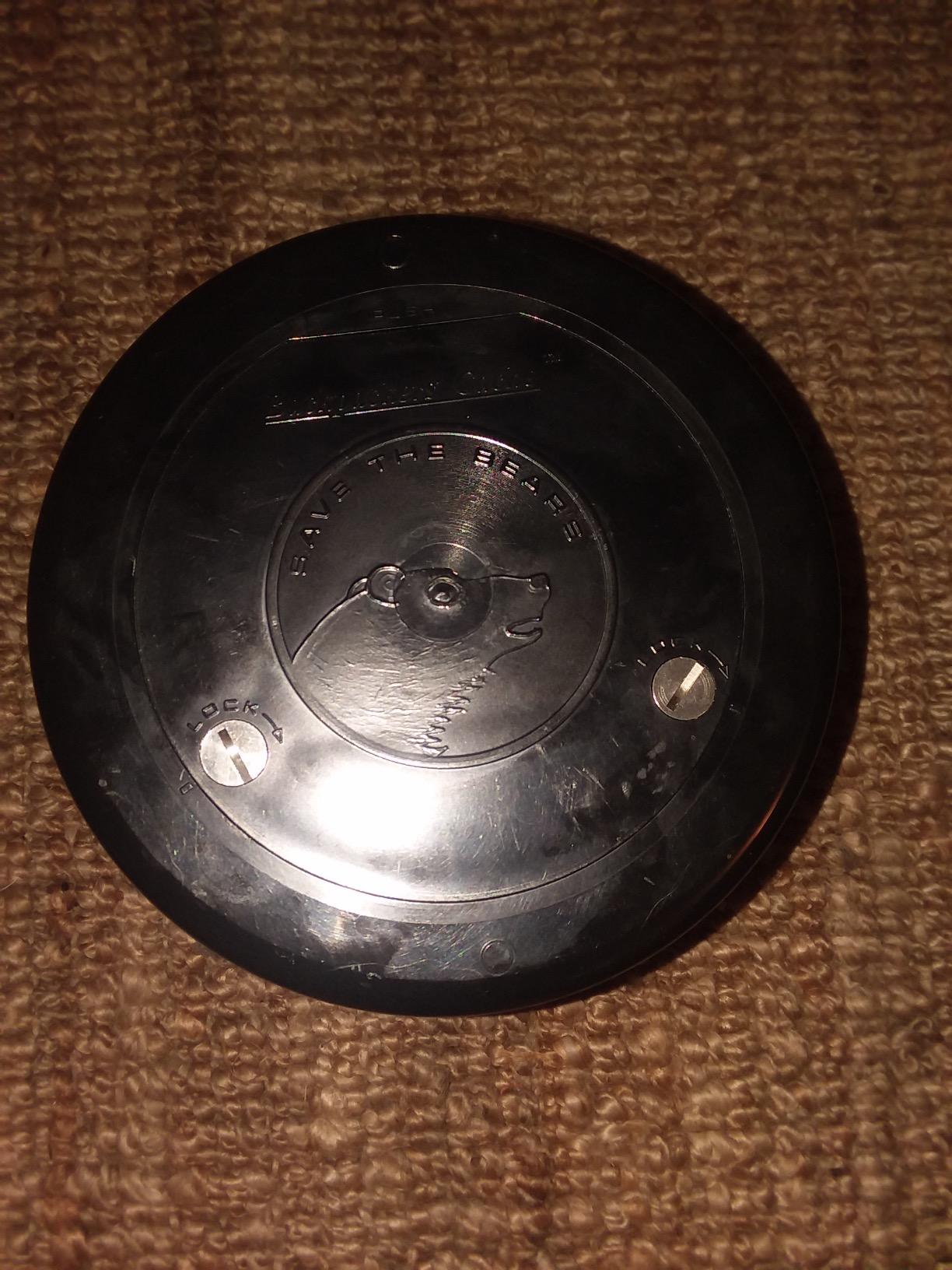
The closure is the learning curve. It is a twist latch, and the technique takes a few trips before you can do it without thinking, though most owners get there and report that a fingernail is enough once you know the motion. Some people use a coin or any flat object. The other recurring note is that this container is not airtight and not odorproof, so an odor-proof liner bag inside is not optional if you care about smell migrating into your tent.
Against a cylindrical canister, the trade is straightforward. You gain pack efficiency, opacity, and the loaner-network advantage. You give up the wide mouth, the see-through walls, and the one-hand cold-weather open that BearVault owners describe.
When the Cache is the right tool
Choose the Cache when pack volume is your binding constraint, when you camp in an area where it is the loaner unit, or when you prefer an opaque body in black bear country. It also makes sense for anyone who splits a rectangular load between a pack and a kayak hatch, because the box shape divides into existing compartments instead of rolling around in one.
It is a strong pick for a two-person trip where each person carries their own food, since two smaller boxes are easier to balance between two packs than one large round canister plus a small one.
When the Cache is the wrong tool
Skip it if you want the widest possible mouth for grabbing one item at a time, if you are packing for more than about four days of food, or if you are buying for a backcountry zone with its own approved list and the Cache is not on it. It is also a poor choice if you plan to store the canister outside your pack in a hot campsite and want a container that will not leak odor into your sleeping area.
3. UDAP BRC No-Fed-Bear – The Best Capacity-to-Weight Balance
Pros
- IGBC approved for certified food storage zones
- 2.4 lb empty while holding 8 liters
- Metal fastener resists claws teeth and brute force
- Cylindrical 8 inch profile stands upright in a pack
- Designed by grizzly bear attack survivor Mark Matheny
Cons
- Opening requires a coin or similar flat tool that can be lost
- Lid can stay stuck after the fastener is unlocked
- No opening notch
- so you tip and pour instead of reaching in
- Not airtight or odorproof
- so a liner bag is required
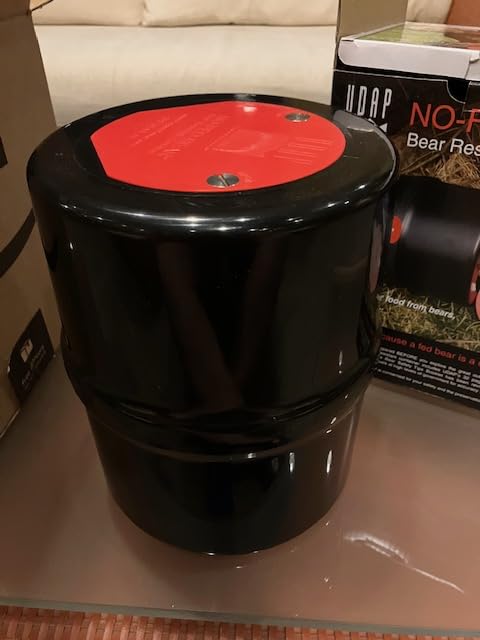
The BRC is the one I recommend to people who want a single certified canister for a three-to-five day route and do not want to think about volume. It holds 2.1 gallons, about 8 liters, which the manufacturer rates at roughly four to six days of food depending on packing density. It weighs 2.4 lb empty. That works out to about 4.8 ounces of canister for every liter of food storage, one of the better ratios in this group.
It was developed by Mark Matheny, who survived a grizzly bear attack, and the construction is a proprietary bear-resistant polymer blend with metal fasteners. The fastener is coin-operated and rated to resist claws, teeth, and brute force. It is IGBC approved, so it satisfies the food storage mandate in national parks and core grizzly areas.
Owner reviews treat it as the value pick, and the complaint that shows up in a meaningful share of them is the opening. It is a two-stage system. The coin releases the metal fastener, and then the lid itself can still resist popping, so some people reach for a tool anyway. Eleven percent of its reviews sit at three stars, and the complaints concentrate on exactly that mechanism.
The second structural limitation is that the lid has no opening notch. You tip the canister and pour out what you need rather than reaching in with a hand, which is fine if you eat from a pouch and annoying if you want a single granola bar without emptying the container onto the ground.
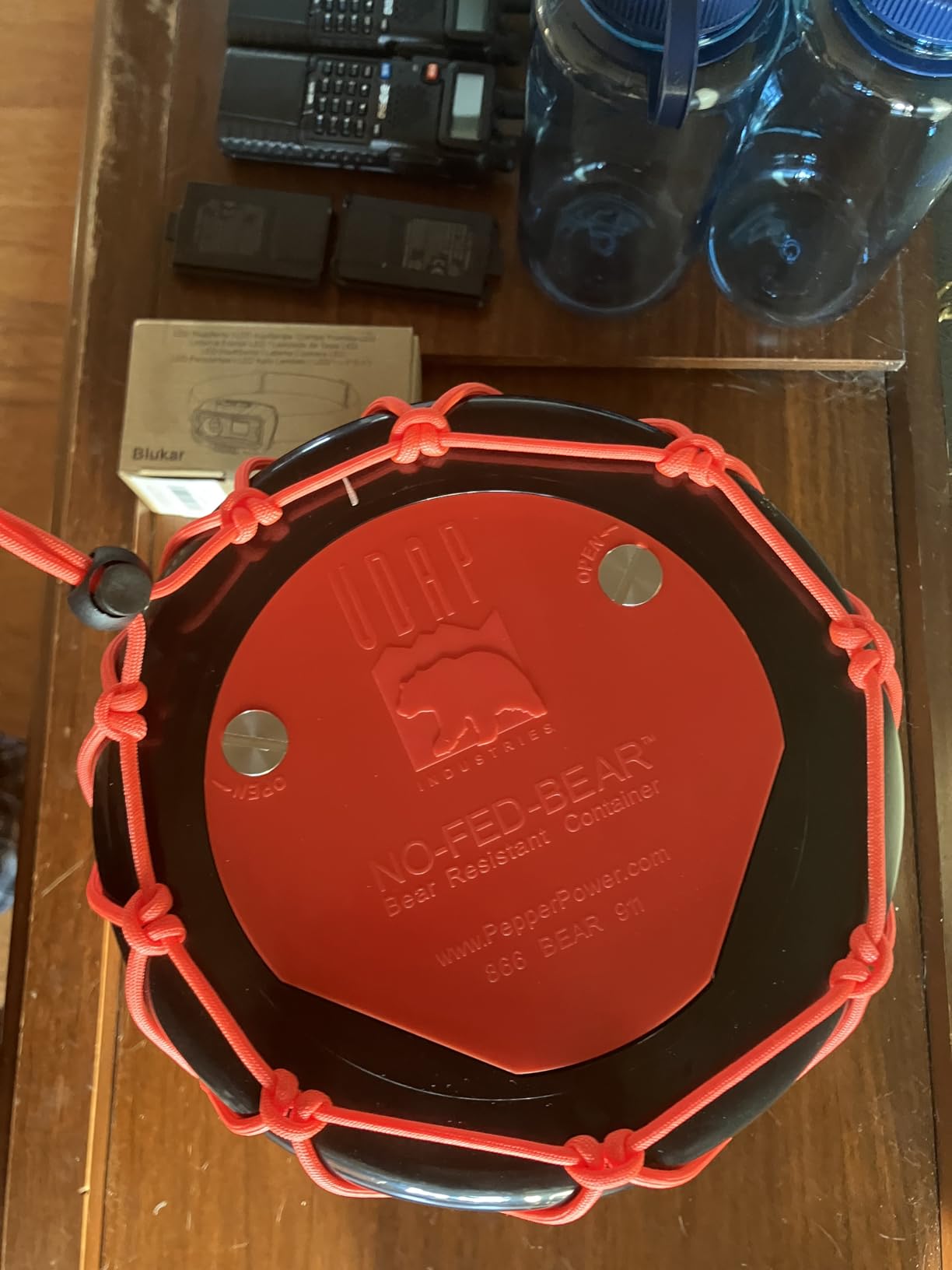
Cylinder diameter is 8 inches and the whole unit stands upright, which makes it easy to load into a pack and easy to find in the dark. Just remember to keep a coin or a flat metal tab in your wallet pack. Losing the only tool that opens your food storage is a genuinely bad day on a multi-day route.
When the BRC earns its slot
It is the right pick for a three-to-five day solo route where you want one container, not two, and where certified capacity matters more than opening elegance. It is also right for anyone who splits food between a pack and a boat or a bike, because the upright cylinder is stable in either.
Choose it if the destination accepts any IGBC-approved canister and you would rather not print an approved list and compare serial numbers at the trailhead.
When the BRC is the wrong tool
Skip it if you plan to open the container six times a day with cold hands, because a coin-operated fastener plus a tight-fitting lid is the wrong mechanism for that. Skip it if you need more than about six days of food. And skip it if your destination maintains a named approved list, because being certified and being listed are not the same thing and only one of them gets you through the ranger check.
4. Counter Assault Bear Keg – The Dual-Certified Heavyweight
Pros
- Dual IGBC and SIBBG approval widens where it is accepted
- 716 cubic inches handles multi-day and group loads
- Bright yellow shell is easy to find at dusk with a headlamp
- Rigid polymer body tolerates repeated rough handling
- Narrower footprint than a square box canister
Cons
- Heaviest empty weight in this roundup at 3.5 lb
- Tall 14.12 inch profile demands vertical pack room
- Thin field history for the price at 167 reviews
- No carry case included
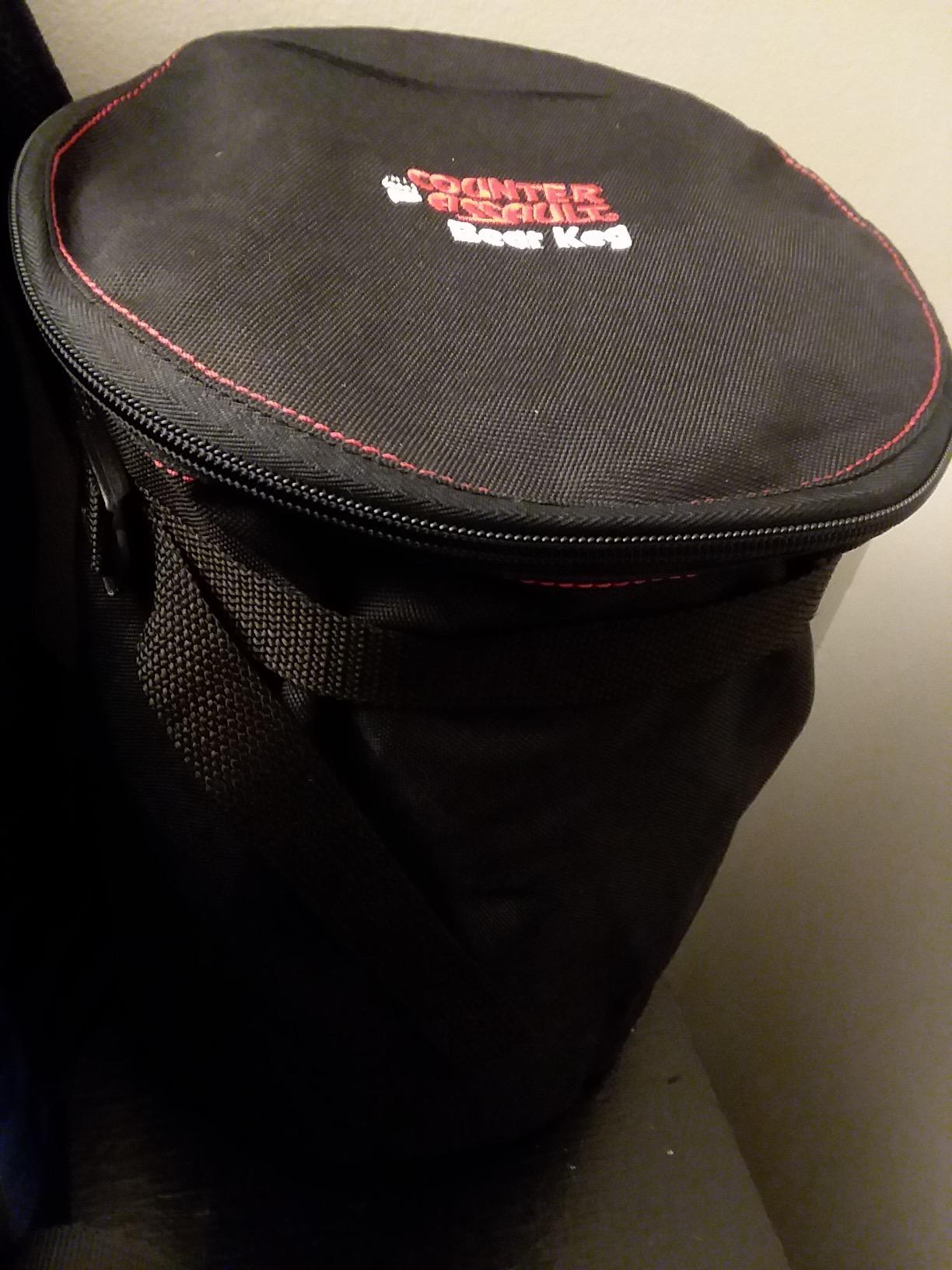
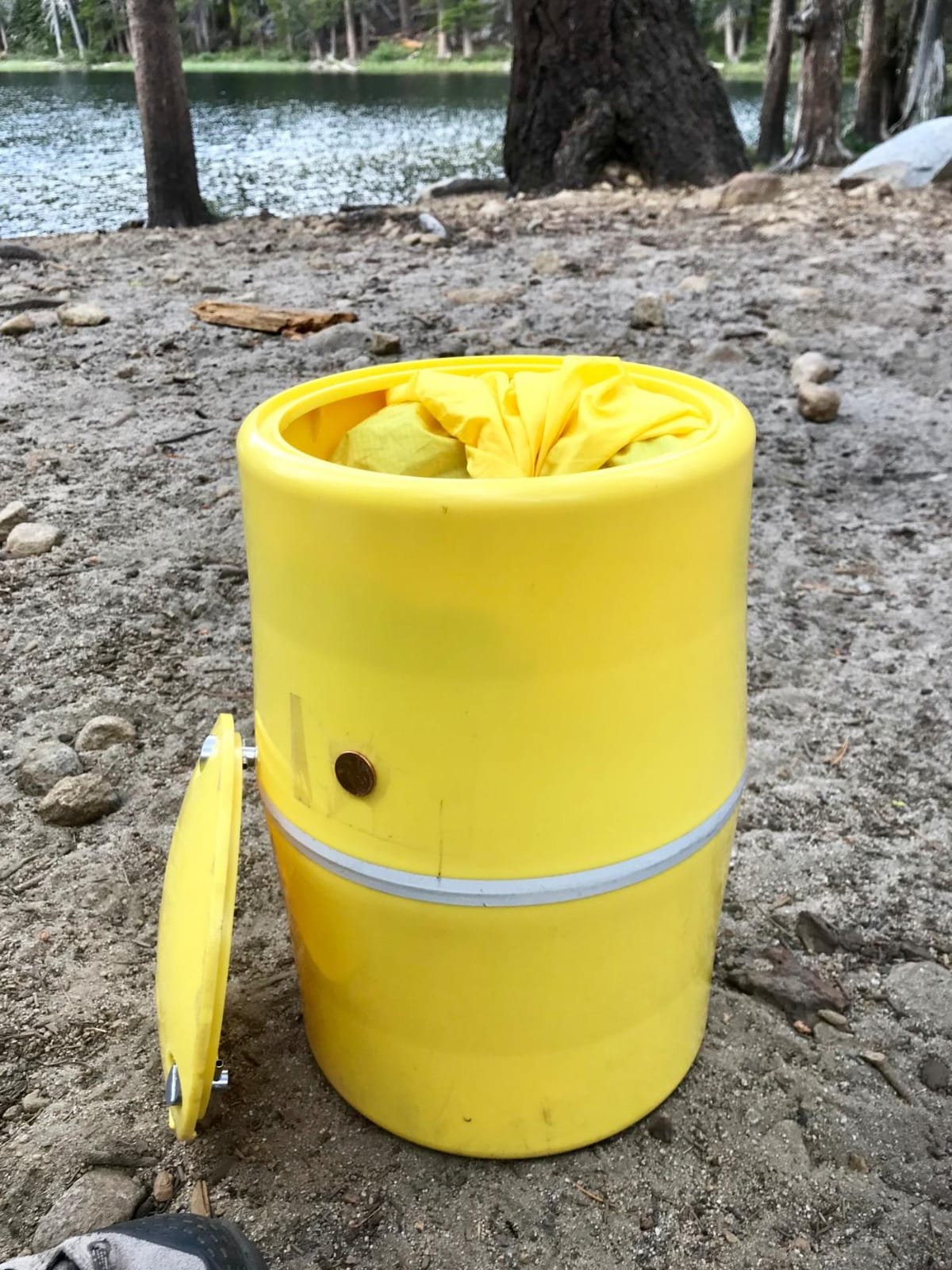
The Bear Keg is the pick when certification paperwork is the deciding factor rather than weight. It carries approval from both the IGBC and the SIBBG, and that dual listing is the reason it shows up in areas where a single certification is not enough. It is a 3 gallon cylinder, 9.5 inches across and 14.12 inches tall, holding 716 cubic inches of usable storage, and it is finished in bright yellow.
That color is not a gimmick. In fall, when you are breaking camp in low light or in a storm, a matte yellow cylinder is findable with a headlamp in a way that a black or clear container is not, and reviewers consistently list visibility as a practical plus rather than a style preference.
Volume is where it earns its keep. 716 cubic inches is roughly 11.7 liters, which handles a genuine multi-day load with room to spare and is the only canister here comfortably suited to carrying a group share if you are not splitting food between two people. It is also narrower in footprint than a square box canister, so it slots into more packs than its 14.12 inch height first suggests.
The cost is weight, and it is real. At 3.5 lb empty, this is the heaviest canister in the group, and you carry that on every approach whether the bears show up or not. It also has one of the thinnest field records in the group at 167 reviews, so the long-term feedback is thinner than for BearVault or the Cache, and it is hand wash only and not microwave safe.
When the Bear Keg is the right tool
Choose it when your destination publishes an approved list and the Bear Keg is on it, particularly in zones where the SIBBG listing is doing the work. It also suits a six-to-eight day route, a group trip where one person takes responsibility for the whole food cache, and anyone who camps in low light and values being able to find their container.
It is a sensible choice for a first canister purchase in a heavily regulated backcountry, because the dual approval covers more rule sets than a single certification does.
When the Bear Keg is the wrong tool
Pass on it if you are counting grams on a long approach, since 3.5 lb is a full pound more than the BRC and nearly double the smallest BearVault variant. Pass on it if your pack is short and tall, because 14.12 inches of vertical cylinder is hard to fit. And pass on it if you care about the biggest available review pool, because 167 reviews is thin next to the BearVault family’s 2272.
5. UDAP BRC with Carry Case – Convenient Bundle, Weaker Review Record
NO-FED-BEAR UDAP Bear Resistant Canister, Hiking Camping Backpacking Hunting Food Storage Container with Carrying Case, 2 Gallons,8” x 10”, BRCWC
Pros
- Only bundle here that includes a fabric carry case with adjustable straps
- Canister can be stowed outside the pack when not in use
- Holds a full three-day load plus toiletries and fresh fruit
- Canister body itself is sturdy and does the job
- Can double as a small sitting stool
Cons
- Carry case straps and handle are the weak point and have failed for buyers
- Bulky for the 8 liter volume it holds
- Lid can stay stuck after the fastener is unlocked
- Some buyers report real capacity below the advertised volume
This is the same core canister as the UDAP BRC, bundled with a durable fabric carry case with adjustable straps. That is genuinely useful, because it lets you hang the canister on the outside of your pack or stash it away from your tent on a strap instead of living inside the main compartment. The closure is buckles on the case, and the canister lid still uses the coin-operated metal fastener.
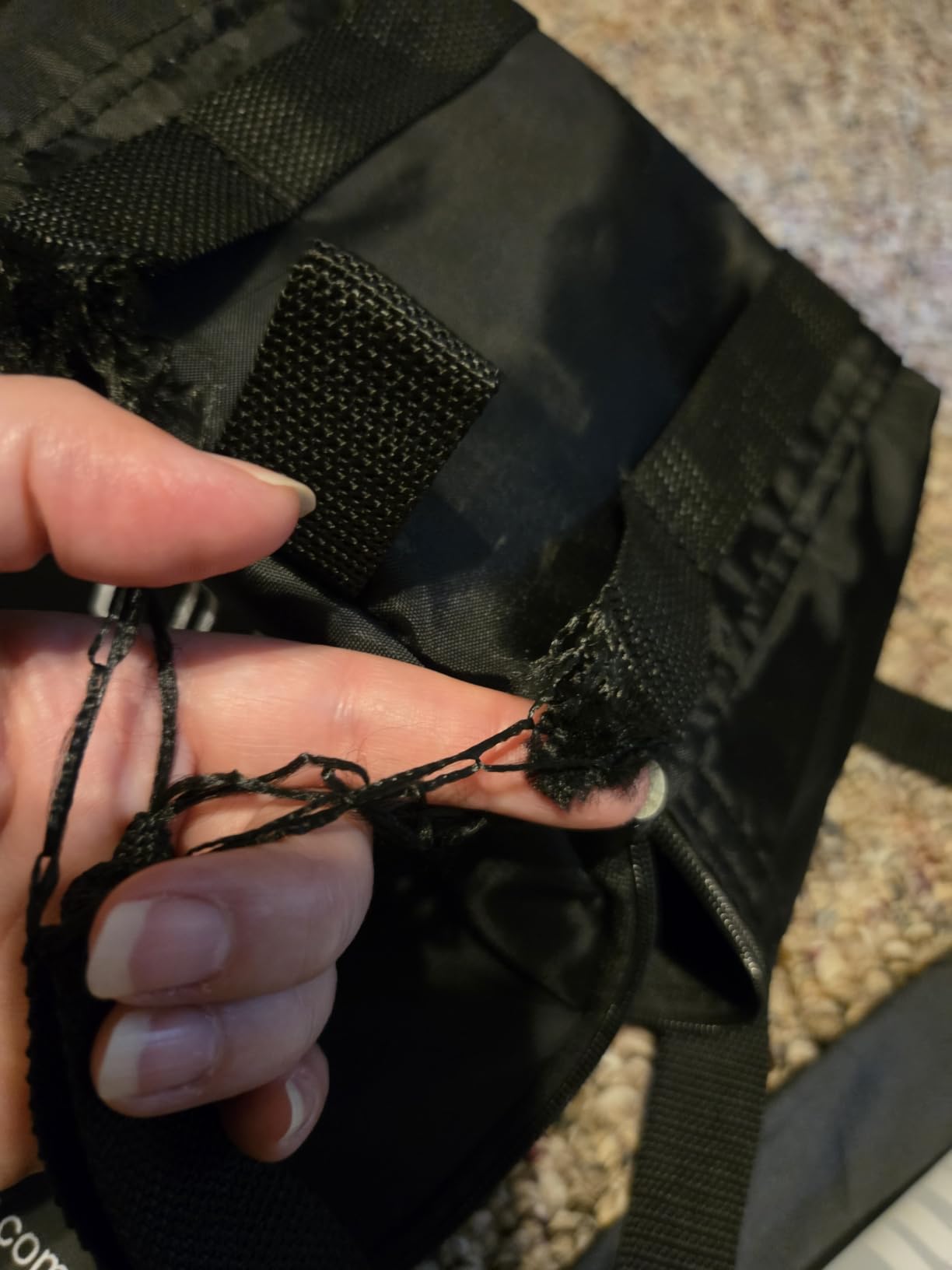
The problem is the weakest link. Two separate owners report carry case failures, including straps that unraveled during a single walk to the vehicle and a unit that arrived with a torn handle. The listed weight is 3.2 lb including the case, which is 0.8 lb more than the bare BRC for a fabric accessory, and reviewers also report that actual food capacity runs below the advertised 8 liters.
At 4.1 stars this is the lowest-rated product in the group, and the distribution shows why: 56% five-star, 17% four-star, 12% three-star, and 15% at two stars or below. The pattern in the reviews is consistent. Owners are generally happy with the canister itself and unhappy with everything around it, which is exactly the profile of a bundle that should have been sold as an accessory instead of as a complete storage solution.
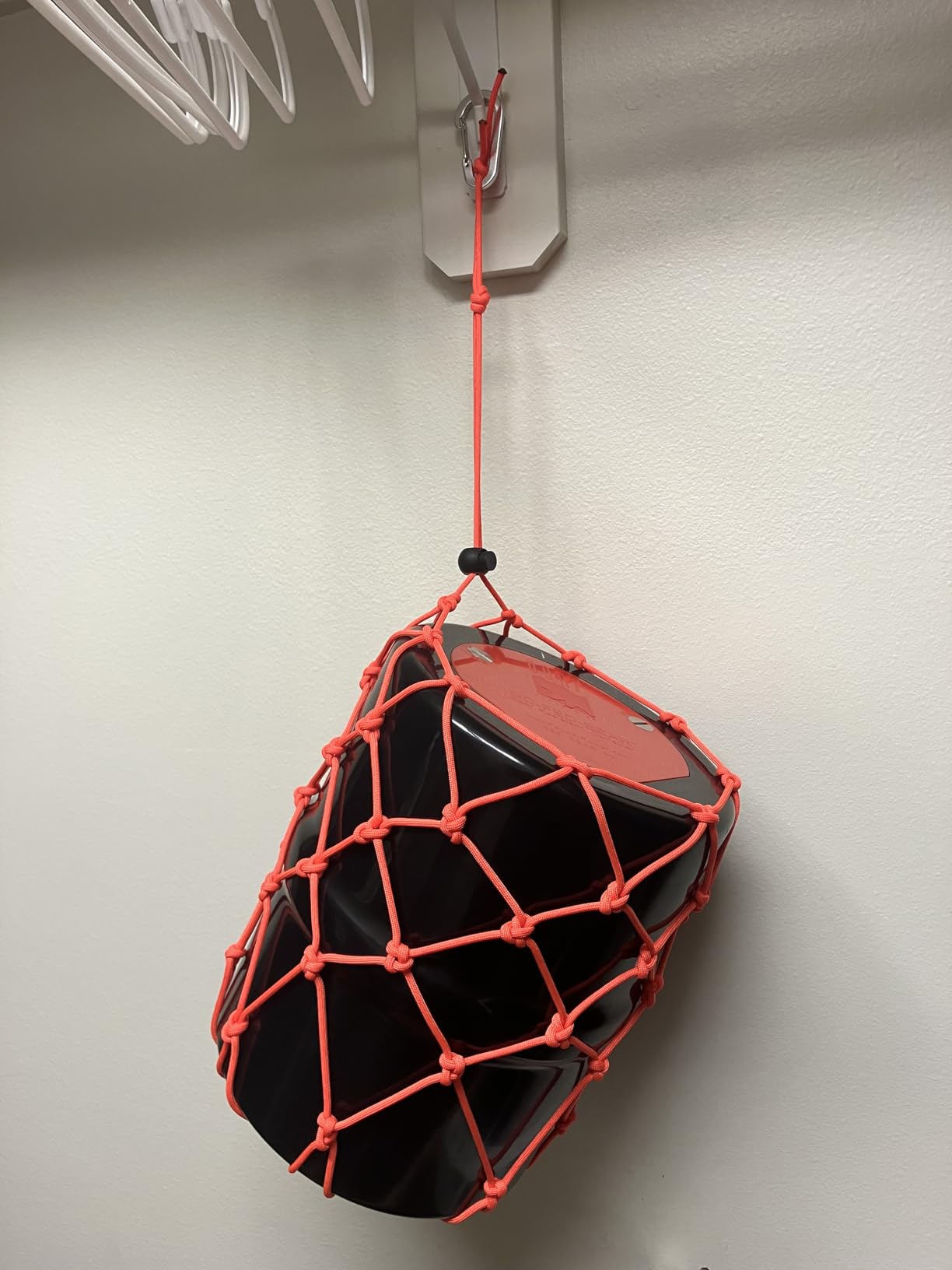
The one thing it does well that nothing else here does is hold a full three-day load plus toiletries and fresh fruit with room to spare, and the case gives you a way to keep the canister outside your pack in bear country, which reduces the chance of a bear investigating your tent zipper in the first place.
It is dishwasher safe, which is not a claim the other canisters make, and it is recyclable plastic. Neither fact matters much in a drainage in the backcountry, but the dishwasher rating does help at the car-camping end of the spectrum.
When the case is worth the extra weight
The bundle makes sense if you camp in a place where you want the canister lashed outside your pack or hung on a tree line away from camp, and if you do not mind inspecting the case straps before every trip. It also makes sense as a complete first purchase for someone who wants one object to handle food storage and camp sitting.
Because the case uses adjustable straps and buckles rather than a molded shell, you can also thread it through a haul loop or a daisy chain in a way you cannot with a rigid canister.
When to buy the bare BRC instead
Buy the bare BRC instead if you already own a fabric haul sack or a dry bag that serves the same purpose, because the case adds weight and a failure point without adding security. If you are on a tight weight budget, or if you want the best-reviewed certified opening mechanism in the budget tier, the bare canister is the better buy.
I would also skip this one as a first canister for a trip where a case failure would be discovered at the trailhead. Nothing ruins a morning faster than a strap that will not hold.
6. BearVault BV ONE – The Only Canister That Shrinks as You Eat
BearVault BV ONE Adjustable Bear Canister for Backpacking and Camping, Expandable & Collapsible Bear Resistant Food Storage, 1-4+ Day Capacity
Pros
- Only canister here that collapses as the food supply shrinks
- Push-button latches and smooth threads open easily with cold hands
- Soft-touch buttons are the most glove and cold friendly mechanism here
- Wide openings on both halves with center access
- Optional interior divider for organization
Cons
- Newest design with the smallest review pool at 69 reviews
- Highest price point in this roundup
- Two halves means two closures to check
- Adjustable segments add seams that snag loose packaging
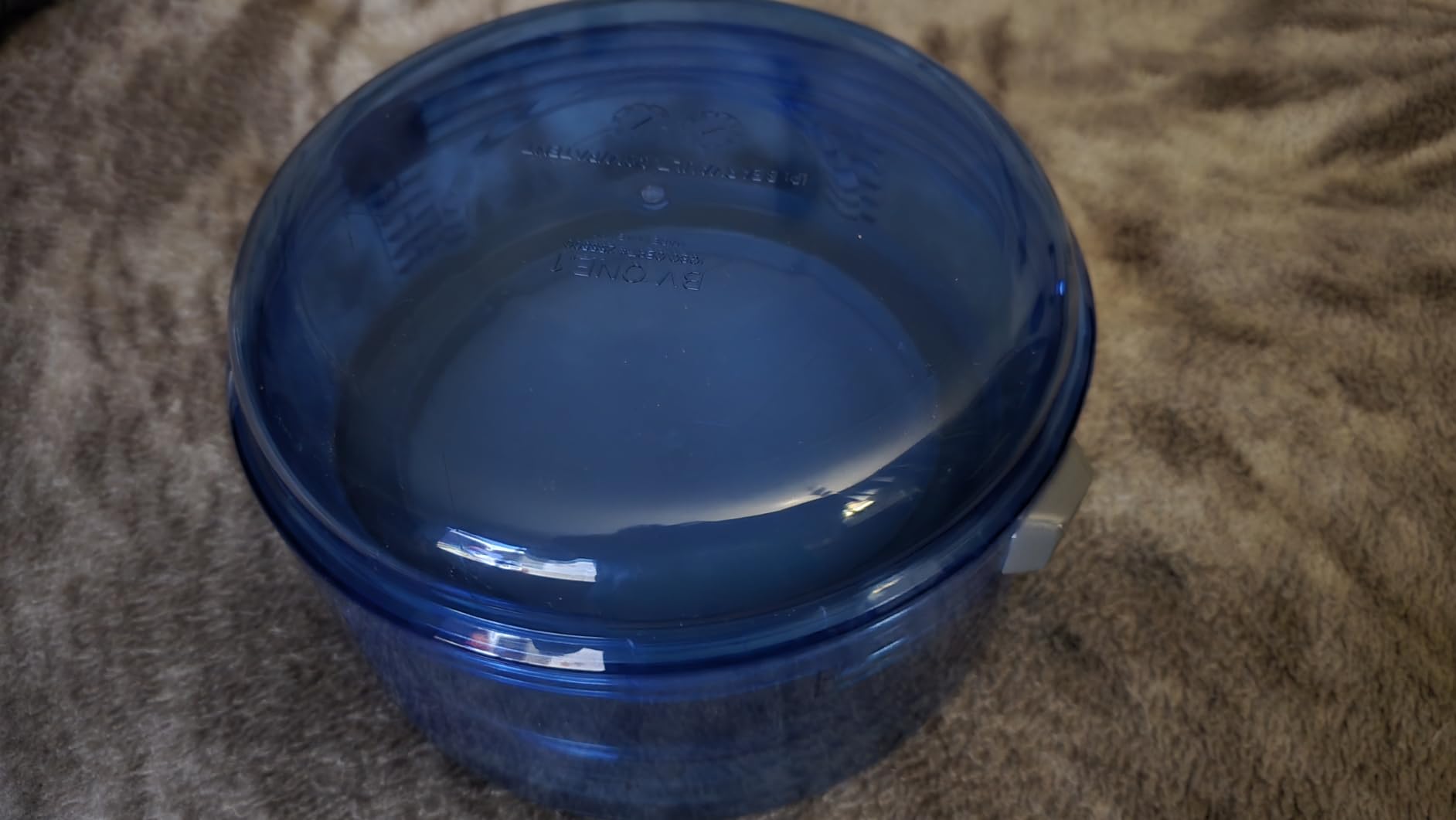
The BV ONE is the first BearVault in years that changes the fundamental problem, which is that a fixed cylinder occupies the same pack volume on day ten as it did on day one. This one is a two-half cylindrical body that expands and collapses, with 8.3 liters of maximum capacity and a claimed 1 to 4-plus day range. As your food runs out, the volume shrinks, which is a small change that has an outsized effect on how a multi-day pack lays.
The opening is the other headline. Instead of a screw lid or a coin-operated fastener, it uses soft-touch push buttons and smooth threads, rated by the manufacturer to work in all temperatures, with wide openings on both halves and tactile feedback when it closes. Among cold-hand hikers, that mechanism is the one they describe as easiest. It needs no coin, and it is the single best argument for buying this model if you start every day at 6 AM in freezing conditions.
Center access on both halves means you can reach food without tipping the container out, and an optional interior divider keeps smaller items from migrating to the bottom. It is IGBC approved under number 255500, so certification is not the question here.
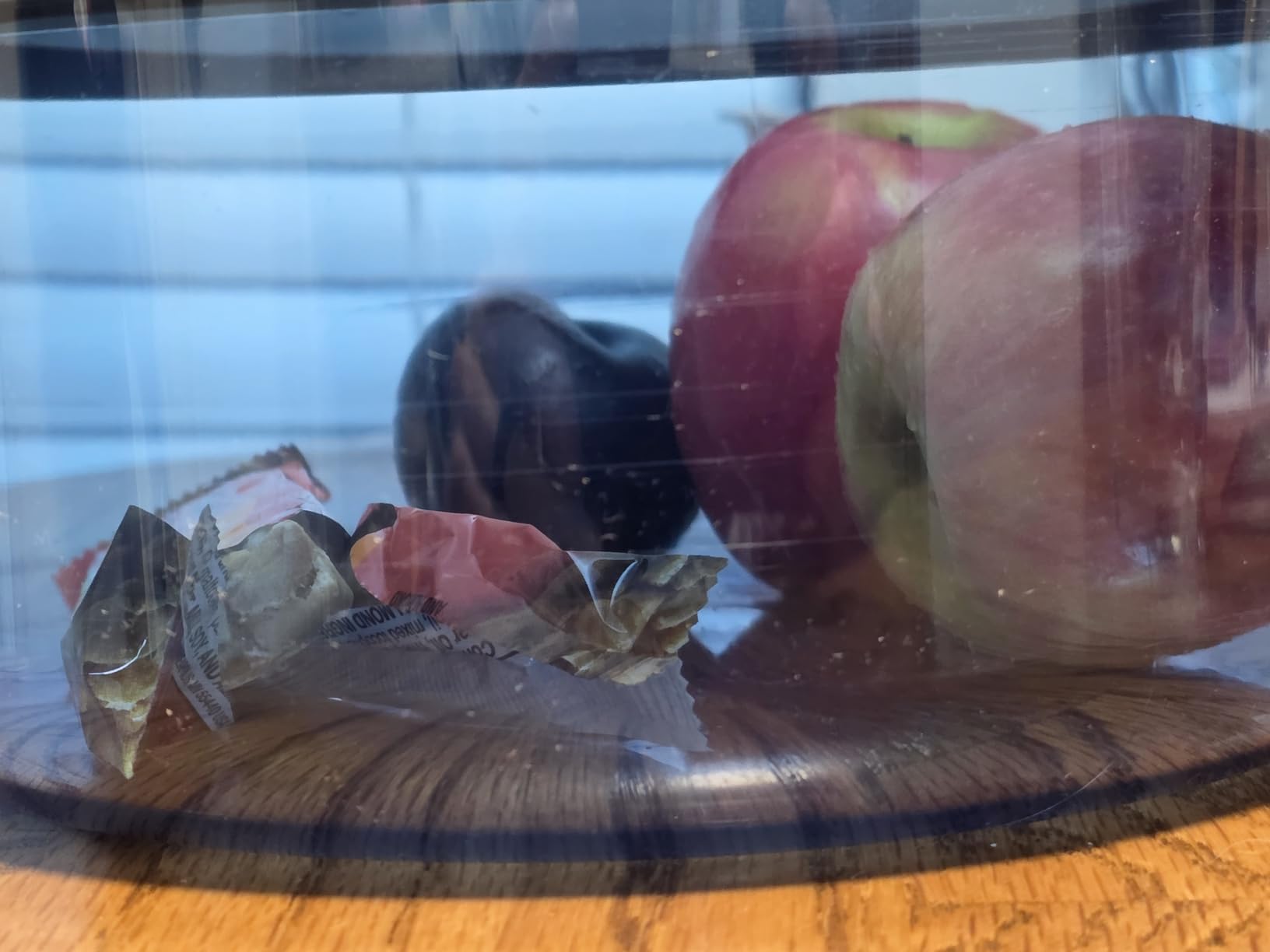
The reservation is maturity. At 69 reviews, this is the least-documented canister in the roundup, and reviewers say so directly. The second reservation is the two-closure design, where you have to check both latches every single time and a missed latch is a real failure mode. The adjustable segments also add internal seams, and owners report loose food packaging catching in them.
Note that BearVault claims 20 percent better weight-to-volume efficiency for this model, but the listing does not publish a measured empty weight, so I am not going to invent a grams-per-liter figure for it. The efficiency claim is the manufacturer’s, and you should weigh the collapsing advantage on its own terms rather than as a certified number.
When collapsing capacity is worth paying for
The BV ONE makes the most sense on a route where you are carrying a large food volume through a section with a small pack, and where the last four days are eating down toward nothing. On a PCT section or a long Sierra loop, the volume you recover in the back half of the trip is worth more than the entry cost.
It is also the answer for anyone who has quietly hated hauling a dead cylinder for years and then told themselves that was just ultralight purism. On r/Ultralight the consensus is blunt: there is no ultralight bear canister, and when a mandate applies you throw that concept out the window. This is the closest thing to a compromise.
When to stick with a fixed cylinder
Buy a fixed canister if you want the largest review pool and the longest field history available, if your trips are one to three nights where volume never becomes the constraint, or if your destination maintains a named list and this model is not on it yet. A newer design with 69 reviews has not been through as many seasons of real use as a 2272-review family.
It is also the wrong pick if you are a careful checker who would rather have one latch than two, and if you travel in winter cold where any multi-segment closure is an extra place for ice to form.
How to Choose a Bear Canister
Start with the destination’s rule, not the brand
Two rule systems exist and mixing them up is the most common reason hikers get turned away. List-based destinations publish a specific set of approved containers, sometimes down to a serial number, and an IGBC sticker will not help you there. Certification-based destinations accept any container that carries a recognized approval, and the BearVault family, the UDAP BRC, and the Bear Keg all qualify under the IGBC track.
Before you buy anything, find the food storage page for the specific zone on your permit and read it. Then confirm the model name, and if the destination lists specific units, confirm the version. The BearVault BV425 Sprint is designed to work as a split-group container, which is useful to know, and Adirondack high-use zones have historically required a rental canister rather than accepting a personal IGBC-approved unit, so a personal purchase can be the wrong decision even with an approved canister in your closet.
Fall trips deserve extra attention. During hyperphagia, bears are pushing hard on calories before winter, and camps with consistent success tend to see repeat failures. If you are walking in during that window, a canister that has been crushed once is a bad sign, and an opaque body is a small but free advantage.
Match liters to trip length
The working rule is roughly 1.5 to 2 liters of food per person per day when you are packing calorie-dense dehydrated food, and closer to 1 liter per day when you are carrying a genuinely light load. That gives a practical mapping for a solo hiker: a one to two night weekend is served by about 3 to 4 liters, a three to four day route by 6 to 8 liters, a full week by 10 to 12 liters, and a ten-day section needs either the largest capacity available or two canisters.
In this roundup, the UDAP BRC at 8 liters is rated by its manufacturer at four to six days depending on packing density, the BV ONE tops out at 8.3 liters for 1 to 4-plus days depending on how much you repack, the Bear Keg at about 11.7 liters is the pick for the longest solo route here, and the smallest BearVault variant is built for one to two days.
The repack method is what makes a small canister work on a longer trip. Pack a full load in the morning, then every evening move what you ate today into your pack bag and collapse the container around what is left. On a fixed cylinder, day seven’s canister is as big as day one’s unless you do this deliberately. The BV ONE does part of that for you automatically.
Read the ounces per liter figure
Ounces per liter is the efficiency metric that answers the most common argument in every gear forum, which is whether a lighter canister is worth paying for when it is also smaller. You compute it as empty weight in ounces divided by capacity in liters. Here is the ranking from the listed specifications, using listed empty weight and stated volume.
The smallest listed BearVault variant runs about 4.0 ounces per liter at 1.8 lb and roughly 7.2 liters of external volume. The UDAP BRC sits at about 4.8 ounces per liter at 2.4 lb and 8 liters. The Bear Keg lands at about 4.8 ounces per liter at 3.5 lb and 11.7 liters. The Backpackers’ Cache runs about 4.9 ounces per liter at 3 lb and 9.8 liters. The BRC with the carry case is the least efficient at about 6.4 ounces per liter, because the case weight is folded into the figure.
The BearVault BV ONE is excluded because the listing does not publish a measured empty weight. The pattern is clear. Round cylinders are efficient, box shapes trade a little efficiency for packability, and accessories attached to the outside of a canister get counted against it whether they help security or not.
Know what the certifications actually guarantee
IGBC is the Interagency Grizzly Bear Committee. Its test puts a captive bear in a test enclosure with the container and requires the container to remain closed and functional through 60 minutes of continuous crushing, clawing, and chewing. WMI is the Wildlife Management Institute, which runs a similar protocol for a broader set of species and agencies. SIBBG has historically appeared on western containers as an additional listing for its own regulatory region, and it is not a national standard.
What certification guarantees is that a determined captive bear did not open the container in an hour. What it does not guarantee is that a hungry black bear with a rock, a determined pair of hikers, or a bear that has already learned that camps contain food will be stopped. It also says nothing about odor, because no certified canister is odorproof. Every model here needs an odor-proof liner bag, and the Cache specifically is not airtight.
Test the lid in cold conditions before you commit
This is the single most repeated complaint in owner reviews and the one competitors bury as a one-line con. Screw lids stiffen when the plastic is cold, coin-operated fasteners add a step that is annoying at 6 AM, and latch mechanisms that rely on a positive click are the ones that fight you most in frost. The BV ONE’s soft-touch push buttons with smooth threads are the mechanism most likely to work with gloves on. The BearVault screw lid is workable but many owners keep a plastic card or a commercial slider key in the same pocket as their wallet as insurance. The BRC needs a coin, and you should decide now whether you are willing to carry one for the whole trip.
Fit the canister to your pack
A 35L pack is tight. The tall cylinders in this roundup, including the 14.12 inch Bear Keg and the 12 inch cube Cache, are difficult to fit in a small main compartment, and the BV ONE’s collapsing body is a genuine advantage there. A 50L pack handles a round cylinder comfortably and can usually add the Cache alongside it. A 60L pack or larger leaves room for a canister plus a camp chair, and if you are building a comfortable camp setup you can see our best air mattresses for camping guide for the sleep system that goes with it.
The Cache is the shape answer. A rectangular box in a rectangular pack wastes far less space than a cylinder that leaves dead corners, and it also fits a kayak hatch in a way nothing else here does.
Work out the group canister math
For two people, you have two reasonable options. One large canister carried by one person concentrates 3 lb of weight on one person and creates a single point of failure. Two smaller canisters split the weight evenly and mean neither person is carrying the entire group’s food. The BearVault BV425 is explicitly designed for the split-load case, and two Sprint-sized units give each person independence.
For three or four people, three or four small canisters beat one large one on almost every axis except pack volume, because you can distribute weight across different packs, distribute the risk of a failure, and let each person repack independently. The Bear Keg’s 716 cubic inches exists for people who want one shared container, which works for a strong group that does not mind the weight sitting with one person for a week.
Decide between buying and renting
Renting makes sense for a first trip to a destination with a strict list, and for anyone who backpacked two or three times last year at most. Many park outfitters and regional programs maintain loaner canister programs, and some parks issue the Cache as the standard unit. The practical problem with renting is availability in peak season, so reserve early rather than planning to walk up.
Buying makes sense if you are confident you will return to bear country, if you want your own approved model rather than whatever the trailhead has, and if you are splitting group food across multiple canisters, which rental programs rarely support. A rental also solves the destination list problem for one trip, while a purchase solves it for every trip you take there.
Store the canister the way the rules expect
The container is the last line of defense, not the first. Pack all food, all trash, and all scented items including toiletries, toothpaste, deodorant, and sunscreen into the canister with an odor-proof liner bag, then close the latch and confirm it closed. Choose a spot that is away from your tent, at least 100 feet from your sleeping area if the local rule specifies it, and far enough from water and drop-offs that a rolled canister does not go over a bank. Bears investigating a stray canister are far less likely to escalate to a tent than bears investigating a tent smell.
Two failure cases get reported repeatedly. One is a canister that rolls downhill or gets knocked into water because it was stowed in a shallow depression, which is why flat ground away from a drop-off matters. The other is a missed latch on a multi-closure design, which is a reason to check the closure twice even on a canister you trust. If you are outfitting a longer trip, our best camping toilets reviewed guide covers the other item that has to go in the container.
Frequently Asked Questions
What is the best bear-proof canister for backpacking?
The BearVault family takes our top spot because it spans four volumes from the BV425 Sprint to the BV500 Journey, carries IGBC approval, and has the largest owner review base in the category at more than two thousand reviews. If pack shape matters more than volume choice, the Backpackers’ Cache packs more efficiently. If you want certified 8 liter capacity at a light 2.4 lb empty weight, the UDAP BRC is the value pick. Always confirm your model against the destination’s approved list before buying.
What size bear canister is best for backpacking?
Budget roughly 1.5 to 2 liters of food storage per person per day with calorie-dense dehydrated food, and closer to 1 liter per day on a genuinely light load. That means 3 to 4 liters for a one or two night weekend, 6 to 8 liters for a three to four day route, and 10 to 12 liters for a full week. In this roundup the UDAP BRC at 8 liters covers roughly four to six days, and the Bear Keg at about 11.7 liters is the longest-route option.
Are bear canisters better than bear bags?
Hard-sided canisters are what most mandates require, because they pass a 60 minute captive bear crush and claw test and they cannot be punctured by a curious bear. Soft bags are lighter and pack down smaller, and they are accepted in some specific zones only. In grizzly country and in any zone with a published list, the hard canister is the safe legal answer. Treat a soft bag as a weight-saving option only where the destination explicitly allows one.
Can bears smell food in bear canisters?
Certification does not make a canister odorproof. A bear will investigate any container that smells like food, which is why every model in this roundup needs an odor-proof liner bag inside, and why the Backpackers’ Cache specifically is not airtight. The canister protects the food; the liner bag controls the smell. You still need to stow the canister away from your tent, away from water, and on flat ground that a bear cannot roll it off.
Do bear canisters really work?
In the certified test, yes. A captive bear has 60 minutes of continuous crushing, clawing, and chewing and the container must stay closed and functional the whole time. In the field the picture is less tidy. r/AppalachianTrail hikers post photos of BearVault failures, and rokslide.com owners have reported units not holding up to a real bear beating. Treat certification as a strong deterrent that ends most attempts, not as a guarantee against a bear that already knows your camp smells like food.
Are there any drawbacks to bear bins?
Four come up constantly. Weight is the biggest, with the heaviest unit in this roundup at 3.5 lb empty and the smallest at 1.8 lb. Bulk is second, since a fixed cylinder occupies the same pack volume on day ten as on day one. Lid operation in cold weather frustrates owners of screw lids and coin fasteners alike. And no canister is odorproof, so a liner bag is a required accessory rather than an optional one.
What are the differences between the REI bear canister and BearVault?
BearVault is the better-documented family here, with four sizes, clear polycarbonate bodies, tool-free screw-on lids, IGBC approval, and more than two thousand owner reviews. Modular and collapsible designs from other brands shrink as food runs out and may use push-button latches, which some hikers prefer with cold hands, but they have far less long-term field history. A modular or collapsible design is worth more on a long route; a fixed family with a wide size range is worth more on varied trips.
What are people saying about the BearVault BV ONE bear canister?
Owners single out two things: the collapsing body that frees pack volume as the food runs out, and the soft-touch push buttons as the easiest opening mechanism they have used. The reservation is maturity, because it is the newest canister here with 69 reviews, so long-term durability is not yet well documented. Two other reported drawbacks are that two halves mean two closures to check, and that the adjustable segments add seams which snag loose food packaging.
Final Verdict
Buy the BearVault family if you want one brand that covers a weekend through a week, and if you want the largest owner review base in the category behind your choice. The BearVault BV425 is the lightest unit here at 1.8 lb for a one or two night trip, and the larger models cover longer routes, with a wide opening and tool-free screw lid that works in the cold.
Buy the Backpackers’ Cache if your pack is the constraint and a box shape will use your volume better than a cylinder, or if you are in an area where it is the loaner unit. Buy the UDAP BRC for certified 8 liter capacity at 2.4 lb and roughly 4.8 ounces per liter. Buy the Bear Keg only when dual IGBC and SIBBG approval or maximum capacity decides it, and accept 3.5 lb. Buy the BRC with the carry case only if you will inspect the straps. Buy the BV ONE if collapsing pack volume is worth more to you than a long field history.
Whichever one you pick, check the approved list for your specific zone before you buy, pack an odor-proof liner bag, and store the canister away from your tent on flat ground. For the 2026 season those three habits matter more than the model name.