
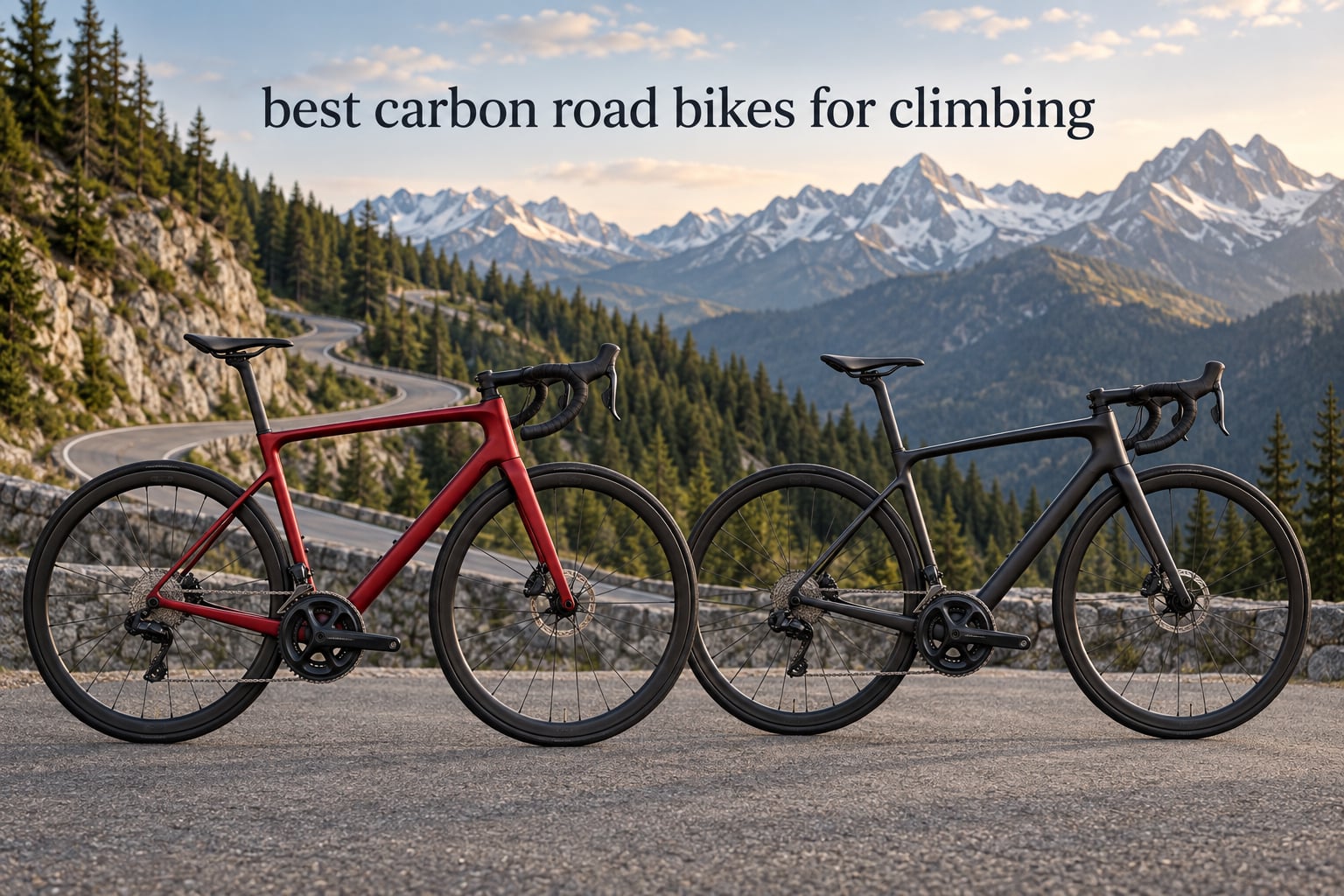
Six complete carbon road bikes, all of them built for one job: getting up a mountain without your legs giving out before the road does. The best carbon road bikes for climbing share three traits, and they are all measurable rather than marketing claims: a low complete build weight, a stiff frame that does not eat your watts, and gearing low enough to hold a high cadence on a 20% ramp.
What follows is a brand-independent roundup. We ignored sponsorship, and we ignored the halo race machines that dominate most buying guides, because a bike that only works for one type of rider is not the answer for most people reading a climbing query. Six bikes made it onto this list, and they range from a rim-braked 18.7 lb build to a full-carbon package with Dura-Ace Di2. Several sit in the value tier that most roundups skip entirely, which is also where most real buyers actually shop.
We also spent time in the forums where this question gets argued rather than reviewed. The recurring complaint there is not that climbing bikes are too expensive; it is that nobody publishes a straight comparison. So each bike below gets a stated weight, a stated groupset, and an honest note on who should skip it. For a broader look at road bikes across every discipline, our road bike roundup covers the all-round and aero end of the market.
What makes a carbon road bike good for climbing?
The best road bike for climbing is a carbon bike that keeps your total weight low, stays rigid under power so no energy is lost to frame flex, and runs a low enough gear to spin up a wall. Those three factors interact, and a bike that scores well on one while failing the other two will still leave you walking up the last kilometre of the col.
Weight is the number everyone quotes, but it is not the whole story. On a sustained climb, gravity is doing constant work against you, so every gram you remove is a gram you do not have to pedal. The catch is that frame weight on its own is a poor guide: a heavy wheelset and fat tyres can undo a superlight frame in seconds. That is why every bike below is listed by complete build weight, not frame weight.
Stiffness matters because carbon can be tuned in two directions. Very light layups flex, and a flexing bottom bracket, down tube or chainstay quietly eats a portion of every pedal stroke. Reinforcement patches add weight back, so the useful comparison is stiffness at a given weight, not weight alone.
Gearing is the third leg, and the one riders most often get wrong. A standard 50/34 crank with an 11-32 cassette gives a much lower bottom gear than a 53/39 chainset, which is the difference between grinding up a ramp in a low gear and spinning smoothly. Note the groupsets in this roundup: the Tiagra 20-speed model is the only one here with a narrower gear range.
Geometry and wheels round out the picture. A slightly shorter wheelbase and a responsive front end help on switchback roads, while shallow-profile wheels cut the rotational mass you have to accelerate on every ramp. None of these things matters as much as the three above, but they decide whether a climb feels calm or twitchy.
Top 3 picks for Best carbon road bikes for climbing in 2026
If you want one answer, take the Editors’ Choice. If your budget or your riding style points somewhere else, the two runners-up below cover the most common alternatives.


SAVADECK Blade R8 Ultegra
- 7.72 kg total weight
- Ultegra Di2 R8170 24-speed
- Hydraulic disc brakes

All six carbon road bikes for climbing at a glance in September
| Product | Specifications | Action |
|---|---|---|
| Hearts Bio Model H 18.7 lb |
|
Check Latest Price |
 SAVADECK R13 Dura-Ace Di2 SAVADECK R13 Dura-Ace Di2 |
|
Check Latest Price |
| SAVADECK Blade R8 Ultegra Di2 |
|
Check Latest Price |
 SAVADECK R9 Di2 SAVADECK R9 Di2 |
|
Check Latest Price |
| KABON Stealth R70 |
|
Check Latest Price |
| KABON Model C |
|
Check Latest Price |
How we chose these six carbon road bikes
Every bike here is a complete carbon road bike, sold as a build you can ride, and every one was checked against the same shortlist of criteria. We did not restrict the list to a single price tier, because a roundup that only covers halo race machines tells a value buyer nothing useful.
The selection process ran in five steps. First, we required genuine carbon frames rather than aluminium with carbon accents. Second, we required a stated complete build weight, since a frame weight on its own is not a climbing figure. Third, we required a named drivetrain rather than a vague “22 speed” claim, so you know the gear range and the shifting feel. Fourth, we noted disc or rim brakes, because a rim brake changes how a long descent at altitude feels. Fifth, we weighted owner review volume, which is why the Editors’ Choice went to the bike with the most reviews in the set.
We also made a deliberate editorial choice: no brand buying guide influenced this list. The strongest result for this query on the wider web is a manufacturer page that recommends only that manufacturer’s own bikes. Readers are right to discount those pages, and that is exactly the gap this roundup is meant to fill.
One limitation is worth stating plainly. The bikes available to buy direct from a large marketplace in this category are not the race machines that dominate the magazine reviews, and the owner review counts here range from two to thirty-five. Where the data is thin, we say so rather than filling the gap with confident-sounding adjectives.
1. Hearts Bio Model H 18.7 lb – the lightest complete build in the roundup
Hearts Bio Carbon Frame Road Bike Model H – Carbon Fiber Racing Bicycle with Tiagra 20 Speed Derailleur System (54 : Rider Height 5’10~)
Pros
- Lightest complete build in this roundup at 18.7 lb
- Toray T800 Supreme carbon frame
- Shimano Tiagra 20-speed drivetrain
- Carbon wheels included
- Limited lifetime warranty on the carbon frame
Cons
- Rim brakes need more skill and good pads on long alpine descents
- 20-speed drivetrain is the narrowest gear range here
- Size run stops at 54 cm
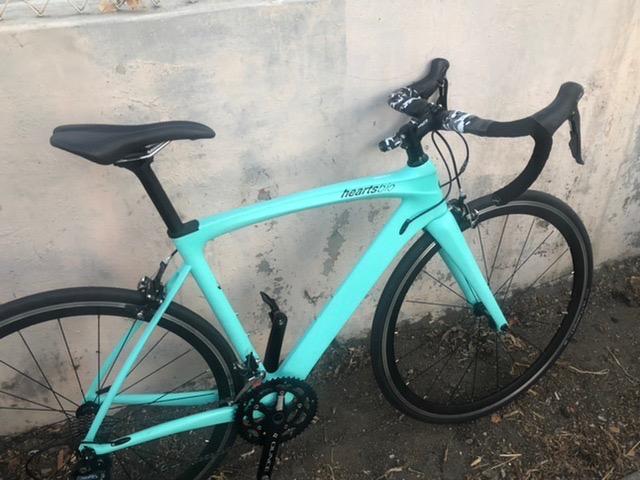
This is the bike that made the list for the simplest possible reason. At 18.7 lb it is the lightest complete build here, and it also has the largest body of owner feedback in the group at 35 reviews holding a 4.9 rating. That combination of light weight and evidence is why it takes the Editors’ Choice.
The frame is Toray T800 Supreme carbon, which is a high-modulus grade used across serious race machines, and it comes with carbon wheels already fitted. The listed size 54 is specced for a rider around 5 foot 10, and the full run covers 48, 50, 52 and 54.
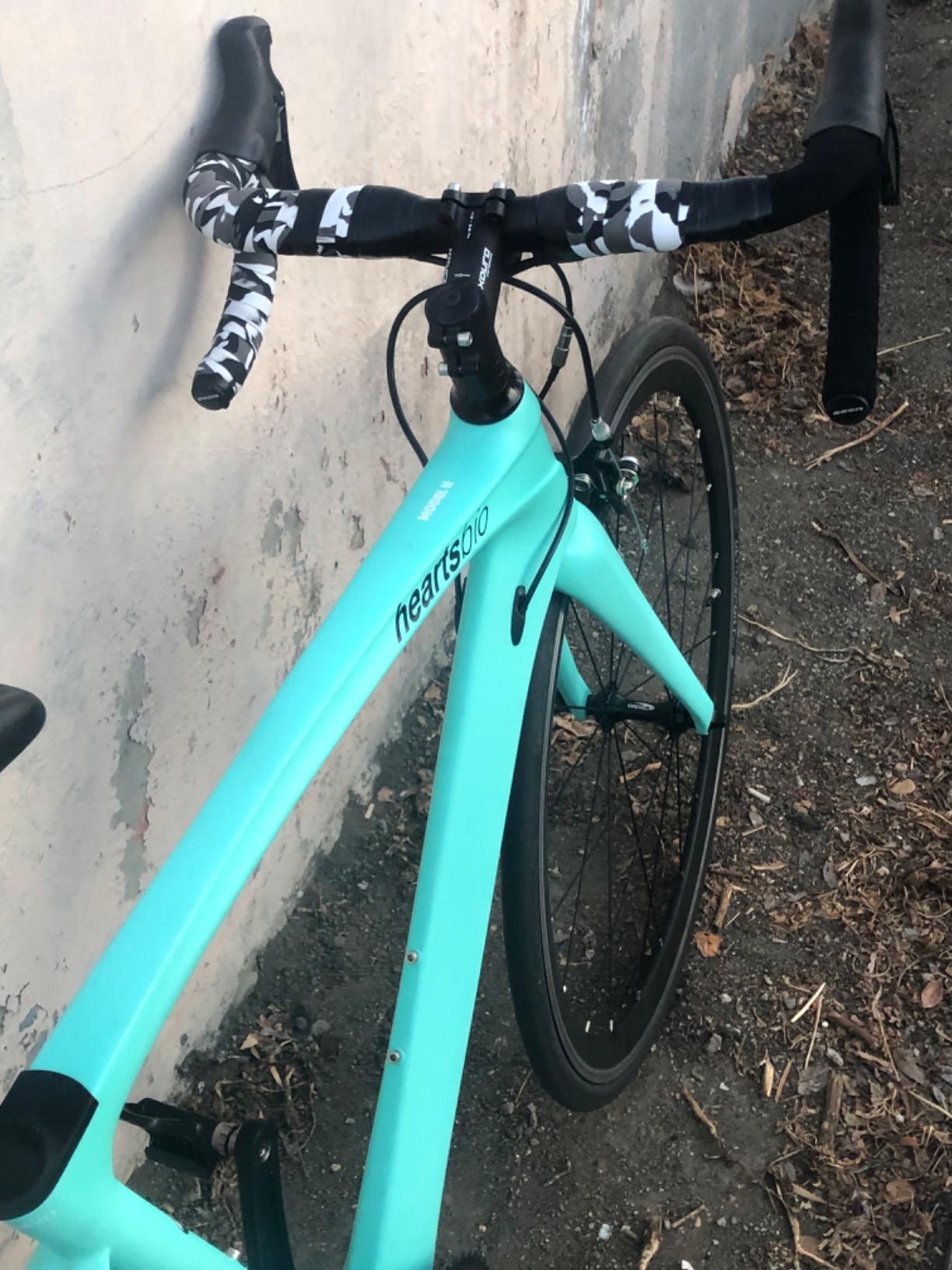
The drivetrain is the trade-off. A Shimano Tiagra 20-speed setup with trigger shifters shifts predictably and is simple to service, but 20 speeds is the narrowest gear range in this roundup, and 20-speed cassettes tend to top out a little lower on the steep side. Owners also point out the rim brakes, which are the least modern spec on the bike.
Owners report that the frame is the star of the show, and that the weight is genuinely felt on ramps rather than only in a spec sheet. The build arrives with a tool kit included, and the frame carries a limited lifetime warranty with one year of cover on mechanical parts.
What a lighter build actually saves you on a long col
At 18.7 lb this bike sits below the weight of the two Dura-Ace builds and well below the two KABON bikes. On a sustained gradient, that gap is small in absolute terms but consistent, and consistency is what decides whether you are still riding at the top after twenty kilometres.
The practical effect is less about your top speed and more about your recovery. A lighter bike lets you sit at a higher cadence for the same power, which is a much better position to hold for an hour, and it makes the difference between riding the last section at 240 watts and dropping to 190.
Where the rim brakes and 20-speed drivetrain will frustrate you
Rim brakes are the honest weak point. On a wet alpine descent after three hours of climbing, rim brakes demand more modulation skill and better pads than the hydraulic discs on the other five bikes. Riders who regularly descend long, steep passes should weigh that carefully.
The 20-speed drivetrain is the second limitation. It is a perfectly good gear range for rolling terrain and moderate ramps, but if your rides involve sustained 20% gradients you will want a lower bottom gear than a 2×12 setup gives you. Riders needing a larger frame than 54 cm should also look past this one.
2. SAVADECK R13 Dura-Ace Di2 – the lightest carbon build in the group at 7.1 kg
SAVADECK Carbon Road Bike, 24 Speeds Lightweight Road Bicycle with Shimano Ultegra Di2 9270 Groupset, T1000 Full Carbon Disc Brake Race Bike for Adult(Black 52cm)
Pros
- Lightest complete build among the carbon bikes at 7.1 kg
- Shimano Dura-Ace Di2 R9270 electronic shifting
- Carbon frame fork handlebar seatpost and wheelset
- Hydraulic disc brakes
- 90 percent pre-assembled
Cons
- Only four owner reviews so the long-term record is thin
- Warranty is listed only as limited
- Frame and fork weight not published separately
On paper this is the lightest carbon bike in the roundup. The stated complete build weight is 7.1 kg, which is 620 g below the next lightest carbon build here and puts it in genuinely competitive territory with far more expensive race machines. The drivetrain is a full Shimano Dura-Ace Di2 R9270 2×12 electronic groupset, the top tier of Shimano’s road range.
Unlike most bikes in this roundup, the carbon runs through the whole package. The frame, fork, handlebar, seatpost and wheelset are all T1000 carbon fiber, so there is no alloy wheel dragging the total weight up at the bottom of the build, which is exactly where climbing weight actually lives.
Brakes are Shimano R9270 hydraulic discs, which is the right choice for long mountain descents. Cables run internally, and the bike arrives 90% pre-assembled, so the practical work left for you is small.
Why the groupset and wheelset pairing matters more than the frame
A Dura-Ace Di2 groupset on a full carbon wheelset is where most of the weight saving is actually delivered on a modern bike. Riders chasing grams repeatedly point out that a superb frame on a heavy conventional wheelset gives back most of the gain the moment you start accelerating uphill.
The other side of that coin is serviceability. Electronic shifting and hydraulic discs need specialist work when something fails, and the warranty on this bike is listed only as limited, so budget for a service plan rather than assuming every problem is covered.
Where four reviews is not enough evidence
This bike has four owner reviews at a 4.6 rating. That is enough to confirm the machine is real and light, and not enough to tell you how the paint holds up, how the wheels survive a season, or how the brand handles a warranty claim.
That thin evidence is the main reason this bike is not the Editors’ Choice despite winning on weight. If you are buying this one, buy it because the specification sheet matches your target gradient and gearing needs, not because a thin review history tells you it is proven.
3. SAVADECK Blade R8 Ultegra Di2 – the highest rated build with real owner history
Pros
- 4.8 rating across 21 reviews is the most owner evidence in the group
- Shimano Ultegra Di2 R8170 electronic 24-speed shifting
- Hydraulic disc brakes for steep descents
- Internal cable routing
- 90 percent pre-assembled
Cons
- Heavier than both Dura-Ace builds in this roundup
- Wheel and tyre sizes are not specified in the listing
- One-year-plus cover is thinner than some rivals
This is the bike I would point a first serious buyer toward. It carries a 4.8 rating from 21 reviews, and more importantly it comes with a two-year warranty, which is the longest stated cover in this roundup. The 4.9-rated Editors’ Choice has more reviews but a much thinner warranty story.
The build is a T1000 carbon frame at a stated 7.72 kg total system weight, running a Shimano Ultegra Di2 R8170 24-speed electronic drivetrain with Ultegra hydraulic discs. Ultegra Di2 is one step below Dura-Ace and shares most of its shifting character, which is why it has become the default choice for riders who want clean electronic shifting without stepping up to the top tier.
Owners single out the shifting precision and the braking confidence in mixed weather, and the frame is described as aero-engineered with internal cable routing. Sizes run from 45 cm to 54 cm across a wide set of colour and size variants, and the bike arrives 90% assembled.
How a 2×12 electronic drivetrain helps on steep gradients
The 24-speed 2×12 setup is the gearing sweet spot for climbing. It pairs a compact-style inner chainring with a wide cassette, so you can drop into a very low gear on a ramp without the chain rubbing, and the close spacing means you can hold a steady cadence rather than jumping three gears.
Electronic shifting also removes cable friction and keeps the same button press producing the same shift on a long descent, which matters more on a mountain road than the weight difference of the groupset itself. The practical benefit over mechanical versions is consistency, not speed.
What 7.72 kg costs you against the lighter builds
At 7.72 kg this bike is heavier than both Dura-Ace builds in this roundup, 7.32 kg and 7.1 kg respectively. The difference is small, and it only shows on the steepest ramps where you are accelerating hard out of every hairpin.
Where the two lighter bikes are weaker, this one is stronger. Longer warranty, more owner reviews, and a 24-speed drivetrain rather than a narrower range. For most riders doing real mountain days rather than chasing gram-chasing records, that is the better balance.
4. SAVADECK R9 Di2 – a T800 full carbon package at 7.32 kg
SAVADECK Blade R9 Di2 Full Carbon Road Bike, Carbon Fiber Frame Racing Bicycle with Shimano R9270 24S Groupset, Hydraulic Disc Brakes, Ultra-Light Carbon Bike for Adults(White,54cm)
Pros
- Complete 7.32 kg build with carbon frame fork wheels bar and seatpost
- Dura-Ace Di2 R9270 flagship electronic shifting
- Dura-Ace R9270 hydraulic disc brakes
- Perfect 5.0 rating across all seven reviews
- 90 percent pre-assembled with pedals included
Cons
- Only seven owner reviews
- Premium price tier compared with the value builds
- Size listing centres on 54 cm
The R9 is the spec-sheet bike of this roundup. It weighs 7.32 kg complete and the carbon runs through the frame, fork, wheels, handlebar and seatpost, so there is no alloy component diluting the figure at the bottom of the build. The drivetrain is a Dura-Ace Di2 R9270 24-speed with matching R9270 hydraulic discs.
All seven owner reviews are five-star, and they describe the shifting as race-ready and the climbing performance as the standout trait. A perfect rating is worth reporting precisely because it tells you how little evidence exists: seven reviews is a small sample, and a flawless score on a small sample means enthusiasm rather than proven durability.
It arrives 90% pre-assembled with pedals included, and the primary listing is a 54 cm frame suited to riders above 6 foot 3, with other sizes and colours listed separately.
Where full carbon across the build earns its weight
The frame is the easy part. The bigger gain here is the wheels, handlebar and seatpost all being carbon, because those are the parts that most often hide alloy weight on an otherwise lightweight build. Integrated cockpit bars also tidy the front end, which matters less on a climb but is not nothing on a fast descent.
With a 24-speed electronic drivetrain and hydraulic discs already fitted, there is no obvious upgrade path you will want immediately. That is a strength for a first serious bike and a weakness if you enjoy rebuilding components each season.
Why a perfect rating is not a reason to buy
Seven reviews at 5.0 tells you that the people who bought it were happy. It does not tell you what happens in year two, whether the paint scratches, or how the brand handles a warranty claim, and the frame warranty length is not stated in the listing.
Compare that with the 21-review history behind the Ultegra build ranked second in this roundup, which also carries a two-year warranty. If you are spending at this level, evidence and cover usually matter more than the last two hundred grams.
5. KABON Stealth R70 – Shimano 105 Di2 and a carbon wheelset at the value end
Pros
- Full T800 carbon package including a 700x25C carbon wheelset
- Shimano 105 R7120 2x12 Di2 electronic drivetrain
- Shimano 105 R7170 hydraulic disc brakes
- Three-year frame warranty
- 56 cm frame for taller riders
Cons
- 8.5 kg is nearly 1.4 kg heavier than the lightest build in this roundup
- Only two owner reviews
- Maximum recommended rider weight of 150 kg
This is the bike that answers the value question nobody else in this roundup does properly. You get T800 carbon in the frame, fork, integrated handlebar, seatpost and a 700x25C carbon wheelset, with a Shimano 105 R7120 2×12 Di2 drivetrain and 105 R7170 hydraulic disc brakes. The 56 cm frame is also the largest listed here alongside the KABON Model C.
Di2 at 105 level is the specification that matters most on this bike. It gives you the same electronic shifting system as the expensive builds in this roundup, with a 2×12 gear range, at a price tier that does not require selling a car. The cranks are 52/36T, a compact pattern that gives a lower bottom gear than a standard chainset.
The stated complete build weight is 8.5 kg, which is honest about what you are carrying uphill. The frame carries a three-year warranty, and the listing includes pedals and a tool kit.
How 105 Di2 changes the gear range compared with the Tiagra bike
The 52/36T cranks and 2×12 cassette make this a genuinely better climbing drivetrain than the 20-speed Tiagra model at the top of this roundup. A compact 52/36 with a wide-range cassette gives more usable gears at the bottom, and Di2 shifting is consistent and silent under load.
Where 105 differs from Dura-Ace and Ultegra is weight and materials, not function. The gears index the same way, the braking lever feel is comparable, and the electronic battery is replaceable. For most riders, the climbing experience is indistinguishable.
Where the 1.4 kg of extra weight shows up
Compared with the 7.1 kg Dura-Ace build, this bike carries nearly 1.4 kg more. On flat roads you will barely notice. On a 20% ramp you will, because every steep acceleration has to move all of it.
Two further limits are worth knowing. The maximum recommended rider weight is 150 kg, which is lower than some ultralight frames, and there are only two owner reviews, so the long-term record is essentially unproven. Buy it for the specification, not for the reviews.
6. KABON Model C – a 58 cm carbon frame for taller riders
KABON Carbon Road Bike, 700C Carbon Fiber Frame Road Bike with 105 R7000 22 Speed Disc Brake Racing Bicycle for Men and Women
Pros
- 58 cm frame is one of the two largest sizes in this roundup
- T800 carbon frame fork integrated handlebar and seatpost
- Shimano 105 R7000 2x11 drivetrain
- Five-year frame warranty is the longest stated cover here
Cons
- Mechanical disc brakes rather than hydraulic
- Aluminium wheelset rather than carbon
- Integrated handlebar position is not adjustable
- No assembly instructions included
Tall riders are the most underserved group in this whole category, and this bike answers them directly. The listed size is 58 cm, tied for the largest frame in the roundup, on a T800 carbon frame with a carbon fork, integrated handlebar and carbon seatpost.
The drivetrain is a Shimano 105 R7000 2×11 mechanical system, one generation behind the Di2 electronic groupsets on the other KABON. It is a proven and serviceable group, but it is a 22-speed rather than a 24-speed, and its lowest gear is not as low as the electronic builds.
Owners rate it at 4.5 across 13 reviews and consistently mention the value of a carbon frame at this level, along with smooth 105 shifting. The five-year frame warranty is the longest stated cover in this roundup. The listing describes an earlier model year.
Why the 58 cm frame matters more than any spec on the list
Fit decides whether you can ride a bike at all, and tall riders repeatedly report that climbing frames simply stop being made above 56 cm. Finding a carbon frame in 58 cm narrows the field enormously, and this is one of only two here that go that large.
A longer frame also changes the riding position: taller riders usually get more room through the torso and a longer wheelbase, which is calmer on descents and on rough mountain tarmac. The trade-off is that very long frames feel less agile on tight switchbacks.
Where the mechanical discs and aluminium wheels let you down
Mechanical disc brakes are the biggest gap. They need more lever force and more frequent adjustment than the hydraulic discs on the other five bikes, which matters when you are descending a long pass with tired hands.
The aluminium wheelset costs weight at the very bottom of the build, undoing part of what the carbon frame gives back. The integrated handlebar cannot be repositioned, which riders with back complaints have flagged, and no assembly instructions are included. Riders who need a lower bottom gear should look at the KABON Stealth R70 instead.
Buying guide: what to look for in a climbing carbon frame
Weight is the number everyone starts with, so let us put it in proportion. On an 8% gradient at 15 km/h, each extra kilogram of bike and rider costs roughly three to four watts of additional power. Across a thirty-minute col climb, that is the difference between arriving with something left and blowing up at the top.
But frame weight is the least useful of the climbing numbers, because a frame is always sold on its own. What you ride is frame plus fork plus wheels plus tyres plus groupset. On a modern carbon build the wheels and tyres can easily outweigh the frame, which is why the community advice that carbon wheels will not make a difference to climbing comes with an asterisk: the aero is arguable, the weight is not.
Stiffness is the second number, and it is where cheap carbon frames cut corners. A frame that flexes at the bottom bracket or through the chainstays loses power with every pedal stroke. Look for reinforcement around the bottom bracket shell, head tube and rear dropouts, and for a warranty period long enough that the brand stands behind the layup.
Gearing is the third, and the one that most directly changes what a bike can climb. Work out the lowest gear as crank teeth divided by cassette teeth, then compare it against your steepest regular gradient. If you ride 20% ramps regularly, a compact crank with a wide-range cassette matters far more than an electronic groupset you will never notice.
Geometry matters more than most buyers expect. A shorter wheelbase and a slightly steeper front end make twisty mountain roads easier to hold at speed, while a longer wheelbase adds stability on fast alpine descents. Stack and reach determine whether you can get low and aerodynamic without strain, and they matter far more than whether shifting is electronic or mechanical.
Fit comes before all of it. Get the frame size right, and if you are between sizes, remember that a bike fitted to you will beat a better bike fitted to someone else. Riders wanting an assisted option for the biggest passes can also read our electric road bike guide.
Finally, brakes. On any bike you will use for climbing you will also use for descending, and hydraulic discs are a meaningful upgrade over rim or mechanical discs for modulation and wet-weather control on long mountain roads.
Climbing bike vs aero bike: is a dedicated climbing bike worth it?
It is a fair question, because most modern aero bikes weigh within a few hundred grams of a dedicated climbing bike while doing more on the flat. Riders on the forums argue this constantly, and the honest answer is that for most people a well-chosen aero or all-round bike is the better single purchase.
The case for a dedicated climbing bike is narrower than the marketing suggests. It earns its place if your riding is dominated by long mountain days, if you compete in hill repeats or criterions, or if you are chasing personal bests on climbs where every watt of gradient matters more than every watt of flat.
The case against it is stronger. An aero bike gives up very little weight, wins substantially on the flat and in group rides, and needs less second-guessing when the route is unknown. The community consensus we found across Reddit and the specialist bike forums is that owning both a climbing bike and an aero bike rarely makes for a coherent racing programme, because you end up racing whichever one happens to suit the day.
The practical middle ground is the endurance and all-round class of bikes, which sit between the two. They carry a slightly taller front end and a little more comfort, and they climb well without being specialists. If you do one long ride a week and one big climbing day a month, that middle ground is the smarter buy than either extreme.
So is a climbing bike worth it? Only if climbing is a measurable part of your performance. If it is simply part of the landscape you ride in, put the money into wheels and tyres, which change the ride in every direction.
Best carbon climbing bike for each rider type
For a racer doing hill repeats and criterions, the lightest build available wins, which makes the 7.1 kg Dura-Ace bike the pick for pure weight. For a gran fondo rider, the Editors’ Choice 18.7 lb build is the balance pick, because long elevation days reward a light bike with simple, reliable shifting.
For a first serious road bike purchase, the 4.8-rated Ultegra Di2 build is the safest recommendation in this roundup. It has the most owner history of the carbon bikes, the longest warranty, and a 2×12 electronic drivetrain that is easy to live with.
For value buyers, the KABON Stealth R70 is the one to look at. Full T800 carbon including a carbon wheelset with Shimano 105 Di2 and hydraulic discs is a specification that was expensive to buy not long ago, and a three-year frame warranty is respectable for the tier.
For tall riders, the KABON Model C in 58 cm is one of only two frames here that goes that large. Riders who want a taller frame and a modern drivetrain in the same package should check the size runs on the other two models, which list frames up to 56 cm.
For older or returning cyclists, the endurance question comes up constantly in forums, and the honest answer is that an endurance-oriented frame is fine for climbing. Nothing about a taller front end costs you meaningful speed on a gradient, and the comfort matters on a long day with an old back.
Frequently Asked Questions
What is the best road bike for climbing?
The best road bike for climbing is one that is light, stiff and low-geared. In this roundup the 18.7 lb carbon build is the strongest all-round answer, while the 7.1 kg full carbon Dura-Ace bike wins on weight alone. For most riders the practical answer is a carbon bike with a compact crank and a wide-range cassette, because gearing decides what gradient you can hold more than any other single spec.
What is the best all-round carbon road bike?
For all-round use we would pick the Ultegra Di2 build rated 4.8 from 21 reviews. It weighs 7.72 kg, runs a 24-speed 2×12 electronic drivetrain with hydraulic disc brakes, and carries a two-year warranty. It handles steep ramps, long descents and fast group riding without forcing you to choose a discipline first.
What is the best bike for hill climbing?
For dedicated hill climbing, weight and gearing decide it. The lightest carbon build here is 7.1 kg with a Dura-Ace Di2 2×12 drivetrain, which also gives a low bottom gear. If your climbs are value-based rather than competitive, the same drivetrain in a cheaper frame does almost all of the work for far less.
Is a climbing bike better than an aero bike?
Not automatically. Modern aero bikes give up very little weight and win a lot on the flat, so for most riders one versatile bike beats owning two. A dedicated climbing bike earns its place only when climbing is a measured part of your performance, such as hill repeats, criterions or personal bests on long alpine climbs.
How much does frame weight matter on climbs?
On a sustained gradient every gram counts, and each extra kilogram costs roughly three to four watts at 15 km/h on an 8% climb. But complete build weight matters more than frame weight, because wheels and tyres can outweigh a carbon frame on their own. Judge the whole bike, not the frame spec sheet.
What gearing do I need for steep climbs?
A compact crank with a wide-range cassette, such as a 52/36 chainset with an 11-32 or 11-34 cassette, gives the lowest practical bottom gear for long 20% ramps. A 24-speed 2×12 electronic drivetrain makes it easy to hold a steady cadence without chain rub, which matters more on a mountain road than the groupset tier.
The best carbon road bikes for climbing in 2026
The 18.7 lb carbon build takes the Editors’ Choice because it is the lightest complete bike here with the largest body of owner feedback behind it. The Ultegra Di2 build rated 4.8 from 21 reviews is the safer, better-evidenced choice for a first serious carbon road bike, and the KABON Stealth R70 is the pick if you want Shimano 105 Di2 and a carbon wheelset without stepping up a tier.
Whichever you choose, buy by complete build weight, by lowest gear ratio, and by frame size, in that order. Everything else on the spec sheet is a preference.