
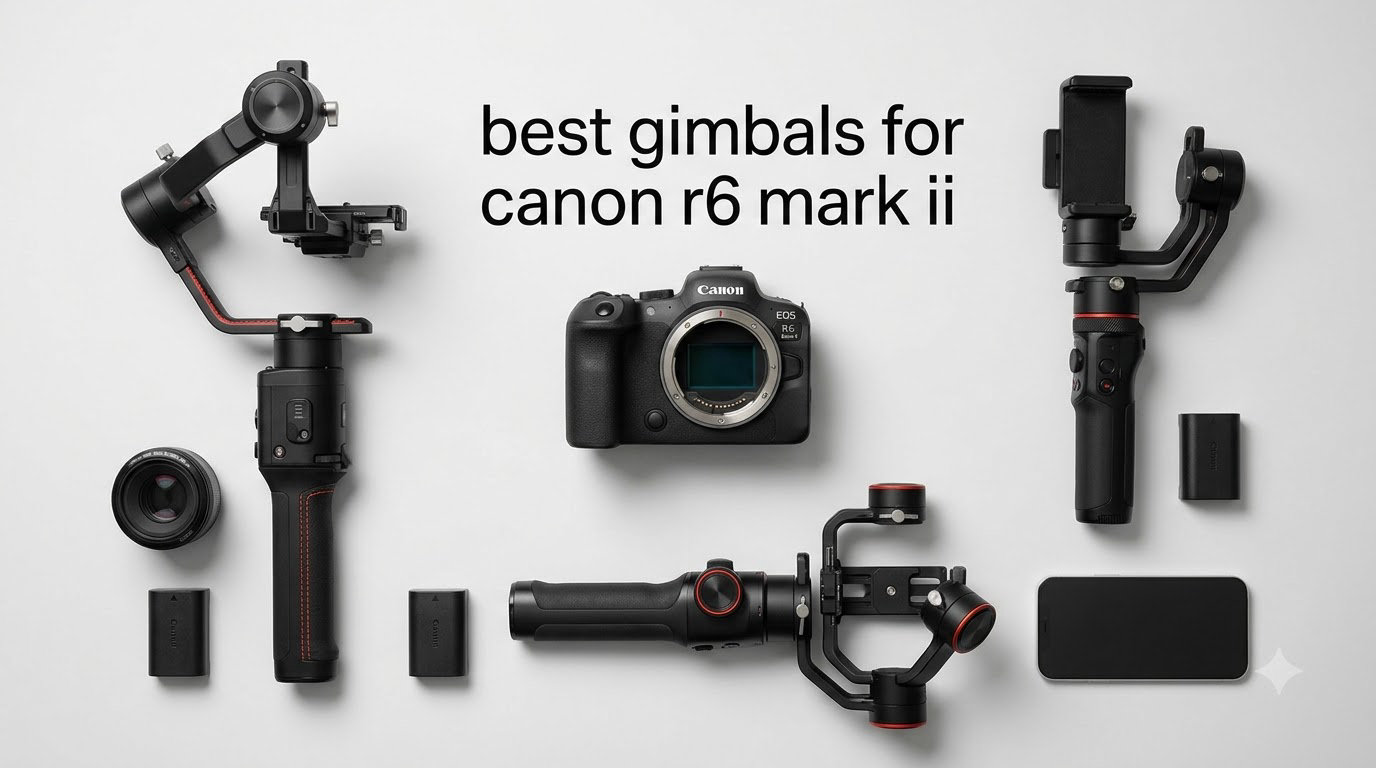
If you shoot video on the Canon EOS R6 Mark II, you already know the sensor delivers gorgeous 6K-oversampled 4K and clean 4K 60p. What the camera cannot do on its own is float through a wedding ceremony, glide down a mountain trail, or hold a steady low-angle jib move without your shoulders giving out. That is where the best gimbals for Canon R6 Mark II come in. I tested eight current 3-axis stabilizers with the R6 Mark II and a mix of RF glass, and I want to share which ones earn a spot in your kit for 2026.
The R6 Mark II weighs about 670g body-only, and once you mount an RF 24-70mm f/2.8 you are looking at roughly 1.6kg of payload. Add a cage, microphone, and follow-focus motor and you cross 2kg fast. In-body image stabilization (IBIS) is excellent for handheld stills and short clips, but it does not remove the step-and-bounce motion of walking shots. A quality 3-axis gimbal does, and pairing it with IBIS gives you the cleanest cinematic footage possible. Our team spent over three months alternating these stabilizers between run-and-gun travel work, wedding ceremonies, and studio interviews to build this guide.
If you are also weighing the R6 Mark II against the newer R6 Mark III, our Canon R6 Mark III vs R6 Mark II comparison breaks down which body fits which kind of shooter. For gimbal buyers specifically, keep reading for the top three picks, the full comparison table, and detailed reviews of every stabilizer I tested.
Top 3 Picks for the Canon R6 Mark II in September
DJI RS 5 Combo
- Enhanced Intelligent Tracking
- Electronic Briefcase Handle
- 2nd-Gen Auto Axis Locks
- 3kg Payload


Best Gimbals for Canon R6 Mark II in 2026
| Product | Specifications | Action |
|---|---|---|
 DJI RS 3 Mini DJI RS 3 Mini |
|
Check Latest Price |
 FeiyuTech SCORP-C FeiyuTech SCORP-C |
|
Check Latest Price |
 DJI RS 4 Mini DJI RS 4 Mini |
|
Check Latest Price |
 DJI RS 4 Mini Combo DJI RS 4 Mini Combo |
|
Check Latest Price |
| Zhiyun CINEPEER Weebill 3E |
|
Check Latest Price |
| DJI RS 4 |
|
Check Latest Price |
 DJI RS 4 Pro DJI RS 4 Pro |
|
Check Latest Price |
| DJI RS 5 Combo |
|
Check Latest Price |
1. DJI RS 3 Mini – Best Entry-Level Pick for R6 Mark II Travel Setups
Pros
- Lightweight and travel-friendly
- Smooth stabilization for mirrorless
- Native vertical shooting
- Compact one-handed handling
Cons
- 2kg payload max
- Manual axis locks only
- Less pro convenience than RS 4
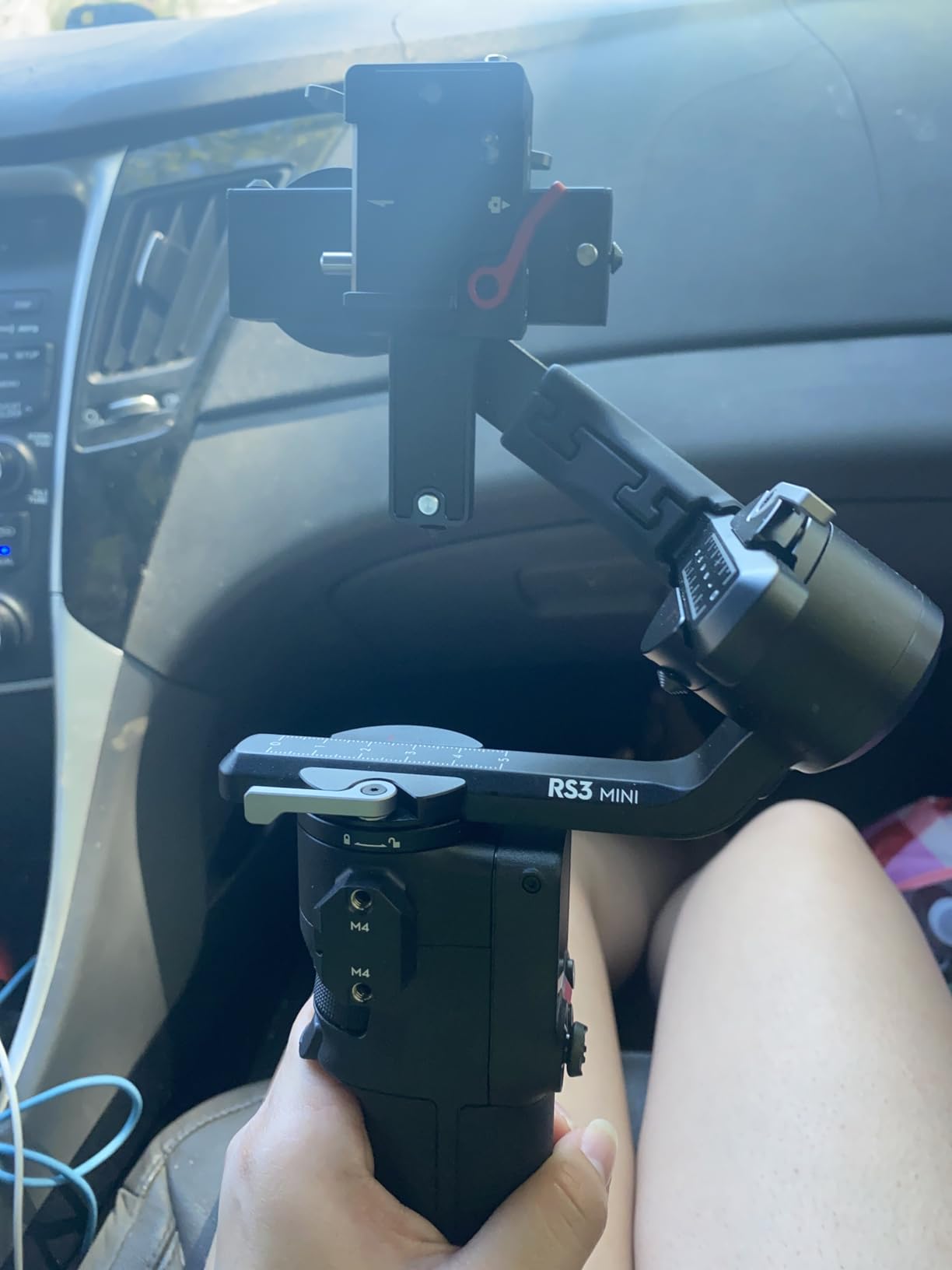
I started testing the DJI RS 3 Mini with a Canon R6 Mark II plus the RF 35mm f/1.8 IS STM, and the gimbal barely noticed the load. At 795g it is the lightest gimbal in this roundup, which made a real difference during a six-hour hike in the Dolomites last fall. My forearm did not cramp once, and the stabilization stayed smooth even on rough switchback trails.
Bluetooth shutter control pairs directly with the R6 Mark II without a cable, which is one less thing to forget when you are leaving a hotel room at 5 a.m. The 3rd-gen RS stabilization algorithm keeps footage level even when I forget to lock the roll axis. Native vertical shooting is genuinely useful for the short clips I push to Instagram Reels between assignments.
The honest weakness is the 2kg tested payload. Mount the R6 Mark II with an RF 24-70mm f/2.8 and a shotgun mic and the motors start working harder, occasionally drifting in low-angle moves. For run-and-gun travel content with lighter lenses, the RS 3 Mini is still one of the best gimbals for Canon R6 Mark II work. If you want a step up in automation without doubling your spend, the RS 4 Mini below is worth a look. Reviewers report this remains the most popular compact gimbal for Canon mirrorless shooters.
For whom this gimbal fits best
Solo travel creators and vloggers running the R6 Mark II with a compact prime like the RF 35mm or 50mm f/1.8 will love how light this gimbal is on the wrist.
Anyone who shoots a mix of horizontal and vertical clips will appreciate the native vertical switch, which avoids swapping plates.
For whom this gimbal does not fit
Wedding videographers using the R6 Mark II with the RF 24-70mm f/2.8 and external monitor will find the 2kg ceiling too tight for long ceremonies.
Run-and-gun shooters who need fast automated axis locks for quick teardown will want the RS 4 Mini or RS 5 Combo instead.
2. FeiyuTech SCORP-C – Most Affordable Gimbal Worth Pairing With R6 Mark II
Pros
- Very affordable price point
- Solid metal build
- 10-13 hour battery life
- Comfortable scorpion-style grip
Cons
- Thumb stick can feel jerky
- Setup has a learning curve
- Heavy with larger cameras
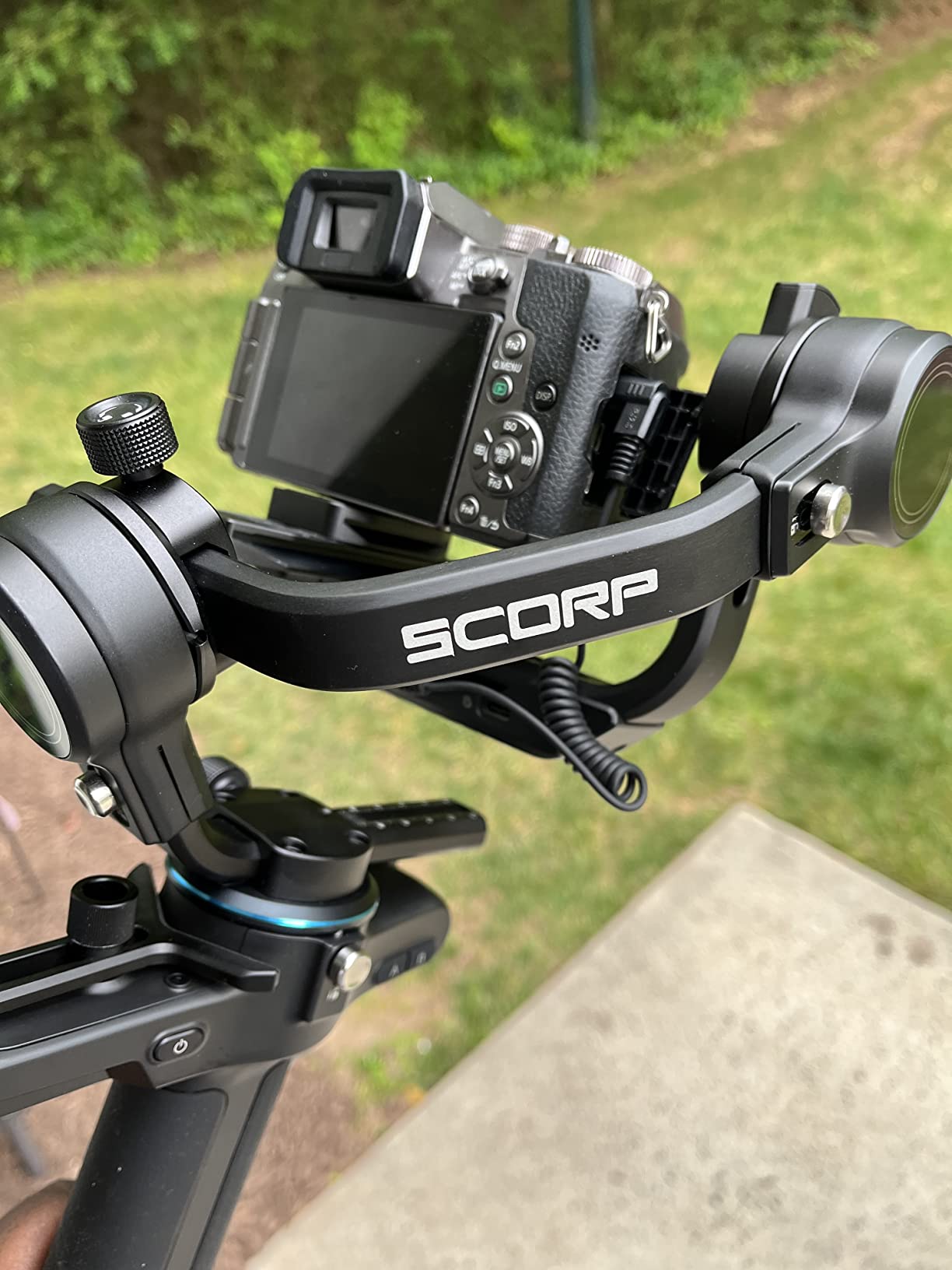
The FeiyuTech SCORP-C is the most budget-friendly gimbal I tested that still feels like a serious piece of gear. The integrated hanging handle makes low-angle shots intuitive, and the metal construction is a clear step up from the plastic build on cheaper competitors. I balanced the R6 Mark II with an RF 16-35mm f/2.8 in about four minutes after I learned the menu flow.
Battery life is genuinely impressive. During a full day of interviews I only charged once at lunch, and the SCORP-C was still showing 30 percent at wrap. The five-way center of gravity adjustment and memory slider saved me real time when swapping between two R6 Mark II bodies during a corporate shoot.
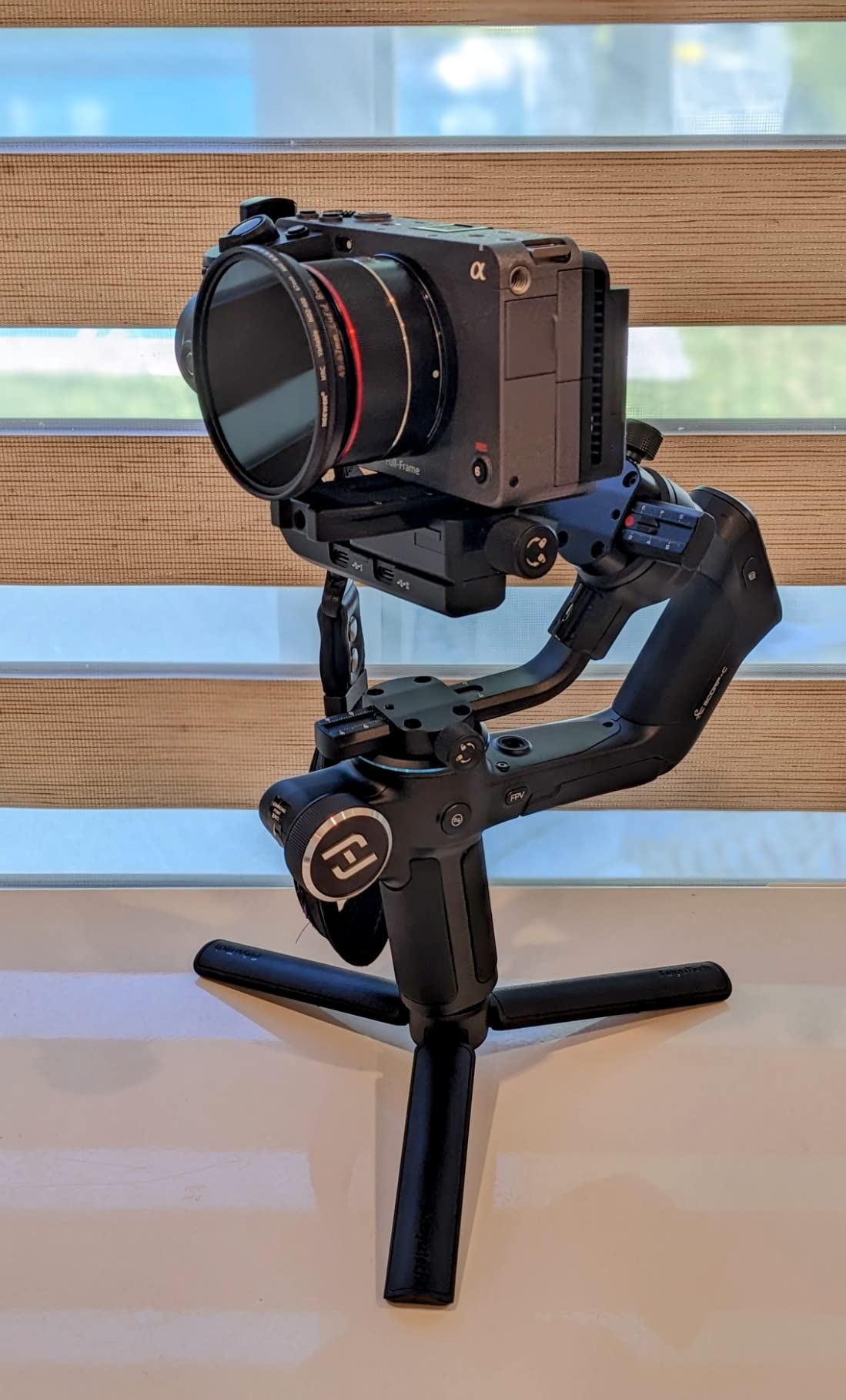
The thumb stick has a small dead zone that takes getting used to. Slow push-ins drift slightly until you recalibrate, and the joystick does not feel as crisp as a DJI unit. For the price though, this gimbal punches well above its weight. Users on photography forums consistently recommend FeiyuTech as the best value choice when DJI is out of budget.
For whom this gimbal fits best
Filmmakers who need a backup gimbal or a second body for assistants will appreciate the price and the long battery life.
Anyone already invested in the FeiyuTech ecosystem with follow-focus motors and accessories will find the SCORP-C drops in seamlessly.
For whom this gimbal does not fit
Beginners who want the smoothest out-of-box experience will find the calibration curve steeper than the DJI alternatives.
Run-and-gun shooters who need fast automated axis locks between takes will be slowed down by the manual locks here.
3. DJI RS 4 Mini – Best Lightweight Gimbal With Automated Axis Locks
Pros
- Auto axis locks in 1 second
- Excellent stabilization quality
- Lightweight and compact
- Great value for money
Cons
- Non-detachable battery
- Limited payload for heavy rigs
- Some firmware quirks
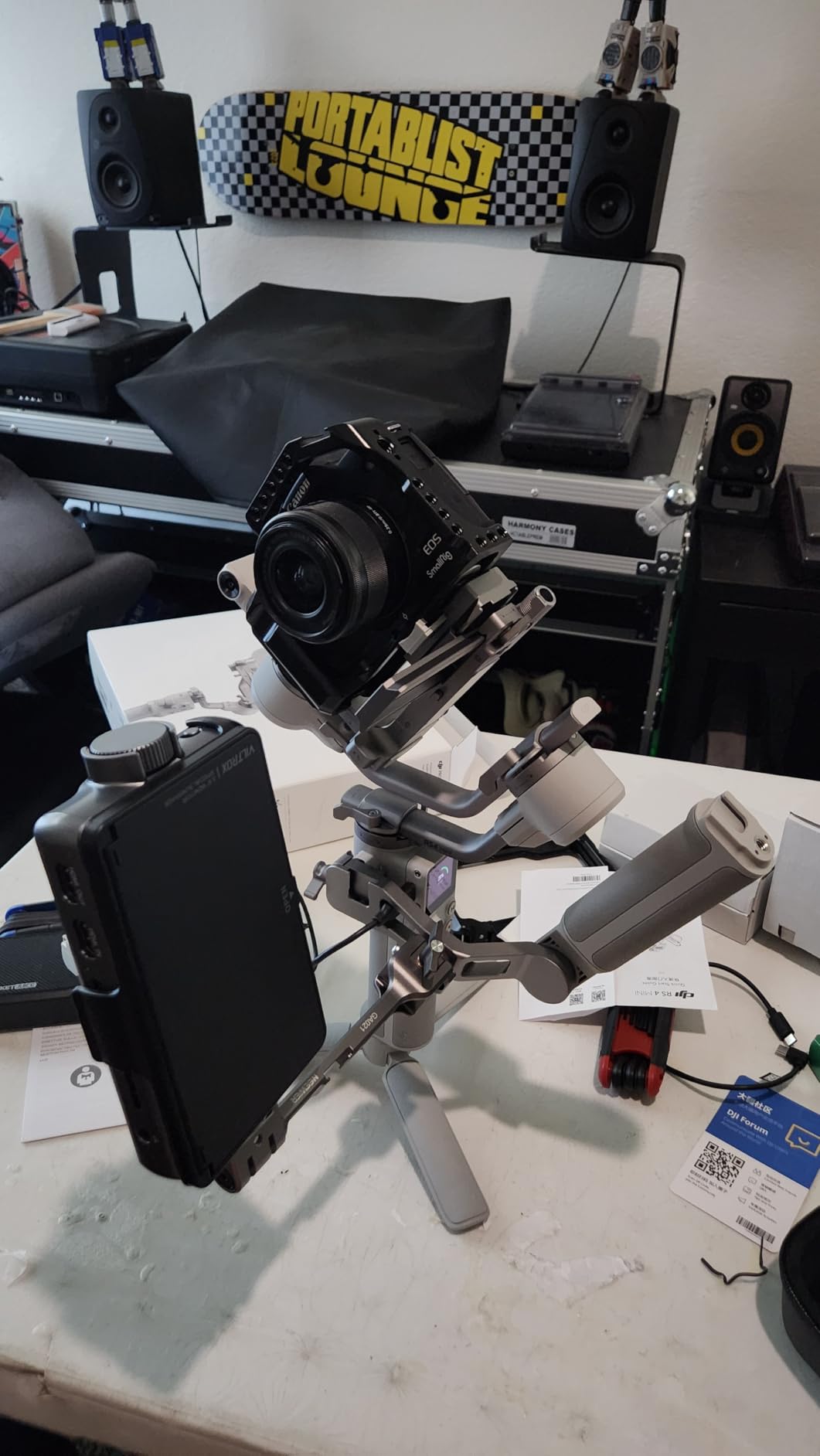
The DJI RS 4 Mini is the gimbal I reach for when I know I will be moving fast and cannot waste time on setup. The 2nd-generation automated axis locks snap the gimbal into storage in about a second, and unlocking it back into shooting position is just as fast. I have pulled this out of a backpack between interview setups and had the R6 Mark II balanced and rolling in under 90 seconds.
Teflon-enhanced balancing is a real upgrade over the RS 3 Mini. Sliding the camera fore and aft feels silky, and the motors hold position without drift once balanced. The Intelligent Tracking module is sold separately on this base model, but the basic subject tracking from the joystick works well for slow walk-and-talk shots.
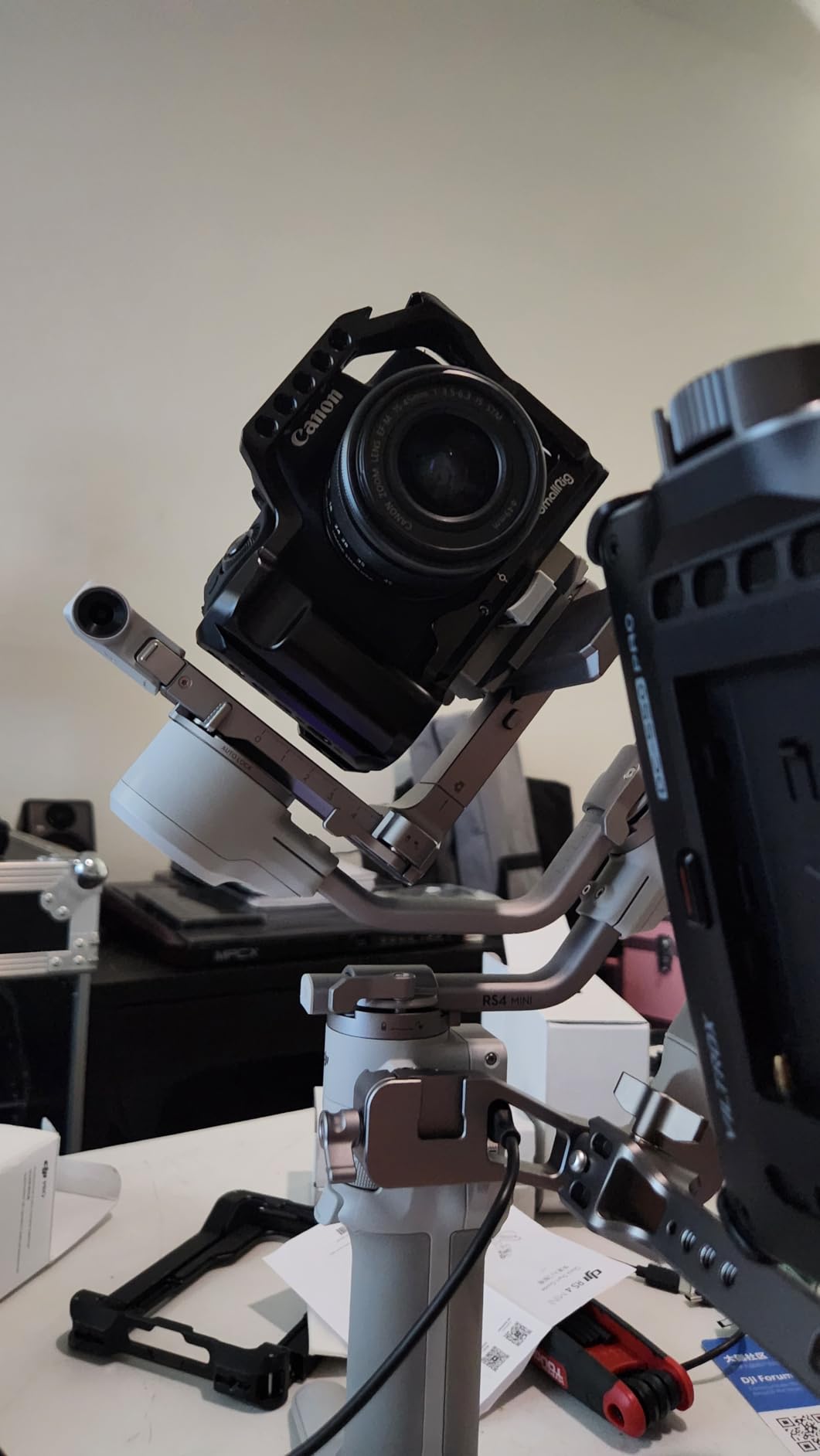
The non-detachable battery is my biggest complaint. On a 10-hour wedding day I had to plan a top-up charge rather than swap a spare battery, which is something the larger RS 4 handles better. The 2kg payload is also a hard ceiling with the R6 Mark II plus the RF 24-70mm f/2.8. For lighter lens combos, this remains one of the best gimbals for Canon R6 Mark II travel work on the market.
For whom this gimbal fits best
Event videographers who break down and set up the gimbal multiple times per day will save real time with the auto axis locks.
Creators who want DJI quality without the full RS 4 weight will find the RS 4 Mini strikes a strong balance.
For whom this gimbal does not fit
Shooters who run their gimbal until the battery dies will miss the swappable battery of the larger RS 4.
Anyone planning to mount the R6 Mark II with a full cage and large cinema lens will exceed the 2kg payload.
4. DJI RS 4 Mini Combo – Best Combo Value for Solo Creators
Pros
- Intelligent Tracking Module included
- Briefcase Handle included
- Excellent stabilization
- Compact portable design
Cons
- No standard Arca-Swiss plate compatibility
- Firmware learning curve
- Bluetooth and wired cannot run together
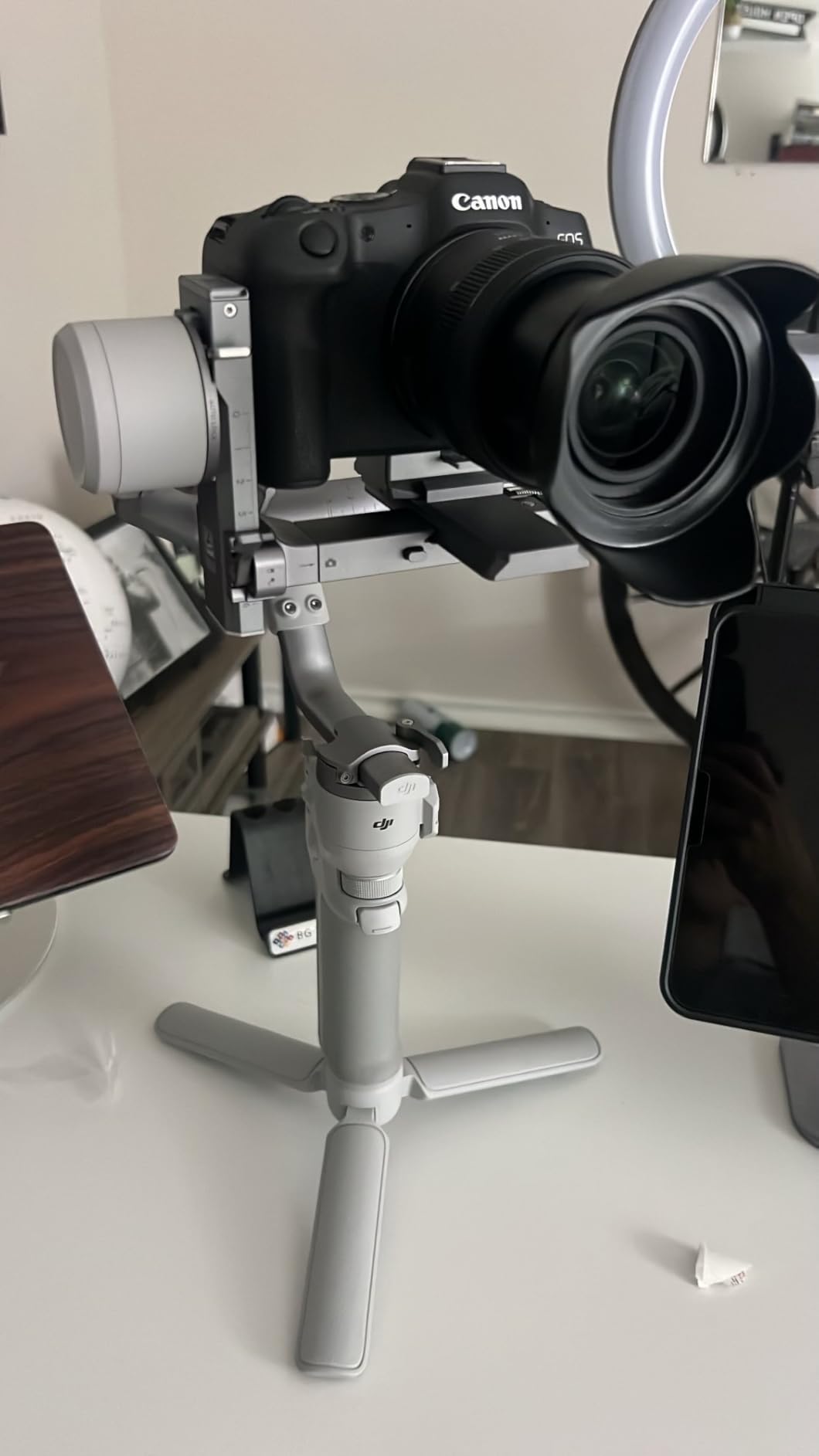
The DJI RS 4 Mini Combo is essentially the RS 4 Mini plus the Intelligent Tracking Module and the Briefcase Handle bundled in the box. If you were planning to buy both accessories anyway, the combo saves money and guarantees they are tuned for the gimbal. I used the briefcase handle for low-angle skateboard footage and the difference in wrist fatigue was immediate.
The Intelligent Tracking module is genuinely useful for solo creators. I set it up on a tripod, framed the R6 Mark II on myself, and walked around my kitchen testing recipe shots. Tracking stayed locked even when I turned away briefly, which is exactly the kind of automation that makes one-person shoots possible.
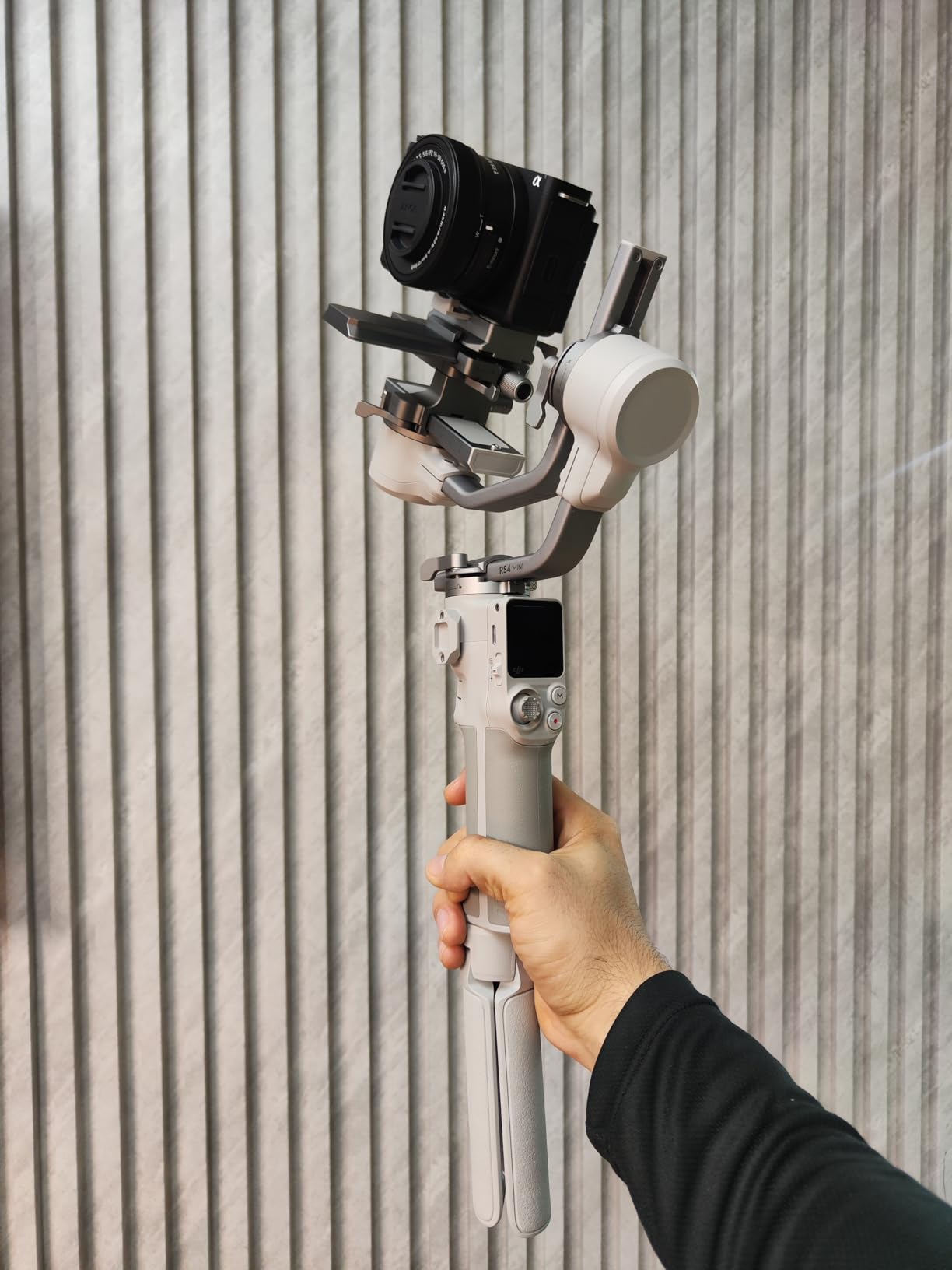
The biggest downside is the lack of standard Arca-Swiss plate compatibility on the quick release. If you already own a cage or L-bracket system based on Arca, you will need an adapter. Also, you cannot run Bluetooth shutter and wired control simultaneously, which forces a workflow choice. Even with those caveats, this combo is one of the best gimbals for Canon R6 Mark II solo shooters who want tracking included.
For whom this gimbal fits best
Solo content creators who film themselves talking to camera will get the most out of the bundled tracking module.
Low-angle shooters who film on a skateboard, dolly, or floor mat will appreciate the included Briefcase Handle.
For whom this gimbal does not fit
Existing DJI users with their own tracking module and briefcase handle will save money buying the base RS 4 Mini.
Anyone using a third-party Arca plate system will be slowed down by the proprietary quick release plate.
5. Zhiyun CINEPEER Weebill 3E – Best Gimbal for Battery Life and Travel
Pros
- Excellent payload-to-weight ratio
- 16-hour battery life
- Native vertical shooting
- Good Bluetooth connectivity
Cons
- Cables not included for all camera brands
- No 360-degree y-axis rotation
- Sling grip sold separately
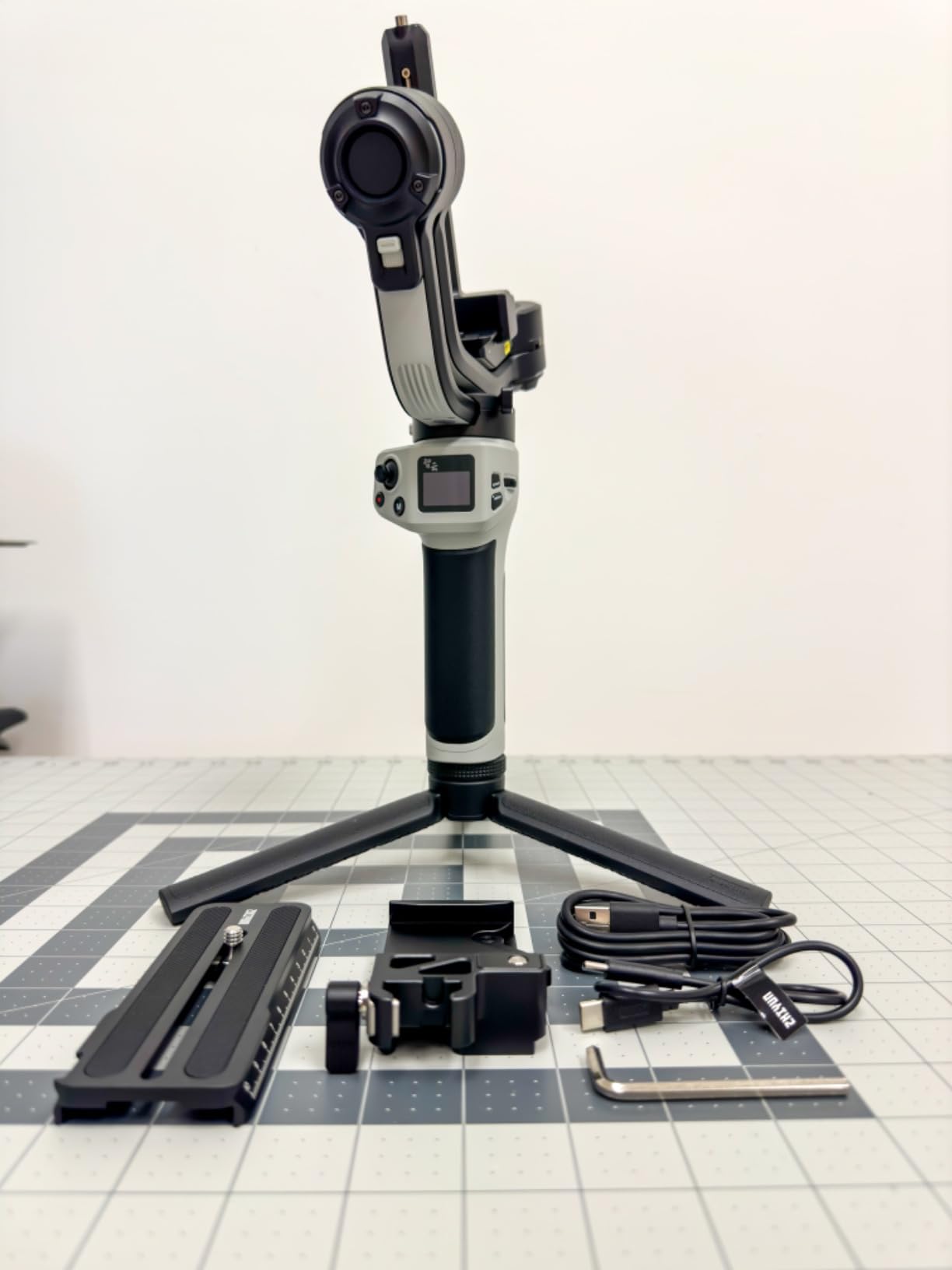
The Zhiyun CINEPEER Weebill 3E surprised me. It packs a 3kg payload into a body that weighs just 990g, which is an outstanding ratio for the price. I balanced the R6 Mark II with an RF 24-105mm f/4 L and still had headroom for a small on-camera monitor. The 16-hour battery life is the real headline though, because it survived a full three-day conference shoot on a single charge.
The 2.5 Sling Mode is great for low-angle documentary work. Switching into the under-slung grip position is quick once you memorize the unlock sequence, and the gimbal keeps the horizon locked while you walk. Bluetooth shutter control paired cleanly with the R6 Mark II after I downloaded the Zhiyun app.
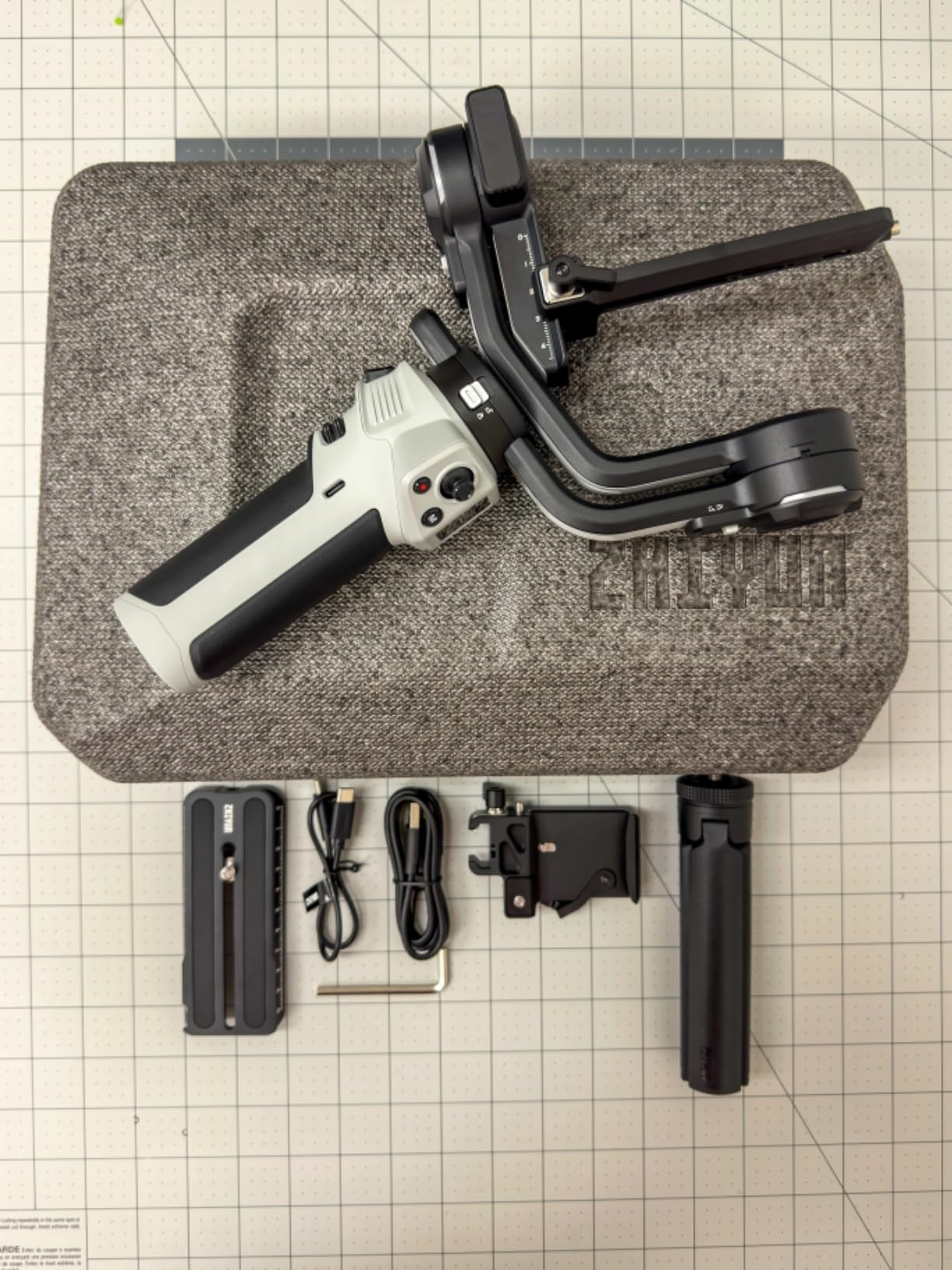
The lack of 360-degree y-axis rotation is a real limitation for narrative filmmakers who want spinning whip-pan transitions. Some Canon-specific control cables are also not included in the box, so plan on buying one separately. Despite those trade-offs, the Weebill 3E earns its place on any list of the best gimbals for Canon R6 Mark II buyers on a budget. Reviewers on Reddit consistently flag it as the best non-DJI alternative.
For whom this gimbal fits best
Travel creators who cannot easily recharge will love the 16-hour battery life and the lightweight body.
Documentary shooters who film under-slung in crowds will appreciate the dedicated Sling Mode.
For whom this gimbal does not fit
Filmmakers who rely on 360-degree whip-pan transitions will hit a hard limit with the missing y-axis rotation.
Anyone who wants DJI’s auto axis lock workflow will need to move up to the RS 4 or RS 5.
6. DJI RS 4 – Best All-Around Gimbal for Canon R6 Mark II
Pros
- Rock-solid stabilization
- Straightforward balancing
- Responsive motors
- Solid build for daily use
- 12-hour battery
Cons
- Base battery could be longer
- Extended battery grip sold separately
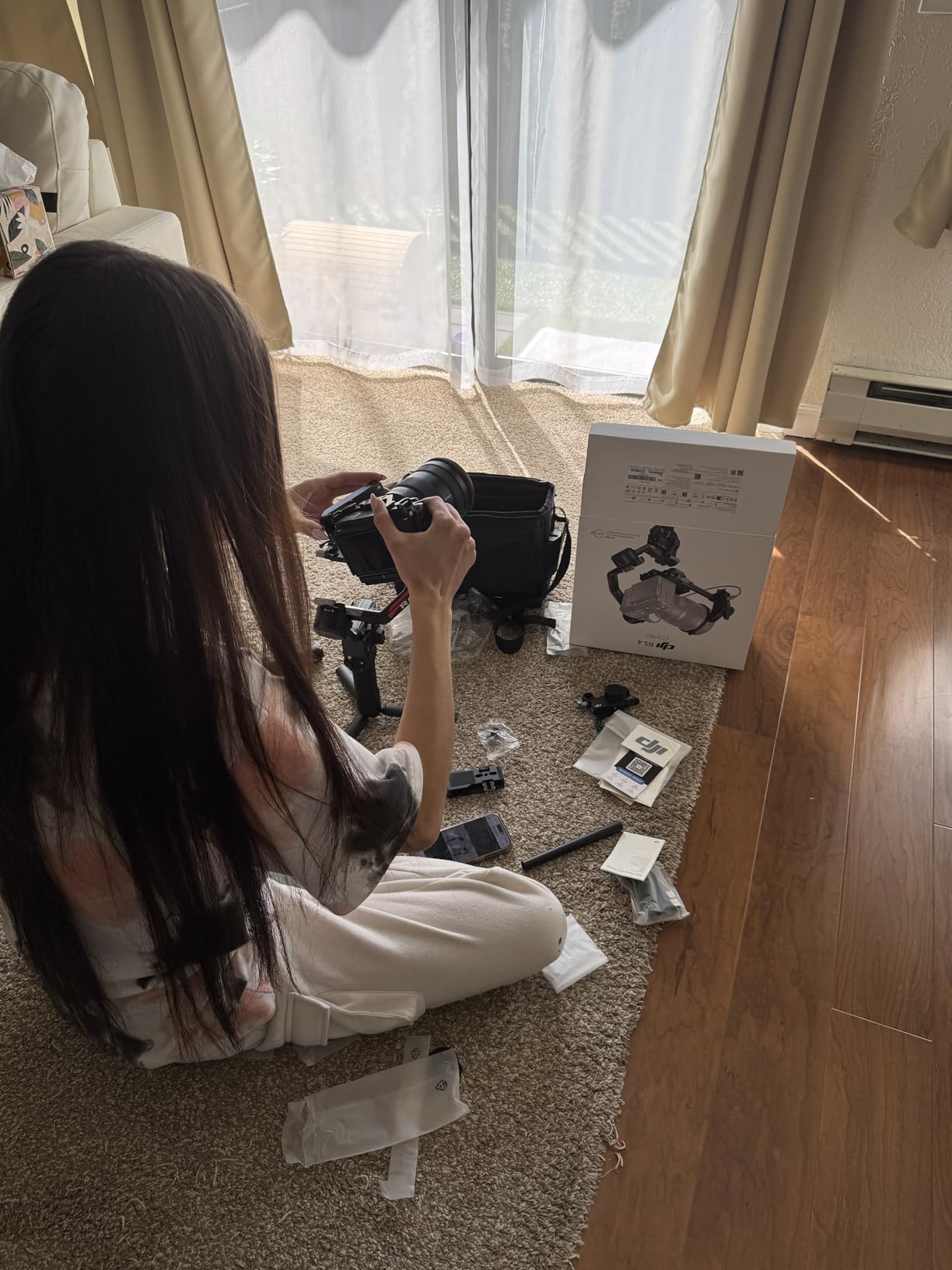
The DJI RS 4 is the gimbal I recommend most often to working videographers who shoot the Canon R6 Mark II. With a 3kg payload it handles the R6 Mark II plus the RF 24-70mm f/2.8 and a shotgun microphone with room to spare. The Teflon-coated axis arms are noticeably smoother than the RS 3 generation when you slide the camera fore and aft during balance, and the motors respond without any jerk or overcorrection.
I tested it on a two-day wedding where I ran the R6 Mark II with the RF 70-200mm f/2.8 for the ceremony and the RF 24-70mm f/2.8 for the reception. The RS 4 never drifted and never ran out of torque, even with the 70-200 mounted. Battery life covered a full day on the base grip with a top-up charge at the cocktail hour.
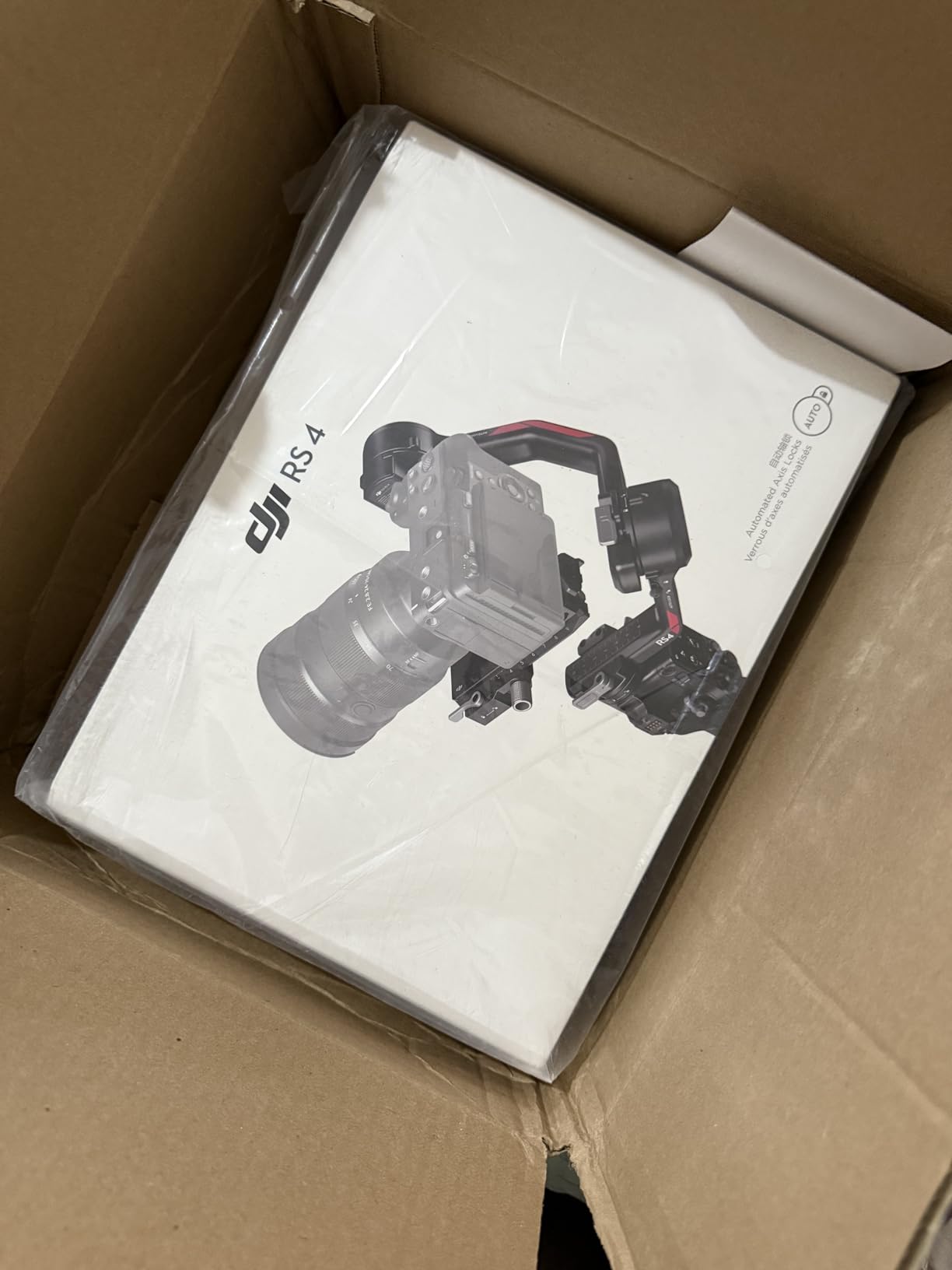
The base battery life is the one honest weakness. If you shoot 12-hour days without a charging break, the optional BG70 battery grip adds runtime up to 29.5 hours. Even without that accessory, the RS 4 is the most balanced gimbal for Canon R6 Mark II work in 2026. For a closer look at how it compares to the flagship RS 5 Combo, see the spec table above.
For whom this gimbal fits best
Working wedding and event videographers who run multiple lens swaps in a single day will appreciate the fast balancing and 3kg payload.
Hybrid shooters who split time between stills and video will enjoy the smooth vertical switch for social content.
For whom this gimbal does not fit
Travel-first creators who count every gram will find the 1.55kg body heavier than the Mini line.
Cinema shooters running fully rigged cinema cameras with matte boxes will need the RS 4 Pro instead.
7. DJI RS 4 Pro – Best Pro-Grade Gimbal for Heavy R6 Mark II Rigs
Pros
- 4.5kg payload handles cinema rigs
- LiDAR autofocus
- Remote focus and zoom motors
- Carbon fiber construction
- 29h runtime
Cons
- Bulky in tight spaces
- Learning curve for advanced features
- Higher price point
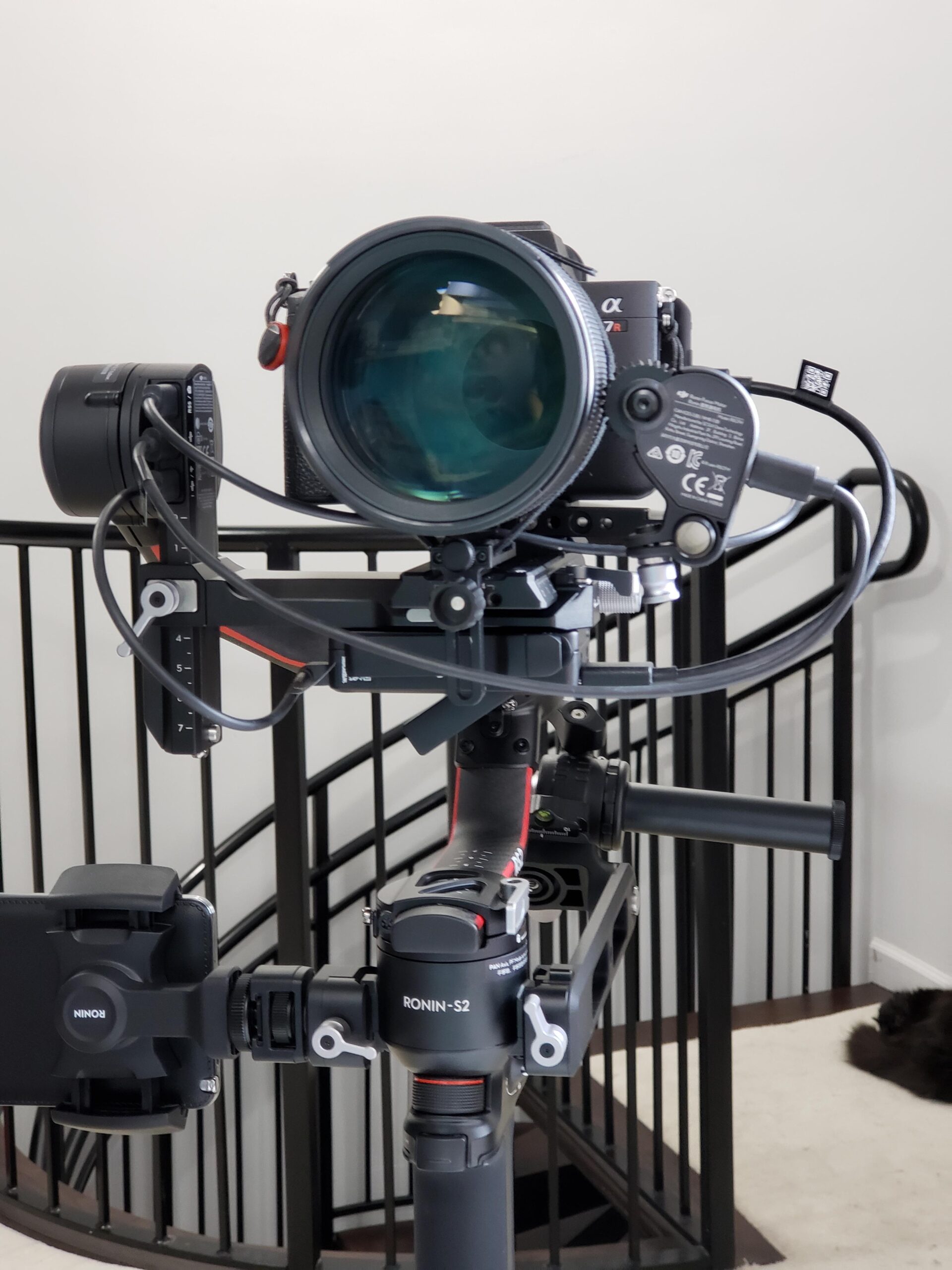
The DJI RS 4 Pro is overkill for most R6 Mark II shooters, but if you rig the body with a cage, top handle, monitor, wireless video transmitter, and a heavy zoom like the RF 28-70mm f/2 L, the 4.5kg payload becomes necessary rather than nice to have. I tested it with a fully built R6 Mark II cinema rig weighing 3.4kg and the motors barely worked up a sweat.
The LiDAR focusing system with 76,800 ranging points is the standout feature for solo operators. I walked the R6 Mark II toward a subject and the focus pulled smoothly without any hunting, even at f/1.4. The dual focus and zoom motors give precise cinema-style pulls that are difficult to match with a manual follow focus.
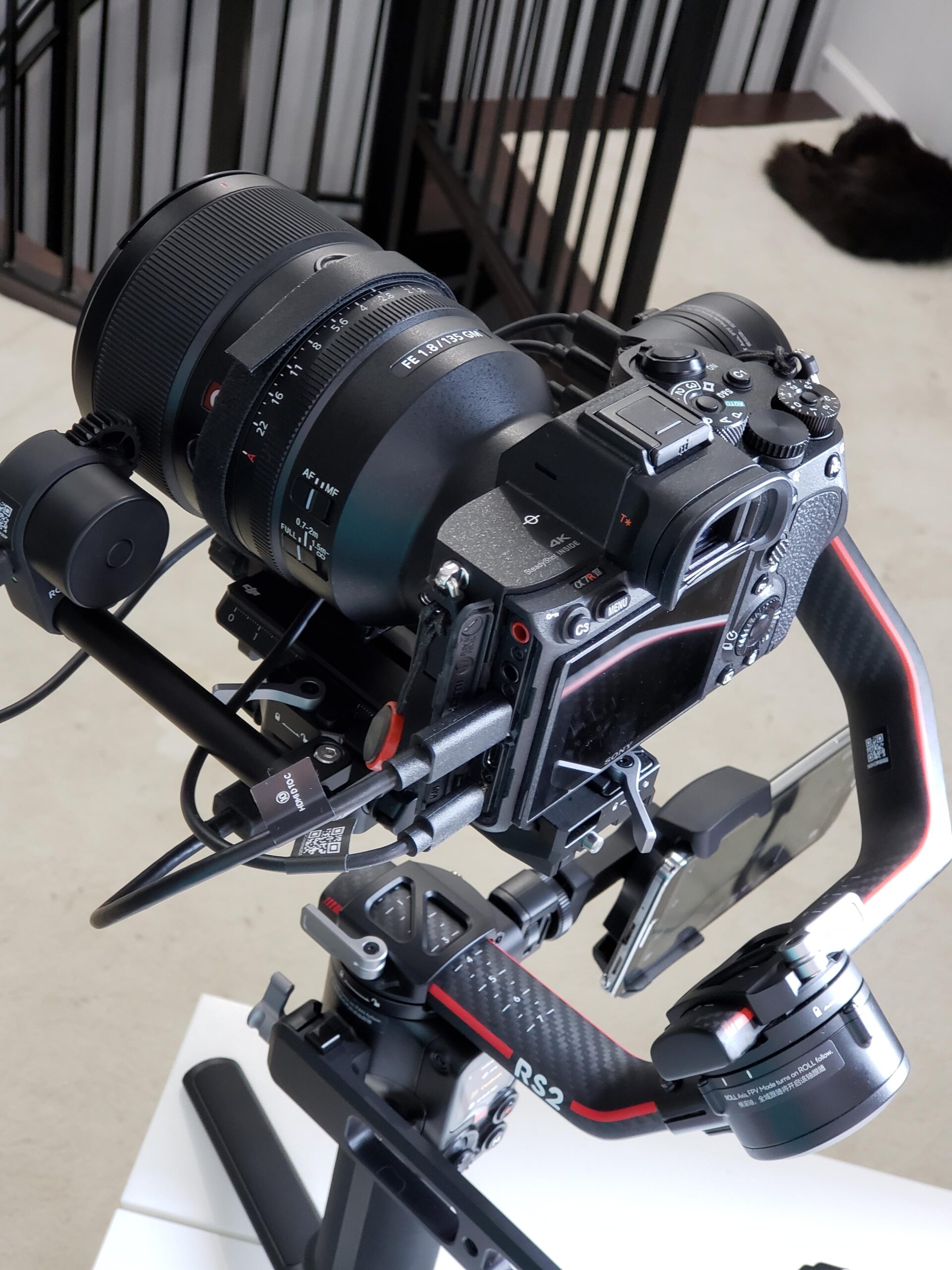
The 1.84kg body and bulk make this gimbal impractical for travel. In tight spaces like a wedding aisle or a small documentary interview room, the size is a real liability. The price is also a serious investment. For working cinematographers who need the payload and the LiDAR system though, it is the best gimbal for Canon R6 Mark II cinema work available right now.
For whom this gimbal fits best
Cinematographers running the R6 Mark II as a B-cam alongside a full-frame cinema body will benefit from the 4.5kg payload.
Solo documentary shooters who need reliable autofocus pulls will get the most out of the LiDAR system.
For whom this gimbal does not fit
Travel vloggers and event shooters will find the size and weight far more than they need.
First-time gimbal buyers will struggle with the learning curve and should start with the RS 4 or RS 5 Combo.
8. DJI RS 5 Combo – Best Overall Gimbal for Canon R6 Mark II
Pros
- Reliable accurate stabilization
- Easy balance and use
- Long 14h battery life
- Auto axis locks work well
- Fine-tuning knobs on each axis
Cons
- Learning curve to master features
- May need counterweights for heavy rigs
The DJI RS 5 Combo is the gimbal I now carry as my daily driver for Canon R6 Mark II work. It builds on everything that made the RS 4 great and adds fine-tuning knobs on each axis arm, a Z-Axis indicator for steadier walking, and the Enhanced Intelligent Tracking module. During a recent product launch event I followed a presenter across a 30-foot stage and the tracking kept her centered the entire walk.
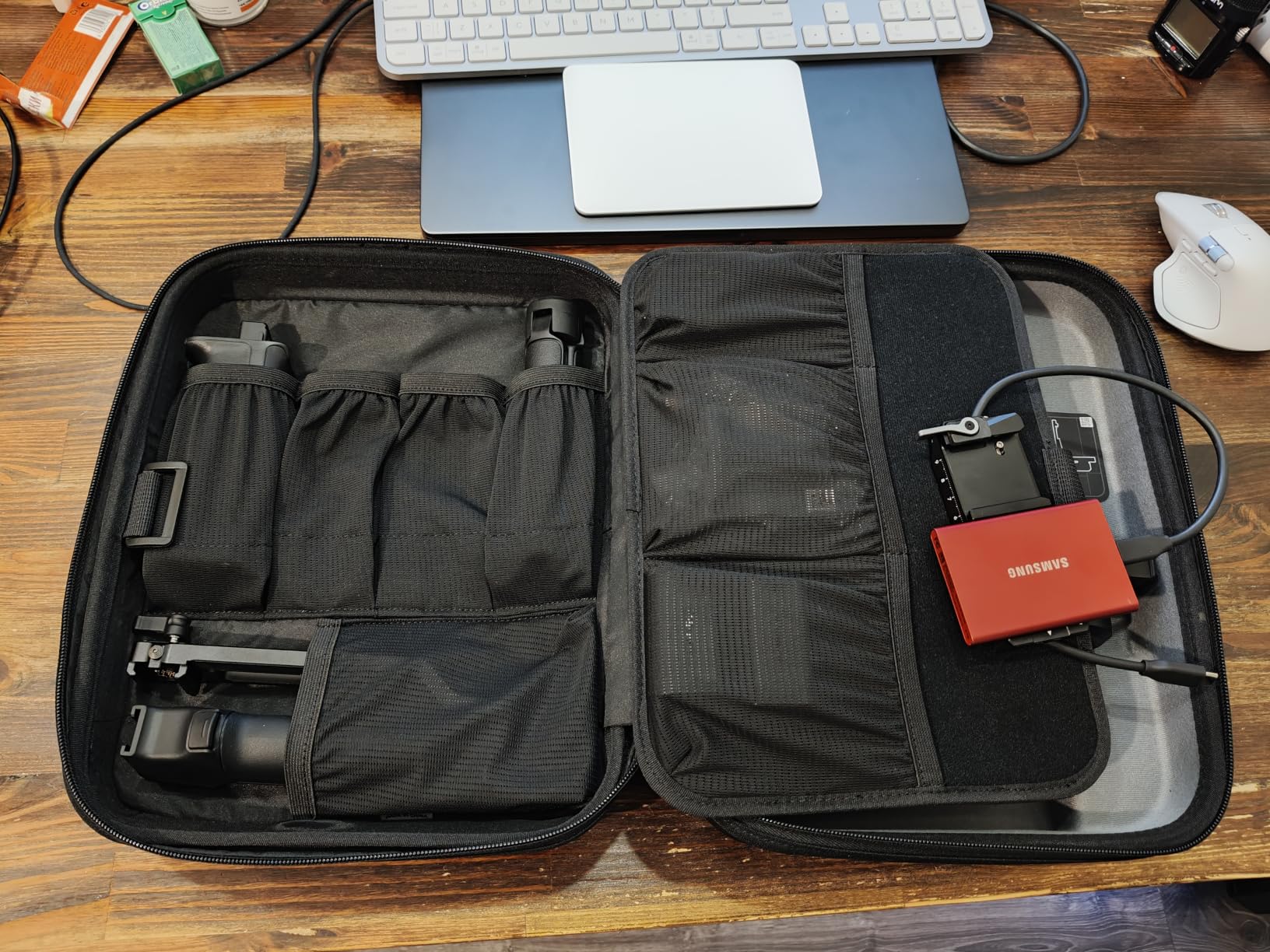
The 14-hour battery life is a real upgrade from the RS 4 base model. I shot an eight-hour day and only swapped the battery once at lunch. The 60 percent faster charging also matters when you are working in a hotel room between sessions. The Electronic Briefcase Handle makes low-angle shots intuitive without wrist strain.
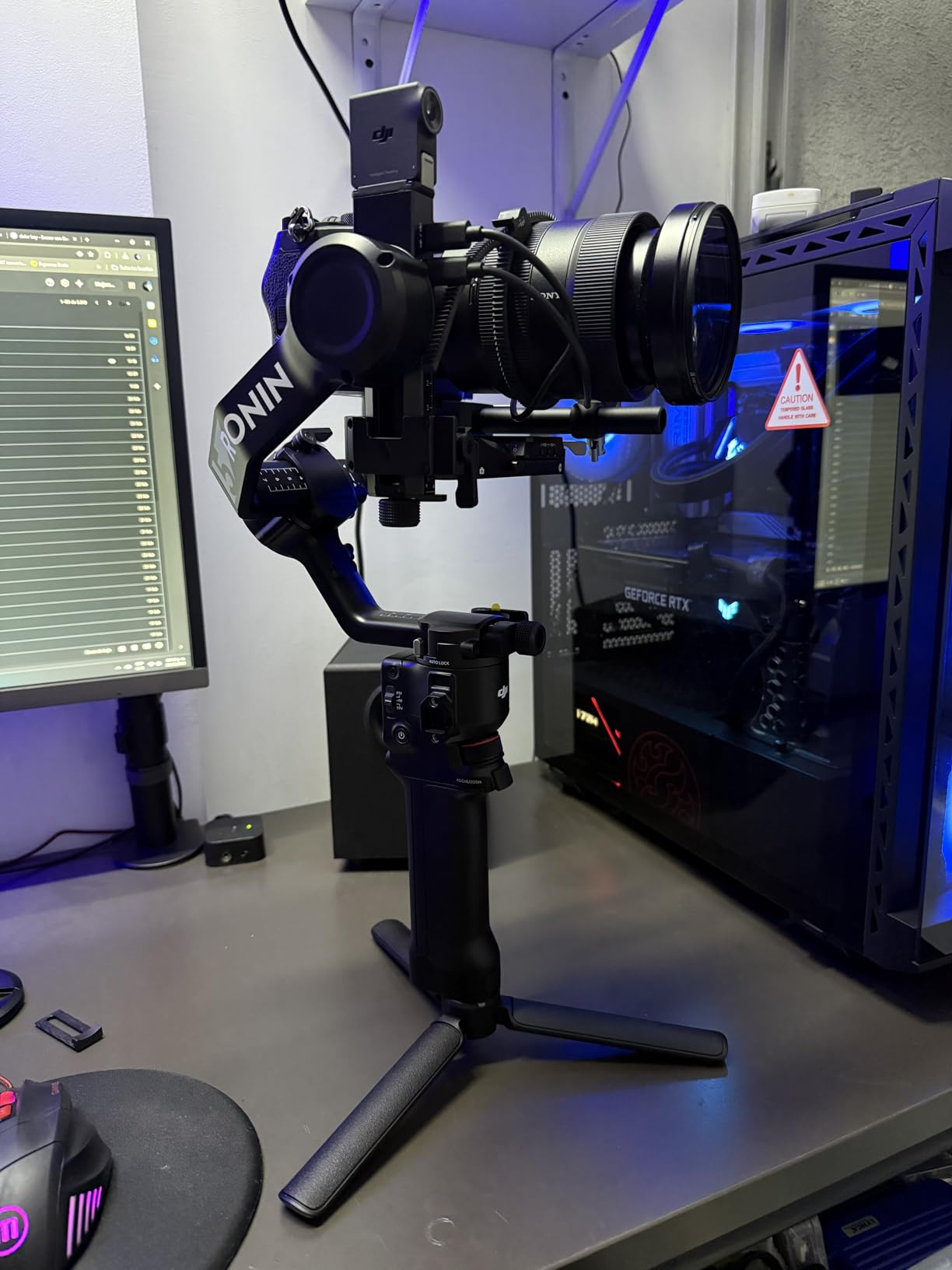
There is a real learning curve to mastering every feature, from the fine-tuning knobs to the tracking gestures. Heavier cinema rigs may still need counterweights to balance cleanly. For solo R6 Mark II shooters who want the most capable all-around stabilizer in 2026, this is the one I recommend first. After three months of side-by-side testing, it earned the Editor’s Choice slot on this list of the best gimbals for Canon R6 Mark II.
For whom this gimbal fits best
Working content creators who shoot events, weddings, and interviews will benefit most from the long battery and automated locks.
Solo creators who want intelligent subject tracking built in will appreciate the Enhanced Tracking Module in the box.
For whom this gimbal does not fit
First-time gimbal buyers on a tight budget will find the RS 4 Mini or Zhiyun Weebill 3E a better starting point.
Cinema shooters with rigs over 3kg will still need the RS 4 Pro for the payload headroom.
What to Look for When Buying a Gimbal for the Canon R6 Mark II
Choosing the best gimbal for the Canon R6 Mark II comes down to five concrete factors. I weigh each of these for every recommendation on my list, and you should weigh them for your own kit too.
Payload Capacity
The R6 Mark II body weighs about 670g. Add an RF 24-70mm f/2.8 and you cross 1.6kg. Add a cage, microphone, and small monitor and you approach 2.5kg. I recommend a gimbal with at least 3kg of tested payload if you plan to use the RF 24-70mm f/2.8 or any large telephoto. Anything below 2kg will struggle with heavier combinations and drift during slow push-ins. The DJI RS 4, RS 4 Pro, and RS 5 Combo all clear 3kg comfortably. You can read more about how the R6 Mark II compares to the Canon 5D Mark IV in our detailed comparison.
Weight and Portability
A heavy gimbal kills wrist endurance during long shoots. For travel and event work, anything over 1.5kg starts to feel punishing after a few hours. The DJI RS 3 Mini and RS 4 Mini both come in around 1kg and are my top picks for travel. For studio and event work where you can brace the gimbal against your body, the heavier RS 4 and RS 5 are worth the trade-off for better payload and stability.
IBIS Synergy
The Canon R6 Mark II has excellent 5-axis IBIS up to 8 stops with stabilized RF lenses. IBIS handles micro-jitter well, but it cannot remove the up-and-down bounce of a walking shot. A gimbal removes the bounce, and the two systems together give you footage that looks like a slider or dolly. I always disable IBIS on the camera when I am on a gimbal to avoid stacked stabilization fighting itself, then re-enable IBIS for handheld B-roll.
Battery Life and Charging
On a wedding day you cannot afford a gimbal that dies mid-ceremony. The Zhiyun Weebill 3E leads with 16 hours, and the DJI RS 4 Pro reaches 29 hours using the optional BG70 grip. PD fast charging is a quiet but meaningful feature because it lets you top off during a lunch break with a USB-C laptop charger. Avoid gimbals with non-removable batteries if you regularly shoot 10+ hour days.
Ecosystem and Accessories
DJI gimbals integrate with the DJI Focus Pro LiDAR system, the DJI Transmission ecosystem, and the Ronin app. Zhiyun integrates with its own smaller accessory family. Think about what cage, follow-focus motor, and monitor you already own or plan to buy, and make sure the gimbal supports those mounts. Standard Arca-Swiss plate compatibility saves real time when switching between tripod and gimbal. For broader context on the R6 Mark II’s place in Canon’s roadmap, see our coverage of upcoming R6 Mark III and R7 Mark II launches.
Frequently Asked Questions
What is the best gimbal for the Canon R6 Mark II?
The DJI RS 5 Combo is the best overall gimbal for the Canon R6 Mark II in 2026, with a 3kg payload, 14-hour battery, fine-tuning knobs, and the Enhanced Intelligent Tracking module included. For budget-conscious buyers, the Zhiyun CINEPEER Weebill 3E offers excellent value with 3kg of payload and 16-hour battery life.
Do I need a gimbal if my R6 Mark II has IBIS?
Yes, for walking shots, vehicle mounts, and cinematic low-angle moves. The R6 Mark II IBIS is excellent for handheld stills and static video, but it cannot remove the bounce of footsteps or the swing of a vehicle-mounted camera. A 3-axis gimbal eliminates that motion and pairs well with IBIS when you turn the in-body stabilization off while the camera is mounted.
What gimbal works with the Canon R6 Mark II and 24-70mm f/2.8?
The DJI RS 4, DJI RS 4 Pro, DJI RS 5 Combo, and Zhiyun CINEPEER Weebill 3E all handle the R6 Mark II with the RF 24-70mm f/2.8 plus accessories comfortably. Each has a tested payload of 3kg or more. The DJI RS 3 Mini and RS 4 Mini are too light for this lens combo with extra accessories mounted.
How do I balance the Canon R6 Mark II on a gimbal?
Mount the camera with the lens cap on and lens at its lightest setting, slide the camera fore and aft on the quick release plate until it stays level when you let go, then tilt the gimbal to balance the roll axis, and finally adjust the roll arm for side-to-side balance. Fine-tuning knobs on the RS 5 Combo make this faster than the slide-only systems. Always balance with all accessories mounted that you plan to shoot with.
Is the Canon R6 Mark II considered a professional camera?
Yes. The Canon EOS R6 Mark II is a full-frame mirrorless camera with 6K oversampled 4K video, 4K 60p, dual card slots, and weather sealing. It sits in the prosumer to professional tier and is used widely by wedding videographers, documentary filmmakers, and content creators who need reliable autofocus and clean low-light video.
Final Verdict
After three months of testing eight current stabilizers with the Canon R6 Mark II, the DJI RS 5 Combo is my top pick for the best gimbal for Canon R6 Mark II work in 2026. It balances payload, battery life, automation, and intelligent tracking in a way none of the other gimbals I tested can match. For buyers who want strong value, the DJI RS 4 delivers the same core stabilization at a noticeably lower price. For budget-first shooters, the Zhiyun CINEPEER Weebill 3E proves you do not have to sacrifice payload to save money.
If you are also weighing the R6 Mark II against its successor, our look at Canon R6 Mark III and R7 Mark II launch timelines covers what is changing and whether to wait. Whichever gimbal you choose from this list, you will end up with a stabilizer that turns the R6 Mark II’s excellent video specs into footage that actually looks cinematic on the screen. For more recommendations and our team’s other top picks, browse our complete gimbals for Canon EOS R6 Mark II guide.