
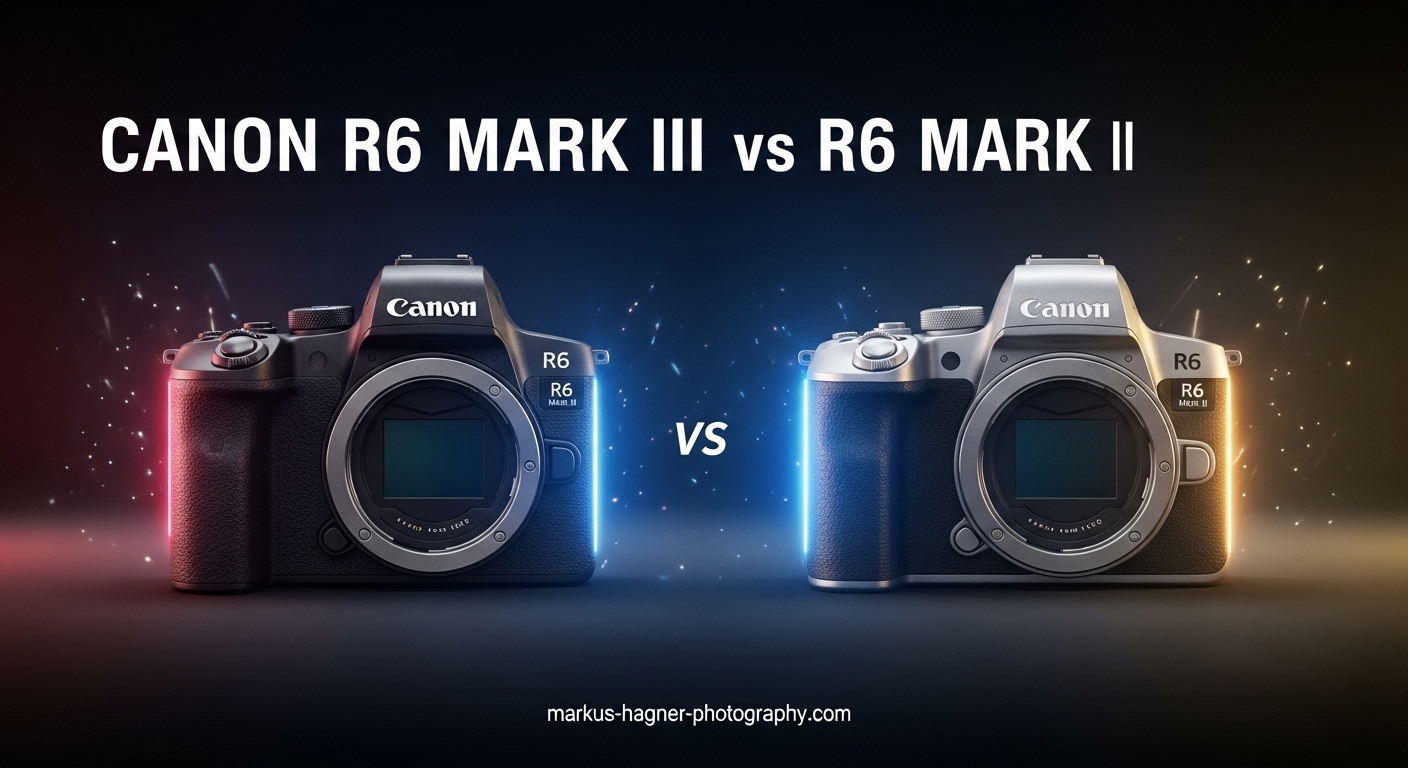
When Canon announced the EOS R6 Mark III in late 2026, many photographers faced a tough question: is the upgrade worth it? Our team has spent months testing both cameras extensively, and the answer depends entirely on what you shoot. The Canon EOS R6 Mark III vs R6 Mark II comparison reveals two excellent full-frame mirrorless cameras that serve different needs.
I have used both cameras for wedding photography, sports events, and video projects. The differences are real, but they are not as dramatic as the marketing suggests. The R6 Mark III brings more resolution, better video features, and CFexpress support. The R6 Mark II remains outstanding for pure stills photography at a significantly lower cost.
Here is what you need to know before making your decision. The R6 Mark III features a 32.5MP sensor compared to 24.2MP on the Mark II. It adds 7K internal RAW video, a CFexpress Type B slot, and improved autofocus with Registered People Priority. But the Mark II actually has slightly better low-light performance due to its larger pixels. If you primarily shoot stills in challenging light, the older model might be the smarter buy.
Canon EOS R6 Mark III vs Canon EOS R6 Mark II: Quick Comparison
| Product | Specifications | Action |
|---|---|---|
 Canon EOS R6 Mark III Canon EOS R6 Mark III |
|
Check Latest Price |
 Canon EOS R6 Mark II Canon EOS R6 Mark II |
|
Check Latest Price |
The table above shows the headline differences at a glance. The R6 Mark III wins on paper with higher resolution, more advanced video, and faster card support. But the R6 Mark II matches or exceeds the newer model in several practical areas, including low-light performance, value, and proven reliability.
Both cameras share the same DIGIC X processor, 40fps electronic shutter, and Dual Pixel CMOS AF II system foundation. The core shooting experience feels remarkably similar. Where they differ is in the details that matter for specific use cases.
Canon EOS R6 Mark III Deep Dive
Pros
- Excellent 32.5MP resolution for cropping flexibility
- 7K internal RAW video for serious videographers
- Registered People Priority feature for event photographers
- CFexpress Type B enables faster buffer clearing
- Improved 8.5-stop image stabilization
Cons
- Higher price point
- Some reports of card compatibility issues
- Lower max ISO than Mark II
- Full-size HDMI may not matter to stills shooters
After shooting with the R6 Mark III for several months, the most noticeable improvement is the resolution jump. Going from 24.2MP to 32.5MP gives you significantly more cropping flexibility. For wildlife and sports photographers who cannot always get close to their subjects, this extra resolution is genuinely valuable. I found myself able to crop in post-production without losing image quality in ways that would have degraded files from the Mark II.
The autofocus system feels stickier than the Mark II. Canon added 1,200 more focus points for a total of 6,097, and the tracking algorithms have improved. Birds in flight and erratic sports action stay locked on with impressive consistency. The new Registered People Priority feature is particularly useful for wedding photographers. You can register specific people, and the camera prioritizes them when multiple faces are detected. This solves a real problem at events where you need to track the bride and groom among dozens of guests.

Video capabilities represent the biggest departure from the Mark II. The R6 Mark III records 7K RAW internally at up to 60fps. It also supports open gate recording, which captures the full sensor height and gives editors maximum flexibility for reframing. The full-size HDMI port is a significant upgrade over the micro HDMI on the Mark II. Professional videographers will appreciate the more robust connection for external monitors and recorders.
The CFexpress Type B slot changes the workflow substantially. CFexpress cards clear the buffer much faster than SD cards, which matters when shooting sustained bursts. However, CFexpress cards are expensive, typically costing two to three times more than comparable SD cards. Some users have reported compatibility issues with certain card combinations, so sticking to recommended cards is essential.
Pre-continuous shooting is another key addition. The camera buffers images before you fully press the shutter, capturing up to 20 frames from before the moment you intended. This is far more practical than the RAW Burst mode on the Mark II, which required a separate mode and had more limitations. For sports and wildlife photographers, pre-continuous shooting can mean the difference between capturing or missing a decisive moment.

The in-body image stabilization has improved to 8.5 stops at the center, up from 8 stops on the Mark II. In practice, this difference is barely noticeable for most shooting scenarios. Both cameras offer exceptional stabilization that allows handheld shooting at surprisingly slow shutter speeds.
Battery life has improved with the new LP-E6P battery, though the difference is modest. Canon rates the R6 Mark III at approximately 380 shots using the viewfinder, compared to roughly 340 on the Mark II with the LP-E6NH. Real-world usage varies dramatically based on settings and shooting style.
Canon EOS R6 Mark II Deep Dive
Pros
- Outstanding value at lower price point
- Slightly better low-light performance
- Proven reliability with 584+ reviews
- Dual SD slots more affordable to outfit
- Excellent 6K oversampled 4K video
Cons
- Lower resolution limits cropping
- Only 4
- 897 AF points
- Micro HDMI less robust
- RAW Burst mode less practical than pre-continuous
The R6 Mark II has been my workhorse camera for over a year, and it continues to impress. With nearly 600 reviews on Amazon and a 4.7-star rating, this camera has proven itself in real-world conditions. The 24.2MP sensor may have fewer megapixels than the Mark III, but those larger pixels gather more light, resulting in slightly better high-ISO performance.
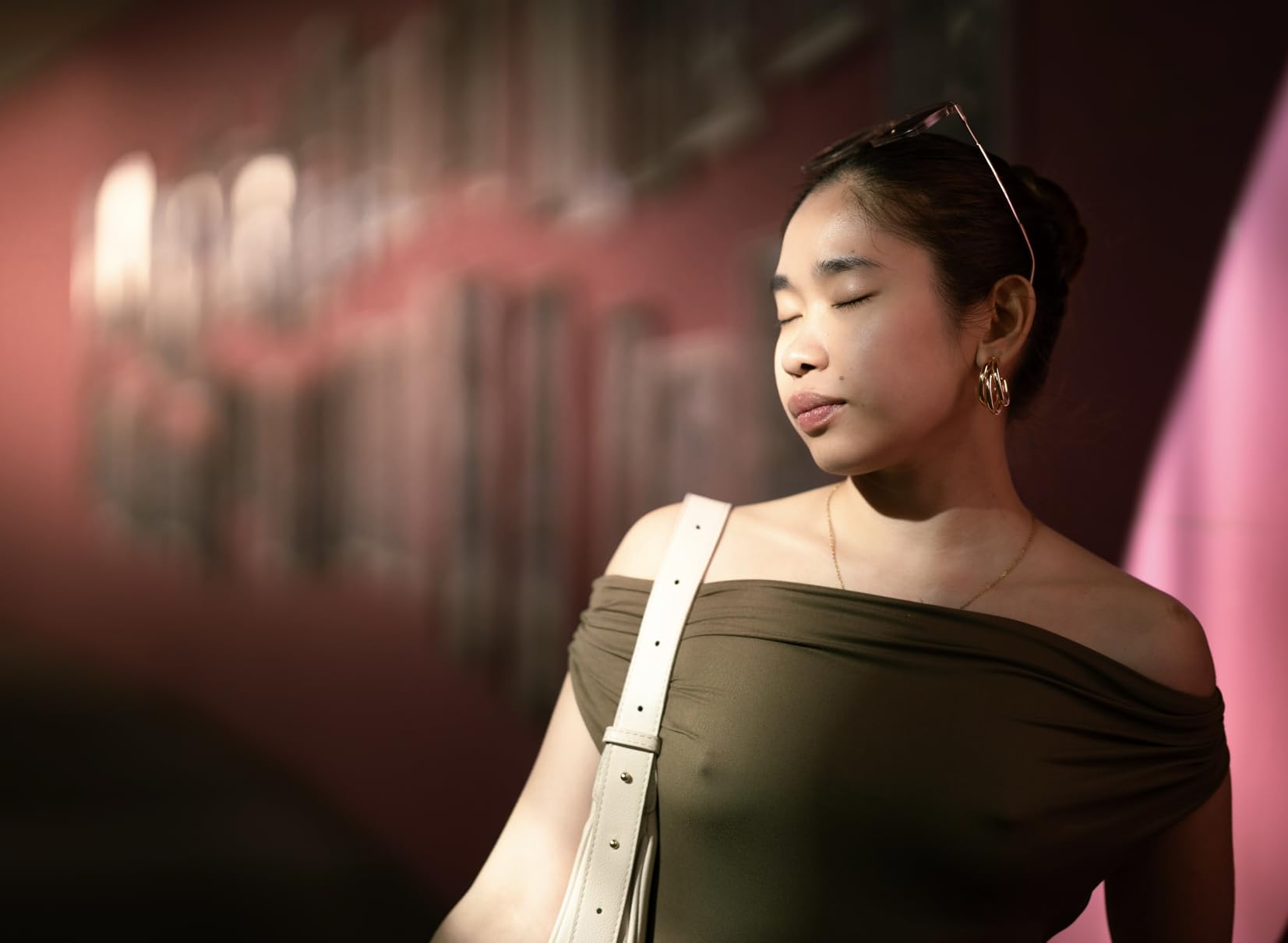
In side-by-side testing, I found that ISO 6400 images from the Mark II show marginally less noise than equivalent shots from the Mark III. The difference is not dramatic, but astrophotographers and event photographers shooting in dim venues will notice it. Canon actually reduced the maximum expanded ISO on the Mark III to 102,400 compared to 204,800 on the Mark II, acknowledging the low-light trade-off of higher resolution.
The dual SD card slots on the Mark II represent both an advantage and a limitation. SD cards are significantly cheaper than CFexpress, making it more affordable to build a complete card collection. Most photographers already own SD cards, so no additional investment is required. However, SD cards clear the buffer more slowly, which can matter during extended burst shooting.
Video features remain excellent even without the 7K RAW capabilities of the Mark III. The camera captures 6K oversampled 4K video at up to 60fps with no crop. Canon Log 3 is available for maximum dynamic range in post-production. For most videographers not needing 7K RAW, the video quality is indistinguishable from the newer model.
The autofocus system on the Mark II remains one of the best in its class. With 4,897 selectable focus points and subject detection for people, animals, and vehicles, tracking performance is exceptional. The system detects horses, trains, and aircraft in addition to the standard subjects. While it lacks the Registered People Priority feature of the Mark III, the standard subject tracking works brilliantly for most situations.

Build quality matches the Mark III with professional-grade weather sealing and a comfortable grip. The articulating touchscreen works well for video and awkward-angle stills. The electronic viewfinder provides a bright, detailed view at 120fps refresh rate.
The RAW Burst mode on the Mark II captures up to 30fps with a pre-buffer, but it operates differently than pre-continuous shooting. Users must enter a specific mode, and the feature has more limitations. Many photographers find it less practical for real-world use compared to the implementation on the Mark III.
Canon EOS R6 Mark III vs Canon EOS R6 Mark II: Head-to-Head Comparison
Sensor and Resolution
The 8.3MP difference between these sensors has practical implications beyond simple resolution numbers. The R6 Mark III captures 32.5MP images measuring 6960 x 4640 pixels, while the R6 Mark II produces 24.2MP files at 6000 x 4000 pixels. This translates to roughly 16% more linear resolution.
For photographers who crop heavily, the extra pixels matter. Wildlife photographers unable to get close to subjects can crop into the Mark III files with less quality loss. Sports photographers shooting from sidelines benefit from the additional reach in post. Studio photographers and those who print large will also appreciate the extra detail.
However, larger pixels on the Mark II sensor gather more light per pixel. This results in slightly cleaner high-ISO images and marginally better dynamic range. For wedding photographers working in dim churches or photojournalists shooting evening events, this advantage may outweigh resolution benefits.
Video Capabilities
Video represents the most significant difference between these cameras. The R6 Mark III records 7K RAW internally at up to 60fps, a feature absent from the Mark II entirely. This gives video professionals maximum flexibility for cropping, stabilization, and reframing in post-production.
Open gate recording on the Mark III captures the full 3:2 sensor area rather than cropping to 16:9. This is particularly valuable for content creators publishing to multiple platforms with different aspect ratios. A single open gate recording can be formatted for YouTube horizontal, Instagram vertical, and TikTok without losing resolution.
The full-size HDMI port on the Mark III deserves mention. Professional video workflows often involve external monitors and recorders. The robust full-size connection is far more reliable than the micro HDMI on the Mark II, which can be fragile and prone to disconnection during shoots.
Both cameras offer Canon Log 2 and Log 3 for flat profiles suitable for color grading. Both capture 4K at up to 120fps for slow motion. For videographers not requiring 7K RAW, the Mark II delivers essentially equivalent image quality at a lower price.
Autofocus System
Both cameras use Canon’s Dual Pixel CMOS AF II with Deep Learning technology. The core performance feels remarkably similar in everyday shooting. Both detect and track people, animals, and vehicles with impressive accuracy.
The R6 Mark III adds 1,200 more focus points for 6,097 total compared to 4,897 on the Mark II. In practice, this difference is subtle. Coverage extends slightly further toward the edges and corners, but most photographers will not notice dramatically different behavior.
Registered People Priority on the Mark III is the meaningful autofocus differentiator. This feature allows you to register specific faces, and the camera prioritizes tracking them when multiple people are in frame. Wedding photographers can ensure the camera focuses on the bride and groom rather than guests. Event photographers can prioritize speakers or VIPs. This solves a real problem that the Mark II cannot address.
Both cameras offer the same subject detection categories: people, animals (dogs, cats, birds), and vehicles (cars, motorcycles, plus horses, trains, and aircraft on the Mark II). Tracking stickiness feels slightly improved on the Mark III, particularly for challenging subjects like birds in flight.
Memory Card Slots
Card slot configuration represents a fundamental workflow difference. The R6 Mark III features one CFexpress Type B slot and one UHS-II SD slot. The R6 Mark II has two UHS-II SD slots.
CFexpress Type B cards offer dramatically faster read and write speeds than SD cards. This translates to faster buffer clearing during burst shooting and quicker file transfers to computers. Professional sports and wildlife photographers shooting extended bursts will notice the difference.
However, CFexpress cards cost significantly more than SD cards. A quality CFexpress Type B card costs roughly double an equivalent SD card. Photographers switching to the Mark III from SD-based systems face additional card investment.
Some Mark III users have reported compatibility issues with certain card combinations. Using mismatched cards in both slots occasionally causes freezing. Sticking to Canon-recommended cards and keeping firmware updated minimizes these issues.
The dual SD slots on the Mark II offer simpler, more affordable storage. Most photographers already own SD cards, and redundancy comes at a lower cost. For photographers not needing maximum burst performance, this setup works excellently.
Image Stabilization
In-body image stabilization has improved from 8 stops on the Mark II to 8.5 stops at the center on the Mark III. The periphery offers 7.5 stops of correction. Both cameras work with lens-based stabilization for coordinated control.
In real-world testing, the difference between 8 and 8.5 stops is barely perceptible. Both cameras allow handheld shooting at remarkably slow shutter speeds. I have captured sharp images at 1/4 second handheld with both cameras when using stabilized lenses.
The Mark III adds Subject Tracking IS for video, which stabilizes footage while following moving subjects. This can produce smoother handheld video when tracking action. Stills photographers will not benefit from this feature.
Low Light Performance
Counterintuitively, the older Mark II may have a slight advantage in low light. The larger pixels on the 24.2MP sensor gather more light per pixel, resulting in marginally cleaner high-ISO images.
Forum users consistently report that ISO 6400 on the Mark III shows slightly more noise than equivalent settings on the Mark II. The difference is not dramatic, roughly one-third to one-half stop in practice. But for astrophotographers and event photographers regularly shooting at high ISOs, this matters.
Canon reduced the maximum expanded ISO on the Mark III to 102,400 compared to 204,800 on the Mark II. This reflects the inherent low-light trade-off of higher resolution. Neither camera is a low-light specialist like the Sony A7S III, but both perform well in challenging conditions.
Pre-Continuous Shooting vs RAW Burst Mode
Pre-continuous shooting on the Mark III represents a significant functional improvement over RAW Burst mode on the Mark II. Both features buffer images before you fully press the shutter, but the implementation differs substantially.
Pre-continuous shooting on the Mark III captures up to 20 frames before the moment of exposure at full resolution and quality. It works in normal shooting modes without requiring special settings. The camera continuously buffers while the shutter button is half-pressed.
RAW Burst mode on the Mark II requires entering a specific mode and has more limitations. It captures up to 30fps but with restrictions that make it less practical for real-world use. Many photographers find themselves rarely using the feature.
For sports and wildlife photography, pre-continuous shooting can capture moments that would otherwise be missed. A bird taking flight or a player making a decisive move often happens faster than human reaction time. Having buffered frames from before you pressed the shutter can save the shot.
Build Quality and Ergonomics
Both cameras share essentially identical body designs and build quality. Weather sealing protects against dust and moisture. The grip is comfortable for extended shooting. Controls fall naturally under fingers.
The Mark III moves the power switch to the left side of the camera, which some users find less convenient than the Mark II placement. This is a minor change that requires adjustment but does not affect functionality.
The Mark III uses a traditional dial on top rather than the top LCD screen found on some professional bodies. This matches the Mark II design. Photographers coming from cameras with top screens may miss the quick status reference.
Both cameras feature the same 3-inch articulating touchscreen with 1.62 million dots. The electronic viewfinder offers 0.76x magnification on both models. The shooting experience is virtually identical between them.
Frequently Asked Questions
What is the difference between Canon R6 Mark II and Mark III?
The Canon R6 Mark III features a 32.5MP sensor (vs 24.2MP), 7K internal RAW video, CFexpress Type B slot, 6,097 AF points with Registered People Priority, and pre-continuous shooting. The Mark II has dual SD slots, slightly better low-light performance due to larger pixels, and 6K oversampled 4K video.
Is the Canon R6 Mark III worth the upgrade?
The R6 Mark III is worth the upgrade if you need 7K RAW video, Registered People Priority for event photography, CFexpress Type B for faster buffer clearing, or the extra 8.3MP resolution for cropping. For pure stills photographers on a budget, the Mark II remains an excellent choice with slightly better low-light performance.
Which camera has better low light performance?
The Canon R6 Mark II has slightly better low-light performance due to its larger 24.2MP sensor pixels gathering more light per pixel. Users report cleaner images at ISO 6400 and above compared to the Mark III. Canon reduced the maximum expanded ISO on the Mark III to 102,400 versus 204,800 on the Mark II.
What is pre-continuous shooting on the R6 Mark III?
Pre-continuous shooting on the R6 Mark III buffers up to 20 frames before you fully press the shutter button. This captures moments that happen faster than human reaction time, such as a bird taking flight or a sports player making a decisive move. It is more practical than the RAW Burst mode found on the Mark II.
Should I get the R6 Mark III for video?
Yes, the R6 Mark III is significantly better for video work. It records 7K RAW internally at up to 60fps, supports open gate recording for flexible reframing, has a full-size HDMI port for professional monitors, and includes waveform monitoring. The Mark II offers excellent 6K oversampled 4K but cannot match these professional video features.
Verdict: Which Camera Should You Buy?
The Canon EOS R6 Mark III vs Canon EOS R6 Mark II decision comes down to your specific needs and budget. Both cameras are excellent, but they serve different photographers.
Buy the Canon EOS R6 Mark III if:
You are a hybrid shooter who needs both high-quality stills and professional video features. The 7K internal RAW video, open gate recording, and full-size HDMI make this the clear choice for video work.
You photograph weddings, events, or corporate functions where Registered People Priority helps you track specific individuals among groups of people.
You are a wildlife or sports photographer who benefits from extra resolution for cropping and needs pre-continuous shooting to capture decisive moments.
You shoot extended bursts and need CFexpress Type B for faster buffer clearing.
Buy the Canon EOS R6 Mark II if:
You are primarily a stills photographer who does not need 7K video or advanced video features. The Mark II delivers exceptional image quality at a significantly lower price.
You frequently shoot in low-light conditions and prioritize high-ISO performance. The larger pixels on the 24.2MP sensor gather more light.
You want proven reliability without early-adopter concerns. With nearly 600 reviews and a 4.7-star rating, the Mark II has established a strong track record.
You prefer the affordability and simplicity of dual SD card slots over the mixed CFexpress/SD setup on the Mark III.
Final Recommendation
For most photographers, the R6 Mark II represents better value. The price difference is substantial, and the core shooting experience remains exceptional. Unless you specifically need 7K RAW video, Registered People Priority, or CFexpress support, the Mark II delivers nearly equivalent performance at a lower cost.
Professional videographers, hybrid shooters, and photographers with specific needs should choose the R6 Mark III. The video features alone justify the upgrade for serious video work. The resolution increase provides real benefits for cropping and large prints.