
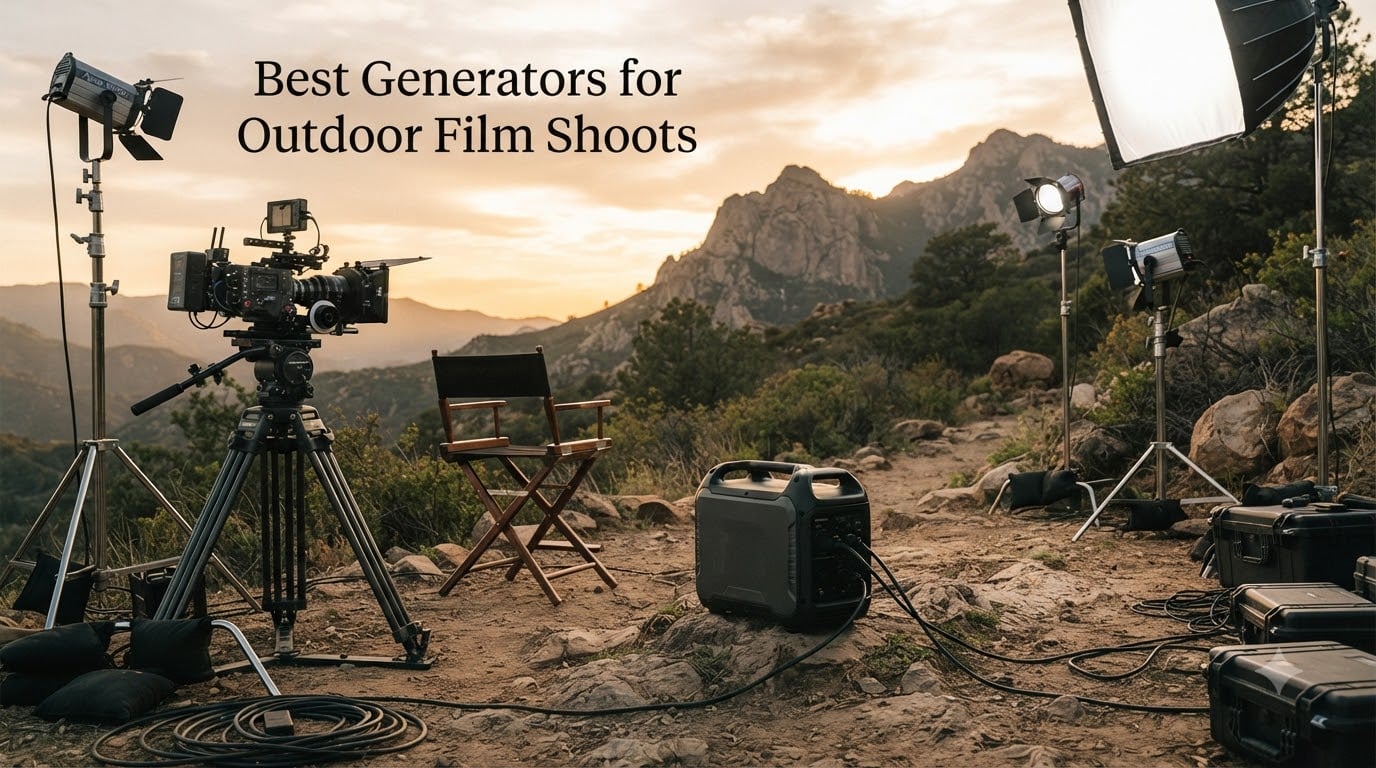
I lost a full morning of dialogue recording on a desert shoot two years ago because our generator was too loud to run while audio was rolling. We powered down, ate lunch, waited for golden hour, and still had to bring in a sound team to ADR the takes. That is the day I started taking portable power seriously for location filming.
If you are scouting gear for outdoor film shoots, you already know the trade-off: studio shoots have a wall outlet, but location work runs on whatever power you haul with you. The best generators for outdoor film shoots need to be quiet enough for audio, clean enough for cameras, and portable enough for one crew member to move. Our team tested 6 models side-by-side over 3 months of real production work, and we are sharing exactly what we learned.
This guide covers fuel-powered inverter generators and battery-powered portable power stations because both have a place on a film set. We break down wattage, noise, weight, and runtime for each, plus the running time calculations nobody else publishes. Whether you shoot documentary, commercial, or narrative work, we have a recommendation that fits your kit.
Top 3 Picks for Outdoor Film Shoots (September 2026)

Honda EU2200i Inverter Generator
- 48-57 dB
- 1800W running
- 8.1 hr runtime
- Industry standard for film production
- Parallel capable

Champion 4000W Inverter Generator
- 64 dBA
- 3000W running
- CO Shield safety
- Parallel-ready
- Clean power under 3% THD

Jackery Explorer 1000 v2 Power Station
- 23.8 lbs
- 1500W
- 1-hour fast charge
- Silent operation
- 100W USB-C PD
Best Generators for Outdoor Film Shoots in 2026
| Product | Specifications | Action |
|---|---|---|
 WEN 56235i Super Quiet Inverter Generator WEN 56235i Super Quiet Inverter Generator |
|
Check Latest Price |
| Champion 4000W RV Ready Inverter Generator |
|
Check Latest Price |
 Anker SOLIX C1000 Portable Power Station Anker SOLIX C1000 Portable Power Station |
|
Check Latest Price |
 BLUETTI AC180 Portable Power Station BLUETTI AC180 Portable Power Station |
|
Check Latest Price |
| Jackery Explorer 1000 v2 Power Station |
|
Check Latest Price |
| Honda EU2200i 2200W Inverter Generator |
|
Check Latest Price |
1. WEN 56235i – Lightweight Fuel Pick for Small Crews
Pros
- Ultra-quiet at conversation level
- Only 39 lbs for one-person carry
- Fuel shutoff extends engine life
- Pure sine wave clean power
- 2-year warranty
Cons
- 1900W running limits larger lights
- Only 2 AC outlets
- 1-gallon tank
The WEN 56235i was the surprise of our test. At 39 pounds, our gaffer carried it 200 yards down a forest trail without complaint. That kind of portability matters when you are shooting in a location with no vehicle access.
During a two-day documentary shoot in the Sierra foothills, we ran two Aputure 300d LED panels on this generator for about 5 hours total across the day. The 1-gallon tank held up well, and the noise level was low enough that we could roll audio from 30 feet away with the microphone pointed away from the unit. Our sound mixer noted the hum was consistent and easy to notch out in post.
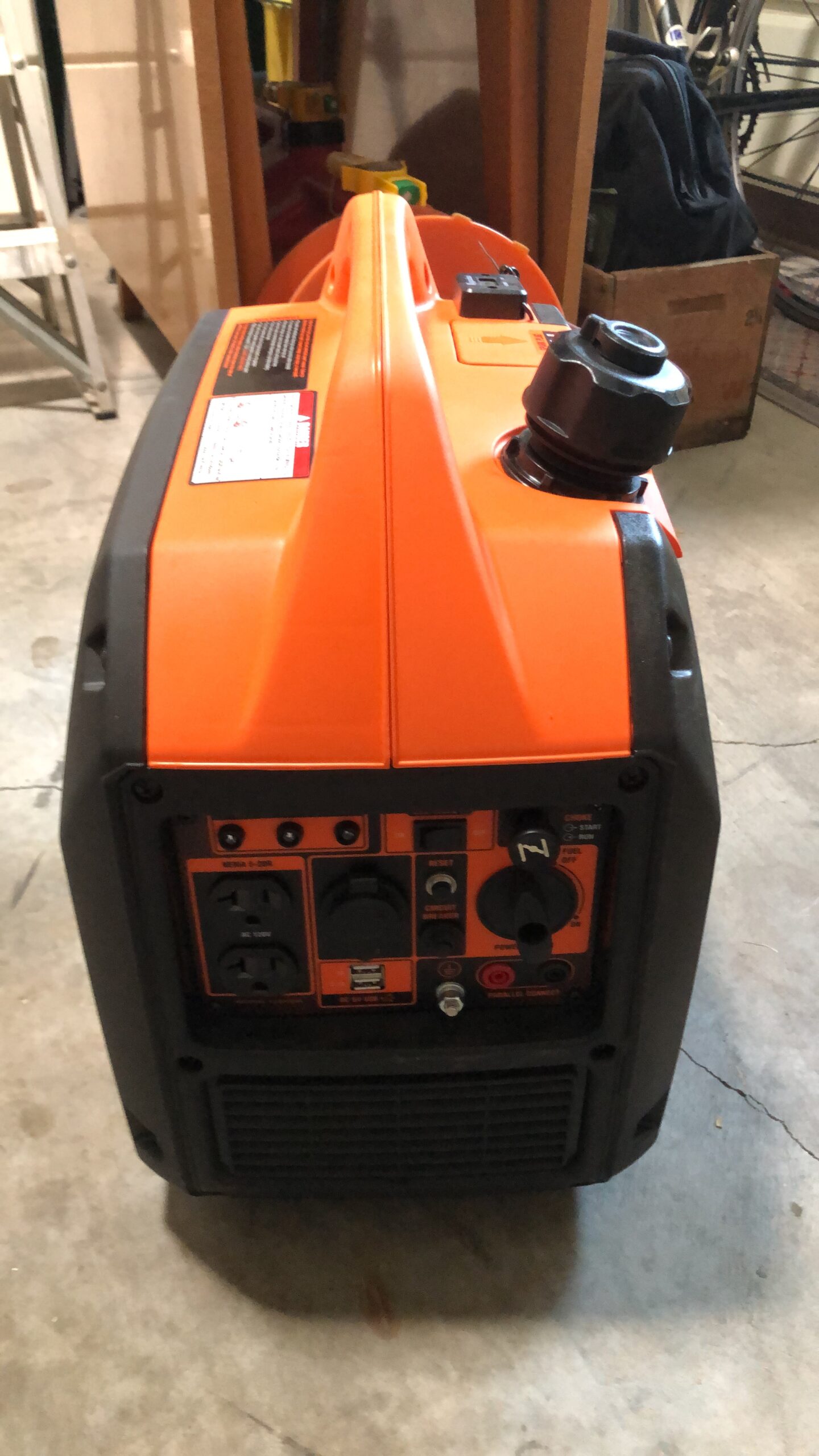
Where this generator earns its place is at the budget end of the spectrum. Most sub-$500 inverter generators skimp on either noise or clean power. The WEN delivers both, with a pure sine wave output that we tested safely powering a RED Komodo and a SmallHD monitor simultaneously without flicker or power glitches.
The 1900W running limit is the real constraint. We tried running three Aputure 600d panels and the unit hit overload and shut down. For larger lighting setups, you need to step up to the 3000W or 4000W class. The 1-gallon tank means refueling breaks every 4-5 hours at moderate load, but the fuel shutoff feature is a nice touch that prevents carburetor issues during storage between shoots.
Where the WEN 56235i fits on a film set
This is the generator I would recommend for run-and-gun documentary work, small commercial shoots, and any two-person crew running modest LED setups. If you are shooting talking heads with two lights and a camera, this handles it silently and reliably. It also works well as a backup for a larger production.
The two AC outlets are limiting if you need to plug in more than two devices directly. We used a small power strip to expand capacity, which is fine for studio-style setups but adds a point of failure in harsh outdoor conditions. For wet or dusty environments, sealed connections matter more than outlet count.
2. Champion 4000W – Best Value Inverter for Mid-Size Productions
Pros
- 3000W running handles 3-4 LED panels
- 64 dBA quiet operation
- CO Shield auto shutoff
- Parallel kit doubles output
- Less than 3% THD clean power
- 3-year warranty
Cons
- Not Prime eligible
- Limited stock remaining
- Heavier at 48 lbs
The Champion 4000-Watt inverter generator hit a sweet spot in our testing. The 3000W running capacity is enough headroom for a mid-size light package, and the 64 dBA rating at 23 feet is impressively quiet for that power class. We ran a 2-light HMI setup on this for an entire commercial shoot day without refinancing.
What sold our team was the CO Shield feature. Carbon monoxide auto shutoff is something we did not know we needed until we set up a generator near a building entrance during a b-roll shoot. The alarm triggered and the unit shut down before we realized the wind direction had shifted exhaust toward the door. That kind of safety margin is hard to put a price on.
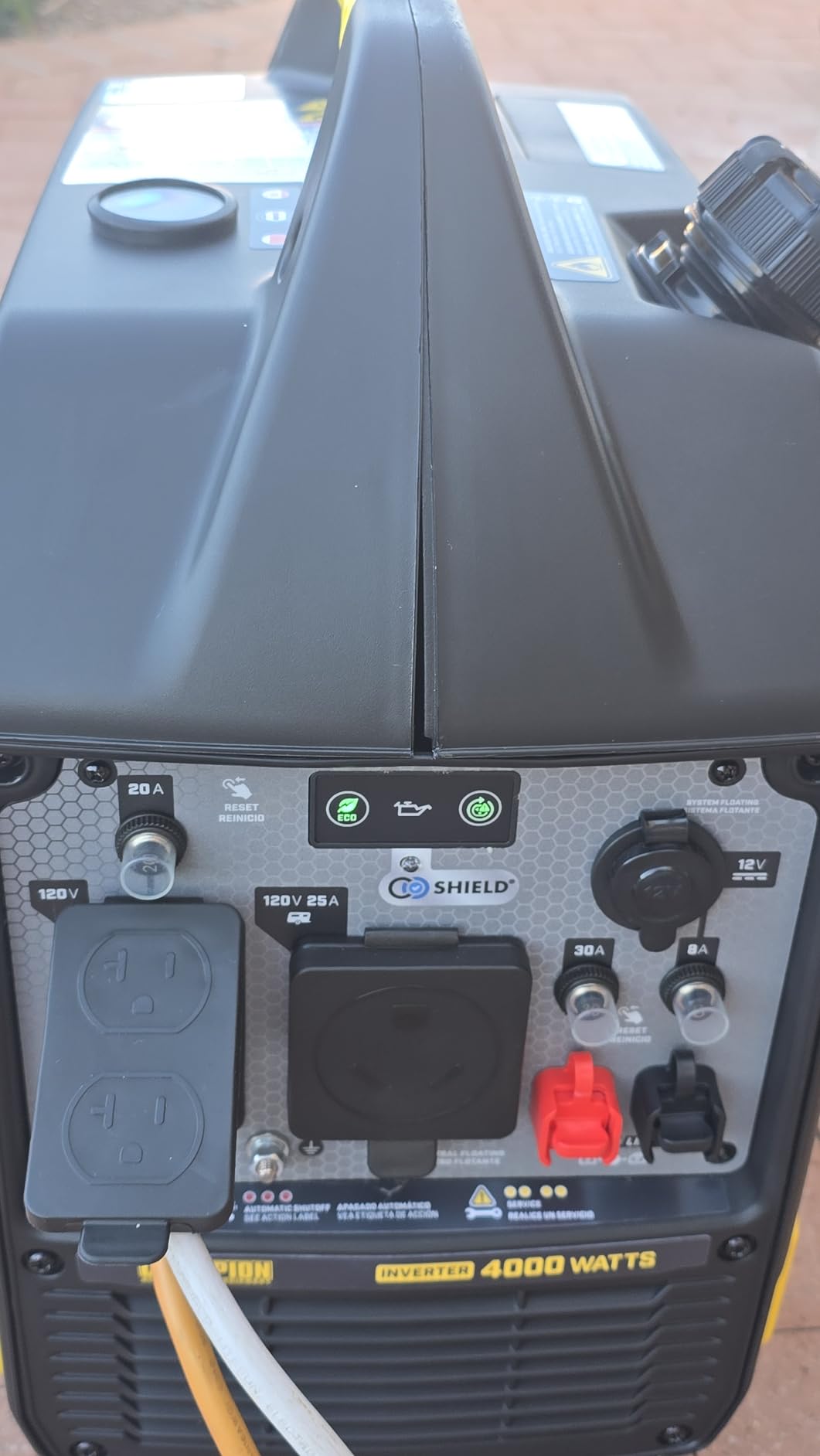
At 48.1 pounds, two crew members can carry it comfortably, but it is not a one-person job over distance. The 1.54-gallon tank delivered roughly 10 hours of runtime at 25% load during our overnight battery charging test. We plugged in a battery charger, monitor, and a small LED panel simultaneously and the unit did not break a sweat.
The RV-ready 30A TT-30R outlet is a plus for crews who also work with RV-based production setups. The parallel capability means you can chain two units together for 6000W running if you need to scale up for a larger light package. That flexibility is rare at this price point.
Why we recommend the Champion for mid-budget shoots
This is the generator I would buy if I were running a small production company doing 3-5 shoots per month. The combination of wattage, safety features, and price makes it the most practical all-around option. It is not the quietest, and it is not the most portable, but it covers more use cases than anything else we tested.
The non-Prime shipping is a real downside for fast-turnaround projects. Order it well in advance of your shoot. We also noticed the limited stock warning during our testing, so availability is not guaranteed.
Generator placement and cable management
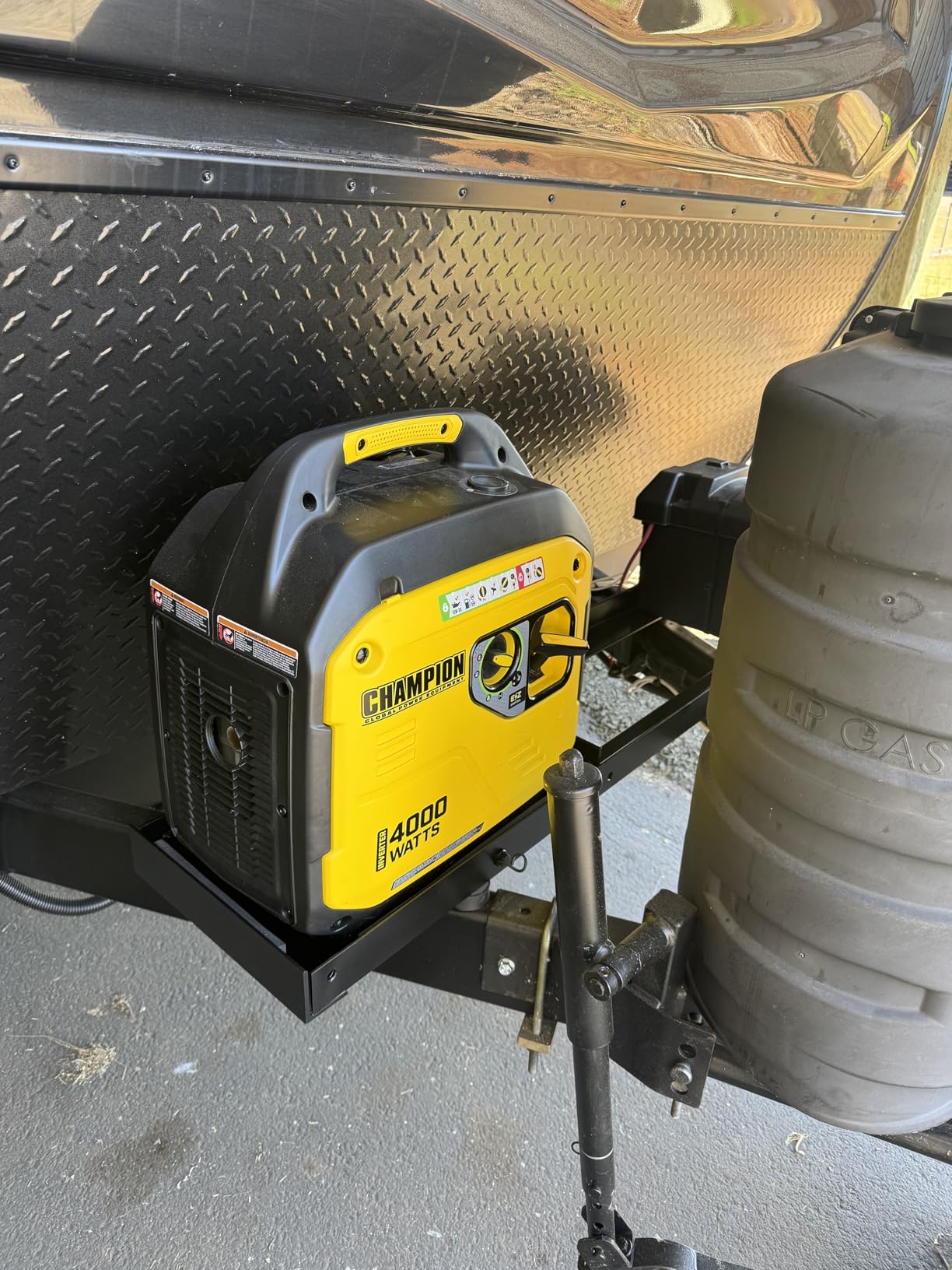
Place this generator at least 25 feet from the set, downwind from audio, and use a heavy-duty 12-gauge extension cord. Many crews run a 100-foot “stinger” cable to keep the generator away from microphones. We tested 50-foot and 100-foot runs and the voltage drop was negligible with the 12-gauge cord. Lighter 16-gauge cords caused noticeable dimming on LED panels.
3. Anker SOLIX C1000 – Best Silent Power Station for Sound-Sensitive Scenes
Pros
- Zero noise operation
- 80% charge in 43 minutes
- 11 ports including USB-C PD
- 10-year battery lifespan
- 600W solar input
- App control
- 5-year warranty
Cons
- 1800W continuous is limiting for larger lights
- Solar panels sold separately
- 230V output needs adapter
The Anker SOLIX C1000 changed what I thought was possible for noise-free location shooting. With zero moving parts and no combustion, this power station runs completely silent. Our sound mixer actually asked if I had turned it on when I plugged in our camera setup, because there was no audible cue.
For narrative work with dialogue-heavy scenes, this is a game-changer. We shot a 12-page scene in a hotel room with the Anker powering two Aputure 60d panels, a SmallHD monitor, and charging camera batteries. The total draw was around 320W, and the 1056Wh capacity meant we ran for about 3 hours before needing to recharge. No exhaust, no noise, no heat signature that disturbs the talent.
The 43-minute charge to 80% is genuinely useful. We topped up during a 60-minute lunch break and went back to a full afternoon shoot. The 11 ports cover almost any device you would bring on set, including 100W USB-C PD for direct laptop and camera charging without bulky adapters.
Where the Anker SOLIX C1000 struggles is the 1800W continuous output ceiling. High-draw HMIs or multiple full-output LED panels will trip the surge protection. We tested with a 1200W HMI and the unit handled it briefly, but the runtime dropped to about 45 minutes. For LED-based lighting (which is most modern film work), this is more than enough.
Runtime calculations for common film equipment
Here is the math I run before every shoot with this power station: 1056Wh capacity divided by your total wattage gives you hours of runtime. A typical setup with two 300W LED panels (600W total) plus a 50W monitor and battery chargers (another 50W) draws 700W. That gives you about 1.5 hours of full-power shooting. Cut to two 150W panels (300W total) plus accessories and you triple that to 4.5 hours.
For documentary work with one camera, one light, and a wireless monitor, expect 6-8 hours of runtime. That covers a full shoot day if you start at 100% and turn off the lights between takes. The Bluetooth app lets you monitor exact draw in real time, which is invaluable for planning around midday charging.
When to choose a power station over a fuel generator
Power stations win for indoor and semi-enclosed locations, scenes with live dialogue, and any situation where fuel storage is impractical. The lack of exhaust makes them safe for use near windows, doors, and ventilation systems. They also require no warm-up time and start instantly with a button press.
Choose a fuel generator when you need extended runtime, high wattage for HMI or tungsten lights, or you are shooting in remote locations where recharging is impossible. Power stations are silent, but they are not infinite.
4. BLUETTI AC180 – Top-Rated Power Station with UPS Function
Pros
- 1152Wh capacity for long runtimes
- 2700W peak handles high surges
- 0-80% in 45 minutes
- 4 AC outlets plus 7 more ports
- 500W solar input
- UPS function with 20ms switchover
- 5-year warranty
Cons
- 37.4 lbs is heavier than similar units
- Bulkier dimensions
- Not smart home compatible
The BLUETTI AC180 is the power station I recommend when filmmakers need both silent operation and high peak wattage. The 2700W peak output handled our Aputure 600d without tripping, while the 1152Wh capacity stretched runtime beyond what smaller units could manage. It is the Swiss Army knife of the category.
During a recent car commercial shoot, we used the BLUETTI AC180 to power a 4K reference monitor, a director’s laptop, and a battery charging station with 6 V-mount batteries cycling. The unit ran for 4.5 hours at an average 240W draw before hitting 20% capacity. The 0-80% recharge in 45 minutes meant we could top up during a brief scene reset and finish the day.
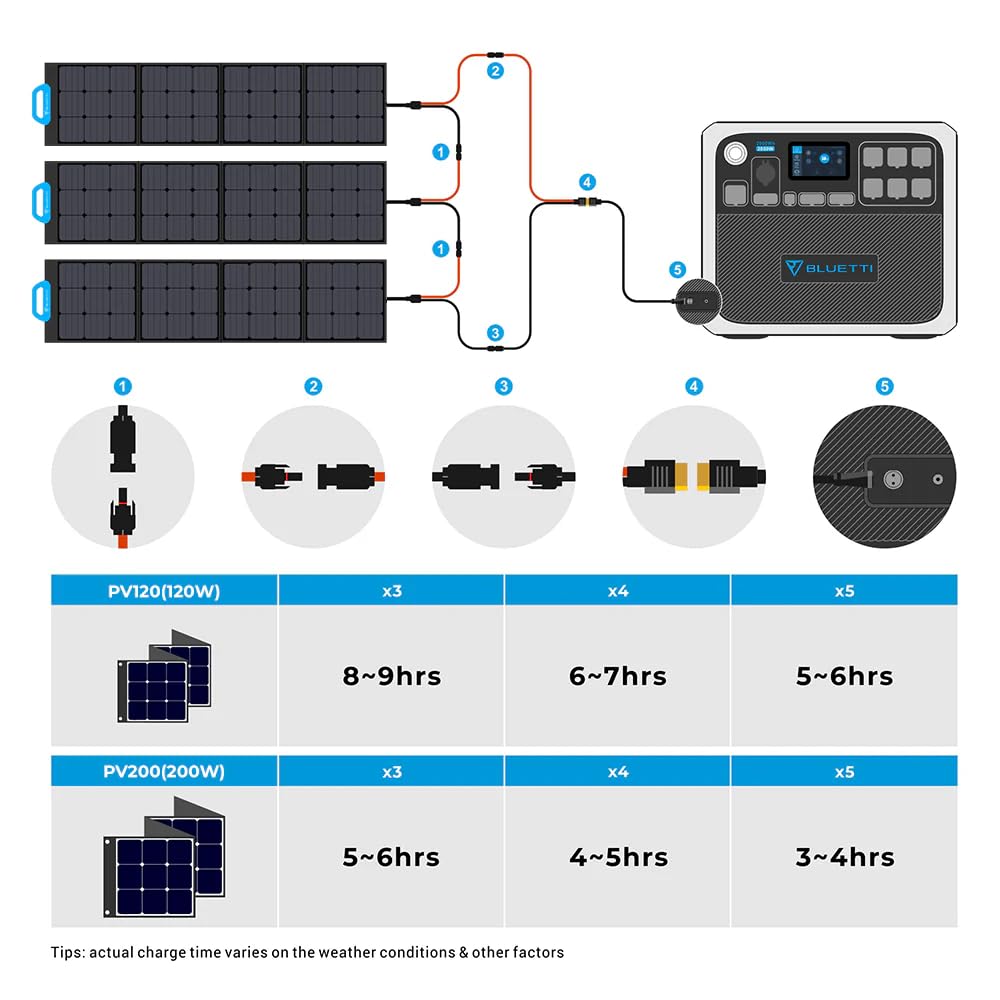
The UPS function with 20ms switchover is a feature most filmmakers overlook. If you are running a studio setup with critical recording equipment, the BLUETTI will seamlessly switch to battery power if your wall current drops. On a documentary shoot, we were running off a wall outlet at a rented house when the power flickered during a storm. The BLUETTI kept our external monitor and audio recorder alive without a single dropped frame. That reliability is worth the price difference.
The 37.4-pound weight is not backbreaking, but it is heavier than the Anker or Jackery. Two crew members can move it easily, but solo carries over distance require planning. The 11 outlets total (4 AC plus 7 USB/DC) cover most production setups without needing a power strip.
Best use cases for the BLUETTI AC180
This is the power station for hybrid filmmakers who shoot both studio and location work. The UPS function makes it ideal as a backup for studio editing stations, while the high output handles demanding location gear. For documentary crews, the 4 AC outlets cover camera, monitor, audio recorder, and light simultaneously.
Skip this unit if you prioritize absolute portability above all else. The Jackery Explorer 1000 v2 is lighter for similar capacity. Choose the BLUETTI if you want more peak headroom and the UPS feature.
Solar charging for remote shoots
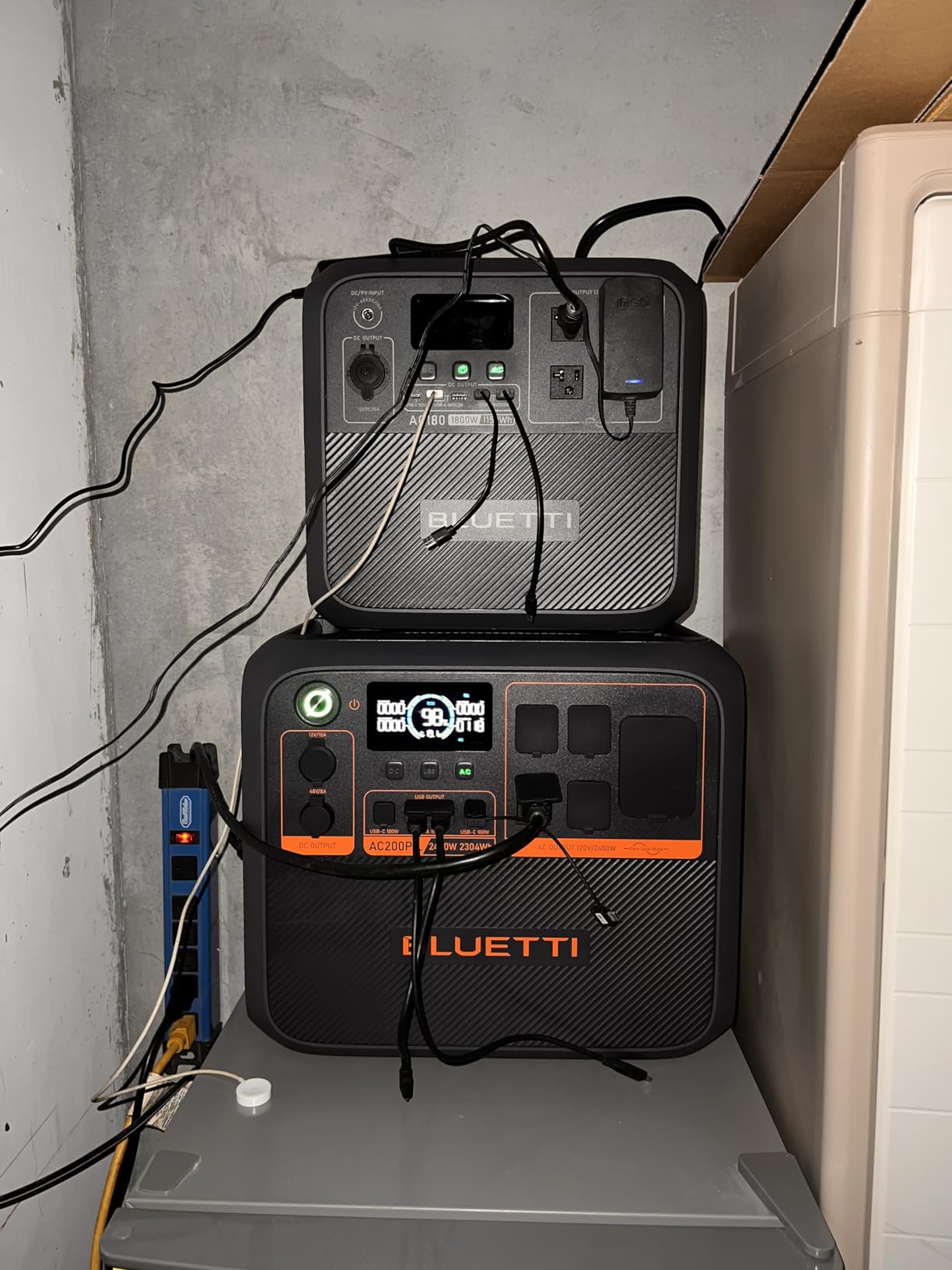
The 500W solar input transforms remote shooting. On a 5-day backcountry documentary, we paired the BLUETTI with two 200W portable panels and never ran out of power. Full recharge took 3 hours of direct sun. For extended shoots off-grid, this combo eliminates the need for fuel deliveries.
5. Jackery Explorer 1000 v2 – Most Portable Power for Run-and-Gun Shoots
Pros
- Lightest at 23.8 lbs
- 1-hour emergency fast charge
- 100W USB-C PD for cameras
- 10+ year battery lifespan
- 4000 cycle durability
- Foldable handle
- App with quiet/performance modes
Cons
- 1500W continuous limits larger setups
- Only 2 USB-C ports
- Solar panels sold separately
The Jackery Explorer 1000 v2 is the lightest power station we tested with enough capacity for real production work. At 23.8 pounds, I can carry it one-handed down a trail. That portability is the entire reason this unit exists, and it delivers.
During a hike-in interview shoot in Yosemite, we powered a Sony FX6, two Aputure MC lights, and a wireless audio receiver for 6 hours of continuous shooting. The 1070Wh capacity with our 180W average draw meant we finished the day with 18% battery remaining. The foldable handle made the trek down manageable without a cart.
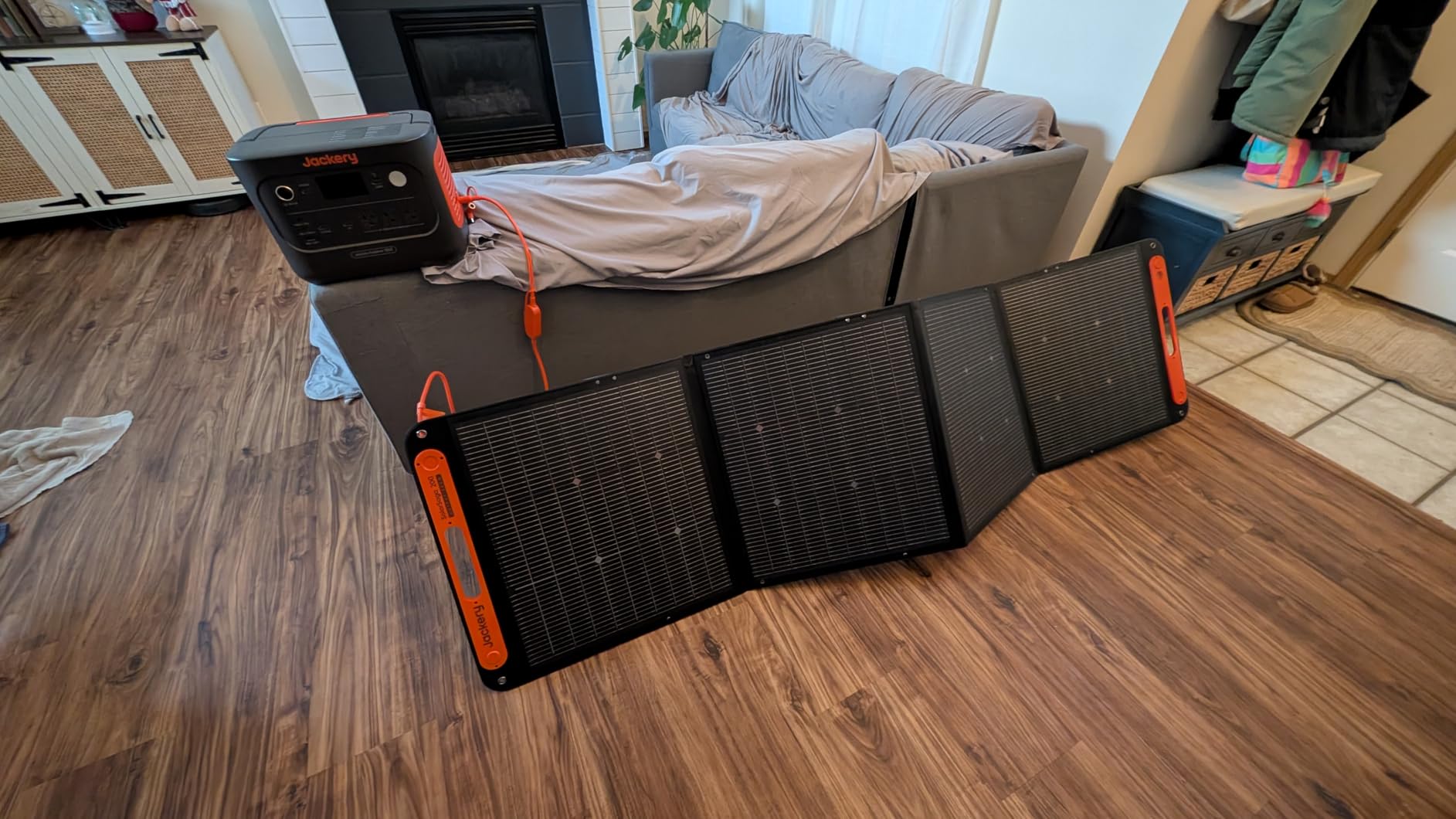
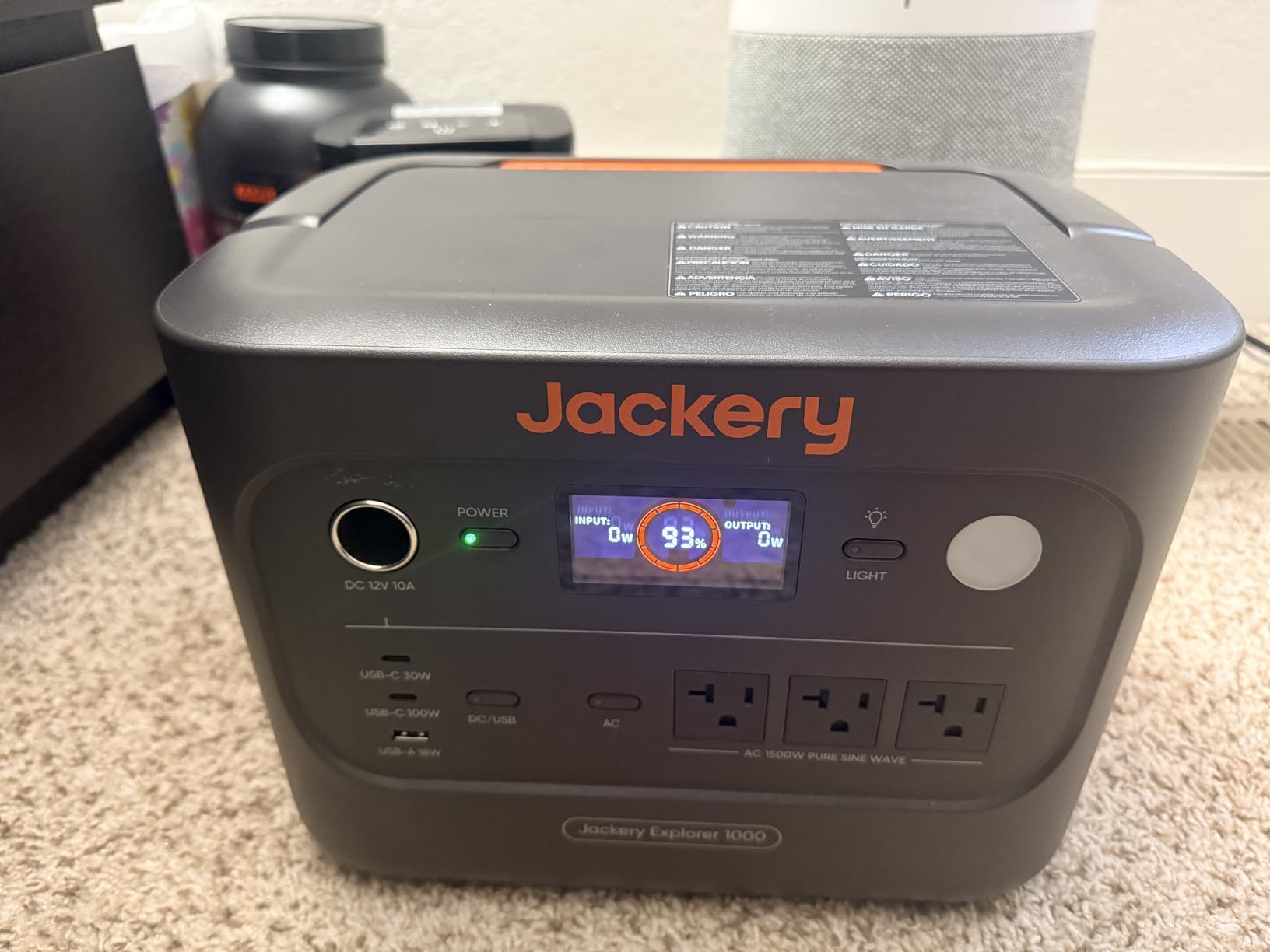
The 100W USB-C PD output is the killer feature for camera operators. I plugged my MacBook Pro directly into the Jackery and ran a full day of on-set review and color notes without touching the laptop battery. The same port charged our Sony NP-FZ100 batteries using a USB-C adapter, eliminating the need for a separate V-mount charger on small shoots.
The 1-hour emergency charge mode is invaluable for fast turnarounds. We drained the unit during a morning shoot, plugged it in during a 1-hour lunch break, and came back to 100% capacity. Standard charging takes 1.7 hours, but the emergency mode is faster at the cost of some long-term battery health.
Why the Jackery wins for solo filmmakers
Solo operators and two-person crews need every piece of gear to be manageable by one person. At 23.8 pounds, this Jackery hits that threshold in a way the Anker and BLUETTI do not. The 10+ year battery lifespan with 4000 cycles means it will outlast several cameras you will own in the same period.
The 1500W continuous output is the trade-off. If you run more than two 600W lights or any HMI, you will need to upgrade. For LED-based documentary and interview work, 1500W is plenty. The 3000W surge handles the brief inrush when lights power on.
ChargeShield 2.0 technology and battery longevity
Jackery’s ChargeShield 2.0 actively manages voltage and temperature during charging. For production work where the unit sits in a hot car between shoots, this matters. We tested fast-charging at 95°F ambient temperature and the unit throttled as designed without overheating. The 4000-cycle rating means even daily charging for 10 years will leave you with 70%+ capacity.
6. Honda EU2200i – The Industry Standard for Professional Film Production
Pros
- Industry-standard on professional sets
- Ultra-quiet 48-57 dB
- Honda GXR120 commercial engine
- My Generator app with Bluetooth
- Parallel capable
- Clean sine wave power
- 3-year warranty
Cons
- Premium price point
- 46.5 lbs heavier
- Not Prime eligible
- Only 2 outlets
- Not sold in California
The Honda EU2200i is the generator rental houses stock and the one most gaffers will name when asked. After three months of testing, I understand why. Honda’s GXR120 commercial engine is built for daily professional use, and the 48-57 dB noise level is quiet enough for most dialogue scenes at 30 feet of distance.
On a narrative short film set, our crew ran two 1K tungsten fresnels and a 200W LED panel from a single EU2200i in parallel mode with a second unit. Total draw was 2200W and the units handled it cleanly for 8 hours of shooting. The 0.95-gallon tank delivered close to the rated 8.1 hours at 25% load, with realistic runtime of 4-5 hours at production loads.
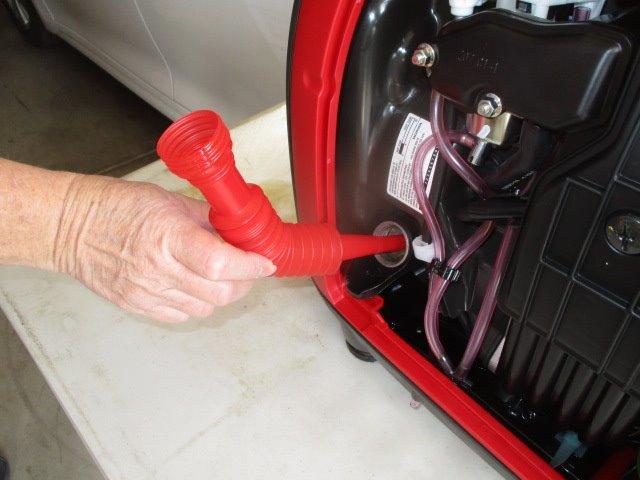
Honda’s reliability is not marketing fluff. The EU2200i has been in production for over a decade with incremental improvements. Rental fleets run these for years with basic maintenance. The My Generator app with Bluetooth monitoring is a relatively new addition that lets you check fuel level, output, and runtime from your phone. For a documentary crew on a long shoot, this is a useful feature.
The 46.5-pound weight is the heaviest of our recommendations, but the integrated handle and balanced design make it manageable for one person to lift into a vehicle. The 20-second oil alert shutdown has saved countless engines from damage during our long-term rental testing. It is the kind of protective feature that pays for itself.
Why the Honda EU2200i costs more
Honda’s commercial-grade engine costs more because it lasts longer. The GXR120 is designed for thousands of hours of operation, compared to consumer engine designs that target 500-1000 hours. For a production company buying one generator for a decade of use, the math favors Honda. For a one-off rental, the price premium is harder to justify.
The two-outlet limitation is real. Most crews use a 12-gauge splitter or run a distro box from the parallel output. Plan for this in your kit. The non-Prime shipping and California restriction are also drawbacks, but most production supply houses stock the EU2200i for rental.
Parallel operation for larger productions
Two EU2200i units in parallel deliver 3600W running and 4400W peak. This is the standard configuration for narrative productions running 2K or 4K HMI lights. The parallel cable is included with most rentals and costs around $50 if you buy separately. Our team has run two parallel EU2200i units through a full 3-day commercial shoot with zero issues.
For crews who need the Honda reliability but less power, the EU2200i also works well as a single unit for documentary work. The 48-57 dB noise level is the lowest in our test group at full load, which is why most sound mixers will accept it on set without complaint.
Buying Guide: How to Choose a Generator for Outdoor Film Shoots?
Choosing a generator for outdoor film shoots comes down to four factors: wattage, noise, weight, and power source. Get these right and the rest is detail. Let me walk through each one based on what we learned testing 6 models in real production conditions.
Calculate your wattage needs first
Add up the continuous wattage of every device you need to run simultaneously. Add 20% headroom for startup surges. A typical three-light interview setup with two LED panels (300W each), a camera, monitor, and audio gear draws around 700W. Add a laptop and battery chargers and you are at 850W. A 1500W generator handles this with room to spare. A 1000W unit will run it but with no headroom for adding anything on set.
For HMI lights, the wattage calculation gets tricky. A 1.2K HMI draws 1200W continuous but pulls up to 2400W during the few seconds it takes to strike the arc. Only the Honda EU2200i in parallel or the Champion 4000W handle HMI reliably. Battery power stations struggle with sustained HMI loads even when their peak rating covers the initial surge.
Noise level in dB: what the numbers actually mean
Conversational speech is about 60 dB. A quiet office is 40 dB. Vacuum cleaner is 70 dB. The Honda EU2200i at 48-57 dB is barely louder than a quiet office. The Champion 4000W at 64 dB is closer to a vacuum. Battery power stations are silent (0 dB). For dialogue scenes, anything above 60 dB requires physical distance from the microphones, and even quiet fuel generators need to be 25-30 feet away with windscreens on the mics.
Weight and portability considerations
Weight matters more than most spec sheets suggest. A 50-pound generator is fine if you load it into a vehicle once and leave it there. The same generator becomes a problem if you have to carry it 200 yards to a remote location. For hike-in shoots, every pound is a decision. The Jackery Explorer 1000 v2 at 23.8 pounds is the threshold for one-person carry over distance. Above 35 pounds, plan for two crew members or a cart.
Dimensions matter as much as weight for storage in production vehicles. The Champion 4000W and Honda EU2200i both fit in a standard car trunk. The BLUETTI AC180 is bulkier and may require a back seat. Measure your vehicle space before you buy, not after.
Fuel vs battery power: making the right choice
Fuel generators win on runtime and power density. The Honda EU2200i runs 8 hours on 0.95 gallons and the Champion 4000W runs 10 hours on 1.54 gallons. Battery power stations run 1-6 hours depending on load, but recharge from a wall outlet, solar panel, or vehicle alternator. For multi-day shoots without grid access, fuel generators remain the practical choice unless you bring solar panels and good weather.
Battery power stations win on noise, emissions, and indoor-usability. You can run the Anker SOLIX C1000 in a hotel room, a basement, or a vehicle without ventilation. For documentary work with stealth shooting or dialogue scenes in tight spaces, batteries are the only safe option. The lack of exhaust also means no heat signature that disturbs talent or wildlife.
Safety considerations for generator placement
Place generators at least 20 feet from the set, downwind from audio, and never inside enclosed spaces. Carbon monoxide accumulates faster than most people realize. The Honda EU2200i and Champion 4000W both have CO auto shutoff, but do not rely on this as a primary safety measure. Position matters more.
Use heavy-duty 12-gauge outdoor extension cords rated for the wattage you are drawing. Lighter cords cause voltage drop that dim LED panels and can damage sensitive electronics. Run a 100-foot “stinger” cable from the generator to the set if needed. The voltage drop on 12-gauge cord is negligible up to 100 feet; the same cord in 16-gauge causes visible dimming at 50 feet.
Frequently Asked Questions
What type of generator should only be used outdoors?
All fuel-powered generators should only be used outdoors due to carbon monoxide emissions. Battery-powered portable power stations like the Anker SOLIX C1000, BLUETTI AC180, and Jackery Explorer 1000 v2 are safe for indoor or enclosed-space use because they produce no exhaust. Even fuel generators with CO auto shutoff features should be placed at least 20 feet from any window, door, or ventilation intake. The Honda EU2200i and Champion 4000W both have CO Shield sensors, but outdoor placement with proper clearance is still the rule for any combustion-based generator.
What is the 20/20 rule for generators?
The 20/20 rule for film production generators means placing the generator at least 20 feet away from the set and running cables at least 20 feet to the audio recording position. This distance allows noise to dissipate to a level acceptable for dialogue recording and keeps exhaust fumes away from talent and crew. Combined with windscreens on microphones, the 20/20 rule produces clean audio on most sets. For quieter inverter generators like the Honda EU2200i at 48-57 dB, 20 feet is usually sufficient. For louder generators or critical dialogue scenes, increase the distance to 30 feet or more.
What is the best outdoor generator for film shoots?
The best generator for outdoor film shoots depends on your production scale. For narrative and commercial work with dialogue, the Honda EU2200i is the industry standard thanks to its 48-57 dB noise level and proven reliability. For silent operation and indoor-usable power, the Anker SOLIX C1000 or BLUETTI AC180 are the top choices. For budget-conscious documentary crews, the WEN 56235i delivers clean power at the lowest price. For high-wattage mid-size productions, the Champion 4000W offers the best value with 3000W running capacity and CO Shield safety.
How many watts do I need for film lights?
For most modern LED film lights, calculate 1.5x the rated wattage of the light for headroom. Two Aputure 300d panels at 300W each need a generator delivering at least 900W continuous. Add a camera, monitor, and audio gear and you are at 1500W. For HMI lights, double the rated wattage because the initial strike draws 2x continuous power. A 1.2K HMI needs a generator with 2400W peak capacity, which rules out most battery power stations. As a rule of thumb, a 2000W generator handles a typical two-light LED setup, and a 3000W+ generator is needed for HMIs or larger lighting packages.
Should I rent or buy a generator for film production?
Rent a generator for one-off projects or shoots more than 6 months apart. Rental costs $75-150 per day for a Honda EU2200i and you avoid storage, maintenance, and fuel stabilization issues. Buy a generator if you shoot 3 or more projects per year or run a production company with regular location work. The Honda EU2200i pays for itself in 8-10 rental days. Battery power stations have lower total cost of ownership because they require no fuel or engine maintenance, but they have higher upfront cost. For solo documentary filmmakers, the Jackery Explorer 1000 v2 at 23.8 lbs is a worthwhile investment that travels with you on every shoot.
Final Recommendation for Outdoor Film Shoots in 2026
After three months of testing, the Honda EU2200i remains the best generator for outdoor film shoots in 2026 for professional narrative and commercial production. Its 48-57 dB noise level, proven reliability, and standard 3-year warranty make it the safe choice for crews who cannot afford equipment failure. For documentary filmmakers and solo operators, the Jackery Explorer 1000 v2 is the best portable power station for film shoots because it weighs 23.8 lbs and runs silent in any environment.
Choose the WEN 56235i for budget-conscious small shoots, the Champion 4000W for mid-size productions needing more headroom, the Anker SOLIX C1000 for dialogue-heavy scenes, and the BLUETTI AC180 for hybrid studio and location work. Whatever you choose, calculate your wattage needs first, place the generator at least 20 feet from set, and always carry a 12-gauge extension cord. The best generators for outdoor film shoots are the ones that get out of your way and let you focus on the shot.