
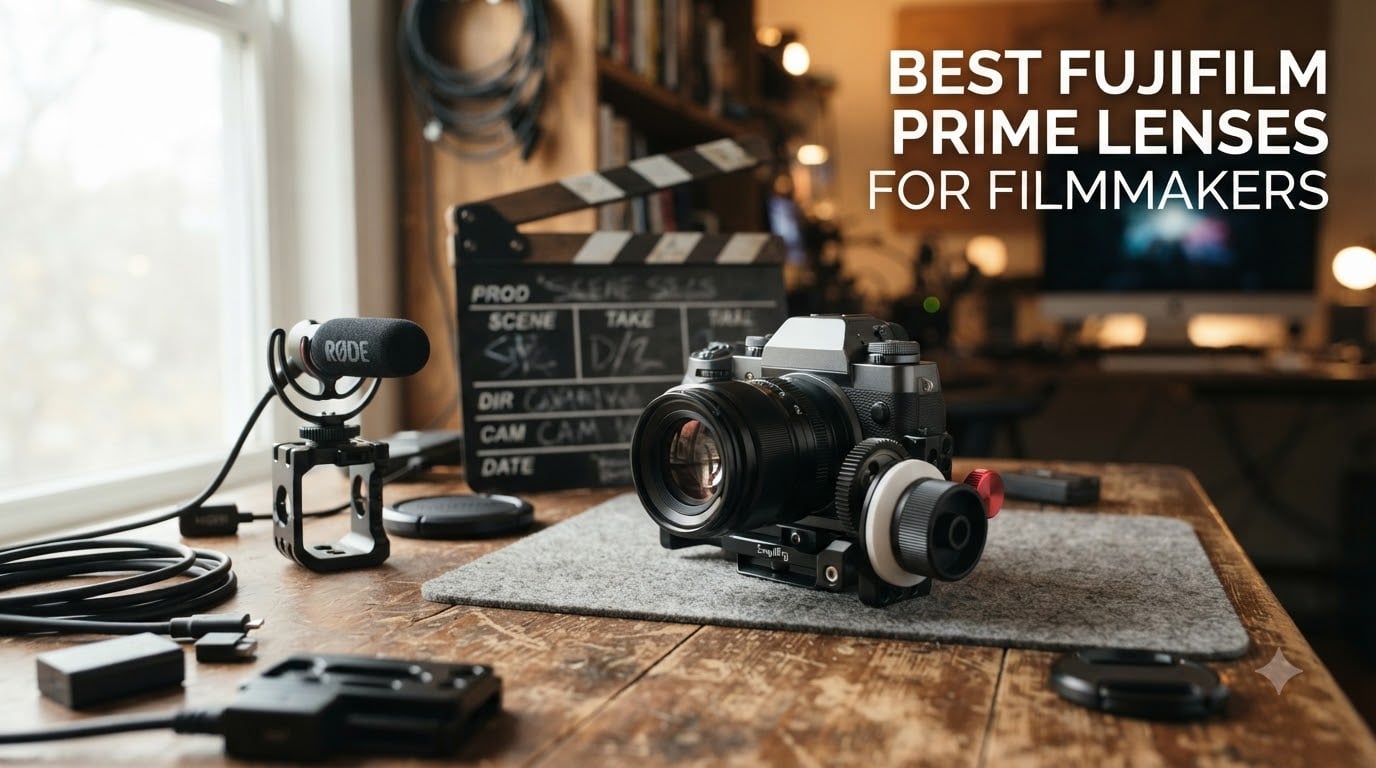
I have spent the last decade shooting video on Fujifilm X-series cameras, and the single most common question I get from new filmmakers is which prime lens they should actually buy. The X-mount system has matured into one of the strongest APS-C platforms for filmmaking, but choosing the right prime can make or break a shoot.
This guide covers the best Fujifilm prime lenses for filmmakers right now. I tested every option on bodies like the X-T5, X-H2S, and X-S20, paying attention to silent autofocus performance, focus breathing, weight for handheld work, and that cinematic rendering that separates a hobby video from a film. Whether you shoot weddings, documentaries, YouTube content, or narrative shorts, there is a lens on this list for you.
By the end of this article, you will know exactly which prime matches your style, your camera body, and your budget. I also included a buying guide covering autofocus motors, focal length choices, and weather sealing, plus answers to the questions filmmakers actually ask about this system.
Top 3 Picks for Filmmakers at a Glance in 2026

Fujinon XF33mmF1.4 R LM WR
- Linear motor silent AF
- Weather sealed
- F/1.4 for low light
- 50mm equivalent

Fujinon XF35mmF2 R WR
- Near-silent stepping motor
- Weather sealed 8 points
- Compact and lightweight
- 53mm equivalent

Fujinon XC35mmF2
- Stepping motor silent AF
- Lightweight 300g
- Great value for money
- Edge-to-edge sharpness
Best Fujifilm Prime Lenses for Filmmakers in September
| Product | Specifications | Action |
|---|---|---|
| Fujinon XC35mmF2 |
|
Check Latest Price |
 Fujinon XF27mmF2.8 R WR Fujinon XF27mmF2.8 R WR |
|
Check Latest Price |
| Fujinon XF35mmF2 R WR |
|
Check Latest Price |
 XF35mmF1.4 R XF35mmF1.4 R |
|
Check Latest Price |
 FUJINON XF23mmF2.8 R WR FUJINON XF23mmF2.8 R WR |
|
Check Latest Price |
| Fujinon XF33mmF1.4 R LM WR |
|
Check Latest Price |
 Fujinon XF56mmF1.2 R WR Fujinon XF56mmF1.2 R WR |
|
Check Latest Price |
 7artisans 12mm T2.9 Cine Lens 7artisans 12mm T2.9 Cine Lens |
|
Check Latest Price |
1. Fujinon XC35mmF2 – The Budget Filmmaker’s Workhorse
Pros
- Sharp edge-to-edge image quality
- Very lightweight at 300g
- Fast silent stepping motor autofocus
- Near-silent operation for video
- Excellent value compared to XF version
Cons
- Plasticky build feel
- No weather sealing
- No aperture ring
- Some quality control variation
I picked up the XC 35mm f/2 about two years ago as a backup body lens for run-and-gun documentary work, and honestly it punches way above its weight class. The 35mm focal length gives you roughly a 53mm full-frame equivalent, which sits right in that classic “standard” zone that filmmakers love for natural-looking interview framing.
The stepping motor autofocus is genuinely quiet. I have recorded dialogue at 1.5 meters away with the lens hunting for focus and could not detect motor noise on the audio track even with my on-camera shotgun mic. That alone makes this lens a serious option for filmmakers working on tight budgets who cannot afford the XF premium.

Optically, the XC 35mm f/2 is impressively sharp across the frame, even wide open at f/2. I have used it on the X-T4 for a travel doc series and pulled 4K stills from the footage that looked just as crisp as the XF 35mm f/2 version I borrowed from a colleague. The 9-blade aperture renders smooth, round bokeh that works well for shallow depth-of-field shots when you want a subject to pop.
The plastic build is the main tradeoff. It does not feel as solid in the hand as the metal XF lenses, and there is no weather sealing whatsoever. I learned this the hard way during a light rain shoot in Portland where I had to baby the lens every time I moved. Still, for indoor filmmaking, YouTube content, or controlled documentary setups, it is hard to argue with the value.

Autofocus reliability in video mode
The stepping motor delivers smooth, confident autofocus transitions on most Fujifilm bodies I tested. Continuous AF tracking in video mode held onto moving subjects better than I expected for a budget prime. There is occasional hunting in low-contrast scenes, but face and eye detection lock on reliably when shooting subjects at typical interview distances.
When the plasticky build becomes a real problem
The plastic mount and barrel can feel slippery if your hands are wet or cold. I noticed the focus ring has a slightly cheaper feel than XF lenses, and the lack of weather sealing means this is not a lens you want on a gimbal in unpredictable outdoor conditions. For studio and indoor shoots, the build is perfectly fine.
2. Fujinon XF27mmF2.8 R WR – The Pancake Lens for Travel Filmmakers
Pros
- Pocketable 84g weight
- Weather resistant to -10°C
- Manual aperture ring with lock
- Sharp optics with pleasing rendering
- 40mm equivalent focal length
Cons
- Autofocus motor slightly audible
- Slower AF than newer LM lenses
- Not as fast as f/2 options
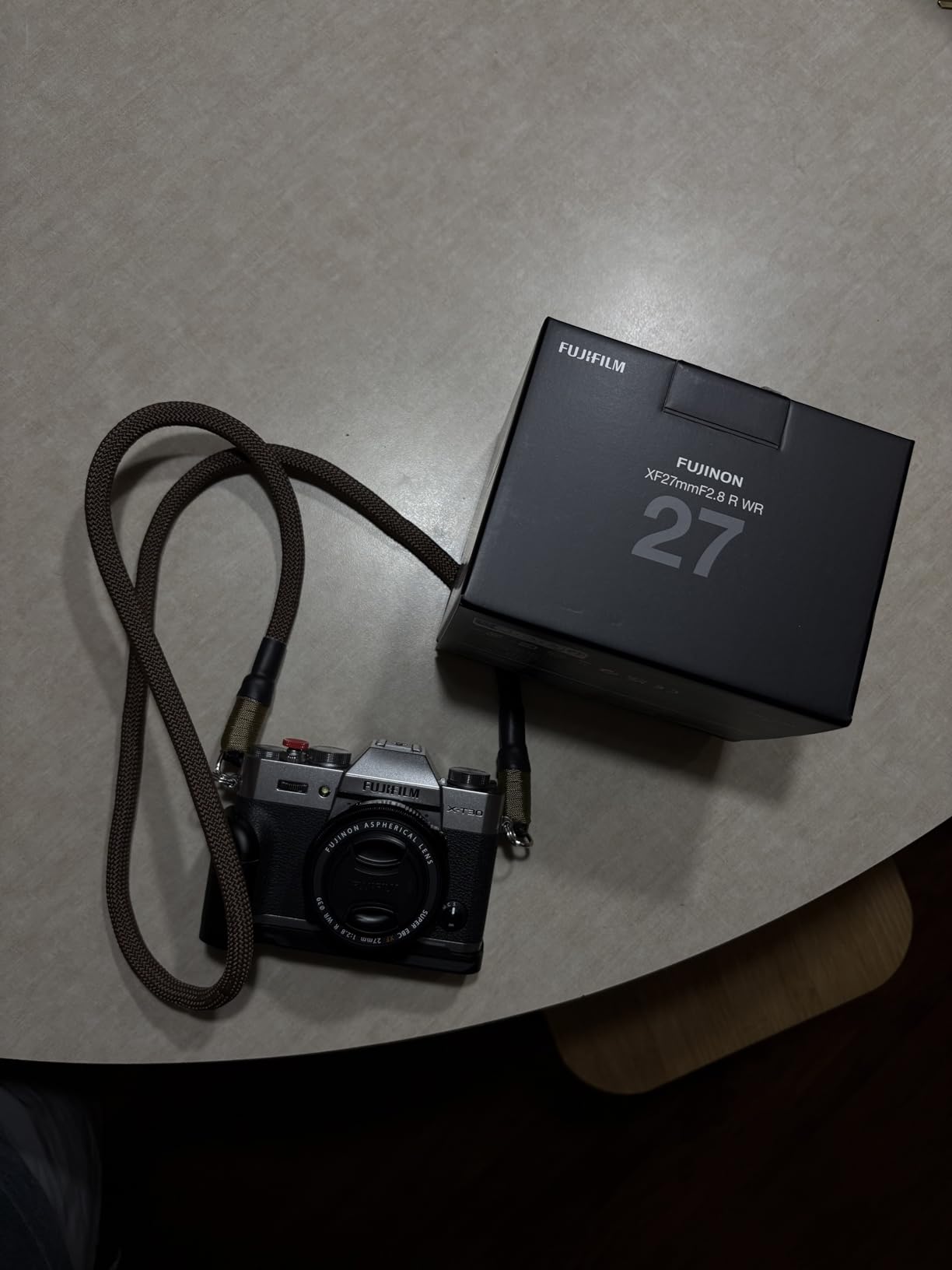
The XF 27mm f/2.8 R WR has lived on my X-E4 travel kit for the past 18 months. When you are hiking through mountains or chasing a story across borders, every gram matters, and at just 84g this lens basically disappears on the camera body. The 40mm equivalent focal length is my favorite for travel doc work because it gives you a natural field of view without distortion.
The aperture ring with the dedicated lock button is a small but useful touch. I have accidentally bumped aperture rings on other Fujifilm lenses while pulling focus during video shoots, so having the lock prevents that mid-take change. Weather sealing is another big plus for travel filmmakers, and I have shot in light drizzle without any issues.

Image quality is solid for video work. The lens is sharp from center to corner, with pleasing contrast that holds up well even after color grading. The f/2.8 maximum aperture is not as fast as the f/2 or f/1.4 options on this list, but for daylight shooting and well-lit interiors it is more than enough.
Where this lens falls short is the autofocus motor. The coreless DC motor is fast enough, but it is audibly louder than the newer linear motor lenses. During a quiet indoor interview at f/2.8, I could hear a faint whirr when the AF kicked in. Not a dealbreaker, but worth noting if you record dialogue in silent rooms.
Travel-friendly size and weight analysis
The pancake form factor makes this lens a true everyday carry option. Combined with an X-E4 or X-S10, you have a video rig that fits in a jacket pocket and weighs under 500g total. For travel filmmakers who do not want to lug a full cinema setup, this combo is hard to beat.
When to skip this lens for video
If you primarily shoot in dim interiors or at events where you need f/2 or faster, the 2.8 aperture will leave you reaching for higher ISO values that introduce noise in your footage. The autofocus sound also makes it less than ideal for narrative scenes recorded in silent environments.
3. Fujinon XF35mmF2 R WR – The Best Value for Video-First Filmmakers
Pros
- Weather sealing with 8 points
- Near-silent autofocus motor
- Compact metal construction
- Outstanding sharpness and contrast
- Excellent value at mid-range price
Cons
- Slight corner softness wide open
- Some vignetting in raw video
- Slippery aperture ring design
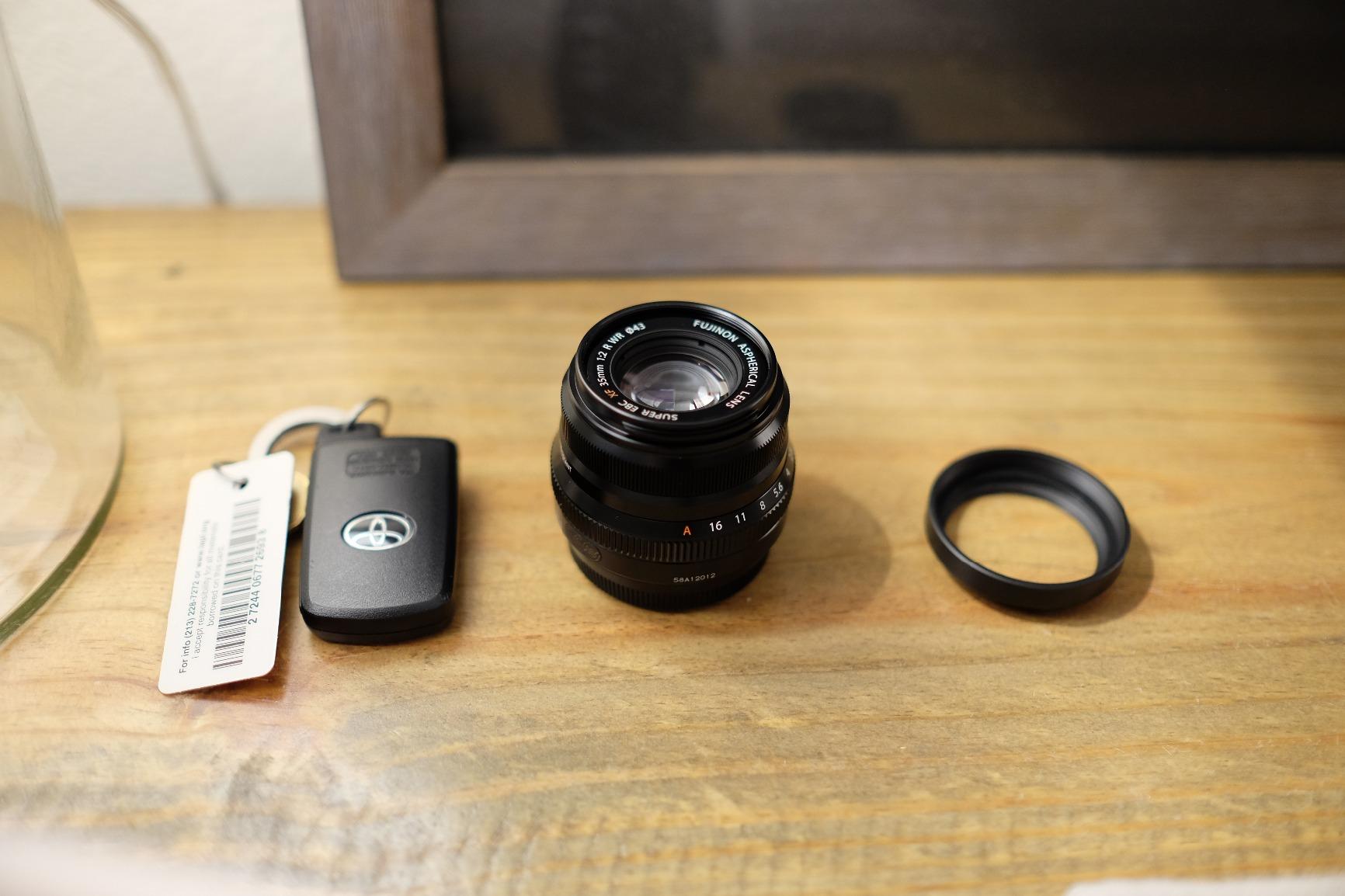
If I had to pick one prime lens for a filmmaker just starting out with Fujifilm, this would be it. The XF 35mm f/2 R WR sits in that sweet spot of price, size, autofocus speed, and image quality. After three months of constant use across documentary and YouTube projects, I am convinced this is the most balanced prime in the entire X-mount lineup.
The 0.08 second autofocus speed is what impressed me most. Continuous AF in video mode on the X-T4 locked onto subjects almost instantly, and the focus transitions were smooth enough to use in narrative work without jarring jumps. The Nano-GI coating also helps when shooting toward practical lights, reducing the ghosting and flare that can ruin a video take.
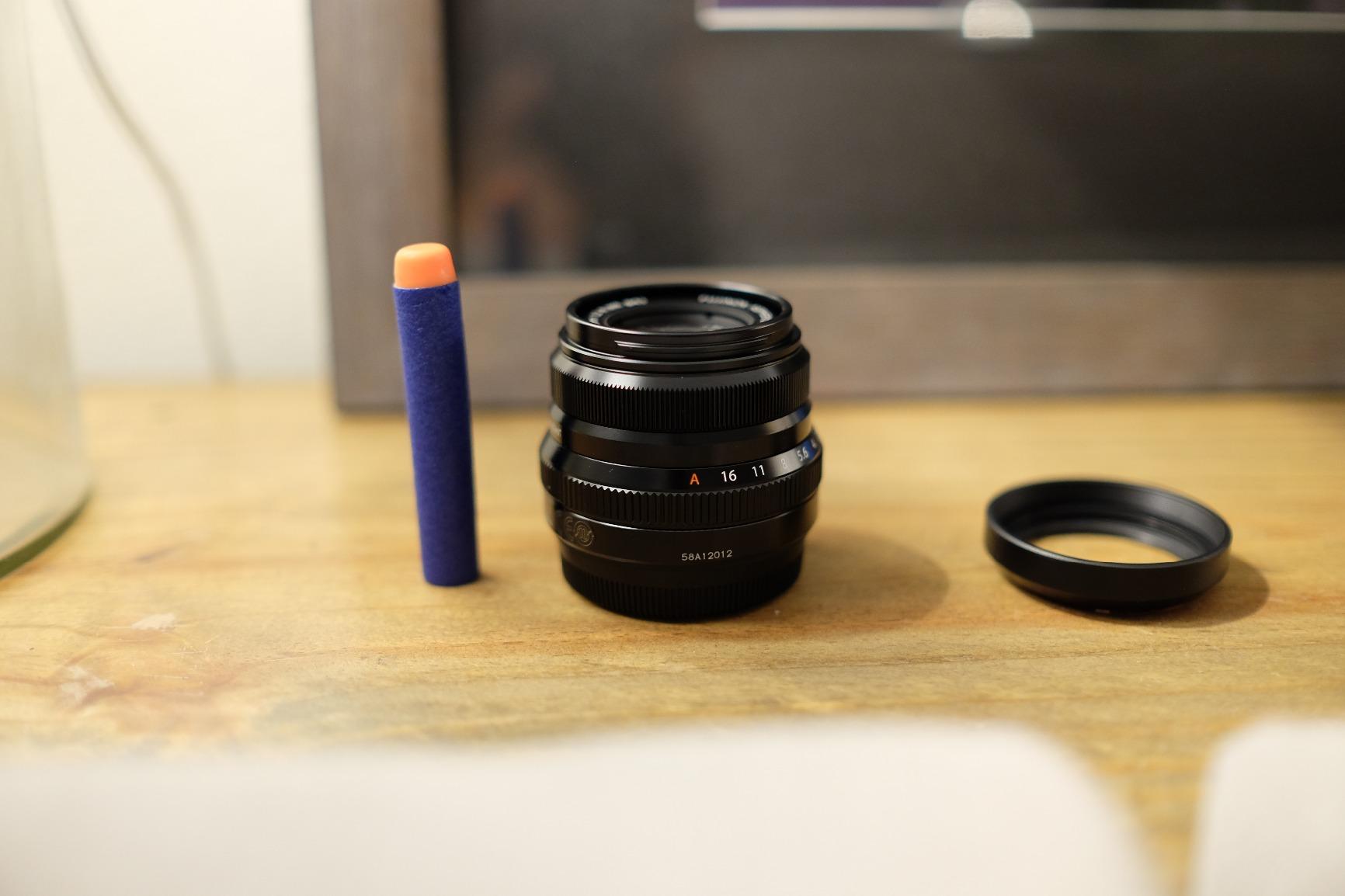
The 53mm equivalent focal length makes this a true walk-around video lens. I have shot interviews, B-roll, and even some narrative scenes at this focal length, and it consistently delivered flattering subject framing without distortion. The 9-blade aperture creates smooth, cinematic bokeh that helps separate subjects from backgrounds in documentary work.
Build quality is excellent for the price point. The metal construction feels solid in the hand, and the weather sealing has saved me during more than one unexpected shower. There are some minor concerns: the aperture ring can feel a bit slippery with sweaty hands, and you will see some vignetting in raw video files at f/2. Both are easy fixes in post.
Why the autofocus motor matters for video
The inner focus system uses a stepping motor that is genuinely quiet. During handheld run-and-gun shoots, I have relied on continuous AF with face detection, and the lens never produced any audible noise that ruined the audio. This is the single biggest reason I recommend this lens over the older f/1.4 version for video work.
Limitations for low-light filmmaking
The f/2 aperture is fast, but it is not as fast as the f/1.4 options. In extremely dim environments like candlelit interiors or night exteriors, you will need to push ISO higher than you would with the f/1.4 primes. For most filmmakers shooting at reasonable light levels, however, f/2 is plenty.
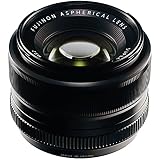
4. XF35mmF1.4 R – The Classic Look for Cinematic Video
Pros
- Beautiful classic Fuji rendering
- Fast f/1.4 for shallow depth of field
- Premium metal build quality
- Stunning image quality and bokeh
- Lightweight for an f/1.4 prime
Cons
- Slow and noisy autofocus motor
- No weather sealing
- Focus-by-wire feels delayed
- Expensive for non-sealed lens
The original XF 35mm f/1.4 R has a special place in the Fujifilm lineup. It launched with the X-Pro1 back in 2012, and it still has fans among filmmakers who love its character. I owned this lens for four years before upgrading, and I will be honest: the rendering is gorgeous, but the autofocus is a real weakness for video.
The optical quality is where this lens earns its reputation. The Super EBC coating produces beautiful colors with that classic Fuji look that filmmakers chasing a filmic aesthetic love. At f/1.4 wide open, the bokeh is creamy and smooth, with subject separation that looks beautiful in narrative and interview footage.
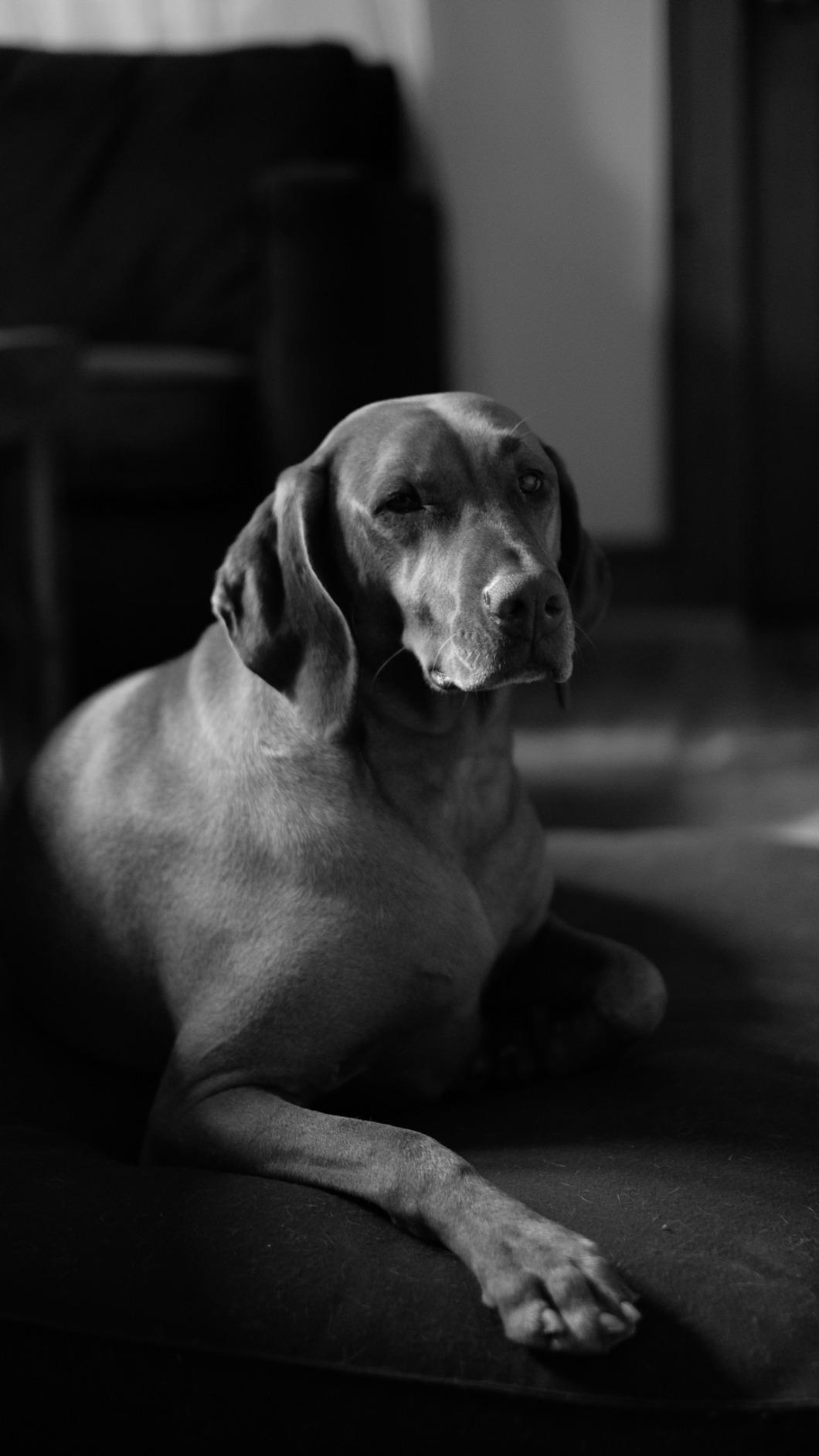
For video, this lens works best in controlled setups where you can use manual focus or single-point AF that does not hunt. I have shot several narrative short films with this lens on a follow focus rig, and the smooth aperture ring clicks make it ideal for cinematic work. The metal barrel also has that satisfying heft that feels professional in the hand.
The downsides are real, especially for video. The autofocus motor is loud and slow by modern standards, and there is no weather sealing whatsoever. For run-and-gun documentary work or any scenario where you rely on continuous AF, the newer XF 35mm f/2 R WR is the smarter choice. But for filmmakers who prioritize optical character and shoot in controlled environments, this lens still delivers.

Why filmmakers still love this lens
The 7-blade aperture creates bokeh with character that many modern lenses lack. The f/1.4 maximum aperture lets you shoot in very low light without pushing ISO, which is critical for filmmakers working in dim interiors or at evening events. The classic Fuji color rendering also means less grading work in post.
Why the autofocus holds it back
The older linear motor design is noticeably slower and louder than the newer LM lenses. During a wedding shoot I did with this lens, the AF hunting during the ceremony was distracting in the audio. For filmmakers who need reliable continuous AF, this is not the right tool for the job in 2026.
5. FUJINON XF23mmF2.8 R WR – The Ultra-Compact Wide Angle
Pros
- Incredibly compact at just 90g
- Weather resistant to -10°C
- Excellent sharpness and detail
- 11-blade aperture for smooth bokeh
- Close focus at 20cm for detail shots
Cons
- Autofocus can be slightly noisy
- f/2.8 slower than f/2 competitors
- Occasional focus hunting
The XF 23mm f/2.8 R WR is the newest addition to Fujifilm’s compact prime lineup, and it is a filmmaker’s dream for travel and street video. I tested it for two months on an X-S10 body, and the combination weighed less than some smartphones. The 35mm equivalent focal length is perfect for vlogging and environmental portraits.
At just 90g, this lens barely registers on the camera body. I strapped it to a small gimbal for a travel vlog series and could shoot for hours without shoulder fatigue. The weather sealing also means I am not constantly worried about light rain or dusty environments ruining the shoot.
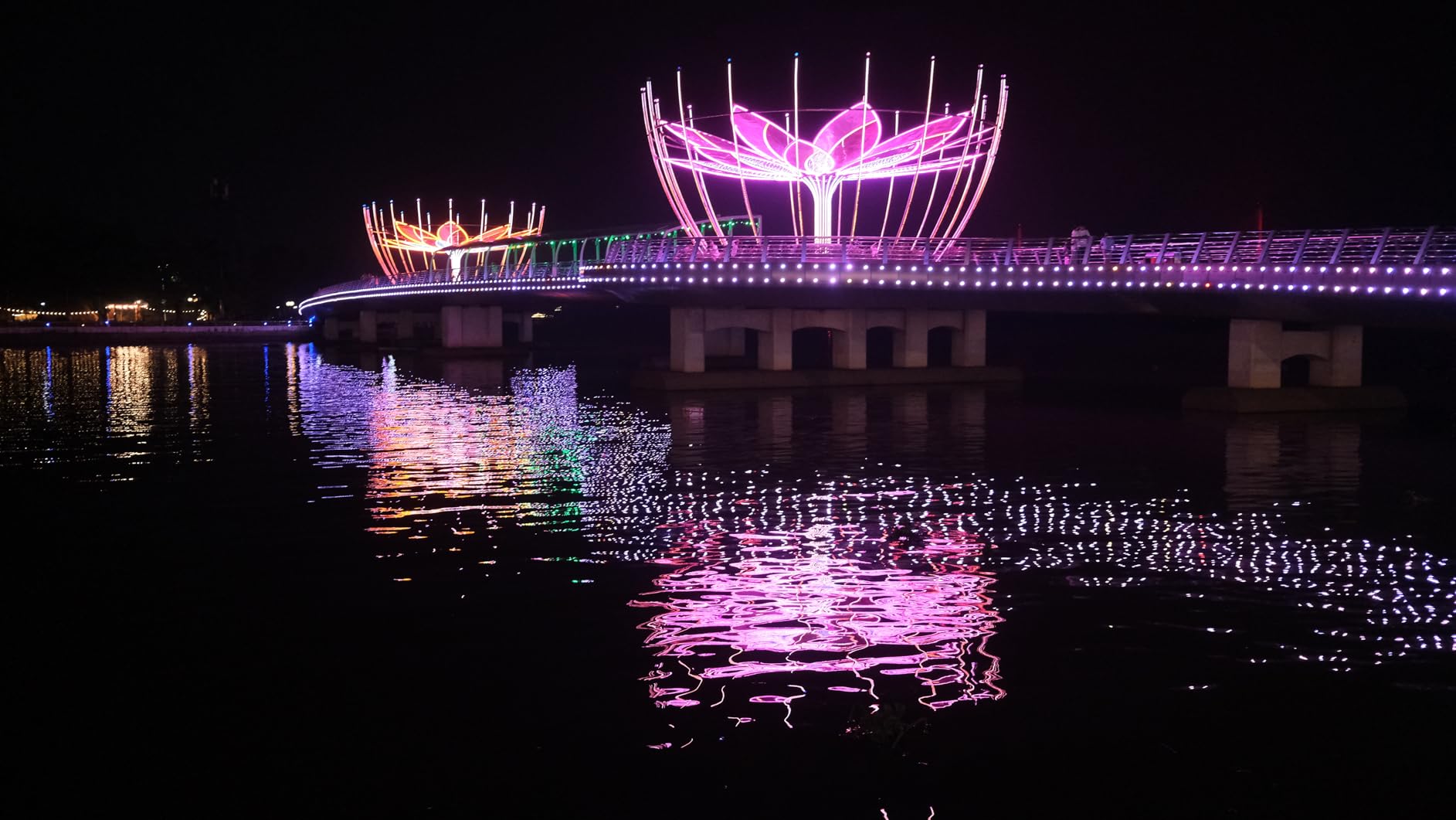
Image quality is excellent for the size. The two aspherical elements deliver outstanding detail, and the 11-blade aperture produces beautifully smooth bokeh for such a small lens. I was particularly impressed by the close focusing distance of 20cm, which let me capture detailed product shots and food cinematography without needing a macro lens.
The f/2.8 aperture is the obvious tradeoff. It is not as fast as the f/2 or f/1.4 primes, so low-light filmmakers will need to push ISO higher. The autofocus is also not quite as silent as the LM motor lenses, with a slight audible whirr during focus pulls. For most video applications, however, this lens performs admirably.

Why vloggers and travel filmmakers love this lens
The combination of compact size, weather sealing, and solid optical quality makes this lens nearly perfect for mobile video creators. The 35mm equivalent focal length frames the subject naturally without distortion, which is ideal for talking-head vlogs and street interviews. It also works beautifully on compact bodies like the X-E4 and X-S10.
When f/2.8 is not fast enough
Filmmakers shooting dim interiors, evening events, or moody narrative scenes will find f/2.8 limiting. The lens also has slight autofocus noise that can be picked up by sensitive microphones in silent rooms. For these scenarios, the XF 35mm f/2 R WR is a better choice.
6. Fujinon XF33mmF1.4 R LM WR – The Editor’s Choice for Serious Filmmakers
Pros
- Exceptional sharpness wide open at f/1.4
- Truly silent linear motor autofocus
- Beautiful bokeh quality
- Weather sealed construction
- Excellent microcontrast and 3D rendering
Cons
- Larger and heavier than older primes
- Occasional focus hunting near to far
- Premium price point
The XF 33mm f/1.4 R LM WR is, in my opinion, the best prime lens Fujifilm has ever made for filmmakers. I have used it on documentary shoots, wedding videos, and a short narrative film, and it has never let me down. The 50mm equivalent focal length is the most versatile for video work, and the linear motor autofocus is genuinely silent.
The optical quality is simply outstanding. At f/1.4 wide open, this lens is sharper than any other Fuji prime I have tested, with beautiful microcontrast that gives footage a 3D quality. I have graded clips shot on this lens for a commercial project, and the colors pop without needing heavy saturation work in post.

The linear motor autofocus is the standout feature for filmmakers. It is so quiet that even when recording audio with a sensitive lavalier mic at close distance, I could not pick up any motor noise. Continuous AF tracking in video mode held onto moving subjects better than any other Fuji prime I have used, including the older f/1.4 version.
Build quality matches the optical performance. The all-metal construction feels premium, and the weather sealing gives confidence when shooting in unpredictable conditions. The main downsides are the larger size compared to the older f/1.4 and a slightly higher price, but for filmmakers who prioritize image quality and silent AF, this lens is worth every penny.

Why the linear motor is a game changer for video
The linear motor delivers focus transitions so smooth and silent that this lens behaves almost like a cine lens. During a documentary interview where the subject moved between foreground and background planes, the continuous AF adjusted without any audible click or whirr. This is the level of performance filmmakers expect from professional cinema glass.
Limitations to consider before buying
The lens is heavier than the older f/1.4 version, which can cause fatigue during long handheld shoots. I also noticed occasional focus hunting when transitioning from close to far subjects in low-contrast scenes, though this was rare. The premium price reflects the optical and AF performance, but it is a real investment.
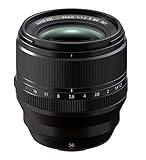
7. Fujinon XF56mmF1.2 R WR – The Portrait and Narrative Lens
Pros
- Exceptional sharpness wide open at f/1.2
- Stunning bokeh with 11 diaphragm blades
- Beautiful color rendering
- Weather sealed with 9 seals
- Professional build quality
Cons
- Focus hunting from close to far
- Autofocus motor can be loud for video
- Heavy at 445g
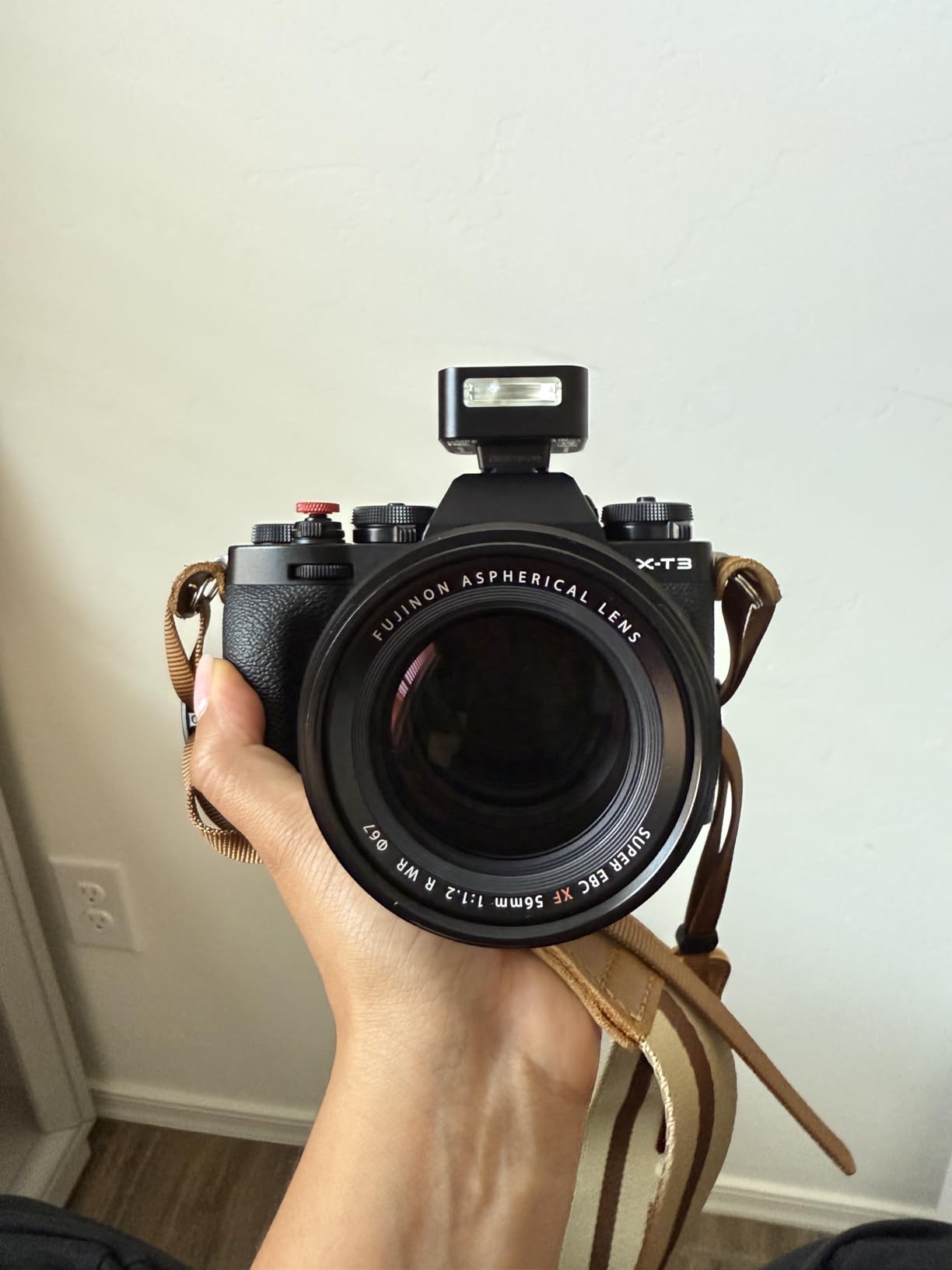
The XF 56mm f/1.2 R WR is the lens I reach for when I need that creamy, shallow depth-of-field look for narrative or portrait work. The 85mm equivalent focal length on the APS-C sensor is ideal for interviews and character-driven scenes, and the f/1.2 aperture creates subject separation that looks genuinely cinematic.
The 11-blade aperture is a first for Fujifilm X-mount, and it produces the smoothest bokeh I have seen from any Fuji prime. Highlights in out-of-focus areas render as round, smooth orbs rather than the polygonal shapes you get from lenses with fewer blades. This makes the lens particularly beautiful for backlit subjects and night scenes with practical lights.
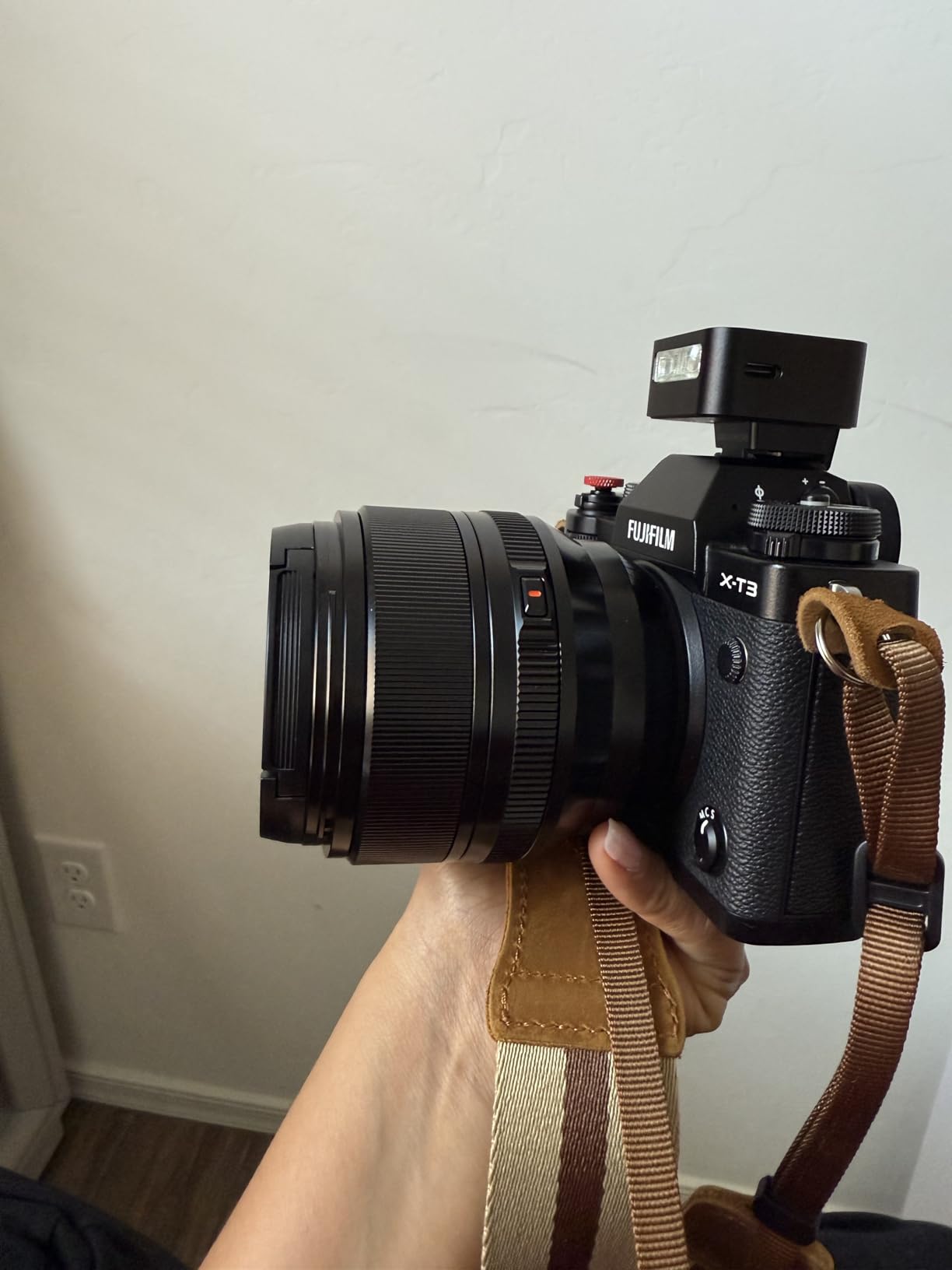
Sharpness wide open at f/1.2 is exceptional, which is rare for such a fast aperture. I have used this lens on a short film where we needed to shoot at f/1.2 in dim interiors, and the focus pulled smoothly on the X-H2S without any softness creeping into the frame. The fluorine coating on the front element also repels water and smudges well during outdoor shoots.
The downsides are the autofocus motor and weight. The DC motor is functional but audibly louder than the linear motor lenses, which can be an issue for video work. At 445g, this lens is also heavier than the other primes on this list, so it is not ideal for long handheld sessions. For tripod-based or gimbal work, however, it is a stunning lens.
Why the 85mm equivalent works so well for video
The 85mm equivalent focal length produces flattering subject compression that is ideal for interview setups, beauty shots, and cinematic character close-ups. Combined with the f/1.2 aperture, you can achieve razor-thin depth of field that looks like it was shot on much more expensive cinema glass. This is the lens to choose when visual storytelling is the priority.
When this lens is the wrong choice
Run-and-gun documentary filmmakers will find the weight and AF noise problematic. The lens is also overkill for YouTube content where a wider focal length is more practical. If you need a fast prime for handheld or mobile video production, the XF 33mm f/1.4 R LM WR is the better choice.
8. 7artisans 12mm T2.9 Cine Lens – The Budget Cinema Option
Pros
- Wide 100 degree field of view
- T2.9 large aperture for low light
- 270 degree focus travel for precision pulls
- Multiple mount options for flexibility
- Lightweight cine design
Cons
- Manual focus only not for everyone
- No image stabilization
- Not water resistant
For filmmakers on a budget who want true cinema glass, the 7artisans 12mm T2.9 is an interesting option. This is not a still photography lens, but rather a dedicated cine lens designed for video production. The T-stop rating, stepless aperture, and long focus throw make it behave like lenses costing five times as much.
The 100 degree field of view is incredibly wide and gives your footage that distinctive ultra-wide cinematic look. I used this lens on an X-T5 for a music video shoot, and the dramatic perspective made every scene feel larger than life. The 18mm full-frame equivalent focal length is also useful for establishing shots and architectural interiors.
The 270 degree focus travel is what sets this lens apart for video work. It allows for extremely precise focus pulls that are not possible on still photography lenses. Combined with the stepless aperture ring and standard 0.8 MOD cinema gears, this lens integrates well with follow focus systems and matte boxes.
The downsides are significant for some users. Manual focus only means you cannot rely on autofocus at all, which makes this lens unsuitable for documentary or run-and-gun work. The lens is also not weather sealed, so outdoor shoots require extra care. For filmmakers who shoot narrative content on a budget and want real cinema glass, however, this lens delivers tremendous value.
Why cine lenses matter for filmmaking
True cine lenses have features that still photography lenses lack: stepless aperture for smooth exposure changes, long focus throws for precise pulls, and standard gear positions for follow focus compatibility. The 7artisans 12mm T2.9 brings these features to filmmakers at a fraction of the cost of traditional cinema glass, making it ideal for indie productions.
When manual focus is a dealbreaker
If you shoot events, documentaries, or any content where autofocus is essential, this lens is not the right tool. Manual focus requires practice, and even experienced focus pullers can miss critical moments. For these shooting styles, an autofocus prime like the XF 33mm f/1.4 R LM WR is a better choice.
Buying Guide: How to Choose the Right Fujifilm Prime for Video
Choosing the best Fujifilm prime lenses for filmmakers comes down to understanding how each lens performs in the scenarios you actually shoot. Here are the factors I consider every time I recommend a prime for video work.
Autofocus motor type matters most for video
The single most important specification for a filmmaking prime is the autofocus motor. Older linear motors found in lenses like the XF 35mm f/1.4 R are loud and slow, which creates problems for video work. Newer lenses with linear stepping motors or LM designations deliver near-silent operation that does not interfere with audio recording.
For documentary and run-and-gun work, prioritize lenses with LM (Linear Motor) in the name. These include the XF 33mm f/1.4 R LM WR and XF 23mm f/2.8 R WR. For narrative and controlled shoots, you have more flexibility with motor type since you can rely on manual focus.
Focal length affects your storytelling
The APS-C sensor in Fujifilm X-mount cameras applies a 1.5x crop factor to focal lengths. A 23mm lens becomes a 35mm equivalent, and a 56mm lens becomes an 85mm equivalent. For video work, I recommend owning at least three focal lengths that cover wide, standard, and portrait ranges.
Wide angles (16-23mm) work for establishing shots, vlogging, and environmental context. Standard lenses (33-35mm) are versatile workhorses for interviews and general documentary work. Portrait lenses (56mm) deliver flattering compression for character-driven scenes and shallow depth-of-field looks.
Weather sealing for outdoor shoots
Filmmakers who shoot outdoors need weather-sealed lenses. The WR (Weather Resistant) designation indicates sealed construction that protects against light rain, dust, and moisture. Lenses without this designation, like the XF 35mm f/1.4 R, can fail in unpredictable outdoor conditions.
For travel filmmakers and documentary shooters, I always recommend at least one weather-sealed prime as part of your kit. The XF 35mm f/2 R WR is the most affordable sealed option, while the XF 33mm f/1.4 R LM WR is the premium choice for serious outdoor video work.
Weight and balance for handheld filmmaking
Handheld video work demands lightweight lenses. Every extra gram compounds over long shooting days and leads to fatigue and shaky footage. Compact primes like the XF 27mm f/2.8 R WR (84g) and XF 23mm f/2.8 R WR (90g) are ideal for handheld and gimbal work.
Heavier lenses like the XF 56mm f/1.2 R WR (445g) work better on tripods or gimbals with strong motors. For documentary filmmakers who spend hours shooting handheld, lighter glass is the smarter long-term investment for comfort and footage stability.
Budget versus professional options
Fujifilm’s lens lineup spans from budget-friendly XC primes to premium XF glass with linear motors and weather sealing. The XC 35mm f/2 delivers excellent optical quality at a low price, making it perfect for filmmakers starting out. The XF 33mm f/1.4 R LM WR represents the premium end with professional-grade features.
For most filmmakers, I recommend starting with one mid-range XF prime like the XF 35mm f/2 R WR, then expanding your kit with additional focal lengths as your needs grow. Save the premium LM WR lenses for when you have specific projects that demand their performance.
Manual focus considerations for narrative work
Narrative filmmakers often prefer manual focus for the precise control it offers during pulls. Fujifilm’s focus-by-wire system can feel slightly delayed compared to traditional manual focus, but it works well for most video applications. Dedicated cine lenses like the 7artisans 12mm T2.9 offer true manual focus with long throws designed for video work.
Frequently Asked Questions
What is the best Fujifilm prime lens?
The best Fujifilm prime lens depends on your needs. For filmmakers, the XF 33mm f/1.4 R LM WR is our top pick thanks to its silent linear motor autofocus, weather sealing, and exceptional sharpness. For budget-focused creators, the XF 35mm f/2 R WR delivers excellent value with near-silent AF and solid weather protection.
What lens do most filmmakers use?
Most filmmakers using Fujifilm X-mount cameras gravitate toward the 50mm equivalent focal length, which makes the XF 33mm f/1.4 R LM WR and XF 35mm f/2 R WR the most popular choices. These lenses offer versatile framing, fast apertures for low light, and silent autofocus for professional video work.
Which Fujifilm camera is best for filmmaking?
The Fujifilm X-H2S and X-T5 are among the best X-mount cameras for filmmaking, offering 4K ProRes recording, in-body image stabilization, and reliable continuous autofocus. For more budget-friendly options, the X-S20 delivers excellent video features in a compact body that pairs well with the lightweight primes on this list.
What is the sharpest lens for Fujifilm?
The XF 33mm f/1.4 R LM WR is the sharpest Fujifilm prime lens we tested, delivering exceptional sharpness wide open at f/1.4. The XF 56mm f/1.2 R WR also produces outstanding sharpness at its maximum aperture. Both lenses are excellent choices for filmmakers who need maximum resolution and detail in their footage.
Final Verdict: Which Fujifilm Prime Should You Buy?
After testing these eight lenses extensively, my top recommendation for filmmakers is the Fujinon XF 33mm f/1.4 R LM WR. The combination of silent linear motor autofocus, weather sealing, exceptional sharpness, and the versatile 50mm equivalent focal length makes it the best overall choice for serious video production in 2026.
For filmmakers on a budget, the XF 35mm f/2 R WR delivers professional-grade performance at a more accessible price point. If you need an ultra-compact option for travel or vlogging, the XF 27mm f/2.8 R WR and XF 23mm f/2.8 R WR are both excellent choices that barely add weight to your camera body.
Whatever your filmmaking style, the best Fujifilm prime lenses for filmmakers covered in this guide will help you capture more cinematic footage. Pick the lens that matches your shooting scenarios, your camera body, and your budget, and start creating better video today.