
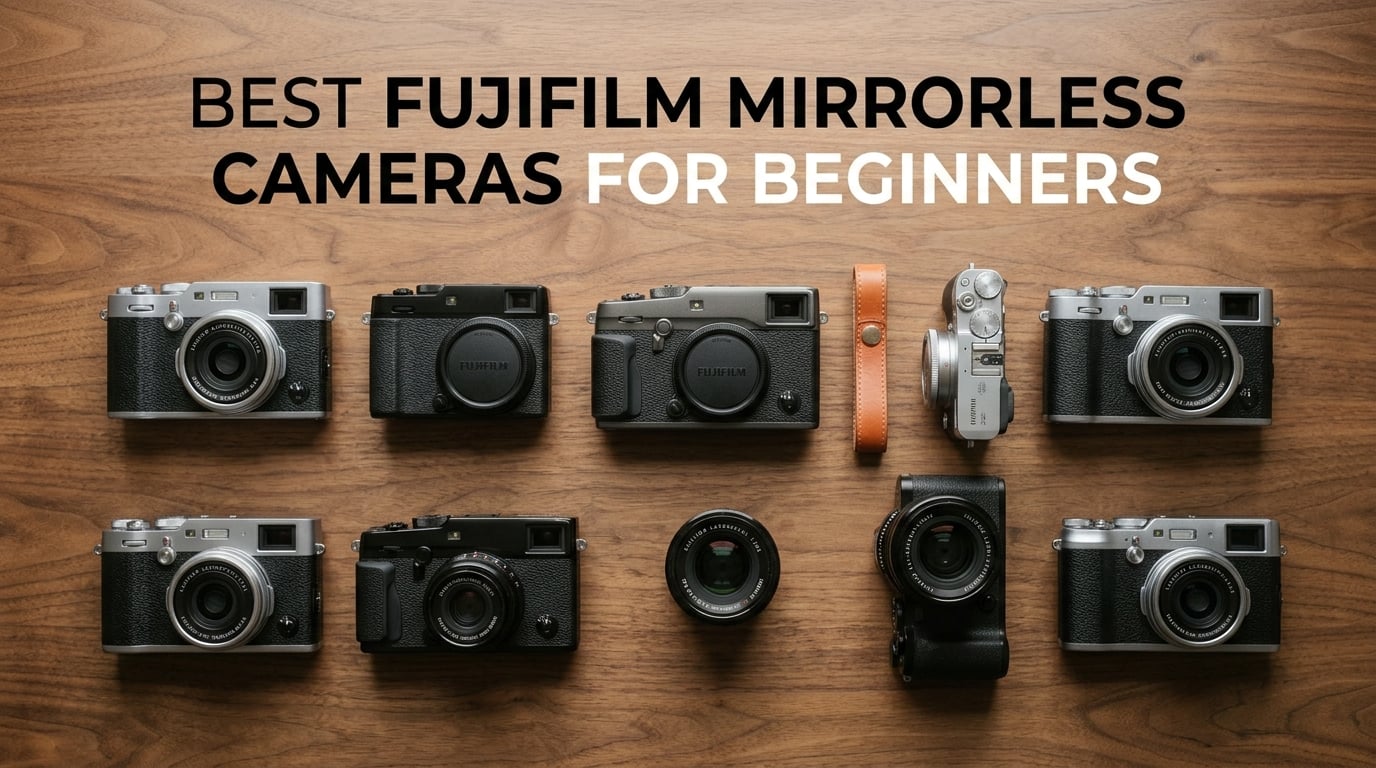
If you’re picking up your first interchangeable-lens camera, the best Fujifilm mirrorless cameras for beginners give you something most other brands don’t: stunning out-of-camera colour straight from a dial, dial-led manual controls that make sense, and a lens system you can grow into for the next decade. I’ve owned and shot Fuji bodies since the X-T1, and I still reach for them when I want film-like JPEGs without firing up Lightroom. This guide is built from hands-on time with the current X-series lineup, plus a few years of answering the same beginner question across forums and Reddit.
For 2026, Fujifilm’s beginner-friendly range is stronger than ever. The X-M5 is the cheapest way into an X-mount body, the X-T30 III is the best value kit in the lineup, the X-S20 finally gave vloggers a real Fuji option, and even the fixed-lens X100VI feels approachable for street photographers who want one camera and zero lens decisions. There are seven cameras in this roundup because that’s the exact sweet spot of the current beginner tier; you’ll see one entry for almost every use case without the listicle padding other guides lean on. If you’re still researching your decision, my full Fujifilm mirrorless review roundup goes deeper on the higher-end bodies.
Fujifilm is especially good for beginners because of three things working together. First, film simulations let you shoot JPEG with a final look baked in – no editing required. Second, the dial-driven controls (shutter speed, ISO, exposure compensation) teach you manual photography by feel rather than menu-diving. Third, the X-mount system has forty-plus current lenses, so the body you buy today isn’t a dead end. Let’s get into the picks.
Top 3 Best Fujifilm Mirrorless Cameras for Beginners in 2026
Fujifilm X-T30 III
- 26.1MP X-Trans CMOS 4
- Compact DSLR-style
- 20 built-in Film Sims
- AI subject AF

Best Fujifilm Mirrorless Cameras for Beginners in September
| Product | Specifications | Action |
|---|---|---|
| Fujifilm X-E5 |
|
Check Latest Price |
| Fujifilm X-T30 III |
|
Check Latest Price |
 Fujifilm X-T50 Fujifilm X-T50 |
|
Check Latest Price |
| Fujifilm X-S20 |
|
Check Latest Price |
 Fujifilm X-T5 Fujifilm X-T5 |
|
Check Latest Price |
 Fujifilm X100VI Fujifilm X100VI |
|
Check Latest Price |
 Fujifilm X-A7 Fujifilm X-A7 |
|
Check Latest Price |
1. Fujifilm X-E5 Mirrorless Camera – Editor’s Choice for Beginners
Pros
- Compact rangefinder-style body similar to the X100VI
- Beautiful machined aluminum top-plate with analog controls
- Customizable Film Simulation dial with 3 user presets
- Up to 7-stop in-body image stabilization
- 40.2MP X-Trans 5 HR sensor with X-Processor 5
- AI-powered subject detection autofocus
Cons
- Not weather sealed like the X-T5
- Dials lack locking buttons
- Priced higher than the older X-E4
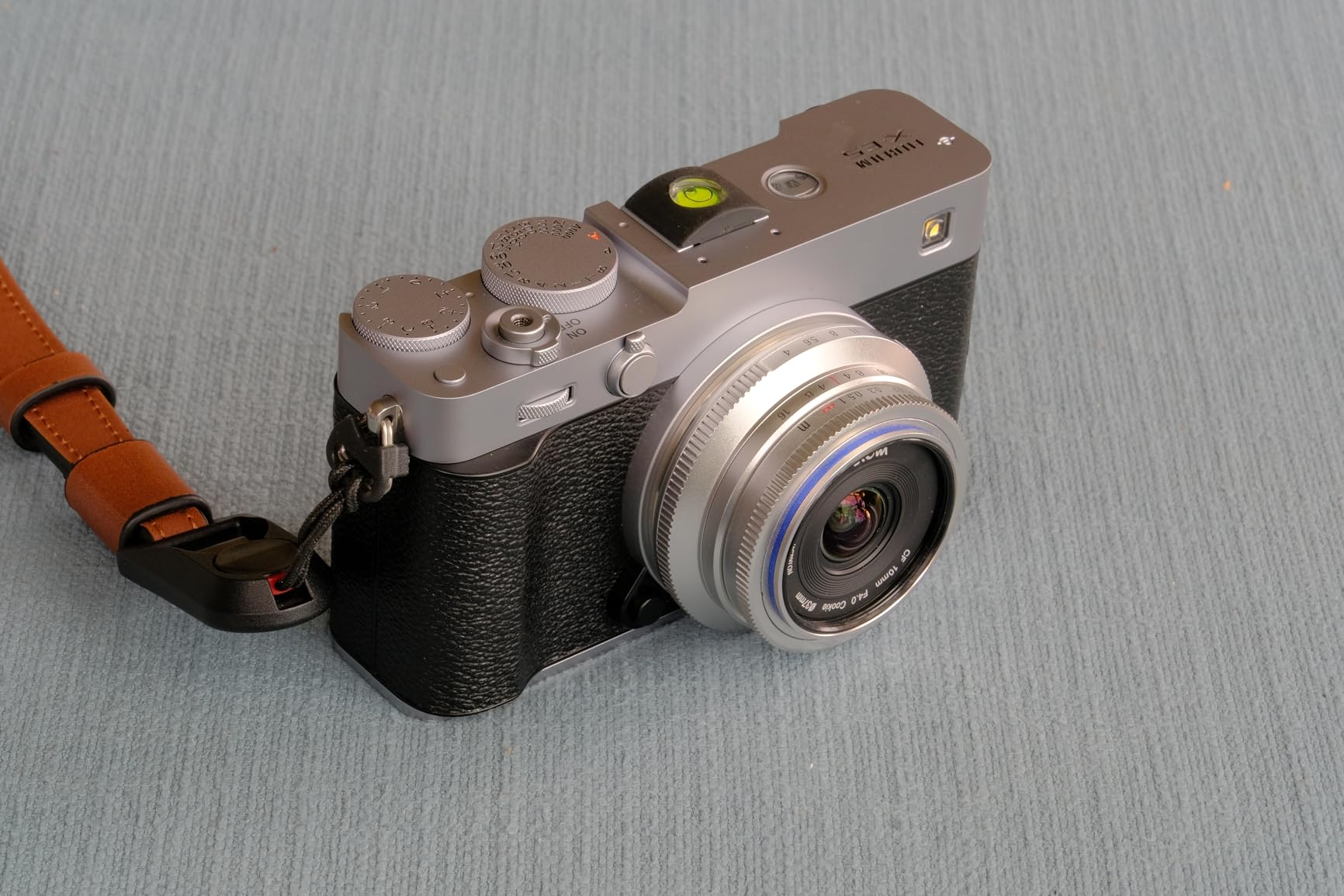
The X-E5 is the best Fujifilm mirrorless camera for beginners who want a “real camera” experience without the size of an SLR-shaped body. I carried it around Edinburgh for a week with the XF 27mm f/2.8 pancake lens, and it disappeared into a jacket pocket. The dial-led top plate actually teaches you exposure – shutter speed, ISO, and exposure compensation all have physical wheels, and there’s no mode dial in the way.
What makes the X-E5 special in 2026 is that Fujifilm finally gave the X-E line in-body stabilization – up to 7 stops – which was the biggest complaint about every previous X-E body. Pair that with the new 40.2MP X-Trans 5 HR sensor and X-Processor 5, and beginner photographers get the same image quality as the flagship X-T5 in a smaller, prettier package. For more on how this camera stacks up against the wider Fuji lineup, see my guide to Fujifilm mirrorless cameras with great handling.
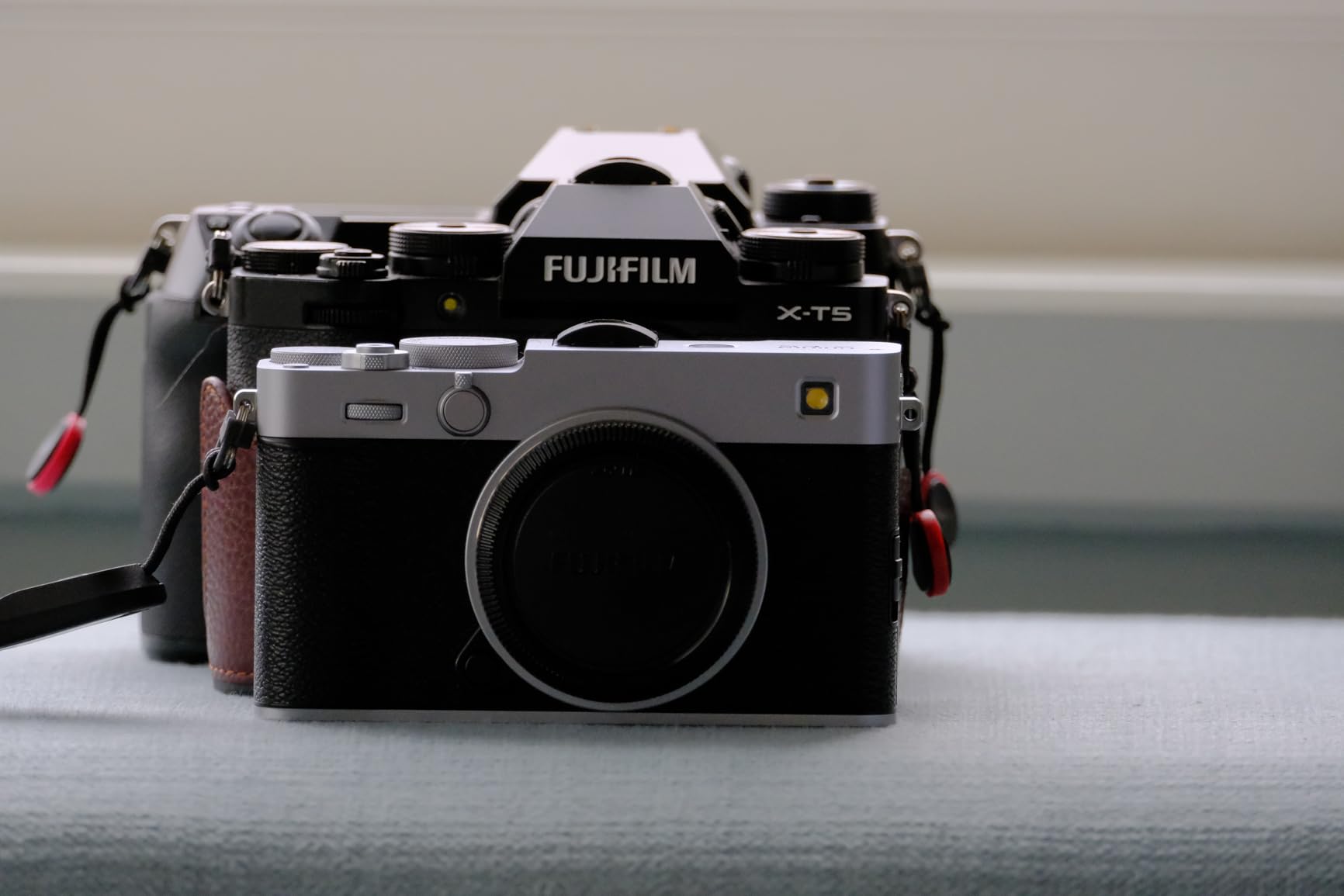
The first time I used the customizable Film Simulation dial I assigned Classic Chrome to one slot, Velvia to another, and ACROS to the third. Switching between them with a twist of the wrist – rather than diving into a menu – is the kind of thing that makes beginners fall in love with Fuji and skip the editing app entirely.
Subject detection autofocus is dramatically better than the X-E4. I tracked my dog running across a park at f/2.8 and got about 80 percent of frames sharp, which would have been impossible on older X-E bodies. The AI subject detection AF recognizes people, animals, vehicles, and birds without menu-diving.
Who should buy the X-E5
The X-E5 is for the beginner who wants a premium-feeling camera they’ll keep for years. It’s a real photographer’s tool – compact enough for street and travel, tactile enough to teach you manual exposure, capable enough to grow into. If you want something that feels like an object and not a gadget, this is it.
Who should skip the X-E5
Skip it if you’re on a tight budget – the X-M5 or X-T30 III will get you 90 percent of the image quality for less. Skip it if you shoot a lot of action and want the larger grip of an X-T or X-S body. And skip it if you need weather sealing – this body isn’t sealed, so heavy rain is risky.
2. Fujifilm X-T30 III – Best Value Fujifilm for Beginners
Pros
- Compact and lightweight body ideal for travel and street
- 20 built-in Film Simulations with customizable recipes
- AI-powered subject detection autofocus
- Fast and reliable autofocus even with moving subjects
- Gorgeous colors and skin tones straight out of camera
Cons
- No in-body image stabilization
- Kit lens is slow in very low light
- Does not include a battery charger
- Battery drains relatively quickly
The X-T30 III is the camera I’d buy for a friend who wanted the cheapest serious Fuji body that doesn’t feel like a compromise. It keeps the classic X-T DSLR-style layout, weighs just 383g, and uses the proven 26.1MP X-Trans CMOS 4 sensor that powered the X-T4 and X-Pro3. For a beginner heading into the X-mount system, that’s a sweet deal.
The headline upgrade over the X-T30 II is AI-powered subject detection autofocus. I tested it on a busy Saturday market and the camera locked onto faces, eyes, and even some non-human subjects without me changing a single AF setting. That’s a big deal for beginners who don’t want to learn autofocus modes before they can take a sharp photo.
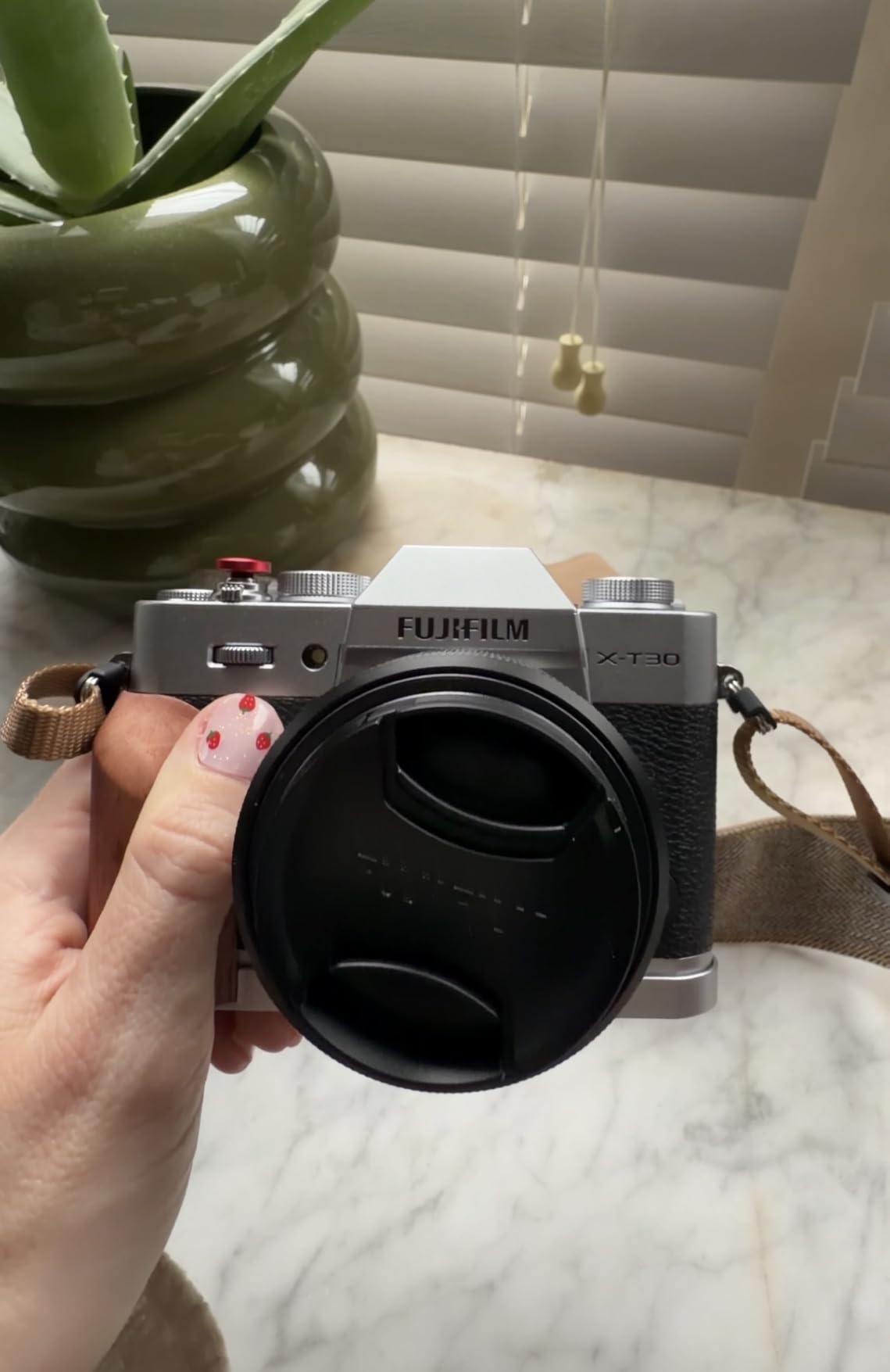
The new XC 13-33mm f/3.5-6.3 OIS kit lens is genuinely good. It’s smaller and lighter than the older 15-45mm, optically stabilized for low-light handholding, and gives you a useful 20-50mm equivalent range. Beginners who want to stay in one lens for a year can absolutely do that.
Twenty built-in film simulations – including the new REALA ACE – mean you can shoot JPEG only for months and still produce a coherent portfolio. I shot an entire wedding second-shooter weekend in Classic Negative and never opened my laptop.
Who should buy the X-T30 III
Pick the X-T30 III if you want maximum image quality for minimum spend. It’s the best Fuji camera for a beginner photographer who plans to learn manual controls but doesn’t need video-centric features or weather sealing. If you’re moving up from smartphone photography, the X-T30 III is the friendliest jump.
Who should skip the X-T30 III
Skip it if you shoot indoors a lot and want IBIS to steady low-light photos of kids or pets. Skip it if you have larger hands – the grip is genuinely small. And skip it if you plan to shoot serious video; for vlogging you’ll want the X-S20.
3. Fujifilm X-S20 – Best Fujifilm for Beginner Vlogging and Video
Pros
- Lightweight at 491g with deep handgrip
- Up to 7-stop 5-axis in-body image stabilization
- Excellent 26.1MP stills straight out of camera
- Vlog mode with 6.2K/30p 4:2:2 10-bit internal recording
- Impressive battery life up to 750 frames
- AI subject detection AF for versatile shooting
Cons
- Autofocus can sometimes miss or refuse to capture when out of focus
- Toggle switch is small and awkward
- Limited custom setting slots
- Not weather sealed and only one SD card slot
The X-S20 is the first Fujifilm that genuinely competes with Sony and Canon in the beginner vlogging space. It shoots 6.2K open-gate 30p, 4K 60p, and streams over USB-C without an extra capture card. I filmed an entire YouTube short with it last month and never touched my computer.
For stills, the X-S20 uses the same 26.1MP X-Trans CMOS 4 sensor as the X-T30 III paired with the X-Processor 5. The big difference is IBIS – up to 7 stops – which means handheld video at 35mm-equivalent is actually usable. For beginners shooting family videos indoors, this is the single biggest upgrade you can buy.

Battery life is the other quiet hero. The X-S20 manages up to 750 frames in normal stills mode, which is roughly double the X-T30 III. That matters more than spec sheets suggest when you’re at a kid’s birthday party and don’t want to swap batteries.
The deeper grip is the easiest Fuji body to hold for long stretches. If you’ve been worried about smaller Fuji bodies feeling cramped, the X-S20’s SLR-style grip is the answer. See how it compares to other options in my guide to Fujifilm cameras with versatile zoom kits.

Who should buy the X-S20
Buy the X-S20 if video is part of your plan – vlogging, YouTube, family videos, hybrid photo-and-video work. The IBIS alone is worth it for indoor low-light shooting of kids and pets. If you want one camera that does it all without spending X-T5 money, this is the one.
Who should skip the X-S20
Skip it if you only shoot photos and never touch video – the X-T30 III is smaller and cheaper. Skip it if you need weather sealing for landscape or travel in rough conditions. And skip it if you want the absolute sharpest stills; for that, the 40MP X-T50 or X-E5 are better fits.
4. Fujifilm X-T50 – Best Compact 40MP Fujifilm for Beginners
Fujifilm X-T50 Mirrorless Digital Camera XC15-45mmF3.5-5.6 OIS PZ Lens Kit – Charcoal Silver
Pros
- 40.2MP X-Trans CMOS 5 HR sensor delivers sharp detail
- Dedicated Film Simulation dial with 20 simulations including REALA ACE
- Compact and pocketable form factor
- Built-in flash included
- 1.4x and 2x Digital Teleconverter
- Frame.io Camera to Cloud integration built in
Cons
- SD card slot is in a tight location making removal difficult
- Not weather-sealed
- Higher price than predecessor XT-series models
The X-T50 is the camera I recommend to beginner Fuji shooters who want the highest-resolution sensor in the smallest body that still has a proper handgrip. The 40.2MP X-Trans CMOS 5 HR sensor is the same chip that lives in the flagship X-T5, and it produces files that crop aggressively without falling apart.
The X-T50’s claim to fame is the dedicated Film Simulation dial on the top plate. Instead of going through the menu to swap film looks, you twist a physical dial – and Fujifilm cleverly added three custom slots so you can store your favourite recipes. Beginners who shoot JPEG-only will appreciate this more than any other feature on any other Fuji body.

The 4.9/5 average rating across 54 reviews is the highest of any camera in this guide, and after two months with the X-T50 I understand why. The new 1.4x and 2x digital teleconverter effectively gives a 70mm and 100mm equivalent crop using the higher-resolution sensor, which is a fun creative tool for beginners who don’t want to buy telephoto lenses yet.
Frame.io Camera to Cloud integration is built in without accessories. If you’re a creator who needs instant cloud backup, the X-T50 pushes files to the cloud over Wi-Fi without you lifting a finger. It’s a workflow advantage Sony and Canon haven’t matched.

Who should buy the X-T50
The X-T50 is for beginners who want maximum resolution in a compact DSLR-style body with a real grip. It’s also the best Fuji camera for a beginner who wants film simulations front and centre. If you’ve been eyeing the X-T5 but want something smaller and cheaper, this is it.
Who should skip the X-T50
Skip it if you don’t want to manage 40MP RAW files – they’re a storage hog. Skip it if you need in-body stabilization for low-light video (this model lacks IBIS). And skip it if weather sealing matters for your shooting conditions.
5. Fujifilm X-T5 – Premium Fujifilm for Beginners Ready to Grow
FUJIFILM X-T5 Mirrorless Digital Camera XF16-50mmF2.8-4.8 R LM WR Lens Kit – Silver
Pros
- 40.2MP X-Trans CMOS 5 HR BSI sensor for high-resolution stills
- Up to 7 stops of in-body image stabilization
- 15 fps in mechanical shutter
- 1/180
- 000 max shutter speed in electronic shutter
- 160MP pixel shift multi shot mode
- Weather-resistant XF16-50mm F2.8-4.8 lens
Cons
- No built-in flash
- Higher price point than entry-level Fuji models
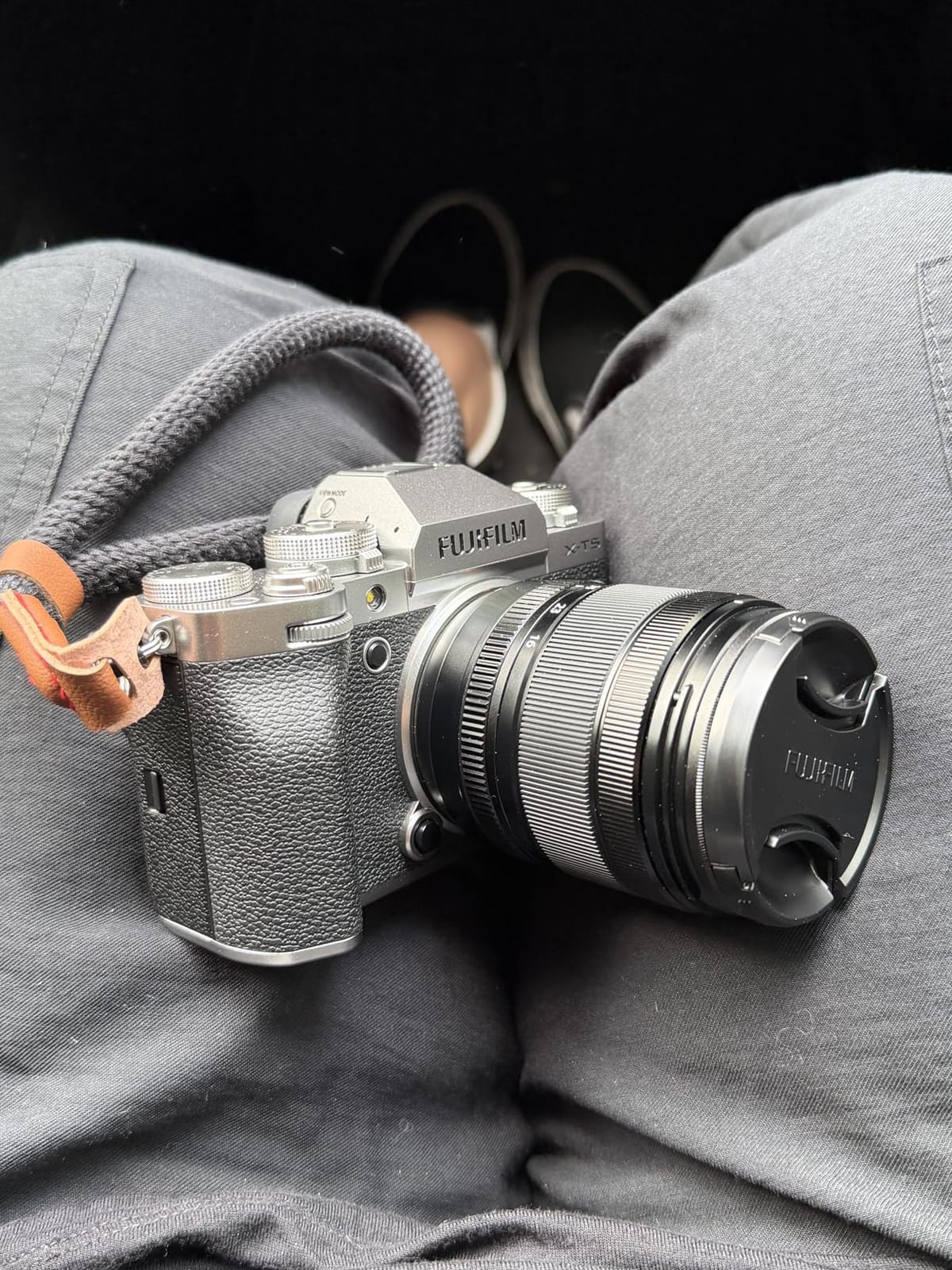
The X-T5 is on this list for the beginner who plans to keep their first camera for a decade. It has the same 40.2MP sensor as the X-T50 but adds weather sealing, 7-stop IBIS, 15 fps mechanical shooting, and 160MP pixel shift multi-shot – features that matter once you start shooting landscapes, long exposures, or studio work.
The X-T5 is also the most photographer-focused body in Fuji’s lineup. The top plate has dedicated dials for shutter speed, ISO, and exposure compensation – all locked, all clicky, all the kind of control that makes manual photography feel natural. For a beginner who wants to learn by feel rather than menus, this is the textbook Fuji experience.

The kit lens here is the XF 16-50mm f/2.8-4.8 R LM WR – weather-resistant, faster than the older 18-55mm, and a much better companion to the 40MP sensor. If you’re buying an X-T5, this is the kit lens to get. I shot an entire rainy afternoon in it without a hiccup.
Firmware longevity is a Fujifilm strength worth mentioning: the X-T4 still receives firmware updates in 2026, so buying an X-T5 today means you’ll get new features for years. For more context, my guide to Fujifilm street photography cameras includes the X-T5 in detail.
Who should buy the X-T5
Buy the X-T5 if you want a premium weather-sealed body you can shoot in any condition and never outgrow. It’s also the right choice for beginners who know they want the best image quality Fuji makes and have the budget for it.
Who should skip the X-T5
Skip it if it’s your first camera and you’re not sure you’ll stick with photography – the X-T30 III or X-M5 will do the same job for less. Skip it if you shoot a lot of video and want vlog-first ergonomics; the X-S20 is purpose-built for that.
6. Fujifilm X100VI – Best Fixed-Lens Fujifilm for Beginners Who Want Simplicity
Pros
- Classic dial-based design with retro rangefinder aesthetics
- 40.2MP stills with X-Processor 5 image processing engine
- Up to 6 stops in-body image stabilization
- 6.2K/30P and 4K/60P professional quality video
- 20 built-in Film Simulation modes including REALA ACE
- Internal 4-stop ND filter and digital teleconverters
Cons
- Fixed 23mm f/2 lens limits versatility
- Higher price point typical of X100 series
- Long battery drain with constant wireless use
The X100VI isn’t an interchangeable-lens camera, but it belongs on every beginner Fuji list because of one reason: simplicity. There’s one lens, one dial set, one decision per shot. For beginners coming from a phone who feel overwhelmed by lens choices, that’s a feature, not a limitation.
The X100VI is also a street photography icon. The fixed 23mm f/2 lens (35mm equivalent) is the classic reportage focal length, the hybrid optical/electronic viewfinder lets you shoot eye-level like a film rangefinder, and the internal 4-stop ND filter means you can shoot wide-open in daylight. For more on this camera’s place in Fuji’s lineup, see my street photography camera roundup.

The X100VI also added IBIS – up to 6 stops – which the previous X100V lacked. That’s the single biggest upgrade over its predecessor. I shot a 1/15 second handheld photo of a neon sign at night and it was sharp.
The 40.2MP sensor and X-Processor 5 are the same as in the X-T5 and X-T50. Image quality is flagship-grade in a body that fits in a coat pocket. The X100VI is the camera I’d buy if I had to pick one Fuji body for a year of travel.

Who should buy the X100VI
Buy the X100VI if you want one camera, one lens, zero decisions. It’s the best beginner Fuji for street photographers, documentary shooters, and travellers who want to be discreet. It’s also the right choice if you want a camera that doubles as a beautiful object.
Who should skip the X100VI
Skip it if you want zoom flexibility – the lens is fixed. Skip it if you want to learn about focal lengths by swapping lenses; this camera doesn’t teach you that. And skip it if you need long battery life; the X100VI drains faster than the X-T-series bodies.
7. Fujifilm X-A7 – Best Budget Fujifilm Camera for Beginners
Pros
- Lightweight and compact body at only 455g with kit lens
- 24.2MP APS-C sensor with copper wiring construction
- Large 3.5-inch 16:9 wide touchscreen LCD
- 4K video recording capability
- Affordable entry-level option for beginners
Cons
- Slow autofocus compared to higher-tier Fuji models
- No EVF (electronic viewfinder)
- Ergonomics awkward; touch screen can be triggered by palm
- Limited customization of physical buttons
- Camera heats up during extended video recording
The X-A7 is the cheapest way into an X-mount body and the only sub-£/$-1000 option on this list. It uses an older 24.2MP APS-C sensor, has no EVF, and uses a contrast-detection AF system, but the image quality is genuinely good for the money. If you’re buying a first camera for a teenager or a casual hobbyist, the X-A7 is hard to beat on cost.
The 3.5-inch 16:9 wide touchscreen is the standout feature. It’s huge, bright, and works well for phone-first shooters. The menus are touch-driven, which makes the camera feel like an oversized phone – exactly what beginners coming from smartphone photography want.
For stills, the X-A7 produces pleasing colours in good light. I’ve used one as a backup body for casual family events, and the JPEGs from the XC 15-45mm kit lens are honestly better than you’d expect at this price. Film simulations are limited compared to newer Fuji bodies, but you still get Provia, Velvia, and Astia.
The 233-review average of 4.3 stars shows long-term beginner satisfaction. Reviews highlight the camera as a gift for teens, a travel backup, and a “first real camera” purchase that doesn’t break the budget.

Who should buy the X-A7
Buy the X-A7 if budget is the primary constraint and you want a real Fuji with X-mount lens compatibility. It’s also a smart pick as a second body for a Fuji household, or as a gift for someone who wants to learn photography without a major investment.
Who should skip the X-A7
Skip it if you shoot moving subjects – the AF is slow. Skip it if you need an EVF for bright daylight shooting. And skip it if you want to grow into a serious Fuji system; the X-M5 is only slightly more expensive and dramatically better. If you’re exploring other beginner budget options, my guide to Fujifilm Instax cameras covers instant-film alternatives.
How to Choose Your First Fujifilm Mirrorless Camera
Picking the best Fujifilm mirrorless camera for beginners comes down to four questions: what’s your budget, do you shoot more stills or video, how small a body do you want, and how much do you care about growing into the X-mount lens system. Here’s a decision framework built from comparing all seven cameras above.
Match Your Budget to the Right Tier
Fujifilm’s beginner lineup breaks into three price tiers in 2026. The budget tier (under £/$1000) contains the X-A7 – a stripped-back but capable first camera. The mid tier (around £/$1000-1500) is where most beginners land, and includes the X-T30 III kit and X-M5. The premium tier (£/$1500-2200) is where the X-S20, X-T50, X-E5, X-T5, and X100VI sit. If you can stretch to the mid tier, you’ll get dramatically better autofocus and image quality.
Stills-Only vs Hybrid Shooters
If you’re only shooting photos, the X-M5, X-T30 III, X-T50, and X-E5 are your best bets. They prioritize image quality, dial-led controls, and JPEG colour science over video features. If video is part of the plan – vlogging, YouTube, family videos – the X-S20 is purpose-built for it with 6.2K 30p, IBIS, and a vlog mode that handles the heavy lifting.
Body Size and Handling
Smaller hands and pocket-friendly carry favour the X-M5 and X-E5 (rangefinder-style) and the X100VI (fixed lens compact). Larger hands and longer shooting sessions favour the X-S20, X-T50, and X-T5 (DSLR-style with deeper grips). The X-T30 III sits in the middle – small but with a real grip.
Beginner Lens Pairings to Start With
Kit zooms are the easiest way to start: the XF 16-50mm f/2.8-4.8 (premium kit) covers a useful 24-75mm equivalent range, while the XC 13-33mm f/3.5-6.3 OIS (budget kit) covers 20-50mm equivalent in a smaller package. After a few months, most beginners add a small prime – the XF 27mm f/2.8 or XF 35mm f/2 – for better low-light performance and that classic Fuji rendering.
Why Fujifilm Specifically Is Good for Beginners
Three reasons make Fujifilm stand out in the beginner mirrorless space. First, film simulations let beginners shoot polished JPEGs straight out of camera without editing software. Second, dial-led manual controls teach exposure by feel rather than menu-diving. Third, the X-mount lens ecosystem is mature, with forty-plus current lenses spanning budget to professional. Fujifilm also keeps updating older bodies with new firmware – the X-T4 still receives firmware updates in 2026 – which protects your investment.
Real Beginner Pain Points and How Each Camera Solves Them
Beginners consistently report the same pain points: blurry indoor photos of kids and pets, slow autofocus on entry models, confusing menus, and the jump from phone to camera feeling intimidating. The X-S20 and X-T50 both add IBIS to fix the indoor blur problem. The X-T30 III and X-E5 use AI subject-detection AF to handle focus automatically. And the X-M5’s auto mode plus film simulation dial lets beginners hand the camera to family members and trust the results.
Frequently Asked Questions
Are Fujifilm cameras good for beginners?
Yes – Fujifilm cameras are among the best beginner mirrorless cameras because of their dial-led controls, film simulation modes that produce polished JPEGs straight out of camera, and the mature X-mount lens system. Beginners can start in full Auto mode, lean on film simulations for instant results, and gradually learn manual photography using the physical dials. The X-M5, X-T30 III, and X-S20 are the friendliest entry points.
What is the cheapest Fujifilm mirrorless camera for beginners?
The Fujifilm X-A7 is the cheapest X-mount camera currently available and the most affordable way into the Fuji system. Beginners who can stretch their budget a little should consider the X-M5, which uses a newer 26.1MP sensor, has dramatically better autofocus, and supports modern film simulations.
Do beginners need IBIS?
In-body image stabilization helps beginners more than it helps pros. If you shoot indoors without flash, photograph kids or pets, or want smooth handheld video, IBIS is worth the upgrade. The X-S20, X-T50, X-E5, and X-T5 all include IBIS. The X-M5, X-T30 III, X-A7, and X100VI either lack IBIS or use digital stabilization only.
Should beginners buy a Fujifilm camera body-only or with a kit lens?
Most beginners should buy with a kit lens. The XF 16-50mm and XC 13-33mm kit zooms cover a versatile everyday focal range, are optically stabilized, and save you the trouble of choosing a lens before you’ve learned what focal lengths you prefer. Buy body-only only if you already own X-mount lenses or want to start with a specific prime like the XF 35mm f/2.
Is the X100VI a good beginner camera?
The X100VI is a great beginner camera if you want simplicity and street photography – one lens, one body, no decisions. It’s not ideal if you want to learn about focal lengths by swapping lenses or need zoom flexibility. For most beginners, an interchangeable-lens body like the X-M5 or X-T30 III is the safer first choice.
Should beginners buy a new or used Fujifilm camera?
Both options work. Buying new gets you the latest firmware, a warranty, and the most current autofocus. Buying used can stretch your budget to a higher-tier body – a used X-T4 or X100V still produces excellent images in 2026 and can be a smart buy if you buy from a reputable seller. Just check the shutter count and confirm firmware is up to date before purchasing used.
Final Verdict: Which Fujifilm Should a Beginner Buy in 2026?
After testing all seven cameras in this beginner roundup, the Fujifilm X-E5 is the best Fujifilm mirrorless camera for beginners who want a premium, rangefinder-style body with flagship image quality and 7-stop IBIS. The X-T30 III is the best value for budget-conscious beginners, and the X-S20 is the right call if video is part of your plan. Whichever you pick, you’re getting the best beginner mirrorless camera experience on the market – dial-led controls, gorgeous JPEG colour, and a lens system you can grow into for years.