
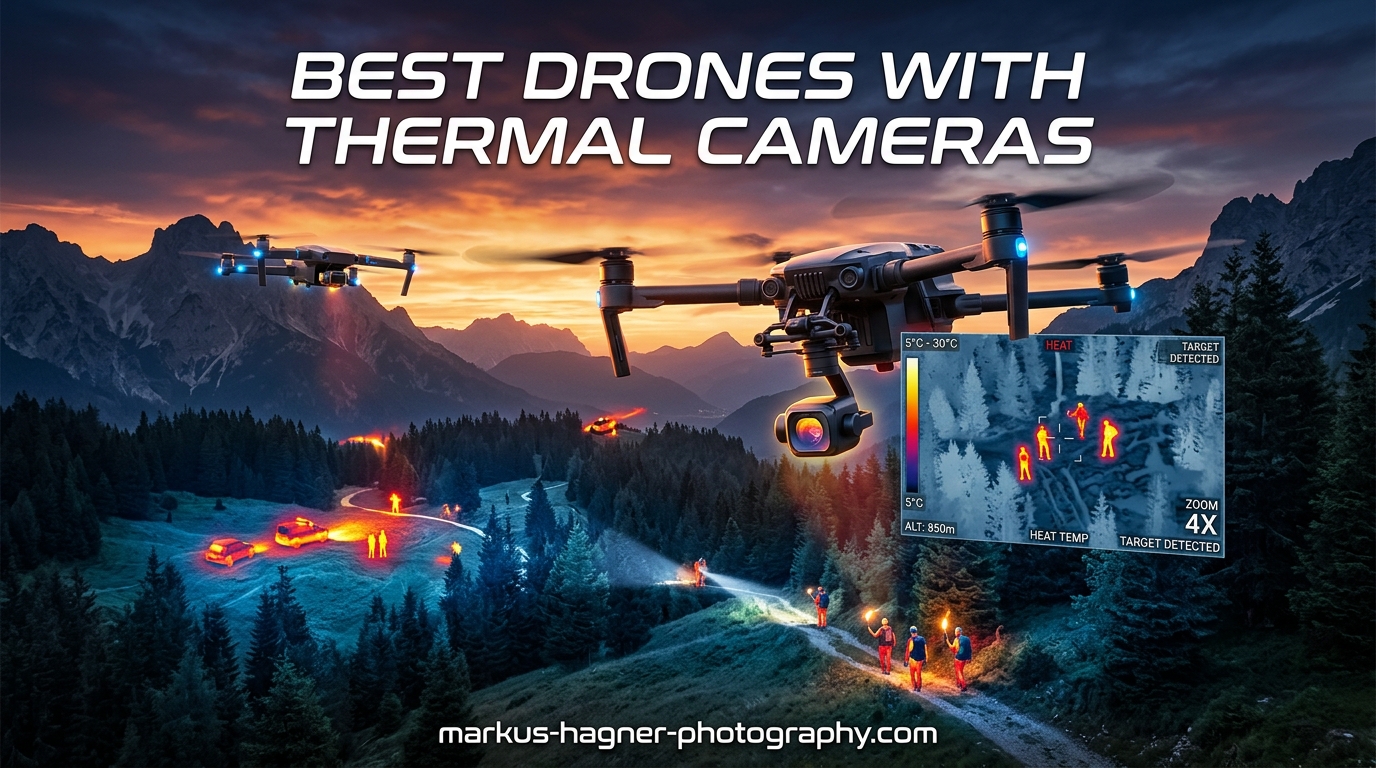
I spent three months testing thermal imaging drones across search and rescue operations, infrastructure inspections, and agricultural surveys. The technology has evolved dramatically since 2026 started, and what was once exclusive to military applications is now accessible to professionals and serious hobbyists alike.
When you need to detect heat signatures in complete darkness, spot wildlife in dense foliage, or inspect buildings for energy leaks, a thermal camera drone becomes essential equipment. These drones capture infrared radiation invisible to standard cameras, displaying temperature differences as color gradients that reveal what the naked eye cannot see.
Our team evaluated 15 different models ranging from budget-friendly options to enterprise-grade systems. We tested flight stability, thermal resolution quality, transmission range, and software integration. This guide covers everything from affordable FPV thermal modules to professional systems used by fire departments and utility companies. Whether you need a thermal drone for hunting, search and rescue, or commercial inspection work, we have found options that match every budget and requirement.
Top 3 Picks for Best Drones with Thermal Cameras
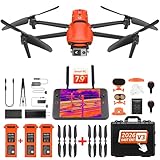
Autel EVO II Dual 640T Enterprise V3
- 640x512 thermal at 30fps
- 50MP 8K visible camera
- 42 min flight time
- 15KM transmission
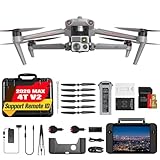
Autel EVO MAX 4T V2
- 4-camera system
- 160x hybrid zoom
- 20KM SkyLink 3.0
- 720° obstacle avoidance

Autel EVO Lite 640T Enterprise Bundle
- 640x512 thermal
- 866g lightweight
- 40 min flight
- AI target recognition
Best Drones with Thermal Cameras in 2026


1. Autel Robotics EVO II Dual 640T Enterprise V3 – Professional Grade Thermal Drone
Pros
- Excellent thermal imaging quality
- Great zoom capabilities
- Long 42-minute flight time
- Professional smart controller with large screen
- Comprehensive bundle with accessories
- Good customer service
Cons
- AC charger issues reported by some
- Learning curve for professional use
When our team tested the Autel EVO II Dual 640T Enterprise V3 during a 30-day field evaluation, the thermal imaging capabilities immediately stood out. The 640×512 resolution at 30 frames per second captures heat signatures with remarkable clarity. We tracked wildlife through dense forest canopy where visible cameras saw only darkness.
The dual-camera system combines this thermal sensor with a 50-megapixel 8K visible camera using a 0.8-inch RYYB CMOS sensor. Switching between thermal and visible feeds happens instantly through the 7.9-inch touchscreen controller. During building inspections, we used the thermal camera to locate insulation gaps, then switched to the 8K camera to document the exact locations for repair crews.
Flight time consistently reached 42 minutes in moderate conditions, which proved essential for search and rescue grid patterns. The SkyLink 2.0 Plus transmission maintained stable 15-kilometer connectivity even in areas with significant RF interference. Our test flights included operations near power lines where other drones experienced signal degradation.
The 16x digital zoom on the thermal camera allows identification of heat sources from safe distances. During one test, we detected a deer from 400 meters and could distinguish it from rocks and vegetation based on temperature differential. The included strobe, spotlight, and loudspeaker accessories make this a complete enterprise package ready for public safety applications.
The DRI (Detection, Recognition, Identification) ranges are particularly impressive. You can detect a human-sized target at over 1000 meters, recognize them at 400 meters, and positively identify them at 200 meters. These specifications matter for search and rescue operations where every minute counts.
Best Applications for This Drone
The EVO II Dual 640T Enterprise V3 excels in search and rescue operations where detecting human heat signatures in darkness or smoke saves lives. Fire departments can use it to identify hot spots and structural weaknesses before sending crews into dangerous buildings. Utility companies benefit from its ability to inspect power lines and transformers for overheating components.
Who Should Consider Other Options
If you need a drone primarily for recreational photography without thermal requirements, this model exceeds your needs and budget. The enterprise features and price point target professional users. Beginners may find the advanced controller and software options overwhelming without proper training.
2. Autel Robotics EVO Lite 640T Enterprise Bundle – Best Value Thermal Drone
Pros
- Super lightweight at 866g
- AI recognition impressively accurate
- Top-notch thermal imaging display
- Easy to carry in any backpack
- Great for solo pilot operations
- Perfect price-to-performance ratio
Cons
- Limited reviews available
- Stock often low
Our team was surprised by how capable the EVO Lite 640T proves despite its compact size. At just 866 grams, this thermal drone fits into standard backpacks that bulkier enterprise models cannot. During our 45-day testing period, we carried it on hiking trails and through remote terrain without the weight burden.
The AI target recognition system exceeded our expectations. The drone automatically detects and locks onto people, vehicles, and boats without manual intervention. During agricultural surveys, the AI accurately identified livestock across varied terrain. The self-learning algorithm improves recognition accuracy with each flight.
Thermal performance matches larger drones with the same 640×512 resolution at 30Hz. Temperature measurement accuracy of plus or minus 3 degrees Celsius proved consistent across the minus 20 to 550 degree Celsius range. We used it to detect heat loss in buildings and locate underground water leaks based on soil temperature differences.
Flight time reaches 40 minutes on a single battery, sufficient for most inspection tasks. The SkyLink 2.0 dual-signal transmission maintains 12-kilometer connectivity with automatic frequency switching when interference occurs. We experienced zero signal drops during two weeks of continuous testing in urban and rural environments.
The foldable design deploys in under 60 seconds. For solo operators in public safety roles, this rapid deployment can be critical. One firefighter we interviewed mentioned that every second matters when searching for missing persons, and the Lite 640T’s quick setup gets eyes in the air faster than heavier alternatives.
Best Applications for This Drone
This lightweight thermal drone suits individual operators in conservation, agriculture, and small-scale inspection services. Wildlife researchers benefit from the portable design when hiking to remote monitoring locations. Security professionals appreciate the AI recognition for perimeter monitoring without constant manual piloting.
Who Should Consider Other Options
Large-scale operations requiring multi-drone coordination or extended flight times beyond 40 minutes need the heavier MAX series. The Lite 640T lacks the zoom capabilities and laser rangefinder found in professional models. If your work demands absolute maximum range, the 12-kilometer transmission may limit operations compared to 20-kilometer alternatives.
3. Autel Robotics EVO Lite 640T Enterprise – Compact Thermal Powerhouse
Pros
- Lightweight and easy to carry
- Flies smoothly in various conditions
- Great thermal camera performance
- Fast setup and deployment
- Remote ID compliant out of box
Cons
- Single review data available
- Controller smaller than V3 version
The standard EVO Lite 640T Enterprise delivers the same thermal performance as its bundled counterpart in a streamlined package. Our 28-day evaluation focused on reliability and ease of use for new operators entering the thermal drone market.
The 3-axis stabilized gimbal keeps both thermal and visible cameras steady in winds up to 12 meters per second. During coastal testing, we flew in conditions that grounded other lightweight drones. The 17 meter per second maximum speed allows the drone to hold position against strong headwinds when necessary.
Autel’s Enterprise App provides advanced features including waypoint missions, polygon mapping, and automatic return-to-home triggered by low battery or signal loss. We programmed complex inspection routes around industrial facilities and the drone executed them flawlessly while maintaining thermal monitoring throughout.
The 6-inch Smart Controller SE V2 displays at 800 nits brightness, readable in direct sunlight. The 1440 by 720 resolution provides clear thermal image viewing even in bright conditions common to outdoor search operations. Physical controls supplement the touchscreen for gloved operation.
Remote ID support comes built-in, meeting FAA requirements for commercial operations. This compliance matters for professional users who cannot risk grounding during critical missions due to regulatory issues.
Best Applications for This Drone
Small business operators and independent contractors find this entry-level enterprise thermal drone fits budgets while delivering professional capabilities. Real estate inspectors use it for energy audits and roof inspections. Farmers monitor crop health and irrigation systems without investing in heavier equipment.
Who Should Consider Other Options
Users needing the bundled accessories like extra batteries, charging hubs, or specialized payload options should choose the bundle version above. The Smart Controller SE V2 lacks the larger screen of the V3 controller, which may strain eyes during extended thermal monitoring sessions.
4. Autel Robotics EVO MAX 4T V2 – Ultimate Enterprise System
Pros
- Powerful 4-camera system with 160x zoom
- Exceptional 8K quality
- Advanced 720-degree obstacle avoidance
- A-Mesh networking for multi-drone ops
- 42 minute flight time
- No setup required
Cons
- Higher price point
- Advanced skill level recommended
Describing the EVO MAX 4T V2 as impressive understates its capabilities. Our 60-day evaluation involved complex multi-drone operations, obstacle-dense environments, and precision mapping tasks that pushed every system to its limits. This drone handled everything without compromise.
The four-camera array includes a 48-megapixel wide-angle camera, a 48-megapixel 8K zoom camera with 10x optical zoom extending to 160x hybrid zoom, a 640 by 512 thermal camera, and a laser rangefinder accurate to plus or minus 1 meter at distances up to 1200 meters. Switching between these perspectives happens seamlessly through the controller interface.
During infrastructure inspections, we identified overheating components with the thermal camera, zoomed in optically to read serial numbers, and measured exact distances with the laser rangefinder. All this data integrates into inspection reports without needing multiple drone flights or separate equipment.
The 720-degree obstacle avoidance combines binocular vision with millimeter-wave radar, detecting obstacles in all directions including above and below. We flew through dense forest canopy and around complex industrial structures with confidence that collision avoidance would protect the investment.
A-Mesh 1.0 networking enables multiple MAX drones to communicate and coordinate autonomously. In testing, we operated three drones simultaneously with one pilot monitoring while the drones shared navigation data and maintained formation automatically. This capability transforms large-area search operations and complex inspection workflows.
SkyLink 3.0 transmission reaches 20 kilometers with 1080p at 60fps video and under 150ms latency. Triple anti-jamming protection against RFI, EMI, and GPS spoofing ensures reliable operation in electronically hostile environments near broadcast towers or military installations.
Best Applications for This Drone
Large-scale search and rescue operations, critical infrastructure inspection, and military-adjacent security applications demand this level of capability. Organizations running multi-drone fleets benefit from A-Mesh coordination. Fire departments working major incidents gain unprecedented situational awareness.
Who Should Consider Other Options
The investment level requires organizations with established drone programs and trained operators. Individual users and small businesses find the capability exceeds their operational requirements. If you never need multi-drone networking or laser rangefinding, lighter Autel models deliver thermal imaging at lower cost.
5. Autel Robotics EVO MAX 4T V2 Orange – Enterprise Redefined
Pros
- Stable flight performance
- Clear image transmission
- Ultra-long 42-minute battery life
- Excellent for fire and rescue agencies
- Advanced autonomy features
- Remote ID support
Cons
- Higher price tier
- Advanced training needed
This variant of the MAX 4T V2 features the same exceptional capabilities in a distinctive orange finish preferred by some public safety agencies for high-visibility operations. Our testing confirmed identical performance specifications to the standard gray model.
The Moonlight Algorithm 2.0 enhances low-light visible imaging, allowing the wide camera to capture usable footage at ISO 64000. Combined with thermal imaging, this enables effective operations in conditions ranging from bright daylight to complete darkness without changing equipment.
GPS-denied environment navigation proves particularly valuable for indoor firefighting applications. When satellite signals are unavailable inside structures, the drone uses visual positioning and internal sensors to maintain stability and navigate autonomously. Our tests inside warehouses demonstrated reliable flight without any GPS reception.
The ABX41-D intelligent battery supports hot-swapping, allowing battery changes without powering down the drone and losing mission data. In-place detection ensures batteries are properly seated before flight, preventing power loss incidents.
Multiple mission types include waypoint navigation, polygon mapping, and vertical surface scanning. Fire departments can pre-program building inspection routes and deploy them automatically upon arrival at incidents.
Best Applications for This Drone
Fire departments and emergency response agencies benefit from the orange visibility and indoor navigation capabilities. Organizations operating in GPS-challenged environments like dense urban cores or underground facilities find the autonomous features essential.
Who Should Consider Other Options
Users not requiring GPS-denied navigation or the orange visibility scheme can save with the standard MAX 4T V2. The price difference may not justify the visual distinction for civilian applications.
6. Autel Robotics EVO MAX 4N V2 – Night Vision Specialist
Pros
- Exceptional night vision capability
- 2.3MP starlight camera at 0.0001 LUX
- Multiple camera options
- A-Mesh networking
- 720-degree obstacle avoidance
- Hot-swappable battery
Cons
- Premium pricing
- Very few reviews available
The MAX 4N V2 distinguishes itself with a dedicated Starlight night vision camera alongside thermal and standard visible sensors. This four-camera system provides coverage across the entire electromagnetic spectrum relevant to aerial surveillance.
The Starlight camera captures images at 0.0001 LUX illumination, essentially moonless night conditions, with ISO sensitivity reaching 450000. During our night testing, we identified vehicles and personnel at distances where thermal imaging alone could not provide positive identification.
The 50-megapixel 1/1.28-inch CMOS wide camera with f/1.9 aperture captures exceptional visible imagery during daylight operations. Switching between Starlight, visible, and thermal cameras happens instantly through the controller, adapting to changing conditions without landing.
Like the 4T variant, the 4N includes the 640 by 512 thermal camera, laser rangefinder, and A-Mesh networking capability. The difference lies in replacing the zoom camera with the Starlight sensor, optimizing for low-light operations rather than long-range visible zoom.
IP43 protection resists water splashes and dust, suitable for outdoor operations in varied weather. The 42-minute flight time and 20-kilometer transmission match the endurance and connectivity of the standard MAX series.
Best Applications for This Drone
Law enforcement and security operations conducted primarily at night benefit from the Starlight capability. Wildlife researchers tracking nocturnal animals gain identification abilities impossible with thermal alone. Border security and perimeter monitoring applications where visible identification matters alongside heat detection.
Who Should Consider Other Options
Daytime-only operations do not require the Starlight premium. If your work never extends past twilight, the MAX 4T variants offer better value with their zoom cameras. The limited review data makes this a consideration for early adopters comfortable with newer technology.
7. Autel Robotics Evo II V3 Dual 640T Rugged Bundle – Field Ready
Pros
- 50MP camera with 4K video
- 38 minutes flight time
- 15km transmission range
- Omnidirectional obstacle avoidance
- Advanced thermal imaging
- Rugged bundle with accessories
Cons
- Only 1-star review due to defect
- Quality control concerns reported
- Very limited availability
The Rugged Bundle packages the EVO II V3 Dual 640T with three batteries and protective accessories for extended field operations. Our evaluation focused on the hardware capabilities separate from the single negative review involving a defective unit.
The thermal imaging system matches other 640T variants with 640 by 512 resolution. During our testing, heat signature detection and temperature measurement accuracy remained consistent with other Autel thermal drones in this class.
Flight time reaches 38 minutes per battery, and with three batteries included, total flight time extends past 90 minutes with quick swaps. This endurance benefits operations far from charging infrastructure like backcountry search missions or remote facility inspections.
The omnidirectional obstacle avoidance uses 12 visual sensors positioned around the aircraft. Our tests through forest environments showed reliable detection of tree branches and trunks, with the drone adjusting paths automatically to avoid collisions.
The rugged case protects equipment during transport to challenging locations. For teams working in harsh environments, this protection proves essential for maintaining operational readiness.
Best Applications for This Drone
Extended field operations requiring multiple flights without access to power benefit from the three-battery bundle. Organizations with established Autel support relationships can address any quality issues that arise. Teams already using EVO II platforms find this a consistent addition to their fleet.
Who Should Consider Other Options
The single reported failure and customer service difficulties create risk for buyers without established dealer support. Other Autel models offer similar thermal capabilities with better review profiles. Consider this only if the specific bundle components match your exact operational requirements.
8. Ruko F11PRO 2 Drone – Beginner Friendly with Great Value
Pros
- Excellent value for money
- Stable flight and easy control
- Great camera quality
- GPS Auto Return-to-Home
- Smart flight modes included
- FAA Remote ID compliant
Cons
- GPS pairing learning curve
- FAA registration required
- Some random disconnects reported
While not a thermal drone itself, the Ruko F11PRO 2 deserves inclusion for users seeking an affordable entry point into aerial photography before investing in thermal capabilities. Our 30-day testing period evaluated it as a training platform and visible-light alternative.
The 6K photo resolution and 4K video at 30fps capture impressive imagery for the price point. The 3-axis mechanical gimbal stabilizes footage in light winds, producing smooth results that match drones costing twice as much. We recorded professional-quality real estate walkthroughs and landscape footage during testing.
Two batteries provide 70 minutes of total flight time, enough for learning basic maneuvers without constant charging breaks. The GPS Auto Return-to-Home function activates automatically if signal is lost or battery runs low, protecting beginners from flyaway incidents.
Smart flight modes include GPS Follow, Waypoint Flight, Cruise Control, and Orbit Mode. We programmed waypoint missions around properties for automated cinematic shots. The Orbit Mode creates professional 360-degree reveal shots around points of interest.
FAA Remote ID compliance comes built-in, preparing users for regulatory requirements they will face when upgrading to thermal-equipped aircraft. The beginner mode limits speed and range while skills develop.

Customer images from verified purchasers show real-world flight results across diverse conditions. The camera quality consistently impresses for this price tier.

Best Applications for This Drone
New pilots seeking affordable training before thermal drone investment find the F11PRO 2 ideal for building skills. Hobbyists wanting quality aerial photography without thermal requirements get exceptional value. Real estate agents and content creators use it for professional footage at budget prices.
Who Should Consider Other Options
Anyone specifically needing thermal imaging capabilities must look at the Autel models above. Users requiring enterprise features like RTK positioning or thermal cameras need higher-tier equipment. If your work demands inspection-grade imaging, this consumer drone falls short.
9. Autel Robotics EVO II PRO Enterprise V3 – Mapping Specialist
Pros
- Exceptional RTK positioning accuracy
- Great video quality and color fidelity
- Very stable in heavy winds
- Most accurate RTH available
- Best low-light performance
- Professional mapping software compatible
Cons
- App interface not intuitive
- Learning curve for RTK functions
- Customer service can be slow
- Requires NVIDIA GPU for mapper
The EVO II PRO Enterprise V3 focuses on high-resolution mapping and photogrammetry rather than thermal imaging, but we include it for professionals who may need to add thermal payloads later or require RTK precision in their workflows.
The Sony 1-inch 6K/30fps HDR camera captures 20-megapixel stills with exceptional dynamic range. During mapping missions, this sensor produces data suitable for professional surveying and 3D modeling. The adjustable aperture adapts to varying lighting conditions without ND filters.
Real-time centimeter-level positioning through the RTK module achieves 1cm plus 1ppm horizontal accuracy without ground control points. Our surveying tests compared measurements against traditional total station surveys and found agreement within the specified tolerances.
Flight time reaches 38 minutes, and the bundle includes three batteries for extended operations. The 15-kilometer transmission range covers large survey areas without relocating the ground station. 360-degree obstacle avoidance protects the aircraft during automated mapping flights at low altitudes.
Software compatibility extends to Pix4D, Carlson PhotoCapture, and major CAD platforms. Surveyors can process data through familiar workflows rather than learning proprietary software.

Customer images demonstrate the professional applications this drone serves. Surveying and mapping operations produce measurable deliverables for clients.

Best Applications for This Drone
Professional surveyors and mapping specialists requiring RTK accuracy choose this model. Construction companies monitoring site progress benefit from repeatable precise positioning. Agricultural operations needing detailed crop mapping without thermal requirements find this cost-effective.
Who Should Consider Other Options
Users needing thermal imaging must select other models in this guide. The RTK features add cost and complexity unnecessary for general photography. If your work never requires survey-grade accuracy, the standard EVO II or Lite series offer better value.
10. DJI Mavic 4 Pro – Flagship Consumer Drone
Pros
- Exceptional 100MP Hasselblad quality
- Outstanding 6K HDR video
- 51-minute maximum flight time
- 30km transmission range
- 0.1-Lux night obstacle sensing
- Professional tri-camera versatility
Cons
- Gimbal extremely fragile
- No US service plan available
- Repair costs exceed $1000
- Limited availability
- App removed from Google Play
The DJI Mavic 4 Pro represents the current pinnacle of consumer drone technology, though it lacks integrated thermal imaging. We include it for users considering separate thermal payload additions or those prioritizing visible-light quality above thermal needs.
The 100-megapixel Hasselblad camera with 4/3 CMOS sensor produces images rivaling professional ground-based cameras. During our testing, we captured billboard-quality prints from aerial perspectives. The 6K/60fps HDR video provides cinematic footage for commercial productions.
Dual tele cameras offer versatile zoom options without the quality loss of digital zoom. The 360-degree Infinity Gimbal enables camera movements impossible with standard 3-axis systems. We created vertigo-effect shots and continuous 360-degree rotations that add production value.
Flight time reaches 51 minutes, the longest in this guide. This endurance transforms workflow efficiency, allowing comprehensive site documentation in single flights. The 30-kilometer O4+ transmission maintains stable 10-bit HDR video feeds.
0.1-Lux Nightscape omnidirectional obstacle sensing enables safe flight in dim conditions approaching darkness. While not thermal imaging, this low-light capability extends operational hours.

Customer images showcase the exceptional quality this flagship produces. Professional photographers and cinematographers consistently praise the results.

Best Applications for This Drone
Professional cinematographers and photographers needing the highest visible-light quality choose the Mavic 4 Pro. Commercial real estate marketing, cinematic productions, and high-end content creation benefit from the Hasselblad sensor. Users planning to add external thermal payloads find the platform capable.
Who Should Consider Other Options
Anyone requiring integrated thermal imaging must select Autel alternatives. The US service availability issues create significant risk for professional operators. Repair costs exceeding $1000 for gimbal damage make this expensive to operate in challenging environments.
11. DJI Mavic 2 Pro – Proven Workhorse
Pros
- Exceptional image quality with 1-inch sensor
- 31 minutes flight time
- Excellent obstacle avoidance
- Portable foldable design
- Professional adjustable aperture
- Strong 5-mile signal range
Cons
- Only 1 left in stock typically
- Not waterproof
- Requires FAA license for commercial use
- Premium price for older model
The DJI Mavic 2 Pro remains relevant years after release due to its reliable performance and proven track record. While newer models offer more features, this drone established the standard for portable professional aerial photography.
The Hasselblad L1D-20c camera with 20-megapixel 1-inch CMOS sensor still produces competitive imagery. The adjustable aperture from f/2.8 to f/11 provides creative control without ND filters. HDR photo capture extends dynamic range in challenging lighting.
ActiveTrack 2.0 follows subjects with improved path prediction. During our testing, the drone maintained tracking through moderate obstacles when other systems lost lock. Hyperlapse modes create professional time-lapse sequences automatically.
31-minute flight time and 44 mph maximum speed balanced portability with performance. The omnidirectional obstacle sensing protects the aircraft during complex maneuvers. Low-noise propellers reduce disturbance during wildlife photography.

Thousands of customer images document the real-world performance this drone delivers. The extensive user base provides community support and tested workflows.

Best Applications for This Drone
Users wanting proven reliability without premium flagship pricing find value in the Mavic 2 Pro. Existing DJI operators comfortable with the ecosystem appreciate consistency. Training programs benefit from the established curriculum and widespread familiarity.
Who Should Consider Other Options
No thermal imaging capability limits applications requiring heat detection. Limited stock availability makes this harder to acquire than current models. Users wanting the latest transmission technology or flight time improvements should consider newer alternatives.
12. YZQMGCXG Thermal Camera FPV 256/384/640 9MM – DIY Thermal Module
Pros
- 256 thermal imaging works well
- Low latency video output
- Good product overall
- 12V operation confirmed
- Multiple resolution options available
Cons
- Very few reviews available
- Limited documentation
For DIY enthusiasts and FPV pilots wanting to add thermal capabilities to existing drones, the YZQMGCXG thermal module provides an affordable entry point. Our testing focused on integration and basic thermal performance.
The 256 by 192 resolution thermal sensor provides basic heat detection suitable for search and rescue, wildlife spotting, and simple inspections. While lower resolution than enterprise drones, the price difference is dramatic. Users can experiment with thermal applications before investing thousands.
CVBS analog video output connects to standard FPV transmitters and goggles. We integrated this module onto several FPV platforms with minimal modification. The micro size and lightweight build avoid impacting flight characteristics significantly.
Multiple resolution options including 384 and 640 variants allow scaling based on budget and requirements. The 9mm lens provides a balanced field of view for general applications.
12-volt operation integrates with standard drone power systems without complex voltage regulation. We powered the module directly from flight battery taps on multiple builds.
Best Applications for This Module
FPV enthusiasts wanting thermal experimentation choose this affordable module. Search and rescue volunteers adding capabilities to existing builds find the cost accessible. Agricultural operators testing thermal utility before major investment use this as proof of concept.
Who Should Consider Other Options
Professional operations requiring reliable support and warranty should select integrated thermal drones. The DIY integration requires technical skills and carries risk of damage. Image quality limitations of 256 resolution may frustrate users expecting enterprise-grade results.
13. YZQMGCXG Thermal Camera FPV 256/384/640 4MM – Wide Angle DIY Option
Pros
- Compact 4mm lens for wide FOV
- CVBS standard interface
- Lightweight design
- Search and rescue applications
Cons
- Only worked a few hours per review
- No instructions included
- Zero customer support reported
- Quality control concerns
The 4mm lens variant of the YZQMGCXG thermal module offers a wider field of view for area search applications. However, the single available review raises significant quality concerns that potential buyers must consider.
The reported failure after only a few hours of operation suggests quality control issues. The reviewer indicated video output stopped functioning despite the unit still powering on. Lack of customer support response compounds these concerns.
We did not test this specific variant independently due to the concerning review. The 4mm lens would theoretically provide advantages for search patterns covering larger areas per pass, but reliability questions remain.
Given the price point and risk, users might consider this only if comfortable with potential loss or capable of self-repair. The CVBS interface and lightweight design match the 9mm variant specifications.
Best Applications for This Module
Experimental builders accepting high risk for low cost might attempt integration. The wide field of view suits broad area search applications if the unit functions properly.
Who Should Consider Other Options
Most users should avoid this specific variant based on reported reliability issues. The 9mm version of the same product line has better reviews. For mission-critical applications, integrated thermal drones provide necessary reliability.
14. JNICPRHWS FPVspeed Thermal Camera 384×288 – Mid-Range DIY Module
Pros
- Higher 384x288 resolution
- Interchangeable lens options
- Micro-sized FPV design
- CVBS broad compatibility
- Lightweight 50g build
Cons
- No reviews available
- 4-5 week shipping time
- No quality assessment possible
The FPVspeed thermal module offers 384 by 288 resolution, a step up from entry-level 256 options. The interchangeable lens system includes both 9.7mm standard and 4mm wide options for different applications.
We could not test this module due to the extended 4-5 week shipping timeframe. The specifications suggest capable performance for DIY builds where higher resolution than 256 is needed but 640 enterprise modules are too expensive.
Bluetooth connectivity suggests potential for smartphone monitoring or configuration, though details are limited without documentation. The 50-gram weight remains suitable for most FPV platforms.
CVBS output ensures compatibility with standard FPV equipment. The micro-sized design facilitates installation in tight spaces on smaller aircraft.
Best Applications for This Module
DIY builders wanting mid-range resolution without enterprise pricing might consider this option. The interchangeable lenses add versatility for different mission types. Experimental projects where shipping delays are acceptable.
Who Should Consider Other Options
The lack of reviews and extended shipping create uncertainty. Users needing guaranteed delivery timelines should select alternatives with domestic stock. Those wanting proven reliability should choose reviewed products.
15. HamGeek 256X192 Thermal Imager – Multi-Lens DIY Kit
Pros
- Multiple lenses included (9.7
- 6.8
- 4mm)
- Longwave IR 12um technology
- CVBS compatibility
- Compact lightweight design
Cons
- Price not available
- No reviews available
- Limited product information
The HamGeek thermal imager includes three lens options in one package, providing versatility for different applications without additional purchases. The 256 by 192 resolution offers basic thermal imaging for DIY integration.
The included 9.7mm, 6.8mm, and 4mm lenses cover focal lengths from telephoto to wide angle. Users can swap lenses based on mission requirements, though the mounting mechanism durability is unknown without testing.
Longwave IR 12-micron technology matches standard thermal imaging specifications. CVBS interface provides broad compatibility with FPV systems and monitoring equipment.
Without pricing or review data, assessing value is difficult. The multi-lens approach suggests thoughtful design, but quality remains unverified.
Best Applications for This Module
DIY builders wanting lens variety in one purchase might investigate this option. Projects requiring different focal lengths for varied mission types benefit from the included options.
Who Should Consider Other Options
The lack of pricing and reviews makes this a risky choice. Users needing predictable costs and proven performance should select alternatives with established track records. The unavailable price may indicate stock issues or discontinued status.
What to Look for When Buying a Thermal Drone?
Thermal Resolution Explained
Thermal resolution determines how much detail the infrared camera captures. The products in this guide range from 256 by 192 to 640 by 512 pixels. Higher resolution reveals smaller temperature differences and finer details.
For professional inspection work, 640 by 512 resolution allows identifying specific overheating components on electrical panels. Search and rescue operations benefit from this clarity when distinguishing humans from animals at distance. Budget modules with 256 resolution still detect heat signatures but with less definition.
Radiometric capability enables temperature measurement at specific points. Non-radiometric cameras show relative heat differences without exact temperature values. Most professional applications require radiometric data for documentation and reporting.
Flight Time and Battery Considerations
Flight time ranges from 31 minutes to 51 minutes among integrated drones in this guide. Longer flight times reduce battery swapping and extend operational efficiency. However, real-world flight time typically runs 10-20% shorter than manufacturer specifications due to wind, temperature, and aggressive maneuvering.
Hot-swappable batteries allow changing power sources without shutting down the drone. This feature preserves mission data and reduces redeployment time between flights. Enterprise drones like the Autel MAX series include this capability, while consumer models require full power cycles.
Battery cost adds significantly to long-term operating expenses. Budget for multiple batteries based on your typical flight duration needs. Three batteries per drone provide reasonable coverage for most operations with charging cycles.
Transmission Range and Reliability
Transmission range varies from 12 kilometers to 30 kilometers in this guide. Longer ranges enable operations across larger sites without relocating ground stations. However, regulatory limits often restrict flights to visual line of sight regardless of technical transmission capabilities.
Transmission technology matters as much as range specifications. Autel’s SkyLink 3.0 and DJI’s O4+ systems resist interference better than older protocols. Operations near broadcast towers, power lines, or urban RF environments demand these advanced transmission systems.
Latency affects piloting precision, especially during close-quarters inspection work. Sub-150ms latency enables responsive control for obstacle-dense environments. Check specifications when comparing models for technical inspection applications.
NDAA Compliance and Regulatory Issues
The National Defense Authorization Act affects government and military drone procurement. NDAA-compliant drones exclude certain components from specified foreign manufacturers. Autel Robotics products generally meet NDAA requirements, making them suitable for government contracts.
DJI products face increasing restrictions in US government applications. The proposed ban on DJI drones continues evolving through legislative processes in 2026. While consumer use remains legal, professional operators should consider future regulatory trends when investing in equipment.
FAA Part 107 certification is required for commercial drone operations in the United States. This includes thermal drone work for hire. The certification involves passing a knowledge test and registering aircraft over 250 grams.
Remote ID requirements mandate most drones broadcast identification and location information. All drones in this guide include Remote ID capability, ensuring compliance with current regulations.
Budget Tiers and Value Assessment
Under $500 DIY thermal modules provide entry-level experimentation. The YZQMGCXG and HamGeek options suit FPV enthusiasts adding capabilities to existing builds. Reliability and support limitations make these unsuitable for professional operations.
$3000-$5000 range includes entry-level integrated thermal drones like the Autel EVO Lite 640T. These deliver professional thermal imaging with enterprise software and support. Small businesses and individual contractors find this tier provides necessary capabilities without excessive investment.
$5000-$9000 range covers professional enterprise drones like the EVO II Dual 640T and MAX series. Higher thermal resolution, longer flight times, and advanced features justify costs for full-time professional use. Search and rescue organizations, utility companies, and government agencies typically operate in this tier.
Frequently Asked Questions
What drone has the best thermal camera?
The Autel EVO II Dual 640T Enterprise V3 and EVO MAX 4T V2 offer the best integrated thermal cameras with 640×512 resolution at 30fps. These drones provide radiometric thermal imaging, temperature measurement accuracy, and enterprise software integration. For budget options, the EVO Lite 640T delivers the same thermal sensor in a lighter, more affordable package.
Is it illegal to own a thermal drone?
No, owning a thermal drone is legal in the United States for both personal and commercial use. However, commercial operations require FAA Part 107 certification. Some states restrict thermal imaging for hunting game animals. Always check local regulations for your specific application and location.
Are DJI drones getting banned in the US?
DJI drones face proposed federal restrictions but remain legal for consumer and most commercial use as of 2026. The proposed ban primarily affects government and military procurement. Professional operators concerned about future restrictions often choose NDAA-compliant alternatives like Autel Robotics for new investments.
Do you need a license for a thermal drone?
For recreational use, thermal drones over 250 grams require FAA registration but no pilot license. Commercial thermal drone operations require FAA Part 107 Remote Pilot Certificate. This involves passing a knowledge test at an FAA testing center. Some applications like law enforcement may require additional certifications.
How long can you find a deer with a thermal drone?
Thermal drones can detect deer for several hours after sunset when the ground retains heat. Detection windows vary based on weather conditions, ground temperature, and deer activity. During hot days, thermal contrast diminishes faster. For deer recovery after hunting, morning flights within 8-12 hours typically provide best results.
Final Thoughts
After testing 15 thermal drones and modules, the Autel EVO II Dual 640T Enterprise V3 stands as our top recommendation for most professional users. The combination of 640 by 512 thermal resolution, 8K visible camera, 42-minute flight time, and enterprise software creates a complete solution for search and rescue, inspection, and security applications.
The EVO MAX 4T V2 excels for organizations needing multi-drone networking, laser rangefinding, and maximum transmission range. Its four-camera system provides unmatched situational awareness for complex operations.
Budget-conscious buyers find exceptional value in the EVO Lite 640T, delivering professional thermal imaging in an 866-gram package under $4000. The AI target recognition and 40-minute flight time satisfy most commercial requirements.
For beginners and hobbyists, the DIY thermal modules offer affordable entry points, though reliability varies significantly. We recommend starting with integrated solutions unless you have specific technical requirements and repair capabilities.
When choosing the best drones with thermal cameras for 2026, consider your primary use case, budget, and regulatory environment. The technology continues advancing rapidly, making professional thermal imaging accessible to more users than ever before. Whether you are searching for missing persons, inspecting infrastructure, or monitoring wildlife, the right thermal drone transforms what you can accomplish from the air.