
The best drones for windy conditions combine a published wind-resistance rating, enough motor authority to make safe progress home, a stabilized camera, and a return feature you understand before takeoff. A wind rating is not permission to fly in every gust; it is one part of a go/no-go decision that also includes wind direction, gust spread, battery reserve, obstacles, and your skill.
For this guide, I compared the ten drones in the supplied product data rather than treating “wind resistant” as a vague label. The strongest listed ratings belong to the Bingchat AE86 Pro Max at Level 7, while the Bwine F7GB2 Pro and Holy Stone HS600D list Level 6; several compact DJI and Potensic models list Level 5.
Can you fly in windy weather? Yes, when conditions stay inside the aircraft’s stated capability and you have room to fly safely, but smooth footage and a safe return can become difficult before the drone loses basic control. Community discussions repeatedly flag crosswinds as especially troublesome for sub-250 g drones, while owners of larger aircraft report more composure because additional mass helps resist sudden displacement.
I would treat any manufacturer flight-time figure as a calm-air maximum, not a wind-day promise. Forum reports in the research describe usable battery time falling roughly 20–35% in wind, so a short downwind leg can turn into a hard, battery-hungry headwind return.
The selection below favors verified listing details: stated wind levels where supplied, weight, 3-axis gimbals, GPS functions, transmission distance, and included battery totals. It does not replace the manual, local weather data, airspace rules, or the judgment to stay grounded when gusts make a flight uncertain.
These are the top 3 picks for drones in windy conditions (September 2026)
For the highest published wind rating in this group, the Bingchat AE86 Pro Max is the clear paper-spec choice. The Bwine F7GB2 Pro combines a stated Level-6 rating with 550 g listed weight and three batteries, while the DJI Mini 4K is the practical light-drone selection for pilots who will stay conservative in wind.
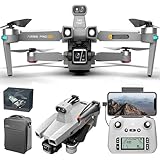

My editorial order does not mean a lighter model is unsafe by definition. It means the heavier, higher-rated choices give a pilot more margin on paper, and margin matters when the forecast changes faster than expected.
These 10 drones make the windy-conditions shortlist in 2026
The overview compares the supplied products on the facts most useful before narrowing your list. When a product has no stated wind level in its supplied information, I have not inferred one from weight, camera quality, or marketing language.
| Product | Specifications | Action |
|---|---|---|
| Bingchat AE86 Pro Max |
|
Check Latest Price |
 Potensic ATOM Potensic ATOM |
|
Check Latest Price |
 DJI Mini 3 DJI Mini 3 |
|
Check Latest Price |
 DJI Mini 4K DJI Mini 4K |
|
Check Latest Price |
 DJI Mini 5 Pro DJI Mini 5 Pro |
|
Check Latest Price |
 Ruko F11PRO 2 Ruko F11PRO 2 |
|
Check Latest Price |
 Bwine F7GIM Bwine F7GIM |
|
Check Latest Price |
| Bwine F7GB2 Pro |
|
Check Latest Price |
 Holy Stone HS600D Holy Stone HS600D |
|
Check Latest Price |
 Veeniix V11Air Veeniix V11Air |
|
Check Latest Price |
A level designation describes a manufacturer claim, not a universal wind-speed guarantee. The listed DJI and Potensic Level-5 products are compact enough that crosswind technique, gusts, and a direct route home deserve extra attention even when the forecast seems moderate.
The Bingchat AE86 Pro Max offers the highest stated Level-7 wind resistance
Pros
- Level 7 wind rating
- 3-axis gimbal and EIS
- 84 min total flight
- 360 obstacle avoidance
Cons
- Only 61 reviews
- Smaller brand
The AE86 Pro Max is the most direct answer for a shopper who wants the highest published wind rating among these ten products. Its listing combines Level 7 wind resistance with a 1.3-pound stated weight, a 3-axis gimbal with EIS, and a claimed 84 minutes across two batteries.
I also like that the supplied details name GPS follow functions, waypoint flight, safe return, and 360-degree laser obstacle avoidance. Those systems can support a more controlled flight plan, although obstacle sensing should never be treated as a reason to fly close to trees, buildings, or people in gusty weather.
The 4K HD camera, 48 MP output, 130-degree field of view, and night mode make this a feature-rich choice for a pilot who wants more than basic wind capability. Its tablet-style Android controller may appeal to someone who prefers an integrated display approach rather than mounting a phone.
The AE86 Pro Max fits pilots who prioritize a stated Level-7 rating
I would put this at the top of a shortlist for an experienced adult pilot in exposed locations who values the supplied Level-7 specification and a larger aircraft than a mini drone. The five-mile stated range is generous, but wind operations should remain within visual line of sight and well inside the range needed for a conservative return.
The two-battery total and gimbal stabilization are also helpful for planned aerial photography windy conditions, where a pilot may wait for a calmer window rather than forcing a shot. The listing also says rainproof, but wind resistance and rain operation are separate decisions, so do not equate that label with weatherproof freedom.
The AE86 Pro Max needs extra buyer diligence because its review base is small
The supplied rating is 4.7 from 61 reviews, which is encouraging but far less market feedback than several alternatives here. I would read the manual carefully for stated wind limitations, battery behavior, app support, return-home setup, and local service arrangements before relying on it for work.
It is also worth remembering that a Level-7 claim is not accompanied by a supplied meters-per-second number in this data. Start in calm conditions, check return-to-home altitude, and build competence before considering stronger wind.
The Potensic ATOM is the lightweight choice with a stated Level-5 rating
Pros
- Level 5 wind rating
- 64 min total flight
- 3-axis gimbal
- 6 km transmission
Cons
- Wi-Fi connection
- Plastic body
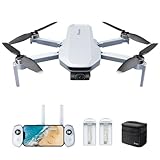
The Potensic ATOM brings a stated Level-5 wind-resistance rating to a 249 g format, a combination that makes it relevant to pilots who need a compact travel drone. Its expansion kit is listed at 64 minutes of flight time, and the 3-axis brushless gimbal is the feature I would focus on for steadier video while the aircraft corrects for wind.
Potensic lists 4K at 30 fps, 12 MP photos, 6 km PixSync 3.0 transmission, visual tracking, QuickShots, and auto return. That is a strong feature set for learning flight basics, provided a beginner treats the reported rating as a ceiling rather than a starting point.
The research forums repeatedly describe mini and near-mini aircraft moving around more in crosswinds than heavier drones. At 249 g, I would use the ATOM for lighter wind windows, fly a short upwind leg first, and reserve a meaningful portion of its battery for coming back.
The ATOM works best when portability matters as much as wind capability
This is a sensible wind resistant drone with camera for a traveler who wants a small packable airframe, a mechanical gimbal, and simple automated shooting modes. It is also categorized for beginners in the supplied details, with auto return as a useful layer of protection.
Visual tracking and QuickShots can be enjoyable in calm air, but I would not select an automated pattern near obstacles or when wind direction is variable. Manual control, open space, and a low-risk route are better choices in a marginal breeze.
The ATOM is less suited to sustained gusty flights than the larger rated models
A compact 249 g frame has less inertia than the 550–603 g models in this guide. The Level-5 claim is useful, yet it does not erase the practical challenge of a gust pushing a small aircraft sideways while it is also trying to hold camera framing.
The listing names Wi-Fi connectivity, which may not suit a buyer who specifically wants the digital transmission listed for some other drones. Check phone compatibility and maintain a clear controller connection before any wind flight.
The DJI Mini 3 gives small-drone pilots Level-5 resistance and vertical video
Pros
- Level 5 rating at 38 kph
- 48 MP stills
- True Vertical Shooting
- 10 km transmission
Cons
- Light 248 g frame
- One battery listed
The DJI Mini 3 is the rare compact option here whose supplied data states both a Level-5 wind rating and a 38 kph figure. Its 248 g weight, 3-axis mechanical gimbal, 4K HDR video, and 48 MP stills create a credible package for a pilot who wants footage priorities alongside manageable carry weight.
True Vertical Shooting is particularly useful for social-first deliverables because it avoids a crop-heavy workflow. The listing also specifies 10 km DJI O2 transmission, GPS return to home, auto takeoff and landing, and QuickShots.
For the best drones for windy conditions, I see the Mini 3 as a disciplined rather than carefree option. The stated rating is meaningful, but its low mass means coastal drone flying and hilltop launches still call for a conservative forecast and a direct, upwind-first test pass.
The Mini 3 is right for creators who need vertical framing in light-to-moderate wind
The camera and vertical mode are the reasons to choose this model over a basic mini drone when the final deliverable needs 4K HDR video or 48 MP images. The 38-minute listed flight time gives a reasonable planning starting point, though actual endurance changes with wind and temperature.
I would leave extra space around the subject and use the 3-axis gimbal to smooth modest corrections rather than trying to make a gusty day look perfectly calm. Smooth camera output does not prove that the aircraft has plenty of return margin.
The Mini 3 needs a cautious battery and route plan in a headwind
Community accounts in the research say wind can consume 20–35% more battery than calm flight. That makes a full outbound downwind flight a poor plan, because a light drone can face its hardest work on the way back.
Start into the wind, watch ground speed rather than assuming position alone tells the story, and turn around early if progress becomes slow. GPS return is helpful only when enough battery and a safe return route remain.
The DJI Mini 4K is the straightforward Level-5 entry for careful beginners
Pros
- Level 5 rating at 38 kph
- 3-axis gimbal
- 10 km transmission
- GPS return
Cons
- 31 min listed flight
- 12 MP camera
The DJI Mini 4K lists Level-5 wind resistance at 38 kph, 4K at 30 fps, a 3-axis gimbal, and DJI O2 transmission up to 10 km. At 246 g, it remains a very light aircraft, but it gives a buyer a clearly stated wind figure rather than relying on vague claims.
The product information identifies one-tap takeoff and landing, GPS return to home, 4x digital zoom, and five QuickShots. Its 4.5 rating is drawn from 3,877 reviews, one of the larger review counts in this comparison.
The listed maximum flight time is 31 minutes with one battery, which calls for restraint on a windy day. I would calculate an earlier landing threshold than I would use in calm air, particularly after a long climb, a headwind transit, or repeated position corrections.
The Mini 4K suits a new pilot who wants clear core controls
This is a sensible first drone for a beginner who wants a compact camera drone with return-to-home and a mechanical gimbal. One-tap launch and landing can simplify early practice, though I would learn to land manually in calm conditions before flying in a breeze.
Its 4K capture and 12 MP photos are enough for many casual clips, and the 10 km stated transmission should not encourage long-range wind flights. Stay close enough to judge the aircraft’s attitude and react before the return becomes difficult.
The Mini 4K is best kept below its stated limit rather than flown at it
A published maximum is not the same as a comfortable filming limit. Gusts, rotor turbulence behind a building, and a crosswind at altitude can be worse than the reading where you stand.
I would avoid using digital zoom as a substitute for flying close in wind. Holding a safer distance and choosing a calmer shooting position usually produces a better outcome.
The DJI Mini 5 Pro favors image quality and sensing over a stated wind level
Pros
- 1-inch sensor
- 4K 60 fps HDR
- omnidirectional sensing
- 20 km transmission
Cons
- No wind rating supplied
- Small 249 g class
The supplied DJI Mini 5 Pro information does not provide a wind-resistance rating, so I would not rank it on wind claims alone. It does bring a 249 g stated weight, a 1-inch CMOS sensor, 4K at 60 fps HDR, 50 MP photos, and a 3-axis gimbal with 225-degree rotation.
For image-driven work, those camera details are compelling. Omnidirectional obstacle sensing with LiDAR, ActiveTrack 360, 42 GB internal storage, fast charging, and 20 km stated transmission make it feature-rich, but none of them substitute for a stated wind specification.
This distinction matters because buyer assumptions can outrun the information available. I would ask DJI or consult the current manual for its published wind limit before making it a dedicated drone for windy conditions.
The Mini 5 Pro suits creators who put sensor size and tracking first
A one-inch sensor and 4K/60 HDR capability make this a strong creative tool for a buyer who prioritizes footage and stills. True vertical filming and flexible gimbal rotation also support varied framing without risky repositioning.
The obstacle-sensing package can add situational awareness, yet wind near branches, walls, and uneven terrain remains a poor setting for trusting automation. Keep flight paths spacious and know how the system behaves before relying on it.
The Mini 5 Pro requires confirmed wind data before a high-wind mission
It would be misleading to turn its advanced camera or 20 km transmission claim into a wind rating. Its supplied dimensions and mass still place it near the lightweight end of this roundup.
I would use calm sessions to learn controls and reserve any windy operation for conditions supported by official guidance. A mechanical gimbal can protect footage from some vibration, but it cannot create motor reserve where none is documented.
The Ruko F11PRO 2 pairs a 357 g frame with long two-battery endurance
Pros
- 357 g listed weight
- 70 min total flight
- 3-axis gimbal
- GPS return
Cons
- No wind rating supplied
- Charger not included
The Ruko F11PRO 2 has no supplied wind-resistance level, but its 357 g listed weight puts it well above the mini-class models. It has a 3-axis mechanical gimbal, 6K photo capture, 4K at 30 fps video, and two batteries listed for 70 minutes total flight time.
GPS auto return, beginner mode, one-key takeoff and landing, GPS Follow, waypoint flight, cruise control, and orbit mode round out the flight feature list. The 10,000-foot stated transmission range gives a pilot signal margin on paper, although safe wind practice still means flying close and keeping a short return route.
The large 9,230-review base and 4.4 rating offer more feedback volume than many non-DJI options here. I would still verify setup steps, since supplied cons say a charger is not included and the gimbal cover must come off before powering on.
The F11PRO 2 fits pilots who want a heavier non-mini platform
This model makes sense for a buyer who values a midweight body, long two-battery session time, and simple GPS safety functions. Its camera gimbal is useful for keeping the image steadier while the aircraft makes small corrective inputs.
It may be appealing for a real estate aerial photography workflow where several short, conservative flights are preferable to one long mission. Split battery time into separate launches so changing wind can be reassessed between flights.
The F11PRO 2 cannot be assigned a wind class from its supplied facts
Mass alone does not define a high wind resistant drone, and the product data supplies no Level-5, Level-6, or Level-7 statement. I would treat its extra weight as a possible practical advantage, not a license to fly it in severe conditions.
Test hover stability and forward progress in a wide field before any client or travel shoot. If the aircraft needs persistent aggressive tilt to hold position, land while a safe reserve remains.
The Bwine F7GIM combines a 357 g body with digital transmission and long endurance
Pros
- Digital transmission
- 3-axis gimbal
- 70 min total flight
- TOF and GPS sensors
Cons
- No wind rating supplied
- Charger separate
The Bwine F7GIM is another 357 g option whose supplied materials list carbon fiber and plastic construction, a 3-axis brushless gimbal, digital transmission, and 70 minutes across two batteries. Its camera specification is 6K photo and 4K at 30 fps video, with 18 MP still resolution listed in the product details.
It also lists 10,000 feet of real-time transmission, 5x digital zoom, night mode, GPS functions, and TOF support with six high-precision sensors. That package can make it attractive for a pilot who wants a larger platform than a sub-250 g aircraft and prefers a digital link instead of Wi-Fi.
The data does not state a wind-resistance level, so I would not call it a Level-6 competitor. Its 4.4 rating comes from 776 reviews, and the listed review notes speak positively about its camera, range, and build balance.
The F7GIM serves photographers who want long sessions and a digital connection
The two batteries, stated 35 minutes each, let a pilot pause after the first flight to check if wind is rising rather than committing all available endurance at once. The gimbal and GPS modes can support measured composition work in open areas.
I would use night mode only when the weather, local rules, visibility, and pilot skill support it. Wind plus low light narrows the safety margin because it is harder to judge speed, distance, and nearby hazards.
The F7GIM needs conservative wind testing because no wind rating is supplied
Do not derive a numeric wind limit from its 357 g weight or sensor count. A drone may hover acceptably while still lacking the ground speed to return against a stronger headwind.
The product information also says the charger is sold separately and limits microSD capacity to 128 GB. Confirm every part of the field kit before traveling, including charged batteries, compatible storage, and the required charging equipment.
The Bwine F7GB2 Pro offers a stated Level-6 rating and a 550 g listed weight
Pros
- Level 6 wind rating
- 550 g listed weight
- 75 min total flight
- 3-axis gimbal
Cons
- Wi-Fi connection
- Check listed dimensions
The Bwine F7GB2 Pro is a standout on the supplied specification sheet: it pairs Level-6 wind resistance with 550 g listed weight, a 3-axis gimbal, and 75 minutes across three batteries. Those are the qualities I would prioritize when the main goal is more wind margin than a mini drone can usually offer.
The listing adds a 4K camera, 120-degree field of view, 5x digital zoom, 10,000-foot control range, GPS Follow, Orbit, Waypoint modes, and automatic return. It also lists capability at 2,000 m altitude, which may interest mountain travelers, though thin air and terrain winds still need a separate safety assessment.
Its 4.4 rating is based on 776 reviews. The supplied review material identifies a Wi-Fi connection and unusually small listed dimensions as cautions, so I would verify the current listing and controls before ordering.
The F7GB2 Pro is the best match for a pilot seeking Level-6 capability on paper
The stated Level-6 rating and 550 g body create a stronger starting point for windy locations than the 246–249 g models. That is why it earns the value position here for a buyer who wants a high wind resistant drone without stepping into the least-established review base.
The three-battery configuration is useful only if flights stay conservative. Windy-day endurance is best managed as several short missions, with a new weather check and propeller inspection before each relaunch.
The F7GB2 Pro still needs line-of-sight flying and verified setup
Level 6 does not tell us the full gust profile, sustained-wind threshold, or performance with a low battery. Keep the aircraft within visual line of sight and do not use its listed long control range as a reason to fly beyond a safe recovery area.
Wi-Fi control can be workable, but check for interference and make certain the phone, app, remote, firmware, compass, and home point are ready before takeoff. A return feature is most useful when it is set correctly before the wind becomes a problem.
The Holy Stone HS600D combines Level-6 resistance with the heaviest listed body
Pros
- Level 6 wind rating
- 603 g listed weight
- 80 min total flight
- GNSS and TOF positioning
Cons
- 4.3 rating
- Plastic build
The Holy Stone Sentinel HS600D has the heaviest listed body in this guide at 603 g and a stated Level-6 wind-resistance rating. It combines that with 80 minutes across two batteries, a 3-axis brushless gimbal plus EIS, and GNSS, TOF, and optical-flow positioning.
Its listing specifies 8K and 48 MP photos through a Sony 1/2-inch CMOS sensor with an f/1.8 aperture, plus 4K HDR video. The 20,000-foot stated transmission range and smart tracking may be attractive to photographers who need a substantial camera drone for open-area work.
I would frame the HS600D as a capability-first option, not an automatic top pick. Its rating is 4.3 from 983 reviews, lower than the 4.4–4.7 ratings elsewhere in the supplied data, and its plastic construction may matter to buyers who prefer other materials.
The HS600D best fits pilots who value mass, Level-6 rating, and positioning systems
With a 603 g listed weight and Level-6 claim, this is one of the clearest candidates for an exposed coastal or rural flight site. The multi-sensor positioning and 3-axis gimbal are relevant when maintaining a stable hover and a usable image both matter.
The 80-minute combined flight-time claim is substantial, but I would never use it to extend a wind mission to the point where return reserve feels thin. Long overall endurance is more useful for multiple careful launches than for one distant flight.
The HS600D requires realistic expectations about camera stabilization
Gimbal stabilization and EIS can make footage look smoother than the airframe feels, which is helpful but can hide how hard the motors are working. Monitor warnings, battery level, and ground speed rather than judging conditions from the video feed alone.
At 603 g, this aircraft also has more momentum during takeoff and landing. Choose a clear launch pad, keep people well away, and land early if gusts make a precise touch-down doubtful.
The Veeniix V11Air offers a 600 g platform without a supplied wind classification
Pros
- 600 g listed weight
- 3-axis gimbal
- 70 min total flight
- Built-in Remote ID
Cons
- No wind rating supplied
- 4.2 rating
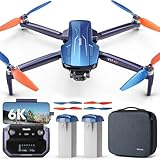
The Veeniix V11Air lists a 600 g body, 3-axis brushless gimbal, 6K camera, 4K at 30 fps video, and 70 minutes across two batteries. It is a larger alternative for a buyer who wants more listed mass than a mini drone and built-in FAA Remote ID.
Its supplied details include 10,000-foot FPV transmission, 5x lossless zoom, night mode, 2.5-hour fast charging, auto return, and Follow, Orbit, Waypoint, and Cruise modes. The rating is 4.2 from 362 reviews, which is the lowest rating and one of the smaller feedback samples in this comparison.
No wind-resistance level appears in the supplied information. I would therefore choose it for its documented gimbal, endurance, and feature set, not on an assumed high-wind claim tied only to its 600 g listed weight.
The V11Air suits pilots who want a larger all-in-one feature set
The body mass, dual-battery total, Remote ID, and GPS modes make this interesting for a recreational adult pilot who wants an aircraft beyond the mini category. A 3-axis gimbal should help produce smoother 4K footage when conditions remain within the aircraft’s real capability.
The 2.5-hour fast-charging claim may help a day of multiple flights, though charged spare batteries should be kept secured and protected from weather. Before launch, check that the Remote ID status and return-home position are correct.
The V11Air should not be treated as wind rated until official data confirms it
Weight can help an aircraft resist a short gust, but motor tuning, propeller design, battery state, and flight controller behavior matter too. With no listed level, remain conservative and use a broad open area for early tests.
The supplied review notes mention conflicting sensor technology in the listing. I would confirm the current specifications and support documentation if those details affect a purchase decision.
Choose a wind-capable drone by its stated rating, return margin, and camera control
A wind-resistant drone is an aircraft designed to maintain controlled flight and usable camera output as wind increases through a mix of motor power, aerodynamic design, GPS positioning, aircraft mass, and gimbal stabilization. The best selection starts with a published rating, then asks whether the route, gusts, battery, and pilot skill leave enough safety margin.
A published wind level is a starting point, not a promise
Level 5, Level 6, and Level 7 labels are useful comparisons only when the manufacturer supplies them. In this group, Level 5 appears on the Potensic ATOM, DJI Mini 3, and DJI Mini 4K; Level 6 appears on the Bwine F7GB2 Pro and Holy Stone HS600D; Level 7 appears on the Bingchat AE86 Pro Max.
Not every listing converts a level to meters per second or miles per hour, so I would not make a conversion that the supplied data cannot support. The DJI Mini 3 and Mini 4K do state 38 kph alongside Level 5, while other listed levels do not include a matching numerical wind figure.
What matters in flight is the difference between the wind and the drone’s ability to make forward progress. A drone might hold position with a strong tilt angle, yet have little speed left for a safe headwind return.
Higher mass can help, but it does not replace power or practice
The compact models here weigh 246–249 g, while the heavier models range from 357 g to 603 g. More mass can make an aircraft less reactive to a brief gust, which is why forum participants often report that larger models feel steadier than mini drones.
That same mass can make a landing more demanding and does not tell us the motor reserve, top speed, or certified operating limit. Treat stated mass as one signal, then favor the model with a published rating and verified flight systems when wind performance is central.
Top speed is also a useful real-world clue when it is supplied, because it affects headwind progress. Do not confuse quoted transmission range with flight ability: a long signal link cannot solve an inadequate return ground speed.
A 3-axis gimbal protects framing but cannot make a risky flight safe
A 3-axis gimbal separates camera movement from many aircraft corrections, and every product in this roundup lists one. The Bingchat AE86 Pro Max and Holy Stone HS600D add EIS in their supplied information, while the DJI Mini 5 Pro adds a flexible 225-degree gimbal rotation.
Gimbal stabilization is important for footage, but it should not make a pilot overlook aggressive tilt, rapidly falling battery, or a slow ground-speed reading. A stable image can coexist with an aircraft working hard against wind.
GPS hold, auto return, and multi-sensor positioning are helpful backup systems, not a wind-flying mode. Confirm home point, return altitude, compass state, and satellite reception before takeoff, then keep a clear route that does not depend on automation threading through obstacles.
Battery planning should reserve the hardest part of the flight for the trip home
Wind can cut usable endurance by about 20–35% according to forum reports gathered for this brief. I would take that as a planning warning, especially with the DJI Mini 4K’s 31-minute stated maximum, the Mini 3’s 38-minute claim, or any flight that starts at lower battery in a cold or windy location.
Fly the first leg into the wind where possible. If the drone makes poor forward progress while the battery is still high, return and land rather than hoping the situation will improve farther away.
Use a more conservative low-battery landing point than on a calm day, and interpret flight-time totals correctly. The Ruko, Bwine, Holy Stone, Veeniix, and Bingchat totals are supplied as multiple-battery totals, not a guarantee of one uninterrupted flight.
Beginner pilots should use light wind as practice rather than chase the stated limit
A beginner should start in calm, open air and add only a mild breeze after mastering orientation, controlled stops, manual landing, and return-home setup. The most useful first wind lesson is observing how the aircraft tilts and how its ground speed changes in each direction.
Do not launch from behind a building and assume the calm patch represents conditions overhead. Wind often accelerates around structures, crests, cliffs, and trees, while rotor turbulence can make a short final approach unpredictable.
Attitude-style manual flying skills can help advanced pilots understand drift, but they are not a reason for a newer pilot to disable assistance in high wind. Keep positioning aids active unless formal training and a safe practice area support another approach.
Launch and land into the safest available space rather than forcing a shot
Use a clear takeoff and landing surface with room away from people, loose debris, water, and obstacles. Face the aircraft into the wind when practical, and make the first hover a deliberate control check rather than an immediate departure.
For a beach, ridge, or mountain site, expect wind direction and speed to change with height and terrain. A short low hover can look easy while a climb exposes the drone to much stronger flow.
When landing, approach with battery reserve and avoid hovering low for long while deciding what to do. If gusts become inconsistent, a calm, open landing zone is more important than preserving the final seconds of a shot.
These answers cover the most common drone wind questions
Which drone is best for high winds?
The Bingchat AE86 Pro Max has the highest stated rating in this comparison at Level 7. The Bwine F7GB2 Pro and Holy Stone HS600D list Level 6 and have heavier listed bodies, making them stronger paper-spec alternatives; always follow the manual and leave return margin.
Can you fly drones in windy weather?
You can fly only when wind and gusts are within the drone’s official capability, the route is clear, and the battery leaves a conservative return reserve. Wind can reduce usable endurance, so start into the wind, watch ground speed, and land early if the aircraft struggles to progress.
What wind is too strong for drones?
Wind is too strong when it exceeds the manufacturer’s stated limit, gusts make control or landing uncertain, or the drone cannot maintain safe progress toward home. Do not use a generic number for every model; stated ratings differ, and several products in this guide have no supplied wind classification.
How windy is too windy for a drone show?
A drone show should stop when wind or gusts exceed the operating limits set by the show operator and aircraft manufacturer, or when formation control cannot be maintained with safe separation. This requires professional operational planning and site-specific weather monitoring, not a consumer-drone rule of thumb.
The best choice is the drone whose stated limit leaves room for a safe return
For the highest listed resistance, choose the Bingchat AE86 Pro Max with its Level-7 claim. For a heavier Level-6 alternative with three batteries, the Bwine F7GB2 Pro is the value-focused pick, while the Holy Stone HS600D combines Level 6 with the heaviest listed body and long two-battery endurance.
If portability matters more, the DJI Mini 3, DJI Mini 4K, and Potensic ATOM provide stated Level-5 ratings, but their near-250 g weight calls for extra restraint. The best drones for windy conditions in 2026 are not the ones flown at their claimed maximum; they are the ones matched to a conservative pilot, a realistic forecast, and a return plan that works before the wind strengthens.