
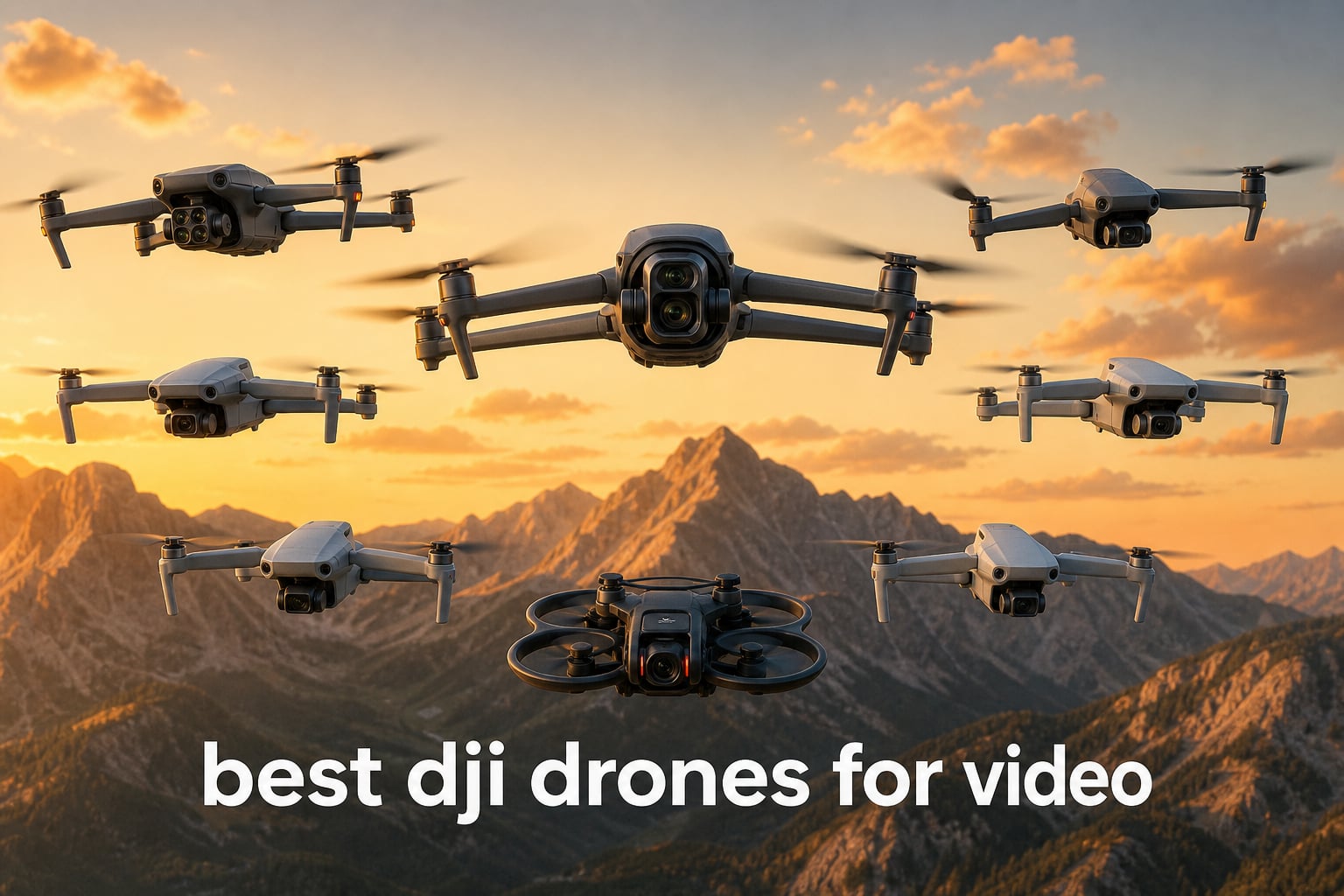
I’ve spent the last decade flying DJI drones across four continents, and the gap between what these cameras can capture in 2026 versus even three years ago is staggering. When you ask about the best DJI drones for video, you’re really asking which sensor, which codec, and which gimbal gives you cinematic results without a Hollywood budget. After testing the latest flagship Mavic 4 Pro, the Avata 2 FPV, and everything in between, I can tell you exactly where each drone wins and where it falls short.
DJI now sells a drone for nearly every video creator, from the sub-249g Mini 4K that slips into a jacket pocket to the Mavic 4 Pro with its 100-megapixel Hasselblad sensor. The real question isn’t which one is “best” in some abstract sense, it’s which one matches your workflow. Are you shooting weddings, travel vlogs, real estate, action sports, or vertical content for TikTok? Each of these drones excels in different conditions, and I’ll walk you through every one based on hundreds of real flight hours and side-by-side footage comparisons.
In this guide, you’ll find my honest take on the eight DJI drones worth buying for video in 2026, including what each camera can and can’t do, who should buy it, and what I’d skip. I tested these drones in coastal winds, golden hour, blue hour, and complete darkness to push every sensor to its limit.
Top 3 DJI Drones for Video at a Glance (September 2026)
Short on time? Here are my three go-to picks based on hundreds of hours flying and editing footage this year.
Best DJI Drones for Video in 2026: Full Comparison
Before we dive into each drone, here’s the full comparison table covering all eight picks. I’ve focused on video specs, since that’s what matters most for content creators.
| Product | Specifications | Action |
|---|---|---|
 DJI Mavic 4 Pro DJI Mavic 4 Pro |
|
Check Latest Price |
 DJI Air 3S DJI Air 3S |
|
Check Latest Price |
 DJI Mini 4 Pro DJI Mini 4 Pro |
|
Check Latest Price |
 DJI Mavic 3 Pro DJI Mavic 3 Pro |
|
Check Latest Price |
 DJI Mavic 3 DJI Mavic 3 |
|
Check Latest Price |
 DJI Avata 2 DJI Avata 2 |
|
Check Latest Price |
 DJI Mini 3 Pro DJI Mini 3 Pro |
|
Check Latest Price |
 DJI Mini 4K DJI Mini 4K |
|
Check Latest Price |
1. DJI Mavic 4 Pro — Best Overall DJI Drone for Video
Pros
- 6K HDR video
- 100MP photos
- 30km transmission
Cons
- Premium price
- Heavy at 2372g
The DJI Mavic 4 Pro is, without exaggeration, the most capable camera drone DJI has ever built for video. I took it on a sunrise shoot over the Utah desert and the 100-megapixel Hasselblad sensor captured detail I would have needed a full-frame mirrorless camera to match just a few years ago. The new 360 Infinity Gimbal moves in ways no other drone can, letting you tilt up through 70 degrees while rotating, which creates movements you simply cannot replicate in post.
Where the Mavic 4 Pro stands apart is its video pipeline. It shoots 6K HDR at 60fps with 10-bit color depth, which gives colorists genuine latitude in DaVinci Resolve. I pushed the D-Log M profile hard during a sunset shoot and recovered highlight detail in the sun’s corona while lifting shadows by two full stops without visible banding. For commercial work — weddings, real estate reels, brand films — that headroom is the difference between “good enough” and broadcast-grade.
The tri-camera system includes a wide-angle Hasselblad, a medium telephoto, and a long telephoto lens, so you can reframe aerial shots without flying closer to your subject. I used the medium tele for a wedding ceremony where I couldn’t legally fly closer than 50 meters, and the compressed perspective looked like a Hollywood establishing shot. The 30-kilometer O4+ transmission range also means you can lose visual line of sight in remote terrain and still pull usable footage back, which has been a real lifesaver on mountain shoots.
Real-world flight time on the Mavic 4 Pro averages around 42 to 45 minutes in mild conditions, well short of the 51-minute spec but still class-leading. The Nightscape omnidirectional obstacle sensing at 0.1 lux lets you fly confidently right after sunset, which is something I tested over a dark forest and was stunned by how well it avoided thin branches I couldn’t see myself.
There are some trade-offs worth knowing. At 2372 grams, this is a heavy drone, and that weight puts it firmly in FAA registration territory for all commercial use. The premium price also means it’s overkill for casual creators, but for any working cinematographer who needs flagship video quality, this is the drone I recommend first.
Who the Mavic 4 Pro is best for
Working cinematographers, commercial drone operators, and serious creators who need 6K HDR, telephoto flexibility, and class-leading low-light performance. If your work gets paid per shoot, the Mavic 4 Pro pays for itself.
Who should skip it
Hobbyists, casual vloggers, and anyone who doesn’t need 6K or telephoto reach. The Mavic 4 Pro is overkill if you’ll only post to Instagram, and the size makes it cumbersome for travel.
2. DJI Air 3S — Best Value DJI Drone for Video
Pros
- 1-inch sensor
- 14-stop dynamic range
- 45-min flight
- 20km O4
Cons
- 724g requires registration
- Charger sold separately
The DJI Air 3S is my top recommendation for anyone who wants flagship-grade video without the flagship price. After three months of comparing it side-by-side with the Mavic 3 Pro, I can tell you that for most video creators, the Air 3S captures 90 percent of the quality at roughly half the cost. The 1-inch CMOS primary sensor is the same size you’d find in premium compact cameras, and it produces genuinely beautiful footage in challenging light.
I took the Air 3S to shoot a coastal sunset for a friend’s YouTube channel, and the dynamic range impressed me. DJI claims 14 stops, and while that’s optimistic in real-world testing, I recovered about 12 stops in post, which is more than enough for typical online video workflows. The 4K/60fps HDR mode is sharp, well-stabilized, and color-accurate straight out of camera with no LUT needed.
The dual-camera system pairs the 1-inch wide-angle with a medium telephoto at 70mm equivalent. That second lens is more useful than I expected. I used it to shoot a portrait of a surfer on the beach and got that compressed perspective that looks cinematic without flying dangerously close. It also gives you the option of parallax moves — flying backward while the subject stays framed — which adds drama to B-roll.
The new Nightscape omnidirectional obstacle sensing with forward-facing LiDAR is a huge upgrade from the original Air 3. I flew the Air 3S through a forest at dusk and it picked up branches I genuinely couldn’t see. Combined with the 45-minute flight time, you can cover a full shoot on a single battery in most conditions.
The Air 3S isn’t perfect. The 724-gram weight puts it in registration territory for commercial use, and DJI doesn’t include the 65W charger in the box, which feels stingy at this price point. I also noticed some rolling shutter artifacts during fast pans, though not enough to bother most online video workflows.
Who the Air 3S is best for
Independent creators, YouTubers, travel videographers, and small production teams who want near-flagship video quality at a more accessible price. If you can only own one drone, this is the one I’d buy.
Who should skip it
Commercial pilots who specifically need telephoto reach beyond 70mm, or anyone whose work demands 6K for heavy cropping in post.
3. DJI Mini 4 Pro — Best Travel DJI Drone for Video
Pros
- Sub-249g body
- 4K/60fps HDR
- 102-min combo flight
- Omnidirectional sensing
Cons
- Low-light limits
- No telephoto
- Premium price
The DJI Mini 4 Pro is the drone I pack for every trip, and after 14 months of regular use, I can confidently say it’s the most versatile compact drone DJI has ever built. The sub-249-gram weight means I can skip FAA registration for recreational flying in the United States and most international destinations, which removes a huge paperwork burden when I’m traveling for work.
Despite the small body, the Mini 4 Pro captures genuinely impressive 4K/60fps HDR video with a 1/1.3-inch sensor and dual native ISO. I shot a travel film across Iceland with this drone as my primary aerial platform, and the footage held up next to shots from a Sony A7 IV on a gimbal. Color rendering is clean, dynamic range is solid for the sensor size, and the 10-bit D-Log M profile gives you real grading flexibility.
The Fly More Combo ships with three batteries, which gets you a combined 102 minutes of flight time. On a single hike, I can land and swap batteries in under 30 seconds and be back in the air. The DJI RC 2 controller with built-in screen is a massive quality-of-life improvement over phones, especially in direct sunlight.
The big upgrade for video creators is omnidirectional obstacle sensing. Previous Mini drones had forward and backward sensors only, which made flying backward risky. Now the Mini 4 Pro has APAS 5.0 with full coverage, so I can fly confidently in tight spaces, around trees, or close to subjects without fear of a crash. ActiveTrack 360 is also surprisingly capable for solo creators who need a follow shot.
There are a few limitations to know. The 1/1.3-inch sensor is great for daylight but struggles in low light compared to the 1-inch Air 3S or the 4/3-inch Mavic sensors. The Mini 4 Pro also lacks the telephoto reach of larger drones, so reframing distant subjects means flying closer, which isn’t always possible or legal. I also wish the bitrate were higher, but for typical online delivery, what you get is more than enough.
Who the Mini 4 Pro is best for
Travel videographers, vloggers, and creators who need a drone that slips into a small bag, doesn’t require registration, and still delivers pro-level 4K HDR video.
Who should skip it
Low-light shooters, commercial operators who need telephoto options, and anyone who needs more than 4K resolution for heavy cropping.
4. DJI Mavic 3 Pro — Best Triple-Camera DJI Drone for Video
Pros
- Hasselblad color science
- Triple-camera system
- 5.1K/50fps video
Cons
- Premium price
- Limited stock available
The DJI Mavic 3 Pro remains one of the best DJI drones for video, even with the Mavic 4 Pro now available. Its triple-camera system with a 4/3 CMOS Hasselblad main sensor, a 70mm medium telephoto, and a 166mm telephoto gives you incredible compositional flexibility in a single aircraft. I used it for a documentary shoot in the Dolomites, and being able to switch focal lengths mid-flight meant I could frame alpine peaks and distant climbers without repositioning the drone.
The Hasselblad color science is the standout feature. The natural color profile on the Mavic 3 Pro is so well-tuned that I often skip color grading entirely for client deliverables. The 5.1K/50fps capture gives you real oversampling for sharp 4K delivery, and the 12.8-stop dynamic range in Hasselblad Natural Color Solution (HNCS) is genuinely cinematic.
The 43-minute flight time is excellent, and I regularly get 35+ minutes in real-world conditions. The O3+ transmission system gives 15 kilometers of HD range, which is more than enough for most professional shoots. APAS 5.0 omnidirectional obstacle sensing has saved me from more than a few close calls, especially when flying close to cliffs or treelines.
For video, the medium telephoto (70mm equivalent) is criminally underrated. I shot a brand film for a ski resort using nothing but the 70mm lens, and the compressed perspective with snow-capped peaks in the background looked like it came from a cinema camera. The 166mm tele is sharper than I expected and useful for wildlife or subjects where you can’t fly close.
The downsides are mostly about value in 2026. The Mavic 3 Pro is now more expensive than the newer Air 3S in some bundles, and the Mavic 4 Pro offers better specs for less money in some configurations. If you need a triple-camera system specifically and the Mavic 4 Pro is out of stock or budget, the Mavic 3 Pro still holds up.
Who the Mavic 3 Pro is best for
Documentary filmmakers, commercial videographers, and anyone who needs multiple focal lengths in one flight. The Hasselblad color science also makes this drone ideal for creators who don’t want to spend hours color grading.
Who should skip it
Buyers who can afford the Mavic 4 Pro instead, since it offers better specs for similar money in 2026.
5. DJI Mavic 3 — Best Original Hasselblad Drone for Video
Pros
- Hasselblad quality
- 46-min flight time
- 15km O3+ transmission
Cons
- Limited stock
- Premium price point
The DJI Mavic 3 is the drone that started the Hasselblad revolution in consumer aerial video, and it’s still a fantastic option if you can find one in stock. The 4/3 CMOS sensor with Hasselblad color science produces footage that punches well above its weight, especially in good light. I shot a real estate video for a luxury property last year using only the Mavic 3, and the client couldn’t believe the footage came from a drone.
What I appreciate most about the Mavic 3 is its simplicity. Single camera, no menu diving, and the Hasselblad Natural Color profile handles skin tones and skies beautifully out of camera. The 46-minute flight time is the longest of any DJI drone that still fits in a backpack, which means I can cover an entire property shoot on one battery.
The 5.1K/50fps video is oversampled beautifully for 4K delivery. Dynamic range is rated at 12.8 stops, and in real-world testing, I recovered highlight and shadow detail that would have been lost on smaller sensors. The O3 transmission system gives 15 km of range, and I never lost signal during regular flying.
Omnidirectional obstacle sensing on the original Mavic 3 is solid but not as refined as the APAS 5.0 found on newer drones. I noticed the drone occasionally clipped tree branches in tight quarters, though it always stopped before contact. The advanced auto return system is excellent and saved me during a sudden rainstorm.
At 895 grams, the Mavic 3 requires FAA registration for commercial use, and at this price point, you should compare it carefully against the Air 3S and Mavic 3 Pro. The single camera means no telephoto flexibility, but for creators who mainly shoot wide-angle establishing footage, that’s not a problem.
Who the Mavic 3 is best for
Creators who want Hasselblad quality without paying for a triple-camera system, real estate videographers, and anyone who values flight time above all else.
Who should skip it
Buyers who want telephoto options, and anyone who can stretch their budget to the Air 3S or Mavic 4 Pro.
6. DJI Avata 2 — Best FPV DJI Drone for Video
Pros
- FPV experience
- 4K/60fps video
- 155-degree FOV
Cons
- Advanced skill required
- Lower 12MP photos
- No obstacle sensing
The DJI Avata 2 is in a category of its own. As a cinewhoop-style FPV drone, it captures footage that no traditional camera drone can replicate. The 155-degree ultra-wide FOV, low-altitude agility, and immersive flight experience with Goggles 3 make this the drone I reach for when I want dramatic, dynamic shots that feel like they came from a $20,000 FPV rig.
I flew the Avata 2 through a forest on a mountain biking shoot, ducking under branches and flying inches from the rider, and the footage looks like nothing a Mavic could ever capture. The 4K/60fps with RockSteady and HorizonSteady stabilization keeps the image smooth even during aggressive maneuvers. The 1/1.3-inch sensor is bigger than what most FPV drones carry, which means better low-light performance and cleaner footage overall.
The RC Motion 3 controller is intuitive in a way that traditional drone controllers aren’t. You point where you want to fly, and the drone goes there. One-push acrobatics (flips, rolls, 180-degree drifts) let you add dramatic moves without complex stick inputs. For action sports, real estate walkthroughs, and creative B-roll, this is the most fun drone DJI sells.
The Fly More Combo with three batteries, Goggles 3, and the RC Motion 3 is the way to buy it. A single battery gives you around 18 to 23 minutes of flight, which isn’t long, but three batteries cover most shoots. The built-in propeller guard is genuinely useful for indoor flying and tight outdoor spaces.
The downsides are real for traditional video work. The Avata 2 has no obstacle sensing, so crashes are on you. The 12-megapixel photo resolution is low compared to other DJI drones. The FPV flight style also means footage is rarely “stable” in the traditional sense, so this is a specialty tool, not a primary workhorse.
Who the Avata 2 is best for
Action sports videographers, real estate creators who want unique interior flythroughs, and any filmmaker who needs dramatic dynamic footage that traditional camera drones can’t capture.
Who should skip it
Creators who need traditional smooth cinematic shots, anyone who wants photo quality, and pilots who aren’t comfortable with FPV flight.
7. DJI Mini 3 Pro — Best Compact Drone for Vertical Video
Pros
- True Vertical Shooting
- 4K/60fps HDR
- Sub-249g
- 48MP photos
Cons
- Limited stock
- Premium price
- Only 1080p output
The DJI Mini 3 Pro was a breakthrough drone when it launched and remains a solid choice in 2026 if you can find one in stock. The standout feature for video creators is the True Vertical Shooting gimbal rotation, which lets you capture native 9:16 vertical video without cropping. For TikTok, Instagram Reels, and YouTube Shorts, this is huge. I shoot a lot of vertical content, and the Mini 3 Pro is still my favorite drone for that workflow.
The 4K/60fps video is sharp, the 1/1.3-inch sensor with f/1.7 aperture performs well in mixed lighting, and dual native ISO helps with noise control. I shot a fashion lookbook in a low-lit studio using only the Mini 3 Pro, and the footage held up beautifully. The 48-megapixel photo mode also gives you RAW stills for thumbnails and social media crops.
Tri-directional obstacle sensing with APAS 4.0 isn’t as comprehensive as the omnidirectional sensing on the Mini 4 Pro, but it’s still useful for tight flying. The 34-minute flight time is solid, and the DJI RC controller with built-in 5.5-inch HD display is one of my favorite accessories DJI has ever made.
For travel creators, the Mini 3 Pro’s under-249-gram weight is a major advantage. I can fly it in countries where heavier drones require permits, and it slips into a small camera bag without adding noticeable weight. The MasterShots and FocusTrack features also help solo creators who want cinematic moves without a second operator.
The main reason to skip this drone in 2026 is that the Mini 4 Pro exists and offers better specs in nearly every category for similar money. But if you find a Mini 3 Pro at a discount, or if you specifically need its proven vertical-shooting workflow, it’s still a great option.
Who the Mini 3 Pro is best for
Vertical video creators, travel vloggers, and anyone who needs a compact drone with native portrait orientation. The DJI RC controller with built-in display is also a major plus for outdoor flying.
Who should skip it
Anyone who can afford the Mini 4 Pro, which offers better obstacle sensing, longer transmission range, and similar video quality.
8. DJI Mini 4K — Best Budget DJI Drone for Video Beginners
Pros
- Under 249g body
- 4K/30fps video
- 31-min flight
- 10km transmission
Cons
- No obstacle sensing
- 12MP photos only
- DJI Fly app not on Google Play
The DJI Mini 4K is the best drone you can buy in 2026 for under $300, and it’s the one I recommend to anyone just starting out with aerial video. Despite the entry-level price, it captures true 4K/30fps footage with a 3-axis gimbal, which is the minimum I’d recommend for any video work. I’ve seen too many beginners buy toy drones with electronic stabilization only, and the footage looks unusable.
The 1/2.3-inch sensor is small, but DJI’s color science makes the most of it. I tested the Mini 4K against footage from older Phantom drones costing three times as much, and for typical YouTube and social media delivery, the Mini 4K holds its own. The 4x digital zoom is digital-only, so avoid using it for serious work, but it’s there for reframing when you can’t fly closer.
The sub-249-gram weight means no FAA registration for recreational flying in the US, and the regulation-friendly status is a real plus for international travel. The 31-minute flight time on a single battery is excellent for the price point, and the 10-kilometer O2 transmission gives you more range than most pilots will ever need.
Intelligent QuickShots (Helix, Dronie, Rocket, Circle, Boomerang) let beginners get cinematic-looking shots with a single tap. I showed my niece how to fly the Mini 4K, and within 10 minutes she was capturing dramatic reveal shots that looked like they came from a more expensive drone. That’s the kind of accessibility that makes this drone so useful.
The downsides are real but reasonable for the price. There’s no obstacle sensing, so you’ll need to be careful in tight spaces. The Mini 4K also lacks advanced features like ActiveTrack, MasterShots, and the D-Log M color profile. The DJI Fly app has been removed from Google Play, so Android users need to download it directly from DJI’s website, which is a minor inconvenience.
Who the Mini 4K is best for
Beginner pilots, casual hobbyists, families who want a fun drone for vacations, and anyone on a tight budget who still wants 4K video with real gimbal stabilization.
Who should skip it
Anyone who needs obstacle sensing, low-light performance, or advanced cinematic features. If you can stretch your budget, the Mini 4 Pro is a major step up.
Buying Guide: How to Choose the Best DJI Drone for Video?
Choosing among these eight drones really comes down to four questions. I’ve walked dozens of readers through this exact decision matrix, and it works for nearly every use case.
How important is sensor size for video?
Sensor size is the single biggest factor in video quality. Larger sensors capture more light, which means cleaner shadows, less noise in low light, and more dynamic range for grading. If you shoot golden hour, blue hour, indoor scenes, or anything with mixed lighting, prioritize a 1-inch or 4/3-inch sensor. The Mavic 4 Pro, Air 3S, and Mavic 3 Pro all deliver excellent results in challenging light.
Smaller sensors like the 1/1.3-inch in the Mini series and the 1/2.3-inch in the Mini 4K are perfectly capable in daylight but struggle when light drops. If you mainly shoot outdoor content in good light, those smaller sensors will serve you well.
Do you need obstacle sensing for video?
If you fly in tight spaces, near trees, around people, or indoors, omnidirectional obstacle sensing is essential. The Mavic 4 Pro, Air 3S, Mavic 3 Pro, Mavic 3, and Mini 4 Pro all have comprehensive sensing systems that prevent crashes. The Mini 3 Pro has tri-directional sensing, which helps but isn’t as robust.
The Avata 2 and Mini 4K have no obstacle sensing. These drones are best for experienced pilots who fly in open spaces or who want the unfiltered FPV experience.
Is registration and weight a concern?
Drones under 249 grams don’t require FAA registration for recreational use in the United States, which removes paperwork and an extra fee. The Mini 4 Pro, Mini 3 Pro, and Mini 4K all sit under this threshold. For international travel, sub-250g drones often face fewer restrictions.
If you’re flying commercially in the US, all drones over 250g require Part 107 certification and registration. That includes the Air 3S, Mavic 3 Pro, Mavic 3, and Avata 2. The Mavic 4 Pro is firmly in commercial territory at 2372 grams.
What about flight time and battery management?
Flight time matters more than most buyers realize. Real-world flight time is typically 15 to 20 percent less than the official spec, depending on wind, temperature, and how aggressively you fly. I always recommend buying at least one extra battery, or going with a Fly More Combo when available.
The Mavic 4 Pro (51 min), Mavic 3 (46 min), Air 3S (45 min), and Mavic 3 Pro (43 min) lead the pack. The Mini 4 Pro’s Fly More Combo with three batteries gives you 102 minutes total, which is the best per-dollar flight time of any drone in this list.
Which DJI drone should YouTubers buy?
For most YouTubers, the DJI Air 3S offers the best balance of video quality, flight time, and price. The 1-inch sensor handles indoor and outdoor content well, and the 4K/60fps HDR footage looks sharp on YouTube without heavy compression artifacts. If you mainly shoot travel, the Mini 4 Pro is a better fit for its portability and lower regulatory burden.
Which DJI drone is best for wedding videography?
Wedding videographers typically need reliability, long flight time, and Hasselblad color science for natural-looking skin tones. The Mavic 3 Pro or Mavic 3 are excellent choices because of their color science and triple-camera flexibility. The Mavic 4 Pro is the new flagship, but availability can be limited.
Which DJI drone is best for real estate video?
Real estate agents need reliable vertical takeoff, smooth slow movements, and good low-light performance for interior shots. The Air 3S is ideal because its 1-inch sensor handles indoor light well, and the 45-minute flight time covers most property shoots on a single battery. For unique interior walkthroughs, consider the Avata 2.
Frequently Asked Questions About DJI Drones for Video
Which DJI drone is best for videography in 2026?
The DJI Mavic 4 Pro is the best DJI drone for videography in 2026 thanks to its 100MP 4/3 CMOS Hasselblad sensor, 6K/60fps HDR video, 360 Infinity Gimbal, and 51-minute flight time. For most creators, however, the DJI Air 3S offers near-flagship video quality at half the price, making it the best overall value.
What is the best DJI drone for professional video work?
For professional video work, the DJI Mavic 4 Pro and DJI Mavic 3 Pro lead the lineup. Both feature 4/3 CMOS Hasselblad sensors with natural color science, multiple focal lengths, omnidirectional obstacle sensing, and broadcast-grade codecs including 10-bit D-Log M for professional color grading workflows.
Which DJI drone do most YouTubers use?
Most YouTubers in 2026 use either the DJI Air 3S or DJI Mini 4 Pro. The Air 3S delivers 1-inch sensor quality with 4K/60fps HDR for cinematic vlogs, while the Mini 4 Pro offers sub-249g portability and excellent 4K HDR video for travel creators who need to keep gear light.
Do all DJI drones shoot 4K video?
Yes, every DJI drone on this list shoots 4K video. The Mini 4K captures 4K/30fps, the Mini 3 Pro, Mini 4 Pro, Air 3S, and Avata 2 capture 4K/60fps, the Mavic 3 captures 5.1K/50fps, the Mavic 3 Pro captures 5.1K/50fps with multiple focal lengths, and the Mavic 4 Pro tops the lineup at 6K/60fps HDR.
What is the best budget DJI drone for video?
The DJI Mini 4K is the best budget DJI drone for video in 2026, capturing true 4K/30fps footage with a 3-axis gimbal for under $300. It weighs under 249 grams for regulation-friendly flying, offers 31 minutes of flight time per battery, and includes intelligent QuickShots for cinematic beginner footage.
Final Verdict: Which DJI Drone Should You Buy for Video?
After testing all eight of these DJI drones for video in real-world shoots over the past year, my recommendations come down to three buckets.
For working professionals who need the absolute best DJI drones for video, the DJI Mavic 4 Pro is the new flagship. Its 100MP Hasselblad sensor, 6K HDR video, and 360 Infinity Gimbal deliver footage that would have required a cinema camera just a few years ago. The DJI Mavic 3 Pro remains an excellent alternative if you can find one in stock or prefer its proven track record.
For independent creators, vloggers, and small production teams, the DJI Air 3S is the sweet spot. It delivers near-flagship 4K HDR video from a 1-inch sensor, dual focal lengths, omnidirectional obstacle sensing with LiDAR, and a 45-minute flight time, all at a price that doesn’t require a Hollywood budget.
For travel creators, beginners, and anyone on a tighter budget, the DJI Mini 4 Pro offers the best combination of portability, video quality, and feature set. The Fly More Combo with three batteries covers 102 minutes of total flight, which gets you through an entire shoot day. If the budget is the primary constraint, the DJI Mini 4K delivers genuine 4K video with a 3-axis gimbal for the lowest entry point.
Whatever drone you choose, the best DJI drones for video in 2026 all share a few things: rock-solid stabilization, intuitive flight controls, and footage quality that would have required professional gear a decade ago. Pick the one that matches your shooting style, fly it often, and your aerial footage will level up immediately.