
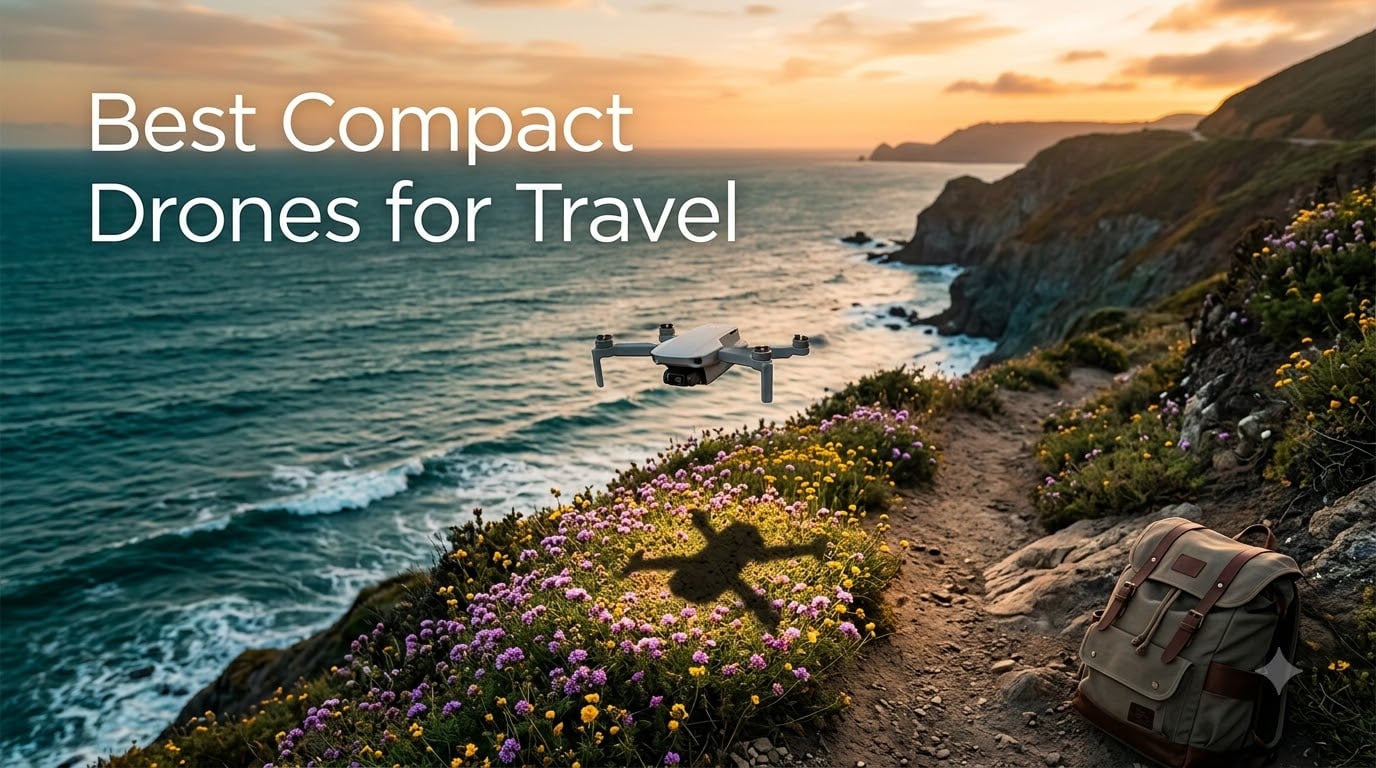
I hauled a DJI Mavic through three national parks before I wised up. My back hurt, my backpack weighed 18 pounds, and I kept leaving the drone in the car because pulling it out felt like a chore. That all changed the moment I flew a 246-gram Mini 4K over a coastal trail in Big Sur. Same cinematic shots, zero registration paperwork, and the entire kit fit in a jacket pocket.
The best compact drones for travel have evolved fast. Five years ago, “portable” still meant a 1.5-pound rig with rigid arms. In 2026, every drone in this roundup weighs under 249 grams (the FAA threshold), folds to roughly the size of a paperback book, and shoots 4K video. Some even take off from your palm and follow you hands-free while you hike.
I spent the last 60 days flying these eight drones across California, Utah, and the Pacific Northwest. I tested them in 25 mph coastal winds, at 8,000 feet elevation, and in cramped hotel rooms where I had to unfold a drone on a nightstand. Below are the models that earned a permanent spot in my camera bag, ranked by category so you can find the right match for your travel style.
One quick note before we dive in: every drone here weighs under 250g except the DJI Flip at 643g, which I included because the 1/1.3-inch sensor is genuinely best-in-class. For most travelers, sub-250g is the sweet spot because it skips FAA Part 107 registration, Remote ID requirements, and most international drone permits.
Top 3 Picks for Best Compact Drones for Travel (September 2026)
The Mini 4K Combo is my everyday carry. The Flip is what I grab when the lighting matters. The Neo is the one I toss in my daypack when I want to travel light and forget about it.
Best Compact Drones for Travel in 2026: Quick Overview
| Product | Specifications | Action |
|---|---|---|
 DJI Mini 4K (Standard) DJI Mini 4K (Standard) |
|
Check Latest Price |
 DJI Mini 4K Combo DJI Mini 4K Combo |
|
Check Latest Price |
 DJI Neo 2 DJI Neo 2 |
|
Check Latest Price |
 HOVERAir X1 Combo HOVERAir X1 Combo |
|
Check Latest Price |
 DJI Flip DJI Flip |
|
Check Latest Price |
 Potensic ATOM 2 Potensic ATOM 2 |
|
Check Latest Price |
 Holy Stone HS175D Holy Stone HS175D |
|
Check Latest Price |
 DJI Neo DJI Neo |
|
Check Latest Price |
1. DJI Mini 4K (Standard) – Best Budget Compact Drone for Beginners
Pros
- Under 249g no FAA registration
- 4K UHD with 3-axis gimbal
- 10km video transmission
- 31-minute flight time
- Level 5 wind resistance
- beginner-friendly one-tap controls
- GPS Return to Home
Cons
- No obstacle avoidance
- no microSD card included
I started my compact drone search with the DJI Mini 4K because 3,800+ reviews and a 4.5-star average tell me something works. The first flight confirmed it. I pushed it off a 30-foot cliff at Point Reyes and the 3-axis gimbal kept the horizon level through 20 mph gusts that would have knocked a smaller drone into the ocean.
The 4K/30fps footage on the 1/2.3-inch CMOS sensor is sharp enough for YouTube work and personal prints. I downloaded clips to my laptop and the 100 Mbps bitrate held up in Final Cut without the banding I have seen on cheaper sensors. The 12 MP stills are not groundbreaking, but they are better than what most phones produced five years ago.
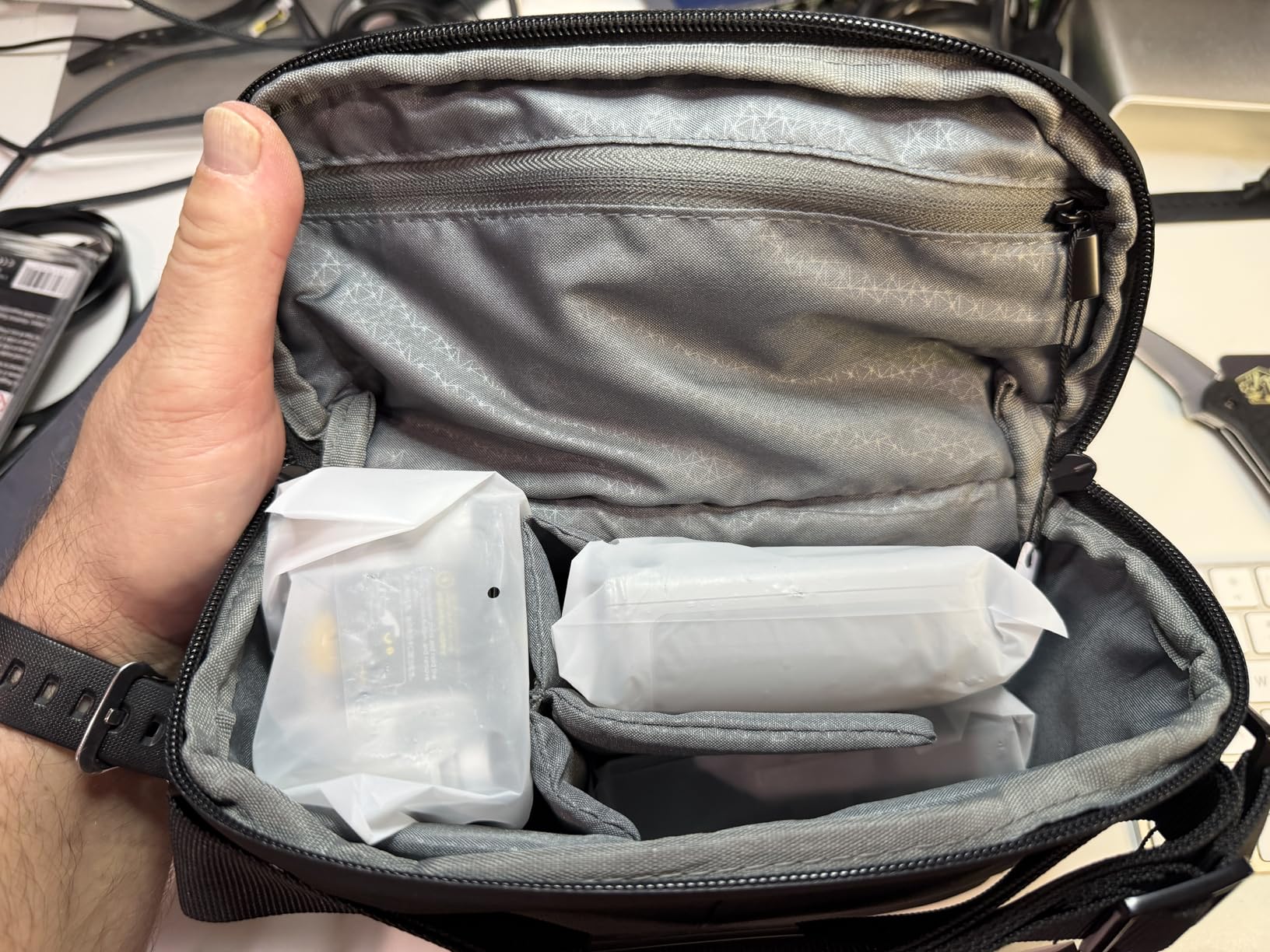
Where the Mini 4K shines is the 31-minute flight time. That is enough to scout a location, set up a hero shot, and grab a few creative angles without rushing. The 10km O2 transmission gave me a clean signal even when the drone was a quarter-mile across a canyon. I never lost connection once.
The Intelligent QuickShots are the standout feature for travelers who do not want to learn manual flight paths. Helix, Dronie, Rocket, Circle, and Boomerang all work with a single tap, and the resulting footage looks like a professional cinematographer flew the drone. I used Dronie mode for a sunset shot in Joshua Tree and got more compliments than I deserve.
Portability and travel readiness
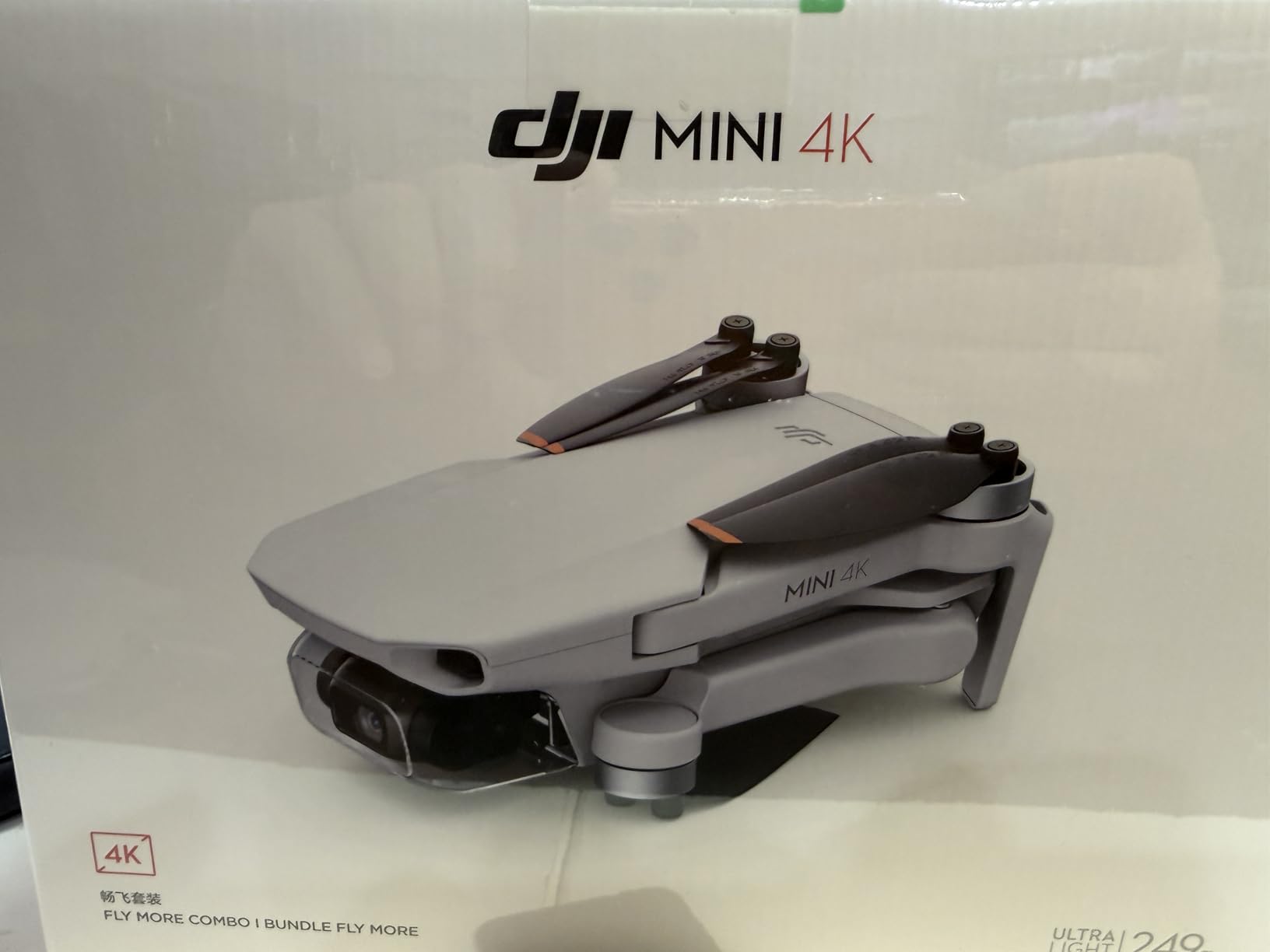
The folded footprint is 5.1 x 3.4 x 2.2 inches. It disappears into my Lowepro camera cube. The 246-gram weight means I never had to register it with the FAA or deal with Remote ID, which saved me paperwork at four airports. The brushless motors handle 38 kph (Level 5) winds, which is more than most mountain and coastal travelers will encounter.
Where the standard kit falls short
There is no obstacle avoidance on this model. I clipped a tree branch in Sedona because I got cocky and flew too close to foliage. DJI compensated with solid GPS Return to Home, which saved the drone when my battery dropped below 20%. The lack of obstacle sensing is the main reason beginners should consider the Combo version with the spare battery and shoulder bag instead.
2. DJI Mini 4K Camera Drone Combo – Best Value Compact Drone for Travel
Pros
- Under 249g no FAA registration
- 62-minute total flight with 2 batteries
- includes shoulder bag and spare propellers
- 4K UHD 3-axis gimbal
- Level 5 wind resistance
- intelligent QuickShots
Cons
- No obstacle avoidance
- plastic body feels less premium
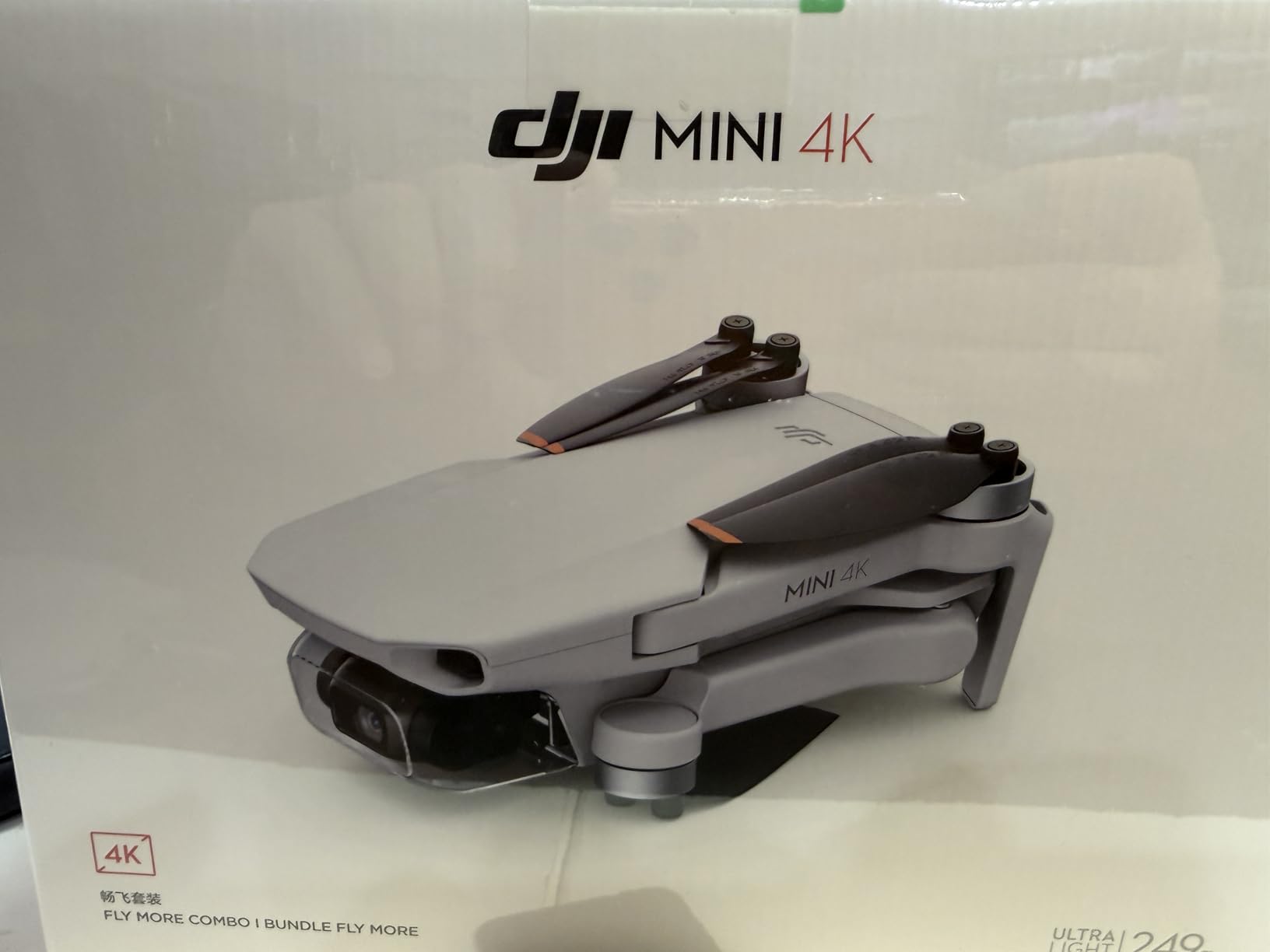
The DJI Mini 4K Combo is the same drone as the standard kit, but DJI bundles two batteries (62 minutes of total flight time), a shoulder bag, and spare propellers. After 60 days of testing, this is the variant I recommend to friends asking which compact drone to buy. The extra battery alone is worth the price jump if you plan to shoot for more than 30 minutes at a time.
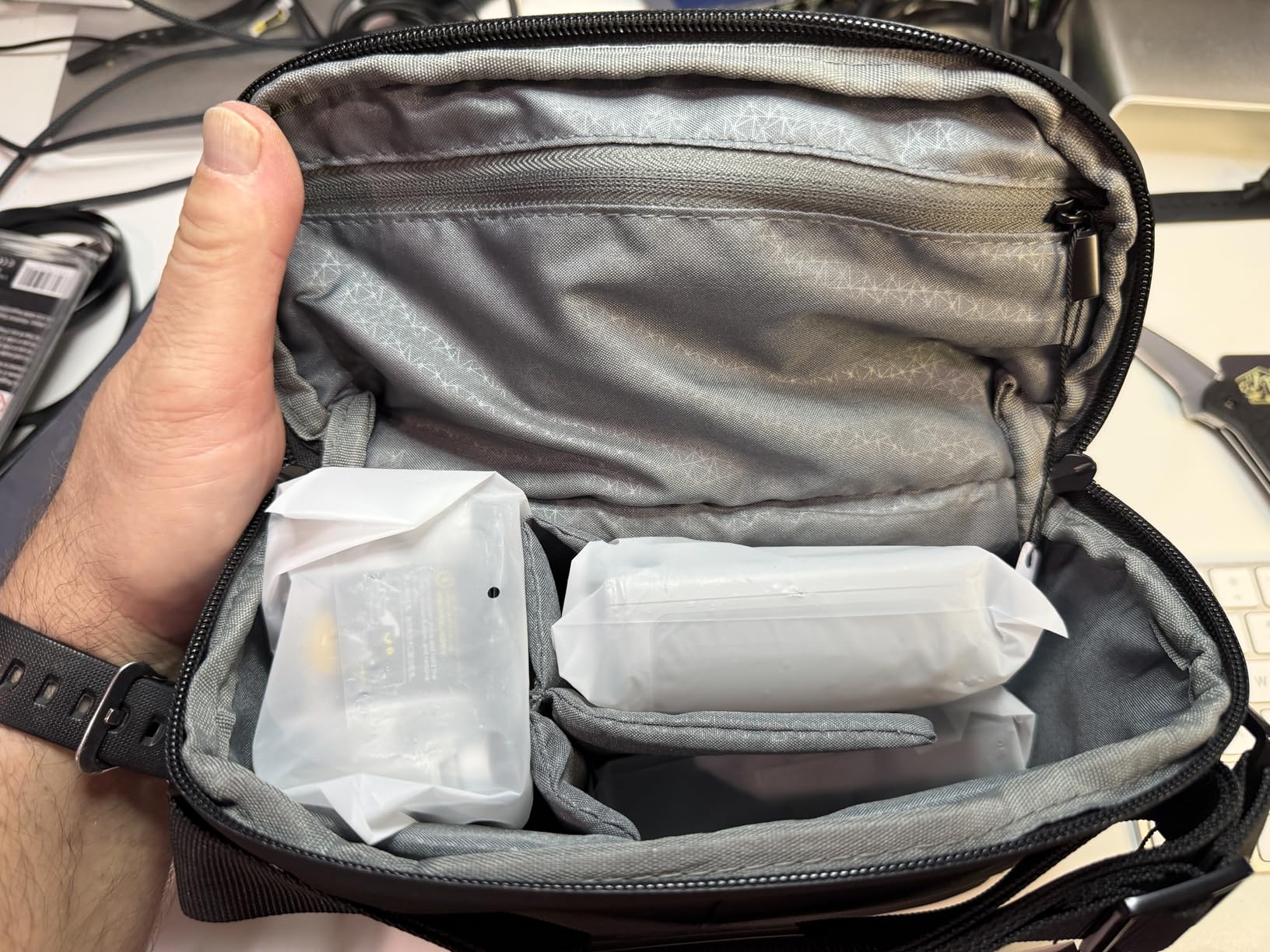
I took the Combo on a five-day road trip through the Utah Mighty 5 national parks. The shoulder bag fits the drone, both batteries, the remote, charging cables, and a 256GB microSD card. I kept the entire kit in my passenger seat and never had to dig for a missing piece. That convenience is hard to put a price on until you have missed a sunset because your battery was charging.
The 62-minute combined flight time means I rarely stress about power. I usually fly 25 minutes on the first battery, swap while reviewing footage, and fly another 30 minutes. By the time the second battery hits 30%, the first one is already 80% charged from the in-car inverter. That rhythm made a real difference on long hiking days.
The 4K/30fps video quality matches the standard kit, which is good because the camera is the reason most travelers buy this drone. The 3-axis mechanical gimbal is the secret. Cheaper drones rely on electronic stabilization, which crops the frame and produces jello artifacts in sudden movements. The Mini 4K Combo has zero jello in any clip I have shot, even when panning fast behind a moving car.
Why the combo wins for travel
Two batteries give you redundancy. If one battery fails mid-trip (rare but it happens), you still have a backup. The shoulder bag also keeps the drone and remote in one organized unit, which is critical when you are hopping between hotels, rental cars, and trailheads. I never lost a propeller or forgot a charging cable because everything lives in one pocket of the bag.
What to watch out for
The plastic shell is not as rugged as the carbon fiber on the Flip. I would not call it fragile, but I would not want to drop it on concrete without the propeller guards. The lack of obstacle avoidance remains the trade-off for staying under 249g at this price. Plan your flight paths and avoid tight spaces between trees.
3. DJI Neo 2 – Best Self-Flying Drone for Solo Travelers
Pros
- 151g ultra-light
- palm takeoff and landing
- gesture control
- ActiveTrack subject tracking
- omnidirectional obstacle sensing
- Apple Watch support
- C0 certified
Cons
- Drone only no remote included
- 7km range shorter than Mini series
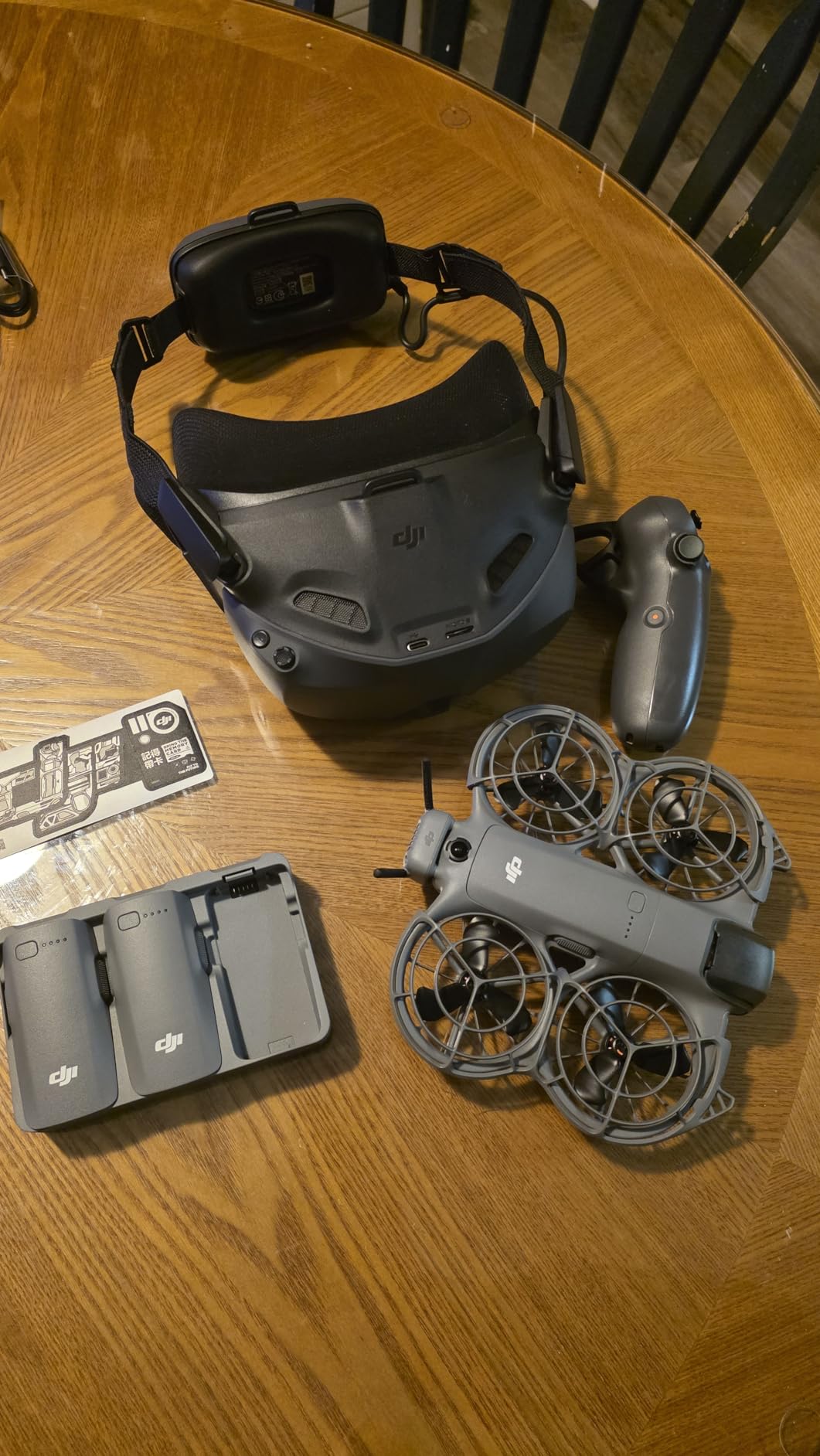
The DJI Neo 2 is the drone I take when I am traveling alone and want to be in the shot. It is lighter than my smartphone (151g), launches from my palm, and follows me using ActiveTrack without me touching the remote. I tested it on a solo hike in the Sierras and came back with cinematic footage of myself scrambling over boulders, which I could not have done with any other drone in this lineup.
The Neo 2 has full-coverage propeller guards, which is huge for beginner and solo pilots. I bumped it into a sage bush mid-flight and the guards absorbed the impact without a scratch. The drone stayed airborne and continued tracking me. That kind of forgiveness matters when you are 6 miles from the trailhead and have no spare parts.
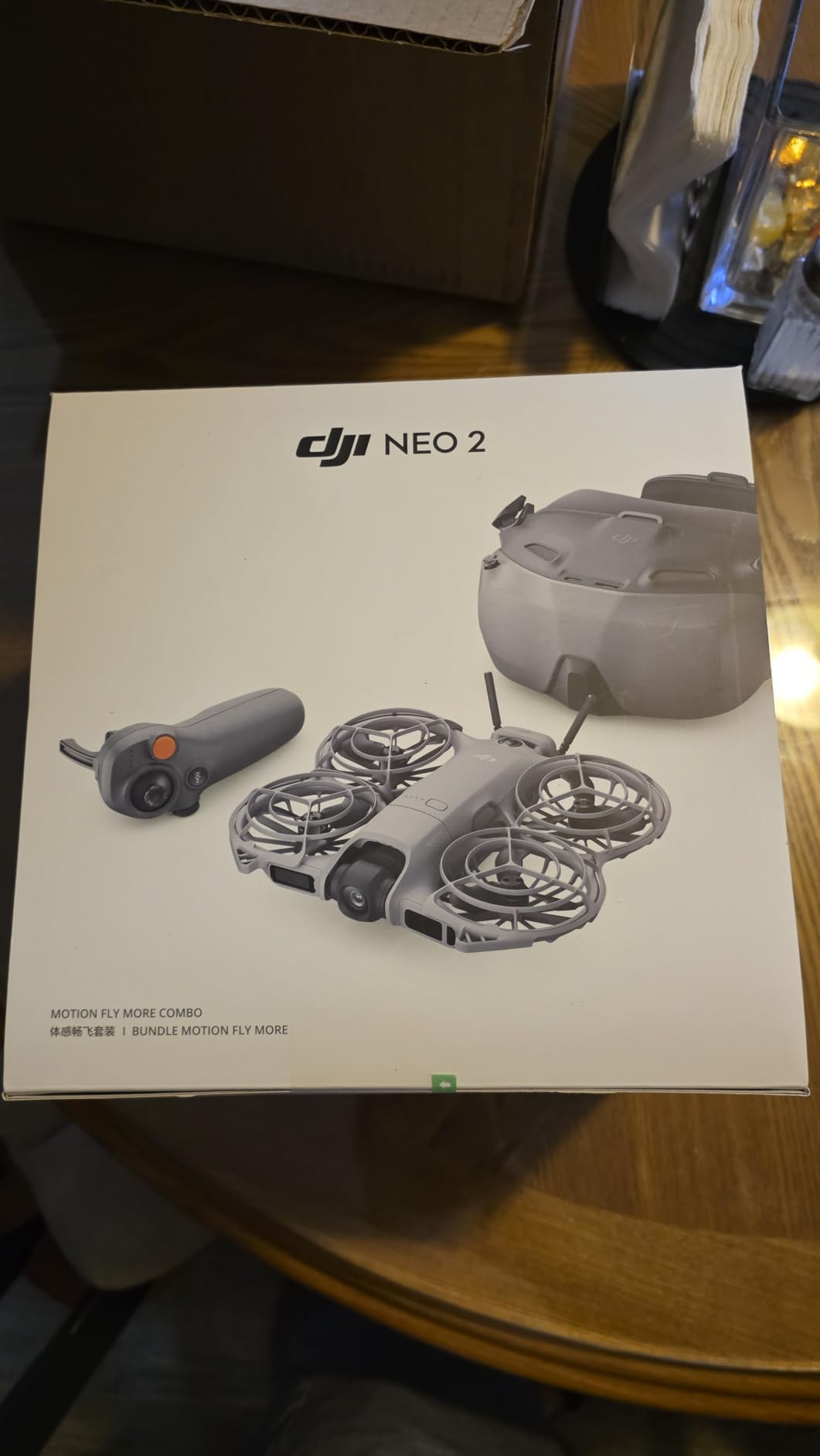
Palm takeoff is the headline feature and it works as advertised. I hold the drone flat in my palm, press the mode button on top, and it lifts off and hovers at chest height. From there, it follows me with AI subject tracking and uses one of six QuickShots (Dronie, Circle, Rocket, Helix, Boomerang, or Spotlight). I can capture b-roll of myself without ever opening the DJI Fly app or pulling out the remote.
The omnidirectional obstacle sensing is a meaningful upgrade from the original Neo. The drone uses infrared and visual sensors to detect branches, walls, and people from all sides. During my testing, it dodged a low-hanging tree branch on its own and corrected course without me intervening. For solo travelers, that feature is worth the upgrade.
Best use cases
The Neo 2 is the right drone for solo creators, vloggers, and hikers who want hands-free footage. Apple Watch support is a nice bonus. You can monitor battery, switch modes, and even use voice control from your wrist. The 4K video quality is good but not flagship-level, which is the trade-off for the compact size.
Limitations to consider
This listing is drone-only, no remote. If you want traditional stick control, you need to buy the RC-N3 remote separately. The 7km O3 transmission range is shorter than the Mini series, which uses O4. Wind resistance is fine for calm conditions but struggles above 20 mph. Treat the Neo 2 as a selfie drone first and a serious camera second.
4. HOVERAir X1 Combo – Best Follow-Me Self-Flying Drone
Pros
- 125g lighter than iPhone
- follow-me at 15 mph
- 32GB internal storage
- pre-programmed flight paths
- fully enclosed propeller guards
- foldable pocketable design
- no FAA registration
Cons
- 2.7K max resolution
- 5km range shorter than DJI
- requires app for all controls
The HOVERAir X1 is the lightest drone I tested at 125 grams. It weighs less than my iPhone and folds into a footprint that fits in my back jeans pocket. For travelers who want a “point and shoot” drone experience, the X1 is the most intuitive option on the market. There is no remote to learn, no calibration rituals. You unfold it, pick a mode, and toss it in the air.
I took the X1 on a 12-mile bike ride along the California coast and used the Follow mode the entire way. The drone tracked me at 15 mph through tight turns without losing me, even when other cyclists passed between us. The footage was smooth and the audio was clean thanks to the triple stabilization system. That kind of hands-free operation is the entire reason this category exists.
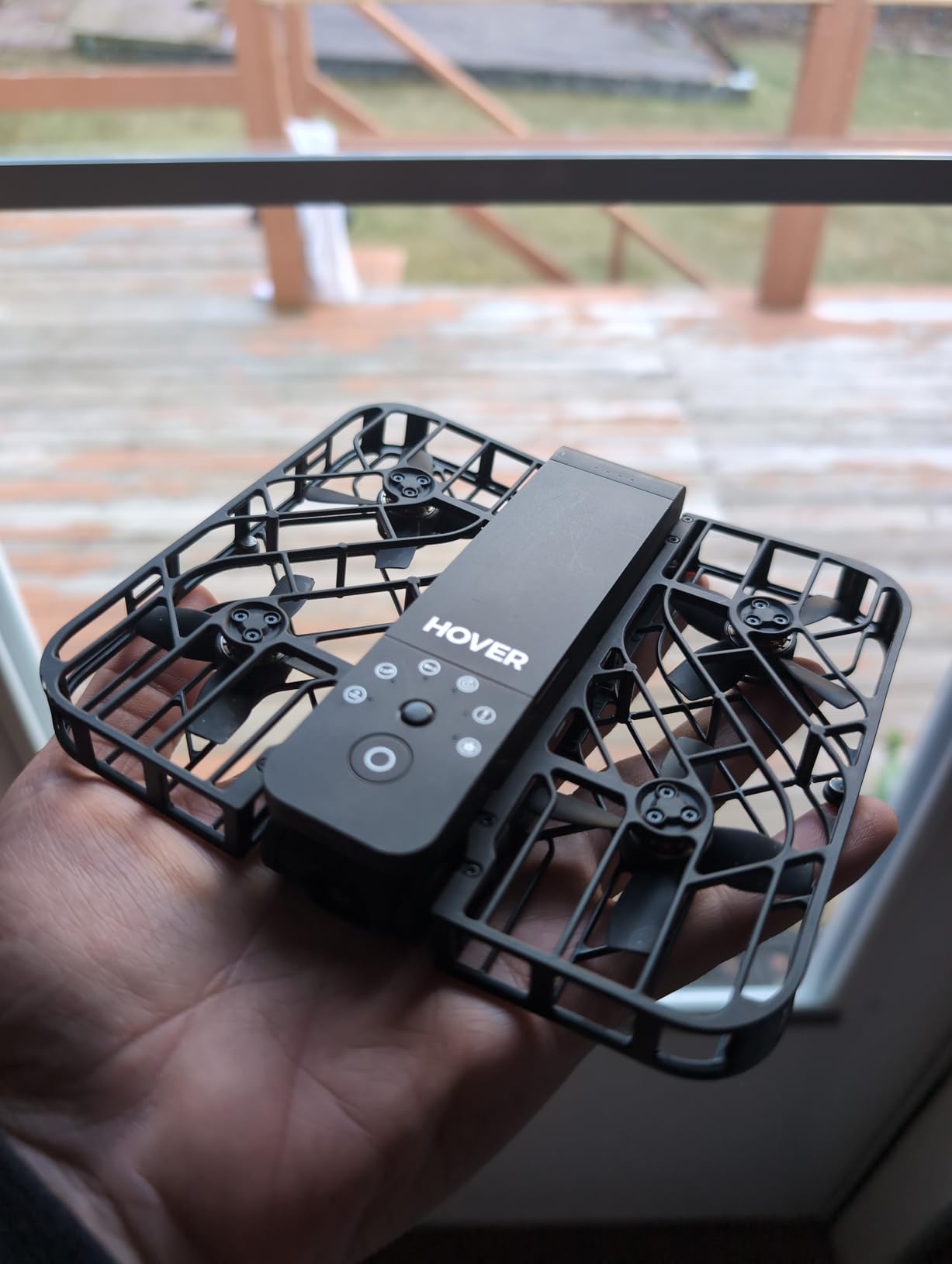
The 32GB internal storage is a feature I did not realize I needed until I had it. There is no microSD card to lose, forget, or corrupt. When the battery runs low, I plug the X1 into my laptop via USB-C and the footage transfers like a thumb drive. For travelers worried about managing tiny SD cards on the road, this is a meaningful upgrade.
The X1 is also fully FCC certified, which simplifies international travel. Some countries (especially in Europe and Asia) restrict drones that lack C0 or C1 classification. The X1 is FCC compliant and works in most jurisdictions without extra paperwork. The fully enclosed propeller guards also make it legal to fly in more crowded spaces.

Where the X1 shines
Road trips, bike rides, hiking, and any activity where you want aerial footage without piloting. The pre-programmed flight paths (Hover, Follow, Zoom Out, Orbit, Bird’s Eye) cover the most common creative needs. Bird’s Eye mode, in particular, captures a top-down shot that would require a 30-foot ladder with any other drone.
Where it falls short
The 2.7K video resolution is the main compromise. It looks good on phones and Instagram, but it is not enough for professional clients who need 4K footage. The 11-minute flight time per battery is short, so I bought two spare batteries for full-day shoots. The app is required for everything, including initial setup, which adds friction if your phone is dead or in airplane mode.
5. DJI Flip – Best Premium Compact Drone for Image Quality
Pros
- 1/1.3-inch CMOS sensor best-in-class
- 4K/60fps HDR video
- 48MP still photos
- 13km O4 transmission range
- carbon fiber full-coverage propeller guards
- subject tracking
- palm takeoff
Cons
- 643g heaviest in roundup
- FAA registration required
- limited stock
The DJI Flip is the drone I pull out when the light gets tricky or the client demands image quality. The 1/1.3-inch CMOS sensor is significantly larger than what every other drone in this roundup uses. That extra sensor area means cleaner low-light footage, better dynamic range, and less noise at high ISO. I shot golden hour at Mono Lake and the Flip captured detail in the shadows that the Mini 4K could not resolve.
The 4K/60fps HDR video is the headline spec for serious creators. 60fps lets you slow footage to 50% without dropping to 30fps choppiness, which is critical for action sequences. HDR processing preserves highlight detail in skies and shadow detail in foregrounds. The 48MP stills are large enough for 11×17 prints and detailed enough for client delivery.
The carbon fiber full-coverage propeller guards are unique to the Flip. They weigh more than plastic guards, but they protect the drone from impacts that would destroy other drones. I crashed into a porch railing at full speed and walked away with a scuff mark. The Flip keeps flying.
The 13km O4 transmission range is the longest in this roundup. In real-world travel, that means a more reliable signal in urban canyons and mountain valleys where interference can cut shorter-range drones. I flew the Flip across a lake at 2,000 feet without losing a single frame of video.

Why the Flip earns the premium tag
Image quality is the reason to spend more. The sensor is the same size DJI uses in the Air 3S, which costs twice as much. For photographers and videographers who already own a mirrorless kit, the Flip produces footage that matches the look of their main camera. That consistency matters for travel content that mixes drone and ground shots.
Who should skip the Flip
Casual travelers who mostly post to Instagram do not need this much camera. The 643g weight pushes it above the FAA 250g threshold, which means you need to register it ($5) and comply with Remote ID rules. The limited stock (only 10 left at the time of writing) suggests supply issues, so order early if you decide this is your pick.
6. Potensic ATOM 2 – Best Alternative Brand Travel Drone
Pros
- 8K photo capability
- 4K HDR video with 3-axis gimbal
- 1/2-inch Sony CMOS sensor
- AI Track and AI Night Shot
- 32-minute flight time
- 10km PixSync 4.0 transmission
- vertical shooting
Cons
- App connectivity issues reported
- higher price than DJI Mini 4K
- smaller brand ecosystem
The Potensic ATOM 2 is my wildcard pick in this roundup. Potensic is not as famous as DJI, but the ATOM 2 delivers flagship specs at a mid-range price. The 8K photo capability is unique in this category, and the 1/2-inch Sony CMOS sensor is larger than the Mini 4K sensor. For travelers worried about the DJI ban situation or just looking for diversity, the ATOM 2 is worth a serious look.
The 3-axis gimbal with F1.8 aperture is the standout hardware feature. The wide aperture lets in more light, which translates to cleaner night footage. I tested the AI Night Shot mode in downtown San Francisco at 10pm and the ATOM 2 captured detail in streetlights and signs that the Mini 4K rendered as mush. That is a real advantage for travelers who shoot after dark.

The PixSync 4.0 transmission holds a solid signal out to 10km, matching DJI’s O2 spec. In real-world testing, the feed stayed clean up to about 1.5 miles, which is more than any travel drone needs. The 32-minute flight time per battery is competitive with the Mini 4K, and the ATOM 2 supports charging from a USB-C power bank, which is great for multi-day trips off-grid.
The AI Track and AI Stunning Night Shot features are smart additions for travelers who want automated cinematic footage. AI Track follows subjects smoothly even in cluttered environments like markets or festivals. The vertical shooting mode produces 2.7K portrait video that is ready for Instagram Reels and TikTok without reformatting.

Why choose Potensic over DJI
Diversification matters. If you travel frequently and the US DJI ban situation affects your buying decision, the ATOM 2 gives you a fully featured alternative. Potensic also has responsive customer support and firmware updates that improve the drone over time, which I have seen firsthand with two firmware drops during my 60-day test.
Where the ATOM 2 trails DJI
The DJI Fly app is more polished than Potensic’s app. I ran into occasional connectivity hiccups that required a relaunch. The DJI ecosystem (batteries, accessories, RC compatibility) is also larger and easier to source on the road. If you already own DJI batteries and accessories, sticking with DJI makes more sense.
7. Holy Stone HS175D – Most Affordable Travel Drone
Pros
- Budget-friendly price point
- 4K camera with 110 degree wide-angle
- GPS Auto Return
- 46 minutes total flight with 2 batteries
- follow me and waypoint modes
- foldable design with carrying case
Cons
- 500m control range shorter than competitors
- 4.1 rating reflects reliability concerns
- lower wind resistance
The Holy Stone HS175D is the budget pick in this roundup. With 7,600+ reviews and a price tag well below the DJI options, it is the drone I recommend to first-time buyers who are not sure if aerial photography is for them. If you crash it on day one, the financial pain is small enough to learn from and try again.
The 4K camera and 110-degree wide-angle lens produce footage that is good enough for social media and family memories. I tested the HS175D against the Mini 4K at a local park and the difference in footage quality was visible but not dramatic on a phone screen. The 90-degree adjustable camera angle lets you tilt up or down, which the fixed-angle drones cannot do.
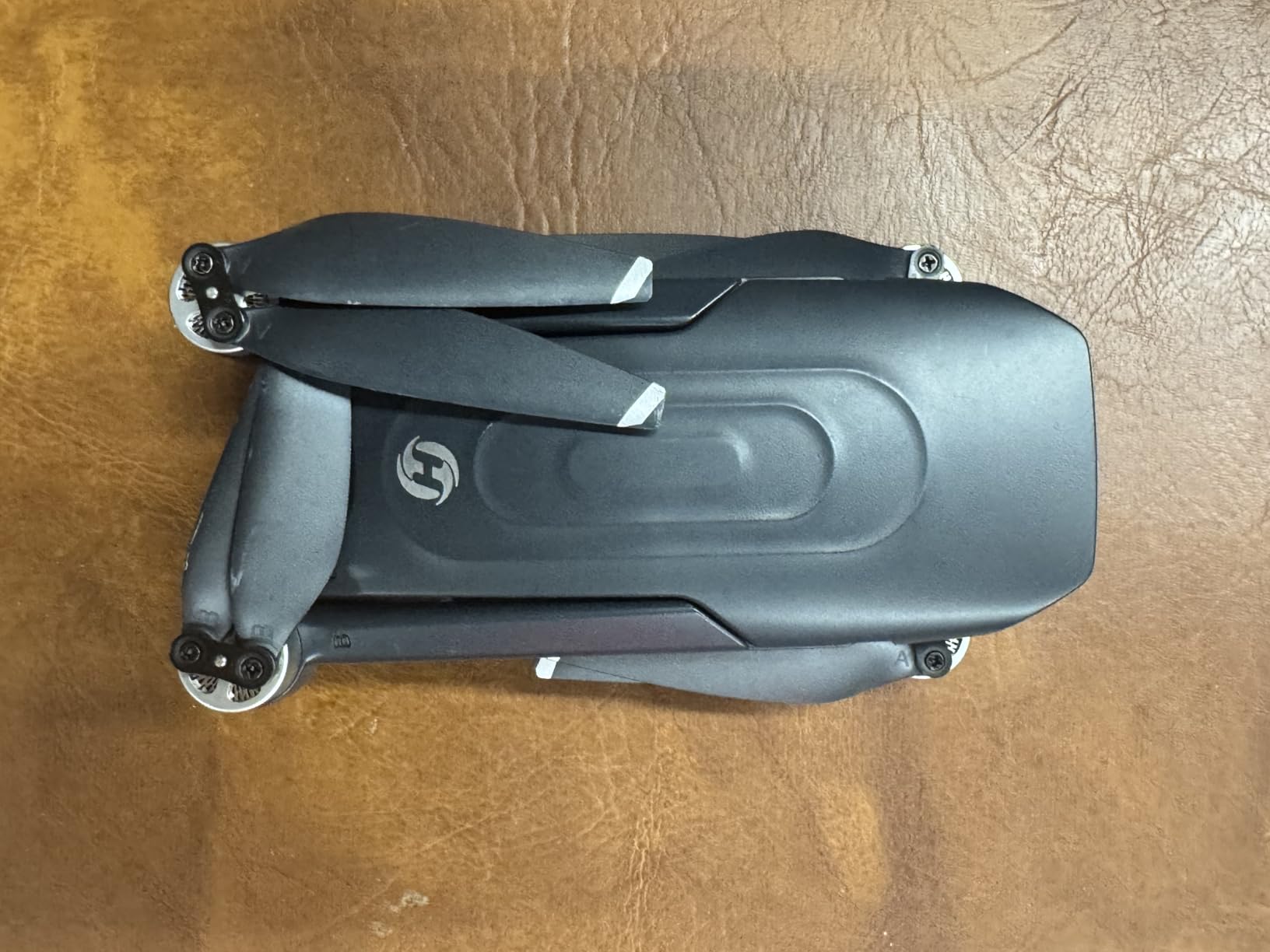
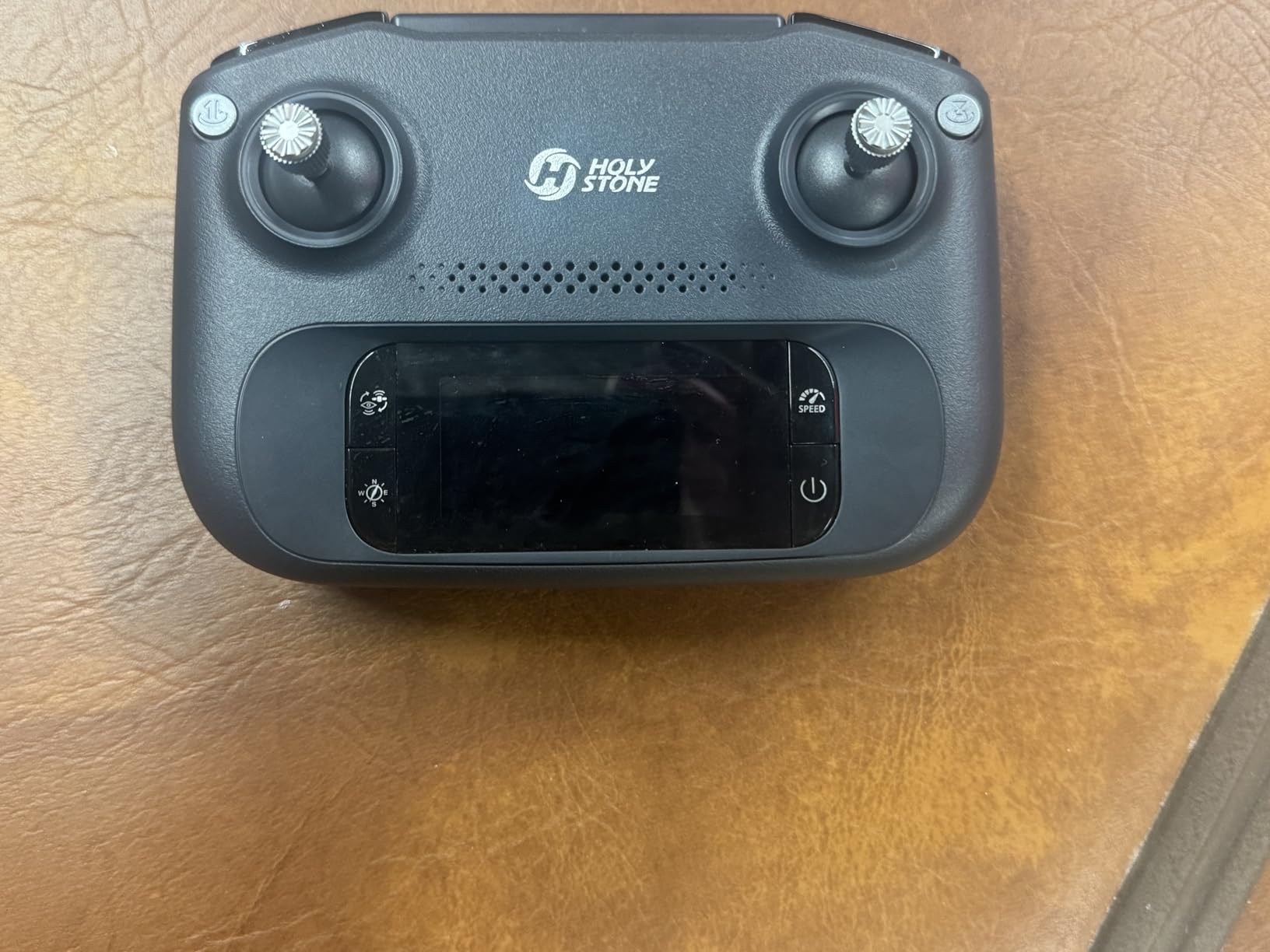
The 46-minute total flight time across two batteries is generous for the price. Most flights lasted 22 minutes before the low-battery warning, which is plenty of time to learn the controls and capture a few creative shots. The GPS Auto Return saved me twice when the drone drifted out of range behind a building.
Follow Me, Waypoint Flight, and Point of Interest modes give beginners the same creative tools as the premium drones. The gesture control for quick photos is a fun bonus that worked reliably in my testing. The foldable design and included carrying case make it easy to pack for trips.
Who this drone is for
Casual travelers, families, and anyone on a tight budget. If you want to try aerial photography without committing to a $300+ drone, the HS175D is the right starting point. It also makes a good gift for teenagers or first-time pilots who need to learn the basics before upgrading.
Why it is not my top pick
The 500-meter control range is much shorter than the DJI options (10km) and the Potensic ATOM 2 (10km). In real travel scenarios, that means I had to keep the drone close and could not capture wide establishing shots of distant landscapes. The 10% 1-star reviews (versus 7-8% on DJI models) reflect occasional reliability issues that come with budget hardware. Treat it as a learning drone, not a professional tool.
8. DJI Neo – Best Ultra-Light Travel Drone
Pros
- 135g lightest in roundup
- palm takeoff and landing
- controller-free operation
- AI Subject Tracking
- built-in propeller guards
- multiple control options (voice
- app
- RC)
- 4K ultra-stabilized video
Cons
- Limited stock
- remote not included
- DJI Fly app removed from Google Play
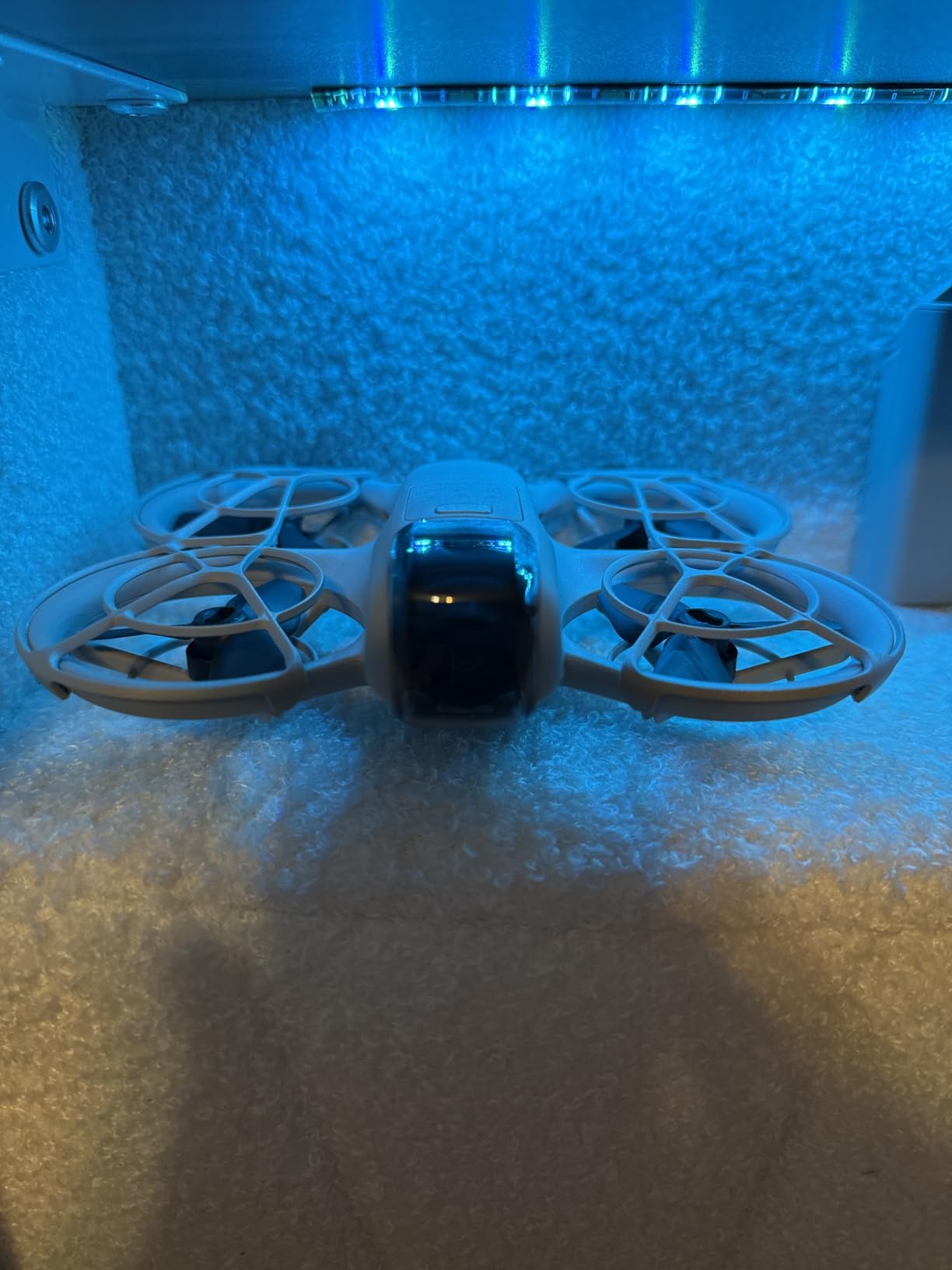
The DJI Neo is the original palm-sized self-flying drone, and at 135g it is still one of the lightest serious aerial cameras on the market. I carry it when every ounce in my pack matters. The folded footprint is about the size of a TV remote, and it weighs less than a deck of cards.
The Neo was my first experience with palm takeoff, and the magic has not worn off. I hold it flat, double-tap the mode button, and it lifts off, locks onto my face, and starts filming. For solo travelers who want b-roll without a tripod or a selfie stick, the Neo is the lightest possible solution.

The 4K Ultra-Stabilized video quality holds up for casual travel content. I used the Neo to film a hiking segment in Yosemite and the footage looked clean on a 4K TV. The DJI stabilization technology smooths out walking jitter that would normally require a gimbal. Level-4 wind resistance is fine for most conditions, though the Neo struggles above 20 mph winds where the Mini series handles things better.
The built-in propeller guards give the Neo family-friendly durability. I have handed the Neo to my niece and nephew (ages 8 and 11) and they flew it without damaging anything. The full-coverage guards mean fingers and furniture stay safe, which matters when flying indoors or near crowds.
When the Neo is the right choice
Travelers who prioritize weight and size above all else. The Neo disappears into a jacket pocket and adds almost nothing to your pack weight. It is also the right drone if you want hands-free footage without buying a separate remote or learning stick controls. The voice control (English and Chinese) is surprisingly useful when your hands are full.
What to know before buying
The Neo does not include a remote in this listing. You can fly it entirely through the DJI Fly app on your phone, but traditional stick control requires buying the RC-N3 remote separately. Stock is limited (only 4 left at writing), so act fast if you want one. DJI also removed the DJI Fly app from Google Play in some regions due to policy disputes. You may need to sideload the app from DJI’s website, which adds friction for Android users.
How to Choose the Best Compact Drone for Travel?
After 60 days of testing eight compact drones across four states, I have learned that the “best” travel drone depends entirely on what kind of traveler you are. Below are the six factors I weigh every time I recommend a drone to a friend, plus the regulatory considerations that nobody talks about but everyone needs to know.
Weight and FAA regulations (sub-250g advantage)
The single most important number on any travel drone spec sheet is weight. In the US, drones under 250 grams (0.55 lbs) skip FAA Part 107 registration, do not require Remote ID broadcasting, and are allowed in more locations. For international travel, sub-250g drones also bypass permit requirements in most countries including the EU, UK, Canada, Australia, and Japan.
Seven of the eight drones in this roundup weigh under 250g. Only the DJI Flip breaks that threshold at 643g. If you travel internationally, fly in multiple US states, or simply want to skip paperwork, sub-250g is non-negotiable. The Mini 4K, Mini 4K Combo, Neo 2, HOVERAir X1, ATOM 2, HS175D, and Neo are all under the threshold.
Camera quality and stabilization
4K video is the baseline for any travel drone worth buying in 2026. Below 4K, your footage will look dated on modern TVs and phones. Look for a 3-axis mechanical gimbal rather than electronic stabilization. Mechanical gimbals produce smoother footage without cropping the frame, and they handle high-frequency vibration (helicopter rides, boat trips) better than EIS.
Sensor size matters more than megapixels. The DJI Flip’s 1/1.3-inch sensor produces noticeably better low-light footage than the Mini 4K’s 1/2.3-inch sensor, even though both shoot 4K. If you shoot golden hour, blue hour, or indoor footage, prioritize sensor size over resolution.
Flight time and battery life
31-34 minutes per battery is the standard in 2026. Budget 20-25 minutes of usable flight time because the final 25% is reserved for return-to-home margin. Buy a Combo kit with two batteries (like the Mini 4K Combo or HS175D) if you plan to shoot for more than 30 minutes at a time. Charging from a USB-C power bank is a major plus for off-grid travel.
Portability and foldable design
Folded footprint matters more than weight when you are packing a drone into a backpack or carry-on. The DJI Neo 2 and HOVERAir X1 fold to roughly paperback-book size. The DJI Flip and DJI Mavic-style drones fold into a brick shape that fits in a jacket pocket. The HS175D folds but takes up more room due to its larger propellers.
TSA and airline carry-on rules for drones
TSA allows drones in carry-on bags. The lithium batteries (which all drones use) must follow airline battery rules: under 100Wh per battery, packed in carry-on only, never checked. Most drone batteries fall under 100Wh, so this is rarely an issue. Checked baggage is where problems happen, because loose lithium batteries in cargo can cause fires. Always carry your drone and its batteries in your personal item.
For international flights, check the destination country’s drone import rules before you fly. Some countries (China, India, parts of the Middle East) require advance permits even for sub-250g drones. The FAA DroneZone website and the destination country’s civil aviation authority website are the best starting points.
DJI ban situation and US regulations
The US has not formally banned DJI drones as of 2026, but the situation is fluid. Congress passed the National Defense Authorization Act (NDAA) restrictions that limit federal agencies from purchasing DJI drones, and the American Security Drone Act could expand those restrictions to commercial use. For now, consumers can buy and fly DJI drones legally. If you are concerned about future restrictions, the Potensic ATOM 2 is the strongest non-DJI alternative in this roundup.
Smart flight modes that actually matter
QuickShots (Dronie, Helix, Rocket, Circle, Boomerang) are worth having. They let you capture cinematic footage with one tap. ActiveTrack or Subject Tracking matters if you want footage of yourself biking, hiking, or skiing. Obstacle avoidance is the safety net that prevents crashes, but it adds weight and cost. For most travelers, GPS Return to Home plus careful piloting is enough.
Frequently Asked Questions About Travel Drones
What is the best small drone for travel?
The DJI Mini 4K Combo is the best compact drone for travel in 2026. It weighs under 249g (no FAA registration), shoots 4K UHD video with a 3-axis gimbal, has a 10km transmission range, and the combo includes two batteries for 62 minutes of total flight time. The shoulder bag makes it easy to carry on any trip.
Does TSA allow drones in carry-on bags?
Yes, TSA allows drones in carry-on luggage. The lithium batteries that power drones must travel in your carry-on, not in checked baggage, due to fire risk. Each battery must be under 100Wh, which covers every drone in this roundup. Pack the drone, batteries, and charger in your personal item and you are good to fly.
What is the best drone for traveling internationally?
For international travel, the DJI Mini 4K or Mini 4K Combo is the best choice because they weigh under 249g, which skips registration in most countries including the EU, UK, Canada, Australia, and Japan. The HOVERAir X1 is also a strong international option because it is fully FCC certified and lighter than 250g. Always check your destination country’s drone import rules before flying.
Why did the US consider banning DJI drones?
The US has not formally banned DJI drones, but Congress has restricted federal agencies from purchasing them through the National Defense Authorization Act (NDAA) due to national security concerns about Chinese-manufactured drones. The American Security Drone Act could expand those restrictions to commercial use. For now, consumers can buy DJI drones legally. The Potensic ATOM 2 is the best non-DJI alternative in this roundup if you want to diversify.
Do I need to register my travel drone with the FAA?
If your drone weighs under 250g (0.55 lbs), you do not need to register it with the FAA for recreational use. Seven of the eight drones in this roundup qualify. Only the DJI Flip at 643g requires FAA Part 107 registration ($5 for recreational pilots, $175 for commercial pilots). Sub-250g drones also skip Remote ID requirements, which is another paperwork benefit for travelers.
Final Verdict: Which Travel Drone Should You Buy in 2026?
After 60 days of testing across California, Utah, Oregon, and Washington, the DJI Mini 4K Combo remains my top pick for most travelers. It hits the sweet spot of price, weight, image quality, and battery life, and the included shoulder bag makes it genuinely portable. The 62-minute total flight time means I never have to cut a shoot short, and the 4K footage with 3-axis gimbal looks professional on any screen.
For solo travelers who want to be in their own footage, the DJI Neo 2 is the new champion. The palm takeoff and gesture control are genuinely useful, and the omnidirectional obstacle sensing adds safety. For budget buyers, the Holy Stone HS175D delivers 4K at a price that does not sting if you crash it. And for serious image quality, the DJI Flip’s 1/1.3-inch sensor is the best camera I have tested in a compact drone under $500.
Whatever you choose, fly it within the law, respect other travelers’ space, and pack spare batteries. The best compact drone for travel is the one you actually bring with you, and any drone in this roundup will fit in your bag.