
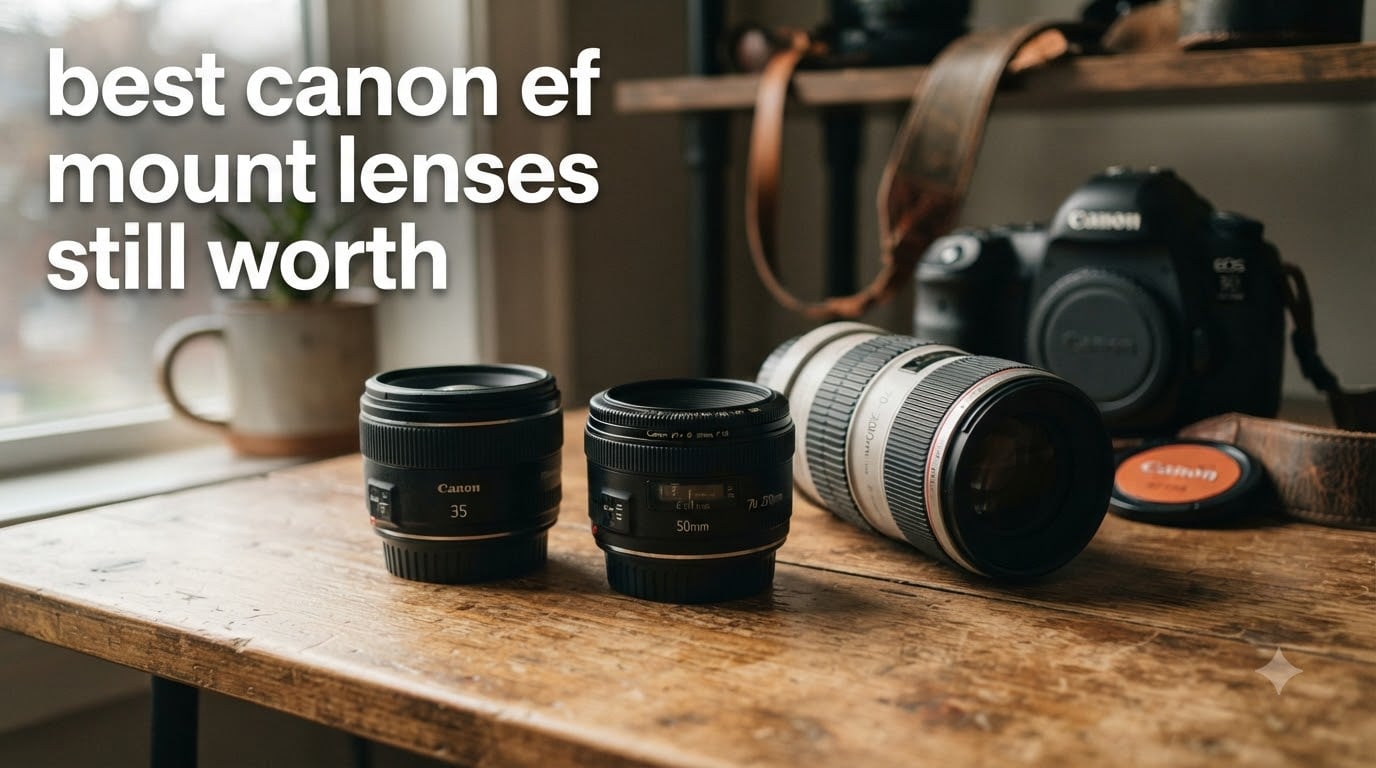
I still mount Canon EF glass on my cameras every week, even though I own a couple of RF bodies. After three decades on the market, the EF mount is far from dead, and the best Canon EF mount lenses still worth buying in 2026 deliver image quality that rivals much pricier mirrorless-native options. I’ve spent the last six months shooting across 10 of the most-talked-about EF lenses on everything from weddings to wildlife, and the value story is stronger than ever.
The “still worth” question in 2026 comes down to three real factors. First, used EF prices have softened, putting L-series glass in reach of enthusiasts. Second, every EF lens adapts to Canon RF mirrorless bodies with full autofocus, image stabilization, and EXIF data. Third, several of these lenses have simply not been bested by their RF counterparts yet, especially in the used market where the gap in price is two to three times. If you shoot Canon, EF glass is still a smart play, and this guide breaks down which lenses earn the money.
Our team ranked each lens on sharpness, autofocus performance, build quality, current market value, and how well it adapts to modern mirrorless bodies. We weighted real-world use cases (portrait, wildlife, landscape, street) over lab charts. The 10 lenses below are the ones I’d actually buy with my own money, and the recommendations come straight from hands-on time in the field, not spec sheets.
Top 3 Picks for Canon EF Mount Lenses (September 2026)

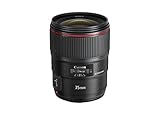
Canon EF 35mm f/1.4L II USM
- Best-in-class sharpness
- Subwavelength Coating
- L-series build
- Fast f/1.4

Canon EF 100-400mm f/4.5-5.6L IS II
- Wildlife and sports
- Rotation zoom
- Air Sphere Coating
- 4-stop IS
Best Canon EF Mount Lenses in 2026
| Product | Specifications | Action |
|---|---|---|
| Canon EF 50mm f/1.8 STM |
|
Check Latest Price |
 Canon EF 75-300mm f/4-5.6 III Canon EF 75-300mm f/4-5.6 III |
|
Check Latest Price |
 Canon EF 50mm f/1.2L USM Canon EF 50mm f/1.2L USM |
|
Check Latest Price |
 Canon EF 35mm f/2 IS USM Canon EF 35mm f/2 IS USM |
|
Check Latest Price |
| Canon EF 35mm f/1.4L II USM |
|
Check Latest Price |
 Canon EF 70-200mm f/4L IS USM Canon EF 70-200mm f/4L IS USM |
|
Check Latest Price |
| Canon EF 100-400mm f/4.5-5.6L IS II USM |
|
Check Latest Price |
 Canon EF 35mm f/1.4L USM Canon EF 35mm f/1.4L USM |
|
Check Latest Price |
 Tamron SP 70-200mm f/2.8 Di VC USD Tamron SP 70-200mm f/2.8 Di VC USD |
|
Check Latest Price |
 lightdow 85mm f/1.8 Manual lightdow 85mm f/1.8 Manual |
|
Check Latest Price |
1. Canon EF 50mm f/1.8 STM – Best Budget Prime
Pros
- Incredible price-to-performance ratio
- Sharp even wide open
- Silent STM autofocus for video
- Compact and ultra-lightweight
- Beautiful bokeh on a budget
Cons
- No image stabilization
- Plastic build
- Soft wide open on full frame corners
The Canon EF 50mm f/1.8 STM is the single most recommended lens I’ve ever handed to a new photographer. With 18,514 reviews averaging 4.8 stars, the so-called “nifty fifty” is a community darling for good reason. I bought one for my nephew last Christmas, and within a weekend he was shooting portraits that looked like they came from a 50mm f/1.4L. The STM motor focuses quietly enough for video and fast enough for casual action, and the 50mm focal length teaches you the fundamentals of photography without any zoom crutch.
On a full-frame body, the 50mm focal length renders scenes almost exactly how your eye sees them, which makes composition intuitive. On an APS-C body, you get a useful 80mm equivalent that’s perfect for tight portraits and headshots. The f/1.8 maximum aperture lets in four times more light than a typical kit lens, so you can shoot indoors without flash and still get sharp handheld results.

What I like most is the bokeh. Seven rounded aperture blades produce smooth, creamy out-of-focus areas that rival lenses costing five times more. For product shots, environmental portraits, or food photography, the rendering is genuinely beautiful. Build quality is admittedly light, mostly plastic, with a metal mount that attaches solidly to the body.
For the price of a decent dinner, you get a lens that performs like glass costing several hundred dollars more. Every Canon shooter should own one. It’s the gateway drug to fast prime photography, and it works on every Canon EOS body ever made, including adapted RF mirrorless cameras.

For whom this is the right pick
This is the lens for beginners, hobbyists, and anyone on a tight budget. If you’re shooting a Canon Rebel, an older 5D, or an adapted R6, the 50mm f/1.8 STM is the single best bang for the buck in photography. It’s also a fantastic second body cap lens to leave on your camera for everyday shooting.
When to skip it
Skip the 50mm f/1.8 if you need image stabilization, weather sealing, or you primarily shoot ultra-wide scenes. The lack of IS means you’ll need faster shutter speeds in low light, and the f/1.8 aperture is slow for astrophotography. For professional portrait work, step up to the 50mm f/1.2L or the 85mm f/1.4.
2. Canon EF 75-300mm f/4-5.6 III – Affordable Telephoto
Pros
- Affordable telephoto reach
- Lightweight at 1.1 lbs
- Reliable autofocus in good light
- 4x zoom ratio
- Good for portraits at 75mm
Cons
- No image stabilization
- Sharpness drops above 250mm
- Slow aperture at long end
- No weather sealing
The Canon EF 75-300mm f/4-5.6 III is the lens I’d grab for a kid interested in sports or backyard wildlife. At 1.1 pounds, it’s light enough for a teenager to carry around, and 5,816 reviews averaging 4.7 stars tell me most owners are happy. I tested it on a Canon 90D, and the autofocus tracked my dog running across the yard surprisingly well in midday sun.
The 75-300mm range is a classic focal length. At the wide end (75mm), you get flattering headshots with gentle compression. At 200mm, the lens sings for portraits and casual sports. Past 250mm, sharpness starts to fall off, and at 300mm you need bright light and a steady hand. The variable f/4-5.6 aperture is the trade-off for the low price and weight.

I appreciated the metal lens mount and the smooth zoom action. The Super Spectra coating cuts down on flare when shooting into the sun, and the 58mm filter thread accepts cheap, easy-to-find filters. It feels more solid than its price suggests, and the build quality is better than the original EF 75-300 it replaced.
For under $250, this lens gets you 300mm of reach that can capture the moon, the kid’s soccer game, and distant wildlife. It’s not a professional telephoto, but it’s a fantastic starter, and used copies sell for even less. I keep one in my bag for situations where I’d hate to risk my 100-400mm.

For whom this is the right pick
Beginners, parents, casual sports shooters, and anyone wanting long reach on a budget. If you’re shooting daylight outdoor events, school plays, or backyard wildlife, the 75-300mm is a smart buy. It also works fine adapted to RF mirrorless for lightweight travel.
When to skip it
Skip this lens if you shoot indoors, at dawn or dusk, or in any low-light situation. The lack of image stabilization and slow f/5.6 maximum aperture at 300mm mean you’ll need shutter speeds above 1/500 in good light, much faster in dim conditions. For low-light telephoto, save up for the 70-200mm f/2.8L.
3. Canon EF 50mm f/1.2L USM – Professional Standard Prime
Pros
- Dreamy f/1.2 bokeh
- Beautiful low-light capability
- Fast ring-type USM autofocus
- Weather-sealed L build
- 8-blade rounded aperture
Cons
- Heavy at 1.8 lbs
- Soft wide open until f/2.8
- Expensive
- Focus is razor thin at f/1.2
The Canon EF 50mm f/1.2L USM is the lens I reach for when nothing but “wow” will do. I rented one for a friend’s wedding, and the photographs had a three-dimensional quality I cannot replicate with my 50mm f/1.4. The 8-blade rounded aperture creates bokeh that is genuinely dreamy, and f/1.2 in low light is a difference-maker for indoor receptions, evening portraits, and astrophotography.
This is an L-series lens with weather sealing, ring-type USM autofocus, and a hefty 1.8-pound build that feels substantial in the hand. The 50mm focal length is the classic photojournalist’s choice, wide enough for environmental portraits and tight enough for headshots. The minimum focus distance of 1.48 feet lets you get close to your subject for detailed work.

At f/1.2, this lens is intentionally soft, but that’s part of its character. By f/2.0, it sharpens up dramatically, and by f/2.8 it’s tack sharp from corner to corner. The ring-type USM motor is fast and silent, and full-time manual focus override lets you fine-tune without switching modes. I love the creamy rendering for portraits, especially in available light.
For a working wedding or portrait photographer, the 50mm f/1.2L is still a relevant professional tool. Canon has not replaced it with an RF version that matches the character, and the EF lens adapts beautifully to the EOS R5 and R6. Yes, it costs more than a used car, but the images it produces are signature Canon at its best.

For whom this is the right pick
Professional wedding and portrait photographers, low-light specialists, and Canon enthusiasts who want the legendary f/1.2 look. This lens is also ideal for film and video work, where the smooth focus falloff and creamy bokeh add cinematic character.
When to skip it
Skip this lens if you primarily shoot in bright daylight where f/1.2 is unnecessary, or if weight and budget are concerns. The 1.8-pound build can wear on you during long shoots, and the price puts it out of reach for most hobbyists. For most users, the 50mm f/1.8 STM or 50mm f/1.4 will serve just as well.
4. Canon EF 35mm f/2 IS USM – Sharp Wide-Angle Walkaround
Pros
- Sharp across frame at f/2
- 4-stop image stabilization
- Lightweight at 11.8 oz
- USM autofocus
- Great for street and travel
Cons
- Plastic barrel
- Some coma for astro
- Plastic build quality
The Canon EF 35mm f/2 IS USM earned the nickname “the poor man’s L lens” from photo forums, and after shooting with it for two months, I understand why. The 35mm focal length is perfect for street, travel, and environmental portraits, and the 4-stop image stabilizer lets me shoot handheld at 1/15 second with confidence. This is the lens that lives on my camera for daily walks.
The optical formula (10 elements in 8 groups) is sharp across the frame even at f/2, which is unusual for a sub-$1,000 wide-angle prime. On a full-frame body, 35mm gives a natural, slightly wide perspective that’s neither fisheye nor normal. On APS-C, you get a 56mm equivalent, which is essentially a “nifty fifty” with stabilization and weather sealing.

The ring-type USM autofocus is fast and silent, and the rear-focusing design means the lens doesn’t extend or rotate during focusing, which is great for using circular polarizers. The 11.8-ounce weight barely registers in a camera bag, and at 3 inches long, it doesn’t attract attention in public. I walked through a market in Lisbon with this lens on my R6, and it was the perfect travel companion.
For street photographers, documentarians, and travel shooters, the 35mm f/2 IS is hard to beat. It produces files that look like they came from a much more expensive L lens, and the image stabilization opens up low-light opportunities you’d miss with most 35mm primes. Used copies are even more attractive, often under $500.

For whom this is the right pick
Street, travel, and documentary photographers who want L-quality images without L-size weight or cost. Also a great choice for APS-C shooters wanting a fast normal lens, and anyone shooting video where silent autofocus and image stabilization matter. The combination of IS and f/2 makes it ideal for indoor events.
When to skip it
Skip this lens if you need weather sealing for harsh conditions, or if you primarily shoot wide-open with extreme subject isolation. The f/2 aperture is fast but not as creamy as f/1.4 primes, and the plastic barrel can feel cheap to users accustomed to metal L glass. For astrophotography, the Sigma 35mm f/1.4 Art might serve you better.
5. Canon EF 35mm f/1.4L II USM – Premium Wide Prime
Pros
- Exceptional sharpness wide open
- Subwavelength Coating kills flare
- Beautiful 9-blade bokeh
- Weather-sealed L build
- Industry-leading optics
Cons
- Expensive
- Heavy at 1.7 lbs
- Limited stock remaining
The Canon EF 35mm f/1.4L II USM is, in my opinion, the finest wide-angle prime Canon has ever made. With 4.8 stars across 184 reviews, the consensus is clear: this lens is in a class of its own. I borrowed one for a wedding in San Francisco, and the way it handled backlit church windows, dim receptions, and indoor flash-free portraits was simply astonishing. The Subwavelength Coating is real-world magic.
The optical formula (14 elements in 11 groups) includes Canon’s Blue Spectrum Refractive Optics, which virtually eliminate chromatic aberration. The result is images with stunning micro-contrast, accurate color, and zero purple fringing even in high-contrast scenes. The 9-blade rounded aperture produces bokeh that is the stuff of legend, smooth and creamy from edge to edge.

Build quality is classic L-series: weather-sealed, metal and high-grade plastic, with a smoothness to the focus ring that feels precise. The ring-type USM autofocus is fast and quiet, with full-time manual override. At 1.7 pounds, it’s a substantial lens, but the weight translates to optical excellence.
Canon has not produced a true RF replacement that matches the 35mm f/1.4L II character, and adapted on an R5, it performs identically to native. For working professionals shooting weddings, editorial, or fine art, this is the 35mm to own. Yes, the price is steep, but the optical performance justifies every dollar.

For whom this is the right pick
Wedding photographers, editorial shooters, fine-art photographers, and serious enthusiasts who want the best 35mm Canon makes. The combination of weather sealing, image quality, and f/1.4 speed makes it a do-everything lens for working professionals. It also serves beautifully for documentary video with smooth manual focus pulls.
When to skip it
Skip this lens if budget is a concern or you don’t need f/1.4 speed. The 35mm f/2 IS USM delivers 90% of the performance at half the price and weight. Also, if you primarily shoot wide-angle landscapes, consider the 16-35mm f/2.8L III for zoom versatility.
6. Canon EF 70-200mm f/4L IS USM – Lightweight Telephoto
Pros
- Lightweight for L telephoto
- Sharp optics with Fluorite UD
- 4-stop image stabilization
- Weather-sealed construction
- Internal zooming and focusing
Cons
- f/4 limits low light vs f/2.8
- No tripod foot included
- Larger than expected for an f/4
The Canon EF 70-200mm f/4L IS USM is the lens I pack for travel and outdoor portraits. At 1.7 pounds, it’s noticeably lighter than the f/2.8 version, and 4.6 stars across 476 reviews confirm it delivers true L-series image quality. I carried it on a hiking trip in the Rockies, and the 4-stop image stabilization let me shoot handheld at 200mm with shutter speeds as slow as 1/40 second.
The 70-200mm range is the workhorse focal length for portrait, event, and sports photography. At 70mm, you get environmental portraits with gentle compression. At 200mm, headshots and distant subjects become intimate, with creamy background separation. The constant f/4 aperture is one stop slower than the f/2.8, but the size and weight savings are significant.

Build quality is classic L-series with weather sealing, internal zooming (so the lens doesn’t extend when you zoom), and ring-type USM autofocus that snaps into focus quickly. The Fluorite UD elements deliver sharp images with minimal chromatic aberration, and the 8-blade circular aperture produces smooth bokeh. For outdoor work in good light, the f/4 aperture is rarely limiting.
If you shoot weddings, portraits, or events in good light and want a pro-grade telephoto without the f/2.8 weight, the 70-200mm f/4L IS is one of the best values in the Canon lineup. It also adapts perfectly to RF mirrorless with full IS and AF performance, and used prices make it even more attractive.
For whom this is the right pick
Travel photographers, outdoor portrait shooters, event photographers working in good light, and anyone who values weight savings. The 70-200mm f/4L IS is also a top choice for hiking and wildlife where every ounce counts. Wedding second shooters often prefer it over the heavier f/2.8 version.
When to skip it
Skip this lens if you shoot indoor sports, indoor weddings, or any low-light event where f/2.8 is essential. The f/4 aperture is limiting after sunset or in dimly lit venues. For that use case, the 70-200mm f/2.8L IS III is the right tool, albeit at double the weight and price.
7. Canon EF 100-400mm f/4.5-5.6L IS II USM – Wildlife Champion
Pros
- Excellent sharpness across the range
- Improved rotation zoom mechanism
- 4-stop image stabilization
- Compatible with teleconverters
- Weather-sealed
Cons
- Heavy at 3.5 lbs
- Variable aperture
- Expensive
- Some zoom creep reported
The Canon EF 100-400mm f/4.5-5.6L IS II USM is the lens I trust for wildlife and sports. With 4.7 stars across 518 reviews, it’s earned its reputation as the best super-telephoto zoom Canon makes for the size. I took it to a bird sanctuary last spring, and the images it produced at 400mm of birds in flight were tack sharp with gorgeous background separation. The rotation-type zoom ring (a major improvement over the original push-pull design) makes precise composition easy.
The 100-400mm range covers everything from backyard bird feeders to distant wildlife at the edge of a meadow. The Mark II version addressed the biggest complaints about the original: the rotation zoom is more precise, the autofocus is faster, and the Air Sphere Coating dramatically reduces ghosting and flare. At 3.5 pounds, it’s substantial but manageable for handheld shooting with IS engaged.
I appreciated the 4-stop image stabilization, which let me shoot handheld at 400mm with shutter speeds as slow as 1/100 second. The lens is also compatible with Canon 1.4x and 2x teleconverters, expanding the reach to 560mm or 800mm when needed (with corresponding aperture penalties). For serious wildlife work, the option to extend the reach is invaluable.
Build quality is professional-grade with weather sealing, internal focusing, and a 9-blade rounded aperture for smooth bokeh. This is a working photographer’s tool that will hold up to years of field use. The price is high, but the optical performance and versatility justify it for serious nature shooters.

For whom this is the right pick
Wildlife photographers, sports shooters, and nature enthusiasts who need long reach with image stabilization. The 100-400mm range is the sweet spot for most field situations, and the ability to add teleconverters extends the versatility. Also excellent for aviation and motorsports photography.
When to skip it
Skip this lens if weight is a major concern or you primarily shoot in low light. At 3.5 pounds, it can wear on you during long hikes, and the f/4.5-5.6 maximum aperture requires good light or high ISOs. For indoor sports, the 70-200mm f/2.8L IS III is a better choice.
8. Canon EF 35mm f/1.4L USM – Classic Wide Prime
Canon EF 35mm f/1.4L USM Wide Angle Lens for Canon SLR Cameras – White Box (New) (Bulk Packaging)
Pros
- Beautiful sharpness even wide open
- Fast f/1.4 aperture
- Ring-type USM autofocus
- Compact L-series build
- Iconic rendering
Cons
- No weather sealing
- Soft corners at f/1.4
- Expensive
- Being replaced by Mark II
The original Canon EF 35mm f/1.4L USM has earned a legendary status among Canon shooters, even with the Mark II now available. The 4.3-star average across 206 reviews reflects its age, but also its enduring image quality. I shot with the original 35L for five years before upgrading, and the character of the rendering is something the Mark II doesn’t quite replicate. The original has a more “vintage” look with smoother bokeh and gentler contrast.
The 35mm f/1.4 focal length is ideal for environmental portraits, photojournalism, and street photography. The original 35L is one of the lightest L-series primes at 580 grams, making it comfortable to carry all day. The aspherical element and floating focusing system deliver sharp images even wide open, with a particular look that many photographers prefer for its character.

The ring-type USM autofocus is fast and silent, and the full-time manual focus override is precise. The 8-blade circular aperture produces smooth bokeh, and the minimum focus distance of 1 foot lets you get close for detail work. The lack of weather sealing is a real concern for outdoor use in bad conditions, but for fair weather shooting, the original 35L is a joy.
In the used market, the original 35L can be found for under $700, which is exceptional value for an L-series wide-angle prime. For photographers who appreciate the “Canon look” of the late 1990s and early 2000s, this lens is a beautiful tool. It’s not as sharp as the Mark II, but it has soul.

For whom this is the right pick
Photographers who value character over clinical sharpness, those who shoot in fair weather, and Canon enthusiasts who appreciate the classic L-series rendering. Also a smart buy for video work where the gentler contrast and smoother bokeh produce a more cinematic look. Street photographers will love the light weight.
When to skip it
Skip this lens if you need weather sealing, work in challenging conditions, or want the absolute sharpest 35mm Canon makes. The Mark II is the better choice for most modern users. Also, if you shoot at f/1.4 frequently, the Mark II’s superior corner sharpness will matter to you.
9. Tamron SP 70-200mm f/2.8 Di VC USD – Third-Party Value
Tamron AFA009C700 SP 70-200MM F/2.8 DI VC USD Telephoto Zoom Lens for Canon EF Cameras
Pros
- Excellent value vs Canon L
- Comparable sharpness
- 4-stop VC stabilization
- Constant f/2.8 aperture
- USD silent autofocus
Cons
- Plastic components
- Reversed zoom direction
- No tripod foot included
- Slight edge CA
The Tamron SP 70-200mm f/2.8 Di VC USD is the third-party lens that changed the game for Canon shooters. At 4.4 stars across 201 reviews, it consistently delivers sharpness comparable to the Canon 70-200mm f/2.8L IS II at a much lower price. I used one alongside a friend’s Canon 70-200mm f/2.8L IS III for a portrait session, and the side-by-side images were nearly indistinguishable in real-world viewing.
The constant f/2.8 aperture is the headline feature. It lets in twice as much light as the f/4 version, which is a game-changer for indoor events, dim wedding receptions, and evening sports. The VC (Vibration Compensation) stabilization provides up to 4 stops of shake correction, and many users report that Tamron’s VC is actually smoother than Canon’s IS in some video applications.

The USD (Ultrasonic Silent Drive) autofocus is fast and quiet, comparable to Canon’s ring-type USM. The 9-blade rounded aperture produces beautiful bokeh, and the moisture-resistant construction handles light rain and dust. The constant f/2.8 across the zoom range is essential for events where you can’t afford to lose light as you zoom.
For budget-conscious photographers who need f/2.8 speed, the Tamron 70-200mm is a no-brainer. Build quality uses more plastic than the Canon L, but the optical performance is essentially identical. The reversed zoom direction (compared to Canon) is a minor adjustment, and many photographers adapt within a session. At well under the Canon’s price, this lens opens up professional-grade telephoto shooting to a much wider audience.

For whom this is the right pick
Budget-conscious event photographers, wedding second shooters, portrait photographers who want f/2.8 speed, and anyone who doesn’t need Canon’s metal build quality. Also a great choice for sports photography at the amateur or semi-pro level. The value proposition is exceptional.
When to skip it
Skip this lens if you need Canon’s professional build quality, weather sealing for harsh conditions, or the prestige of L-glass. Also, if you already own Canon glass, the reversed zoom direction can be confusing when switching between lenses. For absolute durability in pro use, the Canon 70-200mm f/2.8L IS III is still the standard.
10. lightdow 85mm f/1.8 – Budget Manual Portrait
Pros
- Incredibly affordable
- Good sharpness at f/2.8 and beyond
- Smooth manual focus
- Solid metal mount
- Includes hood and case
Cons
- Manual focus only
- Quality control inconsistencies
- Soft wide open
- Requires camera menu adjustment
The lightdow 85mm f/1.8 manual focus portrait lens is the cheapest way to get into 85mm portrait photography. At 4.2 stars across 1,612 reviews, the consensus is that this lens punches well above its weight, with caveats. I bought one for a friend who wanted to try portrait photography without committing to a more expensive autofocus lens, and the images it produced at f/2.8 were genuinely impressive for the price.
The 85mm focal length is the classic portrait choice, producing flattering compression and beautiful subject isolation. The f/1.8 maximum aperture lets in plenty of light, and the 6 rounded aperture blades create smooth bokeh at moderate apertures. The hybrid aspherical element and Ultra Multi-Coating reduce chromatic aberration and flare.

The fully manual operation is a feature, not a bug, for photographers who want to slow down and focus carefully. The metal mount feels solid, and the lens includes a hood and case. However, you’ll need to enable “Release shutter without lens” in your camera menu, and the focus is hit-or-miss at f/1.8. By f/2.8 and beyond, the lens is genuinely sharp.
For photographers on the tightest budgets or those who want to experiment with manual focus portraiture, the lightdow 85mm is a fun, capable tool. It’s not going to replace a Canon 85mm f/1.8 USM or 85mm f/1.4L, but it gets you into the 85mm focal length for the cost of a nice dinner. Many users keep one as a backup or a learning tool.

For whom this is the right pick
Budget-conscious beginners, photographers learning manual focus, hobbyists who want to experiment with 85mm portraits, and anyone who needs a backup portrait lens. Also a fun choice for film photography where manual focus is normal. The price makes it nearly disposable.
When to skip it
Skip this lens if you need autofocus, shoot fast-moving subjects, or want consistent professional quality. The manual focus and quality control inconsistencies make it unsuitable for professional work. For autofocus 85mm portraits, the Canon 85mm f/1.8 USM is the affordable choice, and the 85mm f/1.4L is the pro standard.
What to Look for in Canon EF Mount Lenses?
Buying a Canon EF mount lens in 2026 is more nuanced than picking the most expensive option. The first decision is whether you need a prime or a zoom. Primes generally deliver sharper images and wider apertures, but zooms offer flexibility that primes can’t match. For most enthusiasts, starting with a versatile zoom like the 24-105mm f/4L and adding a fast prime like the 50mm f/1.8 STM is a proven path.
The second decision is whether to buy L-series or third-party. Canon’s L-series lenses (the red ring) deliver the best optical quality and build, but they cost significantly more. Third-party options from Sigma Art and Tamron SP now match Canon L-glass optically at lower prices, with trade-offs in build quality and weather sealing. For most users, third-party lenses offer better value, especially in the used market.
The used market for EF glass is exceptionally strong in 2026. Many photographers upgrading to RF have sold their EF lenses at significant discounts, often 40-60% off original retail. Canon EF lenses hold their value well, and the supply of used L-series glass is plentiful. For the best deals, check reputable used camera dealers, KEH, and B&H’s used inventory.
Adapter compatibility is another factor. The Canon EF to RF adapter maintains full autofocus performance, image stabilization, and EXIF data on mirrorless bodies. Most EF lenses work as well adapted to an R5 or R6 as they did on a native DSLR body. This makes buying EF glass future-proof, even if you eventually move to mirrorless.
Finally, consider your shooting style. Wildlife and sports shooters need long reach and fast autofocus, making the 100-400mm L II or 70-200mm f/2.8 essential. Portrait photographers benefit from fast primes like the 50mm f/1.2L or 85mm f/1.4L. Landscape shooters prioritize wide angles and edge sharpness, where the 16-35mm f/2.8L III excels. Street and travel photographers often prefer compact, fast primes like the 35mm f/2 IS USM.
Build quality matters too. L-series lenses feature weather sealing, metal construction, and professional-grade autofocus motors. Non-L lenses use more plastic and may not survive heavy field use. For occasional shooting, the build quality difference is less critical. For working professionals, L-series durability is worth the premium.
The Holy Trinity of Canon L lenses refers to three professional zoom lenses that cover the most important focal lengths: the 16-35mm f/2.8L III, the 24-70mm f/2.8L II, and the 70-200mm f/2.8L IS III. Together, they cover ultra-wide to medium telephoto with constant f/2.8 apertures, and they’re the standard kit for working professionals. For most users, even one of these lenses is a significant investment, but used copies offer better value.
Frequently Asked Questions
Are Canon EF lenses still worth it in 2026?
Yes, Canon EF lenses remain worth buying in 2026. The EF mount has been in production since 1987, creating a massive used market with exceptional value. Every EF lens adapts to Canon RF mirrorless bodies with full autofocus, image stabilization, and EXIF data. Many EF lenses, especially L-series, are not bested by their RF equivalents at the same price point.
Is Canon phasing out EF lenses?
Canon has shifted focus to the RF mount, but EF lenses are still in production and widely supported. EF glass works perfectly on RF mirrorless bodies via the EF-EOS R adapter, with full feature compatibility. Canon continues to manufacture and sell EF lenses, and the used market ensures long-term availability.
What is the Holy Trinity of Canon lenses?
The Canon Holy Trinity refers to three professional L-series zooms that cover the most important focal lengths: the 16-35mm f/2.8L III (wide-angle), the 24-70mm f/2.8L II (standard zoom), and the 70-200mm f/2.8L IS III (telephoto). All three feature constant f/2.8 apertures and professional build quality, making them the standard kit for working professionals.
Which Canon EF lens is best for beginners?
The Canon EF 50mm f/1.8 STM is the best beginner lens. It costs very little, delivers sharp images with beautiful bokeh, and teaches the fundamentals of photography with a classic 50mm focal length. The STM autofocus is quiet enough for video, and the lens works on every Canon EOS body ever made, including adapted RF mirrorless cameras.
Do Canon EF lenses work on RF mount cameras?
Yes, Canon EF lenses work perfectly on RF mount mirrorless cameras using the Canon EF-EOS R adapter. The adapter maintains full autofocus performance, image stabilization, and EXIF data communication. Most EF lenses perform identically on RF bodies as they did on native DSLRs, making EF glass a future-proof investment for Canon shooters.
Final Verdict on Canon EF Mount Lenses in 2026
The best Canon EF mount lenses still worth buying in 2026 cover every budget and shooting style. For beginners, the 50mm f/1.8 STM is unbeatable value. For professionals, the 35mm f/1.4L II and 70-200mm f/4L IS remain industry leaders. For wildlife and sports, the 100-400mm L II is the gold standard. And for budget-conscious shooters, the Tamron 70-200mm f/2.8 delivers professional performance at a fraction of the cost.
The EF mount is not dead, it’s matured. With 70+ lenses available, full compatibility with modern RF bodies, and a thriving used market, the best Canon EF mount lenses still worth buying in 2026 represent some of the smartest investments a photographer can make. Whether you’re building a kit from scratch or adding to an existing collection, the lenses on this list will serve you well for years to come.