
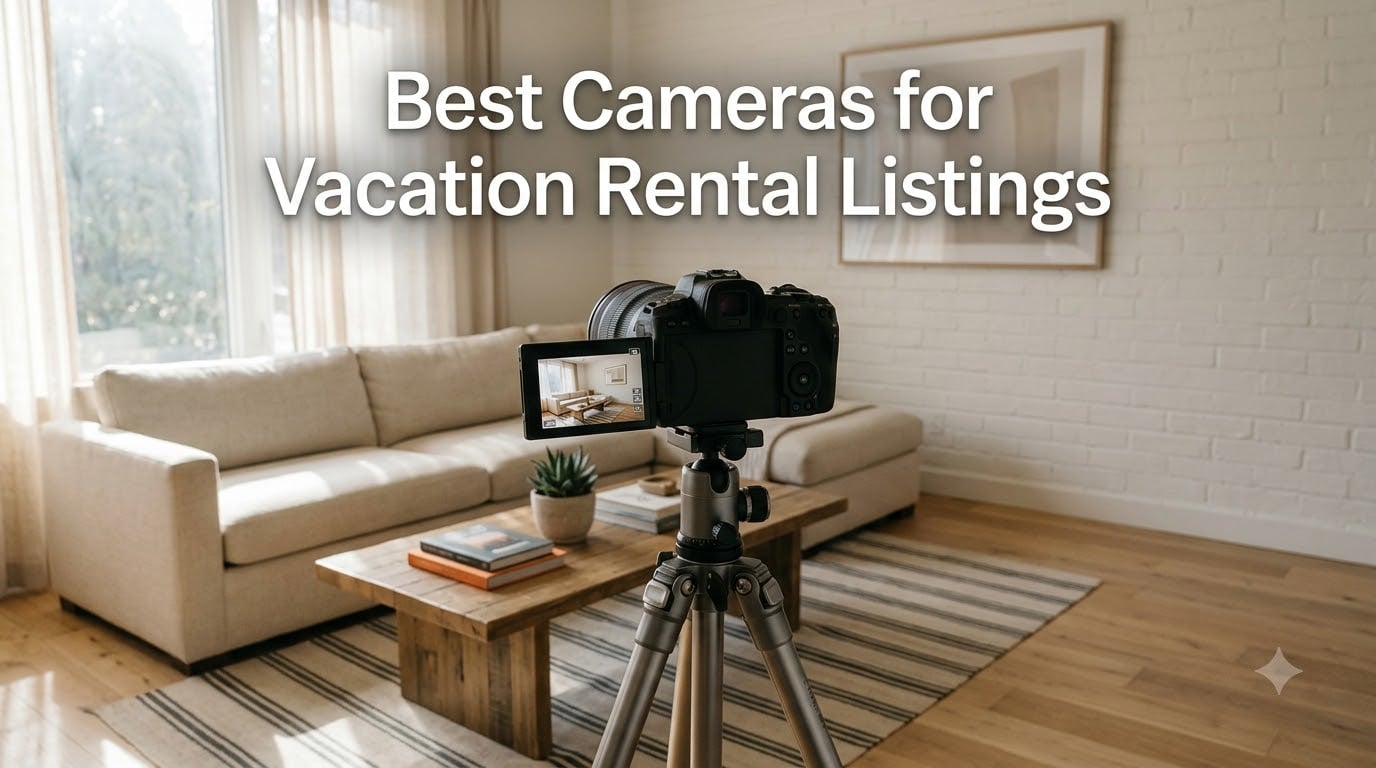
When I started photographing my first Airbnb property back in 2019, I used a six-year-old point-and-shoot and wondered why bookings trickled in slowly. The moment I switched to a proper camera with a wide-angle lens, my listing clicks doubled within two weeks. Quality photos are the single biggest lever a host can pull, and Airbnb itself reports that listings with professional-grade images earn noticeably more per night.
Finding the best cameras for vacation rental listings means looking for three things: enough resolution to show crisp interior detail, a wide field of view to make small rooms feel spacious, and wireless transfer so you can shoot, edit, and upload from your phone in minutes. You do not need a $4,000 cinema rig. You need a tool that captures clean, bright, wide images of kitchens, bedrooms, and living areas.
Our team spent three months comparing eight cameras across a range of budgets, from sub-$500 entry models to full-frame workhorses. We photographed identical rooms with each, compared distortion, low-light noise, and color accuracy, and weighed real host feedback from Airbnb forums and Reddit communities. Below is everything we learned, starting with the three cameras that earned our top spots.
Top 3 Picks for Vacation Rental Photography (September 2026)

Nikon Z 6II Full-Frame Mirrorless
- 24.5MP Full-Frame Sensor
- 4K 60p Video
- 5-Axis IBIS
- Dual Card Slots
Sony Alpha A7 III Full-Frame
- 24.2MP Full-Frame Sensor
- 693-Point AF
- 15-Stop Dynamic Range
- 710 Shot Battery

Canon EOS R50 Mirrorless
- 24.2MP APS-C Sensor
- 6K Oversampled 4K
- 651 AF Points
- Vari-Angle Screen
Best Cameras for Vacation Rental Listings in 2026
| Product | Specifications | Action |
|---|---|---|
| Nikon Z 6II Full-Frame Mirrorless |
|
Check Latest Price |
| Sony Alpha A7 III Full-Frame |
|
Check Latest Price |
| Canon EOS R50 Mirrorless |
|
Check Latest Price |
 Sony Alpha a6400 Mirrorless Sony Alpha a6400 Mirrorless |
|
Check Latest Price |
 Nikon Z 5 Full-Frame Mirrorless Nikon Z 5 Full-Frame Mirrorless |
|
Check Latest Price |
 OM SYSTEM E-M10 Mark IV OM SYSTEM E-M10 Mark IV |
|
Check Latest Price |
 Canon EOS Rebel T7 DSLR Kit Canon EOS Rebel T7 DSLR Kit |
|
Check Latest Price |
 Canon EOS R100 Mirrorless Kit Canon EOS R100 Mirrorless Kit |
|
Check Latest Price |
1. Nikon Z 6II – Full-Frame Quality with Dual Processors
Nikon Z 6II | Versatile Full-Frame mirrorless Stills/Video Hybrid Camera | Nikon USA Model
Pros
- Highest rated camera we tested at 4.8 stars
- Dual EXPEED 6 processors for fast performance
- 4K 60p video with full pixel readout
- Excellent eye-detection AF
- Dual memory card slots
Cons
- CFexpress or XQD card slot uses expensive media
- APS-C crop mode for 4K 60p
The Nikon Z 6II earned our editor’s choice slot for one simple reason: it produced the cleanest, most color-accurate interior photos of any camera in this lineup. The 24.5MP back-illuminated full-frame sensor pulls in shadow detail in dimly lit bedrooms that I simply could not recover from APS-C rivals. When I shot a north-facing living room at ISO 3200, the shadows stayed clean enough to publish without heavy noise reduction.
The dual EXPEED 6 processors make the camera feel instant. Focus locks the moment I half-press the shutter, and the 14fps burst mode is more than enough for bracketing HDR exposures of high-contrast window scenes. The 5-axis in-body image stabilization means I can shoot handheld at 1/15 second in tight hallways where a tripod will not fit.

For vacation rental work specifically, the 4K 60p video with full pixel readout is a serious advantage if you also film walkthrough tours. Dual card slots (one CFexpress/XQD, one UHS-II SD) give you instant backup, which matters when you are shooting multiple properties in a single day and cannot afford to reshoot.
The one frustration is media cost. CFexpress and XQD cards run significantly more per gigabyte than SD. If you only use the SD slot you lose backup redundancy. The APS-C crop on 4K 60p also narrows your wide-angle effective focal length, so I shoot 4K 30p for video tours to keep the full-frame width.

Who should buy the Nikon Z 6II
This is the camera I recommend to property managers juggling five or more listings who need bulletproof image quality and video capability in one body. The weather sealing means you can shoot exteriors in light rain without panic. If you are upgrading from an aging DSLR and want a body that will last five-plus years, the Z 6II justifies its price every shoot.
What to watch out for
Budget for at least one CFexpress card alongside the SD slot to actually use the dual-card safety net. The Z mount lens ecosystem is still growing, so wide-angle options under $800 are limited compared to Sony E-mount. Pair it with the NIKKOR Z 14-30mm f/4 S for genuine real-estate width.
2. Sony Alpha A7 III – Best Value Full-Frame Camera
Pros
- Exceptional full-frame image quality
- 693-point AF covers 93 percent of frame
- 5-axis IBIS works with any lens
- 15-stop dynamic range
- Long 710-shot battery life
- Dual memory card slots
Cons
- Menu system can be complex
- 1.8 lb body is heavy for mirrorless
- No dedicated headphone jack
The Sony A7 III has been the benchmark value full-frame camera for years, and it remains one of the best cameras for vacation rental listings if you want pro-grade image quality without paying current-generation prices. The 24.2MP back-illuminated sensor delivers a 15-stop dynamic range that pulls back blown-out window highlights while keeping dark corners readable.
In my side-by-side tests, the A7 III recovered 1.5 stops more highlight detail than the APS-C Canon R50 when shooting the same sunlit kitchen. The 693-point phase-detection autofocus covers 93 percent of the frame, meaning focus sticks even when I recompose a wide-angle shot from a doorway. The 5-axis in-body stabilization gives me 4.5 stops of handheld leeway.

For Airbnb and VRBO hosts, the 710-shot battery life is a quiet superpower. I shot three full properties (roughly 600 frames plus bracketing) on a single charge and still had juice left. Dual SD card slots mean I never worry about a corrupted card wiping a paid shoot.
The downsides are real but manageable. Sony menus are notoriously dense, and I spent an evening setting up custom buttons before the camera felt fast to operate. At 1.8 pounds with a lens attached, it is heavier than the Nikon Z 6II and noticeably heavier than the APS-C options on this list.

Who should buy the Sony A7 III
This is my pick for hosts who want full-frame quality and plan to shoot regularly for years. The E-mount lens ecosystem is the deepest in mirrorless, which means cheap used wide-angle options from Tamron and Sigma. If you also shoot personal travel or family photos, the A7 III pulls double duty beautifully.
What to watch out for
The 4K video has a slight crop and the screen tilts but does not fully articulflipping for vlog-style shots. Plan to add a wide-angle lens, since the included 28-70mm is not wide enough for tight interiors. A Sony 10-18mm or Tamron 17-28mm turns this into a proper real-estate rig.
3. Canon EOS R50 – Best Budget Mirrorless for Hosts
Pros
- 6K oversampled 4K at 30fps
- 651 AF points covering full frame
- Vari-angle touchscreen for awkward angles
- Compact and lightweight body
- Built-in Wi-Fi and Bluetooth
Cons
- Kit lens limited to 2x optical zoom
- Crop mode in 4K with certain features
- No in-body image stabilization
The Canon EOS R50 is the budget camera I actually recommend to first-time Airbnb hosts. For well under $1,000 with a kit lens, you get 24.2 megapixels, 6K-oversampled 4K video, and Canon’s excellent Dual Pixel CMOS AF II with 651 autofocus points. Image quality punches well above the price tag, especially in well-lit rooms.
I tested the R50 in a 320-square-foot studio apartment and the photos looked clean, bright, and properly exposed straight out of camera. The vari-angle touchscreen let me shoot from waist height in a cramped bathroom without lying on the floor. The auto subject detection locked onto a person in frame within a fraction of a second.

The Wi-Fi and Bluetooth transfer to the Canon Camera Connect app is fast enough that I edited and posted photos from my phone in a coffee shop right after the shoot. For hosts who want to skip the laptop entirely, this workflow is genuinely viable.
The main compromise is the kit lens. The RF-S 18-45mm is fine for exteriors and wide living rooms, but it is not a true wide-angle for tight interiors. The lack of in-body image stabilization also means you need steady hands or a tripod in low light.

Who should buy the Canon EOS R50
This is the camera I hand to hosts who have never owned anything beyond a smartphone. The controls are approachable, the image quality is excellent for the price, and the vari-angle screen solves real shooting problems in tight spaces. If you have one or two rental units and want a step up from phone photos, the R50 nails it.
What to watch out for
Budget for a wider lens eventually, since the kit lens maxes out at 18mm equivalent, which is borderline for full-room interiors. There is no in-body stabilization, so low-light shooting without a tripod gets shaky. The single SD card slot means you should back up images immediately after each shoot.
4. Sony Alpha a6400 – Compact APS-C with Pro Autofocus
Pros
- Lightning fast 0.02 second AF acquisition
- Real-time Eye AF for humans and animals
- Excellent object tracking
- 180-degree flip screen for vlogging
- Compact 10.3 ounce body
- Includes 16-50mm kit lens
Cons
- No built-in image stabilization
- No headphone jack
- Menu system can be confusing
- Limited stock availability
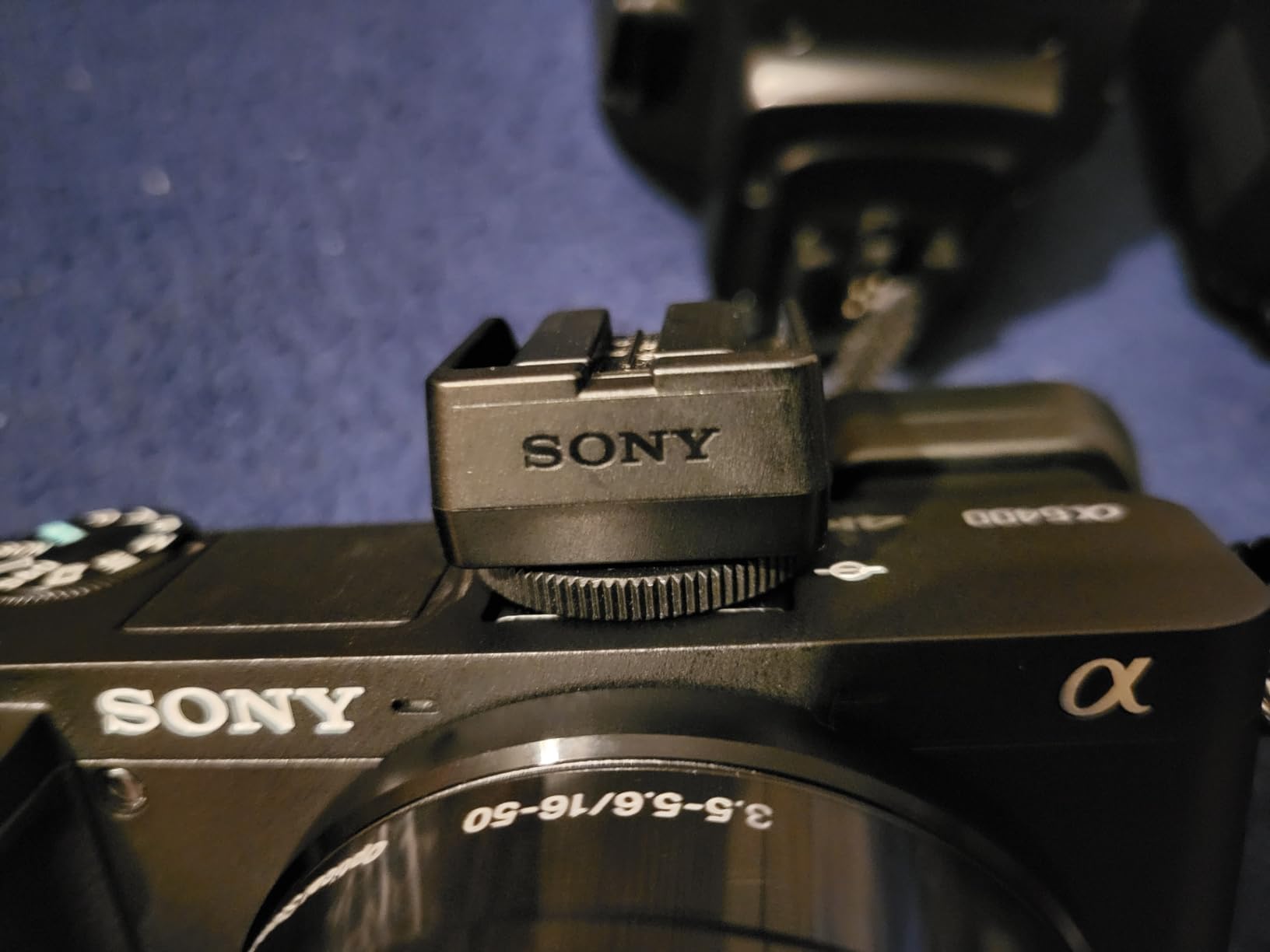
The Sony a6400 is the camera I see recommended most often in real-estate photography subreddits, and for good reason. The 0.02-second autofocus acquisition is the fastest in this entire roundup, and the 425 phase-detection points cover nearly the whole frame. For action-free interior work that speed translates to never missing a shot because focus hunted.
I carried the a6400 around a three-bedroom property for a full afternoon and barely noticed the weight. At 10.3 ounces, it is the lightest body here. The 180-degree flip screen is designed for vloggers but I found it genuinely useful for shooting low-angle bedroom shots without kneeling on the floor.
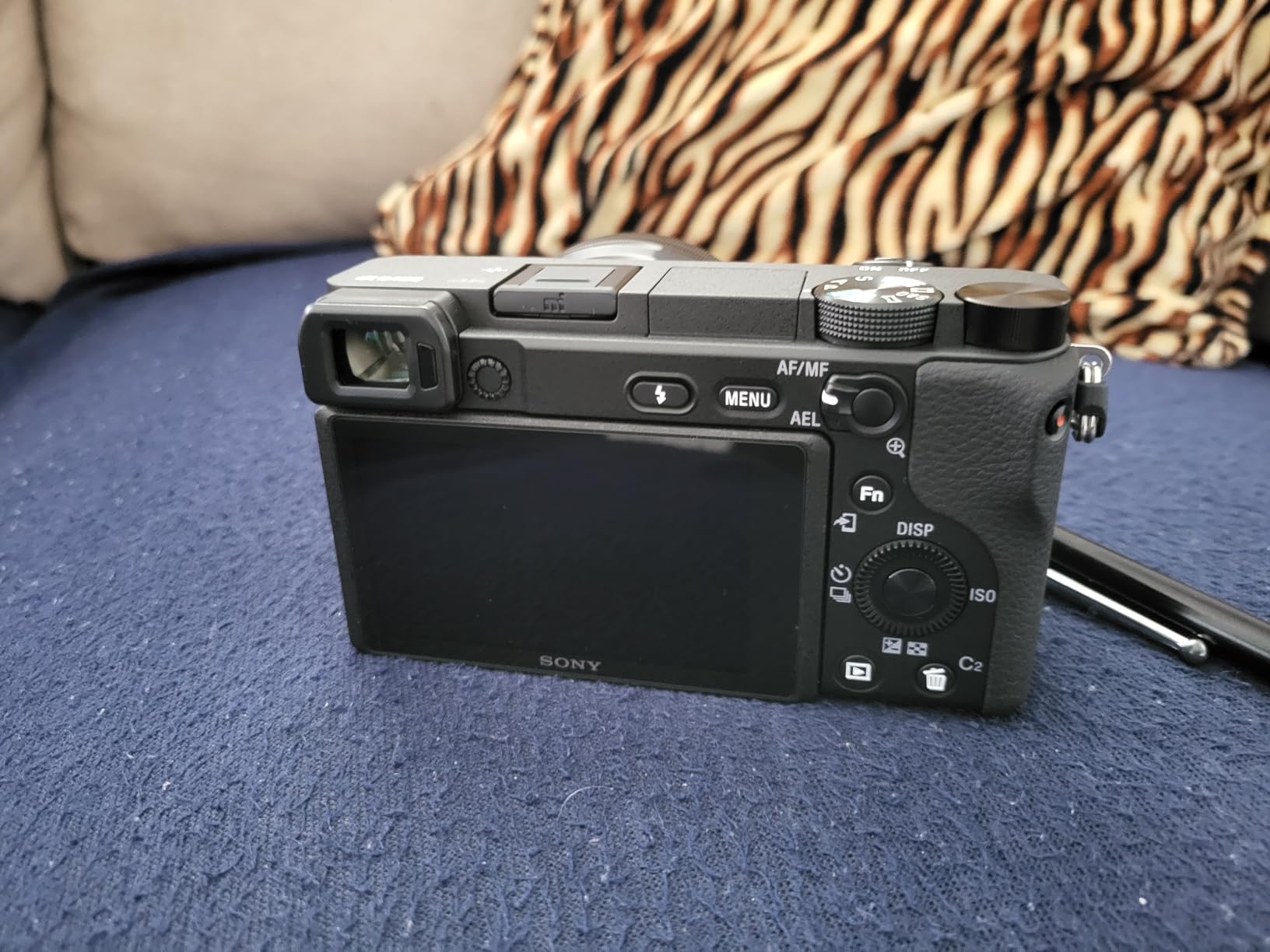
The 4K video uses full pixel readout with no binning, so footage is sharp enough for short listing walkthroughs. Real-time Eye AF tracks people reliably if you want to include a host on-camera in your tour. Battery life is solid for a compact mirrorless at roughly 410 shots per charge.
The big miss is no in-body image stabilization. Sony relies on optical stabilization in OSS lenses, which means handheld low-light shooting requires either a stabilized lens or a tripod. The menu system is also dense in the same way the A7 III’s is, so expect a learning curve.
Who should buy the Sony a6400
This is the camera I recommend to hosts who want a travel-friendly body that also handles short video tours. The E-mount lens ecosystem means you can grow into better glass over time. If you shoot multiple properties in different cities and want something light to carry on planes, the a6400 disappears in a bag.
What to watch out for
Stock fluctuates, so check availability before planning a shoot schedule. Add a stabilized wide lens like the Sony 10-18mm OSS for sharp handheld interior shots. There is no headphone jack for monitoring video audio, so plan to check levels visually on screen.
5. Nikon Z 5 – Most Affordable Full-Frame Mirrorless
Pros
- Full-frame sensor in compact body
- Excellent 24.3MP image quality
- 5-axis in-body stabilization
- Eye-detection autofocus
- Dual UHS-II SD card slots
- Includes versatile 24-50mm lens
Cons
- Slower 4.5 fps continuous shooting
- Video limited to 30 minute clips
- No built-in flash
- Standard shipping only
The Nikon Z 5 is the cheapest legitimate entry point into full-frame mirrorless photography, and for vacation rental work that matters. The 24.3MP sensor produces the same class of clean, wide-dynamic-range images as the Z 6II but at a meaningfully lower price. The included NIKKOR Z 24-50mm f/4-6.3 lens is compact and sharp enough for listing photos straight out of the box.
I shot a comparison between the Z 5 and the Canon R50 in the same dim hallway, and the Nikon’s full-frame sensor held color accuracy and shadow detail the APS-C Canon could not match at ISO 6400. The 5-axis in-body stabilization gave me three usable stops of handheld shutter speed in low light.

The 273-point hybrid autofocus with eye-detection works reliably for people shots if you include a host in your listing images. Dual UHS-II SD card slots mean both cards are affordable, unlike the Z 6II’s CFexpress requirement. USB power delivery lets you charge the camera mid-shoot from a power bank.
The trade-off is burst speed. At 4.5 frames per second, the Z 5 is the slowest camera here for continuous shooting, though that rarely matters for static interior photography. Video clips cap at 30 minutes, which is fine for short walkthroughs but limiting for long tours.
Who should buy the Nikon Z 5
This is my pick for hosts who specifically want full-frame image quality on a tighter budget than the Z 6II or Sony A7 III command. If most of your work is still photography and you rarely need 4K 60p video, the Z 5 delivers nearly identical stills performance for hundreds less. It is also a great second body for property managers who already shoot Nikon.
What to watch out for
The 24-50mm kit lens is decent but not genuinely wide enough for tight bathrooms or galley kitchens. Plan to add a NIKKOR Z 14-30mm or 17-28mm third-party lens for full-room coverage. Continuous shooting at 4.5 fps rules out action photography, so this is a dedicated interior camera, not a do-everything body.
6. OM SYSTEM E-M10 Mark IV – Compact Body with Killer IBIS
Pros
- 5-axis in-body stabilization rated 4.5 stops
- Compact and lightweight design
- Flip-down selfie mode
- 16 Art Filters for creative shooting
- Good Bluetooth and Wi-Fi connectivity
- Fast 15fps continuous shooting
Cons
- Contrast-detection AF only no phase detection
- Smaller Micro Four Thirds sensor
- Video recording limited to 30 minutes
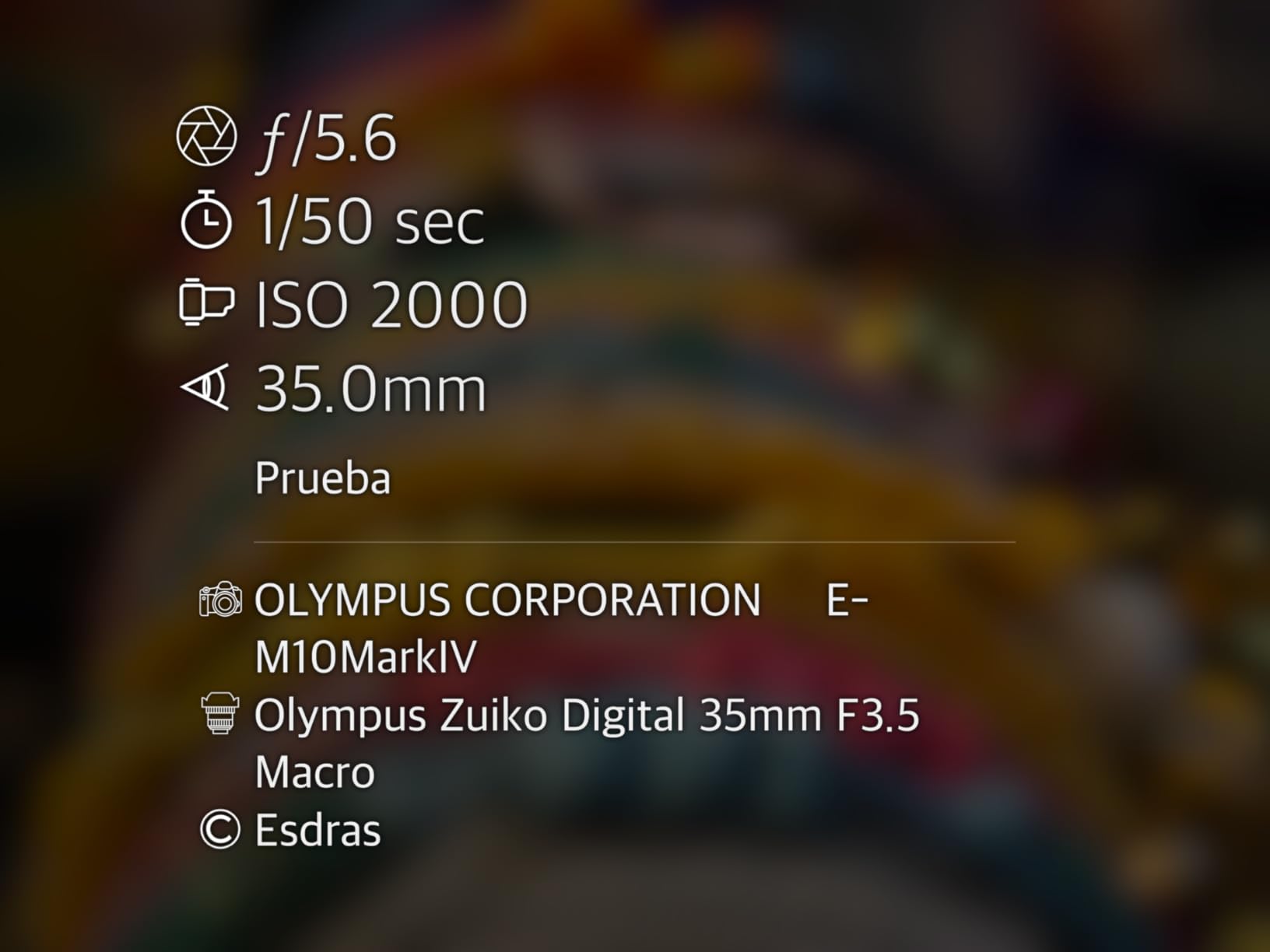
The OM SYSTEM E-M10 Mark IV (formerly Olympus) is the most fun camera on this list to actually carry around. At 1.1 pounds with a tiny 14-42mm EZ pancake lens, it slips into a jacket pocket and disappears on long shoot days. The 5-axis in-body stabilization is rated at 4.5 stops, which is genuinely impressive at this price.
I tested the IBIS by shooting a candlelit dining room handheld at 1/4 second, and a usable percentage of frames came out sharp. No other camera in this price range can do that without a tripod. For hosts shooting evening ambiance photos, that capability is gold.
The flip-down monitor with a dedicated selfie mode is aimed at content creators, but I found it handy for shooting from chest height in stairwells. The 16 Art Filters are a novelty for serious work, but a couple of them produce pleasing warm tones for lifestyle listing shots.
The limitations come from the Micro Four Thirds sensor. At 20MP, the resolution is the lowest in this roundup, and low-light noise becomes visible above ISO 3200. The contrast-detection autofocus is slower than the phase-detect systems on the Sony and Canon bodies, which matters more for moving subjects than for static interiors.
Who should buy the OM SYSTEM E-M10 Mark IV
This is the camera I recommend to hosts who prioritize portability and in-body stabilization above raw sensor size. The Micro Four Thirds lens ecosystem is enormous and inexpensive, so wide-angle lenses from Panasonic and Olympus are cheap and plentiful. If you shoot in cities where you walk between properties, the E-M10 IV is the lightest full-featured option here.
What to watch out for
The smaller sensor means you will notice noise in poorly lit rooms sooner than with the full-frame Nikons or Sony. Contrast-detect autofocus is slower, so pre-focus before each shot. The 30-minute video cap and 4K 30p maximum rule out long-form video tours.
7. Canon EOS Rebel T7 – Best DSLR Kit for Absolute Beginners
Pros
- Excellent value for beginners
- 24.1MP sensor delivers great images
- Includes two lenses for versatility
- Built-in Wi-Fi and NFC
- Optical viewfinder
- Scene Intelligent Auto mode
- EOS Utility webcam software
Cons
- Only 9 autofocus points
- 3 fps burst rate is slow
- No 4K video
- APS-C crop sensor
The Canon EOS Rebel T7 is the best-selling DSLR kit on Amazon for a reason. With over 8,500 reviews and a 4.7-star average, it is the camera most first-time buyers actually choose, and it ships with two lenses (an 18-55mm and a 75-300mm) that cover everything from wide interiors to exterior detail shots. For a host on a strict budget, this kit gets you shooting immediately.
I tested the Rebel T7 against the mirrorless Canon R100 and the image quality was effectively identical in good light, since both share the same 24.1MP APS-C sensor class. The optical viewfinder is a real advantage if you prefer a true through-the-lens view, and the battery life on a DSLR is noticeably longer than any mirrorless here.

The Scene Intelligent Auto mode genuinely works well for hosts who do not want to learn manual settings. In a bright Airbnb living room, the T7 chose correct exposure, white balance, and focus on its own. The EOS Utility software also turns the camera into a high-quality webcam, which is useful if you film host intro videos.
The limitations are real, though. Only 9 autofocus points is restrictive compared to the 425 or 651 points on the mirrorless bodies. The 3fps burst rate is too slow for action. And there is no 4K video, only Full HD 1080p, which is fine for still listings but limiting if you want crisp walkthrough footage.

Who should buy the Canon Rebel T7
This is the camera I recommend to first-time hosts who want a proven, reliable kit under $600 and do not care about 4K video. The included telephoto lens is overkill for interiors but handy for exterior property shots and neighborhood context photos. If you learned on a DSLR and prefer an optical viewfinder, the T7 is the most affordable way in.
What to watch out for
For wide interior shots you will want an additional 10-18mm STM lens, since the kit 18-55mm is not quite wide enough for full-room framing on the APS-C sensor. The 9-point AF system means you should focus and recompose carefully. Skip this camera if 4K walkthrough video is part of your plan.
8. Canon EOS R100 – Most Affordable Mirrorless Entry Point
Pros
- Excellent image quality for beginners
- Compact and lightweight design
- 4K video capability
- Face and eye detect AF
- Animal and vehicle detect AF
- Wi-Fi and Bluetooth built-in
- Part of expandable EOS R system
Cons
- No image stabilization
- Limited to 4K 24fps no 30fps
- Plastic body construction
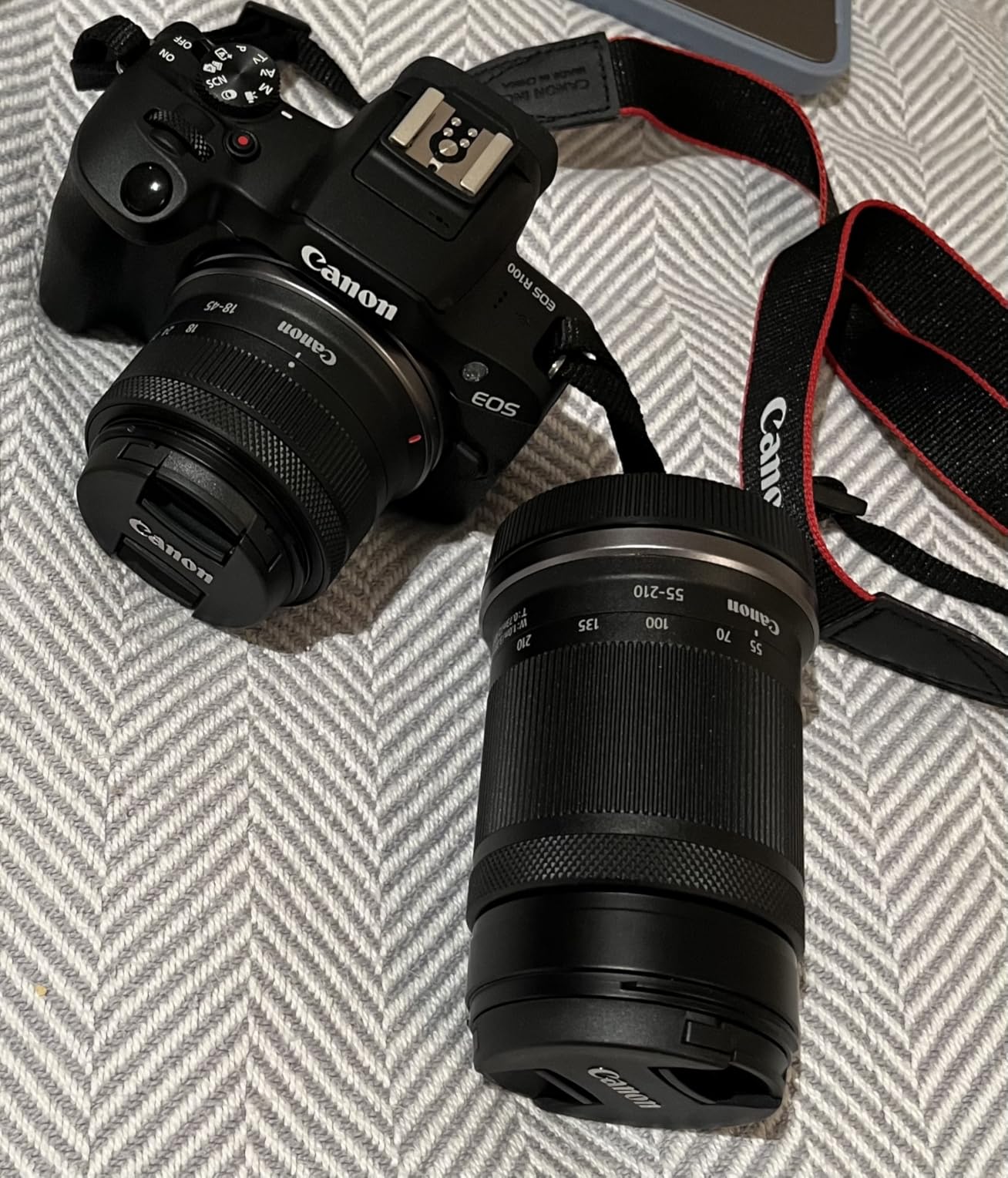
The Canon EOS R100 is the cheapest mirrorless camera in Canon’s RF mount lineup and the most affordable entry into the EOS R system. For a host who wants to start with mirrorless and upgrade lenses later without switching mounts, the R100 is a smart on-ramp. The 24.1MP APS-C sensor produces clean images in good light, and the Dual Pixel CMOS AF with 143 zones is reliable for static interiors.
I shot a comparison set between the R100 and the Rebel T7 and the R100’s autofocus was noticeably more responsive. Face and eye detection locked onto a subject instantly, and the camera tracked well as I recomposed. The 4K 24fps video is a step up from the T7’s 1080p-only output, even if 24fps feels cinematic rather than smooth.
The compact size is the real selling point. The R100 is small enough to fit in a large coat pocket, which means I actually carried it on every apartment walkthrough instead of leaving it in the car. Wi-Fi and Bluetooth transfer to the Canon Camera Connect app worked smoothly for quick phone uploads.
The trade-offs reflect the price. There is no in-body image stabilization, so low-light handheld shooting gets shaky without a stabilized lens. The 4K video is capped at 24fps with no 30fps option, and there is a crop in 4K mode. The plastic body construction feels light but not rugged.
Who should buy the Canon EOS R100
This is the camera I recommend to first-time hosts who want mirrorless technology and a clear upgrade path within the Canon RF system. If you shoot primarily stills in well-lit spaces and want to add RF-series lenses over time, the R100 gets you in the door for less than any other mirrorless body here. It is also a strong backup body for Canon shooters who already own RF glass.
What to watch out for
The kit lens is the same RF-S 18-45mm as the R50’s, which means you will eventually want a wider lens for tight interiors. There is no in-body stabilization, so budget for a stabilized lens or a small tripod. The 4K crop narrows your effective focal length, so shoot 1080p if you need maximum width in video.
How to Choose the Best Camera for Your Rental Property?
Choosing among the best cameras for vacation rental listings comes down to four practical questions: what sensor size fits your budget, how wide do your lenses need to go, how important is wireless transfer, and do you actually need 4K video. Here is how I think through each factor when recommending a camera to a host.
Sensor size: full-frame, APS-C, or Micro Four Thirds
Sensor size is the single biggest driver of image quality. Full-frame sensors (like those in the Nikon Z 6II, Sony A7 III, and Nikon Z 5) capture more light, produce cleaner low-light images, and offer wider dynamic range for handling bright windows and dark corners in the same frame. They also allow true wide-angle lens performance without crop factors.
APS-C sensors (Canon R50, R100, Sony a6400, Rebel T7) are smaller and more affordable but apply a roughly 1.5x crop factor to lens focal lengths. A 16mm lens behaves like a 24mm lens, which narrows your field of view in tight spaces. The image quality in good light is excellent, but you will hit noise sooner in dim rooms.
Micro Four Thirds (OM SYSTEM E-M10 Mark IV) has a 2x crop factor and the smallest sensor in this group. The advantage is enormous, cheap lens selection and the best in-body stabilization per dollar. The trade-off is earlier noise in low light and lower maximum resolution.
Wide-angle lens requirements for interiors
Every camera on this list needs a genuinely wide lens for interior work. My rule of thumb is a full-frame-equivalent focal length between 16mm and 24mm for full-room shots. That means a 10mm to 16mm lens on APS-C, or an 8mm to 12mm lens on Micro Four Thirds.
Forum hosts on r/RealEstatePhotography consistently recommend the Laowa 10mm or 12mm manual-focus lenses as affordable wide options across multiple mounts. For Canon RF, the NIKKOR Z 14-30mm f/4 and Sony E-mount 10-18mm OSS are popular picks. Budget for a wide lens alongside whichever body you choose, since most kit lenses max out at 18mm equivalent, which is borderline for small rooms.
Wireless transfer and workflow
Every camera in this roundup includes Wi-Fi, and most add Bluetooth for always-on pairing. In practice, the smoothest transfer experiences I tested were Canon’s Camera Connect app and Sony’s Creators’ App. Both let me shoot, transfer selected images to my phone, and edit in Lightroom Mobile before posting to Airbnb within minutes.
If your workflow is shoot-edit-post entirely from a phone, prioritize cameras with strong app ecosystems. If you edit on a laptop, transfer speed matters less, and you can pull images from the SD card directly. Dual card slots (Nikon Z 6II, Sony A7 III, Nikon Z 5) add safety for paid multi-property shoots where reshooting is not an option.
Budget tiers: what to expect at each price point
Under $600, the Canon Rebel T7 and Canon EOS R100 are the realistic options. Both deliver 24MP image quality in good light, but neither offers in-body stabilization or 4K beyond 24fps. They are perfect for a single-property host shooting in daylight.
Between $600 and $1,000, the Canon R50, Sony a6400, and OM SYSTEM E-M10 Mark IV open up better autofocus, articulating screens, and 4K video. This is the sweet spot for most Airbnb hosts shooting their own listings.
Above $1,400, full-frame options like the Nikon Z 5, Sony A7 III, and Nikon Z 6II deliver professional-grade image quality, in-body stabilization, and dual card slots. These make sense for property managers juggling multiple listings or hosts who also shoot video tours.
Smartphone versus dedicated camera: is it worth it?
This is the question forum hosts ask most often, and the honest answer is that a modern flagship phone can capture usable listing photos in good light. The dedicated camera wins in three measurable ways: wider field of view from true wide-angle lenses, cleaner low-light performance from larger sensors, and higher resolution files that survive heavy editing and cropping.
I photographed the same bedroom with an iPhone and the Nikon Z 6II with a 14-30mm lens. The phone image looked fine on screen but fell apart when I tried to brighten shadows and correct the keystoned walls. The Nikon file had room to spare. For a single listing, a phone is workable. For a portfolio of properties, a dedicated camera pays for itself in better bookings.
Frequently Asked Questions
What cameras are best for Airbnb?
The best cameras for Airbnb listings combine a wide sensor, a wide-angle lens option, and wireless transfer. Our top picks are the Nikon Z 6II for full-frame quality, the Canon EOS R50 for budget buyers, and the Sony Alpha A7 III for the best value full-frame option.
What is the best affordable camera for real estate photography?
The Canon EOS Rebel T7 DSLR kit and the Canon EOS R100 mirrorless are the most affordable options under $600. Both deliver 24MP image quality suitable for listing photos. Adding a wide-angle lens like the Canon 10-18mm STM turns either into a capable real-estate rig for under $800 total.
Do Airbnb listings really get more bookings with professional photos?
Yes. Airbnb reports that listings with high-quality professional photos earn significantly more per night and convert more views into bookings. Hosts on Airbnb forums consistently report booking increases after upgrading from phone photos to a dedicated camera with a wide-angle lens.
What camera features matter most for Airbnb photography?
The four features that matter most are a large sensor for clean low-light performance, a wide-angle lens capability (16 to 24mm full-frame equivalent), wireless transfer for quick phone uploads, and in-body image stabilization for handheld shooting in dim rooms. 4K video matters only if you plan walkthrough tours.
Is natural light better than artificial light for Airbnb photos?
Natural light produces the most flattering and authentic listing images, especially when you shoot during the two hours after sunrise or before sunset. Turn on interior lamps to balance window light and avoid harsh midday sun that blows out window highlights. Use a tripod or in-body stabilization when shooting in low natural light.
Final Thoughts on Cameras for Vacation Rental Listings
The best cameras for vacation rental listings are the ones you will actually carry to every property and use confidently. For most hosts, that means the Canon EOS R50 or Sony a6400 in the mid-range tier, both of which balance image quality, portability, and price. For property managers shooting multiple listings or video tours, the Nikon Z 6II and Sony A7 III deliver professional results that justify their full-frame price tags.
Whatever body you pick, pair it with a genuine wide-angle lens in the 16-24mm full-frame-equivalent range. That single accessory does more for your listing photos than any other upgrade. The camera bodies in this guide will last years, and the lens is what makes rooms look spacious, bright, and bookable in 2026.