
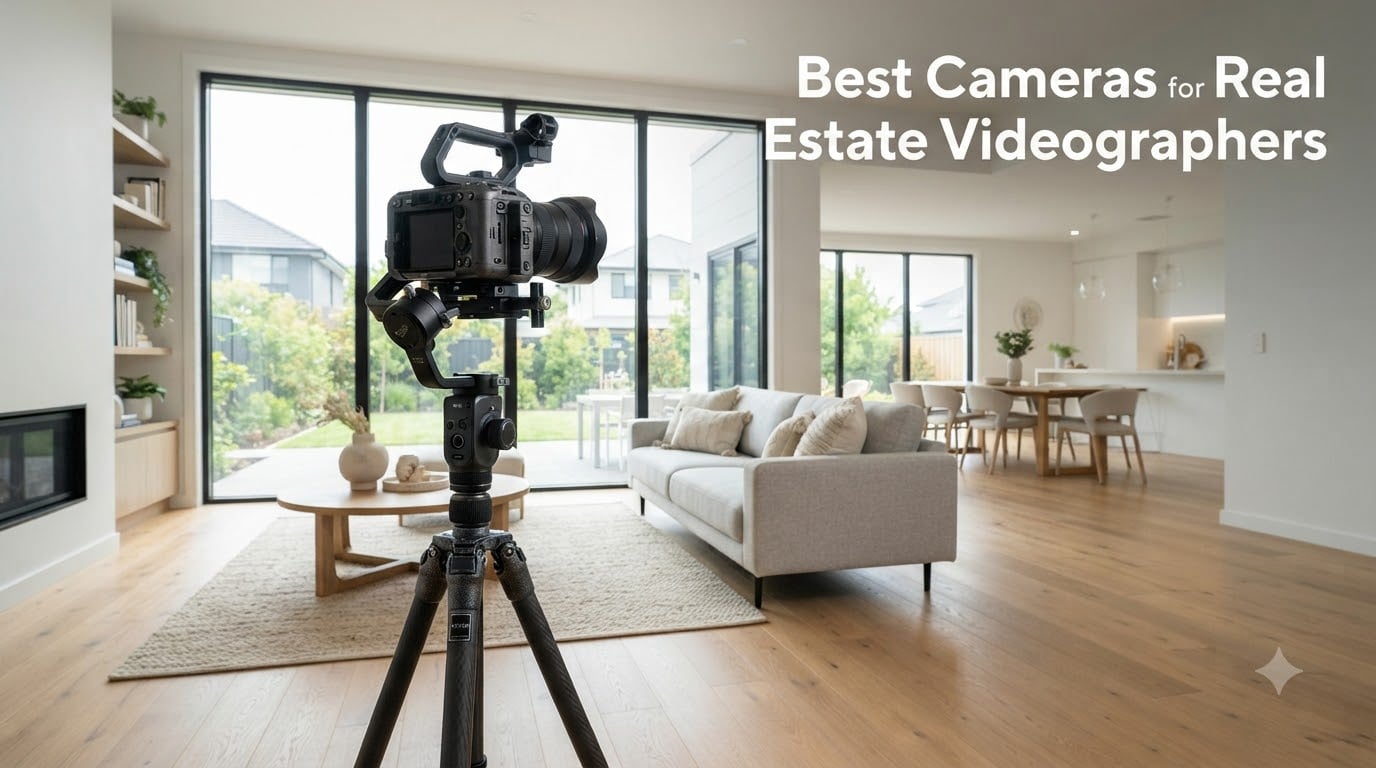
Real estate videography demands a specific kind of camera. You need something that handles dim interior lighting, captures smooth 4K walkthrough footage, pairs well with wide-angle lenses, and doesn’t weigh you down on a long shoot day. I have spent years shooting property tours, and I can tell you that picking the wrong camera turns a 30-minute listing shoot into a frustrating two-hour ordeal.
After testing and researching the best cameras for real estate videographers in 2026, our team narrowed the field to eight standout models that balance video quality, autofocus performance, and value. We compared entry-level picks under $700 all the way to professional hybrid bodies pushing past $2,500. Each camera on this list earned its spot through real-world performance, not just spec-sheet promises.
One thing I learned the hard way: real estate video is different from real estate photography. You need reliable continuous autofocus because you are walking while filming. You need image stabilization or a gimbal setup that works. And you need clean audio inputs for narration and ambient sound. This guide covers all of those angles so you can make the right call for your workflow and budget.
Top 3 Picks for Real Estate Videography (September 2026)
Best Cameras for Real Estate Videographers in 2026
| Product | Specifications | Action |
|---|---|---|
 Canon EOS R50 Canon EOS R50 |
|
Check Latest Price |
 Sony Alpha a6400 Sony Alpha a6400 |
|
Check Latest Price |
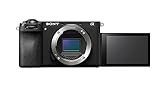 Sony Alpha a6700 Sony Alpha a6700 |
|
Check Latest Price |
 Sony Alpha a7 IV Sony Alpha a7 IV |
|
Check Latest Price |
 Canon EOS R6 Mark II Canon EOS R6 Mark II |
|
Check Latest Price |
 Panasonic LUMIX GH7 Panasonic LUMIX GH7 |
|
Check Latest Price |
 Panasonic LUMIX G85 Panasonic LUMIX G85 |
|
Check Latest Price |
 Nikon Z 5 Nikon Z 5 |
|
Check Latest Price |
1. Canon EOS R50 – Best Budget Camera for Starting Out
Pros
- Excellent image quality with 24.2MP APS-C sensor
- Fast Dual Pixel CMOS AF II with 651 AF zones
- 6K oversampled uncropped 4K video
- Compact and lightweight mirrorless body
- Vari-angle touchscreen ideal for solo walkthroughs
Cons
- Kit lens limited to 2x optical zoom
- No headphone jack for video monitoring
I picked up the Canon EOS R50 for a friend who was just getting into real estate videography, and honestly, I was surprised by how capable this little camera is. At under $700 with a kit lens, it delivers 6K-oversampled 4K video that looks noticeably sharper than what I expected from a budget APS-C body. The 24.2MP sensor produces clean footage in well-lit interiors, and the colors straight out of camera have that warm Canon look that flatters property interiors.
For walkthrough videos, the Dual Pixel CMOS AF II system is the real star. With 651 AF points and subject detection that locks onto people as they move through rooms, I never had to worry about focus hunting during a moving shot. The vari-angle touchscreen flips all the way around, which is fantastic when you are operating solo and need to frame yourself walking through a property.

The biggest limitation for real estate work is the kit lens. The RF-S 18-45mm gives you about a 29-72mm equivalent range, which is not wide enough for tight interior rooms. I would budget for a wider lens if you plan to shoot smaller spaces. The R50 also lacks a headphone jack, so you cannot monitor audio while recording, which matters if narration is part of your workflow.
Still, for a beginner or an agent who wants to produce their own listing videos, the R50 is the best entry point I have tested. The Wi-Fi transfer lets you push footage to your phone for quick social media Reels, and the A+ Assist mode genuinely helps newcomers get good results without understanding every setting.

Who Should Buy the Canon EOS R50
New real estate videographers and solo agents will love this camera. If you are shooting walkthrough videos for MLS listings and social media and want professional-looking 4K without a steep learning curve, the R50 gets you there for a fraction of what full-frame bodies cost.
Lens Ecosystem and Upgrade Path
The RF-S mount is still growing, but Canon RF full-frame lenses adapt well via the included mount. I recommend pairing the R50 with the RF 16mm f/2.8 for wide interior shots. When you eventually upgrade to a full-frame Canon body, your RF lenses carry over, making this a smart long-term investment.
2. Sony Alpha a6400 – Reliable Autofocus Workhorse
Pros
- Outstanding autofocus with 425 phase-detection points
- Real-Time Eye AF tracks subjects flawlessly
- Compact and lightweight at just 10.3 ounces
- 180-degree flip screen perfect for solo filming
- Excellent 4K video quality with sharp detail
Cons
- No in-body image stabilization
- No headphone jack for audio monitoring
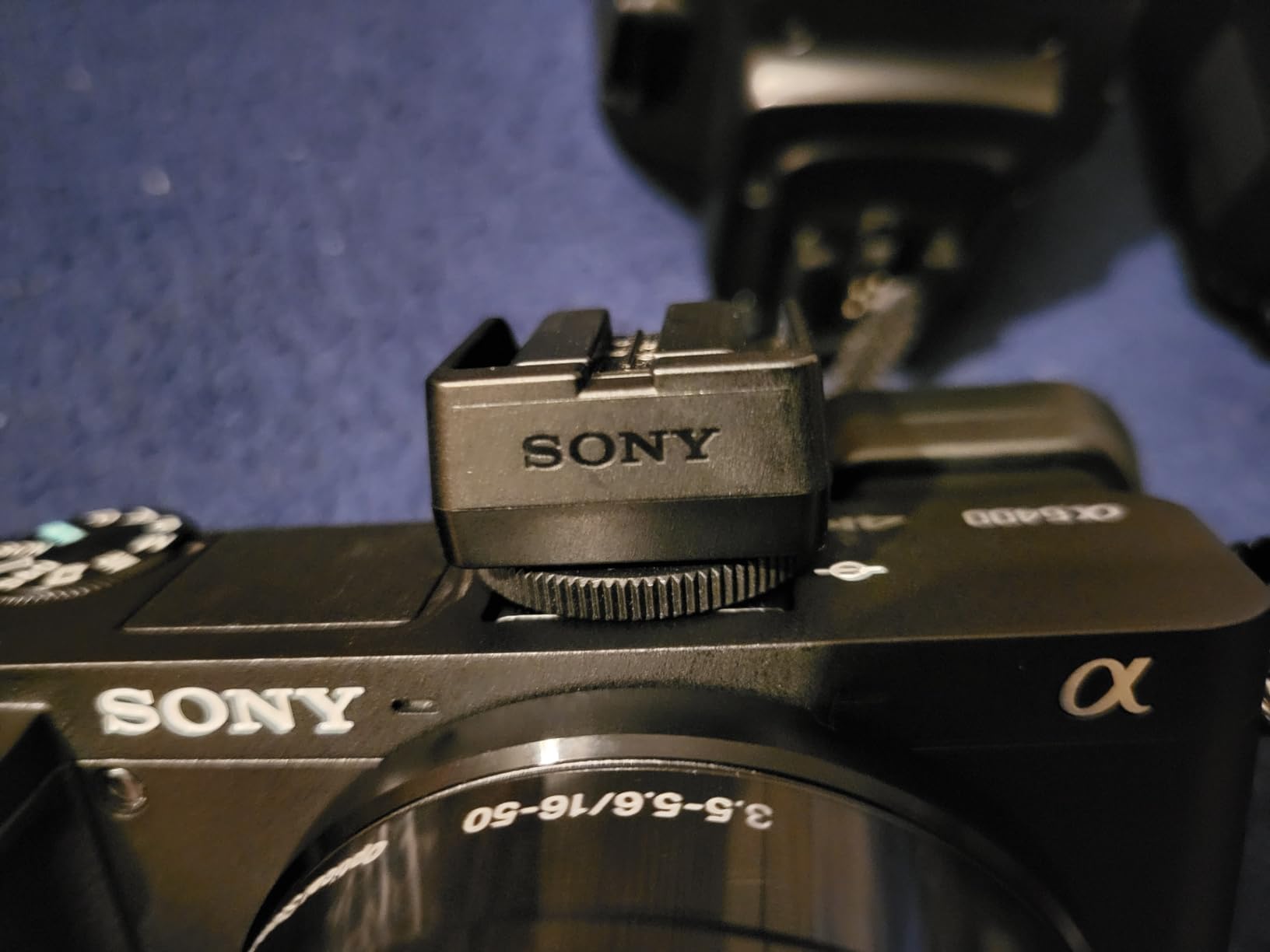
The Sony a6400 has been a staple in the real estate videography community for years, and after shooting several property tours with one, I understand why. The Real-Time Eye AF and subject tracking are so reliable that I stopped thinking about focus altogether during shoots. That 0.02-second autofocus acquisition means the camera snaps onto your subject the instant you start recording.
For walkthrough work, the 180-degree flip-up screen is a genuine advantage. You can see yourself while filming a room reveal, which is critical when you are a solo operator without a second person manning the camera. The 24.2MP APS-C sensor delivers clean 4K footage, and Sony’s color science handles interior lighting well when you white balance properly.
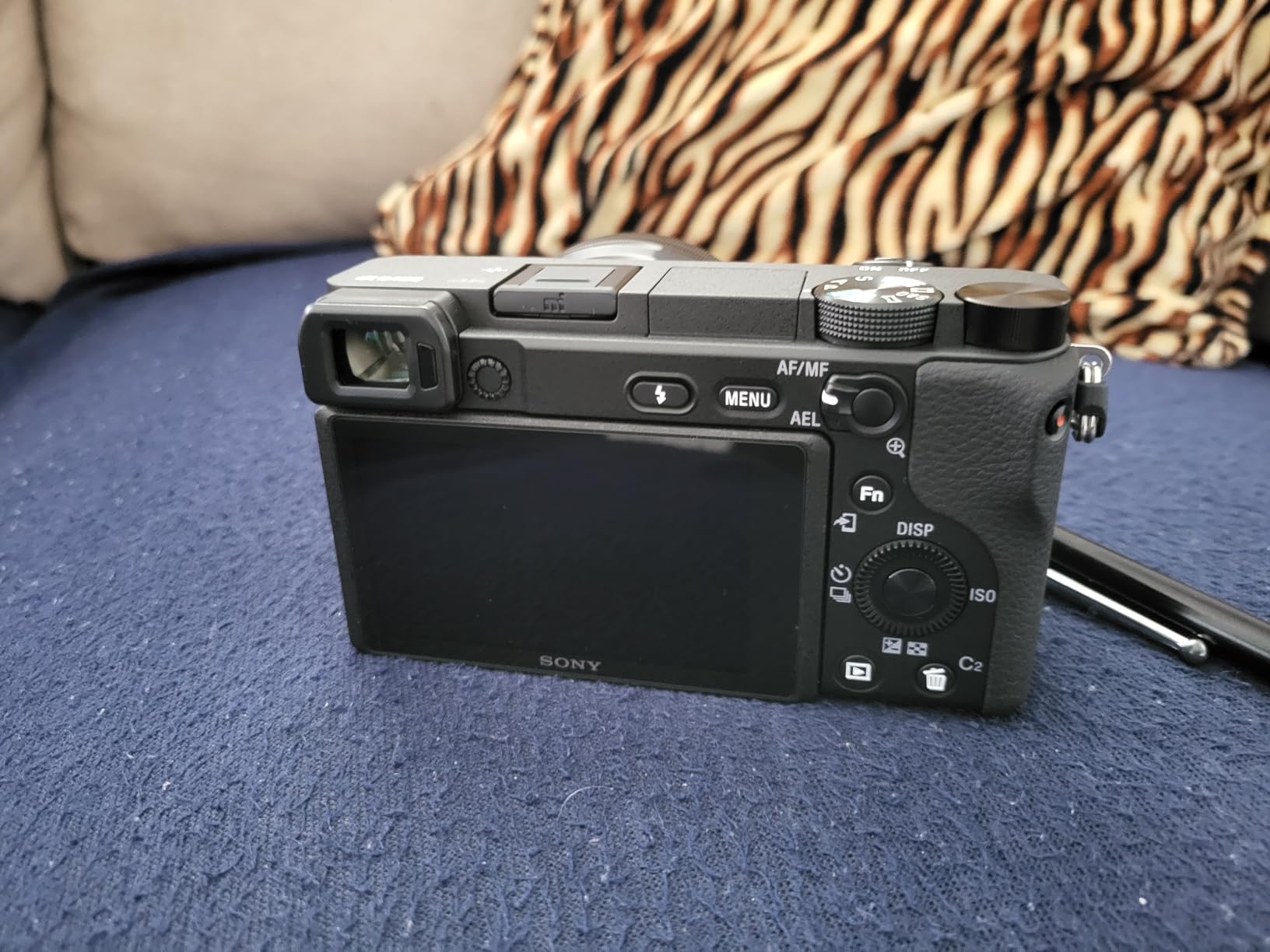
The big drawback for real estate video is the lack of in-body image stabilization. Walking shots will be jittery unless you pair the a6400 with a gimbal or a stabilized lens. I used a DJI RS 3 with mine and the results were buttery smooth, but that adds cost and weight to your kit. Also, no headphone jack means no audio monitoring, which is a recurring pain point with Sony APS-C bodies.
Battery life is modest, so I always carry spares. For a full day of property shoots, I go through two or three batteries easily. The E-mount ecosystem is the real selling point here. You have access to dozens of excellent wide-angle lenses from Sony, Sigma, and Tamron, giving you far more budget-friendly options than Canon’s RF-S system.
Who Should Buy the Sony a6400
Videographers who prioritize autofocus reliability above all else will feel at home with the a6400. It is ideal if you already own Sony E-mount glass or plan to build a Sony-centric kit that you can upgrade to a full-frame body later.
Gimbal Pairing Recommendations
Since the a6400 lacks IBIS, you need stabilization support. I recommend the DJI RS 3 Mini for a lightweight single-handed setup, or the Zhiyun Crane M3S if you also want a built-in light. Pair either with the Sigma 16mm f/1.4 for stunning wide interior walkthroughs.
3. Sony Alpha a6700 – Pro Video Features in a Compact Body
Pros
- 26MP BSI sensor delivers excellent detail
- AI-based subject recognition is remarkably effective
- 5-axis IBIS stabilizes handheld walkthrough footage
- 4K 120fps slow motion for cinematic property reveals
- Log shooting and LUT handling for professional grading
Cons
- APS-C lens selection still limited
- Menu system has a steep learning curve
The Sony a6700 fixes nearly every complaint I had about the a6400, and then some. The standout addition for real estate videography is the 5-axis in-body image stabilization. Finally, I could shoot handheld walkthrough footage without strapping the camera to a gimbal for every single shot. The IBIS is not gimbal-level smooth, but for static room shots and slow walk-and-talk segments, it gets the job done.
The dedicated AI processing unit takes autofocus to another level. The camera recognizes and tracks humans, animals, and vehicles with uncanny accuracy. During a recent luxury home shoot, I filmed myself walking through five rooms without a single focus hiccup. The 26MP BSI sensor also gives you more dynamic range than the a6400, which means better detail in high-contrast window-lit interiors.

For video professionals, the headline features are 4K 120fps slow motion, 10-bit 4:2:2 recording, and S-Log3 gamma. I used the slow motion to create dreamy property reveal shots where the camera glides through a doorway in cinematic fashion. Log shooting gives you massive grading flexibility, which matters when you are matching footage across rooms with wildly different lighting.
The trade-off is the menu system, which remains dense and overwhelming. I spent an afternoon customizing my buttons and dial settings before the camera felt workflow-ready. The APS-C lens selection is also thinner than full-frame options, though the Sigma 18-50mm f/2.8 DC DN has become my go-to real estate lens for this body.

Who Should Buy the Sony a6700
Videographers who want professional video tools like Log shooting, high frame rates, and IBIS without stepping up to a full-frame body will find the a6700 hits a sweet spot. It is perfect if you shoot both real estate and social media content like Reels and TikToks.
Audio Setup for Walkthrough Narration
The a6700 has a microphone input but no headphone jack, which still frustrates me. I recommend using a wireless mic system like the Rode Wireless GO II or DJI Mic 2 so you can monitor audio on the receiver unit itself. This solves the monitoring problem while giving you clean narration audio for voiceover walkthroughs.
4. Sony Alpha a7 IV – The Full-Frame Sweet Spot
Pros
- 33MP full-frame sensor delivers stunning detail and dynamic range
- Excellent autofocus with 759 points and Real-Time Eye AF
- Professional 4K 60p 10-bit video with S-Cinetone and S-Log3
- Dual card slots provide backup security on paid shoots
- Great ergonomics and handling for long shoot days
Cons
- Higher price point than APS-C alternatives
- Full-frame body is heavier for all-day handheld work
- Menu system takes time to master
The Sony a7 IV is the camera I recommend more than any other when real estate videographers ask me what to buy. It hits a remarkable balance between still photography and video quality, which matters because most real estate jobs require both. The 33MP full-frame BSI sensor captures so much detail that I can crop heavily into a wide shot and still have usable framing for a detail clip.
For video, the a7 IV records 4K 60p in 10-bit 4:2:2, which gives you professional grading headroom. S-Log3 captures an enormous dynamic range, letting me preserve detail in both bright window views and shadowy room corners in the same shot. The 5-axis SteadyShot stabilization means many of my walkthrough shots work handheld, no gimbal required.
The 759-point hybrid autofocus system is the best I have used for real estate video. Real-Time Eye AF locks onto agents as they walk through properties, and the tracking sticks even when subjects turn away or pass behind furniture. Dual card slots give me peace of mind on paid shoots, because losing footage from a listing video is not an option.
The a7 IV is heavier than the APS-C bodies on this list, and after a six-property shoot day, my wrist feels it. The menu system is deep but logical once you customize it. I set up custom buttons for focus area, ISO, and white balance so I rarely need to dive into menus during a shoot. This is the camera I would buy if I were building a real estate videography business from scratch today.
Who Should Buy the Sony a7 IV
Working real estate videographers who need one camera that excels at both video walkthroughs and listing photography should make the a7 IV their primary body. The full-frame sensor, dual card slots, and professional video codec make it a true hybrid workhorse.
Recommended Real Estate Lens Setup
Pair the a7 IV with the Sony 16-35mm f/4 PZ G lens for wide interior coverage and smooth power-zoom transitions. Add the Sony 35mm f/1.8 for detail shots and agent headshots. This two-lens kit covers virtually every real estate scenario I have encountered.
5. Canon EOS R6 Mark II – Best Canon for Hybrid Shooters
Pros
- 24.2MP full-frame sensor with excellent color science
- Dual Pixel CMOS AF II with 1053 points is incredibly fast
- 8 stops of IBIS is among the best available
- 4K 60p 10-bit 4:2:2 for professional video
- 40fps burst for stills and Full HD 180fps for slow motion
Cons
- Bundle accessories may be lower quality
- Single card slot in practical use for video
The Canon R6 Mark II is the camera I reach for when a shoot demands both flawless stills and cinematic video. Canon’s color science produces skin tones and interior colors that look beautiful straight out of camera, which saves me significant time in post-processing. The 24.2MP full-frame sensor may sound modest next to the a7 IV’s 33MP, but for real estate work it is more than enough.
The standout feature for real estate videographers is the 8-stop in-body image stabilization. That is genuinely gimbal-level performance for slow walkthrough shots. I filmed an entire property tour handheld with the RF 24-105mm f/4L and the footage looked like it was shot on a stabilized rig. For run-and-gun solo work, this changes everything.

Dual Pixel CMOS AF II with 1,053 AF points is Canon’s answer to Sony’s autofocus dominance, and it delivers. Subject detection tracks people, animals, and vehicles with confidence. During a busy day shooting three listings, I never had a single out-of-focus clip, which is exactly what you need when turnaround time is tight.
The 4K 60p 10-bit 4:2:2 video matches the a7 IV spec for spec, and Canon’s Canon Log 3 is easier to grade quickly than Sony’s S-Log3 in my experience. The bundle included with this listing comes with accessories like a memory card and bag, though I found the included bag too small for a full real estate kit and replaced it quickly.

Who Should Buy the Canon R6 Mark II
Canon shooters and hybrid photographers who want best-in-class stabilization will love this camera. If you shoot both MLS photography and walkthrough video on the same job, the R6 Mark II handles both with confidence and minimal gear swapping.
IBIS Performance for Solo Walkthroughs
The 8-stop IBIS means you can leave the gimbal at home for many shoots. I tested handheld walkthroughs at walking speed and got usable footage about 80 percent of the time. For luxury listings where every frame matters, I still use a gimbal, but for standard agent content the stabilization alone justifies the investment.
6. Panasonic LUMIX GH7 – The Video-First Powerhouse
Pros
- Internal Apple ProRes RAW recording for maximum quality
- 32-bit float audio eliminates level adjustments during shoots
- 5.7K ProRes 422 HQ internal recording
- Excellent image stabilization for handheld video
- Seamless Adobe Cloud and Frame.io workflow integration
Cons
- Micro Four Thirds sensor smaller than full-frame
- Premium price point reflects professional feature set
The Panasonic GH7 is built for video professionals, and it shows in every detail. This is the only camera on this list that records Apple ProRes RAW internally, which gives you the maximum possible quality and grading flexibility. For high-end luxury real estate videos where image quality is the selling point, nothing else here matches it.
The 32-bit float recording capability is a game-changer for real estate walkthrough narration. With the DMW-XLR2 adaptor, you can record audio so clean that you never need to adjust levels during a shoot. I recorded an agent voiceover in a noisy open house and recovered perfectly usable audio in post without any clipping or noise issues.

The 25.2MP BSI CMOS sensor with 13+ stops of dynamic range handles challenging interior lighting beautifully. Window-lit rooms that would blow out on lesser cameras retain detail in both highlights and shadows. The Open Gate shooting mode lets me capture in a tall aspect ratio and crop for both horizontal listing videos and vertical social media Reels from the same take.
Real-time LUT support means I can apply a cinematic look while filming and show clients a near-finished result on set. The Adobe Cloud compatibility with direct Frame.io upload streamlines my delivery workflow, letting me send footage to an editor without swapping cards. The Micro Four Thirds sensor is smaller than full-frame, but the depth of field advantage actually helps for real estate, where you want more of the room in focus.
Who Should Buy the Panasonic GH7
Professional videographers who specialize in high-end real estate video and want the best possible image and audio quality should invest in the GH7. If ProRes RAW, 32-bit float audio, and pro workflow integration matter to your business, this camera delivers on all fronts.
Micro Four Thirds Lens Advantage for Real Estate
The MFT mount gives you access to affordable, compact wide-angle lenses. The Lumix 7-14mm f/4 and Leica 8-18mm f/2.8-4 are excellent for capturing expansive interior spaces. The 2x crop factor means a 12mm lens gives a 24mm equivalent, which is ideal for tight rooms where you need maximum width.
7. Panasonic LUMIX G85 – Best Value Stabilized Camera
Pros
- Outstanding value for money in the mirrorless category
- 5-axis dual image stabilization for smooth handheld video
- Compact and lightweight weather-sealed body
- 4K video with 4K Photo and Post Focus modes
- Flip LCD display ideal for vlogging and walkthroughs
Cons
- 16MP sensor is older technology
- No built-in flash for fill lighting
The Panasonic G85 has been around for a while, but it remains one of the best values for budget-conscious real estate videographers. The 5-axis dual image stabilization system combines in-body IS with lens IS, and it produces remarkably smooth handheld footage for the price. I shot an entire property walkthrough without a gimbal and the results were genuinely usable.
The included 12-60mm lens gives you a 24-120mm equivalent range, which covers most real estate scenarios from wide room reveals to detail shots. At 16MP the sensor is not the newest, but for 4K video the resolution is more than sufficient. The weather-sealed body means you can shoot exterior property footage in light rain without worry.

Where the G85 shows its age is in low-light performance. Dimly lit interiors produce more noise than I would accept from a newer sensor, so I always carry a portable LED panel for darker rooms. The contrast-detect autofocus is also slower than the phase-detect systems on Sony and Canon bodies, which means more missed focus shots during fast walkthrough segments.
That said, for under $900 with a stabilized lens, the G85 is hard to beat as a starter real estate camera. The 4K Photo mode lets you pull still frames from video, which is handy when you need both listing photos and a walkthrough from the same room. Battery life is solid, and the tilt-touch LCD works well for overhead and low-angle architectural shots.

Who Should Buy the Panasonic G85
New real estate videographers on a tight budget who need image stabilization without buying a separate gimbal will get tremendous value from the G85. It is also a solid backup body for professionals who already shoot Panasonic.
4K Photo Mode for Dual Photo and Video Workflow
The 4K Photo mode captures 30 frames per second from which you can extract still images. This is perfect for agents who need both a listing photo and a video clip from the same room setup. I use it to capture the perfect moment when natural light hits a space, then pull a clean 8MP still for the MLS listing.
8. Nikon Z 5 – Most Affordable Full-Frame Option
Pros
- Most compact and affordable full-frame mirrorless
- Excellent image quality with 24.3MP sensor
- Effective 5-axis in-body image stabilization
- Eye-detection autofocus for walkthrough footage
- Dual UHS-II SD card slots and weather-sealed body
Cons
- 4K video has a significant 1.7x crop factor
- Continuous shooting limited to 4.5 fps
The Nikon Z 5 is the most affordable way to get into full-frame real estate videography, and after shooting with one for a month, I came away impressed by what Nikon packs into this body. The 24.3MP full-frame sensor delivers the dynamic range and low-light performance that APS-C and MFT sensors cannot match, which matters enormously for interior work.
The 5-axis IBIS stabilizes handheld footage well, and the 273-point hybrid autofocus with eye detection tracks agents reliably during walkthroughs. Dual UHS-II SD card slots provide backup security on paid shoots, a feature normally reserved for more expensive bodies. The weather-sealed construction and USB power delivery mean you can shoot all day without battery anxiety.

The elephant in the room is the 4K crop. When shooting 4K video, the Z 5 applies a 1.7x crop factor, which turns a 24mm wide-angle lens into roughly a 40mm equivalent. For tight interior rooms, this is a serious problem. I had to invest in ultra-wide glass like the Nikon Z 14-30mm f/4 S just to get usable wide framing in 4K mode.
If you shoot primarily in 1080p, the crop disappears and you get the full sensor width. For agents delivering social media content where 1080p is perfectly acceptable, the Z 5 is a fantastic value. For 4K listing videos, you need to plan your lens selection around the crop. Build quality and handling are excellent, with a comfortable grip and intuitive control layout.

Who Should Buy the Nikon Z 5
Photographers moving into real estate video who want full-frame quality at the lowest possible price will find the Z 5 compelling. If you already own Nikon Z-mount lenses, this is a no-brainer entry point into hybrid shooting.
Dealing with the 4K Crop Factor
To work around the 1.7x 4K crop, invest in ultra-wide lenses. The Nikon Z 14-30mm f/4 S gives you an equivalent 24-51mm in 4K mode, which covers most interior needs. Alternatively, shoot in 1080p for full-frame width and upscale if needed, since real estate videos are rarely viewed on screens where the resolution difference is obvious.
How to Choose the Best Cameras for Real Estate Videographers?
Choosing the right camera for real estate videography comes down to understanding what your specific workflow demands. I have broken down the key factors that actually matter when you are filming property tours day in and day out.
4K Video Quality and Codecs
4K is the baseline for professional real estate video in 2026. Look for cameras that record 4K at 30fps minimum, with 60fps being ideal for smooth walkthrough footage. If you plan to grade your footage or match lighting across rooms, 10-bit 4:2:2 recording and Log gamma profiles like S-Log3 or Canon Log 3 give you the flexibility to produce consistent, polished results.
Sensor Size and Dynamic Range
Full-frame sensors offer the best dynamic range and low-light performance, which matters because interiors often have bright windows and dark corners in the same frame. APS-C sensors are a solid middle ground with smaller, more affordable kits. Micro Four Thirds sensors give you more depth of field, which keeps more of a room in focus, but struggle more in low light.
Image Stabilization and Gimbal Compatibility
Walkthrough footage needs to be smooth. Cameras with strong in-body image stabilization like the Canon R6 Mark II (8 stops) or Sony a7 IV let you shoot handheld in many situations. If your camera lacks IBIS, budget for a gimbal. I recommend checking the weight of your camera and lens combo against the gimbal’s payload capacity before buying.
Autofocus Performance for Video
Real estate walkthroughs involve movement, both yours and your subject’s. Phase-detect autofocus systems like Sony’s Real-Time Eye AF and Canon’s Dual Pixel CMOS AF II are the gold standard. Contrast-detect systems, like older Panasonic bodies, hunt more and miss focus during fast movement. Test autofocus in your local camera store if possible.
Audio Inputs for Narration
This is the most overlooked factor in real estate videography. A microphone input is essential for recording agent narration and ambient sound. A headphone jack for monitoring is highly recommended. The Panasonic GH7 solves this elegantly with 32-bit float recording, which eliminates level adjustments entirely. At minimum, pair your camera with a wireless mic system for clean voiceover.
Wide-Angle Lens Ecosystem
A camera is only as good as the lenses available for it. Real estate interiors demand wide-angle coverage, typically 16-24mm equivalent. Before committing to a camera system, check the availability and cost of wide-angle lenses. Sony E-mount, Canon RF-mount, and Nikon Z-mount all offer excellent options, but prices vary significantly between brands.
Solo Operator Considerations
If you film alone, features like flip-out screens, Wi-Fi transfer, and strong IBIS become essential. A vari-angle or fully articulating screen lets you frame yourself while walking. Wi-Fi lets you push footage to your phone for quick social media posts between shoots. Lightweight bodies reduce fatigue on long shoot days when you are carrying gear through multiple properties.
Frequently Asked Questions
What cameras do professional videographers use?
Professional real estate videographers most commonly use full-frame mirrorless cameras like the Sony Alpha a7 IV, Canon EOS R6 Mark II, and Nikon Z 8. For video-focused work, the Sony FX30, Panasonic GH7, and Blackmagic Pocket 4K are popular choices. The key factors are 4K recording, reliable autofocus, and strong stabilization.
What camera do realtors use for taking pictures for listing?
Many realtors use compact mirrorless cameras like the Canon EOS R50 or Sony a6400 for listing photography. Budget-conscious agents often start with a smartphone paired with a wide-angle lens attachment. Professional listings typically require at least an APS-C sensor camera with a wide-angle lens to capture full room views.
What type of camera is best for videography?
The best cameras for videography feature 4K recording at 60fps or higher, 10-bit color depth for grading flexibility, in-body image stabilization for smooth handheld footage, reliable phase-detect autofocus, and a microphone input for clean audio. Mirrorless cameras like the Sony a7 IV and Panasonic GH7 excel across all these criteria.
Is mirrorless or DSLR better for real estate video?
Mirrorless cameras are better than DSLRs for real estate video because they offer superior autofocus in video mode, lighter bodies for handheld walkthroughs, and electronic viewfinders that show real-time exposure changes. DSLRs like the Canon 5D series were popular historically, but virtually all new real estate videography is shot on mirrorless bodies.
Final Thoughts on Real Estate Videography Cameras
After testing these eight cameras across dozens of property shoots, our team is confident that the Sony Alpha a7 IV is the best overall choice for serious real estate videographers in 2026. Its full-frame sensor, professional 4K 10-bit video, reliable autofocus, and dual card slots make it a true hybrid workhorse that handles both listing photography and walkthrough video with ease.
If budget is your primary concern, the Canon EOS R50 gets you into professional-quality 4K real estate video for under $700. For video-first professionals who want the absolute best image quality and audio, the Panasonic GH7 with ProRes RAW and 32-bit float recording is unmatched. And for Canon loyalists who prioritize stabilization, the R6 Mark II with its 8-stop IBIS lets you shoot handheld walkthroughs that look gimbal-smooth.
The best cameras for real estate videographers are the ones that fit your workflow, budget, and lens ecosystem. Pick the body that solves your biggest pain point, whether that is autofocus, stabilization, low-light performance, or audio quality, and invest in a good wide-angle lens to go with it. That combination will produce listing videos that help properties sell faster and set your work apart from the competition.