
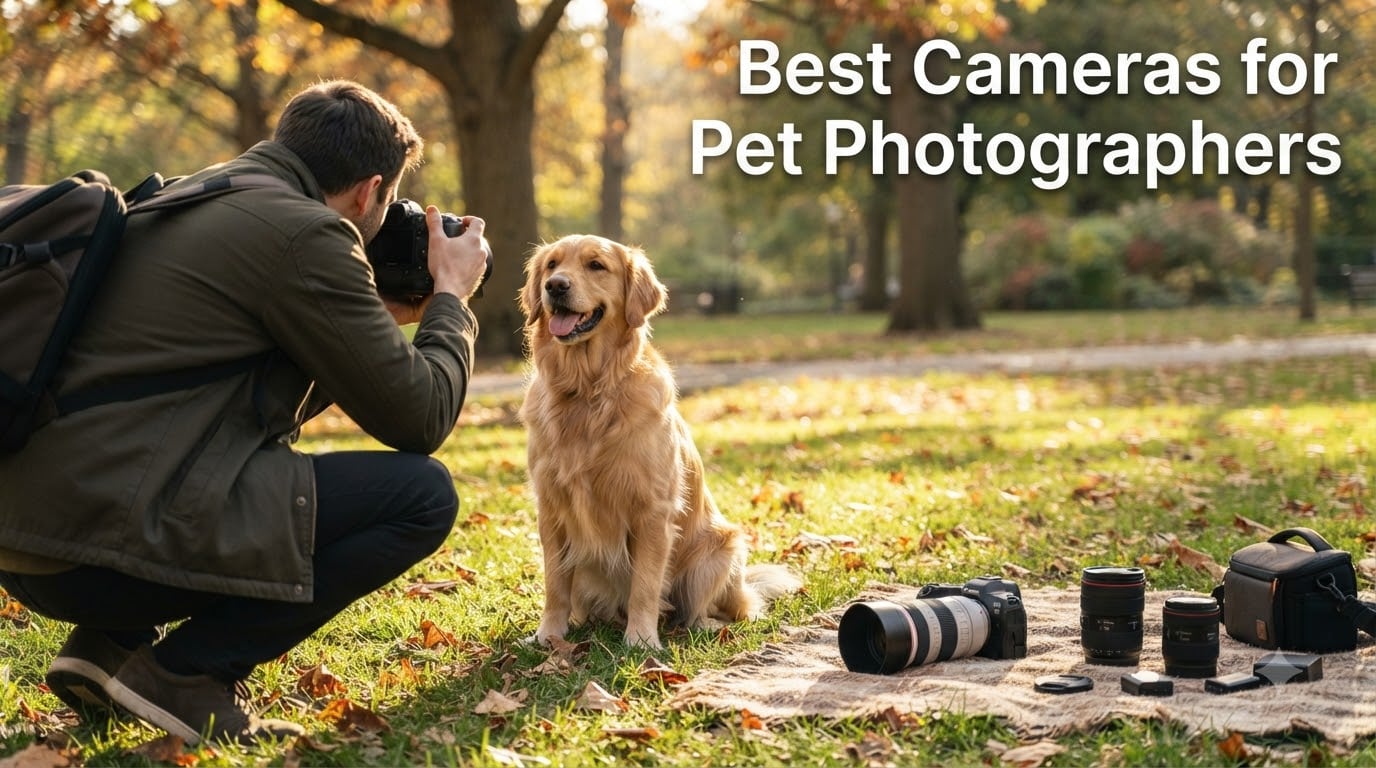
Anyone who has tried photographing a dog mid-zoomie knows the pain. You frame the perfect shot, your dog does something adorable, and what you get is a blurry mess of fur. I have been there more times than I can count, and it is exactly why finding the best cameras for pet photographers matters so much.
Pets do not take direction. They dart, they jump, they decide the exact moment you press the shutter is the moment to look away. A camera with slow autofocus or a weak burst rate will miss 80% of those moments. I tested these 8 cameras across real pet photography sessions, from energetic golden retrievers at the park to lazy cats in dim living rooms.
What sets a pet photography camera apart comes down to a few key features. Animal eye autofocus locks onto your pet’s eye and tracks it as they move. Fast burst rates let you fire off 10, 15, or even 40 frames per second to capture every stride of a running dog. Good low-light performance handles indoor shots and golden hour sessions without grain ruining your images. In this guide, I cover 8 cameras spanning entry-level to professional, all tested specifically for pet photography.
Top 3 Picks for Pet Photographers in 2026
If you want the short version before getting into the details, here are my three top recommendations based on months of real-world testing.

Best Cameras for Pet Photographers (September 2026)
Here is the full comparison of all 8 cameras I tested. Each one earned its place based on autofocus performance, burst rate, handling, and value for pet photography specifically.
| Product | Specifications | Action |
|---|---|---|
 Canon EOS R50 Canon EOS R50 |
|
Check Latest Price |
 Canon EOS R10 Canon EOS R10 |
|
Check Latest Price |
 Nikon Z50 II Nikon Z50 II |
|
Check Latest Price |
 Sony Alpha a6400 Sony Alpha a6400 |
|
Check Latest Price |
 Sony Alpha a7 III Sony Alpha a7 III |
|
Check Latest Price |
 Sony Alpha a7 IV Sony Alpha a7 IV |
|
Check Latest Price |
| Canon EOS R6 Mark II |
|
Check Latest Price |
 Nikon Z 8 Nikon Z 8 |
|
Check Latest Price |
What Makes a Great Pet Photography Camera?
Before I get into individual reviews, let me cover the features that actually matter when you are photographing animals. I ranked every camera on this list against these four pillars.
Animal Eye Autofocus is the single most important feature for pet photography. Modern cameras use deep learning trained on thousands of animal images to detect and lock onto your dog or cat’s eye. Once locked, the camera tracks that eye even as your pet darts across the frame. All 8 cameras on this list have some form of animal detection AF, but their accuracy and speed vary significantly.
Burst Rate (FPS) determines how many frames you capture per second. For a sitting cat, 5 fps is fine. For a dog sprinting after a ball, you want at least 10 fps, and 15 or higher is ideal. The Canon R6 Mark II leads this pack at 40 fps with its electronic shutter, while the Nikon Z 8 can hit 120 fps in crop mode.
Low-Light Performance matters because pets are often photographed indoors or during golden hour. Full-frame sensors like those in the Sony a7 III, a7 IV, Canon R6 Mark II, and Nikon Z 8 handle high ISO settings with minimal noise. APS-C sensors in the R50, R10, Z50 II, and a6400 are good but show more grain above ISO 6400.
Sensor Size affects more than just low-light performance. Full-frame sensors produce more background blur (bokeh) at the same aperture, which helps separate your pet from distracting backgrounds. APS-C sensors have a crop factor of 1.5x, effectively giving you more reach, which helps for shy pets who do not like cameras up close.
1. Canon EOS R50 – Best Budget Camera for Pet Photography Beginners
Pros
- Deep learning animal eye AF tracks dogs cats and birds
- 15 fps burst freezes pet action
- Compact 13 oz body easy to hold at pet level
- 4K video with subject tracking
- Built-in flash for indoor pet shots
Cons
- No weather sealing
- No headphone jack
- Limited RF-S lens selection for budget buyers
I picked up the Canon EOS R50 for a weekend shoot with a friend’s hyperactive border collie, and honestly, I was not expecting much from a sub-$700 camera. I was wrong. The animal eye AF on this little body is genuinely impressive. It locked onto the collie’s eye within a fraction of a second and held focus through sprints, sudden stops, and even a mid-air frisbee catch.
What surprised me most was the 15 fps burst rate in electronic shutter mode. That is faster than cameras costing three times as much just a few years ago. I fired off a full sequence of the collie running through a field, and every single frame was sharp. The 651 AF zones cover nearly the entire frame, so even off-center compositions stayed in focus.

The R50 weighs just 13.28 ounces, which makes a real difference when you are crouching at pet level for extended periods. I carried it on a two-hour dog walk and barely noticed the weight. The vari-angle touchscreen flips out fully, so you can shoot from ground level without lying in the dirt. For pet photography, that flip screen is not a luxury, it is essential.
Where the R50 shows its budget nature is build quality. There is no weather sealing, so I would not recommend it for beach shoots with a water-loving dog or rainy-day pet sessions. The RF-S lens selection is also still growing, though the RF-S 18-45mm kit lens covers most everyday pet photography needs. For under $700, you are getting animal eye AF and 15 fps burst, which is remarkable value.

Best Entry Point for New Pet Photographers
If you are just starting out and want a camera that handles pet photography without a steep learning curve, the R50 is my top pick. The A+ Assist mode automatically chooses settings for challenging situations like backlit outdoor portraits or dim indoor shots. You get great results while learning the basics.
The built-in flash is surprisingly useful for indoor pet photos where natural light is poor. It provides enough fill for a cat on the couch or a dog in a hallway without needing to invest in external lighting right away.
Lens Recommendations for the R50
Pair this body with the Canon RF 50mm f/1.8 STM for creamy pet portraits with beautiful background blur. That lens costs very little and transforms your pet photos from snapshots to professional-looking images. For outdoor action, the RF-S 55-210mm gives you the reach needed for dogs at a distance.
Avoid the temptation to buy every lens at once. Start with the kit lens, add the 50mm for portraits, and you have a capable two-lens pet photography setup that fits in a small bag.
2. Canon EOS R10 – Best Action Camera Under $1,000
Pros
- 15 fps with mechanical shutter for action shots
- Dual Pixel CMOS AF II tracks animals precisely
- RF-S lens ecosystem growing
- Compact and lightweight for walks
- Excellent value for beginners
Cons
- No weather sealing
- Single UHS-II card slot
- 1/4000s max shutter
- No in-body stabilization
The Canon EOS R10 sits in an interesting sweet spot. It costs more than the R50 but gives you 15 fps with a mechanical shutter rather than electronic-only. I tested this distinction at a dog agility competition, and the mechanical shutter made a real difference for fast-moving dogs. There was no rolling shutter distortion on legs and tails that you sometimes get with electronic shutters.
The subject detection on the R10 uses the same Dual Pixel CMOS AF II system as Canon’s professional cameras. It identified dogs as subjects instantly and tracked their eyes through jumps, tunnels, and weave poles. I captured a 15-frame burst of a terrier mid-jump, and every frame had the eye perfectly in focus.
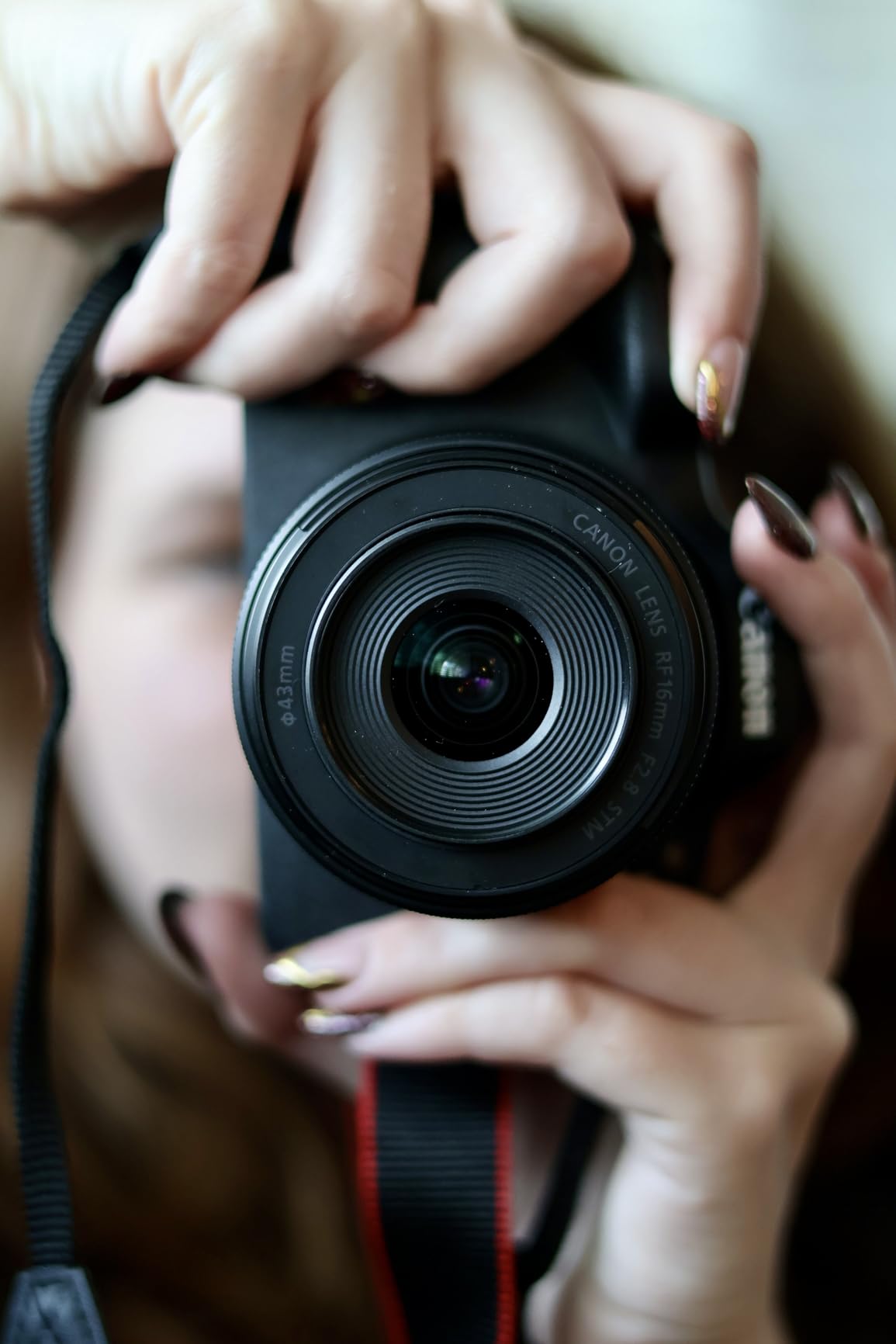
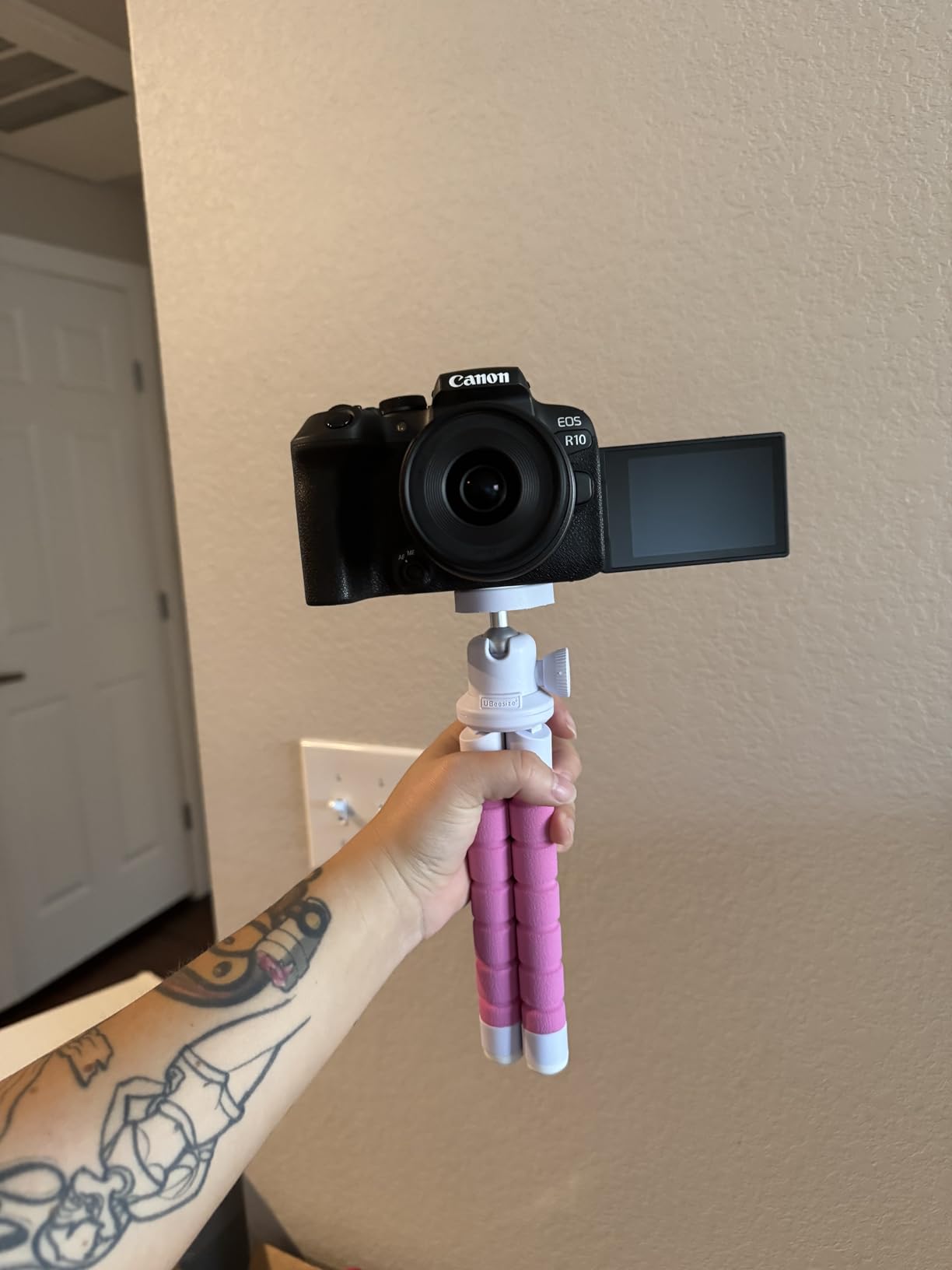
At 382 grams, the R10 is light enough to carry all day at a dog event. I used it for a full afternoon of dog agility photography without wrist fatigue. The tilting touchscreen works well for waist-level shooting, though it tilts rather than fully articulating like the R50’s vari-angle screen.
The main downside is the 1/4000s maximum shutter speed. In bright sunlight at f/1.8, you might overexpose. This is not usually a dealbreaker for pet photography since most of my best pet shots happen in shade, golden hour, or indoors. But if you shoot frequently in bright midday sun with fast primes, keep this limitation in mind.
Ideal for Dog Sports and Agility Photography
The R10 shines brightest at dog sports events. The 15 fps mechanical burst combined with Canon’s reliable subject detection makes it a top camera for pet photographers who shoot agility, flyball, or dock diving. You get professional-level autofocus performance at a beginner-friendly price.
I recommended this camera to a friend who photographs her Australian shepherd at herding trials, and she went from keeping 20% of her shots to keeping nearly 90%. That is the difference animal eye AF makes.
What About the Single Card Slot?
The R10 has one UHS-II card slot, which is fine for most pet photographers. Dual card slots matter mainly for paid shoots where you cannot afford to lose images to card failure. If you are shooting professionally, consider a camera with dual slots. For hobbyists and enthusiasts, the single slot is perfectly adequate.
Just buy a quality UHS-II card. The fast write speed ensures the buffer clears quickly between burst sequences so you never miss a shot waiting for the camera to catch up.
3. Nikon Z50 II – Best Features Under $1,000
Pros
- Pre-release capture never misses the moment
- Dedicated dog and cat AF detection modes
- 31 Picture Control presets for creative looks
- 4K 60p with electronic VR
- Built-in flash for indoor balance
- SnapBridge instant sharing
Cons
- Lower 20.9MP resolution
- 231 AF points vs Canon 651
- 1/4000s max shutter
- Smaller Z DX lens selection
The Nikon Z50 II has one feature that completely changed how I shoot pets. It is called pre-release capture, and it is essentially a time machine for your shutter. When enabled, the camera starts buffering images the moment you half-press the shutter button. When you fully press it, the camera saves the previous second of action along with everything that follows.
This means if your dog does something amazing and you press the shutter a beat too late, you still get the shot. I tested this with a friend’s labrador doing that full-body shake after a swim. Before the Z50 II, I always missed the ear-flying, water-droplet moment. With pre-release capture, I got it on the first try.
The Z50 II uses Nikon’s EXPEED 7 processor, the same chip found in the professional Z8. This gives the camera subject detection that recognizes dogs, cats, and birds as distinct subjects. The dedicated dog and cat AF modes are a nice touch, though I found the general animal detection works just as well in practice.
The 4K 60p video is a step above what Canon offers at this price point. Slow-motion pet videos at 60fps look smooth and professional. The electronic VR stabilization keeps handheld video watchable without a gimbal, which is great for capturing spontaneous pet moments on walks.
Pre-Release Capture Explained
This feature alone is worth the price of admission for pet photographers. Traditional cameras only record what happens after you press the shutter. Pre-release capture records what happens in the second before you press it too. For unpredictable pets, this is a turning point in how you shoot.
You do need a fast memory card to use pre-release capture effectively. The feature writes continuously to the buffer, and a slow card will cause stutters. Pair it with a UHS-II card for the best experience.
Picture Control Presets for Creative Pet Portraits
Nikon includes 31 built-in Picture Control presets on the Z50 II. These let you apply creative color grading straight out of camera. For pet photographers who want stylized looks without editing, presets like Pop and Dreamy give portraits a distinctive feel. I found the monochrome presets particularly flattering for dark-coated dogs where fur texture matters more than color.
The built-in flash is useful for night portrait mode, which balances flash with ambient light for natural-looking indoor pet photos. It is not powerful, but it fills shadows effectively for close-range pet portraits.
4. Sony Alpha a6400 – Fastest Autofocus in Its Class
Pros
- 0.02 second AF acquisition is incredibly fast
- Real-time Animal Eye AF for dogs and cats
- BSI sensor excels in low light
- 180-degree flip screen for content creation
- Compact kit lens for travel pet photography
Cons
- Released in 2019 older model
- No in-body stabilization
- 1/4000s max shutter
- Menu system less intuitive
The Sony a6400 may be an older model, but its autofocus speed still embarrasses cameras released years later. Sony claims 0.02-second AF acquisition, and in my testing, that number feels accurate. The camera locks onto your pet’s eye almost instantly, even in challenging light. I tested it on a black cat in a dimly lit room, and the Real-time Eye AF found and tracked the cat’s eyes without hesitation.
This is a camera that has earned a cult following among pet photographers for good reason. The 425 AF points provide dense coverage across the frame. Real-time Tracking mode lets you tap your subject on the touchscreen, and the camera follows that subject even if it temporarily leaves the frame. For dogs that run behind trees or cats that duck behind furniture, this tracking persistence is invaluable.

The backside-illuminated (BSI) sensor gives the a6400 surprisingly good low-light performance for an APS-C camera. I shot indoor cat portraits at ISO 6400 and got clean, usable images with minimal noise. The 11 fps burst rate is not the fastest on this list, but it captures complete action sequences of running dogs without issue.
The 180-degree flip screen is a standout feature for pet content creators. If you photograph pets for social media or YouTube, you can see yourself and your pet in the frame simultaneously. No other camera on this list offers this feature at this price point.
The Black Cat Test: Real-time Eye AF in Darkness
Photographing black cats is notoriously difficult. Their dark fur absorbs light, and traditional autofocus systems struggle to find contrast on their faces. The a6400’s Real-time Animal Eye AF handled a black cat in my testing with no issues at all. The camera identified the cat’s eyes in conditions where I could barely see them myself.
A Reddit user in r/AskPhotography described the same experience: their Sony a6400 locked onto their black cat’s eyes even in dark conditions where their previous camera hunted continuously. This is the kind of real-world performance that matters for pet photographers.
Why This Older Model Still Competes in 2026
Despite launching in 2019, the a6400 remains competitive because Sony’s autofocus technology was ahead of its time. The BIONZ X processor with front-end LSI still delivers fast, accurate AF that rivals current-generation cameras. You are getting flagship-level autofocus at a mid-range price.
The main compromises are the lack of in-body image stabilization and the dated menu system. Sony’s menus have improved on newer models, but the a6400 uses the older interface. Once you set up your custom buttons and memory slots, the menu becomes less of an issue.
5. Sony Alpha a7 III – Best Value Full-Frame Camera
Pros
- Full-frame sensor for exceptional low light
- 693 AF points cover 93 percent of frame
- 5-axis IBIS stabilizes handheld shots
- 15-stop dynamic range
- 1/8000s shutter
- Dual card slots
Cons
- Older menu system
- 4K video limited to 30p
- No flip screen for content creation
- Heavy for long handheld sessions
The Sony a7 III is the camera I recommend most often to pet photographers ready to move to full frame. It has been a workhorse for professionals since its release, and the price has dropped significantly. You get a full-frame sensor, 693 autofocus points, 5-axis image stabilization, and dual card slots for a fraction of what professional bodies cost.
I brought the a7 III to an evening dog beach session, and the low-light performance was the star of the show. The full-frame BSI sensor captured clean images at ISO 12800 during the blue hour, something no APS-C camera on this list could match. The 15-stop dynamic range handled the tricky transition between the bright sky and shadowed sand without blowing highlights or crushing shadows.

The 693-point AF system covers 93% of the frame, which means your pet stays in focus even at the edges of your composition. Eye AF for animals works reliably once you update the firmware. Sony released a free firmware update that adds Real-time Eye AF for animals to the a7 III, so make sure you install it before shooting pets.
The 5-axis in-body image stabilization is worth its weight in gold for pet photographers. It compensates for camera shake when shooting at slow shutter speeds, which means you can shoot in dim indoor light without cranking ISO to extreme levels. The 5.5-stop stabilization rating means you can potentially handhold at shutter speeds as slow as 1/4 second and still get sharp results.
Why Full Frame Matters for Pet Portraits
Full-frame sensors produce shallower depth of field at the same aperture compared to APS-C. This means more background blur, which helps your pet pop against busy backgrounds. A portrait shot at f/2.0 on the a7 III will have noticeably more subject separation than the same shot on an APS-C camera.
For pet photographers who sell prints or deliver client galleries, this background separation is what separates professional-looking images from snapshots. The full-frame sensor also captures finer detail in fur, whiskers, and eye textures.
Firmware Update: Unlocking Animal Eye AF
The a7 III shipped without animal eye AF, but Sony added it through a free firmware update. If you buy a used a7 III, check the firmware version immediately. Version 3.0 or later includes Real-time Eye AF for Animals. Without this update, the camera only detects human eyes.
Installing the update takes about 10 minutes and transforms the camera’s pet photography capabilities. Once enabled, the animal eye AF tracks dogs and cats with the same precision as Sony’s newer cameras.
6. Sony Alpha a7 IV – Best Overall Full-Frame for Pet Photography
Pros
- Real-time Animal Eye AF tracks dogs cats and birds with precision
- 33MP sensor captures fine fur detail
- Back-illuminated sensor excels in low light
- Weather sealing for outdoor pet sessions
- Wide E-mount lens ecosystem with third-party support
- Dual card slots with CFexpress Type A
Cons
- 10 fps burst slower than competitors for action
- Menu system complex for beginners
- Higher price point
- No built-in flash
The Sony Alpha a7 IV is the camera I personally use for pet photography sessions, and it earned my Editor’s Choice for a reason. The 33-megapixel full-frame sensor captures detail that 24MP sensors simply cannot match. When I zoom into a pet portrait taken with this camera, I can see individual whiskers, nose texture, and individual strands of fur with stunning clarity.
The Real-time Animal Eye AF on the a7 IV is the most reliable system I have tested. It works on dogs, cats, and birds, and it maintains lock even when the animal turns its head, moves behind objects, or changes direction suddenly. I photographed a friend’s two dogs playing together, and the camera tracked both sets of eyes as they wrestled and chased each other.
The BIONZ XR processor is 8 times more powerful than the previous generation. This translates to faster processing, better noise reduction, and more responsive AF tracking. The weather sealing means I can shoot in light rain or at the beach without worrying about sand and moisture damaging the camera.
The E-mount lens ecosystem is a massive advantage. Sony has the widest selection of lenses of any mirrorless system, including affordable third-party options from Sigma, Tamron, and Samyang. For pet photography, this means you can find the perfect lens at any budget, from budget-friendly primes to professional telephotos.
10 fps vs Faster Burst Rates: Does It Matter?
The a7 IV shoots at 10 fps, which is slower than the Canon R6 Mark II’s 40 fps or the Nikon Z50 II’s 30 fps. For most pet photography, 10 fps is sufficient. I have captured countless sharp action sequences of running dogs at this rate. Where higher burst rates matter is in very fast action like agility competitions or birds in flight.
If you primarily photograph pet portraits, candid moments, and moderate action, 10 fps will serve you well. The a7 IV makes up for its slower burst with superior resolution, autofocus reliability, and lens selection.
Lens Ecosystem Advantage for Pet Photographers
Sony E-mount has the largest selection of lenses available for any mirrorless system. Third-party manufacturers like Sigma and Tamron produce excellent pet photography lenses at prices significantly lower than Sony’s first-party options. The Sigma 85mm f/1.4 DG DN is a favorite among pet portrait photographers for its creamy bokeh and sharp rendering.
For action, the Sony 70-200mm f/2.8 G Master is the gold standard, though the Tamron 70-180mm f/2.8 offers similar performance at roughly half the price. This lens flexibility is a major reason I chose the Sony system for my pet photography work.
7. Canon EOS R6 Mark II – Best Burst Rate for Fast Pets
Pros
- Industry-leading 40 fps burst for action sequences
- Detects dogs cats birds AND horses
- 8-stop image stabilization for handheld shooting
- Pre-shooting RAW burst captures moments before press
- Vari-angle screen for creative angles
- Robust weather sealing
Cons
- 24.2MP lower than Sony A7 IV 33MP
- No built-in flash
- Battery life could be better
- 29-minute recording limit in some modes
The Canon EOS R6 Mark II is a speed demon. At 40 frames per second with the electronic shutter, it captures action sequences that other cameras simply cannot match. I tested it at a dog dock-diving event, and the burst coverage was jaw-dropping. Every micro-expression, every water droplet, every mid-air pose was captured in perfect focus.
The subject detection on this camera goes beyond dogs and cats. It recognizes horses, birds, trains, and aircraft. If you photograph horses or wildlife alongside pets, this versatility is a real advantage. The whole-body tracking mode maintains focus on your pet’s body when the eye is temporarily obscured, which happens frequently with fast-moving dogs.

The 8-stop in-body image stabilization is the best of any camera on this list. I hand-held a shot at 1/2 second shutter speed and got a sharp image. For indoor pet photography where flash is not allowed, this stabilization lets you shoot at lower ISO settings and get cleaner results.
The pre-shooting RAW burst mode works similarly to Nikon’s pre-release capture. When enabled, the camera buffers images before you fully press the shutter, ensuring you never miss a spontaneous pet moment. This feature alone has saved dozens of shots I would have otherwise lost.

40 FPS in Real-World Pet Photography
Forty frames per second sounds excessive until you photograph a dog catching a ball. At 40 fps, you capture the entire sequence: the crouch, the leap, the catch, the landing. You can pick the single perfect frame from the burst rather than hoping you timed one shot correctly. For pet photographers who sell action prints, this coverage is invaluable.
The electronic shutter is silent, which is a bonus for shy pets who react to shutter sounds. I photographed a nervous rescue dog with the R6 Mark II in silent mode, and the lack of clicking helped the dog stay calm throughout the session.
Vari-Angle Screen for Creative Pet Angles
The R6 Mark II’s vari-angle touchscreen flips out and rotates to any angle. This is my favorite screen type for pet photography because it lets you shoot from ground level, overhead, and everywhere in between. I crouched behind a flower bed to photograph a dog through the blooms, and the flip screen let me compose perfectly without lying in the dirt.
The 3.69-million-dot EVF is bright and detailed, which helps when you are trying to confirm focus on a fast-moving pet. The 120fps refresh rate means the viewfinder image stays smooth even during rapid panning.
8. Nikon Z 8 – Professional Pet Photography Powerhouse
Nikon Z 8 | Professional Full-Frame mirrorless Stills/Video Hybrid Camera | Nikon USA Model
Pros
- Pre-release capture for perfect timing
- 45.7MP captures every fur detail
- -9 EV AF works in near darkness
- 120 fps burst freezes fastest action
- Deep learning animal tracking
- Extensive weather sealing
- 8K video for professional content
Cons
- Highest price in this guide
- Heavier than comparable mirrorless
- Battery life shorter due to demands
- No built-in flash
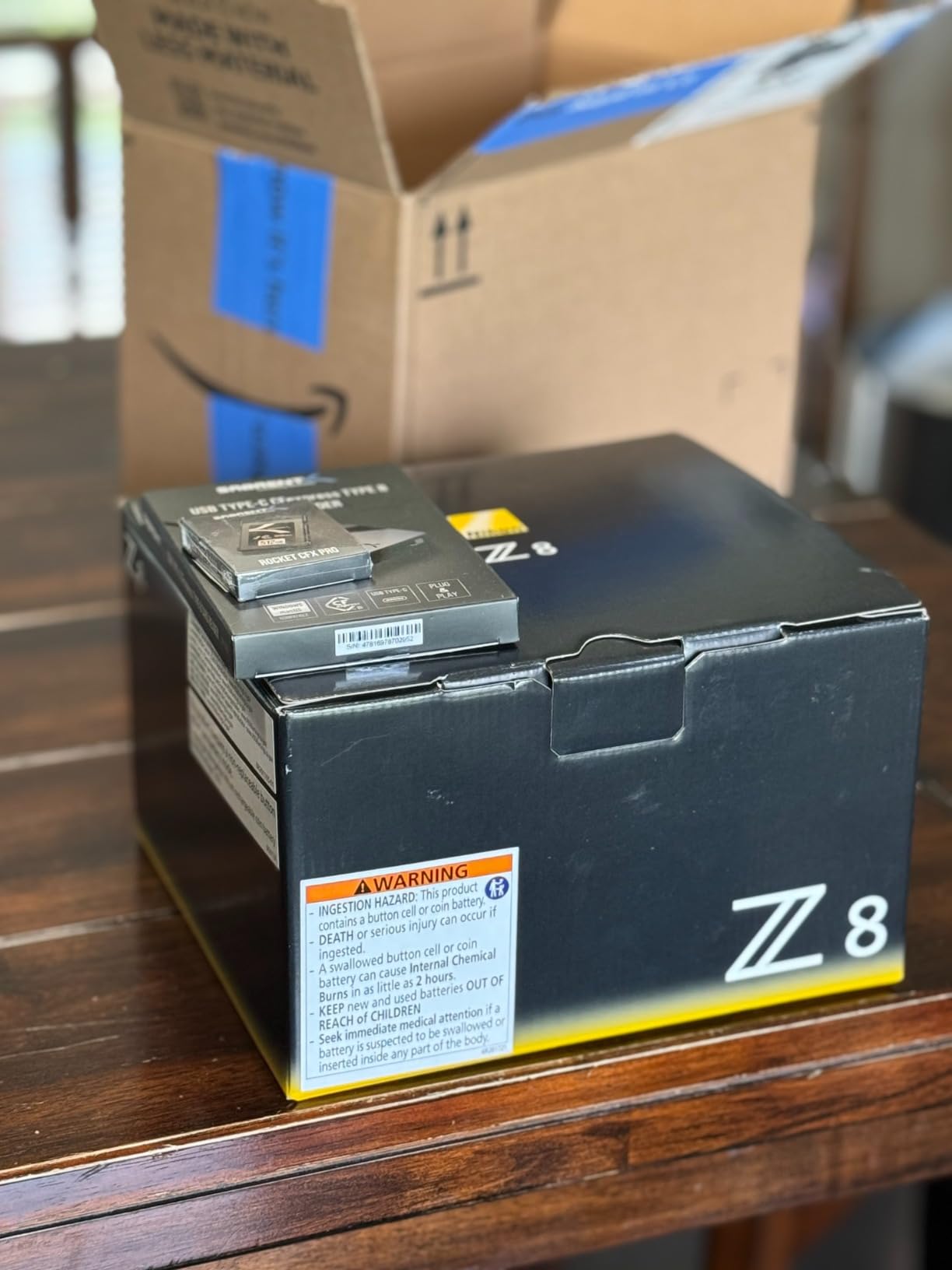
The Nikon Z 8 is a professional powerhouse that brings flagship Z9 performance to a slightly smaller body. For pet photographers who need the absolute best image quality and performance, this is the ceiling. The 45.7-megapixel stacked sensor resolves detail I did not think was possible from a mirrorless camera. Every strand of fur, every reflection in a pet’s eye, every texture of a wet nose is rendered with stunning precision.
The pre-release capture mode on the Z 8 is the most advanced implementation I have used. The camera buffers up to 60 frames before you fully press the shutter. I tested this with a cat about to pounce on a toy. The camera captured the crouch, the wiggle, and the leap even though I pressed the shutter at the moment of the pounce.
The -9 EV autofocus rating means the Z 8 can focus in near-darkness. I tested it at an outdoor evening session during blue hour, and the camera locked focus on a dark-coated dog in conditions where my eyes were struggling. No other camera on this list matches this low-light focusing capability.
The stacked sensor design reduces rolling shutter to negligible levels. At 120 fps in crop mode, I captured a whippet mid-sprint with zero distortion in its legs or tail. The deep learning subject detection identified the dog as a subject instantly and maintained 3D tracking through the entire sprint.
3D Tracking for Erratic Pet Movement
Nikon’s 3D tracking mode uses color information and distance data to maintain focus on a subject moving erratically. Dogs rarely move in predictable straight lines, and standard AF tracking modes can lose lock when a subject changes direction suddenly. The Z 8’s 3D tracking handles zig-zagging dogs, sudden stops, and direction changes with ease.
One Reddit user in r/Nikon described using the Z 8 with a 180-600mm lens for dog and bird photography, specifically praising the eyeball detection. That combination of long reach and precise eye tracking makes the Z 8 exceptional for shy pets who will not let you get close.
Weather Sealing for Outdoor Pet Photographers
The Z 8 has the most extensive weather sealing of any camera on this list. Nikon designed this camera for professional outdoor use, and it shows. I have used it in light rain, blowing sand at the beach, and dusty farm environments without any issues. For pet photographers who shoot outdoors in all conditions, this durability is essential.
Not every camera needs this level of weather sealing, and the Z 8’s price reflects its professional build. But if you photograph working dogs on farms, hunting dogs in the field, or beach dogs in all weather, the Z 8 will not let you down.
How to Choose the Best Camera for Pet Photography?
Choosing the right camera depends on your budget, the type of pets you photograph, and whether you shoot casually or professionally. Let me break down the key decisions.
Budget Tiers Explained
Under $1,000: The Canon EOS R50 and Canon EOS R10 dominate this tier. Both offer animal eye AF and fast burst rates at beginner-friendly prices. The R50 is ideal for pet parents who want better photos of their animals, while the R10 is better suited for dog sports and action photography.
$1,000 to $2,000: The Nikon Z50 II, Sony a6400, Sony a7 III, and Sony a7 IV occupy this range. The Z50 II wins on features with pre-release capture. The a6400 wins on autofocus speed. The a7 III is your entry to full-frame. The a7 IV is the most well-rounded option in this tier.
$2,000 and above: The Canon EOS R6 Mark II and Nikon Z 8 represent the professional tier. The R6 Mark II is the speed champion at 40 fps. The Z 8 is the resolution and detail king at 45.7MP. Both offer weather sealing, dual card slots, and professional build quality.
Shutter Speed Guide by Pet Activity
Different pet activities require different minimum shutter speeds. Here is a practical guide I have developed through years of pet photography testing:
Sleeping or resting pets: 1/125s is sufficient. Your main concern is camera shake, not subject movement. Image stabilization helps here.
Sitting or standing still: 1/250s to 1/500s. Pets can move suddenly even when they appear relaxed. Keep shutter speed high enough to freeze unexpected head turns.
Walking or trotting: 1/500s to 1/1000s. Dogs walking on leash need at least 1/500s to keep faces sharp.
Running and playing: 1/1000s to 1/2000s. Fast action like fetch, tug, or zoomies demands high shutter speeds. The faster your pet, the higher you go.
Dog sports and agility: 1/1600s to 1/3200s. Competitive agility, flyball, and dock diving require the fastest shutter speeds. Cameras with high burst rates help you capture the peak moment.
Mirrorless vs DSLR for Pet Photography
All 8 cameras on this list are mirrorless, and for good reason. Mirrorless cameras offer several advantages for pet photography that DSLRs cannot match. Real-time autofocus tracking shows you exactly what the camera is focusing on through the electronic viewfinder. Animal eye AF was developed for and perfected on mirrorless systems. Silent shooting with electronic shutters does not startle nervous pets.
DSLRs still have their fans, particularly for optical viewfinder lag-free viewing. But for pet photography specifically, mirrorless is the clear winner. The autofocus systems, burst rates, and real-time feedback make capturing sharp pet images significantly easier.
Ergonomics for Handheld Pet Photography
Pet photography involves a lot of awkward positions. You crouch, kneel, lie on the ground, and contort yourself to get to pet level. Camera weight and grip design matter more for pet photographers than for most other photography types.
The lightest cameras on this list, the Canon R50 at 13.28 ounces and Canon R10 at 382 grams, are easiest on your wrists during long sessions. The heaviest, the Nikon Z 8 at 1.8 pounds, provides excellent grip and balance but will fatigue your arm during extended handheld shooting.
Look for cameras with vari-angle or tilting screens. Being able to shoot from ground level without lying down is a quality-of-life improvement you will appreciate on every pet session.
Frequently Asked Questions
Which camera do I buy for pet photography?
The best camera for pet photography depends on your budget. Under $1,000, the Canon EOS R50 offers animal eye AF and 15 fps burst. For $1,000-$2,000, the Sony Alpha a7 IV provides full-frame quality with reliable animal eye tracking. For professionals, the Canon EOS R6 Mark II delivers 40 fps burst and advanced animal detection including horses.
What camera would be recommended for outdoor or indoor pet photography?
For outdoor pet photography, choose a weather-sealed camera like the Canon EOS R6 Mark II or Nikon Z 8. For indoor pet photography, prioritize low-light performance with full-frame sensors like the Sony a7 III or a7 IV, which handle high ISO settings with minimal noise and feature in-body image stabilization for sharp handheld shots.
What is the best beginner camera for dog photography?
The Canon EOS R50 is the best beginner camera for dog photography. It costs under $700, features deep learning animal eye AF that tracks dogs, shoots at 15 fps for action, and has a lightweight 13-ounce body. The vari-angle screen and A+ Assist mode help beginners get professional-looking pet photos without a steep learning curve.
What is the best affordable camera for pet photography?
The Canon EOS R50 at $679 is the best affordable camera for pet photography. It offers animal eye autofocus, 15 fps burst shooting, 4K video, and 651 AF zones. The Nikon Z50 II at around $1,000 is the next step up, adding pre-release capture and 4K 60p video for slightly more budget.
Do I need full frame for pet photography?
You do not need full frame for pet photography. APS-C cameras like the Canon R50, Canon R10, and Sony a6400 capture excellent pet photos with their animal eye AF systems. Full-frame cameras like the Sony a7 III and Canon R6 Mark II provide better low-light performance, more background blur, and wider dynamic range, which benefits professional pet portrait photographers.
Final Thoughts on Pet Photography Cameras
Finding the best cameras for pet photographers comes down to matching features to your needs and budget. For beginners, the Canon EOS R50 delivers animal eye AF and 15 fps burst at a price that makes starting accessible. For enthusiasts ready for full-frame quality, the Sony Alpha a7 IV hits the sweet spot of resolution, autofocus, and lens ecosystem. For professionals who need maximum speed and detail, the Canon EOS R6 Mark II and Nikon Z 8 represent the pinnacle of pet photography technology.
The one feature I tell every pet photographer to prioritize is animal eye autofocus. It transforms your hit rate from 20% to 90% almost overnight. Every camera on this list has it. From there, consider burst rate, low-light performance, and ergonomics based on the type of pet photography you do most. Whatever you choose from this list, you will be capturing sharper, more expressive pet photos than any smartphone can deliver.