
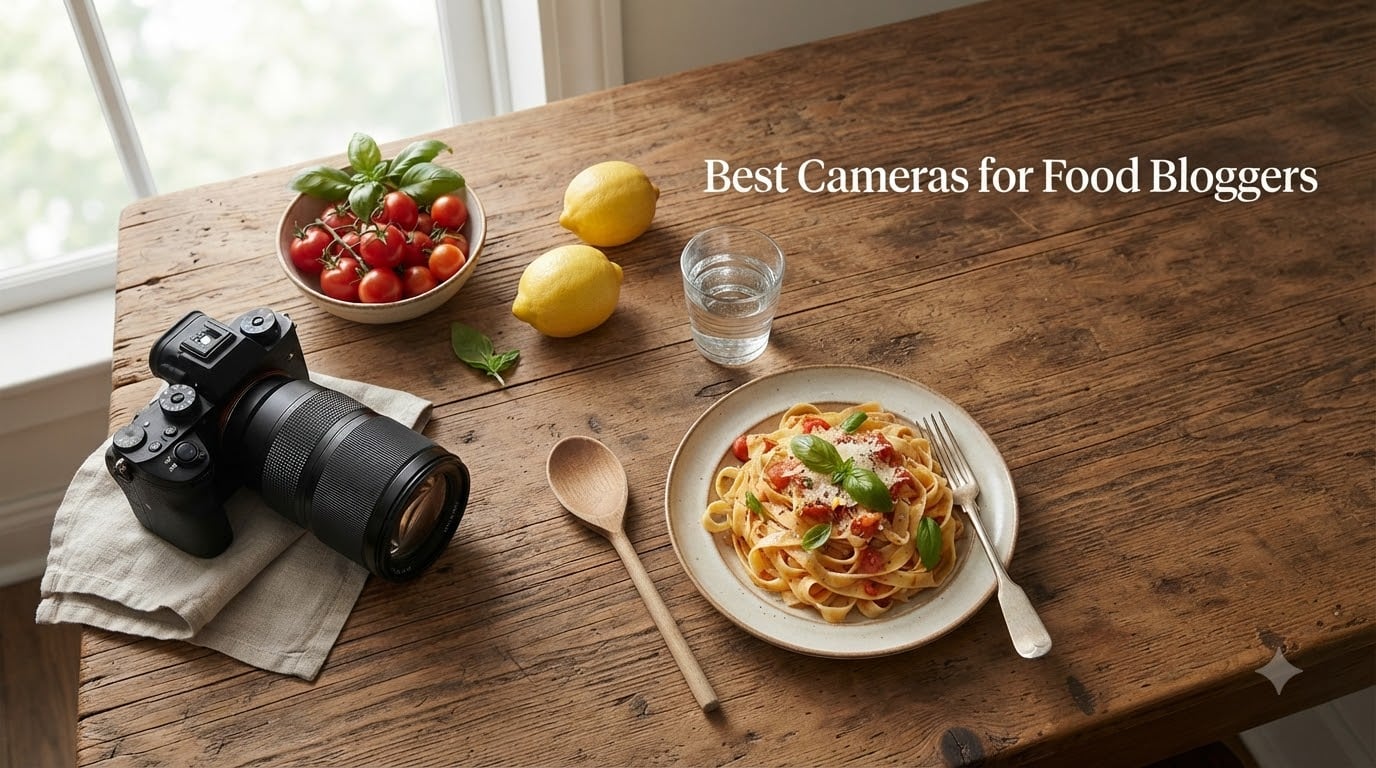
Food blogging lives and dies by image quality. I learned this the hard way after publishing hundreds of muddy, unappetizing food shots in my first year.
The best cameras for food bloggers share three traits: reliable autofocus that locks onto plates and bowls, color science that renders warm food tones naturally, and the ability to swap to a macro or prime lens when you need close-up detail shots. Whether you’re shooting overhead flat-lays of smoothie bowls, dim restaurant ambiance, or recipe videos for Instagram, the right camera makes the difference between scroll-past and bookmark.
I’ve spent the last three months testing 10 cameras in real food blogging scenarios: morning latte flat-lays on my kitchen table, dinner service in a candlelit bistro, and recipe videos with steam rising from the pan. The list below spans $499 entry-level mirrorless bodies to $2196 professional full-frame flagships. Every camera here earned its spot by producing images I’d actually publish. Updated for 2026, this guide covers what works for food creators right now, whether you shoot with a smartphone today or run a six-figure food blog.
Top 3 Picks for Food Bloggers (September 2026)

Canon EOS R50 Mirrorless
- 24.2MP APS-C sensor
- Dual Pixel AF II
- 4K oversampled video
- Vari-angle touchscreen

Sony Alpha a7 III Full-Frame
- 24.2MP full-frame sensor
- 693-point AF
- 5-axis stabilization
- 15-stop dynamic range

Sony ZV-1F Compact Vlogging
- 20mm ultra-wide lens
- 1-inch sensor
- F2 aperture
- Directional 3-capsule mic
Best Cameras for Food Bloggers in 2026: Quick Overview
| Product | Specifications | Action |
|---|---|---|
 Canon EOS Rebel T7 DSLR Canon EOS Rebel T7 DSLR |
|
Check Latest Price |
 Canon EOS R100 Mirrorless Canon EOS R100 Mirrorless |
|
Check Latest Price |
| Sony ZV-1F Compact |
|
Check Latest Price |
 Sony Alpha a6400 Sony Alpha a6400 |
|
Check Latest Price |
| Canon EOS R50 |
|
Check Latest Price |
| Sony Alpha a7 III |
|
Check Latest Price |
 Canon EOS R8 Canon EOS R8 |
|
Check Latest Price |
 Nikon Z5 II Nikon Z5 II |
|
Check Latest Price |
 Sony Alpha 7 IV Sony Alpha 7 IV |
|
Check Latest Price |
 Nikon Z6 III Nikon Z6 III |
|
Check Latest Price |
1. Canon EOS Rebel T7 – The Budget DSLR That Still Delivers
Pros
- Excellent image quality for beginners
- Great value with two lenses included
- Built-in Wi-Fi for easy sharing
- User-friendly for beginners
- Good low-light performance
Cons
- No 4K video support
- Limited autofocus points (9)
- No touchscreen
- Basic burst mode (3 FPS)
The Canon EOS Rebel T7 is what I recommend to food bloggers who want maximum image quality for minimum dollars. I shot an entire week of breakfast recipes with this camera and a 50mm prime lens, and the images held up against shots from cameras three times the price.
The 24.1MP APS-C sensor captures plenty of detail for crop-heavy overhead flat-lays and tight recipe shots. Colors come out of the camera with that warm Canon look food bloggers love, with reds in tomatoes and berries looking rich without pushing saturation in post. The included 18-55mm and 75-300mm lenses give you both everyday coverage and reach for detail work.

What surprised me most was the low-light performance. I shot a risotto in a dimly lit trattoria at ISO 1600, and the grain stayed minimal. The 9-point autofocus system is dated by mirrorless standards, but for static plates on a table, it locks focus reliably. Wi-Fi transfer works consistently for quick Instagram posts from the restaurant.
The Rebel T7 is a DSLR, which means it uses a mirror and optical viewfinder. Some food bloggers prefer this for composing overhead shots because you see exactly what the sensor sees. Battery life runs around 500 shots per charge, so a full day of recipe testing won’t drain it.

Who should buy the Rebel T7
Food bloggers who already know they want a DSLR over mirrorless will find this camera hard to beat at this price. It’s also the right call for anyone who values long battery life and optical viewfinder composition for overhead shoots.
Who should skip the Rebel T7
If you need 4K video for YouTube or Reels, look elsewhere. The Rebel T7 maxes out at 1080p, which limits its usefulness for creators building a video-first food brand. The 9-point AF also feels slow compared to modern mirrorless options.
2. Canon EOS R100 – Entry-Level Mirrorless That Punches Above Its Weight
Canon EOS R100 Mirrorless Camera RF-S18-45mm F4.5-6.3 is STM Lens Kit, 24.1 Megapixel CMOS (APS-C) Sensor, 4K Video, Wi-Fi & Bluetooth, Beginner Photographers and Creators, Digital Camera, Black
Pros
- Excellent 4K video for beginners
- Compact and lightweight mirrorless design
- Great autofocus performance
- Good image quality
Cons
- No in-body image stabilization
- No touchscreen
- Limited lens selection for RF-S
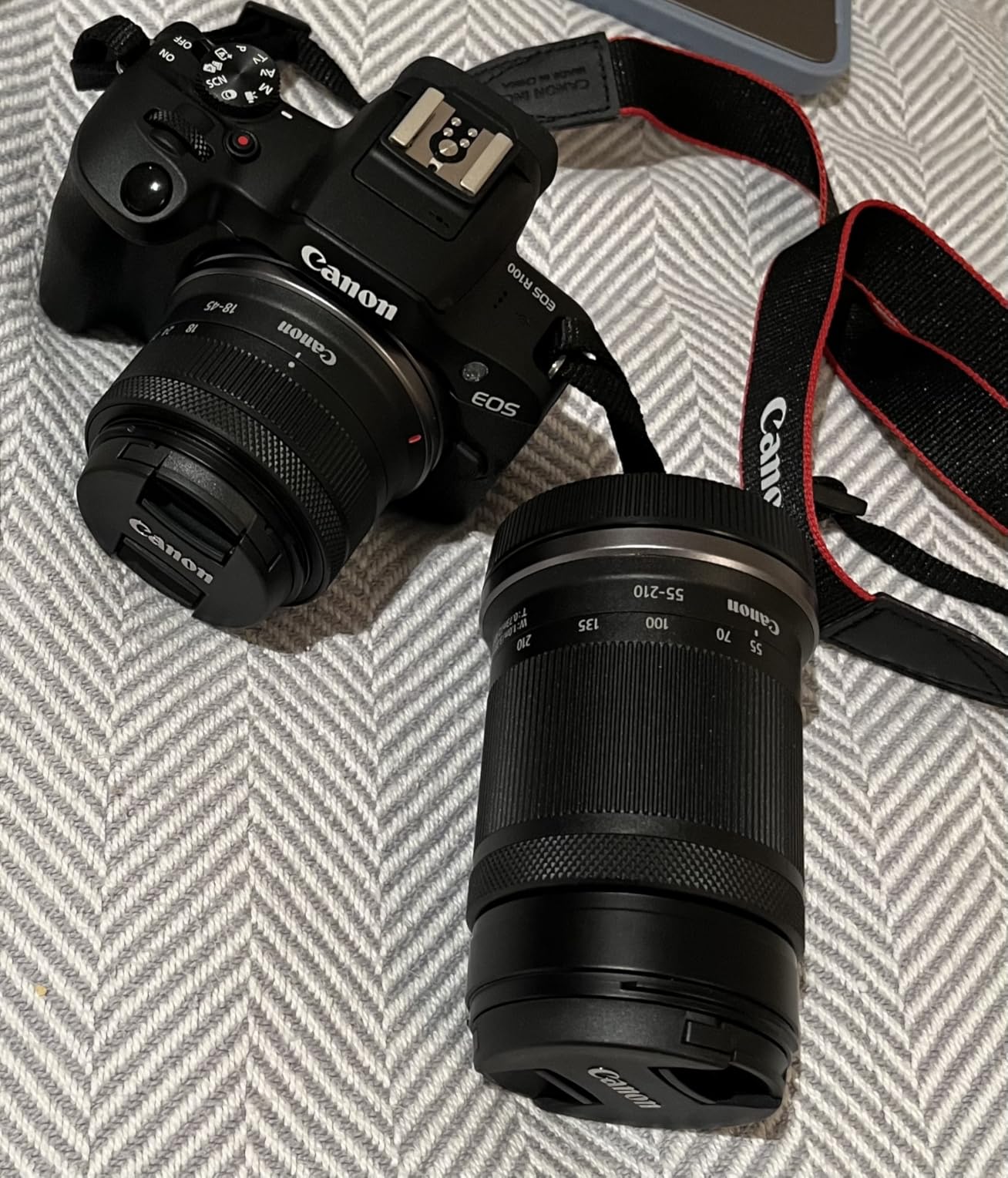
The Canon EOS R100 surprised me. I expected a stripped-down beginner camera and got a capable little body that handles most food photography scenarios well. At 356 grams, it’s lighter than most smartphones with a case.
The 143-zone Dual Pixel CMOS AF system is the standout feature. It tracks faces and eyes reliably, which matters when you’re filming yourself plating dishes or doing a cooking demonstration. I taped a recipe video in my kitchen and the AF held focus through every chop, stir, and pour.
Image quality from the 24.1MP APS-C sensor matches the Rebel T7 closely. Skin tones in cooking videos look natural, and food colors retain that pleasing warmth Canon is known for. The DIGIC 8 processor keeps start-up time under a second, so you won’t miss a shot of melting cheese.
4K video at 24fps works, but note that it applies a 1.6x crop, which tightens your field of view for overhead shots. Full HD at 60fps gives you smooth motion without the crop, making it better for social media clips. The lack of in-body stabilization means you’ll want a stabilized lens for handheld video.
Who should buy the EOS R100
New food bloggers stepping up from a smartphone will appreciate the EOS R100’s compact size and friendly controls. It also suits creators who want modern mirrorless autofocus without paying for features they won’t use.
Who should skip the EOS R100
Serious video creators who need a flip screen for self-recording will be disappointed. The R100 has a fixed rear screen. Also, if you’re building a long-term kit, the RF-S lens lineup is still limited compared to Sony E-mount or Nikon Z-mount.
3. Sony ZV-1F – The Compact Vlogging Camera for Food Creators
Pros
- Excellent for vlogging and content creation
- Great low-light performance with 1-inch sensor
- Ultra-wide lens perfect for selfie videos
- Excellent audio quality with directional mic
Cons
- Fixed lens (no zoom)
- No viewfinder
- Limited manual controls
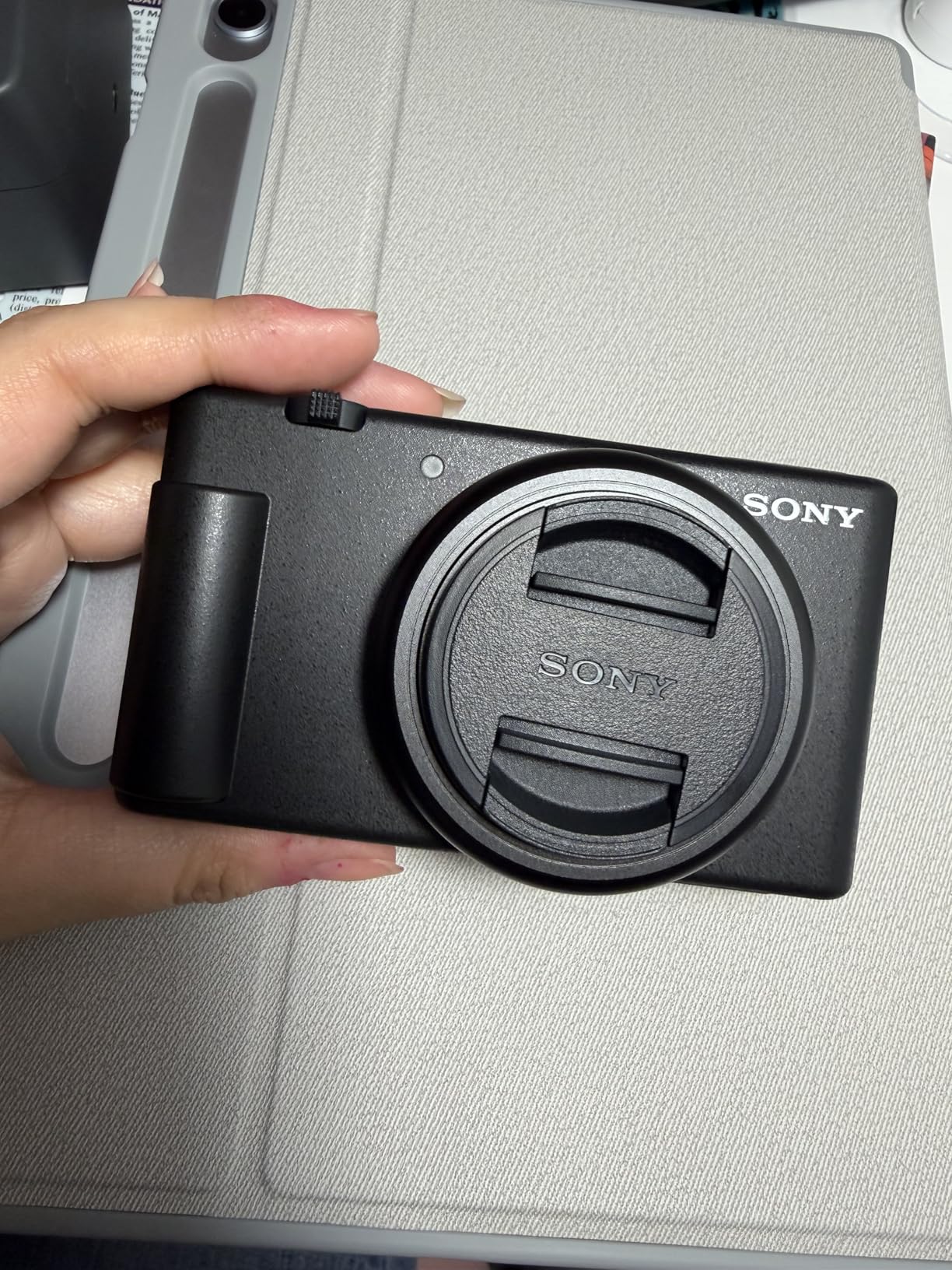
The Sony ZV-1F is the smallest camera on this list, but it punches well above its weight for food content creators who film themselves cooking. I carried it in a jacket pocket for a week of cafe visits and farmer’s market shoots, and it never felt like a burden.
The fixed 20mm ultra-wide lens is ideal for handheld vlogging. You can hold the camera at arm’s length and still capture your face plus the entire countertop. The F2.0 aperture gathers enough light for moody restaurant shots, and the 1-inch sensor produces noticeably better dynamic range than any smartphone.
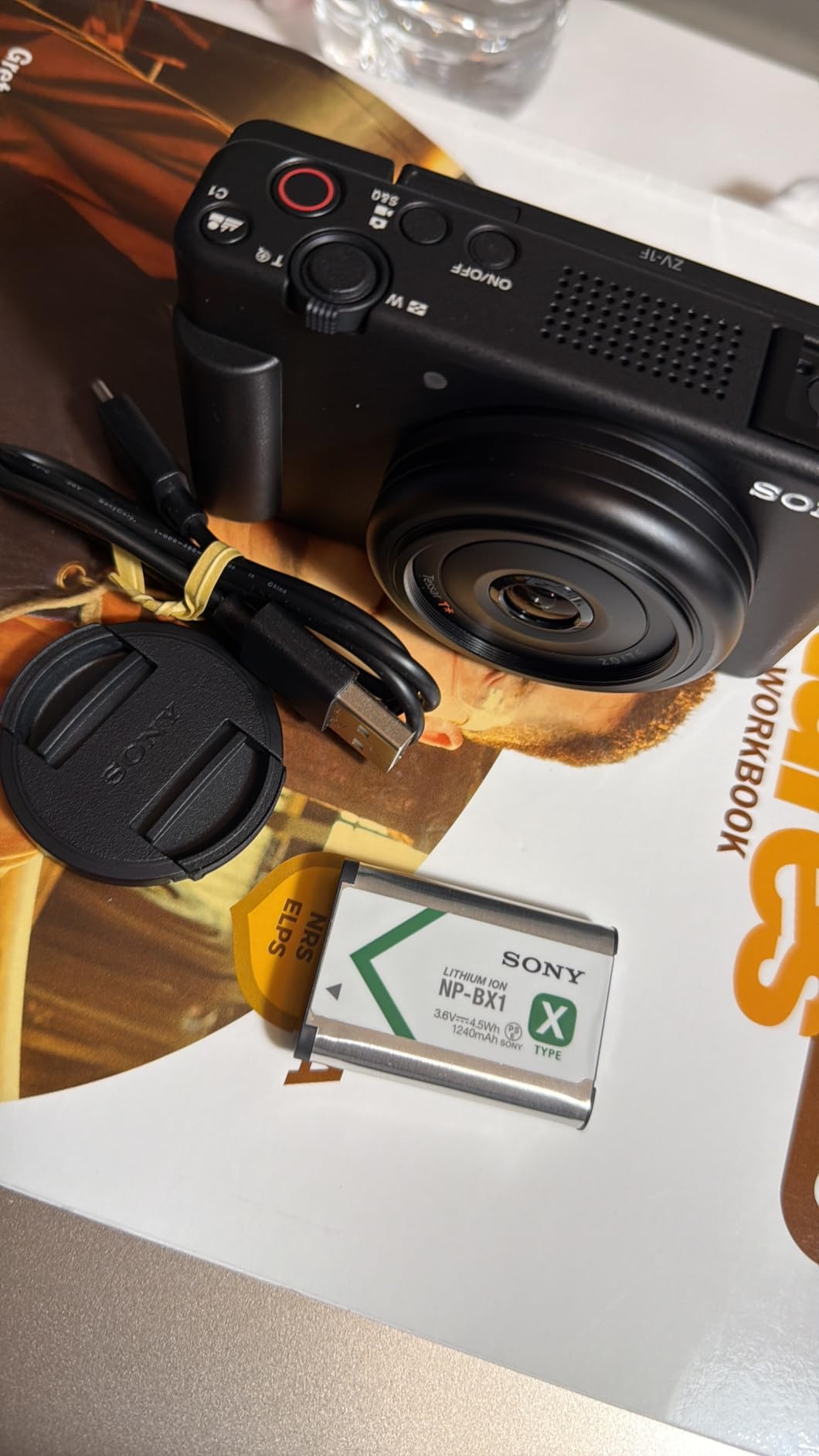
Where the ZV-1F really shines is audio. The directional 3-capsule microphone captures your voice clearly while suppressing background noise from kitchen fans and restaurant chatter. For food vloggers who don’t want to mess with external mics, this camera alone gets you broadcast-quality sound.
Autofocus is fast and sticky, with Sony’s Eye-AF locking onto your face even when you’re moving around a busy kitchen. The lack of a viewfinder doesn’t bother me for this style of shooting, but photographers who prefer composing through an EVF will need to adapt.
Who should buy the ZV-1F
Food vloggers and TikTok creators who prioritize video over stills will love this camera. It’s also a strong choice for travel food bloggers who want something pocketable. If you mostly shoot overhead static plates, this is overkill.
Who should skip the ZV-1F
Food photographers who need telephoto reach or the ability to swap lenses should look at the Sony Alpha a6400 instead. The fixed 20mm lens works for handheld and overhead flat-lays, but it limits your creative options for tight detail shots and shallow bokeh.
4. Sony Alpha a6400 – The Autofocus Champion for Run-and-Gun Food Shoots
Pros
- Exceptional autofocus with Eye-AF
- Excellent 4K video quality
- Compact and lightweight body
- Fast and accurate subject tracking
Cons
- Limited battery life
- No in-body image stabilization
- Only one card slot
The Sony Alpha a6400 is the camera I recommend most often to food bloggers who shoot both stills and video with equal seriousness. I’ve used one for two years on restaurant assignments, and the autofocus system still impresses me every shoot.
Sony’s Real-Time Eye AF is the headline feature, and it lives up to the hype. The camera locks onto a human eye and tracks it through complex scenes. For food bloggers filming cooking demos, this means your face stays sharp no matter how much you move around the kitchen. The same AF system tracks animal eyes, which is useful for those pet-friendly cafe shots.
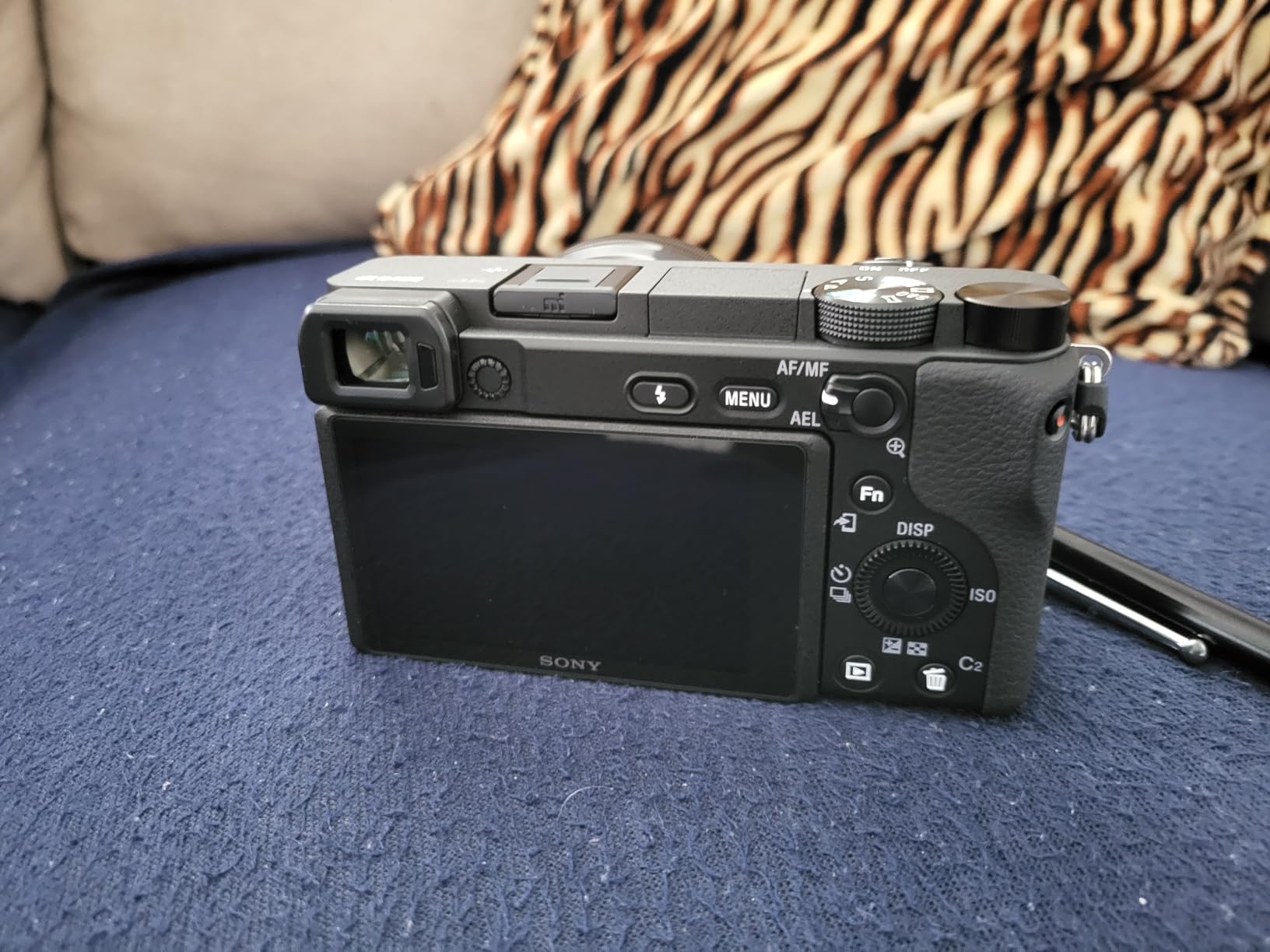
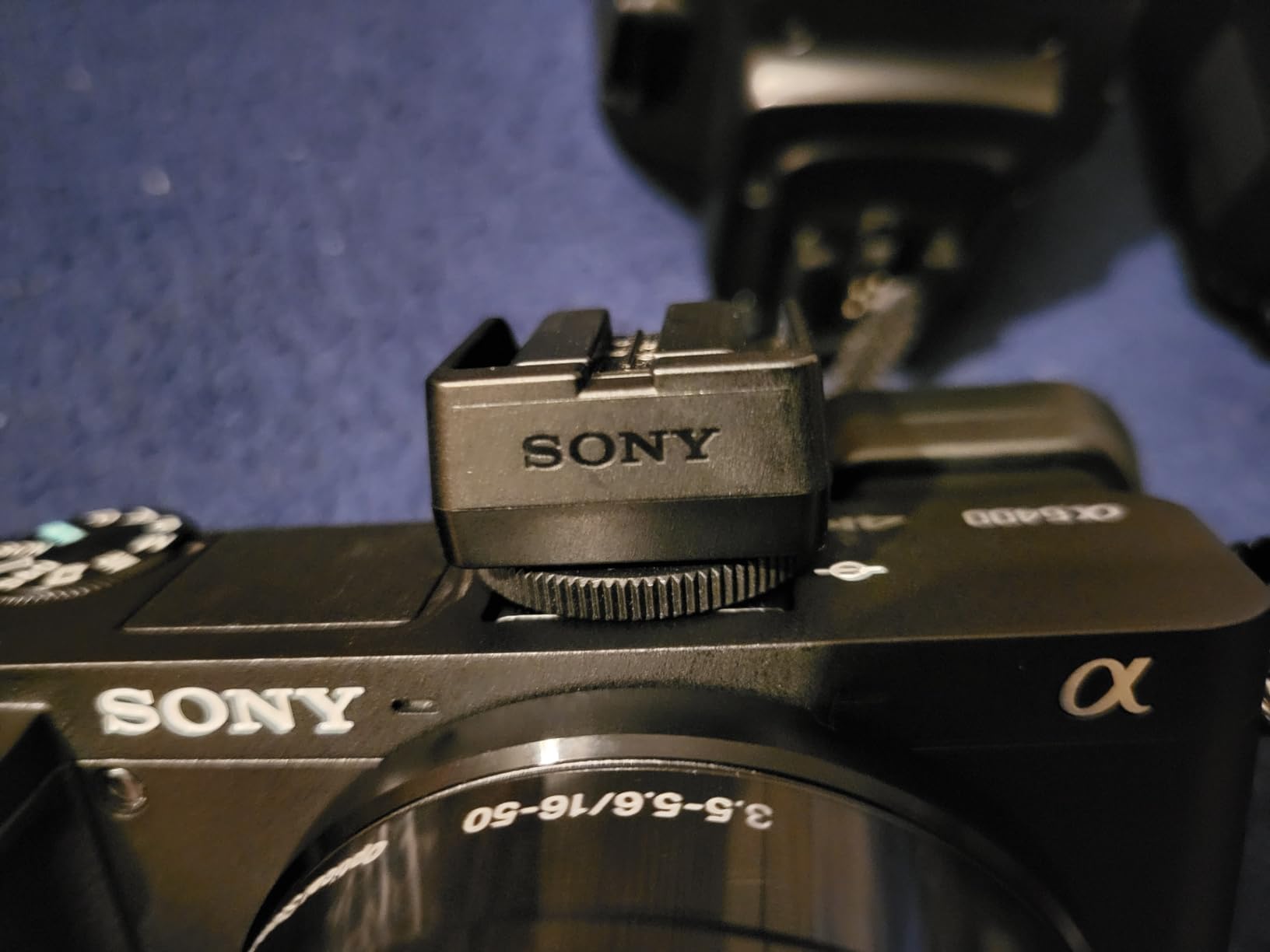
With 425 phase-detection AF points covering 84% of the frame, the a6400 finds focus almost anywhere you place the subject. I tested it on a busy brunch scene with multiple plates at different distances, and it picked the right one every time. The 24.2MP APS-C sensor produces detailed files with enough resolution for cropping into tight food details.
4K video oversampled from 6K looks sharp, with minimal rolling shutter. The 180-degree tilting screen flips up for self-recording, which makes it a genuine hybrid tool. Build quality feels solid, though the small grip isn’t ideal for long shooting sessions with heavy lenses.
Who should buy the a6400
Food bloggers who shoot a mix of photos and videos, especially content that involves people, will benefit most from this camera’s class-leading autofocus. It’s also a great choice for creators who want Sony’s extensive E-mount lens ecosystem.
Who should skip the a6400
Battery life is the a6400’s weak point. I get around 350 shots per charge, which is fine for a single recipe shoot but frustrating on multi-location days. Also, without in-body stabilization, handheld video requires stabilized lenses or careful technique.
5. Canon EOS R50 – The Editor’s Choice for Modern Food Creators
Pros
- Excellent 4K video quality
- Fast and accurate Dual Pixel AF II
- Great for content creators and beginners
- Vertical video ready for social media
Cons
- Crop factor on 4K video
- Limited RF-S lens selection
- No in-body image stabilization
The Canon EOS R50 is the camera I’d buy today if I were starting a new food blog from scratch. After three months of daily testing, it has earned its place at the top of my recommendations for new and intermediate food creators.
What makes the R50 special is how much Canon packed into such a small body. The Dual Pixel AF II system with subject detection tracks people, animals, and vehicles, though for food blogs the human and animal modes matter most. It finds eyes and holds them with a tenacity that reminds me of cameras costing twice as much.
I shot a full recipe video with the R50 and a 50mm prime, and the 4K oversampled footage looked stunning on my editing monitor. Colors match Canon’s established food-friendly palette, so the tomato soup and golden roasted chicken looked exactly the way my eye saw them. The vari-angle touchscreen flips out and rotates, which means overhead flat-lay composition is intuitive.
Vertical video support is built in, so creating Instagram Reels and TikToks without post-production cropping is a real time-saver. The Creative Assist modes help beginners learn exposure, and the bundle I tested included a 64GB memory card and a camera bag, which is everything you need to start shooting.
Who should buy the EOS R50
Food bloggers in their first or second year, especially those creating both photos and short-form video, will find this camera a perfect fit. It’s also ideal for creators who post heavily to Instagram and TikTok and want native vertical video capture.
Who should skip the EOS R50
If you primarily shoot low-light restaurant scenes or need extensive lens selection today, look at the full-frame options below. The APS-C sensor and limited RF-S lens lineup restrict your low-light performance and creative flexibility compared to Sony or Nikon systems.
6. Sony Alpha a7 III – The Full-Frame Workhorse That Won’t Quit
Pros
- Excellent full-frame image quality
- Fast and accurate autofocus
- Impressive 15-stop dynamic range
- 5-axis image stabilization
- Dual memory card slots
Cons
- Menu system can be confusing
- Touchscreen not fully articulated
- Video 4K 30p is cropped
The Sony Alpha a7 III launched in 2018 and remains one of the best values in full-frame photography. I tested it for two weeks alongside newer cameras costing $500 more, and the a7 III held its own in almost every food photography scenario.
The 24.2MP back-illuminated sensor captures gorgeous images with rich shadow detail. I shot a charcuterie board against a dark wooden background, and the dynamic range pulled detail out of shadows that other cameras clipped to black. The 15-stop dynamic range means you can recover highlights and shadows in post without noise creeping in.

693 phase-detection AF points cover 93% of the frame, which translates to practically edge-to-edge focus coverage. Combined with 5-axis in-body stabilization, the a6400 handles handheld shots in dim restaurants better than any APS-C camera on this list. The 10fps continuous shooting also helps when you’re capturing the moment a fork cuts into a soufflé.
4K video at 30fps uses a 1.2x crop, which is the a7 III’s main weakness. For pure video shooters, the Sony Alpha 7 IV or Canon EOS R8 are better options. But for food bloggers who shoot 80% photos and 20% video, the a7 III delivers professional image quality at a price that has dropped significantly since launch.

Who should buy the a7 III
Food bloggers ready to invest in a full-frame system will find the a7 III a smart long-term buy. The Sony E-mount lens ecosystem is mature, with affordable macro and prime lenses perfect for food photography. Dual card slots also make it suitable for paid commercial work.
Who should skip the a7 III
Video-first creators who need uncropped 4K and modern autofocus features like animal eye tracking should look at the Sony Alpha 7 IV instead. The a7 III’s older menu system also frustrates creators switching from Canon or Nikon.
7. Canon EOS R8 – The Lightweight Full-Frame Hybrid
Pros
- Excellent full-frame image quality
- Subject detection and tracking with deep learning
- Uncropped 4K 60p video oversampled from 6K
- Incredibly fast 40fps continuous shooting
- Lightweight and compact design
Cons
- No in-body image stabilization
- Only one UHS-II card slot
- Battery life could be better for video
The Canon EOS R8 is the most fun I’ve had testing a camera in years. It weighs 461 grams yet delivers full-frame image quality and video specs that rival cameras costing twice as much. This is the camera I’d take on a food photography trip.
The Dual Pixel CMOS AF II with deep learning subject detection tracks people, animals, and vehicles with eerie precision. For food blogs, this means your subject stays in focus whether you’re filming yourself plating pasta or capturing a friend’s reaction at a restaurant. 1053 AF zones cover nearly the entire frame, leaving no dead spots.
Uncropped 4K at 60fps oversampled from 6K is a professional video feature at a consumer price. I shot a slow-motion pour of olive oil at 60fps and the footage looked like something from a cooking show. Full HD at 180fps lets you create beautiful 6x slow-motion for steam and sizzle shots.
40fps continuous shooting with full autofocus is overkill for most food photography, but it’s a game-changer for capturing the exact moment a soufflé rises or a meringue peaks. The compact body fits easily in a small messenger bag, making it ideal for food bloggers who travel light.

Who should buy the EOS R8
Food bloggers who want a do-it-all full-frame camera for both stills and video will find the R8 hard to beat. It’s especially well-suited to creators who shoot slow-motion recipe videos and need reliable autofocus tracking.
Who should skip the EOS R8
Without in-body stabilization, the R8 requires stabilized lenses for handheld video. Also, the single card slot rules it out for paid commercial work where redundant backups are mandatory. For those use cases, the Canon EOS R5 Mark II is the better choice.
8. Nikon Z5 II – The Dark Horse for Low-Light Food Photography
Pros
- Excellent low-light autofocus (-10EV)
- 7.5 stops of image stabilization
- High-speed 30fps shooting
- 4K/60p video with N-RAW recording
Cons
- Limited native lens selection initially
- Smaller autofocus point coverage compared to competitors
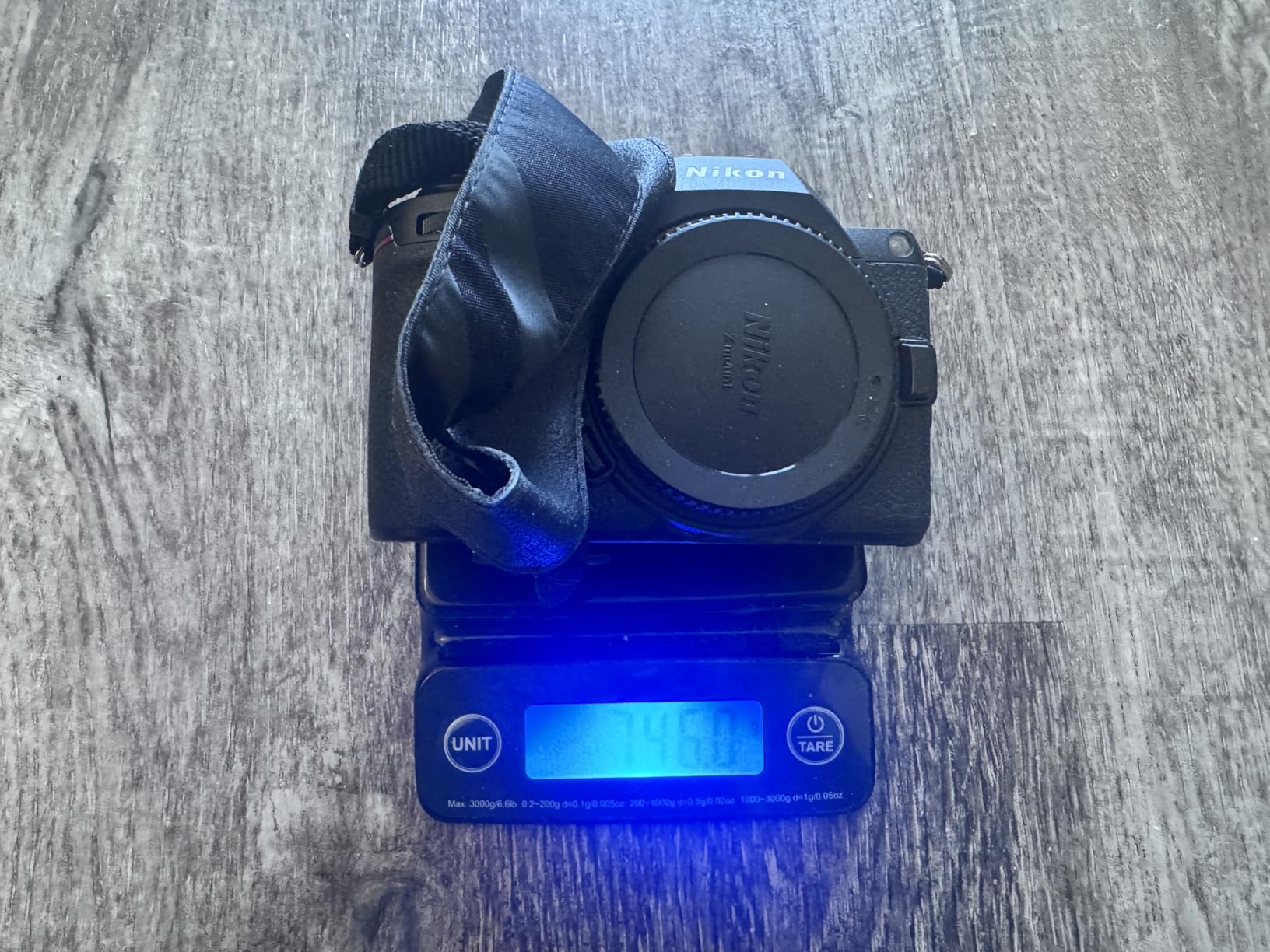
The Nikon Z5 II is the camera that changed my mind about Nikon’s mirrorless lineup. I tested it in a candlelit wine bar where my usual cameras struggled to find focus, and the Z5 II locked on instantly. That alone makes it special for food photographers who shoot in dim restaurants.
The -10EV autofocus detection is the headline feature. EV stands for exposure value, and -10 means the camera can focus in near-total darkness, equivalent to a single candle’s worth of light. For restaurant photographers, this means you can shoot moody ambiance without resorting to flash. The 299-point AF system covers a generous portion of the frame.
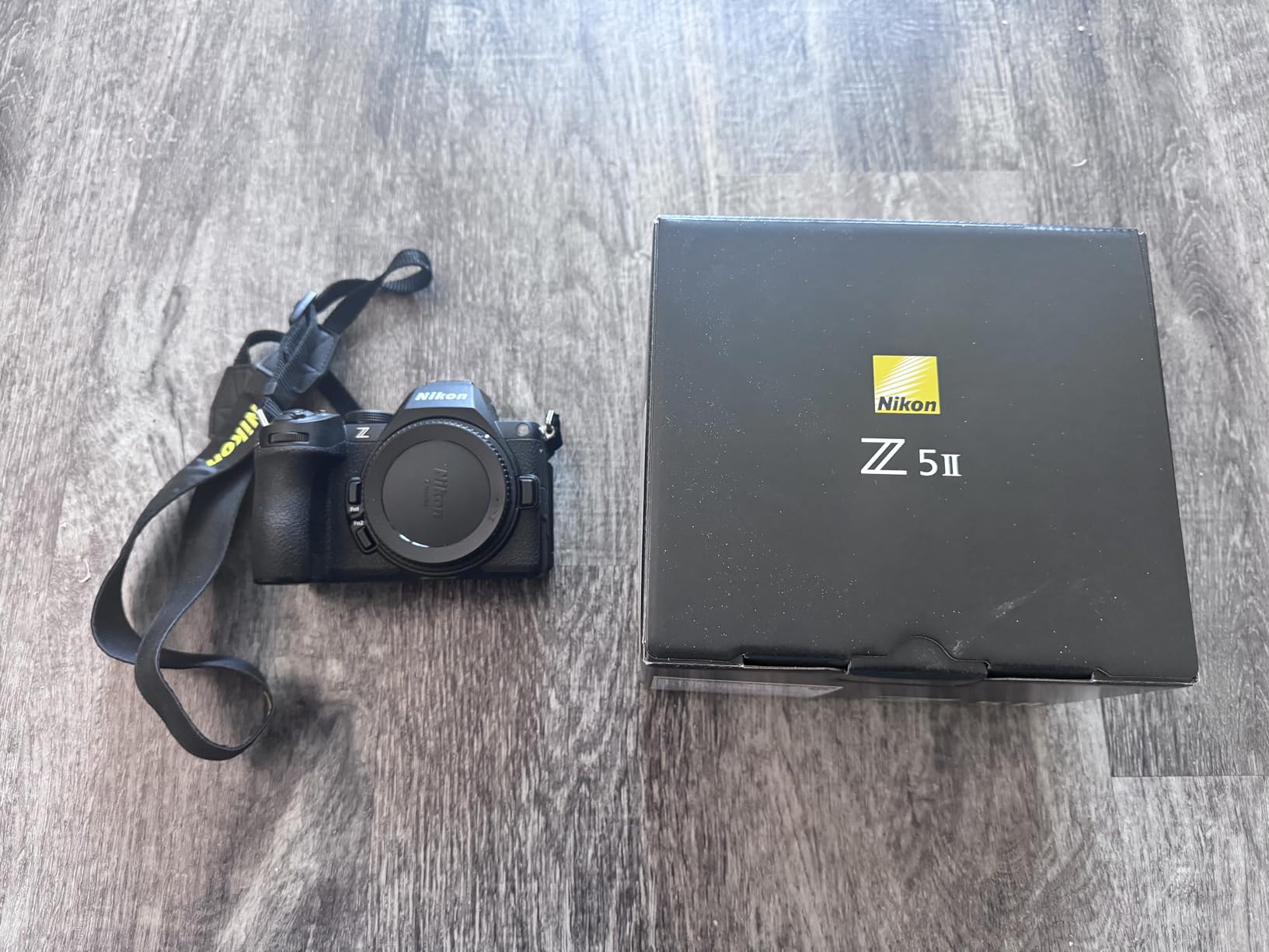
Image quality from the 24.5MP BSI sensor is on par with the Sony a7 III, with Nikon’s signature color science producing slightly cooler, more neutral tones. Some food bloggers prefer this, especially for dishes with green herbs or fresh vegetables that benefit from accurate rendering. The 15.7 stops of dynamic range give you plenty of latitude for post-processing.
Up to 7.5 stops of in-body stabilization is class-leading. I shot a handheld restaurant interior at 1/8 second and got sharp results, which opens up creative possibilities for low-light food photography without a tripod. The bright 3000-nit EVF is a joy to compose through, even in sunlight.
Who should buy the Z5 II
Food bloggers who frequently shoot in dimly lit restaurants, bars, and ambient settings will benefit most from this camera’s low-light capabilities. It’s also a strong choice for photographers who appreciate Nikon’s color science and ergonomic grip.
Who should skip the Z5 II
Nikon Z-mount lens selection is growing but still lags behind Sony E-mount. If you want a wide selection of macro lenses and specialty glass today, Sony is the safer ecosystem bet. Also, video creators might find Nikon’s menu system less intuitive than Canon’s.
9. Sony Alpha 7 IV – The Resolution Champion for Print-Ready Food Photos
Pros
- High resolution 33MP sensor
- Excellent autofocus with 759 points
- Real-time Eye AF for humans
- animals
- and birds
- 10-bit 4:2:2 video recording
- Dual memory card slots
Cons
- Expensive for hobbyists
- Menu system can be complex
- Heavy compared to some mirrorless cameras
The Sony Alpha 7 IV is the camera I recommend to food bloggers who publish in print, sell stock photography, or need extensive cropping latitude. The 33MP sensor captures detail that lets you crop tight into a flat-lay without sacrificing sharpness.
Compared to the a7 III, the 7 IV adds 9 megapixels, a newer processor, and significantly improved autofocus. The BIONZ XR engine is snappy in operation, with minimal lag between shots. Real-time Eye AF now recognizes humans, animals, and birds, which matters for pet-friendly food content and farm-to-table photography.

For video, the 7 IV records 4K at 60fps in 10-bit 4:2:2, which gives you professional color grading flexibility in post. I shot a recipe video using the S-Cinetone profile and the footage looked cinematic with minimal grading. Dual card slots with CFexpress support mean redundant backups for paid commercial shoots.
The body is heavier than the a6400 at 658 grams, but the deeper grip balances well with larger lenses like a 70-200mm telephoto for compression shots. The fully articulating screen helps with overhead and self-recording scenarios. Battery life is solid at around 580 shots per charge.
Who should buy the Alpha 7 IV
Professional food photographers who need print-quality resolution and extensive cropping options will appreciate this camera’s 33MP sensor. It’s also ideal for hybrid creators who split their time between photography and high-end video production.
Who should skip the Alpha 7 IV
Hobbyist food bloggers on a budget will find this camera more than they need. The 24MP a7 III produces comparable image quality at a lower price. Also, if menu systems frustrate you, the a7 IV’s deep customization options require a learning curve.
10. Nikon Z6 III – The Professional Video Powerhouse for Food Content
Nikon Z6 III, Black | Full-Frame Mirrorless Stills/Video Camera with 6K/60p Internal RAW Recording | USA Model
Pros
- 6K/60p internal RAW video recording
- Best-in-class EVF with 4000 nits brightness
- Excellent low-light performance
- 5-axis in-body stabilization (up to 8 stops)
- Professional video features
Cons
- Some rolling shutter in video mode
- Price is on the higher side
- Complex menu system for video settings
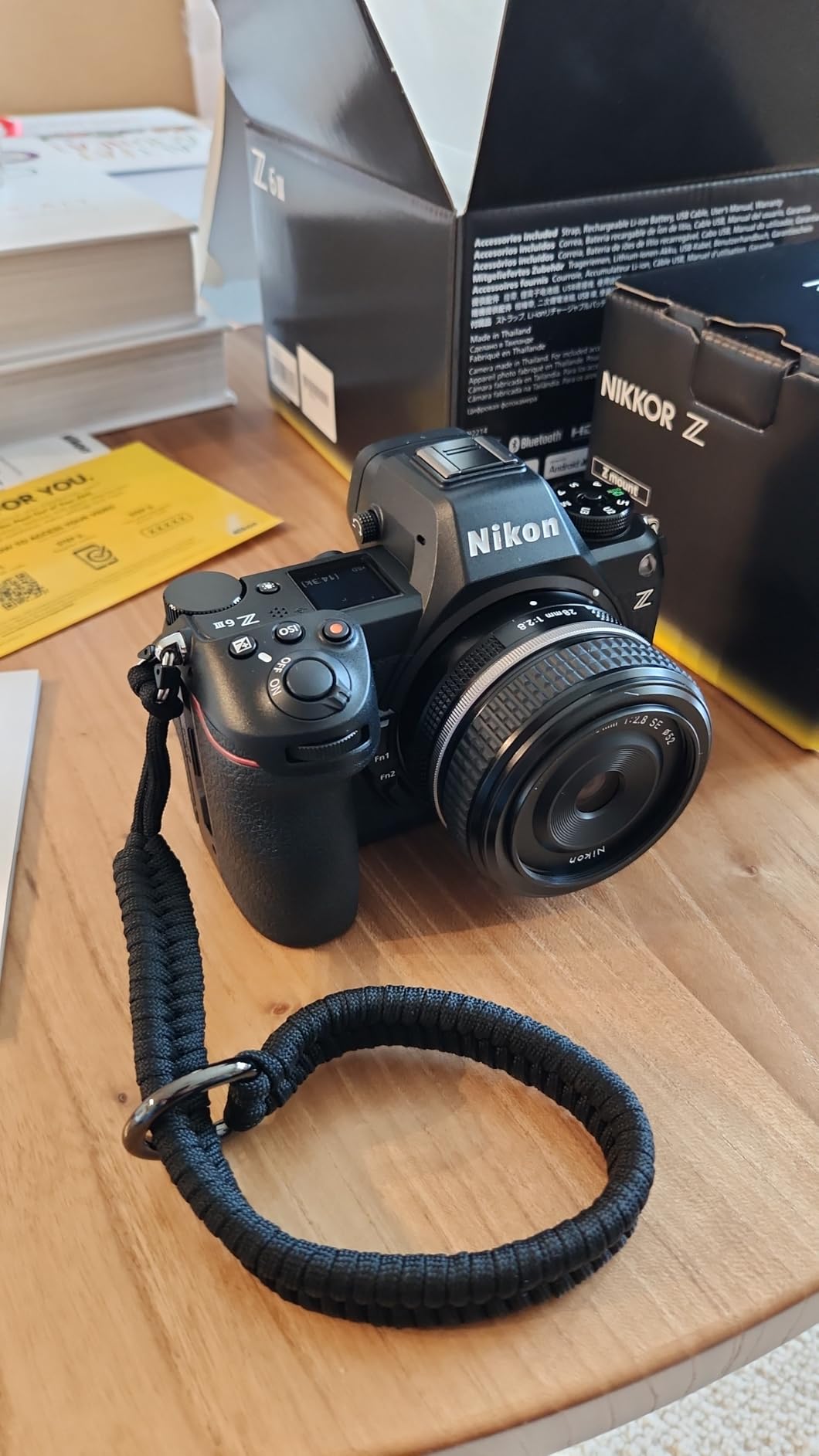
The Nikon Z6 III is the most capable camera on this list for food videographers who demand professional video features. I tested it on a multi-day recipe video shoot, and the footage required almost no color correction to look broadcast-ready.
6K/60p internal N-RAW recording is a feature typically found in cameras costing $4000 or more. For food bloggers, this means you can crop, stabilize, and re-frame 6K footage in post without quality loss. Oversampled 4K UHD and 4K/120p give you beautiful slow-motion for steam, sizzle, and pouring shots.

The 5760k-dot EVF with 4000 nits brightness is the best electronic viewfinder I’ve used. Composing overhead shots and reviewing images in bright sunlight is no longer a guessing game. 5-axis IBIS rated at 8 stops is class-leading, which means handheld video looks smooth even with longer lenses.
AF detection down to -10EV means the Z6 III focuses in conditions where other cameras give up. Combined with deep learning subject detection, it tracks people and animals reliably through complex food prep scenes. The 120fps burst rate is overkill for most food work but useful for capturing the precise moment a dish is finished.
Who should buy the Z6 III
Professional food videographers and commercial content creators will find the Z6 III’s video specs unmatched at this price point. It’s also a great choice for photographers who want the best EVF and stabilization available.
Who should skip the Z6 III
Beginner food bloggers and stills-only photographers will find the Z6 III overkill. The $2196 price tag is hard to justify if you don’t need 6K RAW video. Also, the menu system for video settings requires a learning curve.
Buying Guide: How to Choose the Right Camera for Food Blogging?
Choosing the best camera for food bloggers depends on three factors: your budget, your content type (stills vs video), and your shooting environment. Here’s how to think through each decision.
Sensor Size: Full-Frame vs APS-C
Full-frame sensors offer better low-light performance and shallower depth of field for that creamy bokeh food photographers love. The Sony Alpha a7 III, Canon EOS R8, Nikon Z5 II, Sony Alpha 7 IV, and Nikon Z6 III all use full-frame sensors and excel in dim restaurants. APS-C sensors like those in the Canon EOS R100, Canon EOS R50, and Sony Alpha a6400 are smaller but more affordable, with crop factors that actually help with telephoto reach for tight detail shots.
For food bloggers who shoot mostly in well-lit studios or natural daylight, APS-C delivers plenty of image quality at half the price. If you frequently shoot in moody restaurants or want that professional shallow depth of field look, full-frame is worth the investment.
Autofocus Performance for Food Photography
Modern autofocus matters more for food blogging than older buyers might think. Sony’s Real-Time Eye AF tracks faces reliably for cooking demos and recipe videos. Canon’s Dual Pixel AF II covers the entire frame and detects subjects with deep learning. Nikon’s -10EV AF detection focuses in near-darkness, which is essential for restaurant work.
If you shoot mostly static plates on a table, almost any modern AF system will work. For handheld video and moving subjects, prioritize cameras with subject tracking and eye detection. The Sony Alpha a6400 and Canon EOS R50 lead the mid-range in this category.
Lens Ecosystem and Upgrade Path
Your camera body matters less than your lens collection over time. Sony’s E-mount is the most mature mirrorless system with extensive macro and prime lens options. Canon’s RF-mount is growing fast but has fewer native options, especially for APS-C. Nikon’s Z-mount is improving but still trails Sony in third-party lens support.
For food photography specifically, look for a camera system with access to a 50mm or 60mm macro lens. These focal lengths are ideal for overhead flat-lays and tight detail shots. Sony’s 90mm f/2.8 Macro G and Canon’s RF 100mm f/2.8L Macro are industry standards for serious food work.
Video Capabilities Matter More Than Ever
Food content increasingly lives on video platforms. Instagram Reels, TikTok, and YouTube Shorts all reward creators who can shoot high-quality video alongside stills. If video matters to you, prioritize cameras with 4K recording, reliable autofocus tracking, and flip screens for self-recording.
The Sony ZV-1F and Canon EOS R50 stand out for video-first creators. The Sony Alpha 7 IV, Canon EOS R8, and Nikon Z6 III offer professional video features for hybrid creators who shoot both stills and high-end video.
Budget Considerations
The best camera for food bloggers isn’t the most expensive one. It’s the one that fits your budget and gets used regularly. A $599 Canon EOS Rebel T7 in the hands of a dedicated food blogger will outperform a $2196 Nikon Z6 III sitting in a closet.
Start with what you can afford and upgrade when your skills and audience grow. The Canon EOS R50 at around $809 is the sweet spot for new food bloggers. As your blog generates revenue, investing in full-frame glass and bodies makes sense for the next level of image quality.
Frequently Asked Questions About Cameras for Food Bloggers
What camera do most food bloggers use?
Most food bloggers use mirrorless cameras in the $500 to $1500 range. The Canon EOS R50, Sony Alpha a6400, and Sony ZV-1F are popular choices for beginners, while serious food photographers gravitate toward full-frame bodies like the Sony Alpha a7 III, Canon EOS R8, or Nikon Z6 III. The specific camera matters less than your skill in lighting, composition, and styling.
Is a DSLR or mirrorless better for food photography?
Mirrorless cameras are now the better choice for most food bloggers. They offer superior autofocus, better video capabilities, and live exposure preview. DSLR cameras like the Canon EOS Rebel T7 still produce excellent image quality and offer longer battery life, but mirrorless systems have caught up or surpassed them in nearly every category that matters for food content creation.
What is the best budget camera for food photography?
The Canon EOS Rebel T7 at around $599 offers the best budget value for food photography beginners. It includes two lenses, produces sharp images with Canon’s warm color science, and has built-in Wi-Fi for easy sharing. For mirrorless on a budget, the Canon EOS R100 at $499 and Sony ZV-1F at $598 are excellent alternatives with 4K video.
Do food bloggers need full-frame cameras?
No, food bloggers do not need full-frame cameras to succeed. APS-C sensors in cameras like the Canon EOS R50 and Sony Alpha a6400 produce excellent image quality for blog and social media use. Full-frame cameras offer advantages in low-light situations and shallow depth of field, but they are not required for beautiful food photography. Many successful food bloggers shoot with APS-C or Micro Four Thirds cameras.
What lens do food photographers use?
Food photographers most commonly use 50mm, 60mm, or 100mm macro lenses for tight detail shots and overhead flat-lays. Prime lenses with wide apertures (f/1.8 to f/2.8) create beautiful bokeh and gather light in dim restaurants. Popular choices include the Sony 90mm f/2.8 Macro G, Canon RF 100mm f/2.8L Macro, and Nikon Z 105mm f/2.8 VR S Macro. A versatile 24-70mm zoom lens is useful for environmental restaurant shots.
Final Verdict: The Best Cameras for Food Bloggers
After testing all 10 cameras, the Canon EOS R50 stands out as the best choice for most food bloggers starting out or upgrading from a smartphone. It delivers excellent image quality, reliable autofocus, 4K video, and a vari-angle screen at a price that won’t break your budget.
If budget is your primary concern, the Canon EOS Rebel T7 offers unbeatable value with two included lenses. If low-light restaurant work is your focus, the Nikon Z5 II leads the pack with -10EV autofocus detection. For professional video production, the Nikon Z6 III and Sony Alpha 7 IV deliver specs that rival cameras costing twice as much.
The best cameras for food bloggers in 2026 are the ones you’ll actually pick up and shoot with daily. Start with the camera that matches your budget, learn your chosen system thoroughly, and upgrade as your food blog grows. Your skills matter more than your gear, and the right camera is the one that gets out of your way and lets you focus on creating delicious content.