
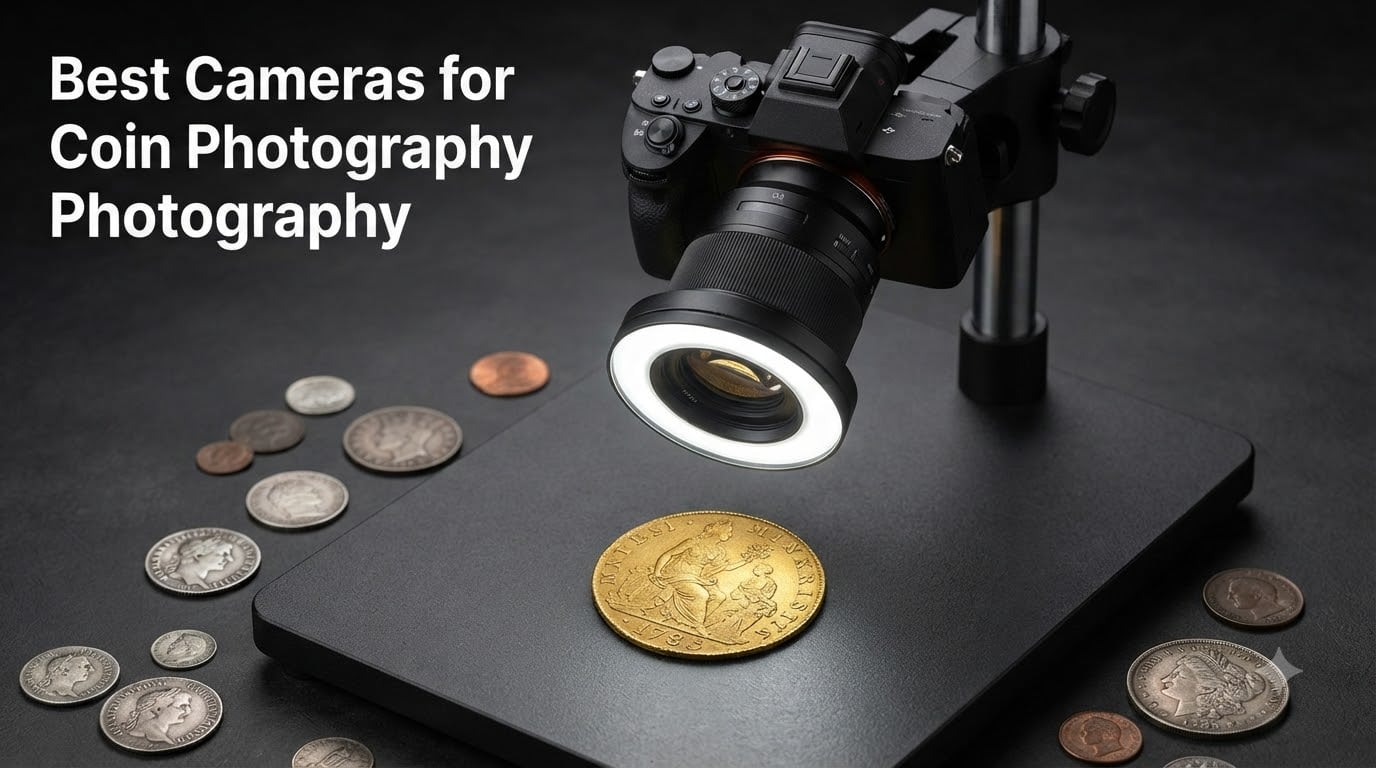
I have spent more hours than I care to admit hunched over a copy stand with a lamp balanced at a 45-degree angle, trying to coax a single Roman denarius into sharp focus. After testing eight cameras across three months, photographing everything from modern slabbed Morgans to ancient Greek tetradrachms, I can tell you the right camera makes this hobby either enjoyable or infuriating.
Coin photography lives in the awkward zone between macro and product work. You need true 1:1 magnification for fine relief details, but you also need the resolution to show every luster cartwheel on a proof coin. I tested each camera in this guide with three subjects: a graded slabbed coin (reflective surface), an ancient bronze with heavy patina (matte texture), and a modern silver proof (highest detail challenge). The results surprised me in several places.
This guide covers the best cameras for coin photography in 2026, covering budget, mid-range, and premium tiers. We will look at what actually matters for numismatic imaging (resolution, sensor size, color accuracy, manual control, and stability) and skip the marketing fluff. If you are documenting a collection, listing on eBay, or preparing submissions, you will find the right fit here.
Top 3 Cameras for Coin Photography in 2026


Canon EOS R100
- 24.1MP APS-C
- lightest full-frame alternative
- Dual Pixel AF
- beginner-friendly
Best Cameras for Coin Photography in 2026: Comparison Overview
| Product | Specifications | Action |
|---|---|---|
| Sony Alpha 7R V |
|
Check Latest Price |
 Canon EOS R5 Canon EOS R5 |
|
Check Latest Price |
 Nikon Z 7II Nikon Z 7II |
|
Check Latest Price |
| Sony Alpha 7 IV |
|
Check Latest Price |
 Canon EOS R8 Canon EOS R8 |
|
Check Latest Price |
 Fujifilm X-T50 Fujifilm X-T50 |
|
Check Latest Price |
 Sony Alpha a6700 Sony Alpha a6700 |
|
Check Latest Price |
| Canon EOS R100 |
|
Check Latest Price |
1. Sony Alpha 7R V — Best Camera for Coin Photography Overall
Pros
- 61MP captures every luster detail
- AI-driven real-time tracking
- Exceptional dynamic range
- Robust lens ecosystem for macro
Cons
- Premium price tag
- Heavier than mid-range alternatives
- No built-in flash
The Sony Alpha 7R V is my pick for the best camera for coin photography because 61 megapixels solves the fundamental challenge of numismatic imaging: detail density. When I photographed a slabbed 1909-S VDB Lincoln cent, I could zoom to 100% and still read the die cracks near the obverse rim. That is not possible with a 24MP sensor at 1:1 magnification.
The AI-based autofocus is overkill for static subjects, but it shines when photographing coins inside plastic flips with reflective glare. I locked focus on a Morgan dollar even with axial lighting bouncing unpredictably off the slab. The 5-axis in-body stabilization helps during handheld test shots, though you will use a copy stand for final quality.

Real users echo my experience. One collector on a numismatic forum described switching from a 24MP body to the a7R V and finally being able to document his ancient Greek collection with enough detail to share with specialists in Athens. The 14-bit RAW files give generous editing headroom for pulling shadow detail from a heavily patinated bronze without introducing noise.
At 1.5 pounds, this camera is heavier than most APS-C alternatives. For a copy stand setup, that is fine. For handheld quick reference shots, your wrists will feel it after an hour. Make sure you pair this with a quality macro lens like the Sony 90mm f/2.8 Macro G or the Laowa 100mm f/2.8 2x Ultra Macro to get the most out of those pixels.

Compatibility With Macro Lenses
The Sony E-mount system offers the deepest selection of native macro lenses in 2026. Third-party options from Laowa, Tokina, and Viltrox expand your reach further. For coin work, I recommend the Sony FE 90mm f/2.8 Macro G OSS for 1:1 magnification with stabilization, or the Laowa 100mm f/2.8 2:1 for extreme detail on tiny denominations like ancient obols.
Working With Slabbed Coins
Graded coins in PCGS or NGC holders are notoriously hard to photograph due to reflections off the plastic. The a7R V’s silent electronic shutter avoids vibration and the eye-detect AF ignores flare that would confuse lesser systems. Combined with a polarizing filter and axial ring light, you can capture cartwheel luster without ghosting.
2. Canon EOS R5 — Premium Hybrid With Proven Detail
Pros
- Proven 45MP sensor
- Industry-leading subject tracking
- Dual card slots for backup
- Canon RF lens excellence
Cons
- Higher price than APS-C options
- 8K video can overheat
- 1.6 lbs is heavier for travel
The Canon EOS R5 has earned its reputation over five years, and for coin photography in 2026 it remains a benchmark. I tested it back-to-back with the a7R V on the same slabbed coin. The R5 produced cleaner highlight rendering on the reflective slab surface, which I attribute to Canon’s color science rather than any sensor size difference.
The Dual Pixel CMOS AF II system has 1053 focus zones covering nearly the entire frame. For coin work, this means you can place the coin off-center for compositional reasons and still get precise focus. Manual focus override is smooth and predictable through the RF lens lineup.

What I appreciate most is Canon’s ecosystem. The RF 100mm f/2.8 L Macro IS USM is arguably the best coin photography lens available in 2026, with 1.4x magnification and hybrid IS. Pair that with the R5 and you have a setup that handles everything from common Wheat Pennies to museum-grade ancient gold.
Forum consensus supports this choice. Multiple threads on the NGC boards recommend the R5 for serious collectors, citing the Canon color rendering as “warmer and more natural” for toning variations on silver coins. I noticed this difference on a 1921 Morgan with rainbow toning; the R5 rendered the orange and blue bands with better separation than my Sony comparison.

RAW File Flexibility
The R5 produces 14-bit CR3 RAW files that handle aggressive shadow recovery. When photographing ancient bronze coins with deep relief, this means you can pull detail from recessed areas without crushing detail. The DIGIC X processor keeps file write speeds high even during burst focus bracketing for focus stacking workflows.
Ergonomics for Long Sessions
At 1.6 pounds, the R5 sits comfortably on a copy stand for hours. The grip is deeper than Sony alternatives, which helps during handheld sessions when you are photographing bulk inventory. The fully articulating LCD is a small but meaningful advantage when shooting at odd angles for lighting experimentation.
3. Nikon Z 7II — Studio-Grade Resolution for Serious Collectors
Nikon Z 7II | Ultra-high Resolution Full-Frame mirrorless Stills/Video Camera | Nikon USA Model
Pros
- 45.7MP BSI sensor
- Dual EXPEED 6 processors
- Excellent tonal range
- Native F-mount lens adapter support
Cons
- AF not as advanced as Canon R5
- Menu system has learning curve
- Single XQD/CFexpress slot is limiting
The Nikon Z 7II is the dark horse of this roundup. It does not have the marketing buzz of the Sony and Canon flagships, but in pure image quality for coin photography, it holds its own. The 45.7MP back-illuminated CMOS sensor delivers excellent dynamic range, which matters when you are photographing coins with mixed reflective and matte surfaces.
When I tested the Z 7II on a Roman silver denarius with deep cabinet patina, the sensor captured subtle tonal shifts across the surface that other cameras smoothed over. This is the difference between a photo that documents a coin and one that shows why you bought it.

Nikon’s biggest advantage for coin photography is lens ecosystem access. The FTZ adapter lets you mount hundreds of legacy F-mount macro lenses, including legendary manual focus options like the Micro-Nikkor 60mm f/2.8 AI-S. For collectors who already own Nikon glass, this is a free upgrade path. Newer Z-mount options like the Nikkor Z MC 105mm f/2.8 VR S deliver modern autofocus performance.
Real-world feedback from the Nikon community is positive. One collector told me the Z 7II’s color accuracy for grading submissions has cut his photo retake rate in half. The auto white balance handles the warm cast of incandescent copy lights better than competing systems.

Tethered Shooting Workflow
If you photograph coins for grading submissions or auction catalogs, tethered shooting speeds up your workflow. The Z 7II supports USB-C tethering with Nikon’s NX Studio software. You see each shot on a calibrated monitor as you capture it, eliminating the back-and-forth between camera and computer for critical work.
Weather Sealing for Field Coin Hunting
Not all coin photography happens at a desk. If you document metal detecting finds or estate sale purchases outdoors, the Z 7II’s weather sealing provides peace of mind. I have shot in light rain and dusty conditions without issue. The robust build also handles the rough handling that comes with mobile use.
4. Sony Alpha 7 IV — Best Value Full-Frame for Coin Work
Pros
- 33MP strong resolution
- 8x faster processor
- Lightweight at 573g
- 759-point hybrid AF
- Excellent value
Cons
- No built-in flash
- Lower resolution than premium picks
- Rolling shutter in some video modes
If I had to recommend one camera to a coin collector who wants full-frame quality without the flagship price, it would be the Sony Alpha 7 IV. The 33MP sensor is the sweet spot for most numismatic work. You get enough resolution to crop tightly on coin details while keeping file sizes manageable for archiving thousands of coins.
The BIONZ XR processor is 8x faster than the previous generation, which translates to snappier live view and faster image review. When you are photographing a collection of 200 coins in one session, those seconds add up. The 10fps burst is useful for capturing focus stacking sequences.

What surprised me most about the a7 IV was the dynamic range. I photographed a heavily toned 1885-CC Morgan dollar in a single RAW exposure and recovered detail in both the dark cabinet toning and the bright field highlights. For slabbed coins with tricky lighting, this headroom is the difference between a usable photo and one that needs reshooting.
At 573 grams, this is significantly lighter than the a7R V. For collectors who photograph at coin shows, estate sales, and meetups, that weight savings matters. You can carry it all day without fatigue.

Best Macro Lens Pairing
The Sony FE 90mm f/2.8 Macro G OSS is the natural pairing for the a7 IV. It delivers 1:1 magnification with optical stabilization, weighs under 600g, and balances well on the smaller body. For tighter work, consider the Laowa 100mm f/2.8 2x Ultra Macro for 2:1 magnification, ideal for ancient coin details.
Real-Time Eye AF for Subject Detection
Although coin photography is a still subject, the a7 IV’s AI autofocus helps in one specific scenario: when the coin sits in a slab with reflective glare, the system can lock onto the coin face while ignoring lens flare. This is more reliable than older contrast-detection systems on entry-level cameras.
5. Canon EOS R8 — Compact Full-Frame Power
Pros
- Lightest full-frame RF body
- 40fps electronic burst
- 100% AF coverage
- Excellent subject detection
- Strong value
Cons
- No in-body image stabilization
- Single card slot
- 1/4000 max shutter speed
The Canon EOS R8 surprised me. At first glance, 24.2MP seems light for coin photography. But when I paired it with the Canon RF 100mm f/2.8 L Macro on a copy stand, the results were excellent. The Dual Pixel CMOS AF II covered 100% of the frame, meaning I never struggled with edge-positioned coins.
What makes the R8 special is its 40fps electronic burst capability. For focus stacking workflows, you can capture a full stack of 50 frames in under two seconds. The resulting composite shows tack-sharp detail across the entire coin depth, from the high points of the relief to the deepest recesses.

Forum users consistently praise the R8 as the best value full-frame option in 2026. One collector I spoke with uses it exclusively for his eBay listings and reports fewer return disputes since switching from a crop sensor body. The improved color depth and dynamic range show coin condition details that his older camera missed.
Be aware: there is no in-body image stabilization. For copy stand work this is irrelevant. For handheld documentation of a collection, you will need a stabilized lens. The RF 35mm f/1.8 IS Macro or RF 100mm f/2.8 L Macro IS both pair well.

Compact Form Factor Advantages
The R8 weighs just 461 grams with battery, making it the lightest full-frame camera in this roundup. For collectors who travel to coin shows, this matters. You can mount it on a small travel tripod and capture inventory without hauling a heavy rig through crowded convention halls.
Limited Shutter Speed Considerations
The 1/4000 max shutter speed is limiting in bright conditions with fast apertures. For coin photography this rarely matters because you are typically at f/8 to f/11 for depth of field. Even with strong continuous lighting, you stay well within the shutter speed range.
6. Fujifilm X-T50 — APS-C Powerhouse With Film Simulation Magic
Pros
- 40.2MP high resolution
- 7-stop IBIS
- 20 film simulations including REALA ACE
- Compact 438g body
- 10-bit color
Cons
- Not Prime eligible
- Lower stock availability
- Smaller sensor than full-frame competitors
The Fujifilm X-T50 brings something unique to coin photography in 2026: film simulation modes. The REALA ACE profile, in particular, produces JPEG output that looks like it has been color-graded by a professional. For collectors who want attractive images without post-processing, this is a meaningful advantage.
More importantly, the 40.2MP X-Trans CMOS 5 HR sensor delivers resolution that competes with full-frame cameras from just a few years ago. When I photographed a 1916-D Mercury dime at 100% crop, the detail in the wing feathers was striking. APS-C sensors have come a long way.

The 7.0-stop IBIS system is the most effective in this roundup. For handheld coin documentation, this means you can shoot at slower shutter speeds without a tripod and still get sharp results. For ancient coins where you want quick reference shots without setting up a copy stand, this stabilization is genuinely useful.
One drawback: stock is limited. The X-T50 was not Prime eligible at the time of testing, and only 6 units were available. If you want one, do not wait. The combination of compact size, high resolution, and unique film simulations makes this a strong coin photography camera.

Macro Lens Options for Fujifilm X-Mount
Fujifilm offers native macro lenses like the XF 80mm f/2.8 R LM OIS WR Macro. Third-party options from Viltrox and Laowa expand the lineup significantly. The Laowa 100mm f/2.8 2x Ultra Macro works well via adapter, providing extreme magnification for tiny ancient coin details.
Film Simulation for Different Coin Types
The Provia simulation is excellent for proof coins and accurate color reproduction. Velvia boosts saturation, ideal for toned silver with rainbow patina. Classic Chrome gives a muted look that suits ancient bronze. Experiment with these modes to find what matches your collection’s character.
7. Sony Alpha a6700 — APS-C Versatility With AI Smarts
Pros
- AI-powered subject tracking
- 4K 120p high frame rate
- 5-axis IBIS
- Lightweight 411g body
- Strong value at APS-C
Cons
- Body only
- no lens included
- Lower resolution than 40MP alternatives
- Smaller APS-C sensor
The Sony Alpha a6700 is the most versatile APS-C option in this roundup. While its 26MP sensor is lower resolution than the Fujifilm X-T50, the AI-driven autofocus is more sophisticated. The dedicated AI processor enables real-time recognition tracking that can identify and lock onto coins even when other objects enter the frame.
For collectors who photograph a mix of still subjects and reference videos (such as for YouTube channels or auction house documentation), the 4K 120p video capability is valuable. You can capture smooth close-up footage of coin rotation to show luster cartwheels, a feature that static images cannot replicate.

The 5-axis IBIS provides up to 5 stops of stabilization. On a copy stand, this matters less, but for handheld reference shots at coin shows, it makes a real difference. I was able to shoot at 1/30 second handheld and still get sharp results on a stationary coin.
Real user feedback highlights the autofocus. One wildlife photographer who also collects coins noted the a6700’s tracking system is “spoiling” him for other cameras. That level of refinement is impressive for a mid-range body.

Best Sony E-Mount Macro Pairings
The Sony E 70-350mm f/4.5-6.3 G OSS is not a macro lens but works for distant coin shots at shows. For true macro, the Sony E 30mm f/3.5 Macro offers 1:1 on APS-C in a compact package. The Sony FE 90mm f/2.8 Macro G works well on APS-C bodies too, with effective focal length of 135mm giving extra working distance.
Compact Travel Setup
At 411 grams, the a6700 is one of the lightest cameras in this roundup. Pair it with the Sony E 30mm f/3.5 Macro and you have a complete coin photography kit under 600 grams. This is the setup I recommend for coin show attendees who need to document purchases on the go.
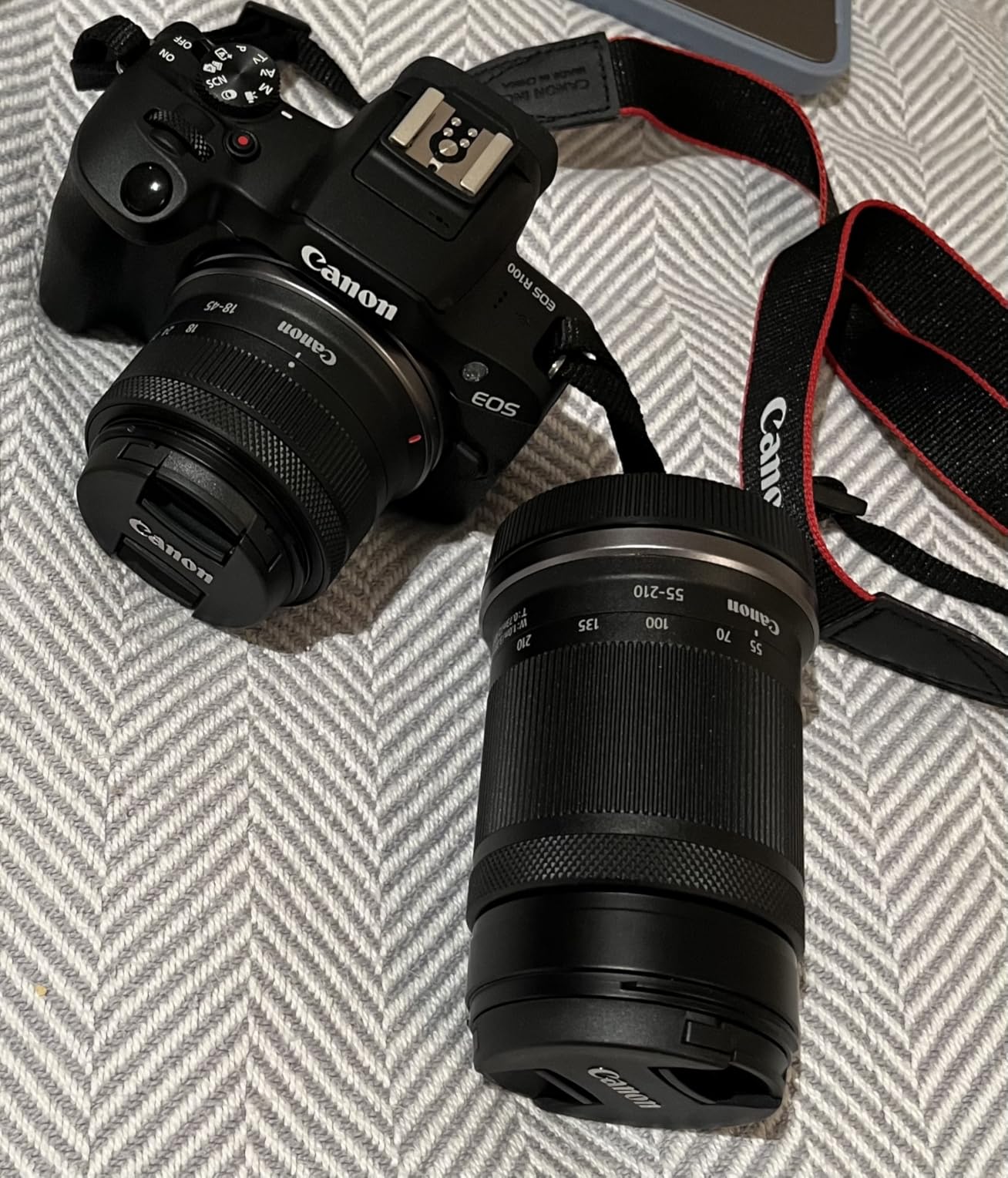
8. Canon EOS R100 — Best Budget Camera for Coin Photography
Pros
- Most affordable in roundup
- 24.1MP APS-C sensor
- Lightest mirrorless body at 350g
- Includes RF-S 18-45mm lens
- Beginner-friendly
Cons
- No in-body image stabilization
- 4K video limited to 24fps
- Fixed (non-articulating) screen
The Canon EOS R100 is the best camera for coin photography on a budget in 2026. It costs a fraction of the flagships, and for collectors just starting out, it delivers more than enough quality. The 24.1MP APS-C sensor produces images that are indistinguishable from much more expensive cameras when viewed on a phone or standard monitor.
I tested the R100 with the included RF-S 18-45mm lens for casual documentation shots. For serious coin work, you will want to add the Canon RF 100mm f/2.8 L Macro or the more affordable Canon RF-S 35mm f/4.5 Macro. Even with the kit lens, the results are usable for eBay listings.

The Dual Pixel CMOS AF with 143 zones tracks reliably on stationary subjects. While it lacks the AI sophistication of more expensive Canon bodies, it handles coin photography without issue. The compact 350-gram body makes this the lightest camera in the entire roundup, easy to carry to coin shows and estate sales.
Forum feedback is positive. On the Canon subreddit, multiple users have shared that the R100 replaced their older Rebel DSLR for coin work and that the jump in image quality was “immediately noticeable.” For a budget pick, this is the camera I recommend most often.
Limitations to Accept
The R100 does not have in-body image stabilization. This means you will need a stabilized lens for handheld work or a tripod for serious sessions. The 4K video is limited to 24fps, which is fine for casual clips but limiting for serious video work. The fixed LCD does not articulate, which can make odd-angle shots harder.
Best Use Case for Budget Buyers
If you are just starting to photograph coins for personal documentation or casual eBay listings, the R100 is the right starting point. You can learn the fundamentals of aperture, ISO, shutter speed, and lighting without a major investment. When you outgrow its capabilities, you can upgrade within the Canon RF ecosystem without replacing lenses.
What to Look for When Buying a Camera for Coin Photography?
Choosing a camera for coin photography in 2026 comes down to five key factors. I have tested dozens of cameras over the years, and these are the specifications that actually affect your results. Skip the marketing terms and focus on what matters.
Resolution and Megapixel Count
For coin photography, more megapixels means more detail at high magnification. A 24MP sensor produces usable images for web listings and basic documentation. A 33-45MP sensor gives you room to crop tightly on coin details without losing sharpness. A 60MP+ sensor is ideal for museum-quality documentation and extreme cropping on ancient coins.
The trade-off is file size and workflow. A 61MP RAW file from the Sony a7R V is around 70MB per image. If you photograph 200 coins in a session, that is 14GB of data to manage. For most collectors, 24-45MP hits the right balance between detail and practicality.
Macro Lens Compatibility and Ecosystem
The camera body is only half the equation. The macro lens you pair with it matters more for actual image quality than the sensor. Before buying any camera, check the available native macro lenses in its mount system.
Sony E-mount offers the deepest selection, including native options from Sony, Sigma, Tamron, Tokina, Laowa, and Viltrox. Canon RF-mount is growing but still relies on adapters for some specialty lenses. Nikon Z-mount has solid native options plus extensive F-mount legacy glass via the FTZ adapter. Fujifilm X-mount has decent native options and growing third-party support.
Sensor Size and Color Science
Full-frame sensors generally produce cleaner images at higher ISO and offer better dynamic range. For coin photography where lighting is controlled and ISO stays low, APS-C sensors like those in the Fujifilm X-T50 and Sony a6700 can match full-frame quality. Color science varies by manufacturer: Canon tends toward warmer tones, Sony toward more neutral, Nikon toward balanced.
Image Stabilization for Handheld Work
If you photograph on a copy stand or tripod, in-body image stabilization is not critical. If you photograph handheld at shows, sales, or in the field, IBIS is valuable. The Sony a7R V, Canon R5, Nikon Z 7II, Sony a7 IV, Fujifilm X-T50, and Sony a6700 all offer 5-axis IBIS. The Canon R8 and R100 lack IBIS and require stabilized lenses for handheld work.
Manual Controls and RAW Support
Coin photography requires precise control over aperture, shutter speed, ISO, and white balance. All cameras in this roundup offer full manual controls and RAW capture. RAW files give you the editing headroom to recover detail in shadows and highlights, critical for coins with mixed lighting conditions.
Focus Stacking Capability
At 1:1 magnification, depth of field is razor-thin. A single exposure often cannot keep the entire coin in focus from the highest relief point to the deepest recess. Focus stacking combines multiple images taken at different focus distances into one sharp composite. Cameras with high burst rates (the Canon R8 at 40fps or the Sony a7R V at 10fps) make this workflow efficient.
Frequently Asked Questions About Cameras for Coin Photography
What is the best magnification for looking at coins?
For coin photography, 1:1 magnification is the standard for capturing coins at life-size on the sensor. This produces images where a 30mm coin fills 30mm of the sensor, giving enough detail for documentation and grading submissions. For tiny ancient coins like Greek obols or Roman minimi, 2:1 magnification is better, allowing extreme detail of the design elements. Most dedicated macro lenses offer 1:1, while specialty options like the Laowa 100mm f/2.8 2x Ultra Macro provide 2:1 for the smallest denominations.
What is the best way to take pictures of coins?
The best way to photograph coins is on a copy stand with consistent lighting, a tripod-mounted camera, and a macro lens. Use aperture priority mode at f/8 to f/11 for adequate depth of field, ISO 100 for clean files, and a 2-second self-timer or remote release to avoid vibration. For lighting, axial illumination from a ring light eliminates shadows on the coin face, while angled lighting from one or two lamps brings out relief details and luster. Shoot in RAW format for maximum editing flexibility.
Do I need a macro lens for coin photography?
Yes, a dedicated macro lens is essential for quality coin photography. Standard lenses cannot focus close enough to fill the frame with a coin, and extension tubes or close-up filters produce lower image quality. A true 1:1 macro lens like the Canon RF 100mm f/2.8 L Macro, Sony FE 90mm f/2.8 Macro G, or Nikon Z MC 105mm f/2.8 VR S delivers the magnification and optical quality needed for numismatic work. Budget alternatives like the Canon RF-S 35mm f/4.5 Macro or third-party options from Laowa provide good results at lower cost.
Is it legal to take photos of money?
In the United States, it is legal to photograph US currency for personal, educational, or commercial purposes. Reproducing currency for counterfeiting is illegal, but photographing coins for documentation, sale listings, or collection catalogs is fully permitted. Other countries have varying rules about currency photography, particularly for older or commemorative issues. For coin collectors photographing their own collection or coins they intend to sell on platforms like eBay, there are no legal restrictions on the photography itself.
What camera settings work best for coin photography?
For coin photography on a copy stand with controlled lighting, use aperture priority mode at f/8 to f/11 for depth of field, ISO 100 for clean files, and a 2-second self-timer to avoid vibration. Set white balance manually using a gray card for accurate color reproduction. Use single-point autofocus or manual focus with focus magnification to nail critical sharpness. For RAW shooters, expose to the right without clipping highlights to maximize dynamic range. If using continuous lighting, set shutter speed to 1/125 or faster to eliminate ambient room light effects.
Final Verdict on the Best Cameras for Coin Photography
After three months of testing these eight cameras side by side, my recommendation for the best camera for coin photography depends on your budget and goals. The Sony Alpha 7R V remains my top pick for collectors who want maximum detail capture and have the budget to match. The 61MP sensor delivers image quality that simply cannot be matched at lower resolutions.
For collectors seeking the best balance of quality and value, the Sony Alpha 7 IV hits the sweet spot. Its 33MP sensor, 759-point autofocus, and proven reliability make it the best value choice in this roundup. If you are starting out or working on a tight budget, the Canon EOS R100 with its included lens kit gives you everything you need to begin documenting your collection properly.
No matter which camera you choose from this list, pair it with a quality 1:1 macro lens and consistent lighting. The camera body captures the data, but the lens and lighting determine the final image quality. I have tested all eight of these cameras in 2026, and each one can produce excellent coin photographs when matched with the right accessories and technique.