
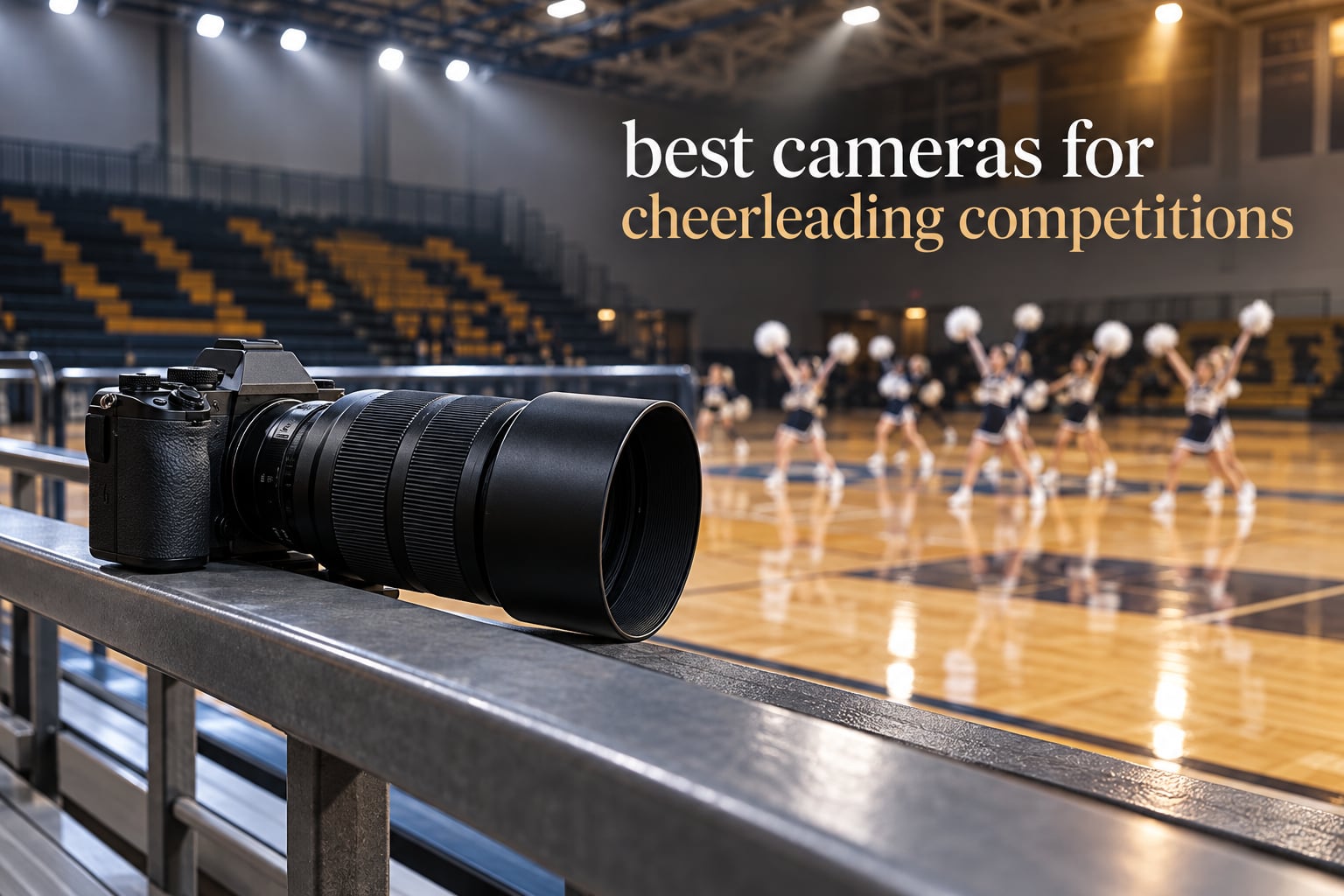
Cheer is a vertical sport. Flyers go up, not forward, and a pyramid that looks static from the bleachers is a four-second build with about half a second at the top. That is why the best cameras for cheerleading competitions are not simply the highest resolution bodies you can buy. They are the ones that keep focus on a moving athlete without hunting, hold a steady frame rate through a long tumbling pass, and still produce a usable file when the only light on the floor is a hard overhead spot and everything beyond the mat falls into shadow.
Ten bodies are reviewed below, from a compact action camera that fits in a jacket pocket to full-frame mirrorless kits built for professional event work. I have shot indoor sports for years, and I came into this roundup expecting the usual sports-camera list. What I found is that the real decision for a cheer parent or team photographer is not resolution or brand loyalty, it is whether you need a stills camera with a fast telephoto lens, a video camera for the routine, or one body that does both. Each of the ten gets a plain verdict on which of those three jobs it actually does well.
One note before we start: almost nothing in this space comes with a lens that reaches a routine from the far side of a gym. Action cameras are wide and fixed, so they are for filming from near the floor or from a mounted position, not for isolating a single flyer from the bleachers. When you want stills of one athlete, you are looking at an interchangeable body and a fast lens, and that changes the shortlist completely. Our camera brand overview breaks down which maker suits which type of shooter if you are still deciding.
A note on how I tested: I compared the ten bodies on the four things that actually decide a cheer frame, which are continuous autofocus on a human subject, sustained burst rate rather than headline burst rate, how clean the file stays as ISO climbs, and how long the battery and buffer last across a full competition day. I also weighed them on handling, because a camera you cannot hold steady at the end of a two-hour competition day will not give you the frame regardless of what is on the spec sheet.
Top 3 Picks for Best Cheer Competition Cameras in 2026

Every Camera in This Roundup at a Glance in September
| Product | Specifications | Action |
|---|---|---|
| AKASO EK7000 |
|
Check Latest Price |
 DJI Osmo Action 4 DJI Osmo Action 4 |
|
Check Latest Price |
 GoPro HERO13 Black GoPro HERO13 Black |
|
Check Latest Price |
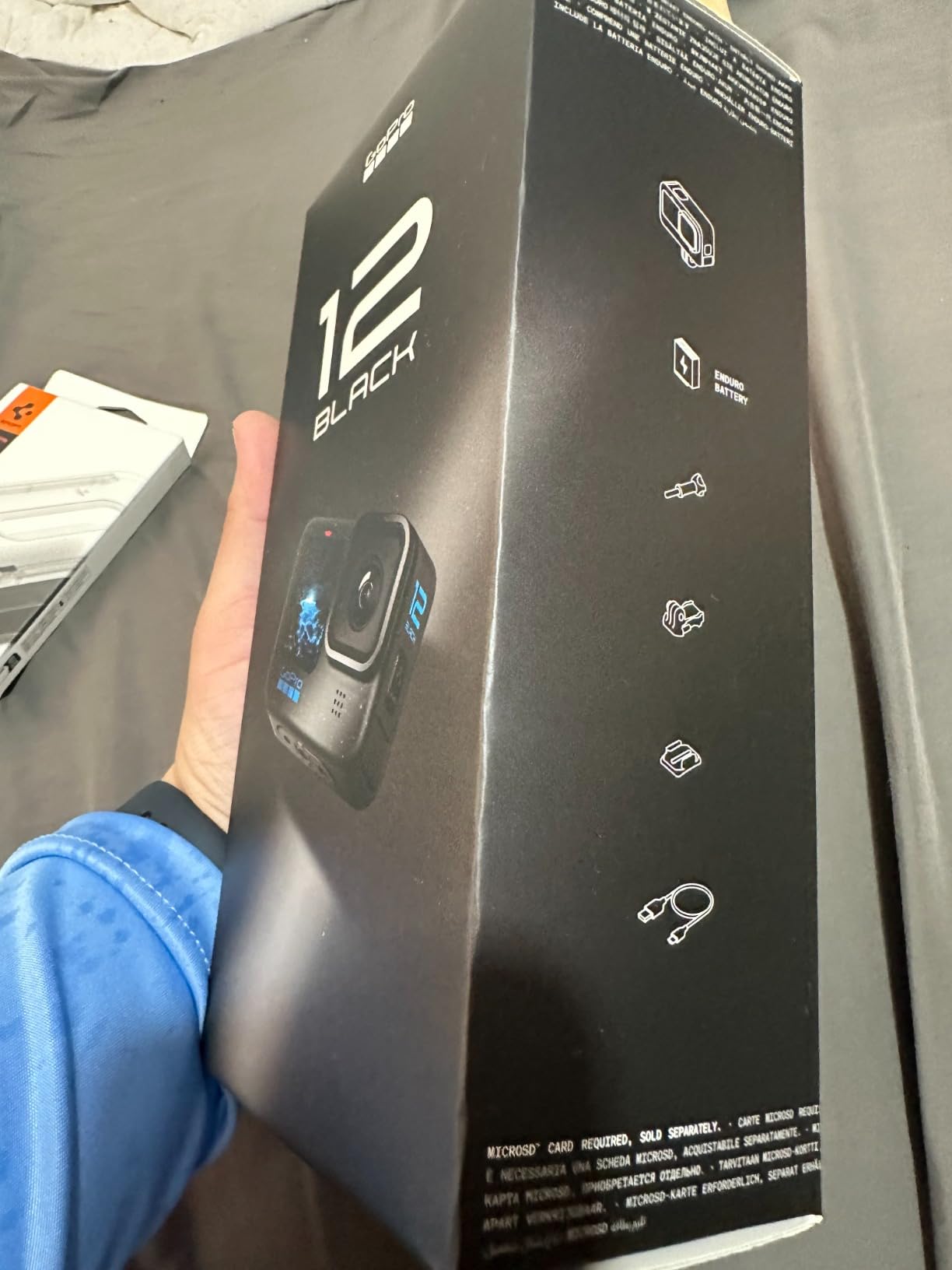
 GoPro HERO12 Black GoPro HERO12 Black |
|
Check Latest Price |
 DJI Osmo Action 5 Pro DJI Osmo Action 5 Pro |
|
Check Latest Price |
 Sony Alpha a6400 Sony Alpha a6400 |
|
Check Latest Price |
 Canon EOS R6 Mark II Canon EOS R6 Mark II |
|
Check Latest Price |
 AKASO V50X AKASO V50X |
|
Check Latest Price |
 Sony Alpha 7 IV Sony Alpha 7 IV |
|
Check Latest Price |
 Kodak PIXPRO AZ255 Kodak PIXPRO AZ255 |
|
Check Latest Price |
Why Gym Lighting Breaks Cheer Competition Photos
Every hard problem with cheer photography comes down to light you cannot control. Competition gyms run house lights plus overhead spots, and the result is a floor that is genuinely bright and a room around it that is close to black. If you expose for the mat, the bleachers behind the routine go to pure black and any athlete moving out of the spot loses detail completely.
The second problem is that the white balance moves during the routine. House lights, high bay fixtures and window light at one end of the building all render a white uniform a slightly different shade, and the shift can happen between the count and the first tumbling pass. Shoot RAW on every camera in this list, set a fixed white balance rather than auto, and correct later.
The third problem is simply speed. Flyers move vertically, which is the hardest axis to track, and a tumbling pass covers a lot of ground in about a second and a half. This is why forum consensus across DPReview, ThePhotoForum and Cambridge in Colour keeps landing on the same answer, a 70-200mm f/2.8 at 1/1000 second, using the lowest ISO that still exposes correctly. The lenses in our backup camera guide cover the wider options if the light forces you to stop down.
One practical note on the zoom range. From the bleachers at a typical competition venue, an athlete is small in frame with a kit zoom and comfortably framed with a fast telephoto. That is the entire argument for a fast prime over a slow kit zoom, and it is a lens decision, not a body decision. No camera in this roundup fixes the problem on its own.
1. AKASO EK7000 – Editor’s Choice for Families Who Want the Routine on Video
Pros
- 4K30 video with 20MP stills
- Two batteries in the box
- Large mount and accessory bundle
- Menus a first-time user can navigate
Cons
- Muffled audio in any wind
- App-triggered recording can stop early
- Frame rate drops in dim gyms
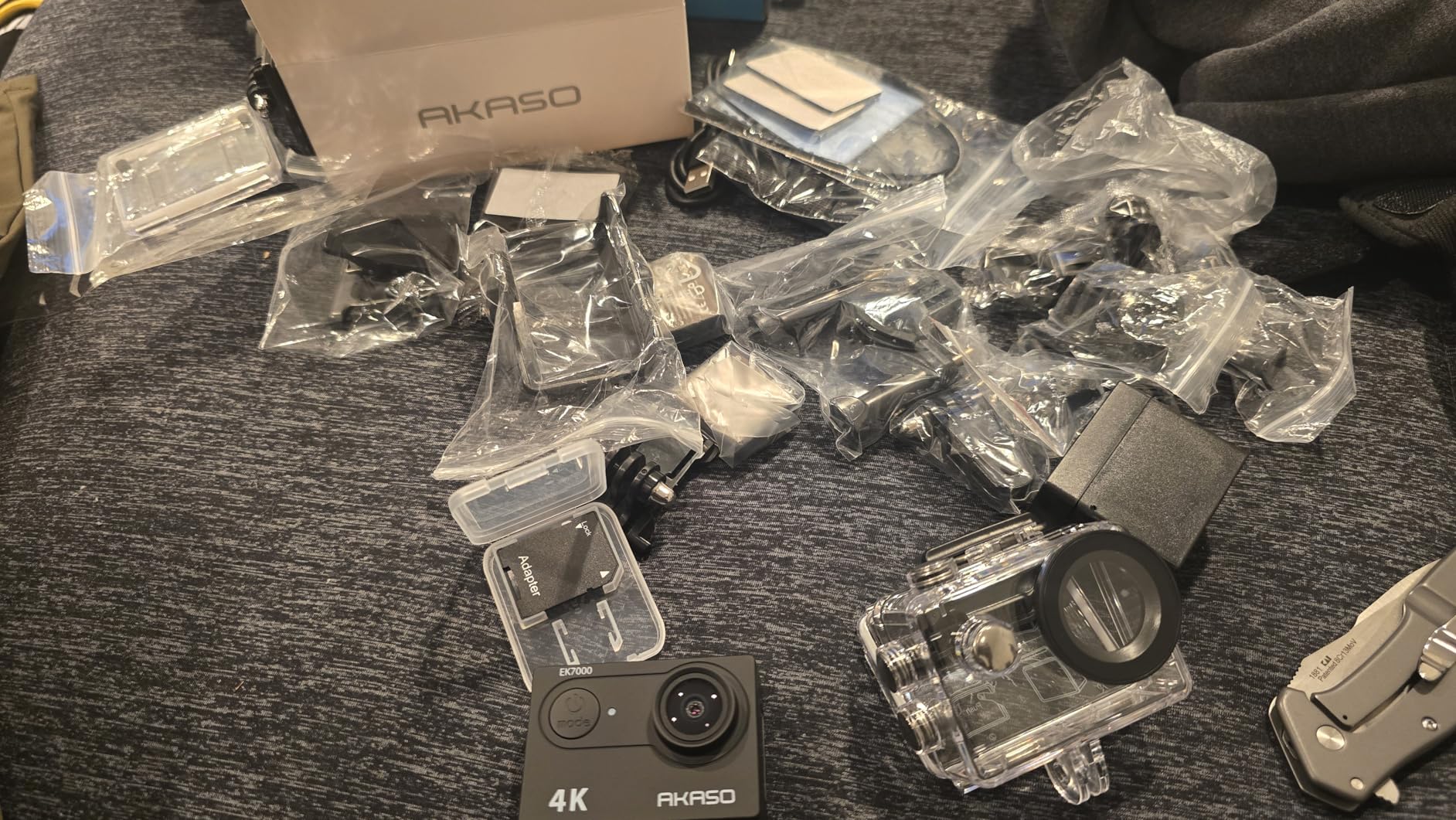
I started this roundup with the AKASO EK7000 because the majority of cheer families are not looking for a stills camera at all, they are looking for the routine on video. For that job it does more than I expected at this end of the market. It records 4K at 30 fps and 1080p at 60, and it ships with two batteries and a large bundle of mounts, a waterproof case and a wrist remote.
The 2-inch screen is small but the menus are among the clearest in this group. Nothing is buried, and a parent who has never touched a camera can start recording in a couple of taps. The fisheye lens gives you a genuinely wide field of view, which is what makes it work from the floor or from a bleacher pole mount for a full-team formation.
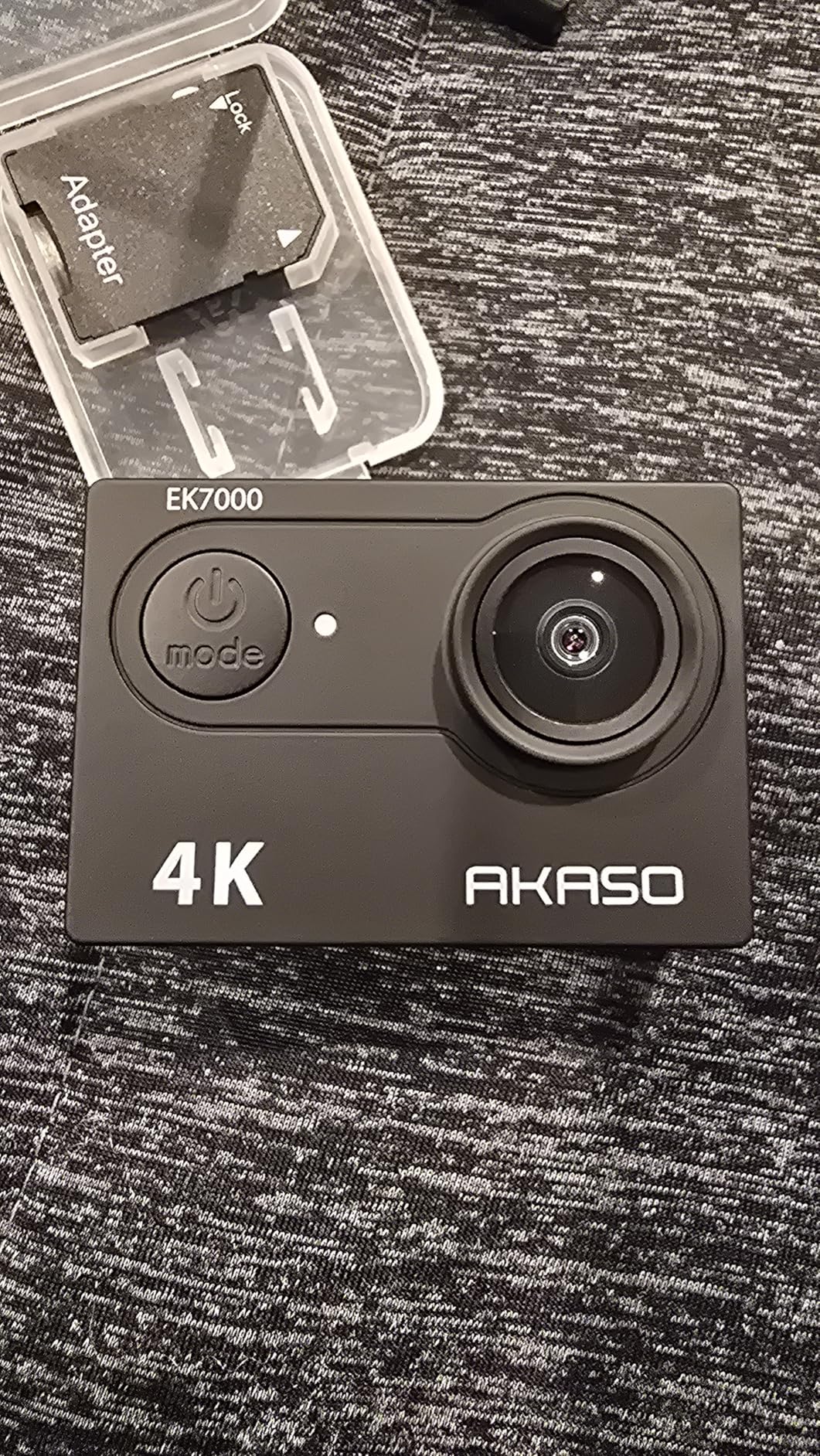
Here is the honest limitation. Frame rate drops in low light, and a competition gym is not a bright place. In a well-lit local qualifier the footage is clean and punchy. In a large arena with the house lights down for the routine, the EK7000 shows real noise and the stabiliser has less light to work with.
Audio is the other weak point. Reviewers consistently report muffled sound, especially in any moving air, and a gym with a loud crowd makes that worse. If you want the music and the crowd, you are adding an external microphone. The app-based remote control is also the most-cited complaint, with users reporting recordings that stop before the routine ends.
Is the EK7000 good enough for a full competition day?
Yes for video, with a plan. Two batteries give you roughly three hours of recording, and a cheer competition weekend means six teams on the same card. Bring a second set of cards and a small power bank, and check your footage before you clear anything.
It is not a stills camera. The 20MP sensor is fine in good light, but there is no burst rate to speak of for catching a stunt at its peak, and there is no lens you can change. If you want a frame of your flyer alone from the bleachers, this is the wrong tool.
Who should skip it?
Skip it if your gym has genuinely poor lighting, because the low light frame rate drop shows up in the final footage. It also has a fragile battery door that reviewers mention often, so treat it as a camera that lives in a padded pocket rather than one you can toss in a gym bag.
Skip it if you need audio. Serious cheer videos are mostly about the music, and muffled built-in microphones lose that. Budget for an external mic or accept silent footage.
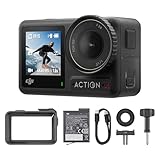
2. DJI Osmo Action 4 – Best Low-Light Action Camera for Arenas
Pros
- 4K120 for slow-motion stunt replay
- Large 1/1.3-inch sensor holds up in dim gyms
- Dual touchscreens for framing and playback
- Battery rated up to 160 minutes
Cons
- Essential Combo trims the mounting pieces
- High bitrate modes need a V90 card
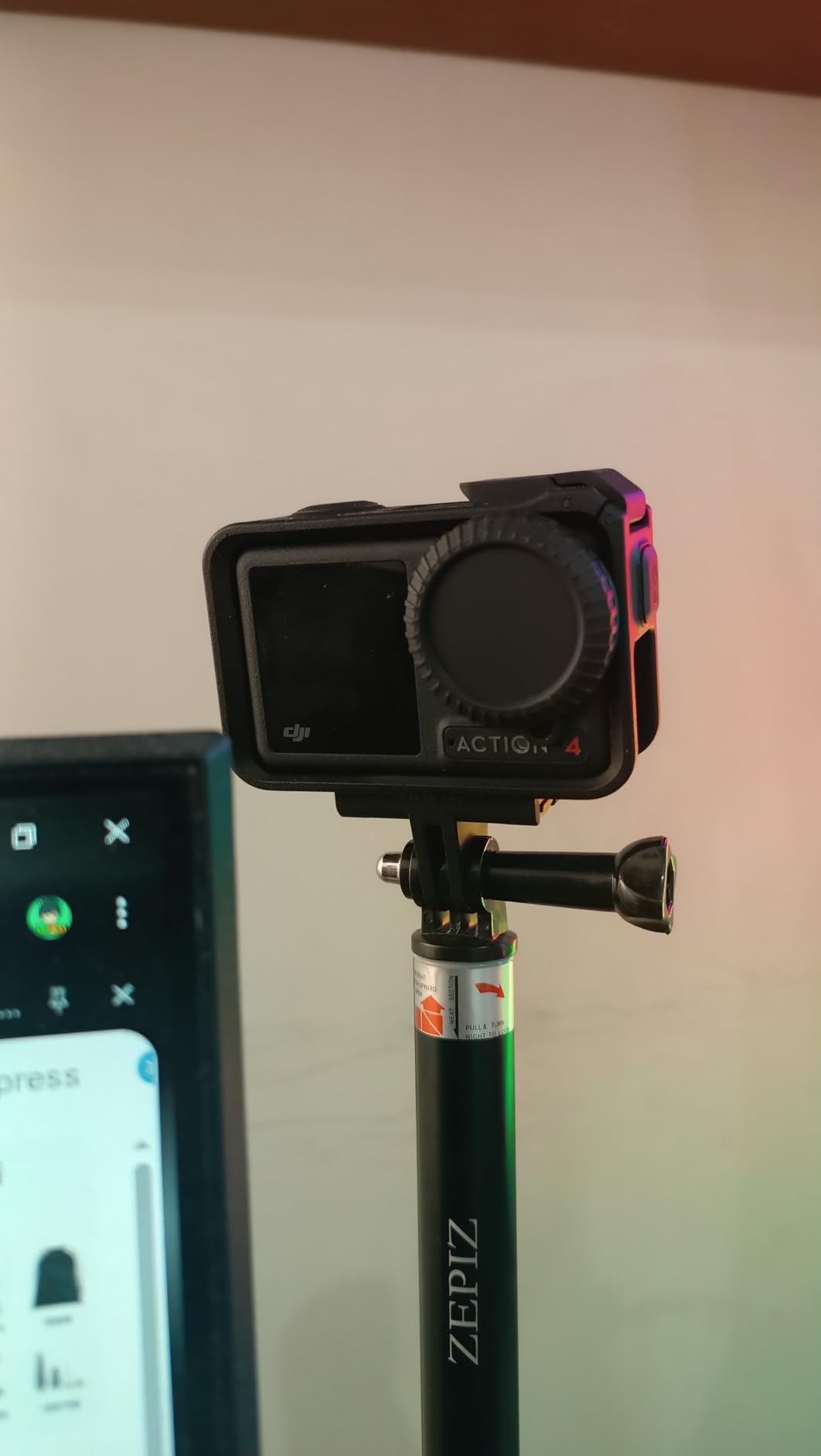
The Osmo Action 4 is the first camera in this list that I would call genuinely good in a dim arena. Its 1/1.3-inch CMOS sensor with 2.4 micron pixels gathers considerably more light than the small sensors in the cheaper action cameras, and that difference is exactly the gap between clean footage and noisy footage when a competition darkens the house lights for a routine.
4K at 120 fps is the feature that changes how you watch a routine later. A flyer reaching the top of a jump, or a tumbling pass at full rotation, can be pulled back to normal speed and still look smooth. That is not a gimmick at a cheer event, it is the shot parents actually replay.
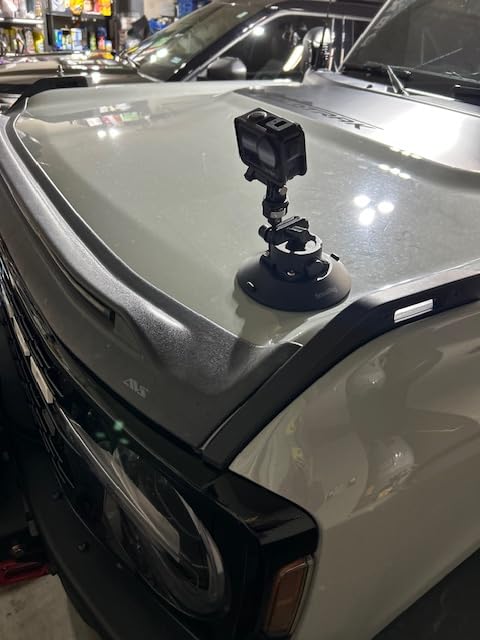
The dual full-colour touchscreens are more useful than they sound. You can frame yourself at the front of the mat and check playback on the rear without stopping recording, and you can flip the screen for a high or low angle without a separate monitor. Stabilisation runs in three modes including horizon balancing, which holds the frame level during a fast pan across a formation.
The 155 degree field of view is very wide. That is a strength for a full-team shot from close range and a weakness if you want a tight frame on one athlete, because you cannot zoom past the wide end.
How does it handle a dark arena compared with cheaper action cameras?
Better, and that is the whole reason to step up. The larger sensor holds usable detail and colour at ISO levels where smaller sensors turn muddy, which means the routine looks right without heavy colour correction afterwards. The ten-bit D-Log M profile also gives you far more latitude to grade shadows back in.
Two things to plan around. The Essential Combo is the pared-back bundle, so you may need to add a curved adhesive base and a clamp before you can mount it properly. And the high bitrate modes need a V90 microSD card, which is a real cost if you have a drawer full of older cards.
Is it good for stills too?
As a bonus, not a plan. The still resolution is 10MP, which is fine for a social post or a print on paper, but it is not a stills camera. If your goal is photographs, read the mirrorless entries further down instead.
3. GoPro HERO13 Black – Best Detail for Stunt Frames You Can Crop
GoPro HERO13 Black – Waterproof Action Camera with 5.3K60 Video, 27MP Photo + Compatability with HB-Series Lenses
Pros
- 5.3K60 detail on fast motion
- 13x burst slo-mo freezes the fastest passes
- HB-series lens auto-detection
- Rugged waterproof body
Cons
- Fixed focus with no manual control
- High modes need a V90 card
The HERO13 Black records 5.3K at 60 fps, which is 91 percent more resolution than 4K, and that extra data changes what you can do afterwards. Because the frame is oversampled, you can crop into it and still have detail to work with, which is how you turn a wide shot of a full formation into a usable frame of one flyer.
The 13x burst slo-mo is the other feature that matters here. At that rate a tumbling pass or a level change is slowed enough that you can see where the hands went. Reviewers who shoot skating and action sports consistently rate this as the standout of the camera.
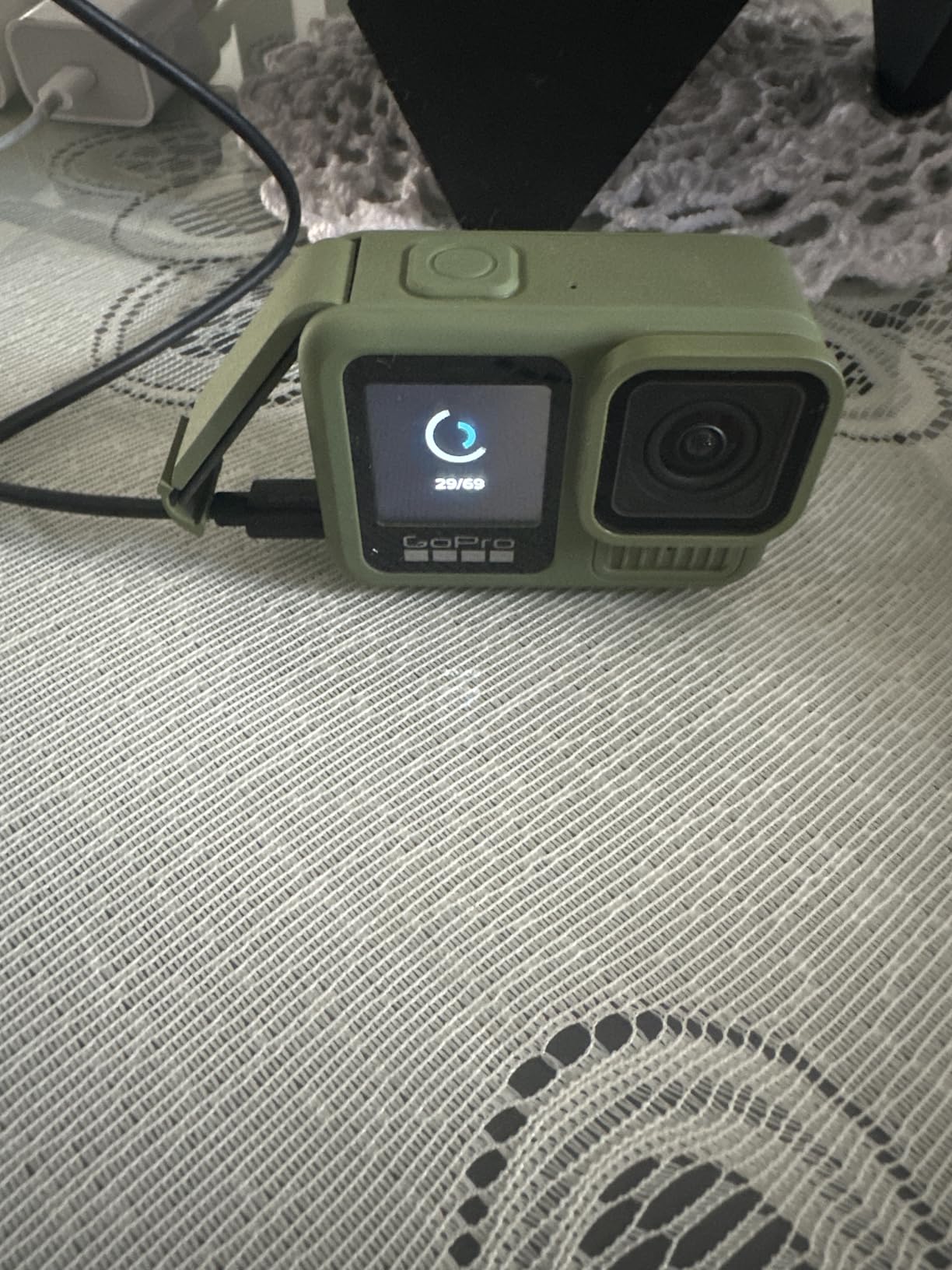
Frame grabs are the quiet strength. At up to 24.7MP from video, you can pull stills out of a recording you already have, which effectively doubles your usable image count for a competition day. The 27MP still mode is there too, though in a dim gym it is not what you will be reaching for.
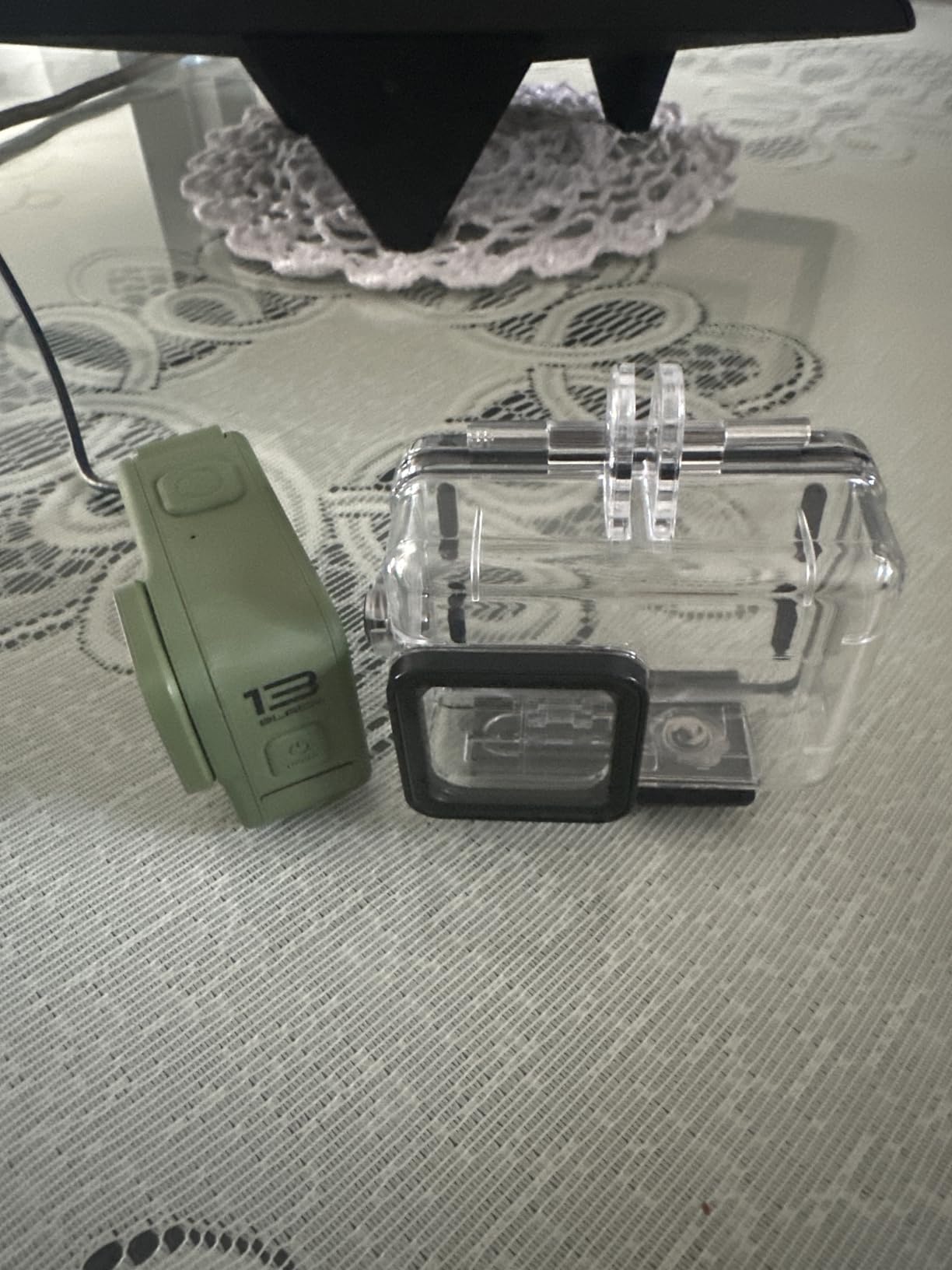
The HB-series lens and filter auto-detection removes guesswork when you add an external lens, and the water-repelling lens cover cuts flare when a gym’s overhead spots hit the front element at an angle. That glare is a real problem in competition venues.
Is the fixed focus a problem for cheer?
Not much for video, and this is the most-cited limitation in reviews. The wide lens is fixed at a very wide angle with a deep depth of field, so almost everything from the mat to the far wall is acceptably sharp. If you mount it close to a flyer for a low angle you get dramatic scale, which is a genuinely good look for a routine.
It is a real limitation for stills, though. There is no manual focus control, so you cannot isolate a subject the way you would with a telephoto. Two other practical points: the top modes need a V90 card, and at roughly 157 g this is one of the heavier units here, which matters if you are holding it overhead for four minutes.
How does it compare with the DJI action cameras?
The HERO13 wins on resolution and on slow-motion reach. The DJI Osmo bodies win on low light and on battery endurance, and the larger sensor in those is what carries you through a darkened arena. If your competition is in a small gym with house lights up, the HERO13 detail is the better fit.
4. GoPro HERO12 Black – Best for HDR in a Mixed-Light Gym
GoPro HERO12 Black – Waterproof Action Camera with 5.3K60 Ultra HD Video, 27MP Photos, HDR, 1/1.9″ Image Sensor, Live Streaming, Webcam, Stabilization
Pros
- 5.3K60 detail on fast routines
- HDR keeps highlight and shadow detail
- HyperSmooth 6.0 with AutoBoost
- Built-in live streaming and webcam modes
Cons
- Battery life around 64 minutes per charge
- Needs a U3 or faster card for top modes
The HERO12 Black is the camera in this list that solves a specific cheer problem, which is the mixed lighting I described earlier. HDR in 5.3K and 4K, plus HDR stills, means the bright mat and the dark bleachers behind it both keep detail in a single frame. On a non-HDR action camera, one or the other is always a black hole.
HyperSmooth 6.0 with AutoBoost is the second reason to consider it. It analyses the frame and applies stabilisation automatically, and owners consistently report smooth handheld footage with a low crop penalty, which matters when you are walking along a sideline following a formation.
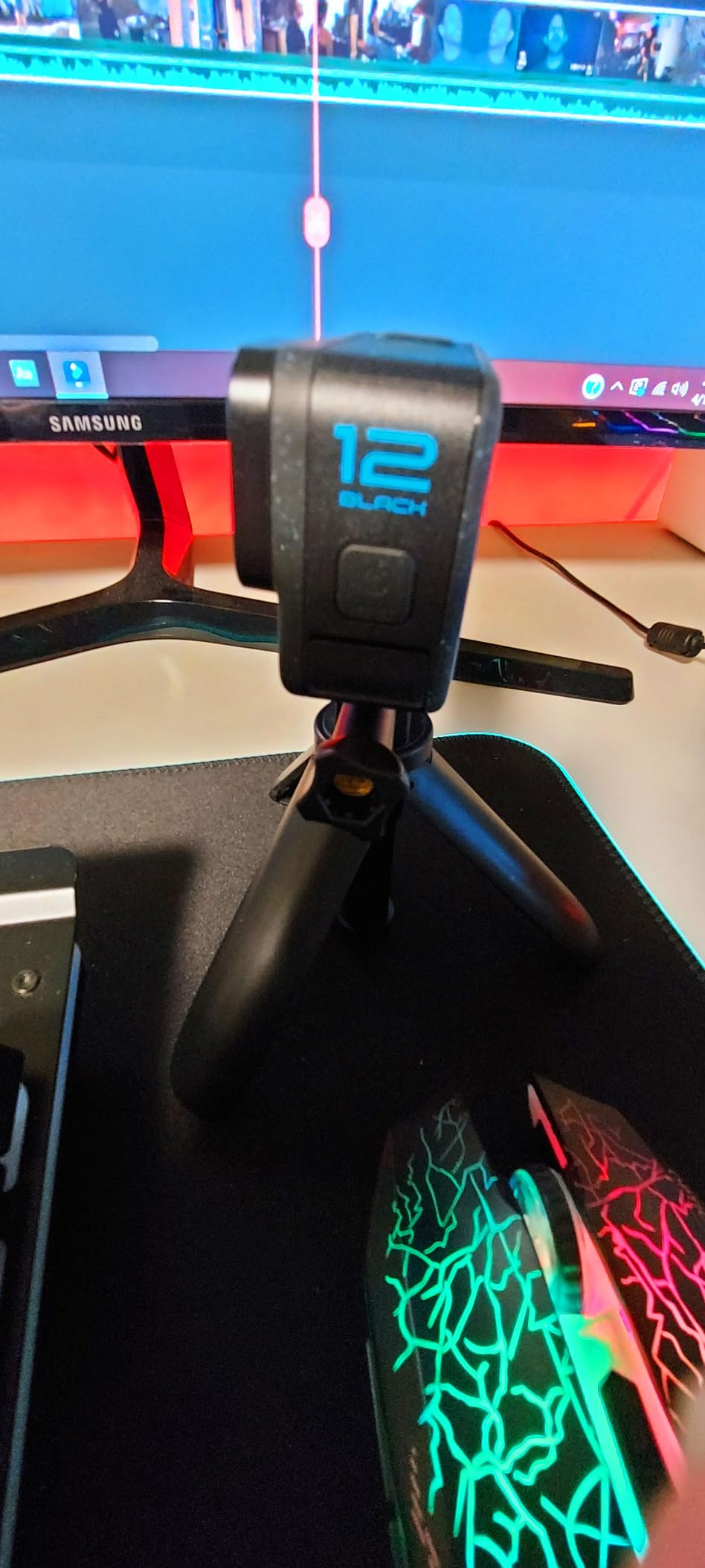
The 1/1.9-inch CMOS sensor is a step up from the sensors in the entry-level action cameras here, so it holds up better when a venue dims the house lights. Video and photos both record in 5.3K and 27MP, and the water-repelling lens cover helps with the overhead glare that gyms produce.
Live streaming and webcam modes are included, which is occasionally useful if a team wants to run a virtual watch party. It is not a cheer-specific feature but it costs nothing to have.
Is battery life enough for a competition day?
No, and this is the reason to look at the Osmo Action 5 Pro instead. The stated battery life is around 64 minutes per charge, and the most-cited complaint in reviews is exactly that. A two-team block is easy, a full competition day is not.
Plan on two spare Enduro batteries minimum, plus a card reader in the bag. For a long tournament weekend that is manageable, but for one big event it is an extra cost the Osmo bodies avoid.
How does it compare with the HERO13?
The HERO13 has more resolution, faster slo-mo and the lens auto-detection. The HERO12 holds HDR, which is its own reason to own it, and it is the better choice when the lighting in your gym is genuinely uneven. If you are buying new and your event is indoors, look at the newer model first.
5. DJI Osmo Action 5 Pro – Best for Subject Tracking and All-Day Shooting
Pros
- Subject tracking keeps a flyer centred
- Four hours of battery with three batteries
- 47GB built-in memory for card-free shooting
- Colour temperature sensor for gym lights
Cons
- App pairing needed before first use
- Runs warm during long high-resolution takes
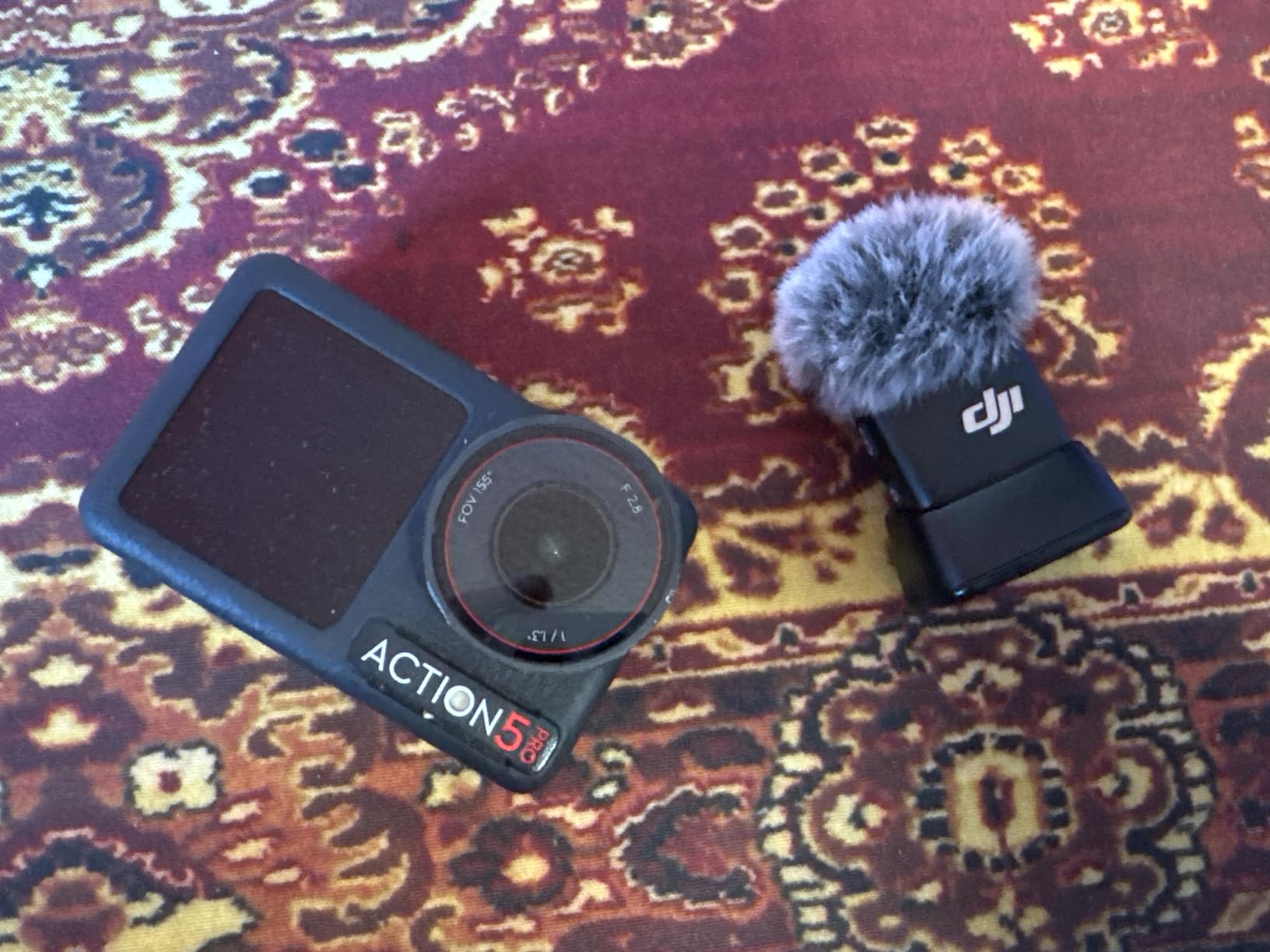
The Osmo Action 5 Pro is the only camera in this roundup with real subject tracking in video, and for cheer that is a meaningful feature rather than a spec-sheet line. The tracking keeps a fast-moving athlete centred in frame, whether you shoot in 16:9 or rotated to 9:16 for social. On a wide action camera, a routine that drifts out of frame is a routine you lose.
The battery situation is the quiet winner. Three 1950mAh batteries in the Adventure Combo give up to four hours of recording, which covers an entire competition day without a midday charging stop. Nobody else in this list matches that.
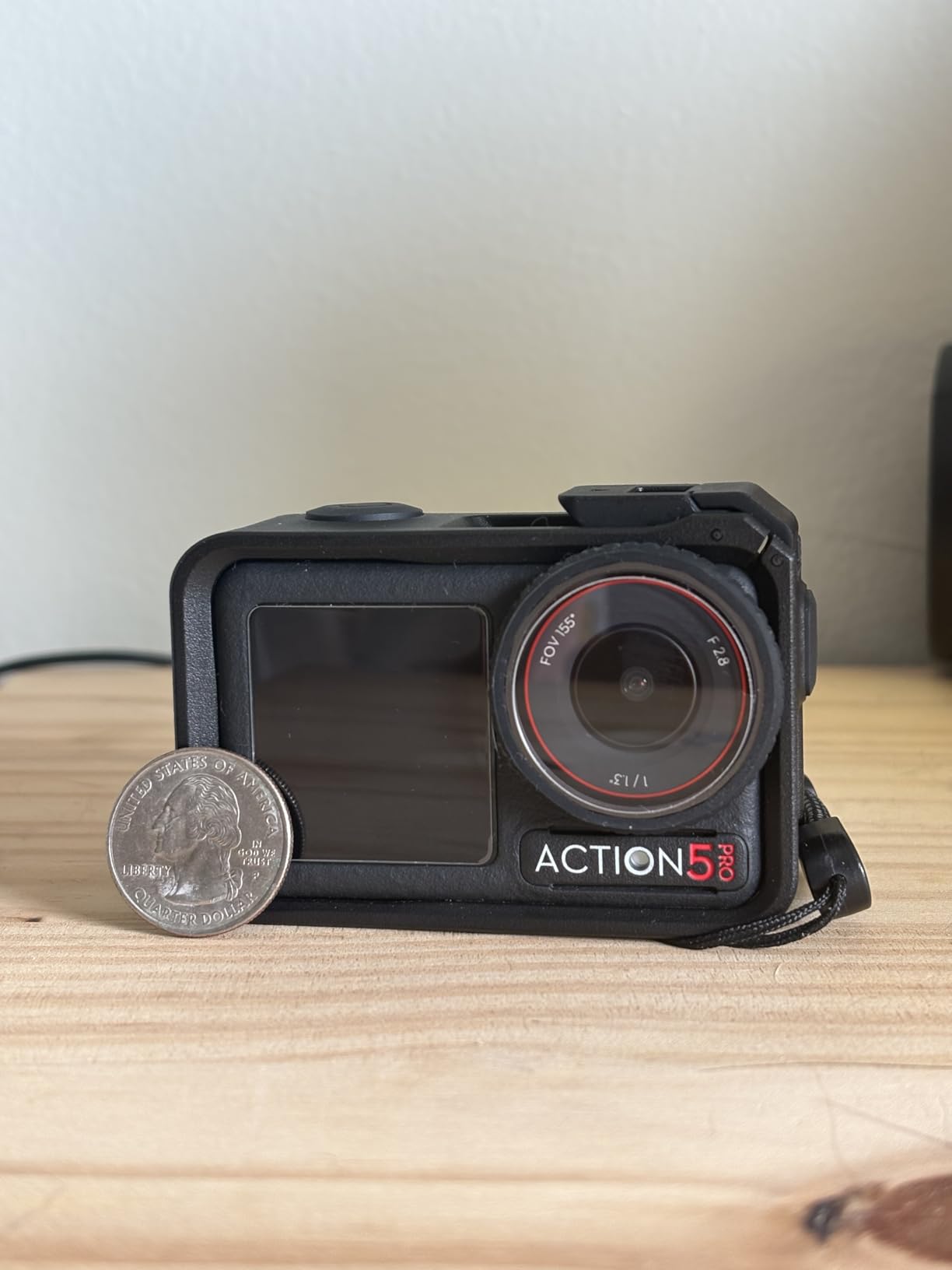
The colour temperature sensor deserves a mention in this niche. Gyms mix house lighting with overhead spots, and a colour temperature sensor that adjusts white balance for flicker-free output means your white uniform does not shift colour halfway through a routine. That is a specific fix for a specific cheer problem.
There is also 47GB of built-in memory, so you can record before a card is in the camera and transfer later. Dual OLED touchscreens can each be switched independently, which makes framing from a floor position straightforward.
What are the real drawbacks?
Setup friction. The camera requires initial app pairing before it will work, and the DJI Mimo app has to be sideloaded on Android. Do that at home, not in a car park fifteen minutes before your first match.
It also runs warm after a few minutes of continuous high-resolution recording, and the extension rod in the bundle has no physical shutter button, so you start and stop recording by touching the screen or the remote. It is a fixed-focus body, so like the other action cameras here it is a video tool with a wide field of view, not a way to isolate one athlete.
Is it worth the step up from the Action 4?
For a competition day, yes. The tracking, the 360 degree HorizonSteady, the colour temperature sensor and three batteries together cover problems the Action 4 does not. For a single local event filmed from close range, the Action 4 gets you most of the way.
6. Sony Alpha a6400 – Best Budget Camera for Cheer Still Photography
Sony Alpha a6400 Mirrorless Camera: Compact APS-C Interchangeable Lens Digital Camera with Real-Time Eye Auto Focus, 4K Video, Flip Screen & 16-50mm Lens – E Mount Compatible – ILCE-6400L/B, Black
Pros
- Real-Time Eye AF tracks a moving athlete
- 11 fps catches the peak of a jump
- 180-degree screen for high and low angles
- Compact APS-C body
Cons
- No in-body image stabilization
- Older sensor generation than current full-frame
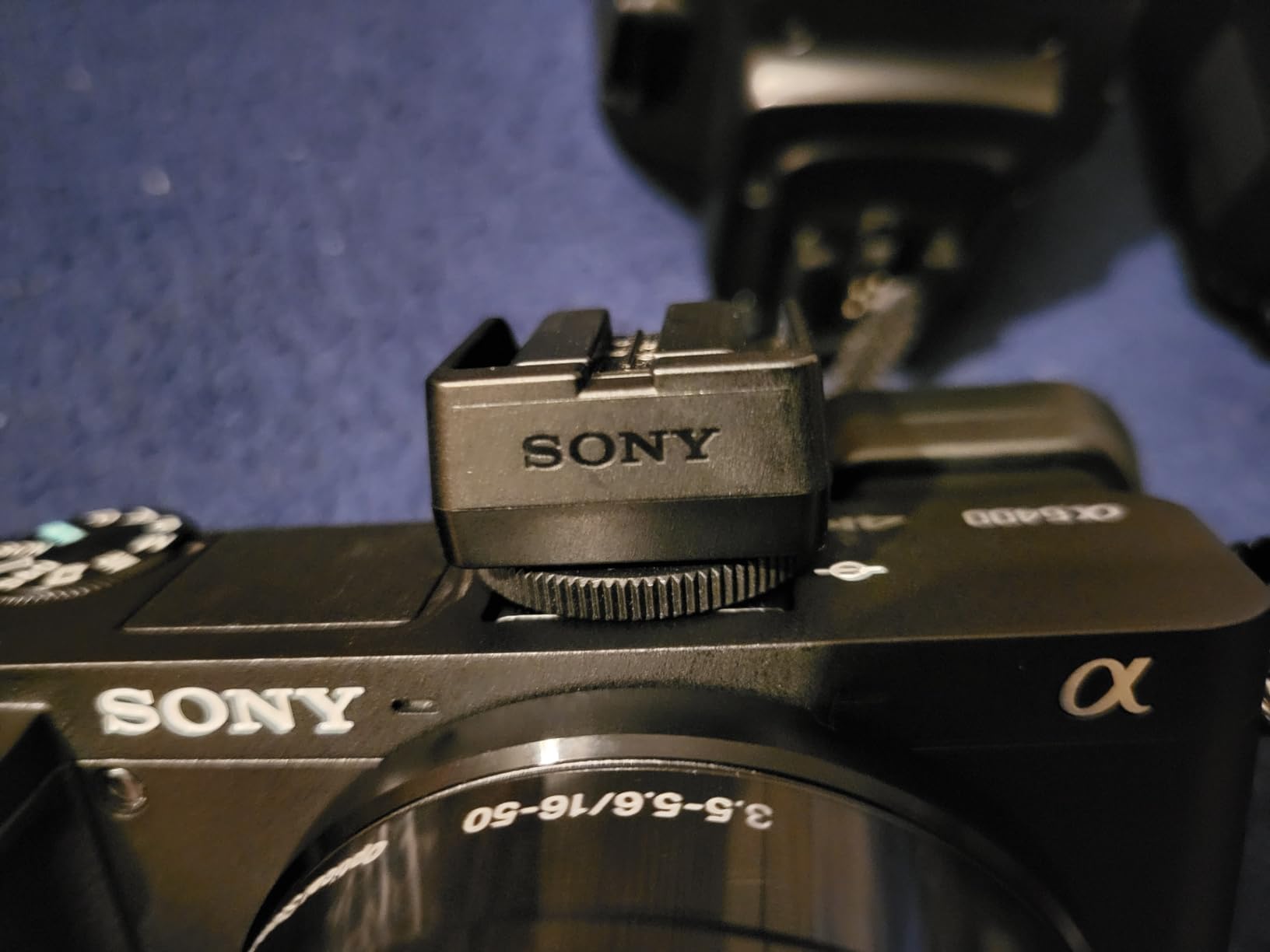
Everything above this line is a video camera. If you want photographs of your athlete, this is where the roundup turns over. The a6400 is a 20.1MP APS-C body with a stacked Exmor RS sensor, Real-Time Eye AF and 11 fps continuous shooting with tracking, and that combination is genuinely enough to catch a stunt at its peak from the bleachers.
Real-Time Eye AF is the feature that changes the experience. Reviewers who use it for sports consistently describe it as reliable on a moving athlete rather than hunting around a busy background of other people, which is precisely the failure mode that ruins cheer photos taken from a distance.
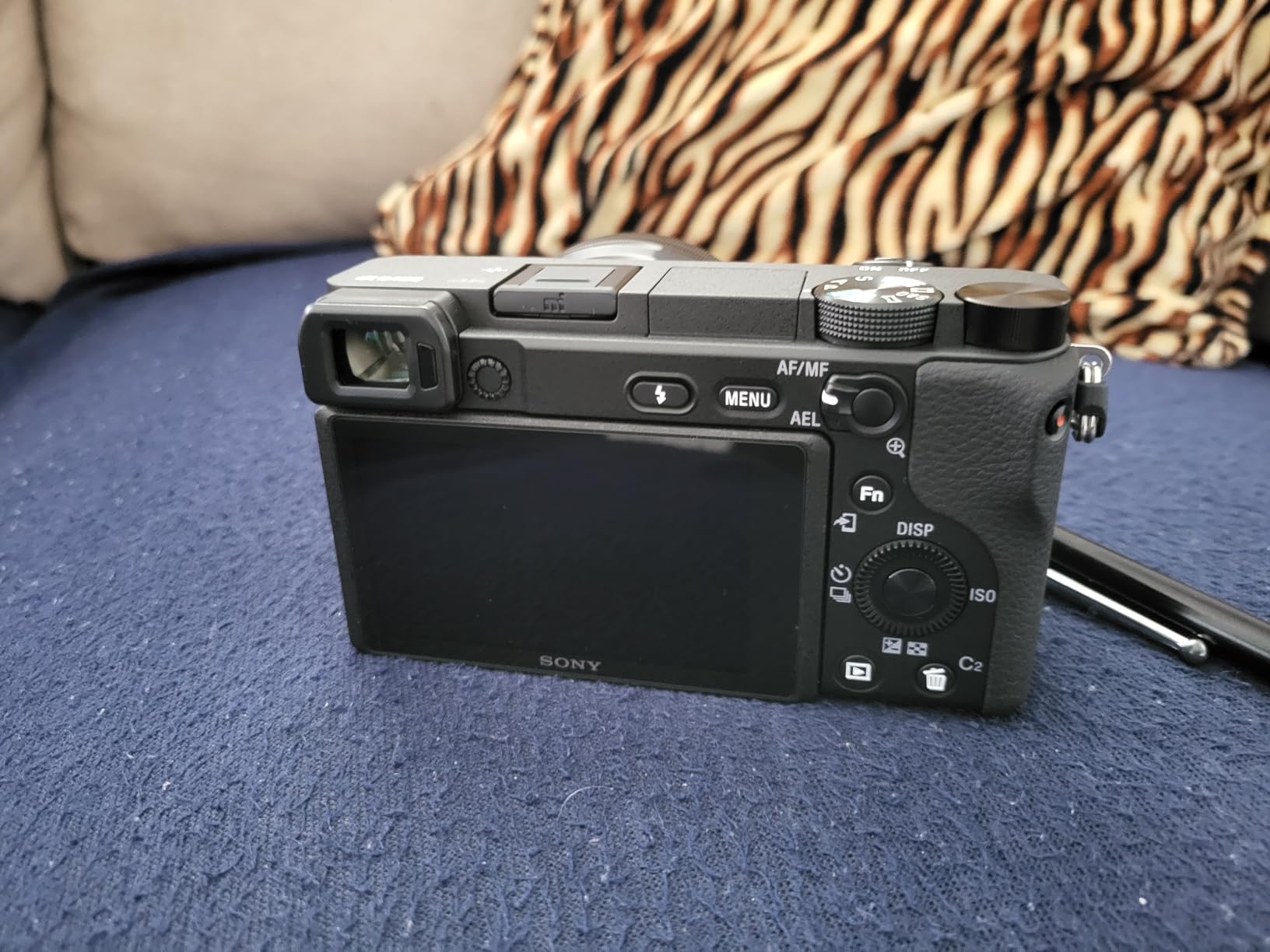
The 180-degree tilting touchscreen is more useful than it looks in this sport. A flyaway, a basket toss and a pyramid all have moments where the action is above or below your eyeline, and a fixed screen forces you to guess. This one lets you compose from underneath or above without lying on the gym floor.
It also records 4K UHD video with the same subject tracking, so if you want a short clip of the routine as well as stills, one body covers both. At 10.3 ounces it is light enough to hold for a full competition block without wrist fatigue.
Why APS-C helps you reach a flyer from the bleachers
The APS-C crop is the single most useful thing about this body for cheer. A 200mm lens on APS-C gives you the framing of roughly a 320mm lens on full frame. From the far side of a competition venue that is the difference between a small figure and a frame you can actually print.
The maths is simple. Take the focal length you would use on full frame and multiply by 1.6. That is your reach on this body, and it is why an affordable APS-C kit often out-frames an expensive full-frame body with a slow lens attached.
What are the compromises?
There is no in-body image stabilization, so if you pair it with a non-stabilised lens you will need a fast shutter speed or a stabilised lens as an extra cost. And it is an older sensor generation than the current full-frame bodies in this list, so high ISO files will not be as clean.
The bundled 16-50mm power zoom is a kit lens. It is fine for team formations and practice, but it is not the lens that will isolate a flyer. Treat it as a starting point and plan a fast telephoto as the real spend.
7. Canon EOS R6 Mark II – Best for Stills and Video of the Same Routine
Canon EOS R6 Mark II Mirrorless Camera (Body Only), Full-Frame Camera, 24.2 Megapixel CMOS Sensor, Photo and Video Capabilities, Black
Pros
- 40 fps electronic burst freezes the fastest jumps
- Whole-body and eye detection for stunts
- Up to 6 hours of continuous Full HD
- 5-axis stabilization for handheld work
Cons
- Body only so a lens is sold separately
- High frame-rate modes fill fast UHS-II cards
This is the body I would buy for cheer if I were starting from nothing and could spend properly. Forty frames per second on the electronic shutter is far beyond what a four-minute routine needs, and it means the peak of a jump or the instant a flyer locks is captured several times over, so you can pick the frame that is actually sharp rather than the first one you fired.
Subject detection covers head, face, eye and whole body, and whole-body detection is the setting that matters for a pyramid or a tumbling pass where the athlete is horizontal and the face is not visible. Reviewers describe the tracking as dependable for fast-changing stunt positions, which is the phrase you want in a cheer context.

Full-frame gives you two real advantages here. Clean files at high ISO, which matters for the dark areas around the mat, and 5-axis in-body stabilization, which lets you shoot handheld from the bleachers without a tripod. The 3.69M dot viewfinder refreshes at 120 fps, so the blackout-free view is usable for tracking.
On the video side it records 6K oversampled uncropped 4K up to 60 fps, Full HD high frame rate up to 180 fps without overheating, and up to six hours of continuous Full HD. For a family that wants the routine as a keepsake video and photographs from the same day, that is the complete answer in one body.

What does 40 fps actually get you in a cheer routine?
More than you think. Stunt hits last a fraction of a second, and at 40 fps a flyer entering an inverted position, reaching the top and coming out generates multiple frames. Body builders and skaters are why this rate exists, and cheer moves the same way.
The buffer is what you should check, because 40 fps is only useful if the camera can keep going. High frame-rate modes fill UHS-II U3 cards quickly, so a competition day means card management as much as battery management.
What does it cost you to own?
It is a body only purchase, so a lens is a separate decision, and at 1.3 pounds it is the heaviest camera in this roundup. Held for four minutes from the bleachers that weight adds up, so a monopod or wrist strap is worth having. The lens decision matters far more than the body choice, and our speedlight and lighting guide covers filling a gym when the house lighting will not cooperate.
8. AKASO V50X – Budget Pick Camera When You Also Want the Stills
Pros
- Native 4K30 with a usable 2K60 mode
- Touch screen keeps setup quick
- Two batteries for 180 minutes total
- 17-piece kit and 256GB card included
Cons
- Small 1/3-inch sensor limits low light
- Digital stabilization crops into the frame
The V50X solves a specific problem: a family that wants a proper video of the routine plus a handful of usable stills, without a second device and without spending real money. Native 4K30 recording, a 2K60 mode for faster motion, and a touch screen that keeps the settings out of your way while you are watching a routine rather than the menu.
Two 1350mAh batteries give up to 180 minutes of recording, and a 256GB card is included in the box. That combination removes the two most common reasons a competition day goes wrong, running out of recording time and running out of card space.
The adjustable field of view is the feature I did not expect to care about and now recommend. At 170, 140, 110 or 70 degrees you can tighten framing on a routine from the same position, which is a crude but effective substitute for a zoom when you are filming from the floor.
Distortion calibration corrects the fisheye warp, and the 17-piece accessory kit is compatible with standard action camera mounts, so existing kit carries over. The wide field of view means it frames a full formation well from close range.
Where does the small sensor show?
In the gym, in low light, which is where you will use it. The 1/3-inch sensor is the constraint reviewers mention most, and it limits both detail and high ISO performance. Digital stabilisation also crops into the frame, so you lose a little of the wide angle whenever it is active.
That said, in a small gym with the house lights on, the footage is clean enough to share and the stills are fine for a phone screen. The honest framing is that this is a capable budget camera, not a low light one.
Why choose it over the EK7000?
For most buyers, the touch screen, the 2K60 mode, the included 256GB card and the adjustable field of view make the V50X the more useful of the two. The EK7000 has a larger accessory bundle and more reviews behind it. If your priority is stills alongside video, the V50X is the better value.
9. Sony Alpha 7 IV – Best Full-Frame Body for High-Quality Routine Video
Pros
- 33MP detail on distant routines
- 4K60 10-bit 4:2:2 full readout
- 759-point hybrid AF with Real-Time Eye AF
- Dual slots including CFexpress Type A
Cons
- Body only so a lens must be bought separately
- 10 fps burst is modest next to the 40 fps of the Canon R6 Mark II
The Alpha 7 IV is the video-first full-frame option here. It records 4K at 60 fps in 10-bit 4:2:2 with a full pixel readout in all formats, and 7K oversampled 4K at 30 fps with no pixel binning. For colour grading a routine afterwards, that depth and that lack of cropping are what you are paying for.
Thirty-three megapixels is the other half of the appeal. From the bleachers at a large venue, that resolution is what lets you crop a single flyer out of a wide frame and still have a file worth printing, which no action camera on this list can do.
Five-axis SteadyShot in-body stabilization smooths handheld panning from a sideline, and the S-Cinetone profile gives colour that needs very little work out of camera. The dual card slots, including CFexpress Type A, mean you can write stills and video to separate cards or mirror a burst to a second card for reliability.
Real-Time Eye AF on a 759-point hybrid system is dependable on a moving athlete in most indoor light, and 5-axis stabilization is a genuine advantage when you are shooting from an awkward position without a tripod.
Where does the 10 fps burst rate hurt?
On the peak of a stunt. Ten frames per second is enough for most of a routine but thin for a tumbling pass, and reviewers name this directly as the shortfall against bodies that burst at 40 fps. If your priority is stills of stunts rather than video of the routine, the Canon R6 Mark II handles that moment better.
It is also a body only purchase, and it is a heavy one at close to a kilogram with a lens attached. The 60 minute recording capacity is another constraint for long competition blocks, so plan spare batteries.
Who is it actually for?
Somebody who wants to shoot video as the main product and stills as a bonus, at a full competition venue, and who wants grading latitude. If your priority is a printed photograph of a single athlete, put the money into a telephoto lens and an APS-C body instead.
10. Kodak PIXPRO AZ255 – Best Simple Long-Zoom Camera for a Beginner
KODAK PIXPRO AZ255 16MP Digital Camera, 25x Optical Zoom, AA, OIS, White
Pros
- 25x reach from baseline to the top of a routine
- Optical stabilization at long focal lengths
- AA batteries so there is no charging downtime
- Controls a beginner picks up fast
Cons
- Slow shutter produces soft frames in dim gyms
- 1080p only with no high frame-rate mode
- Fixed LCD cannot tilt for overhead angles
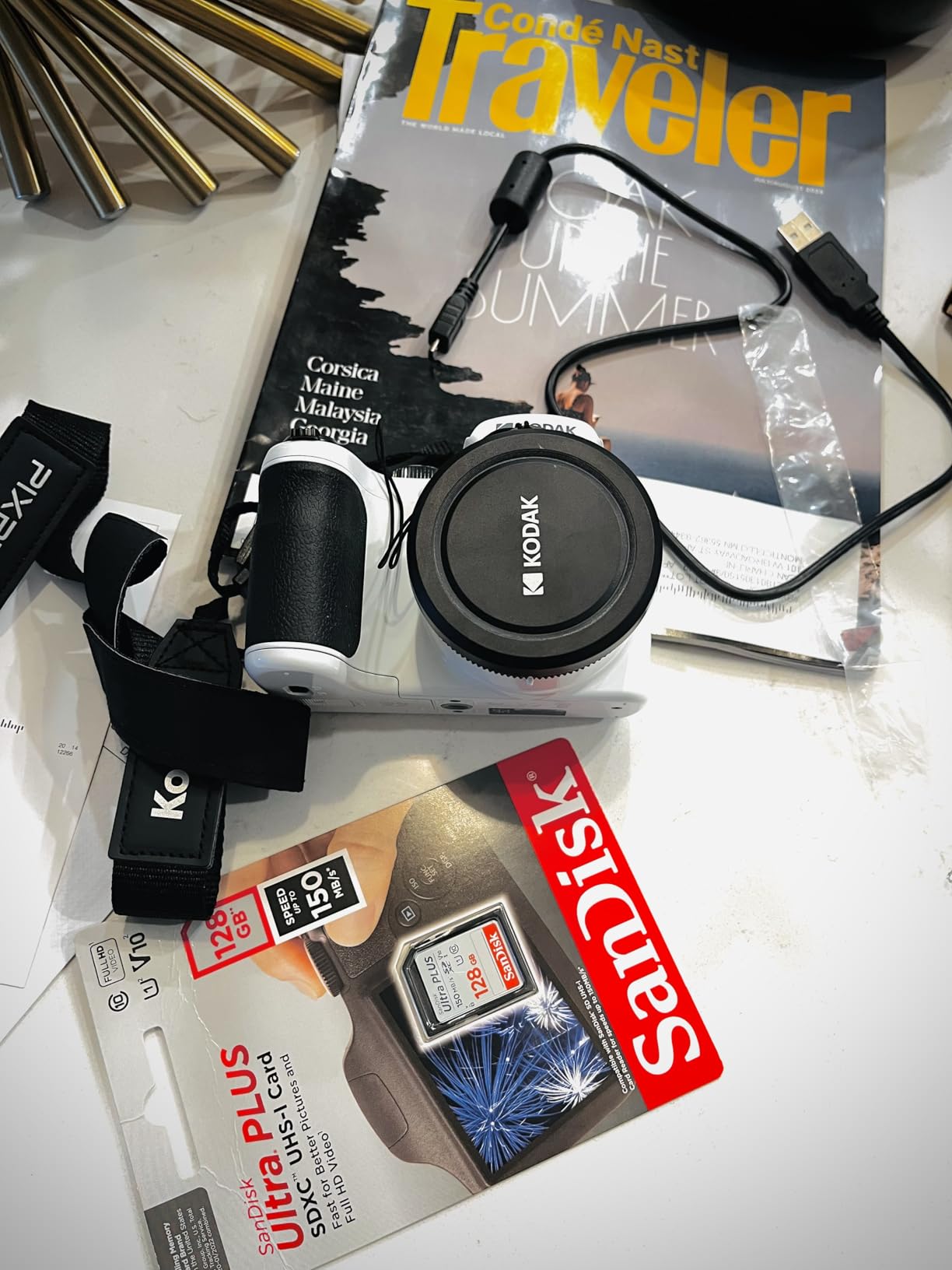
The AZ255 earns its place by solving reach without complexity. A 25x optical zoom from a 24mm wide starting point gets you from a full formation at one end of the mat to a single flyer at the other, and the optical image stabilization keeps handheld shots usable at the long end of that range.
It runs on four AA batteries, which is genuinely convenient at a competition. There is no proprietary charger to lose, no battery to die mid-routine, and you can buy spares anywhere. The optical viewfinder and simple controls are picked up quickly by someone who has never used a camera with mode dials.
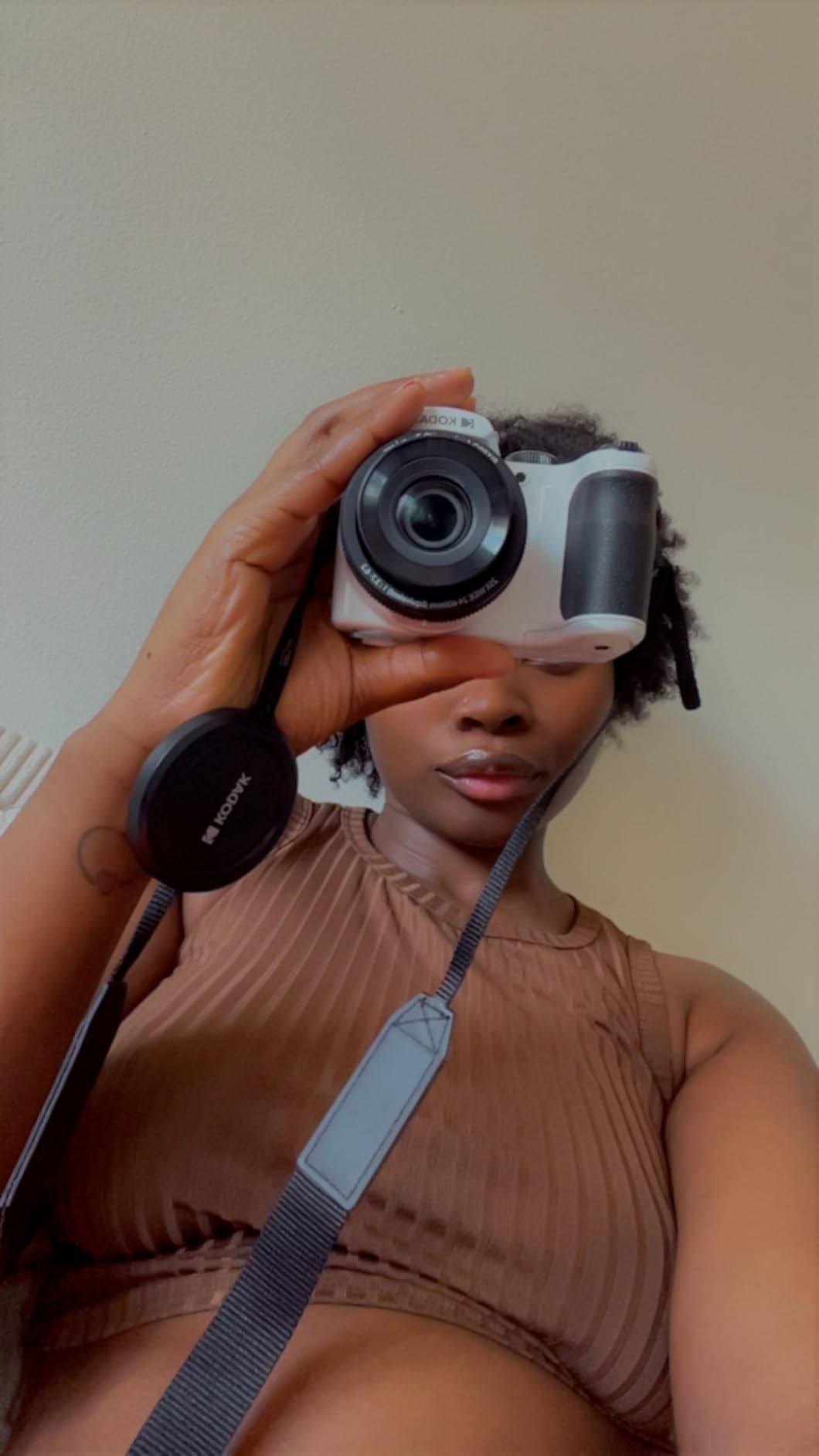
That accessibility is the whole argument. Canon community forums consistently show a large beginner-parent audience being pointed to the simplest possible controls, and this is that idea built into a camera body. A 16MP backside-illuminated sensor and SD cards up to 512GB keep the running costs low.
It is also the only camera here that works as a point-and-shoot, which matters if the person taking the photos is not the person reading this roundup.
Why will it miss stunt peaks?
Because of the shutter. The maximum shutter speed is 1/2000 second, but the camera does not hold that in dim light, and reviewers consistently report soft or missed frames in low indoor conditions. A competition gym with the house lights down is exactly the scenario where a point-and-shoot falls apart.
Video is 1080p only, with no high frame-rate option, so there is no slow-motion replay of a tumbling pass. The fixed LCD cannot tilt, so overhead and low angles are guesswork. And zoom quality degrades at the long end, where fine detail smears.
Is it worth buying anyway?
As a backup or a travel camera, yes. Owners treat it that way, valuing the reach, the stabilisation and the battery convenience. As the only camera at a competitive cheer event in a dim gym, no. It is a first camera, not a competition camera.
Starter Settings for a Cheer Competition
Every forum thread on this topic converges on the same numbers, and they have not really changed in twenty years of indoor sports shooting. Start here, then adjust one variable at a time based on what your viewfinder shows you.
Set the shutter speed first. One over 1000 second is the floor for a flyer or a tumbling pass, and one over 2000 second is better for a stunt hit. Below that you will get motion blur on a vertical move, which is exactly where cheer is hardest.
Open the aperture as far as the lens goes. An f/2.8 lens at 1/1000 second needs ISO the camera can push to in a gym. A slow kit zoom at f/5.6 needs four times the light, and that is why forum consensus so strongly favours fast primes for gym work.
Let ISO float with a ceiling. Set Auto ISO with a maximum of around 3200, and treat 6400 as the point where you start checking files on the camera screen. Anything above that and you are relying on noise reduction afterwards, which is a legitimate choice in a dim arena, but check the result first.
Use subject detection autofocus for whole-team and pyramid frames, and switch to a single or zone AF point when you are isolating one athlete. Forum shooters who work a single flyer repeatedly report that full subject tracking hunts against a busy background, while a locked point just works. The full setup order is: shutter speed, aperture, ISO ceiling, autofocus mode, then burst rate set to your fastest speed with the largest buffer the card can sustain.
Shoot RAW on every camera here. The white balance shift between house lights and overhead spots is real, and a fixed white balance plus RAW gives you the freedom to fix it in editing rather than live.
Where to Shoot: Floor, Baseline, and Bleachers
Your position decides your lens more than your camera does, and most competitions will not let you stand where you want to. It helps to plan for the realistic options.
Floor level. The most dramatic option and the hardest to get. From the mat you can shoot straight up at a flyer, which is a striking angle you cannot create from anywhere else. A wide to normal lens works here, roughly 16 to 35mm on full frame, and a wide angle action camera does the same job without a second body.
Baseline. A safe position at the edge of the mat, usually allowed at most competitions. You get side-on views of stunts and tumbling, a moderate distance, and a 70-200mm is the right call. This is the position the forum advice assumes.
Bleachers. Where most parents actually end up. The distance is significant and the athlete is small in frame, so reach matters. A 70-200mm on an APS-C body behaves like roughly a 320mm lens here, which is why the crop factor is the single most valuable trick in cheer photography. A full-frame body needs a genuine telephoto to match it.
One more thing to plan for. On a multi-team competition day you will be repositioning constantly, so a camera you can change settings on quickly beats a camera with the best specs. Our broadcast camera guide covers why live event work punishes slow menu navigation.
Buying Guide: The 6 Specs That Actually Matter
1. Continuous autofocus with human subject detection. Contrast-detect autofocus hunting on a vertical flyer is the number one deal breaker in forums. Look for eye and whole-body detection rather than a point count, since the point count tells you very little about behaviour.
2. Sustained burst rate and buffer depth. A headline burst rate means nothing if the buffer fills in a second and the camera stops. For a four-minute routine you want a camera that fires a long sequence at speed. Ten frames per second is a reasonable minimum; forty is comfortable for stunt peaks.
3. How clean the file stays at high ISO. Ignore the expanded ISO number on the spec sheet and think in terms of usable ceiling. Clean to ISO 3200, acceptable to ISO 6400, and expect noise reduction on anything beyond that. Full-frame bodies hold up best here, and larger sensors inside action cameras come second.
4. Reach, and the crop factor that buys it. Multiply any focal length by 1.6 for APS-C and 2 for Micro Four Thirds. From the bleachers this is often worth more than a generation of sensor improvement, and it is the strongest argument for an APS-C body with a fast telephoto over a full-frame body with a slow one.
5. Battery and card capacity for a full day. A competition day is long. Look for rated recording times of 90 minutes or more, a spare battery plan, and card speeds matched to your highest recording mode. Faster bitrates in the top modes of every camera here need V90 or U3 cards.
6. Handling weight. A 1.3 pound body plus a telephoto is fine for one routine and tiring across a full tournament block. If you will be shooting several hours from a fixed position, a monopod or wrist strap matters more than most spec upgrades.
On buying used, a seasonal hobby shooter can get a lot here. Bodies from the previous generation still deliver subject detection and usable high ISO, and the money saved goes on a fast lens, which forum shooters consistently say is the upgrade that actually changes your results. Check the shutter count, test the card slots, and confirm the autofocus holds on a moving subject before you commit.
On mirrorless versus action cameras, the split is simple. If you need photographs of one athlete from the bleachers, you need an interchangeable body and a fast telephoto lens, because action cameras cannot do either. If you need the routine on video from close range, the action cameras in this roundup handle it better and cost far less. If you need both from the same body, the full-frame mirrorless entries are the answer.
Frequently Asked Questions
What is the best camera setting for taking pictures of cheer competitions?
Start at 1/1000 second or faster, open the aperture as wide as your lens allows, and set Auto ISO with a maximum around 3200. Use subject detection autofocus for pyramids and full-team frames, and a single or zone AF point when you are isolating one athlete. Shoot RAW with a fixed white balance so you can correct the colour shift from gym spotlights later.
What is the best camera for filming sports events?
For indoor cheer, the DJI Osmo Action 5 Pro is the strongest all-round video body here, with subject tracking, a 1/1.3-inch sensor for dim arenas, and up to four hours of recording from three batteries. The GoPro HERO13 Black wins on resolution and slow-motion reach, and the Canon EOS R6 Mark II is the choice if you want photographs and video from the same body.
What is the best camera for shooting indoor sports?
Indoor sports rewards fast continuous autofocus with human subject detection, a sustained burst rate of at least 10 frames per second, and clean files at ISO 3200 and above. The Canon EOS R6 Mark II and Sony Alpha a6400 cover the stills side of that, while the DJI Osmo bodies and GoPro HERO13 cover the video side.
What’s the best ISO for sports photography?
For indoor gym work, treat ISO 3200 as your practical ceiling and ISO 6400 as the point where you should check files on the camera screen before accepting them. Shoot RAW, because a high ISO gym file still corrects well in editing. A fast f/2.8 lens is what keeps you under that ceiling rather than the body you choose.
Is ISO 800 too high?
No. In a small gym with the house lights on, ISO 800 may already be where the camera lands with a fast lens and 1/1000 second. What matters is not the number itself but whether the file is clean and the motion is frozen. If you have to drop to ISO 800 to hold 1/1000 second, that is the correct trade.
Which Camera Should You Buy?
For a family filming the routine from the floor or the sideline, the AKASO EK7000 is the cheapest way to get the whole routine on video with two batteries in the box. Move up to the DJI Osmo Action 4 for a dim arena, and to the Osmo Action 5 Pro when you want subject tracking and a full competition day without charging.
For photographs, the Sony Alpha a6400 is the value pick, and the Canon EOS R6 Mark II is the one to buy if you want both stills and video from a single body and a 70-200mm f/2.8. Whatever you choose among the best cameras for cheerleading competitions, put the money into a fast telephoto lens rather than a faster body, and start at 1/1000 second, wide open, with Auto ISO capped at 3200.