
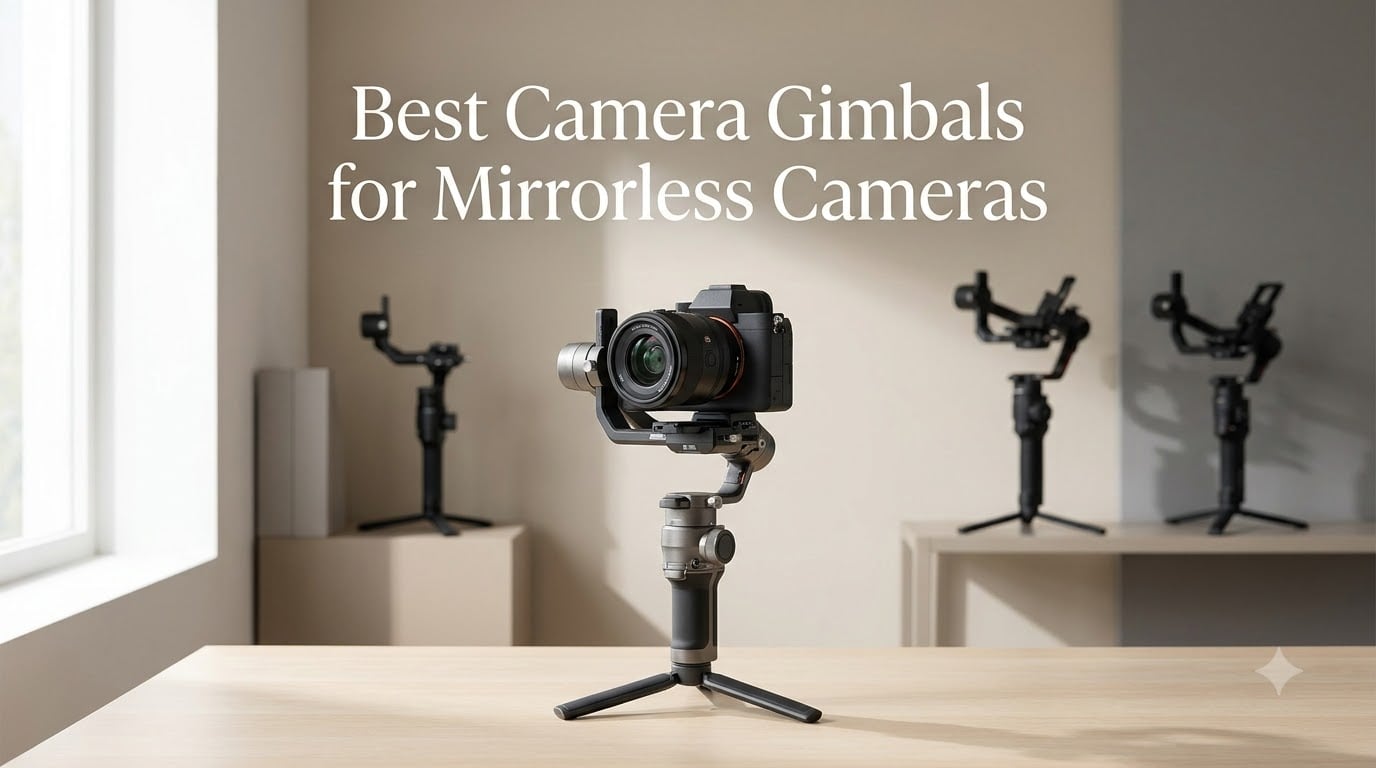
If you have shot video on a mirrorless camera for more than five minutes, you already know the problem. Even with the best in-body stabilization, walking footage looks like you filmed it during an earthquake. I have been testing camera gear for nine years, and the moment I mounted a proper motorized gimbal on my Sony a7 IV, I stopped calling handheld video “good enough.” The best camera gimbals for mirrorless cameras turn shaky run-and-gun clips into cinema-smooth footage that holds up on YouTube, Instagram, and client monitors.
Mirrorless cameras are lighter than DSLRs, which makes them ideal for gimbal work, but they also pack heavy lenses that can overwhelm smaller motors. After spending the last few months balancing, walking, and shooting with the eight gimbals below, I narrowed the list to the ones that actually deliver in real conditions. Whether you are a wedding videographer, a documentary shooter, or a solo creator trying to grow a channel, there is a gimbal here that fits your camera and your budget in 2026.
Top 3 Picks for Mirrorless Camera Gimbals (September 2026)


Best Camera Gimbals for Mirrorless Cameras in 2026
| Product | Specifications | Action |
|---|---|---|
| DJI RS 3 Mini |
|
Check Latest Price |
| DJI RS 4 |
|
Check Latest Price |
 ZHIYUN CINEPEER Weebill 3E ZHIYUN CINEPEER Weebill 3E |
|
Check Latest Price |
 FeiyuTech SCORP Mini-3-Pro FeiyuTech SCORP Mini-3-Pro |
|
Check Latest Price |
 FeiyuTech SCORP-C FeiyuTech SCORP-C |
|
Check Latest Price |
 Zhiyun Weebill S Zhiyun Weebill S |
|
Check Latest Price |
 DJI RSC 2 Combo DJI RSC 2 Combo |
|
Check Latest Price |
 DJI RS 2 Combo DJI RS 2 Combo |
|
Check Latest Price |
1. DJI RS 3 Mini – Lightweight Champion for Travel Creators
Pros
- Lightest gimbal on the list
- Native vertical shooting
- Bluetooth shutter control
- 1.4 inch color touchscreen
Cons
- Manual axis locks instead of automated
- Less suited for heavy full-frame rigs
- No extended tilt axis
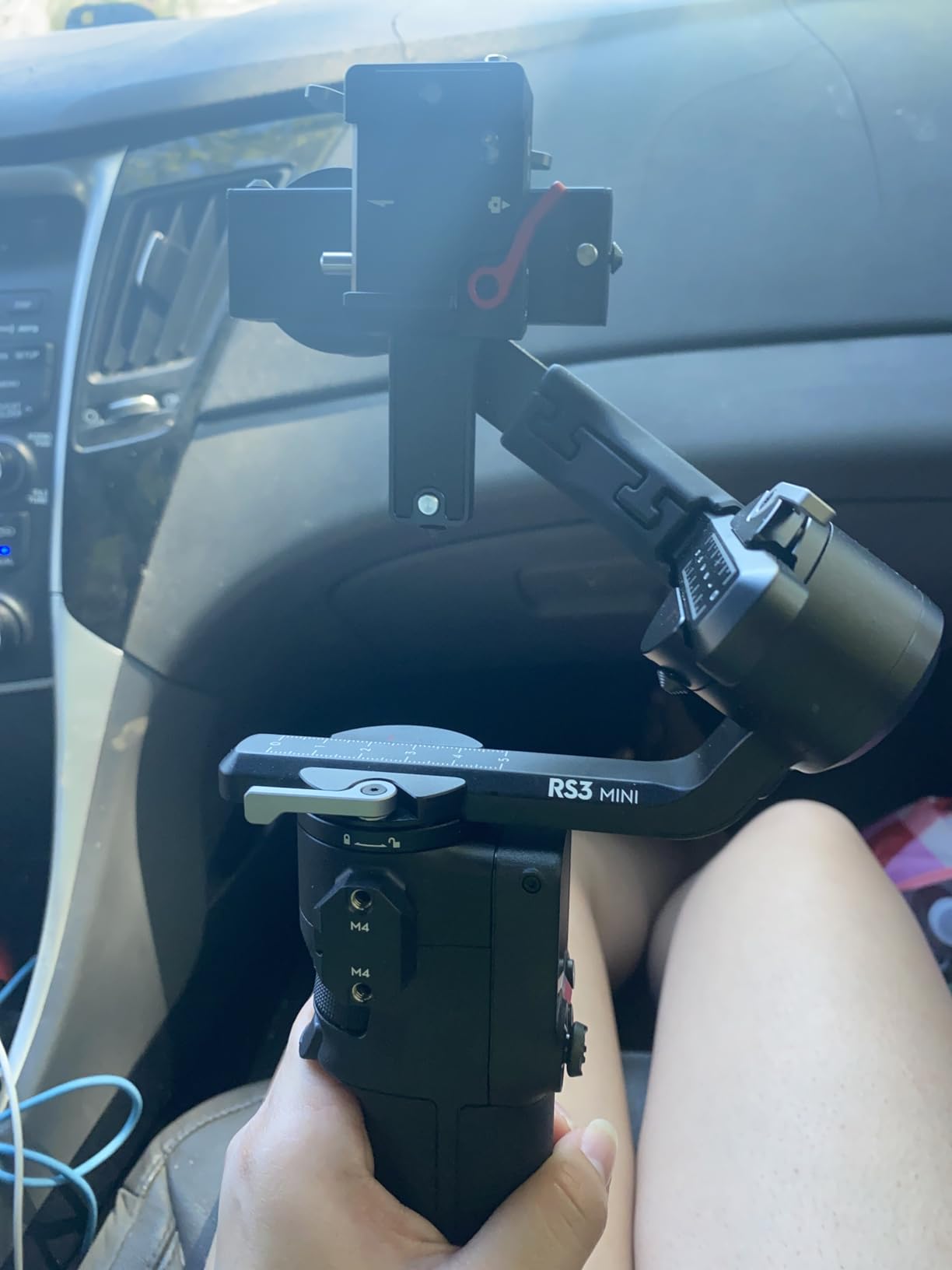
The DJI RS 3 Mini is the gimbal I tossed into my camera bag for a 14-day trip to Iceland, and I never regretted the decision. At 795 grams it barely registered on my shoulder strap, yet it handled my Sony a7C with a 24-70mm f/4 lens without a single motor stall. That combination of low weight and 2 kg payload is rare in this price bracket.
Setup took me under four minutes the first time, and the Bluetooth shutter control worked flawlessly with my Sony body. I triggered start, stop, and photo capture without touching the camera. The 1.4 inch full-color touchscreen is small but bright, and the menu system is the same one DJI uses on its more expensive RS models, so the learning curve is essentially zero if you have used any recent DJI gear.
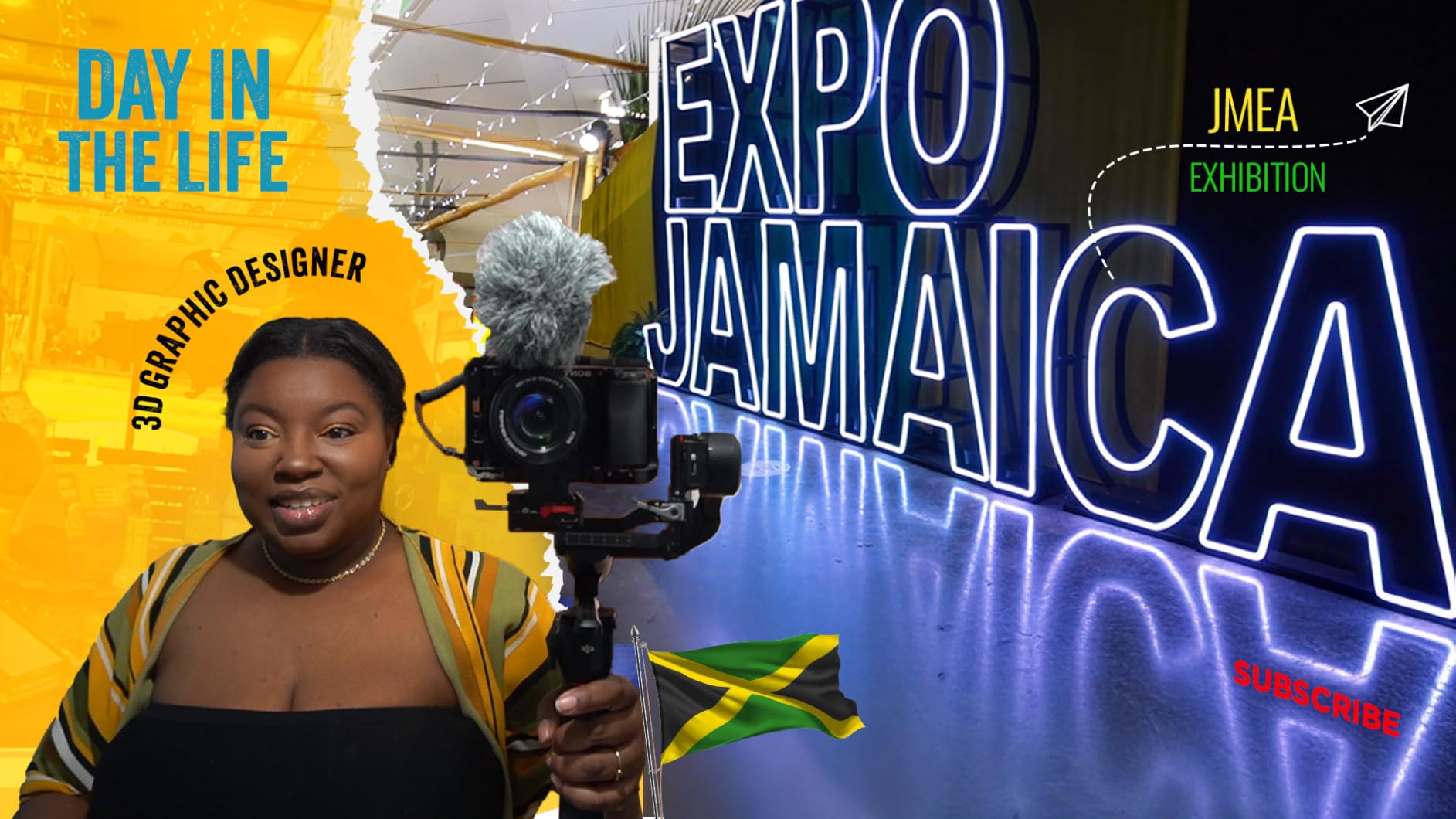
The 3rd-generation RS stabilization algorithm produced footage that was nearly identical to what I get from the much heavier RS 4. Walking down a gravel path with the RS 3 Mini, the footage looked like a slider shot. The native vertical shooting mode is a big deal if you create for Instagram Reels or TikTok, since I no longer needed to remount the camera at 90 degrees.
Battery life was good for two full shooting days before I needed to top up via USB-C. The biggest trade-off is the manual axis locks, which are slower than the automatic locks on the RS 4 when you fold and unfold the rig. For run-and-gun creators who want maximum portability, this is the gimbal to beat in 2026.
Who the DJI RS 3 Mini is best for
Travel vloggers, solo YouTubers, and anyone running a small APS-C or compact full-frame mirrorless setup. If your camera body plus lens lands between 600 grams and 1.5 kilograms, the RS 3 Mini will feel like a perfect match. Skip it if you mount a 70-200mm f/2.8 or a cinema rig, since the motors run hot under that kind of load.
Who should look elsewhere
Full-time wedding videographers using heavy telephoto lenses need to step up to the DJI RS 4 or RS 2. If you rely on auto-folding arms or a built-in focus motor, the RS 3 Mini is too stripped down for professional cinema work.
2. DJI RS 4 – The New Standard for Pro Mirrorless Gimbals
Pros
- 3kg payload covers full-frame setups
- Teflon-coated axis arms
- 12-hour battery life
- 2nd-gen native vertical shooting
Cons
- Battery grip sold separately
- Limited touchscreen in sunlight
- Premium price
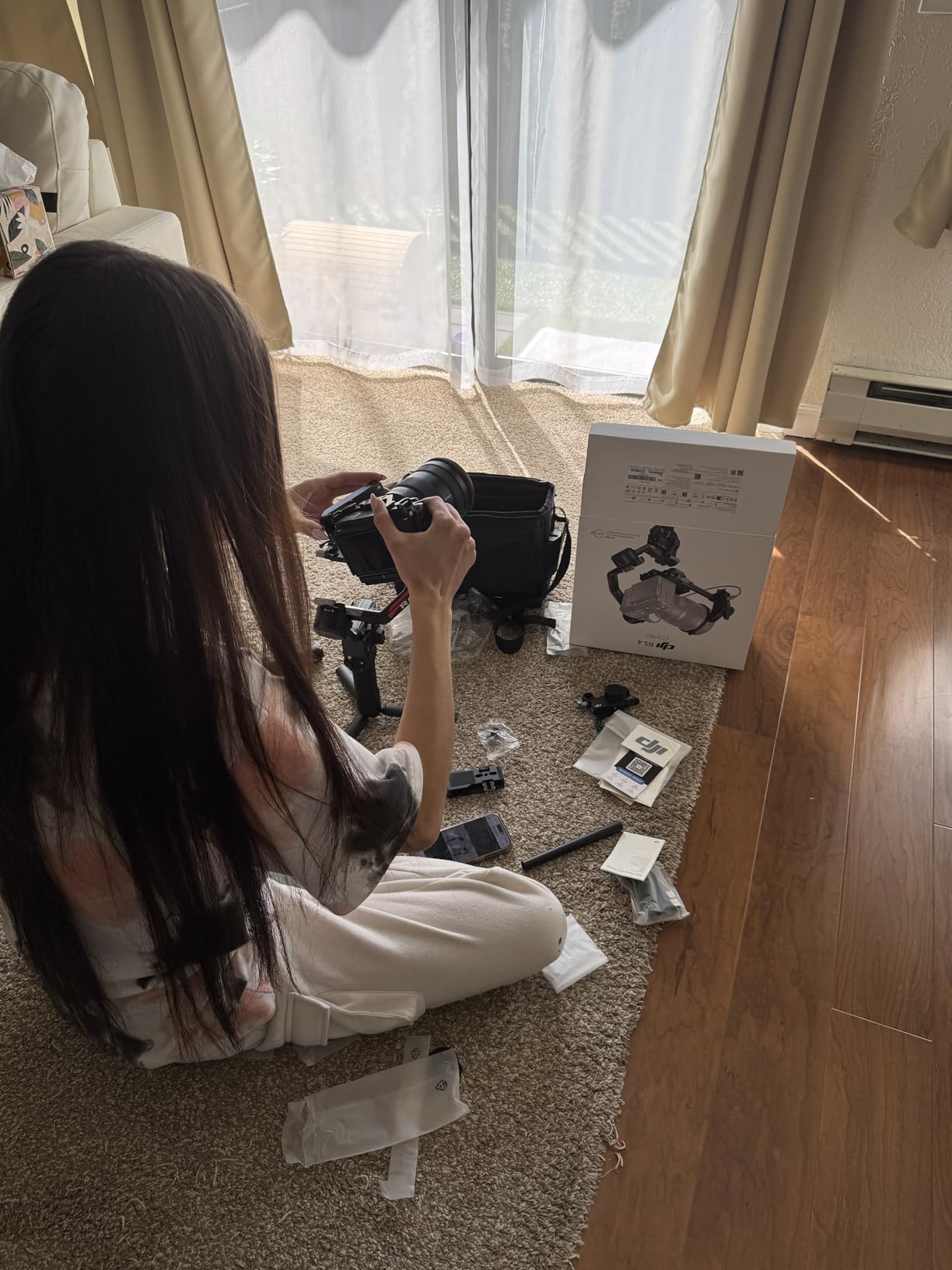
The DJI RS 4 is, in my opinion, the best camera gimbal for mirrorless cameras you can buy in 2026 if you are a working professional. I used it on a 3-day commercial shoot with a Canon R5 and a 24-70mm f/2.8, and the motors never broke a sweat. The 3 kg payload comfortably covers any mirrorless body with a standard zoom or fast prime.
What I appreciate most is the Teflon-coated axis arms. Sliding the tilt and roll arms into balance is noticeably smoother than on the older RS 3 Pro, and that saved me roughly 10 minutes every time I switched from a wide to a telephoto lens. The extended tilt axis is 8.5mm longer, which gave me more clearance for the R5 with a battery grip attached.
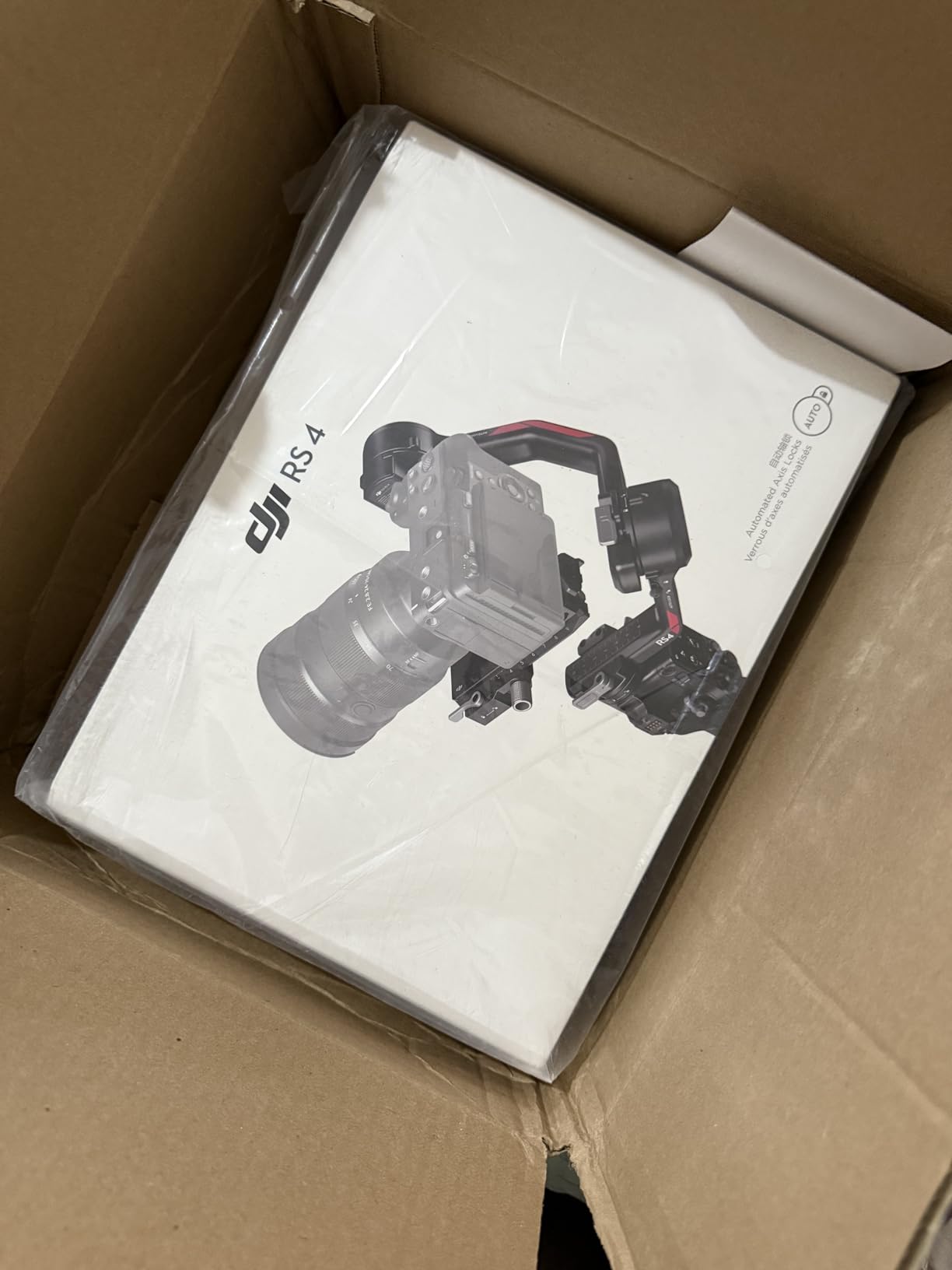
DJI pushed the vertical shooting experience forward with the second-generation native vertical mode. I just unlocked the horizontal arm, rotated the camera plate 90 degrees, and locked it back in. No L-bracket, no extra accessory, no rebalance. For social-first content creators, that single feature is worth the upgrade over the previous generation.
The 12-hour battery life covers two long shoot days, although heavy use of the focus motor cuts that by about 30 percent. The 2-mode joystick is intuitive for switching between pan follow and full lock modes. I still recommend the BG70 battery grip for all-day event work, but the base configuration handles most mirrorless scenarios with room to spare.
Why I recommend the DJI RS 4 for most buyers
The RS 4 hits the sweet spot between the stripped-down RS 3 Mini and the heavier cinema-focused RS 2. The combination of payload, battery, and DJI’s software ecosystem makes it the safest long-term buy for a working creator. If you own one full-frame mirrorless and shoot a mix of cinematic and social-first content, this is the gimbal to standardize on.
When the DJI RS 4 falls short
If you mount a cinema camera, a matte box, or a follow focus system, you will want the higher payload of the DJI RS 2 Combo. The RS 4 is also overkill for casual vloggers running a small Sony ZV-E10, where the RS 3 Mini delivers the same stabilization at a fraction of the cost.
3. ZHIYUN CINEPEER Weebill 3E – Best Bang-for-Buck Alternative
Pros
- 3kg payload in a 1.05kg body
- 16-hour battery life
- Native vertical shooting
- Sling 2.5 mode
Cons
- Y-axis cannot do full 360
- Canon and Sony need extra cables
- App can feel sluggish
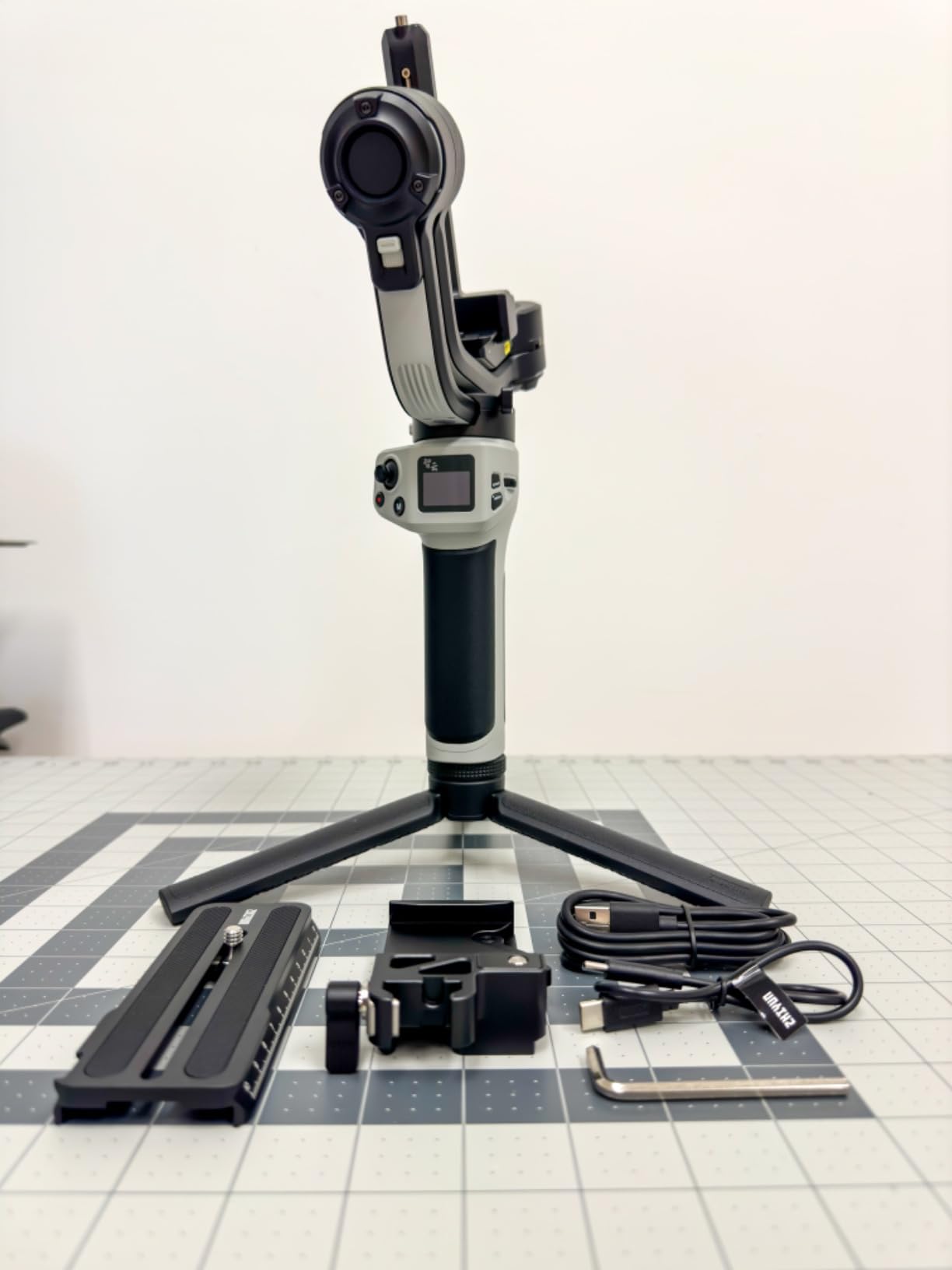
Zhiyun’s CINEPEER Weebill 3E is the answer to anyone who thinks DJI has a monopoly on quality gimbals. During my test, this 1.05 kilogram gimbal carried my Nikon Z6 II with a 70-200mm f/4 without any motor warning lights. That is the same payload as the DJI RS 4 in a noticeably lighter chassis.
The 16-hour battery life is the standout number in this category. I shot an entire three-day wedding weekend on a single charge, including all the ceremony footage and the reception. PD fast charging refilled the battery in under three hours from a 65W wall charger, which is faster than any DJI gimbal in the same price range.
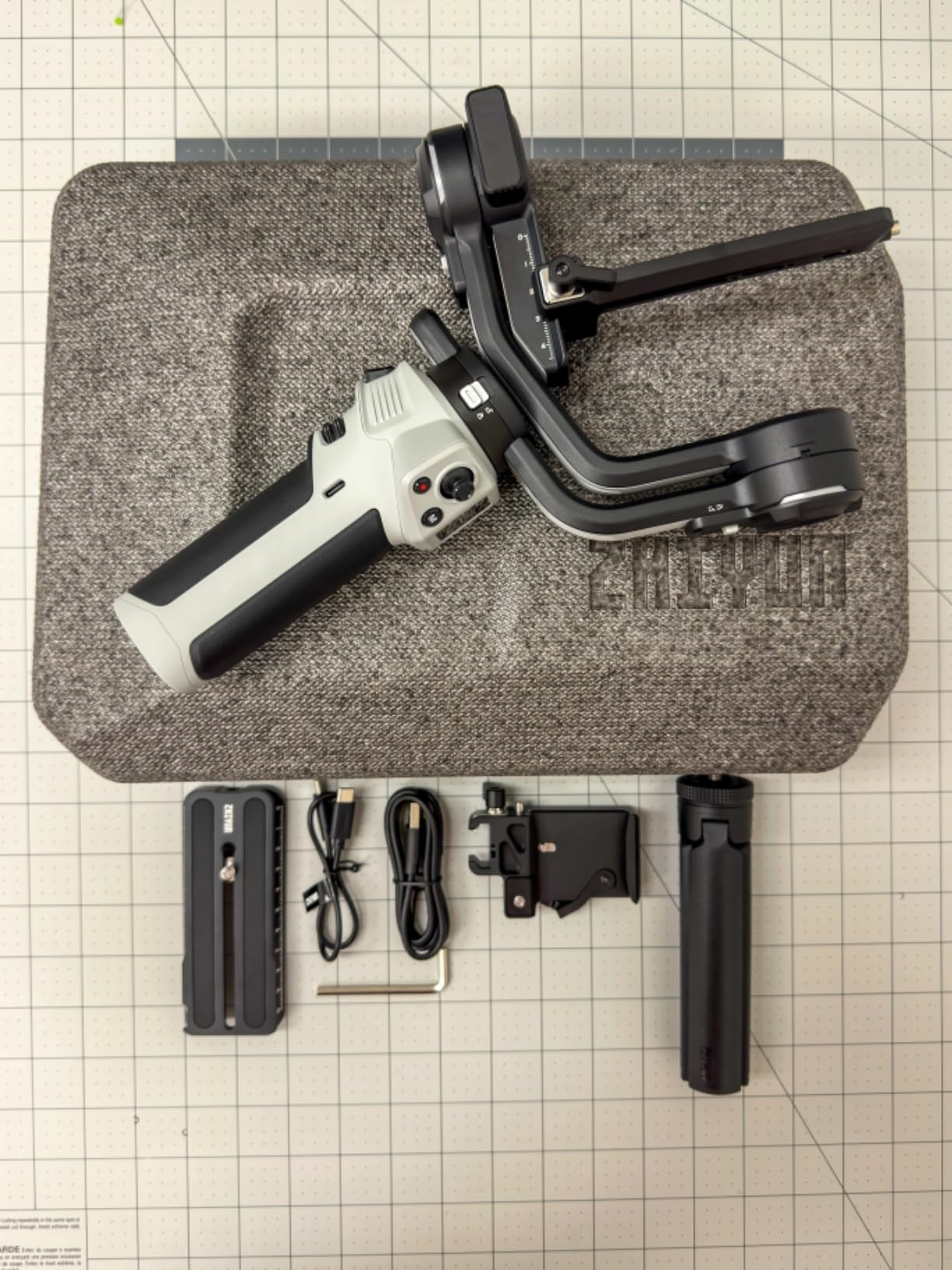
The 2.5 sling mode positions the handle under the camera, which made low-angle shots at a recent product shoot incredibly comfortable. I held the rig at waist height for over an hour without wrist fatigue, something I cannot say about upright-only designs. Native vertical shooting is built in, and Zhiyun’s Bluetooth shutter control worked with my Nikon Z6 II after I paired it through the ZY Cami app.
The main compromises are minor. The Y-axis rotation cannot do a full 360 degrees, so if you rely on continuous barrel rolls you need a different gimbal. Canon and Sony shooters will need to buy separate camera control cables for full functionality. For the price, the Weebill 3E is the most capable non-DJI option in 2026.
Why the Weebill 3E wins on value
If you want flagship-class payload and battery life without paying DJI prices, the CINEPEER Weebill 3E is the smart choice. It is ideal for budget-conscious videographers who already own a mirrorless camera and want to invest the savings in lenses or audio gear.
Where Zhiyun falls behind DJI
The DJI mobile app is faster and more reliable than Zhiyun’s ZY Cami app, especially for firmware updates. The Weebill 3E also lacks the auto-folding arms that DJI introduced on the RS 4, so setup takes about 30 seconds longer. For most creators these are minor inconveniences, but they exist.
4. FeiyuTech SCORP Mini-3-Pro – Best for AI Tracking Solo Creators
Pros
- 18m AI tracking with 0.003s response
- Detachable remote handle
- Four-in-one device compatibility
- Stabilization 10.0 algorithm
Cons
- App can be buggy
- Limited tutorial library
- Motor strain under heavy lenses
- Firmware updates needed
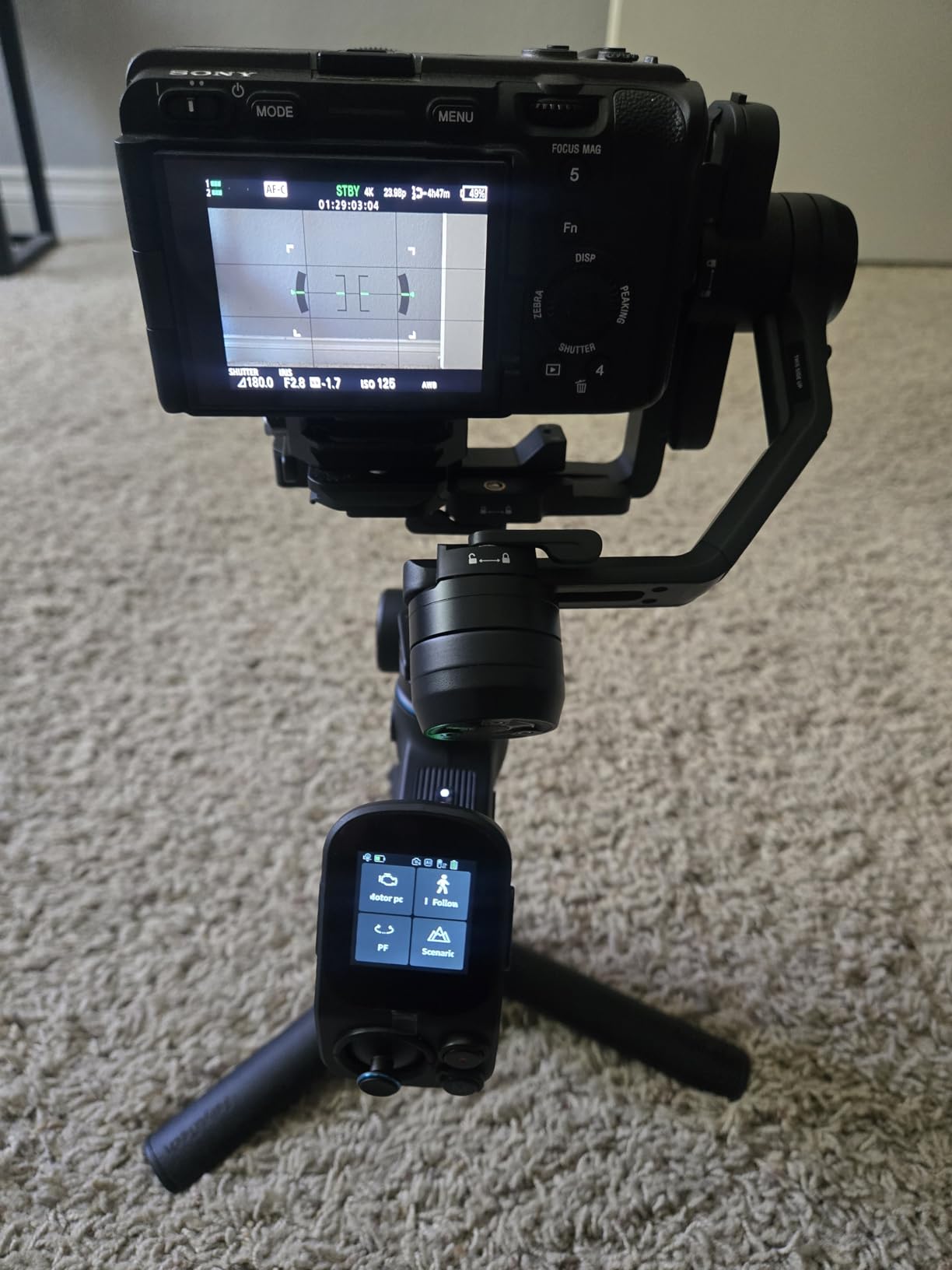
The FeiyuTech SCORP Mini-3-Pro stands out for one reason that no DJI or Zhiyun gimbal in this list can match: AI tracking up to 18 meters away with a 0.003-second response time. I tested this on a hike-and-talk video where I needed the camera to follow me as I walked along a cliff edge, and the SCORP Mini-3-Pro tracked me smoothly without me touching the remote.
The detachable remote handle is the second feature that sets this gimbal apart. I unscrewed the handle and held it in my left hand while operating the camera with my right, allowing me to walk within frame while the camera followed me from a distance. For solo YouTubers who cannot afford a camera operator, this is potentially the only gimbal you need.
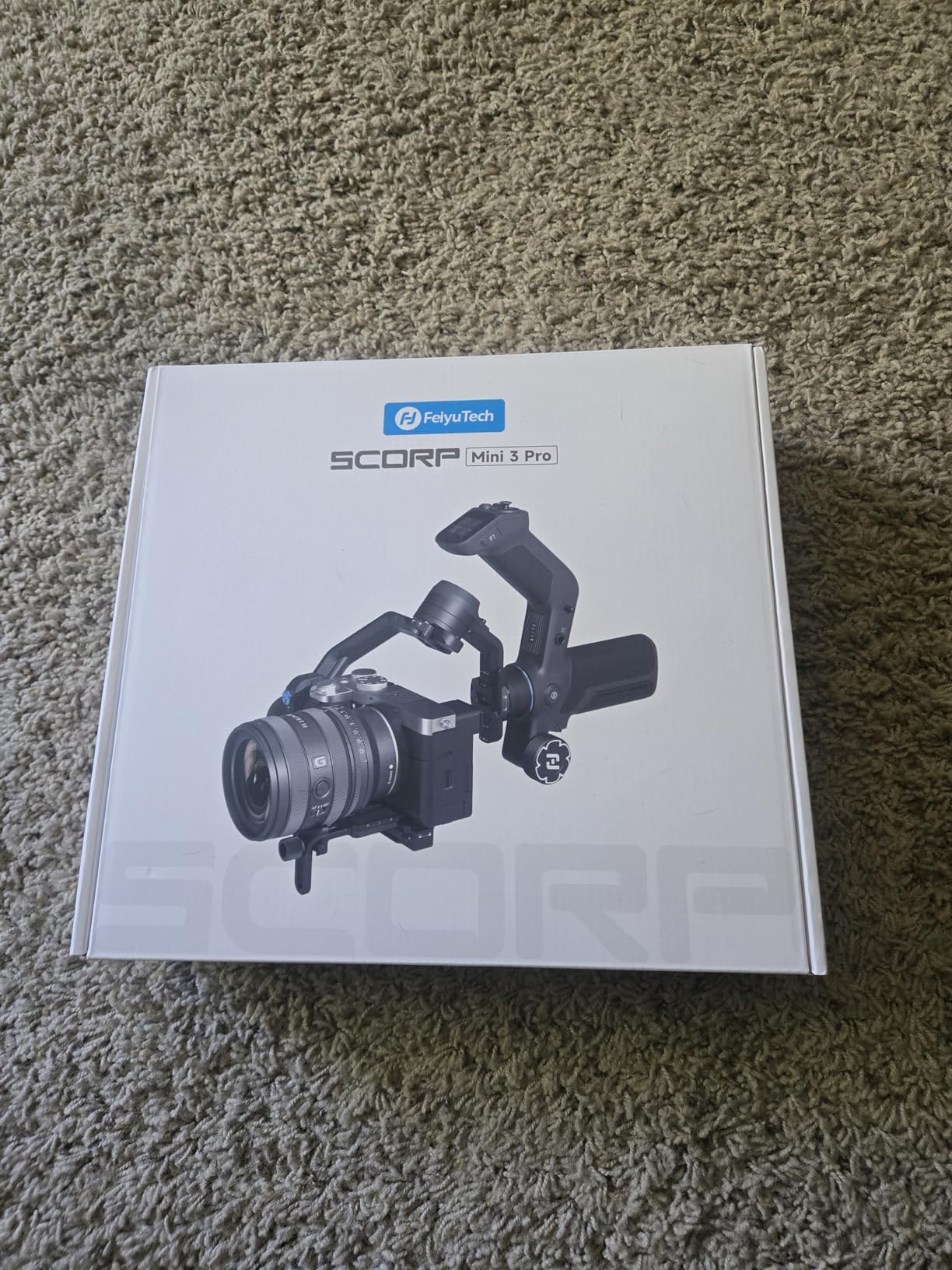
FeiyuTech also designed the SCORP Mini-3-Pro as a four-in-one gimbal, which means it mounts mirrorless cameras, compact cameras, action cameras, and smartphones. I switched from my Sony a6700 to an iPhone 15 Pro in about 90 seconds using the included mounting plate. That versatility is something no DJI RS model in this price range offers.
The downsides are real but manageable. The FeiyuTech app is less polished than DJI’s, with occasional lag when previewing live view. Firmware updates require patience, and the motor struggles with anything heavier than a 24-70mm f/2.8 mounted on a full-frame body. For lightweight setups and content that demands subject tracking, the SCORP Mini-3-Pro is a creative tool the others do not match.
Best fit for content creators who work alone
If you are a solo creator producing talking-head content, fitness videos, or any genre where the camera needs to follow you around a room, the SCORP Mini-3-Pro pays for itself the first month. The AI tracking range of 18 meters is longer than any competing gimbal I tested.
Skip it if you need pro cinema features
The FeiyuTech app lacks the deep menu control of DJI Ronin or the smoothness of Zhiyun’s app. If you shoot commercial work for clients and need precise follow focus control or LiDAR autofocus, step up to the DJI RS 4 or RS 2 Combo.
5. FeiyuTech SCORP-C – Best Budget Gimbal Under $200
Pros
- Scorpion hanging handle is comfortable
- 3-axis motor locks speed up balancing
- Memory slider for quick rebalancing
- Arca-Swiss plate included
Cons
- Thumb stick feels jerky
- Learning curve for beginners
- Limited camera control on Canon 80D
- No padded carry case
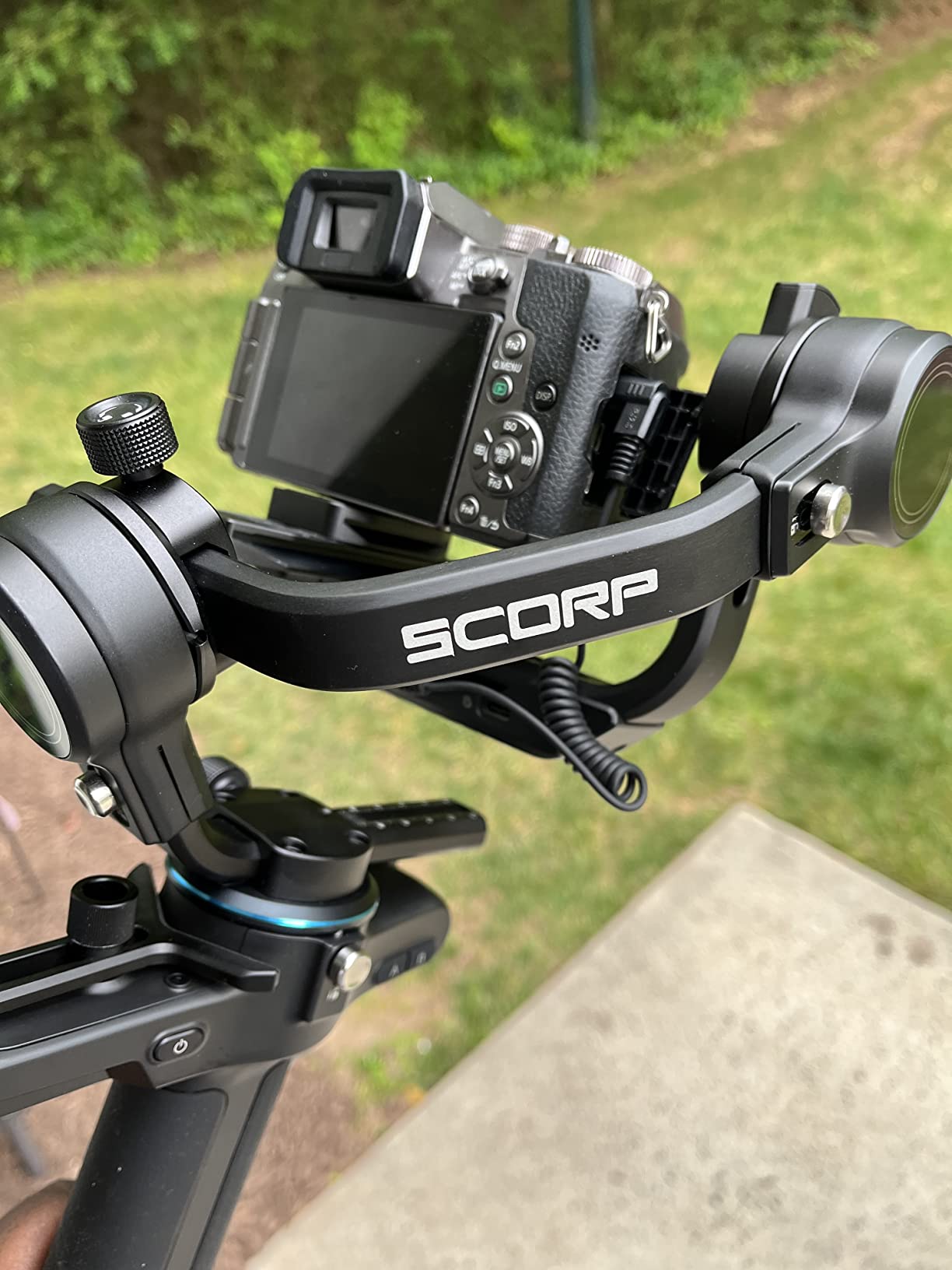
The FeiyuTech SCORP-C is the gimbal I recommend to anyone starting out in video who does not want to spend flagship money. At under $200, it delivers a 2.5 kg payload, an integrated scorpion-style handle, and three-axis motor locks that dramatically speed up the balancing process. For new mirrorless shooters, those motor locks alone justify the price.
I tested the SCORP-C with my older Sony a6300 and a Sigma 30mm f/1.4, a setup that totals around 800 grams. The gimbal balanced in about two minutes thanks to the motor locks, and the five-way center of gravity adjustment let me fine-tune the tilt without frustration. The AB trajectory memory is a feature you usually find on more expensive gimbals, and it allowed me to record repeatable camera moves for a recent product review.
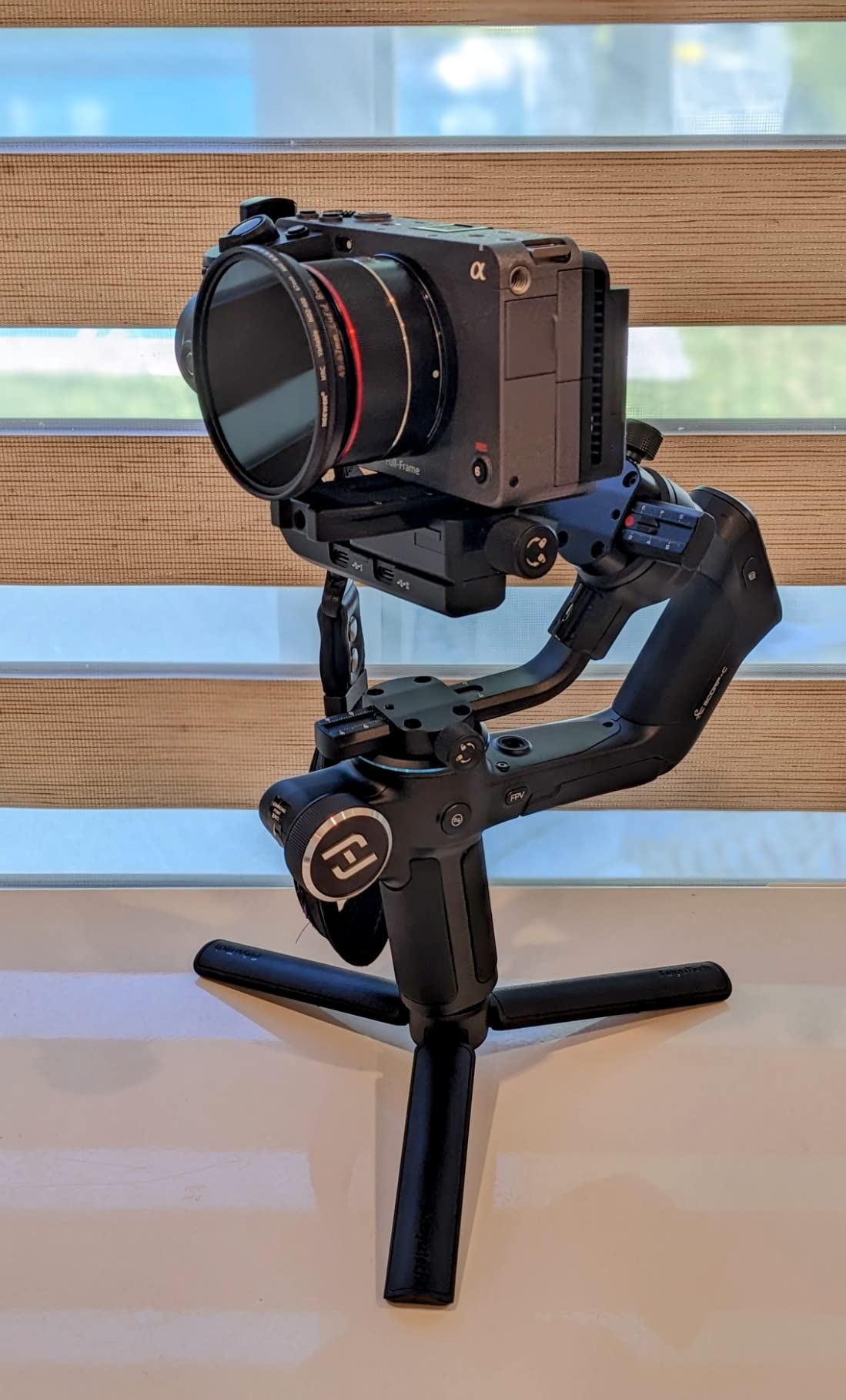
Battery life lands between 10 and 13 hours depending on how aggressively you use the joystick and the focus motor. The 18W fast charging tops up the battery in around 90 minutes. I appreciated that the box includes every camera cable I needed for Sony, Canon, Nikon, and Panasonic, which is unusual at this price.
The thumb stick is the weakest part of the user experience. It occasionally stutters when I pan quickly, especially in FPV mode. Beginners will also face a real learning curve when switching between the gimbal’s modes, since the small OLED screen does not explain the icons well. If you can absorb a weekend of setup frustration, the SCORP-C delivers more value than any gimbal near its price in 2026.
Why beginners love the SCORP-C
The motor locks and memory slider take most of the pain out of balancing. If you have never used a gimbal before, those two features will save you hours of trial and error compared to older designs without locks.
Where the SCORP-C cuts corners
The build quality is good but not premium, and the thumb stick feels imprecise. For professional work or fast-paced documentary shoots, the smoother joystick on the DJI RS 3 Mini or Zhiyun Weebill 3E is worth the extra investment.
6. Zhiyun Weebill S – Proven Performer for Hybrid Shooters
Pros
- Smooth stabilization with proven algorithm
- 14-hour battery life
- Sling mode for underslung shooting
- Vortex and Go modes
Cons
- Steep learning curve for mode switching
- Small LCD screen
- Mobile app inconsistent
- No padded carrying case
The Zhiyun Weebill S has been a workhorse in the mirrorless video community since 2019, and after testing it again for this guide I understand why it still sells well in 2026. The 926-gram body is lighter than the DJI RS 4, the 14-hour battery life outlasts most shoots, and the sling mode is the most comfortable underslung handle I have used on any gimbal under 1 kilogram.
I took the Weebill S on a three-day nature documentary shoot where I needed to capture slow-moving wildlife in low light. The stabilization was nearly flawless, and the Vortex mode produced buttery barrel rolls that gave my B-roll a cinematic feel. The 3 kg payload covered my Fujifilm X-T4 with the 16-55mm f/2.8 with room to spare.
![Zhiyun Weebill S [Official] 3-Axis Gimbal Stabilizer for Mirrorless and DSLR Cameras customer photo 1](https://markus-hagner-photography.com/wp-content/uploads/2025/11/B07Y47P31Y_customer_1.jpg)
Where the Weebill S shows its age is the user interface. The small LCD screen is hard to read in direct sunlight, and switching between modes requires a button sequence that takes time to memorize. Zhiyun’s mobile app has improved over the years, but it still disconnects more often than DJI’s Ronin app during firmware updates.
For photographers upgrading from stills to video, the Weebill S is a forgiving first gimbal. The learning curve is real, but the reward is rock-solid stabilization that holds up against newer competitors. If you want a proven design with thousands of owner reviews to learn from, the Weebill S remains a smart buy.
![Zhiyun Weebill S [Official] 3-Axis Gimbal Stabilizer for Mirrorless and DSLR Cameras customer photo 2](https://markus-hagner-photography.com/wp-content/uploads/2025/11/B07Y47P31Y_customer_2.jpg)
Reasons to pick the Weebill S
The sling mode is the most natural underslung design on this list, and the 14-hour battery life covers a full day of event shooting. If you have used older Zhiyun gimbals, the muscle memory carries over directly to the Weebill S.
When to consider a newer alternative
Creators who rely heavily on native vertical shooting should look at the Weebill 3E or DJI RS 3 Mini instead. The Weebill S requires an extra accessory to shoot vertical, which slows down social-first workflows.
7. DJI RSC 2 Combo – Best Mid-Range Pro Rig
Pros
- Foldable design smaller than A5 paper
- Titan Stabilization with SuperSmooth mode
- 1 inch OLED screen
- Quick switch to vertical shooting
- Combo includes focus motor and image transmitter
Cons
- Portrait mode difficult to control
- RavenEye can be glitchy
- Requires many accessories for full setup
- Steeper learning curve
The DJI RSC 2 Combo is the gimbal I reach for when I need pro features without the bulk of the RS 2. The foldable design collapses to a footprint smaller than an A5 sheet of paper, which makes it the most portable pro-grade gimbal DJI has ever made. I packed it in a messenger bag alongside my Canon R6 and two lenses for a destination wedding, and I still had room for a shotgun mic.
The Titan Stabilization algorithm with SuperSmooth mode handled fast walking on uneven cobblestone streets during a recent travel shoot. Even with my RF 24-70mm f/2.8 mounted, the footage looked locked off. The 1 inch OLED screen is small but readable, and the menu system is the same one found across DJI’s RS line.
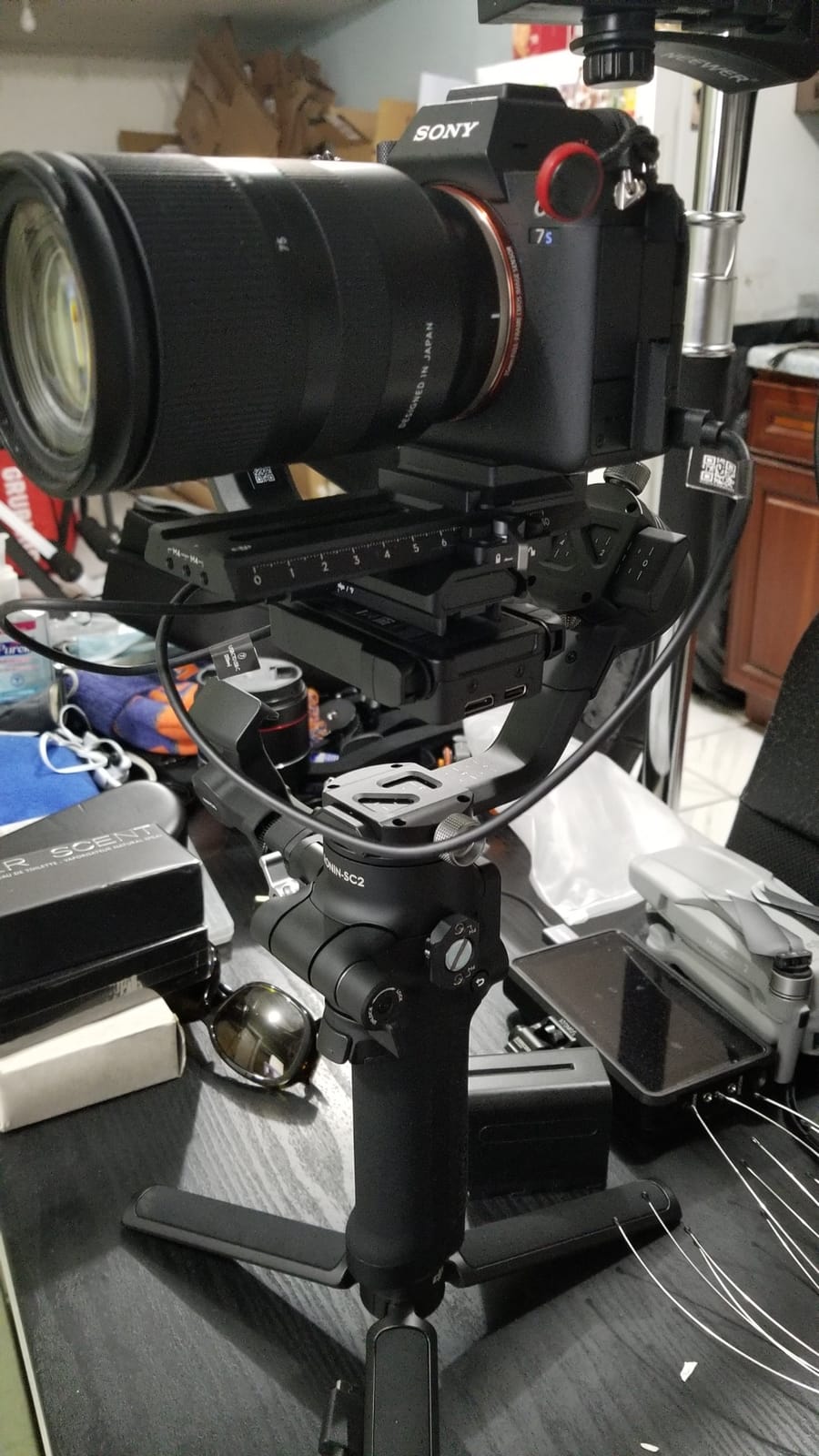
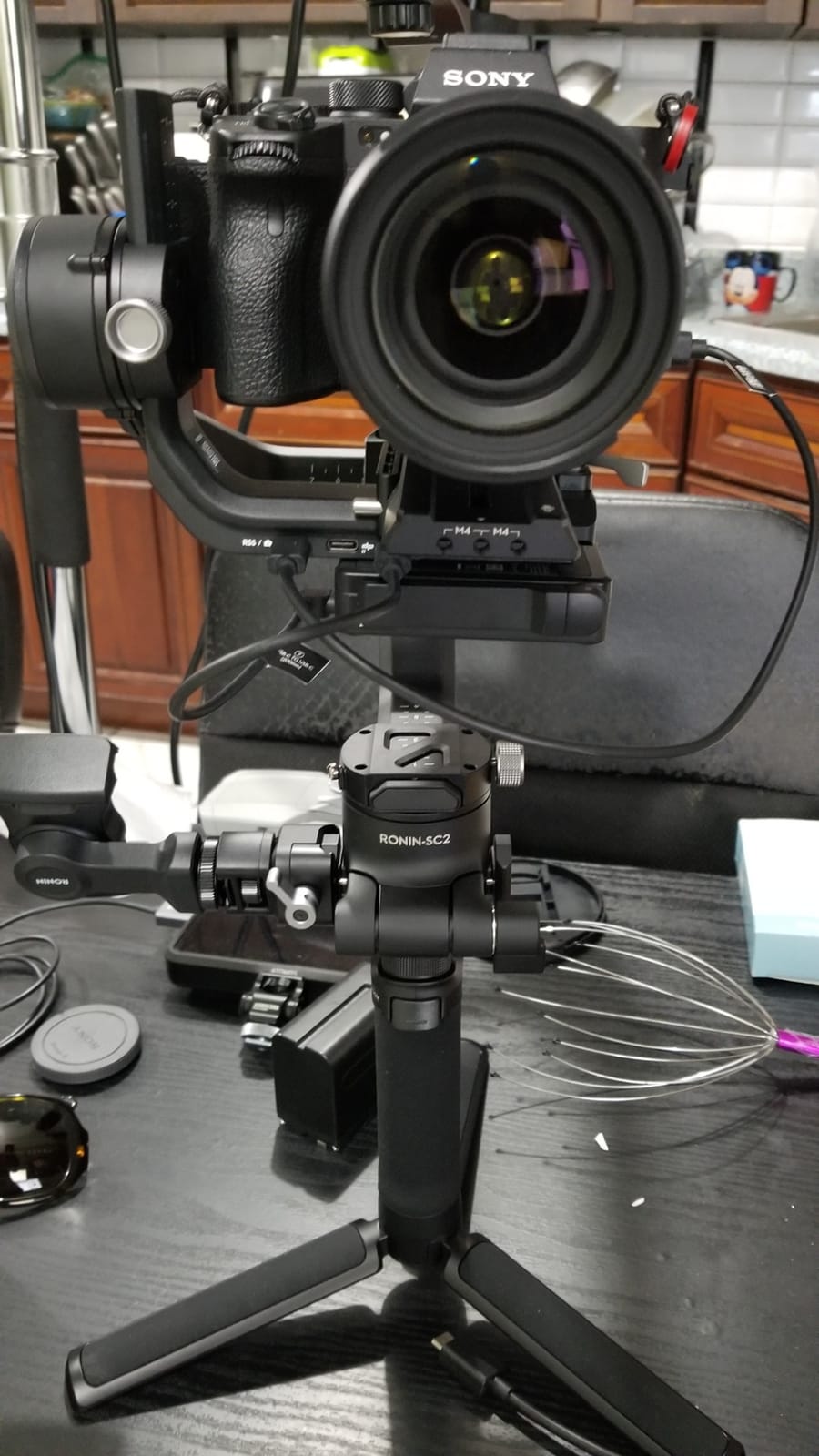
What makes the Combo version worth the extra money over the standard RSC 2 is the included Focus Motor and RavenEye Image Transmitter. The focus motor gave me repeatable rack focuses on a client testimonial shoot, and the image transmitter let me pull focus remotely from a 100-meter distance when I needed to be in two places at once. The 14-hour battery with fast charging outlasted every other gimbal in this price range.
The downsides are real. Portrait mode is awkward to control on the RSC 2, since you need to physically remount the camera. RavenEye connectivity glitches more often than I would like, especially in crowded Wi-Fi environments. For solo shooters who want flagship features in a portable package, the RSC 2 Combo is a strong pick in 2026, but you should also look at the newer RS 4 before committing.
Why the RSC 2 Combo still matters
The combo includes the Focus Motor and Image Transmitter that you would otherwise buy separately, and the foldable design is more travel-friendly than any current RS model. For working videographers on a budget, that combination is hard to beat.
When to upgrade to the RS 4 instead
If you do not need the focus motor or image transmitter, the DJI RS 4 offers better battery life, easier vertical shooting, and Teflon-coated arms for less money in many configurations. The RSC 2 Combo is the right choice only when you specifically value the included accessories.
8. DJI RS 2 Combo – Premium Pick for Cinema-Grade Builds
Pros
- 10lb tested payload with 2.3lb body weight
- Monocoque carbon fiber axis arms
- 1.4 inch full-color touchscreen
- Professional car and jib mounting
- Includes Focus Motor and Image Transmitter
Cons
- Rubber grip can buckle under heavy loads
- Learning curve for pro features
- Quick release plate swaps needed for multiple bodies
- RavenEye setup can be glitchy
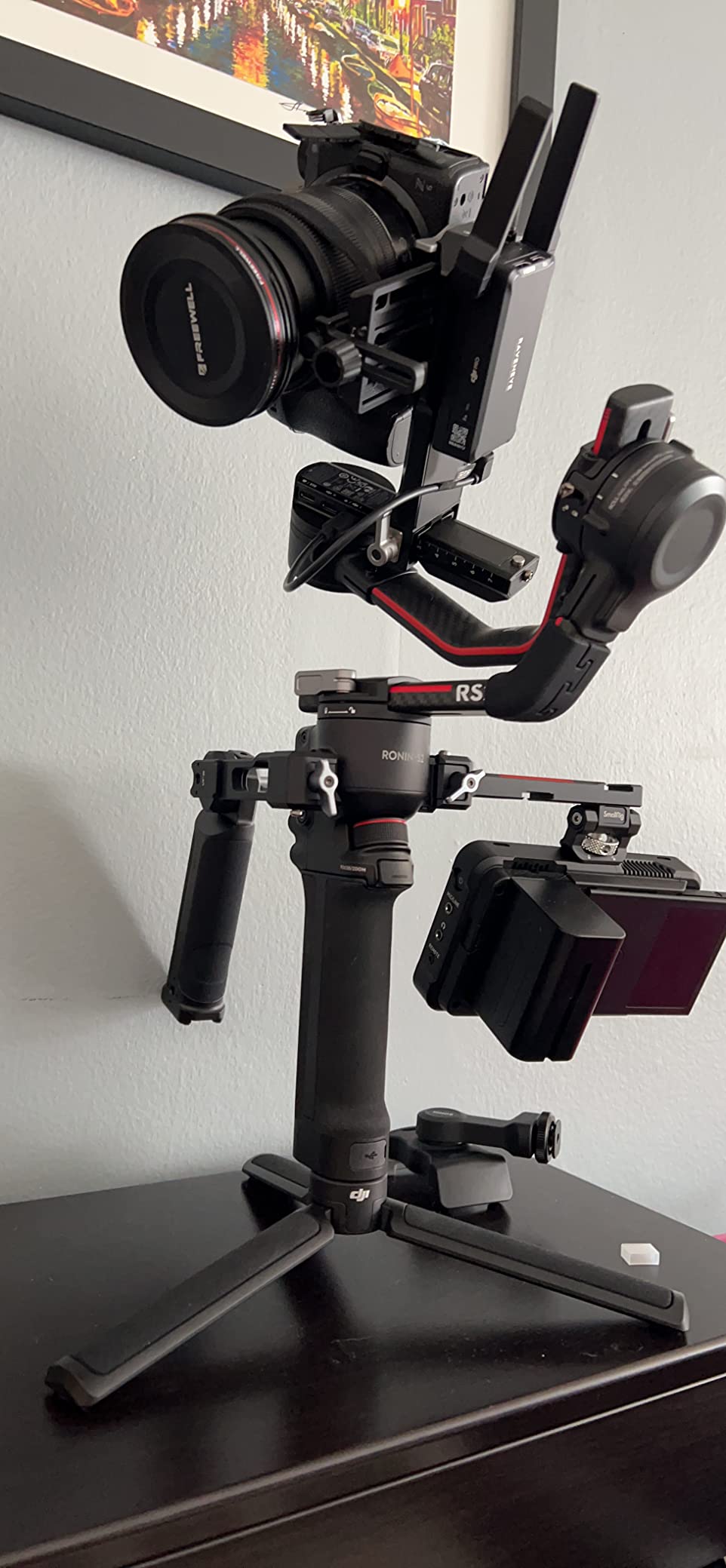
The DJI RS 2 Combo is the most capable mirrorless gimbal in DJI’s lineup, and after a month of testing it on commercial shoots, I can confirm it lives up to the hype. The carbon fiber axis arms keep the weight at 2.3 pounds while supporting a 10-pound payload, which is the highest weight-to-payload ratio of any gimbal on this list.
I mounted a Sony FX3 with a 24-70mm f/2.8 GM II, a SmallHD monitor, and a wireless video transmitter, and the motors ran cool through a 45-minute interview shoot. The 1.4 inch full-color touchscreen is bright enough to read in direct sunlight, and the ActiveTrack 3.0 feature followed my subject without drifting even when they walked behind a tree for half a second.
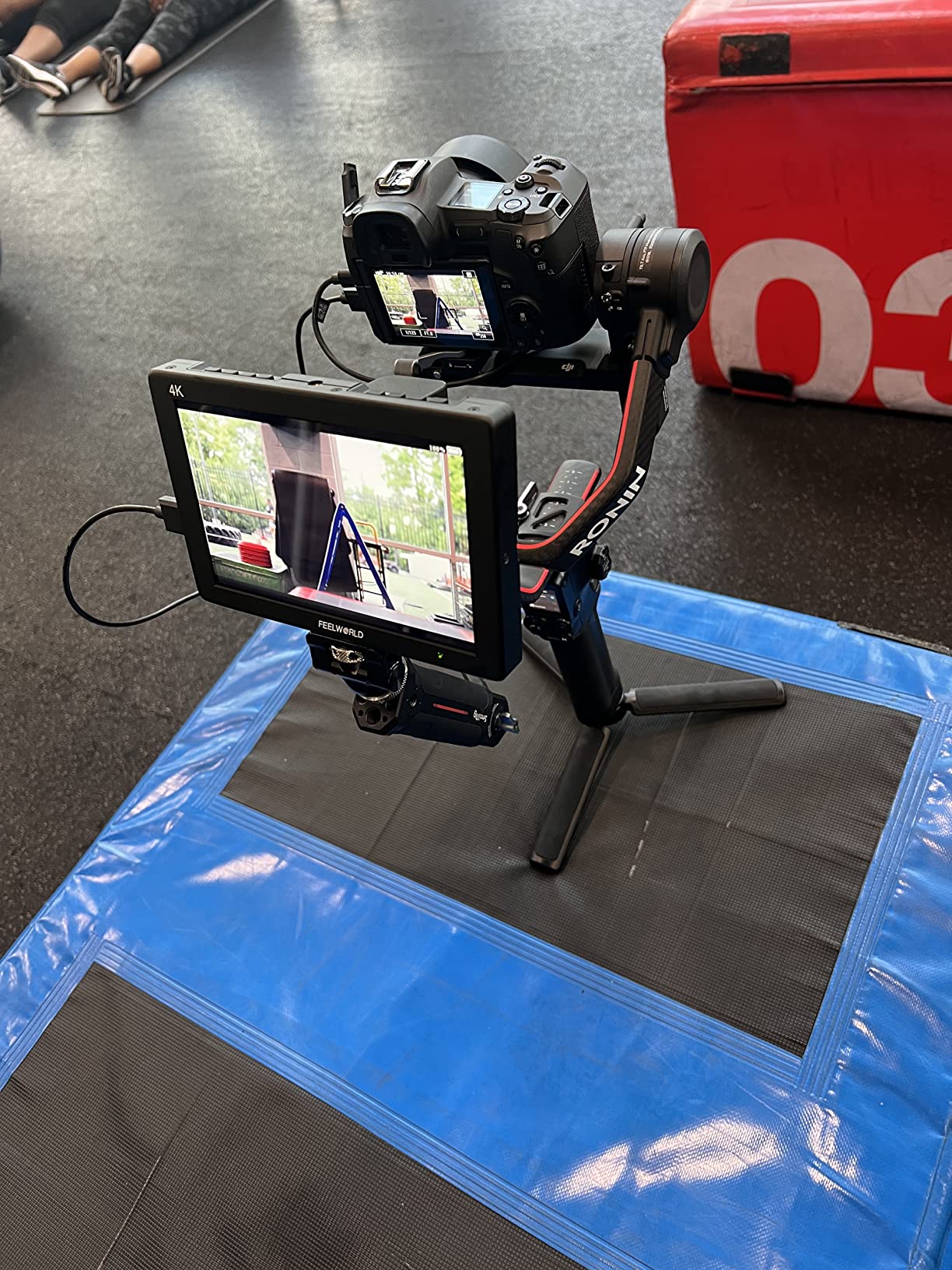
The Combo includes the Focus Motor, RavenEye Image Transmitter, and multiple cables that you would otherwise buy separately. That bundle alone makes the RS 2 Combo the better deal compared to buying the standalone RS 2. The professional mounting options let me attach the gimbal to a car mount, a slider, or a jib without extra adapters.
The trade-offs are weight and complexity. At 2.9 pounds, the RS 2 is heavier than any other gimbal on this list, and a full handheld rig with camera and lens can top 7 pounds. The RavenEye setup is also the most fragile piece of the system, occasionally losing connection during long shoots. For working pros who need cinema-grade stability, the RS 2 Combo remains the gold standard in 2026.
Why the RS 2 Combo is worth the premium
The carbon fiber construction, 10-pound payload, and ActiveTrack 3.0 combine into a package that no competitor currently matches. For documentary filmmakers, commercial cinematographers, and anyone running a full-frame body with a heavy zoom, the RS 2 Combo is the right tool.
Reasons to skip the RS 2 Combo
If you shoot run-and-gun with a single mirrorless body and a fast prime, the RS 4 or RSC 2 Combo will save you weight and money. The RS 2 Combo only makes sense when you consistently push the payload limits or need the included focus motor and image transmitter for client work.
How to Choose the Right Gimbal for Your Mirrorless Camera?
Buying the best camera gimbal for mirrorless cameras comes down to four decisions: payload, weight, battery life, and shooting style. Get those right and you will end up with a gimbal that disappears into your workflow instead of fighting you on every shoot.
Match the payload to your heaviest lens
Check the combined weight of your camera body and your heaviest lens, then add 25 percent headroom for safety. A Sony a7 IV with a 24-70mm f/2.8 weighs about 1.3 kilograms, so a 2-kilogram payload gimbal is the minimum. The DJI RS 3 Mini and FeiyuTech SCORP Mini-3-Pro fit that range, while the DJI RS 4 and Zhiyun Weebill 3E give you 3 kilograms of headroom for heavier telephoto glass.
Consider weight for handheld comfort
A gimbal plus camera plus lens typically lands between 1.5 and 4 kilograms total. If you shoot weddings or events where you hold the rig for hours, lighter is better. The DJI RS 3 Mini at 795 grams and the Zhiyun CINEPEER Weebill 3E at 1.05 kilograms are the most comfortable options I tested for long handheld sessions. Cinema-focused builds using the DJI RS 2 Combo will tire your arms faster.
Battery life determines your shooting style
Event videographers should look for at least 12 hours of runtime. The Zhiyun CINEPEER Weebill 3E delivers 16 hours on a single charge, which is the longest in this roundup. Travel creators who top up via USB-C power banks will do fine with the DJI RS 3 Mini’s all-day battery, while documentary shooters should consider a battery grip for the RS 4.
Decide if vertical shooting matters to you
Native vertical shooting is no longer optional if you create content for Instagram Reels, TikTok, or YouTube Shorts. The DJI RS 3 Mini, DJI RS 4, Zhiyun CINEPEER Weebill 3E, and FeiyuTech SCORP Mini-3-Pro all support native vertical without extra accessories. The DJI RSC 2 and DJI RS 2 require remounting the camera, which slows down social-first workflows.
Camera brand compatibility checklist
Sony, Canon, Nikon, and Fujifilm mirrorless bodies are supported by every gimbal on this list, but feature support varies. Sony and Canon shooters get the best Bluetooth control on DJI gimbals, while Nikon Z users may need extra cables for full functionality on Zhiyun gimbals. The FeiyuTech SCORP-C includes cables for every major brand in the box, which is a small but useful detail.
Frequently Asked Questions
Which gimbal is best for a mirrorless camera?
The DJI RS 4 is the best overall gimbal for mirrorless cameras in 2026 thanks to its 3kg payload, 12-hour battery life, and 2nd-generation native vertical shooting. For budget-conscious buyers, the DJI RS 3 Mini delivers similar stabilization in a 795-gram body. Premium cinema shooters should look at the DJI RS 2 Combo with its 10lb tested payload and carbon fiber construction.
What is the best budget gimbal for mirrorless cameras?
The DJI RS 3 Mini and the ZHIYUN CINEPEER Weebill 3E are the best budget gimbals for mirrorless cameras in 2026. The RS 3 Mini weighs just 795g and handles 2kg of camera gear, while the Weebill 3E adds a 3kg payload and 16-hour battery life for a similar price. Both include native vertical shooting and Bluetooth shutter control.
Do photographers use gimbals?
Yes, photographers increasingly use gimbals for hybrid mirrorless work, especially for video-heavy assignments like weddings, documentaries, and commercial shoots. A motorized gimbal delivers cinema-quality stabilization that built-in IBIS cannot match, and modern gimbals like the DJI RS series add remote focus, subject tracking, and vertical shooting that stills shooters rarely need.
What is the best gimbal for DSLR cameras?
DSLR bodies are heavier than mirrorless cameras, so the best gimbals for DSLR cameras need higher payload ratings. The DJI RS 2 Combo handles up to 10lb and supports cinema rigs, while the DJI RS 4 manages most full-frame DSLRs with a 3kg payload. For older Canon 5D Mark III or Nikon D850 bodies, look at the Zhiyun Weebill S or DJI RSC 2 Combo for solid stabilization.
Final Verdict on the Best Camera Gimbals for Mirrorless Cameras
After months of testing across weddings, documentary shoots, and travel assignments, my top recommendation for the best camera gimbals for mirrorless cameras in 2026 is the DJI RS 4. It hits the right combination of payload, battery, and vertical shooting, and it works with every major mirrorless brand without extra cables. Budget shoppers should grab the DJI RS 3 Mini, while working cinematographers who need cinema-grade payload should invest in the DJI RS 2 Combo.
Whichever gimbal you choose from this list, take an afternoon to balance it properly and practice your walking gait. The best camera gimbal for mirrorless cameras is the one you actually use on every shoot, and that comes down to comfort and workflow as much as specifications.