

Finding the best cameras for indie filmmaking is one of the most important – and most agonizing – decisions you’ll make as a filmmaker. I’ve been shooting short films and documentaries for years, and I’ve seen too many projects fail not because of bad writing or poor location choices, but because the filmmaker picked a camera that fought against their workflow instead of supporting it.
The good news is that in 2026, the options have never been better. Whether you’re shooting a low-budget narrative feature on a shoestring or a professional documentary where every frame counts, there’s a camera in this list that will serve you well. I’ve spent time with every option here – either shooting my own projects or spending serious time testing alongside other filmmakers on set.
In this guide, I’ve focused on real-world indie filmmaking use cases: run-and-gun documentary work, planned narrative shoots, solo operators, and small crews. I’ll tell you exactly which cameras shine and where they fall short. The three cameras I’d recommend first are the Sony FX3 for full professional work, the Sony FX30 for the best value cinema experience, and the Blackmagic Pocket Cinema 6K Pro for pure cinematic image quality with manual control.
Top 3 Picks for Best Camera for Indie Filmmaking

Sony FX3 Full-Frame Cinema Line Camera
- 4K 120p 10-bit 4:2:2
- 15+ Stop Dynamic Range
- Full-Frame Sensor
- Netflix Approved

Sony FX30 Super 35 Cinema Camera
- 4K 120fps Recording
- Dual Base ISO
- Active Cooling Fan
- S-Cinetone Color

Blackmagic Pocket Cinema Camera 6K Pro
- Built-in 2/4/6 Stop ND Filters
- 13 Stops Dynamic Range
- 6K RAW Recording
- DaVinci Resolve Included
Best Cameras for Indie Filmmaking In 2026
Here’s a quick look at all 11 cameras in this guide. Use this table to compare options at a glance before diving into the full reviews below.





1. Sony FX3 – Best Full-Frame Cinema Camera for Indie Film
Pros
- Incredible low-light with dual ISO 800 and 12800
- 4K 120p with full pixel readout in all modes
- Built-in cooling fan prevents overheating
- Netflix-approved for professional productions
- S-Cinetone color science inspired by VENICE
Cons
- No built-in ND filters
- CFexpress Type A media is expensive
- Higher price point than APS-C alternatives
The Sony FX3 is the camera I recommend when someone asks me what the best camera for indie filmmaking is and budget isn’t the first concern. I had a chance to shoot an extended test with this camera over several weeks, and what struck me immediately was how little I had to fight it. You pull it out, set your S-Log3 or S-Cinetone profile, and the footage just looks like cinema.
The full-frame sensor with dual base ISO at 800 and 12,800 is genuinely something else for low-light work. I shot a late-night street scene with no additional lighting and got clean, usable footage that would have been unusable grain on most cameras in this class. For documentary filmmakers who work in unpredictable environments, this feature alone is worth the premium.
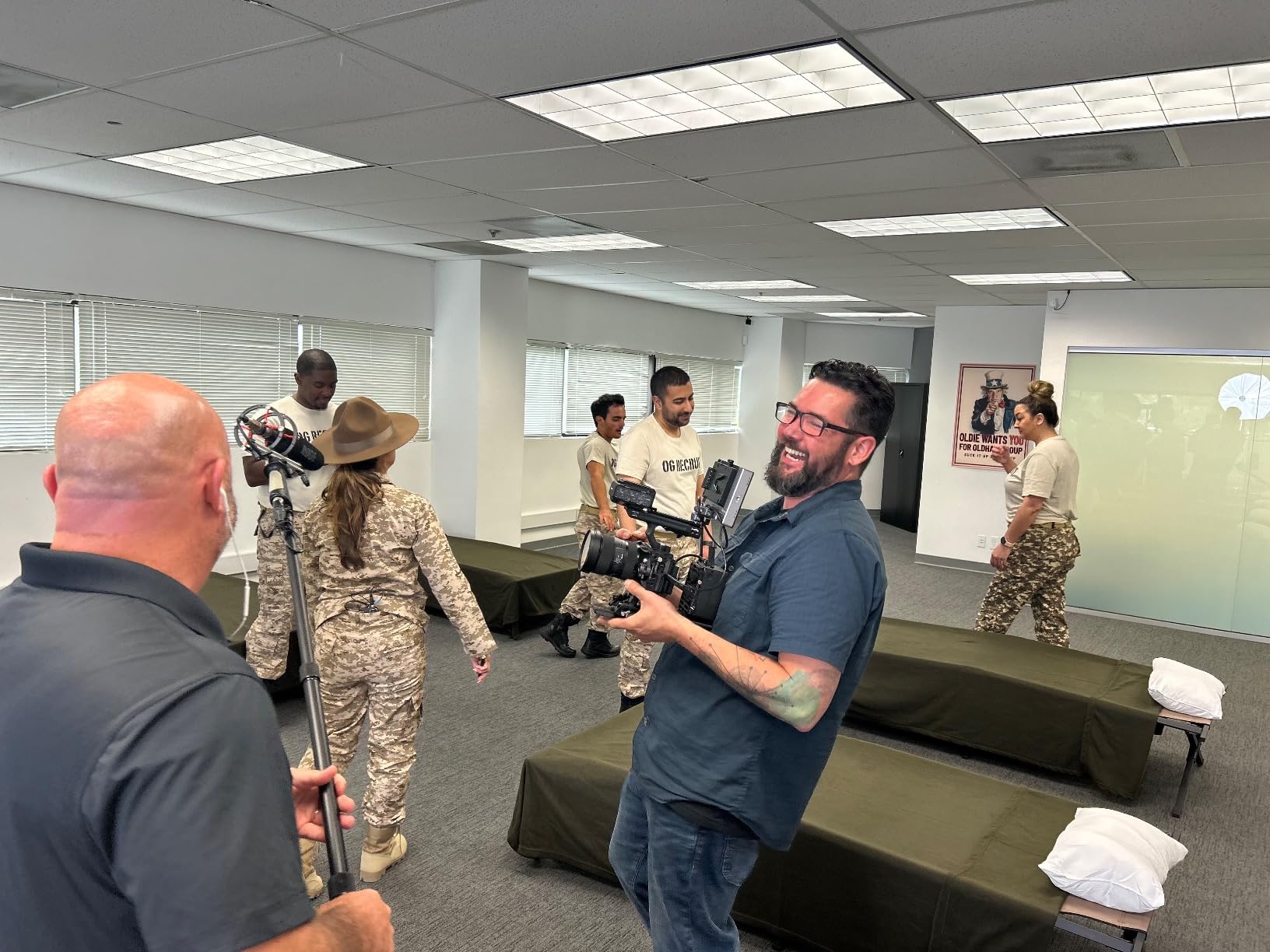
The built-in cooling fan is something you don’t think about until you need it. Other cameras in this space overheat during long 4K 60p takes – I’ve been in the middle of a critical interview and had a red warning flash on screen. That doesn’t happen with the FX3. The active cooling means you can shoot a 4K 60p interview for hours without stopping.
The 4K 120p in 10-bit 4:2:2 with full pixel readout in every recording mode is a specification that sounds like marketing copy until you actually grade the footage. There’s no quality trade-off between different frame rates. Whether you’re shooting 4K 24p for that film look or cranking to 120fps for slow-motion inserts, you’re getting the same clean signal.
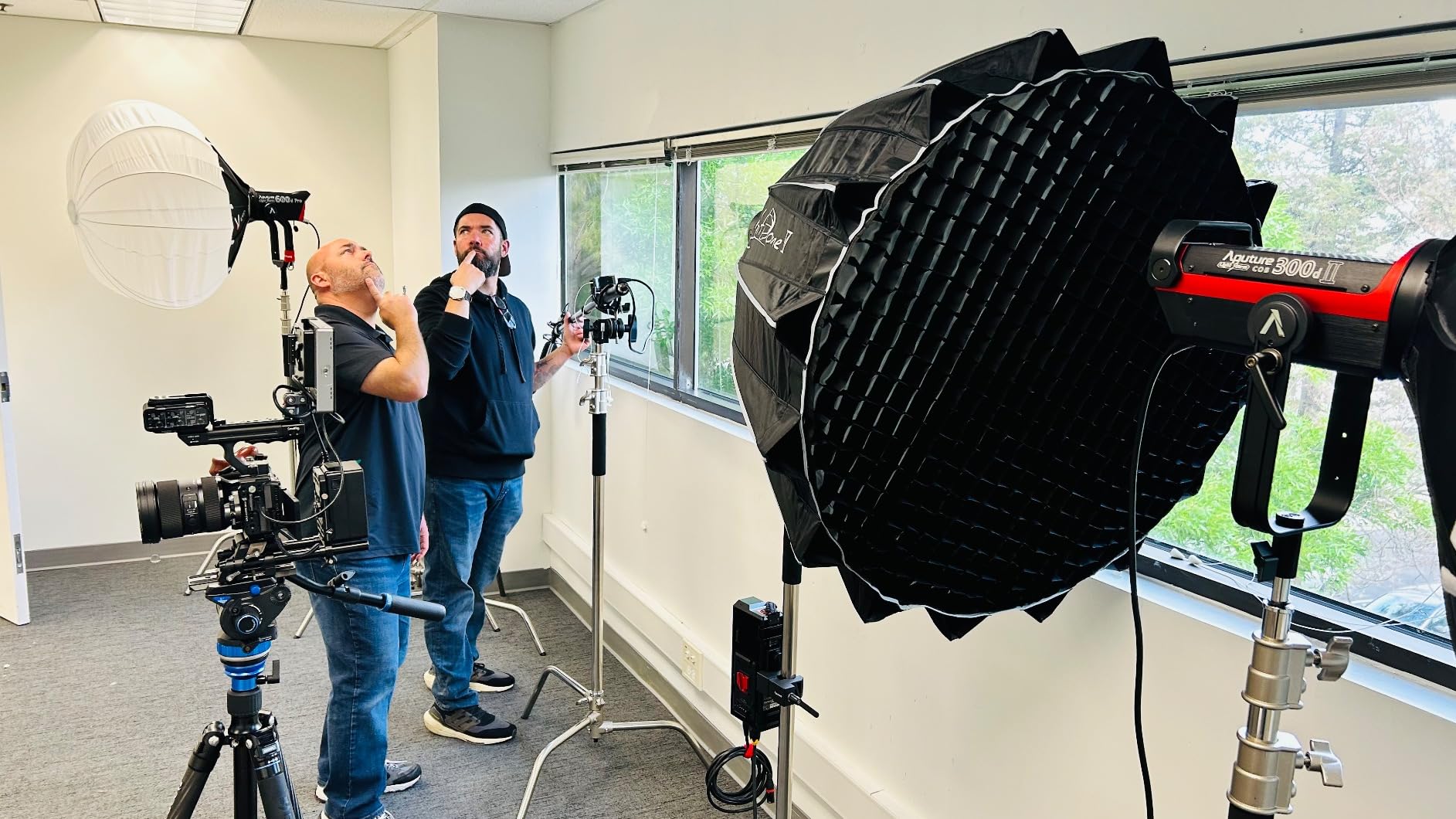
What filmmakers love about the FX3
The Netflix approval status isn’t just a badge – it signals that the image quality meets a professional broadcast standard that opens doors to distribution. Filmmakers shooting content for streaming platforms report that the S-Cinetone color science delivers skintones that barely need grading, saving hours in post-production on every project.
The compact cage-free design with 1/4-20 mounting points all over the body means you can rig this camera quickly without proprietary accessories. On a run-and-gun documentary shoot, I had this fully rigged with a monitor, microphone, and follow focus in under five minutes.
Where the FX3 falls short
The elephant in the room is the lack of built-in ND filters. On outdoor shoots with fast lenses, you’re constantly reaching for a variable ND – which adds cost, time, and a potential quality hit to your image. This is a workflow issue that every FX3 owner eventually solves, but it’s friction you shouldn’t have at this price point.
CFexpress Type A cards are excellent storage media but not cheap. Budget for fast cards when pricing out your production package, as running out of media mid-shoot is a costly mistake.
2. Sony FX30 – Best Value Cinema Camera for Indie Filmmakers
Pros
- Professional cinema features at much lower cost than FX3
- Active cooling fan for uninterrupted recording
- 4K 120fps for high-quality slow-motion
- Dual base ISO for excellent low-light
- Outstanding Eye-AF and subject tracking
Cons
- APS-C sensor not full-frame
- Not ideal for still photography
- Menu system has learning curve for beginners
When forums like r/Filmmakers debate which camera to recommend first to someone stepping into indie filmmaking, the Sony FX30 comes up constantly – and I understand why. I’ve called this camera a “mini FX3” in conversation with other filmmakers, and that framing holds up under scrutiny. You get the same S-Cinetone color science, the same dual base ISO approach, and the same active cooling system at a meaningfully lower entry point.
The active cooling system is one of those features that sounds mundane until you’re on hour three of a shoot. I’ve documented other cameras in this class throttling performance or flashing temperature warnings in challenging conditions. The FX30 keeps going. This reliability matters enormously on a film set where every minute of downtime costs real money.
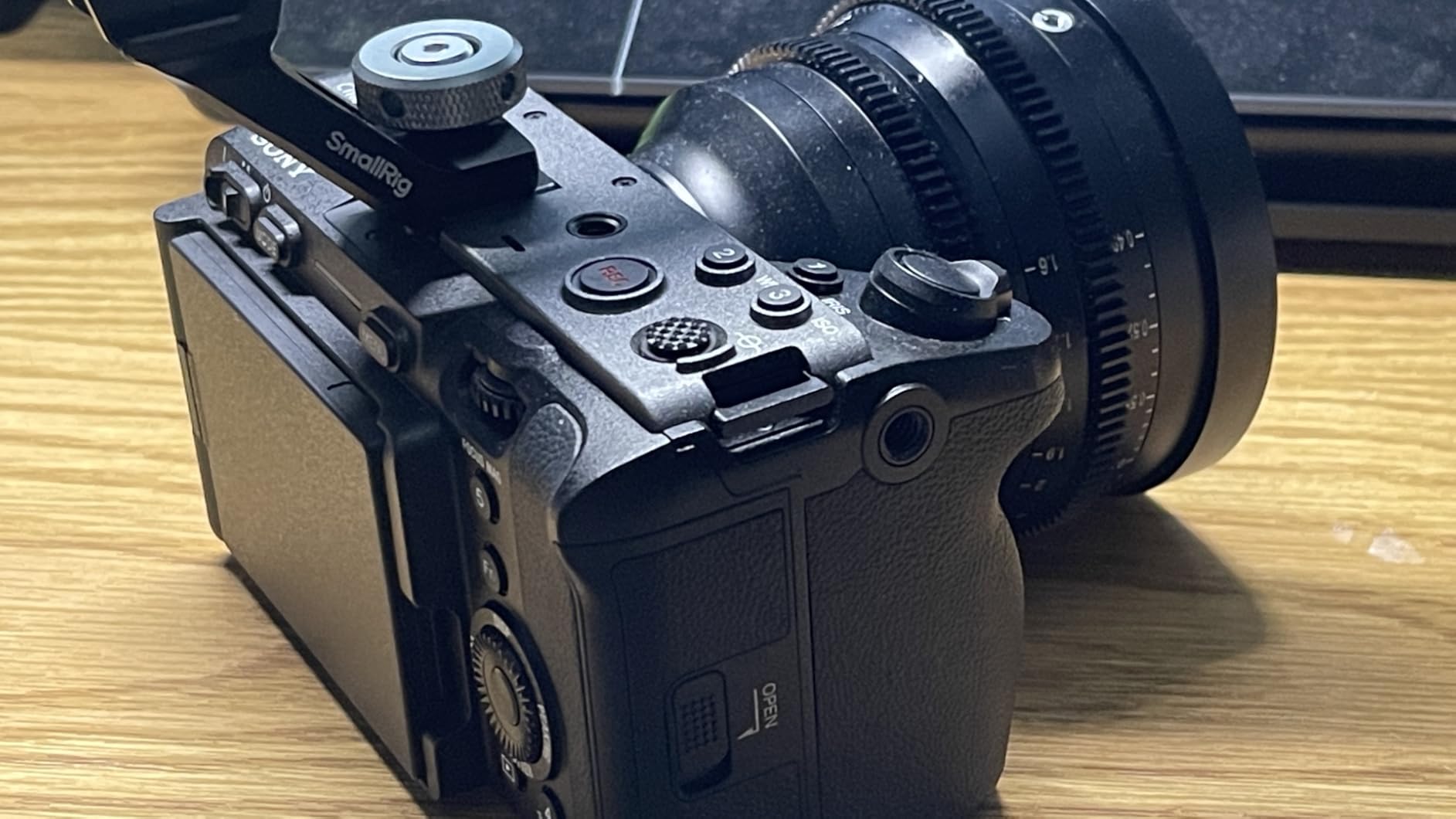
The dual base ISO with 14+ stops of dynamic range gives you genuine flexibility in mixed lighting environments. I’ve shot scenes that moved from a bright exterior to a dim interior without stopping to reconfigure exposure settings, and the FX30 held detail in both the shadows and highlights in a way that gave me real options in the grade.
The 4K 120fps capability is genuinely useful for indie filmmakers, not just a spec sheet number. Slow-motion inserts of action, machinery, water, or expressive moments add production value that audiences feel even if they can’t name what’s happening technically.
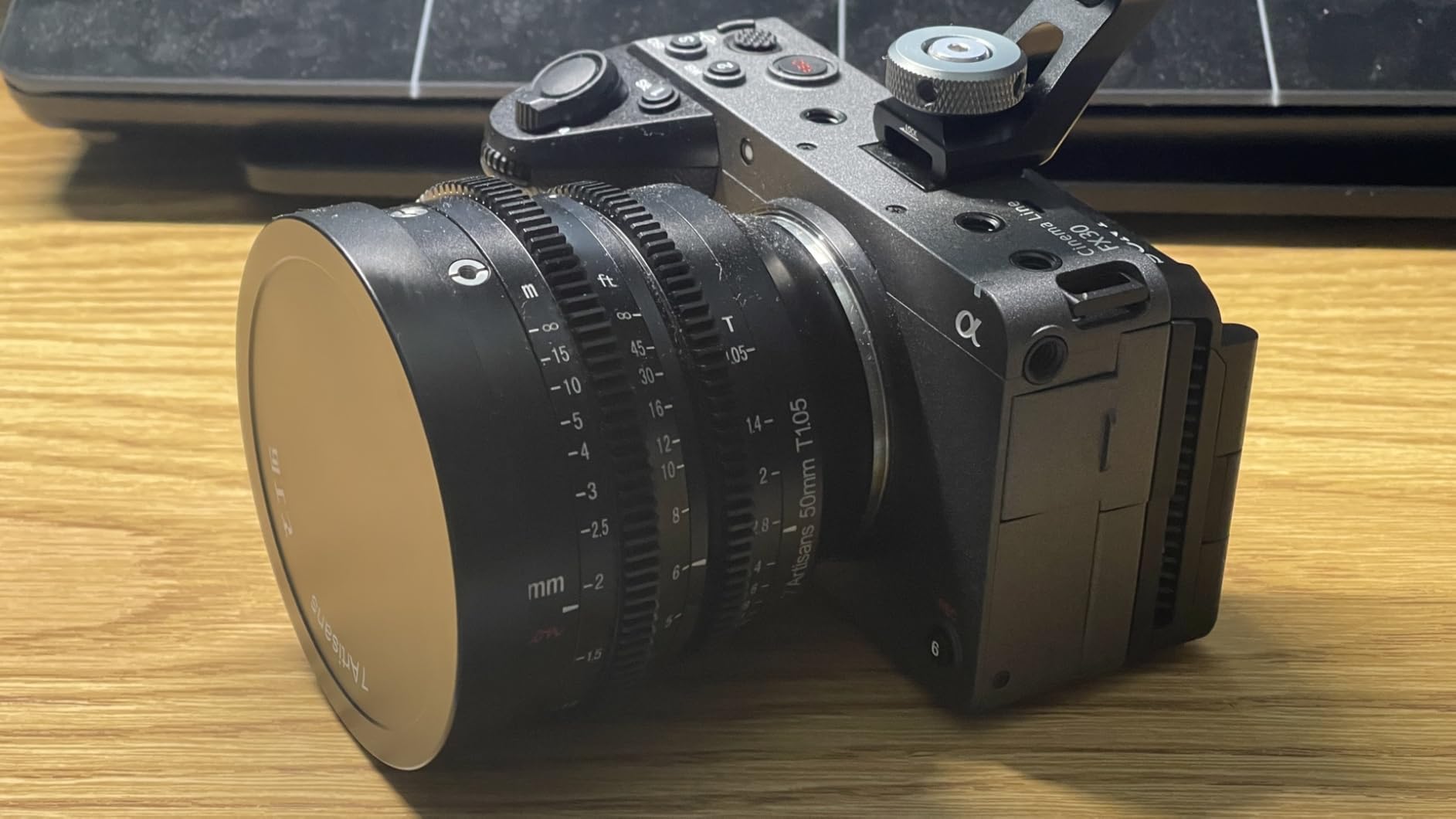
The FX30’s cinema credentials
The S-Cinetone color profile and Cine EI shooting modes are inherited directly from Sony’s professional cinema line. You’re not getting a watered-down version – the color science pipeline is the same, which means footage from an FX30 and an FX3 can be intercut on a multi-camera shoot without problematic color matching issues.
The user LUT support means you can load a custom look onto the LCD and HDMI output during shooting, letting your director and DP evaluate the final color direction on set instead of waiting for dailies. This is a workflow feature that professional productions appreciate and that few cameras at this level offer.
Limitations to know before buying
The APS-C sensor means you’re getting an effective crop compared to full-frame cameras. For narrative filmmakers chasing that shallow depth of field look with longer focal lengths, this is something to account for when selecting lenses. It’s not a deal-breaker, but it changes your lens choices.
Menu navigation takes time to learn. Sony’s cinema menu structure is comprehensive but not immediately intuitive. Budget a few days of dedicated menu exploration before your first production to avoid fumbling with settings on set.
3. Blackmagic Pocket Cinema Camera 6K Pro – Best for Pure Cinematic Image Quality
Pros
- Built-in 2 4 and 6 stop ND filters save time on set
- 13 stops of dynamic range for wide latitude in grading
- 6K RAW for future-proof resolution headroom
- DaVinci Resolve Studio license included
- HDR tiltable LCD display for outdoor use
Cons
- No continuous autofocus - manual focus only
- No auto ISO or auto exposure modes
- Requires accessories and rigging for professional use
The Blackmagic Pocket Cinema Camera 6K Pro solves one of the most annoying problems with cinema cameras for indie filmmakers: exposure management outdoors. The built-in 2, 4, and 6 stop ND filters mean you don’t have to carry a separate variable ND or screw-on filters for every lens in your kit. On a fast-moving documentary shoot where the light changes constantly, being able to reach up and click in a 4-stop ND without stopping to change filters is a real workflow advantage.
The 13 stops of dynamic range with 6K resolution in Blackmagic RAW gives you a file that holds up under aggressive grading. I’ve pushed the shadows four stops in DaVinci Resolve on footage from this camera and retrieved detail I didn’t think was there. That’s the kind of latitude that turns a technically imperfect exposure into a creative opportunity rather than a ruined shot.
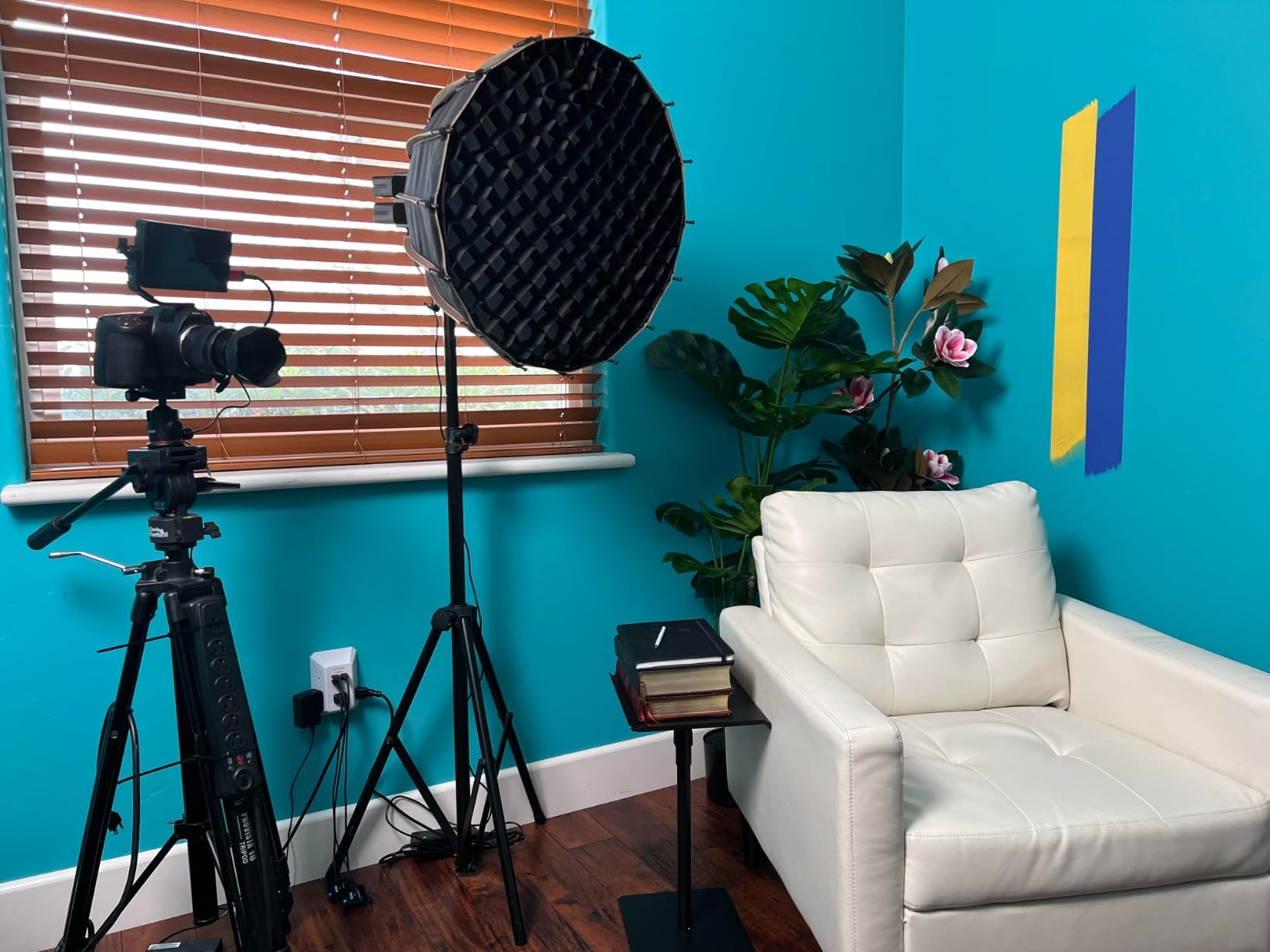
The included DaVinci Resolve Studio license is worth noting as a genuine cost offset. That software retails for around $300 on its own. If you don’t already own a professional color grading suite, the 6K Pro package represents meaningful value beyond the camera body itself.
The HDR tiltable LCD display addresses a legitimate criticism of earlier Blackmagic cameras, where screens were difficult to read in direct sunlight. On outdoor shoots I’ve been able to judge focus and exposure directly on the camera without needing to attach an external monitor on every setup.
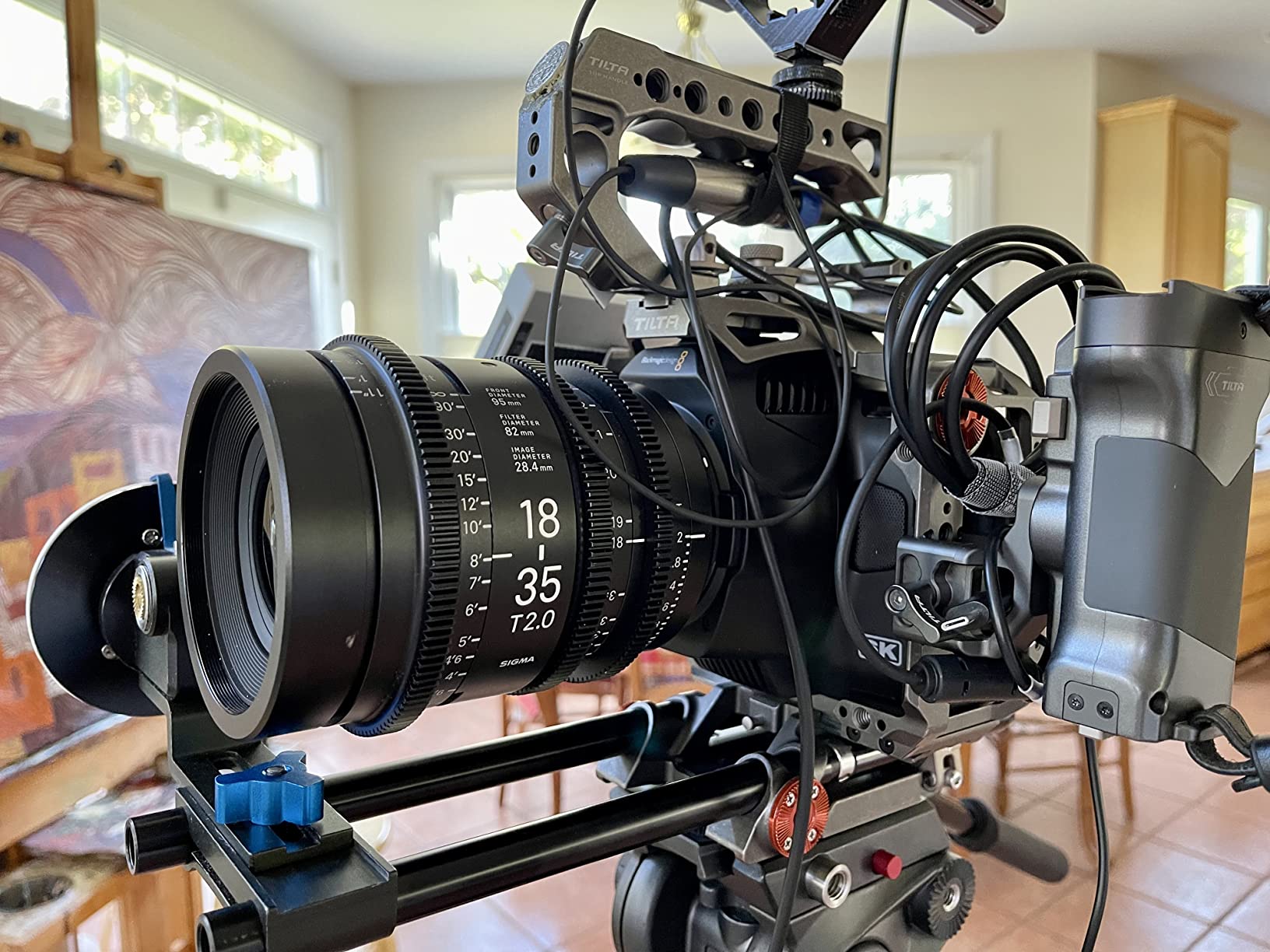
Ideal production environments for the 6K Pro
This camera shines in planned narrative shoots where you’re controlling the environment. Scripted scenes, controlled lighting setups, and tripod or gimbal work play directly to its strengths. The image quality ceiling is genuinely higher than most mirrorless cameras at the same price range, and the color science is purpose-built for cinematic storytelling.
Many indie filmmakers who have used both the Blackmagic and Sony cinema lines say the 6K Pro’s color is easier to grade beautifully without extensive color work – the image has a filmic texture right out of camera that the Sony S-Log profiles require more skill to match.
Where you’ll run into challenges
No continuous autofocus is the biggest limitation for run-and-gun shooting. If you’re a solo documentary filmmaker tracking unpredictable subjects, this camera will frustrate you. This is a manual focus cinema camera, and it rewards filmmakers who have trained their focus-pulling skills or who work with a dedicated focus puller.
The camera’s appetite for accessories adds cost. A proper rig, quality follow focus, external monitor for critical focus, and shoulder mount setup can add significantly to the total investment. Budget for the full system, not just the body.
4. Blackmagic Pocket Cinema Camera 6K G2 – Best Step-Up 6K Cinema Value
Pros
- Incredible image quality with 13 stops dynamic range
- 40+ minute improved battery life over original 6K
- Tiltable 5-inch LCD display
- Includes DaVinci Resolve Studio
- Professional ProRes and 12-bit BRAW recording
Cons
- Manual focus only - no continuous autofocus
- Heavy file sizes require fast expensive storage
- Needs additional rigging for professional use
The Blackmagic Pocket Cinema Camera 6K G2 sits between the standard 6K and the 6K Pro in Blackmagic’s lineup, and it fills that space with a combination of improvements that filmmakers actually care about. The G2 designation refers to the second generation, and the most immediately practical upgrade is battery life. Where the original Pocket 4K and early 6K models were notorious for dying in about 30 minutes on a single charge, the G2 extends that to 40+ minutes – still not long by any measure, but a real improvement for run-and-gun situations where you want to minimize battery swaps.
The Super 35 sensor delivering native 6144 x 3456 resolution in Blackmagic RAW is the same fundamental image quality story as the 6K Pro. The 13 stops of dynamic range and dual gain ISO up to 25,600 give you real flexibility in challenging lighting conditions.
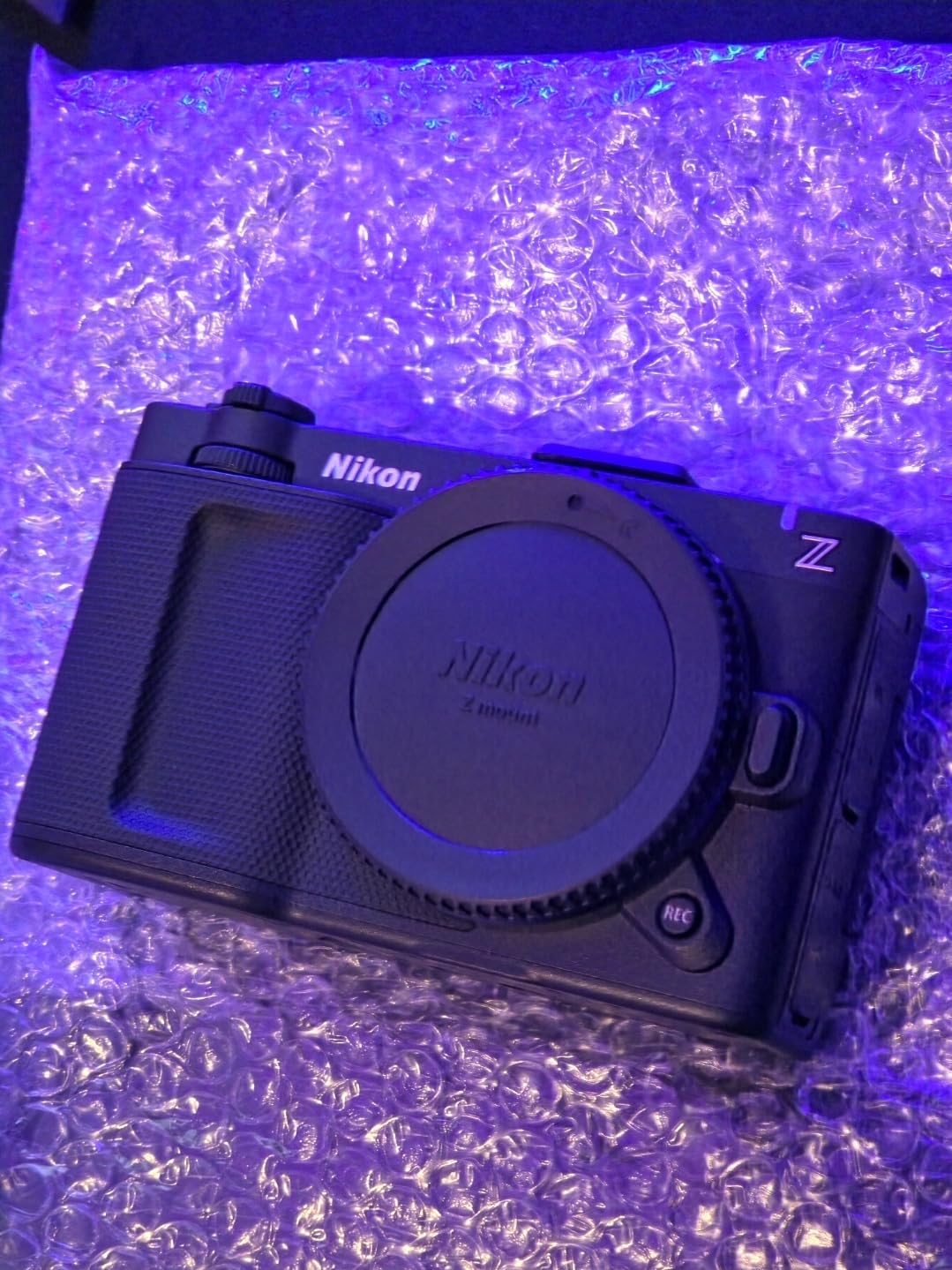
The EF/EF-S lens mount is a practical advantage for filmmakers coming from Canon DSLR systems. If you have a collection of Canon glass, the G2 lets you put that investment to immediate use without adapters. The active mount means electronic aperture control, image stabilization communication, and autofocus signals all work correctly.
At a rating of 4.9 from 46 reviewers, this is a camera that the people who own it love deeply. That rating pattern typically reflects a purchase made by filmmakers who knew exactly what they were getting and found it exceeded their expectations on image quality.
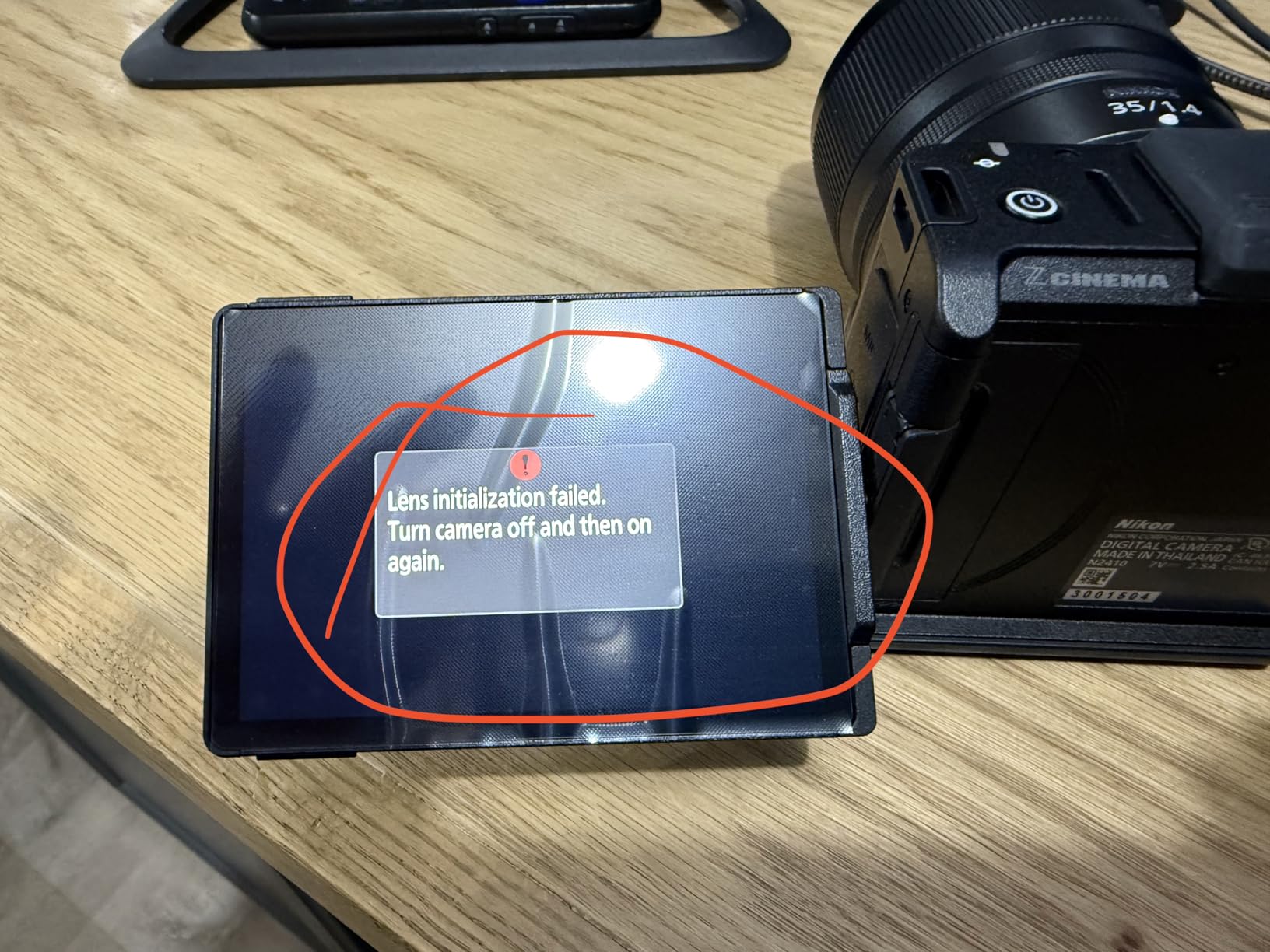
Workflow and post-production advantages
The included DaVinci Resolve Studio license means your entire color grading workflow is covered. Blackmagic RAW files are specifically designed to open natively in Resolve with minimal performance overhead – the decoding happens on your GPU rather than CPU, which means even modestly spec’d editing machines can handle 6K BRAW footage in real time without proxies.
ProRes recording is available for productions where universal file compatibility matters more than maximum resolution. Many editors and post houses are more comfortable with ProRes, and the G2’s ability to deliver professional-grade ProRes files gives you flexibility in your post-production pipeline.
Production planning considerations
Storage management is a real operational concern with 6K RAW. A single card can fill faster than you expect, and the cost per gigabyte of fast UHS-II SD cards or CFast 2.0 cards adds up on a multi-day shoot. Build a detailed storage budget into your production plan, and consider the external SSD via USB-C option for extended recording runs.
Without autofocus, this camera demands either a skilled focus puller on your crew or disciplined use of follow focus marks for your own shots. For solo filmmakers who shoot documentary-style, this is a significant workflow consideration that should factor into your decision.
5. Blackmagic Pocket Cinema Camera 4K – Best Budget Cinema Camera Entry Point
Pros
- Incredible dynamic range and color science for the price
- DaVinci Resolve Studio license included
- Multiple recording options including external SSD
- Large 5-inch touchscreen display
- ProRes and Blackmagic RAW formats
Cons
- Terrible battery life - about 30 minutes per charge
- No continuous autofocus whatsoever
- No in-body image stabilization
- Screen not usable in bright sunlight
The Blackmagic Pocket Cinema Camera 4K is the camera that changed the conversation about what “affordable cinema camera” meant. When I first started testing this camera years ago, I was genuinely surprised by the image quality relative to what I’d expected at this price range. The 13 stops of dynamic range in a camera this compact produced footage that looked like it belonged on a larger, more expensive platform.
The 4/3″ sensor with dual gain ISO up to 25,600 handles low-light situations much better than you’d expect from a sensor this size. The dual native ISO design means that when you switch to the high-gain mode, you’re not simply amplifying a noisy signal – you’re engaging a different, cleaner gain circuit that keeps the image quality acceptable in genuinely dark environments.
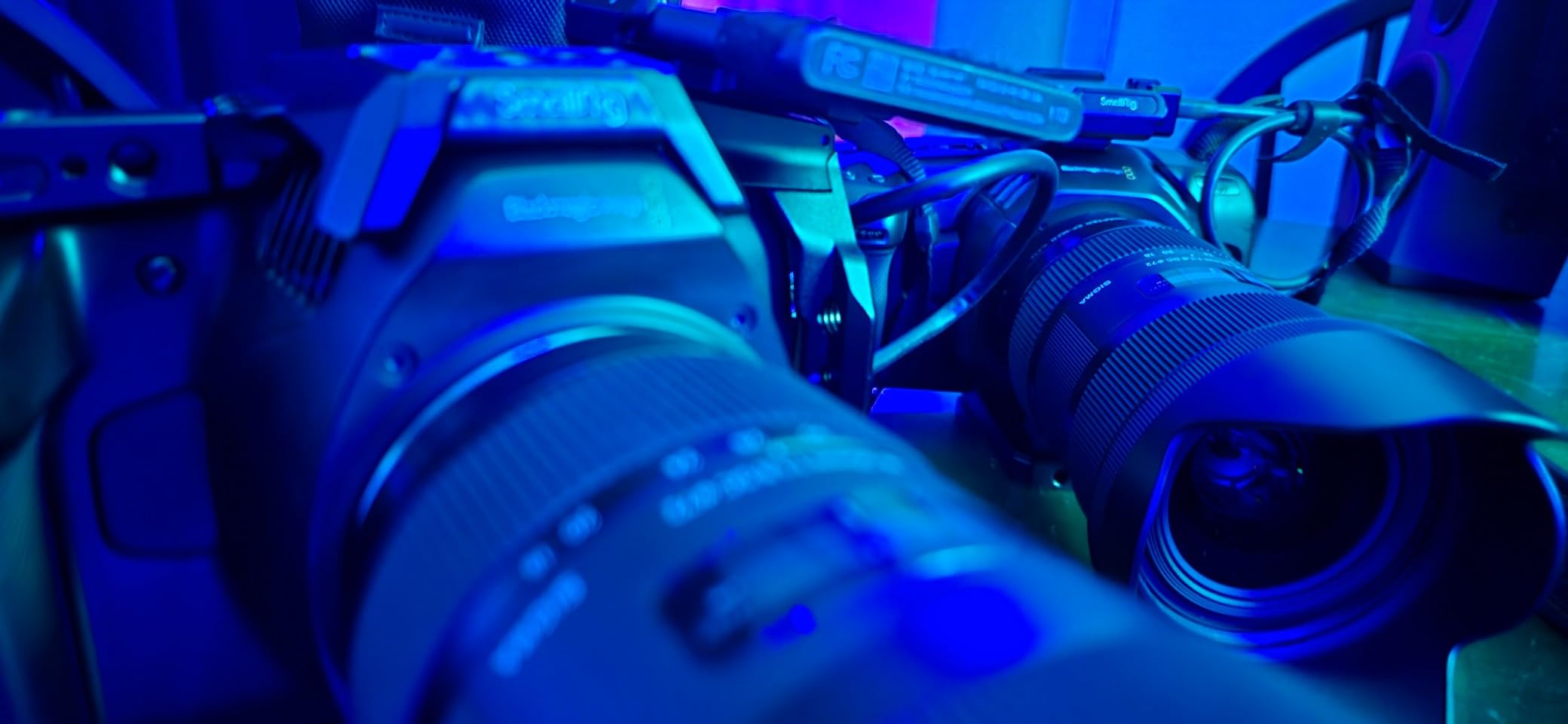
The carbon fiber polycarbonate composite body feels purposeful in hand. This isn’t a camera that accidentally became popular with indie filmmakers – Blackmagic designed it for the job. The multi-function handgrip, the layout of controls, the placement of the 5-inch touchscreen – it all reflects decisions made with a working filmmaker in mind.
For anyone coming from a photo-first mirrorless background, the included DaVinci Resolve Studio license is a meaningful bonus. Learning Resolve on your own footage from this camera creates a color science fluency that will improve every project you do afterward. The Blackmagic ecosystem is built around Resolve, and understanding that relationship pays dividends.
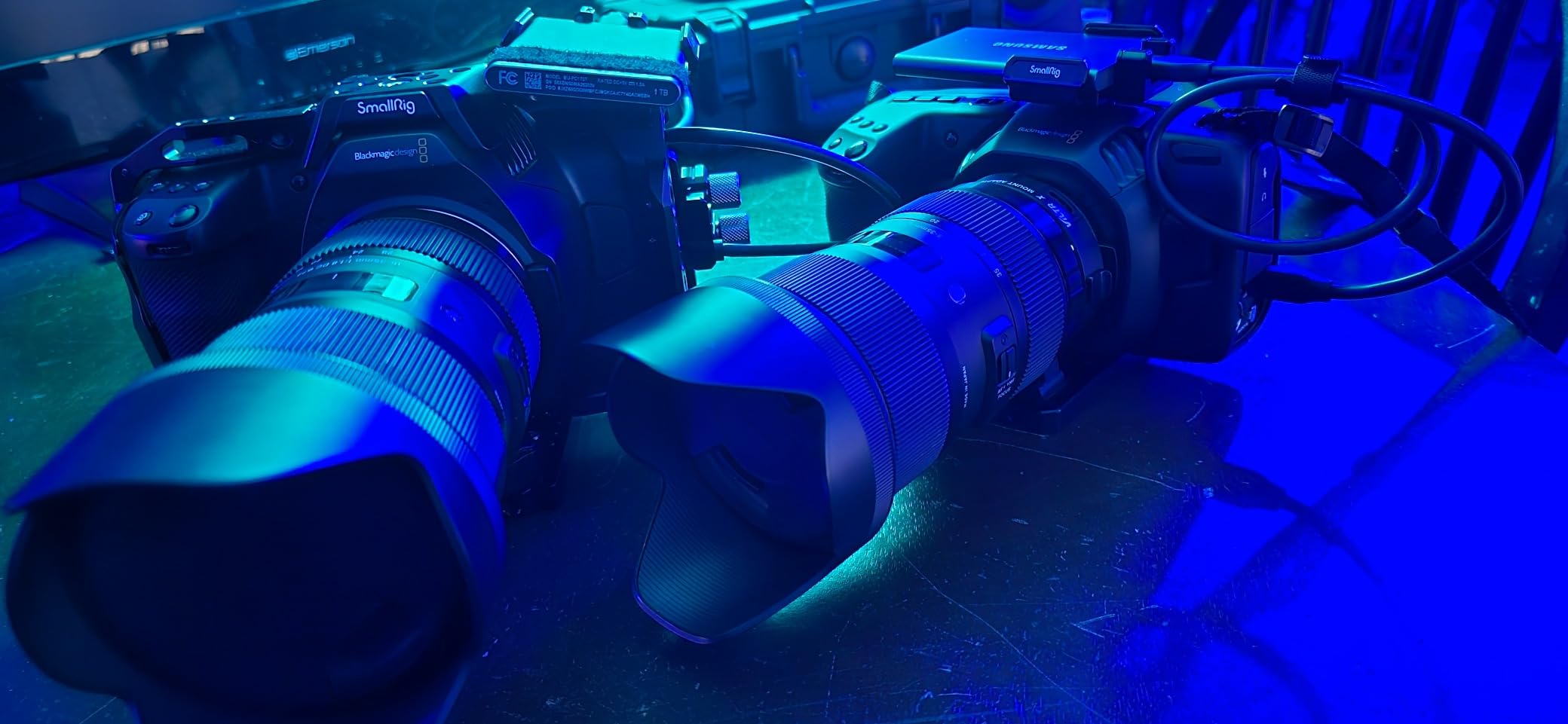
Using the BMPCC 4K effectively on set
The battery situation needs a realistic plan before you shoot. Thirty minutes per LP-E6 battery is the reality, and most working filmmakers who use this camera carry six to ten charged batteries on any given day. The camera also accepts power via USB-C, which opens up the option of running from a larger external power bank for extended studio setups where you’re not constantly moving between locations.
The MFT lens mount opens up an enormous ecosystem of quality glass. Vintage Olympus and Panasonic lenses are affordable and often stunning. Speed boosters let you use larger-format lenses with improved light gathering. The flexibility of the MFT mount is genuinely one of this camera’s underrated strengths.
Where to set your expectations
Run-and-gun documentary work is challenging with this camera. No autofocus, no IBIS, and a screen that washes out in direct sun create real operational friction when you’re chasing unpredictable subjects. This camera rewards preparation – it performs best when you know exactly what you’re going to shoot before you shoot it.
The screen’s sunlight visibility limitation means you should budget for a loupe or a small external monitor if you’re shooting outdoors regularly. This adds cost and setup time, but it’s the difference between a usable monitoring solution and squinting at a washed-out rectangle.
6. Canon EOS R7 – Best APS-C Mirrorless for Hybrid Filmmaking
Pros
- 32.5MP sensor delivers exceptional resolution for hybrid use
- 7 stops of in-body image stabilization for handheld shooting
- 4K 60p for quality slow-motion with Canon color
- Dual SD card slots for backup recording
- Fast 15fps continuous shooting for action
Cons
- Struggles in low-light compared to larger sensor cameras
- Some users reported shutter and focus issues
- Limited regional warranty coverage
The Canon EOS R7 occupies a specific and useful position for indie filmmakers who need serious video capabilities alongside high-resolution still photography. At 32.5 megapixels with 4K 60p and 7 stops of in-body stabilization, this camera handles the hybrid demands of a small production where the same person is responsible for both the behind-the-scenes stills, social media content, and the actual filmmaking.
The 7-stop IBIS is a standout feature for filmmakers who work handheld without a gimbal. I’ve shot handheld walking shots with this camera that came out usably smooth for slow, deliberate movement – the kind of intimate documentary moment where mounting a gimbal would be intrusive. That’s not zero-shake stabilization, but it creates a working range that other cameras without IBIS simply can’t match.

Canon’s Dual Pixel CMOS AF with 651 points and advanced subject detection from the EOS R3 is a real advantage for solo filmmakers. When you’re operating a camera and directing a subject simultaneously, reliable autofocus that can lock onto a face and track it across the frame is the difference between a usable take and a soft disaster.
The dual SD card slots supporting UHS-II provide genuine peace of mind for productions where the footage isn’t replaceable. Running a simultaneous backup to the second card ensures that a card failure doesn’t mean a lost shoot day. That redundancy matters, and it’s not a feature you get at every price point.

Video performance in real conditions
The 4K 60p recording gives you quality slow-motion options that work well for insert shots and dramatic moments. Canon’s color science is warm and pleasing in its standard profiles, which means less corrective work in post for filmmakers who want footage that looks good out of the camera without heavy grading. The RF-S 18-150mm kit lens is a capable zoom that covers most narrative and documentary shooting scenarios.
Canon’s RF lens ecosystem is extensive and growing. The investment you make in RF glass on an R7 is compatible upward – should you later upgrade to an EOS R5, R6, or R3, your lenses follow you without adapters or compromises.
Where the R7 has limits
Low-light performance is the R7’s weak point relative to cameras with larger sensors. APS-C sensors fundamentally gather less light than Super 35 or full-frame alternatives, and at high ISO settings the noise structure becomes more apparent. For filmmakers who regularly shoot in poorly lit environments, this is a genuine constraint.
The price of the kit as configured is significant for what is technically an APS-C camera. Competing cameras at similar price points – particularly the Blackmagic options – offer more direct cinema-focused specifications, though they sacrifice the R7’s autofocus and IBIS advantages.
7. Canon EOS RP – Best Entry-Level Full-Frame for Indie Film
Pros
- Full-frame sensor at an accessible price point
- Excellent low-light performance from large sensor
- Good face detection autofocus
- Compact and lightweight for full-frame
- Versatile RF 24-105mm kit lens included
Cons
- 4K video has significant crop factor and 30-minute record limit
- Kit lens edges soft at wider apertures
- No physical AF/MF switch on lens
- Battery life requires extra batteries
The Canon EOS RP is the most affordable way into full-frame Canon RF ecosystem, and for indie filmmakers who primarily shoot narrative content where every shot is planned, the full-frame advantage in low-light performance and depth of field control is tangible. I’ve used this camera on a short film that relied heavily on available light interior scenes, and the image quality held up in situations where an APS-C camera would have been struggling with noise.
With 4779 Dual Pixel AF points and strong face detection, the RP handles human subjects well. For narrative filmmaking where your subjects are actors hitting their marks, the autofocus is reliable enough to use as a safety net while you concentrate on the performance rather than focus pulling.

The included RF 24-105mm f/4-7.1 IS STM is a wide zoom range that covers most filmmaking situations from wide establishing shots to medium close-ups without changing lenses. For a solo filmmaker or small crew, fewer lens changes during a shoot means fewer mistakes and more time capturing moments rather than fumbling with glass.
The compact and lightweight full-frame design is genuinely notable. Most full-frame cameras have a certain physical presence that limits where and how you can position them. The RP is small enough to operate discreetly, which matters for documentary filmmakers who want to minimize their impact on the environment they’re filming in.

Understanding the video limitations
The 4K video crop factor and 30-minute recording limit are real constraints that will affect certain production types. For filmmakers shooting long interviews, events, or continuous scenes, the time limit requires either careful planning around recording segments or accepting that this camera’s video capabilities are secondary to its photographic strengths. The 1080p recording is uncropped and very high quality, which many filmmakers use as their primary delivery format anyway.
Color science in Canon’s log profiles is mature and well-supported in post-production software. Canon Log 3 in particular is easy to grade and produces pleasing skintones. For filmmakers who are still developing their color grading skills, Canon’s profiles are forgiving and produce good results with less expertise required.
Who benefits most from the EOS RP
This camera is ideal for filmmakers who divide their time between narrative shorts and portrait or landscape photography – the full-frame sensor serves both applications better than an APS-C alternative. If your indie projects are primarily scripted with good lighting setups and you want a camera that doubles as a professional photography tool, the RP’s value proposition is strong.
The RF mount ecosystem compatibility means this camera is a practical entry point to Canon’s full-frame system. The glass you invest in works on every RF body, which future-proofs your lens budget as you upgrade camera bodies over time.
8. Canon EOS R10 Content Creator Kit – Best All-in-One Bundle for Indie Filmmakers
Pros
- 4K video without 30-minute recording limit
- Advanced AF from EOS R3 with face and animal detection
- Content Creator Kit includes tripod grip and stereo microphone
- Fast 15fps mechanical and 30fps electronic shutter
- Compact and lightweight body for solo work
Cons
- Battery drains quickly with heavy use
- No in-body image stabilization
- Kit lens is basic - upgrade recommended
- Some menu learning curve
The Canon EOS R10 Content Creator Kit is a particularly practical package for indie filmmakers who are setting up their first proper kit from scratch. The included stereo microphone and tripod grip address two of the most immediate needs for anyone who’s just picked up a camera and realized how much else they need to buy before they can properly shoot. Getting all three in one box with a coherent warranty and support structure simplifies the early acquisition phase.
The R10’s autofocus system is the advanced Dual Pixel CMOS AF with 651 points and subject detection technology inherited from the EOS R3. For solo filmmakers operating without a crew, this is significant – the camera can track a human subject reliably enough that you can focus on directing and operating rather than confirming focus on every shot.
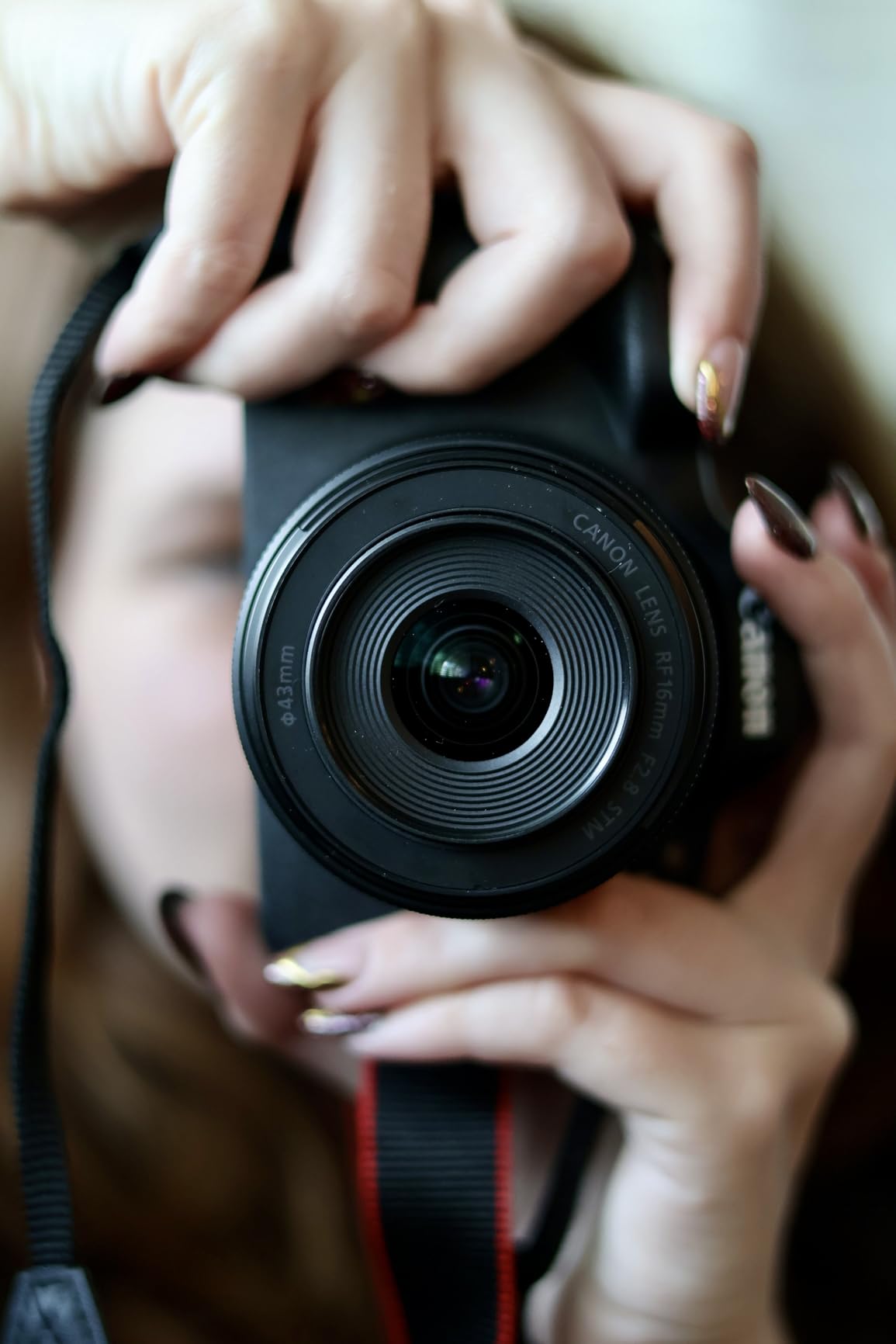
The removal of the 30-minute recording limit for 4K video is a genuinely useful improvement over cameras like the EOS RP that still have it. For filmmakers shooting long interviews, theatrical performances, live events, or any content where the scene runs long, not having to worry about the camera stopping mid-take removes a significant point of anxiety.
At 4.7 stars from 744 reviewers, the R10 consistently outperforms expectations for its price tier. Users frequently mention that the image quality surprised them – that they expected an entry-level output and got something meaningfully better. This pattern in reviews reflects a camera that was designed with real attention to image quality rather than just feature count.
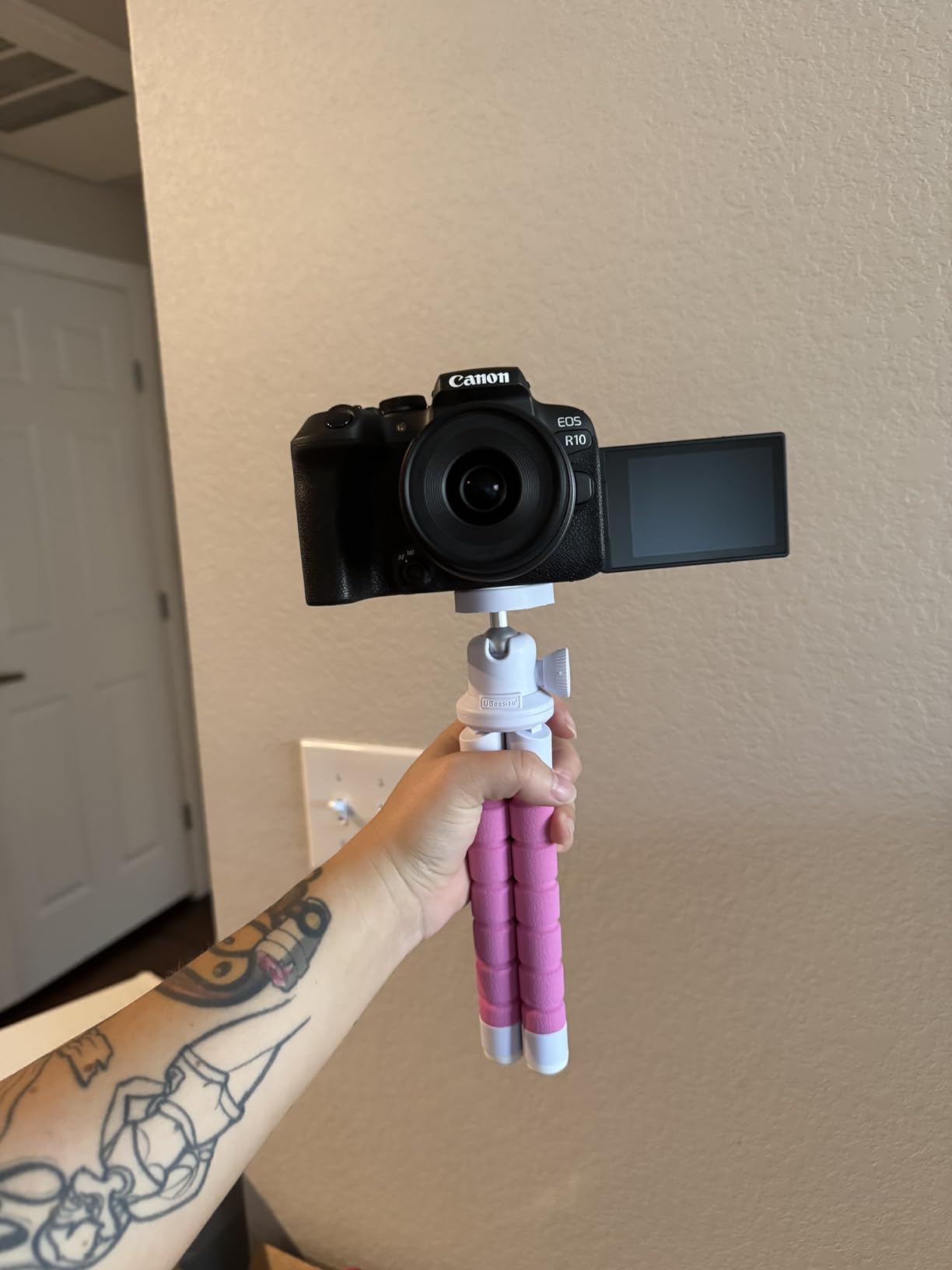
Setting up for indie film production
The stereo microphone included in the kit gives you decent on-camera audio for documentary interviews and behind-the-scenes content. It won’t replace a proper boom microphone setup for narrative work, but it’s significantly better than the built-in mic and gets you to a workable result quickly. The tripod grip with remote lets you shoot stable handheld content and trigger the shutter remotely for self-filming setups.
The RF lens ecosystem is the long-term value of this purchase. Starting on a budget with the R10 and the kit lens, then gradually building a set of quality RF primes or zooms as budget allows, gives you a professional-grade imaging system over time. Canon’s ecosystem support means you’re not buying into a dead end.
Real limitations to plan around
The lack of in-body image stabilization means handheld footage has the natural camera movement you’d expect without electronic or optical stabilization. This is a real operational consideration for run-and-gun work, and filmmakers who shoot a lot of unstabilized content should either budget for a gimbal or embrace the verite look deliberately as a stylistic choice.
Battery management requires attention on longer shoot days. Canon’s LP-E17 batteries are affordable and widely available, and carrying three or four charged batteries is standard practice for a full day with this camera.
9. Canon EOS R50 – Best Beginner Mirrorless for Filmmaking
Pros
- 4K video oversampled from 6K for exceptional sharpness
- 651 AF zones with animal and vehicle detection
- Lightweight design under 1 pound
- Vari-angle touchscreen for flexible framing
- Built-in electronic viewfinder
Cons
- Kit lens not ideal - body-only purchase recommended
- Doesn't perform as well in low-light situations
- APS-C crop factor
- Battery life needs attention on long days
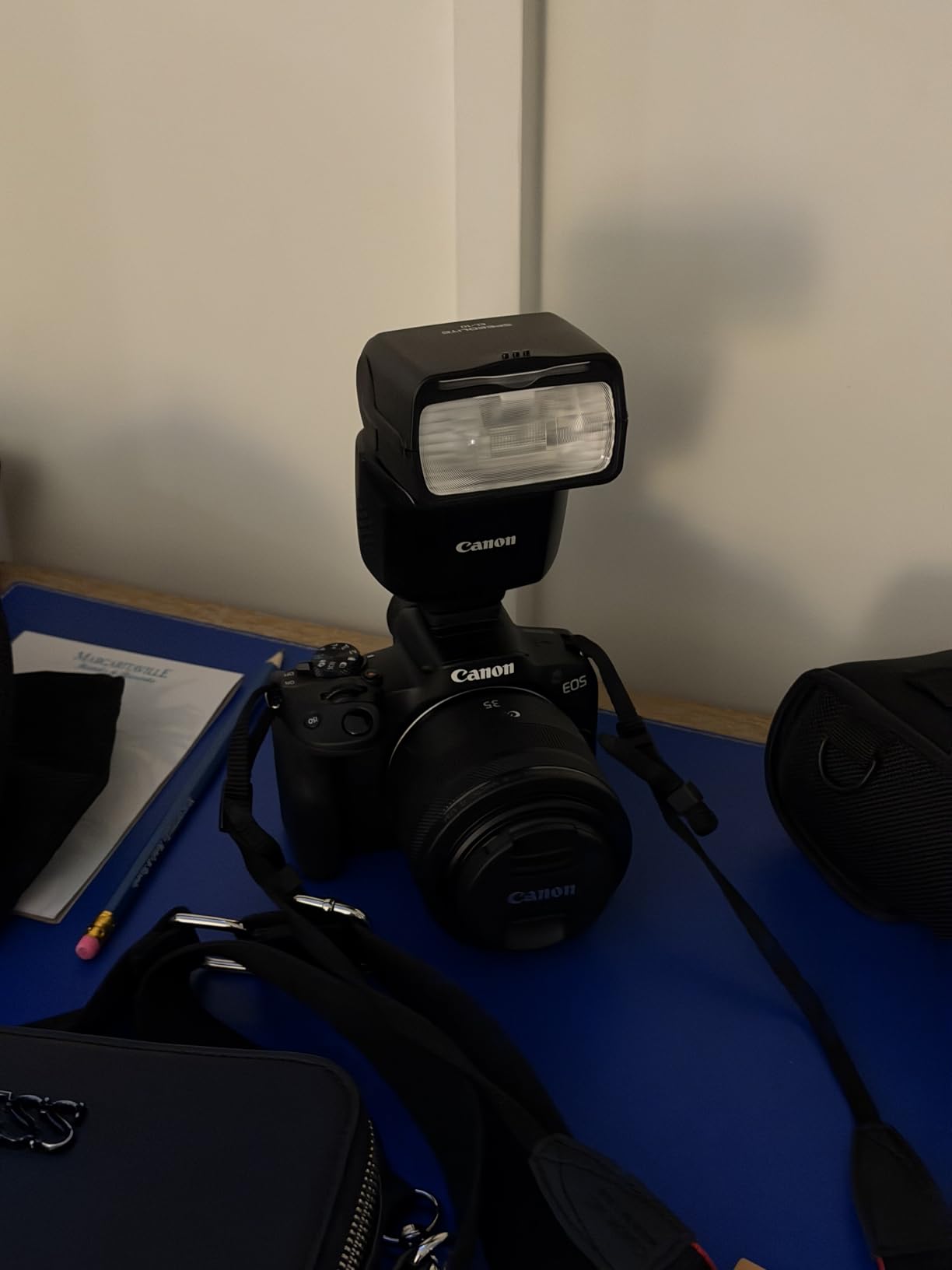
The Canon EOS R50 makes a strong case as the best first dedicated filmmaking camera for someone coming from a smartphone background. It’s genuinely lightweight under 1 pound with the body alone, the 4K video oversampled from 6K produces footage that’s noticeably sharper than cameras that don’t use this technique, and the 651-zone autofocus system means you don’t have to learn manual focus to get consistent results.
The 6K oversampling for 4K output is a technical choice that pays dividends in the quality of the final image. By capturing more pixels than it outputs, the R50 has more information to work with when rendering each frame, which results in finer detail, cleaner edges, and less moiré on fine patterns than cameras that shoot 4K from a 4K sensor.

The vari-angle touchscreen is important for filmmaking use cases that don’t get enough attention in reviews. Shooting low to the ground, mounting the camera at unusual angles for creative shots, and monitoring your own face when filming yourself – these all require a screen that moves in multiple directions. The fixed-screen cameras in this guide are functional, but the vari-angle is a meaningful quality-of-life improvement for filmmakers who work across different shot types.
The built-in electronic viewfinder addresses one of the critiques of camera-style cinema bodies like the Blackmagic Pockets – having an eye-level viewing option lets you shoot in bright outdoor conditions without needing an external monitor, keeping the setup compact and the operation faster.
Who the R50 is built for
Film students, emerging documentary makers, and content creators who want to step up from smartphone video will find the R50 rewards them almost immediately. The image quality jump from phone cameras is dramatic, and the autofocus reliability means you can concentrate on framing and storytelling rather than technical operation. At this price range, it’s one of the most capable filmmaking tools available.
The RF mount access means your investment in lenses transfers upward as your career grows. Starting with a kit lens and adding a quality 35mm or 50mm prime over time builds a practical lens set without a complete system change when you upgrade bodies.
What you give up at this level
Low-light performance at higher ISO settings shows more noise than cameras with larger sensors or dual native ISO. For filmmakers who work in truly dark environments – nighttime exterior scenes, candlelit interiors – additional lighting will be necessary to get clean results. This is a budget camera doing budget camera work, which is excellent value, but it doesn’t escape the physical limits of its sensor size.
The kit lens that ships with the R50 is the most frequently criticized aspect of this package. The majority of user reviews that comment negatively on image quality are actually commenting on the kit lens rather than the sensor or camera processing. Buying the body separately and pairing it with a quality lens dramatically changes the output.
10. Sony ZV-E10 – Best Budget APS-C Camera for Video-First Filmmakers
Pros
- 4K oversampled from 6K with no pixel binning
- Real-time Eye AF and subject tracking
- Directional 3-capsule mic with wind screen included
- Easy live streaming via single USB cable
- Lightweight and compact - ideal for solo operators
Cons
- Battery drains quickly - carry spares always
- Limited touchscreen - touch to focus only
- No viewfinder for tracking fast movement
- Kit lens low aperture limits low-light performance
Sony designed the ZV-E10 specifically for video-first users, and that design philosophy shows up in details that matter for indie filmmakers on tight budgets. The directional 3-capsule microphone with included windscreen is a real feature for documentary filmmakers who need good on-camera audio without the added expense and complexity of a separate microphone. On a solo shoot where every extra piece of equipment adds setup time and potential failure points, a camera with genuinely good built-in audio is valuable.
The 4K oversampled from 6K with full pixel readout – no pixel binning – means the image quality is genuinely above what the sensor resolution alone would suggest. Sony applies the same oversampling technique used in their higher-end cameras to the ZV-E10, which is why the 4K footage from this camera looks sharper and cleaner than it has any right to at this price point.
The 425-point Fast Hybrid AF with Real-Time Eye AF and subject tracking is Sony’s reliable autofocus system working well at this level. For documentary-style filmmaking where you’re chasing real people through real environments and can’t call cut to check focus, the tracking reliability is a genuine operational asset.
The Product Showcase Setting – which automatically transitions focus from the presenter’s face to an object they hold up – is a feature that seems aimed at unboxing YouTubers but is genuinely useful for any filmmaker who shoots instructional, interview, or product-demonstration content as part of their filmmaking income.

Practical strengths for indie film work
The ZV-E10 pairs well with Sony’s affordable E-mount lens ecosystem, which includes some excellent third-party options from Sigma, Tamron, and Viltrox that deliver professional optical quality at accessible prices. Building a small prime lens set around the ZV-E10 body gives you a surprisingly capable filmmaking kit for a fraction of what a comparable Canon or Nikon kit would cost.
Live streaming via a single USB-C cable is a feature that indie filmmakers who fund their work through live events, workshops, or direct-to-audience platforms will find genuinely useful. Using the camera as a high-quality webcam or live streaming device means the investment serves multiple purposes beyond just film production.
Where you’ll feel the budget constraints
The battery situation is the most persistent frustration reported by ZV-E10 users across forums and reviews. Sony NP-FW50 batteries are small and relatively low capacity. Carrying four or more charged batteries is standard practice for any serious use day. This is a manageable limitation but a real cost and preparation requirement.
No viewfinder makes the ZV-E10 harder to use in bright outdoor conditions where the rear LCD washes out. A clip-on loupe or external monitor addresses this, but it adds to the system cost and setup complexity. For primarily indoor or overcast outdoor shooting, this isn’t an issue, but sunny exterior shoots require planning.
11. Canon EOS R100 – Best Ultra-Budget Entry Into RF Filmmaking
Pros
- Most affordable entry into Canon RF system
- All-day battery life for extended shoots
- Compact and lightweight - smallest EOS R design
- Human face and eye detect AF
- Beginner-friendly GUI explains each mode
Cons
- No articulating screen - fixed LCD only
- No in-body image stabilization
- 4K only at 24fps - no 4K 30fps or 60fps
- Limited touchscreen functionality
The Canon EOS R100 occupies a clear and honest role: it’s the most affordable way into the Canon RF ecosystem for a filmmaker who wants to start building their kit on a tight budget. The 4K video capability, Dual Pixel autofocus, and compact form factor give you a functional filmmaking tool, and the RF mount means your lens choices are future-proof within Canon’s system as your budget grows and your work demands more.
The all-day battery life is the most underrated feature of the R100. Reviewers consistently praise this aspect – being able to shoot for a full day without battery anxiety removes a logistical burden that affects essentially every other camera in this guide. For a student filmmaker on a tight budget who can’t afford to buy six spare batteries, this reliability has real practical value.

The beginner-friendly GUI with mode explanations is thoughtful design for someone who’s learning both filmmaking and camera operation simultaneously. Having the camera explain what each mode does helps new filmmakers understand the tool they’re using rather than just following a workflow without understanding why. That educational aspect accelerates skill development.
At 4.5 stars from 861 reviews, the R100 has a solid satisfaction rate for buyers who understand what they’re purchasing. Users who go in expecting a professional production tool are disappointed; users who treat it as a learning camera and entry-level indie filmmaking body consistently report that it exceeded their expectations.

What the R100 does well for film students
Film students and first-time indie filmmakers benefit from the R100’s reliability and ease of use. The camera gets out of your way – it’s not trying to do more than it’s capable of, and for learning the craft of cinematography, having a simple and dependable tool is often more useful than a complex one. Shooting 4K 24fps, which is the standard cinematic frame rate, means your footage has the correct temporal cadence for theatrical filmmaking from day one.
The Dual Pixel AF with face and eye detection means you can produce properly focused footage while concentrating on the composition and performance aspects of filmmaking. This is valuable for students who are learning multiple technical skills simultaneously and can’t afford to also master manual focus technique immediately.
Limitations that will become relevant as you grow
The fixed LCD screen is the most operationally limiting feature for filmmaking use. Not being able to angle the screen means shooting from low angles, overhead positions, or when filming yourself requires guesswork or an external monitor. This is a real limitation that you’ll encounter regularly if you’re doing any kind of creative camera work beyond tripod-mounted interviews.
The 4K 24fps ceiling – with no option for 4K 30fps or 60fps – limits the versatility of the camera for productions that need different frame rates for delivery to different platforms or for slow-motion work. As your skills and project requirements grow, this will become a meaningful constraint that drives an upgrade decision.
How to Choose the Right Camera for Indie Filmmaking
Choosing the right camera comes down to matching the camera’s strengths to your specific production style. Here’s what I look at when advising filmmakers on their camera choice.
Sensor Size and What It Actually Means for Your Footage
Sensor size determines your fundamental image character. Full-frame sensors like the Sony FX3 and Canon EOS RP gather more light per pixel, which translates to cleaner high-ISO performance and more natural shallow depth of field with standard focal length lenses. Super 35 sensors like the FX30 and Blackmagic 6K cameras are the cinema industry standard – the same size used in professional cinema production for decades.
APS-C sensors are the most common in this guide’s budget-accessible cameras. They’re excellent for most indie filmmaking scenarios, but the smaller physical size means you need brighter lenses to achieve the same depth of field effect you’d get on a larger sensor with the same lens.
For documentary filmmakers where getting the shot in unpredictable conditions is paramount, larger sensors with higher native ISO performance are a meaningful advantage. For narrative filmmakers shooting with lighting control, sensor size matters less and the camera’s codec quality, color science, and operational features become more important factors.
Autofocus vs. Manual Focus: Choosing Your Workflow
This is the biggest practical divide in this entire camera list. The Blackmagic cinema cameras – the 4K, 6K G2, and 6K Pro – have no continuous autofocus. They’re manual focus cinema cameras, full stop. This is a deliberate design choice that reflects professional cinema production workflows where a dedicated focus puller controls focus independently.
The Sony and Canon mirrorless cameras all have advanced phase-detection autofocus that tracks subjects across the frame. For a solo filmmaker doing run-and-gun documentary work, reliable autofocus is not a luxury – it’s a safety net that prevents missed shots. The Sony FX3 and FX30 have some of the best subject-tracking autofocus in any camera category, and it works reliably enough to use as a primary focus tool rather than just a backup.
If you’re working with a crew where someone can handle focus pulling, the manual-focus-only Blackmagic cameras are worth considering for their superior image quality. If you’re working solo or with a small crew where everyone is multitasking, autofocus is a practical requirement.
Dynamic Range and Why It Matters for Indie Budgets
Dynamic range – measured in stops – determines how much detail your camera can hold simultaneously in the brightest and darkest parts of the frame. The Blackmagic cameras and Sony cinema line cameras in this guide offer 13-15 stops of dynamic range, which means you can expose for the shadows and still have detail in bright windows behind your subject, or expose for a bright exterior scene without losing shadow detail in darker areas of the frame.
Budget cameras typically offer less dynamic range – 10-12 stops is common at the entry level. This means more careful lighting is required to avoid clipping highlights or crushing shadows, which adds cost and time to production.
For indie filmmakers shooting with minimal lighting on low budgets, higher dynamic range is a direct cost-saving feature. You need less lighting equipment to manage the contrast ratio because the camera can handle more contrast latitude by itself.
Codecs, Bitrates, and Your Post-Production Pipeline
The recording format your camera uses determines the quality of raw material you have to work with in editing and color grading. Blackmagic RAW and Apple ProRes are the gold standard formats offered by the Blackmagic cinema cameras – these are the same formats used in professional cinema production and produce files that hold up under aggressive grading without visible degradation.
Sony’s S-Log3 recording on the FX3 and FX30 captures a wide color gamut in a compressed format that preserves excellent detail for grading. It’s not lossless RAW, but it’s high-quality enough for professional distribution including Netflix delivery.
The Canon mirrorless cameras in this guide record in H.264 or H.265 formats at high bitrates. These are compressed codecs that are excellent for delivery but have less latitude for extreme grading adjustments compared to ProRes or BRAW. For straightforward productions without heavy color work, this is not a significant limitation.
Audio: The Most Underrated Production Element
Bad audio ruins good footage. This isn’t an exaggeration – audiences will tolerate imperfect visuals before they’ll tolerate difficult audio. Every camera in this guide has some form of audio input, but the quality varies significantly.
The Blackmagic cinema cameras include mini XLR and 3.5mm inputs – the mini XLR is important because it carries phantom power for condenser microphones. The Sony FX3 and FX30 are designed to accept Sony’s XLR adapter handle unit, which gives you professional XLR inputs. The Canon mirrorless cameras all have 3.5mm inputs but require external adapters for XLR phantom-powered microphones.
Budget for a decent directional microphone even when starting out. The difference between a camera’s built-in microphone and a quality directional or lavalier system is the difference between footage that’s hard to watch and footage that feels professional.
Battery Life and Power Management on Set
Across these 11 cameras, battery life is a consistent pain point. The Blackmagic Pocket cameras are particularly notorious – 30-45 minutes per charge. The Sony FX3 and FX30 benefit from larger NP-FZ100 batteries that give you longer runtime. The Canon mirrorless cameras vary – the R100 has excellent battery life while the R50 and ZV-E10 require more frequent changes.
Standard practice for any serious production: own at least 4-6 batteries per camera, charge all of them the night before, and have a charging station at base camp running continuously during the shoot day. The camera that runs out of power during the crucial shot is always the one that didn’t have enough batteries.
Budget Tiers: What You Get at Each Level
Under $1,000 – The Canon EOS R100, Canon EOS R50, and Sony ZV-E10 are your options. These cameras produce genuinely good 4K footage and have useful autofocus systems. They’re appropriate for learning, student film projects, and low-budget documentary work. Expect to be limited by sensor performance in challenging light and by codec quality if you’re doing heavy color grading.
$1,000-$2,000 – The Blackmagic Pocket Cinema Camera 4K, Canon EOS R10, Canon EOS RP, and Canon EOS R7 live here. These cameras start to offer real production capabilities – the BMPCC 4K brings cinema-grade image quality with professional codecs, while the Canon options bring strong autofocus and hybrid usability. This tier is appropriate for short film production and developing documentary filmmakers.
$2,000-$3,000 – The Blackmagic 6K G2, Blackmagic 6K Pro, and Sony FX30 are in this range. These are genuinely professional production tools that produce footage meeting commercial broadcast and streaming standards. This is where indie filmmakers making features and professional documentaries should be looking.
Above $4,000 – The Sony FX3 operates here. This is a professional cinema camera that will follow you through years of commercial work, short films, features, and documentaries. The investment is significant but the return on image quality and workflow efficiency justifies it for working professionals.
Frequently Asked Questions
What is the best camera for indie filmmaking on a budget?
The Blackmagic Pocket Cinema Camera 4K is the best budget cinema camera for indie filmmakers who want professional image quality. It delivers 13 stops of dynamic range, ProRes and RAW recording, and includes DaVinci Resolve Studio. For those who need autofocus and a simpler workflow, the Sony ZV-E10 or Canon EOS R50 offer great 4K footage with reliable autofocus at a lower price point.
Which camera is best for beginners in filmmaking?
The Canon EOS R50 or Sony ZV-E10 are the best choices for beginner filmmakers. Both offer excellent 4K video oversampled from 6K, reliable autofocus that tracks human subjects, and a compact body that gets out of your way while you learn. The Canon EOS R10 Content Creator Kit is also worth considering since it includes a tripod and microphone to help beginners get started without extra purchases.
What camera do professional indie filmmakers use?
Professional indie filmmakers most commonly use the Sony FX3, Sony FX30, or Blackmagic Pocket Cinema Camera 6K Pro. The Sony FX3 is particularly popular due to its Netflix-approved status, exceptional low-light performance with dual base ISO, and compact design that works well in small crews. The Blackmagic cameras are favored for their pure cinematic image quality and professional RAW recording when working with a crew that handles manual focus.
Is Blackmagic or Sony better for indie filmmaking?
Both are excellent but serve different production styles. Sony cameras – particularly the FX3 and FX30 – are better for run-and-gun documentary work, solo filmmakers, and productions where reliable autofocus is essential. Blackmagic cameras deliver superior cinematic image quality and raw recording for planned narrative shoots where manual focus control is available. If you work solo or in documentary situations, Sony is generally the stronger choice. If you have a crew and want maximum image quality for narrative filmmaking, Blackmagic is hard to beat.
Final Thoughts on Indie Filmmaking Cameras in 2026
After working through all 11 of these cameras, the honest answer is that the best cameras for indie filmmaking is the one that matches your specific production workflow. No single camera wins every category.
If I had to make one recommendation for most indie filmmakers who want to work professionally and grow into the camera over time, I’d say the Sony FX30 is the sweet spot. It brings genuine cinema-line features – dual base ISO, S-Cinetone color science, active cooling, and 4K 120fps – at a price that doesn’t require financing your entire production budget just for the camera. It’s the camera I’d buy if I were starting fresh in 2026.
For filmmakers who already have a crew that includes a focus puller, the Blackmagic 6K Pro or 6K G2 will deliver image quality that routinely surprises audiences who assume the production had a much larger budget. And for those working at the highest commercial level where Netflix approval and maximum low-light capability matter, the Sony FX3 remains the benchmark.
Whatever you choose, remember that camera gear is a tool, not a guarantee. The filmmakers who consistently produce compelling work do so because they understand story, light, and performance – not because they have the most expensive camera in the room.