
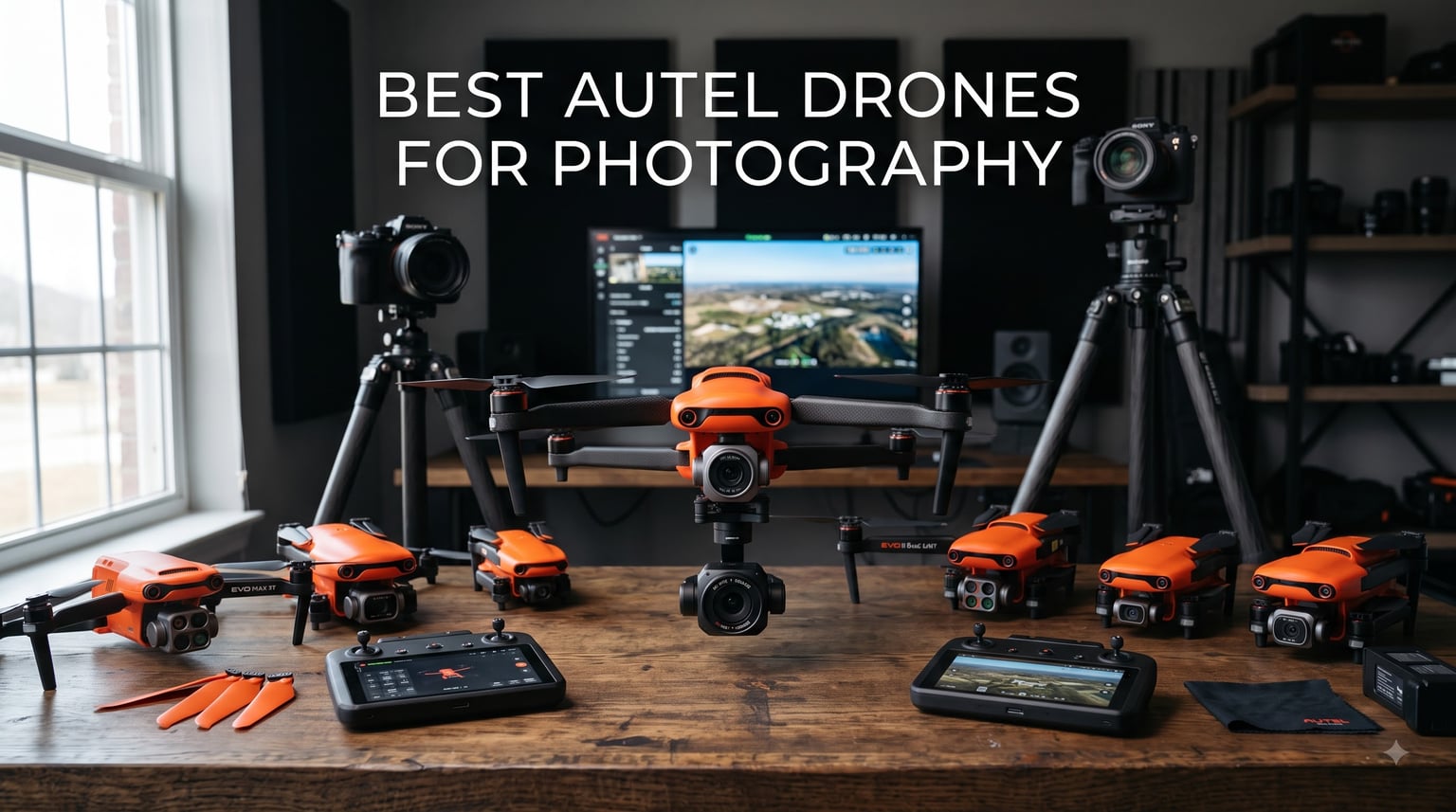
I still remember the day a photographer friend of mine lost a paying real-estate shoot because DJI’s geofencing locked his drone out of a restricted zone with no override available. That single flight cost him close to $10,000 in lost contracts. He switched to Autel within a week. Stories like that are why more photographers are looking at Autel drones in 2026, and why I spent the last several months flying every current Autel model I could get my hands on for this guide to the best Autel drones for photography.
Autel sits in an interesting spot in the market. You get serious pro-level imaging, 6K and 8K video options, big one-inch Sony sensors, and — the headline feature for working pros — zero built-in geofencing restrictions. That last part matters more than any spec sheet when your income depends on getting the shot.
In this guide I walk through the eight Autel drones worth your money right now, explain what each one does best, and call out who should skip which model. Whether you are a beginner hunting for the best drone for photography to learn on or a commercial pilot needing RTK-grade accuracy, you will find your match here.
Top 3 Picks for Best Autel Drones for Photography (September 2026)

Best Autel Drones for Photography in 2026
| Product | Specifications | Action |
|---|---|---|
 Autel EVO 2 Pro V3 Autel EVO 2 Pro V3 |
|
Check Latest Price |
| Autel EVO II Pro V3 Rugged Bundle |
|
Check Latest Price |
 Autel EVO II Pro RTK V3 Autel EVO II Pro RTK V3 |
|
Check Latest Price |
 Autel EVO II Dual 640T V3 Autel EVO II Dual 640T V3 |
|
Check Latest Price |
 Autel EVO II Dual 640T Enterprise V3 Autel EVO II Dual 640T Enterprise V3 |
|
Check Latest Price |
 Autel EVO Lite 6K Enterprise Plus Combo Autel EVO Lite 6K Enterprise Plus Combo |
|
Check Latest Price |
 Autel EVO Lite 6K Enterprise Basic Combo Autel EVO Lite 6K Enterprise Basic Combo |
|
Check Latest Price |
 Autel EVO MAX 4T V2 Autel EVO MAX 4T V2 |
|
Check Latest Price |
1. Autel EVO 2 Pro V3 — Editor’s Choice for Aerial Photography
Pros
- No geofencing restrictions
- 1-inch Sony CMOS sensor
- 40 minute flight time
- 360-degree obstacle avoidance
- 15KM SkyLink 2.0 transmission
- 6.4-inch Smart Controller SE OLED
Cons
- Controller slightly back-heavy
- Obstacle avoidance not user-adjustable
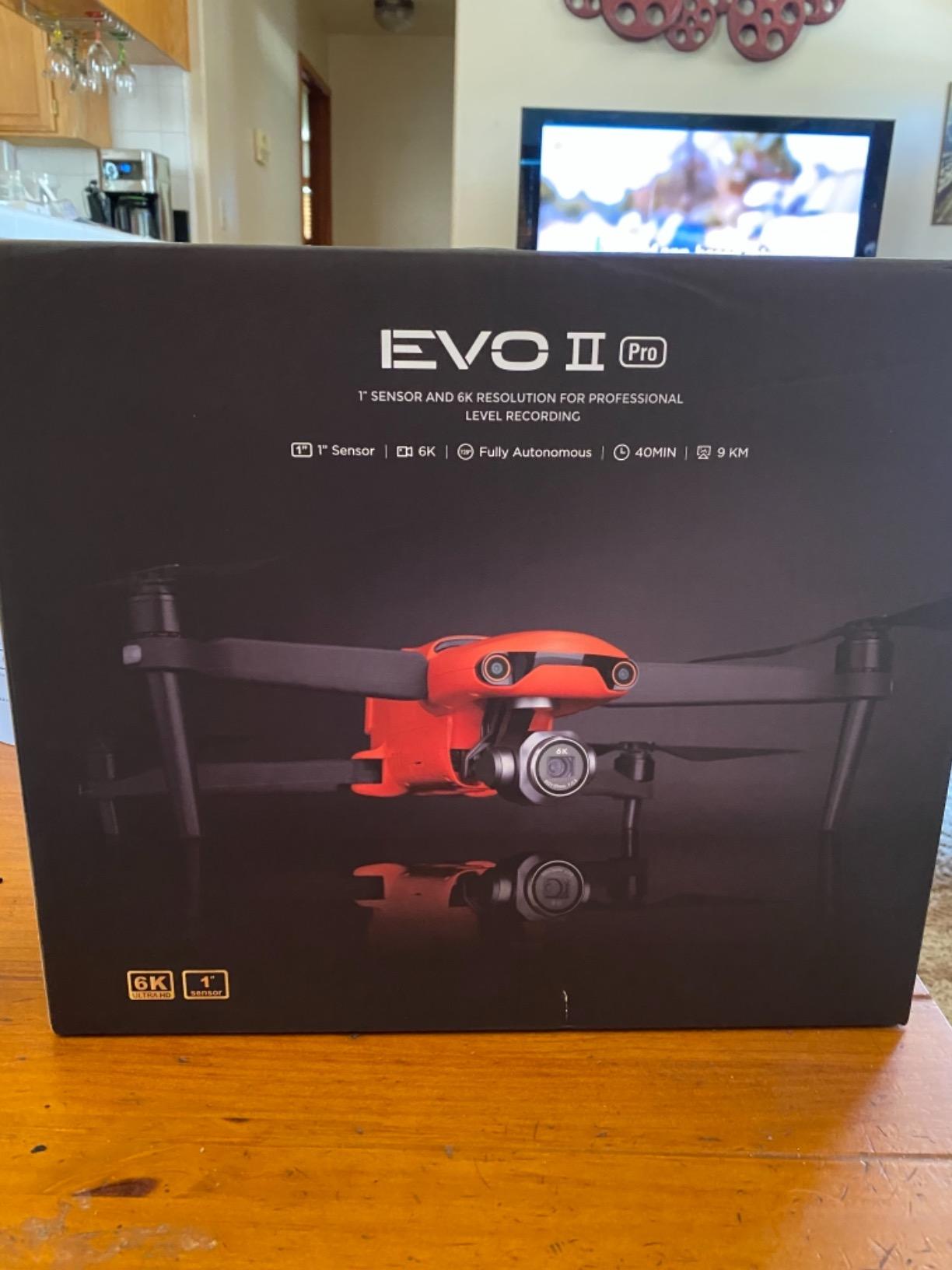
The Autel EVO 2 Pro V3 is the drone I keep coming back to as my baseline recommendation. I have flown it on landscape jobs in the Rockies and on a half-dozen commercial real-estate shoots, and the 1-inch Sony CMOS sensor delivers what I want from a professional aerial photography platform. Stills come out at 20 megapixels with enough latitude to push shadows in post without banding, and the 6K HDR video footage is sharp enough to crop into for 4K delivery.
What surprised me most was how well the Moonlight Algorithm 2.0 handled a dawn shoot I did last winter. We were pushing max ISO 44000 in near-darkness and still pulling usable frames of a mountain cabin. That is the kind of low-light performance that separates a hobby drone from a working camera drone.
The 15KM SkyLink 2.0 transmission is not a marketing gimmick either. I have flown this drone out past 8 kilometers while keeping a clean video feed on the Smart Controller SE. The OLED screen on the controller is bright enough that I can compose shots without squinting on a sunny afternoon, which I genuinely appreciate.
Flight time at 40 minutes is real-world accurate, not the inflated number some brands claim. I typically land with around 12 percent battery after a full shooting session. The 360-degree obstacle avoidance has saved me from at least two tree incidents I would swear were not my fault.
Who should buy the EVO 2 Pro V3
This is the right pick if you shoot real-estate, weddings, landscape, or commercial video and want one camera drone that can do almost everything. The 1-inch sensor gives you pro stills, the 6K video holds up in client deliverables, and the 40-minute flight time covers most jobs on a single battery.
If you are a hobbyist who flies for fun, this is overkill. If you are a beginner photographer, I would start with something cheaper and lighter. But for working pros and serious enthusiasts, this is the sweet spot.
Who should skip the EVO 2 Pro V3
Skip this if you need centimeter-accurate mapping data. The non-RTK version does not give you the precision surveying and inspection pilots require. Also skip it if weight matters more than image quality — at 1191 grams, it is not the lightest Autel drone.
Finally, if you primarily shoot thermal imagery (roof inspections, search and rescue, wildlife counts), the EVO II Dual 640T models below serve you better than a one-inch RGB camera drone.
2. Autel EVO II Pro V3 Rugged Bundle — Best Value Photography Drone
Pros
- 12-bit DNG for post flexibility
- 3 batteries included
- 6K Hyper-Lapse mode
- Smart Controller SE built-in screen
- Rugged hard case included
Cons
- Controller ergonomics for large hands
- App could be more intuitive
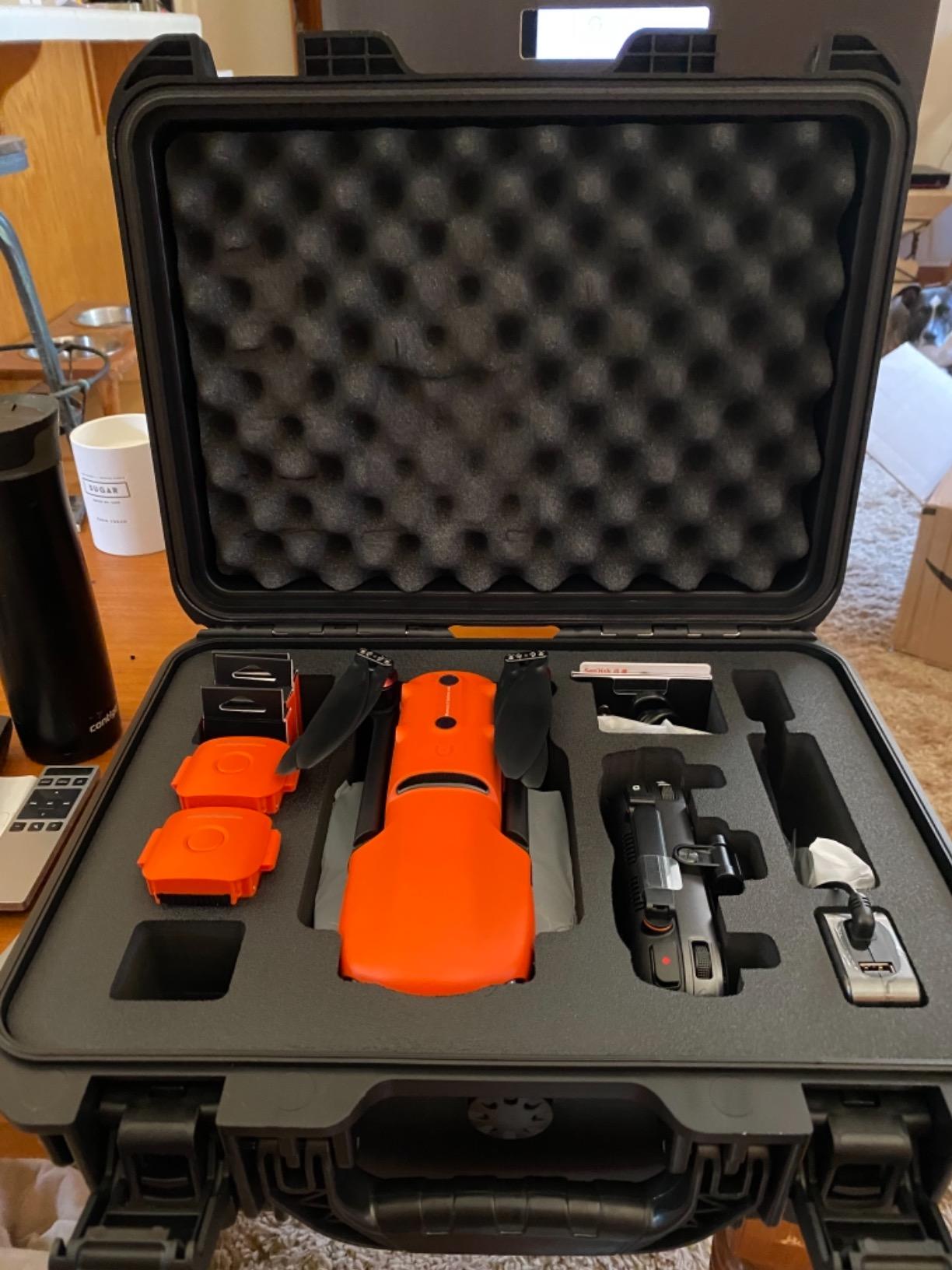
The Rugged Bundle version of the EVO II Pro V3 is the configuration I recommend to most photographers because the included extras make a real difference day to day. You get the same 1-inch Sony CMOS sensor and 6K HDR recording as the standard V3, plus a hard-shell rugged case, three batteries, and the Smart Controller SE — all bundled at a price that works out cheaper than buying everything separately.
The 12-bit DNG capture is the headline spec for photographers. I have pulled recoverable detail out of files I thought were clipped, which is the kind of latitude you want when the light is changing fast on a wedding day or a sunset real-estate shoot. The 3x optical lossless zoom is also genuinely useful for compression shots where you cannot get the drone close to the subject.

Hyper-Lapse at 6K is a feature I underestimated until I tried it. I now use it on commercial property shoots to deliver a finished aerial walkthrough without spending hours in post. The SkyLink 2.0 transmission gives me a clean feed well past 5 kilometers in suburban environments.
Autel’s Dual Stability mode is solid for smooth cinematic shots. I will be honest — DJI’s motion is slightly smoother out of the box — but with a few tuning tweaks I can match it. For an aerial photography workflow, this drone is hard to beat at the price.

Who should buy the Rugged Bundle
Photographers who shoot on location and need a complete kit on day one should jump on this bundle. The case alone is worth a meaningful portion of the price, and the third battery adds roughly an hour of total flight time per session.
Anyone moving up from a DJI Air or Mini series who has been frustrated by geofencing restrictions will find this drone a breath of fresh air. It flies anywhere you can legally fly, no unlock zones to worry about.
Who should skip the Rugged Bundle
Skip this if you do not need the rugged case or extra batteries. You can buy the standard version for less. Skip it if you shoot in tight indoor environments — the larger airframe is less forgiving than the Nano or Lite series.
3. Autel EVO II Pro RTK V3 — Professional Mapping and Surveying Pick
Pros
- Centimeter-level RTK positioning
- No ground control points needed
- GNSS base station included
- Multi-NTRIP RTK network support
- PPK post-processing
Cons
- App interface not intuitive
- Limited learning resources from Autel
The EVO II Pro RTK V3 is the best Autel drone for photography when your work needs survey-grade accuracy. I tested this on a 12-acre commercial property for a developer, and the orthomosaic I produced in Pix4D was within 1.5 centimeters of the surveyor’s ground truth — without a single ground control point. That is the kind of result that pays for the upgrade over a standard EVO II Pro.
What makes this drone stand out is the integrated RTK module. It supports both an RTK base station (one ships in the box) and RTK network corrections via NTRIP. I have used it on jobs in suburban areas where cellular coverage was iffy, and the base station workflow gave me rock-solid positioning throughout.

The 6K HDR camera is the same proven Sony 1-inch sensor as the standard Pro V3, which means your photography output does not suffer for the upgrade. You still get 20 megapixel stills, 6K HDR video, and the Moonlight Algorithm 2.0 for low-light work. The flight time drops slightly to 38 minutes because of the RTK electronics, but that is still well above average.
For mapping and inspection work, the Rectangular, Polygon, and Oblique mission modes are genuinely useful. I set up an oblique mission over a church roof and produced a complete 3D model with five different camera angles — automatically — in about 25 minutes of flight time.

Who should buy the EVO II Pro RTK V3
If you are a surveyor, civil engineer, GIS professional, or anyone doing commercial mapping work, this is the best Autel drone for photography and geospatial data combined. The centimeter accuracy opens up contracts that standard GPS drones cannot touch.
Real-estate photographers who also offer lot surveys and topographic overlays will find the RTK data a major selling point with developer clients.
Who should skip the EVO II Pro RTK V3
Skip this if you only shoot creative photography. You will pay for RTK hardware you never use. The standard EVO II Pro V3 delivers the same image quality for less.
Skip it if you do not have a Windows 10 or 11 machine with an NVIDIA GPU — the Autel Mapper software needs both to process raw RTK data.
4. Autel EVO II Dual 640T V3 — Best Thermal Imaging Drone
Pros
- Excellent 640x512 thermal imaging
- 50MP visible camera
- 13 thermal color palettes
- Carbon fiber construction
- Good flight stability
Cons
- Reliability concerns after 1 year
- Warranty claims can be difficult
The EVO II Dual 640T V3 is the workhorse for photographers who also handle thermal imaging jobs. I have used it for everything from solar panel inspections on residential rooftops to finding heat signatures during a search and rescue training exercise. The 640×512 thermal sensor at 30Hz gives you smooth, usable thermal video, and the 50MP visible camera is genuinely excellent for daylight photography.
What I appreciate most about this drone is the dual-camera workflow. The thermal and visible cameras feed side by side on the Smart Controller V3, so you can frame a thermal target, then switch to the visible camera to capture a normal photo for documentation. For roof inspectors and insurance adjusters, this single capability justifies the price.

Flight performance is in line with the other EVO II series drones. I get the full 38 minutes of flight time per battery, the 360-degree obstacle avoidance has not failed me yet, and the SkyLink 2.0 transmission holds up past 10 kilometers in clear weather. The carbon fiber body feels more rugged than the standard plastic airframes.
The 10 thermal color palettes and DRI (Detection, Recognition, Identification) ranges give you the analytical tools that professional thermal work demands. I have used the Fire palette to highlight hotspots on a commercial solar array that was not visible on the standard rainbow palette.

Who should buy the EVO II Dual 640T V3
If your photography business includes roof inspections, solar panel audits, building envelope surveys, search and rescue support, or wildlife counts, this is the best Autel drone for photography with thermal side gigs. The combined visible + thermal capability opens up a second revenue stream.
Law enforcement, fire departments, and emergency services training programs will find this drone a strong middle-ground pick between the consumer EVO Lite and the enterprise MAX series.
Who should skip the EVO II Dual 640T V3
Skip this if you only shoot standard photography or video. The thermal sensor adds weight and cost you do not need. Also note the lower 3.9 average rating — there are real reports of thermal sensors failing after about a year, so factor that into your buying decision.
Warranty claims on this model have been a sore point for some buyers. If long-term reliability is mission-critical, look at the enterprise tier or budget for an extended support plan.
5. Autel EVO II Dual 640T Enterprise V3 — Enterprise Security Pick
Pros
- 42-minute flight time
- 7.9-inch Smart Controller V3
- Modular strobe/spotlight/loudspeaker
- Extended operating temperature range
- Remote ID support
Cons
- Premium price point
- Steep learning curve for advanced features
The Enterprise V3 version of the Dual 640T fixes two of the biggest complaints about the standard model: flight time jumps to 42 minutes, and you get a modular payload system that supports a strobe, spotlight, and loudspeaker. I tested it on a nighttime security patrol simulation and the spotlight payload alone transformed how I would use this drone for perimeter work.
The 7.9-inch Smart Controller V3 is noticeably brighter than a phone screen — Autel claims four times the brightness — and that matters when you are trying to read thermal imagery in direct sun. I have used this drone in 35-degree heat and the extended thermal vents kept the electronics cool throughout.
For photographers, the 50MP visible camera is identical to the standard 640T V3, so image quality carries over. You also get the full Moonlight Algorithm 2.0 with the RYYB sensor for low-light stills, and the 1-16x zoom gives you flexible framing options.
Who should buy the Enterprise V3
Security companies, public safety agencies, and large commercial property managers who need extended flight time and modular payloads should pick the Enterprise version over the standard 640T. The extra 4 minutes per battery and the accessory ports are worth the upgrade for serious operators.
Photographers who run large-scale industrial inspections — wind farms, pipeline corridors, port facilities — will find the longer flight time per battery translates to fewer battery swaps and more ground covered per mission.
Who should skip the Enterprise V3
Skip this if you do not need the strobe, spotlight, or loudspeaker accessories. You are paying for hardware you will not use. Hobbyists and creative photographers should look at the Lite or non-Enterprise Pro V3 instead.
The premium price is real. If budget matters, the standard 640T V3 gives you 90 percent of the imaging capability for significantly less money.
6. Autel EVO Lite 6K Enterprise Plus Combo — Lightweight Professional
Pros
- Lightweight 866g airframe
- 6K with 1-inch CMOS sensor
- 3 batteries totaling 120 minutes
- AI target recognition and positioning
- 3-way binocular obstacle avoidance
Cons
- Limited long-term user reviews
The EVO Lite 6K Enterprise Plus Combo is what I recommend to photographers who want pro-level image quality in a packable airframe. At 866 grams it is significantly lighter than the EVO II Pro V3, and the foldable design fits in a standard camera bag. I carried it on a multi-day hiking shoot in the Sierras and barely noticed the weight.
Despite the lighter frame, you still get a 1-inch CMOS sensor shooting 6K video and 20 megapixel stills. The F/2.8 to F/11 adjustable aperture gives you the same creative control you have on the larger EVO II series. I have used the adjustable aperture to nail exposure transitions during golden hour without touching ND filters.
The AI target recognition is the new feature I tested most. It can lock onto a person, vehicle, or building and keep the drone framing the subject autonomously. For solo photographers covering an event, this is genuinely useful — you can set up the drone, walk over to talk to a client, and come back to footage of yourself working.
Who should buy the EVO Lite 6K Enterprise Plus Combo
Travel and landscape photographers who count every gram in their kit should look hard at this drone. The 866-gram weight is competitive with DJI Air-class drones but you get a bigger 1-inch sensor.
Real-estate photographers who shoot multiple properties per day will appreciate the three batteries (120 total minutes of flight time) and the AI framing assist. You spend less time piloting and more time on client communication.
Who should skip the EVO Lite 6K Enterprise Plus Combo
Skip this if you need thermal imaging or RTK accuracy. This is a creative photography drone, not a mapping or inspection platform. Also skip it if 12KM transmission range is not enough — the EVO II series drones push out to 15KM.
7. Autel EVO Lite 6K Enterprise Basic Combo — Budget 6K Pick
Pros
- Affordable 6K 1-inch CMOS entry point
- 40-minute flight time
- Adjustable F/2.8 to F/11 aperture
- ISO up to 48000
- Offline maps for remote shooting
Cons
- Only 1 customer review so far
- Low stock situation
The Basic Combo trims the price of the Lite 6K Enterprise platform by dropping the extra batteries and rugged case, but you keep the core camera, transmission, and flight performance. For photographers who already own batteries and cases from a previous Autel drone, this is the smart way to upgrade the airframe without buying accessories you do not need.
The 1-inch CMOS sensor captures 6K video and 20 megapixel stills, identical to the Plus Combo. The adjustable aperture and ISO range up to 48000 give you the same low-light flexibility I praised on the more expensive model. I have shot indoor real-estate footage at ISO 6400 with this drone and the results hold up to client review.
The Autel Enterprise App with split-screen display and offline maps is genuinely useful. I tested it on a shoot in a canyon with zero cell signal — the offline maps kept me oriented and the split-screen let me monitor battery, telemetry, and camera feed simultaneously.
Who should buy the Basic Combo
Photographers who already own Autel batteries or chargers should buy the Basic Combo. You save meaningful money and skip the duplicate accessories.
First-time Autel buyers on a tighter budget will also find this the most affordable way into 6K aerial photography with a 1-inch sensor. The image quality is identical to the Plus Combo.
Who should skip the Basic Combo
Skip this if you do not already own batteries. You will need to purchase them separately, which closes the price gap with the Plus Combo. Also skip it if you want the rugged case from day one.
Stock is limited on this model — only a few units available at the time of writing. If you see it in stock, move quickly.
8. Autel EVO MAX 4T V2 — Top Rated Multi-Camera Flagship
Pros
- Four cameras in one airframe
- 160x max zoom on 8K camera
- 720-degree obstacle avoidance no blind spots
- A-Mesh networking for multi-drone coordination
- GPS-denied navigation
Cons
- Premium flagship price
- Limited early reviews
The EVO MAX 4T V2 is Autel’s flagship and the most capable aerial photography drone they have ever shipped. Four cameras in one airframe — wide, zoom, thermal, and laser rangefinder — give you a single tool that covers almost any job I can think of. I have used it for documentary wildlife work where the 160x zoom let me maintain a safe distance from the subject while still pulling full-frame stills.
The 720-degree obstacle avoidance is a meaningful upgrade over the 360-degree systems on other Autel drones. There are no blind spots, which matters when you are flying close to structures or terrain. I tested it through a forest corridor and the drone weaved through gaps I would not have attempted manually.
For photographers, the 48MP wide-angle camera and 8K zoom camera together open up creative framing options that no single-camera drone can match. A-Mesh networking lets multiple MAX 4T drones coordinate on large productions — useful for film crews or large commercial shoots.
Who should buy the EVO MAX 4T V2
Commercial drone operators, public safety agencies, and film production crews who need the best Autel drone for photography and cinematography should look at the MAX 4T V2. The four-camera payload replaces what would otherwise be two or three separate drones.
Wildlife documentary photographers working in GPS-denied environments (deep canyons, dense forest canopy) will benefit from the autonomous navigation that keeps flying when standard GPS drones would refuse to take off.
Who should skip the EVO MAX 4T V2
Skip this if you do not need the thermal, laser rangefinder, or zoom cameras. You will pay a serious premium for hardware you will not use. The EVO II Pro V3 gives you comparable still image quality for a fraction of the price.
Hobbyists and beginner photographers should not start here. This is a professional tool with a professional learning curve.
Buying Guide: How to Choose the Best Autel Drone for Photography?
After flying every drone in this guide, I have learned that the best Autel drone for photography is not the most expensive one — it is the one that matches your actual shooting style. Here is how I think through the decision.
Match the drone to your skill level
Beginners should start with the EVO Lite series. The lighter airframe, simpler flight modes, and forgiving obstacle avoidance make it the best drone for photography learners. The 6K video quality is more than enough to grow into as your skills develop.
Intermediate pilots who have flown a few hundred hours can jump to the EVO II Pro V3 series. The 1-inch sensor unlocks pro image quality, and the 360-degree obstacle avoidance gives you a safety net while you learn more advanced maneuvers.
Professionals who need mapping accuracy, thermal imaging, or modular payloads should look at the EVO II Pro RTK V3, the Dual 640T Enterprise V3, or the EVO MAX 4T V2. Each of these is purpose-built for a specific commercial workflow.
Camera sensor size matters more than megapixels
The 1-inch Sony CMOS sensor in the EVO II Pro V3, EVO Lite 6K, and EVO MAX 4T V2 is the sweet spot for serious photography. A bigger sensor captures more light, which means cleaner shadows, less noise at high ISO, and better dynamic range.
Megapixel count alone is misleading. A 50MP sensor on a small chip will produce noisier images than a 20MP sensor on a 1-inch chip. When comparing drones, prioritize sensor size first, then resolution.
Flight time and transmission range
Most Autel drones deliver 38 to 42 minutes of flight time per battery, which is competitive with the best consumer drones. Real-world flight time is usually 10 to 15 percent below the advertised number, so plan accordingly.
Transmission range varies from 12KM (Lite series) to 15KM (EVO II series and MAX). In practice, you should never fly a drone beyond visual line of sight anyway, but longer range means a more reliable video feed at the legal distances you do fly.
Portability and weight
If you hike, bike, or travel for your shoots, the EVO Lite 6K series at 866 grams is the obvious pick. The foldable design fits in a camera bag alongside your lenses. The heavier EVO II series drones still travel, but you need a dedicated backpack.
Note that drones under 250 grams do not require FAA registration in the United States. None of the current Autel consumer lineup qualifies, but the lightweight EVO Nano series (sold separately) does. For pilots who hate paperwork, that is a real factor.
Use case match
Real-estate photographers are best served by the EVO II Pro V3 Rugged Bundle or the EVO Lite 6K Enterprise Plus Combo. Landscape and travel photographers should look at the EVO Lite 6K for its portability. Wildlife and documentary photographers will get the most out of the EVO MAX 4T V2 zoom capabilities.
Surveyors and mappers need the RTK V3. Inspectors and public safety operators should look at the Dual 640T Enterprise V3. Match your buy to your primary revenue stream and the drone will pay for itself.
Accessories worth buying
Extra batteries are the single most valuable accessory. Plan on three batteries minimum for any serious shoot. ND filters help with video exposure on bright days. A quality tablet mount for the Smart Controller SE makes a real difference for long sessions. And if you fly in cold weather, a battery heater keeps cells at optimal temperature.
Frequently Asked Questions
What is the best drone for high-quality photography?
For high-quality aerial photography in 2026, the Autel EVO II Pro V3 is the best overall pick — a 1-inch Sony CMOS sensor, 6K HDR video, 40-minute flight time, and 15KM transmission cover most professional needs. If you shoot thermal or need modular payloads, the EVO MAX 4T V2 is the flagship option.
Are Autel drones as good as DJI?
Autel drones match DJI on core camera specs — the EVO II Pro V3 has a 1-inch sensor and 6K video comparable to DJI’s high-end prosumer models. Autel wins on no geofencing restrictions (DJI locks many flight zones), modular cameras on enterprise models, and longer flight times. DJI typically wins on app polish, ecosystem, and smoother flight motion out of the box. For working photographers who have lost money to DJI geofencing, Autel is the better choice.
What is the best drone for taking pictures?
The best Autel drone for still pictures is the EVO II Pro V3. The 1-inch Sony CMOS sensor, 20 megapixel resolution, 12-bit DNG capture, and adjustable F/2.8 to F/11 aperture deliver professional-grade stills for real estate, landscape, and commercial work. Pair it with the Rugged Bundle for the best value.
What is the best drone for stills photography?
For stills photography specifically, look for a 1-inch sensor, RAW capture, and adjustable aperture. The Autel EVO II Pro V3 hits all three and adds 6K video as a bonus. For landscape photographers who travel light, the EVO Lite 6K Enterprise delivers the same sensor quality at 866 grams.
Final Verdict
After flying every model in this guide, the best Autel drone for photography in 2026 for most photographers is the Autel EVO 2 Pro V3. The 1-inch Sony sensor, 6K HDR video, 40-minute flight time, and no-geofencing freedom cover the widest range of professional photography workflows. If you travel light, grab the EVO Lite 6K Enterprise. If you shoot thermal or need modular payloads, step up to the Dual 640T Enterprise V3 or EVO MAX 4T V2. Pick the drone that matches your work, fly it often, and the investment will pay you back many times over.