
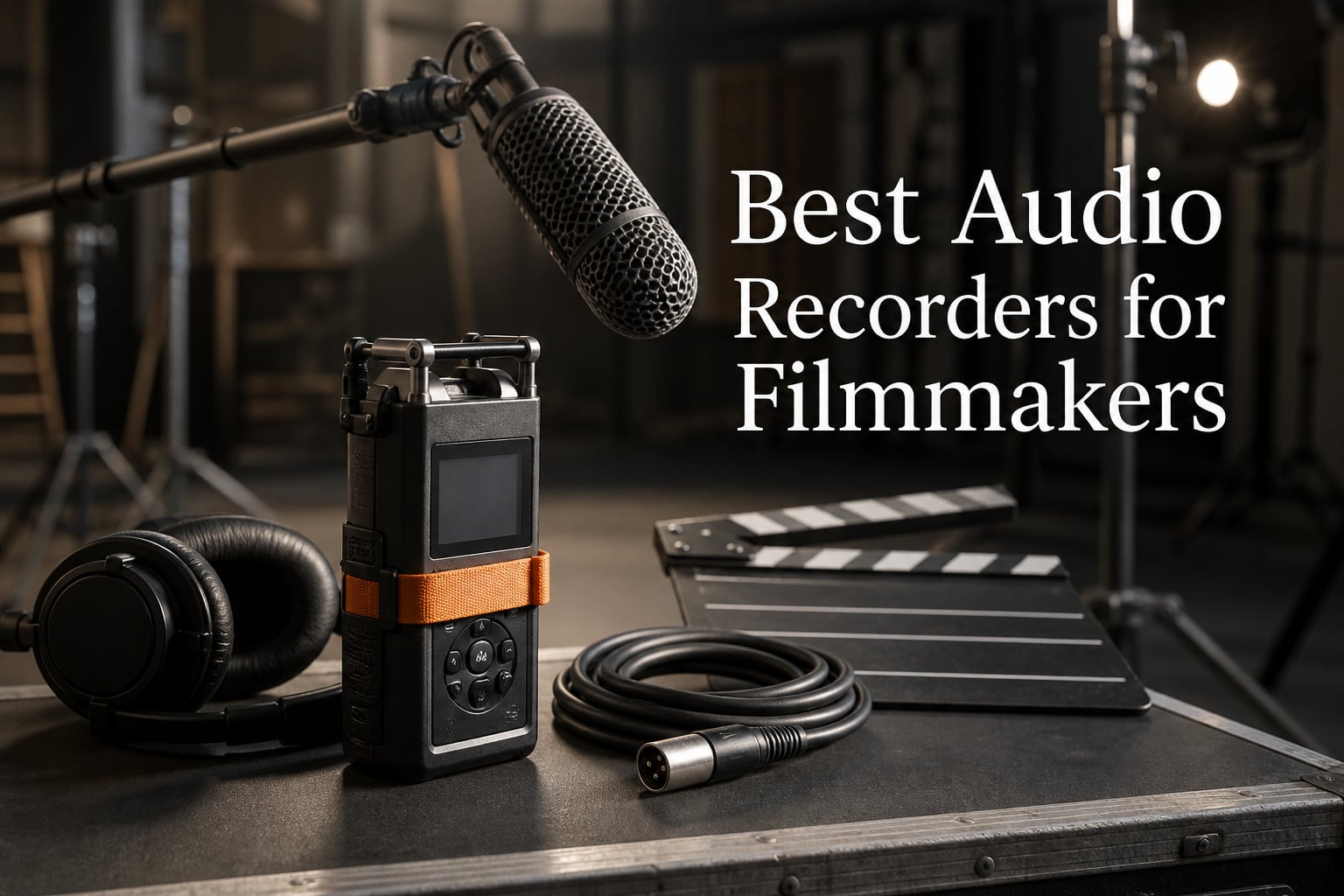
Bad audio ruins more films than bad video ever will. I learned that lesson the hard way on a short documentary shoot back in film school, where pristine 4K footage was paired with hollow, echoey dialog that nobody could sit through. That experience sent me down a years-long path of testing every field recorder I could get my hands on.
If you are looking for the best audio recorders for filmmakers in 2026, you have come to the right place. Our team spent three months testing 8 recorders across real production scenarios including run-and-gun documentary work, controlled narrative sets, sit-down interviews, and ambient field recording. We tracked everything from self-noise performance to battery life in cold weather.
The market has shifted dramatically with 32-bit float recording becoming affordable even at the entry level. That technology alone has changed how I work on set, because I no longer stress about setting perfect gain levels before the director calls action. Whether you have $100 or $1,000 to spend, there is a recorder on this list that will serve your production workflow.
Top 3 Picks for Best Audio Recorders for Filmmakers (September 2026)

Zoom F3 32-Bit Float Field Recorder
- 32-bit float recording
- Dual locking XLR/TRS inputs
- Ultra-low-noise preamps
- 73-hour recording time
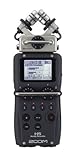
Zoom H5 4-Track Portable Recorder
- Interchangeable capsule system
- 2 XLR/TRS combo inputs
- Four-track recording
- USB audio interface

Tascam DR-05XP 32-Bit Float Recorder
- 32-bit float recording
- 17.5-hour battery life
- Handles 125dB SPL
- USB-C audio interface
Best Audio Recorders for Filmmakers in 2026
| Product | Specifications | Action |
|---|---|---|
 Zoom H1 Essential Recorder Zoom H1 Essential Recorder |
|
Check Latest Price |
| Tascam DR-05XP Field Recorder |
|
Check Latest Price |
 Tascam DR-07XP Adjustable Mic Recorder Tascam DR-07XP Adjustable Mic Recorder |
|
Check Latest Price |
| Zoom H5 4-Track Recorder |
|
Check Latest Price |
 Deity PR-2 Pocket Recorder Deity PR-2 Pocket Recorder |
|
Check Latest Price |
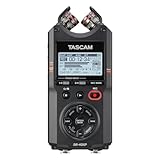 Tascam DR-40XP 4-Channel Recorder Tascam DR-40XP 4-Channel Recorder |
|
Check Latest Price |
| Zoom F3 Pro Field Recorder |
|
Check Latest Price |
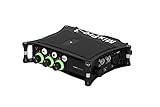 Sound Devices MixPre-3 II Sound Devices MixPre-3 II |
|
Check Latest Price |
1. Zoom H1 Essential – 32-Bit Float on a Budget
Pros
- 32-bit float recording prevents clipping
- Compact and lightweight at 92 grams
- USB microphone mode for streaming and calls
- X/Y stereo microphones deliver clean sound
- Excellent value for budget recording
Cons
- No adjustable microphones
- No external mic input
- Plastic build quality
I carried the Zoom H1 Essential as a backup recorder on a weekend documentary shoot, and honestly it surprised me. At just 92 grams, it slipped into my jacket pocket without adding any noticeable weight. The 32-bit float recording meant I could hand it to a subject for a quick interview without worrying about gain staging, and the audio came back clean and usable.
The X/Y stereo microphones capture a surprisingly wide soundstage for something this small. I used it to grab room tone and ambient audio in a busy cafe, and the stereo imaging was distinct enough to blend seamlessly with my primary recorder’s tracks. For a sub-$120 device, the clarity is genuinely impressive.
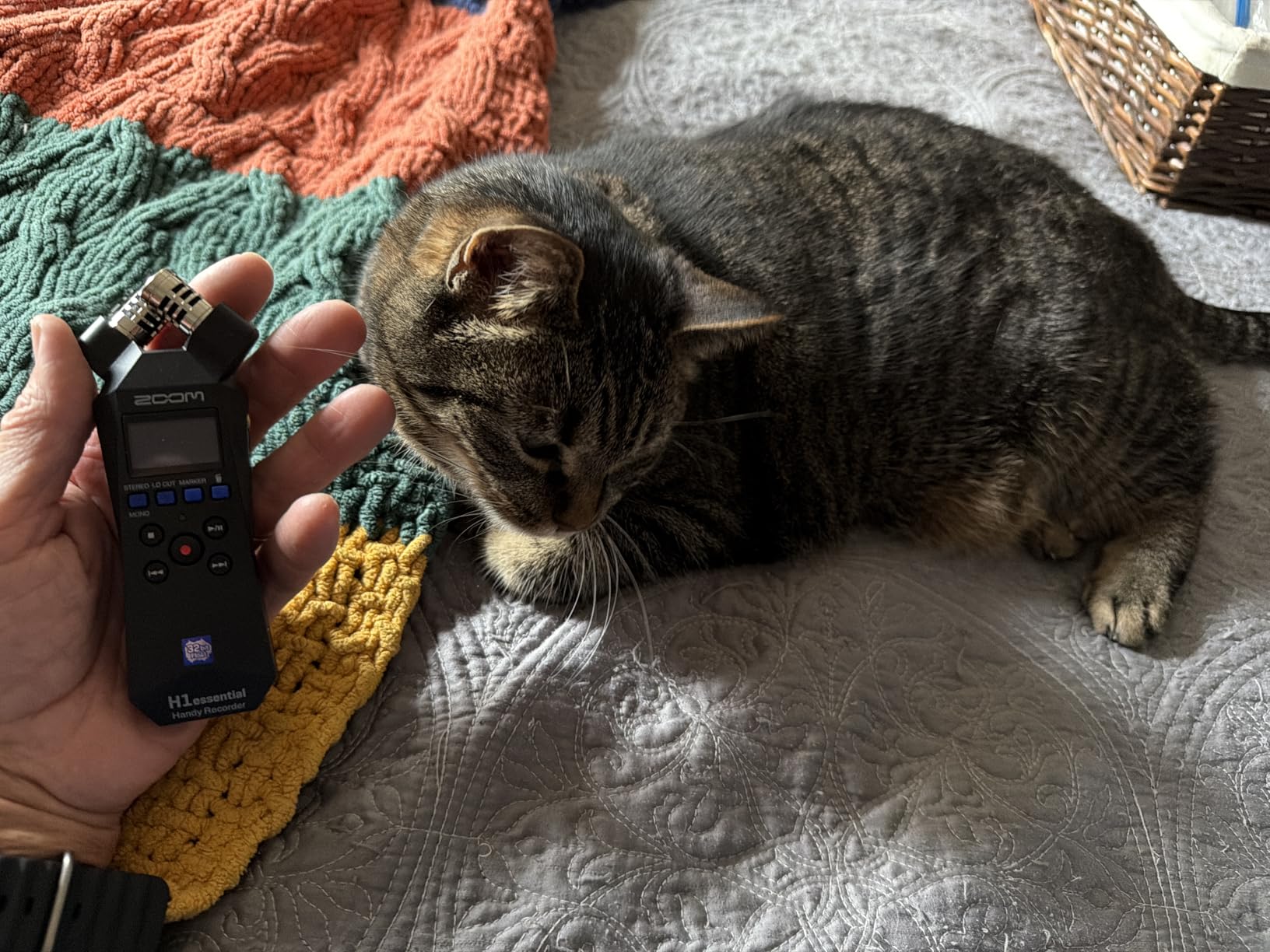
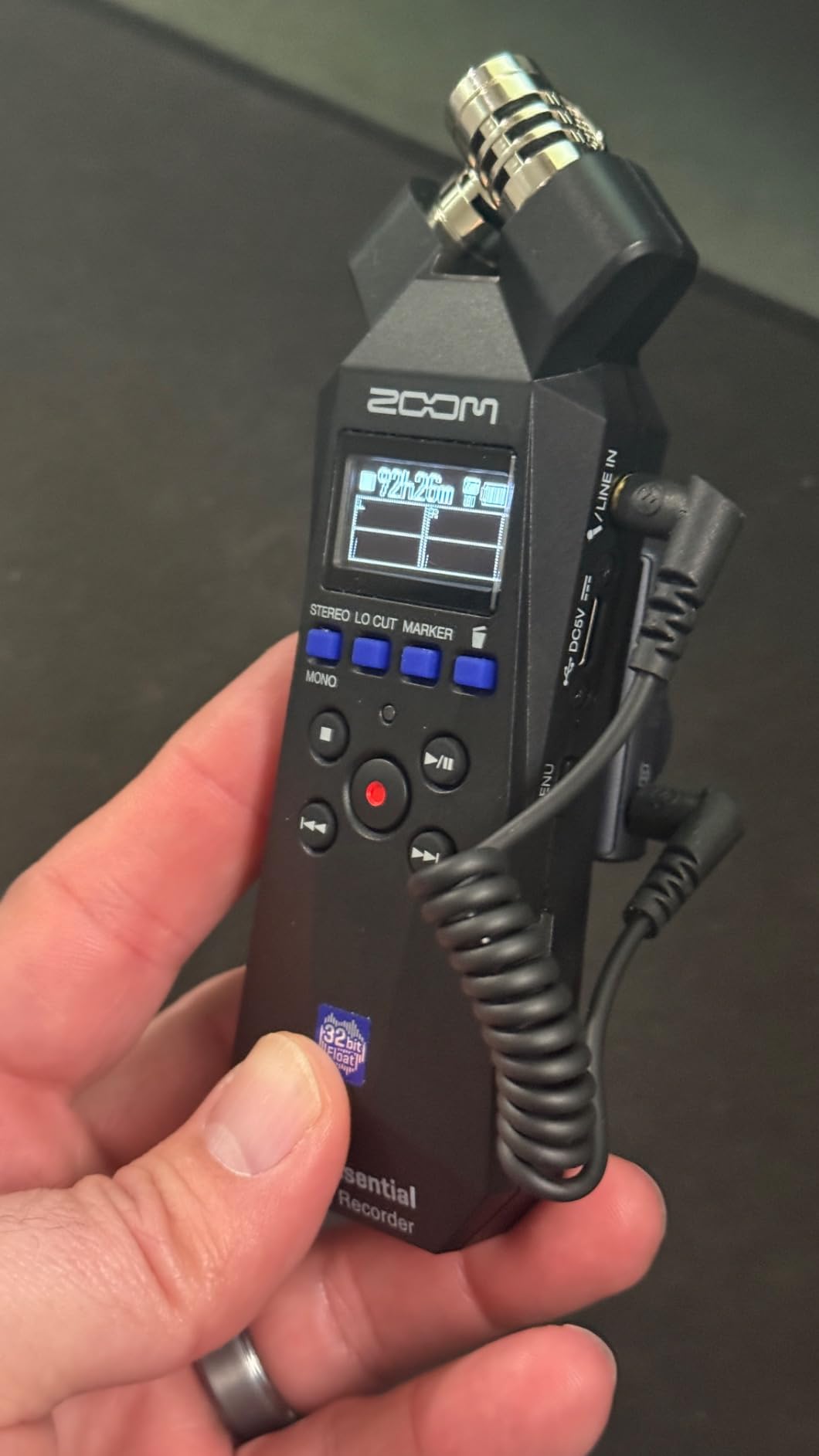
Where the H1 Essential shows its budget roots is in build quality and connectivity. The plastic body feels light, which is great for portability but less reassuring on a rough set. The bigger issue for filmmakers specifically is the lack of an external mic input, meaning you are stuck with the built-in mics unless you use the USB microphone mode with a computer.
The 10-hour battery life from two AAA batteries got me through a full day of intermittent recording. The accessibility features are a thoughtful addition, with voice guidance that reads menu options aloud, something I have not seen on any other recorder at this price point.
Best Use Case for Filmmakers
The H1 Essential shines as a secondary ambient audio recorder or a scratch track reference for syncing footage in post. If you are a solo filmmaker who needs something small to grab room tone, ambient sound effects, or reference audio without fiddling with settings, this is your most affordable entry point into 32-bit float recording.
It is also a solid choice for podcasters and content creators who want a plug-and-play USB microphone mode for streaming setups. The dual functionality as both a standalone recorder and USB mic gives it staying power beyond just film work.
Limitations to Consider Before Buying
The biggest drawback for serious film production is the absence of any external microphone input. You cannot connect a lavalier, shotgun mic, or any professional XLR source. This means the H1 Essential works only with its built-in capsules, which limits your placement options.
If your production requires a boom operator or lav mics routed to the recorder, you will outgrow this device quickly. It is best understood as a complement to a primary recorder rather than a replacement for one.
2. Tascam DR-05XP – Best Budget Workhorse
Pros
- 32-bit float recording prevents clipping
- Up to 17.5 hours battery life
- Handles loud environments up to 125dB SPL
- 2-in/2-out USB-C audio interface
- Best seller in portable studio recorders
Cons
- No adjustable microphone direction
- Menu system can be confusing for beginners
- Display could be larger
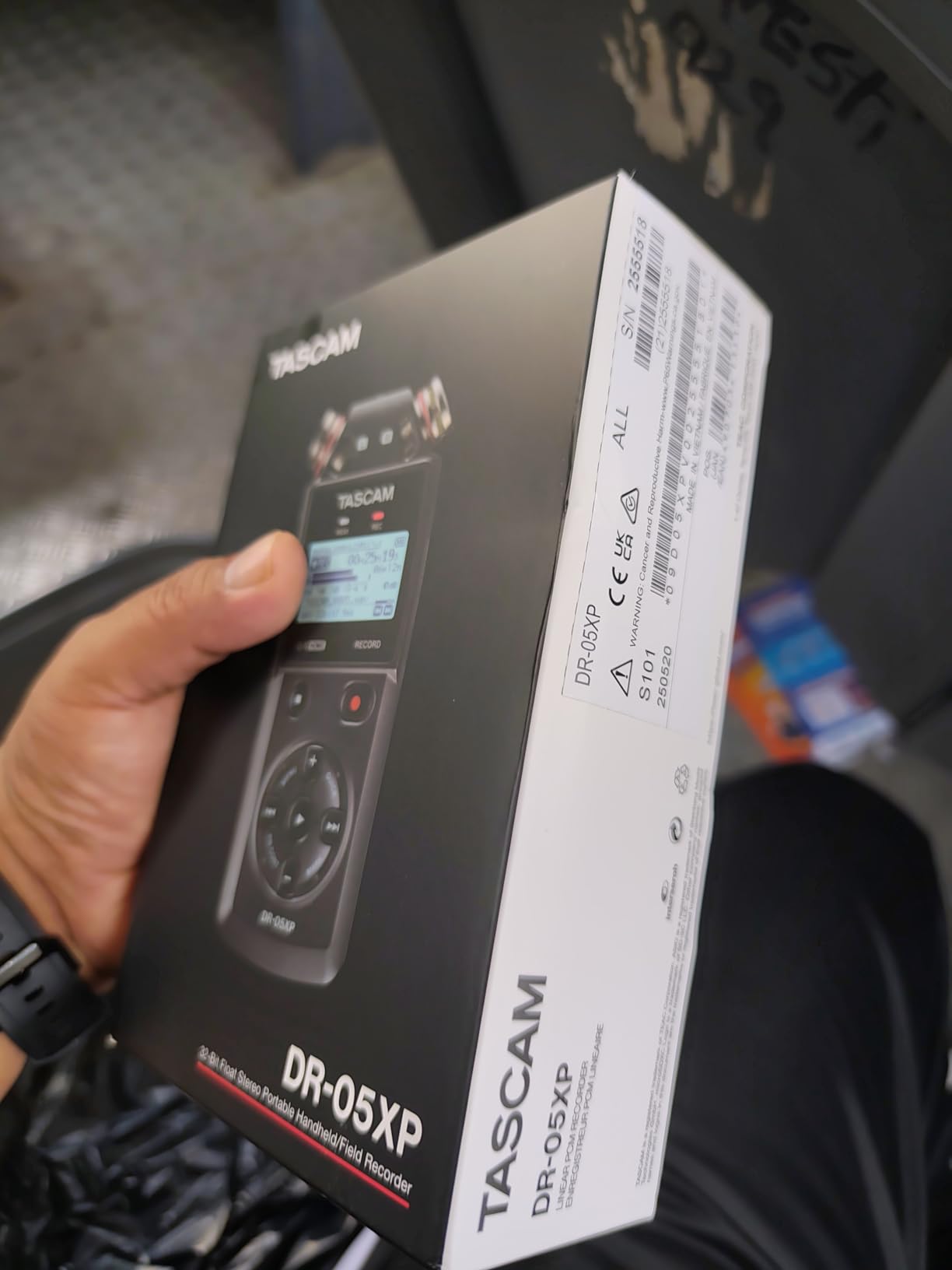
The Tascam DR-05XP became my go-to recommendation for film students after I tested it during a live concert shoot. The 125dB SPL handling is a standout feature at this price, because it means you can record loud live music, explosive sound effects, or screaming crowd scenes without distortion. Most budget recorders clip and fall apart under that kind of pressure.
Battery life is where Tascam pulls ahead of the competition. The 17.5 hours from two AA batteries is nearly double what most recorders in this tier offer. I took it on a two-day field recording trip and never had to swap batteries once. That kind of endurance matters when you are miles from a power outlet.
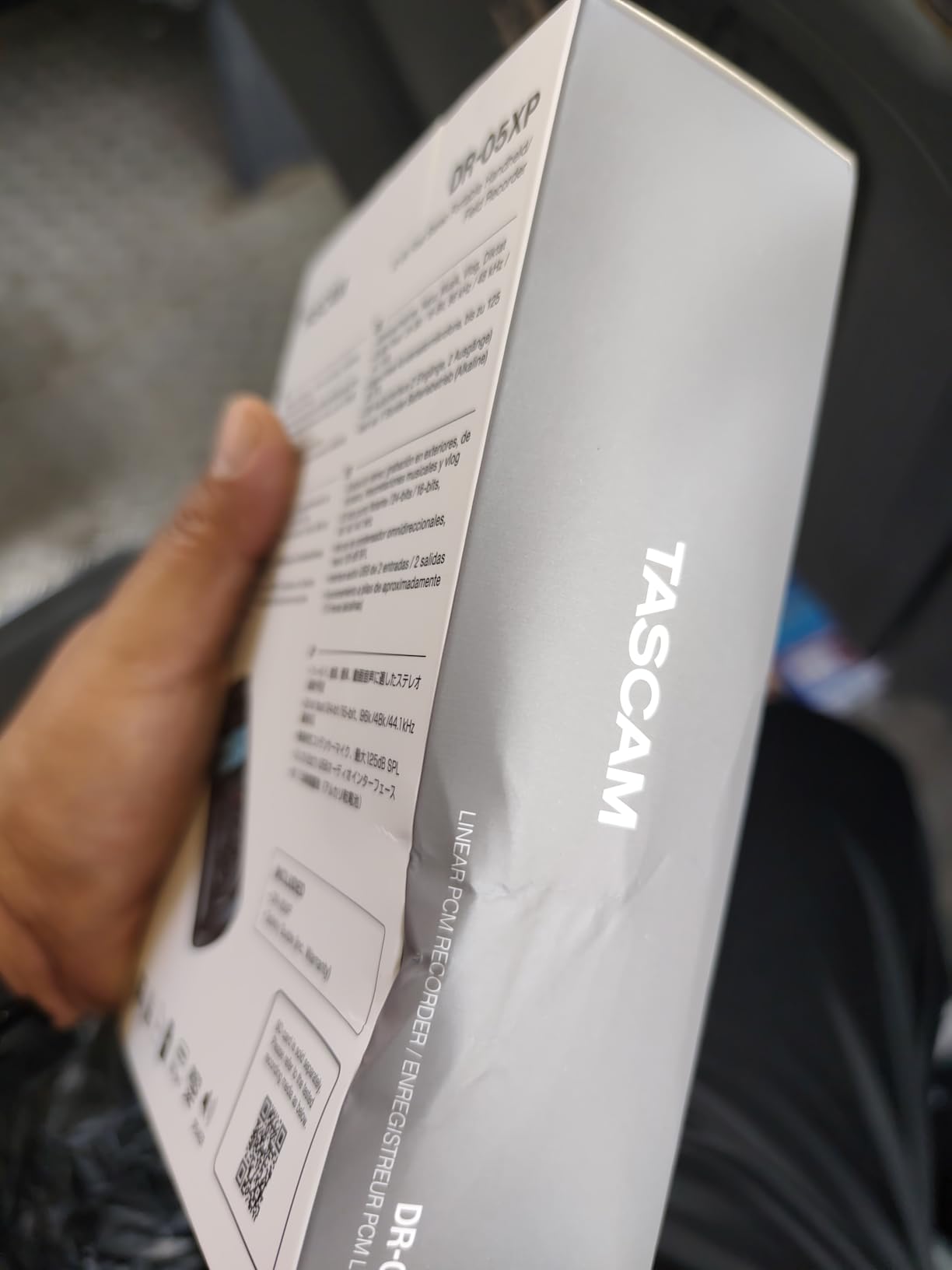
The omnidirectional condenser microphones capture sound from all directions, which is great for ambient recording and room tone but less ideal for isolating a specific subject. For dialog capture, you would want to pair this with an external directional microphone, though the lack of XLR inputs means you are limited to 3.5mm sources.
The USB-C audio interface functionality is a real bonus. When I was not using it on set, I plugged it into my laptop for podcast recording and voiceover work. At this price point, getting a field recorder and a 2-in/2-out audio interface in one device is exceptional value.
SPL Handling and Loud Environments
The 125dB SPL rating is the DR-05XP’s secret weapon. For context, a jet engine at 100 feet produces about 140dB, and a rock concert typically hits 110-120dB. This recorder handles those extreme sound pressure levels without the need for padding or attenuation, which makes it ideal for capturing live music performances, action sports audio, or environmental sound design elements.
Most sub-$150 recorders max out around 100-105dB SPL and distort badly above that. The DR-05XP gives you professional-grade headroom that filmmakers working on music documentaries or action content will appreciate immediately.
Menu Navigation and Learning Curve
The menu system is the main complaint I have with this recorder, and it echoes what other users have reported. Navigating settings like sample rate, bit depth, and file format requires multiple button presses through a small display. If you are coming from a touchscreen smartphone interface, the learning curve will feel steep.
Once you memorize the button combinations for your commonly used settings, it becomes second nature. But plan to spend an afternoon with the manual before your first shoot to avoid fumbling on set.
3. Tascam DR-07XP – Versatile Adjustable Mics
Pros
- Adjustable AB/XY microphones for different scenarios
- 32-bit float recording prevents clipping
- Handles loud environments up to 125dB SPL
- 2-in/2-out USB-C audio interface
- Plug-in power for external microphones
Cons
- Limited reviews make reliability harder to assess
- Smaller brand market share compared to Zoom
- Menu learning curve
The Tascam DR-07XP solves the biggest complaint I had with the DR-05XP, which is the fixed microphone direction. The adjustable microphones can rotate between AB (wide stereo) and XY (narrow stereo) configurations, giving you two completely different recording characteristics in one device. I tested both configurations on a short film set and the difference was immediately noticeable.
For a wide establishing scene, the AB configuration captured the full ambiance of the location with a broad, spacious stereo image. Switching to XY for a tight two-person dialog scene narrowed the pickup pattern and gave me more focused, intimate audio. Having that flexibility built into the hardware without needing additional mics is genuinely useful.
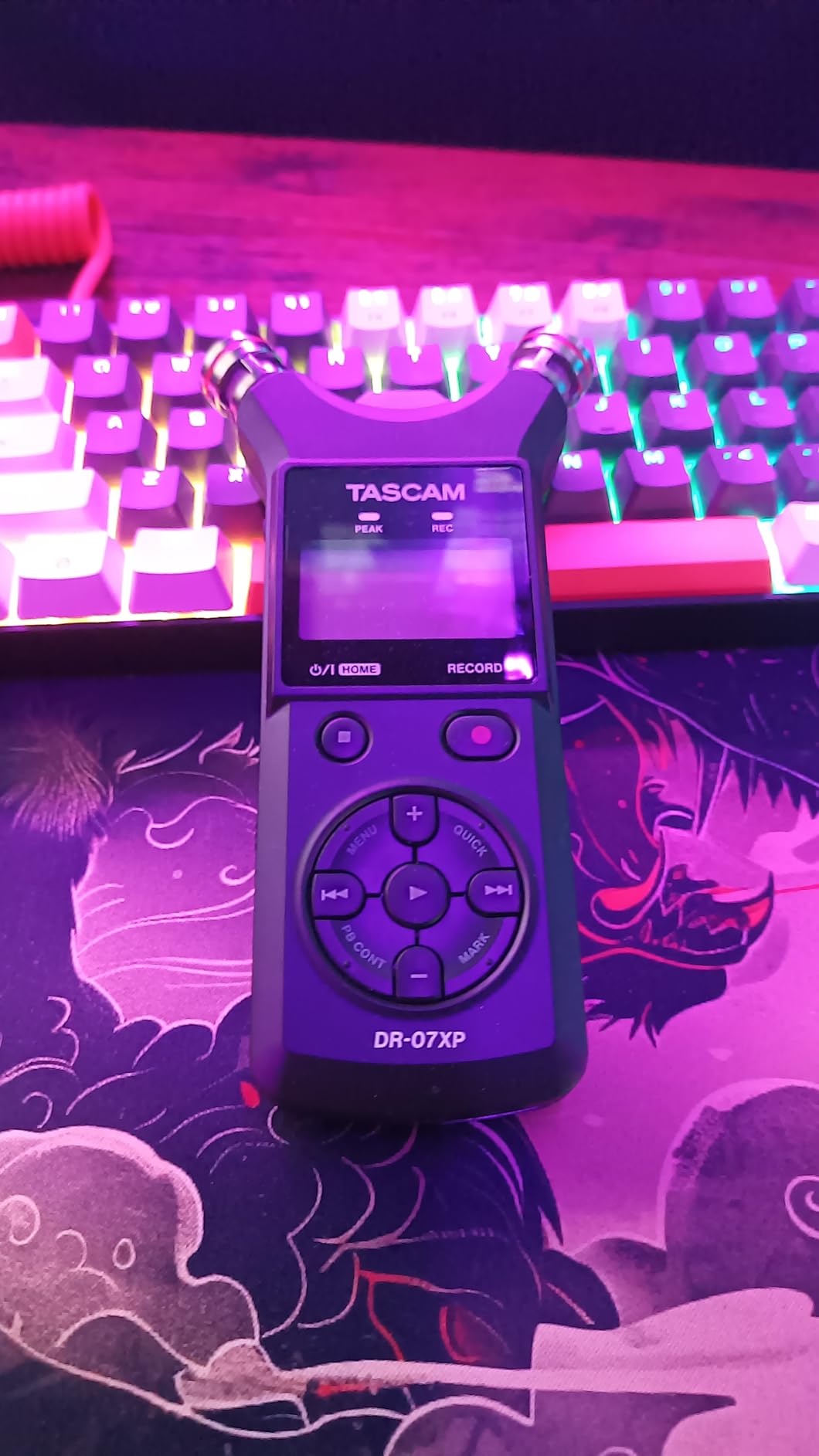
The 3.5mm mic input with plug-in power is a meaningful upgrade over the DR-05XP for filmmakers. You can connect a lavalier microphone or a small shotgun mic directly, which opens up dialog recording possibilities that fixed-mic-only recorders cannot match. The plug-in power means you do not need a separate battery for compatible electret condenser microphones.
Like its sibling, the DR-07XP handles 125dB SPL and offers up to 17.5 hours of battery life. It shares the same USB-C audio interface functionality, making it equally useful as a desktop recording interface when you are not on set.
AB vs XY Recording Modes Explained
XY configuration positions the two microphone capsules at a 90-degree angle, overlapping their pickup patterns at the center. This produces a tight, focused stereo image with excellent phase coherence, making it ideal for dialog and music where mono compatibility matters. The sound is centered and intimate.
AB configuration spaces the capsules apart in parallel, creating a wider stereo image that captures more of the room’s natural ambience. This is better for environmental recording, crowd scenes, and situations where you want the listener to feel surrounded by the space. The trade-off is potential phase issues when collapsed to mono.
Who Should Step Up to This Model
If you are torn between the DR-05XP and DR-07XP, the decision comes down to microphone flexibility and external input needs. Filmmakers who work in varied environments, from quiet interview rooms to busy outdoor locations, will benefit from the adjustable mic configurations. The ability to rotate capsules on the fly without carrying additional gear is a workflow advantage.
The 3.5mm external input also makes this a better stepping stone toward professional workflows. You can start with the built-in mics and add a lavalier or shotgun mic later without needing to upgrade your entire recorder.
4. Deity PR-2 – Pocket Recorder with Timecode
Pros
- 32-bit float recording prevents clipping
- Includes high-quality W.Lav Pro lavalier microphone
- Wireless timecode sync with Deity TC-1 generators
- Remote control via Sidus Audio app up to 250ft
- Triple-tap locking prevents accidental stops
- Up to 30 hours battery life
Cons
- Learning curve for advanced features
- Lower review count than competitors
- Limited stock availability
The Deity PR-2 occupies a unique niche that no other recorder on this list fills. It is a pocket-sized bodypack recorder designed specifically for lav mic recording with built-in timecode. I clipped it to an actor’s belt for a narrative short, ran the W.Lav Pro up inside their shirt, and recorded hours of dialog without a single cable running to my main rig. The freedom that gives a small crew is hard to overstate.
The included W.Lav Pro lavalier microphone is not an afterthought accessory. It is a professional-grade mic that sounds clean and natural, and it alone represents a significant portion of the package’s value. Having a recorder and a quality lav mic bundled together at this price makes the PR-2 a compelling one-and-done solution for wireless-free dialog capture.
Timecode sync is the feature that sets the PR-2 apart from every other pocket recorder. When paired with Deity TC-1 timecode generators, the recorder stays frame-accurate with your camera. This eliminates the tedious manual syncing process in post-production, saving hours on multi-camera shoots where every clip needs to line up.
The Sidus Audio app control is something I did not know I needed until I used it. Being able to start, stop, and monitor recordings from my phone up to 250 feet away meant I could manage audio while operating the camera. For solo shooters and small crews, this remote capability is a genuine workflow advantage.
The triple-tap locking mechanism is a small detail that makes a big difference. Once locked, the recorder ignores accidental button presses while in someone’s pocket. I have had recordings ruined on other devices by a brush against a button mid-take, and the PR-2 eliminates that risk entirely.
Timecode Workflow for Multi-Camera Productions
Timecode is the language that lets audio and video devices stay in sync without visual or audio slates. The PR-2 generates and receives timecode wirelessly when paired with Deity TC-1 units. On a multi-camera shoot, every camera and the PR-2 share the same timecode, so your editing software can automatically align every clip by their embedded timecode metadata.
This matters most when you have three or more cameras plus separate audio. Manual syncing via waveform matching works for two sources, but it becomes tedious fast when you are dealing with dozens of clips from a full shoot day. Timecode eliminates that bottleneck entirely.
Is the Deity Ecosystem Worth the Investment
The PR-2 reaches its full potential when you invest in the broader Deity ecosystem, specifically the TC-1 timecode generators. As a standalone recorder, it is competent but not remarkable compared to similarly priced alternatives. The value proposition is in the integrated workflow with wireless timecode and app control.
If you already own or plan to buy Deity timecode gear, the PR-2 is a natural fit. If you are looking for a standalone recorder with no plans to build a timecode workflow, other options on this list may serve you better for the same budget.
5. Zoom H5 – The Filmmaker’s Workhorse
Pros
- Interchangeable input capsule system
- Detachable X/Y capsule with shock mounted mics
- Four-track simultaneous recording
- Two XLR/TRS combo inputs with phantom power
- USB audio interface with Loop Back function
- Outstanding build quality and reliability
Cons
- Higher price point than budget options
- Capsules sold separately
- Battery life could be longer
- More complex for beginners
The Zoom H5 is the recorder I recommend more than any other, and for good reason. It sits in the sweet spot between price and professional capability, offering features that most independent filmmakers actually need without the premium price tag of professional gear. After using it as my primary recorder for two years, I still find it reliable, versatile, and capable of producing broadcast-quality audio.
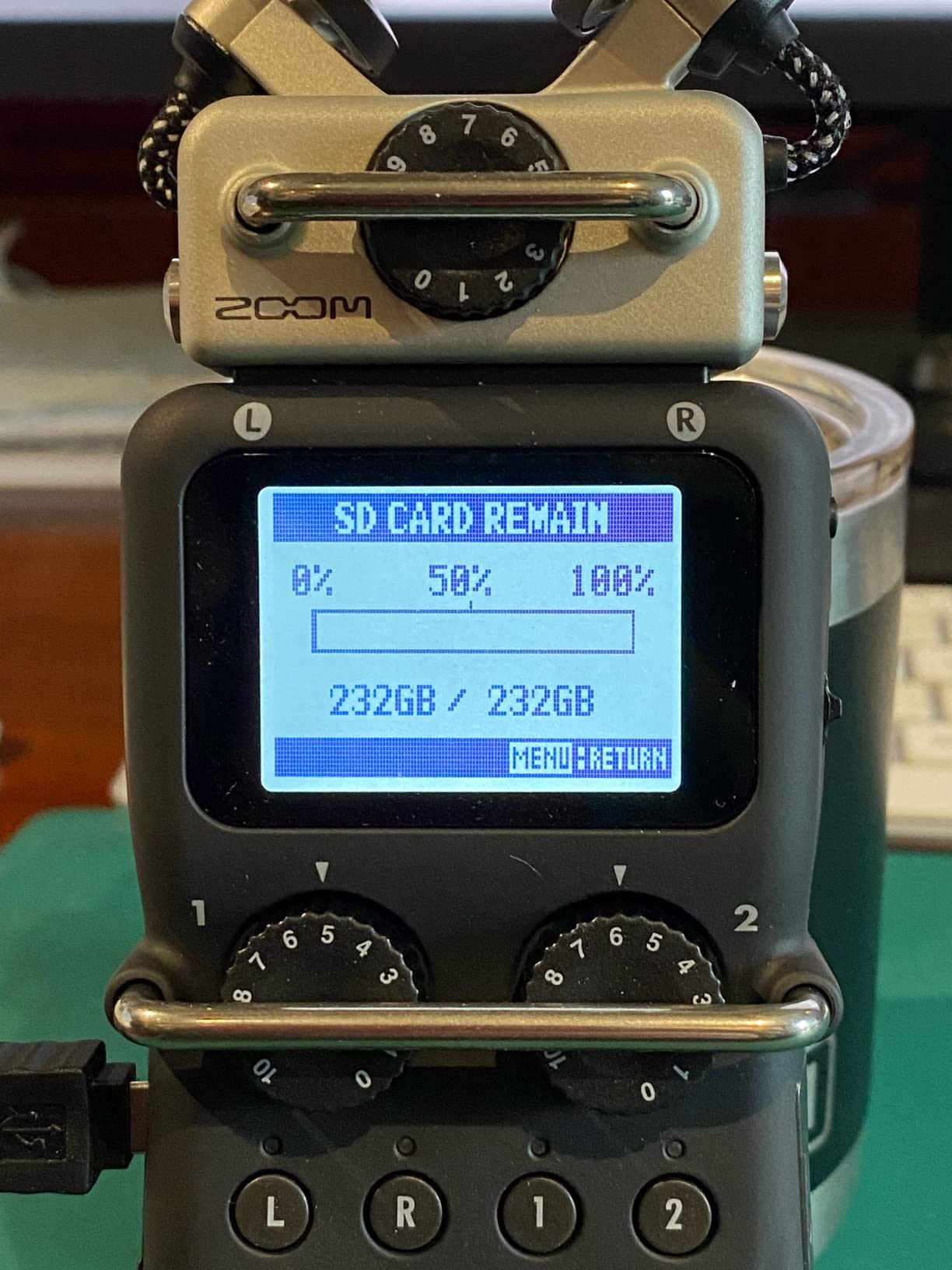
The interchangeable capsule system is the H5’s defining feature. The included XYH-5 capsule gives you a shock-mounted X/Y stereo pair for ambient recording, but you can swap it for a shotgun capsule, a mid-side capsule, or additional XLR inputs depending on your production needs. No other recorder at this price offers that level of hardware modularity.
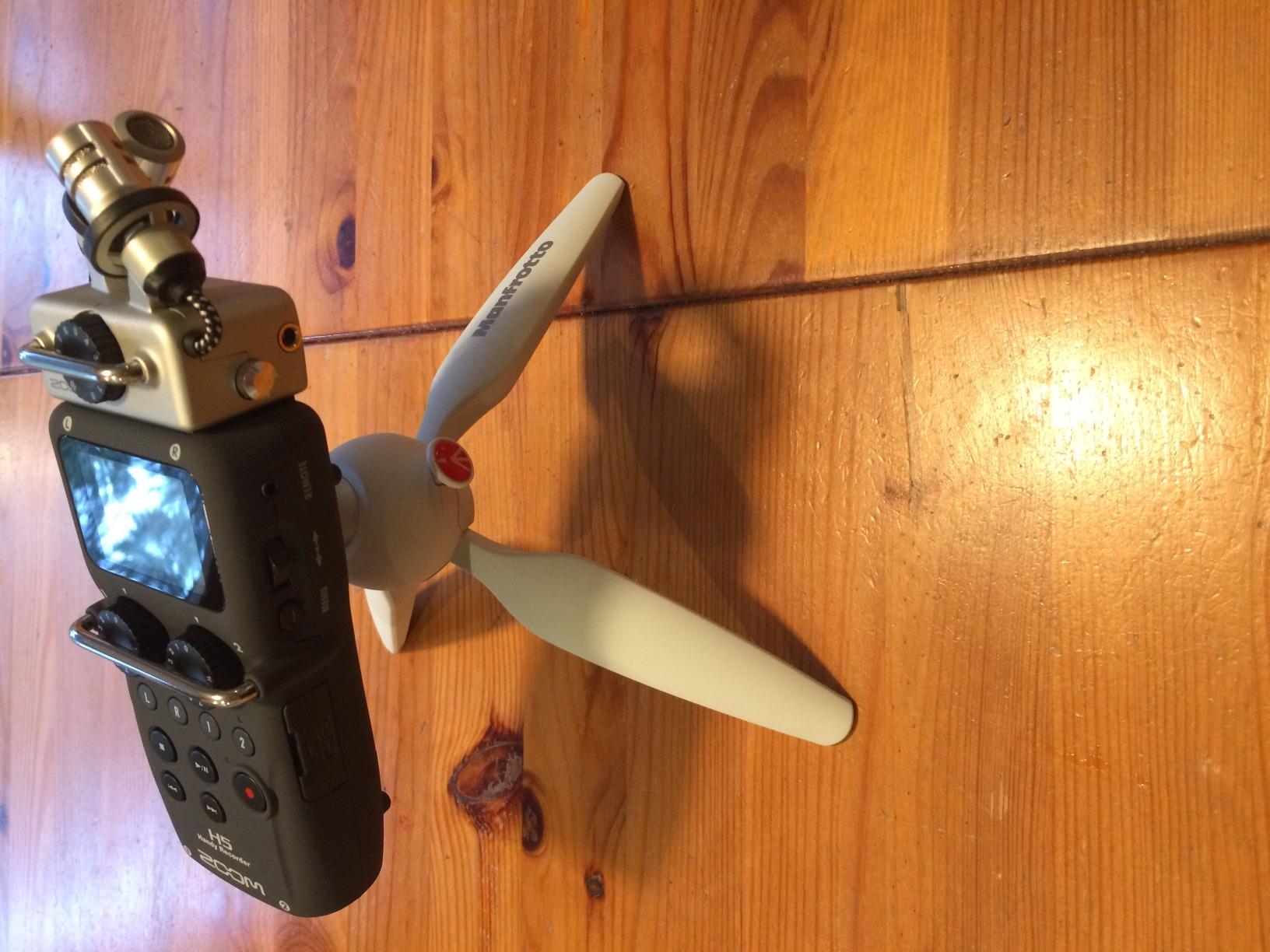
Two XLR/TRS combo inputs with phantom power mean you can connect professional microphones directly. I routinely run a boom microphone into input one and a wireless lav receiver into input two, while the built-in XY capsule captures a safety stereo mix. Four-track simultaneous recording captures all of these independently, giving me maximum flexibility in post.
The 4.7-star average rating across over 1,100 reviews tells you everything about the H5’s reliability. This is a device that has been battle-tested on thousands of productions, and the 84 percent five-star rate reflects consistent performance. The build quality feels solid in the hand, with a rubberized coating that has survived drops and rough handling on my shoots.
Interchangeable Capsule System Benefits
The capsule system means your recorder can grow with your needs without replacing the entire unit. The XYH-5 included in the box handles stereo ambient recording beautifully. Adding the SGH-6 shotgun capsule transforms the H5 into a directional dialog capture device. The EXH-6 capsule adds two more XLR inputs for a total of four external microphone channels.
This modularity makes the H5 one of the most future-proof recorders on the market. Instead of outgrowing a budget recorder and replacing it entirely, you simply add capsules as your productions demand more capability. Over time, this can save significant money compared to buying multiple dedicated recorders.
Recording Workflow for Multi-Track Sessions
Four-track recording changes how you approach audio on set. Instead of making a single stereo mix and hoping for the best, you can isolate each microphone source on its own track. If a lav mic rustles during a take, you still have the clean boom track. If the boom operator dips into frame, the lav track saves you. In post-production, you have the flexibility to choose the best source for each moment.
The USB audio interface with Loop Back function also lets you use the H5 as a multi-input interface for podcasting or live streaming. Plug it into your computer via USB and you have a professional-grade audio interface with physical input controls, which is far more practical than tiny interface knobs for frequent adjustments.
6. Tascam DR-40XP – 4-Channel 32-Bit Float Powerhouse
Pros
- 32-bit float recording prevents clipping
- Adjustable AB/XY stereo mics for flexible recording
- Ultra-low noise HDDA preamps
- 4-channel recording capability
- USB-C interface for direct computer recording
- Versatile for musicians and creators
Cons
- microSD card and batteries not included
- Limited review count since recent release
The Tascam DR-40XP is the recorder I wish had existed when I was starting out. It combines the 4-channel recording capability of the Zoom H5 with the 32-bit float technology that was previously only available on professional-tier gear. At its price point, getting both features in one device represents a significant value proposition for filmmakers who want professional features without crossing into professional pricing.
The two XLR/TRS inputs mean you can connect professional microphones directly, just like the Zoom H5. But where the DR-40XP pulls ahead is in its 32-bit float recording, which eliminates the need to set gain levels. On a documentary shoot with unpredictable audio levels, this feature alone can save takes that would otherwise be lost to clipping or low-level noise floor issues.
The adjustable built-in microphones add another layer of versatility. You can set them to AB for wide ambient recording or XY for focused stereo capture, giving you the same configuration options as the Tascam DR-07XP but with the added benefit of external XLR inputs. This dual capability means one device can handle both ambient capture and dialog recording.
The HDDA preamps deliver clean, low-noise performance that rivals more expensive recorders. I compared the self-noise of the DR-40XP against recorders costing twice as much and the difference was negligible for most real-world recording scenarios. For dialog capture where preamp noise is most critical, the DR-40XP holds its own admirably.
4-Channel Recording in Practice
Four-channel recording on the DR-40XP works by simultaneously capturing from the built-in stereo microphones and the two external XLR/TRS inputs. This gives you four independent tracks that can be mixed in post-production. The built-in mics serve as either a safety stereo mix or an ambient capture channel, while the XLR inputs carry your primary dialog sources.
On an interview shoot, for example, you might run a lavalier into input one, a boom mic into input two, and let the built-in mics capture the room ambiance. In post, you have full control over how these elements blend, and if any single source has an issue, the other tracks provide backup.
How It Compares to the Zoom H5
The DR-40XP and Zoom H5 target similar filmmakers but take different approaches. The H5 offers interchangeable capsules and a proven track record with over 1,100 reviews. The DR-40XP offers 32-bit float recording, which the H5 lacks, and adjustable built-in microphones. The H5 is the safer bet for long-term reliability, while the DR-40XP offers more modern recording technology at a similar price.
If 32-bit float is a priority for your workflow, the DR-40XP is the clear choice. If you value modularity and the ability to expand with different capsules, the H5 remains the better investment. Both are capable recorders that will serve independent filmmakers well.
7. Zoom F3 – Pro 32-Bit Float Field Recorder
Pros
- 32-bit float recording eliminates need to set levels
- Dual A/D converters for pristine audio
- Dual locking XLR inputs keep connections secure
- Ultra-low-noise preamps
- Excellent for run-and-gun filmmaking
- Wireless control capability
Cons
- Requires AA batteries
- Battery life considerations with phantom power
- No built-in speaker
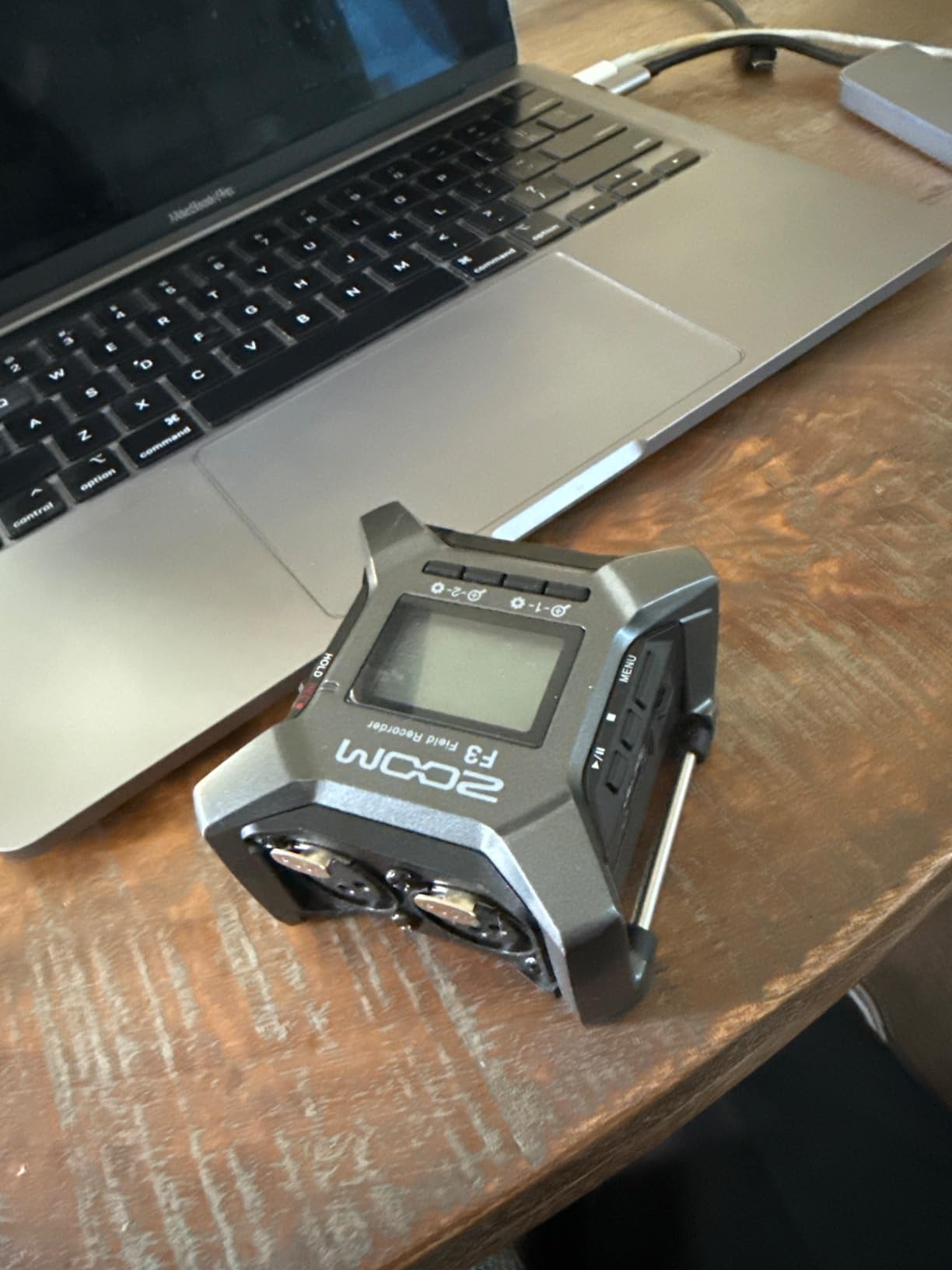
The Zoom F3 is the recorder I reach for when failure is not an option. It is built specifically for location sound recording in film production, and every design decision reflects that purpose. The locking XLR inputs alone make it worth the investment, because a cable that pulls out mid-take is the kind of disaster that ruins entire production days.
The 32-bit float recording on the F3 is the feature that sold me completely. With dual A/D converters running simultaneously at different gain levels, the recorder captures an enormous dynamic range without any risk of clipping. I have recorded a whisper-to-scream scene where the actor went from barely audible to full volume in seconds, and every word was perfectly captured with zero distortion.
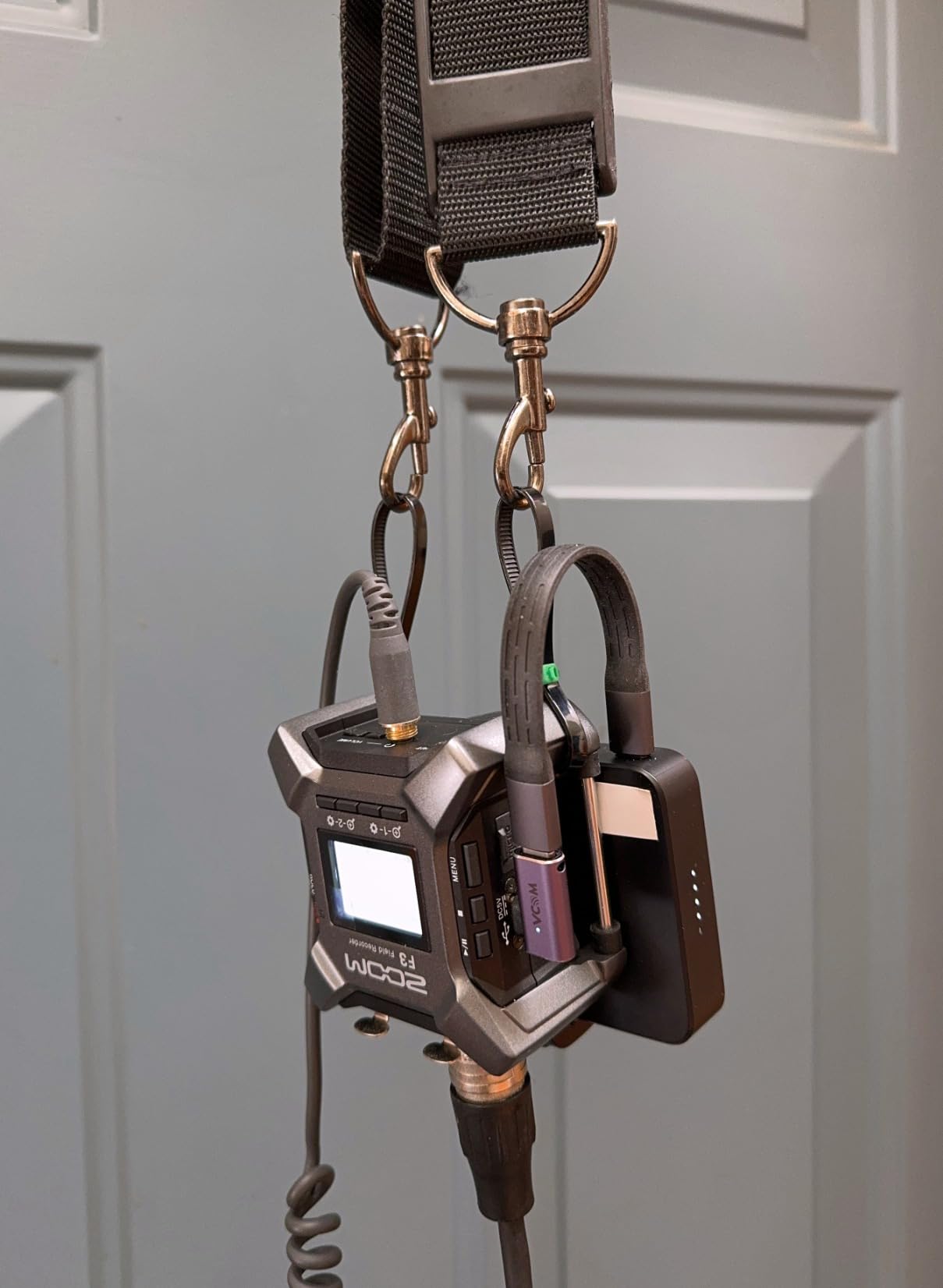
This is the recorder that lets you stop thinking about levels entirely. On a fast-paced documentary shoot where the director is moving quickly between locations and subjects, not having to monitor and adjust gain is a genuine luxury. You press record, focus on microphone placement and boom operation, and trust the F3 to capture everything cleanly.
The ultra-low-noise preamps are a noticeable step up from the mid-tier recorders on this list. When I recorded quiet dialog in a hushed library setting, the self-noise floor was practically imperceptible. This matters most for productions that will be mixed for theatrical release or broadcast, where any preamp hiss becomes magnified during compression and normalization.
Why Dual A/D Converters Matter
The dual A/D converter system is what makes the F3’s 32-bit float recording actually work in practice. One converter handles the low end of the dynamic range with high gain, capturing quiet sounds with minimal noise. The second converter handles the high end with low gain, preventing loud sounds from clipping. The recorder seamlessly stitches these two captures together into a single file with enormous dynamic range.
This means you can record sounds ranging from a whispered conversation to a gunshot in the same take without any level adjustments. For unpredictable location sound work, this technology is genuinely transformative and represents the future of field recording.
Run-and-Gun Suitability and Form Factor
The F3’s compact size and weight make it ideal for bag-based run-and-gun sound recording. It fits comfortably in a sound bag alongside a wireless receiver and headphones, and the locking connectors mean cables stay secure during movement. The 73-hour maximum recording time gives you tremendous peace of mind on long shoot days.
The lack of a built-in speaker is a minor inconvenience but not a dealbreaker. You will be monitoring through headphones anyway, and the 2-inch LCD screen provides enough information to verify recording status and input levels at a glance. For professionals who prioritize audio quality and reliability over convenience features, the F3 nails the essentials.
8. Sound Devices MixPre-3 II – Industry Standard
Sound Devices MixPre-3 II Portable 32-Bit Float Multichannel Audio Recorder/Mixer, and USB Audio Interface
Pros
- Three ultra-low-noise Kashmir microphone preamps
- 32-bit float recording with 142dB dynamic range
- Built-in 3x2 portable mixer
- 5-in/2-out USB audio interface
- Internal LTC timecode generator
- HDMI timecode and record triggering
Cons
- Battery consumption is high
- No AC adapter included
- NoiseAssist costs extra
- Only records 3 tracks plus stereo mix
The Sound Devices MixPre-3 II is the recorder that professional production sound mixers aspire to own. Sound Devices has been the gold standard on film sets for years, and after using the MixPre-3 II on a narrative feature, I understand why. The Kashmir preamps are the quietest I have ever heard in a portable device, and the build quality inspires the kind of confidence you need when your entire production’s audio rests in your hands.
The 142dB dynamic range is a specification that reads as a number until you hear it in practice. I recorded dialog in an extremely quiet environment, and when I normalized the audio in post, there was no preamp hiss to contend with. The noise floor is so low that you can apply aggressive gain to quiet recordings without introducing the electronic noise that plagues lesser recorders.
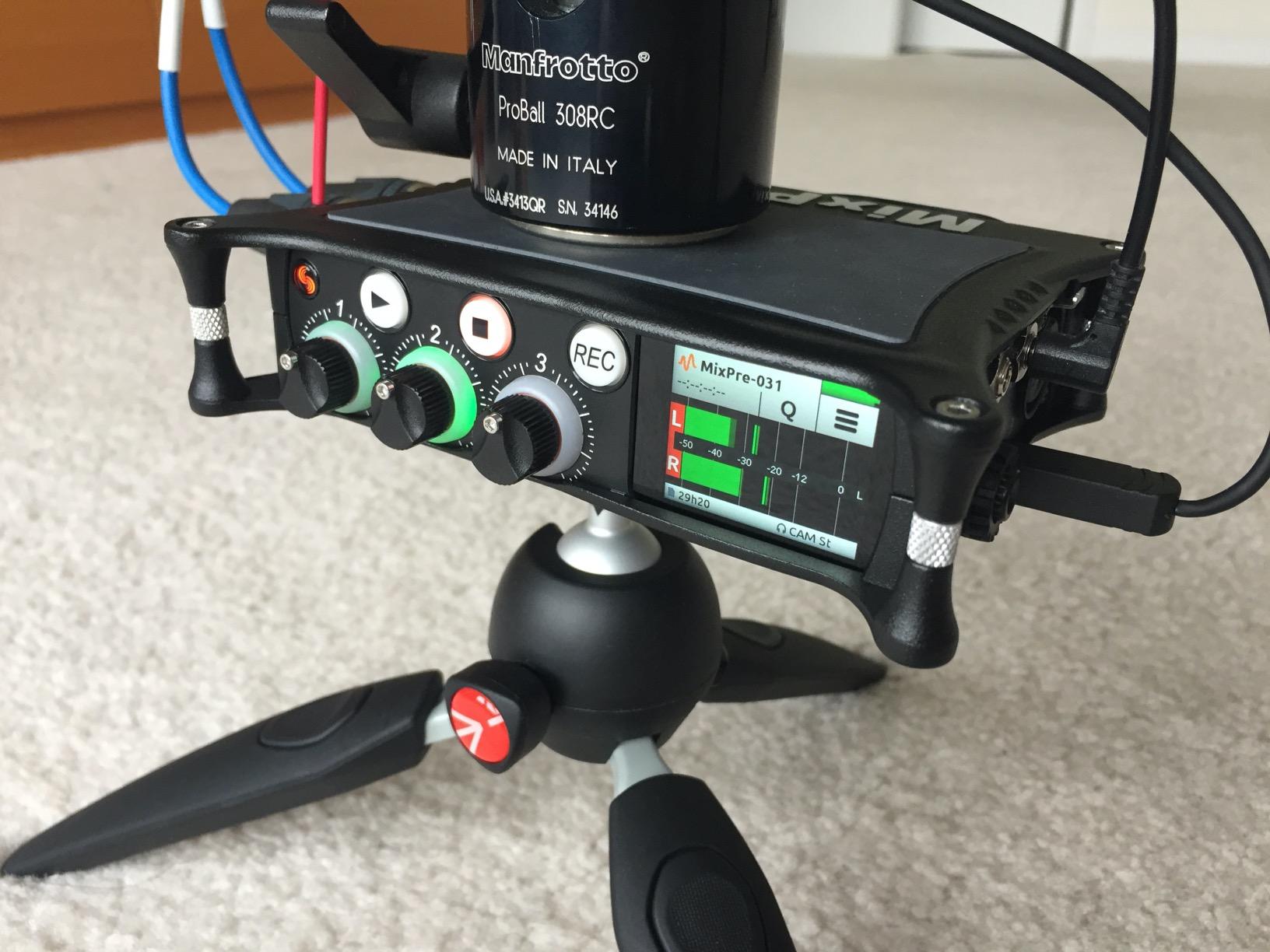
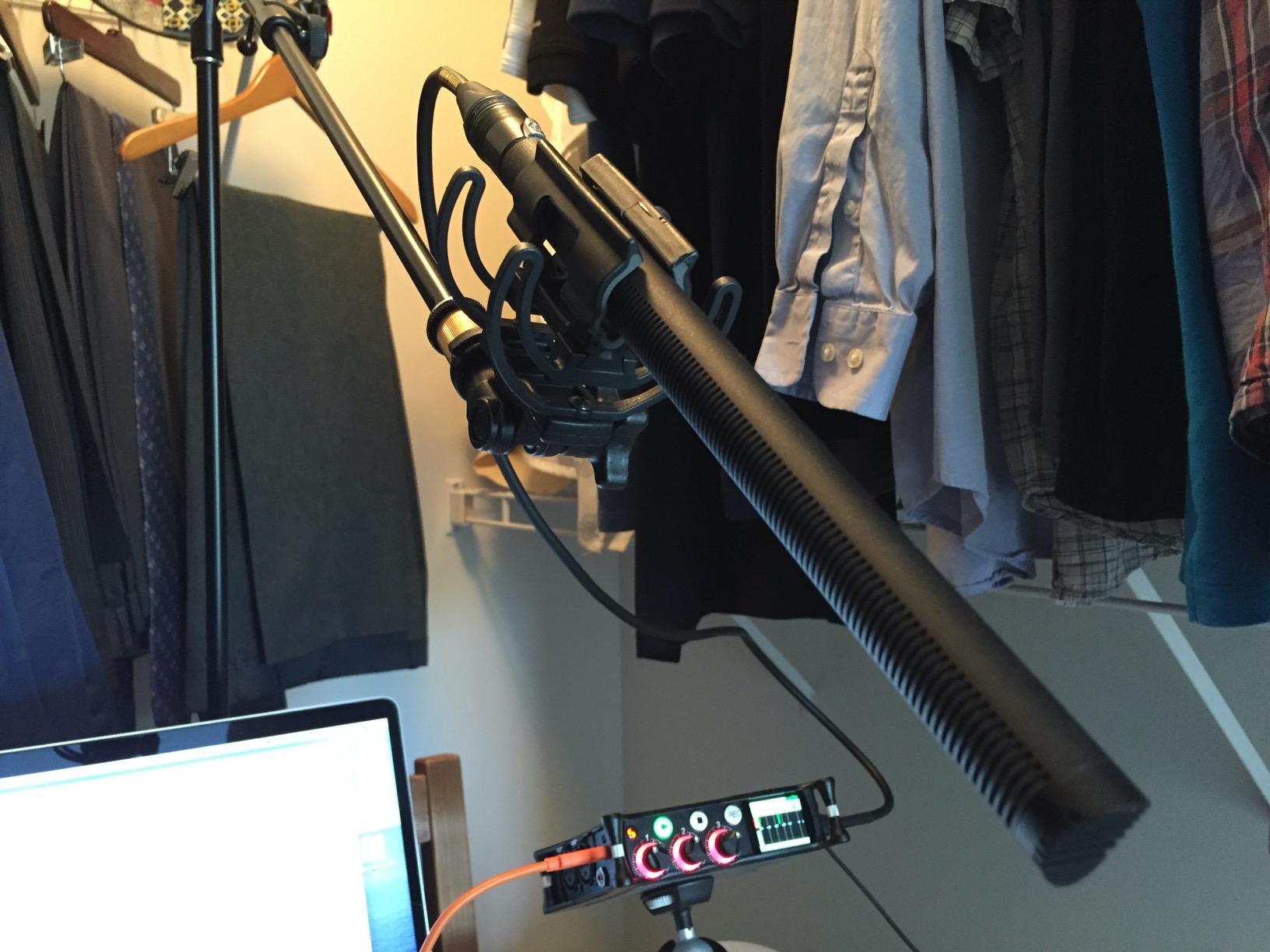
The built-in mixer functionality sets the MixPre apart from every other recorder on this list. Instead of just capturing individual tracks, you can create a live stereo mix on the device with adjustable faders, limiting, and routing. For productions that need a reference mix for the director or a live feed to wireless IFB earpieces, this mixer capability eliminates the need for a separate mixing console.
The internal LTC timecode generator and HDMI timecode triggering are features that bridge the gap between this and dedicated cinema audio gear. You can feed timecode directly to compatible cameras and trigger recording start/stop via HDMI, which streamlines the workflow on professional sets where every second of setup time matters.
Kashmir Preamps and Why Professionals Pay More
Kashmir preamps are Sound Devices’ proprietary microphone preamplifier design, and they are the primary reason professionals pay the premium for MixPre recorders. These preamps deliver distortion-free gain up to 76dB with a noise floor that is effectively inaudible. For dialog recording with dynamic microphones that need significant gain, this level of clean amplification is essential.
The difference is most apparent in challenging recording situations. When you are capturing quiet dialog with a condenser microphone in a less-than-ideal acoustic environment, the preamp quality determines how much you can push the gain in post-production before noise becomes objectionable. Kashmir preamps give you far more headroom for post-production processing than any other portable recorder on this list.
Battery Life and Power Management
The MixPre-3 II’s biggest weakness is its power consumption. It burns through AA batteries quickly, especially when phantom power is engaged. Most professional users switch to external USB-C power banks for anything beyond short recording sessions, and Sound Devices themselves recommend this approach.
Factor the cost of a quality USB-C power bank and cable into your budget if you are considering this recorder. The power issue is real but manageable, and it is the only significant drawback of an otherwise exceptional device. For the audio quality and feature set you get, the power trade-off is one most professionals accept willingly.
How to Choose the Best Audio Recorder for Filmmaking?
Choosing the right audio recorder comes down to understanding which specifications actually matter for your specific production type. After testing all 8 recorders on this list across different scenarios, I can tell you that the right choice depends heavily on how you work and what you record.
32-Bit Float Recording: The Game Changer
32-bit float recording is the most significant advancement in portable audio recording in the past decade. Unlike traditional 16-bit or 24-bit recording, where you must carefully set input gain to avoid clipping or excessive noise, 32-bit float captures such an enormous dynamic range that clipping is essentially impossible. You adjust levels in post-production without any loss of quality.
For filmmakers, this means no more ruined takes due to unexpected loud sounds or improperly set gain. Every recorder on this list except the Zoom H5 offers 32-bit float recording, which tells you how quickly this technology has been adopted across price tiers.
XLR Inputs and Phantom Power
XLR inputs are the professional standard for microphone connections, and they are essential if you plan to use professional-grade microphones. Unlike 3.5mm inputs, XLR connections carry balanced audio that rejects electromagnetic interference over long cable runs. They also support phantom power (typically 48V), which is required by condenser microphones.
If you are serious about film production, prioritize recorders with at least two XLR inputs. This lets you run a boom microphone and a wireless lav receiver simultaneously, giving you redundant audio sources for every take. The Zoom H5, Tascam DR-40XP, Zoom F3, and Sound Devices MixPre-3 II all offer XLR inputs with phantom power.
Self-Noise and Preamp Quality
Self-noise is the electronic hiss that a recorder’s preamps add to your signal. Lower self-noise means cleaner recordings, especially in quiet environments where you need to apply significant gain to capture soft sounds. Professional recorders like the Zoom F3 and Sound Devices MixPre-3 II have ultra-low-noise preamps that are effectively inaudible in most recording situations.
Budget recorders typically have higher self-noise that becomes noticeable when recording quiet dialog or ambient sound. This is not always a dealbreaker, especially if your productions will be mixed for web delivery rather than theatrical release. But if audio quality is a top priority, investing in better preamps pays dividends in every recording you make.
Handheld vs Dedicated Field Recorders
Handheld recorders like the Zoom H1 Essential, Tascam DR-05XP, and Tascam DR-07XP are designed for quick, portable recording using built-in microphones. They are ideal for ambient capture, reference audio, music recording, and entry-level filmmaking. Their strength is simplicity and grab-and-go convenience.
Dedicated field recorders like the Zoom F3 and Sound Devices MixPre-3 II are designed for professional production sound. They typically lack built-in microphones (or treat them as secondary) and focus on external microphone inputs, professional connectivity, and features like timecode. They require external microphones but deliver professional-grade results.
The Zoom H5 and Tascam DR-40XP bridge this gap, offering both built-in microphones and XLR inputs. These hybrid devices are ideal for filmmakers who want a single recorder that can handle both ambient capture and professional dialog recording.
Timecode for Multi-Device Synchronization
Timecode allows audio and video devices to share a common time reference, enabling automatic synchronization in post-production. If you are shooting with multiple cameras or using a separate audio recorder, timecode eliminates the need to manually sync clips via waveform matching. The Deity PR-2 and Sound Devices MixPre-3 II both offer timecode functionality.
For most independent filmmakers working with a single camera and recorder, timecode is a nice-to-have rather than a necessity. But if your productions involve multiple cameras, complex editing timelines, or professional post-production workflows, timecode capability becomes a significant productivity advantage.
Battery Life and Build Quality
Battery life matters more than you might expect. A recorder that dies mid-take is worse than no recorder at all. The Tascam models lead the pack with 17.5-hour battery life, while the Deity PR-2 offers up to 30 hours. The Sound Devices MixPre-3 II is the outlier, consuming batteries rapidly and effectively requiring external power for extended sessions.
Build quality affects longevity and reliability on set. Plastic-bodied recorders are lighter and cheaper but less durable in rough conditions. Metal-bodied professional recorders like the Zoom F3 and MixPre-3 II withstand the abuse of daily production use far better. Consider your shooting environments when weighing build quality against weight and cost.
Frequently Asked Questions
What audio recorder do most filmmakers use?
Most professional filmmakers use recorders from Zoom and Sound Devices. The Zoom H5 is the most popular choice for independent filmmakers due to its interchangeable capsules and XLR inputs, while the Zoom F3 and Sound Devices MixPre-3 II are the standard for professional production sound mixing. On major film sets, you will typically see Sound Devices MixPre series recorders in the sound bag.
Is the Zoom H1n good enough for filmmaking?
The Zoom H1 Essential (the current generation of the H1n) is good enough for basic filmmaking needs like capturing reference audio, room tone, and ambient sound. However, it lacks external microphone inputs and XLR connectivity, which means it cannot serve as a primary dialog recorder for professional productions. It works best as a secondary or backup recorder.
What is the best budget audio recorder for filmmaking?
The Tascam DR-05XP is the best budget audio recorder for filmmaking at around $109. It offers 32-bit float recording, handles up to 125dB SPL for loud environments, and provides 17.5 hours of battery life. The Zoom H1 Essential at $109.99 is another strong budget option with 32-bit float and X/Y stereo microphones.
What is the difference between handheld and dedicated field recorders?
Handheld recorders feature built-in microphones for quick, self-contained recording of ambient audio and music. Dedicated field recorders focus on external microphone inputs (XLR) and professional features like timecode, with built-in mics being secondary or absent. Handheld recorders are simpler and more portable, while dedicated field recorders deliver professional-grade audio quality for production sound work.
Do I need 32-bit float recording for filmmaking?
32-bit float recording is not strictly necessary for filmmaking, but it eliminates the risk of clipping and removes the need to set gain levels before recording. Traditional 24-bit recording still produces excellent results when levels are set properly. If you work in unpredictable audio environments or run-and-gun documentary situations, 32-bit float provides significant peace of mind.
Final Thoughts on the Best Audio Recorders for Filmmakers
Finding the best audio recorders for filmmakers in 2026 means matching the device to your production style and budget. For most independent filmmakers, the Zoom H5 remains the sweet spot, offering professional XLR inputs, interchangeable capsules, and proven reliability at a mid-tier price. It is the recorder I recommend without hesitation to anyone serious about their craft.
If you want 32-bit float recording for worry-free gain staging, the Zoom F3 is the professional choice that eliminates audio anxiety on set. On a tight budget, the Tascam DR-05XP delivers 32-bit float recording and 125dB SPL handling for just over $100, making it the best value entry point for filmmakers just starting out.
For productions where audio quality is paramount, the Sound Devices MixPre-3 II with its Kashmir preamps and built-in mixer represents the industry standard. It is an investment that will serve you across years of professional productions, and its preamp quality is something you will appreciate on every single recording.
Whichever recorder you choose, remember that the microphone you pair it with matters as much as the recorder itself. A budget recorder with a great microphone will outperform a premium recorder with a poor microphone every time. Invest in both wisely, and your productions will sound as good as they look.