
There’s nothing quite like capturing that perfect stretch of road on video. The sweepers, the scenery, the sound of your engine echoing off canyon walls. After putting thousands of miles on my bikes with various cameras strapped to my helmet, I’ve learned what actually matters when choosing gear for motorcycle use. The best action cameras for motorcycling and helmet mounting need to handle vibration, wind noise, variable lighting, and the occasional rainstorm without missing a beat.
Our team tested these cameras extensively on everything from daily commutes to multi-day touring trips. We mounted them on helmets, handlebars, and tank mounts. We recorded in 100-degree heat and freezing mountain passes. What follows are our honest findings after real-world testing across diverse riding conditions.
Whether you’re looking to document epic rides, create vlog content, or capture insurance footage for peace of mind, this guide covers the top options available in 2026. From premium flagships to budget-friendly picks, we’ve got recommendations for every type of rider and budget.
Top 3 Picks for Motorcycle Action Cameras


Best Action Cameras for Motorcycling in 2026
| Product | Specifications | Action |
|---|---|---|
| GoPro HERO13 Black |
|
Check Latest Price |
| Insta360 X5 |
|
Check Latest Price |
 DJI Osmo Action 5 Pro DJI Osmo Action 5 Pro |
|
Check Latest Price |
 Insta360 Ace Pro 2 Insta360 Ace Pro 2 |
|
Check Latest Price |
 DJI Osmo Action 4 DJI Osmo Action 4 |
|
Check Latest Price |
 Sena 50C Sena 50C |
|
Check Latest Price |
 INNOVV H5 INNOVV H5 |
|
Check Latest Price |
 AKASO Brave 4 AKASO Brave 4 |
|
Check Latest Price |
1. GoPro HERO13 Black – Best Overall Action Camera
GoPro HERO13 Black – Waterproof Action Camera with 5.3K60 Video, 27MP Photo + Compatability with HB-Series Lenses
Pros
- Industry-leading 5.3K video quality
- HB-Series lens compatibility adds versatility
- Rugged waterproof design to 33ft
- HyperSmooth stabilization
- Huge accessory ecosystem
Cons
- Battery life subpar at 79 minutes
- Can overheat during extended recording
- Audio muffled with wind reduction enabled
I’ve been riding with GoPro cameras for over a decade, and the HERO13 Black represents the most refined version yet. The 5.3K60 video quality is genuinely stunning, capturing details that lesser cameras simply miss. On a recent trip through the Rockies, the footage from this camera made even mundane highway sections look cinematic.
The standout feature for motorcyclists is the HB-Series lens compatibility. You can swap between Ultra Wide, Macro, ND, and Anamorphic lenses depending on your shooting needs. The camera automatically detects which lens you’re using and adjusts settings accordingly. This versatility means one camera handles everything from wide scenic shots to detailed close-ups of your bike.

HyperSmooth stabilization has been GoPro’s calling card, and version 7.0 continues to impress. Even on rough roads with significant vibration, the footage remains remarkably steady. The 13x Burst Slo-Mo feature captures incredible slow-motion footage of track days or twisty canyon runs. At highway speeds, the stabilization handles wind buffeting without introducing the jello effect that plagues cheaper cameras.
The main drawbacks are familiar GoPro issues. Battery life hovers around 79 minutes of actual recording time, which means you’ll need spare batteries for longer rides. The camera can overheat during extended 5.3K recording sessions, particularly in hot weather. And while the waterproofing to 33 feet is excellent for rain riding, the audio suffers when the wind reduction feature is enabled.

Best Mounting Positions for This Camera
The GoPro HERO13 Black works best with a chin mount on your helmet. This position provides a natural first-person perspective while minimizing aerodynamic drag. The camera’s weight is noticeable but manageable for most riders. Handlebar mounting is another solid option, especially for capturing the road ahead without helmet footage shake.
Who Should Choose This Camera
Riders who want the best overall video quality and don’t mind carrying spare batteries will love the HERO13 Black. It’s ideal for content creators, track day enthusiasts, and anyone who values the extensive GoPro accessory ecosystem. If you need maximum battery life or plan to record for hours continuously, consider alternatives.
2. Insta360 X5 – Best 360 Camera for Motorcycling
Pros
- Stunning 8K 360 video quality
- Incredible low-light performance
- Replaceable lenses for durability
- FlowState stabilization
- Unique reframing possibilities
Cons
- Large file sizes require powerful editing
- Learning curve for 360 content
- Can heat up during extended recording
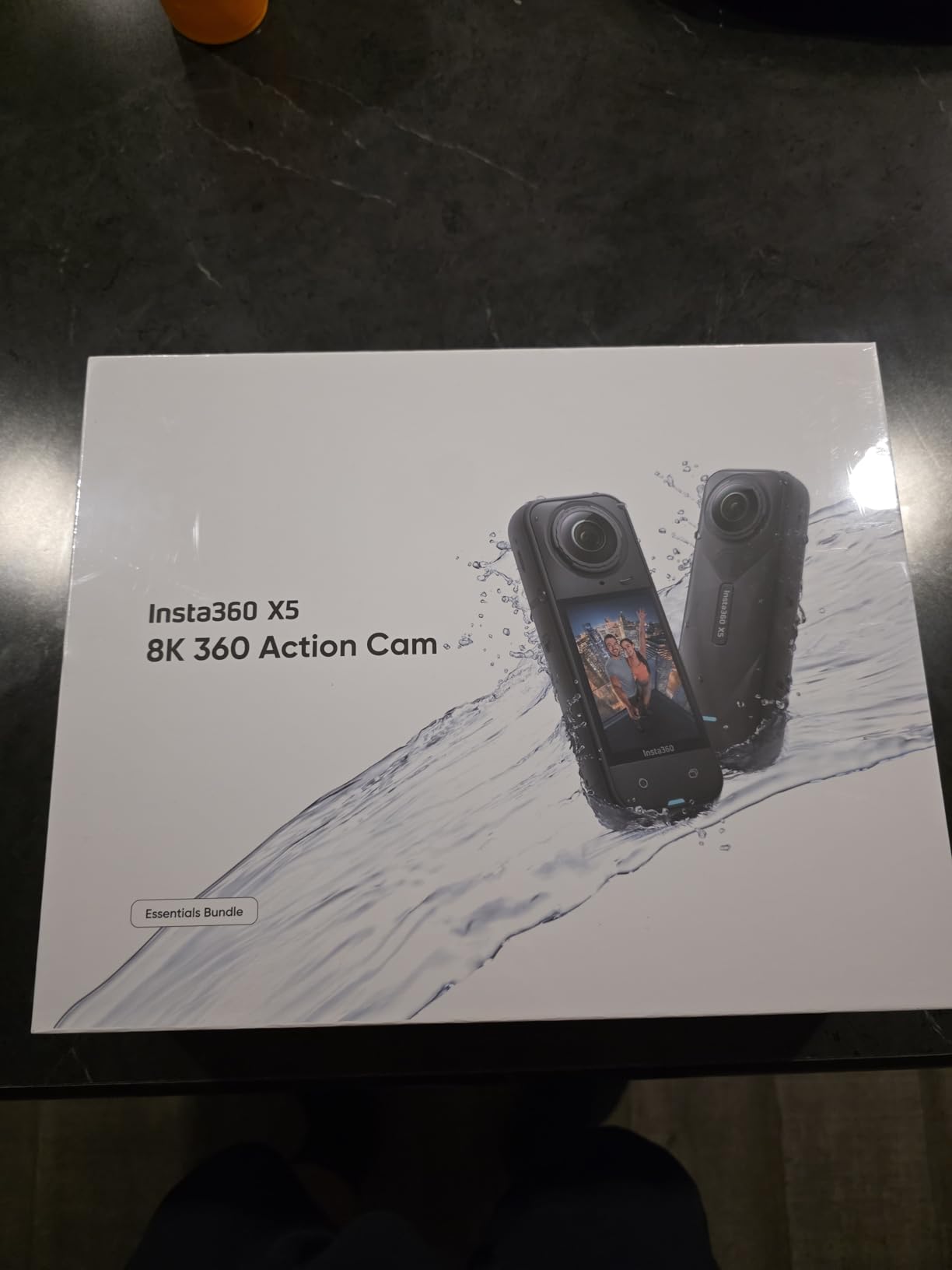
The Insta360 X5 changed how I think about motorcycle footage. With traditional cameras, you frame your shot and hope you got the right angle. With 360-degree capture, you record everything and choose your framing later. This flexibility is a game-changer for solo riders who can’t check their framing mid-ride.
The 8K resolution from dual 1/1.28-inch sensors delivers genuinely impressive image quality. Colors are vibrant and accurate, and the improved low-light performance means sunrise and sunset rides no longer produce grainy footage. The triple AI chip design handles processing efficiently, though you’ll want a capable computer for editing the massive files this camera produces.
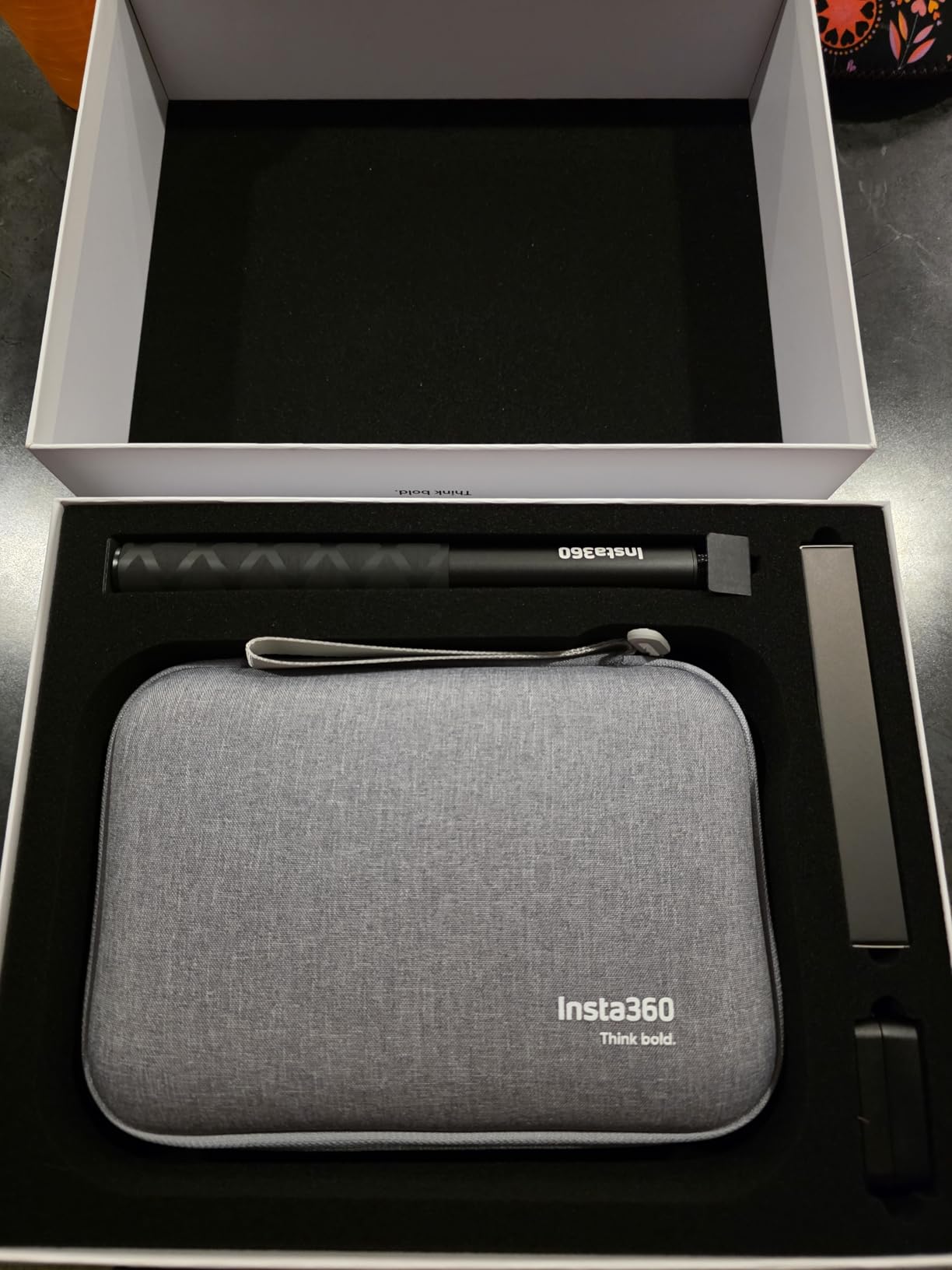
FlowState stabilization combined with 360-degree horizon lock keeps footage level regardless of camera orientation. Even aggressive lean angles through corners look smooth and professional. The invisible selfie stick effect creates unique third-person perspectives that make viewers feel like they’re watching from a drone following you.
Battery life is exceptional at 208 minutes, significantly longer than most competitors. The fast charging feature gets you to 80% in just 20 minutes. Waterproofing to 49 feet means rain is never a concern. The replaceable lens design is a welcome improvement, addressing the fragility that plagued earlier 360 cameras.
Best Mounting Positions for This Camera
The Insta360 X5 shines when mounted on your tank or handlebars. These positions capture both the road ahead and you as the rider, which you can reframe in post-production. Chin mounting works well for traditional POV footage, though the slightly larger form factor is more noticeable on a helmet than traditional action cameras.
Who Should Choose This Camera
This camera is perfect for creative riders who want maximum flexibility in their footage. If you enjoy editing and want the ability to create dynamic, reframed content, the X5 delivers capabilities no traditional camera can match. Solo travelers and adventure riders benefit most from the shoot-now-frame-later approach.
3. DJI Osmo Action 5 Pro – Best Value Premium Camera
Pros
- Outstanding low-light performance
- Industry-leading 4 hour battery
- No overheating issues
- 360 HorizonSteady stabilization
- Subject tracking technology
Cons
- No flip screen like competitors
- Audio decent but benefits from external mic
- Learning curve for all features
DJI has quietly built the most compelling action camera for motorcyclists with the Osmo Action 5 Pro. The 1/1.3-inch sensor with 2.4-micron pixels delivers outstanding low-light performance that rivals cameras costing significantly more. Night rides that produced unusable footage with other cameras now result in clear, detailed video.
The standout specification is battery life. Up to 4 hours of recording means you can document an entire day of riding without swapping batteries. On multi-day tours, this eliminates the charging anxiety that plagues GoPro users. The 1950mAh battery charges quickly and holds up well even in cold temperatures.

360-degree HorizonSteady stabilization keeps footage level regardless of camera angle. This technology works exceptionally well for motorcycle use, smoothing out the vibrations that come from engine harmonics and road surfaces. Subject tracking, powered by a 4nm chip, keeps fast-moving subjects centered, useful for group rides or track footage.
The dual OLED touchscreens are bright and responsive, even in direct sunlight. Voice control lets you start and stop recording without taking your hands off the handlebars. Direct wireless connectivity to DJI Mic 2 and Mic Mini opens up professional audio possibilities for vloggers. The magnetic mounting system makes accessory changes quick and secure.

Best Mounting Positions for This Camera
The Osmo Action 5 Pro works excellently on chin mounts, handlebars, and tank mounts. Its slightly smaller form factor compared to GoPro makes it less obtrusive on helmets. The magnetic mount system is particularly convenient for quickly repositioning between different mounting locations during a ride.
Who Should Choose This Camera
Riders who prioritize battery life and low-light performance should strongly consider the DJI Osmo Action 5 Pro. It offers better value than the GoPro HERO13 while delivering superior performance in key areas. Touring riders, night commuters, and budget-conscious buyers wanting premium features will find this camera hits the sweet spot.
4. Insta360 Ace Pro 2 – Premium Low-Light Performer
Pros
- Excellent 8K video with Leica lens
- Outstanding low-light PureVideo Mode
- Innovative wind guard for audio
- 2.5in flip touchscreen
- Free AI editing software
Cons
- Newer model with fewer reviews
- Some focus issues reported
- Shorter battery in cold weather
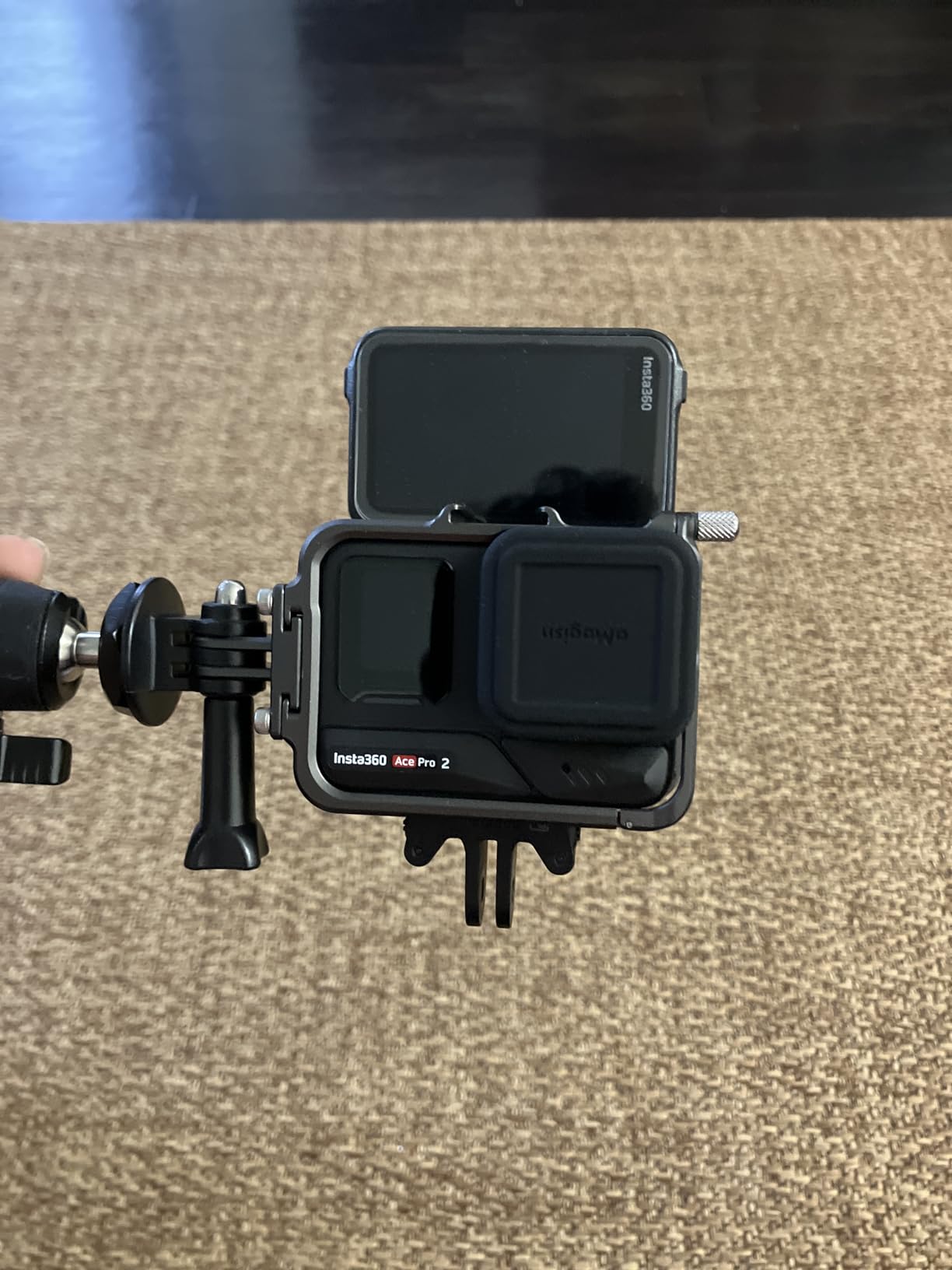
The Insta360 Ace Pro 2 represents the company’s serious push into traditional action cameras. Co-engineered with Leica, the 1/1.3-inch sensor and SUMMARIT lens combination produces 8K video that rivals dedicated cinema cameras. For motorcyclists who prioritize image quality above all else, this camera delivers exceptional results.
PureVideo Mode is the standout feature for riders who venture out after dark. This dedicated low-light mode captures usable footage in conditions where other cameras produce grainy, noisy video. Early morning starts and late evening rides no longer mean compromising on video quality.
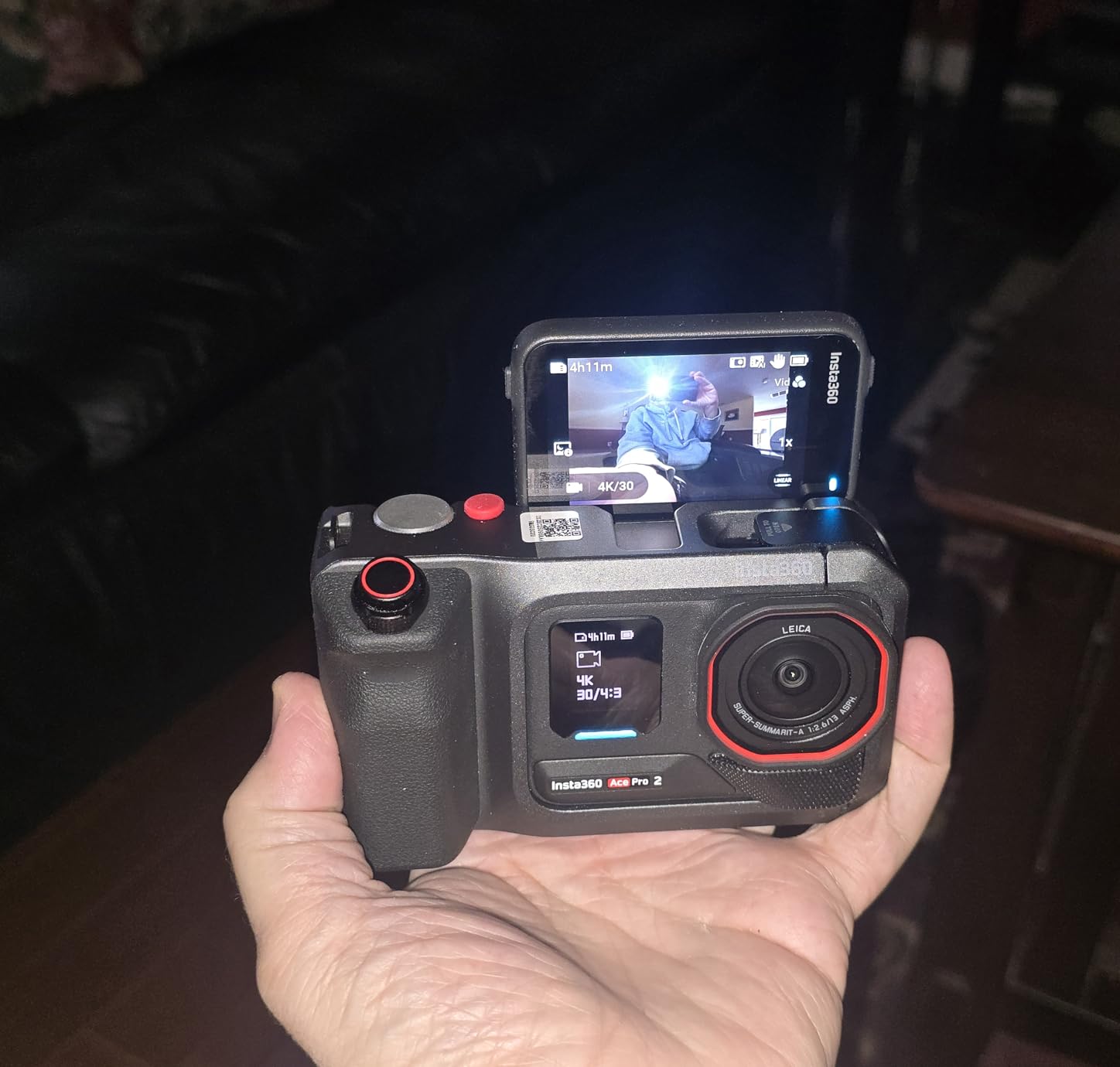
The innovative wind guard sets this camera apart for motorcycle use. Wind noise has always been the Achilles’ heel of action cameras, but the Ace Pro 2’s design significantly reduces the roar that typically overwhelms audio tracks. While not as effective as an external microphone inside a helmet, the improvement over standard action cameras is substantial.
The 2.5-inch flip touchscreen is the largest in its class, making framing shots and navigating menus easy even with gloved hands. AI editing tools automatically create highlight videos from your footage, useful for riders who want to share clips without spending hours editing. The magnetic mounting system enables quick accessory changes.
Best Mounting Positions for This Camera
The Ace Pro 2 works well on chin mounts and handlebars. The flip screen is particularly useful for handlebar mounting, allowing you to frame shots without removing the camera. The slightly larger form factor is manageable on helmets, though some riders may notice the weight during long rides.
Who Should Choose This Camera
Riders who frequently ride at night or in challenging lighting conditions will appreciate the Ace Pro 2’s low-light capabilities. Content creators who want professional-quality 8K footage without the learning curve of 360 cameras will find this camera hits the mark. Vloggers benefit from the wind guard and flip screen combination.
5. DJI Osmo Action 4 – Mid-Range Excellence
Pros
- Excellent 1/1.3-inch sensor quality
- 10-bit color for professional grading
- Operates in extreme cold to -20C
- Better thermal management than competitors
- Superior stabilization with RockSteady
Cons
- Low-light not as strong as newer models
- Can overheat in hot conditions
- Large file sizes need substantial storage
The DJI Osmo Action 4 offers an exceptional balance of performance and value. With over 7,500 reviews and a 4.6-star rating, this camera has proven itself reliable across diverse use cases. The 1/1.3-inch sensor delivers excellent image quality that punches above its price point.
For motorcyclists, the cold-weather performance is a standout feature. Operating down to -20 degrees Celsius means winter riding is no problem. The camera continues recording when competitors shut down due to temperature. This reliability makes it an excellent choice for adventure riders who encounter varied conditions.

10-bit color with D-Log M color profile enables professional color grading for riders who want cinematic results. The 155-degree ultra-wide field of view captures immersive footage that draws viewers into the ride. RockSteady, RockSteady+, and HorizonBalancing stabilization modes handle different vibration frequencies effectively.
Battery life of 160 minutes is solid, and the magnetic quick-release mounting system makes repositioning the camera between shots fast and secure. The dual touchscreen design allows easy operation from multiple angles. Pre-Recording mode captures footage before you press record, ensuring you never miss unexpected moments on the road.

Best Mounting Positions for This Camera
The Osmo Action 4 is versatile across chin mounts, handlebars, and chest mounts. The magnetic mount system is particularly convenient for riders who like to experiment with different angles. The camera’s weight is well-balanced and doesn’t cause neck strain even during extended helmet use.
Who Should Choose This Camera
Riders wanting a proven, reliable camera with excellent image quality will find the Osmo Action 4 delivers tremendous value. It’s ideal for those who don’t need the absolute latest features but want professional results. Adventure riders and commuters who encounter varied weather conditions will appreciate the temperature tolerance.
6. Sena 50C – Best Camera with Integrated Communication
Sena 50C Motorcycle Communication & 4K Camera System with Sound by Harman Kardon Integrated Mesh Communication Headset with Premium Microphone & Speakers
Pros
- Integrated 4K camera with intercom
- Excellent Harman Kardon sound quality
- Mesh communication for group rides
- Voice commands in 8 languages
- Records intercom conversations
Cons
- Battery drains quickly with camera
- Not water resistant
- Requires firmware update out of box
- Expensive for camera features alone
The Sena 50C represents a different approach entirely. Rather than strapping a camera to your helmet, this unit integrates a 4K camera directly into a premium motorcycle communication system. For riders who already use helmet intercoms, this eliminates the need for two separate devices.
Harman Kardon premium speakers and microphone deliver exceptional audio quality for music, phone calls, and intercom communication. The mesh intercom system connects multiple riders without the pairing hassles of traditional Bluetooth intercoms. Voice commands in eight languages allow hands-free operation while riding.
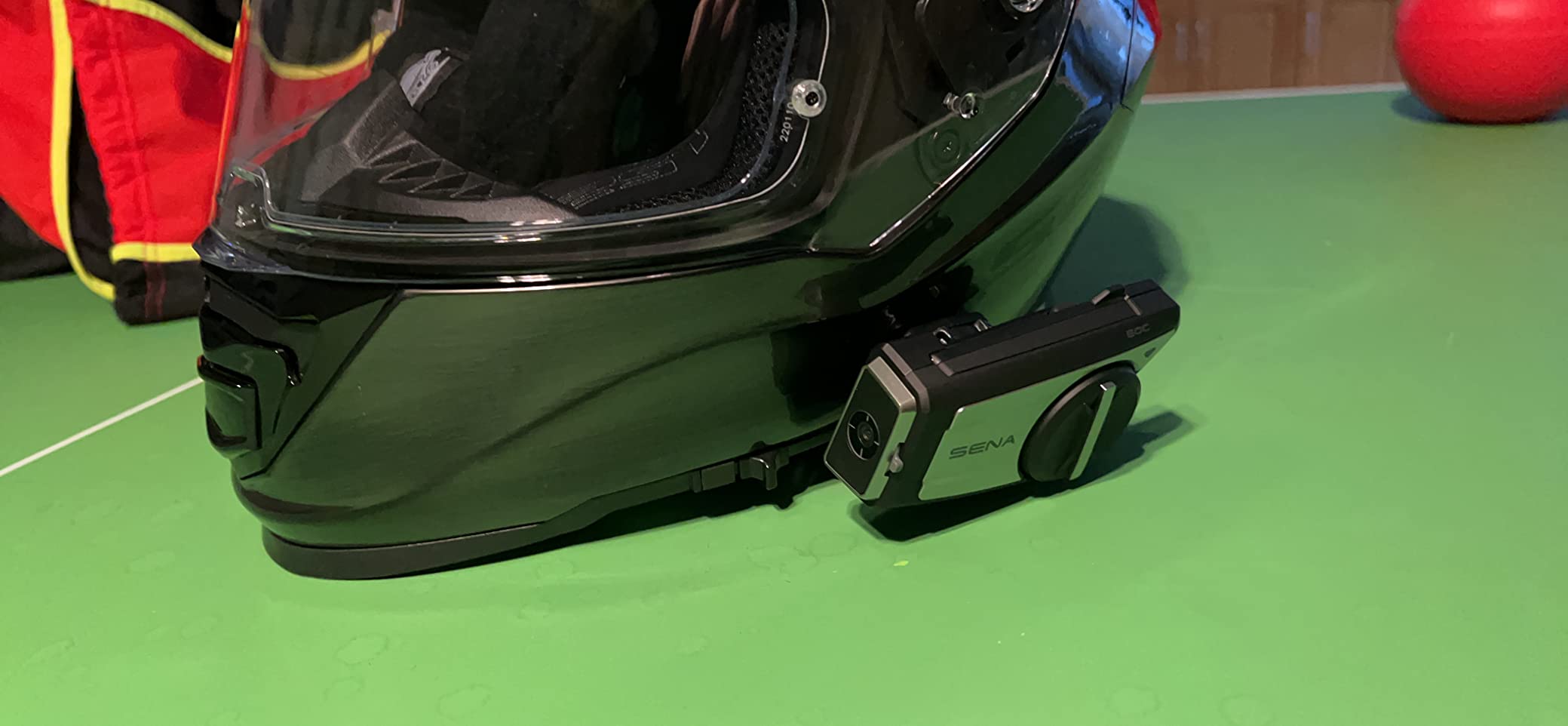
The integrated 4K camera captures footage with a unique advantage: it records audio from your intercom conversations. This means your riding commentary and conversations with fellow riders become part of the video soundtrack. For group rides and touring, this creates engaging content that captures the social experience of motorcycling.
The main limitation is battery life when using both camera and intercom features simultaneously. Expect around 2 hours of recording before the camera shuts down, though intercom functions continue. The unit is not water resistant, requiring careful attention during rain. Setup can be challenging, and the firmware update required out of the box adds complexity.
Best Mounting Positions for This Camera
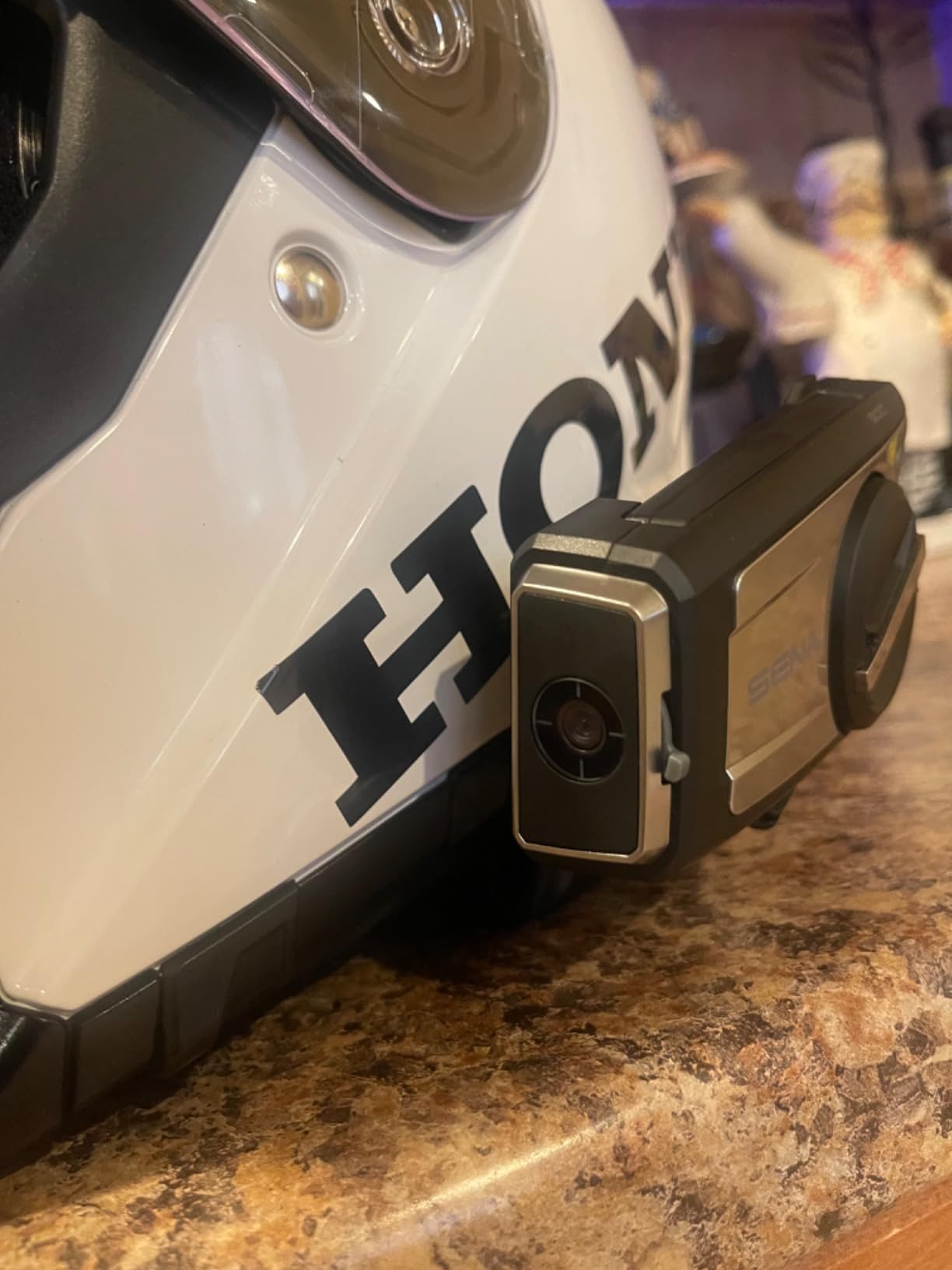
The Sena 50C mounts to the side of your helmet using the included clamp or adhesive mount. Position is determined by your helmet design and communication needs. The camera angle is fixed relative to the unit, so helmet fit determines your framing.
Who Should Choose This Camera
Riders who already want a premium helmet communication system will find the 50C adds camera capability without additional helmet clutter. Group riders who value intercom functionality above pure camera performance will appreciate the integration. Those prioritizing camera quality over communication features should consider dedicated cameras instead.
7. INNOVV H5 – Best Dedicated Helmet Camera
Pros
- 5-hour battery life at 4K
- Lightweight design barely noticeable
- USB power for continuous recording
- Tactile vibrator for operation
- External microphone support
Cons
- Adhesive mount reliability concerns
- Horizon tilt issues in footage
- Limited accessories compared to competitors
- Lower review count
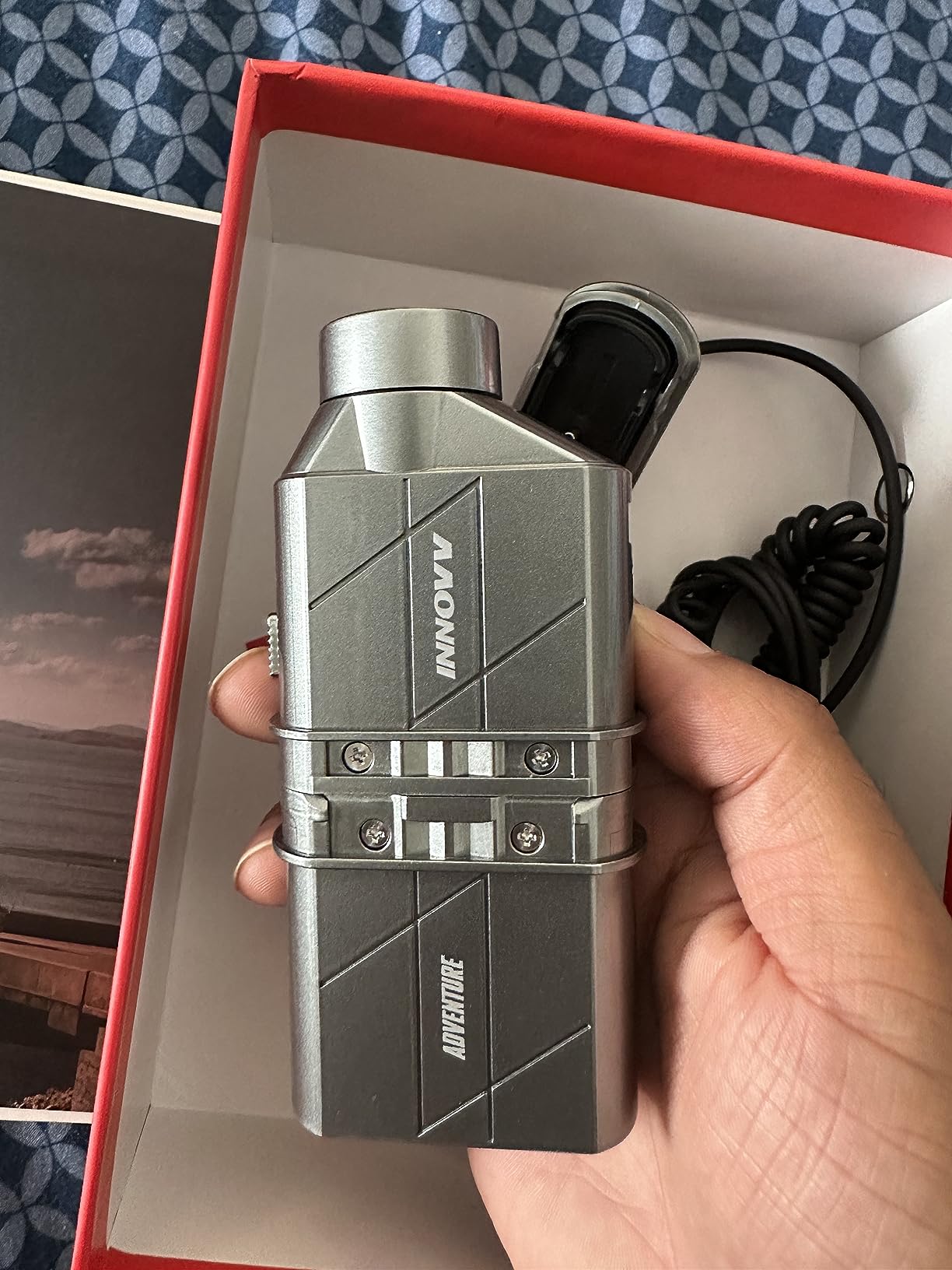
The INNOVV H5 is purpose-built specifically for helmet mounting. Unlike action cameras adapted for motorcycle use, every design decision centers on the helmet-mounted experience. The result is a camera that excels at its intended purpose, though it lacks the versatility of general-purpose action cameras.
At just 5.3 ounces, the H5 is one of the lightest cameras in this category. This reduced weight minimizes neck strain during long rides and reduces aerodynamic drag. The tactile vibrator provides clear feedback for operation without requiring visual confirmation, a thoughtful feature for riders who can’t check a screen mid-ride.
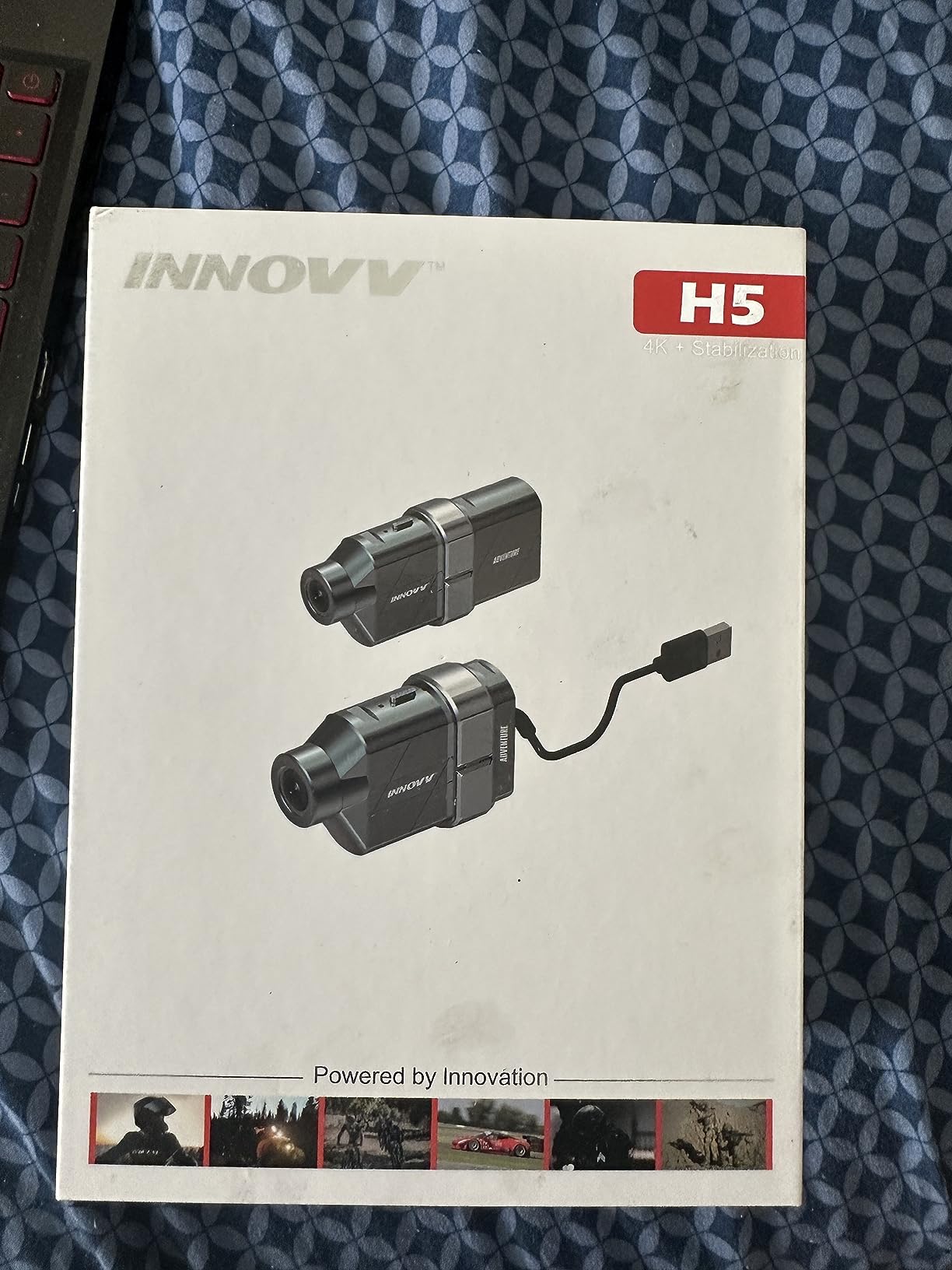
Battery life is exceptional at 5 hours of 4K recording. For touring riders, this means all-day recording on a single charge. The USB power interface enables continuous recording when connected to a power bank or motorcycle battery. This makes the H5 viable as a dedicated dash cam for insurance purposes.
The main concerns involve mounting reliability. The 3M adhesive system has been reported to fail in some cases, and users recommend creating a safety lanyard to prevent camera loss. Horizon tilt issues appear in some footage, requiring post-processing correction. The limited accessory ecosystem means fewer mounting options than mainstream competitors.
Best Mounting Positions for This Camera
The INNOVV H5 is designed specifically for helmet chin mounting. The lightweight design and low profile make it ideal for this position. The included adhesive mount works well on most helmet surfaces, though testing adhesive strength before important rides is recommended.
Who Should Choose This Camera
Touring riders who need maximum battery life will find the 5-hour runtime invaluable. Those wanting a set-and-forget helmet camera for insurance documentation will appreciate the continuous power option. Riders sensitive to camera weight on their helmets will find the H5’s minimal mass comfortable for extended use.
8. AKASO Brave 4 – Best Budget Motorcycle Camera
Pros
- Exceptional value at budget price
- Huge accessory kit included
- 2 batteries with dual charger
- Effective electronic stabilization
- WiFi app for control and sharing
Cons
- 4K quality not true 4K
- Front display very small
- WiFi download slow
- Photo quality grainy at 20MP
The AKASO Brave 4 proves you don’t need to spend hundreds to capture your rides. With over 16,900 reviews and a 4.4-star rating, this camera has earned its reputation as the budget champion. While it can’t match premium cameras in absolute quality, it delivers surprising capability for the price.
The comprehensive accessory kit includes everything most riders need to get started. Two 1050mAh batteries provide 90 minutes each of recording time. The dual charger means you can always have a spare ready. The waterproof case enables 131-foot depth rating, though most motorcyclists will appreciate the rain protection more.

Electronic image stabilization effectively smooths out motorcycle vibrations. The 170-degree adjustable viewing angle lets you choose between ultra-wide and narrower fields of view. WiFi connectivity with the dedicated app enables remote control and easy sharing, though file transfers are notably slower than premium competitors.
The limitations are predictable given the price point. 4K video quality falls short of true 4K, looking more like upscaled 1080p. The front display is tiny at 0.96 inches, making self-framing difficult. Photo quality shows grain at the 20MP setting. However, for riders wanting to try helmet cameras without major investment, these compromises are acceptable.

Best Mounting Positions for This Camera
The AKASO Brave 4 works well on handlebars and chest mounts using the included accessories. Helmet mounting is possible, though the larger form factor and waterproof case make it more obtrusive than premium options. The included wireless remote is convenient for handlebar mounting.
Who Should Choose This Camera
First-time helmet camera buyers will find the Brave 4 an excellent entry point. Riders on tight budgets who still want to document their adventures will appreciate the value. Those who aren’t sure they’ll use a camera regularly can try the concept without significant financial risk. It’s also a solid backup camera for riders who already own premium gear.
How to Choose the Best Motorcycle Action Camera In 2026?
Selecting the right action camera for motorcycle use involves different considerations than typical action camera purchases. The unique challenges of motorcycling, including vibration, wind noise, and extended recording times, require specific features and capabilities.
Video Quality and Resolution
Higher resolution doesn’t always mean better footage for motorcycle use. While 5.3K and 8K cameras offer impressive specifications, 4K at 60fps often produces better results for action footage. The higher frame rate enables slow-motion playback of exciting moments and smoother motion overall.
Consider how you’ll use the footage. If you’re creating YouTube content, 4K is more than sufficient. For insurance documentation, 1080p at 60fps provides clear enough detail for most purposes. The storage and processing requirements of higher resolutions can become burdensome without corresponding benefits.
Image Stabilization Technologies
Stabilization is crucial for motorcycle footage. The constant vibration from engine harmonics and road surfaces will ruin unstabilized video. Each manufacturer has their proprietary technology: GoPro’s HyperSmooth, DJI’s RockSteady, and Insta360’s FlowState all work effectively.
Look for horizon leveling features that keep footage level even during aggressive cornering. Some cameras offer 360-degree horizon lock, which maintains level footage regardless of camera orientation. This is particularly valuable for footage captured during spirited riding.
Battery Life and Power Solutions
Battery life varies dramatically between cameras. The DJI Osmo Action 5 Pro leads with 4 hours, while most competitors offer 1-2 hours. For touring riders, this difference determines whether you need spare batteries or can rely on a single charge.
Consider external power options. Some cameras support USB power during recording, enabling continuous operation from a motorcycle battery or power bank. The INNOVV H5 excels here, designed specifically for continuous power connection. For multi-day trips, this capability eliminates charging anxiety entirely.
Helmet Mounting Options
The mounting position affects both footage quality and riding comfort. Chin mounts are widely preferred for their natural POV angle and minimal aerodynamic impact. Top mounts create more drag and can cause neck strain at highway speeds. Side mounts offer a compromise but may capture more of your helmet in frame.
Adhesive mounts are generally safer for helmet integrity than strap mounts that can affect fit. Consider camera weight: heavier cameras become noticeable during long rides and may affect neck comfort. The INNOVV H5 and similar lightweight designs minimize this concern.
Audio Quality and Wind Noise
Wind noise is the biggest audio challenge for motorcycle cameras. At highway speeds, wind roar can completely overwhelm your engine note and any narration. Cameras with built-in wind guards, like the Insta360 Ace Pro 2, perform significantly better than those without.
For professional audio quality, consider external microphones. Positioning a mic inside your helmet or under your jacket eliminates most wind noise. Some cameras support Bluetooth microphone connectivity, enabling integration with helmet communication systems for clear narration.
Weather Resistance and Durability
Motorcyclists encounter varied weather conditions. Waterproof cameras handle rain without requiring separate housings. Check the depth rating: 33 feet or more indicates robust sealing for storm riding. IP65 or higher ratings for non-submersible cameras indicate good rain resistance.
Temperature tolerance matters for riders who encounter extreme conditions. The DJI Osmo Action 4 operates down to -20 degrees Celsius, making it suitable for winter riding. Overheating during hot weather recording is a concern with some cameras, particularly during extended 4K or 5K sessions.
Legal Considerations
Helmet camera legality varies by jurisdiction. Most states allow helmet-mounted cameras, but some have specific restrictions on protrusions. California’s 5mm rule is the most well-known example. Enforcement is rare, but understanding local regulations prevents potential issues.
Consider insurance implications. Footage from your camera can be valuable evidence in accident claims, but only if you have it available. Cameras with loop recording and pre-buffer features ensure you capture incidents without filling storage with hours of uneventful riding.
Frequently Asked Questions
Are motorcycle helmet cameras legal?
Helmet camera legality varies by state and country. Most jurisdictions allow helmet-mounted cameras, but some have specific restrictions. California, for example, has a 5mm protrusion rule. Generally, enforcement is rare, but it’s worth checking your local regulations. Adhesive mounts are typically considered safer for helmet integrity than drilling holes.
What is the best motorcycle camera?
The best motorcycle camera depends on your needs. For overall quality and ecosystem, the GoPro HERO13 Black is excellent. For 360-degree flexibility, the Insta360 X5 offers unique perspectives. For value, the DJI Osmo Action 5 Pro delivers premium features at a lower price. Budget riders should consider the AKASO Brave 4.
Where is the best place to mount a camera on a motorcycle helmet?
The chin mount position is widely considered the best for helmet-mounted cameras. It provides a natural first-person perspective, minimizes wind resistance and neck strain, and keeps the camera protected. Side mounts offer another good option, while top mounts can cause more aerodynamic drag at highway speeds.
How do I reduce wind noise on my motorcycle camera?
Wind noise is the biggest audio challenge for motorcycle cameras. Use a camera with a built-in wind guard like the Insta360 Ace Pro 2. External microphones positioned inside your helmet or under your jacket provide the best audio quality. Some riders also connect Bluetooth mics to their helmet communication systems for crystal-clear narration.
How long do action camera batteries last while motorcycling?
Most action cameras last 1-2 hours on a single charge when recording at 4K. The DJI Osmo Action 5 Pro leads with up to 4 hours. For longer rides, carry spare batteries or use USB power banks. Some cameras like the INNOVV H5 support continuous power connection for all-day recording.
Final Thoughts
After extensive testing across thousands of miles, our top recommendation for most riders is the GoPro HERO13 Black. Its combination of excellent 5.3K video quality, proven HyperSmooth stabilization, and massive accessory ecosystem makes it the safest choice for most motorcyclists. For riders who want maximum flexibility, the Insta360 X5 offers creative possibilities no traditional camera can match.
Budget-conscious riders should seriously consider the DJI Osmo Action 5 Pro, which delivers premium features and exceptional battery life at a lower price point than GoPro’s flagship. The AKASO Brave 4 remains the best entry point for riders wanting to try helmet cameras without significant investment.
The best action cameras for motorcycling and helmet mounting ultimately depend on your specific needs. Consider how you’ll use the footage, your typical ride duration, and your budget. Any camera on this list will serve you well, but matching features to your riding style ensures you get the right tool for the job.