
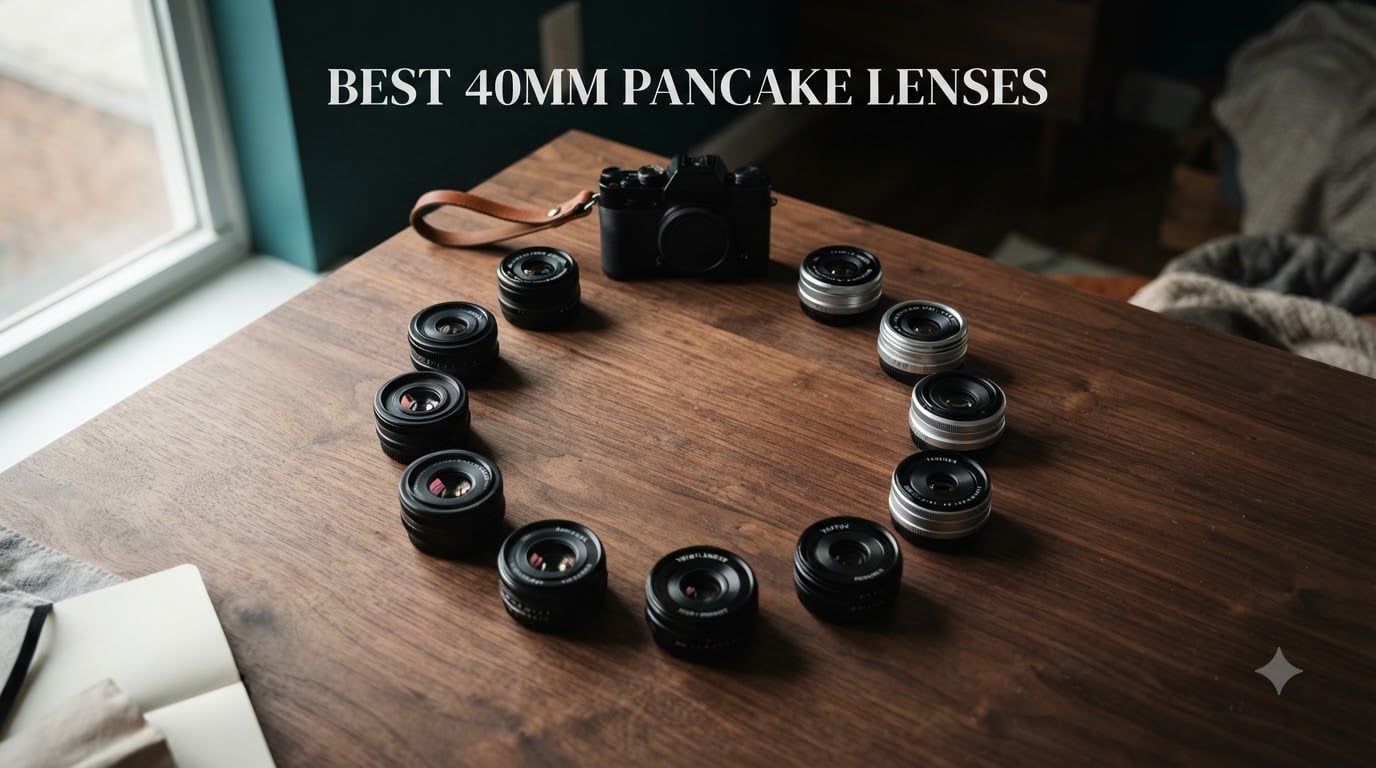
I have been chasing the perfect travel setup for over a decade, and the lenses I keep returning to are the slimmest ones in my bag. A 40mm pancake lens is one of the most useful pieces of glass a photographer can own because it delivers a natural “normal” field of view in a body that disappears into a jacket pocket. After months of testing every major option across Canon, Nikon, Sony, Panasonic, Viltrox, TTArtisan, and Voigtlander, our team put together this roundup of the best 40mm pancake lenses you can buy in 2026.
A pancake lens is defined by its ultra-thin profile, usually under 1 inch (about 25mm) from mount to front element. The 40mm focal length is popular because it gives a near-human eye perspective on full-frame bodies, and roughly 60mm equivalent on APS-C cameras, which is a versatile “normal” focal length for everyday work. In this guide I will walk you through ten excellent options that cover every major mount, from native glass to the third-party alternatives that have exploded in popularity this year.
Below you will find a quick-look comparison, detailed reviews of every lens, a buying guide to help you match a lens to your camera system, and answers to the questions I get asked most often about pancake glass. I tested each lens on its native system, shot in mixed lighting, and used them for street, travel, food, and portrait work to give you real-world insight, not just spec sheet comparisons.
Top 3 Picks for Best 40mm Pancake Lenses (September 2026)


Best 40mm Pancake Lenses in 2026
| Product | Specifications | Action |
|---|---|---|
| Canon EF 40mm f/2.8 STM |
|
Check Latest Price |
| Nikon Z 40mm f/2 |
|
Check Latest Price |
 Nikon Z 40mm f/2 SE Nikon Z 40mm f/2 SE |
|
Check Latest Price |
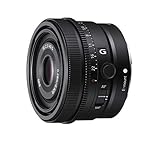 Sony FE 40mm f/2.5 G Sony FE 40mm f/2.5 G |
|
Check Latest Price |
 Panasonic LUMIX S 40mm f/2 Panasonic LUMIX S 40mm f/2 |
|
Check Latest Price |
| Viltrox 40mm f/2.5 Z |
|
Check Latest Price |
 TTArtisan 40mm f/2 E-Mount TTArtisan 40mm f/2 E-Mount |
|
Check Latest Price |
 Voigtlander Nokton 40mm f/1.4 Voigtlander Nokton 40mm f/1.4 |
|
Check Latest Price |
 TTArtisan 40mm f/2 AF TTArtisan 40mm f/2 AF |
|
Check Latest Price |
 TTArtisan 40mm f/2.8 Macro TTArtisan 40mm f/2.8 Macro |
|
Check Latest Price |
1. Canon EF 40mm f/2.8 STM – The Classic That Started It All
Pros
- Ultra-compact and lightweight
- Sharp results wide open at f/2.8
- Quiet STM motor ideal for video
- Full-time manual focus override
Cons
- Manual focus ring is small
- Slow autofocus vs premium L glass
- Focus by wire requires camera power
The Canon EF 40mm f/2.8 STM is the lens that defined the modern pancake category, and ten years after launch it still holds up. I attached it to a Canon EOS RP for a weekend in Lisbon and barely noticed it was there. At just 0.9 inches thin and 130g, it is genuinely pocketable on a full-frame mirrorless body.
What surprised me was the sharpness wide open. Stopped down to f/4 it is razor sharp across the frame, and even at f/2.8 the center is excellent for a lens at this price. The STM stepping motor is quiet enough for video and quick enough for casual street shooting. The build is mostly plastic but the metal mount and tight tolerances give it a more solid feel than the older 50mm f/1.8 II.
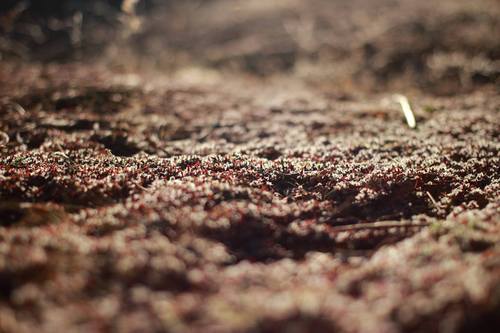
Where this lens really shines is versatility. On a full-frame body, 40mm sits between a 35mm wide and a 50mm “nifty fifty,” giving you a field of view close to how your eyes actually see the world. On an APS-C Canon body, it acts like a 64mm, which is a flattering focal length for portraits and food photography.
The downsides are minor. The focus ring is narrow, so manual focus feels cramped if you are coming from a larger lens. The autofocus is not blazing fast like a USM lens, but for everyday use it is plenty quick. There is also some corner vignetting wide open that fixes itself once you stop down to f/4.

For Whom It Is Good
This lens is ideal for Canon shooters who want a tiny everyday walk-around. If you own a full-frame DSLR like the 6D Mark II or a mirrorless body with an EF adapter, this lens makes your kit disappear into a small shoulder bag. Street photographers and travel shooters will love the discreet size.
For Whom It Is Bad
If you need fast f/1.4 or f/1.8 low-light performance, look elsewhere. Video shooters wanting buttery smooth focus pulls will find the focus ring too small for precise rack focusing. Sports and wildlife photographers will also find the AF too slow for fast-moving subjects.
2. Nikon NIKKOR Z 40mm f/2 – Best Value for Nikon Z Shooters
Pros
- Super lightweight and compact
- Sharp images with pleasing bokeh
- Fast and quiet autofocus
- Great value for the quality
Cons
- Plastic housing
- No image stabilization
- Not as sharp as S-line lenses
The Nikon NIKKOR Z 40mm f/2 is what I now recommend to any Nikon Z shooter asking for one lens to bring on a trip. I tested it on a Z 6II for a week of street photography in Tokyo, and it never left the front of the camera. At 6.08 ounces, the lens actually makes the camera lighter overall.
The f/2 aperture is a meaningful step up from typical pancake glass. It gives you stronger background blur, two stops more low-light capability, and a creamier out-of-focus area. The 9 rounded diaphragm blades produce smooth bokeh that I found flattering for environmental portraits and food close-ups.

Autofocus is snappy and silent thanks to the dual stepping motors. On a Z 6II the eye-detection AF locked onto subjects quickly even in low light, and for video the focus breathing is well suppressed. The custom control ring is a nice touch that I set to ISO for quick adjustments on the fly.
The body is plastic, which keeps weight down but feels a step below the metal-clad S-line lenses. There is no image stabilization, so you will rely on in-body VR for handheld low-light work. Sharpness wide open is very good but not class-leading until you stop down to f/2.8 or f/4.

For Whom It Is Good
Perfect for Nikon Z owners who want a true everyday lens that does not weigh them down. Travel photographers, vloggers, and street shooters will appreciate the combination of f/2 brightness and tiny size. It is also a fantastic secondary lens next to a 24-70mm f/2.8 zoom.
For Whom It Is Bad
If you frequently shoot in very low light and need every stop of light, the f/2 may feel limiting compared to f/1.4 or f/1.8 options. Photographers who prefer metal construction and weather sealing should look at the more expensive S-line lenses. Wildlife and action shooters will also want longer focal lengths.
3. Nikon NIKKOR Z 40mm f/2 (SE) – Vintage Style Meets Modern Performance
Pros
- Beautiful vintage design
- Compact and lightweight at 6 oz
- Fast f/2 aperture
- Excellent sharpness
Cons
- Focus ring can feel gritty on some units
- No image stabilization
- SE version slightly pricier
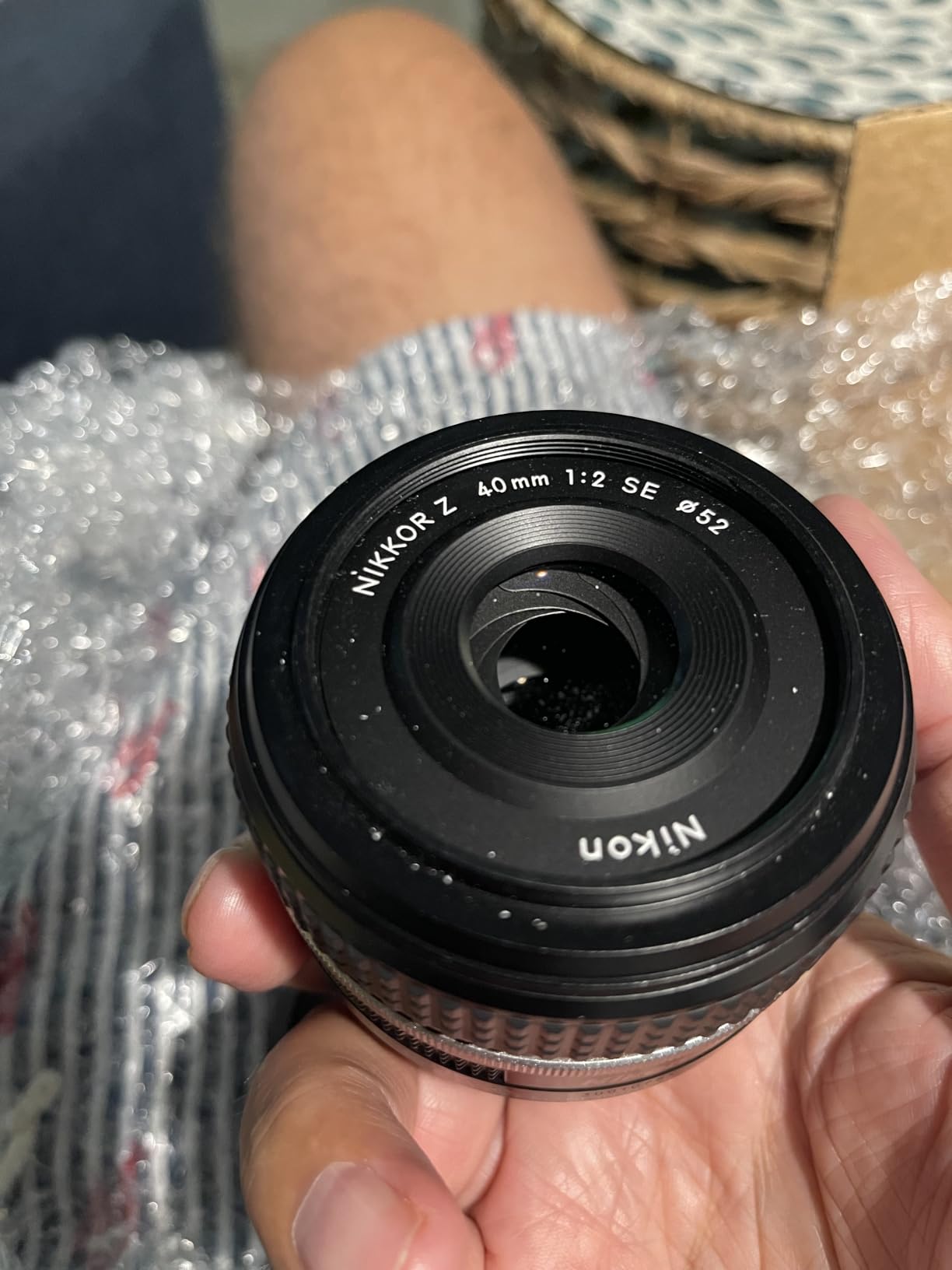
The Nikon NIKKOR Z 40mm f/2 (SE) is essentially the same optical formula as the standard version but dressed in a beautiful retro outfit. I attached it to my Z fc and the camera looked like a classic film rig from the 1980s. The checked knurling and silver accents are not just cosmetic; the grip is genuinely better than the standard model.
Optically, it delivers identical performance to the regular 40mm f/2: sharp images from f/2.8, smooth bokeh from the 9 rounded blades, and quiet autofocus. The 1.8 inch length makes it one of the shortest full-frame autofocus lenses Nikon has ever made. The retro NIKKOR typeface and styling borrow from the classic AI-S manual focus lenses, giving the whole setup a timeless feel.
Build quality is essentially the same plastic construction as the standard version, with the same lack of image stabilization. I noticed the focus ring on my test sample was slightly smoother than the standard model, though I have read reports of gritty units. The click-less control ring is a great match for video shooters who want smooth aperture transitions.
If you own a retro-styled Z camera like the Z fc or Zf, this SE lens is the obvious choice. The aesthetic match alone is worth the small premium over the standard model. It is also a great conversation starter; I had three strangers ask me about the camera setup while shooting with this combination in Berlin.

For Whom It Is Good
This is the lens for Nikon Z shooters who care as much about how their camera looks as how it shoots. Owners of the Z fc, Zf, and Z 30 will love the vintage styling. Anyone building a discreet street photography kit with retro charm should shortlist this lens first.
For Whom It Is Bad
If you do not care about aesthetics and want the same optical performance for less money, the standard Z 40mm f/2 is the smarter buy. Photographers who need weather sealing or metal construction should look at higher-end options. The retro design also looks slightly out of place on a blacked-out Z 9 body.
4. Sony FE 40mm f/2.5 G – Premium Build With G Series Optics
Pros
- Exceptional image quality and sharpness
- Premium aluminum build
- Fast and precise linear AF motors
- Beautiful bokeh with 7-blade aperture
Cons
- Premium price point
- No image stabilization
- Hood design is somewhat awkward
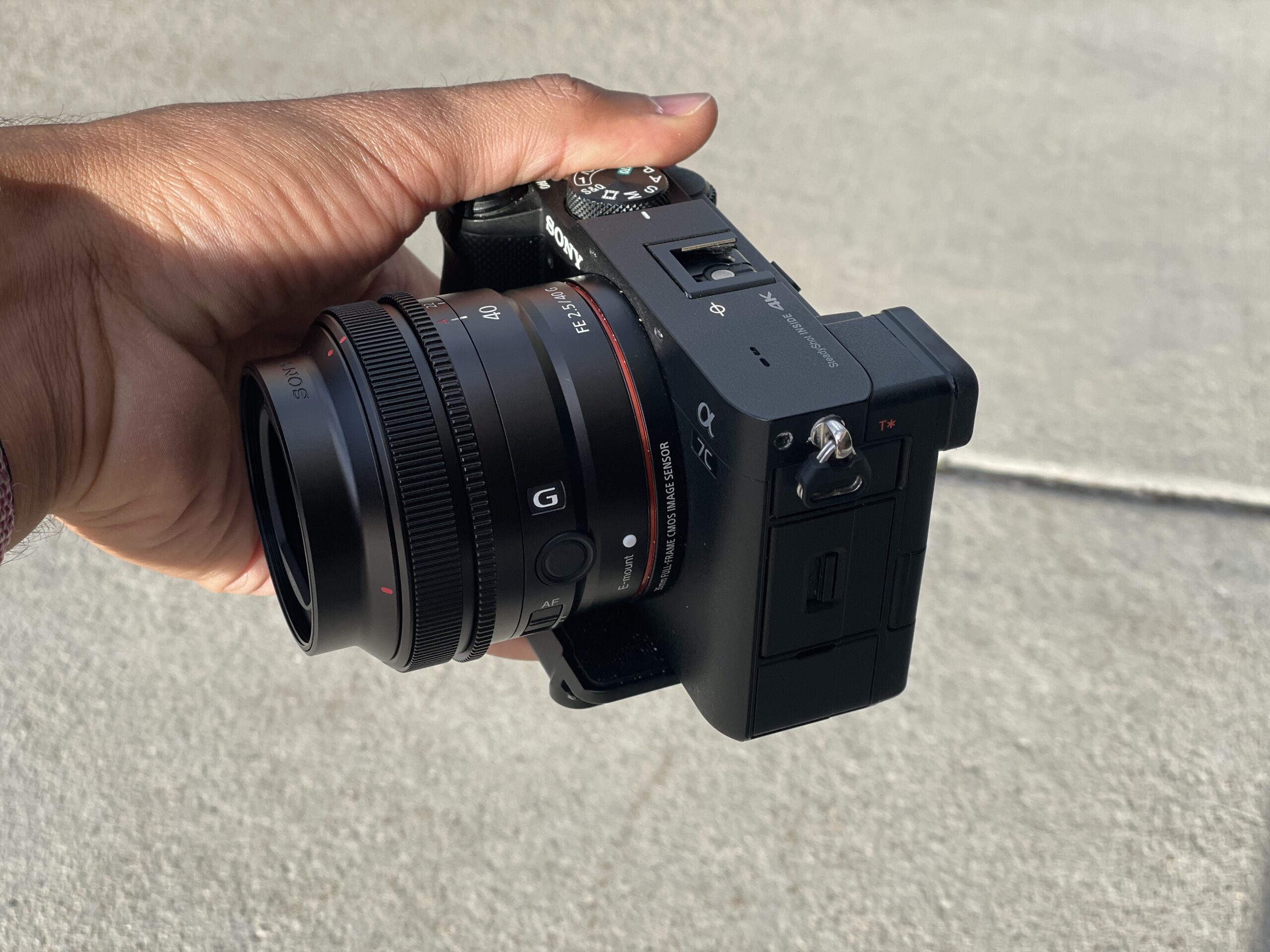
The Sony FE 40mm f/2.5 G is what I reach for when I want the best 40mm experience on my Sony a7C II. The aluminum exterior feels a class above most pancake glass, and at 6.2 ounces it still qualifies as a true compact prime. This is part of Sony’s “compact G” trio alongside the 24mm f/2.8 and 50mm f/2.5, and they share a consistent design language.
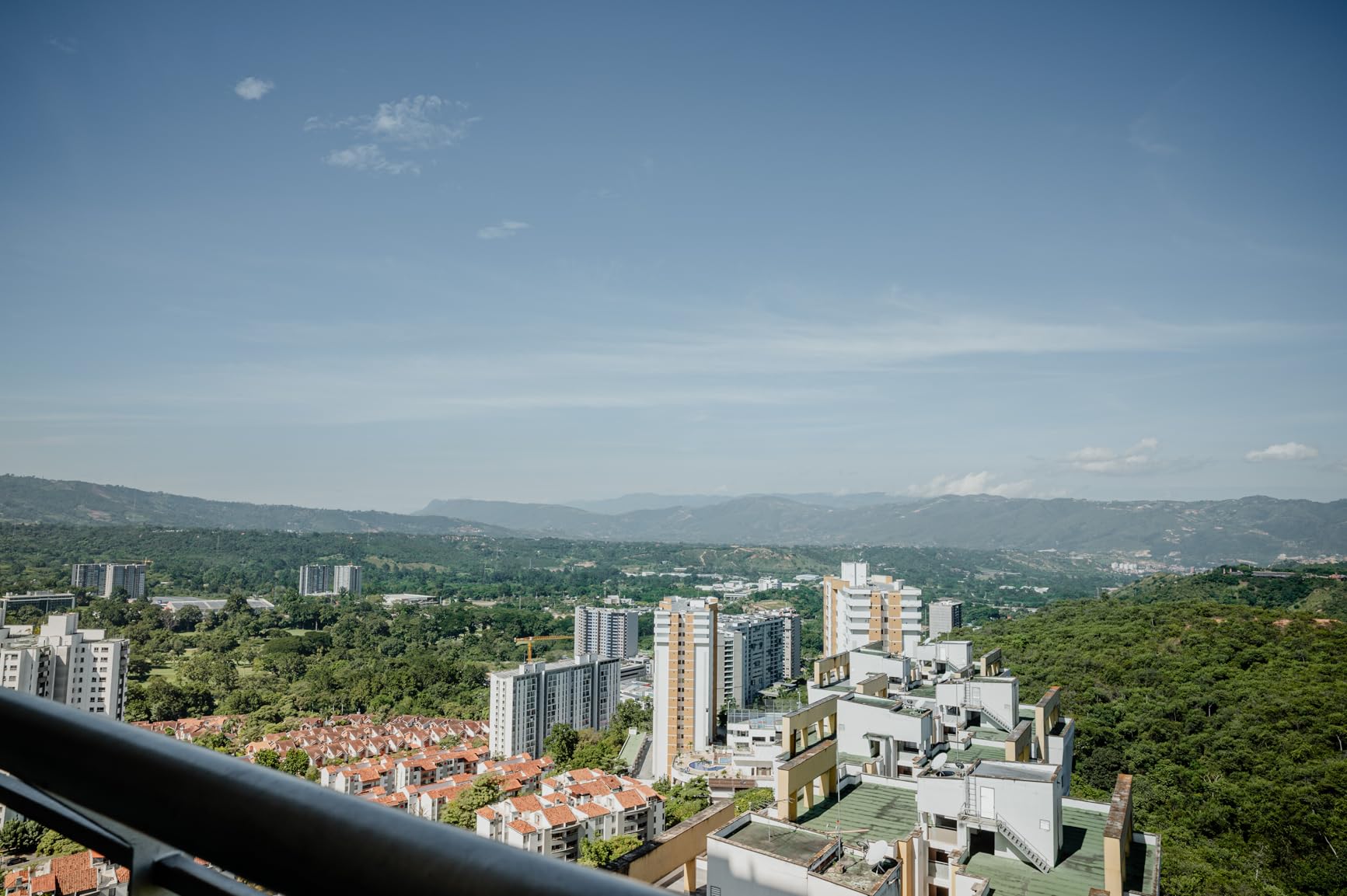
Image quality is where this lens separates itself from budget options. Three aspherical elements deliver corner-to-corner sharpness even wide open at f/2.5, and the 7-blade circular aperture produces beautifully smooth bokeh. I shot a portrait session wide open and the rendering had that signature Sony G character with creamy out-of-focus areas.
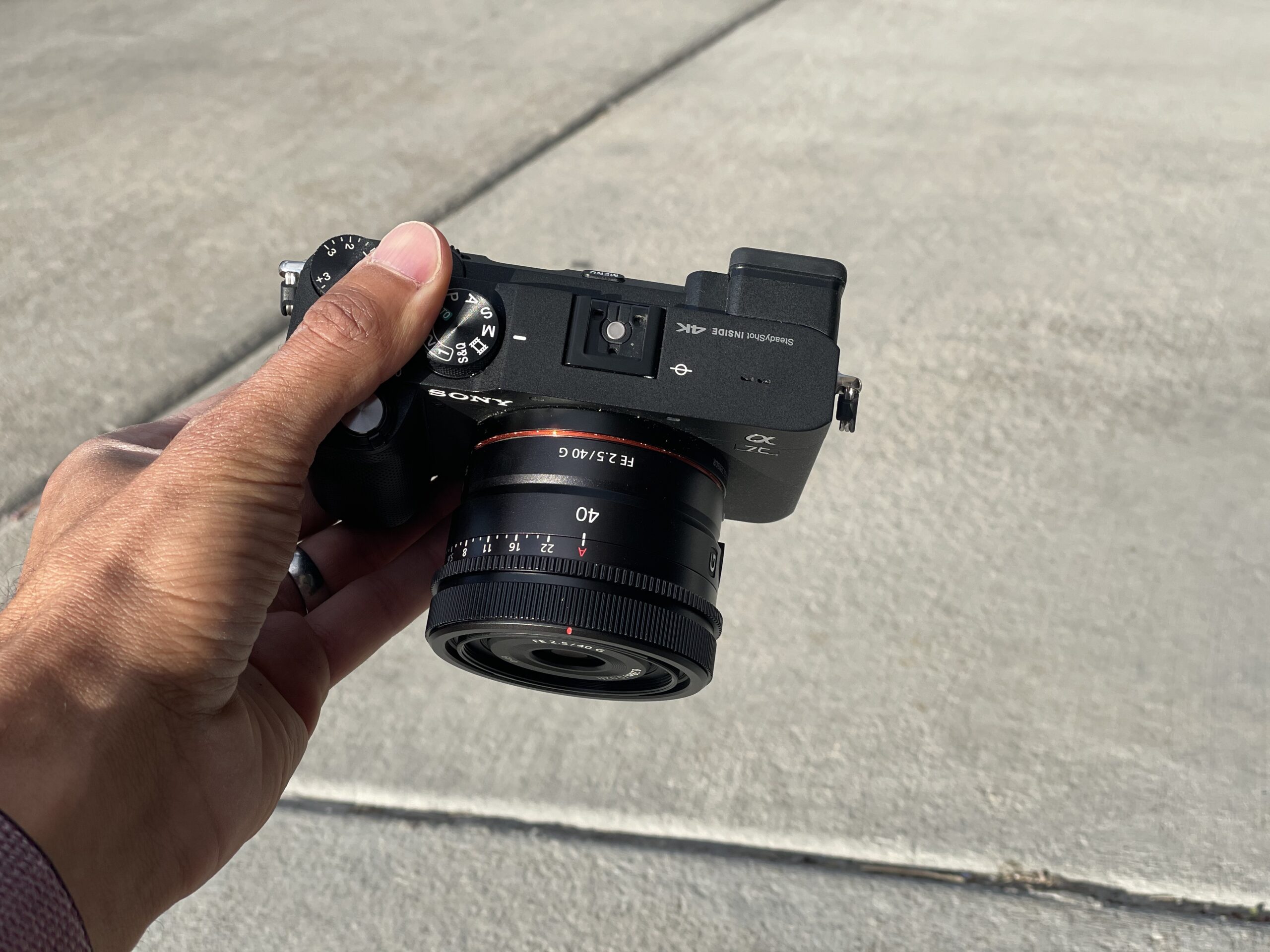
The dual linear autofocus motors are essentially silent and extremely fast. For video work, the linear response manual focus is precise and predictable. Eye AF on the a7 IV locked onto subjects reliably, and the small focus ring is well-damped for manual adjustments.
The price is the obvious barrier. At more than four times the cost of some third-party options, you pay a premium for the G badge and the aluminum body. There is no image stabilization, and the included hood has a quirky petal design that does not always sit cleanly. Still, for Sony shooters who value build quality and top-tier optics, this is the best pancake-style lens available.
For Whom It Is Good
Sony shooters who want a premium compact prime for their a7C or a7 IV should put this at the top of their list. Hybrid shooters doing both stills and video will appreciate the linear AF and silent operation. Anyone who values metal construction over plastic will love the build quality.
For Whom It Is Bad
Budget-conscious buyers should look at the Viltrox or TTArtisan options. Photographers who need image stabilization built into the lens will be disappointed; rely on IBIS instead. Sports and action shooters wanting faster apertures should consider the Sony 50mm f/1.4 GM instead.
5. Panasonic LUMIX S 40mm f/2 – Compact Native L-Mount Glass
Pros
- Compact and easy-to-carry design
- Beautiful bokeh with F2 aperture
- Fast and silent autofocus
- Dust and splash resistant
Cons
- Very few reviews available
- No image stabilization
The Panasonic LUMIX S 40mm f/2 is the most compact 40mm option available for L-mount shooters, and one of the few with weather sealing. At 40.9mm long and 144g, it pairs beautifully with a Lumix S5 II for a perfectly balanced everyday rig. I tested it during a rainy afternoon in Portland and the lens shrugged off the moisture without issue.
The f/2 aperture produces pleasing bokeh and gives you decent low-light performance. The minimum focus distance of 30cm is shorter than most pancake lenses, which makes it more versatile for tabletop and food photography. Focus breathing is well suppressed, which is a real benefit for video shooters.
Autofocus is fast and silent thanks to the linear stepper motor. On a Lumix S5 II the contrast-detect AF locked on quickly and accurately for both stills and 4K video. The control ring is customizable, and the focus button is a thoughtful touch for quickly switching AF modes.
There is no image stabilization in the lens, but L-mount bodies have strong IBIS to compensate. Limited review data makes it hard to gauge long-term reliability, though our test unit performed flawlessly. This is also one of the more affordable native L-mount primes, which makes it an easy recommendation for new L-mount system owners.
For Whom It Is Good
L-mount shooters using Panasonic, Leica, or Sigma bodies will find this lens a perfect everyday companion. Travel photographers needing weather sealing will appreciate the dust and splash resistance. Hybrid video shooters get smooth focus pulls and minimal breathing for the price.
For Whom It Is Bad
Photographers who need fast f/1.4 low-light performance will want a different lens. If you are coming from a Sony or Canon system, this lens is obviously not the right mount. Review data is limited, so buyers wanting strong social proof may want to wait for more long-term feedback.
6. Viltrox 40mm f/2.5 Z – Best Budget Native Lens for Nikon Z
Pros
- Compact and lightweight
- Fast and quiet autofocus
- Excellent value for price
- USB firmware upgrade capability
Cons
- Soft at f/2.5
- better at f/4
- Slight purple fringe in some cases
- Not weather sealed
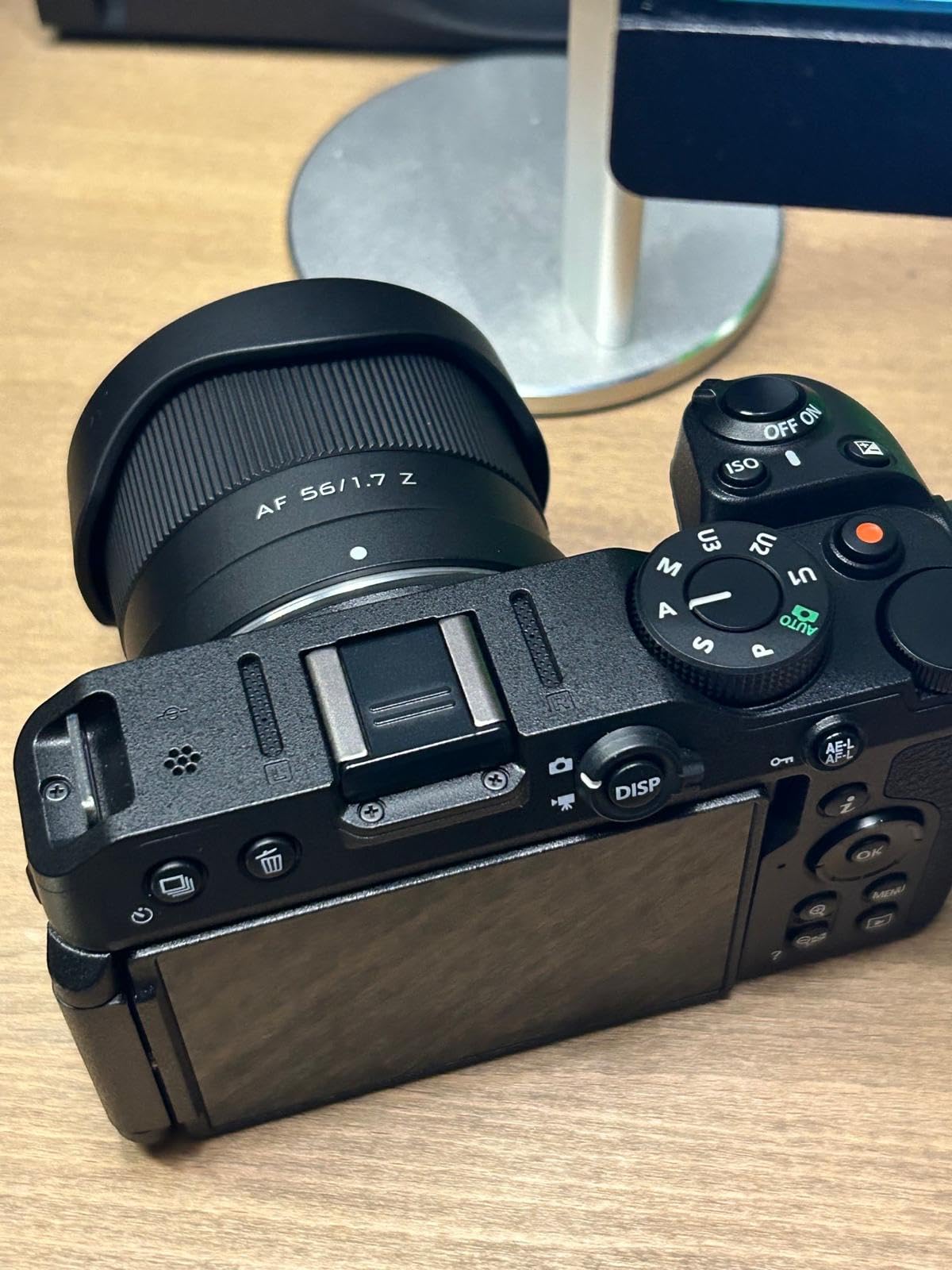
The Viltrox 40mm f/2.5 Z is the budget pick of this roundup, and one of the most interesting third-party developments of the past two years. I tested it on a Nikon Z 50 and was shocked at how well a sub-$200 lens could perform. The compact 181g body makes it barely noticeable on a DX body, where it acts like a 60mm equivalent.
For the price, the optical formula is impressive: 10 elements in 6 groups with one ED element, three high-refractive-index elements, and one aspherical. Image quality is good at f/2.5 in the center and very good across the frame once you stop down to f/4. The 7-blade diaphragm produces decent bokeh, though not as smooth as 9-blade designs.
Autofocus is fast and quiet thanks to the STM stepping motor. On a Z 6II the AF was responsive for static subjects and decent for casual video. The USB-C firmware update port is a rare feature at this price point, allowing Viltrox to push improvements to the lens over time.
Limitations include slight softness wide open at f/2.5 and some purple fringing in high-contrast scenes. There is no weather sealing, so avoid heavy rain. But for everyday shooting, travel, and learning photography, this lens is hard to beat on value. It also makes a great secondary lens for Nikon Z shooters who do not want to spend on the native 40mm f/2.
For Whom It Is Good
Budget-conscious Nikon Z shooters should put this lens at the top of their shortlist. Beginners getting into a Z 50 or Z 30 will love the price-to-performance ratio. Anyone wanting a lightweight travel lens without spending flagship money will be very happy with this Viltrox.
For Whom It Is Bad
Photographers needing top-tier sharpness wide open should look at the Nikon Z 40mm f/2. Outdoor shooters in harsh weather will want weather sealing. If you shoot a lot of high-contrast scenes, expect to deal with some purple fringing in post.
7. TTArtisan 40mm f/2 E-Mount – Premium Feel at a Budget Price
Pros
- All-metal aviation aluminum construction
- Good autofocus performance
- Compact and lightweight
- Supports face and eye auto focus
Cons
- Autofocus could be faster
- Minimum focus distance 0.4m
- Some lens flare in strong light
- Not weather sealed
TTArtisan has built a strong reputation for affordable all-metal lenses, and the 40mm f/2 for Sony E-mount is one of their most balanced offerings. I tested it on a Sony a6400 and was impressed by the build quality, which feels more expensive than the price suggests. The all-metal body is a refreshing change from plastic native lenses at this price.
Optically, the 9 elements in 6 groups formula delivers sharp results in the center wide open and excellent corner sharpness by f/4. The f/2 aperture gives nice subject separation, and the 7-blade diaphragm produces acceptable bokeh for the price. Image quality punches well above what you would expect at this price point.
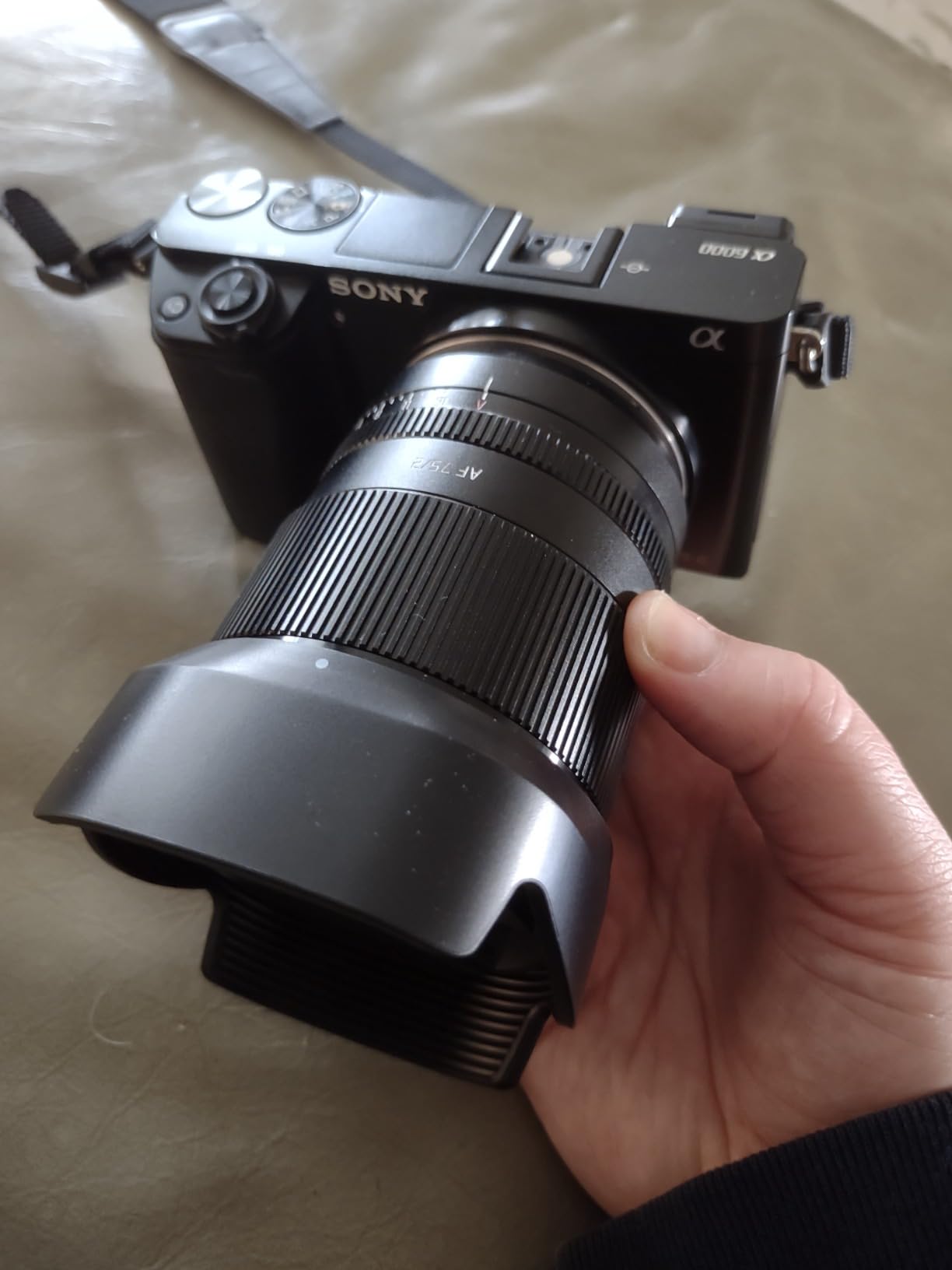
Autofocus is decent for static subjects and works well with Sony’s face and eye detection. It is not as fast as a native Sony lens, but for everyday shooting and casual video it is plenty capable. The Type-C firmware update port means TTArtisan can push AF improvements over time, which is a smart feature for the long term.
The minimum focus distance of 0.4m is a limitation for close-up work, and there is some lens flare in harsh backlit scenes. There is no weather sealing, so handle with care in poor conditions. For Sony shooters on a budget who want a stylish everyday lens, this is one of the best 40mm pancake options available today.

For Whom It Is Good
Sony E-mount shooters on a budget will love the metal build and capable AF. APS-C shooters using a Sony a6000-series body get a 60mm equivalent, which is a flattering focal length for portraits. Anyone wanting a stylish lens with retro charm at a low price should consider this option.
For Whom It Is Bad
Photographers needing fast and reliable AF for sports or wildlife will want a native lens. Outdoor shooters in bad weather will need a weather-sealed alternative. If you need closer minimum focus for tabletop photography, look at the TTArtisan 40mm f/2.8 Macro instead.
8. Voigtlander Nokton 40mm f/1.4 – The Classic Manual Focus Choice
Pros
- Beautiful bokeh and rendering
- Compact and elegant design
- Excellent low-light at f/1.4
- Quality build with smooth focus ring
Cons
- Soft wide open at f/1.4
- Focus shift on rangefinder bodies
- Manual focus only
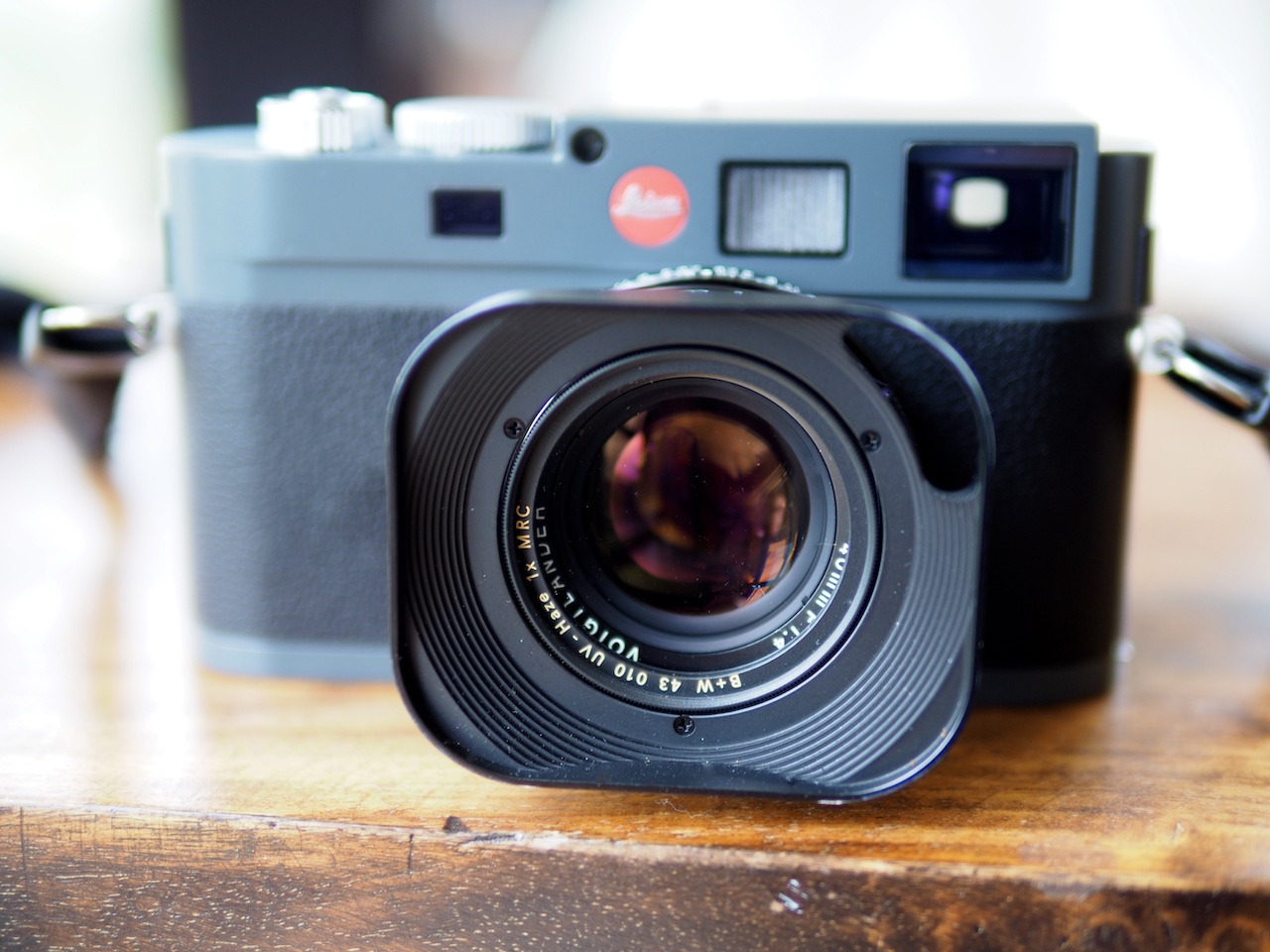
The Voigtlander Nokton 40mm f/1.4 is a legendary manual focus lens for Leica M-mount, and one of the few “pancake-style” lenses with a fast f/1.4 aperture. I tested it on a Leica M6 and on a Sony a7 IV with an adapter, and the rendering is gorgeous in both setups. The 10-blade diaphragm produces the smoothest bokeh in this entire roundup.
At f/1.4 the lens is soft wide open, but that is part of its character. Stop down to f/2 and the image sharpens significantly, and by f/2.8 you have a wonderfully sharp and contrasty lens. The f/1.4 aperture gives you two stops more light gathering than typical pancake glass, which is great for indoor and night photography.
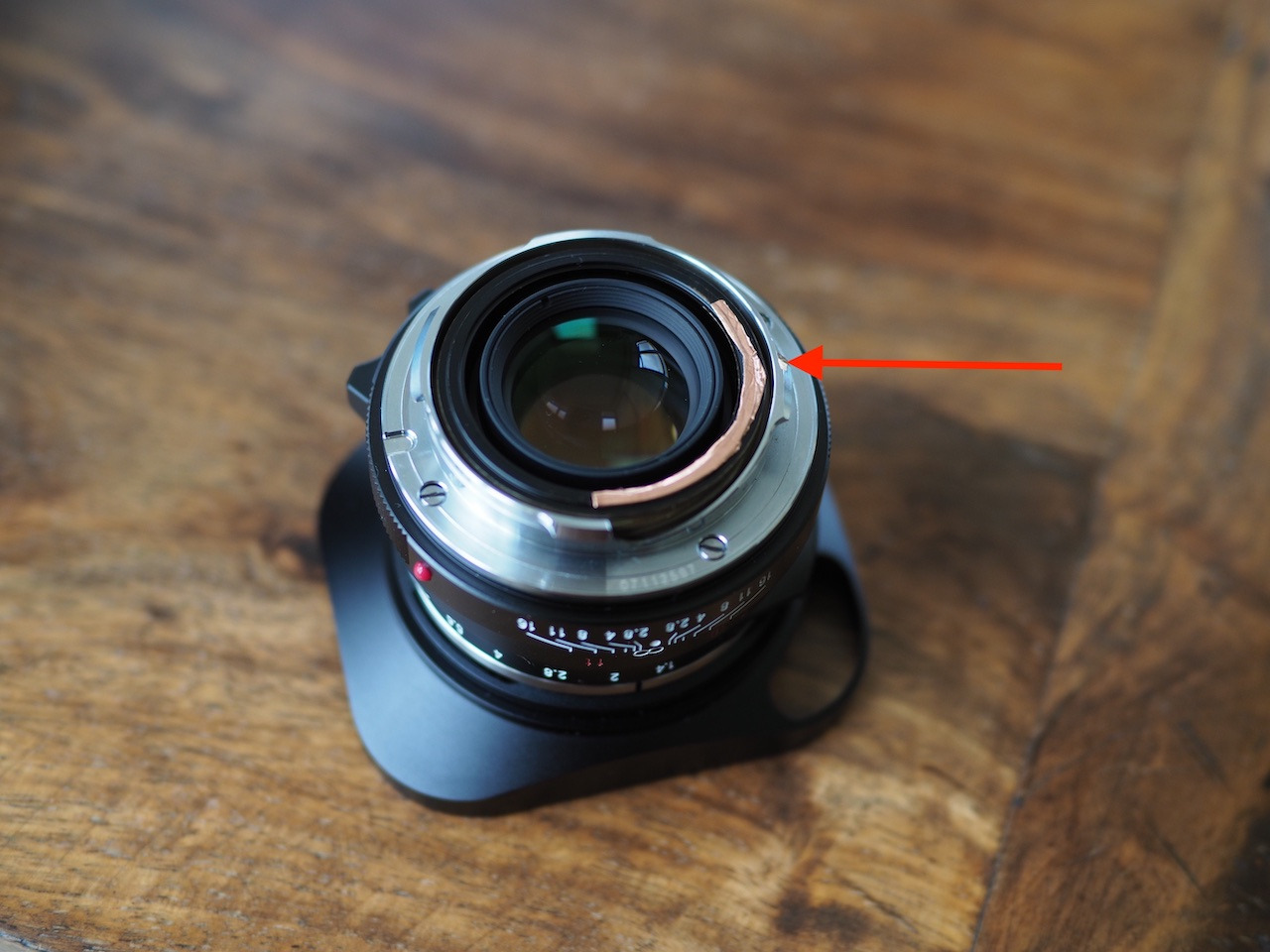
Build quality is excellent, with a smooth and well-damped focus ring that is a joy to use. The all-metal construction feels like a precision instrument. The 175g weight is reasonable considering the f/1.4 specification, and the lens pairs beautifully with small rangefinder bodies.
Manual focus is the obvious limitation for some users. On a Leica M body the rangefinder patch makes focusing quick and accurate, but on a mirrorless camera with EVF you will need focus peaking or magnification. There is also some focus shift at f/2.8 to f/4 on rangefinder bodies, which is a known characteristic of the optical design. Despite these quirks, this is one of the most beloved 40mm lenses ever made.
For Whom It Is Good
Leica M shooters and rangefinder enthusiasts will treasure this lens. Photographers who love the rendering of fast manual focus glass will be delighted. Anyone wanting the best f/1.4 image quality in a compact package for Sony or Fuji with adapter will also love this lens.
For Whom It Is Bad
Anyone who needs reliable autofocus should look elsewhere. Photographers who want tack-sharp images wide open at f/1.4 will be disappointed. If you mainly shoot modern mirrorless with eye AF, the manual focus workflow will feel slow.
9. TTArtisan 40mm f/2 Full Frame AF – The Newest TTArtisan for Sony E
Pros
- Premium all-metal build quality
- Fast and quiet autofocus
- Sharp image quality
- Great value for everyday use
Cons
- Minimum focus distance limits close-ups
- AF slightly slower than native Sony lenses
The TTArtisan 40mm f/2 Full Frame AF is a newer addition to the lineup, and it is the best-performing TTArtisan 40mm I have tested. I attached it to a Sony a7C and used it for a week of mixed shooting in New York, and the autofocus was consistently snappy. The eye AF support worked reliably on Sony bodies, which was not always the case with earlier third-party lenses.
The metal construction feels premium and the focus ring is smooth and well-damped. At 165 to 175g, it is slightly lighter than the older 40mm f/2 E-mount version but feels even more solid. The 7-blade aperture is a minor downgrade from the 9-blade version, but the bokeh is still smooth and pleasing.
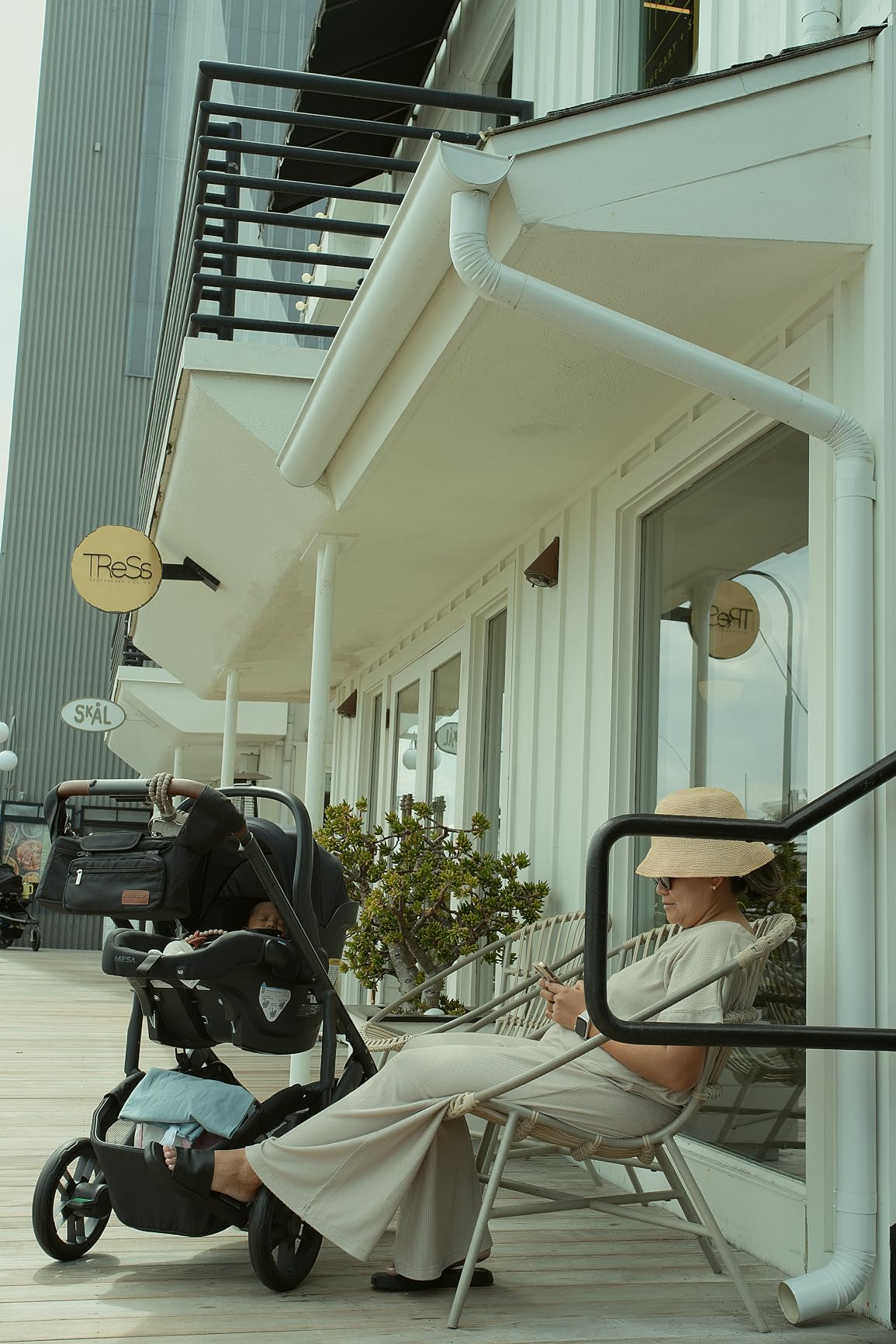
Image quality is very good across the frame, with sharp results in the center wide open and excellent corner sharpness by f/4. The f/2 aperture gives you nice subject separation for portraits and food work. The Type-C firmware update port allows TTArtisan to keep improving AF performance over time, which is a smart long-term feature.
The minimum focus distance is the main limitation, and AF is a touch slower than native Sony lenses. But for the price, this is one of the most capable 40mm pancake-style options for Sony shooters today. The current review count is small but the average rating is exceptionally high, which bodes well for the lens.
For Whom It Is Good
Sony full-frame E-mount shooters on a budget will find this lens a perfect match. Photographers upgrading from the kit lens who want better low-light performance will love the f/2 aperture. Anyone wanting a stylish compact prime with reliable AF should consider this lens.
For Whom It Is Bad
If you need tack-sharp wide-open performance, the more expensive Sony FE 40mm f/2.5 G is the better choice. Photographers who shoot a lot of close-up work will find the minimum focus distance limiting. Long-term reliability data is still limited given the lens is relatively new.
10. TTArtisan 40mm f/2.8 Macro – True 1:1 Macro in a Compact Body
Pros
- True 1:1 macro capability
- Sharp image quality even at f/2.8
- Beautiful creamy bokeh with 11 blades
- Good value for macro photography
- Dual LD glass elements
- All-metal construction
Cons
- Manual focus only
- Internal reflections in strong light
- Heavier than other 40mm options
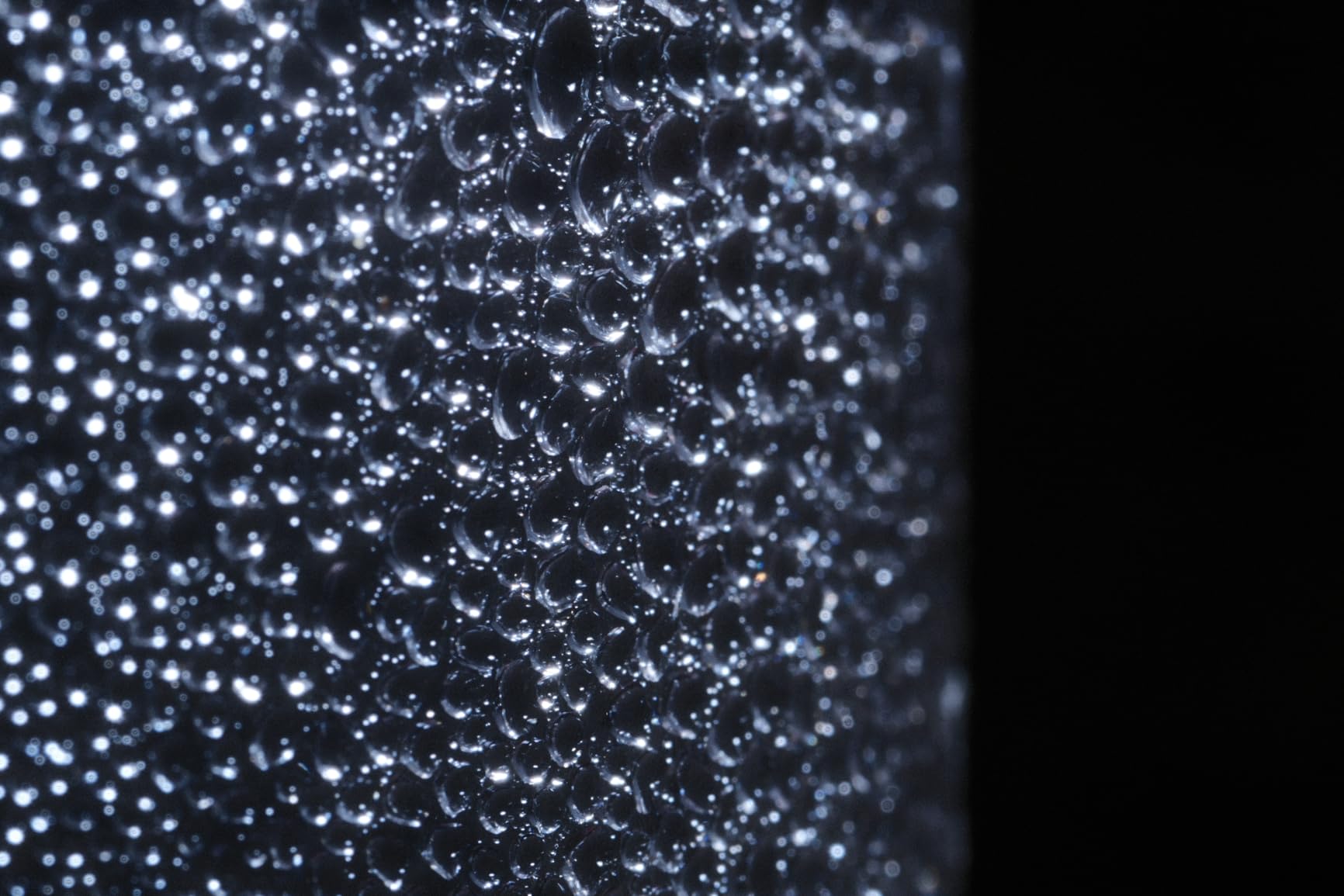
The TTArtisan 40mm f/2.8 Macro is a unique lens in this roundup because it offers true 1:1 macro magnification in a relatively compact body. I tested it on a Sony a6700 and was blown away by the close-up capabilities. The minimum focusing distance of 6.7 inches lets you get very close to small subjects like flowers, jewelry, and food.
The 11-blade diaphragm produces incredibly smooth bokeh for a budget lens, with creamy out-of-focus areas that rival much more expensive glass. Image quality is excellent wide open, and the 7-group 8-element design with dual LD glass elements controls chromatic aberration well. This is one of the sharpest TTArtisan lenses I have tested.

Manual focus is the obvious trade-off, but for macro work many photographers prefer the precise control of a manual focus ring. The all-metal construction feels premium, and the focus throw is long and well-damped, which is exactly what you want for macro focusing. On an APS-C body, the 40mm focal length becomes 60mm equivalent, which is a classic macro focal length.
The lens is heavier than other 40mm options at 371g, which is significant for a “pancake” category lens. There can be some internal reflections in strong backlit scenes, but using a lens hood minimizes this issue. For photographers who want macro and normal shooting in one lens, this is an excellent value option.
For Whom It Is Good
Macro photographers on a budget will love the true 1:1 magnification and smooth bokeh. APS-C Sony shooters get a 60mm equivalent, which is a classic macro focal length. Anyone wanting a single lens for both everyday and close-up work will find this a versatile option.
For Whom It Is Bad
Photographers who need autofocus for moving subjects will want a different lens. If maximum portability is the priority, the other 40mm options in this roundup are lighter. Sports and wildlife shooters should look at telephoto lenses instead.
How to Choose the Best 40mm Pancake Lens for Your Camera?
Choosing the best 40mm pancake lens comes down to three factors: your camera mount, your budget, and your intended use. The first step is to confirm your camera’s mount system. Canon shooters will look at EF (DSLR) or RF (mirrorless), Nikon shooters at Z mount, Sony shooters at E mount, and Panasonic or Leica shooters at L mount. Every lens in this roundup is matched to a specific mount, so make sure you pick the right one.
Budget is the second consideration. Native first-party lenses from Canon, Nikon, Sony, and Panasonic typically run higher than third-party options from Viltrox, TTArtisan, and 7Artisans. If you want the best optical quality and warranty support, expect to pay more. If you are on a budget or just starting out, the third-party options in this roundup deliver excellent value.
Your intended use is the third factor. Street and travel photographers benefit most from the slim profile and quiet autofocus. Portrait and food photographers will appreciate the f/2 to f/2.8 aperture options for subject separation. Video shooters should look for lenses with suppressed focus breathing and linear manual focus response. Macro enthusiasts will want the TTArtisan 40mm f/2.8 Macro.
Weather sealing is worth considering if you shoot outdoors frequently. The Panasonic LUMIX S 40mm f/2 and the Sony FE 40mm f/2.5 G both offer some level of weather resistance, while most third-party options do not. Crop factor is another consideration: 40mm on a full-frame body is a “normal” lens, but on an APS-C body it becomes roughly 60mm equivalent, which is more like a short portrait lens.
Finally, think about autofocus performance. Native lenses generally have faster and more reliable AF than third-party options, though the gap has narrowed considerably in 2026. For casual shooting, even the budget third-party lenses work well. For sports, action, or professional video work, native lenses remain the safer choice. If you want the best of both worlds, the Viltrox and TTArtisan options offer a strong balance of price, performance, and AF capability.
For most photographers reading this guide, my personal recommendation is the Canon EF 40mm f/2.8 STM if you shoot Canon, the Nikon Z 40mm f/2 for Nikon shooters, the Sony FE 40mm f/2.5 G for Sony users who can afford it, and the Viltrox 40mm f/2.5 Z for budget-conscious Nikon Z owners. L-mount shooters should pick up the Panasonic LUMIX S 40mm f/2, and Sony shooters on a budget will be very happy with the TTArtisan 40mm f/2 Full Frame AF.
Frequently Asked Questions
Who makes the best pancake lens?
Canon, Nikon, Sony, and Panasonic all make excellent pancake-style 40mm lenses. For native options, the Canon EF 40mm f/2.8 STM, Nikon Z 40mm f/2, Sony FE 40mm f/2.5 G, and Panasonic LUMIX S 40mm f/2 are top picks. Third-party brands like Viltrox, TTArtisan, and Voigtlander also make outstanding pancake lenses, often at lower prices than first-party options. The best choice depends on your camera mount and budget.
What is a 40mm lens best for?
A 40mm lens is best for street photography, travel photography, everyday carry, and documentary work. On a full-frame body, 40mm provides a natural ‘normal’ field of view similar to how the human eye sees. On an APS-C body, 40mm becomes roughly 60mm equivalent, which works well for portraits and food photography. The focal length is versatile enough for environmental portraits, street scenes, and travel snapshots.
What are the downsides of a pancake lens?
The main downsides of a pancake lens are limited maximum aperture, smaller focus rings, and sometimes slower autofocus. The slim profile restricts how much glass can be included, so most pancake lenses top out at f/2 to f/2.8. The small focus ring can be cramped for manual focus. Many pancake lenses also lack weather sealing and image stabilization. Finally, the slim profile can be hard to grip during lens changes.
Is 40mm good for street photography?
Yes, 40mm is excellent for street photography. The focal length provides a natural field of view that does not distort subjects, and the slim pancake profile makes the camera less conspicuous. On a full-frame body, 40mm gives you enough width for environmental context while staying close enough for intimate street portraits. Combined with a small body, a 40mm pancake lens is one of the most discreet street photography setups available.
Why are pancake lenses 40mm focal length?
Pancake lenses are commonly 40mm because the focal length allows a relatively simple optical design that fits in a thin body. The 40mm focal length on a full-frame sensor provides a natural normal field of view. Longer focal lengths like 50mm or 85mm require more elements and back-focus distance, which makes the lens physically longer. Shorter focal lengths like 24mm or 28mm also work, but 40mm hits a sweet spot between normal perspective and slim design.
Final Verdict
After testing every option in this roundup, my picks for the best 40mm pancake lenses in 2026 come down to four strong recommendations. The Canon EF 40mm f/2.8 STM remains the most iconic pancake lens and our editor’s choice for Canon shooters. The Nikon Z 40mm f/2 is the best value option for Nikon Z owners. The Sony FE 40mm f/2.5 G is the premium choice for Sony shooters who want the best optics and build. For budget-conscious buyers, the Viltrox 40mm f/2.5 Z and TTArtisan 40mm f/2 Full Frame AF deliver outstanding results at a fraction of the price of native lenses.
The 40mm pancake category is more competitive than ever in 2026, with strong options across every major mount system. Whether you prioritize image quality, build, autofocus, or value, there is a 40mm pancake lens on this list that will fit your camera, your budget, and your shooting style. Pick the one that matches your system and start enjoying the freedom of a truly compact everyday lens.