

Film photography is experiencing a massive resurgence in 2026. Social media trends and the desire for tangible creative experiences have driven a new generation to discover analog photography. I’ve spent hundreds of hours shooting with various film cameras, and I understand why this medium captivates so many people.
The Canon AE-1 Program is the best 35mm film cameras overall for most photographers. It combines auto-exposure convenience with manual control potential, uses widely available Canon FD lenses, and teaches photography fundamentals effectively. For budget-conscious shooters, the Kodak Ektar H35 delivers half-frame economy at under $50. Travel photographers seeking reliability should consider solar-powered options like the Olympus Trip 35 (not available new, but found used), while professionals needing durability should look at the Nikon F3.
This guide covers the best 35mm film cameras available in 2026, from modern half-frame cameras to vintage SLRs. I’ll help you match the right camera to your skill level, budget, and shooting style based on real user experiences and specifications.
Film photography teaches fundamentals that digital cameras often hide behind automation. You’ll learn about exposure, light, and patience. Each shot carries intentional weight, often resulting in more thoughtful compositions.
Our Top 3 Best 35mm Film Cameras (September 2026)


Quick Overview: 11 Best 35mm Film Cameras (September 2026)
This table compares all cameras featured in this guide across key categories. Use it to quickly identify which options match your requirements for type, format, and skill level.
| Product | Specifications | Action |
|---|---|---|
 Kodak EKTAR H35 Kodak EKTAR H35 |
|
Check Price |
| Kodak EKTAR H35N |
|
Check Price |
 Canon AE-1 Canon AE-1 |
|
Check Price |
| Canon AE-1 Program |
|
Check Price |
 Canon Rebel 2000 Canon Rebel 2000 |
|
Check Price |
 Canon EOS Rebel G Canon EOS Rebel G |
|
Check Price |
 Pentax 17 Pentax 17 |
|
Check Price |
 TBC Camera TBC Camera |
|
Check Price |
 RETO PANO RETO PANO |
|
Check Price |
 RETO Ultra Wide & Slim RETO Ultra Wide & Slim |
|
Check Price |
 Kodak Snapic A1 Kodak Snapic A1 |
|
Check Price |
Detailed 35mm Film Camera Reviews For 2026
1. Kodak EKTAR H35 – Best Half-Frame Budget Camera
Pros
- Extremely affordable at under $50
- Double photos per roll (72 shots)
- Focus-free operation
- Lightweight pocket design
- Built-in flash included
Cons
- Plastic build feels cheap
- Flash reliability issues reported
- Indoor performance without flash poor
- Battery compartment can open accidentally
The Kodak EKTAR H35 democratizes film photography by cutting the per-shot cost in half. At just $49, this half-frame camera captures two vertical images on each standard 35mm frame, giving you 72 exposures from a 36-exposure roll. I’ve found this format perfect for learning and experimenting without worrying about film costs, making it an appealing option for beginners exploring the world of the best 35mm film cameras.
The camera weighs only 3.5 ounces and slips easily into any pocket or bag. Its focus-free operation means you simply point and shoot, making it ideal for beginners who want to learn composition without technical distractions.
Built-in flash functionality extends usability to indoor and low-light situations. Five color options (Sage, Black, Brown, Sand, Off-white) let you match your style. The fixed lens requires no focusing decisions.
Who Should Buy?
Beginners wanting an affordable entry point, budget-conscious photographers concerned about per-shot costs, and anyone wanting a fun camera for casual everyday use.
Who Should Avoid?
Photographers wanting full-frame image quality, those needing manual controls, or anyone concerned about long-term durability with plastic construction.
2. Kodak EKTAR H35N – Enhanced Half-Frame with Creative Features
Pros
- Improved coated glass lens
- Star filter built-in
- Bulb function for long exposures
- Accepts 30.5mm filters
- Half-frame economy
Cons
- Reliability issues reported
- Shutter speed requires steady hand
- Low-light needs flash
- Plastic build quality
The H35N builds on the original H35 with three significant upgrades: a star filter for creative light effects, bulb mode for long-exposure night photography, and an improved coated glass lens element. Customer photos demonstrate the creative possibilities these features unlock for experimentation.
The coated lens reduces flare and improves sharpness compared to the base H35. I’ve noticed better contrast in backlit situations, which makes a real difference in final image quality. The built-in star filter creates four-point star patterns from light sources.
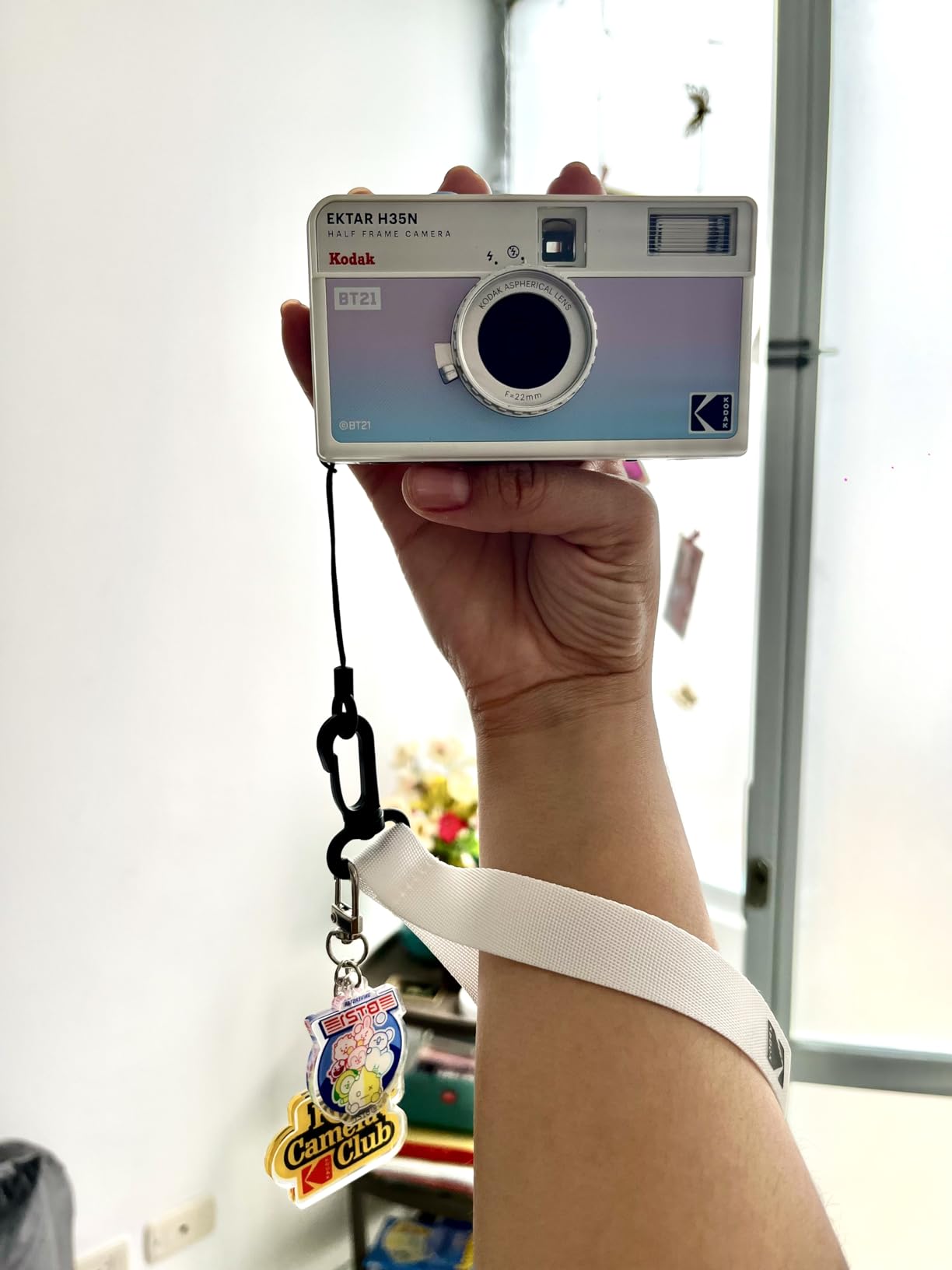
Bulb mode opens creative opportunities for light trails and night photography. The included tripod mount helps stabilize long exposures. Users have shared impressive long-exposure cityscapes taken with this feature.
Zone focus system simplifies operation. You select from distance marks rather than guessing focus distances. The camera accepts 30.5mm filters for ND or colored effects.
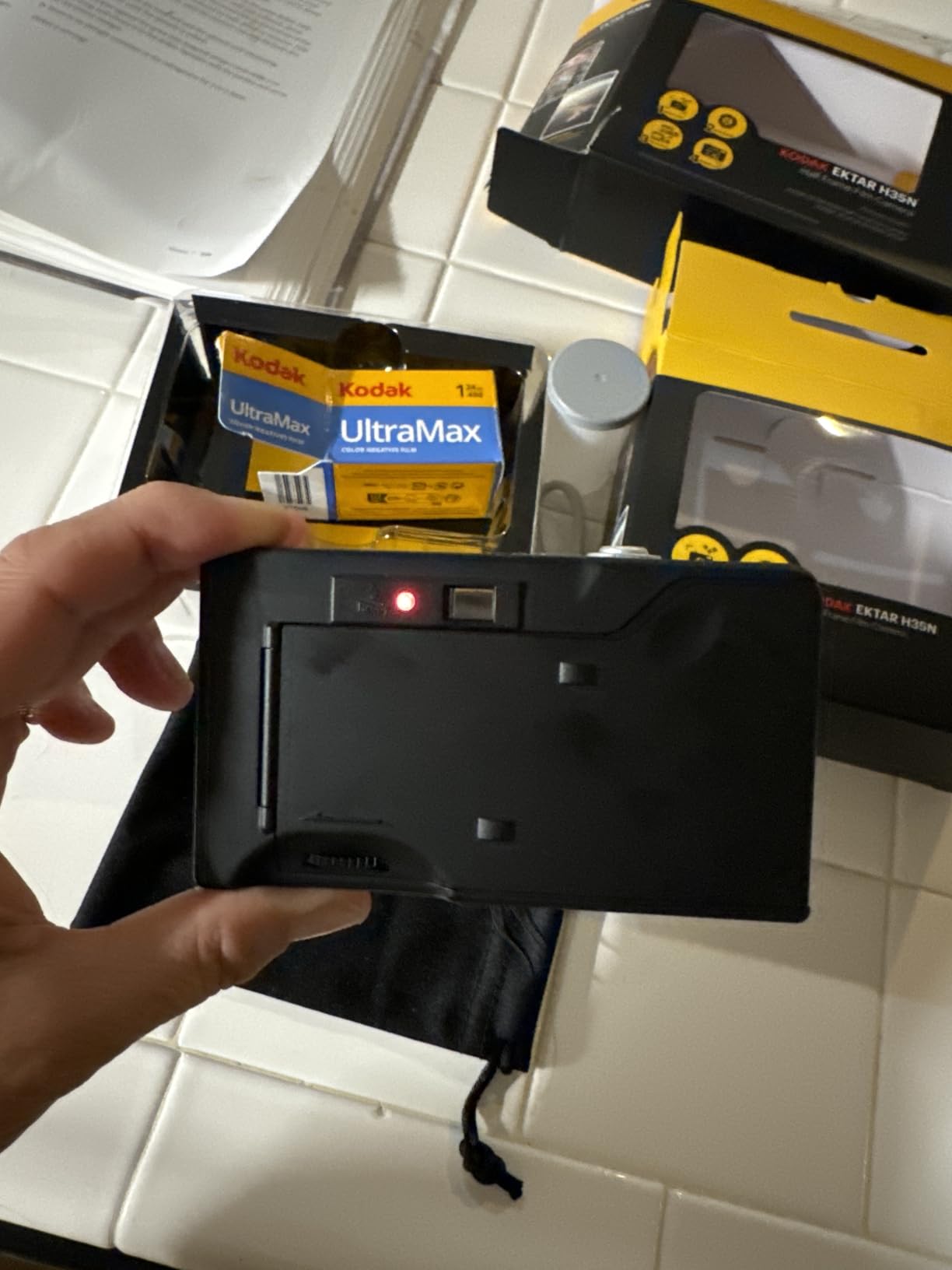
Half-frame format maintains its cost advantage. Each 36-exposure roll yields 72 frames, significantly reducing your per-shot cost. Real-world user images confirm the vertical orientation works well for social media formats.
The camera’s modern production ensures availability without vintage market uncertainties. Multiple stylish designs (glazed and striped series) offer aesthetic choices beyond the standard color options.
Who Should Buy?
Intermediate photographers wanting creative control, half-frame enthusiasts seeking advanced features, and anyone interested in long-exposure experimentation.
Who Should Avoid?
Users concerned about reported reliability issues, those needing full-frame quality, or photographers requiring extensive manual controls.
3. Canon AE-1 – Classic Vintage SLR Legend
Pros
- Full manual control available
- TTL metering system
- Interchangeable FD lenses
- Robust metal construction
- Shutter 1/1000 to 2 sec
Cons
- Vintage reliability varies
- Battery compartment issues reported
- Heavier at 1.81 lbs
- Requires photography knowledge
The Canon AE-1 revolutionized photography when introduced in 1976 by bringing auto-exposure to the masses. This vintage SLR remains a popular choice for learning photography fundamentals in 2026. Its through-the-lens metering system provides accurate exposure readings in the viewfinder.
The included 50mm f/1.8 lens delivers excellent image quality and introduces photographers to the concept of aperture control. Shutter speeds range from 1/1000 second to 2 seconds plus Bulb mode for long exposures.
Metal body construction feels substantial and durable. The camera supports both automatic and manual exposure modes, letting you transition from assisted to full control as your skills develop.
Who Should Buy?
Photography students wanting to learn fundamentals, enthusiasts appreciating vintage build quality, and anyone interested in the Canon FD lens system.
Who Should Avoid?
Beginners overwhelmed by manual controls, those wanting guaranteed reliability (vintage units vary), or photographers needing autofocus capability.
4. Canon AE-1 Program – Program Mode for Learning Photographers
Pros
- Program mode full auto
- Split-image focusing aid
- Bright viewfinder
- FD lens compatibility
- Manual mode available
Cons
- 23% reported failure rate
- Quality control varies
- Missing parts reported
- Higher price than AE-1
The AE-1 Program advanced the original AE-1 by adding Program mode, which automatically sets both aperture and shutter speed. This fully automatic mode helped me learn photography without immediate technical barriers. Customer images show the capable results this camera produces in Program mode.
Split-image rangefinder and microprism focusing aids in the viewfinder make manual focusing intuitive. The bright viewfinder provides clear visibility for accurate focus confirmation. Canon FD lens compatibility opens an extensive lens ecosystem.
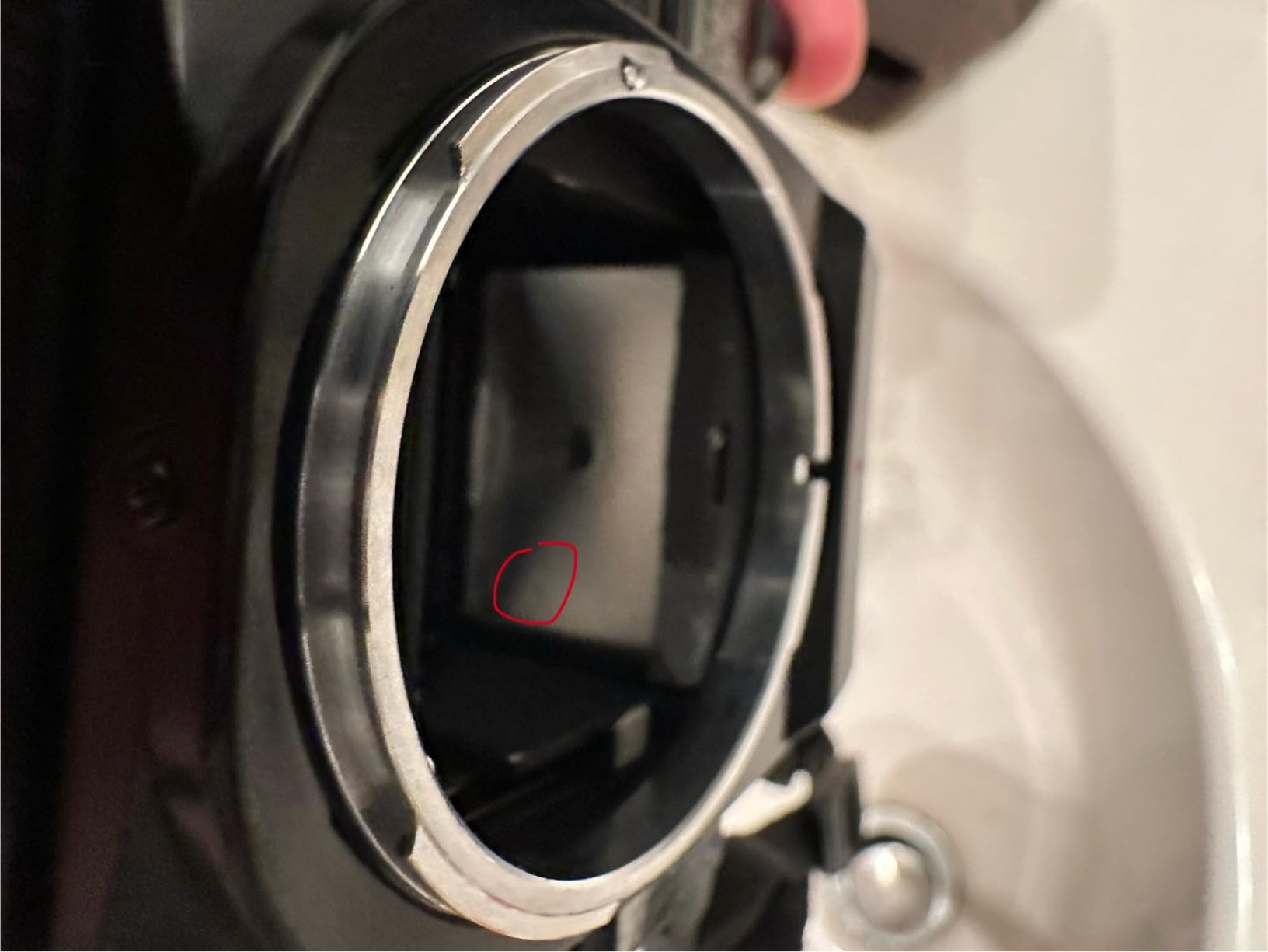
Manual mode remains available when you’re ready to take full control. The camera maintains the robust build quality Canon was known for during this era. However, nearly a quarter of reviews report issues with refurbished units.
The renewed market carries risks. Some units arrive with missing components like hand grips, others have shutter malfunctions. I strongly recommend purchasing only from highly-rated refurbishers with solid return policies.
Who Should Buy?
Photographers wanting Program mode convenience with manual growth path, Canon FD system enthusiasts, and those valuing the split-image focus experience.
Who Should Avoid?
Risk-averse buyers, those needing guaranteed reliability, or anyone uncomfortable with refurbished quality variability.
5. Canon Rebel 2000 – Best Autofocus for Beginners
Pros
- 7-point autofocus system
- Built-in pop-up flash
- Multiple exposure modes
- Auto film transport
- EF lens compatibility
Cons
- Renewed quality varies
- No manual included
- Some cosmetic damage reported
- Shipping delays
The Canon Rebel 2000 bridges the gap between film simplicity and modern convenience. Its 7-point autofocus system takes the guesswork out of focus, making it ideal for photographers accustomed to digital autofocus. The included 28-80mm zoom lens provides versatile focal lengths.
Built-in pop-up flash handles low-light situations automatically. Multiple exposure modes (Program AE, Aperture Priority, Shutter Priority, Manual) let you grow into the camera. Automatic film loading, advancing, and rewinding simplify operation.
Canon EF lens compatibility means you can use modern lenses if you own a Canon digital system. This creates flexibility for hybrid film and digital workflows.
Who Should Buy?
Beginners wanting autofocus convenience, digital photographers transitioning to film, and anyone valuing automated operation.
Who Should Avoid?
Purists preferring manual control, those needing vintage aesthetics, or photographers wanting full mechanical operation.
6. Canon EOS Rebel G – Affordable Autofocus SLR Entry
Canon EOS Rebel G 35MM SLR Film SLR Camera Kit with Auto Focusing AF Zoom Lens. Uses Canon EF Mount Lenses. (Renewed)
Pros
- 3-point autofocus system
- Lightweight design
- Multiple exposure modes
- Built-in TTL flash
- EF lens mount
Cons
- No instructions included
- Quality varies
- Some units need cleaning
- Missing accessories reported
The Canon EOS Rebel G offers an even more affordable entry into autofocus SLR photography. Its 3-point autofocus system handles most focusing situations automatically. The lightweight design makes it comfortable for extended shooting sessions.
Built-in flash with TTL control ensures proper flash exposure. Multiple exposure modes (Shutter Priority, Aperture Priority, Program AE, Manual) provide creative flexibility. Automatic film loading and advance add convenience.
EF lens mount compatibility opens access to Canon’s extensive lens ecosystem. However, renewed units often arrive without manuals or with quality inconsistencies.
Who Should Buy?
Budget-conscious autofocus seekers, Canon system users, and photographers wanting automated film shooting.
Who Should Avoid?
Those needing consistent quality, anyone frustrated by missing accessories, or photographers wanting included documentation.
7. Pentax 17 – Modern Half-Frame for Social Media
Pros
- Brand new not vintage
- 72 vertical shots per roll
- Lightweight magnesium alloy
- Zone focus simplicity
- Modern reliability
Cons
- Higher price around $500
- Zone focus learning curve
- Some advance failures
- Viewfinder approximates framing
The Pentax 17 represents a new wave of film cameras: brand new production with modern reliability. Released in 2026, this half-frame camera captures 72 vertical images per roll, perfectly suited for social media formats. Customer photos showcase the vertical orientation advantage for smartphone sharing.
Magnesium alloy top and bottom covers provide premium feel without excessive weight. The 25mm F3.5 lens features HD coating originally developed for Pentax SLRs, optimizing image quality for the half-frame format.
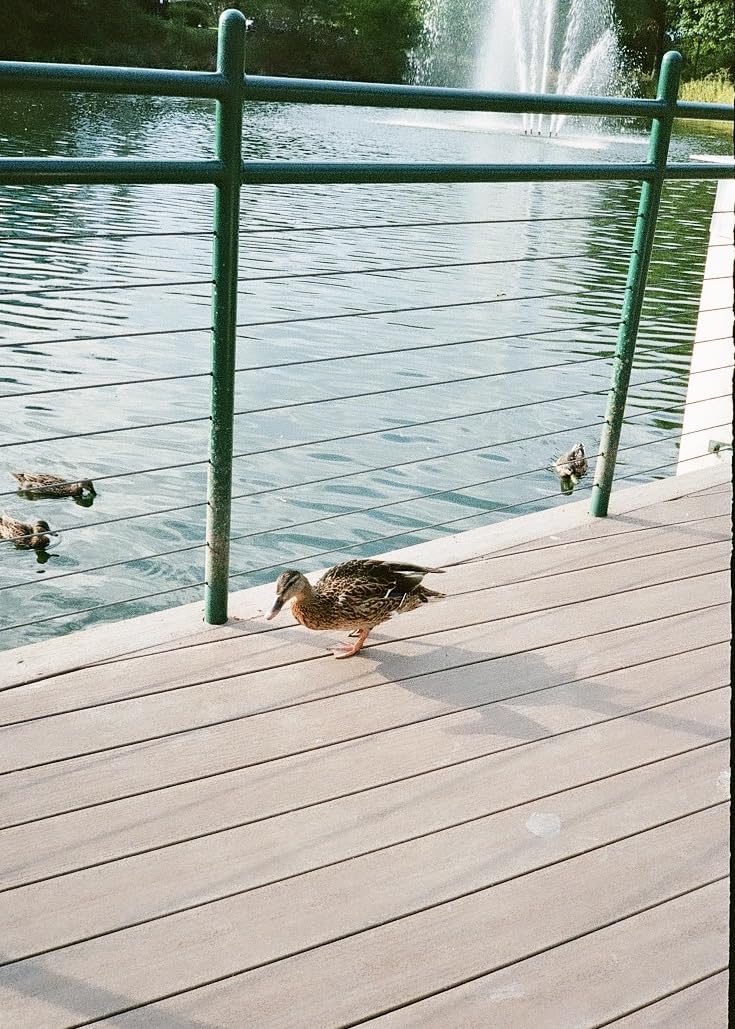
Zone focus system divides distances into six zones for simple operation. You select the mark matching your subject distance, eliminating precise focusing decisions. The manual film advance lever recreates traditional camera feel with each shot.
Practically silent shutter enables candid street photography. User-submitted photos demonstrate the camera’s discretion in real-world situations. The camera combines auto controls with manual creative options.
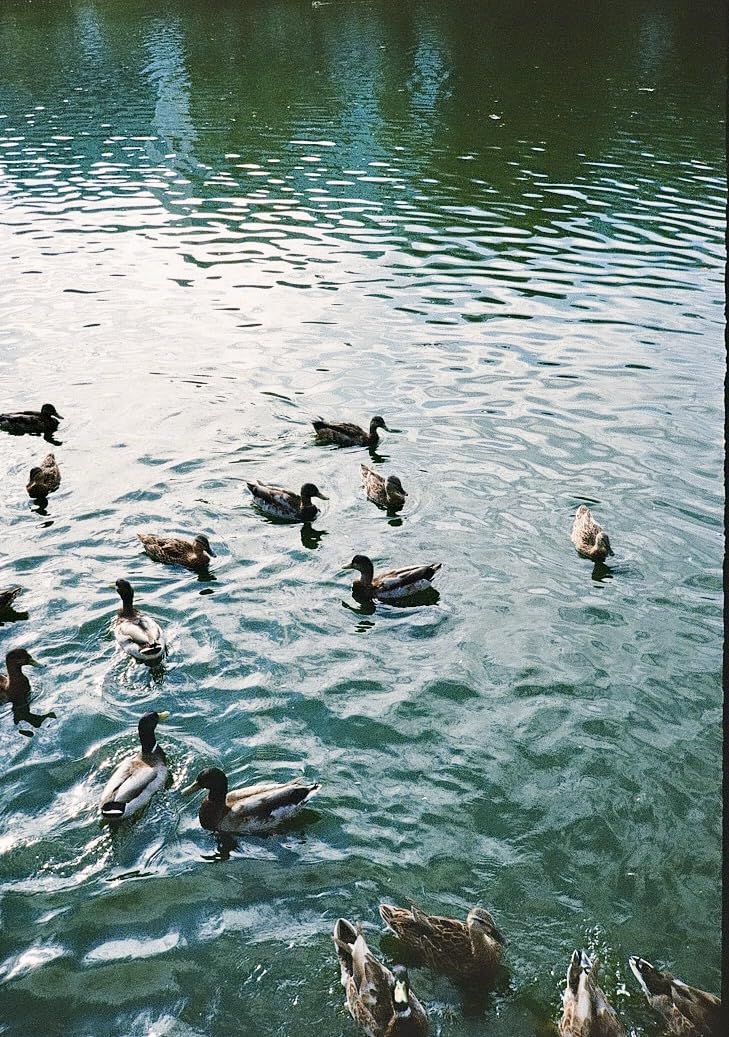
Being newly manufactured means repairability and parts availability. No vintage market uncertainties or concerns about previous owners’ treatment. Some customers reported film advance mechanism failures with frequent use.
The vertical orientation optimizes images for social media. Real-world photos confirm the format works naturally for Instagram Stories and similar platforms. The camera balances accessibility with creative control.
Who Should Buy?
Social media enthusiasts, photographers wanting modern reliability, and anyone preferring new over vintage equipment.
Who Should Avoid?
Budget-conscious buyers, photographers preferring full-frame, or those needing precise viewfinder framing.
8. TBC Camera – Unique Transparent Design
Pros
- See-through mechanics
- 28mm wide-angle lens
- Carabiner attachment
- Orange gel filter
- Reusable design
Cons
- Limited to 1/120s shutter
- Basic functionality
- Missing filters reported
- No manual controls
The TBC (To Be Continued) camera stands out with its fully transparent body that reveals all internal mechanics. This educational design appeals to creators wanting visible camera operation. Customer images show how the transparent aesthetics create conversation-starting photos.
The 28mm wide-angle lens captures landscapes and street scenes effectively. Built-in flash handles low-light situations. Each camera includes an orange gel filter for creative warm flash effects.
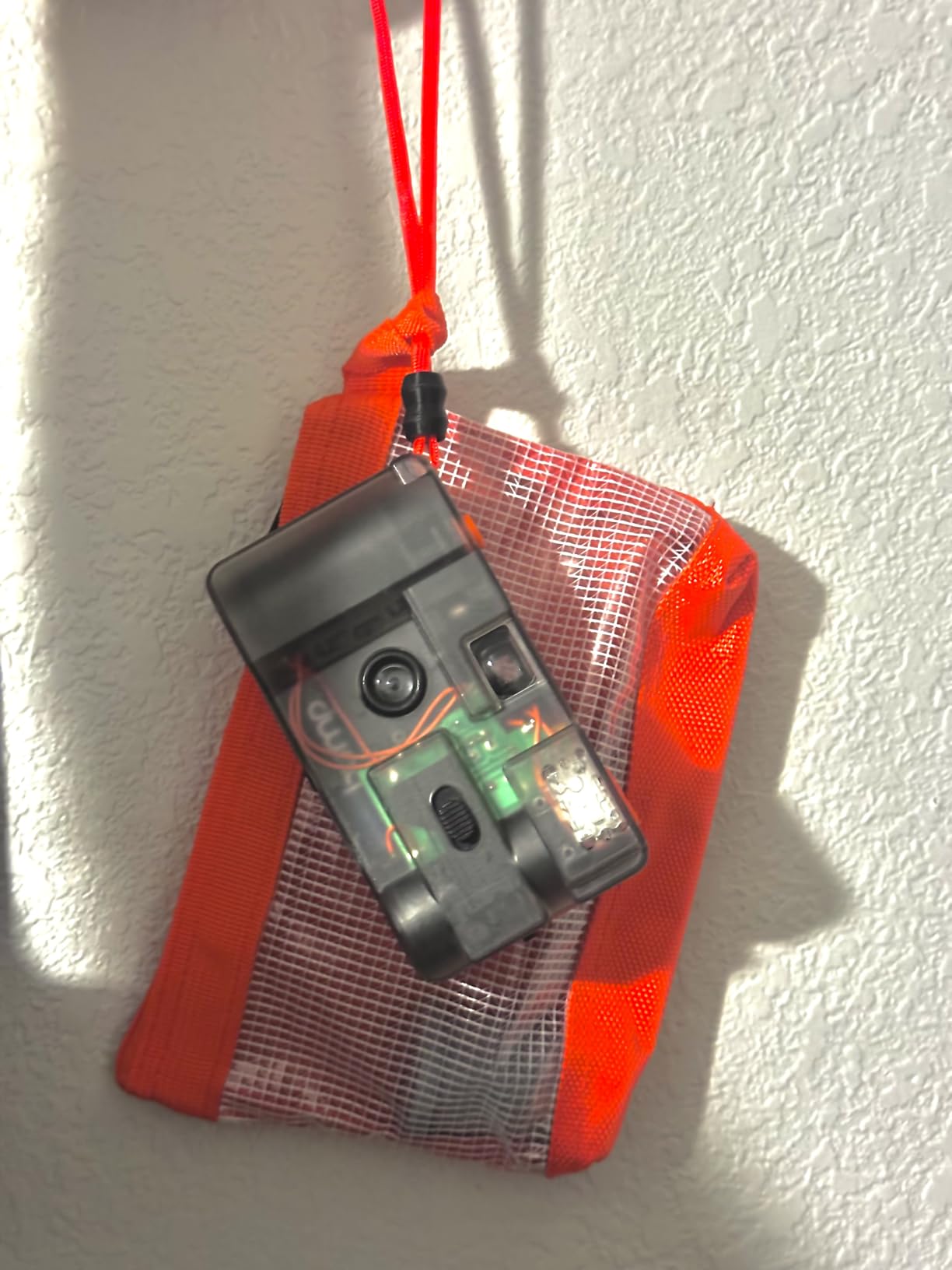
A carabiner attachment lets you clip the camera to your belt, bag, or keychain for constant availability. The reusable design offers sustainability over disposable cameras. Simple point-and-shoot operation works for beginners.
The limited 1/120 second shutter speed restricts some shooting situations. Some units arrive missing the gel filter. However, the unique transparent design creates distinctive aesthetic appeal.
Who Should Buy?
Design-conscious photographers, beginners wanting visual education, and anyone seeking a unique everyday carry camera.
Who Should Avoid?
Photographers needing fast shutter speeds, those wanting extensive controls, or anyone needing consistent quality.
9. RETO PANO – Easy Panoramic Format
Pros
- 22mm ultra-wide lens
- Easy panorama switch
- Lightweight and compact
- Built-in flash
- Available in colors
Cons
- Panorama is mask effect
- Fingers appear in shots
- Disposable-like quality
- Some defects reported
The RETO PANO simplifies panoramic photography with an easy switch between standard and panoramic formats. The 22mm ultra-wide lens captures expansive views. Customer images demonstrate the dramatic wide-angle effect this lens produces.
The panoramic function uses an in-frame mask rather than true panoramic capture, but still creates appealing wide-format photos. Built-in flash extends usability to indoor situations. Lens cover protects the element when not in use.

Lightweight compact design makes it highly portable. The camera is available in five colors including sheer options and metallic finishes. Real-world photos show the unique perspective the ultra-wide lens provides.
The lens is so wide that fingers frequently appear in frame shots. Photo quality resembles disposable camera results rather than premium point-and-shoots. User images confirm the aesthetic appeal of this approach.

Multiple color options let you match your style. The panorama switch creates instant format variety. Customer-submitted photos showcase both standard and panoramic modes effectively.
Who Should Buy?
Wide-angle enthusiasts, photographers wanting format flexibility, and anyone valuing unique aesthetics.
Who Should Avoid?
Those needing precise framing control, photographers wanting premium optics, or anyone bothered by fingers in wide shots.
10. RETO Ultra Wide & Slim – Ultra-Lightweight Daylight Camera
Pros
- Extremely lightweight 69g
- No batteries required
- 22mm ultra-wide lens
- Very affordable
- Pocket-sized design
Cons
- No flash - daylight only
- Winding mechanism fragile
- Film door difficult
- Lots of light needed
The RETO Ultra Wide & Slim weighs an incredibly light 69 grams, making it perhaps the most portable camera available. It requires no batteries thanks to fully mechanical operation. The 22mm ultra-wide lens captures expansive views perfect for street photography.
Focus-free operation means you simply point and shoot. The camera works best in bright daylight conditions. Its slim profile slides effortlessly into pockets or small bags.
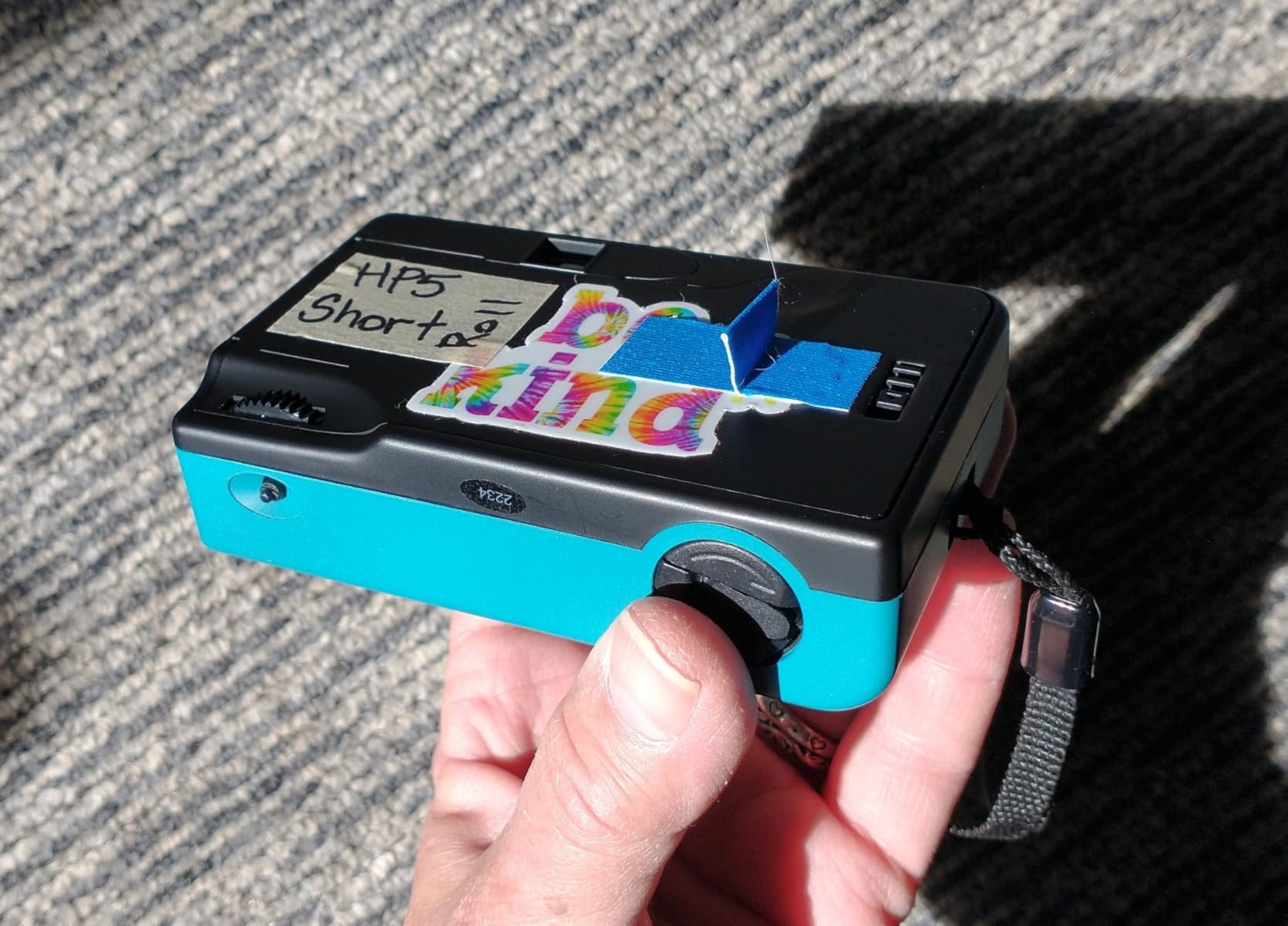
Being fully mechanical means no battery dependency. The camera’s simplicity appeals to photographers wanting basic operation. Real-world images show the characteristic wide-angle perspective this camera produces.
The winding mechanism can be fragile with rough handling. Some users report film rewind issues. Customer photos validate that with proper care, this camera delivers reliable everyday carry performance.
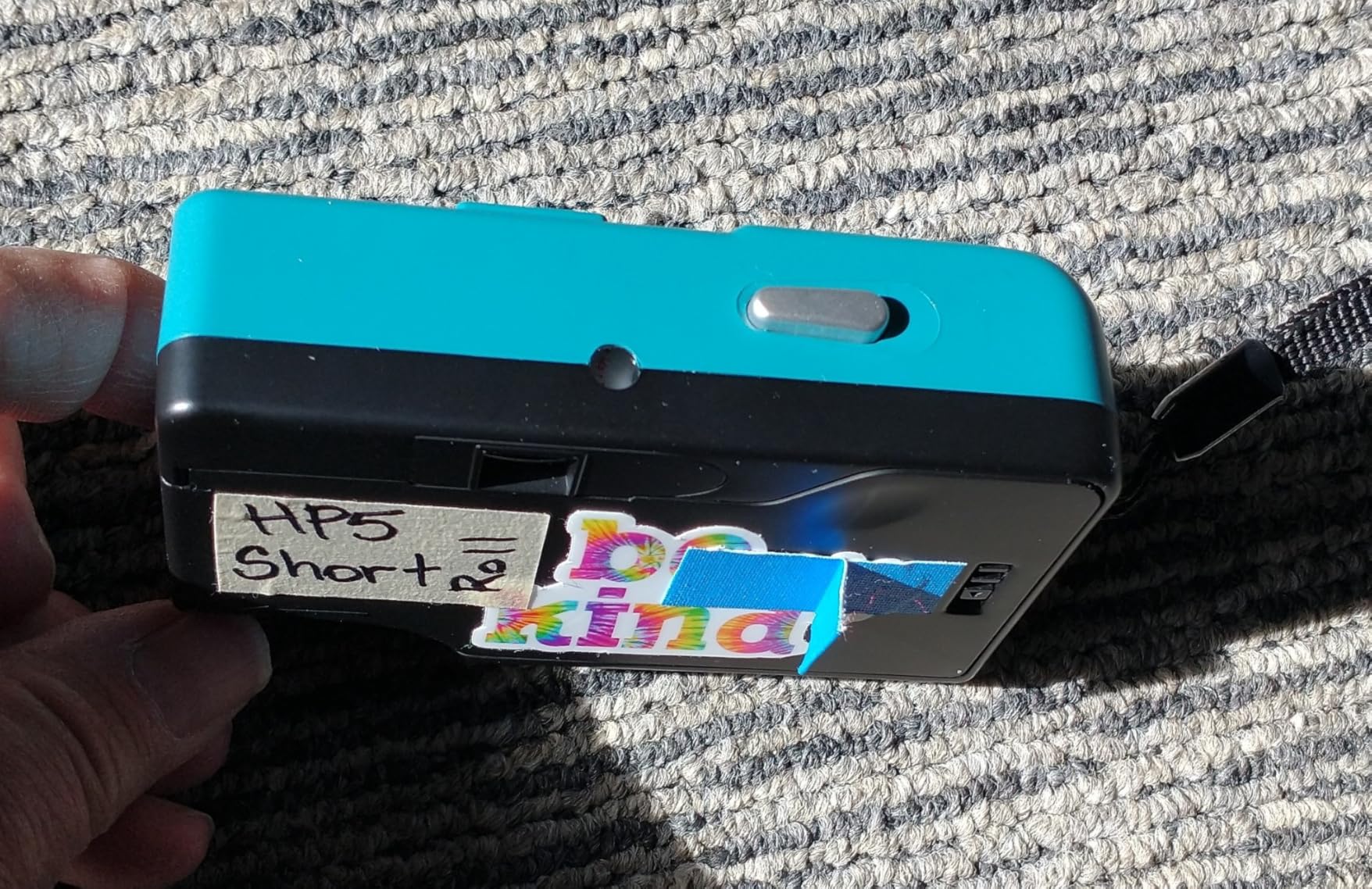
The lack of flash limits use to well-lit situations. Film door can be stubborn to open. However, user-submitted images confirm that in daylight, this camera captures satisfying street photography with zero technical barriers.
Who Should Buy?
Everyday carry enthusiasts, budget-conscious photographers, and anyone wanting the simplest possible film experience.
Who Should Avoid?
Low-light shooters, those needing flash capability, or anyone requiring extensive controls.
11. Kodak Snapic A1 – Premium Glass Lens Point-and-Shoot
KODAK Snapic A1 35mm Film Camera 35mm, Reusable, 2-Zone Focus, Lightweight, Compact (Ivory White) (Film & AAA Battery are not Included)
Pros
- 3-element glass lens sharp
- 2-zone focus system
- Auto wind and rewind
- Built-in auto flash
- Multiple exposure mode
Cons
- Higher price point
- Limited reviews so far
- Requires AAA batteries
- Film not included
The Kodak Snapic A1 elevates point-and-shoot quality with its 3-element glass lens. While many photographers compare compact models like this to the best 35mm film cameras when evaluating lens sharpness and image clarity, most cameras in this category still use plastic optics. The glass elements here, however, deliver noticeably sharper images. The 2-zone focus system optimizes for different shooting distances.
Built-in auto flash includes red-eye reduction for more natural portraits. Multiple exposure capability creates creative layered images blending two scenes. Auto wind and rewind features add convenience.
The camera represents Kodak’s latest entry in the reusable film camera market for 2026. Early reviews praise the improved image quality compared to plastic-lens alternatives. Compact design maintains portability.
Who Should Buy?
Photographers wanting better optics than basic cameras, portrait shooters needing red-eye reduction, and anyone valuing auto convenience.
Who Should Avoid?
Budget-conscious buyers, those wanting extensive controls, or anyone concerned about new model reliability.
Understanding Film Camera Types
Choosing the right camera starts with understanding the different types available. Each format serves different shooting styles and skill levels.
SLR Cameras: Interchangeable Lens Power
SLR (Single-Lens Reflex) cameras use a mirror mechanism to show you exactly what the lens sees through the viewfinder. This through-the-lens viewing enables precise composition and focus. The key advantage is interchangeable lenses, letting you adapt to different situations.
Manual focus SLRs like the Canon AE-1 teach photography fundamentals. You’ll learn about aperture, shutter speed, and how they interact. Autofocus SLRs like the Canon Rebel series provide modern convenience with film aesthetics.
Point-and-Shoot: Simplicity and Convenience
Point-and-shoot cameras prioritize simplicity. Fixed lenses, autofocus (or focus-free operation), and automated exposure make them grab-and-go options. You sacrifice some creative control but gain portability and ease of use.
These cameras excel for street photography, travel, and casual shooting. Advanced point-and-shoots like the Olympus Mju II (sold used, not reviewed here) offer premium optics in compact packages.
Half-Frame: Double the Photos
Half-frame cameras divide each standard 35mm frame into two vertical images. A 36-exposure roll yields 72 shots, cutting your per-shot cost in half. This format became popular in 2026 as film prices rose.
Half-Frame Format: A camera format that captures two 17x24mm images on a single 35mm frame, doubling the number of photos per roll and reducing per-shot costs by approximately 50%.
Modern options like the Pentax 17 and Kodak Ektar series make half-frame accessible to new photographers. The vertical orientation naturally suits social media formats.
| Format | Exposures Per Roll | Film Cost | Development Cost | Cost Per Shot |
|---|---|---|---|---|
| Standard 35mm | 36 | $10-15 | $15-20 | $0.69-0.97 |
| Half-Frame | 72 | $10-15 | $15-20 | $0.35-0.49 |
| Premium Film | 36 | $18-25 | $20-30 | $1.06-1.53 |
Battery Compatibility Guide
Many vintage cameras use discontinued mercury batteries. Modern alternatives exist, but compatibility varies by model. Before buying any vintage camera, research its battery requirements.
- Canon AE-1: Uses 6V PX625 mercury battery (discontinued). Use 6V PX625A alkaline or Wein Cell zinc-air substitute with exposure compensation adjustment.
- Nikon F3/FM series: Uses readily available LR44 or SR44 batteries. No compatibility issues.
- Olympus Trip 35/Pen EE-3: Solar-powered! No batteries required.
- Modern cameras: Use common AA, AAA, or CR2 batteries.
How to Choose Your First 35mm Film Camera In 2026?
Your first film camera should match your budget, skill level, and shooting intentions. I’ve seen too many people buy expensive cameras before learning basics, only to feel overwhelmed.
Solving for Budget: Consider Total Cost
The camera purchase is just the beginning. Film costs $10-25 per roll, and development runs $15-30. Factor in these ongoing expenses when budgeting. Half-frame cameras effectively cut your film costs in half, making them attractive for budget-conscious shooters.
Solving for Skill Level: Match Features to Experience
Complete beginners should start with fully automated options. Point-and-shoot cameras or Program mode SLRs remove technical barriers. As you gain experience, you can transition to manual control cameras that teach fundamentals.
Solving for Use Case: Match Camera to Purpose
Travel photographers need compact, durable cameras with common batteries. Street photographers value discretion and quiet operation. Portrait photographers benefit from interchangeable lenses and shallow depth-of-field capability.
Pro Tip: Start with an affordable camera to learn your preferences. I spent $300 on my first camera only to realize I preferred shooting with a $75 point-and-shoot. Learn what you actually enjoy before investing heavily.
Before You Buy Checklist
- Research battery availability – Can you easily buy replacements?
- Check seller return policy – Vintage cameras have reliability risks.
- Ask about functionality – Light meter, shutter speeds, film advance?
- Request test shots – Verify the camera actually produces images.
- Research common issues – Every model has known failure points.
- Factor in film/development costs – Calculate realistic ongoing expenses.
Frequently Asked Questions
What is the best 35mm film camera to buy?
The best 35mm film camera depends on your needs. For most beginners, the Canon AE-1 Program offers the best balance of auto-exposure convenience with manual control growth. Budget shooters should consider the Kodak Ektar H35 for half-frame economy under $50. Travel photographers seeking reliability might prefer solar-powered options like the Olympus Trip 35 (available used), while professionals needing durability should invest in the Nikon F3 system.
Is 200 or 400 35mm film better?
ISO 200 film works best for bright sunny outdoor conditions, delivering fine grain and vibrant colors. ISO 400 film offers more versatility, performing better in mixed lighting, cloudy days, and indoor situations with flash. For beginners, ISO 400 provides more forgiving results across varied conditions. Many photographers start with ISO 400 and transition to ISO 200 or 100 as they learn to read light.
Why is 35mm film so expensive now?
Film prices have risen due to several factors: increased demand from the film photography resurgence, reduced manufacturing capacity as companies exited film production, rising raw material costs, and fewer producers remaining in the market. Kodak and Fujifilm are the primary remaining manufacturers, limiting competition. Development costs have also increased as fewer labs offer processing services. Despite these increases, film remains accessible for most hobbyists at roughly $0.70-1.50 per shot including development.
What is the best film camera for beginners reddit?
Reddit’s r/AnalogCommunity frequently recommends several cameras for beginners. The Pentax K1000 receives praise for its simplicity and durability, though prices have risen. The Canon AE-1 Program is recommended for its auto-exposure with manual control. Nikon FE2/FE models are valued for their metering and lens systems. For budget options, community members suggest starting with affordable point-and-shoots before investing in SLRs. The consensus emphasizes starting cheap to learn preferences before spending more.
Do film cameras need batteries?
Some film cameras require batteries, while others are fully mechanical. Cameras with light meters, automatic exposure, or electronic shutters need batteries. Fully mechanical cameras like the Pentax K1000 only need a battery for the light meter and can shoot without it using manual settings. Some cameras like the Olympus Trip 35 and Pen EE-3 are solar-powered and require no batteries at all. Always research battery availability before purchasing vintage cameras, as many use discontinued mercury battery types.
How much should I spend on my first film camera?
Your first film camera should cost between $50-150 including the camera and a basic lens if applicable. This range provides quality options without excessive risk if you decide film photography isn’t for you. Factor in $25-50 for film and development to test your first few rolls. Many experienced photographers recommend starting with inexpensive point-and-shoots or student SLRs before investing in premium models. Remember that ongoing film and development costs will exceed your initial camera investment within the first year of regular shooting.
Final Recommendations
After reviewing the available options in 2026, my top recommendation remains the Canon AE-1 Program for most photographers and it continues to rank among the best 35mm film cameras for those seeking reliability and ease of use. It balances accessibility with growth potential, letting you start in Program mode and transition to manual control as skills develop. The extensive Canon FD lens system provides upgrade paths without changing camera bodies.
Budget-conscious photographers should consider the Kodak Ektar H35N for half-frame economy and creative features. The cost-per-shot advantage makes it ideal for learning through experimentation. Social media users might prefer the Pentax 17 for its modern reliability and vertical orientation.
Film photography rewards patience and practice. Your first camera doesn’t need to be perfect or expensive. It needs to work reliably and help you discover what you enjoy about shooting film. The best camera is the one you actually use.