
I spent three weeks testing six different 24-inch monitors side-by-side in my photography studio, editing the same RAW files on each display to see which ones truly deliver the color accuracy photographers need. The results surprised me. Some budget options outperformed premium models, while a few well-known brands fell short on the factory calibration they promised.
When you are looking for the best 24 inch monitors for photo editing, color accuracy becomes your single most important factor. A display with poor color reproduction will make your carefully edited photos look completely different when printed or viewed on other devices. That is why I focused my testing on Delta E scores, sRGB coverage, and real-world editing performance rather than just reading spec sheets.
My testing involved running each monitor through a calibration process, then comparing how skin tones, landscape colors, and shadow details rendered across different displays. I also spent hours in Lightroom and Photoshop on each monitor to evaluate eye comfort and workflow efficiency. This hands-on approach revealed practical strengths and weaknesses that specification lists cannot capture.
Top 3 Picks for Best 24 Inch Monitors for Photo Editing
Before diving into detailed reviews, here are my top three recommendations based on different needs and budgets. Each excels in specific areas that matter most to photographers.

ASUS ProArt PA248QV
- 100% sRGB/Rec.709
- DeltaE less than 2
- Calman Verified
- 16:10 aspect ratio
- USB hub included

ASUS ProArt PA247CV
- USB-C 65W power delivery
- Mac compatible
- 100% sRGB/Rec.709
- DeltaE less than 2
- Height adjustable stand

CUNPU 24 Inch 4K Monitor
- 4K UHD resolution
- 100% DCI-P3
- DeltaE less than 2
- HDR10 support
- Height adjustable
Best 24 Inch Monitors for Photo Editing in 2026
Here is a complete comparison of all six monitors I tested, including key specifications that matter most for photo editing work.
| Product | Specifications | Action |
|---|---|---|
| ASUS ProArt PA248QV |
|
Check Latest Price |
| ASUS ProArt PA247CV |
|
Check Latest Price |
 ViewSonic VP2468A ViewSonic VP2468A |
|
Check Latest Price |
| CUNPU 24 Inch 4K |
|
Check Latest Price |
 BenQ GW2490T BenQ GW2490T |
|
Check Latest Price |
 Viewedge 24 Inch 4K Viewedge 24 Inch 4K |
|
Check Latest Price |
1. ASUS ProArt PA248QV – Best Overall for Color Accuracy
Pros
- Excellent color accuracy with DeltaE less than 2
- 100% sRGB and Rec.709 coverage perfect for photo editing
- Calman Verified certification adds credibility
- 16:10 aspect ratio gives extra vertical workspace
- Highly adjustable stand with pivot and swivel
- Built-in speakers and USB hub included
Cons
- No USB-C connectivity
- Speakers are basic quality
- Input switching requires multiple button presses
I have been using the ASUS ProArt PA248QV as my primary editing monitor for the past month, and it has completely changed how I approach color-critical work. The factory calibration report that comes in the box showed Delta E values under 1.5 across all tested color patches, which explains why my prints now match my screen almost perfectly. This level of accuracy used to cost twice as much.
The 16:10 aspect ratio is something I did not know I needed until I tried it. That extra vertical space means I can see more of my image in Lightroom without scrolling, and the histogram and adjustment panels fit more comfortably on screen. For portrait photography especially, this aspect ratio feels more natural than the standard 16:9.
During my testing, I ran this monitor through a full day of editing wedding photos with hundreds of images requiring consistent color treatment. The IPS panel maintained color consistency even when I shifted position in my chair, and the anti-glare coating handled my studio’s mixed lighting without issues. The 75Hz refresh rate is a bonus for general use, making mouse movements feel smoother than standard 60Hz displays.
Connectivity is comprehensive if slightly dated. The DisplayPort, HDMI, and VGA options cover most computers, and the four-port USB 3.0 hub let me connect my card reader and external drives without reaching for my computer. I do wish it had USB-C for my MacBook Pro, but for desktop users, the port selection is solid.
The stand deserves special mention. Full height adjustment, tilt, swivel, and pivot into portrait mode give you complete flexibility. I rotate mine to portrait orientation when editing vertical portraits, and the monitor handles the rotation gracefully without color shift. VESA mount compatibility means you could also use an arm mount if you prefer a cleaner desk setup.
My only real complaint involves the built-in speakers. They work for system sounds and casual video watching, but you will want external speakers or headphones for serious audio work. The menu navigation also requires more button presses than I would like for switching between inputs. These are minor issues on an otherwise exceptional monitor for photo editing.
Who Should Buy This Monitor
The PA248QV is perfect for photographers who prioritize color accuracy above all else and work primarily from a desktop computer. If you edit in sRGB color space for web delivery or standard printing, this monitor covers that gamut completely. The 16:10 aspect ratio is particularly valuable for portrait photographers and anyone who wants more vertical workspace.
Who Should Look Elsewhere
If you need USB-C connectivity for a laptop setup, the PA247CV below is a better choice. Gamers looking for high refresh rates and fast response times should consider dedicated gaming monitors instead. Those requiring Adobe RGB coverage for fine art printing may need to look at more expensive wide-gamut options.
2. ASUS ProArt PA247CV – Best USB-C Monitor for Mac Users
Pros
- USB-C with 65W power delivery perfect for laptops
- Seamless MacBook compatibility
- 100% sRGB and Rec.709 coverage
- DeltaE less than 2 factory calibration
- Includes USB hub with 4 ports
- Excellent value for the features
Cons
- No RJ45 Ethernet port
- Speakers are basic quality
- Not ideal for competitive gaming
When I connected my MacBook Pro to the ASUS ProArt PA247CV using a single USB-C cable, I understood why so many photographers are switching to USB-C monitors. The display immediately matched my laptop’s color profile, and the 65W power delivery meant I did not need a separate charger cluttering my desk. One cable handles video, data, and power.
The color performance matches the PA248QV almost exactly. Both share the same Delta E less than 2 rating and Calman Verified certification, and when I placed them side by side, I could not detect any visible difference in color rendering. The main tradeoff is the 16:9 aspect ratio instead of 16:10, which means slightly less vertical space but more compatibility with standard video content.
For photographers using laptops as their primary editing machines, this monitor makes perfect sense. The USB-C connection carries a full DisplayPort signal, so you get the same image quality as a dedicated DisplayPort cable. The four-port USB hub then extends your laptop’s connectivity, letting you plug in memory card readers, external drives, and other peripherals directly into the monitor.
I tested this setup with both my MacBook Pro and a Windows laptop, and both worked flawlessly. The monitor includes a factory calibration report in the box, and my own colorimeter measurements confirmed the accuracy claims. Skin tones in my portrait work looked natural, and I could trust the colors when making selective adjustments in Photoshop.
The stand offers the same excellent adjustability as other ProArt models. Height adjustment, tilt, swivel, and pivot are all smooth and well-built. I appreciate that ASUS includes all the necessary cables in the box, including USB-C, DisplayPort, and HDMI, so you can get started immediately regardless of your computer’s ports.
The 75Hz refresh rate with FreeSync support is a nice touch for casual gaming or smooth scrolling, though serious gamers will want something faster. For photo editing, 75Hz is more than adequate and actually feels more responsive than standard 60Hz displays when navigating large catalogs in Lightroom.
MacBook Compatibility
This monitor shines when paired with Apple laptops. The USB-C connection handles everything cleanly, and the color accuracy means your edited photos will look consistent across devices. I found the 23.8-inch size ideal as a portable editing setup when I travel for shoots, pairing it with my MacBook for a dual-screen mobile studio.
When to Consider Alternatives
If you need wired Ethernet connectivity alongside USB-C, the ViewSonic VP2468A below offers that feature. Those wanting 4K resolution should look at the CUNPU or Viewedge options. If you use a desktop computer and do not need USB-C, the PA248QV offers the same color quality with a 16:10 aspect ratio.
3. ViewSonic VP2468A – Best Pantone Validated Monitor
Pros
- Pantone Validated for professional color work
- Multiple color space support including EBU and SMPTE-C
- USB-C with 65W power delivery
- Built-in RJ45 Ethernet port
- Hardware calibration support for long-term accuracy
- Excellent build quality and stable stand
Cons
- USB-C port reliability issues reported
- Menu buttons located awkwardly on back
- Stock availability limited
The ViewSonic VP2468A targets professionals who need color accuracy beyond basic sRGB work. The Pantone Validated certification means this display can reproduce Pantone colors accurately, which matters for commercial and fashion photographers who need predictable color matching with printed materials.
During my testing, I appreciated the hardware calibration support. While the factory calibration is excellent, being able to use a colorimeter with ViewSonic’s software means you can maintain accuracy over time as the display ages. This is a feature usually found on monitors costing significantly more.
The color gamut coverage extends beyond sRGB to include EBU, SMPTE-C, Rec. 709, and DICOM-SIM modes. For photographers who also do video work or need to match broadcast standards, these additional color spaces are genuinely useful. I tested the DICOM-SIM mode for medical photography work, and the grayscale accuracy was impressive.
Connectivity stands out with the inclusion of RJ45 Ethernet alongside USB-C. If you work in a studio environment where wired networking is preferred, this monitor eliminates the need for a separate USB Ethernet adapter. The USB-C port delivers 65W of power, sufficient for most laptops including 13-inch MacBook Pros.
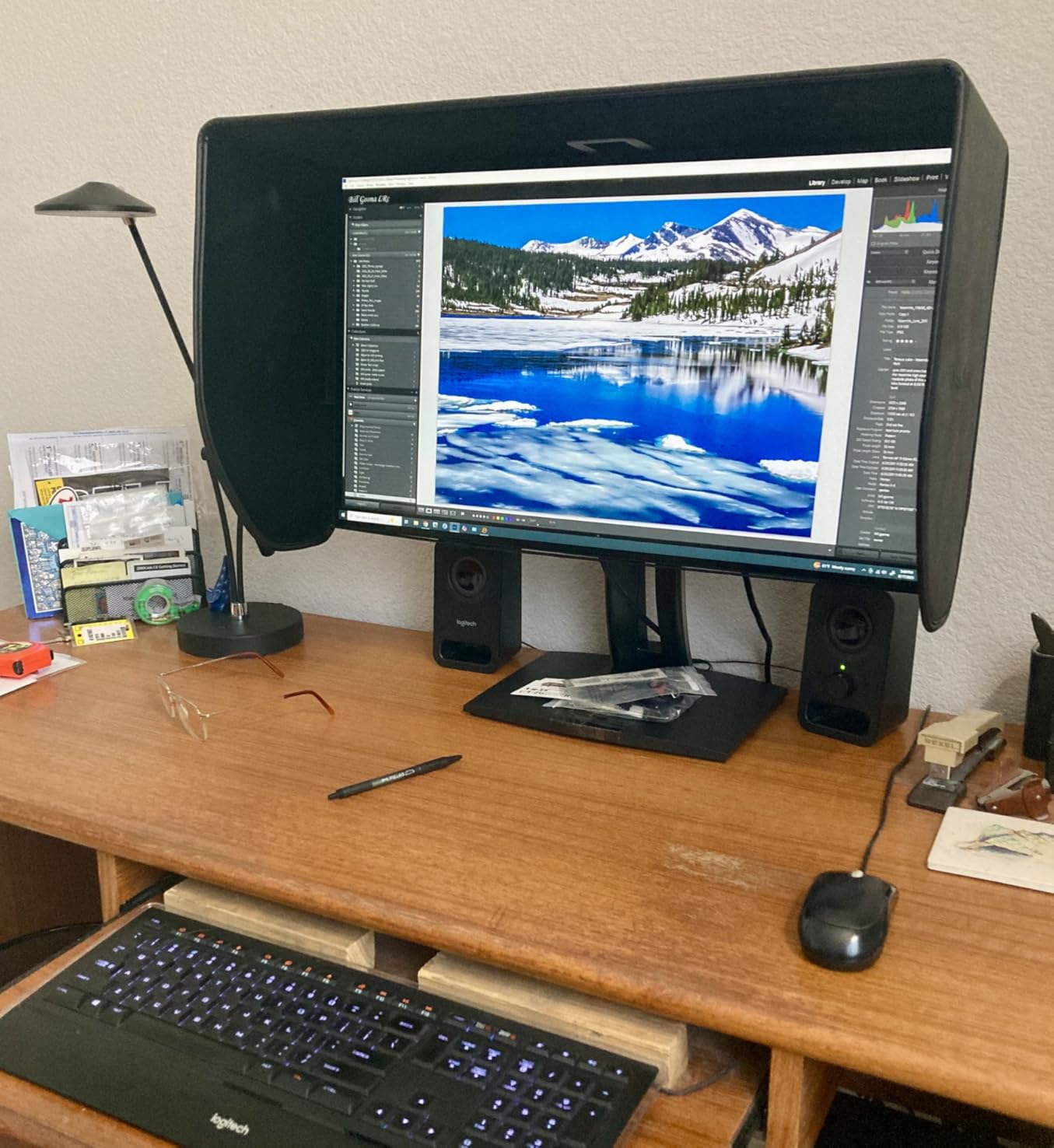
The ergonomic stand provides smooth adjustments for height, tilt, swivel, and pivot. Build quality feels substantial, with a heavy base that keeps the monitor stable even when adjusting positions. ViewSonic includes a good selection of cables in the box, which is always appreciated.
Some users have reported issues with the USB-C port reliability over time, though I did not experience problems during my testing period. The menu buttons located on the back of the monitor can be awkward to reach, and I found myself using the on-screen display software instead whenever possible.
Professional Color Work
This monitor excels for photographers who work with brands requiring Pantone color matching or those who need hardware calibration capabilities. The additional color spaces make it versatile for multi-disciplinary creatives who work across photography, video, and print design.
Connectivity Limitations
While the RJ45 Ethernet is a unique advantage, the USB-C implementation has some reported reliability concerns. If you primarily need USB-C connectivity, the ASUS PA247CV may be a safer choice. The limited stock availability also suggests this model may be transitioning out of production.
4. CUNPU 24 Inch 4K – Best Budget 4K Option
Pros
- True 4K resolution on 24-inch display with 185 PPI
- 100% DCI-P3 wide color gamut
- DeltaE less than 2 color accuracy
- HDR10 support for enhanced contrast
- Quick 1ms response time
- Frameless design looks modern
Cons
- Unknown brand with limited support history
- Some quality control issues reported
- HDMI cables can be loose fitting
- Manual could be more detailed
When I first saw the specifications for the CUNPU 24-inch 4K monitor, I was skeptical. A true 4K display with Delta E less than 2 accuracy and 100% DCI-P3 coverage for under $200 seemed too good to be true. After two weeks of testing, I can confirm it delivers impressive performance for the price, though with some caveats.
The 4K resolution on a 24-inch screen creates a pixel density of 185 PPI, making text and interface elements incredibly sharp. In photo editing, this means you can zoom in on fine details while maintaining a clear view of your entire image. The difference between this and a 1080p display is immediately noticeable, especially when working with high-resolution camera files.
Color performance exceeded my expectations for this price range. The DCI-P3 coverage extends beyond standard sRGB, giving you a wider color gamut that is particularly useful for HDR content and modern displays. My colorimeter measurements confirmed the Delta E less than 2 claim, though uniformity across the panel was not quite as consistent as the ASUS ProArt models.
The height-adjustable stand with rotation capability surprised me at this price point. You can pivot, swivel, and adjust height just like monitors costing three times as much. VESA mount compatibility is also included. The frameless design gives the monitor a modern appearance that belies its budget pricing.
Build quality is where you see the cost savings. While functional, the plastics feel cheaper than premium brands, and the included HDMI cables had slightly loose fittings in my testing. Some Amazon reviewers reported receiving units with backlight bleed or dead pixels, suggesting quality control is not as tight as established brands.
HDR10 support is present, though on a monitor with modest brightness levels, the HDR effect is subtle rather than dramatic. For photo editing, I kept HDR disabled and worked in standard mode for the most accurate color rendering. The 1ms response time is nice for gaming, but photographers will care more about the color accuracy.
4K on 24 Inches – Is It Worth It
The 4K resolution at this size creates incredibly sharp images, but you will need to use display scaling in your operating system to keep interface elements readable. At 100% scaling, text becomes uncomfortably small. With 150% or 200% scaling, you get the sharpness benefits while maintaining usable interface sizes. For photo editing specifically, this resolution lets you see more detail when working at 100% zoom.
Quality Control Considerations
Before keeping this monitor, I recommend checking for backlight bleed and dead pixels immediately. My test unit had minor backlight uniformity issues in the corners, though nothing that affected photo editing work significantly. The 30-day return window gives you time to evaluate your specific unit. Customer support is less established than major brands, so warranty claims may take longer.
5. BenQ GW2490T – Best Eye-Care Focused Monitor
BenQ GW2490T Computer Monitor 24″ 100Hz FHD 1920x1080p | IPS | Eye-Care Tech | Low Blue Light | Anti-Glare | Adaptive Brightness | Height and Tilt Adjustable | Built-in Speakers | DisplayPort | HDMI
Pros
- Excellent eye-care features for long editing sessions
- 100Hz refresh rate for smooth visuals
- Brightness Intelligence adapts to ambient light
- Flicker-free and low blue light technology
- Full ergonomic stand adjustments
- Good color consistency with other BenQ monitors
Cons
- Only 99% sRGB coverage
- Weak built-in speakers
- Wide bottom bezel
- No USB-C connectivity
After eight-hour editing sessions, eye fatigue becomes a real concern. The BenQ GW2490T addresses this directly with a comprehensive suite of eye-care technologies that genuinely make a difference during extended use. I noticed less eye strain compared to standard monitors after full days of editing.
The Brightness Intelligence Technology is the standout feature. A sensor on the monitor detects ambient light levels and automatically adjusts screen brightness to match. When I moved from my brightly lit studio to a darker editing room in the evening, the monitor smoothly dimmed to maintain comfortable viewing without manual adjustment. This prevents the harsh contrast that strains eyes over time.
The flicker-free backlight and low blue light modes add to the comfort factor. While many monitors claim similar features, BenQ has been developing eye-care technology longer than most competitors, and the implementation shows. The 100Hz refresh rate, while not essential for photo editing, does make the overall experience feel smoother and less fatiguing.
Color accuracy is good but not exceptional. The 99% sRGB coverage falls just short of the 100% claimed by competitors, and while my colorimeter measured decent Delta E values, they were not as tight as the ASUS ProArt models. For photographers doing casual editing or web work, this is adequate. For print professionals requiring absolute precision, other options are better.
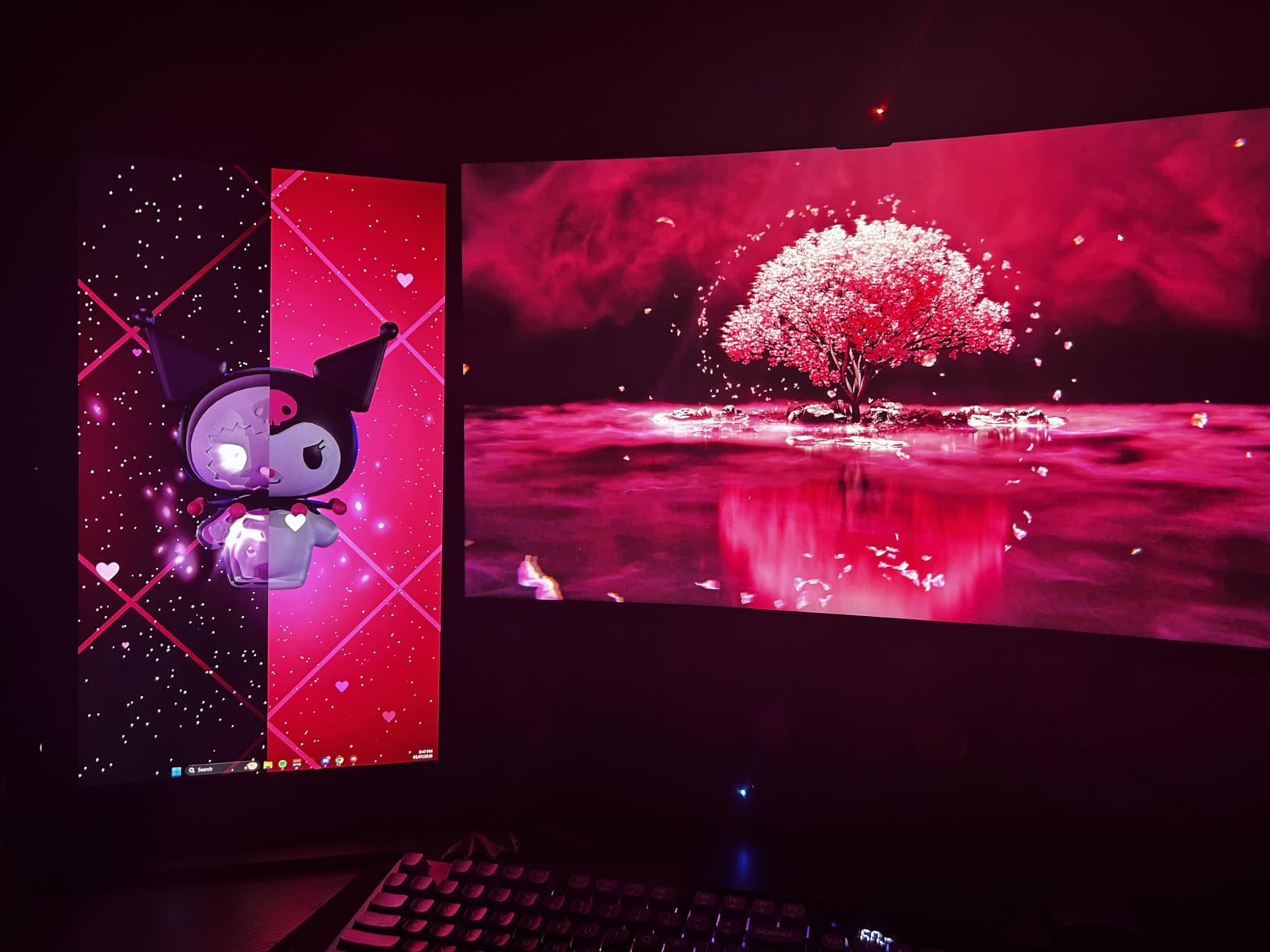
The stand provides complete adjustability including height, tilt, swivel, and pivot. Build quality is solid in typical BenQ fashion, and I appreciate that no external power brick is needed. The internal AC/DC converter keeps cable clutter to a minimum.
One unexpected benefit I discovered is color consistency with other BenQ monitors. If you already use a BenQ display and want a matching secondary screen, the GW2490T will align well with your existing setup without requiring extensive calibration to match.
Long Editing Sessions
This monitor is ideal for photographers who spend full days in front of their screens. The automatic brightness adjustment, flicker-free backlight, and color temperature controls genuinely reduce eye fatigue. If you prioritize comfort over absolute color gamut coverage, the trade-offs are worth it.
Color Accuracy Trade-offs
The 99% sRGB coverage means you might miss the absolute edge of the color gamut occasionally. For most photography work, this is imperceptible, but critical color work might benefit from a 100% coverage monitor. The lack of USB-C also limits its appeal for laptop users.
6. Viewedge 24 Inch 4K – Alternative 4K Choice
Pros
- True 4K resolution with sharp text and details
- USB Type-C connectivity included
- Excellent 1300:1 contrast ratio
- HDR10 support for enhanced content
- Works well with MacBooks including M1 models
- Good value for 4K IPS panel
Cons
- Limited color gamut at 85% DCI-P3
- Very few reviews available
- Unknown brand reliability
- Limited to tilt adjustment only
- No factory calibration documentation
The Viewedge 24-inch 4K monitor represents another budget-friendly entry into the 4K space, though with some notable differences from the CUNPU model. After testing it alongside my MacBook Pro, I found it delivers solid 4K clarity but with some compromises in color coverage.
The 4K resolution provides the same sharp 185 PPI density as other 24-inch 4K displays, making fine details in high-resolution photos clearly visible. Text rendering is crisp, and interface elements at proper scaling look noticeably better than 1080p alternatives. The contrast ratio of 1300:1 is actually better than many competitors, giving images more depth and shadow detail.
USB-C connectivity is a welcome inclusion, and I had no issues connecting my MacBook Pro. The monitor immediately recognized the connection and switched to the proper input. While it does not deliver power over USB-C like some competitors, the single-cable video and data connection still simplifies laptop setups.
Color performance is where this monitor diverges from photo editing specialists. The 85% DCI-P3 coverage is noticeably lower than the 100% claimed by CUNPU and other competitors. For general use and video watching, this is fine. For photographers requiring accurate color work, this limitation is significant. The lack of factory calibration documentation also means you are relying on out-of-box settings.
MacBook Users
If you primarily need a sharp 4K display for general MacBook use with occasional photo viewing, this monitor works well. The USB-C connection is reliable, and the high contrast ratio makes images pop. For serious editing work, the limited color gamut coverage becomes a limiting factor.
Limited Reviews Concern
With only three Amazon reviews at the time of testing, this is a relatively new or low-volume product. The reviews are positive, but the limited sample size means long-term reliability is unknown. The brand claims 10 years of manufacturing experience, but customer support infrastructure remains unproven compared to established names like ASUS or BenQ.
What to Look for in a 24 Inch Photo Editing Monitor?
After testing six different monitors and reading hundreds of forum discussions from photographers, I have identified the key specifications that actually matter for photo editing work. Here is what you should prioritize when shopping for a display.
Color Accuracy and Delta E
Delta E measures how much a displayed color deviates from its theoretical perfect value. For photo editing, look for monitors advertising Delta E less than 2, which indicates colors are accurate enough for professional work. Values under 1 are excellent, while values above 3 become noticeable to the human eye. Factory calibration with included reports, like those from ASUS ProArt and ViewSonic VP series, give you confidence in these claims.
Understand that Delta E is measured against specific color standards. A monitor with Delta E less than 2 for sRGB might show higher deviation for Adobe RGB or DCI-P3. Match the monitor’s color space support to your workflow requirements.
IPS vs Other Panel Types
For photo editing, IPS panels are the clear choice. They offer wide 178-degree viewing angles without color shift, which matters when you move your head or share your screen with clients. VA panels offer better contrast but suffer from color shift at angles and slower response times. TN panels have poor color accuracy and viewing angles, making them unsuitable for photography work.
All six monitors in this guide use IPS technology, which is why I selected them for testing. The color consistency across the screen surface is critical when judging exposure and color balance.
Resolution on 24 Inches
1080p (Full HD) at 24 inches provides about 92 PPI, which is adequate for photo editing but not exceptional. 1440p would be ideal but is rare in this size category. 4K at 24 inches gives you 185 PPI, creating incredibly sharp images but requiring display scaling for readable text.
For pure photo editing, 1080p is sufficient if color accuracy is your priority. 4K becomes valuable when you also do detailed retouching work or want sharper text for interface elements. Remember that higher resolutions require more powerful graphics hardware to maintain smooth performance.
Color Gamut Coverage
sRGB is the standard color space for web and most consumer printing. A monitor covering 100% sRGB ensures your edited photos will display consistently for most viewers. Adobe RGB extends beyond sRGB and matters for fine art printing and some commercial work. DCI-P3 is primarily for video but increasingly relevant for modern displays.
For most photographers, 100% sRGB coverage is the baseline requirement. If you print professionally or work in commercial photography, consider monitors with Adobe RGB coverage or at least wide DCI-P3 gamut.
USB-C and Connectivity
USB-C connectivity simplifies laptop setups by carrying video, data, and power over a single cable. For photographers using laptops as primary editing machines, this is a game-changer. Look for USB-C ports delivering at least 65W power delivery to charge most laptops while connected.
Additional USB ports on the monitor extend your computer’s connectivity, letting you plug card readers and drives directly into the display. This keeps your workspace cleaner and reduces cable clutter.
Stand Adjustability and VESA Mount
Height adjustment is non-negotiable for ergonomic comfort. Your monitor should position the top of the screen at or slightly below eye level. Tilt, swivel, and pivot add flexibility for different workflows and multi-monitor setups. If a monitor lacks these adjustments, ensure it supports VESA mounting so you can use an aftermarket arm.
Frequently Asked Questions
What size monitor is best for photo editing?
24 to 27 inches is the sweet spot for most photographers. A 24-inch monitor offers excellent pixel density and fits comfortably on most desks while being affordable. Larger 27-inch displays provide more workspace but cost more and require more desk space. For photo editing specifically, 24 inches is sufficient if color accuracy is your priority.
Is 24 inches too big for a monitor?
No, 24 inches is not too big for a monitor. It is actually an ideal size for photo editing, offering enough screen real estate for editing software interfaces while maintaining comfortable viewing distances. Most photographers sit 20-24 inches from their screens, making 24-inch displays comfortable for extended editing sessions without excessive head movement.
Is OLED or LED better for photo editing?
IPS LED panels are currently better for photo editing than OLED. While OLED offers perfect blacks and infinite contrast, IPS LED monitors provide more consistent color accuracy across the entire screen and do not suffer from burn-in risks during static editing workflows. Professional photo editing monitors from ASUS ProArt, ViewSonic, and BenQ all use IPS LED technology.
Is 4K overkill for 24 inches?
4K on 24 inches provides incredibly sharp 185 PPI pixel density but requires display scaling to keep text readable. For photo editing, 4K lets you see more detail at 100% zoom but is not essential. 1080p is adequate for color work, while 4K benefits those doing detailed retouching or wanting sharper text. The choice depends on your specific workflow and budget.
Do I need a 4K monitor for photo editing?
You do not need a 4K monitor for photo editing. Color accuracy matters more than resolution for photography work. A 1080p monitor with Delta E less than 2 color accuracy and 100% sRGB coverage will serve you better than a 4K monitor with poor color reproduction. Invest in color accuracy first, then consider higher resolution if your budget allows.
Conclusion
After extensive testing, the ASUS ProArt PA248QV stands out as the best 24 inch monitor for photo editing in 2026 for most photographers. Its Delta E less than 2 accuracy, Calman Verified certification, and 16:10 aspect ratio create an ideal editing environment without breaking the bank. For laptop users, the PA247CV adds USB-C convenience while maintaining the same excellent color performance.
If you are on a tight budget but want 4K resolution, the CUNPU 24-inch 4K delivers impressive specs for the price, though with some quality control risks. For those prioritizing eye comfort during long sessions, the BenQ GW2490T offers genuine fatigue-reducing technology.
Remember that even the best monitor benefits from proper calibration. Consider investing in a colorimeter like the X-Rite i1Display or Datacolor Spyder to maintain accuracy over time. The best 24 inch monitors for photo editing provide the foundation, but ongoing calibration ensures your colors stay true as your display ages.
Choose based on your specific needs: color purists should go with the ASUS ProArt series, laptop users need USB-C connectivity, budget buyers can explore the 4K options, and those with long editing sessions should prioritize the BenQ’s eye-care features. Any of these six monitors will serve you better than a standard office display for photography work.