
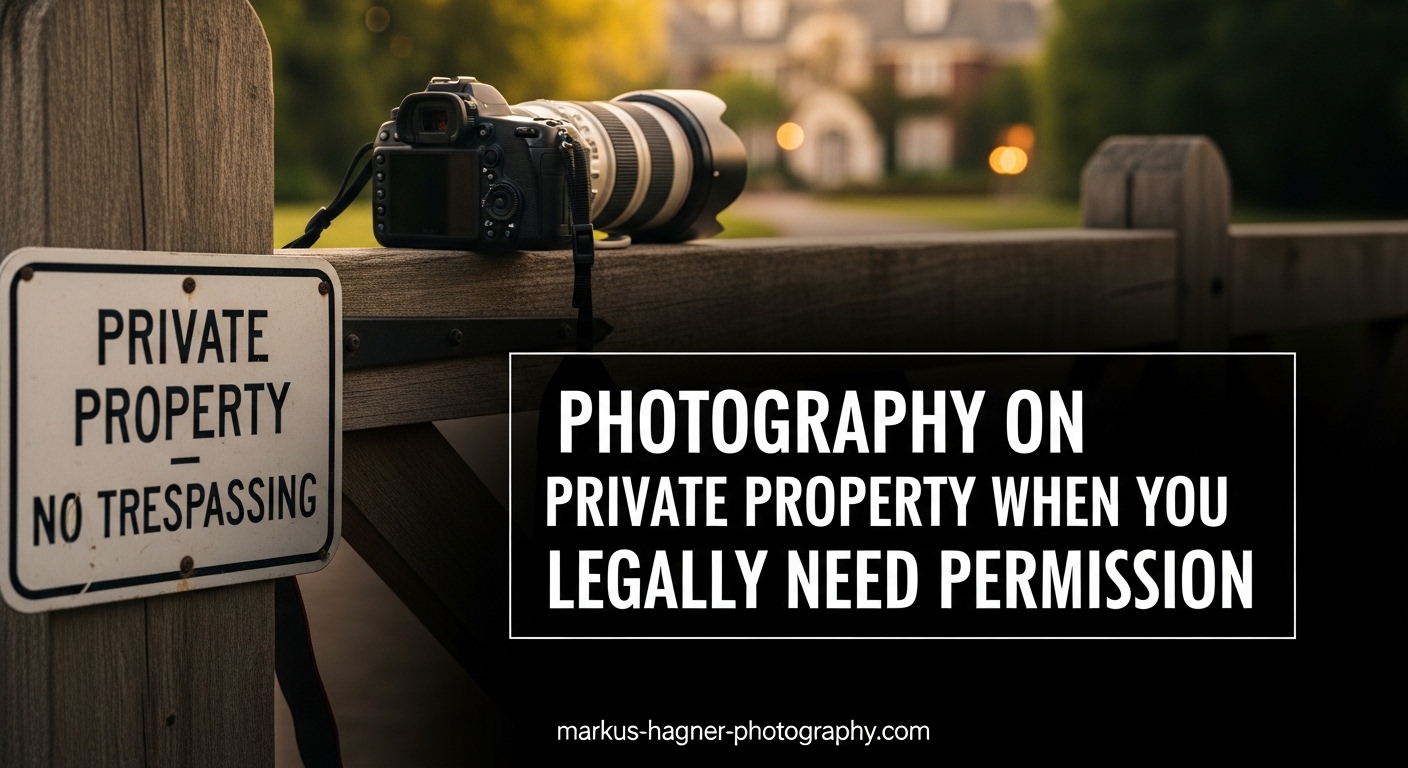
Understanding photography on private property when you legally need permission to shoot can save you from serious legal headaches. I have spent years navigating these rules as a professional photographer, and the confusion around this topic is real. Many photographers worry about trespassing charges, lawsuits, or having their equipment confiscated. Others simply want to know when they can shoot freely versus when they need to ask first.
This guide breaks down the legal landscape in plain terms. I will explain the key differences between public and private property, when permission is legally required, and what rights property owners actually have. You will also find practical scripts for requesting permission and clear answers to common questions.
Important note: This article provides general educational information about photography laws. I am not an attorney, and laws vary significantly by state and jurisdiction. For specific legal advice, consult a qualified attorney in your area.
Understanding Public vs. Private Property
The distinction between public and private property forms the foundation of photography permission laws. Private property includes any land or buildings owned by individuals, businesses, or private organizations. This covers homes, retail stores, office buildings, farms, and private venues. The owner has the legal right to control access and set rules for behavior on their property, including photography rules.
Public property refers to spaces owned by government entities and open to the general public. This includes public sidewalks, streets, parks, beaches, and government buildings during open hours. In these spaces, you generally have stronger photography rights under First Amendment protections.
Here is where things get tricky. Privately-owned public spaces blur the line between these categories. Shopping malls, museums, hotel lobbies, and some plazas are privately owned but open to the public. The property owner can still restrict photography in these spaces, even though they feel like public areas. Security guards at malls often enforce these rules, and courts have generally upheld property owner rights in these locations.
When You Need Permission to Photograph on Private Property?
The basic rule is straightforward: when you are physically standing on private property, the property owner sets the photography rules. This means you need permission to photograph on private property unless the owner has explicitly allowed it or it is clearly open to photography.
Here are specific scenarios where you definitely need permission:
- Shooting inside businesses: Retail stores, restaurants, offices, and commercial spaces require owner permission for photography.
- Residential property: Photographing in someone’s home, yard, or private land requires the owner’s consent.
- Event venues: Wedding venues, concert halls, and event spaces typically require written agreements.
- Private farms and rural land: Agricultural land is private property, even if it appears open.
- Gated communities: These are private property beyond the gate.
Commercial versus editorial use also affects permission requirements. Commercial use includes advertising, marketing, stock photography, and any image used to promote a product or service. Editorial use covers news reporting, documentaries, and educational content. Commercial use almost always requires explicit permission, while editorial use has more flexibility but still depends on where you stand when taking the photo.
The usage type matters because property owners can sue for commercial appropriation of their property even if you legally took the photo. A photo of a distinctive building used in an advertisement without permission could lead to a lawsuit, even if you shot from a public sidewalk.
Property Owner Rights: What They Can and Cannot Restrict
Property owners have significant authority over photography on their land, but their powers have limits. What owners can do:
- Set rules about photography on their property
- Prohibit photography entirely
- Require permits or written agreements
- Charge fees for commercial photography
- Ask you to leave if you violate their rules
- Call law enforcement if you refuse to leave (this becomes trespassing)
What owners cannot do:
- Confiscate your camera or equipment
- Force you to delete photos
- Detain you against your will
- Use physical force to stop you from photographing
If a property owner or security guard demands you delete photos, you can politely decline. They have no legal right to force deletion of your images. However, they can ask you to leave the property, and refusing that request can lead to trespassing charges.
Photographing FROM Public Spaces
This is where many photographers get confused. You can legally photograph private property from public spaces in most situations. If you stand on a public sidewalk, street, or park, you can photograph buildings, homes, and other private property visible from that location.
The key principle is that there is generally no reasonable expectation of privacy for things visible from public spaces. A beautiful house photographed from the street? Legal. A storefront captured from a public sidewalk? Legal. A farm visible from a public road? Legal.
Important exceptions exist:
- Areas with reasonable expectation of privacy: You cannot photograph into bathrooms, bedrooms, or other private areas through windows, even from public property.
- Harassment or stalking: Repeatedly photographing someone’s home may constitute harassment regardless of where you stand.
- Security-sensitive locations: Some infrastructure (power plants, military facilities) have additional restrictions.
If confronted while photographing legally from public property, stay calm and polite. You can explain that you are on public property and have the right to photograph. If the person continues to hassle you, consider moving along to avoid escalation, even though you are within your rights.
Trespassing Laws and Photography
Trespassing occurs when you enter or remain on private property without permission or legal right. Photography itself is not trespassing, but entering private property without permission to take photos is.
Trespassing typically involves:
- Entering property marked with “No Trespassing” signs
- Climbing fences or crossing boundaries
- Remaining on property after being asked to leave
- Entering clearly restricted areas
The consequences vary by state and circumstance. Most first-time trespassing is a misdemeanor, but it can still result in fines, a criminal record, and civil liability for any damages. If you accidentally wander onto private property while photographing, leave immediately and politely when asked.
To avoid trespassing issues:
- Check property boundaries before shooting
- Respect posted signs
- Stay on public rights-of-way when possible
- Ask permission before entering private land
Special Locations: Airports, Government Buildings, and Schools
Certain locations have specific photography rules that go beyond general private property laws.
Airports: The Transportation Security Administration (TSA) allows photography in public areas of airports. You can photograph terminals, planes, and general airport scenes from public areas. However, photographing security screening areas, TSA checkpoints, or sensitive equipment may be restricted. Always follow instructions from security personnel. Individual airports may have additional rules, so check local policies.
Government buildings: Photography rules vary by building and agency. Courthouses, federal buildings, and military installations often restrict photography. Some allow exterior photography while prohibiting interior shots. When in doubt, ask security or check official policies before shooting.
Schools: Public schools are government property, but photography rights are complicated by student privacy laws. Photographing students without parental consent can violate privacy regulations. Private schools operate as private property with owner-set rules. Always get permission before photographing on school grounds.
Law enforcement interactions: You generally have the right to photograph police and law enforcement activities in public spaces. However, interfering with their work or violating other laws while doing so can still get you in trouble.
How to Request Permission: Practical Scripts and Tips
Many photographers feel awkward asking for permission, but a professional approach often gets positive results. Most property owners are receptive when approached respectfully.
Sample script for requesting permission:
“Hello, my name is [your name], and I am a photographer. I am working on a [project type: portfolio piece, commercial shoot, personal project] and your [property/location] would be perfect for what I have in mind. Would you be open to allowing me to photograph here? I can provide [compensation/portfolio copies/credit], and I am happy to sign any paperwork you require.”
Tips for successful permission requests:
- Be professional: Dress appropriately, carry business cards, and explain your purpose clearly.
- Offer something in return: Compensation, portfolio copies, or social media credit shows good faith.
- Be flexible: Property owners may have conditions like specific times or areas.
- Have paperwork ready: Bring property release forms to show professionalism.
- Follow up: If granted permission, send thank-you notes and any promised materials.
What a property use agreement should include:
- Description of the property and permitted areas
- Date and time of photography
- Intended use of images (commercial, editorial, personal)
- Compensation terms if applicable
- Liability release and insurance requirements
- Signatures from both parties
For commercial work, I always use written agreements. They protect both parties and demonstrate professionalism that property owners appreciate.
FAQ: Photography on Private Property
Can you take photos of a private property?
Yes, you can legally photograph private property from public spaces like sidewalks, streets, and parks. There is generally no expectation of privacy for property visible from public areas. However, if you need to physically enter the private property to take the photo, you must have the property owner’s permission. The key factor is where you are standing when you take the photograph, not what you are photographing.
Can someone take pictures of your property without permission?
Yes, someone can legally photograph your property from public spaces without your permission. If they are standing on a public sidewalk or street, they can capture images of your home, business, or land that is visible from that location. You can ask them to stop or leave if they are on your property, but you cannot confiscate their equipment or force them to delete photos. However, they cannot photograph into areas where you have a reasonable expectation of privacy, such as through bathroom or bedroom windows.
Can you take pictures of someone on their private property?
Photographing people on private property requires more careful consideration than photographing property alone. If you are standing on public property, you can generally photograph people who are visible from that public space. However, using those images commercially typically requires a model release from the person photographed. If you enter private property to photograph someone, you need both property owner permission and ideally a model release. Photographing people in situations where they have a reasonable expectation of privacy (inside their home, in bathrooms, in secluded yards) can violate privacy laws regardless of where you stand.
Do I need permission to sell photos of private property?
For commercial use (advertising, marketing, stock photography), you typically need permission or a property release to sell photos of recognizable private property. Editorial use (news, documentaries, education) has more flexibility, but the distinction is not always clear-cut. Some distinctive buildings and landmarks have trademark protections that affect commercial use. If you photographed the property from public space and the use is editorial, you generally do not need permission. For commercial applications, I recommend obtaining a property release to protect yourself from potential lawsuits.
What should I do if confronted while photographing legally?
Stay calm and polite. If you are on public property, you can explain that you have the right to photograph from public spaces. You do not have to delete your photos or show your camera. However, de-escalation is often wiser than asserting rights. If the person continues to confront you, consider moving to a different location to avoid conflict. If you feel threatened or someone physically tries to take your equipment, call law enforcement. Document the interaction if possible, and never argue with police – comply with lawful orders and contest any issues later through proper channels.
Conclusion
Understanding photography on private property when you legally need permission to shoot comes down to a few key principles. Know where you are standing, understand who controls that space, and respect property owner rights. When in doubt, ask permission. A professional request is almost always better than an awkward confrontation.
Quick checklist before shooting on or near private property:
- Am I on public or private property?
- Do I need permission to be where I am standing?
- What is my intended use for the images?
- Do I have written permission or releases for commercial work?
- Have I respected posted signs and boundaries?
Laws vary by state and jurisdiction, and this area of law continues to evolve. For specific legal questions about your photography work, consult an attorney who understands intellectual property and media law in your area. Many professional photography organizations offer legal resources and can help you find qualified attorneys.
With proper preparation and a respectful approach, you can photograph confidently while staying on the right side of the law. The best photographers I know build positive relationships with property owners, carry proper documentation, and always err on the side of asking permission rather than risking legal trouble.