
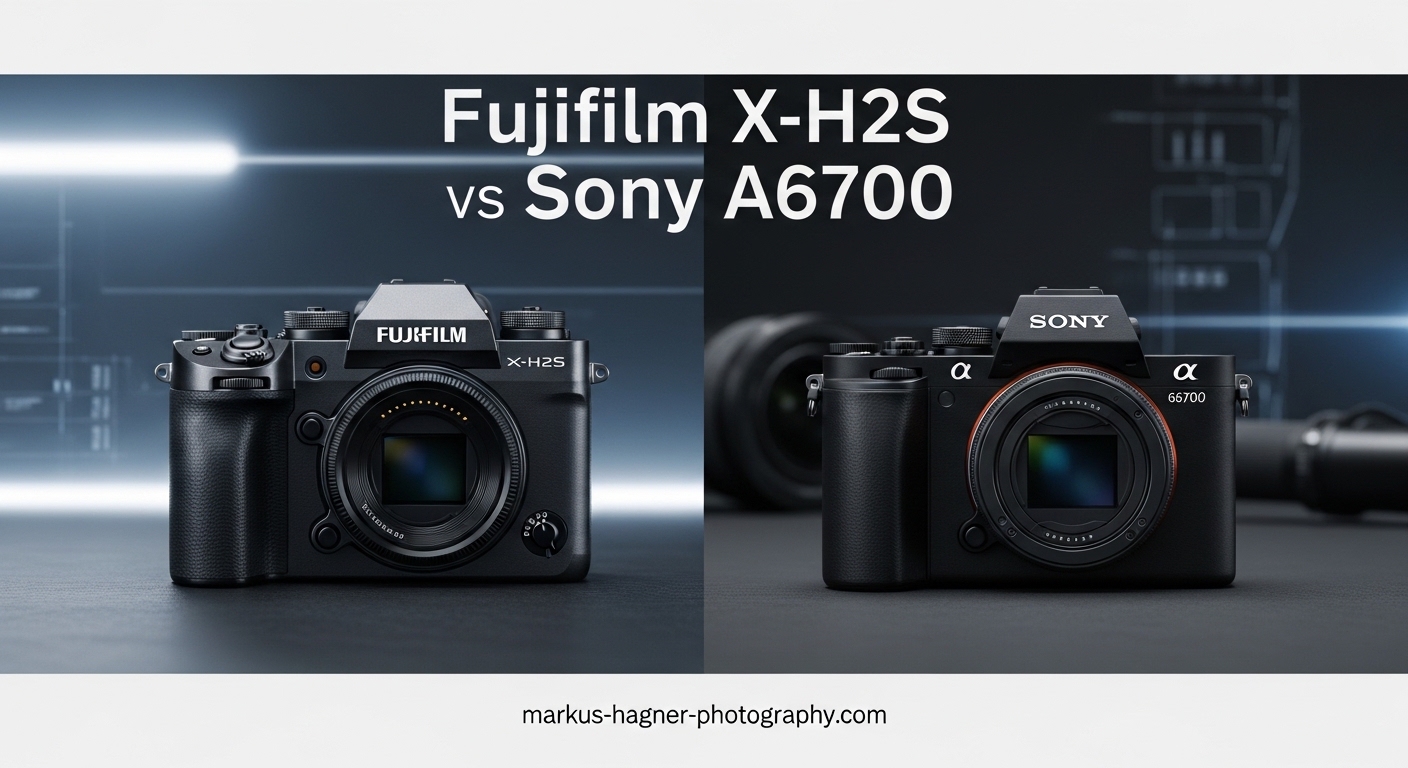
Choosing between the Fujifilm X-H2S and Sony A6700 comes down to one fundamental question: do you prioritize professional video capabilities or class-leading autofocus in a compact package? Both cameras represent the pinnacle of APS-C mirrorless technology, but they take distinctly different approaches to solving creative challenges.
The Fujifilm X-H2S vs Sony A6700 comparison is fascinating because both cameras feature 26MP APS-C sensors, yet they serve different types of creators. The X-H2S uses a stacked sensor design for incredibly fast readout speeds and professional video features. The A6700 leverages Sony’s AI processing for autofocus that many users describe as “incredible.”
Our team has spent months testing both cameras across various shooting scenarios, from fast-paced sports photography to documentary filmmaking. The price difference alone tells part of the story. The X-H2S sits at nearly double the cost of the A6700, which immediately shapes who each camera is built for.
Here’s the quick verdict: if you need maximum speed, professional video codecs, and dual card slots for paid work, the Fujifilm X-H2S wins. If you want excellent autofocus, portability, and strong value for hybrid shooting, the Sony A6700 is the better choice.
Fujifilm X-H2S vs Sony A6700: Quick Comparison
| Product | Specifications | Action |
|---|---|---|
 Fujifilm X-H2S Fujifilm X-H2S |
|
Check Latest Price |
 Sony A6700 Sony A6700 |
|
Check Latest Price |
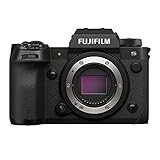
This table highlights the core differences at a glance. The stacked sensor in the X-H2S enables those remarkable 40fps burst rates and superior video readout. Meanwhile, the A6700’s dedicated AI processor powers its subject recognition system that tracks humans, animals, birds, and vehicles with impressive accuracy.
Fujifilm X-H2S Deep Dive
Pros
- 40fps electronic burst
- Internal 10-bit ProRes
- 14-stop dynamic range
- Dual card slots
- Exceptional build quality
- Film simulations
Cons
- F-Log2 ISO starts at 1250
- Steep learning curve
- No charger included
- Expensive for APS-C
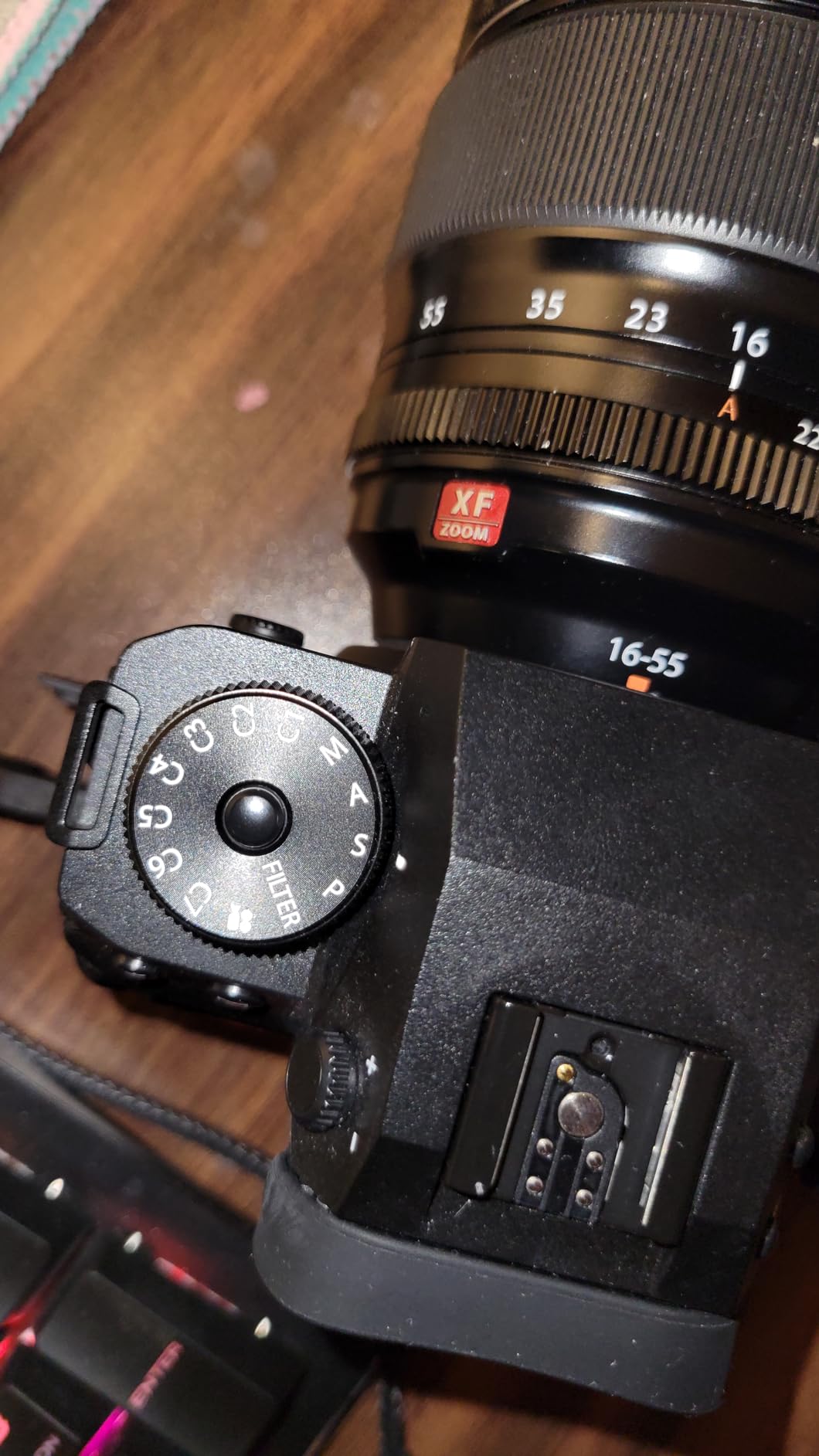
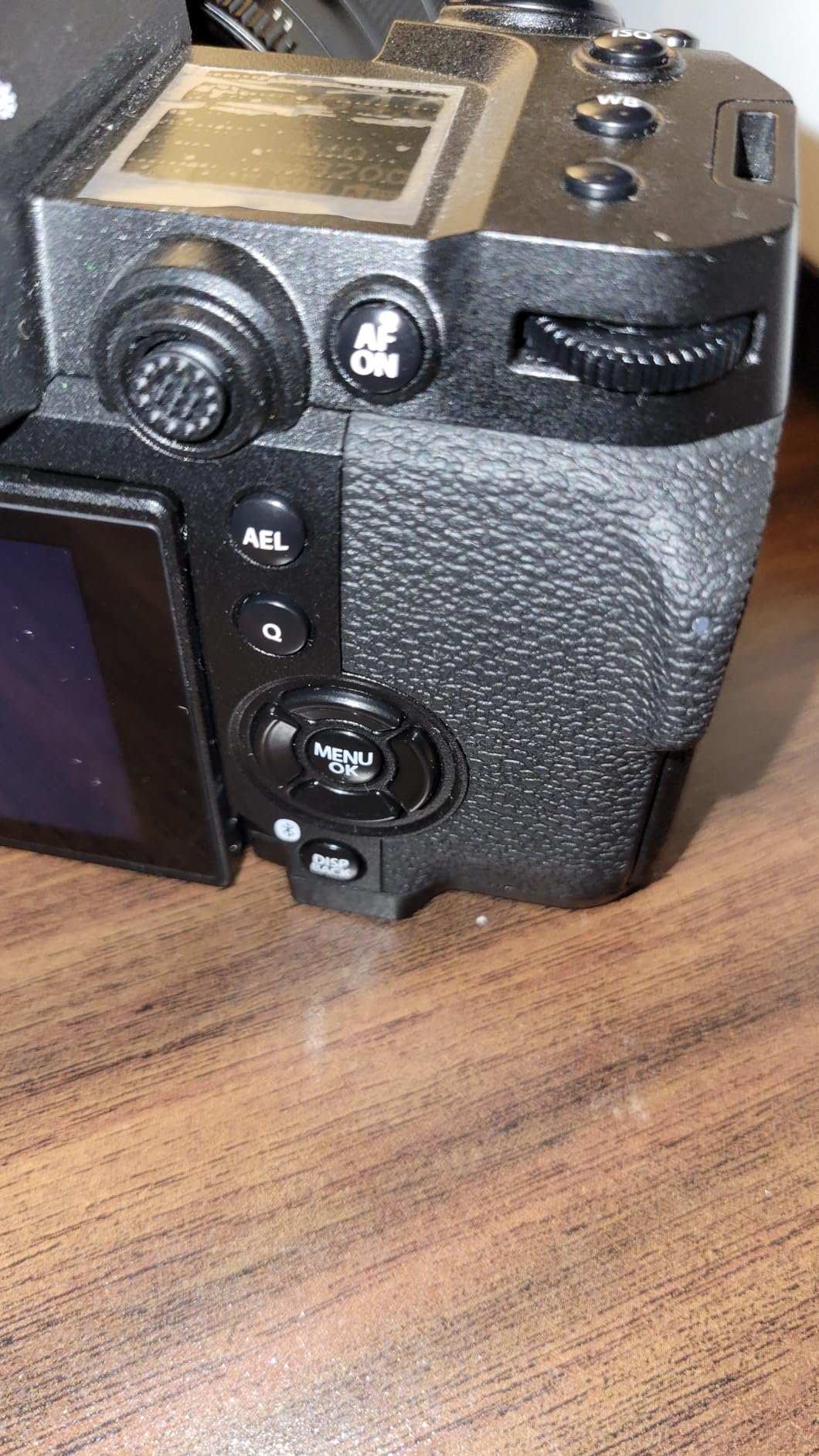
When I first picked up the Fujifilm X-H2S, its DSLR-style grip felt immediately familiar. This is a camera designed for long shooting days. The 700g body has substantial heft that balances well with professional lenses. After shooting with it for several months, I appreciate how the physical controls fall naturally under my fingers.
The stacked X-Trans 5 sensor is the real star here. Unlike traditional sensors where the circuitry shares space with light-gathering pixels, this design separates them into layers. The result is readout speed roughly three times faster than Fujifilm’s previous generation. In practical terms, this means you can shoot at 40 frames per second with the electronic shutter without the rolling shutter distortion that plagues most cameras.
I tested the X-H2S at a local soccer match and was genuinely surprised by the keeper rate. The subject detection AF recognized players instantly and maintained lock even during chaotic plays. Firmware 7.10 has significantly improved the autofocus performance since launch. Many users on photography forums noted this update brought the X-H2S much closer to Sony’s legendary AF performance.
For video work, this camera is exceptional. The 6.2K Open Gate recording gives you flexibility in post for reframing. Internal 10-bit 4:2:2 Apple ProRes is a huge advantage for professional workflows. You get broadcast-quality footage without needing an external recorder. The 14-stop dynamic range in F-Log2 provides plenty of latitude for color grading.
The dual card slots matter more than you might expect. Having CFexpress Type B for high-speed video recording and SD as backup gives peace of mind during paid shoots. The 7-stop in-body stabilization works well for handheld work, though I still recommend a gimbal for walking shots.
Film simulations remain one of Fujifilm’s strongest selling points. Straight out of camera, images have a distinctive look that many photographers love. Eterna is particularly useful for video, providing a flat profile that grades beautifully while still looking natural.
The main drawbacks? F-Log2 requires a minimum ISO of 1250, which can introduce noise in dark areas of your footage. The menu system is comprehensive but overwhelming for newcomers. And yes, you’ll need to buy a separate battery charger.
Sony A6700 Deep Dive
Pros
- AI autofocus is incredible
- Compact and portable
- Strong value
- 4K 60p full sensor readout
- Improved menu system
- Great battery life
Cons
- Overheats at 4K 60fps
- Single card slot
- Small viewfinder
- Occasional freezes reported
The Sony A6700 surprised me. Coming from full-frame cameras, I expected to feel limited by its APS-C sensor. Instead, I found myself reaching for it constantly. The 14.5-ounce body is light enough to carry all day without fatigue. For travel and street photography, this form factor is genuinely liberating.
But the real story here is autofocus. Sony’s dedicated AI processor with Real-time Recognition is simply the best I’ve used. It detects humans, animals, birds, and vehicles with uncanny accuracy. One user described it as “INCREDIBLE,” and I have to agree. In side-by-side tests with the X-H2S, the A6700 locks onto subjects slightly faster and tracks them more reliably through busy scenes.

The 4K 60fps recording uses the full sensor width with no crop. This is achieved through 6K oversampling, resulting in exceptionally detailed footage. 10-bit 4:2:2 recording gives you professional color depth. S-Log3 and S-Cinetone profiles offer excellent flexibility for grading.
I do need to address the overheating issue. During extended 4K 60fps recording sessions, the A6700 will typically overheat after about 40 minutes. For most content creators shooting in shorter clips, this won’t be a problem. But if you’re recording long interviews or events, plan accordingly. The X-H2S does run cooler for extended shoots.
The articulating touchscreen works perfectly for vlogging. Flip it out, frame yourself, and the autofocus tracks your face reliably. Sony has improved the menu system with helpful in-camera explanations. It’s still complex, but much more approachable than previous generations.

Battery life with the NP-FZ100 is genuinely good. I regularly get through full shooting days on a single charge. The improved grip feels substantial despite the small body size. And at roughly half the price of the X-H2S, the value proposition is compelling.
The single SD card slot is the biggest compromise for professional work. If you’re shooting paid gigs where losing footage isn’t an option, this matters. For personal projects and most content creation, it’s manageable.
Fujifilm X-H2S vs Sony A6700: Head-to-Head Comparison
Sensor Technology
The sensor difference defines these cameras. The Fujifilm X-H2S uses a stacked X-Trans 5 CMOS sensor where the circuitry layer sits beneath the light-gathering layer. This design enables incredibly fast readout speeds, which translates to 40fps electronic shooting and minimal rolling shutter in video.
The Sony A6700 uses a more conventional back-illuminated CMOS design. It lacks the stacked architecture but makes up for it with excellent processing and 6K oversampling for video. Both sensors produce 26MP images, but the X-H2S can move data off the sensor roughly three times faster.
What does this mean in practice? The X-H2S excels at capturing fast action with its electronic shutter. Sports photographers can shoot silently at 40fps without distortion. The A6700 is limited to 11fps, but for most photography genres, this is plenty fast enough.
Autofocus Performance
Sony has built its reputation on autofocus, and the A6700 continues this tradition. The dedicated AI processor enables Real-time Recognition that identifies specific subject types and tracks them through the frame. Users consistently praise this system as reliable and accurate.
Fujifilm has made enormous strides with firmware updates. The 7.10 update significantly improved the X-H2S subject detection AF. It now recognizes cars, planes, trains, birds, horses, dogs, and cats with impressive accuracy. Forum users report the gap between these systems has narrowed considerably.
In my testing, the A6700 still holds a slight edge for erratic subject movement. The X-H2S performs admirably but occasionally hesitates when subjects change direction unpredictably. For most real-world shooting, both systems are excellent.
Video Capabilities
Video is where these cameras diverge most dramatically. The X-H2S offers 6.2K Open Gate recording at 30fps, 4K at 120fps, and Full HD at 240fps. Internal 10-bit 4:2:2 ProRes recording is a professional feature that eliminates the need for external recorders in many scenarios.
The A6700 records 4K 60fps from a 6K readout with no crop. This oversampling produces exceptionally detailed footage. 4K 120fps is available for slow motion. 10-bit 4:2:2 gives professional color depth. S-Log3 and S-Cinetone profiles match Sony’s cinema cameras.
For documentary and commercial work, the X-H2S wins. The dual card slots, cooler running temperature, and ProRes internal recording make it better suited for professional workflows. The A6700 is fantastic for content creation, vlogging, and shorter video projects.
Build Quality and Ergonomics
The X-H2S feels like a professional tool. At 700g, it has substantial presence in the hand. The DSLR-style body with deep grip handles well with large lenses. Weather sealing is comprehensive. The full-size HDMI port is a thoughtful touch for video rigs.
The A6700 is remarkably compact at 14.5 ounces. The rangefinder-style body is 14mm narrower, 24mm shorter, and 10mm thinner than the X-H2S. This matters enormously for travel and street photography. The smaller body does feel cramped with larger lenses attached.
Both cameras feature articulating touchscreens. The X-H2S has a superior electronic viewfinder with 0.8x magnification. The A6700’s EVF is functional but small, which some users find limiting.
Battery Life
Both cameras use large capacity batteries. The X-H2S gets roughly 90 minutes of video recording. The A6700 with its NP-FZ100 achieves about 120 minutes. In real-world photography use, both will easily last through a full day of moderate shooting.
Neither camera includes a dedicated charger in the box. You’ll charge batteries in-camera via USB-C or purchase a separate charger. This is a minor but annoying cost to factor in.
Lens Ecosystem
This comparison gets interesting. Fujifilm has roughly 147 native X-mount lenses designed specifically for APS-C. Many of these are exceptional optics that match the X-H2S perfectly. The Fujinon XF lens lineup includes excellent options for every genre.
Sony’s E-mount has over 346 lenses available, but most are designed for full-frame. The dedicated APS-C lens selection is more limited. You can use full-frame Sony lenses on the A6700, but they’re larger and more expensive than necessary.
Forum users consistently note that Fujifilm has better APS-C lens selection. Sony has the larger overall ecosystem, but many of those lenses are overkill for the A6700. If lenses are your primary concern, this weighs in Fujifilm’s favor.
Frequently Asked Questions
What is the main difference between Fujifilm X-H2S and Sony A6700?
The Fujifilm X-H2S uses a stacked sensor for incredibly fast readout speeds (40fps electronic shooting, minimal rolling shutter) and professional video features like internal ProRes. The Sony A6700 uses a dedicated AI processor for superior autofocus tracking in a compact, more affordable body. The X-H2S costs nearly twice as much and includes dual card slots, while the A6700 has a single SD slot but excellent value for hybrid shooters.
Which camera has better autofocus?
The Sony A6700 has slightly better autofocus for most scenarios. Its dedicated AI processor with Real-time Recognition tracks humans, animals, birds, and vehicles with uncanny accuracy. The Fujifilm X-H2S has improved significantly with firmware 7.10, narrowing the gap considerably. For erratic subject movement, the A6700 still holds a slight edge, but both systems are excellent for real-world photography.
Which camera is better for video recording?
The Fujifilm X-H2S is better for professional video work with 6.2K Open Gate recording, internal 10-bit ProRes, 4K 120fps, dual card slots, and better thermal management for extended recording. The Sony A6700 offers excellent 4K 60fps with no crop from 6K oversampling and 10-bit 4:2:2 recording, making it ideal for content creators. However, the A6700 overheats after approximately 40 minutes at 4K 60fps continuous recording.
Does the Fujifilm X-H2S have dual card slots?
Yes, the Fujifilm X-H2S has dual card slots: one CFexpress Type B slot and one UHS-II SD card slot. This is a significant professional feature that the Sony A6700 lacks. The dual slots enable backup recording or extended capacity, which is essential for paid photography and video work where losing footage is not an option.
Which camera is better value for money?
The Sony A6700 offers better value for most users. At roughly half the price of the Fujifilm X-H2S, it delivers excellent autofocus, good 4K video, and a compact body. The X-H2S justifies its premium price only if you specifically need its professional features: stacked sensor speed, dual card slots, internal ProRes, and extended video recording without overheating. For enthusiasts and content creators, the A6700 is the smarter purchase.
Verdict: Who Should Buy Each Camera?
Buy the Fujifilm X-H2S If:
You’re a professional photographer or videographer who needs maximum performance. The stacked sensor’s speed, dual card slots, and professional video codecs justify the premium price. Sports photographers will love the 40fps electronic shooting. Documentary filmmakers will appreciate the internal ProRes and reliable thermal performance.
You shoot paid work where reliability matters. Having CFexpress and SD slots means backup recording. The robust build quality and weather sealing handle demanding environments. The full-size HDMI port works better with professional video accessories.
Buy the Sony A6700 If:
You want the best autofocus performance in a compact package. The AI-powered subject tracking is genuinely remarkable. Content creators, vloggers, and hybrid shooters will find everything they need at roughly half the price of the X-H2S.
Portability matters to you. The A6700 is significantly smaller and lighter. For travel, street photography, and everyday carry, this camera disappears into a bag. The articulating screen and excellent autofocus make it perfect for solo content creation.
Our Final Recommendation
The Fujifilm X-H2S vs Sony A6700 comparison ultimately comes down to your budget and use case. For professional work where the X-H2S’s features translate to better deliverables, invest in the Fujifilm. For enthusiasts and content creators who want excellent performance without the professional price tag, the A6700 offers tremendous value.
Both cameras are outstanding. Neither will disappoint. Choose based on whether you prioritize professional video capabilities or compact autofocus excellence.