
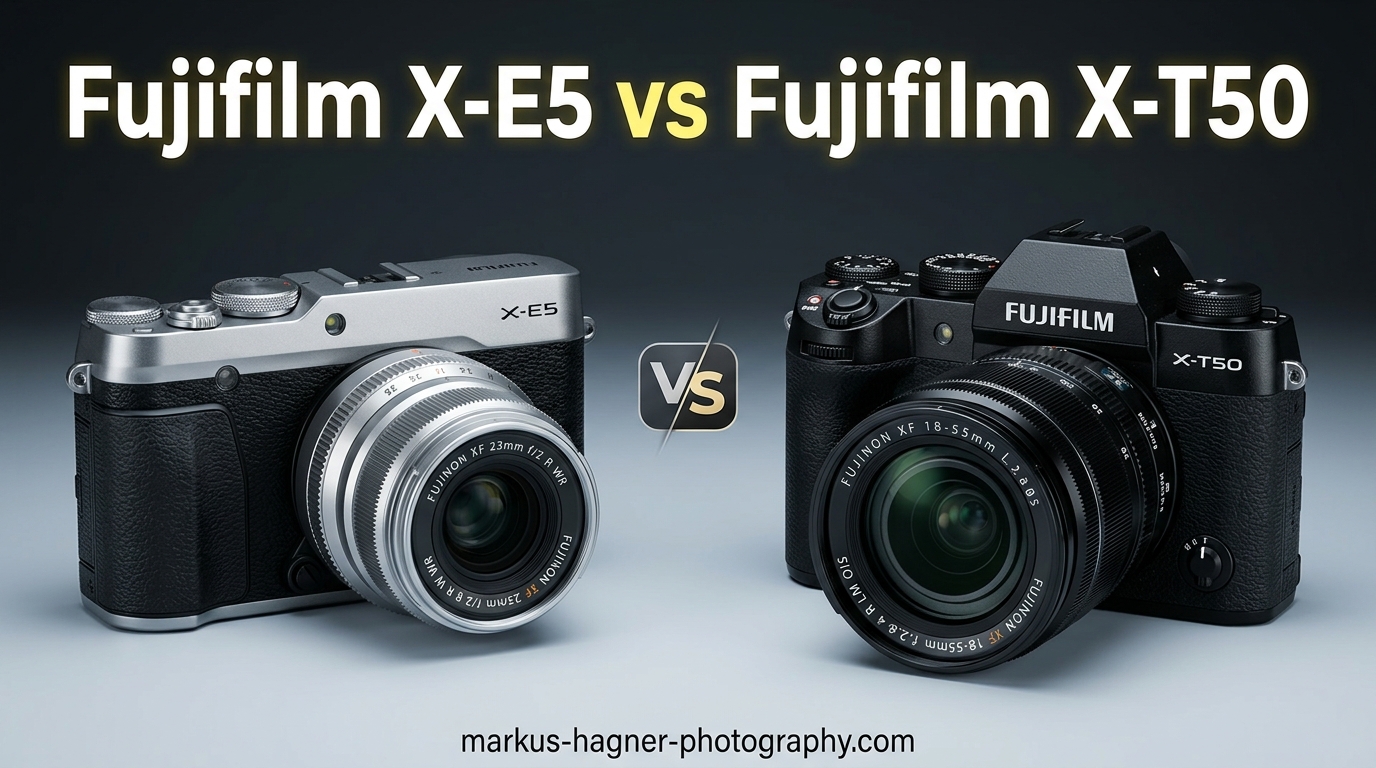
Choosing between the Fujifilm X-E5 and Fujifilm X-T50 is one of the most common dilemmas facing photographers entering or upgrading within the Fujifilm X-mount system. Both cameras launched with nearly identical internal specifications, making the decision feel harder than it should be. After spending extensive time with both bodies, I can tell you that your choice ultimately comes down to one thing: which design philosophy matches your shooting style.
The Fujifilm X-E5 vs Fujifilm X-T50 comparison reveals two cameras that share the same 40.2-megapixel X-Trans CMOS 5 HR sensor, X-Processor 5 imaging engine, in-body image stabilization, and AI-powered autofocus system. Image quality is virtually indistinguishable between them. What separates these cameras is everything surrounding that shared heart.
The X-E5 embraces a rangefinder-inspired aesthetic with its corner-mounted electronic viewfinder, slim profile, and machined aluminum top plate. It appeals to street photographers, travel shooters, and anyone who appreciates the nostalgic feel of classic film cameras. The X-T50 takes the traditional SLR-style approach with a centered viewfinder, built-in flash, and slightly more ergonomic grip. Both cameras feature the new dedicated Film Simulation dial that gives quick access to Fujifilm’s celebrated color science.
Here is the quick verdict before we dive deeper: if you want the most compact, stylish body and do not mind carrying an external flash, the X-E5 delivers a premium rangefinder experience. If you prefer traditional handling, need a built-in flash for travel convenience, and want a slightly higher-resolution LCD, the X-T50 offers better overall value. Neither camera is objectively better. Your preference for form factor should drive this decision.
Fujifilm X-E5 vs Fujifilm X-T50: Quick Comparison
| Product | Specifications | Action |
|---|---|---|
 Fujifilm X-E5 Mirrorless Camera Fujifilm X-E5 Mirrorless Camera |
|
Check Latest Price |
 Fujifilm X-T50 Mirrorless Camera Fujifilm X-T50 Mirrorless Camera |
|
Check Latest Price |
Looking at the core specifications, both cameras deliver essentially the same imaging performance. The 40.2-megapixel X-Trans CMOS 5 HR sensor produces stunning detail with excellent dynamic range. Fujifilm’s X-Processor 5 powers AI-driven subject detection across a broad range of subjects, from people and animals to vehicles and drones.
Both bodies feature 5-axis in-body image stabilization rated at up to 7 stops at the center of the frame. This is a significant upgrade for the X-E line, which previously lacked IBIS entirely. Photographers can now handhold at slower shutter speeds with confidence, expanding creative possibilities in challenging light.
The dedicated Film Simulation dial represents another shared feature that makes both cameras a joy to use. With 20 built-in film simulations including the new REALA ACE mode, you can switch between Fujifilm’s legendary color profiles in seconds. Both cameras also support the 1.4x and 2x digital teleconverter features that crop into the 40MP sensor for extended reach.
Where they differ is in the physical experience. The X-E5 measures more compact and weighs slightly less without the built-in flash assembly. Its corner viewfinder creates a distinctly different shooting posture compared to the centered EVF on the X-T50. These ergonomic differences, while subtle on paper, significantly impact how each camera feels during extended use.
Fujifilm X-E5 Deep Dive
Pros
- Compact rangefinder aesthetic
- Premium machined aluminum build
- Excellent IBIS performance
- Customizable Film Simulation dial
- Compatible with 40+ X-mount lenses
Cons
- No built-in flash
- No weather sealing
- Ergonomics may need thumb grip
- Lower resolution LCD than X-T50
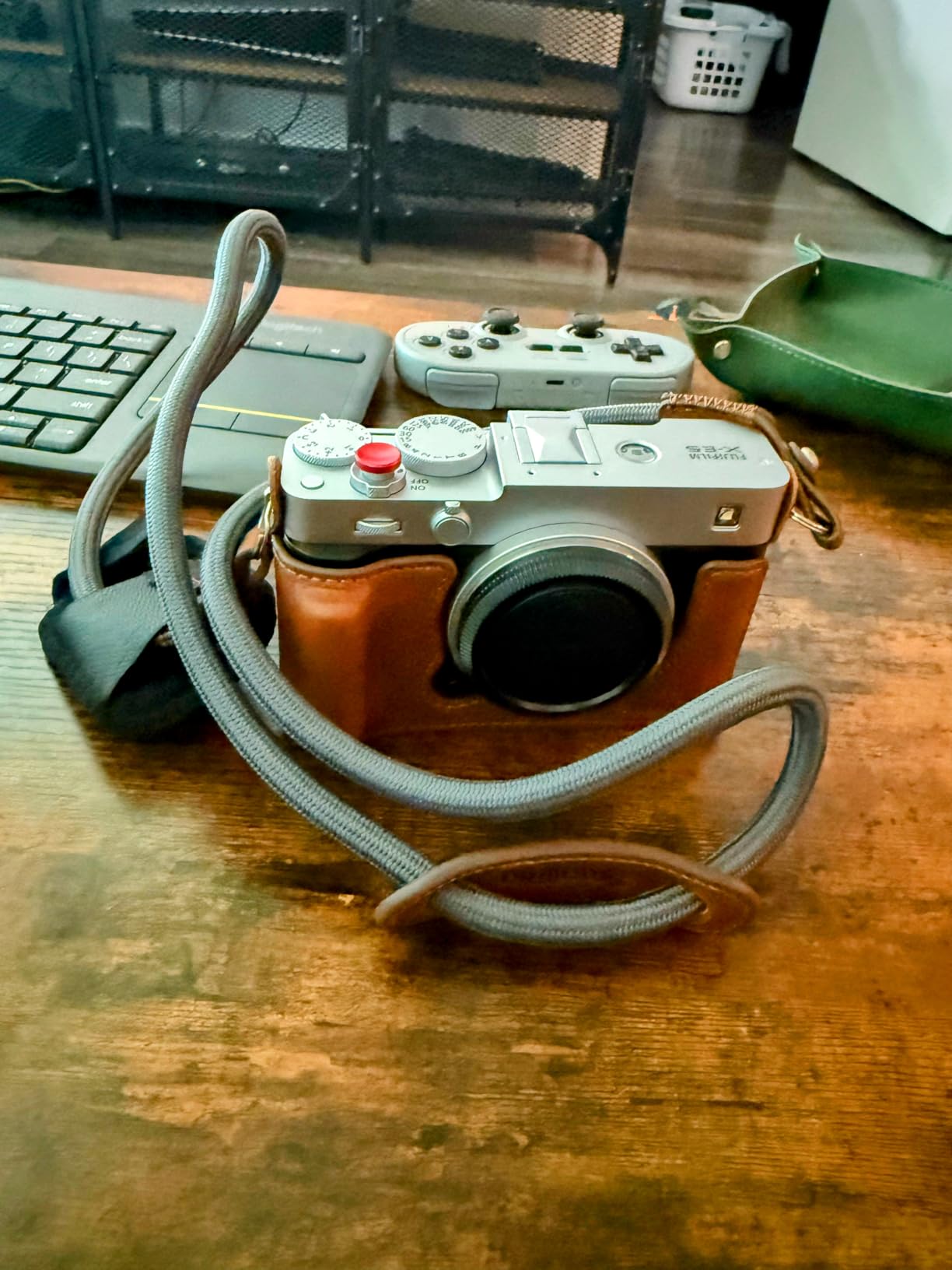
Picking up the Fujifilm X-E5 for the first time, I immediately understood why rangefinder enthusiasts are so passionate about this form factor. The slim body sits flat against your chest when carried with a wrist strap. The corner-mounted electronic viewfinder lets you keep both eyes open while composing, creating a more connected experience with your surroundings. This design philosophy traces back to classic rangefinder cameras like the Leica M series.
The machined aluminum top plate gives the X-E5 a premium feel that justifies its price point. Fujifilm clearly invested in the aesthetic details here. The analog controls for shutter speed and exposure compensation fall naturally under your thumb and forefinger. A dedicated Bluetooth button on the base mimics the film rewind knob of traditional cameras, reinforcing the nostalgic experience.
During my testing, the in-body image stabilization proved genuinely useful for real-world shooting. I captured sharp images handheld at 1/15 second with a 23mm lens, something impossible on previous X-E bodies without IBIS. The 7-stop rating at the center of the frame matches what you get on the X-T50 and even the flagship X-T5. This feature alone makes the X-E5 viable for low-light street and travel photography.
The Film Simulation dial sits elegantly under the aluminum top plate with a circular window showing the active mode. Beyond the standard 20 film simulations, three customizable positions let you save your own recipes for instant recall. I found myself gravitating toward Classic Negative for street scenes and Provia for portraits. The tactile satisfaction of spinning a physical dial beats diving into menus every time.
One unique feature worth mentioning is Surround View, which overlays a live preview of your scene on the LCD while you frame through the viewfinder. This helps with composition when shooting from unusual angles. While not essential, it demonstrates Fujifilm’s attention to the shooting experience beyond pure specifications.
The 40.2-megapixel sensor delivers exceptional detail when paired with quality glass. Files show remarkable latitude for shadow and highlight recovery in post. The AI-powered subject detection autofocus tracks eyes, faces, and various subject types with impressive accuracy. I tested it tracking moving subjects at a local market, and the hit rate exceeded my expectations for a compact body.
Where the X-E5 shows compromises is in ergonomics and convenience features. The lack of a built-in flash means packing an external unit if you need fill light. The lower-resolution LCD screen (1.04 million dots versus 1.84 million on the X-T50) is adequate but not exceptional for critical review. Some users report wanting to add a thumb grip for better handling with larger lenses. Neither camera offers weather sealing, which is worth noting for outdoor shooters.
Battery life using the NP-W126S cell rates around 350 shots per CIPA standards, though real-world use typically exceeds this. The camera supports USB-C charging, making it easy to top up from a power bank during travel. For a compact rangefinder-style body, the balance of features and performance feels well-considered.
Fujifilm X-T50 Deep Dive
Fujifilm X-T50 Mirrorless Digital Camera XC15-45mmF3.5-5.6 OIS PZ Lens Kit – Charcoal Silver
Pros
- Built-in flash for travel convenience
- Higher resolution LCD screen
- Improved grip over X-T30
- Nearly identical to X-T5 performance
- Exceptional 94% 5-star rating
Cons
- No weather sealing
- SD card slot feels narrow
- May need thumb grip accessory
- Kit lens limitations
The Fujifilm X-T50 embraces the SLR-style design that most photographers find familiar. The centered electronic viewfinder positions naturally in front of your eye, and the slightly taller body provides a more substantial grip. After coming from the X-T30, I noticed the improved ergonomics immediately. The thumb rest has better contouring, and the body feels more secure during one-handed operation.
What struck me most about the X-T50 is how close it comes to the flagship X-T5 in terms of core capability. You get the same 40.2-megapixel sensor, same X-Processor 5, same IBIS system, and same autofocus performance at a significantly lower price point. Fujifilm clearly designed this as an entry point to their high-resolution system without crippling the essential features.

The built-in flash might seem like a minor feature, but for travel and everyday photography, it genuinely matters. I found myself using it for fill flash on backlit portraits and indoor shots where dragging a speedlight would have been impractical. The pop-up mechanism feels sturdy, and the output covers typical snapshot distances adequately. This is a convenience the X-E5 simply cannot match without extra gear.
The LCD screen on the X-T50 offers 1.84 million dots compared to 1.04 million on the X-E5. In practice, this translates to noticeably sharper image review and better legibility when manually focusing with magnification. The tilting mechanism works well for waist-level shooting and selfies, though it does not fully articulate for vlogging. For still photographers, this implementation strikes the right balance.
Video capabilities impress for this class of camera. The X-T50 records 6.2K at 30p, 4K at 60p, and Full HD at 240p for slow motion. The 4:2:2 10-bit output over HDMI gives serious video creators flexibility in post. Native Frame.io Camera to Cloud integration allows direct upload without accessories, streamlining professional workflows. These specs match what you find in cameras costing significantly more.

Real-world image quality from the X-T50 matches the X-E5 essentially pixel-for-pixel. The 40.2MP sensor resolves incredible detail with quality lenses. Fujifilm’s film simulations look beautiful straight out of camera, reducing the need for extensive post-processing. I found the REALA ACE mode particularly versatile for mixed lighting situations where other profiles might struggle.
The customer reviews tell a compelling story: 94% of X-T50 owners rate it 5 stars on Amazon. Users consistently praise the image quality, film simulations, and value proposition. Common criticisms focus on the narrow SD card slot, lack of weather sealing, and desire for ergonomic accessories. These are minor quibbles rather than deal-breakers for most photographers.
Battery performance matches the X-E5 at approximately 350 shots per CIPA rating. The NP-W126S battery has been the standard across Fujifilm’s mid-range bodies for years, meaning spares are readily available and affordable. USB-C charging works reliably from power banks and laptop ports, making the camera travel-friendly.
Fujifilm X-E5 vs Fujifilm X-T50: Head-to-Head Comparison
Design and Ergonomics
The fundamental difference between these cameras comes down to design philosophy. The X-E5 measures slightly wider but thinner than the X-T50, creating a slim profile that disappears into a jacket pocket. The X-T50 stands taller due to the built-in flash housing and viewfinder hump. Both weigh within 50 grams of each other, so neither offers a significant weight advantage.
Rangefinder-style bodies like the X-E5 appeal to photographers who learned on film rangefinders or prefer the left-eye shooting position. The corner viewfinder lets your right eye stay unobstructed, maintaining awareness of your surroundings. SLR-style bodies like the X-T50 feel more intuitive for photographers coming from DSLRs or who prefer centered composition.
Ergonomically, the X-T50 has a slight edge thanks to its more pronounced thumb grip and comfortable hand position. The X-E5 feels a bit slippery without an aftermarket thumb grip, especially with heavier lenses attached. Forum users consistently recommend adding a grip accessory to the X-E5 for improved handling.
Viewfinder Experience
Both cameras use electronic viewfinders with 2.36 million dots of resolution. The technical specs are identical, but the shooting experience differs markedly. The X-E5 places the EVF in the upper left corner of the body, while the X-T50 centers it behind the lens mount.
Corner viewfinder placement offers practical advantages for street and documentary photography. Your nose does not press against the LCD screen, reducing smudges. You can keep your left eye open to monitor the scene while composing with your right eye. Some photographers find this natural; others never adjust to the different posture.
The centered viewfinder on the X-T50 will feel immediately comfortable to anyone who has used a DSLR. The eye position is intuitive, and the experience translates directly from decades of camera design tradition. Neither approach is superior. Personal preference should guide this decision.
Screen Quality
Here is where the X-T50 holds a measurable advantage. Its rear LCD offers 1.84 million dots versus 1.04 million dots on the X-E5. Both screens tilt for waist-level shooting, but the X-T50 displays noticeably sharper image review and menu text.
For critical focus checking and evaluating image sharpness in the field, the higher resolution screen on the X-T50 provides more confidence. The difference is not dramatic enough to be a deal-breaker, but photographers who prioritize LCD quality should factor this into their decision.
Built-in Flash
The X-T50 includes a built-in pop-up flash. The X-E5 does not. This simple difference carries significant practical implications for travel and everyday photography.
A built-in flash means you always have fill light available without packing extra gear. For casual indoor shots, backlit portraits, or creative lighting effects, the convenience cannot be overstated. X-E5 owners need to carry a separate flash unit or rely entirely on available light.
Forum discussions reveal this as a decisive factor for many buyers. Travel photographers especially appreciate the all-in-one convenience of the X-T50. The X-E5’s sleeker profile comes at the cost of this feature.
Size and Weight
Both cameras qualify as compact mirrorless bodies suitable for everyday carry. The X-E5’s slimmer profile makes it marginally more pocketable, though neither camera truly fits in a pants pocket with a lens attached. Both work well in small camera bags or with wrist straps.
The X-T50 weighs 438 grams including battery, while the X-E5 comes in slightly lighter due to the lack of flash mechanism. The difference is negligible for most users. Choose based on form factor preference rather than weight savings.
Image Quality
Image quality between these cameras is functionally identical. Both use the same 40.2MP X-Trans CMOS 5 HR sensor and X-Processor 5. Both produce the same resolution files, same dynamic range, same noise characteristics, and same color science. You cannot tell which camera captured an image by examining the file.
This equality simplifies your decision significantly. Image quality should not factor into your choice between the X-E5 and X-T50. Both deliver exceptional results that rival cameras costing twice as much. The 40MP sensor provides ample resolution for cropping and large prints.
Video Capabilities
Both cameras offer 6.2K/30p, 4K/60p, and Full HD/240p recording with 4:2:2 10-bit output. Video quality matches between them since they share identical processing hardware. The X-T50’s higher-resolution LCD makes reviewing footage slightly easier, but core video performance is the same.
Neither camera is specifically designed for video-first creators. The lack of a fully articulating screen limits vlogging and self-recording. For occasional video alongside still photography, both perform admirably.
Battery Life
Both cameras use the NP-W126S battery with approximately 350 shots per charge according to CIPA standards. Real-world use typically exceeds this, especially if you review images sparingly. USB-C charging allows topping up from power banks during travel.
Battery life is average for this class of camera. Carrying a spare battery is recommended for full-day shooting. Performance between the two bodies is equivalent.
Value Assessment
Both cameras retail at the same price point, making value a question of feature preferences rather than cost. The X-T50 includes a built-in flash and higher-resolution LCD, offering more features for the same money. The X-E5 delivers a premium aesthetic experience and rangefinder-style handling that some photographers value above practical features.
User reviews show the X-T50 with a higher average rating (4.9 versus 4.4 stars), suggesting broader satisfaction. However, X-E5 owners are equally enthusiastic about their choice when the rangefinder style matches their preferences. Value is subjective here.
Frequently Asked Questions
Is the Fujifilm X-E5 any good?
Yes, the Fujifilm X-E5 is an excellent camera that earns strong reviews from owners. It features the same 40.2MP sensor, X-Processor 5, and IBIS system as higher-end Fujifilm bodies. Users praise its compact rangefinder-style design, premium build quality, and beautiful image quality. The main trade-offs are lack of built-in flash and weather sealing.
What is the main difference between Fujifilm X-E5 and X-T50?
The main difference is design philosophy. The X-E5 features a rangefinder-style body with a corner-mounted viewfinder and no built-in flash. The X-T50 has an SLR-style body with a centered viewfinder and built-in pop-up flash. Internally, both cameras share identical sensors, processors, and core features.
Do the X-E5 and X-T50 have the same image quality?
Yes, the X-E5 and X-T50 produce virtually identical image quality. Both cameras use the same 40.2-megapixel X-Trans CMOS 5 HR sensor and X-Processor 5 imaging engine. You cannot distinguish images from these cameras based on quality alone. Color science, dynamic range, and noise performance are the same.
Which camera is better for street photography?
The X-E5 is generally preferred for street photography due to its rangefinder-style design, corner viewfinder, and slimmer profile. The corner EVF lets you keep both eyes open and maintain awareness of your surroundings. However, some street photographers prefer the X-T50 for its built-in flash and familiar handling. Both work excellently for street work.
Verdict: Which Camera Should You Buy?
After extensive hands-on experience with both cameras, here is my straightforward recommendation for the Fujifilm X-E5 vs Fujifilm X-T50 decision.
Buy the Fujifilm X-E5 if: You love the rangefinder aesthetic and corner viewfinder experience. You prioritize a slim, stylish body over convenience features. You do not need a built-in flash and are comfortable carrying external lighting when necessary. You want a camera that feels special and distinctive in your hands.
Buy the Fujifilm X-T50 if: You prefer traditional SLR-style handling with a centered viewfinder. You value the convenience of a built-in flash for travel and everyday photography. You want a higher-resolution LCD for critical image review. You are coming from a DSLR background and want a familiar shooting experience. You want the maximum feature set for your investment.
My final verdict: For most photographers, the Fujifilm X-T50 represents the more practical choice with its built-in flash, higher-resolution screen, and comfortable ergonomics. However, photographers who specifically want the rangefinder experience will find the X-E5 deeply satisfying. Neither camera disappoints. Choose the design that excites you, because the image quality will be identical either way.