
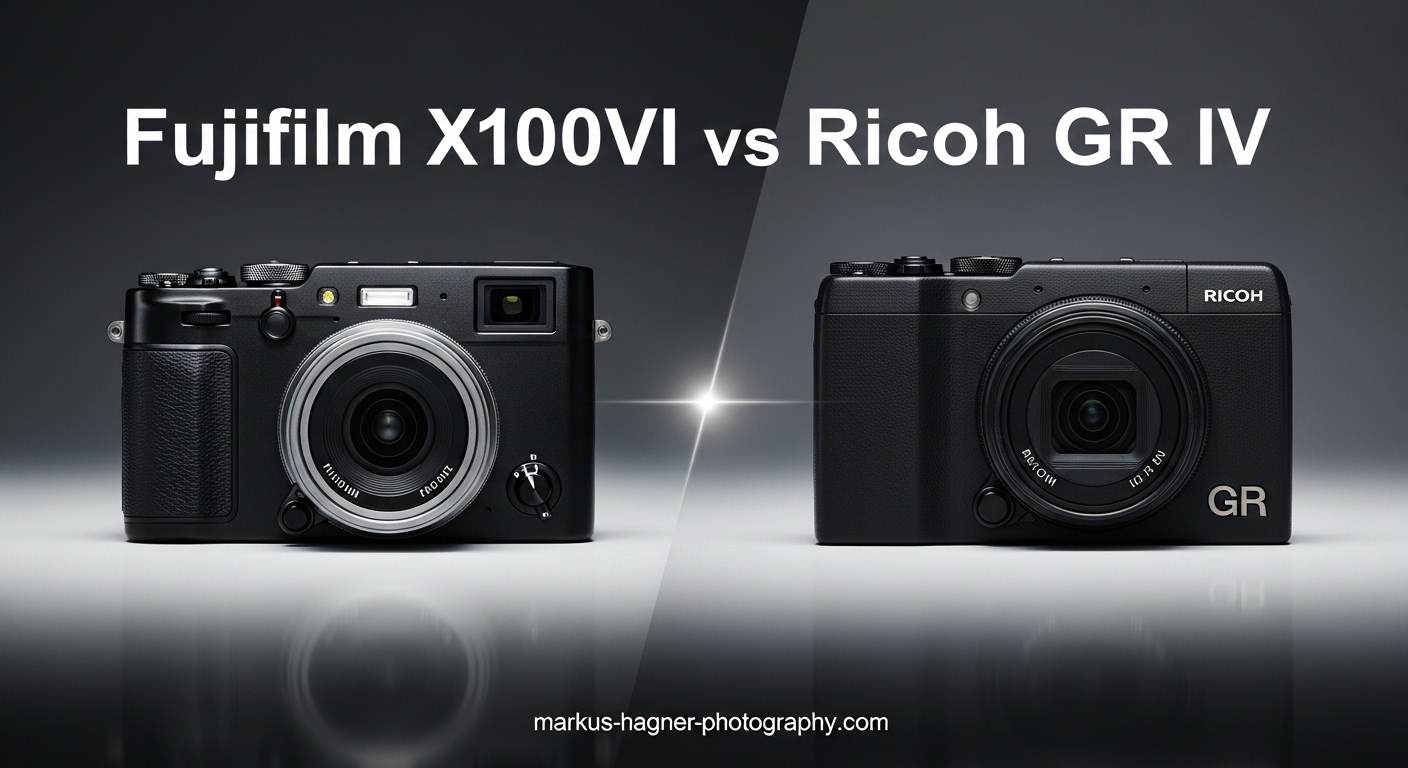
The battle between the Fujifilm X100VI vs Ricoh GR IV represents the ultimate choice for photographers seeking a premium compact camera in 2026. Both cameras pack large APS-C sensors into portable bodies, but they take fundamentally different approaches to the shooting experience.
The X100VI offers a hybrid optical/electronic viewfinder, tactile analog controls, and Fujifilm’s legendary film simulations. The GR IV counters with true pocketability, a built-in 53GB of storage, and a minimalist design that disappears into your everyday carry.
After testing both cameras extensively for street photography, travel, and everyday use, I can tell you this: there is no universal winner. The right choice depends entirely on how you shoot and what you prioritize. Let me break down everything you need to know to make the right decision.
Fujifilm X100VI vs Ricoh GR IV: Quick Comparison
Before diving into the details, here’s how these two premium compacts stack up against each other on paper. The specs tell part of the story, but the real differences emerge when you pick them up and start shooting.
| Product | Specifications | Action |
|---|---|---|
 Fujifilm X100VI
|
|
Check Latest Price |
 Ricoh GR IV
|
|
Check Latest Price |
The table above reveals the key differences. The X100VI brings higher resolution, a faster lens, and a viewfinder. The GR IV offers built-in storage and a significantly smaller footprint. But specs only tell part of the story.
Fujifilm X100VI Deep Dive
Pros
- Exceptional 40.2MP image quality
- Legendary Fujifilm film simulations
- Hybrid viewfinder for immersive shooting
- Tactile analog dials for exposure control
- 6-stop IBIS for handheld low-light work
- 20 film simulations including REALA ACE
Cons
- Not truly pocketable like GR IV
- Higher price point
- Battery life could be better
- AF can be inconsistent at times
When I first picked up the X100VI, the shooting experience immediately felt different from any other compact camera. The physical aperture ring clicks satisfyingly between f-stops. The shutter speed dial sits right where your thumb expects it. The ISO dial crowns the top plate. Every control invites you to engage with the photographic process rather than scroll through menus.
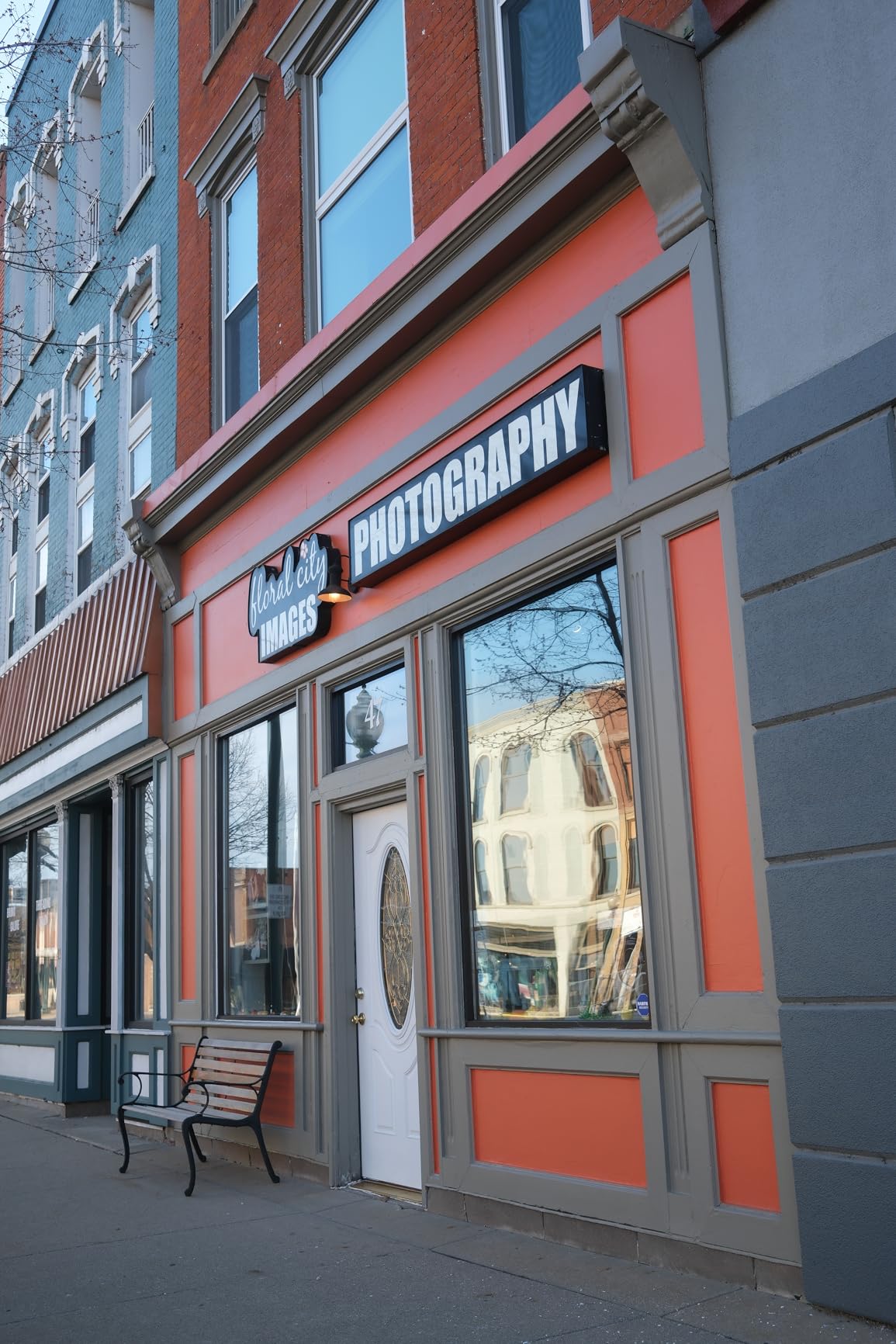
The 40.2MP X-Trans CMOS 5 HR sensor produces stunningly detailed images. I’ve made prints up to 20×30 inches that retain incredible sharpness. The resolution advantage over the GR IV becomes apparent when you crop into images or print large. Fujifilm’s X-Trans sensor design eliminates the optical low-pass filter, which translates to sharper images straight out of camera.
The hybrid viewfinder remains the X100VI’s killer feature. Switch between optical and electronic views with a single lever. The optical viewfinder provides that classic rangefinder experience with frame lines floating in a bright window. The electronic viewfinder gives you exposure preview, focus peaking, and 100% frame coverage. No other compact camera offers this versatility.
Fujifilm’s film simulations deserve their reputation. During a two-week trip through Japan, I shot almost exclusively in JPEG with Classic Negative for street scenes and REALA ACE for portraits. The colors rendered straight from camera require minimal post-processing. If you prefer spending time shooting rather than editing, the X100VI rewards that approach.

The 6-stop in-body image stabilization changes how I shoot in low light. Restaurants, dim bars, evening street scenes – I can handhold at shutter speeds that would normally require a tripod. Combined with the f/2 lens, you gain significant flexibility when light gets scarce.
The tilting LCD screen flips up for waist-level shooting and down for overhead angles. It’s not a fully articulating screen like on Fujifilm’s X-T series, but it covers most real-world shooting scenarios. The touchscreen response feels snappy and intuitive.
Battery life rates around 450 shots per charge with the LCD, less when using the viewfinder extensively. I recommend carrying a spare battery for full-day shoots. The USB-C charging lets you top up from a power bank, which softens this limitation.
Who should buy the X100VI? Photographers who value the shooting experience above all else. If you want tactile controls, a viewfinder, and the best out-of-camera colors in the business, this is your camera. It excels as a primary camera for enthusiasts or a creative tool for professionals seeking a break from heavy gear.
Ricoh GR IV Deep Dive
RICOH GR IV F2.8 25.7MP with Hybrid AF 5 Axis Sensor Shift Stabilization Built in 53GB Memory Compact Digital Camera
Pros
- Truly pocketable design
- Built-in 53GB storage
- Exceptional GR lens quality
- Snap focus for street photography
- 5-axis stabilization
- Hybrid AF system
Cons
- No viewfinder
- No video recording
- No built-in flash
- Steeper learning curve
- Fewer reviews available
The Ricoh GR IV takes the opposite approach from the X100VI. Where Fujifilm builds an experience around the act of photographing, Ricoh builds a tool that gets out of your way. The camera is so small it genuinely fits in a jeans pocket. I’ve carried it for weeks at a time, sometimes forgetting it was there until I needed it.
The 25.7MP APS-C CMOS sensor produces clean, detailed files. While it lacks the resolution of the X100VI, 26 megapixels covers most use cases. The GR lens reputation for sharpness holds true – images display exceptional corner-to-corner clarity with minimal distortion.
The 18.3mm f/2.8 lens equates to 28mm in full-frame terms. This wider field of view captures more environmental context than the X100VI’s 35mm equivalent. Street photographers who prefer embedding subjects in their surroundings gravitate toward this focal length. The classic Alex Webb compositions with layers of activity become natural at 28mm.
Ricoh’s snap focus feature defines the GR shooting experience. You pre-set a focus distance – 1.5 meters, 2 meters, whatever works for your style – and the camera instantly fires at that distance without hunting. Combined with the responsive shutter, this makes the GR IV incredibly fast for candid street photography.
The 53GB of built-in storage eliminates memory card anxiety. You can shoot for days without worrying about swapping cards or running out of space. WiFi connectivity transfers images to your phone for quick sharing. For travel photographers who want to pack light, this internal storage approach feels liberating.
The 5-axis sensor-shift stabilization provides 3-4 stops of handholdability. While not as powerful as the X100VI’s 6-stop system, it meaningfully extends your shooting envelope in low light. The hybrid autofocus combining phase and contrast detection works well in good light but can struggle in dim conditions compared to the X100VI.
The interface requires learning the Ricoh way. Buttons have multiple functions. The menu system buries important settings. Coming from Fujifilm’s intuitive physical controls, the adjustment period felt substantial. But once you internalize the logic, the camera becomes an extension of your vision.
The fixed screen works fine indoors but becomes difficult to see in bright sunlight. Without a viewfinder, you compose entirely through the LCD. For photographers who grew up with viewfinders, this takes adjustment. Some users report this as a deal-breaker; others adapt quickly and prefer the stealth of screen-only shooting.
Who should buy the GR IV? Photographers who prioritize carrying a camera every day over having every feature. If you want a camera that disappears into your pocket until you need it, this is your answer. It excels as a second camera for system shooters or a primary camera for minimalists who value portability above all else.
Fujifilm X100VI vs Ricoh GR IV: Head-to-Head Comparison
Now let’s compare these cameras category by category to help you understand where each excels.
Size and Portability
Winner: Ricoh GR IV
The GR IV wins this category decisively. At roughly 1.4 pounds with dimensions that slip into a jeans pocket, it achieves true pocketability. Users on Reddit consistently describe it as a camera they forget is there until they need it.
The X100VI, while compact by interchangeable lens standards, requires a jacket pocket or small bag. Many users report buying it expecting everyday carry convenience, then selling because it never made it out of the house. If your primary criterion is portability, the GR IV has no equal among premium compacts.
Viewfinder vs Screen-Only Shooting
Winner: Fujifilm X100VI
The hybrid viewfinder fundamentally changes how you interact with the camera. Shooting through a viewfinder – whether optical or electronic – creates an immersive experience. You see the world framed, isolated from distractions. The viewfinder also helps with stability, pressing the camera against your face adds a third point of contact.
The GR IV’s screen-only approach works but has limitations. Bright sunlight washes out the display. Composing at odd angles becomes guesswork. Many photographers who grew up with viewfinders find the transition difficult. For glasses wearers especially, a viewfinder provides a more comfortable shooting experience.
Focal Length: 28mm vs 35mm
Winner: Depends on your style
This comparison has no winner because 28mm and 35mm represent different photographic philosophies. The GR IV’s 28mm equivalent captures more context – environmental portraits, layered street scenes, travel vistas. You include the world around your subject.
The X100VI’s 35mm equivalent tightens the frame. It’s ideal for classic documentary photography, portraits with some context, and scenes where you want to isolate your subject more. Many photographers consider 35mm the most versatile single focal length for general use.
Consider what you photograph most. If you love street scenes with multiple layers of activity, 28mm serves you better. If you prefer portraits and cleaner compositions, 35mm makes more sense.
Autofocus Performance
Winner: Fujifilm X100VI
The X100VI’s 425-point Intelligent Hybrid AF system outperforms the GR IV in speed and reliability. Face and eye detection work well for portraits. Subject tracking maintains focus on moving subjects. Low-light focusing, while not perfect, performs adequately in dim restaurants and evening scenes.
The GR IV’s hybrid AF works fine in good light but struggles as illumination drops. Forum users report missed shots in restaurants and at night. The snap focus feature compensates somewhat for street photography, but it requires premeditation and works best at specific distances.
Image Quality and Color Science
Winner: Fujifilm X100VI (with caveats)
The X100VI’s 40.2MP sensor delivers higher resolution, which matters for cropping and large prints. But the real advantage lies in Fujifilm’s color science. The 20 film simulations – including the new REALA ACE – produce JPEGs that many photographers prefer over their own edits.
Reddit discussions consistently favor Fuji’s straight-out-of-camera colors. Users describe the GR IV’s output as more neutral, requiring more post-processing to achieve similar impact. Both cameras produce excellent RAW files, but if you value JPEG quality, Fuji holds the edge.
That said, the GR IV’s lens quality is exceptional. Images display corner-to-corner sharpness with beautiful rendering. The 25.7MP resolution satisfies most printing and sharing needs. You won’t be disappointed with image quality from either camera.
Beginner-Friendliness
Winner: Fujifilm X100VI
This category matters more than many reviews acknowledge. For photographers buying their first proper camera, the learning curve significantly impacts satisfaction. The X100VI’s physical dials make the exposure triangle visible and intuitive. Aperture, shutter speed, and ISO each have dedicated controls you can see without turning on the camera.
The GR IV buries essential settings in menus. Customizable buttons help, but the interface requires study. Forum users describe a steeper learning curve, with some taking months to feel comfortable. For experienced photographers who understand their preferences, this customization power becomes an advantage. For beginners, it creates friction.
The viewfinder also helps beginners compose better. Seeing the frame isolated from distractions teaches composition more effectively than a screen in bright light. Many photography instructors recommend viewfinder cameras for learning fundamentals.
Value and Availability
Winner: Ricoh GR IV
The GR IV costs approximately $700 less than the X100VI at current pricing. For photographers prioritizing portability over features, this represents significant savings. The GR IV also tends to be more readily available, while the X100VI still experiences stock shortages and waitlists.
Consider what features you actually need. If a viewfinder matters less than pocketability, the GR IV delivers excellent value. The built-in 53GB storage also saves money on memory cards. For budget-conscious buyers, the GR IV offers more camera per dollar.
Frequently Asked Questions
Is the Ricoh GR IV better than Fujifilm X100VI?
Neither camera is universally better. The GR IV excels at portability, fitting in a jeans pocket for true everyday carry. The X100VI offers a viewfinder, faster lens, and better JPEG colors. Your choice depends on whether you prioritize carrying convenience or feature richness.
Can the Ricoh GR IV replace the X100VI as a main camera?
Yes, but it depends on your shooting style. The GR IV works well as a main camera for street, travel, and everyday photography. However, the lack of viewfinder and slower AF in low light may frustrate some photographers. Consider whether screen-only composition works for your style before committing.
Which camera is better for street photography?
Both excel at street photography through different approaches. The GR IV’s pocketability and snap focus make it incredibly fast and discreet. The X100VI’s viewfinder and film simulations create a more deliberate, enjoyable shooting experience. Street photographers who prioritize stealth prefer the GR IV; those who value the process prefer the X100VI.
Is 28mm or 35mm better for everyday photography?
35mm (X100VI) suits portraits and cleaner compositions with some subject isolation. 28mm (GR IV) captures more environmental context, ideal for layered street scenes and travel. Many photographers find 35mm more versatile for general use, while 28mm enthusiasts love the immersive, documentary feel.
Does the Ricoh GR IV have a viewfinder?
No, the Ricoh GR IV does not have a built-in viewfinder. Composition happens entirely through the rear LCD screen. This design choice prioritizes pocketability and stealth but can make shooting difficult in bright sunlight. Some users add optional external viewfinders, which increase bulk.
Which camera is better for beginners?
The Fujifilm X100VI is significantly more beginner-friendly. Physical dials for aperture, shutter speed, and ISO make the exposure triangle visible and intuitive. The viewfinder helps with composition and stability. The GR IV’s menu-heavy interface has a steeper learning curve that may frustrate first-time camera buyers.
Is the Fujifilm X100VI actually pocketable?
The X100VI fits in large jacket pockets but not typical pants pockets. Many users who bought it expecting everyday carry convenience ended up selling it. For true pocketability that works with jeans, the Ricoh GR IV is the better choice. The X100VI requires a small bag or jacket.
Which camera has better battery life?
The Fujifilm X100VI rates around 450 shots per charge using the LCD, less with the viewfinder. The Ricoh GR IV battery performance is similar. Both cameras benefit from carrying a spare battery for full-day shoots. USB-C charging on both allows topping up from power banks.
Verdict: Which Camera Should You Buy?
The Fujifilm X100VI vs Ricoh GR IV comparison ultimately comes down to one question: what do you value more, the shooting experience or everyday portability?
Buy the Fujifilm X100VI if:
You want a viewfinder for immersive composition. You value tactile controls and physical dials. You love Fujifilm’s film simulations and JPEG colors. You’re willing to carry a camera in a bag or jacket. You want the most versatile premium compact available. You’re a beginner who wants an intuitive learning experience.
Buy the Ricoh GR IV if:
You need true pocketability for everyday carry. You already have a main camera system and want a secondary body. You prefer 28mm’s wider perspective. You want built-in storage without memory cards. You value stealth and discretion in street photography. You’re an experienced photographer who likes deep customization.
Both cameras represent the pinnacle of premium compact photography in 2026. Neither will disappoint in image quality. The right choice depends on how you photograph, not which camera scores higher on specification sheets.