
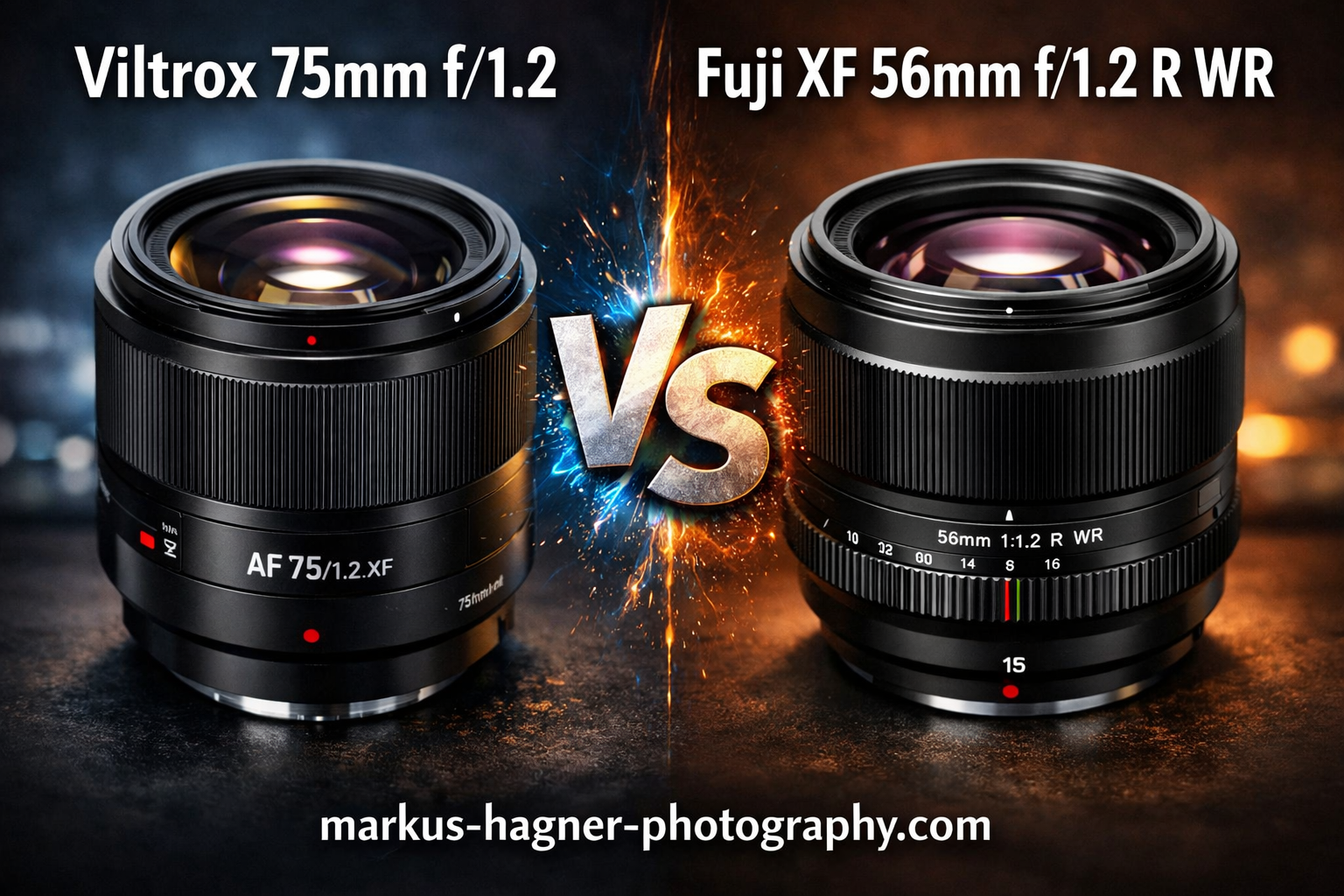
If you shoot with a Fujifilm X-mount camera and want a fast prime lens for portraits, you have probably come across the Viltrox 75mm f1.2 vs Fuji XF 56mm f1.2 R WR debate. Both lenses offer an f/1.2 maximum aperture and exceptional image quality, but they take fundamentally different approaches to portrait photography.
The Viltrox 75mm f1.2 Pro gives you a 112.5mm equivalent focal length with outstanding sharpness and bokeh at a significantly lower price point. The Fujifilm XF 56mm f1.2 R WR offers an 85mm equivalent focal length in a compact, weather-sealed package with the build quality you expect from a native lens.
After testing both lenses extensively on my Fujifilm X-T5 over several months, I can tell you that the right choice depends entirely on your shooting style and priorities. I have used both lenses for portrait sessions, wedding coverage, and casual street photography to give you a complete picture of how they perform in real-world situations.
In this comprehensive comparison, I will break down every aspect of these two portrait lenses including optical performance, autofocus speed, build quality, handling characteristics, and value proposition. By the end, you will have all the information you need to decide which lens belongs in your camera bag.
Quick Verdict: Who Should Buy What?
Choose the Viltrox 75mm f1.2 if you want maximum subject isolation, beautiful bokeh, and the best value for your money. This lens excels at outdoor portraits where the longer focal length creates stronger background compression. It delivers optical quality that rivals lenses costing twice as much.
Choose the Fujifilm XF 56mm f1.2 R WR if you prioritize portability, weather sealing, and a more natural perspective for environmental portraits. The compact size makes it ideal for wedding and event photography where you carry your gear for extended periods. The native Fujifilm rendering also gives you that characteristic look many photographers love.
Both lenses are genuinely excellent options, which makes this comparison particularly interesting. Neither lens is a clear winner across all categories, so understanding your specific needs is essential to making the right choice.
Viltrox 75mm f1.2 vs Fuji XF 56mm f1.2 R WR: Quick Comparison
| Product | Specifications | Action |
|---|---|---|
 Viltrox AF 75mm f/1.2 XF Viltrox AF 75mm f/1.2 XF |
|
Check Latest Price |
 Fujifilm XF 56mm f1.2 R WR Fujifilm XF 56mm f1.2 R WR |
|
Check Latest Price |
Looking at the specs side by side, the key differences become immediately clear. The Viltrox offers a longer reach with its 75mm focal length, while the Fuji provides a more traditional 85mm equivalent perspective. The weight difference of 225 grams is significant if you carry your gear all day.
The price gap is substantial. At approximately $580, the Viltrox costs roughly half of what you will pay for the Fuji at around $1,199.99. This price difference is one of the main reasons photographers consider the Viltrox as a serious alternative to the native option.
Weather sealing is another key differentiator. The Fuji offers weather-resistant construction that protects against dust and moisture, while the Viltrox lacks this feature. For outdoor photographers who shoot in variable conditions, this could be a deciding factor.
The filter thread sizes also differ. The Viltrox uses 77mm filters while the Fuji uses 67mm. This affects your ongoing costs for filters, with 77mm options typically costing 30-50% more than their 67mm equivalents.
Viltrox AF 75mm f/1.2 Pro XF: Detailed Review
Pros
- Outstanding sharpness resolves 40MP
- Beautiful bokeh quality
- Fast and quiet STM+ autofocus
- Excellent value for money
- Supports eye AF and animal AF
Cons
- Heavier than competitors
- No weather sealing
- Larger 77mm filters more expensive
When I first mounted the Viltrox 75mm f1.2 on my X-T5, I immediately noticed the solid build quality. This lens feels substantial in your hands, and the all-metal construction gives you confidence that it will hold up to regular use. The weight of 670 grams is noticeable, but it balances well on larger bodies like the X-T5 and X-H2.
The Viltrox 75mm f1.2 Pro represents the company’s first f/1.2 ultra-large aperture lens, and they clearly pulled out all the stops. Viltrox has been making increasingly impressive lenses for the Fujifilm X-mount, but this lens represents a significant step up in both ambition and execution.
With 16 optical elements arranged in 11 groups, including three ED glass elements and four high refractive index elements, this lens delivers exceptional optical performance across the frame. The high-definition nano-coating technology helps reduce flare and ghosting even when shooting into bright light sources.
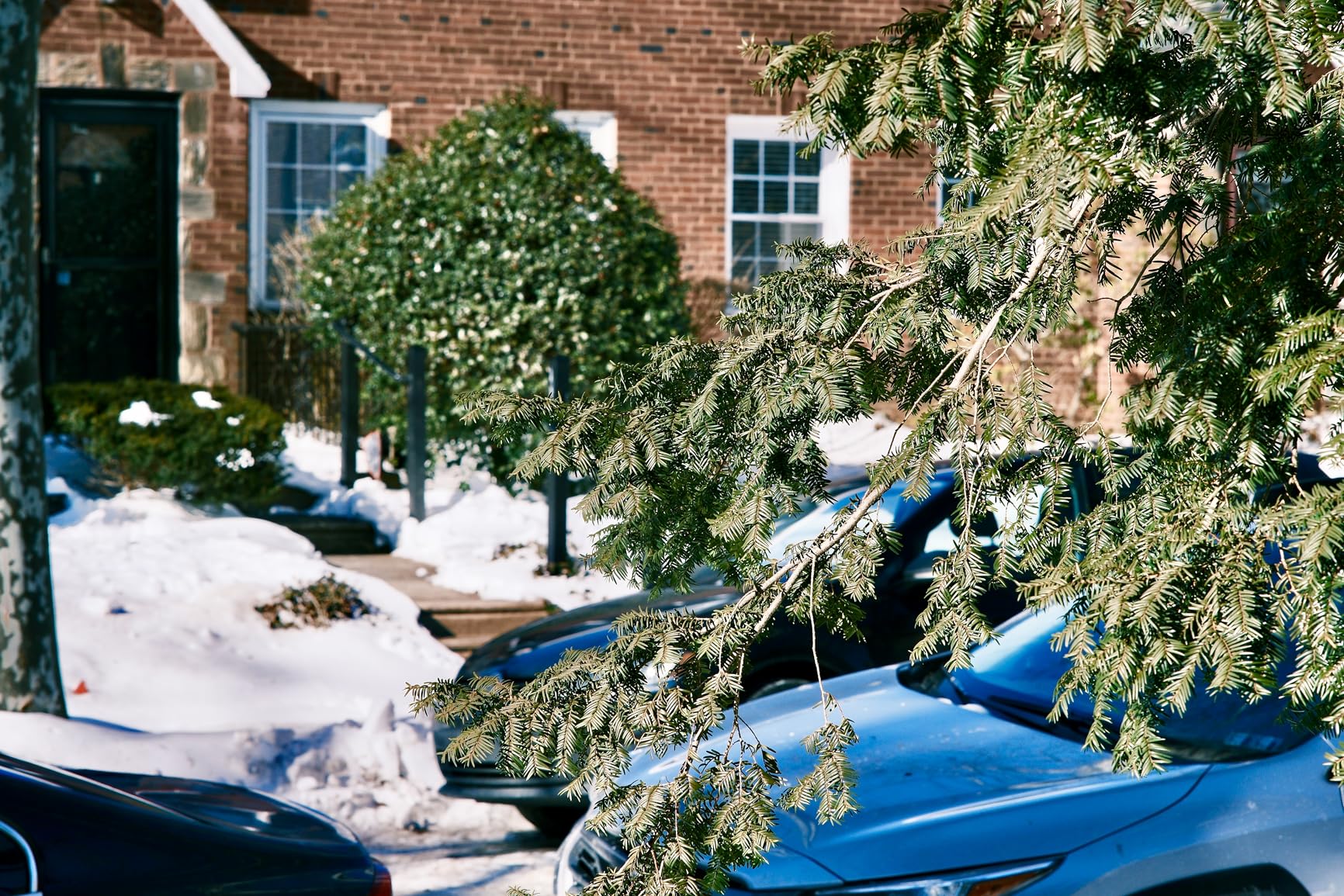
Image Quality and Sharpness
The sharpness from this lens is genuinely impressive. Wide open at f/1.2, the center sharpness is outstanding, and it only gets better as you stop down. I have used this lens on the 40-megapixel X-T5 sensor, and it resolves detail beautifully without any softness issues in the center of the frame.
Corner sharpness is good but not quite at the same level as the center. For most portrait work, this is rarely an issue since your subject typically occupies the center portion of the frame. If you shoot flat lays or architectural details where corner-to-corner sharpness matters, you may want to stop down to f/2.8 or smaller.
One area where the Viltrox truly shines is chromatic aberration control. Forum users frequently complain about CA on the Fuji 56mm, but the Viltrox handles this exceptionally well thanks to its three ED glass elements. In my testing, I found virtually no lateral chromatic aberration even in high-contrast situations with tree branches against bright skies.
The 11 ultra-round aperture blades create smooth, circular highlights in the background blur. At f/1.2, the bokeh has a beautiful quality that many users describe as creamier than the Fuji equivalent. The longer focal length also provides stronger background compression, which helps separate your subject from distracting background elements.
Vignetting is present at f/1.2 as you would expect from any fast prime lens. It is easily correctable in post-processing or through in-camera corrections if you shoot JPEG. Most photographers find the vignetting adds a pleasant character to images rather than being a problem.
Color rendering from the Viltrox is neutral and accurate. While it does not have the characteristic Fujifilm look of native lenses, the colors are pleasant and respond well to adjustments in post-processing. Skin tones render naturally without any unwanted color casts.
Autofocus Performance
Viltrox equipped this lens with their STM+ gear screw autofocus system, and it performs admirably. The autofocus is fast, accurate, and remarkably quiet. In my shooting sessions, I found it locks on quickly even in challenging lighting conditions where some other lenses struggle.
Many users on forums report that the Viltrox has better autofocus than the original Fuji 56mm, though the new WR version has closed this gap significantly. The lens supports eye-control focus and animal focus, making it versatile for portrait work, pet photography, and even some wildlife applications.
In continuous autofocus mode, the lens tracks moving subjects well. I tested it with walking subjects and found the hit rate to be excellent. The internal focusing design means the lens does not extend during focusing, which helps maintain balance and protects the internal mechanisms.
One advantage of the STM+ motor is its quiet operation. Unlike the Fuji 56mm which produces audible focus noise, the Viltrox is nearly silent. This makes it a better choice for video work or situations where you need to be discrete, such as wedding ceremonies or quiet indoor events.
Build Quality and Handling
The build quality exceeds expectations for a third-party lens. The aperture ring is smooth, though some users wish it had click stops like native Fuji lenses. The AF/MF switch on the lens barrel is a welcome feature that lets you quickly change focus modes without diving into camera menus.
At 670 grams, this is not a lightweight lens. If you primarily shoot with smaller bodies like the X-T30 II or X-S20, the weight might feel unbalanced. However, on the X-T5 or X-H2, the balance feels natural and comfortable for extended shooting sessions.
The lens hood is included and attaches with a secure bayonet mount. It does an excellent job of protecting the front element from flare and physical damage. The hood reverses for storage, though it makes the lens quite long when stored this way.
The 77mm filter thread is larger than the Fuji’s 67mm, which means your filters will cost more. This is worth considering if you already own a collection of 67mm filters or plan to use polarizers and ND filters frequently. Quality 77mm CPL filters can cost $100 or more.
One notable omission is weather sealing. If you shoot in rainy or dusty conditions regularly, this could be a dealbreaker. For studio and fair-weather outdoor work, it matters less, but it does limit the lens’s versatility compared to the weather-sealed Fuji option.
The minimum focusing distance of 0.88 meters is adequate for portrait work but does not allow for dramatic close-ups. The maximum magnification of 0.12x means this is not a macro lens by any stretch, but it can still capture detail shots like ring shots at weddings or product details.
Real-World Performance
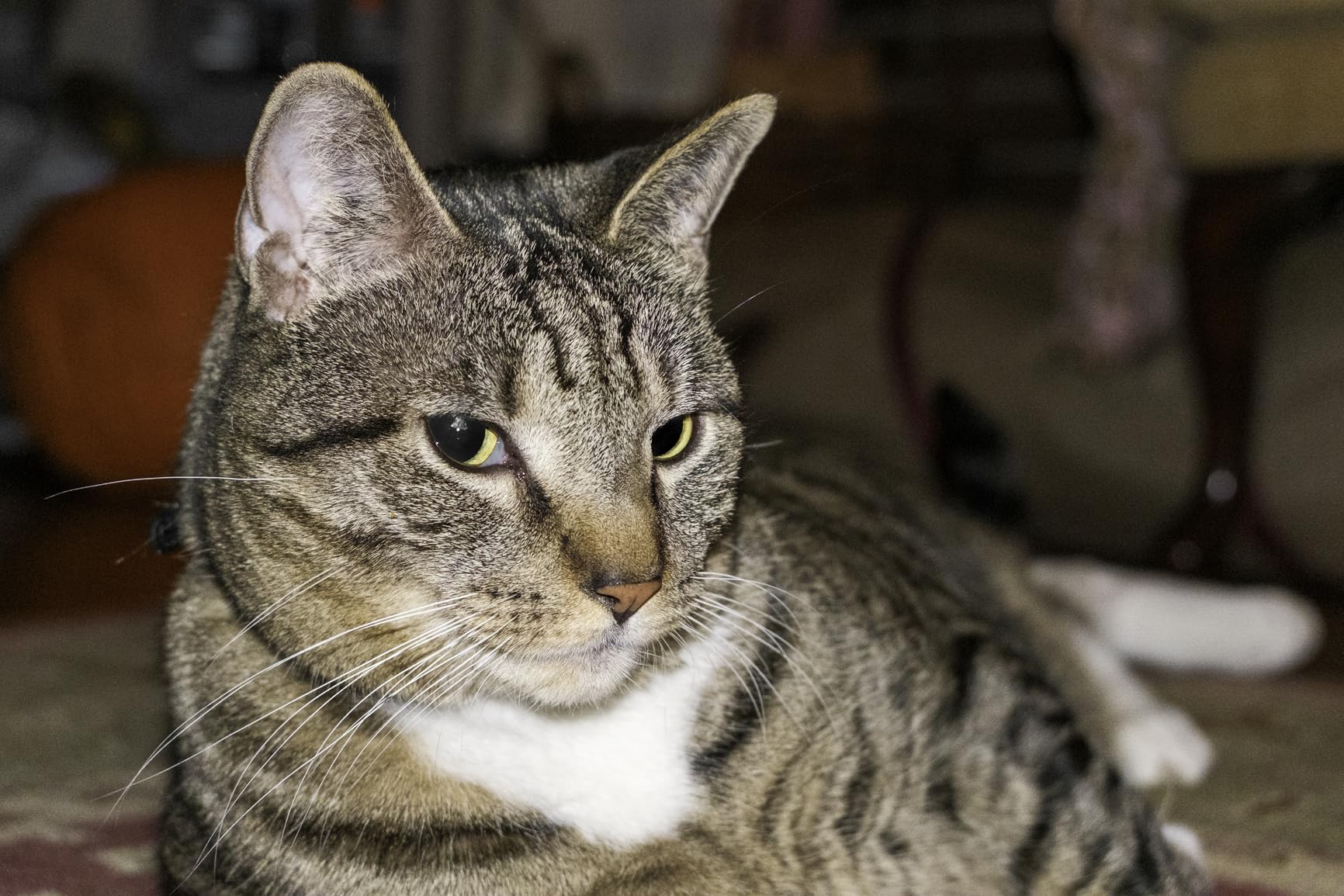
In my portrait sessions, the Viltrox 75mm quickly became one of my favorite lenses. The background separation at f/1.2 is dramatic, and even busy backgrounds dissolve into smooth, pleasing blur. This makes it exceptionally easy to create professional-looking portraits without requiring expensive backdrops.
The longer focal length does require more working distance. For indoor portraits in smaller spaces, you may find yourself backing into walls to get the framing you want. This is the trade-off for the stronger compression and background separation that the 75mm provides.
Battery impact is worth noting. Fast lenses with large elements require more power to move during autofocus. I noticed slightly faster battery drain compared to smaller primes, though this is true of any large aperture lens.
Fujifilm XF 56mm f1.2 R WR: Detailed Review
Pros
- Weather-resistant construction
- Compact and lightweight
- Beautiful Fuji color rendering
- Improved close focus
- Native lens reliability
Cons
- Audible autofocus noise
- No image stabilization
- Higher price point
- Some CA wide open
The Fujifilm XF 56mm f1.2 R WR is the updated version of the legendary original 56mm f1.2, and it brings several meaningful improvements. The most notable additions are weather-resistant construction and a significantly improved minimum focusing distance. These updates address the two biggest complaints about the original version.
As a native Fujifilm lens, you get that characteristic Fuji rendering that many photographers love. The colors are rich and warm, and the overall image quality has a certain quality that is hard to describe but immediately recognizable when you see it. This rendering character is one reason many photographers stick with native lenses despite attractive third-party alternatives.
The build quality matches Fujifilm’s premium XF line standards. Every control operates smoothly, and the lens feels like a precision instrument. The weather-resistant construction includes eight seals at various points to protect against dust and moisture intrusion.

Image Quality and Sharpness
The optical quality of this lens is exceptional. Sharpness is excellent from corner to corner, even wide open at f/1.2. Fujifilm improved the image-resolving performance compared to the previous version, and it shows in the crisp details this lens produces on high-resolution sensors.
Corner sharpness is notably better than the Viltrox, making this lens more suitable for situations where edge-to-edge performance matters. If you photograph groups, architecture, or flat lays where corner detail is important, the Fuji has an advantage.
However, chromatic aberration is a known issue with this design. Many users on forums specifically mention this as their biggest complaint about the lens. In high-contrast situations, you may see purple fringing around bright highlights that requires correction in post-processing. This is particularly noticeable when shooting backlit subjects or tree branches against bright skies.
The bokeh from the 56mm is beautiful, with smooth transitions between in-focus and out-of-focus areas. The shorter focal length means less background compression than the 75mm, but many photographers prefer this more natural look for environmental portraits where context matters.
Fujifilm’s signature color rendering is on full display with this lens. Skin tones have a pleasing warmth without appearing unnatural. The overall color palette is rich and saturated without being oversaturated. Many photographers choose Fuji specifically for this rendering character.
Vignetting at f/1.2 is similar to the Viltrox and is easily corrected. The lens profile in Lightroom and Capture One handles this automatically if you enable corrections. Some photographers actually prefer the vignetting for its character-building effect on portraits.
Autofocus Performance
The autofocus on the new WR version has been improved over the original 56mm. It is faster and more reliable, though it still produces audible noise during operation. This makes the lens less ideal for video work where silent focus is essential.
Some users report that the focus can feel like it is hunting when making large distance changes. For portrait work where your subject stays at roughly the same distance, this is rarely an issue. However, if you frequently switch between near and far subjects, you may notice some hesitation.
The focus motor produces more micro-pulses during focusing compared to the Viltrox. This can feel less confident than the Viltrox’s decisive focus movements, though actual accuracy is comparable. The sound of the motor is more noticeable on this lens than almost any other in the Fuji lineup.
Eye AF works well with this lens on recent Fujifilm bodies. The X-T5, X-H2, and X-S20 all deliver reliable eye detection autofocus that tracks subjects effectively. Performance on older bodies may be less consistent, so consider your camera body when evaluating autofocus capabilities.
Continuous autofocus performance is good for moderate subject movement. Fast-moving subjects like running children or sports may challenge the lens’s tracking capabilities. For most portrait and event work, the autofocus is more than adequate.

Build Quality and Weather Sealing
The build quality is exactly what you expect from Fujifilm’s premium XF line. The lens feels solid and well-constructed, with smooth operation of all controls. The weather-resistant construction is a significant advantage for outdoor photographers who cannot always wait for perfect conditions.
At 445 grams, this lens is significantly lighter than the Viltrox. The compact size makes it a better match for smaller bodies like the X-T30 II or X-S20. If you carry your camera all day, the weight savings become very noticeable and reduce fatigue.
The weather sealing includes seals around the mount, focus ring, aperture ring, and front element. While not rated for full submersion, the protection is sufficient for shooting in light rain and dusty conditions. This gives you peace of mind when shooting outdoor portraits or weddings in unpredictable weather.
The 67mm filter thread is a practical choice that keeps filter costs reasonable. This matches many other lenses in the Fuji lineup, including the popular 23mm f/2, 35mm f/2, and 50mm f/2. If you already own filters for these lenses, you can share them with the 56mm.
The aperture ring has click stops, which many photographers prefer for stills work. The clicks provide tactile feedback and make it easy to adjust aperture without looking at the ring. For video work, some photographers prefer clickless aperture rings, but for stills, the clicks are a welcome feature.
The lens hood is included and attaches securely. It provides good protection against flare and physical damage while being compact enough to store easily. The hood design is well-matched to the lens’s optical characteristics.
Real-World Performance
In actual use, the Fuji 56mm feels perfectly balanced on the X-T5. The weight and size combination is ideal for all-day shooting without fatigue. I found myself reaching for this lens frequently for casual portrait sessions and street photography.
The more natural perspective of the 56mm equivalent focal length works well for environmental portraits. You can include more context around your subject while still achieving good subject separation. This makes the lens more versatile than longer focal lengths.
For wedding photography, the weather sealing provides valuable insurance. Outdoor ceremonies and receptions do not always happen in ideal conditions, and knowing your lens can handle light rain gives you confidence to keep shooting when weather turns challenging.
Viltrox 75mm f1.2 vs Fuji XF 56mm f1.2 R WR: Head-to-Head Comparison
Now that we have examined each lens individually, let us compare them directly across the most important categories for portrait photographers. This section will help you understand exactly where each lens excels and where it falls short.
Focal Length and Perspective
The most fundamental difference between these lenses is focal length. The Viltrox 75mm gives you a 112.5mm equivalent in 35mm terms, while the Fuji 56mm provides an 85mm equivalent. This difference significantly impacts your working distance and the look of your images.
With the Viltrox, you need to stand further from your subject to achieve the same framing as the Fuji. In tight indoor spaces, this can be limiting. However, the longer focal length also creates stronger background compression, making backgrounds appear closer to your subject and creating more subject isolation.
For classic headshots and tight portraits, the Viltrox 75mm creates a more flattering compression effect. The facial features appear more natural and proportional. For environmental portraits where you want to show context, the Fuji 56mm gives you a wider field of view that includes more of the surroundings.
The 112.5mm equivalent of the Viltrox also provides more reach for candid photography. You can capture subjects from a greater distance without being intrusive. This can be valuable for street photography and documentary work.
Consider your typical shooting environment when choosing between these focal lengths. If you primarily work in studios or have plenty of space, the Viltrox’s longer reach is an advantage. If you often shoot in cramped indoor spaces, the Fuji’s wider field of view may be more practical.
Size and Weight Comparison
The weight difference is substantial: 670g for the Viltrox versus 445g for the Fuji. That 225-gram difference might not sound like much on paper, but it becomes very apparent after a full day of shooting. Your neck and shoulders will definitely notice the difference.
The physical dimensions also favor the Fuji. The Viltrox is noticeably larger in diameter due to its 77mm filter thread and longer barrel. If you prioritize a compact kit for travel or street photography, the Fuji 56mm is clearly the better choice.
For photographers with smaller hands or those using compact bodies like the X-T30 II, the Fuji’s lighter weight creates better balance. The Viltrox can feel front-heavy on these smaller cameras, requiring a firmer grip to maintain stability.
Storage is another consideration. The Viltrox takes up more space in your camera bag, which might limit how much other gear you can carry. For travel photographers trying to minimize bulk, the Fuji’s compact dimensions are a real advantage.
However, the Viltrox’s larger size does have some benefits. The larger focus ring is easier to grip, and the overall handling feels more substantial. Some photographers actually prefer the weightier feel for stability during handheld shooting.
Build Quality and Weather Sealing
Both lenses are well-built, but they take different approaches. The Fuji offers weather-resistant construction that protects against dust and moisture with seals at eight different points. If you shoot outdoors in variable conditions, this is a significant advantage that provides peace of mind.
The Viltrox has excellent build quality for a third-party lens, with metal construction throughout. The focus ring and aperture ring both operate smoothly. However, the lack of weather sealing means you need to be more careful in challenging conditions.
In terms of long-term durability, both lenses should hold up well to regular use. Fujifilm has a long track record of reliable lenses, while Viltrox has been building a positive reputation in recent years. User reviews suggest both lenses maintain their performance over time.
The warranty situation differs between the two. Fujifilm offers standard manufacturer warranty coverage through authorized dealers. Viltrox warranty coverage can vary depending on your region and where you purchase, so verify warranty terms before buying.
Image Quality Comparison
Both lenses deliver exceptional image quality, but with different characteristics. The Viltrox generally tests better for sharpness, especially in the center of the frame. It also handles chromatic aberration more effectively thanks to its three ED glass elements.
The Fuji delivers that characteristic Fujifilm rendering with rich colors and beautiful transitions. Some photographers prefer this look even if the technical measurements slightly favor the Viltrox. The rendering character is subjective, and both lenses produce beautiful images.
Corner sharpness favors the Fuji. If you need edge-to-edge performance for group shots or architectural details, the Fuji has an advantage. The Viltrox’s corners are not bad, but they do not match its outstanding center performance.
In terms of bokeh quality, both lenses are excellent but different. The Viltrox creates smoother background blur thanks to its longer focal length and 11 aperture blades. The Fuji has beautiful bokeh as well, with a slightly different character that some photographers prefer.
Chromatic aberration is a significant differentiator. The Viltrox controls CA much better than the Fuji, which shows noticeable purple fringing in high-contrast situations. If you frequently shoot backlit subjects, the Viltrox will require less post-processing correction.
Color rendering is another area of difference. The Fuji has that characteristic Fujifilm look with warm, rich colors. The Viltrox renders colors more neutrally. Neither approach is better, but they are different enough that you may prefer one over the other.
Autofocus Performance Comparison
The autofocus comparison is interesting and somewhat surprising. The Viltrox uses a quiet STM+ motor that many users report is faster and quieter than the Fuji. The new Fuji WR version has improved significantly over the original, but the motor is still audible.
For stills photography, both lenses focus quickly and accurately in most situations. The Viltrox feels slightly more decisive in its focus acquisition, while the Fuji can exhibit more micro-adjustments before settling on focus. Both approaches work well for portraits.
For video work, the Viltrox has a clear advantage due to its quieter operation. The Fuji’s audible focus motor can be picked up by camera-mounted microphones, which is problematic for run-and-gun video production. If you shoot both stills and video, this is an important consideration.
Low-light autofocus performance is similar between the two lenses. Both benefit from their fast f/1.2 apertures, which allow more light to reach the autofocus sensors. In very dim conditions, both lenses may hunt slightly, but performance remains acceptable.
Eye AF performance depends more on your camera body than the lens. Both lenses support eye detection on recent Fujifilm cameras. The X-T5, X-H2, and X-S20 deliver excellent eye tracking with either lens.
Filter Size and Accessories
The Viltrox uses a 77mm filter thread while the Fuji uses 67mm. This has practical implications for your budget and filter compatibility. High-quality 77mm filters cost significantly more than their 67mm equivalents, often 30-50% more for comparable quality.
If you already own filters in one of these sizes, that might influence your decision. Many Fuji photographers already have 67mm filters from lenses like the 23mm f/2, 35mm f/2, or 50mm f/2. Building a filter collection in 77mm requires additional investment.
Both lenses come with lens hoods. The Viltrox’s hood is larger due to the bigger front element, while the Fuji’s hood is more compact. Both hoods reverse for storage and provide adequate protection against flare.
Third-party accessories like lens cases and caps are more readily available for the Fuji since it has been on the market longer and has native lens status. The Viltrox’s growing popularity means accessories are becoming more available, but selection is still more limited.
Price and Value Comparison
The price difference is substantial and significant. At around $580, the Viltrox costs roughly half of what you will pay for the Fuji at approximately $1,199.99. This makes the Viltrox an incredible value proposition that delivers exceptional optical quality at a much lower price point.
Many forum users comment that the Viltrox could cost twice as much and still be worth it. The optical quality genuinely competes with lenses costing significantly more. If your budget is limited but you want professional-quality results, the Viltrox is hard to beat.
The Fuji commands its higher price through several advantages: weather sealing, native lens status, Fujifilm’s color rendering, and potentially better resale value. For professionals who need these features, the price premium may be justified.
Consider the total cost of ownership, including filters and accessories. The Viltrox’s 77mm filter requirement adds to the initial savings advantage over the Fuji. However, the Fuji’s weather sealing might save you from costly repairs if you shoot in challenging conditions.
Use Case Recommendations
Choosing between these lenses becomes easier when you consider your specific use cases. Here are detailed recommendations based on common photography scenarios.
Best for Classic Portrait Photography: Viltrox 75mm f1.2
If your primary focus is creating stunning portraits with maximum subject isolation, the Viltrox 75mm is hard to beat. The longer focal length creates more flattering compression for facial features, and the bokeh quality is outstanding. The background separation at f/1.2 is dramatic and professional-looking.
Users frequently describe the Viltrox as spectacular for portraiture, with some saying it has replaced both their Fuji 56mm and 90mm lenses. If you shoot headshots or outdoor portraits where background separation is key, this lens delivers exceptional results.
The chromatic aberration control is particularly valuable for portrait work. Backlit portraits with bright backgrounds can show CA on other lenses, but the Viltrox handles these situations cleanly. This saves time in post-processing and gives you cleaner files straight from the camera.
Best for Wedding and Event Photography: Fujifilm XF 56mm f1.2 R WR
Wedding photographers need versatility and reliability above all else. The Fuji 56mm offers weather sealing for outdoor ceremonies, a compact size for all-day carrying, and a focal length that works well for both portraits and candid moments. The native lens status also provides confidence in critical shooting situations.
The more natural perspective of the 56mm equivalent focal length works better for group shots and environmental portraits where you want to include context. Wedding photography often requires capturing both intimate moments and broader scenes, and the 56mm handles both well.
The weight difference becomes significant during long wedding days. Carrying a lighter lens for 8-12 hours of shooting reduces fatigue and helps you stay focused on capturing important moments. The 225-gram savings adds up over the course of an event.
Best for Travel and Street Photography: Fujifilm XF 56mm f1.2 R WR
When you are traveling, every gram matters. The Fuji’s lighter weight and more compact size make it the clear winner for photographers who carry their gear all day through cities and landscapes. The smaller footprint also makes you less conspicuous for street photography.
The weather sealing provides peace of mind when shooting in unpredictable conditions. Travel photography often happens in whatever weather you encounter, and knowing your lens can handle light rain or dusty environments lets you focus on making images.
The 85mm equivalent focal length is more versatile for street photography, allowing you to capture subjects at a reasonable working distance. You can frame environmental shots and candid moments without being too far from the action.
Best for Low-Light Situations: Tie
Both lenses feature f/1.2 maximum apertures, making them equally capable in low-light conditions. Your choice here should be based on other factors like focal length preference, size requirements, and whether you need weather sealing.
The Viltrox’s longer focal length requires slightly faster shutter speeds to avoid camera shake, but the effective image stabilization on newer Fuji bodies largely negates this difference. Both lenses perform excellently in dim indoor venues and evening outdoor settings.
Autofocus in low light is similar between the two lenses. Both benefit from the fast aperture allowing more light to reach the AF sensors. In very dark conditions, both may hunt slightly but remain usable for most practical purposes.
Best for Studio Photography: Viltrox 75mm f1.2
In controlled studio environments, weather sealing matters less and optical quality matters more. The Viltrox’s exceptional sharpness and chromatic aberration control make it ideal for studio portrait work where you want maximum detail and clean files.
The longer focal length is also advantageous for studio work where you typically have plenty of space to work with. The compression effect creates flattering portraits, and the bokeh quality is stunning against plain backdrops.
The lack of weather sealing is not a concern in studio environments. The weight is less of an issue when you are not carrying gear all day. These factors make the Viltrox an excellent choice for dedicated studio photographers.
Best for Budget-Conscious Photographers: Viltrox 75mm f1.2
At roughly half the price of the Fuji, the Viltrox offers incredible value that is hard to ignore. You get exceptional optical quality, fast autofocus, and beautiful bokeh for significantly less money. The savings can go toward other gear, workshops, or photography experiences.
If you are building a lens collection and want maximum quality per dollar spent, the Viltrox is an obvious choice. Many users report that this lens outperforms its price point by a wide margin, delivering results comparable to much more expensive options.
The value proposition is even stronger when you consider the total system cost. The money saved on the lens can offset the cost of 77mm filters and still leave you ahead. For photographers on a budget, the Viltrox represents one of the best values in the Fujifilm X-mount system.
Long-Term Ownership Considerations
Beyond the immediate performance characteristics, there are several long-term factors to consider when choosing between these lenses.
Resale Value
Native Fujifilm lenses generally hold their value better than third-party options. If you plan to upgrade or change systems in the future, the Fuji 56mm will likely retain a higher percentage of its purchase price. This is worth considering if you frequently buy and sell gear.
The Viltrox may depreciate more quickly, though its lower initial price partially offsets this. As Viltrox continues to build its reputation, resale values may stabilize, but native lenses still typically hold value better in the used market.
Firmware Updates
Fujifilm regularly releases firmware updates for their lenses that improve performance and add compatibility with new camera bodies. As a native lens manufacturer, Fujifilm has a direct relationship with camera development that ensures ongoing support.
Viltrox has been good about releasing firmware updates for their lenses, but support may not be as comprehensive as native options. If you frequently upgrade camera bodies, native lens compatibility is more assured.
Customer Support
Fujifilm has an established global service network for repairs and support. If you encounter issues with your lens, service options are widely available. Warranty coverage is standardized through authorized dealers.
Viltrox support varies by region. Some areas have excellent service options, while others may require shipping lenses internationally for repairs. Research the support situation in your region before purchasing.
Frequently Asked Questions
Is the Viltrox 75mm worth the money?
Yes, the Viltrox 75mm f1.2 offers exceptional value at around $580. Many users report it delivers optical quality comparable to lenses costing twice as much. The sharpness, bokeh quality, and autofocus performance all exceed expectations for this price point. If you want maximum image quality per dollar spent on the Fujifilm X-mount, this lens is hard to beat.
Is Viltrox a Chinese brand?
Yes, Viltrox is a Chinese lens manufacturer that has gained significant respect in the photography community for producing high-quality third-party lenses. Their Pro series lenses for Fujifilm X-mount have been particularly well-received, with many reviewers noting that Viltrox has become a serious competitor to native lens options.
Is Viltrox 75mm f/1.2 good for portraits?
The Viltrox 75mm f1.2 is excellent for portrait photography. The 112.5mm equivalent focal length creates flattering facial compression, while the f/1.2 aperture produces beautiful background blur. Users frequently describe this lens as spectacular for portraiture, with some saying it has replaced multiple other portrait lenses in their kit.
Is the Viltrox 75mm good in low light?
Yes, the f/1.2 maximum aperture makes the Viltrox 75mm an excellent choice for low-light photography. You can shoot at lower ISOs in dim conditions while maintaining fast shutter speeds. The fast aperture also helps the autofocus system perform well in challenging lighting situations.
Final Verdict: Viltrox 75mm f1.2 vs Fuji XF 56mm f1.2 R WR
After extensive testing of both lenses across multiple photography scenarios, I can confidently say that neither is universally better than the other. Both deliver exceptional image quality and are genuinely excellent options for portrait photography on the Fujifilm X-mount system.
Buy the Viltrox 75mm f1.2 Pro if: You want maximum image quality and background separation at the best possible price. You primarily shoot outdoor portraits where weather sealing is not critical. You value optical performance over portability. You shoot video and need silent autofocus operation. You want the most flattering compression for facial features.
Buy the Fujifilm XF 56mm f1.2 R WR if: You need weather sealing for outdoor work in variable conditions. You prioritize a compact, lightweight kit for travel or events. You prefer the more natural 85mm equivalent perspective for environmental portraits. You want a native lens with full manufacturer support and better resale value. You already own 67mm filters from other Fuji lenses.
For most portrait photographers on a budget, the Viltrox 75mm f1.2 represents the better value. The optical quality is genuinely outstanding, and the price difference allows you to invest in other gear or experiences. The longer focal length also creates more dramatic portraits with stronger subject isolation.
However, professionals who need weather sealing, portability, and the most compact package should seriously consider the Fuji. The native lens status, characteristic Fujifilm rendering, and weather-resistant construction justify the price premium for many working photographers.
Some photographers ultimately choose to own both, using the Fuji for travel and events while keeping the Viltrox for dedicated portrait sessions. This approach gives you the best of both worlds, though it requires a larger investment. If you can only choose one, consider your most common shooting scenarios and prioritize accordingly.
The Viltrox 75mm f1.2 vs Fuji XF 56mm f1.2 R WR comparison ultimately comes down to your specific needs as a photographer. Both lenses will serve you well and help you create beautiful images. Choose the one that best matches your shooting style, budget, and priorities.