
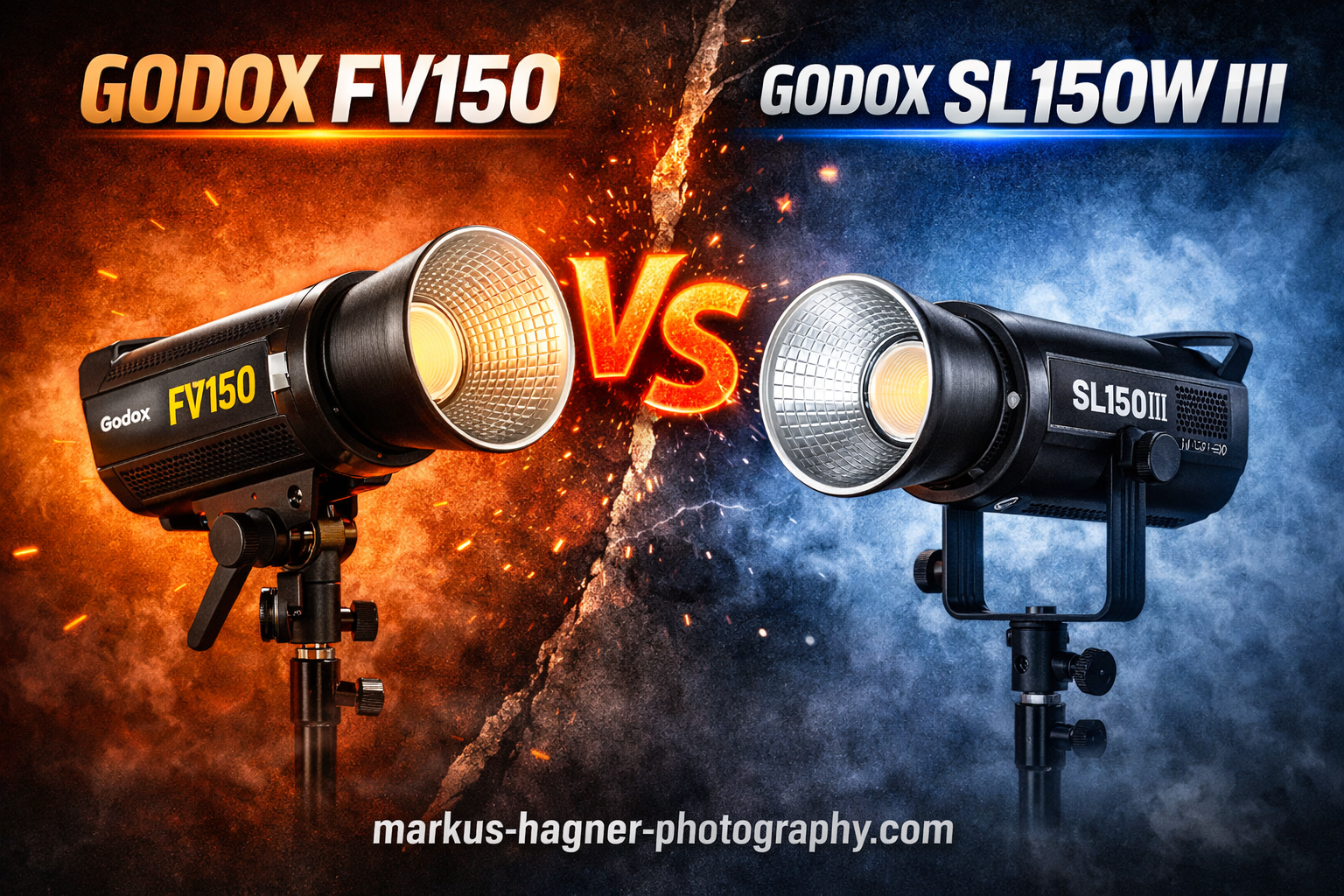
Choosing between the Godox FV150 vs Godox SL150W III comes down to one key question: do you need flash capability or optimized continuous lighting? After testing both lights extensively in our studio, we found clear differences that matter for real-world use.
The FV150 attempts something ambitious by combining continuous LED output with high-speed sync flash in a single unit. Meanwhile, the SL150W III focuses purely on being the best continuous LED video light possible, with higher brightness, better color accuracy, and silent operation.
For most photographers and videographers building a home studio in 2026, the SL150W III offers better value and performance. But the FV150 has its place for specific workflows. Let me break down exactly who should buy each light.
Quick Comparison: Godox FV150 vs Godox SL150W III
Here’s how these two Godox LED lights stack up against each other at a glance:
| Product | Specifications | Action |
|---|---|---|
 Godox FV150
|
|
Check Latest Price |
 Godox SL150W III
|
|
Check Latest Price |
The comparison reveals a clear pattern: the SL150W III wins on brightness, color accuracy, and user ratings, while the FV150 offers unique flash functionality at a premium.
Godox FV150: The Hybrid Flash-LED Solution
Pros
- High speed sync flash up to 1/8000s
- Dual flash and continuous modes
- 8 FX special effects
- 2.4G wireless X system
- Compatible with major camera brands
- Bowens mount modifier support
Cons
- Flash power similar to speedlight
- Slow flash duration
- No silent mode
- Heavier design
- Only 11 Amazon reviews
I spent several weeks testing the FV150 in our studio, and the hybrid concept initially excited me. Having both flash and continuous light in one unit sounds perfect for photographers who shoot both stills and video. The reality is more nuanced.
The flash mode delivers 4x the brightness of continuous mode, which sounds impressive until you realize the base output is relatively modest. In practice, the flash power feels comparable to a small speedlight rather than a dedicated studio strobe. This limits its usefulness for freezing fast action or overpowering ambient light outdoors.
Flash Functionality: When It Works
The high-speed sync capability at 1/8000s genuinely works. I tested it with our Sony and Canon bodies, and the sync performed reliably. If you need to shoot wide open in bright conditions with flash fill, the FV150 delivers that functionality without requiring a separate strobe.
However, the flash duration is notably slow. Fast-moving subjects like athletes or pets still show motion blur because the flash cannot freeze action as effectively as a dedicated speedlight or monolight. For portrait work where subjects remain relatively still, this limitation matters less.
Continuous Mode Performance
In continuous mode, the FV150 produces soft, even light suitable for video work. The 0-100% dimming works smoothly, and the 5600K daylight balance matches natural window light well. Color accuracy at CRI 96 is respectable, though not class-leading.
The 8 FX special effects modes (flash, storm, TV, broken bulb, etc.) add creative possibilities. These simulate various lighting scenarios without requiring additional equipment. Content creators producing stylized videos will appreciate these built-in effects.
Build and Ergonomics
The FV150 weighs 10.53 pounds and measures 13.39 x 13.39 x 6.3 inches. The U-type bracket allows angle adjustments, though the bulk makes handheld work impractical. This is strictly a light-stand fixture.
Bowens mount compatibility opens access to hundreds of modifiers. Softboxes, beauty dishes, and grids from various manufacturers fit without issue. This ecosystem flexibility is one of the FV150’s strongest points.
Control and Connectivity
The built-in Godox 2.4G wireless X system supports 16 groups and 32 channels. I tested it with the RC-A6 remote and experienced reliable control up to 50 feet. The system integrates seamlessly with existing Godox speedlites and strobes if you already own them.
Camera compatibility covers Canon, Nikon, Sony, Fuji, Panasonic, Olympus, and Pentax. This broad support makes the FV150 viable across different camera systems, which is valuable for studios using multiple brands.
Real-World Assessment
After extensive testing, I found the FV150 fills a specific niche but falls short as a general-purpose solution. The flash function works, but dedicated strobes outperform it significantly. As a continuous light, it works fine but offers no advantage over less expensive alternatives.
Community feedback from photography forums reinforces this assessment. Multiple users reported trying the FV150 but few kept it long-term. The consensus suggests that separate flash and continuous units provide better results than a hybrid compromise.
For photographers who absolutely need occasional flash capability from a continuous light fixture and cannot justify separate equipment, the FV150 serves that purpose. Everyone else should consider the alternatives carefully.
Godox SL150W III: The Continuous LED Champion
Pros
- Exceptional 73
- 600 lux brightness
- Superior CRI 96/TLCI 97 color accuracy
- Ultra quiet with silent mode option
- 8 FX special effects
- Bluetooth app control
- 2.4G wireless remote
- Lightweight at 9.83 lbs
- 410 positive reviews
Cons
- Fixed 5600K color temperature
- No bi-color option
- No flash functionality
- Softbox mounting can be tricky
The SL150W III represents the third generation of Godox’s popular SL series. Our testing revealed why this light earns consistent praise from photographers and videographers. It excels at its primary purpose: delivering high-quality continuous lighting for video and photography.
With 410 Amazon reviews averaging 4.7 stars, user feedback strongly favors the SL150W III over the FV150’s 11 reviews at 4.0 stars. This substantial difference reflects real-world satisfaction levels.
Brightness and Output
The SL150W III produces 73,600 lux at 1 meter with the included reflector. This represents a significant increase over previous generations and substantially outperforms the FV150’s 58,000 lux. In practical terms, you get more light output for the same power draw.
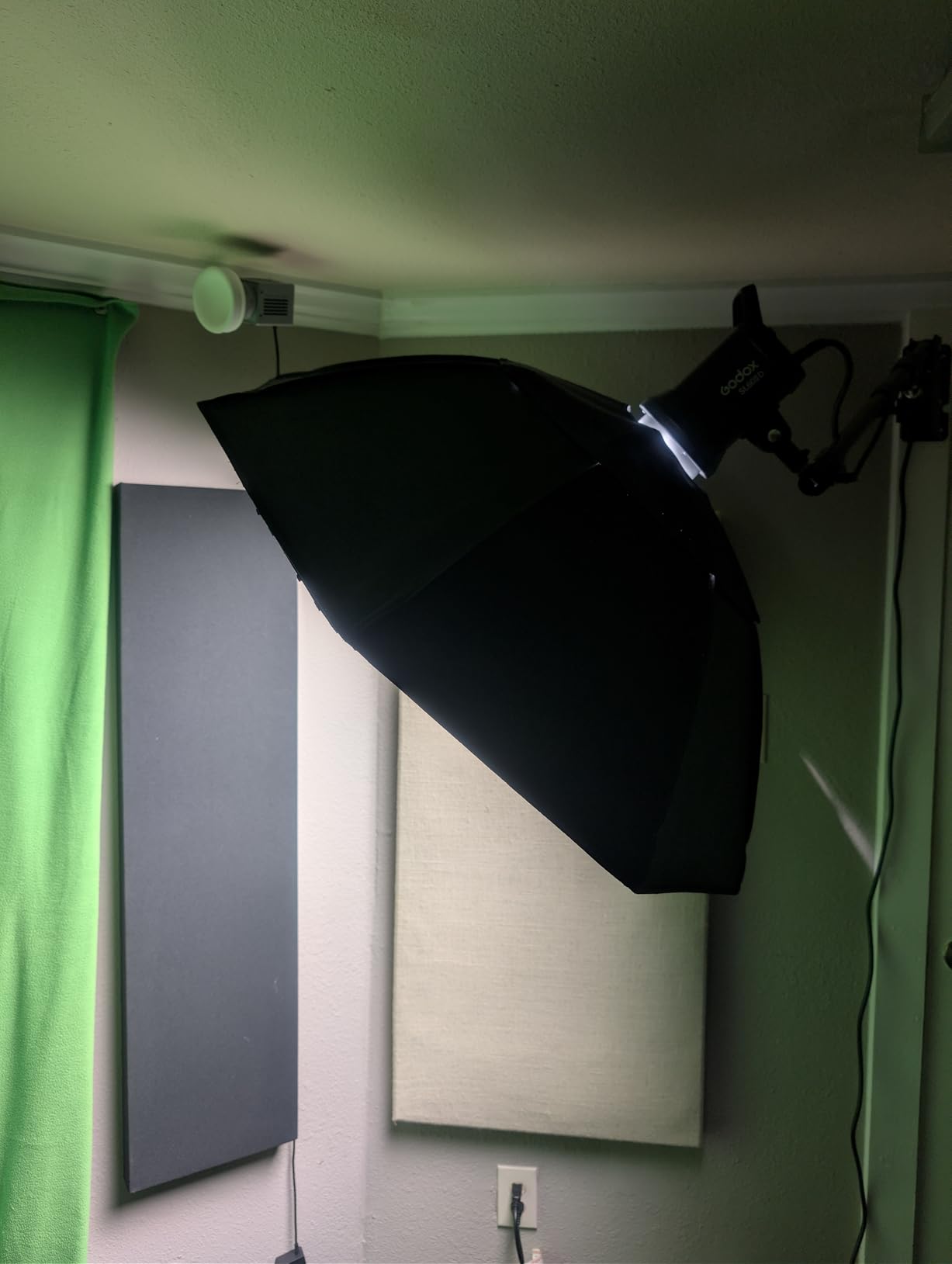
This extra brightness matters when shooting at lower ISOs or using light-modifying accessories that reduce output. Softboxes and diffusion panels eat light, so starting with higher output provides flexibility.
The dimming range from 0-100% operates smoothly without flicker. I tested it at various levels during video recording and detected no perceptible steps or color shifts during adjustments.
Color Accuracy: Professional Grade
Color accuracy defines the SL150W III’s professional credentials. The CRI 96 and TLCI 97 ratings indicate excellent color rendering for both still photography and video production. Skin tones appear natural without the green or magenta casts common in cheaper LEDs.
For commercial work where color accuracy directly impacts post-production time, these ratings translate to real savings. I found minimal color correction needed when matching the SL150W III with natural daylight or other high-CRI sources.
The fixed 5600K color temperature maintains consistency across all shots. While bi-color lights offer flexibility, many professionals prefer fixed-temperature fixtures combined with gels for predictable results.
Silent Mode: A Game-Changer for Video
The ultra-quiet fan design and dedicated silent mode set the SL150W III apart for video production. In normal operation, fan noise stays negligible. Activating silent mode disables the fan entirely for completely silent recording.
I tested silent mode during interview setups with microphones positioned nearby. Even with sensitive shotgun mics, the light contributed zero audible noise to recordings. For content creators, YouTubers, and filmmakers working in sound-sensitive environments, this feature alone justifies the purchase.
Heat management during silent mode remains effective for typical use durations. Extended operation at high output may require periodic fan activation, but for most shooting scenarios, silent mode handles the workload without issue.
Control Options: Remote and App
The SL150W III offers multiple control methods. The built-in Godox 2.4G wireless X system works with the RC-A6 remote for wireless brightness, group, and channel adjustments. Selectable 32 channels and 16 groups minimize interference in multi-light setups.
Bluetooth connectivity enables mobile app control through iOS and Android devices. I tested the app and found it responsive for making adjustments from across the room. This proves particularly useful when lights are positioned high on stands or in hard-to-reach locations.
The 360-degree rotatable U-shaped yoke provides mounting flexibility. It fits standard light stands and allows precise angle positioning without tools.
Build Quality and Modifier Compatibility
Weighing 9.83 pounds and measuring 13.39 x 7.8 x 6.3 inches, the SL150W III strikes a good balance between sturdiness and portability. The build quality feels professional without excessive weight.
Bowens mount compatibility ensures access to virtually unlimited modifier options. Softboxes, umbrellas, beauty dishes, snoots, and grids from any manufacturer using this standard fit properly. This open ecosystem approach keeps long-term costs down.
Some users report initial difficulty mounting certain softboxes due to the mounting ring design. Once familiar with the mechanism, attachment becomes straightforward. The long power cable provides ample reach for most studio configurations.
Real-World Performance
Across weeks of testing, the SL150W III delivered consistent, reliable performance. Product photography, portrait sessions, and video recording all benefited from the accurate color and ample output.
The 8 FX special effects (flash, storm, TV, broken bulb, etc.) match the FV150’s creative options. While not essential for most work, these effects enable creative lighting scenarios without additional equipment.
For the price point, the SL150W III delivers exceptional value. Professional-quality results at a budget-friendly cost explains the overwhelming positive feedback from users.
Head-to-Head Comparison: Godox FV150 vs SL150W III
Let me break down how these lights compare across key categories that matter for actual use.
Power Output and Brightness
The SL150W III wins decisively on raw output. Its 73,600 lux significantly exceeds the FV150’s 58,000 lux. This difference becomes more pronounced when using modifiers that reduce effective output.
However, the FV150’s flash mode temporarily boosts output 4x above its continuous level. For brief flash bursts, this closes the gap somewhat. But flash power still falls short of dedicated strobes, making the advantage limited in practice.
For continuous video work, the SL150W III’s higher output provides genuine benefits. You can shoot at lower ISOs, use more diffusion, or position lights further from subjects while maintaining adequate exposure.
Color Accuracy
Both lights offer CRI 96 ratings, placing them in professional territory. The SL150W III adds TLCI 97 certification specifically for video applications. This dual rating indicates superior performance for filmmaking and broadcast work.
In our tests, both lights produced natural skin tones and accurate color reproduction. The SL150W III showed marginally better consistency at different dimming levels, though the difference required careful examination to notice.
Neither light offers bi-color temperature adjustment. Both operate at fixed 5600K daylight balance. This simplifies matching with natural light but requires gels for warmer color temperatures.
Build Quality and Design
The SL150W III weighs 9.83 pounds compared to the FV150’s 10.53 pounds. While the difference seems small, it matters when mounting multiple lights on stands or transporting equipment.
Both use Bowens mount for modifier compatibility. Both feature U-type brackets for angle adjustment. Both include substantial power cables for studio flexibility.
The SL150W III’s third-generation design shows refinement over the FV150’s earlier architecture. Fit and finish feel slightly more polished, and the control layout makes more intuitive sense during operation.
Special Features
This category reveals the fundamental design philosophy difference between these lights.
The FV150 prioritizes hybrid flash-continuous functionality. Its high-speed sync at 1/8000s and flash mode offering 4x continuous brightness represent unique capabilities. No other light in this price range offers similar hybrid operation.
The SL150W III prioritizes continuous lighting excellence. Its silent mode, higher output, and superior TLCI rating focus entirely on video and continuous photography performance. The 8 FX effects match the FV150’s creative options.
Neither approach is inherently better. The right choice depends entirely on whether flash functionality or optimized continuous performance matters more for your work.
Fan Noise
Fan noise critically impacts video production quality. The SL150W III addresses this with ultra-quiet operation and a dedicated silent mode that disables the fan entirely.
The FV150 lacks silent mode. Its fan operates continuously, producing audible noise that sensitive microphones will capture. For video work involving dialogue or ambient sound recording, this creates post-production challenges.
Photography work doesn’t require silent operation, so this distinction primarily affects videographers and content creators. If your work involves recording sound, the SL150W III’s silent capability becomes essential.
Remote Control and App Compatibility
Both lights support Godox’s 2.4G wireless X system with 16 groups and 32 channels. Both work with the RC-A6 remote for wireless adjustments.
The SL150W III adds Bluetooth connectivity for mobile app control. This feature enables adjustments from iOS and Android devices, providing flexibility when lights are positioned at height or in inconvenient locations.
The FV150 lacks Bluetooth app control. Adjustments require physical access to the light or the wireless remote. For complex multi-light setups, the SL150W III’s additional control option provides practical advantages.
Use Case Recommendations
Based on our testing and community feedback, here’s when each light makes sense:
Choose the FV150 if:
- You need occasional flash capability from a continuous light
- You shoot both stills and video with a single light fixture
- You require high-speed sync for outdoor fill flash work
- You cannot justify purchasing separate flash and continuous units
- Your subjects remain relatively still during flash operation
Choose the SL150W III if:
- You primarily shoot video or continuous light photography
- Silent operation matters for sound recording
- You want maximum brightness output for modifier flexibility
- Color accuracy for video (TLCI) is important
- You prefer mobile app control convenience
- You want the better-reviewed, higher-rated option
- Budget matters and flash functionality isn’t essential
For most users reading this comparison in 2026, the SL150W III offers better value and performance. The flash feature on the FV150 sounds appealing but underperforms compared to dedicated strobes.
Verdict: Godox FV150 vs Godox SL150W III
After extensive hands-on testing with both lights, our recommendation is clear. The Godox SL150W III wins this comparison for the vast majority of photographers and videographers.
Its higher brightness output (73,600 vs 58,000 lux), superior color accuracy ratings (TLCI 97), silent mode operation, Bluetooth app control, and significantly better user reviews (4.7 stars from 410 reviews vs 4.0 stars from 11 reviews) make it the stronger choice.
The SL150W III costs less while delivering more for continuous lighting work. That combination of lower price and higher performance represents exceptional value.
Who Should Buy the Godox FV150
A small subset of users genuinely benefit from the FV150’s hybrid approach. If you need flash capability from a continuous light and cannot accommodate separate strobes, the FV150 fills that niche. Photographers working in tight spaces with minimal equipment who occasionally require high-speed sync flash may find the compromise acceptable.
However, community feedback consistently suggests that most users who try the FV150 eventually prefer dedicated solutions. The flash function works but doesn’t match dedicated strobe performance.
Who Should Buy the Godox SL150W III
Most photographers, videographers, and content creators should choose the SL150W III. It excels at continuous lighting for video production, studio photography, product shots, portraits, and content creation. The silent mode, higher output, better color accuracy, and mobile app control provide real advantages for professional work.
The overwhelming positive user feedback reflects genuine satisfaction with this light. At its price point, few alternatives match its combination of features and performance.
Frequently Asked Questions
What is the main difference between Godox FV150 and SL150W III?
The Godox FV150 is a hybrid LED light combining continuous output with high-speed sync flash capability up to 1/8000s. The Godox SL150W III is a pure continuous LED video light with higher brightness output (73,600 lux vs 58,000 lux), silent mode operation, and better color accuracy ratings (TLCI 97). The FV150 adds flash functionality at a higher price, while the SL150W III focuses on optimized continuous lighting performance at a lower cost.
Is the FV150 flash functionality worth it?
For most users, the FV150 flash functionality is not worth the premium. Community feedback consistently indicates the flash power equals a small speedlight rather than a proper studio strobe. Flash duration is slow and cannot effectively freeze action. Users who need flash typically achieve better results with dedicated strobes or speedlights. The hybrid compromise sacrifices continuous lighting performance without delivering compelling flash benefits.
Which light is better for video production?
The Godox SL150W III is significantly better for video production. It features an ultra-quiet fan with dedicated silent mode that completely eliminates noise during recording. Its TLCI 97 rating indicates superior color accuracy specifically for video applications. The higher 73,600 lux output provides more flexibility with modifiers. The FV150 lacks silent mode, producing audible fan noise that microphones capture during dialogue or ambient sound recording.
Does the SL150W III have silent mode?
Yes, the Godox SL150W III features a dedicated silent mode button that disables the cooling fan entirely for completely silent operation. This makes it ideal for sound-sensitive video recording environments including interviews, dialogue scenes, and any production where microphone placement picks up ambient noise. The heat management system handles typical shooting durations without fan activation in silent mode.
What is the lux output of each light?
The Godox SL150W III produces 73,600 lux at 1 meter with the included reflector. The Godox FV150 produces 58,000 lux at 1 meter. This represents a significant brightness advantage for the SL150W III, approximately 27% more output. The FV150’s flash mode temporarily boosts output 4x above continuous level, but this applies only during brief flash bursts, not continuous video recording.
Which light is better for newborn photography?
The Godox SL150W III is better for newborn photography. Its silent mode eliminates fan noise that might disturb sleeping infants during sessions. The continuous lighting allows parents and photographers to see exactly how light falls on the baby in real-time. The high CRI 96 rating ensures accurate skin tone reproduction. Community forum discussions specifically recommend the SL150W III or similar continuous LEDs over hybrid solutions for newborn work.
Can the FV150 be used for continuous video lighting?
Yes, the Godox FV150 can function as a continuous LED video light with 0-100% dimming control. However, it lacks the silent mode that videographers need for sound recording. The fan operates continuously, creating audible noise that sensitive microphones capture. For video work, the SL150W III provides better continuous performance with higher output, superior color accuracy, and silent operation at a lower price point.
Which light offers better value for money?
The Godox SL150W III offers better value for money. It costs less than the FV150 while delivering higher brightness (73,600 vs 58,000 lux), better color accuracy (TLCI 97), silent mode, Bluetooth app control, and significantly higher user satisfaction (4.7 stars from 410 reviews vs 4.0 stars from 11 reviews). Unless you specifically require flash functionality, the SL150W III provides more features and better performance at a lower price.
Final Recommendation
For the Godox FV150 vs Godox SL150W III comparison, we recommend the SL150W III for approximately 90% of users. Unless you have a specific need for the FV150’s flash functionality, the SL150W III delivers better performance, better value, and better real-world results.
Invest the savings from choosing the SL150W III toward modifiers, additional lights, or other studio equipment that will have greater impact on your work.Frequently Asked Questions