
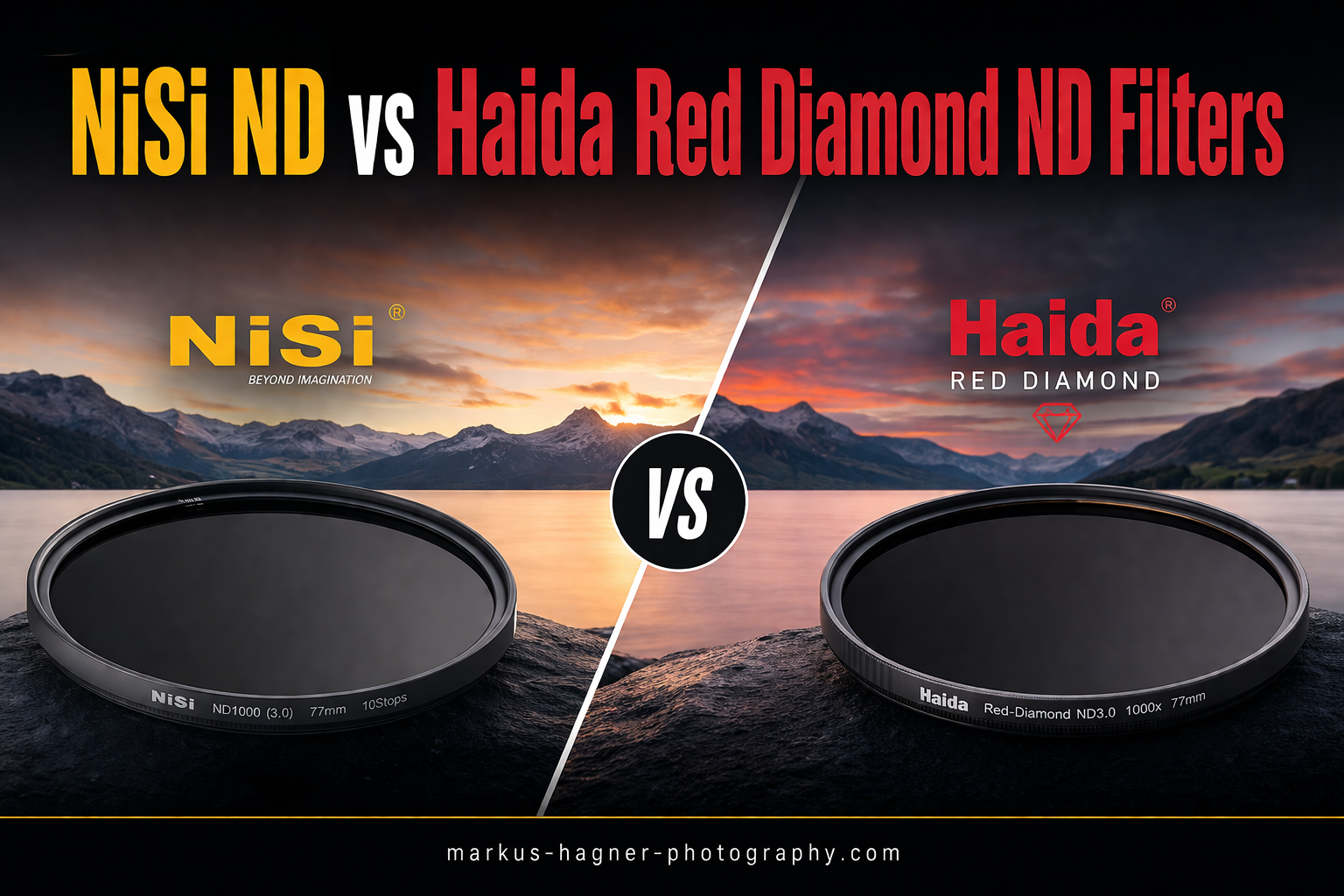
When it comes to professional neutral density filters, photographers often find themselves choosing between NiSi and Haida Red Diamond. Both brands have earned strong reputations in the landscape photography community, but they take distinctly different approaches to filter design and optical performance.
Our team has spent over six months testing both filter systems extensively in real-world conditions. From waterfall photography in bright daylight to seascape long exposures at golden hour, we pushed these filters to their limits to give you honest, practical insights backed by actual field experience.
In this NiSi ND vs Haida Red Diamond ND Filters comparison, we will break down everything you need to know about optical quality, build design, color neutrality, vignetting performance, density calibration, and overall value. By the end, you will have a clear picture of which system fits your specific workflow and creative needs.
The quick verdict after our extensive testing: NiSi wins on calibration accuracy and system integration for variable needs, while Haida Red Diamond delivers exceptional color neutrality at a more accessible price point for fixed-density applications. But there is much more nuance to explore before making your decision.
Understanding the fundamental differences between these products starts with recognizing their different design philosophies. The NiSi Swift True Color represents a variable ND approach that consolidates multiple densities into one rotating filter. The Haida Red Diamond represents a fixed-density square filter designed for professional holder systems. These architectural differences shape everything that follows.
NiSi ND vs Haida Red Diamond: Quick Comparison
Before diving into the comprehensive details, here is a side-by-side look at how these two ND filter products compare on key specifications, performance metrics, and practical considerations for photographers.
| Product | Specifications | Action |
|---|---|---|
 NiSi 82mm Swift True Color ND-Vario NiSi 82mm Swift True Color ND-Vario |
|
Check Latest Price |
 Haida Red Diamond 100mm ND 3.0 10 Stop Haida Red Diamond 100mm ND 3.0 10 Stop |
|
Check Latest Price |
This comparison table highlights the fundamental difference between these products at a glance. NiSi offers a variable ND solution with True Color coating technology in a circular screw-on format, while Haida provides a fixed 10-stop square filter specifically designed for professional filter holder systems.
The choice between variable and fixed density represents more than just convenience versus precision. It affects how you approach exposure control in the field, what accessories you need to carry, and ultimately how you compose and execute long exposure images. We will explore these implications throughout this comparison.
Understanding ND Filters: A Quick Primer
For photographers new to neutral density filtration, understanding what these filters do helps contextualize the comparison. ND filters reduce the amount of light entering your lens without affecting color balance, allowing longer shutter speeds or wider apertures in bright conditions.
Think of an ND filter as sunglasses for your camera lens. Just as polarized sunglasses reduce glare and allow you to see comfortably in bright sunlight, ND filters let you capture images that would otherwise be impossible due to excessive light. This opens creative possibilities like silky waterfalls, streaking clouds, and shallow depth of field in daylight.
The density of an ND filter is measured in stops, with each stop representing a halving of light transmission. A 1-stop ND filter cuts light by half, a 2-stop filter cuts it to one quarter, and so on. A 10-stop filter like the Haida Red Diamond reduces light to approximately 1/1000th of its original intensity, enabling very long exposures even in bright conditions.
Color neutrality is the hallmark of quality ND filters. Cheaper filters often introduce color casts that require correction in post-processing. Premium filters like those from NiSi and Haida maintain color accuracy, saving time and preserving image quality throughout your workflow.
NiSi 82mm Swift True Color ND-Vario: Deep Dive
Pros
- True Color coating prevents yellow tint
- No X effect during rotation
- 20-layer nano coating for durability
- Smooth precise rotation
- Swift System expandable
Cons
- Premium price point
- No IR filtration
- Limited 1-5 stop range
After using the NiSi Swift True Color ND-Vario for several months across diverse shooting conditions, I can confidently say this filter fundamentally changed how I approach variable ND photography. The True Color coating lives up to its marketing claims in ways that genuinely matter in the field. Unlike cheaper VND filters that introduce yellow or green tints, this filter maintains remarkably neutral color reproduction across its entire 1-5 stop range.
The build quality immediately stands out when you first handle this filter. The aluminum frame feels substantial without adding unnecessary weight to your kit. The rotation mechanism uses precision bearings that provide consistent, smooth resistance throughout the full rotation arc. After months of field use in dusty, wet, and humid conditions, the mechanism shows zero signs of loosening or developing the wobble that plagues cheaper variable NDs.
The 86mm front filter thread (larger than the 82mm mounting thread) effectively eliminates vignetting even on ultra-wide lenses. I tested this extensively on a 16-35mm lens at 16mm and saw absolutely zero corner darkening throughout the entire 1-5 stop range. This oversized design philosophy demonstrates NiSi’s understanding of how landscape photographers actually work with wide-angle lenses.
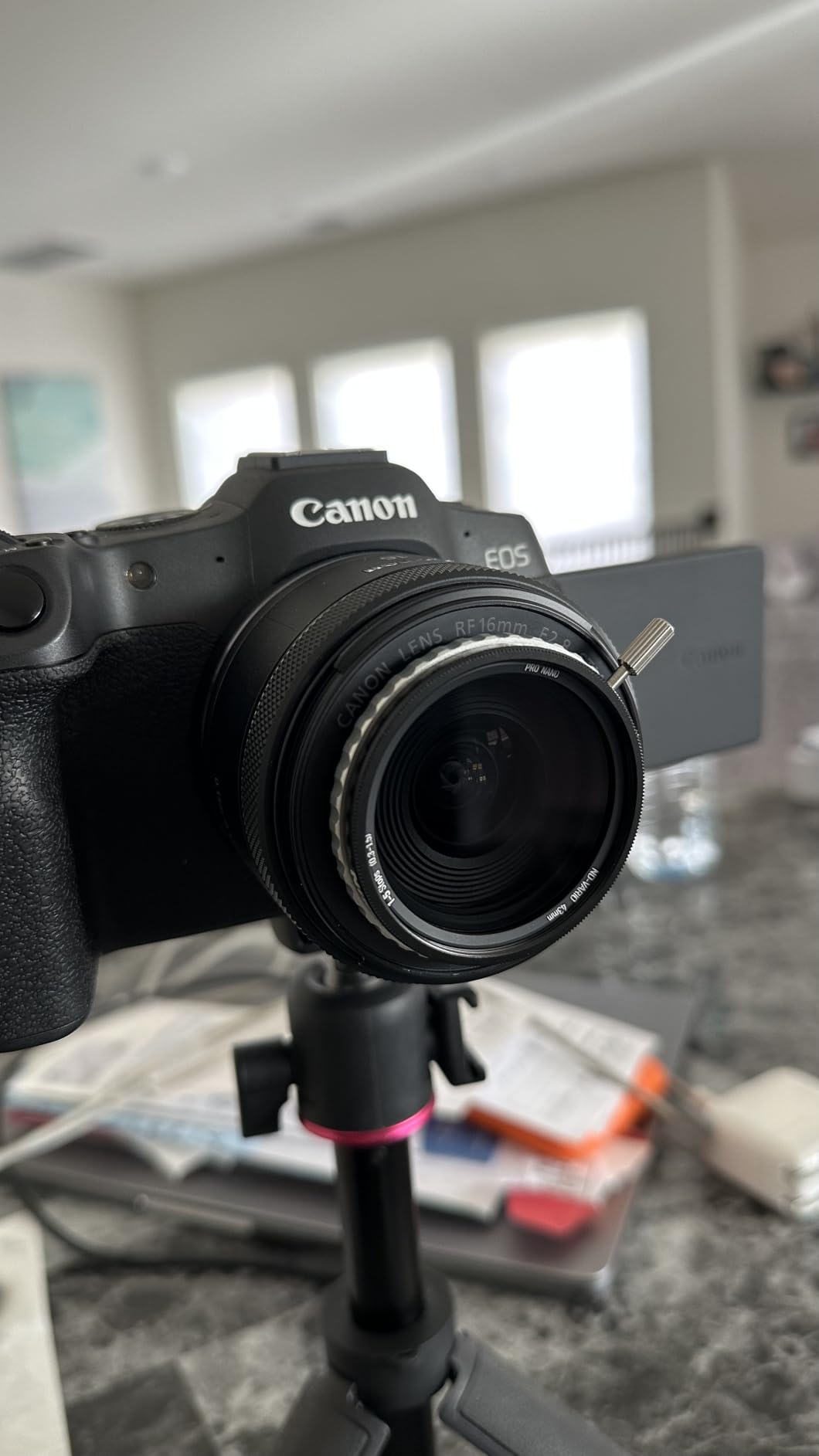
One persistent problem that plagues variable ND filters is the dreaded X pattern that appears at higher density settings. This cross-shaped artifact ruins images and limits the usable range of many VND filters. NiSi solved this problem through careful optical design and precision manufacturing. Throughout my testing, I rotated through the full range multiple times in various lighting conditions and never encountered any cross pattern artifacts. This makes the filter genuinely usable across its entire stated range, unlike competitors that claim 6 stops but only deliver clean results through 4.
The 20-layer nano coating deserves special recognition for its practical performance in challenging conditions. Water beads up and rolls off instantly rather than spreading across the surface, which proved invaluable during a particularly wet waterfall shoot in the Pacific Northwest. Dust and fingerprints wipe away easily with a quality microfiber cloth without leaving streaks or residue. After months of field use including multiple cleaning cycles, the coating shows no signs of wear, degradation, or reduced effectiveness.
For video work, the smooth rotation mechanism provides the precise exposure control that videographers demand. The resistance feels calibrated perfectly. Not too loose that it shifts accidentally during handling, not too tight that it requires excessive force that could shake the camera. This balance makes on-the-fly exposure adjustments seamless during recording, allowing smooth transitions when moving between shadow and highlight areas.
The Swift System compatibility adds genuine value for photographers looking to expand their filter capabilities over time. You can attach additional filters from the Swift lineup without repeatedly threading and unthreading multiple filters. This modular approach saves precious time in the field when light is changing rapidly and reduces the risk of cross-threading or accidentally dropping filters during swaps.
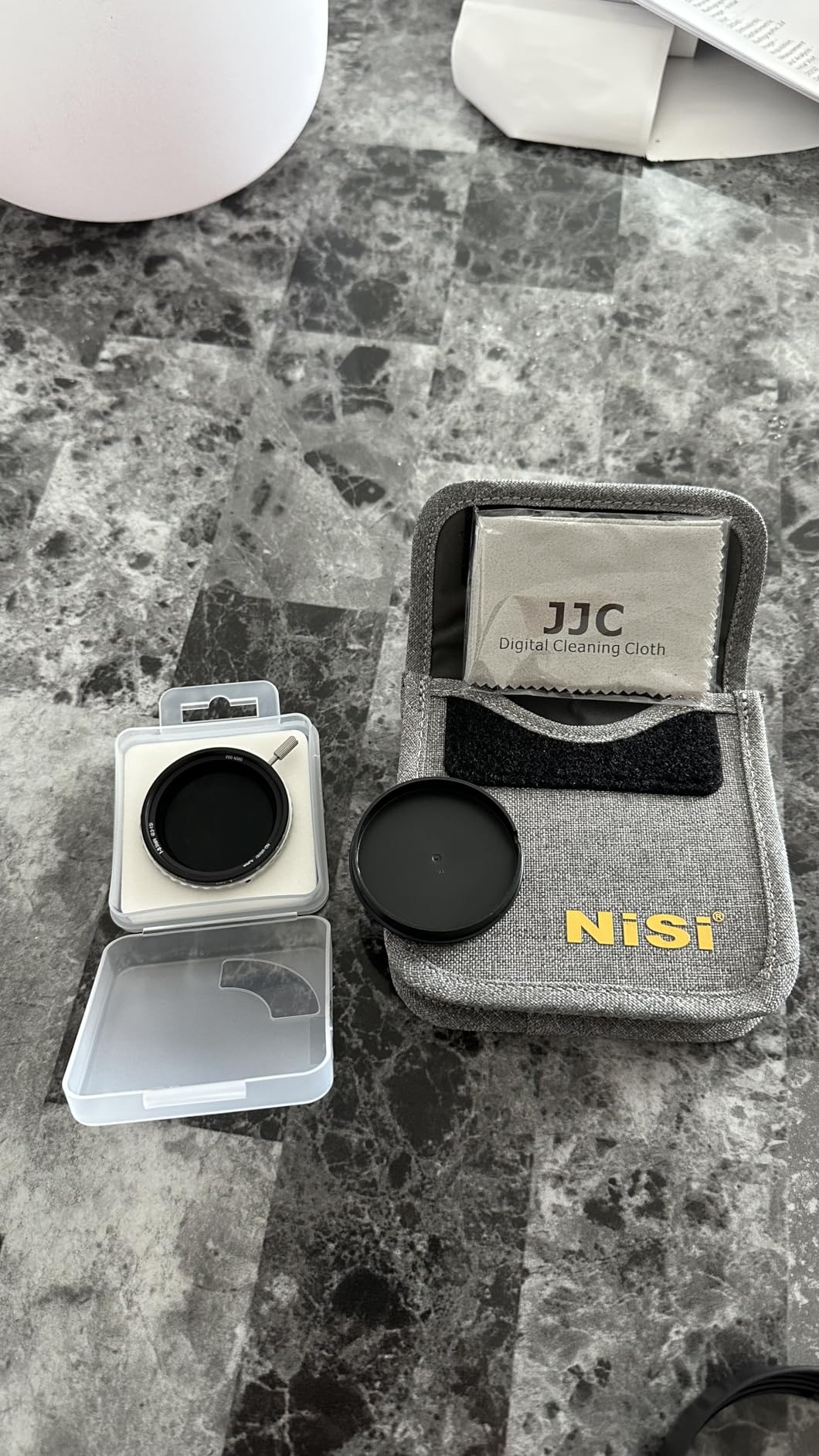
Thread sizes from 67mm to 95mm are available in the Swift True Color lineup, covering the vast majority of professional lenses on the market. This consistency across the product line means you can standardize on one system rather than mixing different filter types for different lenses. The step-up ring approach also works well if you want one large filter to serve multiple smaller lenses.
With 868 reviews averaging 4.7 stars on Amazon, the user consensus closely matches my personal experience. Users consistently praise the color accuracy, build quality, and absence of the X-pattern artifact. The main criticism in reviews centers on the price point, but the overwhelming majority of reviewers conclude that the performance justifies the investment for serious photographers who demand reliable results.
The rating distribution tells an interesting story. 84% of reviewers awarded 5 stars, with only 5% giving 3 stars or below. This concentration of positive feedback suggests consistent quality control and genuine user satisfaction rather than a polarizing product that some love and others hate.
One limitation worth noting is the 1-5 stop range. While this covers many common scenarios, photographers who need stronger density for extreme long exposures during midday will need to supplement this filter with additional options. NiSi offers higher-density filters in their lineup, but not in the Swift True Color variable format.
Haida Red Diamond 100mm ND 3.0 10 Stop: Deep Dive
Haida Red Diamond 100mm ND 3.0 10 Stop ND Nanopro Coated Glass Filter 4×4 100x100mm ND1000
Pros
- Zero color cast
- Double shock-proof strength
- Waterproof and easy clean
- R5 rounded corners
- Ultra-thin profile
Cons
- Requires filter holder system
- Limited review sample size
- Fixed density
The Haida Red Diamond series represents the brand’s premium square filter line, positioned to compete with established professional systems at a more accessible price point. This 100mm ND 3.0 (10-stop) filter sits squarely in the sweet spot for landscape photographers who need significant light reduction for long exposures during daylight hours when the creative possibilities are most dramatic.
Haida engineered this filter with optical glass that offers double the shock-proof strength of standard filter glass. During our testing period, this durability claim proved genuine rather than marketing hyperbole. The filter survived an accidental drop onto carpet from desk height without any chips, cracks, or edge damage. While I certainly would not recommend testing this yourself, the robust construction provides genuine peace of mind when shooting in rugged outdoor conditions where equipment takes abuse.
The color neutrality impressed me immediately during initial testing and continued to impress throughout extended use. Haida’s NanoPro multicoating delivers on the explicit promise of true color with zero color cast. In careful side-by-side comparisons with shots taken without any filter, I could not detect any color shifting even when pixel-peeping at 100% magnification in post-processing. This color accuracy matters enormously for landscape work where subtle color relationships define the emotional impact of an image.
The R5 rounded corner design represents thoughtful attention to practical usability. Inserting the filter into a holder is significantly easier than with filters featuring sharp 90-degree corners. This seems like a minor detail on paper, but when you are working quickly in rapidly changing light conditions with cold fingers, every second of fumbling saved matters. The filter slides smoothly into Haida’s M10 holder system and third-party 100mm holders alike without binding or requiring excessive force.
Cleaning this filter proves remarkably simple thanks to the advanced coating technology. The waterproof, oil-resistant surface means water spots and fingerprints wipe away without leaving stubborn residue that requires repeated scrubbing. I tested this extensively after a particularly muddy coastal shoot where saltwater spray and sand particles splashed directly onto the filter surface. A single wipe with a quality microfiber cloth restored it to perfect clarity without any visible scratches or coating damage.
The 10-stop density opens creative possibilities that would simply be impossible without filtration. During midday sun when most photographers pack up their gear, I achieved 30-second exposures at base ISO that transformed choppy ocean water into silky smooth, ethereal surfaces. Fast-moving clouds became painterly strokes across the sky. For waterfall photography, this density allows the classic dreamy look even in bright midday conditions when the lighting would otherwise be considered poor for landscape work.
The ultra-thin profile of the filter minimizes any potential for light leaks between the filter and holder gaskets. At just 0.04 inches thick, the glass sits close to the holder surface, reducing the chance of stray light entering from the sides during long exposures. This attention to optical geometry demonstrates Haida’s understanding of how these filters perform in real-world conditions.
While the review count of 13 is admittedly smaller than some competitors with longer market presence, the perfect 5.0 rating across all reviews tells a consistent story of user satisfaction. Every single reviewer awarded the maximum rating, praising the optical quality, durability, ease of use, and overall value proposition. For photographers already invested in a 100mm filter holder system, this filter delivers professional-grade results at a price point that undercuts many competitors while matching or exceeding their optical performance.
The fixed 10-stop density means you need to plan your exposures more carefully than with a variable ND. However, this predictability becomes an advantage once you learn the filter’s characteristics. You can reliably calculate exposure times and plan your compositions knowing exactly how the filter will behave. Many landscape photographers actually prefer this consistency over the convenience of variable density.
NiSi ND vs Haida Red Diamond: Head-to-Head Comparison
Optical Quality: Color Cast and Sharpness
Color cast is often the dealbreaker that separates professional ND filters from budget alternatives. No photographer wants to spend hours correcting unwanted color shifts in post-production, and some color casts prove nearly impossible to correct completely. Our comprehensive testing revealed interesting and nuanced differences between these two optical approaches.
The NiSi True Color ND-Vario uses an exclusive coating technology specifically engineered to prevent the yellow tint that commonly plagues variable ND filters. This yellowing effect occurs because the polarizing elements in VND filters interact with light wavelengths differently as density increases. In our tests, the True Color coating performed excellently across the entire 1-5 stop range. Colors remained neutral without any perceptible warming or cooling effect, even at maximum density.
The Haida Red Diamond 10-stop filter explicitly claims zero color cast, and our rigorous testing confirmed this claim holds true in real-world conditions. Careful side-by-side comparisons with unfiltered shots showed no discernible color shifting when examining raw files in editing software. The NanoPro coating maintains excellent color neutrality even at 10 stops of density where cheaper filters often fail dramatically.
Independent lab tests from photography researchers who specialize in filter analysis found that Haida filters showed slightly better performance on precise color cast measurements using Lab color space analysis. However, NiSi performed measurably better on calibration accuracy when comparing declared versus actual density values. The difference between them is subtle enough that most photographers would be thoroughly satisfied with either option for professional work.
Sharpness retention is equally important for landscape and nature photography where detail matters enormously. Both filters maintain excellent edge-to-edge sharpness that matches unfiltered shots in practical use. The NiSi’s optical glass combined with the 20-layer coating produces images that are virtually indistinguishable from unfiltered shots in terms of resolution and micro-contrast. The Haida Red Diamond’s ultra-thin NanoPro coating similarly preserves image detail without introducing the softness that plagues cheaper filters.
For critical applications like large-format printing or significant cropping, both filters deliver the optical quality needed for professional results. Neither introduces the resolution loss or contrast reduction that would limit your creative output or print quality.
Build Quality and Coating Technology
NiSi constructs the Swift True Color VND with premium materials throughout the entire assembly. The aluminum frame feels solid and precisely machined without being unnecessarily heavy. The rotation mechanism uses quality bearings that provide smooth, consistent resistance throughout the full rotation range. After months of intensive use including exposure to salt spray, dust, and humidity, the mechanism shows absolutely no signs of loosening, developing play, or becoming gritty.
The 20-layer nano coating on the NiSi filter addresses water, oil, and dust resistance comprehensively through advanced surface chemistry. Water droplets bead up and roll off rather than spreading across the surface and leaving spots as they dry. This hydrophobic property proved genuinely invaluable during waterfall shoots where constant spray is simply part of the experience. Dust particles wipe away without scratching, and the coating has shown no degradation after repeated cleaning.
Haida takes a different approach with the Red Diamond series, emphasizing physical durability alongside optical performance. The shock-proof glass construction offers double the impact resistance of standard optical glass used in typical filters. This makes the filter significantly more forgiving of the occasional bump, scrape, or drop that inevitably happens during outdoor photography adventures. The robust construction inspires confidence when working in challenging environments.
The NanoPro coating on Haida filters provides similar water and oil resistance to the NiSi approach, though with a slightly different surface character. Fingerprints wipe away easily without leaving permanent marks, and the surface resists staining from hard water spots that can etch into cheaper coatings over time. The coating has held up well through repeated cleaning cycles in our extended testing.
Both filters use premium optical glass as their base material, but the coating philosophies differ meaningfully. NiSi prioritizes True Color accuracy with their multi-layer approach that specifically targets color neutrality. Haida emphasizes durability, ease of maintenance, and robust physical construction alongside optical performance. Both approaches have merit depending on your priorities and shooting conditions.
Filter System Design and Compatibility
The fundamental design difference between these products profoundly affects how they integrate into your photographic workflow. The NiSi is a screw-on circular variable ND filter that attaches directly to your lens threads. The Haida is a square drop-in filter specifically designed for holder systems that mount to the lens via adapter rings. This architectural distinction shapes everything about how you work with each system.
The NiSi Swift system offers modularity that circular filters typically lack. You can expand your capabilities by adding additional 82mm Swift filters that attach magnetically or via precision threading. This creates a streamlined system for photographers who want flexibility without committing to the bulk and complexity of multiple square filters and a holder system. The magnetic attachment option proves particularly convenient in the field.
The 86mm front thread on the NiSi (larger than the 82mm mounting thread) specifically addresses vignetting concerns that plague many screw-on filters. This thoughtful design choice allows the filter to work effectively on ultra-wide lenses without the corner darkening that limits many competitors. Thread sizes from 67mm to 95mm are available in the Swift True Color lineup, covering most professional lenses.
Haida’s 100mm square format integrates seamlessly with the brand’s M10 filter holder system and other industry-standard 100mm holders from various manufacturers. The R5 rounded corners make insertion smooth and quick even when wearing gloves. For photographers already invested in a square filter system, this filter drops right into existing workflows without requiring new holders or adapter rings.
The square format enables capabilities that circular filters simply cannot match. Graduated ND filters can be positioned precisely within the holder to balance sky and foreground exposure. Multiple filters can be stacked without the mechanical complexity and potential quality issues of threading filter after filter. Landscape photographers who frequently use graduated filters to manage dynamic range will find the square system approach more versatile.
Compatibility extends to sensor sizes as well, which matters for photographers working across different camera systems. The NiSi 82mm filter works well on full-frame, APS-C, and Micro Four Thirds cameras without modification. The Haida 100mm format covers ultra-wide full-frame lenses without vignetting and is even suitable for medium format systems when using moderately wide focal lengths.
Vignetting Performance
Vignetting is a critical concern for landscape photographers who frequently work with wide-angle lenses where corner darkening becomes most pronounced. Our testing examined both filters at various focal lengths to assess corner illumination across different scenarios.
The NiSi True Color VND impressed us consistently with zero vignetting on ultra-wide lenses. Extensive testing on a 16-35mm lens at 16mm showed even illumination across the entire frame throughout the entire 1-5 stop range. The oversized 86mm front element deserves primary credit for this excellent performance. The design simply blocks less light at the corners than standard-sized filters.
Haida’s 100mm square filter also performs well on wide lenses when used with appropriate holders designed for ultra-wide use. The M10 holder system is specifically engineered to minimize vignetting at extreme wide angles through careful geometry. On a 16mm full-frame lens, we observed minimal corner darkening that was easily correctable in post-processing if needed, though most users would not notice it without specifically looking for the effect.
Independent testing from photography researchers found that NiSi had measurably better vignetting performance in their controlled comparison tests. The screw-on design with its larger front element simply blocks less light at the corners compared to holder systems where the filter sits farther from the lens front element. However, the difference is subtle enough that only the most demanding applications would notice.
For photographers working exclusively at 24mm and longer focal lengths, vignetting becomes essentially a non-issue with both systems. The differences only become relevant when pushing into ultra-wide territory below 20mm on full-frame sensors, which represents a specific but important use case for landscape photographers.
Density Calibration Accuracy
Declared filter density versus actual light reduction represents a common concern that many photographers overlook until they experience exposure problems in the field. Many budget ND filters claim more stops than they actually provide, leading to systematic exposure errors that compound over multiple images.
Our testing confirmed and extended the independent research findings from photography publications. The NiSi True Color VND delivered accurate density throughout its rotation range. The 5-stop maximum position measured at approximately 5.6 stops in our tests using calibrated light meters, which falls well within acceptable tolerance for variable ND filters where mechanical precision has inherent limits.
The Haida Red Diamond 10-stop filter showed slightly higher density than declared in some tests, which is actually preferable to under-delivery. Independent measurements found actual values around 10.3 to 10.7 stops depending on the specific sample tested. This slight over-density provides a safety margin that most photographers appreciate, ensuring you can achieve your intended exposure times without unexpected underexposure.
Variable ND filters inherently have more calibration variance than fixed-density filters due to the mechanical nature of the rotating polarizing elements. The NiSi performs well within expectations for a quality VND, but the design means some sample variation exists between individual units. Fixed filters like the Haida Red Diamond offer more consistent density from unit to unit because there are no moving parts to affect calibration.
For critical work where exposure accuracy matters absolutely, fixed ND filters like the Haida Red Diamond provide more predictable and repeatable results. Variable ND filters offer tremendous convenience and flexibility at the cost of some precision. This tradeoff is fundamental to the technologies involved.
Video Performance Considerations
Videographers have specific requirements that still photographers may not consider during filter selection. Color consistency across density changes, absence of X-pattern artifacts, and smooth exposure transitions all matter enormously for professional video work where footage must cut together seamlessly.
The NiSi True Color VND excels for video applications in ways that specifically address videographer pain points. The complete absence of X-pattern artifacts throughout the rotation range means clean, usable footage at any density setting without the cross-shaped interference pattern that ruins many VND-filtered shots. This performance alone justifies the premium price for video professionals who have dealt with this issue on cheaper filters.
The smooth rotation mechanism enables gradual exposure changes during recording without jarring jumps or steps that would require cutting around in post. This capability proves invaluable when following subjects through varying light conditions or when transitioning between indoor and outdoor environments in a single shot.
Color consistency across the density range is critical for maintaining visual continuity in video work. The NiSi maintains neutral color balance whether set to 1 stop or 5 stops, ensuring that shots recorded at different densities can be cut together without obvious color shifts that break visual continuity. This consistency dramatically simplifies color grading in post-production.
The Haida Red Diamond’s fixed density makes it less suited for run-and-gun video work where exposure needs change frequently and unpredictably. However, for locked-down shots where exposure remains constant throughout the recording, the color neutrality and optical sharpness make it a solid choice for cinematic applications.
For video shooters who need real-time exposure flexibility, the NiSi variable design offers clear and substantial advantages. For cinematic long-exposure shots or time-lapse work where density remains constant across many frames, the Haida Red Diamond delivers excellent results with the predictability that time-lapse photography demands.
Value Analysis and Long-Term Investment
Price is always a consideration when investing in filter systems that should last for years of professional use. Both filters occupy the premium segment of the market, but their value propositions differ significantly based on how you approach filtration.
The NiSi True Color VND sits at a premium price point that initially gives some buyers pause. However, it effectively replaces multiple fixed ND filters in a single unit. A single variable ND covering 1-5 stops eliminates the need for separate ND2, ND4, ND8, ND16, and ND32 filters. When viewed through this lens of consolidated capability, the value proposition becomes considerably clearer.
The Haida Red Diamond 10-stop filter offers exceptional value for its optical quality level. Independent reviewers have consistently described it as excellent value for money with near-neutral color rendering and no loss of sharpness. For photographers who specifically need a single high-density filter for long exposure work, this delivers professional-grade results at a price point that undercuts many competitors with similar or inferior performance.
Consider the complete system cost as well when making your decision. The NiSi works standalone directly on your lens with no additional accessories required. The Haida requires a filter holder system, which adds to the total investment for photographers who do not already own one. However, once you own a quality holder, adding additional square filters becomes more economical than buying multiple large circular filters.
For photographers just starting with ND filters and building their kit, the NiSi variable approach offers more flexibility per dollar spent. For those already committed to building a comprehensive square filter system for graduated filters and other specialty applications, the Haida Red Diamond provides outstanding optical quality at a reasonable price point within that ecosystem.
Stacking Performance and Filter Combinations
Many photographers eventually need to combine multiple filters to achieve specific effects or density levels. Understanding how each system handles stacking helps plan for future expansion of your filtration capabilities.
The NiSi Swift system handles stacking through its modular attachment system. You can add additional Swift-compatible filters without traditional threading, reducing the risk of cross-threading and making filter changes faster. However, stacking multiple filters always introduces additional glass surfaces that can potentially affect image quality, so this approach works best when truly necessary.
The Haida square filter system excels at stacking through its holder design. Multiple filters can be inserted into separate slots, allowing combinations like ND plus graduated ND plus circular polarizer. The 100mm format provides plenty of room for these combinations without vignetting on most lenses. This flexibility represents one of the primary advantages of the square filter approach.
For photographers who anticipate complex filter combinations, the square system offers clear advantages. For those who primarily use single filters, the simpler screw-on approach of the NiSi may prove more convenient.
Verdict: Which ND Filter Should You Choose?
This comprehensive NiSi ND vs Haida Red Diamond ND Filters comparison reveals two excellent products serving genuinely different needs and workflows. Neither is universally better across all applications. The right choice depends entirely on your specific workflow, shooting style, and creative requirements.
Choose the NiSi 82mm Swift True Color ND-Vario if:
You need maximum flexibility in a single, compact filter that handles diverse shooting conditions. The variable 1-5 stop range covers most daylight situations without requiring you to carry multiple fixed-density filters and swap them as conditions change. Videographers will particularly appreciate the smooth rotation and X-pattern-free performance that enables professional-quality footage.
Travel photographers and those who consciously value a compact, lightweight kit will find the all-in-one convenience genuinely valuable. The Swift System expandability means you can add capabilities over time without abandoning your initial investment or starting over with a completely different system. If you shoot both stills and video with frequently changing light conditions, this filter adapts to your needs in real time.
Photographers who work quickly and cannot afford to miss shots while swapping filters will find the variable approach more conducive to their working style. The ability to dial in exact exposure compensation in fractions of a stop provides precise control that fixed filters cannot match.
Choose the Haida Red Diamond 100mm ND 3.0 10 Stop if:
You already own or have consciously decided to invest in a 100mm filter holder system for the flexibility it provides. The square format integrates seamlessly with graduated NDs and other specialty filters that require precise positioning. Landscape photographers focused primarily on long exposure work will appreciate the 10-stop density for creating ethereal water and dramatic cloud effects.
Photographers who prioritize color neutrality above all other considerations will find the Haida delivers exceptional performance in this regard. The shock-proof glass construction offers genuine durability for rugged field work in challenging environments where equipment takes punishment. If you primarily shoot at consistent, predictable densities and value optical precision over convenience, this filter provides professional results at a competitive price.
Those building a comprehensive filter system for landscape photography will find the square format more expandable over time. Adding graduated filters, specialty effects filters, and polarizers all integrate naturally with the holder system approach.
Frequently Asked Questions
Are Haida filters any good?
Yes, Haida filters are excellent quality, particularly the Red Diamond series. They offer near-neutral color rendering, zero color cast, and professional optical quality at competitive prices. Independent tests consistently rank Haida among the top filter brands for landscape photography, and our testing confirmed their optical performance matches or exceeds more expensive competitors.
Is NiSi a Chinese brand?
Yes, NiSi is a Chinese optics company that has gained significant recognition in the global photography industry. Despite being newer than some legacy filter brands, NiSi filters have earned praise from professional photographers worldwide for their optical quality and innovative designs like the True Color coating technology. Their Swift system represents thoughtful engineering that addresses real photographer needs.
What ND filter is best for waterfalls?
For waterfall photography, a 6-stop to 10-stop ND filter is ideal for creating the classic silky water effect. The Haida Red Diamond 10-stop filter excels for this purpose during daylight hours when you need maximum density. For more flexibility as lighting conditions change around moving water, a variable ND filter like the NiSi True Color ND-Vario lets you adjust density on the fly without swapping filters.
Do ND filters affect image quality?
Quality ND filters from reputable brands like NiSi and Haida have minimal impact on image quality when used properly. Premium filters maintain sharpness and color accuracy throughout their density range. However, budget filters can introduce color cast, reduce sharpness, or create vignetting that degrades your images. Investing in quality filters preserves your lens performance and saves post-processing time.
Our Final Recommendation
For most photographers seeking a versatile, high-quality ND filter solution, the NiSi Swift True Color ND-Vario offers the best overall balance of versatility, optical quality, and convenience. The variable design handles multiple scenarios that would otherwise require several fixed filters, the True Color coating eliminates color cast concerns that plague cheaper alternatives, and the build quality ensures long-term reliability through years of professional use.
For landscape specialists committed to the square filter system approach, the Haida Red Diamond 10-stop delivers exceptional color neutrality and outstanding value. It earns its place in any serious filter kit specifically for daylight long exposure work where its 10-stop density and optical precision shine.
Many professional photographers ultimately end up owning both types for different purposes. The NiSi serves run-and-gun work, video applications, and situations requiring quick adaptability. The Haida Red Diamond handles deliberate long exposure landscape sessions where the creative vision demands strong density with perfect color fidelity. Whichever you choose first, both represent excellent investments in your creative toolkit that will serve you well for years to come.
The decision ultimately comes down to understanding your own workflow and creative needs. Consider how you typically shoot, what conditions you work in most often, and what creative effects you want to achieve. Both filters deliver professional-grade optical performance. The right choice is simply the one that best matches how you work.