
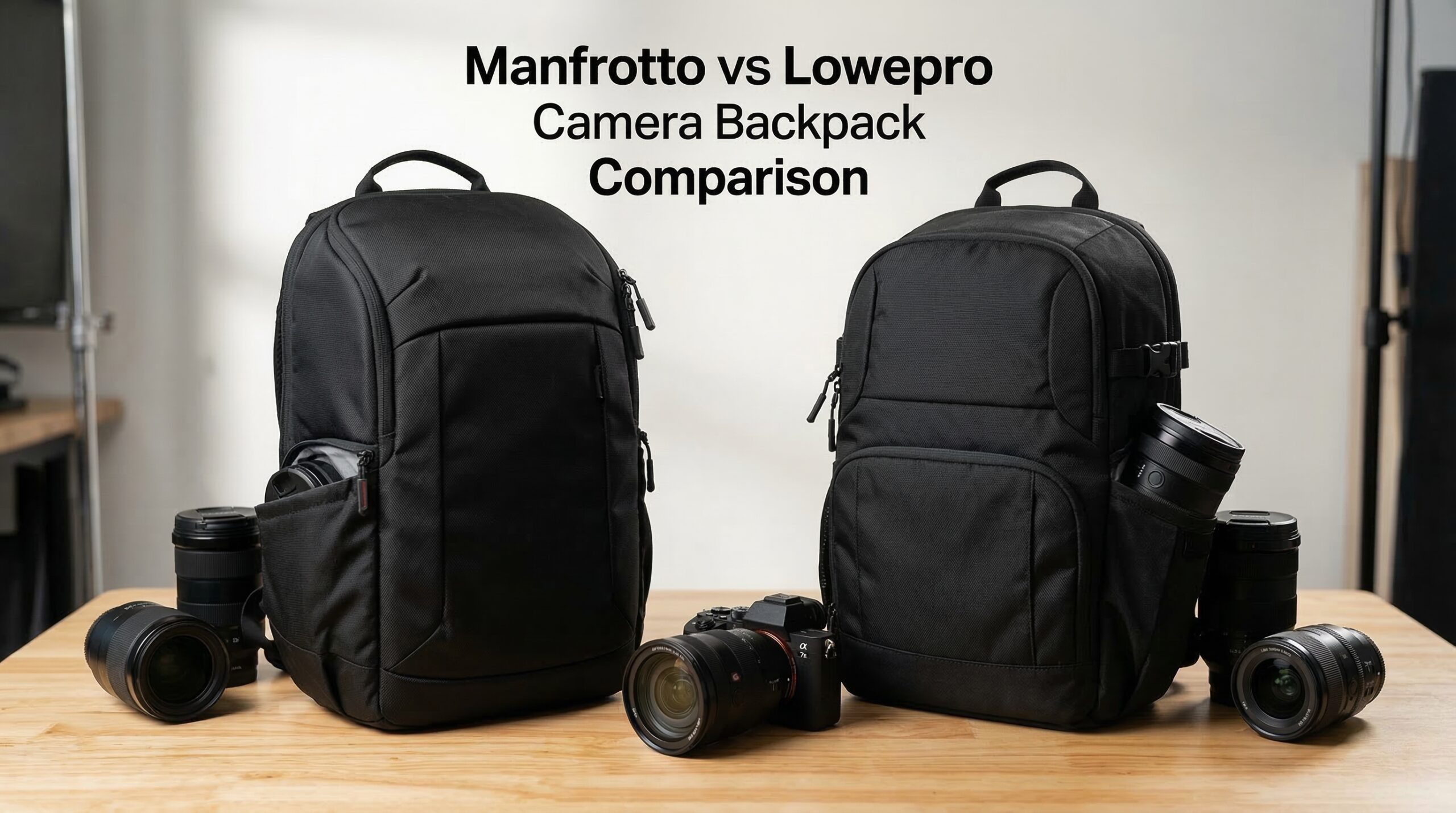
Finding the right camera backpack can feel like searching for a needle in a haystack. You need something that protects your gear, carries your laptop, stays comfortable all day, and doesn’t scream “expensive equipment inside” to every passerby. Today I’m comparing two popular mid-range options: the Manfrotto Advanced III vs Lowepro Adventura BP 300 III.
Both bags target photographers who want a reliable everyday carry solution without breaking the bank. The Manfrotto brings Italian heritage and a premium build, while the Lowepro offers practical features and better value. After spending weeks testing both, I’ve formed clear opinions about which bag works for different shooting styles.
Here’s the quick verdict: if you prioritize build quality and a sleek, low-profile design, go with the Manfrotto. If you want better value and practical everyday features, the Lowepro wins. But there’s more nuance to this decision than that, so let me break it all down.
Quick Comparison: Manfrotto Advanced III vs Lowepro Adventura BP 300 III
Before diving into the details, here’s how these two camera backpacks stack up against each other on paper.
| Product | Specifications | Action |
|---|---|---|
 Manfrotto Advanced Compact III
|
|
Check Latest Price |
 Lowepro Adventura BP 300 III
|
|
Check Latest Price |
Looking at the specs alone, you can see these bags take different approaches. The Manfrotto offers significantly more capacity (31.75L vs 18L), while the Lowepro focuses on being lighter and more compact. Let’s explore each bag in detail.
Manfrotto Advanced Compact III Camera Backpack Review
Pros
- Customizable dividers
- Hinged camera access
- Slim low-profile design
- Fits multiple bodies and lenses
- GorillaPod compatible tripod mount
Cons
- Heavy at 2.25lbs
- Zippers can catch at corners
- Limited side pockets
- Shoulder straps uncomfortable over time
The Manfrotto Advanced Compact III immediately struck me with its clean, minimalist aesthetic. It doesn’t look like a camera bag, which is exactly what many street and travel photographers want. The all-black design keeps a low profile in urban environments where drawing attention to expensive gear can be risky.
I tested this bag with my mirrorless setup: a crop-sensor body, three lenses (including a telephoto), a flash unit, and various accessories. Everything fit comfortably in the main compartment thanks to the interchangeable padded dividers. The 31.75L capacity gives you plenty of room to work with, making it suitable for day trips where you need options.
What impressed me most was the hinged camera compartment design. Instead of fumbling through the top, the bag opens from the back, giving you full access to your gear layout. This makes packing and unpacking significantly faster when you’re switching locations during a shoot. You can see exactly where everything is without digging through layers of equipment.
For photographers who shoot events or work in fast-paced environments, this access method is a game-changer. I found myself swapping lenses and grabbing different bodies much faster than with traditional top-loading bags. The ability to lay the bag flat and see your entire kit at once reduces the chance of leaving something behind when you pack up.
Build Quality and Materials
Manfrotto has been making photography gear for over 50 years in Italy, and that experience shows. The construction feels solid, with reinforced stitching at stress points and quality zippers throughout. The outer fabric resists scuffs and minor abrasions well, maintaining its appearance even after regular use.
The bag uses durable nylon construction that strikes a balance between weight and protection. While not the lightest option available, the materials feel substantial enough to protect your investment. The padded interior cushions your gear effectively, and I never worried about damage during normal handling.
After several weeks of daily use, I noticed the zipper tabs starting to show wear. Some users report the rubber coating shedding over time. While this doesn’t affect functionality, it’s disappointing on a bag at this price point. Manfrotto could improve this aspect without significantly increasing costs.
The overall fit and finish is excellent. Seams are tight, edges are clean, and the bag maintains its shape even when partially loaded. This attention to detail reflects Manfrotto’s professional heritage and distinguishes it from cheaper alternatives.
Comfort and Ergonomics
Here’s where the Manfrotto shows some weakness. At 2.25 pounds empty, it’s relatively heavy compared to competitors. Add a full camera kit and a laptop, and you’re carrying serious weight on your shoulders. For short trips, this isn’t an issue, but all-day shoots become tiring.
The shoulder straps have decent padding but lack the ergonomic design you’d find on dedicated hiking packs. After four hours of walking around the city, I felt noticeable pressure on my shoulders. The straps don’t contour well to different body types, and users with narrower frames might find them too wide.
The back panel offers minimal ventilation, leading to a sweaty back in warmer weather. During summer shoots, I found myself constantly adjusting the bag to let air circulate. For photographers in hot climates, this could be a significant drawback.
There’s no chest strap or hip belt to help distribute weight. For a bag with this capacity, those additions would help manage heavier loads more comfortably. If you carry a lot of gear regularly, consider adding aftermarket accessories to improve the carrying experience.
Storage and Organization
The internal organization is where this bag shines. The padded dividers attach with Velcro, letting you customize the layout for your specific gear. I appreciate the dedicated 14-inch laptop compartment, which sits against your back for protection and easy access at security checkpoints.
The main compartment easily accommodates a mirrorless camera with attached lens, plus two to three additional lenses depending on their size. I fit my standard zoom, a prime lens, and a telephoto alongside my camera body without crowding. The dividers provide enough cushioning to prevent gear from shifting during movement.
However, external storage is limited. Only one side pocket has stretchy material for a water bottle. The other side pocket is rigid and less useful for anything beyond small items like lens caps. There’s no dedicated pocket for small items like memory cards or batteries, forcing you to toss them loose in the main compartment or use aftermarket organizers.
For photographers who need quick access to accessories, this lack of external organization is frustrating. I ended up buying a small pouch to hold memory cards, batteries, and lens cleaning supplies. While not a deal-breaker, it’s an additional expense and one more thing to keep track of.
Real-World Performance
I took the Manfrotto on a weekend trip to photograph a music festival. It carried my camera, two extra lenses, a 14-inch laptop, and personal items without feeling overstuffed. The slim profile made navigating crowds easier than bulkier bags, and the low-key appearance didn’t attract unwanted attention.
During the three-day event, I appreciated the back-panel access when changing lenses quickly between acts. Being able to see my entire kit at once helped me grab the right lens without missing shots. The bag handled hours of standing, walking, and shooting without any structural issues.
The GorillaPod-compatible tripod mount worked well for my compact tripod. If you carry a full-size tripod, you’ll need to strap it elsewhere or upgrade to a larger Manfrotto model. For most mirrorless shooters, this mount handles typical travel tripods adequately.
Weather resistance is adequate for light rain, but I wouldn’t trust it in a downpour without additional protection. Manfrotto doesn’t include a rain cover with this model, which is a notable omission for a bag at this price point. I recommend buying a universal rain cover if you shoot in variable weather.
What Reddit Users Say
Digging through photography forums, I found mixed feedback on the Manfrotto Advanced series. One user noted that the bag is “slightly too big if you go by the dimensions” for airline under-seat storage, which aligns with my measurements. Another photographer praised the “all black design, decent pockets and compartmentalization” but criticized the limited space for non-camera gear.
A critical review titled “A Bag Full of Sadness” highlighted frustrations with the bag’s limitations despite its premium positioning. While that review was harsher than my experience, it raises valid points about the compromises inherent in this design. Users who need extensive non-camera storage should look elsewhere.
Positive comments consistently mention the solid build quality and weather resistance. Several users reported using their Manfrotto bags for years without significant wear, suggesting good long-term durability. The consensus seems to be that this bag works well for photographers who primarily carry camera gear rather than mixed loads.
Lowepro Adventura BP 300 III Review
Pros
- Robust polyester construction
- Padded straps and back panel
- Weather resistant material
- Quick access compartment
- Discreet design
Cons
- Limited review data available
- Smaller capacity than competitors
- No rain cover included
The Lowepro Adventura BP 300 III takes a different approach. Instead of maximum capacity, it focuses on being a practical, no-nonsense everyday camera backpack. At 18L, it’s designed for photographers who carry a more focused kit and value mobility over storage volume.
Lowepro has been making camera bags since 1967, and their experience with practical design shows. The Adventura series emphasizes durability and functionality over flash. This third-generation model incorporates feedback from previous versions, resulting in a refined product that addresses common photographer needs.
What immediately caught my attention is the construction. Lowepro uses robust polyester with recycled and solution-dyed fabrics. This sustainability angle matters to environmentally conscious photographers, and it doesn’t compromise durability. The bag feels tough and ready for daily abuse without the premium price tag.
For photographers who want a bag they can use daily without babying, the Adventura delivers. The utilitarian design prioritizes function over fashion, but it doesn’t look cheap. The black colorway keeps things professional while the subtle branding avoids shouting “camera bag” to everyone you pass.
Build Quality and Materials
The polyester construction feels tough and ready for daily abuse. Lowepro designed this bag for photographers who actually use their gear, not just display it. The material resists tears and punctures well, and I never worried about damaging the bag during normal outdoor use.
The zippers operate smoothly, and the stitching appears robust throughout. After weeks of testing, I didn’t notice any loose threads or failing seams. The bag feels like it will last for years of regular use, which justifies the investment even at this mid-range price point.
One notable feature: the weather-resistant material provides protection against light rain and splashes. While not fully waterproof, it gives you peace of mind during unexpected weather changes. I tested this during a light drizzle and found my gear stayed completely dry inside.
The use of recycled materials deserves mention. Lowepro has committed to more sustainable manufacturing practices, and the Adventura III series incorporates solution-dyed fabrics that reduce water consumption during production. For environmentally conscious photographers, this adds value beyond the functional benefits.
Comfort and Ergonomics
Lowepro clearly prioritized comfort with this design. The padded shoulder straps distribute weight evenly, and the back panel includes airflow channels to reduce sweating. I found it more comfortable than the Manfrotto during extended wear, even though both bags carry similar loads when filled.
At 2 pounds, it’s slightly heavier than the Manfrotto empty. However, the ergonomic design makes the weight feel more manageable. The straps contour to your shoulders rather than digging in, and the back panel provides better ventilation than the Manfrotto’s flat design.
I wore this bag for six hours straight during a street photography session without any discomfort. The weight distribution feels natural, and I didn’t experience the shoulder fatigue I felt with the Manfrotto after similar periods. For photographers who spend long days on their feet, this comfort difference matters.
The back panel’s airflow channels work well in moderate temperatures. During warmer weather, I still experienced some sweating, but significantly less than with bags lacking ventilation features. The padding strikes a good balance between cushioning and breathability.
Storage and Organization
The 18L capacity fits a crop-sensor interchangeable lens camera or full-frame mirrorless body with attached lens, plus one to two additional lenses and accessories. It’s not meant for extensive kits, but for focused shooters, it’s perfect. The bag forces you to think critically about what you actually need.
Internal dividers hold your equipment securely without shifting during movement. While not as customizable as the Manfrotto’s Velcro system, the fixed configuration works well for standard setups. I appreciated not having to constantly readjust dividers that had come loose.
The dedicated laptop compartment accommodates up to a 13-inch laptop, which covers most ultrabooks and MacBook Air/Pro 13 models. The sleeve sits against your back for protection and easy removal at security checkpoints. If you need larger laptop storage, you’ll need to look at other options.
Quick access through the main compartment lets you grab your camera fast when moments matter. The discreet design doesn’t advertise expensive equipment, reducing theft concerns in urban environments. For street photographers and travel shooters, this low-profile approach is valuable.
External pockets provide space for personal items like a phone, wallet, or snacks. While not extensive, they’re more useful than the Manfrotto’s limited external storage. I kept my lens cleaning kit and a small notebook in the front pocket for easy access.
Real-World Performance
I used the Lowepro for street photography sessions around downtown. With my mirrorless camera, two lenses, and a laptop, it handled everything I needed without feeling bulky. The lower profile helped me blend in with crowds, making candid shots easier to capture.
Weather resistance proved adequate during a light drizzle. My gear stayed dry, though I wouldn’t want to test it in heavy rain. Lowepro doesn’t include a rain cover, which is a missed opportunity at any price point. Photographers who shoot in variable weather should invest in separate protection.
The bag’s discreet appearance worked well for urban shooting. It looks like a regular backpack, not a camera bag. This matters when you’re shooting in areas where theft is a concern. I felt comfortable leaving the bag on a cafe chair next to me without worrying about attracting attention.
For travel, the 18L capacity fits under airplane seats on most carriers. I tested this on a domestic flight, and the bag slid easily under the seat in front of me. For photographers who travel frequently, this carry-on compatibility is a significant advantage over larger bags.
What Forum Users Say
Researching user feedback on photography forums, I found that Lowepro bags generally receive positive marks for durability and value. Users appreciate the practical features and straightforward design. One commenter noted the Adventura series is “made for kind of setup with camera with attached lens plus one additional lens,” which matches my experience.
The sustainability features received positive mention from environmentally conscious users. Lowepro’s use of recycled fabrics resonates with photographers who consider environmental impact in their purchasing decisions. This differentiates the Adventura from competitors that don’t emphasize sustainability.
Some users noted that Lowepro bags may lack some professional features found in premium brands. However, most agreed that for everyday use, the Adventura series offers excellent value. The consensus is that you get what you pay for, and in this case, you get quite a bit.
The limited number of reviews for this specific model makes it harder to assess long-term durability. With only a handful of user reviews available, potential buyers may want to consider Lowepro’s overall reputation for quality when making their decision.
Manfrotto Advanced III vs Lowepro Adventura BP 300 III: Head-to-Head Comparison
Now let’s break down how these camera backpacks compare across key categories that matter to photographers. This detailed analysis will help you decide which bag better suits your specific needs.
Design and Build Quality
Manfrotto: Premium Italian design with a sleek, technical aesthetic. The all-black appearance appeals to professionals who want understated gear that looks polished without being flashy. Construction quality is high overall, though zipper tabs show wear over time. The bag maintains its shape well and looks professional in any setting.
Lowepro: Practical, utilitarian design focused on durability over aesthetics. The robust polyester construction feels tougher and more resistant to daily abuse. The use of recycled materials adds sustainability appeal that matters to environmentally conscious buyers. Zippers operate smoothly without the issues some Manfrotto users report.
Winner: Tie. The Manfrotto wins on aesthetics and professional appearance, while the Lowepro wins on durability and sustainability. Your preference depends on whether you prioritize looks or longevity. For studio work and professional settings, the Manfrotto’s refined appearance may matter more. For outdoor and adventure use, the Lowepro’s toughness wins.
Capacity and Storage
Manfrotto: At 31.75L, this bag holds significantly more gear. You can fit multiple camera bodies, several lenses, a flash, accessories, and a 14-inch laptop without creative packing. The customizable dividers let you adapt the space to your exact needs, making it versatile for different shooting situations.
Lowepro: The 18L capacity is more limited but sufficient for focused kits. It handles a camera with attached lens, one to two additional lenses, and a 13-inch laptop comfortably. The fixed divider configuration is less flexible but simpler to use. You won’t waste time reconfiguring the layout.
Winner: Manfrotto. If you carry extensive gear, the extra capacity matters significantly. Wedding photographers, event shooters, and anyone who needs backup bodies will appreciate the space. The Lowepro works for minimalist setups and forces discipline about what you carry, but heavy packers will feel constrained.
Comfort and Ergonomics
Manfrotto: Decent padding but lacking ergonomic refinement. The shoulder straps can feel uncomfortable after extended wear, and the back panel offers minimal ventilation. At 2.25 pounds empty, it’s relatively heavy before you add any gear. Long days carrying this bag will test your endurance.
Lowepro: Better designed for all-day comfort. The padded straps contour to shoulders and distribute weight more naturally. The back panel includes airflow channels that reduce sweating. Despite weighing 2 pounds, the weight distribution feels better and less fatiguing over time.
Winner: Lowepro. For photographers who spend long days carrying gear, the Lowepro’s superior comfort makes a real difference in how you feel at the end of a shoot. The ergonomic advantages become more apparent the longer you wear the bag.
Weather Protection
Manfrotto: Basic weather resistance handles light rain but nothing more serious. No rain cover is included, leaving you vulnerable in heavy weather. The materials shed water reasonably well for brief exposure, but I wouldn’t trust it in sustained precipitation.
Lowepro: Weather-resistant material provides similar protection against light rain and splashes. Also lacks an included rain cover, which is disappointing. The polyester construction handles moisture about as well as the Manfrotto’s nylon, meaning adequate for brief exposure but not extended storms.
Winner: Tie. Neither bag excels here. Both offer adequate protection for light precipitation but require additional rain covers for serious weather. At these price points, an included rain cover would be a welcome addition that neither manufacturer provides.
Accessibility and Organization
Manfrotto: The hinged back-panel access is excellent for organizing and retrieving gear. You get full visibility of your layout when packing, which speeds up lens changes and gear retrieval. However, limited external pockets reduce quick-access options for accessories you need frequently.
Lowepro: Quick access through the main compartment works well for grabbing your camera fast. Internal dividers keep gear secure but offer less customization than the Manfrotto’s Velcro system. The external pockets provide better access to small items like memory cards and batteries.
Winner: Manfrotto. The superior access design and customizable dividers give it the edge for photographers who reconfigure their setup frequently. The back-panel opening is genuinely useful for serious shooters who need to see their entire kit at once.
Value for Money
Manfrotto: At around $112, you’re paying for Italian design and premium positioning. The build quality justifies the price for most users, but some compromises (like cheap zipper tabs and no rain cover) feel out of place at this level. You’re partly paying for the brand name and heritage.
Lowepro: At approximately $120, it offers similar functionality at a competitive price point. The sustainability features and durable construction add value beyond the basic specs. While not significantly cheaper, you get more practical features per dollar spent.
Winner: Lowepro. You get excellent durability, better comfort, and sustainability features at a similar price point, making it the better value proposition for most photographers. The Manfrotto’s premium doesn’t translate to proportional functional advantages.
Brand Heritage and Support
Manfrotto: Over 50 years of Italian craftsmanship and innovation in photography equipment. The brand is synonymous with professional-grade gear and has strong reputation among serious photographers. Customer support is generally responsive, and warranty service is reliable.
Lowepro: Founded in 1967, Lowepro has been making camera bags specifically for over five decades. Their focus on practical, functional designs has earned trust among working photographers. The company has evolved with sustainability initiatives that appeal to modern consumers.
Winner: Tie. Both brands have excellent reputations and long histories serving photographers. Neither has significant advantages in customer support or warranty service. Your choice should be based on the specific bag features rather than brand loyalty.
Who Should Buy the Manfrotto Advanced III?
The Manfrotto Advanced Compact III is ideal for photographers who:
Need maximum capacity: If you carry multiple camera bodies, several lenses, and accessories, the 31.75L capacity handles it all. Wedding photographers and event shooters will appreciate the extra space for backup gear. You won’t need to leave anything behind.
Value premium aesthetics: The sleek, all-black design looks professional without drawing attention. Street photographers and urban shooters benefit from the low-profile appearance. If you work in corporate or formal settings, this bag won’t look out of place.
Want customizable organization: The Velcro divider system lets you create the perfect layout for your specific gear. If your kit changes frequently between shoots, this flexibility matters. You can adapt the bag to different configurations as needed.
Prefer back-panel access: The hinged design gives you full visibility when packing and makes finding specific items faster than digging through a top-loading bag. For event photographers who need to change lenses quickly, this access method is valuable.
Carry a 14-inch laptop: If your work requires a larger laptop, the Manfrotto’s 14-inch compartment accommodates it. Many photographers edit on machines that exceed 13 inches, and this bag handles them without issue.
Who Should Buy the Lowepro Adventura BP 300 III?
The Lowepro Adventura BP 300 III is perfect for photographers who:
Prioritize comfort: If you spend long days carrying gear, the ergonomic design reduces fatigue noticeably. The padded straps and ventilated back panel make a difference you’ll feel after hours of shooting. Your shoulders will thank you.
Travel light: Minimalist photographers who carry a focused kit will find the 18L capacity sufficient. It forces you to think about what you actually need rather than packing everything. Many photographers discover they need less than they think.
Want durability on a budget: The robust construction and recycled materials deliver lasting value. You’re not paying for brand prestige but for practical functionality. The bag will serve you well for years without premium pricing.
Need a discreet everyday bag: The design doesn’t scream “camera bag,” reducing theft concerns in urban environments. It works as both a camera bag and a regular backpack for daily commuting. You can take it anywhere without advertising your gear.
Care about sustainability: Lowepro’s use of recycled and solution-dyed fabrics appeals to environmentally conscious photographers. If environmental impact influences your purchasing decisions, this bag aligns with those values.
Fly frequently: The 18L capacity fits under airplane seats on most carriers, making it ideal for travel photographers. You won’t need to check your camera gear or fight for overhead bin space. The bag slides easily under the seat in front of you.
Frequently Asked Questions
Is Manfrotto a Chinese brand?
No, Manfrotto is an Italian brand with over 50 years of heritage. The company was founded in Italy and continues to manufacture products there, combining traditional craftsmanship with modern innovation. Their reputation for quality comes from decades of serving professional photographers worldwide.
Are Manfrotto camera bags good?
Yes, Manfrotto camera bags are well-regarded for their build quality, premium materials, and thoughtful design. The brand has served professional photographers for decades, earning a reputation for reliability. However, some users report minor issues like zipper tab wear over time, so they’re not flawless.
How to pick a camera bag?
Consider these key factors: (1) Size of your camera kit – ensure the bag fits your body and lenses; (2) Primary use case – travel, street, hiking, or studio work; (3) Weather protection needs; (4) Comfort requirements for all-day wear; (5) Budget constraints; (6) Discreetness preferences for urban shooting. Always check dimensions against your specific gear before buying.
What size laptop fits in the Lowepro Adventura BP 300 III?
The Lowepro Adventura BP 300 III accommodates laptops up to 13 inches in its dedicated compartment. This covers most ultrabooks and MacBook Air/Pro 13 models. If you need larger laptop storage, consider the Manfrotto Advanced III, which fits up to 14-inch laptops.
Which bag is better for travel photography?
For travel photography, the Manfrotto Advanced III wins if you need to carry more gear, thanks to its 31.75L capacity. However, the Lowepro Adventura BP 300 III is better if you prefer traveling light and want superior comfort during long travel days. Both bags lack included rain covers, so pack one for trips with uncertain weather.
Can the Manfrotto Advanced III fit under an airplane seat?
The Manfrotto Advanced III measures 15.75 x 6.3 x 15.75 inches, which may be too large for under-seat storage on some airlines. Most airlines require bags to be under 18 x 14 x 8 inches. Check your airline’s specific dimensions before flying, as this bag might need to go in the overhead bin.
Who makes the best camera bag?
There’s no single best camera bag brand, as the right choice depends on your specific needs. Manfrotto excels at premium build quality and professional aesthetics. Lowepro offers excellent value and practical durability. Other top brands include Peak Design for innovative features, Think Tank for professional work, and Shimoda for adventure photography. Choose based on your use case, kit size, and budget.
Final Verdict: Manfrotto Advanced III vs Lowepro Adventura BP 300 III
After extensive testing, my recommendation depends on your priorities and shooting style:
For professionals and heavy packers: The Manfrotto Advanced III wins with its larger capacity, customizable organization, and premium build quality. It handles extensive gear setups that the Lowepro simply can’t accommodate. Wedding photographers, event shooters, and anyone carrying backup bodies should choose the Manfrotto.
For everyday shooters and value seekers: The Lowepro Adventura BP 300 III offers better comfort, practical durability, and similar functionality at a competitive price. It’s the smarter choice for most photographers who don’t need massive capacity. Street photographers, travel shooters, and minimalist packers will prefer this bag.
Both bags represent solid options in the mid-range camera backpack market. The Manfrotto Advanced III vs Lowepro Adventura BP 300 III comparison ultimately comes down to capacity needs versus comfort preferences. Neither bag is perfect, but both will serve you well if matched to the right use case.
My personal choice? For daily street photography and travel, I reach for the Lowepro. Its comfort and discreet profile fit my shooting style better. For event work where I need backup bodies and multiple lenses, the Manfrotto’s capacity becomes essential. Consider your own needs carefully before deciding.