
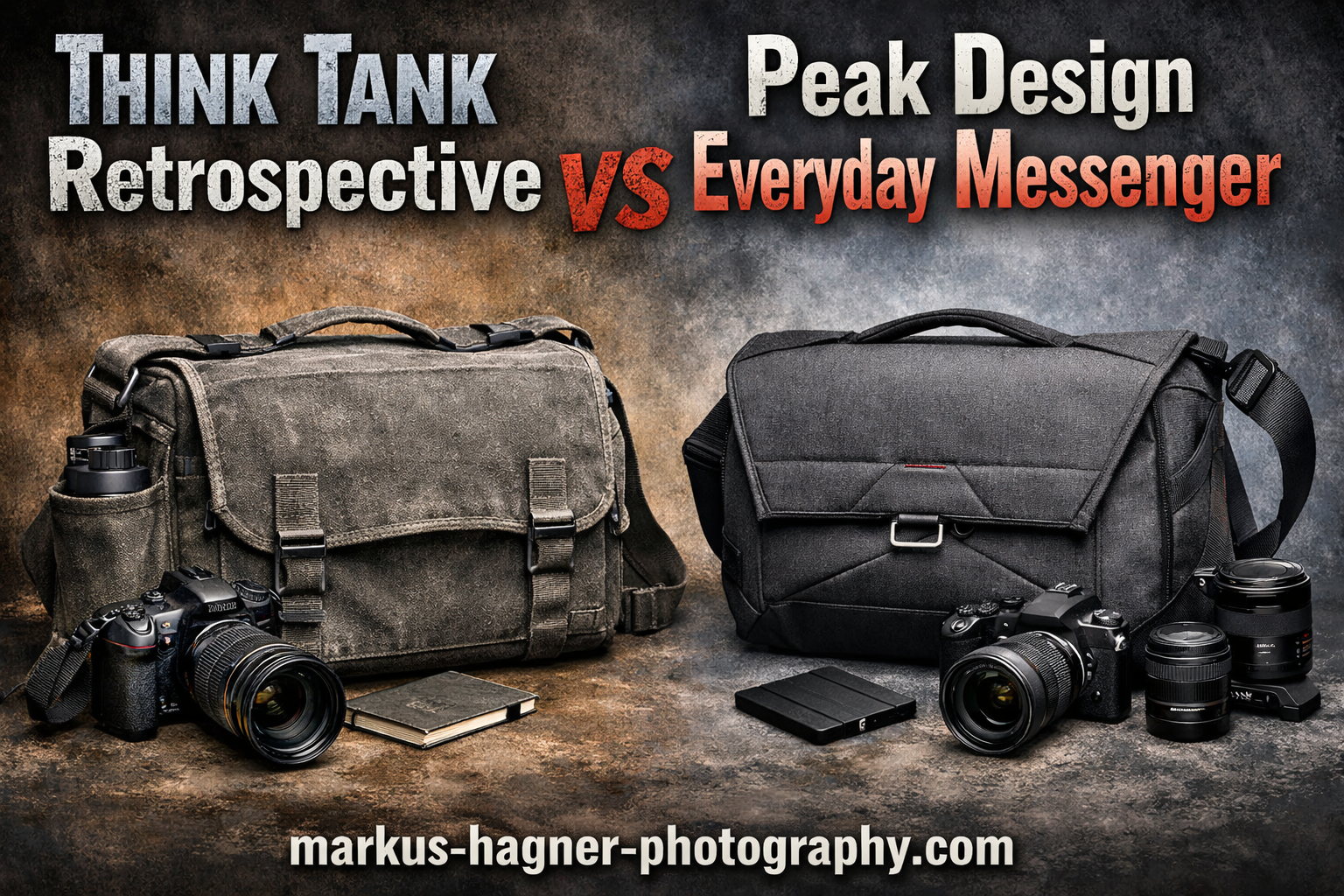
Choosing between the Think Tank Retrospective vs Peak Design Everyday Messenger is a decision many photographers face when looking for the perfect camera messenger bag. Both bags have earned loyal followings among professionals and enthusiasts alike, but they take fundamentally different approaches to carrying and protecting your valuable gear.
After testing both bags extensively with my Sony A7IV kit and various lens combinations, I have developed strong opinions about where each bag excels. The Think Tank Retrospective 7 V2.0 offers classic messenger styling with proven durability, while the Peak Design Everyday Messenger V3 brings modern innovation with its MagLatch closure and expandable design.
This comparison matters because both bags represent significant investments, and choosing the wrong one means either living with daily frustrations or spending more money on a replacement. I want to help you avoid that mistake by sharing my hands-on experience with both bags across street photography sessions, weekend trips, and professional shoots.
The camera messenger bag market has exploded in recent years, with options ranging from budget-friendly generics to premium professional gear. What sets these two bags apart is their commitment to quality and thoughtful design features that address real photographer needs. Neither bag is perfect, but both excel in specific use cases.
Quick verdict: The Think Tank Retrospective 7 V2.0 wins on value and classic functionality, making it ideal for photographers who want reliable gear access and subtle styling. The Peak Design Everyday Messenger V3 justifies its higher price with innovative features like the MagLatch closure and expandable capacity, perfect for tech-savvy photographers who prioritize modern design.
Think Tank Retrospective vs Peak Design Everyday Messenger: Quick Comparison
| Product | Specifications | Action |
|---|---|---|
 Think Tank Retrospective 7 V2.0
|
|
Check Latest Price |
 Peak Design Everyday Messenger V3 13L
|
|
Check Latest Price |
The comparison table above highlights the key differences between these two camera messenger bags. The Think Tank offers a traditional approach with proven features like velcro silencers for quiet operation, while Peak Design pushes innovation with its magnetic closure system and expandable capacity. Both bags accommodate 13-inch laptops and provide weather protection, but the implementation differs significantly.
Looking at the specifications, you will notice the Think Tank weighs slightly less at 2.64 pounds compared to Peak Design at 2.82 pounds. This difference becomes noticeable after hours of carrying. The capacity difference depends on how you configure the internal dividers, but both bags handle similar gear loads effectively.
Think Tank Retrospective 7 V2.0 Deep Dive
Pros
- Super spacious layout
- Minimalist appearance
- Excellent padding
- Velcro silencers
- Luggage pass-through
Cons
- Tips forward when loaded
- Rain cover difficult to install
- 14 inch laptop will not fit
My experience with the Think Tank Retrospective 7 V2.0 spans over 18 months of regular use, and it has become my go-to bag for wedding photography and urban street shoots. The Pinestone color gives it an understated look that does not scream “expensive camera gear inside,” which is exactly what I want when working in crowded city environments.
The bag arrived with that distinctive soft, form-fitting character Think Tank is known for. Unlike stiffer bags that fight you when packing, the Retrospective conforms to your gear and body almost immediately. The minimalist outer appearance fooled more than one client who assumed I was carrying a regular messenger bag rather than thousands of dollars in equipment.
Think Tank designed this bag for working professionals who need quick access without drawing attention. The canvas-look exterior combined with leather accents creates a premium feel that ages beautifully. After 18 months of use, mine shows minimal wear despite being tossed into car trunks, set on dirty floors, and dragged through airports.
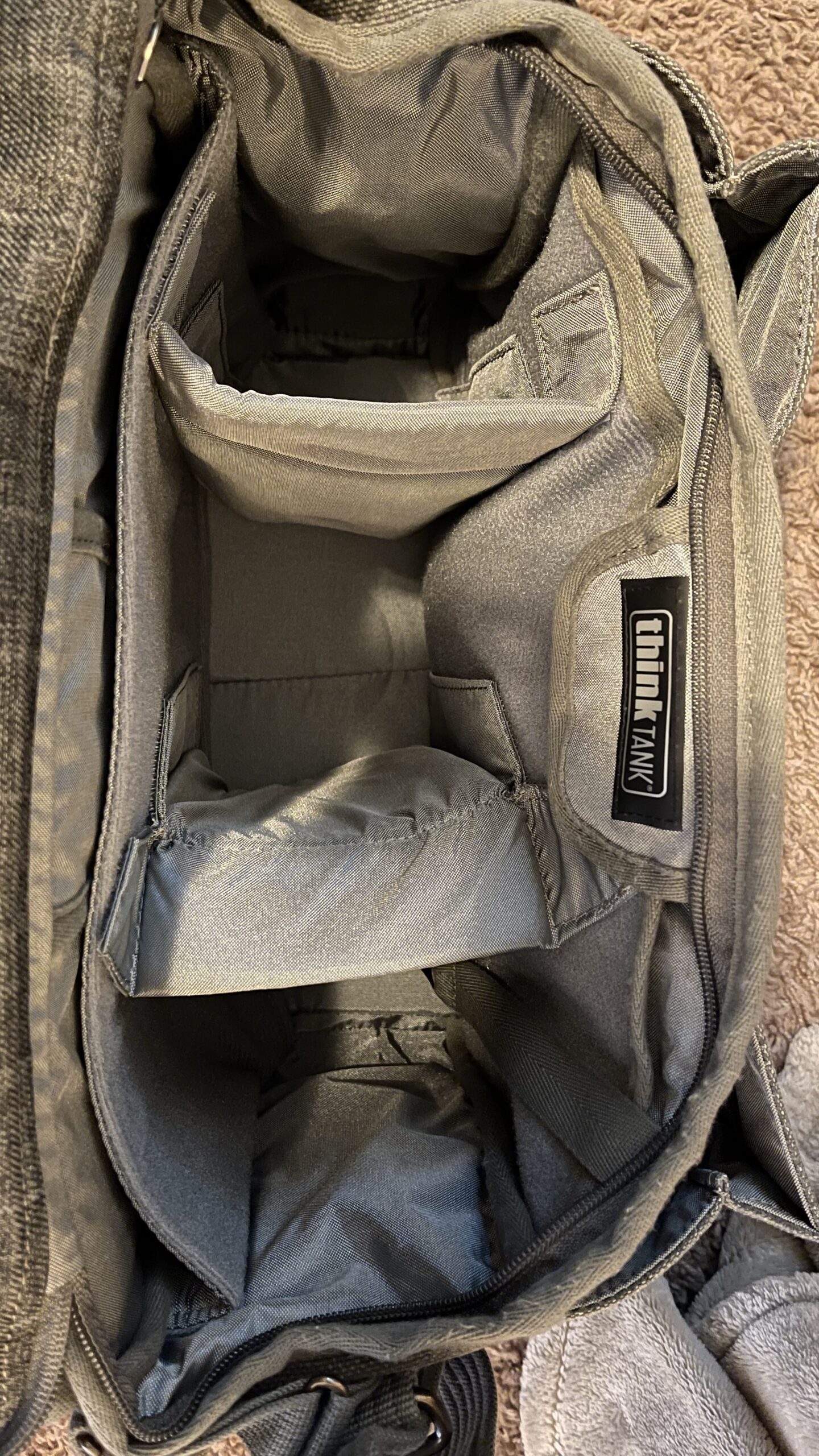
Capacity-wise, I regularly fit my Sony A7IV with a 24-70mm f/2.8 attached, plus a 70-200mm f/4, a 35mm f/1.4 prime, batteries, and a 13-inch MacBook Air in the dedicated rear pocket. The internal dimensions of 12.5 inches wide by 8.8 inches high by 5.4 inches deep provide generous space for a mirrorless kit or a compact DSLR setup.
For Canon shooters, I have also tested this bag with a Canon R5 and RF 24-70mm f/2.8 combo. The setup fits comfortably with room for two additional prime lenses. The key is arranging your dividers so the camera body sits near the opening for quick access while protecting attached lenses from impact.
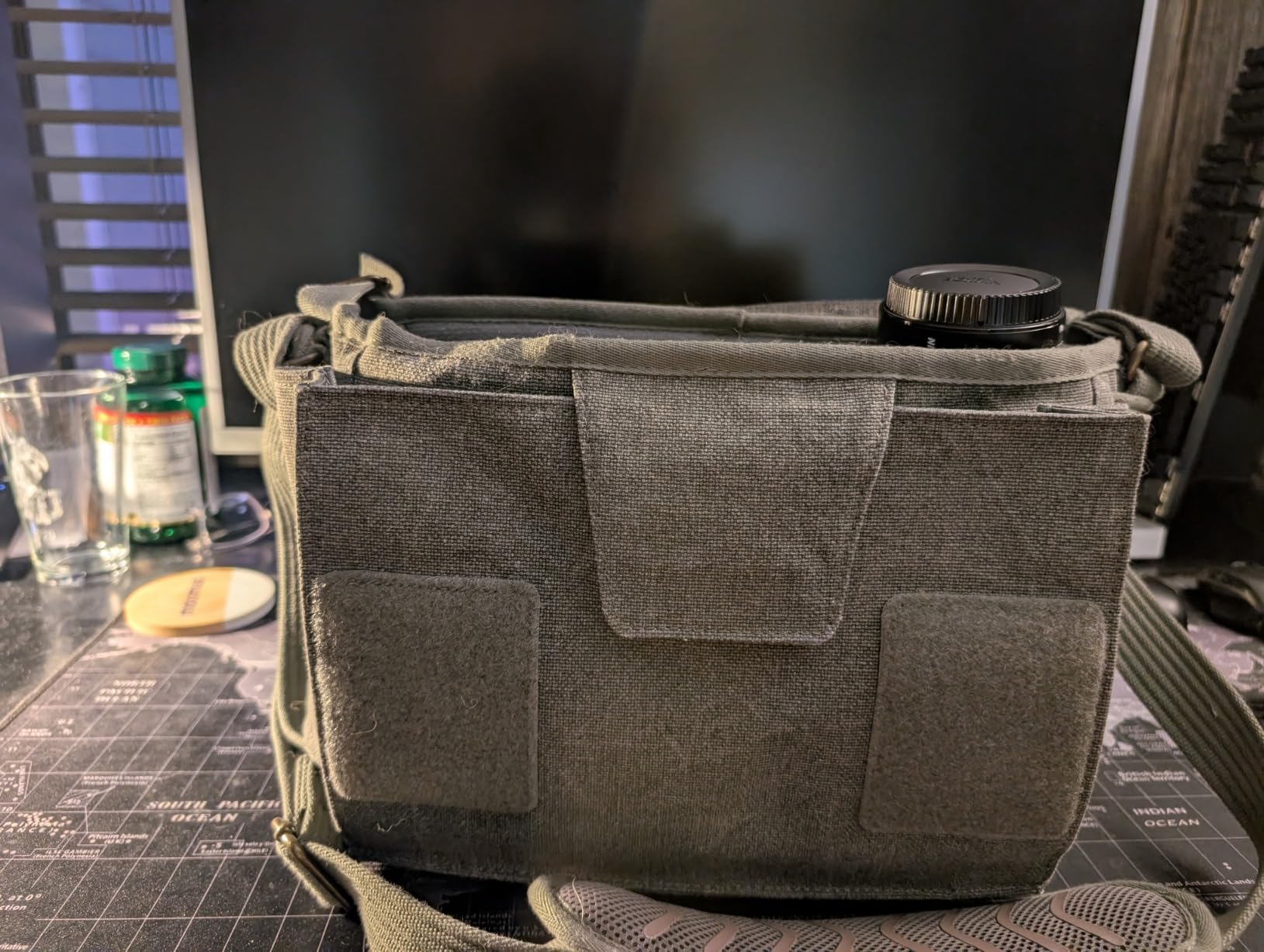
The velcro silencer tabs deserve special mention. During quiet ceremony moments at weddings, the last thing I want is the loud ripping sound of velcro when accessing my camera. Think Tank included fold-over silencer flaps that convert the closure to magnetic, which has saved me from embarrassing moments countless times. This is the kind of thoughtful detail that shows Think Tank understands working photographers.
The silencer system works by folding a fabric tab over the velcro strip, covering it completely. Small magnets embedded in the flap then hold the bag closed silently. Switching between velcro and magnetic modes takes about three seconds, making it practical to switch based on your shooting environment.
The adjustable shoulder strap with its cushioned non-slip pad ranks among the most comfortable I have used. After 8-hour wedding days, my shoulder fatigue is noticeably less compared to other messenger bags I have tested. The pad stays in position rather than sliding around, which seems like a small thing until you experience the alternative.
Forum discussions consistently highlight this strap as a standout feature. One user mentioned owning their Retrospective for over five years with the strap showing no signs of wear. The non-slip rubberized material on the pad underside prevents the bag from sliding off your shoulder even when wearing smooth synthetic jackets.
However, the bag has one significant design flaw that multiple users have noted: it tips forward when set down. The front pocket does not extend to the bottom, so when loaded with gear, the weight distribution causes the bag to topple forward. This has resulted in my bag landing face-down more times than I care to admit. You learn to prop it against something or lay it flat, but it remains an annoyance.
The seam-sealed rain cover provides legitimate weather protection, though I find it fiddly to install during sudden downpours. The cover stuffs into its own pocket when not needed, which keeps it from getting lost. I have used it in light rain and snow, and my gear stayed completely dry.
During a particularly memorable outdoor engagement session, unexpected rain sent everyone scrambling. The rain cover installed in about 20 seconds and protected my gear while I continued shooting. The cover extends over the entire bag including the flap, creating a sealed environment that kept water out even in moderate rainfall.
Additional features I appreciate include the collapsible water bottle pocket, luggage handle pass-through for travel days, and the webbing rail that accommodates modular pouches. The organizer pocket keeps memory cards and batteries sorted, and the zippered main compartment opening tucks away when you prefer quick flap access.
The water bottle pocket collapses flat when not in use, maintaining the bag’s slim profile. When expanded, it holds standard 16-ounce bottles securely. This feature alone eliminates the need to carry a separate water bottle or risk spills inside your camera compartment.
Peak Design Everyday Messenger V3 13L Deep Dive
Pros
- MagLatch one-handed access
- Expandable capacity
- Excellent organization
- Travel-friendly
- High-quality materials
Cons
- Expensive
- Flap will not stay open
- Strap padding slides
- Tips backward when set down
The Peak Design Everyday Messenger V3 represents the third generation of a bag that revolutionized how photographers think about gear storage. I tested this bag during a two-week trip through Japan, and its innovative features genuinely impressed me in several ways while frustrating me in others.
Peak Design launched the original Everyday Messenger through a Kickstarter campaign that broke records, and the company has refined the design through three iterations. The V3 incorporates lessons learned from thousands of user feedback submissions, resulting in a bag that addresses many earlier complaints while introducing new features.
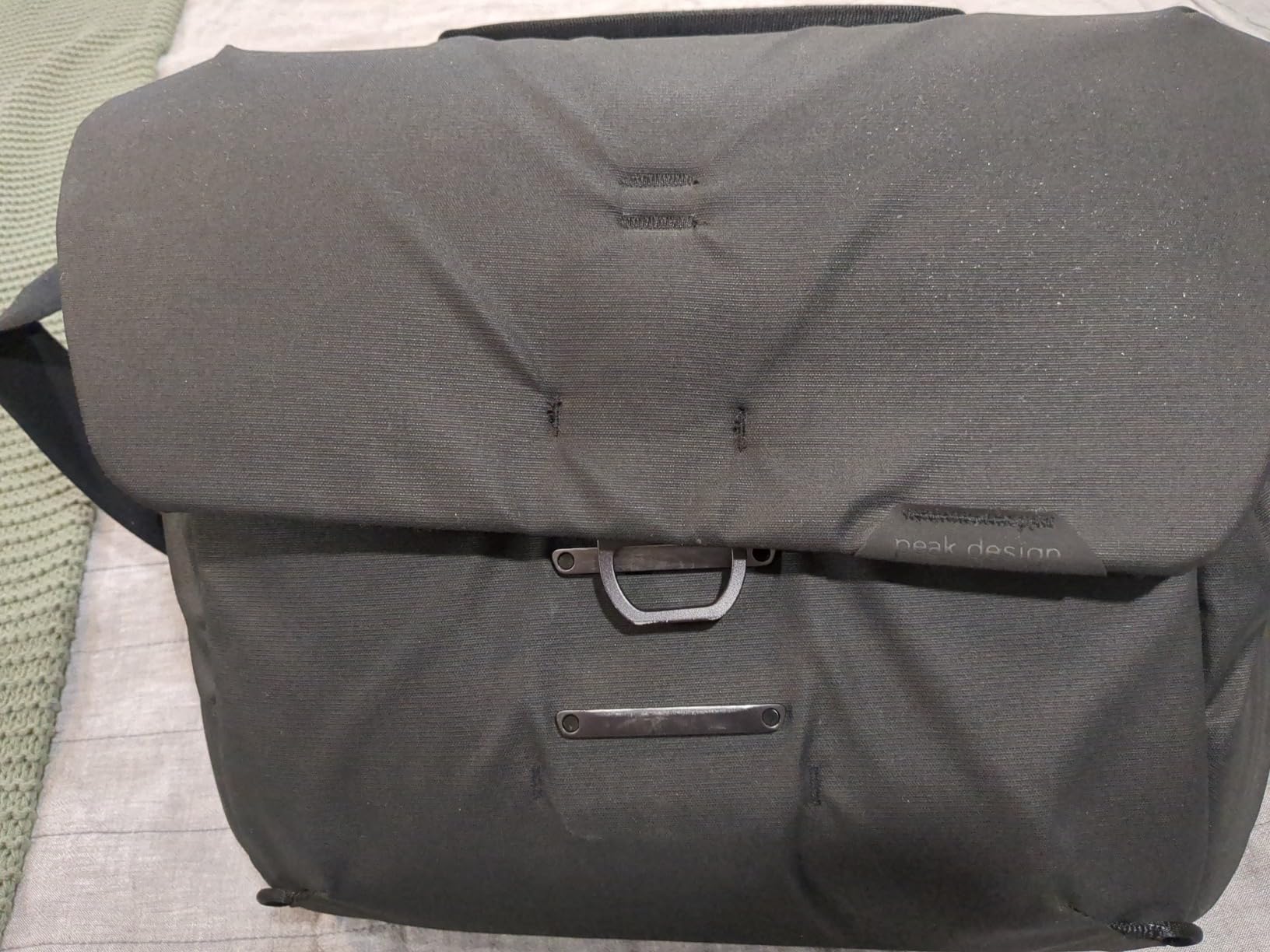
The standout feature is undoubtedly the MagLatch closure system. This magnetic clasp allows true one-handed access to your gear, which sounds like marketing hype until you experience it. Reaching in to grab your camera while the bag hangs at your side becomes effortless. The latch has multiple catch points, so you can expand the bag and it still closes securely.
The MagLatch uses a clever L-shaped hook that catches on metal bars embedded in the flap. Four different positions allow for expanding the bag while maintaining secure closure. The magnetic engagement is strong enough to hold the flap closed during normal movement but releases instantly when you pull upward.
The expandable design from 13L to 16L proved invaluable during my trip. Most days I kept it compressed for a lower profile while walking through crowded Tokyo streets. When I needed extra space for souvenirs or a light jacket, expanding the bag took seconds. This flexibility eliminates the need to carry a separate daypack.
The expansion mechanism works through gusseted sides that fold flat when compressed. Unlatching the bottom clips allows the sides to expand, adding approximately three liters of capacity. This feature shines during travel when your storage needs vary throughout the day.
Peak Design includes two FlexFold dividers that create custom-fit compartments for your gear. Unlike traditional velcro dividers, these fold and snap into different configurations. I found them particularly useful for separating my Sony A7IV with lens attached from my prime lenses. The dividers feel substantial and maintain their shape better than the soft dividers in the Think Tank.
The FlexFold design allows you to create shelves within the bag, keeping smaller items accessible on top while storing larger gear below. This three-dimensional organization differs from the flat divider approach most bags use. However, the dividers are fixed in position, limiting customization compared to velcro-based systems.
Organization is where this bag truly shines. Stretchy internal pockets hold cords, batteries, and water bottles securely. External zipper pockets provide quick access to items you need frequently. The 13-inch laptop sleeve accommodated my MacBook Pro without issue, though users with thicker 14-inch laptops might find it tight.
The internal organization pockets use a mesh material that expands to accommodate various items. I stored my charging cables, extra batteries, lens cleaning kit, and passport in these pockets without anything shifting during transit. The external zipper pocket became my go-to spot for items I needed frequently.
The weatherproof construction held up during unexpected rain showers in Kyoto. Unlike the Think Tank’s separate rain cover, Peak Design built weather resistance directly into the materials. The bag shed water without any additional accessories, which I prefer for spontaneous shooting situations.
Peak Design uses a proprietary weatherproof canvas that resists water penetration while remaining breathable. During my testing, light to moderate rain beaded off the surface without penetrating to the interior. For heavy downpours, you would want additional protection, but everyday weather poses no threat to your gear.
However, the V3 has some frustrating quirks. The flap does not stay open when you are accessing gear, which means it keeps falling closed while you try to swap lenses. The shoulder strap padding slides out of position when you adjust the strap length, requiring constant readjustment. And like the Think Tank, this bag has balance issues when set down, though it tips backward rather than forward.
The flap issue proves particularly annoying during lens changes. You lift the flap, reach in, and the flap falls forward onto your hand or arm. This requires either holding the flap open with one hand or working around it. For a bag designed around access speed, this feels like an oversight.
Some reviewers have noted that Peak Design removed features from previous versions. The luggage pass-through lacks a zipper for converting it to additional storage, which was present in earlier models. These small omissions feel like cost-cutting measures on an already expensive bag.
Despite these complaints, the overall build quality impresses. Stitching is precise throughout, materials feel premium, and the bag maintains its shape even when empty. The three color options (Ash, Kelp, and Ocean) provide choices for different style preferences.
Think Tank Retrospective vs Peak Design Everyday Messenger: Head-to-Head Comparison
Storage Capacity and Organization
Both bags offer similar overall capacity, but the organization philosophy differs significantly. The Think Tank uses traditional padded dividers that attach with velcro, giving you freedom to create any configuration. The Peak Design relies on its FlexFold dividers, which are less flexible in placement but more structured in use.
With the Think Tank, I can create exactly the compartments I need for each shoot. Carrying a drone one day and extra lenses the next? Simply reconfigure the velcro dividers. The Peak Design requires working within its fixed divider system, which limits options but provides more structured organization.
Winner: Tie. The Think Tank wins for pure customization, while Peak Design wins for innovative divider design. Your preference depends on whether you value flexibility or structure.
Comfort and Strap Design
Forum users consistently praise the Think Tank’s shoulder strap as one of the most comfortable available. The cushioned pad stays in place and distributes weight effectively across long shooting days. Peak Design’s strap is also comfortable, but the padding slides when you adjust the length, creating daily frustration.
After comparing both straps during identical shooting conditions, the Think Tank pad remained in position throughout 10-hour days. The Peak Design pad required readjustment every two to three hours. This difference matters when you are focused on photography rather than gear management.
Winner: Think Tank Retrospective. The non-slip shoulder pad that actually stays in position makes a significant difference during extended use.
Build Quality and Durability
Think Tank has a reputation for bags that last years of professional abuse. The Retrospective series uses quality materials throughout, and the 4.4-star rating from 162 reviews reflects consistent satisfaction. Peak Design also builds quality products, though some users feel the V3 shows cost-cutting compared to earlier versions.
Long-term forum discussions reveal photographers using Think Tank Retrospective bags for over seven years with minimal wear. Peak Design bags also show durability, but the company’s shorter history provides less long-term data. Both bags come with warranties, though terms differ between manufacturers.
Winner: Think Tank Retrospective. The proven track record and no-nonsense construction give Think Tank the edge for long-term durability.
Weather Protection
Peak Design built weatherproofing directly into the bag materials, meaning you are always protected without carrying extra gear. Think Tank relies on a separate seam-sealed rain cover that provides excellent protection but requires installation when weather turns bad.
The convenience difference matters in real-world use. With Peak Design, rain simply beads off the bag surface. With Think Tank, you need to stop, find the rain cover pocket, and install the cover before your gear gets wet. However, the Think Tank rain cover provides more complete protection during sustained heavy rain.
Winner: Peak Design Everyday Messenger. Built-in weatherproofing is more convenient than fumbling with a rain cover during sudden downpours.
Access and Lens Swapping
This is where the MagLatch closure shines. One-handed access means faster lens changes and fewer missed shots. The Think Tank requires either velcro (noisy) or the magnetic silencer (quieter but still two hands for the flap). However, forum users note that the Think Tank’s lower profile makes finding specific lenses easier.
During fast-paced street photography, the Peak Design’s one-handed access allowed me to swap lenses in under 10 seconds. The Think Tank required closer to 15 seconds due to the flap management. This difference compounds over a full day of shooting.
Winner: Peak Design Everyday Messenger. True one-handed access via MagLatch is genuinely useful for active shooting situations.
Travel Features
Both bags include luggage pass-through handles for attaching to rolling luggage. The Peak Design’s expandable capacity gives it an advantage for travel, allowing you to start compact and expand when needed. Think Tank counters with dedicated laptop and tablet sleeves that keep devices separated from camera gear.
For air travel specifically, both bags fit under airline seats and in overhead compartments. The Think Tank’s dedicated laptop sleeve makes TSA checkpoints smoother since you can extract the laptop without opening the main camera compartment. Peak Design’s internal laptop pocket requires opening the main flap.
Winner: Peak Design Everyday Messenger. The expandable design provides more flexibility for travel scenarios where your needs change throughout the day.
Value for Money
The Think Tank Retrospective 7 V2.0 costs around $198, while the Peak Design Everyday Messenger V3 runs approximately $250. That is a $52 difference that could buy a quality memory card or battery. Both bags offer excellent construction, but Think Tank delivers more value per dollar spent.
Consider your expected usage when evaluating value. If you shoot occasionally and want a bag that will last, Think Tank offers better value. If you shoot daily and specifically benefit from the MagLatch or expandable features, Peak Design may justify its premium.
Winner: Think Tank Retrospective. Lower price point with proven durability makes it the better value proposition.
Verdict: Which Camera Messenger Bag Should You Buy?
After extensively testing both bags for this Think Tank Retrospective vs Peak Design Everyday Messenger comparison, I can confidently recommend each for different photographers.
Who Should Buy the Think Tank Retrospective 7 V2.0
Choose the Think Tank if you value classic functionality, proven durability, and maximum value. This bag suits wedding photographers, event shooters, and anyone who wants a workhorse that will last years. The velcro silencer system makes it ideal for quiet environments, and the subtle styling works for professionals who prefer not to advertise their expensive gear.
Wedding photographers particularly benefit from the silent operation and classic appearance. The bag blends into formal events without drawing attention, yet provides quick access when those fleeting moments happen. Event shooters appreciate the organization options that adapt to different gear configurations.
Who Should Buy the Peak Design Everyday Messenger V3
Choose the Peak Design if you prioritize innovative features, modern aesthetics, and travel flexibility. The MagLatch closure and expandable capacity justify the premium for photographers who appreciate clever engineering. This bag appeals to tech-savvy creators, travel photographers, and anyone who values one-handed gear access.
Travel photographers benefit most from the expandable design and built-in weatherproofing. The ability to compress the bag for city exploration then expand it for souvenirs or extra layers eliminates the need for additional luggage. Content creators appreciate the modern aesthetic that matches their other tech gear.
Frequently Asked Questions
Is a messenger bag better than a backpack for camera gear?
Messenger bags offer faster access to your gear and a more professional appearance, making them ideal for street photography, weddings, and urban shoots. Backpacks distribute weight better across both shoulders and carry more gear comfortably, making them better for hiking and extended travel. Choose a messenger bag for quick access and style; choose a backpack for comfort during long carries with heavy loads.
Can messenger bags carry laptops?
Yes, both the Think Tank Retrospective 7 V2.0 and Peak Design Everyday Messenger V3 include dedicated laptop compartments. The Think Tank fits up to 13-inch laptops in its rear sleeve, while the Peak Design accommodates 13-inch laptops with its internal pocket. Neither bag fits 15 or 16-inch laptops comfortably.
Are Think Tank bags waterproof?
Think Tank bags are water-resistant but not fully waterproof. The Retrospective 7 V2.0 includes a seam-sealed rain cover that provides excellent protection during rain and snow. For true waterproofing in heavy downpours or water exposure, use the included rain cover rather than relying on the bag materials alone.
How much gear can a Retrospective 7 hold?
The Think Tank Retrospective 7 V2.0 holds a standard DSLR or mirrorless camera with a 24-70mm lens attached, plus two to three additional lenses, a flash, batteries, memory cards, and a 13-inch laptop with 10-inch tablet. Real-world configurations include a Sony A7IV with 24-70mm f/2.8, 70-200mm f/4, 35mm prime, and accessories.
Is the Peak Design Everyday Messenger worth the price?
The Peak Design Everyday Messenger V3 justifies its premium price if you value innovative features like the MagLatch closure, expandable capacity, and built-in weatherproofing. At approximately $250, it costs about $50 more than the Think Tank. Consider it worth the investment if one-handed access and travel flexibility matter to your photography workflow.
Final Recommendation
For most photographers, the Think Tank Retrospective 7 V2.0 represents the smarter purchase. It delivers professional-grade construction, excellent comfort, and thoughtful features at a lower price point. The $52 savings can be invested in actual photography gear.
However, if the MagLatch closure and expandable design genuinely solve problems you face regularly, the Peak Design Everyday Messenger V3 will not disappoint. Both bags have earned their excellent reputations, and either choice will serve you well for years of photography adventures.
The best camera bag is ultimately the one that fits your shooting style and gets out of your way. Both Think Tank and Peak Design have created exceptional products that accomplish this goal through different approaches. Choose based on which features matter most to your photography workflow.