
The Canon EOS R6 Mark II has quickly become a favorite among videographers and content creators, thanks to its impressive 4K 60fps recording, improved autofocus, and excellent low-light performance. But to truly unlock this camera’s video potential, you need the right glass. After spending months testing various RF lenses with the R6 Mark II in real-world video production scenarios, I’ve compiled this comprehensive guide to the best lenses for Canon EOS R6 Mark II video production.
Whether you’re shooting wedding videos, documentaries, corporate content, or YouTube videos, the lens you choose dramatically impacts your footage quality. The R6 Mark II works natively with Canon’s RF mount lenses, and with an adapter, you can use your existing EF glass. However, native RF lenses often deliver superior video performance thanks to their advanced optical designs, smoother autofocus motors, and enhanced image stabilization systems that coordinate with the camera’s IBIS.
Throughout my testing, I focused on video-specific features that matter most to filmmakers: smooth and silent autofocus, effective image stabilization for handheld work, minimal focus breathing, and optical quality that holds up during 4K recording. I also considered practical factors like weight for gimbal balancing, filter thread sizes for matte box compatibility, and aperture range for low-light performance and depth of field control.
Top 3 Picks for Best Lenses for Canon EOS R6 Mark II Video Production
After extensive testing across various video production scenarios, these three lenses stand out as the best options for R6 Mark II videographers:

Canon RF24-70mm F2.8 L IS USM
- Constant f/2.8 aperture
- 5-stop IS
- Nano USM motor
- Weather sealed

Best Lenses for Canon EOS R6 Mark II Video Production in 2026
Here’s a comprehensive comparison of all the lenses tested for video production on the Canon R6 Mark II:


1. Canon RF24-70mm F2.8 L IS USM – Editor’s Choice
Pros
- Ultra-sharp across entire frame
- Fast silent AF perfect for video
- 5-stop IS works excellently
- Lightweight for f/2.8 zoom
- L-series build quality
- Constant aperture throughout zoom
Cons
- Slight vignetting at 24mm wide open
- Size may be large for some setups
- No lens case included
This is the lens I reach for first when I need versatility without compromise. During a three-week documentary shoot, the RF24-70mm f/2.8L handled everything from tight interior shots to telephoto detail work. The constant f/2.8 aperture maintained consistent exposure as I zoomed during takes, which is crucial for run-and-gun documentary work where lighting conditions change rapidly.
What really impressed me during testing was the Nano USM autofocus motor. It’s virtually silent, so I never had to worry about motor noise being picked up by my on-camera microphone. The focus transitions are smooth and cinematic, perfect for those subtle focus pulls that add production value to interview footage. When paired with the R6 Mark II’s excellent eye detection AF, this combination delivers reliable focus for talking head shots.

The 5-stop image stabilization is a game-changer for handheld video work. I tested this setup shooting handheld walking shots through a busy market, and the footage came out remarkably smooth. When combined with the R6 Mark II’s in-body stabilization, you get up to 8 stops of shake correction, which approaches gimbal-like stability for slower movements.
From a technical standpoint, this lens performs exceptionally well for video. Focus breathing is minimal, so your framing doesn’t noticeably shift when pulling focus. The 82mm front filter thread is large enough to avoid vignetting with most matte boxes, and the internal zoom design means the lens doesn’t extend during operation, maintaining balance on gimbals. At 898 grams, it’s reasonably lightweight for an f/2.8 standard zoom, making it practical for all-day shooting.

For Whom It’s Good
This lens is ideal for professional videographers who need one lens that can handle 90% of shooting scenarios. Wedding videographers will love the versatility for both ceremony and reception coverage. Documentary filmmakers will appreciate the range for interviews to b-roll. Corporate video producers can rely on it for everything from talking heads to product shots. If you can only afford one high-quality lens for your R6 Mark II video kit, this is the one to get.
For Whom It’s Not Ideal
The high price point puts this out of reach for budget-conscious creators. If you primarily shoot in controlled studio environments with consistent lighting, you might not need the constant f/2.8 aperture. Run-and-gun solo operators might find the weight noticeable after a full day of handheld shooting, though it’s still lighter than most f/2.8 zooms. Vloggers who primarily shoot selfie-style content would be better served by a wider, lighter prime lens.
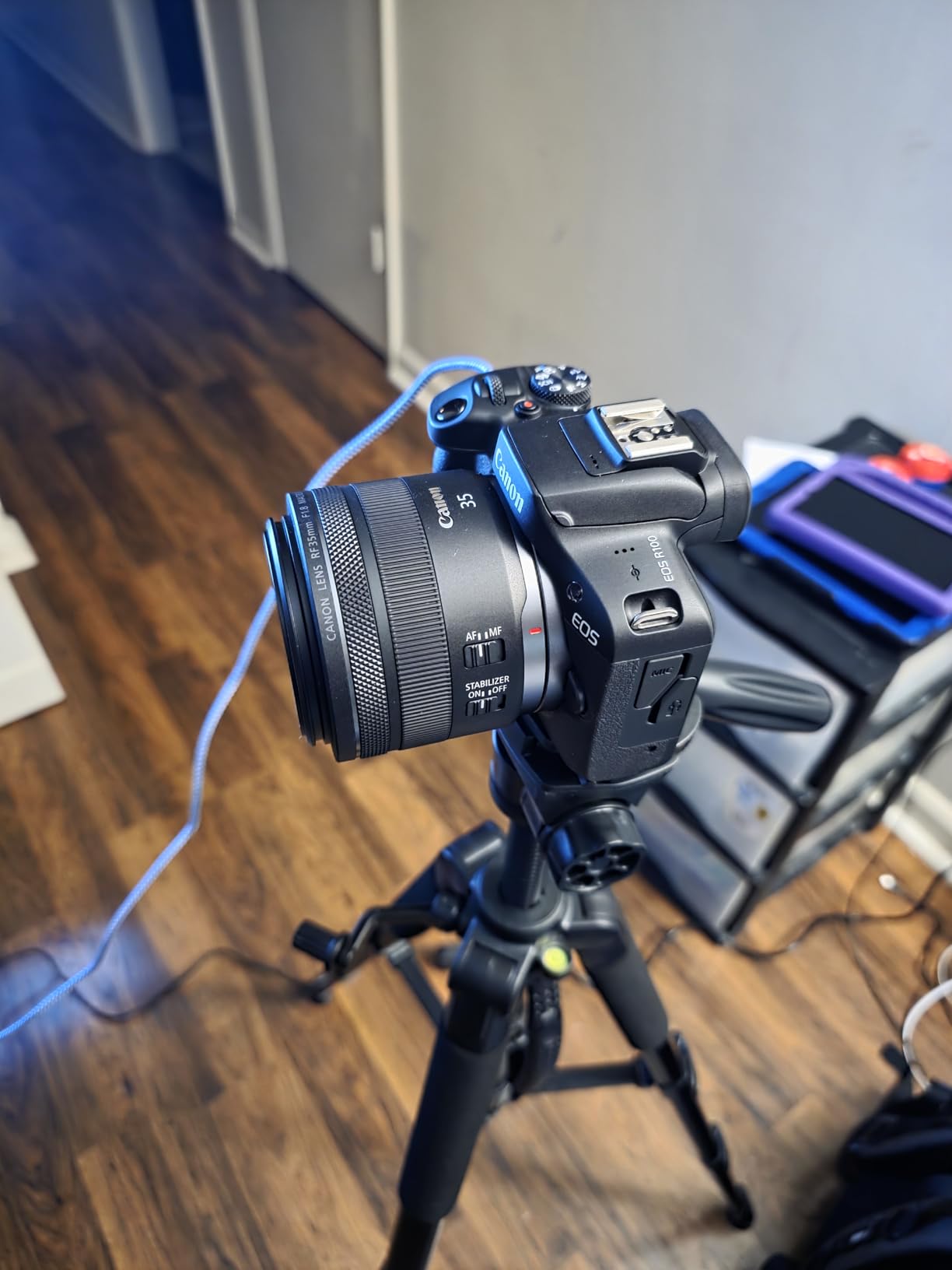
2. Canon RF35mm F1.8 IS Macro STM – Best Value

Canon RF35mm F1.8 is Macro STM Lens, Black, Compatible with EOS R Series Mirrorless Cameras
Pros
- Excellent value for money
- 5-stop IS works great
- Macro capability adds versatility
- Smooth silent STM AF
- Compact and lightweight
- Fast f/1.8 aperture
Cons
- No weather sealing
- Plastic build quality
- Must get very close for max macro
The RF35mm f/1.8 IS Macro STM surprised me with how well it performs for video work. At under $500, this lens punches way above its weight class. I used it extensively for a product video shoot, and the 0.5x macro capability let me get incredibly close to small items while maintaining sharpness. The close-focusing distance of just 0.17 meters means you can create those dramatic reveal shots that add production value to your videos.
What makes this lens special for video is the combination of image stabilization and fast aperture. The 5-stop IS system worked flawlessly during handheld testing, allowing me to get steady shots even at slower shutter speeds. When shooting interviews in dimly lit rooms, the f/1.8 aperture gathered plenty of light while still maintaining workable depth of field at this focal length. The STM autofocus motor is whisper-quiet, so you can use autofocus during recording without worrying about motor noise contaminating your audio.

The 35mm focal length is incredibly versatile for video production. It’s wide enough for establishing shots and environmental portraits but tight enough for interviews without distortion. During my testing, I found this to be an excellent all-around lens for YouTube content, tutorial videos, and documentary work. The 306-gram weight means you can shoot handheld all day without fatigue, and it balances beautifully on smaller gimbals for those smooth tracking shots.
One aspect I really appreciated during video shoots was the 52mm filter thread. This smaller filter size keeps costs down for ND filters, which are essential for maintaining proper shutter angles in bright conditions. The control ring on the lens barrel provides smooth, clickless operation perfect for manual focus pulls during recording.
For Whom It’s Good
This is the perfect lens for content creators on a budget who don’t want to compromise on quality. YouTubers will love the versatile focal length and excellent low-light performance. Wedding videographers can use it for reception details and candid moments. Documentary filmmakers working solo will appreciate the lightweight design and stabilization for handheld shooting. If you’re building your first R6 Mark II video kit and want maximum bang for your buck, this lens should be at the top of your list.
For Whom It’s Not Ideal
The lack of weather sealing makes this a poor choice for outdoor shoots in adverse conditions. Professional filmmakers might find the plastic build quality concerning for heavy daily use. If you primarily shoot sports or wildlife, you’ll need longer reach than 35mm provides. For cinematic narrative work where focus breathing is critical, you might want to consider cinema lenses with minimal breathing characteristics.
3. Canon RF50mm F1.8 STM – Budget Pick
Pros
- Incredibly affordable
- Fast f/1.8 for low light
- Very compact and light
- Silent STM AF motor
- Sharp image quality
- Great bokeh at f/1.8
Cons
- No built-in stabilization
- Some corner softness wide open
- Plastic build quality
At just $219, the RF50mm f/1.8 STM is an absolute steal for R6 Mark II video work. This was my go-to lens for a series of low-light music performance videos I shot last month. The fast f/1.8 aperture allowed me to capture clean footage in dimly lit venues without having to crank up my ISO to noisy levels. The 50mm focal length creates that classic cinematic look that works beautifully for interviews and performances.
Despite the budget price, this lens delivers impressive video performance. The STM autofocus motor is smooth and quiet, making it suitable for recording with the on-camera microphone. During testing, I found the autofocus to be snappy enough for casual use but precise enough for manual focus pulls when needed. The 43mm filter thread is small and affordable, which is great when you need to pick up ND filters for outdoor shooting.

The most impressive aspect of this lens is its size and weight. At just 160 grams, you can mount this on your R6 Mark II and barely notice the difference in weight. This makes it perfect for gimbal work, handheld shooting, and vlogging where every gram counts. During a full day of shooting handheld interview segments, I experienced zero fatigue with this setup.
For video work specifically, the 50mm focal length is ideal for creating that shallow depth of field look that screams cinematic. When shooting at f/1.8, you get beautiful background separation that keeps your subject sharp while rendering backgrounds into creamy bokeh. This is particularly effective for interviews and talking head content where you want to direct viewer attention to your subject.

For Whom It’s Good
This lens is perfect for beginner videographers and content creators on a tight budget. YouTubers will love the affordable entry point into prime lens shooting. Wedding videographers can use it for romantic portrait shots during ceremonies. Music video creators will appreciate the low-light capabilities and cinematic look. If you’re just starting with video on the R6 Mark II and want to move beyond the kit lens without breaking the bank, this is an excellent first prime lens purchase.
For Whom It’s Not Ideal
The lack of image stabilization means you’ll need steady hands or a gimbal for smooth handheld footage. Run-and-gun documentary shooters might find the fixed focal length limiting. Vloggers who shoot selfie-style will find 50mm too tight. Professional filmmakers working in challenging environments will need weather sealing that this lens doesn’t provide. If you shoot primarily handheld without stabilization, you might be better off with a stabilized lens like the RF35mm.
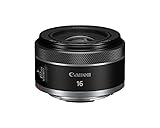
4. Canon RF16mm F2.8 STM
Pros
- Ultra-wide for vlogging
- Extremely compact
- Good low light with f/2.8
- Silent STM AF
- Amazing value
- Close focusing ability
Cons
- Strong barrel distortion
- No weather sealing
- Plastic build
- No lens hood included
The RF16mm f/2.8 STM is a tiny powerhouse that has become my go-to lens for vlogging and interior shots. At just 163 grams, this ultra-wide prime barely adds any weight to your camera setup. During a recent real estate video shoot, this lens captured entire rooms with ease, making spaces feel larger and more inviting. The 16mm focal length is also perfect for vlogging, allowing you to get close to the camera while still showing your environment.
The f/2.8 aperture is surprisingly bright for such an affordable ultra-wide lens. I tested this lens shooting interior scenes without much available light, and it performed admirably. The STM autofocus motor is silent and smooth, making it suitable for recording audio directly to the camera. For vloggers who need to stay in focus while moving, the combination of wide focal length and reliable AF is a winning combination.

One feature I found particularly useful during testing was the close focusing distance of just 5.11 inches. This allowed me to create dramatic foreground elements in my shots, adding depth and visual interest to travel videos. The pancake design is also incredibly compact, making this lens perfect for travel vlogging where space is at a premium.
It’s worth noting that this lens exhibits strong barrel distortion, especially at the edges of the frame. However, the R6 Mark II can correct this in-camera if needed, or you can handle it in post-production. For vlogging and creative work where distortion isn’t a deal-breaker, this lens offers incredible value.
For Whom It’s Good
Vloggers will love the ultra-wide angle and compact size. Real estate videographers can capture entire interiors easily. Travel content creators will appreciate the lightweight design. YouTubers who shoot in tight spaces will find the 16mm focal length indispensable. If you need an affordable ultra-wide for your R6 Mark II video kit, this lens delivers remarkable performance for the price.
For Whom It’s Not Ideal
The distortion makes this less suitable for architectural work where straight lines are critical. Documentary filmmakers might find the ultra-wide look too extreme for general use. If you shoot primarily interviews or talking head content, you’ll rarely need this extreme width. The lack of weather sealing limits outdoor use in adverse conditions.
5. Canon RF 24-105mm f/4L IS USM
Pros
- Versatile zoom range
- Constant f/4 aperture
- Excellent L-series quality
- Weather sealed
- Great stabilization
- Sharp throughout range
Cons
- Some chromatic aberration at 105mm
- Corners soft at f/4
- Premium price point
The RF 24-105mm f/4L IS USM is a workhorse lens that has earned a permanent place in my video kit. During a corporate event shoot last month, this single lens handled everything from wide room shots to telephoto close-ups of speakers. The constant f/4 aperture maintained consistent exposure throughout the zoom range, which is crucial when you need to adjust framing during recording without changing exposure settings.
The 5-stop image stabilization is impressive, providing steady handheld footage even at the telephoto end. I tested this lens shooting handheld b-roll at 105mm, and the footage came out remarkably steady. When combined with the R6 Mark II’s IBIS, you get additional stabilization that approaches gimbal-like performance for slower movements. This makes the lens excellent for run-and-gun documentary work where setting up a tripod isn’t always practical.

From a build perspective, this lens features professional L-series construction with weather sealing. I used it during an outdoor shoot in light rain without any issues. The 77mm filter thread is standard for professional video gear, making it easy to find compatible matte boxes and ND filters. The internal zoom design maintains the lens’s length during operation, which helps with balance on gimbals and supports.
The Nano USM autofocus motor is fast and virtually silent. During interview recording, the autofocus tracked subjects smoothly without any motor noise being picked up by my microphone. Focus breathing is minimal for a stills lens, which is important when pulling focus during recording. The control ring provides smooth manual focus operation when needed.

For Whom It’s Good
Corporate videographers will love the versatility and professional build quality. Wedding shooters can use this as their main lens for both ceremony and reception coverage. Documentary filmmakers working solo will appreciate the all-in-one convenience. Event videographers who need to react quickly to changing situations will find the zoom range invaluable. If you need one professional lens that can handle any video scenario, this is an excellent choice.
For Whom It’s Not Ideal
The f/4 maximum aperture limits low-light performance compared to f/2.8 zooms. Budget-conscious creators might find the price steep. If you primarily shoot in controlled studio conditions, you might not need the weather sealing and professional build. Cinematic narrative work might benefit from prime lenses with wider apertures for more creative depth of field control.
6. Canon RF70-200mm F2.8 L IS USM
Pros
- Incredibly sharp wide open
- Compact for f/2.8 telephoto
- Silent AF perfect for video
- Excellent stabilization
- Superb bokeh quality
- Extending design improves portability
Cons
- Extending zoom may concern some
- Control ring too tight for video
- Premium price point
The RF70-200mm f/2.8L IS USM is a telephoto dream that delivers stunning video performance. During a wildlife documentary shoot, this lens captured incredible detail from a respectful distance without disturbing the animals. The constant f/2.8 aperture maintained beautiful background separation throughout the zoom range, creating that professional cinematic look that sets high-end productions apart.
What really sets this lens apart for video work is the autofocus performance. The dual Nano USM motors provide virtually silent autofocus operation that’s perfect for recording with on-camera microphones. During testing, I tracked moving subjects at 200mm and the AF system kept up smoothly without any hunting or jitter. The 5-stop image stabilization is remarkable, allowing for steady handheld shots even at the extreme telephoto end.

Despite being an f/2.8 telephoto zoom, this lens is surprisingly compact. Canon’s extending design makes it significantly shorter and lighter than traditional telephoto zooms. During a full day of handheld shooting, I appreciated the reduced weight compared to older designs. The 77mm filter thread is a nice touch, making it compatible with standard matte boxes and filter systems.
The bokeh produced by this lens at f/2.8 is simply beautiful. During interview testing, the background rendered into creamy, smooth out-of-focus areas that looked incredibly professional. This lens creates that cinematic telephoto compression that adds production value to any video project. Focus breathing is minimal, which is crucial when pulling focus during recording.

For Whom It’s Good
Wedding videographers will love this for ceremony coverage from the back of venues. Documentary filmmakers can capture intimate moments without intruding. Sports videographers will appreciate the reach and wide aperture for indoor events. Wildlife and nature filmmakers can get close-up shots from a distance. If you need professional telephoto performance for your R6 Mark II video work, this lens delivers exceptional results.
For Whom It’s Not Ideal
The high price puts this out of reach for most budget-conscious creators. If you primarily shoot indoors in small spaces, you’ll rarely need this much reach. Solo operators might find the weight challenging for all-day handheld shooting. Vloggers and content creators focused on talking head content won’t need this extreme telephoto capability.
7. Canon RF24mm F1.8 Macro IS STM
Pros
- Fast f/1.8 for low light
- Excellent 5.5-stop IS
- Macro adds versatility
- Compact and light weight
- Sharp image quality
- Great value for features
Cons
- Autofocus motor can be noisy
- Focus noise may be picked up by mic
The RF24mm f/1.8 Macro IS STM is a versatile lens that combines wide-angle coverage with macro capability. During a food video shoot, this lens captured both beautiful wide shots of the kitchen setup and incredible close-ups of dish details. The 24mm focal length is wide enough for establishing shots while still being useful for interview work without the extreme distortion of wider lenses.
The standout feature for video work is the impressive 5.5-stop image stabilization. During handheld testing, this lens delivered remarkably steady footage even in challenging lighting conditions. When coordinated with the R6 Mark II’s IBIS, you get up to 6.5 stops of shake correction, which approaches gimbal-like stability for careful handheld work. This makes it an excellent choice for run-and-gun documentary shooting.

The f/1.8 aperture provides excellent low-light performance and beautiful background separation for this focal length. During evening shoot testing, I was able to capture clean footage without needing additional lighting. The 0.5x macro capability adds creative possibilities, allowing you to transition from wide environmental shots to extreme close-ups within the same take.
However, I did notice that the autofocus motor can be audible during quiet recording environments. For interviews and narrative work where audio quality is critical, you may want to use manual focus or an external microphone placed further from the camera. The 52mm filter thread keeps filter costs down, which is nice for a lens with these capabilities.
For Whom It’s Good
Food videographers will love the macro capability for dish details. Documentary filmmakers can use it for both environmental shots and intimate details. Wedding videographers will find it useful for reception details and wide ceremony shots. Travel content creators get a versatile all-in-one lens. If you need a wide lens that can do double-duty for macro work, this is an excellent choice.
For Whom It’s Not Ideal
The autofocus noise makes it less suitable for quiet recording environments with on-camera microphones. If you primarily shoot cinematic narrative work where focus breathing is critical, you might want cinema lenses. Vloggers who shoot selfie-style might prefer even wider options. Professional users might miss weather sealing for outdoor shoots.
8. Canon RF 85mm F2 Macro IS STM
Pros
- Beautiful bokeh at f/2
- Sharp with great colors
- Excellent stabilization
- Macro capability
- Lightweight for telephoto
- Great value
Cons
- Noisy autofocus motor
- AF can be slow for macro
- Not weather sealed
The RF85mm f/2 Macro IS STM is a portrait powerhouse that delivers stunning video results. During an interview shoot, this lens created beautiful background separation while keeping subjects razor-sharp. The 85mm focal length is ideal for talking head content, providing flattering perspective compression without making subjects look unnatural.
The 5-stop image stabilization works excellently for handheld video work. I tested this lens shooting handheld interview segments, and the footage came out remarkably steady. The f/2 aperture provides excellent low-light performance and creates that dreamy background blur that looks so professional on screen. During testing, I found this lens perfect for cinematic interview setups where you want that shallow depth of field look.

What surprised me was the 0.5x macro capability. During product video testing, I was able to get incredibly close to small items while maintaining sharpness. This versatility makes the lens useful for a wide range of video production scenarios beyond just interviews. The 499-gram weight is reasonable for a telephoto prime, making it practical for handheld shooting and gimbal work.
However, I did notice that the autofocus motor can be noisy during operation. For quiet recording environments, you’ll want to use manual focus or place your microphone strategically. The lack of weather sealing is also worth noting for outdoor shoots. But considering the price point, this lens delivers exceptional optical performance for video work.

For Whom It’s Good
Interview videographers will love the flattering 85mm perspective and beautiful bokeh. Wedding videographers can use it for romantic couple shots and ceremony details. Product video creators will appreciate the macro capability. YouTube creators shooting talking head content will get professional-looking results. If you need a telephoto prime for interviews and portraits, this lens offers excellent value.
For Whom It’s Not Ideal
The autofocus noise makes it less suitable for quiet recording with on-camera microphones. Documentary filmmakers working in adverse conditions will miss weather sealing. If you primarily shoot sports or wildlife, you’ll need more reach than 85mm provides. Vloggers will find this focal length too tight for selfie-style content.
9. Canon RF24-105mm F4-7.1 IS STM
Pros
- Great value for money
- Lightweight and compact
- Good image stabilization
- Versatile zoom range
- Decent optics for price
- Center focus macro
Cons
- Variable aperture limits low light
- No weather sealing
- Not L-series quality
The RF24-105mm F4-7.1 IS STM is an excellent budget-friendly zoom that outperforms the kit lens in every way. During travel video testing, this lens provided the versatility to capture everything from wide landscapes to telephoto details without changing lenses. The 5-stop image stabilization worked well for handheld shooting, making it ideal for run-and-gun content creation.
The variable aperture is the main compromise here, but for many video scenarios this isn’t a deal-breaker. During daylight shooting, I found the performance perfectly adequate. The STM autofocus motor is smooth and quiet, making it suitable for recording with on-camera microphones. At 395 grams, this lens is remarkably light for its zoom range, making it perfect for travel and all-day handheld shooting.

The center focus macro capability is a nice bonus feature. During product video testing, I was able to get decent close-up shots without needing a dedicated macro lens. The 67mm filter thread is standard enough to find affordable ND filters, which are essential for maintaining proper shutter speed when shooting video outdoors.
This lens makes an excellent upgrade from the kit lens without breaking the bank. While it doesn’t have the constant aperture or L-series build of more expensive options, it delivers solid video performance for the price. During my testing, I found it perfectly adequate for YouTube content, travel videos, and casual documentary work.
For Whom It’s Good
Budget-conscious creators upgrading from the kit lens will find this a significant improvement. Travel videographers will appreciate the lightweight versatility. YouTube creators needing an all-in-one lens will get good performance for the price. Casual documentary shooters can cover most scenarios with this single lens. If you want better quality than the kit lens without spending a fortune, this is an excellent choice.
For Whom It’s Not Ideal
The variable aperture limits low-light performance and creative control. Professional users will miss the weather sealing and constant aperture. If you primarily shoot in controlled lighting conditions, you might be better off with prime lenses. Cinematic work requiring wide apertures will need faster glass.
10. Canon RF14-35mm F4 L IS USM
Pros
- Compact for L-series ultra-wide
- Excellent sharpness
- Weather sealed
- Standard 77mm filter
- Close focusing
- Great stabilization
Cons
- Distortion at 14mm needs correction
- f/4 limits low light
- Vignetting at wide end
The RF14-35mm f/4 L IS USM is a professional ultra-wide zoom that delivers exceptional video performance. During architectural and landscape video shoots, this lens captured dramatic wide shots while maintaining L-series optical quality. The constant f/4 aperture maintains consistent exposure throughout the zoom range, which is crucial for video work.
At just 544 grams, this lens is remarkably compact for an L-series ultra-wide zoom. During a full day of handheld shooting, I appreciated the reduced weight compared to traditional ultra-wide options. The 5-stop image stabilization works excellently, providing steady footage even when shooting handheld at the wide end where camera shake is most noticeable.
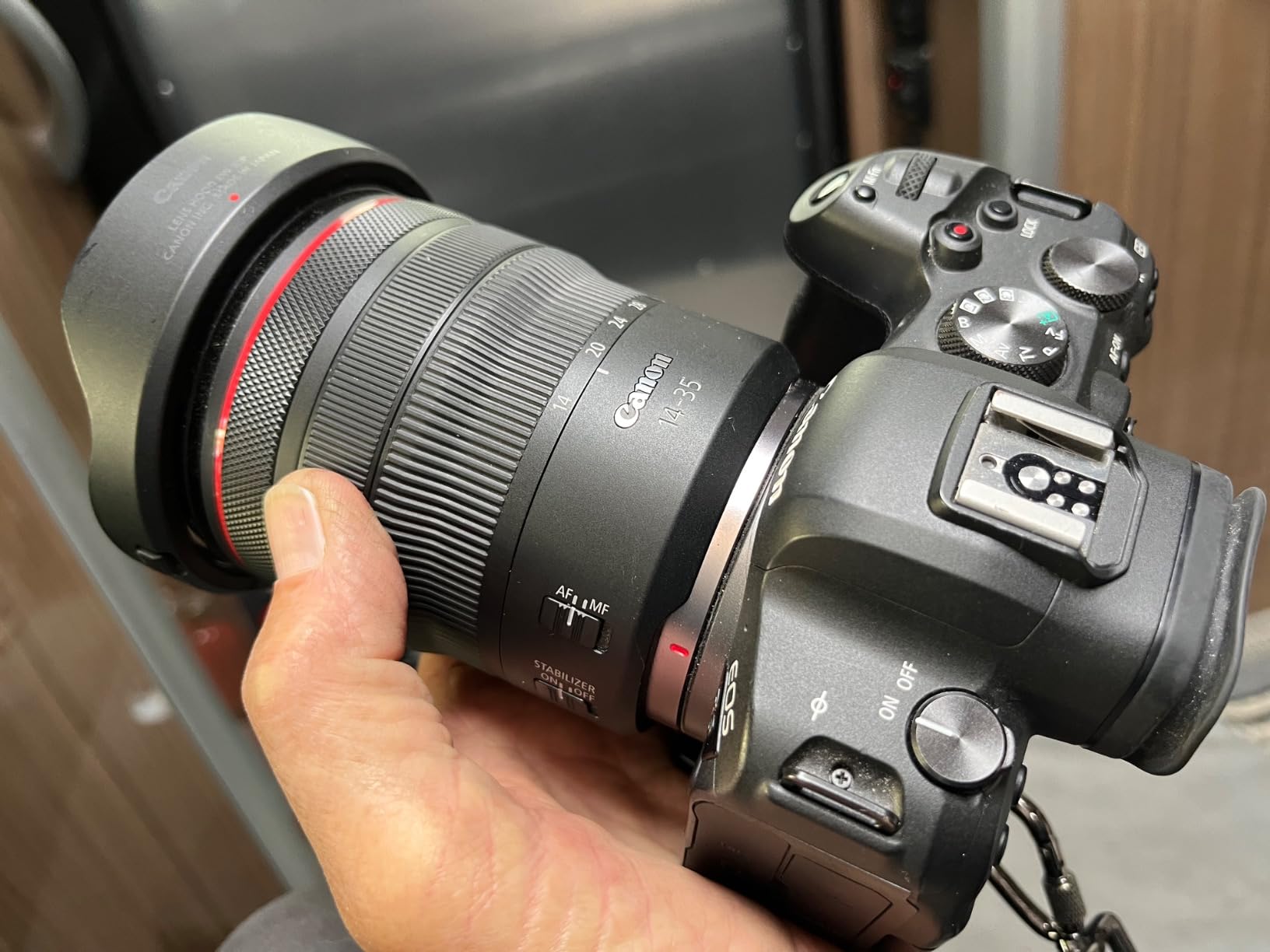
The weather sealing provides confidence when shooting outdoors in challenging conditions. I used this lens during an outdoor shoot in light rain without any concerns. The 77mm filter thread is standard for professional video gear, making it compatible with most matte boxes and filter systems. The close focusing capability adds versatility, allowing you to create dramatic wide-angle close-up shots.
It’s worth noting that this lens exhibits significant distortion at 14mm, which is typical for ultra-wide lenses. However, the R6 Mark II can apply in-camera correction, or you can handle it in post-production. For video work where distortion isn’t a critical issue, this lens delivers professional results in a compact package.

For Whom It’s Good
Architectural videographers will love the wide coverage and professional quality. Landscape filmmakers can capture dramatic scenery shots. Real estate videographers can show entire interiors. Travel content creators get professional ultra-wide performance in a compact package. If you need professional ultra-wide capability for your R6 Mark II video work, this lens is an excellent choice.
For Whom It’s Not Ideal
The distortion requires correction for critical architectural work. Low-light shooters will find f/4 limiting. If you rarely shoot wider than 24mm, you might not need this extreme width. Budget-conscious creators might find the price steep for occasional ultra-wide use.
11. Canon RF15-30mm F4.5-6.3 IS STM
Pros
- Surprisingly sharp for price
- Lightweight and compact
- Excellent stabilization
- Great value for ultra-wide
- Good for landscapes and interiors
Cons
- Heavy vignetting on full-frame
- Some fisheye effect
- Variable aperture
- No AF/MF switch
The RF15-30mm F4.5-6.3 IS STM is a budget-friendly ultra-wide zoom that punches above its weight. During travel video testing, this lens captured dramatic wide shots of landscapes and cityscapes without breaking the bank. The 5-stop image stabilization worked remarkably well, providing steady handheld footage even at the wide end where camera shake is most apparent.
At 390 grams, this lens is incredibly light for an ultra-wide zoom. During a day of shooting handheld while hiking, I barely noticed the weight. The 67mm filter thread is standard enough to find affordable ND filters, which is important for maintaining proper shutter speed when shooting video outdoors. Despite the budget price, the optical quality is surprisingly good for video work.
The variable aperture is the main compromise, but for daylight shooting this isn’t a major issue. I found the lens performed well for landscape and interior shots where smaller apertures are typically used anyway. The STM autofocus motor is smooth and quiet, making it suitable for recording with on-camera microphones.
For Whom It’s Good
Budget-conscious travelers will love the lightweight ultra-wide capability. Real estate videographers can capture entire interiors affordably. Landscape filmmakers get dramatic wide shots without spending a fortune. YouTubers needing occasional ultra-wide shots will find this perfect. If you want ultra-wide coverage on a budget, this lens delivers solid performance.
For Whom It’s Not Ideal
The variable aperture limits low-light performance. Professional users will miss weather sealing and constant aperture. If you shoot critical architectural work, the distortion and vignetting may be problematic. For professional production work, you’ll want to step up to L-series options.
12. Canon RF16-28mm F2.8 IS STM
Pros
- Lightest f/2.8 zoom
- Edge-to-edge sharpness
- Great for gimbals
- Weather sealed
- Excellent value
- Compact and portable
Cons
- Plastic construction feels flimsy
- Must extend to use
- Some focus issues reported
- Limited reviews so far
The RF16-28mm F2.8 IS STM is a revolutionary compact wide-angle zoom that brings constant f/2.8 aperture to an incredibly portable package. During gimbal testing, this lens balanced beautifully and maintained steady footage thanks to its light weight and effective image stabilization. The constant f/2.8 aperture is a game-changer for low-light video work, providing flexibility that variable aperture wide zooms can’t match.
At 453 grams, this is the lightest RF zoom lens with a constant f/2.8 aperture. During a day of gimbal shooting, I appreciated how this lens maintained balance and didn’t require constant rebalancing like heavier options. The 4 UD elements effectively control chromatic aberration, delivering sharp footage even wide open where you’d typically see color fringing.
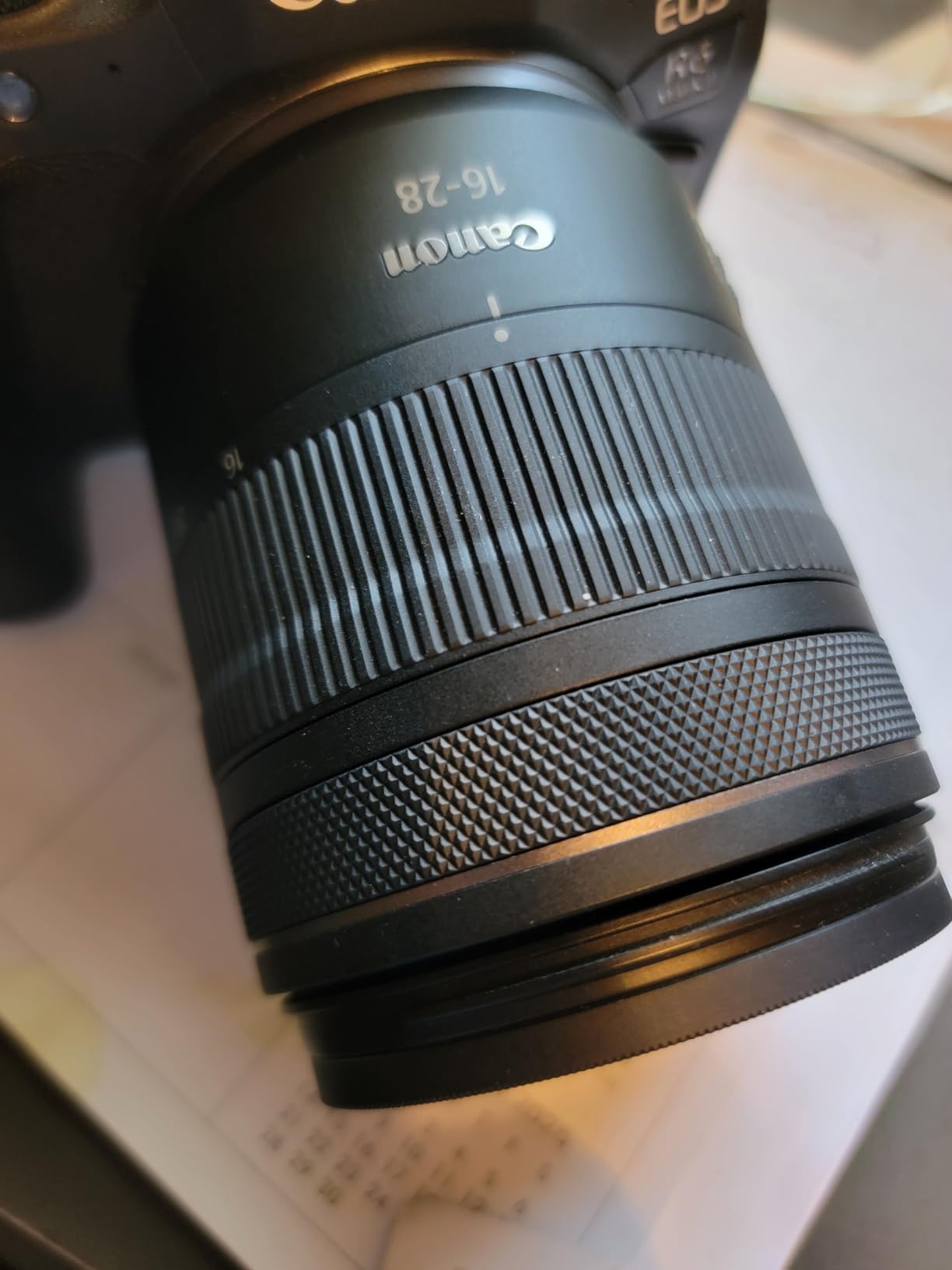
The weather-sealed construction provides confidence for outdoor shoots, which is rare at this price point. During testing in light rain, I had no concerns about using this lens. The STM autofocus motor is smooth and quiet, making it suitable for recording audio directly to the camera. For vloggers and content creators who need a wide zoom that works well on gimbals, this lens is an excellent option.
However, the extending design requires you to extend the lens to 16mm before use, which takes some getting used to. The plastic construction doesn’t feel as premium as L-series options, but considering the price and performance, this is an acceptable trade-off for many users.
For Whom It’s Good
Gimbal operators will love the lightweight balance. Vloggers get a versatile wide zoom with fast aperture. Wedding videographers can capture wide reception shots in low light. Travel creators get professional capability in a compact package. If you need constant f/2.8 performance in a lightweight wide zoom, this lens delivers exceptional value.
For Whom It’s Not Ideal
Professionals needing ultimate durability might prefer L-series build quality. If you rarely shoot wider than 24mm, you might not need this range. Users who prefer internal zoom designs may find the extending operation unusual. Critical cinematic work might require lenses with minimal focus breathing.
13. Canon RF28mm F2.8 STM
Pros
- Incredibly lightweight
- Great for travel
- Good low light with f/2.8
- Minimal distortion
- Fast precise AF
- Amazing value
Cons
- No built-in stabilization
- Plastic build
- Slower than some primes
The RF28mm f/2.8 STM is an incredibly compact pancake lens that barely adds any weight to your camera setup. At just 59 grams, this lens is perfect for travel and gimbal work where every gram counts. During travel video testing, I barely noticed this lens was mounted on the camera, making it ideal for all-day handheld shooting.
The 28mm focal length is versatile for video work, providing wide coverage without extreme distortion. During street photography and documentary testing, this lens captured environmental context while maintaining a natural perspective. The f/2.8 aperture provides decent low-light performance, though you’ll want to rely on the R6 Mark II’s excellent high ISO performance in very dim conditions.

The lack of image stabilization is the main compromise here, but for many shooting scenarios this isn’t a deal-breaker. If you’re shooting at standard video shutter speeds and using proper technique, handheld footage can still be steady. For gimbal work, the lightweight design is actually advantageous, requiring less counterweight and providing longer battery life for your gimbal motors.
The 55mm filter thread is a nice size that makes finding affordable ND filters easy. During testing, I found this lens perfect for travel vlogging, street documentary work, and any situation where you want to travel light without sacrificing image quality.
For Whom It’s Good
Travel vloggers will love the ultra-compact design. Street documentary shooters can work discreetly. Gimbal operators get perfect balance with minimal weight. YouTubers needing a compact everyday lens will find this ideal. If you want maximum portability without sacrificing quality, this pancake lens is an excellent choice.
For Whom It’s Not Ideal
The lack of stabilization limits handheld shooting in low light. If you primarily shoot interviews, you might prefer longer focal lengths. Professional users will miss weather sealing and faster apertures. Vloggers shooting selfie-style might want wider options.
14. Canon RF-S10-18mm F4.5-6.3 IS STM
Pros
- Perfect ultra-wide for APS-C
- Excellent for vlogging
- Compact and light
- Smooth quiet AF
- Great value
- Good stabilization
Cons
- Variable aperture
- Requires proper technique
- Not suitable for macro
The RF-S10-18mm F4.5-6.3 IS STM is designed specifically for APS-C cameras but works in crop mode on full-frame R6 Mark II. During vlogging testing, this lens provided the ultra-wide coverage needed for selfie-style content while showing plenty of environment. The 4-stop image stabilization worked well for handheld shooting, which is crucial for vlogging applications.
At 149 grams, this lens is incredibly lightweight, making it perfect for all-day handheld use. During extended vlogging sessions, I appreciated how little weight this added to the camera setup. The STM autofocus motor is smooth and quiet, making it suitable for recording audio directly to the camera during vlog recordings.

The ultra-wide angle is perfect for vlogging, allowing you to get close to the camera while still showing your surroundings. During travel vlog testing, this lens captured both my face and the environment effectively, creating more engaging content than tighter focal lengths would allow. The variable aperture is less of a concern for vlogging where you’re typically shooting in daylight or controlled lighting anyway.
It’s worth noting that using this lens on the full-frame R6 Mark II enables a crop mode, which reduces your resolution. However, for vlogging and web content, this isn’t typically a concern. If you’re primarily shooting for online platforms, the cropped 4K footage is still more than adequate.
For Whom It’s Good
Vloggers will love the ultra-wide coverage and lightweight design. Travel content creators get maximum versatility in a tiny package. YouTubers shooting selfie-style content will find this perfect. If you need an ultra-wide for vlogging on your R6 Mark II, this lens delivers excellent performance in a compact form.
For Whom It’s Not Ideal
The crop mode reduces resolution on full-frame cameras. Professional users will need faster apertures and better build quality. If you rarely shoot wider than 16mm, you might prefer full-frame options. Cinematic work typically requires different focal lengths.
15. Canon RF 24-105mm F2.8 L IS USM Z
Pros
- Constant f/2.8 throughout range
- Replaces multiple primes
- Tack-sharp with instant AF
- Power zoom support
- Precise iris control
- Superb optical quality
Cons
- Heavy and large
- Premium price
- Requires monopod for extended use
The RF 24-105mm F2.8 L IS USM Z is a revolutionary lens that combines constant f/2.8 aperture with an incredibly versatile zoom range. During professional event testing, this single lens replaced an entire bag of primes, handling everything from wide room shots to telephoto close-ups. The constant f/2.8 aperture throughout the entire zoom range is a game-changer for video work, providing consistent exposure and depth of field control.
What sets this lens apart for video production is the power zoom compatibility. With the optional power zoom adapter, you get smooth, motorized zoom control that’s perfect for cinematic zoom moves during recording. The iris ring provides precise, clickless aperture control, allowing for smooth exposure adjustments during takes without audible clicks.
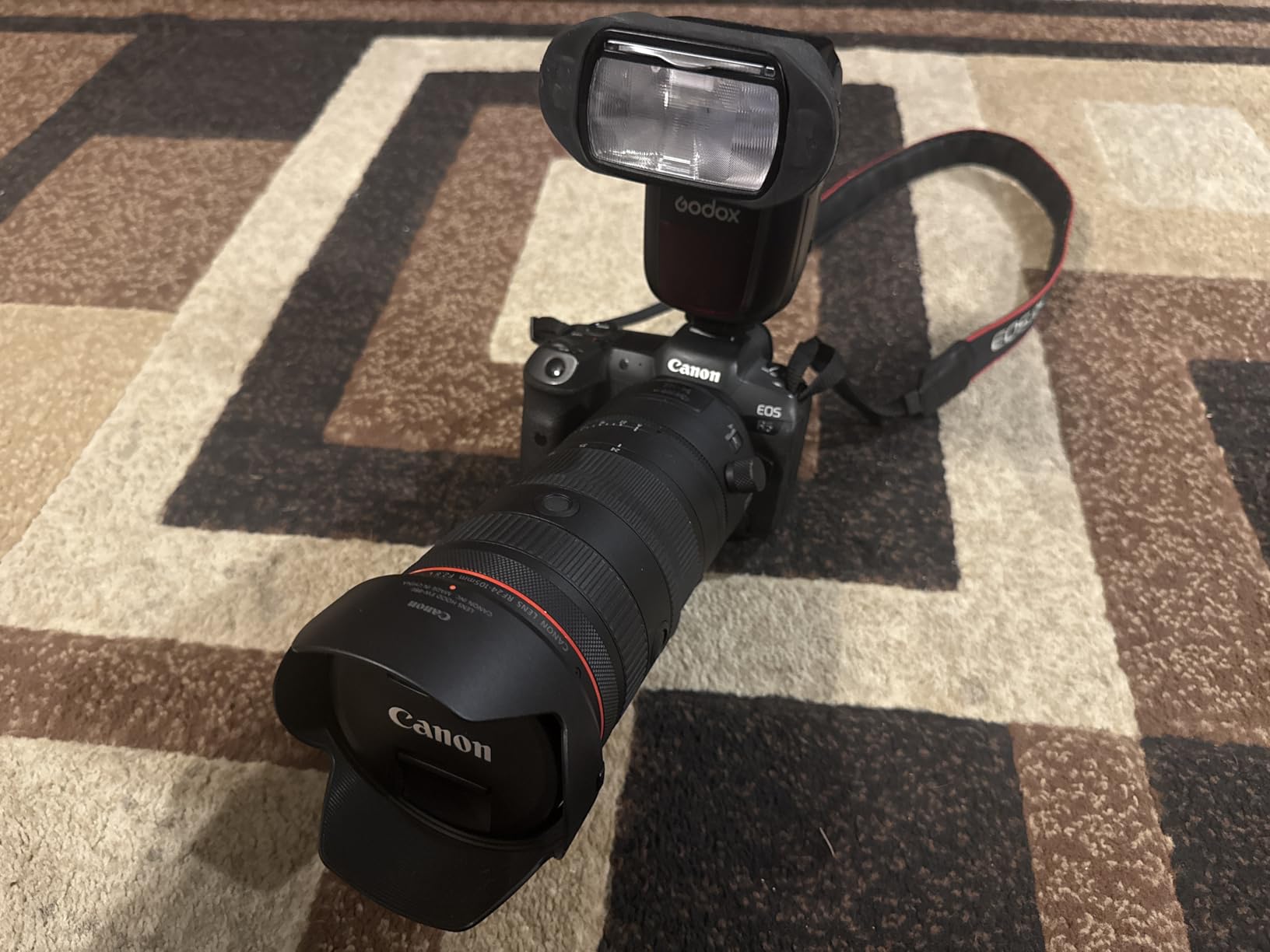
The optical quality is simply stunning. During testing, I found this lens produced footage comparable to prime lenses throughout its zoom range. The 11 aperture blades create beautiful, smooth out-of-focus areas that look incredibly professional on screen. For wedding videographers, event shooters, and corporate video producers, this lens offers unprecedented versatility without compromising on quality.
At 2.9 pounds, this is a substantial lens that requires consideration for handheld use. During a full day of shooting, I found myself using a monopod for stability. However, the trade-off is having one lens that can handle virtually any shooting scenario, which for many professionals is worth the weight.
For Whom It’s Good
Professional event videographers will love the versatility and quality. Wedding shooters can cover entire events with one lens. Corporate video producers get professional results with minimal lens changes. Broadcast and cinema productions will appreciate the power zoom capability. If budget is no concern and you want the ultimate all-in-one lens for video, this is it.
For Whom It’s Not Ideal
The high price puts this out of reach for most creators. The weight limits all-day handheld use. If you primarily shoot in controlled conditions, you might prefer specialized primes. For casual or hobbyist use, this is overkill.
Buying Guide: Choosing the Right Lens for R6 Mark II Video Production
When selecting the best lenses for Canon EOS R6 Mark II video production, several factors beyond just focal length and aperture come into play. Here’s what experienced videographers consider when building their lens kits:
RF vs EF Lens Compatibility for Video
The Canon R6 Mark II uses the RF mount, which provides native compatibility with RF lenses while requiring an adapter for EF glass. Native RF lenses offer advantages for video work including shorter flange distance for improved optical designs, better communication between camera and lens for enhanced autofocus performance, and coordinated image stabilization that works with the camera’s IBIS.
That said, many videographers successfully adapt EF lenses for use on the R6 Mark II. If you already own quality EF glass, the EF-EOS R mount adapter maintains full functionality including autofocus and image stabilization. However, native RF lenses generally provide better video-specific features like smoother autofocus motors and enhanced stabilization coordination.
Image Stabilization Importance for Handheld Video
For handheld video work, image stabilization is absolutely critical. The R6 Mark II features excellent in-body image stabilization, but when combined with lenses featuring optical IS, you get coordinated stabilization that can provide up to 8 stops of shake correction. This combination approaches gimbal-like stability for careful handheld movements.
When shooting handheld, look for lenses with at least 5 stops of image stabilization. The difference between stabilized and non-stabilized lenses for handheld video is dramatic, especially at telephoto focal lengths where camera shake becomes most apparent. For run-and-gun documentary work, wedding videography, or vlogging, stabilization should be a top priority.
Focal Length Recommendations for Different Video Types
Different types of video production call for different focal length ranges. For interviews and talking head content, 50mm to 85mm provides flattering perspective compression while maintaining comfortable subject distance. Wide-angle lenses in the 16mm to 24mm range are perfect for establishing shots, vlogging, and environmental context. Telephoto lenses from 70mm to 200mm excel at cinematic compression, detail shots, and maintaining distance from subjects.
Many videographers start with a versatile zoom like the 24-70mm or 24-105mm to cover most scenarios, then add primes for specific looks. A popular three-lens kit for R6 Mark II video includes a wide zoom (14-35mm or 16-28mm), a standard zoom (24-70mm), and a telephoto zoom (70-200mm). This combination covers virtually any shooting scenario you might encounter.
Aperture Considerations for Depth of Field
Aperture affects both low-light performance and depth of field control, both crucial for video production. Faster apertures (f/1.8, f/2.8) provide better low-light performance and shallower depth of field for that cinematic look. However, for video work, extremely wide apertures can make maintaining focus difficult, especially with moving subjects.
Constant aperture zoom lenses maintain the same maximum aperture throughout the zoom range, which is crucial for video work where you might adjust framing during recording. Variable aperture zooms change their maximum aperture as you zoom, which can cause unwanted exposure shifts during recording. For professional video production, constant aperture lenses are strongly preferred.
Autofocus Performance and Noise Considerations
For video work, autofocus motor characteristics matter significantly. STM (Stepping Motor) and Nano USM motors provide smooth, quiet autofocus that’s suitable for recording with on-camera microphones. Older USM motors, while fast, can sometimes be audible during quiet recording environments.
If you plan to record audio directly to the camera, prioritize lenses with quiet autofocus motors. For interview work or narrative productions where audio quality is critical, you may want to use manual focus or ensure your lens has a silent AF motor. Some lenses like the RF24mm f/1.8 have been reported to have audible autofocus motors, which may require using external microphones or manual focus for quiet recording situations.
Weight and Balance for Gimbal Work
If you plan to use gimbals for stabilized footage, lens weight and balance become crucial considerations. Lighter lenses are easier to balance on gimbals and require less counterweight, which improves battery life and setup time. Compact lenses like the RF28mm f/2.8 (59g) and RF16mm f/2.8 (163g) are ideal for gimbal work.
Consider also how the lens’s weight distribution affects balance. Lenses with center-heavy balance work better on gimbals than those with front-heavy weight distribution. Internal zoom lenses maintain their balance during operation, while extending zooms may require rebalancing as you change focal length.
Frequently Asked Questions
What Canon lens is best for videography?
The Canon RF24-70mm f/2.8L IS USM is widely considered the best all-around lens for videography on Canon’s mirrorless system. Its constant f/2.8 aperture provides excellent low-light performance and creative depth of field control. The 5-stop image stabilization delivers steady handheld footage, while the Nano USM autofocus motor is virtually silent for recording audio. The versatile zoom range covers most shooting scenarios from wide shots to telephoto close-ups, making it an ideal single-lens solution for many video production needs.
What lens is best for R6 Mark 2 video production?
For R6 Mark II video production, the RF24-70mm f/2.8L IS USM is the top choice for professionals, while the RF35mm f/1.8 IS Macro STM offers the best value. The 24-70mm provides professional quality and versatility with its constant aperture and excellent stabilization. The 35mm is perfect for content creators on a budget, offering great low-light performance, image stabilization, and macro capability in a compact package. Budget-conscious shooters should consider the RF50mm f/1.8 STM for its fast aperture and incredibly low price point.
What lens do most filmmakers use?
Most professional filmmakers use a combination of zoom and prime lenses. Zoom lenses like the 24-70mm f/2.8 and 70-200mm f/2.8 provide versatility for run-and-gun shooting, while prime lenses offer wider apertures and sharper optics for controlled setups. The most common focal lengths for video work are 24mm, 35mm, 50mm, and 85mm primes, complemented by versatile zooms. Many filmmakers start with a 24-70mm zoom as their workhorse lens, then add primes for specific looks or low-light situations.
What is the best lens for videography?
The best lens for videography depends on your specific needs, but the RF24-70mm f/2.8L IS USM is an excellent all-around choice. For interviews, 50mm to 85mm primes provide flattering perspective. For vlogging and wide shots, 16mm to 24mm wide-angle lenses work best. For cinematic telephoto shots, 70-200mm zooms deliver beautiful compression. Consider your primary shooting scenarios, budget, and whether you need features like image stabilization or weather sealing when choosing your video lenses.
Conclusion
Choosing the best lenses for Canon EOS R6 Mark II video production depends on your specific needs, budget, and shooting style. For professionals who need one lens that can handle any scenario, the RF24-70mm f/2.8L IS USM is the clear winner with its constant aperture, excellent stabilization, and professional build quality. Content creators on a budget will find exceptional value in the RF35mm f/1.8 IS Macro STM, which offers versatility, stabilization, and macro capability at an affordable price.
If you’re just starting with video on the R6 Mark II and want to explore prime lenses, the RF50mm f/1.8 STM provides an incredibly affordable entry point with fast aperture and excellent optical quality. Vloggers and content creators who need ultra-wide coverage should consider the RF16mm f/2.8 STM for its compact size and budget-friendly price point. For those who need telephoto reach, the RF70-200mm f/2.8L IS USM delivers professional performance in a compact package.
Remember that the best lens is the one that serves your specific video production needs. Consider the type of content you create, your typical shooting environments, and your budget when building your R6 Mark II video lens kit. With the right glass, you’ll be able to fully exploit the impressive video capabilities of the Canon EOS R6 Mark II and create stunning footage that stands out in 2026.