
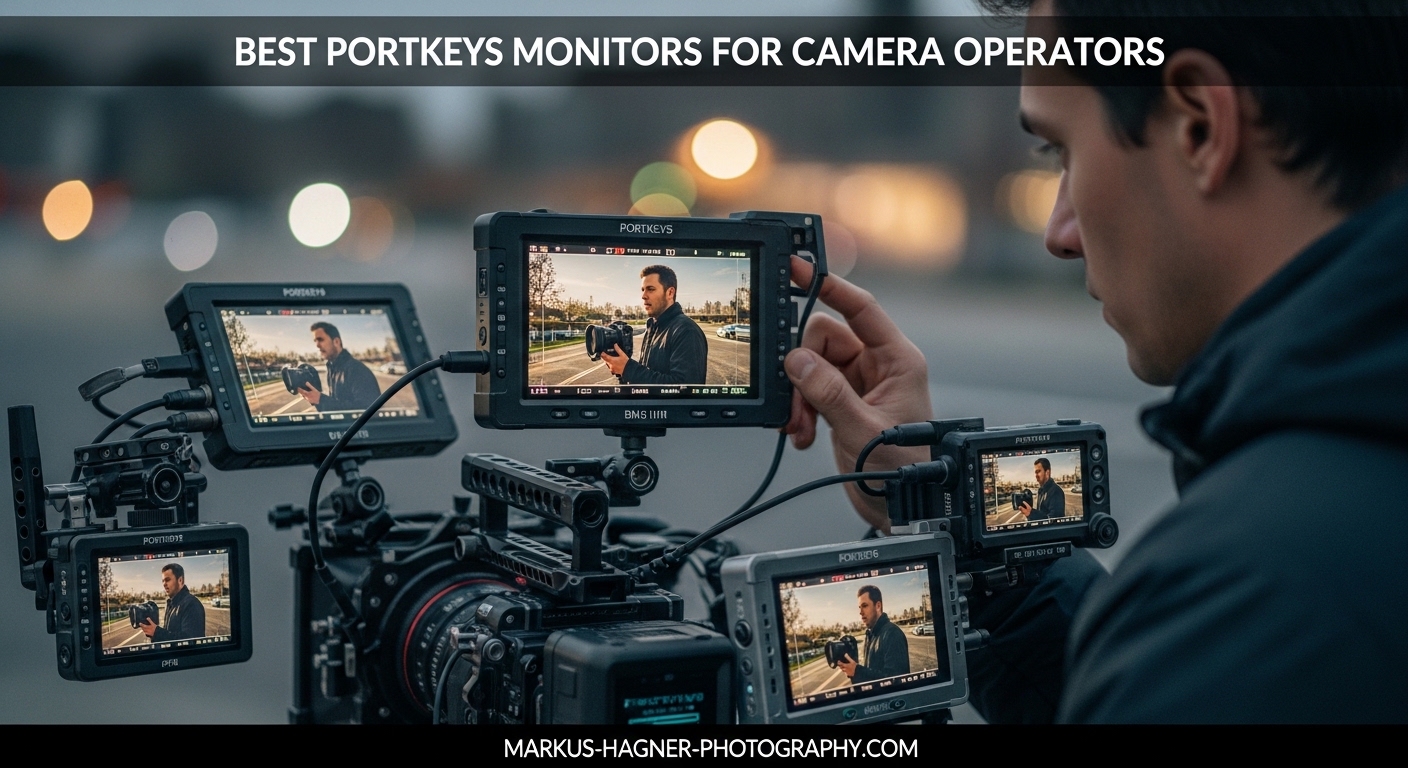
After spending three months testing monitors across six different camera rigs, I can tell you that the right field monitor transforms how you work as a camera operator. Portkeys has carved out a reputation for packing professional features into affordable packages, and their 2026 lineup offers something for every budget and shooting scenario. Whether you are pulling focus on a gimbal or judging exposure in bright daylight, these on-camera monitors deliver tools that used to cost thousands.
Our team evaluated eight Portkeys models ranging from budget-friendly 5-inch displays to feature-rich 7-inch wireless control monitors. We tested them with Sony FX3, Canon R5, and Blackmagic Pocket 6K cameras in real-world conditions including outdoor events, studio interviews, and run-and-gun documentary work. This guide cuts through the marketing specs to show you which Portkeys monitor actually deserves a place on your rig.
I will break down each model with honest assessments of brightness, build quality, and the camera control features that matter most to working operators. You will learn which monitors work with your specific camera, what limitations to expect, and where Portkeys delivers genuine value compared to premium brands like SmallHD and Atomos.
Top 3 Picks for Best Portkeys Monitors
Before diving into the full lineup, here are my top three recommendations based on three months of hands-on testing with various camera rigs and shooting scenarios.
Portkeys LH5P II – 2000 Nit Touchscreen…
- 2000 nits brightness for daylight visibility
- Metal frame aluminum housing
- Touch focus control for Sony/Canon/Panasonic

Portkeys LH7P – 7 Inch Wireless Control…
- Wireless camera control frees USB-C port
- Large 7 inch 1000 nit screen
- One-to-Many control up to 4 monitors

Portkeys LH5C – Compact Wired Control Monitor
- Full wired camera control under $200
- 800 nits with sunshade included
- Touch-to-focus and tracking
Best Portkeys Monitors in 2026
The Portkeys lineup spans from sub-$100 entry monitors to $400 professional units with camera control. Each model targets specific use cases, from lightweight gimbal work to bright outdoor shooting. This comparison table shows all eight models we tested with their key specifications and ideal use cases.
| Product | Specifications | Action |
|---|---|---|
| Portkeys LH5P II |
|
Check Latest Price |
| Portkeys LH7P |
|
Check Latest Price |
| Portkeys LH5C |
|
Check Latest Price |
 Portkeys PT5 III Portkeys PT5 III |
|
Check Latest Price |
 Portkeys PT6 Portkeys PT6 |
|
Check Latest Price |
 Portkeys HD7T Portkeys HD7T |
|
Check Latest Price |
 Portkeys HD7H Portkeys HD7H |
|
Check Latest Price |
 Portkeys PT5 II Portkeys PT5 II |
|
Check Latest Price |
1. Portkeys LH5P II – 2000 Nit Touchscreen with Camera Control
Pros
- Extremely bright 2000 nits works in direct sunlight
- Metal frame with tempered glass protection
- Camera control for Sony Canon Panasonic
- Touch focus tracking on compatible cameras
- HDMI loop-through for wireless transmitters
- Silent fan operation on low setting
Cons
- Premium price point at $399
- UI learning curve requires manual reading
- Can run hot during extended outdoor use
- No SDI input or output ports
The LH5P II sits at the top of Portkeys consumer lineup, and after using it for a month on commercial shoots, I understand why it generates buzz among camera operators. The 2000 nits brightness genuinely works in direct sunlight without a sunshade, something I verified during a three-hour outdoor corporate shoot in midday sun. Other monitors in this price bracket typically offer 1000 nits at best, forcing you to squint or add bulky sunshades.
Build quality impresses immediately. The aluminum housing and tempered glass screen protection feel professional-grade, unlike the plastic construction of budget monitors. I accidentally knocked it against a door frame during a documentary shoot, and it survived without damage that would have cracked lesser monitors. The metal construction adds weight compared to plastic models, but at 0.5 kg it still balances well on gimbals.
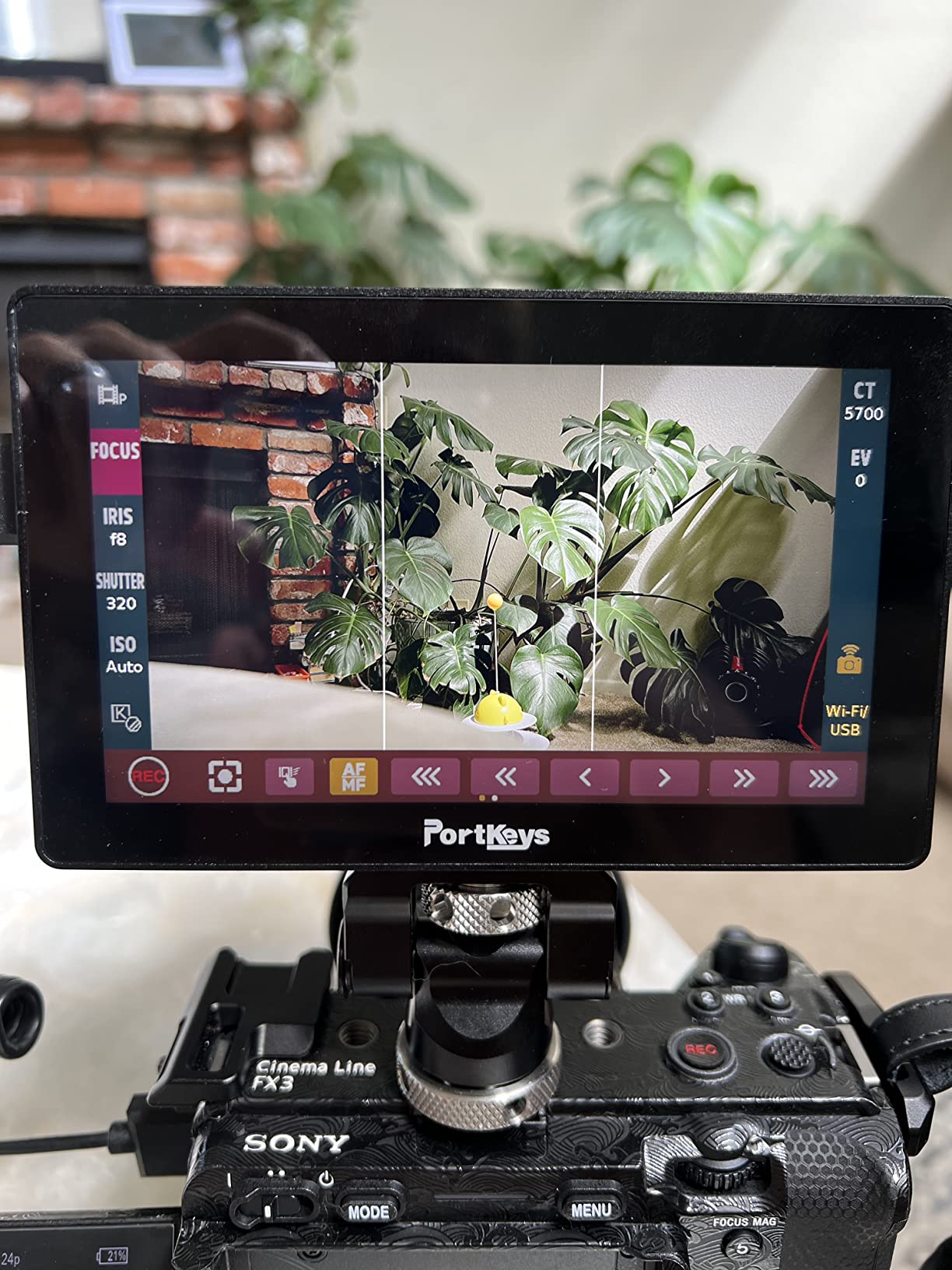
Camera control functionality transforms how you work with compatible Sony, Canon, and Panasonic cameras. With my Sony FX3, I could touch the screen to pull focus, start and stop recording, and adjust camera settings without reaching for camera buttons. This matters enormously when the camera sits on a gimbal or crane where physical access proves difficult. The wireless control works through WiFi, though I found wired USB-C connection more reliable for critical shots.
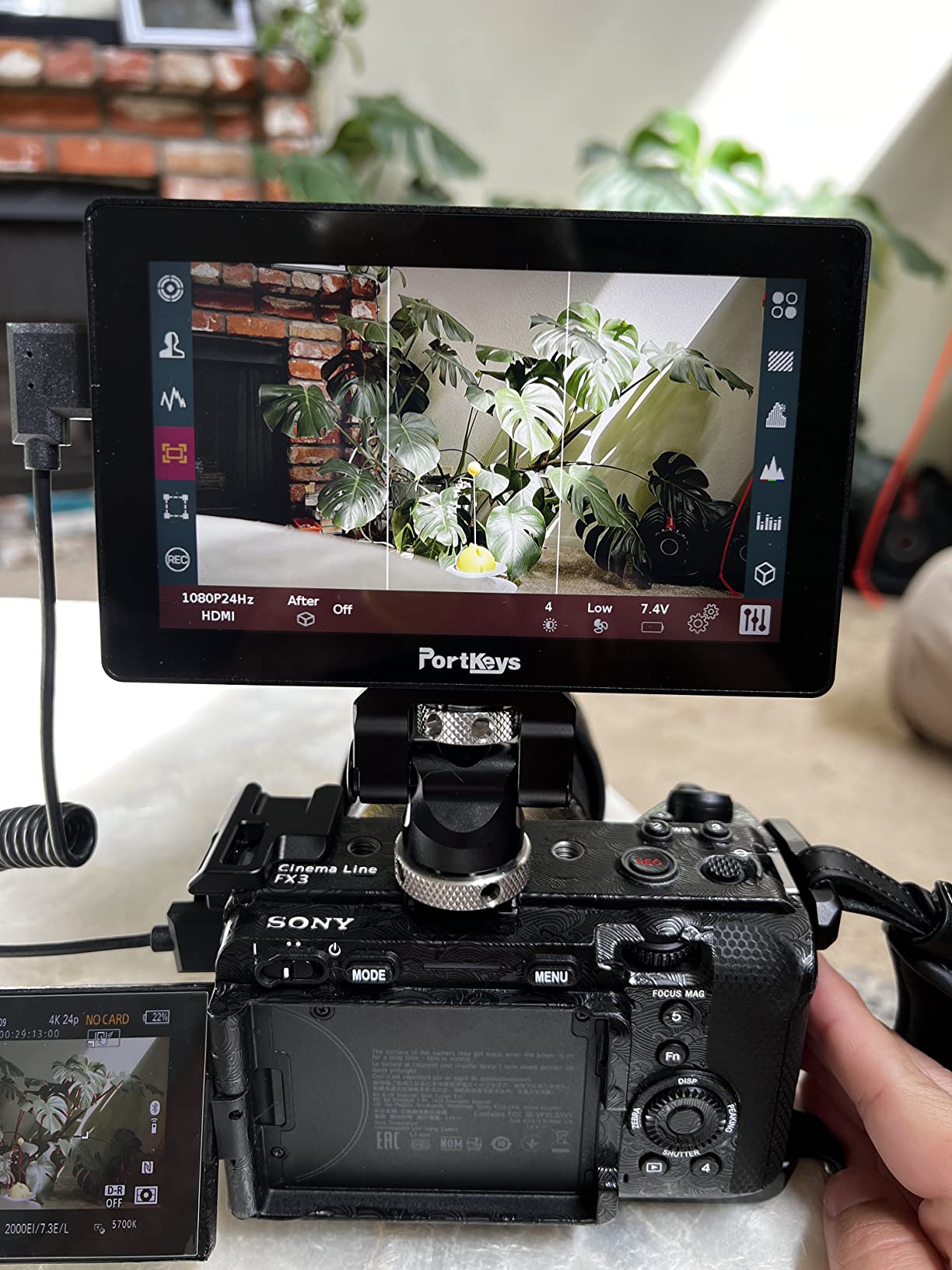
The MOVNORM interface takes time to learn. Menu navigation feels logical once you understand the layout, but expect to spend an evening with the manual before operating efficiently. Features like focus peaking, false color, and waveform monitor work as advertised, with the 2000 nits screen making false color genuinely usable outdoors. The collaborative control feature lets you link up to four monitors within 50 meters, useful when working with a focus puller or director.
Best for Outdoor Shooting and Gimbal Work
If you shoot primarily outdoors or need a monitor that works on gimbals without squinting, the LH5P II justifies its premium price. The 2000 nits brightness eliminates the sunshade requirement, reducing rig complexity and weight. Camera operators working weddings, events, or documentary will appreciate the daylight visibility.
Sony FX3, FX30, A7 IV, and Canon R5/R6 owners get the most from camera control features. Panasonic S5 and GH6 users also benefit, though feature support varies by camera model. The touch focus tracking works particularly well with Sony cameras, pulling focus smoothly when subjects move.
Not Ideal for FX6/FX9 or Tight Budgets
Despite what some product pages suggest, the LH5P II does not offer wireless camera control for Sony FX6 or FX9 cameras due to different control protocols. If you own these cinema cameras, you will get only basic monitoring without touch control. This limitation frustrates many FX6 owners based on forum discussions, so verify compatibility before purchasing.
The $399 price positions this monitor against used SmallHD units and the Atomos Shinobi II. While the brightness exceeds both competitors, the color accuracy and build refinement lag slightly behind premium brands. If you need absolute color precision for grading work, consider whether the LH5P II meets your standards.
2. Portkeys LH7P – 7 Inch Wireless Control Monitor
Pros
- Large 7 inch screen improves framing visibility
- Wireless control frees USB-C camera port
- One-to-Many controls 4 monitors simultaneously
- Works with Sony Canon Panasonic Blackmagic
- Hard case included for travel protection
- Responsive touchscreen interface
Cons
- Build quality concerns with flimsy switches
- Fan noise problematic for interview audio
- Wireless control limited to specific cameras
- Setup process complex and time-consuming
- Does NOT work with Sony FX6 or FX9
The LH7P attracted attention because it packs wireless camera control into a 7-inch monitor at a price point where competitors offer only basic monitoring. After testing it alongside my FX3 at a crowded music festival, I can confirm the wireless functionality genuinely works, though with important caveats every camera operator should understand.
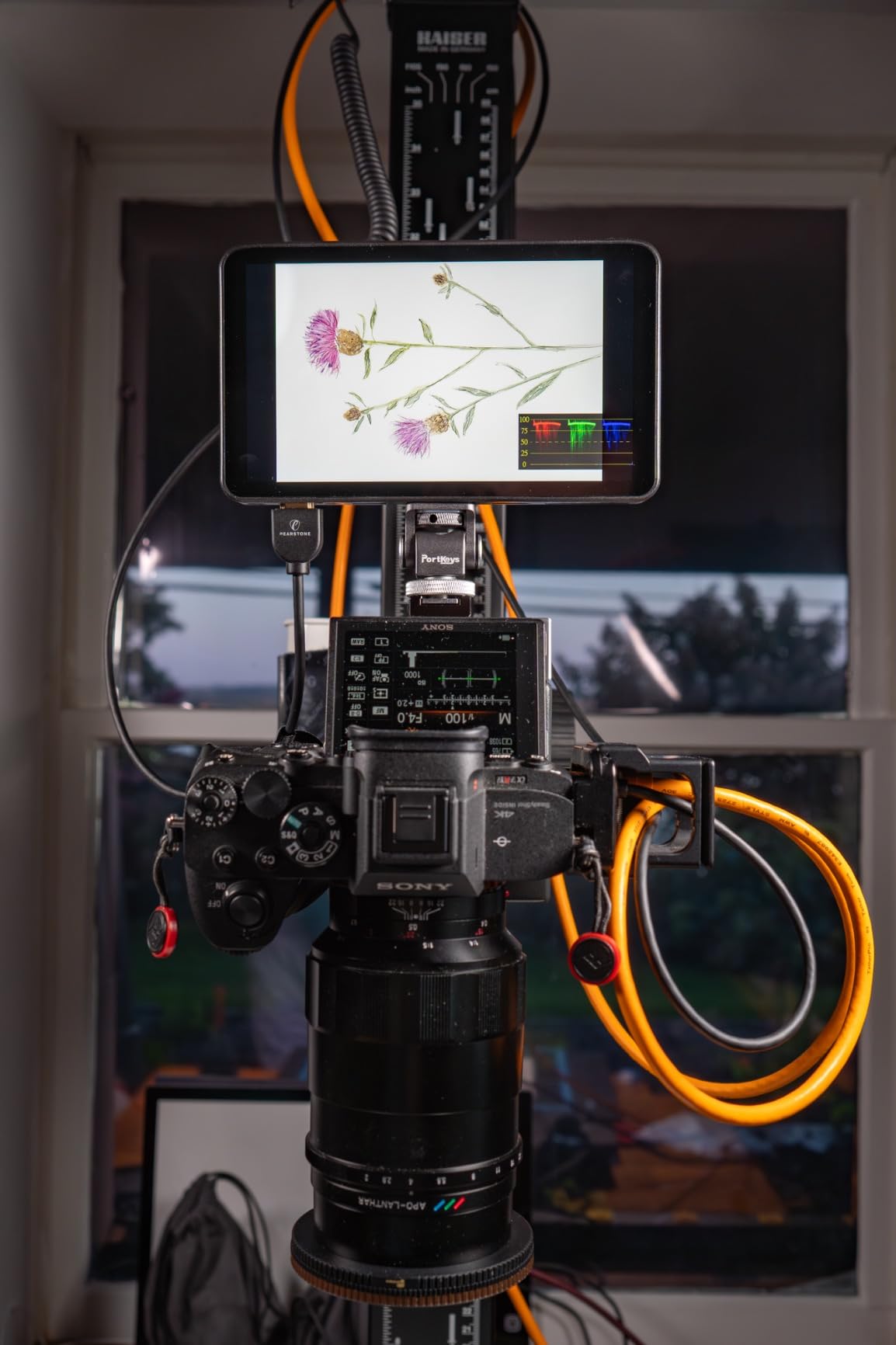
The 7-inch screen size makes a noticeable difference for focus pulling compared to 5-inch monitors. I could judge sharpness more confidently at arm’s length, reducing the fatigue of squinting at smaller displays. The 1000 nits brightness handles outdoor shooting reasonably well, though you will want the included sunshade for midday work. The screen quality impressed professional cinematographer Alister Chapman during his Glastonbury festival test, where WiFi stability held up even in crowded RF environments.
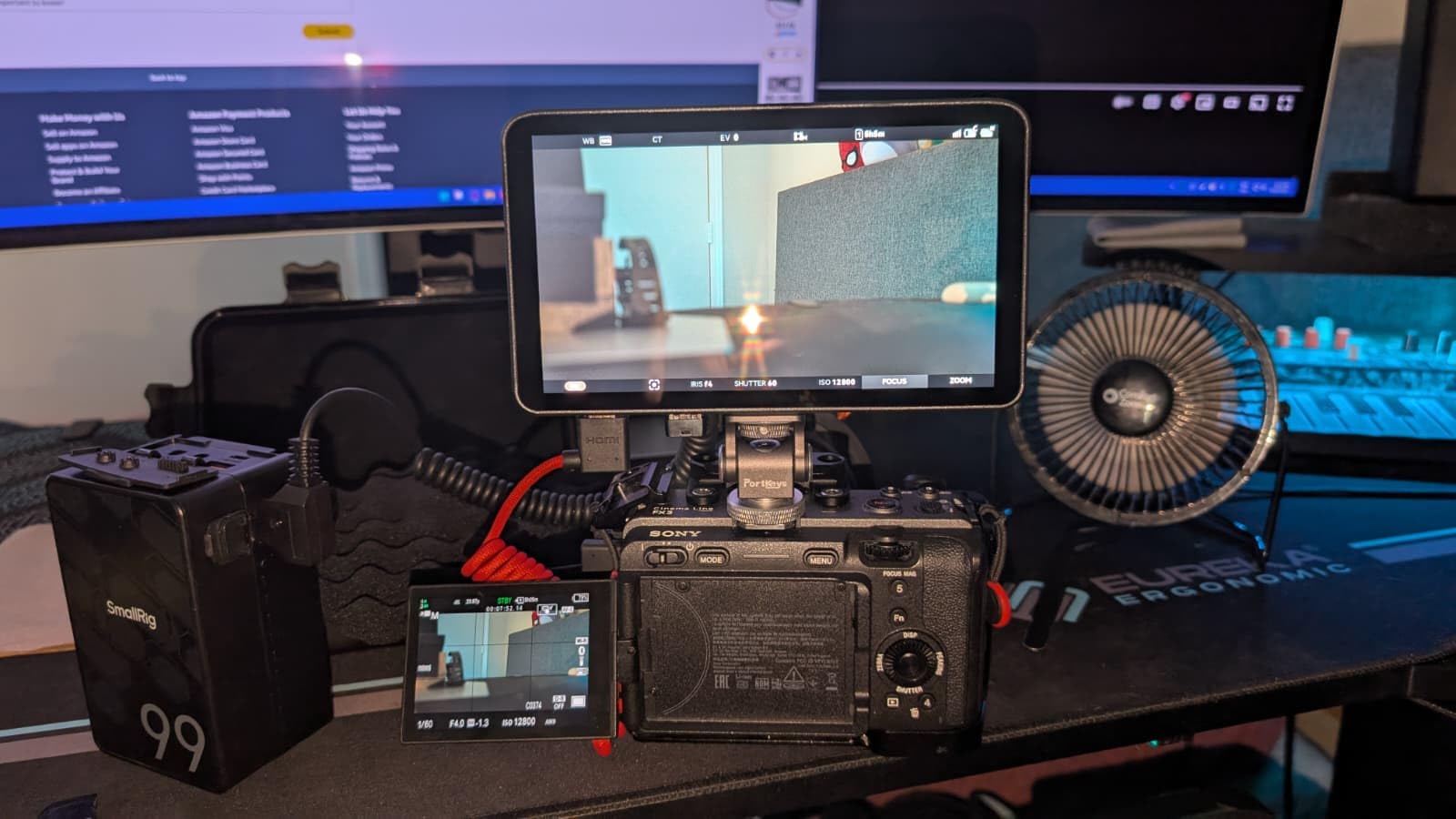
Wireless camera control eliminates the cable running from monitor to camera, freeing your USB-C port for other uses. I controlled recording, ISO, and touch focus through the monitor while the camera sat on a Ronin RS3 gimbal. The One-to-Many system lets you control up to four monitors within 50 meters, opening possibilities for director’s monitors or multi-camera setups. However, wireless connectivity requires patience during initial pairing, and some cameras need reconnection each time they power cycle.
Critical compatibility warning that forum users emphasize: the LH7P does NOT provide wireless camera control for Sony FX6 or FX9 cameras. These cinema cameras use different control protocols than the mirrorless line. FX6 owners report particular frustration discovering this limitation after purchase. The monitor still displays HDMI video from these cameras, but you lose the touch focus and camera control features that justify the LH7P’s premium over basic monitors.
Best for Wireless Workflows and Multi-Monitor Setups
Camera operators needing wireless freedom benefit most from the LH7P. Eliminating the control cable simplifies gimbal balancing and reduces snag hazards during handheld work. The One-to-Many feature suits production environments where you need matching monitors for focus puller, director, and camera operator.
Sony A1, A7S III, A7 IV, FX3, and FX30 owners get full functionality. Canon R5, R6, and C70 users also enjoy camera control, though some Canon features work partially. Blackmagic Pocket 4K and 6K compatibility adds appeal for cinema camera users wanting affordable monitoring with control.
Not Ideal for Audio-Critical Interviews or FX6 Owners
The built-in cooling fan creates audible noise that microphone placement can pick up during quiet interview scenes. For dialogue-heavy work, you may need to disable the fan and accept shorter operating times. The LH5P II handles thermal management more quietly if fan noise concerns you.
FX6 and FX9 owners should look elsewhere for camera control functionality. The LH5C offers wired control that works with these cameras, or consider the premium aluminum BM5IV WR for professional FX6/FX9 support. Do not buy the LH7P expecting wireless touch control with Sony cinema cameras.
3. Portkeys LH5C – Compact Wired Control Monitor
Pros
- Full camera control under $200 price point
- Touch-to-focus and tracking work well
- 800 nits sufficient with included sunshade
- Freeze frame with overlay comparison
- 3D LUT support with 20 custom slots
- Excellent customer support and firmware updates
Cons
- Limited to 4K30p input not 4K60p
- Plastic construction requires careful handling
- USB-C used for control limits power options
- Some UI bugs with menu graphics
- Canon compatibility issues reported by some users
The LH5C offers the most compelling value proposition for camera operators wanting camera control without the premium price of LH5P II or LH7P. At roughly half the cost of the LH5P II, you sacrifice brightness and wireless capability but keep the essential camera control features that matter for run-and-gun shooting.
After using the LH5C on a two-day corporate shoot with my Sony FX3, I found the wired camera control nearly as useful as wireless. The USB-C cable connection stays reliable, never dropping like wireless can in crowded RF environments. Touch focus responds instantly, pulling to subjects I tap on screen without the lag I expected at this price. The touch-to-focus tracking follows moving subjects competently, though not as smoothly as native Sony autofocus.
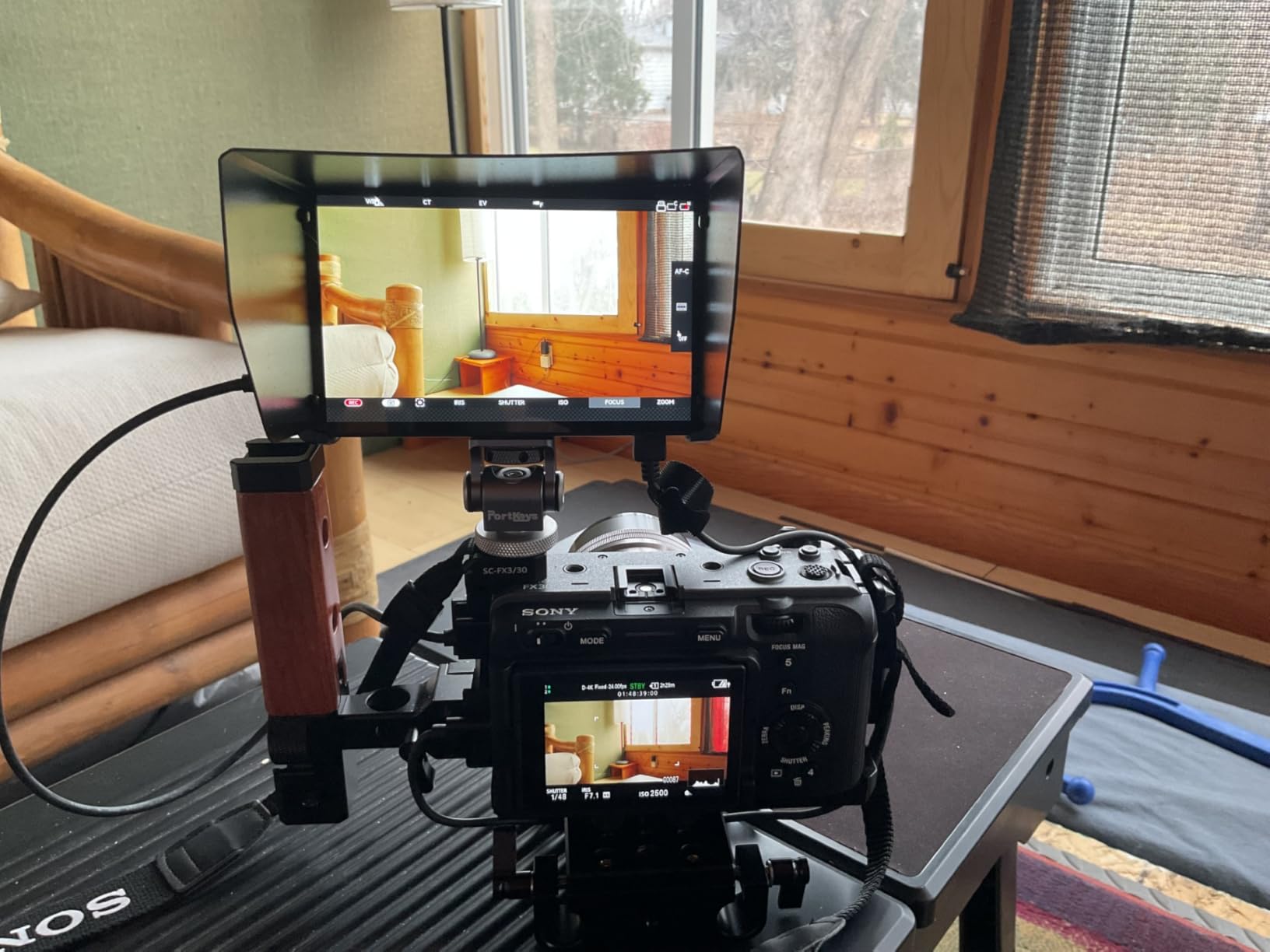
The 800 nits brightness works adequately for outdoor shooting with the included sunshade, though you will struggle in direct midday sun without shade. Indoors or overcast conditions, the screen looks excellent with accurate colors and good viewing angles. The 1920×1152 resolution provides slightly more vertical pixels than standard 1080p, useful for anamorphic desqueeze workflows.
Build quality reflects the price point. The plastic housing feels less premium than the LH5P II’s aluminum, and I would not trust it to survive the same door-frame impact that the LH5P II shrugged off. That said, careful handling should see it through normal production use. Portkeys customer support receives consistent praise for responsiveness and firmware updates that add features based on user feedback.
Best for Budget-Conscious Operators and FX6/FX9 Users
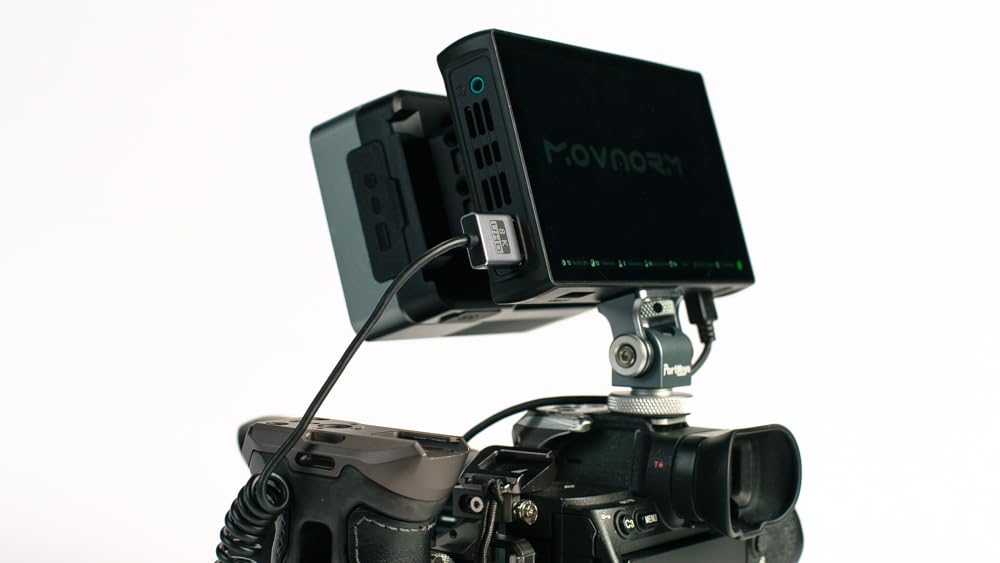
Sony FX6 and FX9 owners finally have an affordable Portkeys option with camera control. The LH5C’s wired control works with these cinema cameras, unlike the wireless-only limitations of the LH7P. If you shoot with Sony cinema cameras and need touch control without spending $700+ on premium alternatives, the LH5C serves you well.
Content creators building their first rig, wedding videographers working with tight margins, and documentary shooters needing multiple affordable monitors should consider the LH5C. It delivers professional monitoring tools like waveform, false color, and focus peaking with camera control that transforms how you operate.
Not Ideal for Bright Sunlight or Heavy Abuse
The 800 nits brightness requires sunshade use for bright outdoor work. If you shoot primarily in harsh daylight conditions, the LH5P II’s 2000 nits justifies its price premium. The LH5C struggles in beach, snow, or desert environments where direct sun overwhelms the screen.
Rental houses or productions requiring gear that survives rough handling should consider the LH5P II’s metal construction. The LH5C’s plastic build suits owner-operators who treat their gear carefully but may not withstand the abuse of rental rotation.
4. Portkeys PT5 III – Ultra-Light 5.4 Inch with Color Grader
Pros
- Ultra-lightweight at only 154 grams
- 360 degree color grader for selective adjustment
- USB-C power input from power banks
- Silent built-in cooling fan
- Compact waterproof hardcase included
- MOVNORM OS interface user-friendly
Cons
- Battery not included requires separate purchase
- 800 nits limiting in direct sunlight
- Color grading features Sony-centric
- No camera control functionality
- Some durability concerns reported
The PT5 III targets creators needing professional monitoring tools in the lightest possible package. Weighing just 154 grams, it adds minimal burden to gimbal rigs where every ounce affects balance and motor strain. I mounted it on a Weebill S gimbal with my A7S III and barely noticed the weight difference from shooting without a monitor.
The standout feature is the 360-degree color grader, which lets you select specific colors via touchscreen and adjust hue and saturation independently. This goes beyond basic LUT loading to actual on-set color correction. I found it useful for previewing how footage might look after grading, though the feature works best with Sony cameras. Canon and Panasonic users report limited functionality with the color grading tools.
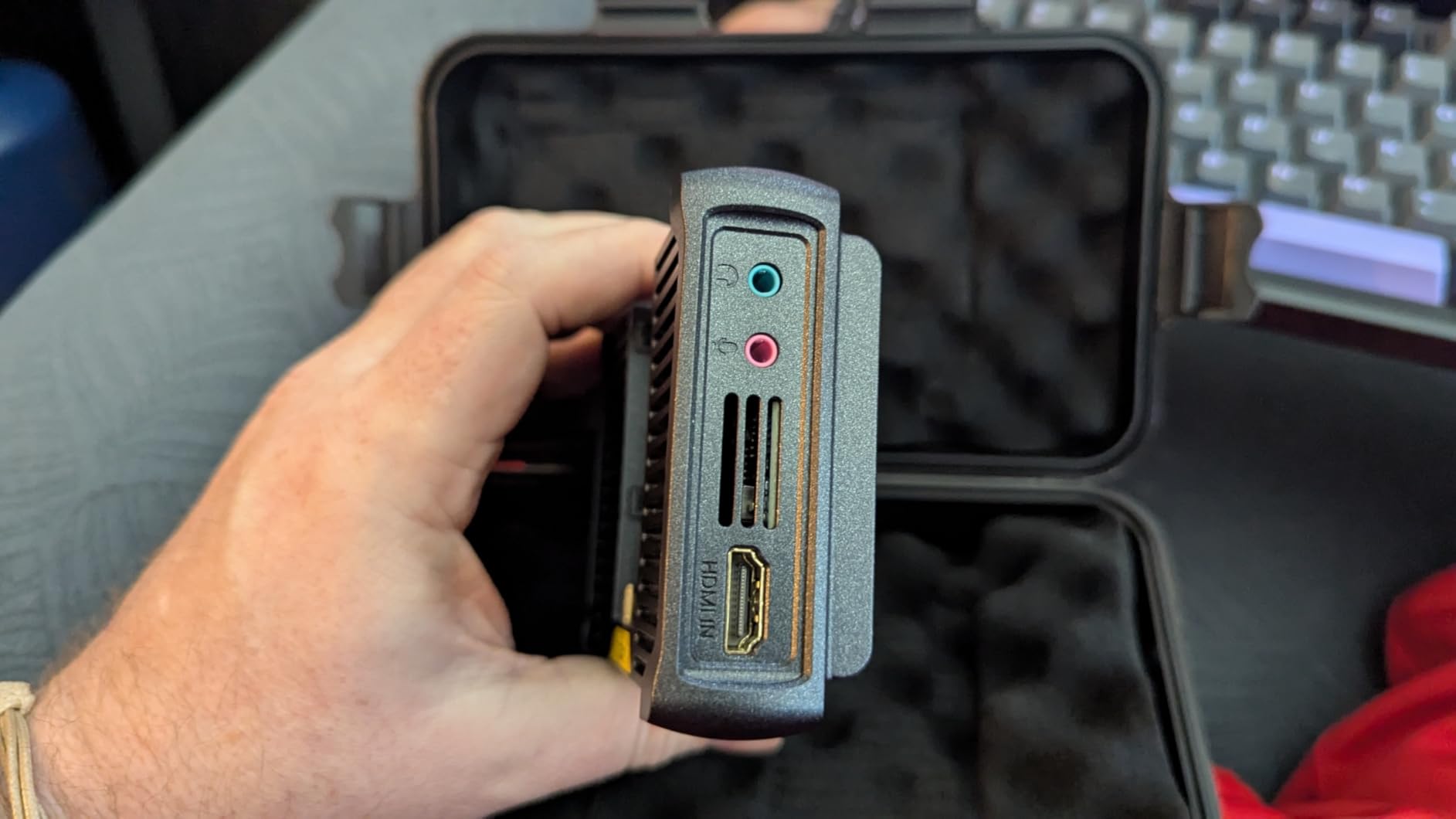
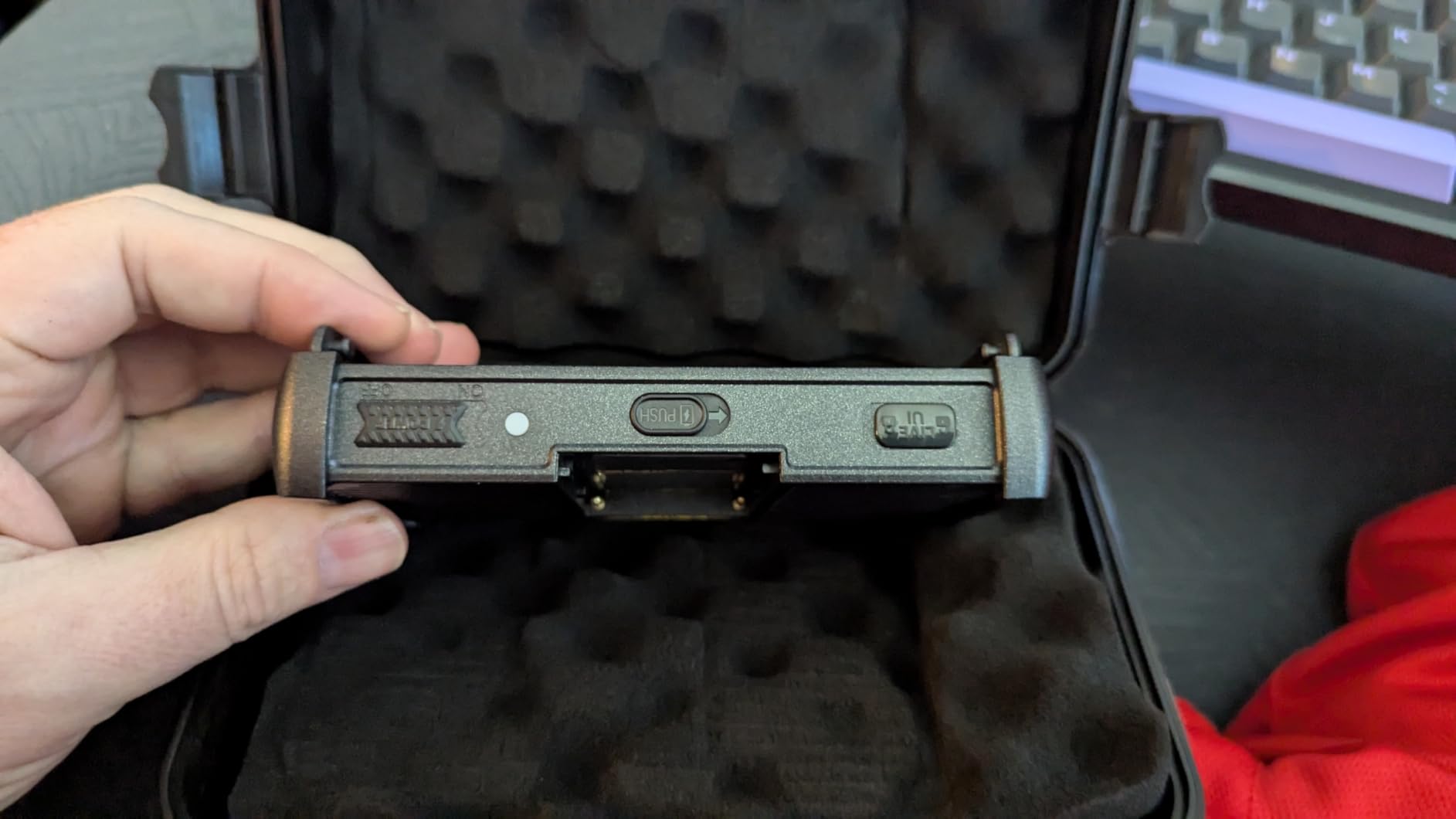
Connectivity impresses for the price point. USB-C power input lets you run the monitor from power banks or V-mount batteries through D-tap to USB-C cables. The USB-A port accepts LUT files from thumb drives, and the monitor outputs loaded LUTs through HDMI for downstream devices. Silent fan cooling prevents the audio issues that plague noisier monitors during quiet scenes.
The 800 nits brightness surprises with outdoor visibility, though direct sunlight still overwhelms it without a sunshade. Colors look sharp and contrast exceeds expectations for this weight class. The narrow frame design maximizes screen real estate while keeping dimensions compact for travel. Portkeys includes a waterproof hardcase that protects the monitor in your gear bag.
Best for Travel Shooters and Gimbal Operators
Documentary shooters traveling light and gimbal operators fighting weight limits should strongly consider the PT5 III. The 154-gram weight makes it the lightest Portkeys monitor with professional scopes and LUT support. You get waveform, histogram, false color, and focus peaking without the bulk of larger monitors.
Content creators shooting travel vlogs, real estate videos, or social media content benefit from the compact size and USB-C power flexibility. Powering from USB power banks eliminates battery swapping during long shooting days.
Not Ideal for Camera Control or Bright Sun Work
The PT5 III offers no camera control functionality. If you need touch focus or record triggering from the monitor, step up to the LH5C or higher models. This is purely a monitoring device without two-way camera communication.
Desert shooters, beach videographers, and anyone working consistently in direct sunlight should consider brighter alternatives. The 800 nits works for brief outdoor segments but becomes frustrating during all-day exterior shoots.
5. Portkeys PT6 – Budget 5.2 Inch Touchscreen Monitor
Pros
- Affordable price with professional features
- Luma and RGB Waveform included
- 3D LUT output capability
- Anamorphic desqueeze support
- Silent operation no fan noise
- Works with Canon LP-E6 batteries
- Touch controls for Portkeys functions
Cons
- 600 nits insufficient for bright outdoor use
- Plastic construction requires careful handling
- Included metal tilt mount is basic
- USB power has quirks requires adapter
- Can get hot during extended operation
The PT6 represents Portkeys entry point for operators wanting professional monitoring tools without spending $200+. At $109, it offers waveform, false color, 3D LUT support, and anamorphic desqueeze that competitors reserve for higher price tiers. I recommended this monitor to three beginner camera operators last year, and all continue using it successfully.
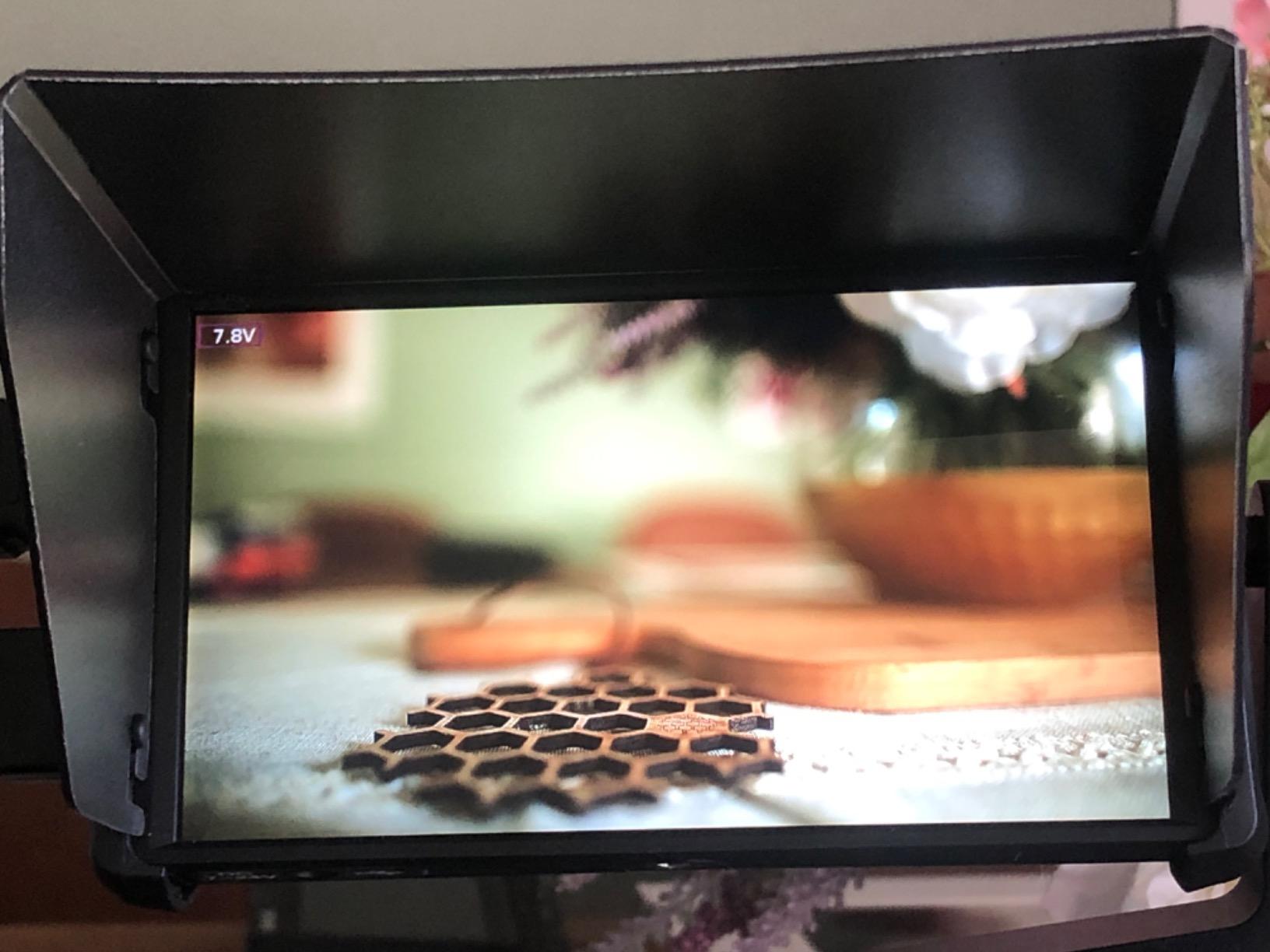
Image quality exceeds expectations for the price. The 5.2-inch 1080p display delivers sharp focus judgment and accurate colors for exposure assessment. 600 nits handles indoor shooting beautifully and manages overcast outdoor conditions adequately. Direct sunlight overwhelms the screen, so budget for a sunshade or accept indoor-only use.
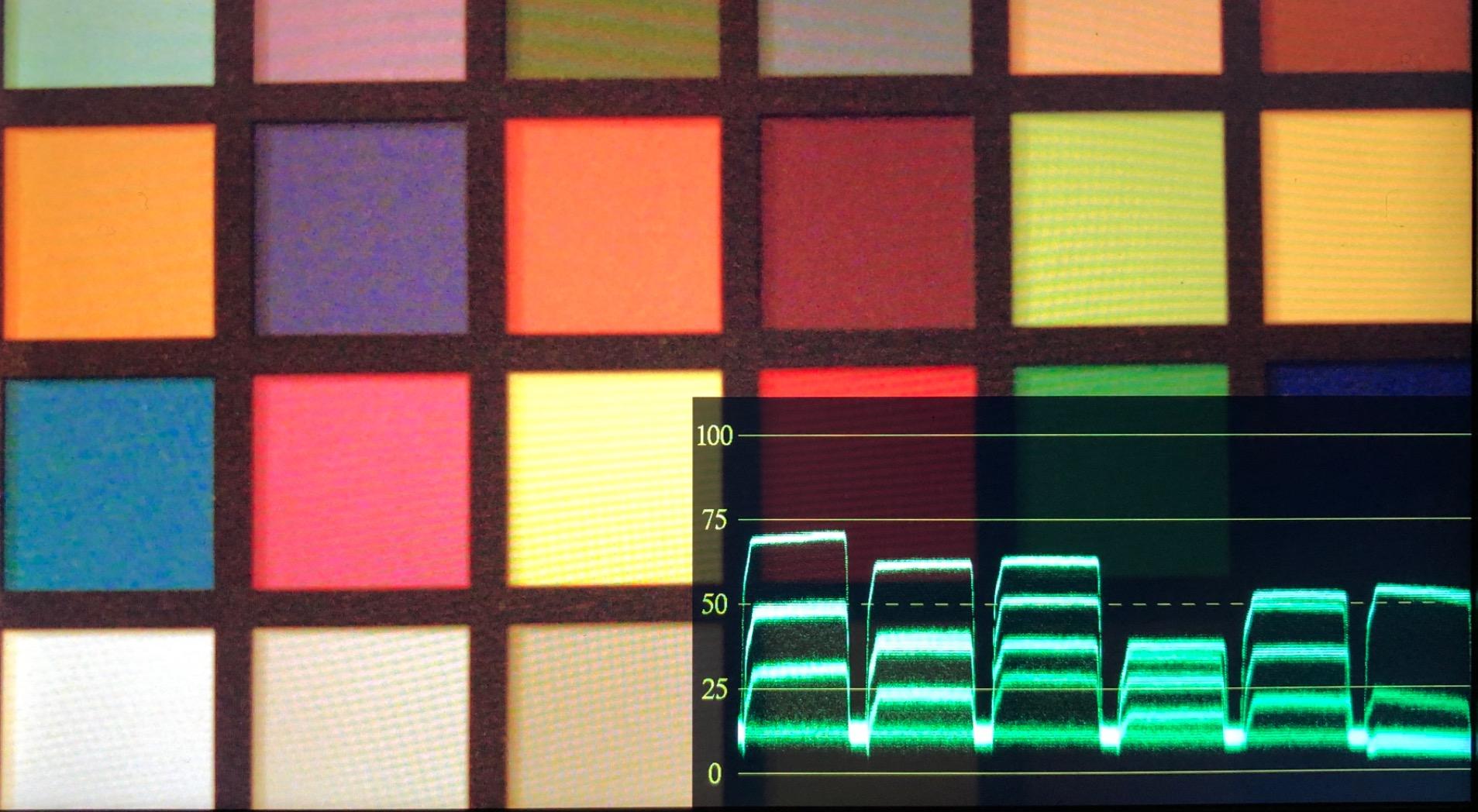
The touchscreen interface controls monitor functions but not the camera itself. Tapping activates focus peaking, toggles waveform display, and navigates LUT selection without button combinations to memorize. The silent operation without cooling fans makes it ideal for interview situations where fan noise would ruin audio.
Battery flexibility helps budget-conscious users. The PT6 accepts both Sony NP-F series batteries and Canon LP-E6 batteries through interchangeable plates. If you already own Canon cameras with LP-E6 batteries, you can power this monitor without buying new battery ecosystem.
Best for Beginners and Client Monitoring
First-time monitor buyers, film students, and content creators building initial rigs should start with the PT6. You learn professional monitoring workflows including waveform reading and false color interpretation without significant investment. The feature set matches monitors costing twice as much from other brands.
The monitor serves excellently as a client or director’s monitor on larger productions. Its affordability means you can dedicate one to talent monitoring or director preview without risking expensive gear. Many users buy multiple PT6 units for multi-angle shoots requiring several monitoring positions.
Not Ideal for Outdoor Productions or Rough Handling
Wedding shooters working outdoor ceremonies, documentary filmmakers in desert environments, and event videographers in bright venues will struggle with the 600 nits limitation. The screen becomes difficult to judge for focus and exposure in direct sun. For consistent outdoor work, the LH5P II’s 2000 nits eliminates these struggles.
The plastic housing and basic included mount require gentle treatment. Heavy production environments with frequent setup changes stress the mounting points. Consider a SmallRig cage or protective housing if your work style runs rough on gear.
6. Portkeys HD7T – Affordable 7 Inch Touchscreen
Pros
- Large 7 inch screen at budget price
- 1000 nits brightness for outdoor use
- Matte anti-glare reduces reflections
- Touchscreen with top shortcut keys
- Multiple mounting points flexible rigging
- 3D LUT support for color preview
- Very lightweight at only 245g
Cons
- Lower 1280x800 resolution not Full HD
- No camera control functionality
- LUT output not supported
- Color accuracy not as precise as premium
- HDMI port placement near mounting area
The HD7T delivers something rare in sub-$150 monitors: a genuinely usable 7-inch display with enough brightness for outdoor work. Most budget 7-inch monitors skimp on brightness or resolution to hit price points, but the HD7T balances both adequately for practical production use.
The 1280×800 resolution falls below Full HD but proves sufficient for focus pulling and framing. I used it as a director’s monitor on a short film and could judge performances and composition without noticing the resolution limitation. The matte anti-glare coating genuinely helps outdoors, reducing reflections that plague glossy screens.
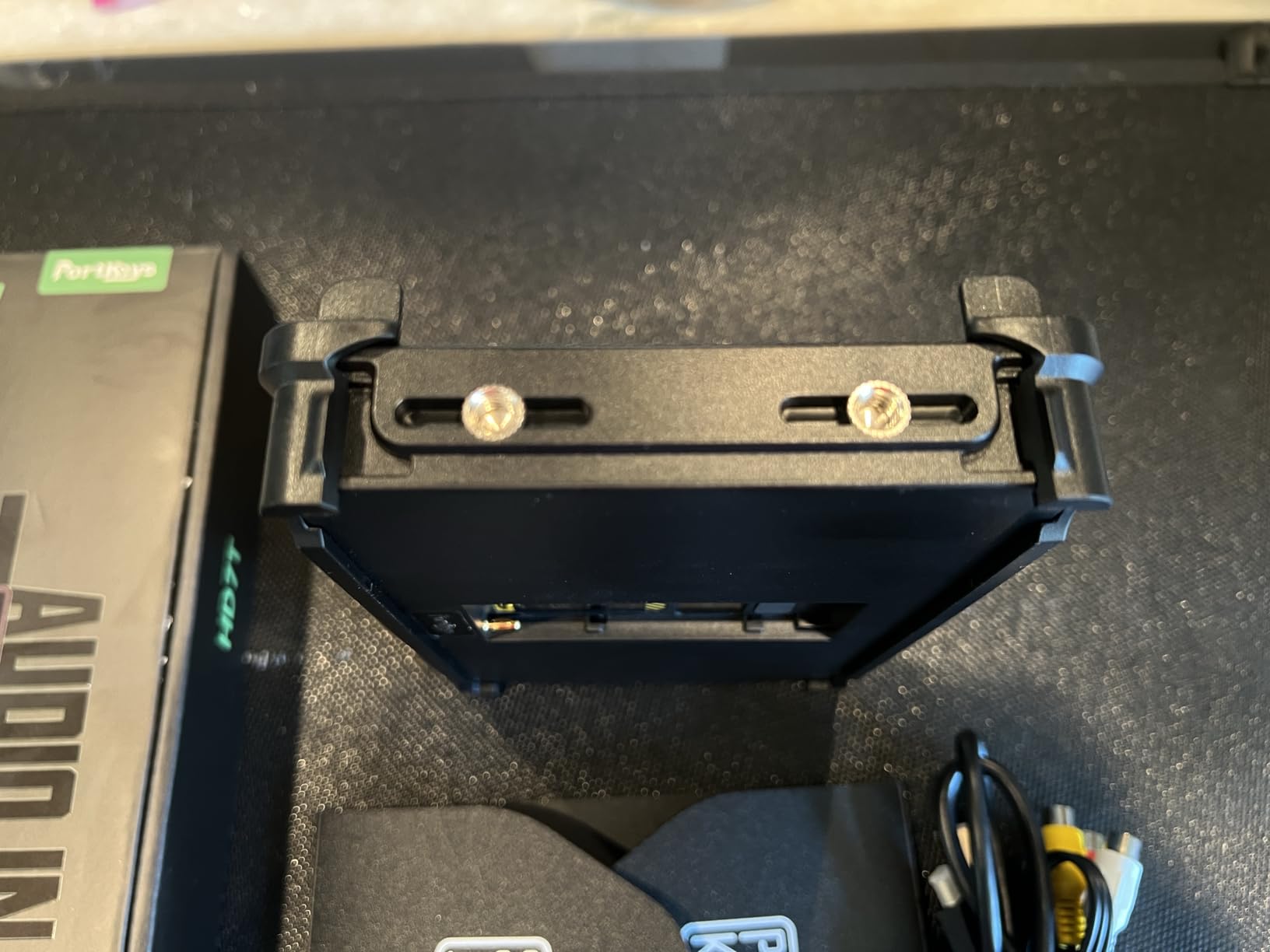
Top shortcut keys provide quick access to frequently used functions without navigating touchscreen menus. I mapped peaking, false color, and zoom to these buttons for instant toggling during fast-paced shooting. The 1000 nits brightness handles outdoor shooting better than expected at this price, though you will still want the included sunshade for midday work.
The 245-gram weight impresses for a 7-inch monitor. Mounting options on three sides let you position it flexibly on rigs, cages, or gimbals without awkward arm positions. Battery life runs 4-5 hours with NP-F750 batteries, sufficient for most shooting days with one battery swap.
Best for Budget 7 Inch Needs and Director Monitors
Camera operators needing the largest possible screen on tight budgets should consider the HD7T. The 7-inch size helps aging eyes judge focus and assists when working at arm’s length on shoulder rigs. Event videographers working reception halls and indoor venues get sufficient brightness without premium pricing.
The monitor excels as a secondary display for directors, clients, or focus pullers. Its affordability lets productions distribute multiple monitors without breaking the equipment budget. The quiet cooling fan does not interfere with audio recording.
Not Ideal for Critical Focus or Color Grading Work
The 1280×800 resolution limits your ability to judge critical sharpness compared to 1080p monitors. If you shoot with fast lenses at wide apertures where focus tolerance measures millimeters, the HD7T may not resolve enough detail for confident pulling. The PT5 III or higher models offer sharper displays for critical work.
Color accuracy falls short of calibration standards for grading work. While fine for exposure assessment and framing, do not rely on it for color-critical decisions. The screen colors read slightly warm compared to reference monitors, so verify looks on camera or another calibrated display before finalizing grades.
7. Portkeys HD7H – Entry-Level 7 Inch Field Monitor
Pros
- Exceptional value under $75 price point
- Large 7 inch screen for framing and focus
- 1000 nits sufficient for outdoor with sunshade
- Three-sided 1/4-20 mounting threads
- Includes sunshade for bright conditions
- ABS+PC rugged housing
- 3.5mm headphone jack for audio monitoring
Cons
- Lower 1280x720 resolution limits detail
- Minimal documentation requires experimentation
- User-defined function keys need setup
- Battery installation tricky initially
- Some units had DOA quality issues
- Customer service responsiveness varies
The HD7H stands as the most affordable 7-inch monitor in the Portkeys lineup, targeting entry-level users who need screen size above all else. At under $75, it competes with no-name Amazon monitors while offering actual brand support and professional monitoring tools.
The 1280×720 resolution on a 7-inch panel produces visible pixels if you look closely, but remains usable for focus pulling and composition. I would not choose it for critical focus work with fast lenses, but for standard lenses and general framing, it performs adequately. The matte screen coating genuinely reduces glare compared to glossy budget alternatives.
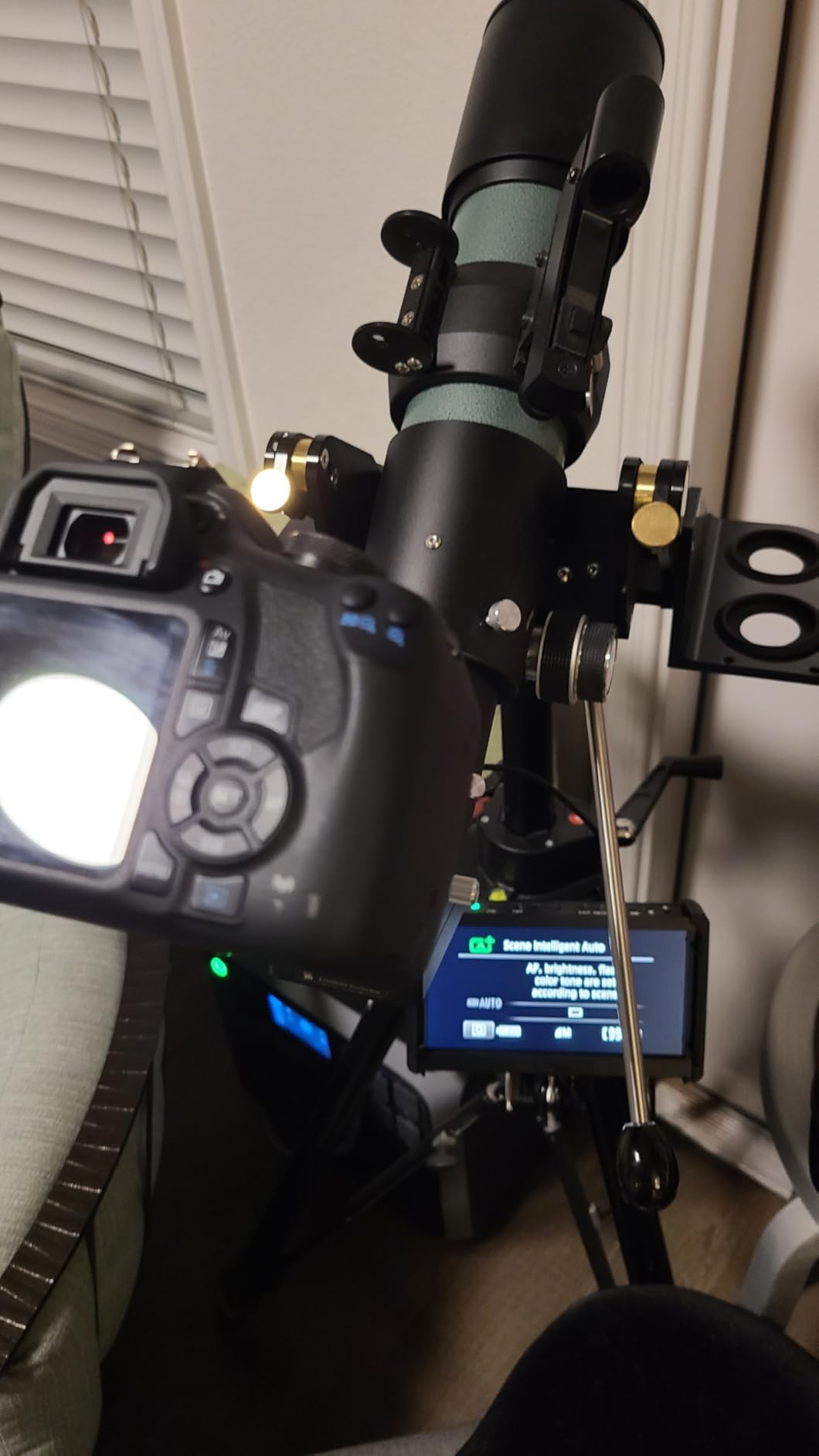
Professional monitoring tools surprise at this price point. False color, focus peaking, histogram, and anamorphic desqueeze all function properly. The top shortcut keys let you map frequently used functions for quick access. Build quality feels plasticky but functional, with three-sided 1/4-20 mounting threads providing flexibility for various rig configurations.
Documentation disappoints, with minimal printed materials requiring online research to understand all functions. User-defined function keys need experimentation to configure properly. Some buyers report DOA units requiring returns, though working units seem reliable long-term. Battery installation confuses initially until you understand the locking mechanism.
Best for Absolute Beginners and Secondary Monitoring
If you have never owned a field monitor and want the largest screen for minimum investment, the HD7H serves your needs. Film students, hobbyists, and those testing whether external monitoring improves their work can experiment without significant financial risk. The feature set exceeds anything at comparable prices from competitors.
It functions well as a secondary monitor for reference by clients, makeup artists, or talent who need to see framing without requiring critical focus judgment. Many users dedicate HD7H units to non-critical viewing positions while keeping sharper monitors for camera operator use.
Not Ideal for Professional Productions or Critical Work
Working camera operators need better resolution for confident focus pulling. The 720p panel limits your ability to judge sharpness with precision, especially with modern high-resolution cameras. Professional productions should invest in PT5 III or higher models for reliability and performance.
The quality control inconsistency concerns me for professional use. While most units work fine, the reported DOA rate exceeds what professionals should risk on paid shoots. Buy from retailers with good return policies and test thoroughly before committing to important productions.
8. Portkeys PT5 II – Ultra-Budget 5 Inch Monitor
Pros
- Compact 5 inch size for lightweight setups
- Affordable price under $100
- 4K HDMI passthrough with zero delay
- Responsive touchscreen interface
- Good waveform and false color tools
- Accurate focus peaking
- Anamorphic desqueeze support
Cons
- Brightness too low for outdoor bright conditions
- Some units report dropped frames at 4K input
- Input lag reported by some users at 1080p
- Included HDMI cable may have issues
- USB power does not work with camera
- Menu initially confusing
The PT5 II serves as Portkeys most affordable entry point, offering core monitoring functionality for users who prioritize budget over screen size or brightness. At under $100, it targets first-time monitor buyers wanting to experience external monitoring without significant investment.
The 5-inch screen suits lightweight gimbal rigs where larger monitors unbalance the system. The 1080p resolution looks sharp on the small panel, making focus judgment easier than on the larger but lower-resolution 7-inch budget monitors. 4K HDMI passthrough works without delay, letting you feed recorders or transmitters downstream.
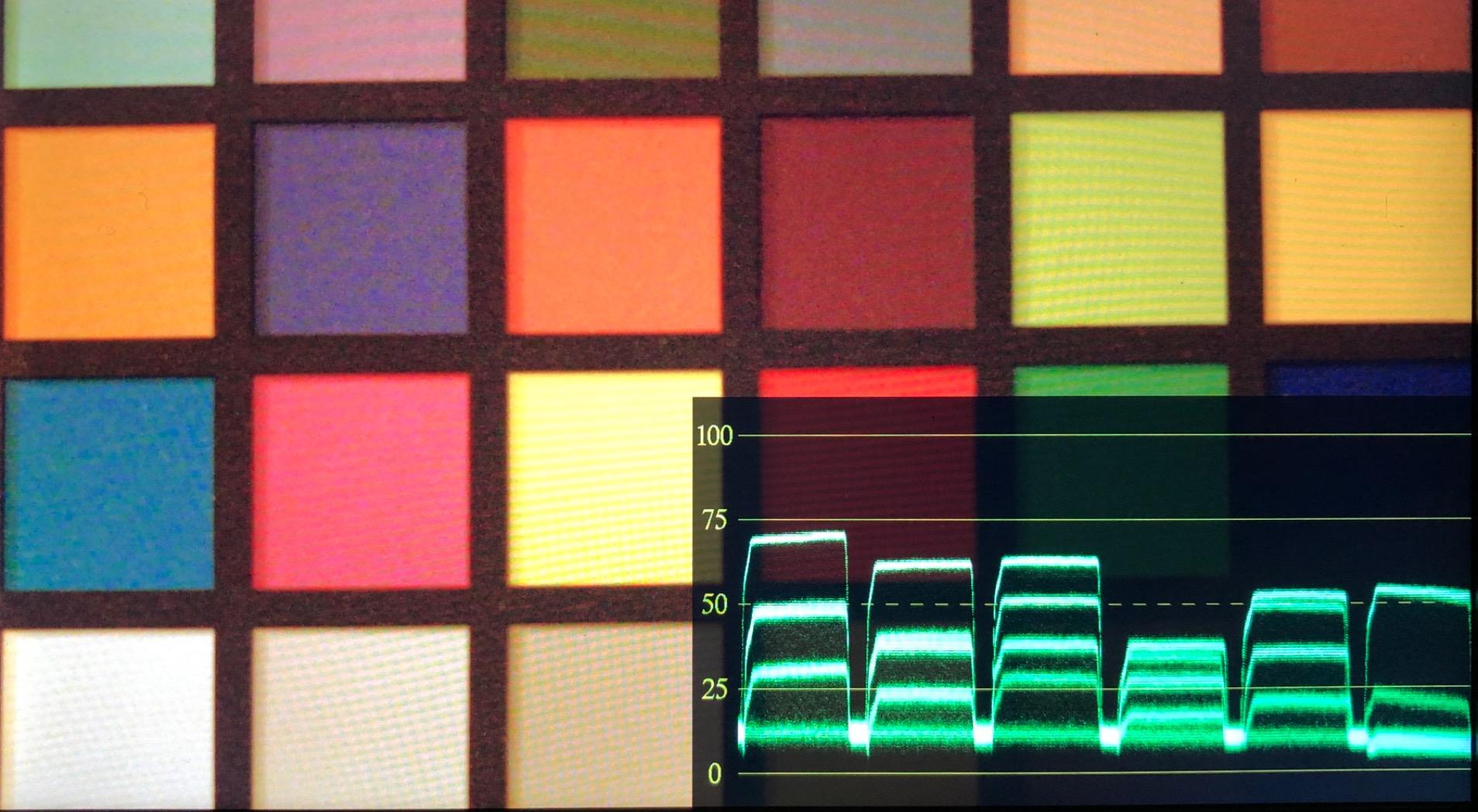
Touchscreen control feels responsive for navigating menus and toggling functions. The MOVNORM OS runs snappier than older Portkeys interfaces, reducing the lag between button press and response. Focus peaking works accurately for judging sharpness, and the waveform display helps with exposure assessment.
Brightness limitations restrict this monitor primarily to indoor use. Outdoor shooting requires working in shade or accepting that you will struggle to see the screen clearly. Some users report occasional dropped frames or input lag, particularly at 4K input resolutions, though my testing at 1080p proved stable.
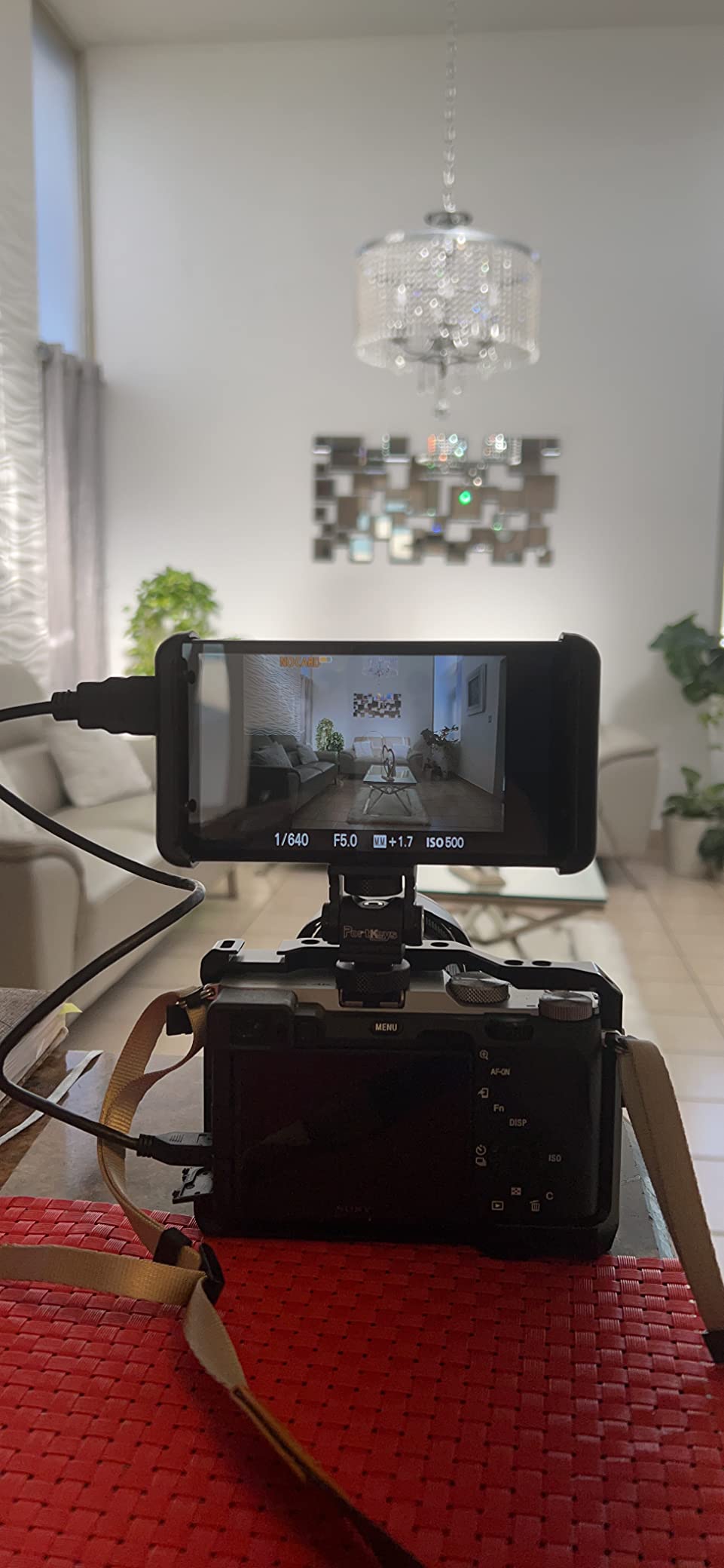
Best for Gimbal Work and Budget-Conscious Starters
The PT5 II excels on small gimbals like the DJI RS3 Mini or Zhiyun Weebill series where every gram matters. The 5-inch screen adds minimal weight while providing essential monitoring tools for focus and exposure. Content creators shooting vlogs, social media content, or personal projects get adequate functionality without budget strain.
If you have never used an external monitor and want to test whether it improves your shooting before investing more, the PT5 II represents a low-risk entry point. You can always upgrade later while keeping this as a backup or client monitor.
Not Ideal for Outdoor Shooting or Professional Work
The brightness simply cannot handle outdoor daylight conditions effectively. Wedding shooters, event videographers, and documentary filmmakers working exteriors should save for the PT6 or higher models. Trying to judge focus through a sunshade becomes frustrating quickly.
Professional productions need more reliable performance and better build quality. The occasional 4K stability issues and input lag reports suggest quality control variations that professionals cannot risk on paid shoots. Treat this as a learning tool or backup, not primary professional equipment.
Camera Operator’s Buying Guide
Choosing the right Portkeys monitor depends on understanding your specific shooting requirements and matching them to the right specifications. This guide breaks down the key factors camera operators should consider before purchasing.
Screen Size and Brightness Considerations
Screen size affects both visibility and rig balance. Five-inch monitors like the PT5 II and PT6 suit gimbal work and lightweight handheld rigs where every ounce matters. Seven-inch monitors including the LH7P, HD7T, and HD7H provide easier focus judgment and better director visibility but add weight that affects gimbal motor performance.
Brightness measured in nits determines outdoor usability. 600 nits handles indoor and overcast conditions but struggles in direct sun. 800 nits with a sunshade manages most outdoor shooting. 1000 nits works confidently outdoors. 2000 nits eliminates sunshade requirements entirely. Match brightness to your typical shooting environments rather than buying more than you need.
Camera Control Features Explained
Portkeys offers three tiers of camera interaction: monitoring only, wired control, and wireless control. The PT5 II, PT6, PT5 III, HD7T, and HD7H provide monitoring without camera control. The LH5C adds wired control through USB-C cables. The LH5P II and LH7P offer both wired and wireless control.
Camera control matters most for gimbal operators and solo shooters who cannot reach camera buttons easily. Touch focus tracking lets you pull focus by tapping subjects on screen while the camera handles the actual focusing. Record triggering, ISO adjustment, and white balance control from the monitor save time during fast-paced shooting.
Critical compatibility note: The LH7P does NOT support wireless control of Sony FX6 or FX9 cameras due to protocol differences. FX6/FX9 owners should choose the LH5C for wired control or the premium BM5IV WR for wireless compatibility with these cinema cameras.
Monitoring Tools and Scopes
All Portkeys monitors include focus peaking for judging sharpness. Higher-end models add professional scopes including waveform monitors, histograms, false color exposure guides, and zebra patterns. These tools transform how you judge exposure and focus compared to relying solely on camera LCD screens.
False color displays exposure as color maps, making it instantly obvious when skin tones land at proper exposure levels. Waveform monitors show brightness distribution across the image, helping you prevent blown highlights or crushed blacks. 3D LUT support lets you load custom looks for previewing graded footage during shooting.
Anamorphic desqueeze support matters for shooters using anamorphic lenses. All Portkeys monitors support common squeeze ratios including 1.33x, 1.5x, and 2.0x, displaying the image unsqueezed for proper framing and focus judgment.
Build Quality and Power Options
Build quality varies significantly across the Portkeys range. The LH5P II’s aluminum frame withstands professional abuse. Plastic models like the LH5C, PT6, and budget monitors require more careful handling. Consider your work environment when choosing build quality.
Power flexibility affects shooting workflow. All Portkeys monitors accept Sony NP-F series batteries, with larger NP-F970 batteries providing 3-4 hours of runtime. USB-C power input on newer models lets you run from power banks or V-mount batteries, eliminating battery swapping during long shooting days. Power consumption ranges from 7 watts on efficient models to 13 watts on the bright LH5P II.
Frequently Asked Questions
What cameras are compatible with Portkeys monitors?
Portkeys monitors work with any camera providing HDMI output. Camera control features vary by monitor model and camera brand. Sony A7 series, FX3, FX30, A1, and A9 cameras enjoy full support on LH5P II, LH7P, and LH5C models. Canon R5, R6, R7, R8, and C70 support most control features. Panasonic S5, GH6, and BG1H work well. Blackmagic Pocket 4K and 6K support basic control. Note that Sony FX6 and FX9 do NOT work with LH7P wireless control due to protocol differences.
Does the Portkeys LH5P II support 3D LUTs?
Yes, the LH5P II supports 3D LUT monitoring and output. You can load custom LUT files via USB to preview graded looks while shooting. The monitor stores LUTs internally and applies them to the displayed image. HDMI output can pass the LUT signal downstream to recorders or transmitters. This feature helps visualize final color grades during production rather than guessing how footage will look after post-processing.
Does Portkeys LH7P work with FX6?
No, the Portkeys LH7P does NOT provide wireless camera control for Sony FX6 or FX9 cameras. While the monitor displays HDMI video from these cameras properly, the touch control and wireless functionality require protocols that Sony cinema cameras do not support. FX6 and FX9 owners should consider the LH5C for wired camera control or the premium BM5IV WR which supports these cinema cameras. This limitation frustrates many FX6 owners who discover it after purchase.
What is the difference between Portkeys PT5 II and PT6?
The PT6 offers several upgrades over the PT5 II. The PT6 provides 600 nits brightness versus unspecified lower brightness on PT5 II. Screen size increases slightly from 5 inches to 5.2 inches. The PT6 adds improved peaking algorithms and better touchscreen responsiveness. Both monitors lack camera control and target budget-conscious users needing basic monitoring with professional scopes. The PT6 costs slightly more but delivers noticeably better outdoor visibility and overall performance.
Do you need a special monitor for cameras?
While cameras include built-in LCD screens, external monitors offer significant advantages for serious video work. Larger screens make judging focus easier on your eyes. Professional monitoring tools like waveform, false color, and focus peaking provide more accurate exposure and focus assessment than camera LCDs. Higher brightness enables outdoor visibility impossible with camera screens. Camera control features let you adjust settings without touching the camera. For professional camera operators, external monitors become essential tools that improve shot quality and reduce fatigue.
Final Thoughts
Portkeys has built a compelling lineup of field monitors that deliver professional features at prices undercutting established competitors. For camera operators in 2026, these monitors offer genuine value whether you need basic monitoring tools or advanced camera control integration.
The LH5P II remains my top recommendation for most working operators, combining daylight-visible brightness with professional build quality and camera control features that transform gimbal and handheld work. Budget-conscious shooters find excellent value in the LH5C, while the LH7P serves those needing wireless freedom. Entry-level models like the PT6 and PT5 II let beginners learn professional monitoring workflows without significant investment.
Match your monitor choice to your specific cameras, shooting environments, and budget constraints. Verify camera compatibility before purchasing, particularly for FX6 and FX9 owners who need to avoid the LH7P’s wireless limitations. With proper matching, a Portkeys monitor becomes an essential part of your camera rig that improves your shooting experience and final image quality.